The breeze blows on the grass and weeds like a whistling ghost. Its cold seeps under my corduroy jacket and leeches the warmth from my bones. I shiver as though I’m sitting naked on the floor of a cavern.
Jacqueline has walked up to us although she risked soiling the soles of her boots, and is towering over my supine self. Her raven-black braid is draped over the thick lapel of her peacoat, but dark indigo highlights are undulating in the windblown loose locks around her ivory-white face, that hovers above me like an earthly moon. A sweet smile settles on her rosy lips, which would feel as soft and supple as the nipples now hidden by her turtleneck sweater and by the reinforced brassiere that supports her prodigious breasts. Her cobalt-blues, beneath which she conceals a thousand secret fountains and grottoes, are piercing deep into my psyche as if to flush my demons out of their hiding spots.
I’d love to stare up in silence at this divine being for the rest of my life; any words would mar the silence. But humans have to acknowledge their mental states through verbal constructs on a regular basis, to distract themselves from the certainty of their impending doom. I wring enough energy out of my bone-tired brain to string together a few words.
“Our adopted daughter vastly overestimated my physical prowess,” I utter in a rusty voice.
Jacqueline narrows her eyes and broadens her smile. She brushes a raven-black lock away from her face.
“Sure, but she already trusts you enough to know that you would save her from a nasty fall.”
“Or maybe she’s that reckless and self-destructive.”
Jacqueline chuckles.
“That may be part of it. She has taken quite a shine to you, hasn’t she?”
“A nice glow-in-the-dark shine. Enough to travel with me across spacetime to our wretched present.”
Nairu’s warm breath is tickling the base of my neck. This Paleolithic creature deserves a bit of paradise, with food to eat, a wide-open sky, trees for shade, and grass for chewing.
My mind gets inundated with images of that boreal forest from which I snatched our girl. A lump rises to my throat. Nairu’s abandoned kin must have prayed to their gods and devils to be spared from the unspeakable apocalypse that befell them. I wish I could leap forward another ten thousand years and disappear from this sickening age of mass destruction and despair.
“More importantly now,” Jacqueline says warmly, “even in this growing cold, you two look comfortable. Don’t mind if I join you.”
As Jacqueline crouches, she smooths her plaid skirt over her thighs, then she lies down sideways beside me, resting her face on her palm. The close-up of her regal visage in the dark makes me feel like a cat snuggled up by a radiator.
“Jacqueline, thank you for everything,” I say in a strained voice that risks becoming a broken whisper. “For welcoming this new daughter of ours into your home. For being here with me in this park. For existing at all in this insane world, when most of everything has come and gone.”
Jacqueline’s eyes glimmer. She softens her gaze and blows air through her nostrils. The vaporized exhalation lingers between our faces.
She slides a hand behind my head, brushing the top of Nairu’s, to cradle my nape. My beloved leans her face down and kisses me on the lips. She pushes her tongue into my mouth while her fingers entwine themselves in my hair. I take a whiff of her fragrance, a flower garden blooming with myriad blossoms. When Jacqueline pulls away, my heart is pounding in my ears like a tribal drum.
“You’re welcome, sweetie,” she whispers. “Isn’t it nice to feel the grass beneath us and hear the sound of the wind in the trees?”
“I’ve been far worse.”
She nuzzles my nose with hers.
“It’s going to be alright, you know.”
I swallow to loosen my throat.
“As long as you’re around, I’m sure it will be fine. If you become to Nairu even a fraction of the loving mommy you are to me, she’ll be happy.”
Growing up I only integrated bad examples of motherhood, so I’ll have to avoid turning into the kind of mom that forgets her daughter’s name, locks her out in the freezing rain, keeps her chained in the cellar, or hands her over to a warlord.
Jacqueline rests her head next to mine on the grass. With the tip of her index finger, she traces the seam of my upper lip.
“And I have no intention of ever giving you up,” she says in a deep purring voice.
“E-even after ten thousand years of brutal struggles, wars, earthquakes, plagues, ice ages and extinctions? Even after the human race disintegrates, leaving only scattered tribes of primitive savages? Even after the Earth becomes a burnt cinder drifting in the void?”
She slips her lips and tongue along the rim of my ear.
“Even if you get old and wrinkly,” she murmurs in my eardrum.
Jacqueline has stirred the water in the teapot within me; as its contents heat up, they slosh around and boil, threatening to scald my internal organs. I’d love to take my clothes off then roll around naked over every inch of mommy’s skin, with the zest of a dog that comes across a mud puddle in a park and rushes to turn itself into a swamp monster.
The wind gusts a long-ass moan through the leafless tree branches as the night takes a chillier turn. Nairu slides down from my chest, squeezing my right tit through my shirt and bra, and nestles against my shoulder as if to sniff my armpit. The three of us huddle together like house cats napping in a wrinkled blanket.
My limbs feel heavy and stiff, like sacks of sand strapped to my torso. I’m slipping into a languid trance. I close my eyes and unmoor my mind, which has grown fuzzy with drowsiness, so that it paints on the canvas of soft blackness whatever insane spectacle it pleases.
The first pinkish streaks of morning light stain an ethereal sky. A yellow sun appears, spreading waves of liquid gold. But the sky cracks open as if a projectile punched through the stratosphere, that sheds its pale inner membrane down over the horizon like a dirty gauze while the culprit, a rotund creature with shaggy, burnt umber fur outlined in buttermilk-yellow light, falls towards me with leisurely gravity.
The beast’s leathery snout gleams with its own sticky sap. On either side of a chalk-white face, the roughly nostril-sized eyes, two black holes into a crumpled universe, betray the monster’s dim-witted gentleness, like that of an uncle who would always lend a helping hand and dispense morsels of dubious advice. At the end of its elongated forelimbs, the inward claws, large as dinner forks, are holding awkwardly a folded, yellowed paper.
When the beast lets go of the paper, it unfolds itself with a dry crackling sound and takes off like a sparrow that had gotten captured and imprisoned in a birdcage. The decrepit paper flutters towards me. It touches my nose, flips over and hovers in front of me, displaying its underside. The paper’s edges are browned and torn, and its coarse surface is sullied with bloody fingerprints, but it contains spidery handwriting in fading red ink and an archaic script.
I am a creature of great mystical power. My name is Dialectos, which in your language means “tongue.” My soul is sustained by the constant stream of dark matter that suffuses every atom of the universe. At the end of my feet I have four toes, and at the end of my tail, two; each of them a gigantic stiletto. I enclose in my wings a tiny sliver of the blackest metal, found at the center of your Milky Way galaxy, where countless stars spin like pinwheels of fire. I do not speak the language of men, or even the tongue of beasts, and yet my speech is known to all living creatures. In the realm of the unseen, you humans and other beasts are like flies upon a wall.
Leire, your ancestors’ bloodlines can be traced to the sphinxes that used to roam your continent like sentient wildcats, before the age of iron and steam engines. I hereby grant you full custody of Nairu, the little orphan from the Paleolithic age, who was exploring the fringes of her community when you kidnapped her, upending her life forever, to bring her past the barrier of the Younger Dryas apocalypse into a world of steel-boned cities, lightbulbs, telephones, radios, televisions, submarines, airplanes, rockets, computers, guns and atomic bombs.
You have violated the sanctity of time and space, as well as diverted the riverlike course of fate, so I shall appoint you to the job of loving the Ice Age child. Although she was born in a distant time, now she belongs to your tribe. You will feed her, bathe her, comb her hair, dress her in pink tutus and slippers, sing her lullabies, cuddle her when she has nightmares, buy her toys, stuff her face with pastries and ice cream, and teach her to play the harp. To help Nairu forget the horrors of the world that your gormless species has created, you will make her life fun and absurd. In return, I promise to reward you with a salary of dark matter.
Under your care, if the child grows into a lovely woman, your name will be inscribed in the Hall of Ancestors at her place of birth. But if you instead become the fiend that haunts the nightmares of children, I will cast you back in time, into a frozen cave where you’ll meet a future self who will ask: “Who are you?” And you shall answer: “I’m Leire, the mommy who lost her daughter.” That I promise and swear on the ancient blood that coats every blade of grass. For the next three thousand years, I shall periodically send you letters so you may remember your mission, and that I am always watching.
Signed this day, at the last hours of the eighth year of the calamity,
Dialectos.
The paper curls itself into a bowtie, then flies away towards the dawn’s light. As the paper shrinks, it ignites into a fluttering white flame against the furnace-red sphere of the sun.
I smile to the darkness of my mind, and imagine my heart hardening to the extent that a thousand years of suffering couldn’t crack it. I want to slice my head off with a kitchen knife, then hold the decapitated head in the sky so that my eyeballs and mouth, dripping red-and-green goo down on humankind’s face, could scream one thing to everyone, even those who loathe me: “I love you.”
Author’s note: the two songs for today are “路標” (“Michishirube“) and “鬼ヶ島” (“Onigashima“), both by the great Ichiko Aoba.
I keep a playlist that contains all the songs mentioned throughout this novel. Eighty-one songs so far. Here’s the link.
Two neural networks did AI stuff to render many, many pictures related to this chapter. Here’s the link.
Nairu has gotten stuck in a dopamine-driven feedback loop, hypnotized by the promise of controlled danger. As she stands on top of the play tower, the streetlamps bathe her in yellow ochre light and shade her features with stark shadows. She lowers herself to the slide and compresses her butt cheeks against the cold metal, then she submits her fate to the interaction of gravity and friction, which bring her in contact with the rubber tarmac. Our girl jumps to her feet and runs to the climbing wall while the white ghosts of her breath pursue her. She leaps to the top of the play tower like a mountain lion.
Our adopted daughter is careening down the slippery metallic surface when the soles of her leather boots squeak. Her legs fold, and she bounces off the slide in a burst of velocity. She sails through the air as if riding the crest of a rollercoaster. Her body plows belly first into the rubber tarmac, which squeezes a yelp out of her lungs.
My heart palpitates in alarm as a wave of dread rolls through me. Nairu lies spread-eagled on a dirty, spongy surface that has absorbed, helped by rainwater, the grime of hundreds of soles and dog paw pads. I witness in a flash the splatter of blood and grey matter that the impact spurted out of our girl’s shattered skull, which remains tethered to the spine by a thin strip of skin. Jacqueline drops to her knees, takes the broken head by its hair, and cradles it against her breasts.
Her ashen face is frozen in a grimace as she glowers at me.
“We failed. We are unfit to be parents. It’s all your fault.”
My muscles twitch in spastic panic. Jacqueline has rushed to Nairu’s aid, but our adopted daughter pushes herself to her knees. She spits dust. My girlfriend was about to kneel beside her when Nairu scrambles to her feet.
She brushes dirt off Nairu’s chocolate-stained sweater. The child grins up at her adoptive mother, then giggles and scampers away towards the climbing wall, as if to reclaim her place atop the play tower.
My heart sinks back to my chest. The pilomotor reflex shuts down; slowly, the tiny hairs on my arms go limp. Jacqueline approaches me, strokes my neck and leans in to kiss my hairline.
“Is that how we lived as children?” I ask hoarsely. “After some potentially devastating mishap, we just sprung to our feet and kept playing, instead of remaining traumatized for years?”
Jacqueline sighs, blowing a plume of vapor.
“I wish I could remember. Don’t they say that the majority of cells in your body get replaced every seven to ten years? Or is that a myth?”
“Maybe we never grew up, we just appear to age to our bodies.”
“I have changed,” she says as her fingers comb through the hair on my nape. “If I were to meet my child self, I wouldn’t recognize her.”
“Well, I’m glad that Nairu can giggle like that. I only laugh anymore as an evolutionary mechanism to prevent me from going insane.”
Did we forget about our adopted daughter? She has climbed the tower and is standing on the edge, maybe waiting to be noticed. The closest streetlamp is bathing her in light, giving her a golden tinge, as if framed against the sunset sky. The shadow cast on her left cheek is inky black.
If I controlled her body, I’d make her step back, but I can barely make myself understood by the Paleolithic child. I walk closer, the same way an onlooker would approach the façade of a building if she had spotted a child leaning over the windowsill on a high floor. I’ve known our adopted daughter for less than a day, but if she were to fall and break her neck, the memory would petrify inside my brain, and for the rest of my life, most of the blood and thoughts would need to flow around the tumorous stone.
“H-hey, Nairu, please be careful. You’re going to end up looking like a modern sloth again.”
I’m paralyzed under the weight of her inscrutable gaze. I feel like I’m the kid and she’s the parent, but then again, I would have perished in hours back at that boreal forest where Nairu lived and played. Why would I pretend to know the right answers, when in my own daydream I let a child slide down a kilometric slide-grater that reduced her to a waxy pile of death?
The corners of Nairu’s mouth curl up in a mischievous smile, as if she had imagined herself slipping a caterpillar into someone’s hand as a prank, and she could barely contain the giggles at the thought of the ensuing freak-out. She grins, then flings her arms out wide, bends her knees and leans forward.
“W-wait, what are you doing?!” I exclaim.
She leaps from the edge towards me like a linebacker hurling himself into a tackle. I hurry to catch her. When the few dozen kilograms of girl body hit my chest, the electricity in my heart crackles, the muscles along my back shudder with strain, and most of my breath rushes out of my lungs.
My vision whitens. I stumble backwards on my wobbly legs while Nairu giggles. One of my heels collides with a raised slab of concrete, and I drop down onto the grass.
When I regain my bearings, I move my toes to make sure that I haven’t cracked my spine. However, I have likely smushed dog shit against the back of my corduroy jacket. Weeds are bending against my ears and the underside of my jaw as their vegetal blades dig into my flesh; some are brushing my earholes while they plan how to conquer my defenseless brain. Our adopted child is pressing down on my chest as she clings to me like a koala.
I lift my head off the ground and take a deep breath of cold air to fill my lungs, but a cough roughens my throat.
“Wh-what’s the big idea, you little hellion?” I ask hoarsely. “You must have shattered my ribcage. Did you want me to know how it feels to breathe through a couple dozen puncture wounds to my lungs?”
Nairu giggles. She snuggles closer, rubbing her warm cheek against my jaw, tickling my neck with her wool scarf. As if the barrier of my skin had been breached, the girl’s softness invades my insides. This stranger from the cold wildlands of the past has bested me with her mysterious guile, making a mockery of thousands of years of language evolution.
My facial muscles relax. I let the back of my head rest on the grass, pressing my hair against mud, anthills, and whole ecosystems of bacteria; it will take less than an hour for those microscopic beasts to crawl in through my scalp, spilling some of my brains’ juice in the process, and begin digesting my scalpels and bone saws. Meanwhile, Nairu burrows deeper into my corduroy jacket. By the time I catch myself, I have snaked an arm around our adopted daughter’s back to hold her in a hug, while my free hand moves through hair that this morning absorbed shampoo and conditioner for the first time, hair soft as a baby bison’s wool. My heartbeat echoes between the bricks of my chest, beating out the rhythm of Nairu’s purring.
I close my eyes. In the isolation of a droning sound in my ears and a darkness tinged with citrine-yellow lamplight, I become a mother who is holding her firstborn child. Beyond the boundaries of our snug embrace, a blizzard swirls up and down, covering our hair in white ice, creating a maelstrom of whirling snowflakes as it sucks up in a frenzy leaves, bits of bark, and twigs. The frozen matter, as well as every form of organic litter, will be taken away by the whirlwind of the snowstorm, swept up into the sky and reincarnated as dust particles.
Nairu and I have begun an evolutionary journey into a stronger species by this act, by her invasion of my world, by our physical and psychic bond. Our bodies now resonate like the soundboard of a Stradivarius, like the vibrating walls of a gargantuan tuning fork.
Blessed be the innocent children! Back when I used to return to my dingy apartment in that border town, I sought interlocutors among my dilapidated sofa, the pile of board games, the washing machine, and my collection of dirty dildos, until I gave up and, curled up in a corner, felt like a piece of rotten meat thrown in a dustbin. My brain itself had long been picked over by scavenging vermin, leaving behind only a bitter and loathsome taste. I dealt with the ghosts of programming languages past, haunted by their convoluted syntaxes, buried under the piled layers of virtual scaffolding that supported their unfathomable intricacy. All of existence had become a black box, and it almost drove me to suicide. I inhabited a realm far beneath society’s surface, at the bottom of an ocean populated by abyssal beasts that had to be fed with pain.
But now I have someone to play with! After learning to distinguish one sound from another, we are all destined to speak, or at least to bark. To my beloved partner I shall bark in French: “Je te mords les couilles!” Words will always be inadequate and inept compared to the wordless truth of music, but if Jacqueline and I teach Nairu Spanish to the extent that she can read the newspapers and understand the newscasters, our adopted daughter will despair at the post-apocalyptic world into which I snatched her. She’ll scream that she has grown sick of our time together, that I’m a horrible human being who should be avoided at all costs, that her lungs are breaking out into plague-riddled boils, and that she wants to return to her forests and her freedom. Such an outburst would turn my brain into a sponge forever dampened by the sticky ooze of regret. After all, should any child fear to see her loved ones shot with bullets that tear out the insides of human bodies? Should any child fear her home being ravaged and bombed out? So we better focus on teaching Nairu how to play board games. With our Paleolithic wonder by my side, I won’t need to depend on the moods of a depressed horse to beat Shadowcluster. And if anyone ever looks at Nairu with ill intent, or ridicules her squinty eyes, I will disembowel that person with a rusty spoon. Their viscera will rot in the dirt for the fleas to feast on.
I’m overwhelmed with an urge to snatch our girl up and flee from civilization. To shield Nairu from this insanity, we could whisk her away to a deserted tropical island, a sanctuary of natural beauty and blinding sunlight where the air would smell of brine and warm skin, where only birds would speak a language. The three of us would watch the clouds roll into giant clumps shaped like breasts. Nairu would paint the amber hues of sunset skies on my bare legs. We’d snuggle up in the sand and listen to the surf while the saltwater washed over our feet. My naked body would be drenched in sweat, and the sand would cling to my ass.
Perhaps I should take up on my old pal Git’s advice and become a family of merfolk. We would spend the days hunting fish in the coral reefs, and at night we would congregate in the clear blue waters to admire the stars. A whole pod of dolphin children could join our mafia-run aquatic colony. We’d drag under the waves any human who swam too far from the shore.
We could travel to the Moon and live on its lava plains. I’d love to bathe in the dust of millennia. We would launch ourselves down the tubes carved out in the lunar crust by rising liquid rock, slippery slopes that lead all the way down to the center of the world.
I keep a playlist of the all the songs mentioned throughout this novel (seventy-nine so far): check it out.
Leire attempted to play the board game Renegade with a somewhat sentient horse back in chapter 20. Also, she sought counsel from an anthropomorphized open source software for distributed version control back in chapter 44; Git recommended that she should transform herself into a sea creature.
I promised to throw scraps at my pair of pet neural networks if they digested my prompts and vomited out fucktons of images related to this chapter. Check them out!
This chapter is just half of what I intended to include to conclude the current sequence. However, these last 2-3 weeks have been a nightmare at the office; I’ve felt more mentally unstable than in the previous few months, even unhinged at times. Posting two thousand words of my ongoing novel makes me feel better, so that’s what I’ve managed to do today.
Nairu stares up at the vertical, perforated panel of the play tower, a grater-like surface from which protrude pink climbing holds like half-jammed-in butt plugs. Although the metallic panel and the plasticky climbing holds must differ from any rock wall or tree that Nairu may have climbed, she reaches to grab one of the holds, then she pulls herself up. She attempts to climb further, kicking her right leg like a monkey, but her left foot slips. She falls flat on her butt with a thud.
I gasp. This is my fault: if I hadn’t brought her to the present through an invisible portal, she wouldn’t have had to suffer the indignity of landing ass-first on a rubber tarmac. I expect Nairu to start bawling and then increase the decibels exponentially, which is what I would have done, so mommy would rush to her aid and fill her mouth with one of her flesh pacifiers. Instead, Nairu springs to her feet and wipes dirt off her rear end. Her unbreakable confidence that whatever she does, both of her mommies will remain forever by her side to pick up the pieces, must have made all her woes vanish as if they never existed. She squints at the climbing wall with newfound respect.
Our girl stands on her tiptoes to reach a climbing hold, but Jacqueline approaches the child from behind, grabs her by the armpits and lifts her. Nairu, defenseless against the might of an adult, goes limp, until she clings to the closest metallic poles. She places a foot on a climbing hold and steps onto the top of the tower. The girl, turned into a watchtower lookout, surveys her surroundings: the splash of color of the rubber tarmac, the park that spans the hilltop, and the encircling trees, most of which are leafless, but also taller and older by a few decades than Jacqueline’s apartment bulding.
My girlfriend’s show of strength has caused tingles to shoot through my body, with my groin as their neuralgic center.
“Holy damn, Jacqueline,” I say in awe. “You are ground-sloth strong!”
Jacqueline chuckles. She adjusts the collar of her peacoat.
“Am I that strong, or should you eat healthier and exercise with me more often?”
“Likely a combination of those three things.”
“Anyway, I want our doll to experience how it feels like to go down the slide, so she’ll have a better motivation to scale the tower. Don’t you miss playing with this stuff? My parents brought me to indoor playgrounds quite often. I guess they paid by the hour so I could jump in ball pits, cross suspension bridges, slide down plastic pipes, lose myself in mazes made of netting and padded walls… Don’t you wish you could access such equipment as an adult?”
“That sounds enthralling, but my parents never brought me to magical places.”
Jacqueline shoots me a look imbued with pity. I feel as if I dared to examine my face in the stark light of a bathroom mirror, only to remember that my skin is marred with scars and pockmarks.
Coldness spreads in my chest. Did I become depraved because I was deprived of a girl’s dreams?
I avert my gaze, in case my eyes reveal the misery lurking within.
“Don’t look at me like that, please. I wasn’t one of those latchkey children, although I stole food from stores, and hocked jewelry and clothes. I worked as an assistant for a black market doctor and a bootlegger, until one day I fell in love with a nobleman’s daughter. All in the past, though. I’ve had lots of fun with you, Jacqueline.”
“We sure have.”
Nairu utters a garbled string of nonsense syllables. She’s standing at the top of the slide, hunched over and eager to put herself at the mercy of the playground equipment that may butcher her, but hesitating like a dog that considers jumping into the pond where its owner has thrown a stick.
Jacqueline and I walk up to the slide. After she signals for our adopted daughter to pay attention, my girlfriend squats down, which causes the flesh contained by her cinder-colored tights to bulge like a fruit about to be squeezed out of its juice.
“It’s easy, Nairu,” Jacqueline says. “Lower your butt to the slide, then…” She thrusts her waist forward. “Let yourself go.”
I picture a child, the size of a sack of potatoes, throwing herself down the slippery surface of a kilometric slide, but as she accelerates, she remains unaware that further down the metallic slide turns into a grater. Its sharp-edged grating slots gleam in the moonlight as they anticipate snagging the child’s skin and shredding her flesh. When the slide’s grater takes the first bite, the child screams and screeches. She hugs the side of the slide, but the metallic teeth dig deeper and deeper into her flesh, which bubbles under the strain. Her tears fall like raindrops from a starless night sky; they mix with the waterfalls of blood that paint the scene in scarlet hues. Her heart sputters and shuts down.
The chewed corpse lands on the rubber tarmac with a thump, like a sandwich dropping to the pick-up port of a vending machine. Her mother rushes over, only to discover that her child has become a flayed-pork carcass. The father rushes in too late: the dismemberment and devouring of his child’s remains has begun.
A cold shiver runs down my spine. The flood of this vision has carved through the mountains of my brain like an Ice Age outburst of subglacial meltwater. I’m bracing myself for more devastation, for more blood-soaked trauma. My consciousness keeps cycling back into madness, and I’m having a harder and harder time clambering my way out of that spiral. Will one day my nerves burn so violently that I’ll beg my girlfriend to push me off a cliff?
I unclench my teeth, then rub my eyes as my heart calms down. The slide squeaks; Nairu is sliding down the smooth metal at breakneck speed. She braces herself for landing, and at the end of the ride, she bounces on her feet and wiggles her arms in wild excitement. Our girl shrieks with laughter.
Jacqueline claps.
“Good job, darling!”
“She loved it,” I say, relieved. “And kept her flesh intact.”
Nairu bounds to the climbing wall. Once she faces it, she jumps and clutches a climbing hold that protrudes halfway up. She swings her legs and pulls herself up to reach the next hold, again and again until she summits the play tower.
Nairu straightens her back and shows off a triumphant smile. A giggle bursts from her lips along with puffs of white mist. She hurries to sit down on the flat part of the slide, and as she crows with delight, she launches herself into her descent, plunging feetfirst on her back like a luge track’s racing bobsled.
Author’s note: the two songs for today are “Don’t Lie” by Vampire Weekend, and “Rambling Man” by Laura Marling.
I keep a playlist with all the songs mentioned throughout this novel. Seventy-seven songs so far. Here’s the link.
Hey, do you know that neural networks can generate quite competent images? Check out some inspired by this chapter by clicking this link. I’ve already posted twenty-two such entries, which you can check out through this link.
Leire’s sickly daydream feels right now like the most harrowing in a while, perhaps because it involves a child. But hey, if I have to endure intrusive daydreams, so should you; it’s not like anybody forces you to read this shit. Poor Nairu, though: of all the people that could have visited the Ice Age through an invisible portal, she had to end up with my protagonist.
The current sequence had already become the longest in the novel. Once I realized that Jacqueline, Leire and Nairu would spend at least four chapters in this park, it became clear that I could split the sequence into two. The previous sequence, titled “A Hail of Meteorites Upon Our Heads,” ended back in chapter 73. The current sequence is titled “Who Stole the Stars?” You can check out all the chapters of this novel through this link.
Ahead of Jacqueline and I, the child born thousands of years ago is prancing on the asphalt footpath. My girlfriend chose and bought a modern costume for our girl: mid-calf leather boots, skinny pants, a wool sweater, and a lemonade-pink scarf. However, she may as well be wearing her leather tunic the way she’s bopping and swaying to the long-lost song she’s humming, making her twin loose braids bounce and the tail of her scarf flop around. Maybe she’s mimicking the beastly gait or mating dance of one of the many species, like the giant tapir, the woolly rhinoceros and the saber-toothed tiger, that were blown apart by superbolides, drowned in the floods, were buried under tons of mud and ripped-out trees, had their DNA cooked and mutated, starved after their food sources vanished, turned into vampires through a bite from some vampire-creature, or froze to death during the roughly 1,300 years-long plunge into glacial conditions. A phantom of catastrophes that may come again.
We crest the hill. The path turns on level ground, leading towards a playground and its recreational equipment, which gleams silver in the moonlight. Twin human-sized contraptions depict the structure of the atom; metallic hula hoops represent the orbitals of the electrons, but the nucleus is missing. Beyond that equipment, a play tower is constituted of four poles, a slide, and a perforated vertical panel that resembles a grater.
In a grassy area adjoined to the playground, a venerable tree’s trunk is as wide as an obese person’s waist, but it supports a humongous, leafy canopy that resembles a mushroom cloud. The breeze is bullying its leaves around as their cast shadows on the grass and across the path form a labyrinthine maze. Maybe the tree is several hundred years old. Perhaps it was a sapling during the Ice Age, and then survived the heat of the cataclysm, outlasted soaring flood waters and the twitches of volcanos, in pursuit to yield fronds of fine lace. But who would place a playground next to a radioactive tree?
Our child gawks at the playground equipment. As she wriggles with excitement, she jabs her index finger at the metallic hula hoops and utters a few words that suggest that she’s begging for permission to play. I doubt that the girl has caught on yet that nodding means yes, but smiles must have been a universal currency even back in frigid times, because as soon as Jacqueline shows off her pearly whites, our dainty lambkin darts ahead to the playground. Her twin braids sway in rhythm with her confident strides, those of someone unable to conjure up dangers more metaphysical than delinquents throwing cherry bombs, or dragons that spit poison.
When the child steps onto the rubber tarmac, its springy nature distracts her. She looks the surface over, which is painted in three distinct wavy shapes, red, green, and blue. Squandering this much paint in coloring a floor must be a sign of high civilization.
Our girl forgets about the tarmac, and leaps onto the closest atom-like structure. From up close I realize that the builders have created surfaces for the two inclined orbitals by attaching sturdy nylon nets. I wouldn’t know how to play with this equipment, but our adopted daughter exercises her monkey nature by balancing herself on the netting and by swinging like a pendulum between the orbital rings. Although the metallic hula hoops must be hand-burning cold in this November night, the child clutches on to the top of the vertical orbital and pulls herself up while giggling.
I sense a presence to my left. I find myself staring at the most ravishing woman of the Holocene, who looks back at me with a pair of gleaming cobalt-blue eyes. Jacqueline’s face is tinted peach orange in the lamplight, fitting for the succulent fruit whose juice sweetens my life. Her raven-black hair shimmers with dark cerulean highlights. Her nose, the cupid’s bow of her upper lip and the fullness of her lower one are shading the right half of her face. Her long eyelashes flutter, then the corners of her mouth rise in an affectionate smile.
In front of such beauty, I feel like a cockroach. Yet, I speak.
“Not going to lie, Jacqueline: this playground is kind of shit.”
She breathes out through her mouth, which forms a white cloud, then she laughs.
“You silly idiot. I brought you here because of the trees! The playground at the end of the street is far better, and it offers a lovely panorama of the outskirts of our city.”
“Just how many luxuries have you been able to afford through your debauchery?!”
Jacqueline closes her eyes and giggles as her shoulders tremble. When she pulls herself together, she cocks her head at me and smirks.
“Hey, do you think that I invest all the money I make at work in a retirement fund? Every little bit contributes to provide a safe life away from the tumult. I’ve always loved peace and quiet. Did I tell you that I used to dream of buying land in one of the many hills further into the province, large and green enough to grow crops and raise animals? Wouldn’t you have loved to grow up in such a place? Once I got used to the notion that I would never have children, I gave up on that dream, but… look at us now. Haven’t I won the lottery with you, baby?”
A shiver runs down my spine; she must have knocked at a fissure in my porcelain-ice psyche. My neck trembles, and I consider averting my gaze before the warmth gathered behind my eyes escapes through my lacrimal glands in liquid form.
Jacqueline drapes an arm around my shoulders, pulls me closer and rests her head on mine. I swallow saliva to loosen my throat, but my voice comes out thin.
“I’m tempted to assert that my company is like contracting a plague.”
“I know you think so, honey.”
The warmth that emanates from her body, as well as her hair brushing my face, takes me back to the nights that I have spent under Jacqueline’s sheets, nestled between the ample globes of her bosom. That goddess consumes my maladaptive vulnerabilities with the sheer exuberance of those tits. Hasn’t the temperature kept dropping since we got out of her Audi? I want to finger myself under a blanket.
Our child is draped face down over the top of the vertical orbital, balancing herself while she expels puffs of vapour that rise around her head.
My eyelids are growing heavier, my brain turning into a sponge. A big yawn overwhelms me, and Jacqueline copies it.
“Careful,” she says in a sleepy voice, “you are going to unhinge your jaw if you open your mouth that wide.”
“My jaw will never go unhinged. It’s the only sane part of me.”
Jacqueline snorts. She touches my lower lip with the tip of her index finger.
“And that mouth of yours looks like it was made to eat bonbons.”
She giggles at her own words, although the pastry-adjacent reference has brought up recent trauma. She lowers that hand to mine and interlaces our fingers. The breeze has chilled the back of my left hand, but its palm and fingers now feel snug in Jacqueline’s grasp.
I want to sneak along Jacqueline’s inner thighs and climb through to enter her honey labyrinth headfirst. What delicious feelings would tighten around my nape.
“You are a queen bee, Jacqueline,” I say to my sublime beloved.
“Then you should be a ladybug.”
I want to scoff at such notion, but I sigh instead. If Jacqueline were to study every detail of my skin, apart from dirt and grime and insect bites, she would recognize the traces of sunburns and countless bruises. The lines and furrows are engraved there by decades of sadness; the blue-gray discoloration is due to postorgasmic trauma after determined self-diddling.
“I’m not the least bit ladylike. In fact, I’m feeling more like a slug right now. But I would like us to make love in a hive and then emerge with thousands of childish faces crawling all over my body.”
“I… need some time to process that imagery.”
“I devoured a decade’s worth of pastries, so I’m afraid that I won’t be able to have sex tonight. I’m going to pass out as soon as I lie down. However, you can take advantage of my unconscious self however you see fit.”
“Oh, don’t tell me that, darling, because I will take you up on the offer.”
“Give me a stamp and I’ll make it official.”
Jacqueline turns to me and lifts my chin with her free hand. Her cobalt-blues leer at me through their eyelashes while her warm breath caresses my lips. It smells faintly of sugar and jam.
“What I will do tonight is hold you in my arms and entwine my legs with yours. Soon enough you’ll start drooling and snoring against my neck.”
My blood grows hotter. After I close my eyes, the lustful urge becomes a comforting lullaby, a hymn for my heart to sing while the blood pours through my body.
“Yeah, squeeze your tits against my comparatively puny ones until I can barely breathe,” I say in a weak voice. “That’s the optimal state of this world.”
Our child squeals with joy. How can anybody distil so much fun out of a misguided representation of an atom, one that was turned into playground equipment?
A gentle breeze brings the scent of damp leaves, and flutters my hair.
“Isn’t it such a nasty thing to do to someone, Jacqueline,” I say, “to present them with a child from a Paleolithic forest for whom they are responsible, at least until she turns eighteen? All the baggage, rules, duties, chores, sexual hangups, eating disorders and seclusion-seeking behaviors, without anyone asking if you’re ready for that kind of commitment.”
I melt into the sound of her chuckles. She rests her forehead against my temple, then she nuzzles my ear.
“Oh, I’m not mad,” she whispers. “Not at all. But don’t you think it’s about time we name our daughter?”
Jacqueline’s half-lidded eyes are sparkling, and the warmth in her smile suggests that she would push me out of the way of an incoming truck even if it would flatten her instead. My knees weaken and my heartbeat quickens. Now that we have a daughter, our relationship has become more serious.
“I-I suppose that any child would have a hard time growing up if her parents can’t be bothered to name her. Why don’t we just call her Child? Capitalize it, pretend it’s a name.”
Jacqueline giggles, then shakes her head.
“Leire, we can’t do that!”
“Why not? We’ll always know we are referring to her. We don’t have more children running around.”
“Do you think we’ll keep her cooped up in the apartment forever? What if other people find out that this child that somehow belongs to us is called Child? We would get a visit from Child Services in no time!”
My mind has devolved, and I barely discern solid thoughts in the fog. I rub my temples.
“Sorry. Only the most rudimentary notions are rising from the dark matter inside my cranium.”
Jacqueline squeezes my hand.
“That’s alright, darling. Coming to the park after the day you’ve had was asking a lot of you.”
“So our girl needs a proper name, but what kind would fit a prehistoric painter?”
“This morning I’ve been researching names on the phone, and I think I’ve come across a good one.”
“Great, because my brain would love to settle for nonsensical ones. But please, no clichés. I wouldn’t be able to handle that.”
“‘Alicia’ goes out of the window, then?”
“Unless you want me to vomit. Besides, we’d have to give her the full-on hippie treatment. She’d wear a flower crown and a headband made of wheat stalks.”
“What do you thing about ‘Leire’?”
“Too common. Also, that’s my name.”
“Then how about ‘Sylvie’? It seems to originate from the Latin word for forest. And Silvanus was the Roman god of the woodlands and fields. Wouldn’t it be an appropriate name for our forest fae?”
“Oh, I love it!”
“I thought you would. Let’s announce it to the recipient.”
We step onto the rubber tarmac to approach our girl, who’s dangling upside down from the top of the vertical orbital. Her eyes are shining like glassy marbles, maybe a combination of the blood pooling in her head and the cold breeze, that is also whipping her hanging twin braids.
When the child notices us, her expression turns attentive; a moment ago she was a cat pawing at a mouse toy, but now she has found herself the target of the whims of two of those bipedal giants that although they feed her and keep her warm, still frighten her with their size, and one day might flip out and stomp her to death. However, the child’s scarf unwinds further, covering her face like a funeral shroud. Both of her hands are busy; she shakes her head and lets out noises of frustration that resemble those of a dog having a fit while being teased with a rolled-up newspaper. She ends up clambering down from the metallic orbital. With her legs splayed, she perches herself on the netting and gazes at us.
“Hey, little one,” Jacqueline says as she stands in front of our child so that the words will reach her directly, echoing through her mind. “Your other mommy and I have decided to take care of you forever and ever, so we will give you a name: it’s Sylvie.”
“We’ll also keep you away from ovens,” I say, “just in case.”
The girl tilts her head sideways.
“Now, how will I make you understand…” Jacqueline wonders. “Oh, I know.” She perks up and points at herself. “Jacqueline.” She points at me, which causes a burst of warmth to flow down to my groin. “Leire.” She points at our adopted daughter. “Sylvie.”
The girl furrows her brow and squints, then her mouth opens in disbelief. She utters a word soup full of vowel sounds and gurgling consonants, but the tone alone spells out her disapproval.
“She hates it,” Jacqueline says, crestfallen.
I put a hand on her shoulder.
“The name is good.”
Our child speaks in a loud, dollish voice.
“Nairu!”
Jacqueline and I exchange a look. When we stare back at the girl, she’s smiling as if our confusion amused her.
She points at Jacqueline. “Akedin.” She points at me. “Eide.” She points at herself. “Nairu!”
Jacqueline has blushed, but I shake my head at our girl.
“What the hell, child of the woods? Back at the cursed patisserie, I taught you that whole thing of pointing at yourself to share your name, but the two words you uttered to call yourself didn’t sound anything like ‘Nairu’! And why do you keep calling me Eide although you can pronounce the R of the name you gave yourself?”
An impish grin widens across Nairu’s face. She clutches the top of the diagonal orbitals, installed at both sides of her body, and she swings back and forth while giggling like a loon.
I sigh. Our adopted child was born during the Ice Age; for all we know, her birth was celebrated with a drumming ritual during which the proud parents slapped each other’s faces with dead birds, then they danced and beat their backsides to an inhumane rhythm, thus bestowing upon the infant a life of madness, a love of the absurd, and a hatred toward civilization. So I guess ‘Nairu’ fits this girl just fine.
“She may be trying to pull a fast one on us, and that word means ‘booger’ in her ancient language. In that case she played herself, because we will honor her choice. Won’t we, mommy?”
Jacqueline’s shoulders droop. She shoots me an awkward smile.
“Well, there goes my research.”
I walk up to the playground equipment, then I reach to wrap the tail of our daughter’s scarf around her neck.
“Welcome to our deranged little family, Nairu.”
Her face breaks into a joyous smile. She claps her hands and chortles.
The corners of my mouth are fighting against my self-control to curl into a smile. This child is the most endearing little creature that I’ve ever met. I want to slide through her pupils until I reach the back of her brain, where I’d dissolve and become an indistinguishable part of her soul.
How would it be to exist as someone who can hoot with laughter like that? How does it feel to live a life that lacks a looming black cloud hanging over it?
I keep a playlist with all the songs mentioned so far throughout this novel: this is the link.
A genius neural network (old pal of mine), one that has generated plenty of images based on moments from my novel, teamed up with a newborn AI trained on anime to render images from the current chapter: follow this link.
Although it may seem otherwise, this chapter still hasn’t finished the current sequence. I clearly have no clue when it comes to figuring out how many words rendering a bunch of notes is going to take: I originally believed that this story, which is already about 180,000 words long, would be a novella. I’m likely the only person on earth that cares about this, though.
Perhaps three months ago I enjoyed a two weeks-long break from my office job. One of the (very few) special tasks I managed to complete was visiting the park depicted in the current sequence (as well as the previous patisserie). I walked around and took some photos until I had a good notion of how being present there felt like, something you can’t properly garner through photos and videos, unfortunately.
Another thing that writing does, at least for people whose brains work as weirdly as mine, is create memories that feel stronger and more meaningful than those of stuff you’ve actually lived through. So now that park in the hills of Donostia will forever be for me the place where I had a good time as Leire, Jacqueline and their little nugget. I also retain many bittersweet memories of the events depicted in my previous novel. Does this phenomenon happen to people other than writers?
When I step out of Jacqueline’s Audi into the night and I exhale, a ghost escapes from my mouth in a cloud that glows citrine-yellow in the light of the streetlamps. On the other side of the street, beyond a boundary wall that the Ice Age civilization that built the pyramids would point at and mock, on the third and last floor of the apartment building, a parapet encloses the balcony that may have cost half of what my girlfriend paid for that apartment.
As I refresh my lungs with cold air and I stare up at that home, a lump of emotion grows in my throat. For years I have lifted my weary legs off the bed every morning, although I couldn’t justify why I should bother. Half of the days that I got off at the Euskotren station in Irún after hours of overtime, I felt like turning around and waiting for a train to come in the opposite direction, so I could step in front of the death machine and let its wheels run over me like a hulking lawnmower; instead of that I rushed to my dreary apartment, where I threw off my clothes and ate chocolate while I masturbated furiously. My mind was too weak to dig me out of the ice-cold soil where it had buried us; it hunched between my legs, and whenever it got shamed or scorned, it forced me to bury my fingers into my evil cunt again and again and again.
But I endured these thirty years so at the end of the day I could return here, to this isolated apartment in the hills of Donostia, away from the stench of the car exhausts, away from the wastoids and their shrieks, away from the dog shit and the urine splashing down from their balconies, and high enough that when the sea levels rise again, our island of peace will protrude from the crimson tide of blood and corpses.
I yank my mind back to my wilting body and I order my legs to carry me across the cobbled road, but a dizzy spell bleaches my vision, making me stumble. My hands are trembling. A growing headache and my exhaustion have coalesced into a grimy mesh of spiderwebs inside my skull. How many pastries did I gorge myself on back at that cursed patisserie? My heart must be pumping liquid sugar.
A hand cups my elbow. Jacqueline has materialized in front of me, standing in the middle of the cobbled road. Clothed in a dark sienna peacoat and a black turtleneck sweater tucked into a plaid skirt, and with her legs hugged by cinder-colored tights, she looks as if she just walked out of a movie premiere. She has draped her other arm around our Paleolithic daughter’s shoulders, squishing the back of her scarf. The child is staring up at me as if my sugar-induced infirmity was an exhibit at a zoo.
Jacqueline wastes her limited time on Earth working as a secretary for a pig; the money she earned through that degradation, apart from the porn videos she sells online, paid for our girl’s sweater, yet its fabric has been ruined by five brown stains, each surrounded by tiny stains caused by splashed droplets, as if a villain had thrown coin-sized turds at the child’s chest. Mommy always seems ready to turn towards an ambushing paparazzi and flash a radiant smile that would burn out the camera’s electronic components, so how come she has cointaned herself from peeling off the sweater and tossing it into a dumpster?
“Are you okay, darling?” she asks me in her sweetest voice.
I squint, then rub my temple to emphasize my headache.
“D-don’t you feel sick after the bombardment of sugar we’ve received? I have become permanently dumber, as if a goblin had been nibbling at my brain.”
“I feel jittery. But do you know what would do us some good on this November evening?”
“Rush to your apartment and jump bare-assed under the covers of your bed?”
Jacqueline chuckles. A smile warps the skin beneath her eyes.
“Also take a nature stroll through the park I told you about this morning.”
“What?! Now?!”
“After you woke up from a nightmare, you got teleported to a boreal forest from thousands of years ago. Let’s end this momentous day by exploring willingly a closer sanctuary enclosed by trees, one that will welcome you from now on whenever the world gets overwhelming.”
Jacqueline might as well have asked me to unload furniture from a truck after I’ve been awake for forty-eight hours straight. But as I stare at her face to formulate my defense, I’m silenced by those soft-angled, raven-black eyebrows; her gleaming, ivory-white skin; the cupid’s bow of her upper lip and that thick lower one into which I’d love to sink my teeth; her features designed by a team devoted to rendering the loveliest mommy face; and her breeze-swept hair gathered in a braided ponytail. I want those half-lidded, cobalt-blue eyes to keep staring at me, at this loosely human-shaped bundle of flesh and bones varnished with vaginal secretions and covered in spiders, because the moment Jacqueline ceases to acknowledge my existence, I’ll get vaporized like the breath that pours from between her lips, and I will vanish into the night as if I had never existed.
“Okay,” I surrender. “But I may end up vomiting and passing out.”
“In that case, I’ll carry you in my arms back to my apartment, and I’ll tuck you into bed.”
“Now I want to risk it. Let’s go.”
Jacqueline steers me across the road, with the child in tow, toward a path that ascends between her apartment building and the closest one. We stroll along a four-meter-tall fieldstone wall, the kind that upmarket neighborhoods often choose instead of brick walls, because laying randomly-shaped stones must be more expensive and annoying.
To our left, a view opens of the rounded top of Mount Igueldo, a black mass darker than the night sky and that blocks the horizon. Isolated clusters of lit pixels reveal the presence of those who could afford to live on the slope of the mountain. And now I can retreat to a shelter located about seventy meters above sea level, which fulfills a need for security that must have been inscribed in the genes of humans from when we witnessed the sinking of our world beneath the rising tides. We’ll also spot the invading hordes as they trudge uphill, which will give us time to roll down flaming tar barrels towards them, or at least push them back with head of our pikes.
Jacqueline stops next to an open gateway. Past the entrance, a flight of stairs leads to a darkened footpath where a tall person would stoop to pass under the low branches, most of them nude like skeletal fingers. I look up at the canopies of the trees closest to the fieldstone wall. They reach higher than the nearby apartment buildings, and have grown outwards as if trying to escape.
“This place looks like private property,” I say.
Jacqueline smirks.
“I know, right?”
She shepherds our child into the park, and I follow them up the stairs. Further down the path, a row of streetlamps is casting circular pools of light on the asphalt, which is bordered on our left by clusters of thin trees like the European equivalent of bamboo, and on our right by an ascending, grassy slope littered with dried leaves. The arched canopy filters the moonlight.
As I walk, my shoes scuff the rough asphalt, that reminds me of a go-karts track. The streetlamps throw our shadows in front of us, and stretch them across the path. The surroundings smell of moist bark, soil, moldy leaves. This cool, dark wood may swallow up my uneasiness; I want to venture deeper towards its enticing scents.
I’m groggy from the fatigue. After I blink away tear-stickiness, I lift my gaze to our right, towards the crest of the hill. Its grass has concealed the path, but I spot the upper half of a white bench bathed in the light of a streetlamp. The hill is bare except for a few segregated trees that have shed their leaves. Three frail, leaning trees are strapped with rubber belts to nursery stakes driven into the ground.
Lamplight illuminates the contour of our child’s silhouette; she has skipped ahead and is prancing about with a graceful gait while she talks to herself in her native tongue. A sudden breeze whips my cheeks and lashes, and makes dead leaves skitter along the asphalt. The chill dips into my bowels, but our girl is acclimated to boreal conditions. In comparison to her, Jacqueline and I are house cats who have pestered their owner to let them out in the snow, only for us to regret it and claw at the door to be allowed back into the coziness of a modern home. While the child’s footsteps sound ahead of us, I feel blessed by her presence, as if a snow leopard had chosen us to be part of her family.
Does our new daughter consider her relocation to this world as a strange vacation? Does she wonder how she will explain to that father of hers the sights and tastes we’ve presented to her? I can’t imagine how she’ll react once she realizes that she’s stuck in this present forever. She’s more resilient than me: by this point I would have already run into traffic with my hands on my ears, attempting to outrun the pain, or maybe I’d have pulled a knife and cut my throat. However, Jacqueline and I should be pleasant and kind to her to diminish the trauma of her displacement in time.
The child flinches, startled by a person who’s jogging down a bend in the path: a bearded guy who’s wearing tracksuit bottoms, a hoodie and a beanie. At the other end of a leash attached to his belt, a black-and-white border collie is running alongside the man. The dog’s tongue is lolling out, and its ears flapping about. The pair’s vaporized breaths are trailing behind them. As the man passes by us, he nods to acknowledge our existence, or maybe to apologize for having bothered us.
Why the hell is this punk intruding in our private park? I sigh, then remind myself that random human beings are technically allowed to exist near me, as long as they pay for the privilege.
Our daughter is standing in the grass next to the path. She has craned her neck towards the pair that is about to disappear through the park’s gateway. I hope that she’s interested in the dog instead of in the guy’s ass.
I walk up to her, then pat the crown of her head.
“C’mon. You’ll get to see plenty of cool wolves throughout your lifetime, because we protect them from extinction.”
The child tilts her face up to mine and shares a look of wonder: her eyebrows are raised and her mouth is broadened into a grin that shows her gums. She utters a few words in an enthusiastic voice, but they sound like gibberish.
“I’m sure you’re right, Ice Age girl,” I say.
I put an arm around her shoulders to guide her towards Jacqueline, who has tucked her hands into the pockets of her peacoat, and whose nostrils are exhaling wisps of vapour.
Leaves crunch under our feet as we walk up the bend in the path. Although this park is enclosed by a wall of trees, the breeze is picking up and cutting through the leafless branches to chill my exposed skin. My body has realized that I will force it to trudge upwards, and now my head is throbbing.
I fix my gaze on the vision of that swaying white bench as I fill my lungs with cold air.
“L-let’s rest a bit, Jacqueline. I haven’t been young in a thousand years.”
She steps closer to me and slips an arm around my waist as if she suspected that I would tumble face-first into the asphalt.
Once we reach the bench, I lean my ass against its side. I’m blowing a stream of vapour when the slats tremble through me as they complain with a wooden creak; our child must have jumped onto the bench. I cross my arms, which presses a solid frame against my ribs. Ah, I was carrying my revolver, wasn’t I? I’m a huntress, the protector of a child who’s lost in a world she can’t understand, and who doesn’t know what to expect from this life.
As the vapour dissolves, I notice that from behind the uneven palisade of trees, most of which are naked except for a few semi-deciduous ones that hang on to their leaves, stick out three belfries. They end in spires topped with crosses. The structures may belong to a monastery, or to an insane asylum.
I close my eyes and take deep breaths of the crisp air, that smells of damp earth and rotting leaves. It gives me goosebumps and makes my head feel lighter. My heartbeat is slowing down. I hear the distant echoes of a barking dog, as well as the background hum of traffic like a sonic blanket draped over the city. I hear the thump thump of the music that some dickhead is blasting out of his car speakers.
A rustling in the trees past the bend in the path makes me open my eyes. I glimpse a lumbering black mass stalking the tree line. I straighten my back and uncross my arms, but after I stare at the space between those two tree trunks, I only see a mesh of branches, which quiver as if they were the timid nipples of some as-yet-to-be-discovered mammal.
I cock my head towards Jacqueline; she must be standing in front of the bench.
“Your neighbors haven’t spotted sasquatches marauding around, have they?”
She giggles, then puts a hand on my shoulder. My girlfriend must be unaware of the sasquatches’ history of kidnappings, mind-wipes and probably molestation of humans throughout the ages.
“I don’t interact with my neighbors remotely enough to bring up Bigfoot, honey. But I think that being surrounded by neighborhoods would dissuade any of those creatures from settling in this park, unless they spawn wherever a forest is present.”
I shudder.
“They might. I wish I could ask our girl about them; the Ice Age must have been a giant sasquatch den, where monsters and humans coexisted for many millennia. The age of miracles.”
Wait, why the hell would I be worried about sasquatches attacking us? I’m armed. I should be able to punch a few holes through the chest of a sasquatch before it manages to control my mind. That should be enough to topple over one of those eight-foot-tall interdimensional monsters. But if they were already trying to summon their goddess so she would twist her mad weavings over the world, then we’d be fucked, along with the rest of mankind.
My head is pounding; I feel like there’s an angry, feral god locked inside my skull. I dread to glance at the tree line, in case the glowing yellow eyes of a sasquatch are peering from behind a bough. Perhaps the rank stench of their musk will hit us first.
I push myself off the bench.
“We shouldn’t risk it. Let’s get going. If at any point we find ourselves in a bubble of silence and we can’t hear the breeze, I’ll grab your hand tight. You grab our girl’s. Then we’ll sprint to the nearest exit.”
“I’ll have that in mind, darling,” Jacqueline says in a serious voice.
She offers a hand to our child, who is balancing herself on the backrest of the bench, lit by the glow of the streetlamp. The girl gets the point; she jumps down to the asphalt with a soft thud. We continue strolling upwards towards the next bend in the path.
I rub my eyebrows to dispel the image of sasquatches that are hiding in the trees, behind bushes, beneath piles of leaves, waiting to pounce on us and tear us apart. A middle-aged woman’s voice startles me.
“What a cute child! Is she yours?”
A random stranger has materialized in front of us. She has a bob haircut dyed blonde, as well as round spectacles. She’s wearing an oyster-pink cardigan over a denim dress, and she’s holding a few shopping bags, one in the crook of her elbow.
This bitch must know Jacqueline. I step aside to let them talk, but the woman’s eyeballs roll to follow me. Why would this stranger care about whether the child is cute or ours? Maybe her fake smile disguises an enemy in our goal to keep the Ice Age orphan for ourselves. Maybe she endures a boring routine as a librarian or a researcher, and now she wants to feel virtuous by rescuing a child from the traffickers that have fed her tons of pastries. My fingers are itching to grip the revolver under my jacket.
When I look down at our girl, she was already staring up at me in confusion. Those monolid eyes belong to a doll. I envy that smooth peach-orange skin, and I want to squeeze her chubby cheeks while babbling nonsense. She makes an angel look like a succubus on crack.
I hold the nosy stranger’s gaze. Is she a sasquatch in disguise?
“Our child is quite pretty if you are into mongoloids. Regarding your question, does it look like my girlfriend and I can procreate? We adopted this child from the Ice Age.”
The woman grimaces, crinkling her nose, as if she reached to pet a dog only for the beast to snap its jaws at the tasty hand. She opens her mouth, then closes it.
“Excuse my utterances; I’m insane,” I add.
The woman avoids my gaze. She lowers her head and hurries to walk around us, then past the bench.
I take a deep breath. This pointless interaction has gotten my heart racing again, although I had taken a break to attenuate my anxiety.
“Is this what happens when you have a child, random people come to steal her from you?”
Jacqueline caresses my neck with a thumb. The breeze is brushing a lock of raven-black hair against her face, and when our gazes meet, she flashes a smile like a white flame.
“I have always admired your talent to stupefy people into silence,” she says huskily.
The grassy slope is already concealing the lower half of the stranger as she scurries down the path to escape us.
“I fucked up, didn’t I? Was she one of your neighbors?”
Jacqueline shrugs.
“I’ve seen her a few times; she must live around here. But who cares.”
My heart is still pumping like a piston. I shake my head.
“Why would any stranger dare to vocalize towards me? Can’t they tell that I’m unhinged?”
Jacqueline chuckles. She steps closer, lifts my chin and gazes into my eyes. A streetlamp is backlighting her head, bringing out loose hairs, but her cobalt-blues are gleaming. She’s eating me alive with her intense gaze, filling my veins with hormones, kindling something ferocious and primordial within my being.
“I love it when you lose control, baby,” she utters in a predatory tone. “It makes me want to spread you on my bed with your ass raised in the air.”
A hot jolt shoots through my body. The monster inside my brain stirs awake: the master of lust and vengeance, of addiction and despair. My blood is boiling at such a rapid pace that even our child, whose face is impressed on the fringes of my awareness, must smell it in my veins. The dark deity arrives to pulverize the mind and incite erotic insanity within me. In another life, I would have found a hideout in the park to masturbate, spreading my genital lips to spread the plague, and I wouldn’t stop myself from molesting myself in the dirt, against a tree, in the water of a pond, wherever I could reach, until I rubbed myself to death.
The Paleolithic girl, who is standing next to us, has tilted her head as she observes our interaction with curiosity.
My desperate need for cunt distorts my awareness, and for a moment I’m frozen in place. Some programmed instinct attempts to shame me for exposing a child to perversion, then I recall that this girl hangs out with us without understanding a single word of our private conversations. Maybe everyone’s children should be prohibited from learning the local language until they become adults, when they’ll have any business figuring out what the fuck is going on in this world. But perhaps that’ll be the custom when civilization degenerates to the stage where trees grow through cities, and the devolved ghouls freebase sugar sprinkled on piles of skulls.
I keep a playlist of all the songs I’ve mentioned throughout this novel: here’s the link.
Holy crap, this was the most agonizing chapter to write in a long time. Took plenty of freewrites. I’ve been in an awful mood recently, which hasn’t helped.
An infinite series of canvases hang in a factory line, suspended over a velvety abyss. The first canvas flashes a splash of scarlet doodles before it drops into the blackness. Another canvas jerks forward. It dazzles me with emblems of a long-dead age, then that canvas gets unhooked to welcome the next.
A child’s hand has fused its fingertips to the synthetic waxlike materials of a crayon so it keeps scratching paper, filling the white void with brain effluvia, painted proofs of their feverish creator’s existence. Facing a snowy expanse in all four directions, the expedition trudges in meandering paths, in jagged paths, in circles, in figure eights, until they cover the snowfield with the bloody imprints of their bare soles worn to the bone.
Sugar granules are dissolving in my saliva. I’m swallowing the fluffy flesh of the donut when our child turns the sketchbook towards us and props it upright on the table. She has drawn a bus. Its radiator grille and the bumpers and the hood are scrunched into a chaotic scrawl, which brings to mind a dog with a kicked-in snout. The two visible wheels look like black-and-white fried eggs. From behind the uneven windows, pupil-like doodles, perhaps the people trapped inside the vehicle, stare blankly at the unfolding horror of society. Sweat dribbles down the driver’s face as the bus rushes along a highway that was asphalted with congealed human blood. The thick stench of decay has blocked the sun.
As the whooshing blood feeds my brain tissues, the bus morphs: the underside of the blocky frame sprouts legs that end in hooves; the frame itself widens and swells up, ripping open in striated wounds; the windows sink and become opaque white like those of dead deep-sea fish; and along its hunched spine break out serrated bone spikes.
Jacqueline praises the drawing; her honeyed voice daubs our skin as with a warm balm that would heal every wound, but I interrupt her.
“A competently-depicted bus,” I utter hoarsely. “We sacrificed the ground sloths, the mammoths, the mastodons… for such metallic abominations. And one day we may have to offer ourselves too.”
I discern mommy’s concern through the blur of her face.
“Buses carry us to remote places, baby.”
“They deliver us to many hellmouths.”
“Perhaps even to places where people could live in peace and harmony. Wouldn’t it get too annoying to walk all the way there otherwise?”
“Our ancestors didn’t ride a bus,” I grumble. “They walked. They strode. They tramped along. If they needed to travel further, they took the subway or a tram. And ground sloths would have carried our kin on their backs, if asked nicely. But now our attempts to escape civilization are futile, because the exits have been walled up to make way for parking lots and highways.”
Even if Jacqueline were inclined to belittle ground sloths, she’s busy stuffing her mouth with choux dough, pearl-colored glaze and cream. As she masticates, her cheeks bulge out as if she were bathing a ping pong ball in saliva, and once she swallows, her mouth gapes open so the chewed end of the eclair can meet the bumpy surface of her tongue.
A hot frisson runs down from my brain to my groin, searing my insides, whitening my vision. I shake my head to disperse the haze.
“Y-you know, Jacqueline, sometimes I wonder how come your body remains so tight at your age, then I feel guilty for wondering, because I take ample advantage of that succulent body of yours and its byproducts.”
Jacqueline freezes until her brain lowers the priority of procuring her sugar fix. She rubs her lips together, which deepens her dimples.
“I’d love to say that I’ve perfected an exercise routine that I could sell for millions, but I was blessed with superb genes, darling.”
She chuckles, then sinks her teeth into the eclair. I sigh.
“Although I want to call it unfair, the notion of fairness is an evolved delusion.”
Jacqueline curls her cream-smeared lips into a smirk.
“I thank the ancestors for blessing me with this hourglass figure, and you for appreciating it so much. Now grab the last eclair before I snatch it for myself, will you?”
When I reach for the pastry with my trembling right hand, a child’s peach-orange hand, its skin delicate as that of a plucked chicken, flits over the sugar donuts and the puff pastry braids as if she were a gambler selecting cards from a deck. She has imprinted a fingerprint on the powdered sugar of a millefeuille.
“Yeah, just fondle all of them,” I say weakly. “Who cares.”
Once the cream filling of the eclair and its sugary glaze coat my taste buds, a spark flashes in my brain. My thoughts are scattering like a cloud of butterflies. Who cares about entropy and the cataclysmic death of our former world? I shall drift away in the lassitude of this delicious daze.
Our child rips a donut in two and dunks half of it into her cup of hot chocolate. As she brings to her mouth the dipped donut, it drips over her sweater, forming spotty stains. Maybe Paleolithic people were accustomed to ruining brand new garments, because the girl shoves the donut in her mouth, closes her eyes and hums in delight.
I thought that Jacqueline would shoot the child a look of reproach, but mommy is detaching the first flaky layer of a millefeuille. Its orange-yellow cream has coated her index finger, including the elongated nail.
Blood is pulsing in my head, forming a headache like an egg about to be cracked open. Although my pyloric sphincter must be clogged with a gunk of pastries marinated in acid, a hungry impulse surges through my body. I feel like I’ve woken up from a days-long sleep and now I’m starving.
“Let me lick that finger for you, Jacqueline,” I utter in a guttural voice.
Mommy snaps out of the pastry trance. She blinks and arches an eyebrow at me.
“Oh, you would love that, wouldn’t you?”
I was about to suggest that she should reach over the table and stick her index finger in my mouth, but the theatre of my mind transports me back to Jacqueline’s dim bedroom. I’m seated at the foot of her unmade bed. The ivory-white sculpture of Jacqueline’s naked body is standing between the red lights of the tripod-mounted cameras. From below her slanted clavicles, the fatty tissues of her pair of breasts swell slightly outwards into globes of flesh topped with turgid, dark rose nipples, my deluxe pacifiers. A butterscotch-colored syrup is oozing down Jacqueline’s cleavage, down the linea alba between her toned abdominal muscles, to fill her belly button.
I slide to my knees. Mommy steps forward until she plants her feet on either side of my waist, as if preparing herself to crush my head between her thick thighs. Her skin is fragrant like the buds of a rosebud that has burst into bloom. I cup her butt cheeks in my palms and start kneading them. Her loins are like a furnace as they breathe on my face.
“I also want to pour hot chocolate on your pussy and lap at it until your labia and clit shine.”
Jacqueline’s eyes grow round, then she snorts with laughter. After she glances at the second counter of the patisserie, she leans over and leers at me through her eyelashes.
“You naughty doll,” she whispers in a conspiratorial tone, “we are too far from home for you to entice me like that.”
I take a deep breath as I rub my eyebrows. In my mind, Jacqueline’s pussy has drawn a wall across its opening, like ivy leaves grown over the mouth of a drainpipe, so that no more than a slimy trickle of lust could seep out.
“Sorry. For a merciful moment I forgot that humans other than you and our new daughter exist.”
Jacqueline purses her lips around her index finger. The slender muscles of her throat contract as she sucks the digit clean, even though I should have been the one pressing my tongue against the skin of that finger, tracing the bones underneath, perhaps nicking my tongue with the edge of her nail, which I would have made glisten like a pearl. I need to drown the bitter taste of betrayal, so I grab one of the puff pastry braids. However, instead of chomping on it, I study the crossed strips of puff pastry. They bring to mind a Triassic arthropod whose gills have been stretched open, maybe by a predator who gnawed on the creature to reach the meat inside.
I’d love to be exhibited in a patisserie’s glass display counter. I want to be rolled in flour, coated in sugar and baked to a golden brown. I want to stuff a wad of dough in my pussy. I’d become a cream puffsaurus, a paleontological rarity. Maybe I’ve always been a pussy saurian.
I have opened my mouth to crush the puff pastry with my teeth, but the smell of hot wax spills into my nostrils. A crayon catching fire. Seated to my right, our child is punishing a page marred by cream stains and chocolate smears.
A sense of dread paralyzes me. I shiver, then put the puff pastry braid down on the tabletop. My heart is beating wildly. If this girl keeps drawing, she will unearth my most intimate thoughts, which yearn to tumble out through my mouth like rotten teeth. But our new daughter will pave the path to the future with paper covered in doodles, way beyond the day when my epiphanies will suffocate between the folds of my desiccated brain.
When I stroke her head, the Paleolithic hair caresses my hand back.
“There’s a reason why you’ve become my special child,” I say in a withered voice, “a reason why you didn’t burn into ashes like all the other humans.”
I pretend that my words mean anything, although I’m possessed by the alien parasite that nested in my skull at birth, a parasite that’s feasting on my gray matter. Our girl, instead of grimacing at me, distracts herself from her endeavour by flashing a grin with chocolate-blackened teeth. Did the Ice Age folk brush their gnashers using ground sloth bones?
I should hurry to shelter my chosen puff pastry braid in my mouth; exposed to the air, a myriad of microscopic monsters will burrow into the pastry to lay their eggs. When I straighten my back, a silvery knife, from the sets of cutlery that the Slavic mercenary brought us, reflects the patisserie’s lights into my eyes.
I imagine myself gripping the knife, placing my left hand flat on the table, and stabbing that hand through the second and third metacarpals, severing the tendons and veins that run between them, so half of the blade gets embedded in the table. If then I attempted to move my left hand, how would my nerves and tendons complain? I might feel like a pinned butterfly, an angel who had been beating its wings until it got captured by one of the bloodthirsty fiends that dominate this planet, a race exiled for committing unspeakable crimes in some hell located aeons away.
I need to distract my brain with treats, the same way that when I’m sinking deeper into those cold, dark waters, I rub my pleasure button until the orgasm rescues me from the paralyzing terror. I champ on the puff pastry braid, and its gooey filling spurts into my mouth. I’m taken aback by the saltiness; it reminds me of ocean spray, or the tears of a man standing at the edge of a cliff. I take the pastry out of my mouth, elongating filaments of the sticky and whitish filling, which then dangle in catenaries from my lips to the pastry’s hole. It’s semen. The nectar of life leaks from the inside, and has glazed the crossed pastry strips. It must have permeated through to imbue its essence into the constituting atoms of the pastry.
I’m standing in a rising tide of hot water that’s already crashing and crashing into my head, knocking my thoughts loose. My eyeballs have turned into lumps of coal extracted from the bottom of some grimy furnace. My jaw is tired from munching on this pastry, as well as from masticating all the solid food I’ve consumed throughout my wretched life.
My brain is at the bottom of my spine and my heart has been torn out and sewn into my forehead. In this world we barely have a right to exist. The dawn of extinction is beckoning me. How many mouthsful of this puff pastry braid would take to tip my body over the edge of a precipice into the shadowy abyss?
Someone is calling my name. Wait, whose name? I don’t even exist. But the voice comes from in front of me, and it fills my chest with a soothing warmth. That’s Jacqueline, my own mommy.
I blink until a pair of cobalt-blue eyes form in the center of my vision. She has rested an elbow next to her latte, and with that hand she gestures to my right, where our child, in a déjà vu of the previous million times, is holding her sketchbook toward us.
After I wipe the cum off my lips, I squint at the sketchbook, but the more I try to focus on the drawing, the more it wavers like a dream. On the left side of the drawing, a girl with shoulder-length hair, who is wearing a leather tunic, is staring up at a stooped man who is holding her hand with fingers like a sloth’s claws. The man’s head is twice as big as the girl’s, his eyebrows are bushy, his nose broad, and the lower half of his face has been shaded with the midnight-black crayon, likely to depict a thick mustache and beard.
Jacqueline cranes her neck toward the drawing.
“Is that the girl’s mother?” she asks stupidly.
“I-I doubt it,” I croak, “unless the women were quite hirsute back then. Kinda looks like Nietzsche, that old German composer.”
Our child’s gaze shifts between Jacqueline and I as if she expected us to guess the answer in a trivia game. She taps the drawn girl with the tip of her crayon, and lets out a few words in a high-pitched voice. Then she points at herself.
A grenade has exploded next to our table, producing the exact opposite sound waves of the ambience in this patisserie, which has submerged us in silence. My heart has shrunk into the size of a walnut, and it wishes to clamber up my throat. Jacqueline has paled. She lowers her unfocused, guilty gaze at the remaining pastries.
I’ve seen that man before. I’ve been that man. If I close my eyes, I live it all again. I have held that girl’s frail body as I carried her to the safety of our camp, where she’d be protected by our kin. In the star-studded blackness, I watched over her as she drifted into slumber covered by a hide blanket. Whenever we feared getting raided by a neighboring tribe, or someone had spotted a short-faced bear or a lion in the vicinity, we’d bustle to a nearby cave that felt like an impregnable fortress. I taught that girl which berries to pick. I showed her how to imprint her hand on rock walls.
I hope that she’ll grow old with the rest of us, that one day, long after I’m gone, someone will bury her motionless and cold body beneath small stones, and that with a flint knife, that person will carve some symbols for her in the slab that will mark her grave. But I always feared that I would come across the girl’s half-devoured remains in some pit of filth; that thought made my soul quail and shiver in a way that no monster could ever do.
One day I went out to look for her. I walked through the woodland, crunching twigs and dry leaves that crackled underfoot, passing by tree trunks stripped of bark, following the burbling sound of the brook she had been heading toward. I stood on the dry pebbles of the riverbed and I called out to her once, then over and over again. After I ran out of energy and breath, I stood there in silence, and remained there until I understood. Every night since then I sat by my fire, and in the glow of the flames, I held her carved wooden toys and I cursed that I had been late, late, too late to catch the demon who had stolen her away.
I keep a playlist with all the songs I’ve linked throughout this novel: here’s the link.
A dear friend of mine, who happens to be a neural network, generated many images related to this chapter. Here’s the link.
This was the last scene of the ongoing novel that takes place in a patisserie. It may have been the last scene in any of the stories I will ever write that takes place in a patisserie. Hopefully I’ll forget that patisseries even exist.
I’ve started watching the anime Cyberpunk: Edgerunners. It hooked me from the first episode, and except for a few moments that felt a bit off, I’m loving it so far. Although Cyberpunk is a Western IP, the anime was developed and directed by the famous Japanese studio Trigger, one of the best in the business.
Their latest trailer is awesome, so I’ll display it here:
In a strange twist of fate, the anime’s protagonist has the same first and last name as my worst nemesis, a guy who tried hard to ruin my life from when I was 17 to about 25, when that guy died in a car crash. He was one of the rising politicians of the regional socialist party, and given how much of a malignant narcissist that fucker was, he would have gone far. Good riddance.
In any case, the anime is a spin off of the Cyberpunk 2077 videogame. Like everyone else, I was pissed when they released it a year ago, but over time, as they’ve kept updating it, I have come to hate them a bit less; they were clearly pressured into developing the game for the previous generation of consoles as well, which crippled development in general although those platforms would have never been able to handle such a game.
The playthrough of Cyberpunk 2077 that I started in VR, and that I abandoned shortly after the second act started (because I knew there were major updates coming which would make me want to replay it from the beginning), remains one of my most mesmerizing gaming experiences. I’m waiting for the upcoming story DLC to start a new playthrough in VR.
That said, at least the first act of that game has some serious narrative issues that can’t be fixed with patches, such as that montage near the beginning, which should have been fleshed out into actual missions. I also didn’t like Jackie until the last few sequences of the first act.
Our Ice Age child presents her latest drawing. The upper half of the white page is occupied by angular strokes, mostly horizontal and vertical, assembled into a cluster of uneven blocky shapes. In the lower half of the page, the angular strokes give way to scribbled stick figures: bald circles for heads; long parallel lines to the depict the torsos of tall people, and shorter lines to represent either children or midgets; twig-like strokes for legs. Their hands are bundles of blades, but when I squint and allow that concept to slip down the rusted, tetanus-infested chutes of my diseased brain, it shoots back up depictions of hands shredded by industrial machinery. I shut my eyes tight and take a deep breath to wipe my mind clean.
I face the sketchbook’s page again, the stark blackness of those strokes. Jacqueline bought sixty-four crayons so our girl could splash our post-apocalyptic world with color, but this child insists on abusing the night-black crayon. Perhaps we should hold an intervention.
“A street, huh?” Jacqueline says in her honeyed voice. “A street that’s teeming with pedestrians. Very nice, darling.”
My girlfriend has lifted her sturdy buns off her chair to lean over the table, admire the drawing and reward our child with an exuberant smile. Now that Jacqueline mentions it, the angular strokes in the upper half of the page could be interpreted as a row of buildings, but squeezed against each other as if a bulldozer were squashing them from both ends.
I scoot closer to the child, then I put my right arm around her back to pat her opposite shoulder.
“Don’t worry, they can’t all be winners,” I say in my most reassuring voice.
Jacqueline shoots me a startled look.
“Leire, hasn’t our sweetheart gone through the effort of making this drawing and showing it to us? Before this morning, she had never seen city streets. Hundreds of people walking to and fro, rushing to meet the day’s deadline. And now our doll has shared the impression they caused her. Isn’t that marvellous by itself?”
When I release my grip on our Ice Age child’s shoulder, I imagine myself as one of the stick figures in the drawing. I have no eyes and no hair. My legs are made of long lines. What is the rest of my body made of? Blades. I’m a walking implement of death. I’m a machete, an ax, a gladius, a cutlass, a knife, a stiletto, a shiv, a kukri. I can slit throats and slice off fingers and disembowel bodies. My stride gets broken by a lamppost, my foot gets trapped in a gutter, my hips get wedged by a parked vehicle. I suddenly become prey for a pack of ravenous wolves that had been hiding in an alley. They rip open my stomach and tug my guts out until they find a juicy lump of meat to chew on. I didn’t know a stick figure could have intestines. Once the wolves get bored, a gang of street children take turns chipping away at me. A pale-faced boy starts eating my toes. Our adopted daughter should draw halos above the heads of these stick figures so they’ll become angels instead of craven stabbers.
My daydream pops. I’m facing a mama bear who believes that I have disrespected one of her cubs, and who has forgotten that I’m also one of her cubs.
“Marvellous, you said?” I ask in a fatigued voice. “More than that: it’s a miracle. That swarm of comet fragments should have banished us to the storage shelves of history next to the dinosaurs. Our extinction would have cleared some space on this wounded planet for the sentient, air-breathing descendants of squid to rise and rule the ruins.”
“Does the end of the Ice Age have anything to do with your response to our doll’s drawing?”
“Oh, the Younger Dryas cataclysm influences everything; people haven’t realized it yet. Our world was shattered by a cosmic disaster and then transformed into the post-apocalyptic wasteland that has tolerated our birth. In addition, did you know that we used to share this planet with other species of hominin such as the Neanderthals and Denisovans, and that we even interbred with them?”
Jacqueline puts down her latte.
“I did know that.”
“Neanderthal DNA makes up about two percent of European and Asian genomes. But those pairings weren’t a matter of bestiality, Jacqueline! The other hominins were as intelligent if not more than Homo sapiens. We probably shat out millions of kids, who overran our hapless neighbors’ lands. We weren’t above pecking out the eyes of an enemy and stuffing its body under a pile of stones.”
Jacqueline sighs.
“We have never been more than two steps away from reverting to savagery.”
“That’s right! What have we ever been but a plague upon this universe? An aberration that only managed to stay afloat by murdering its rivals and enslaving the rest. The Ice Age came and went, but it was a gentle rebuke as far as our cockroach-like selves are concerned. Now no barrier stands between us and the void.”
“You are exhausted, baby. You shouldn’t have gone to work this morning.”
“Did you know that the Neanderthals went extinct about 40,000 years ago, during the last ice age? However, the Homo floresiensis lasted up until 12,000 years ago, smack in the middle of the Younger Dryas! Some of their descendants might still live in remote desert caves or in the depths of primeval forests, waiting for the chance to find their way back home. And what a home it could be, free of today’s brutes that have turned Earth into a tinderbox of insanity! But one day the cold will return to our world. The glaciers will advance again.”
“What about the drawing, though?”
I rub my eyes, then I swallow the lump in my throat. In the theatre of my mind, our child’s drawing now includes a family of stick figures crowded around a fire, trying to roast some rat that has been skinned and gutted. In the background, sparse plants struggle to reclaim a scorched and cratered plain. Their sun is a circle of burnt sugar.
“All those other humans are gone,” I say grimly. “We’re the last ones left, Jacqueline, and we’re not supposed to be here. What are the chances that we’ll survive for another five to ten thousand years? It’s all so absurd. We are a failed experiment, a genetic mistake.”
Jacqueline squeezes my hand. Perhaps she’s trying to offer me a little hope, or acknowledge the deep pit of despair that lies ahead.
“We won’t die easily, darling. And you need to calm down. None of us should be burdened with the weight of our entire species.”
I point at my head.
“This skull of mine contains my brain, but my thoughts and memories have turned into a pile of rubble. I’m too weak to lift the cracked blocks and arrange them neatly ever again. In any case, my point is that our daughter’s new artwork displays a disturbing drop in quality from the portrait she drew of you. I understand that the decaying sights of our rotten society would only engender a thousandth of the reverence that a single glance at your holy face or tits would inspire, but… her new sketch is fucking amateurish. If we praise the child for every drawing she produces, we risk triggering a creative stagnation. And to what kind of future does that lead? She’ll end up with no friends, no followers on her social media accounts, and a lifetime of unrequited crushes. Maybe she’ll go on like that for ten thousand years. So one of us should toughen her up, temper her spirit and dare her to climb a step higher. I know you’d rather cover the child in smooches and cuddle up to her in bed than challenge her to face the truth, but I’m already harsh towards myself, so I’m the most suitable for this role.”
Jacqueline furrows her brow as she blinks repeatedly. She sighs, then rests her cheek on her fist and casts a tender glance at our child.
“I guess we need that balance between the sweet and the sour.”
The girl must have gotten bored of our conversation: she’s nibbling on the crusty edges of a fruit tartlet that she holds in her left hand, while with her right one she’s coloring a circle with a citrine-yellow crayon. The tabletop between the sketchbook and our child, and around her half-empty cup of chocolate, is strewn with crumbs.
In my cup of chocolate, a swirl the color of old copper is eddying slowly in the surrounding otter-brown sludge. Huddles of bubbles like insectoid eyes hint of the amphibians that slumber in the muddy depths of my beverage. I should down it as a rite of passage: a libation to the dead and a pledge to the living.
“It’s time for your bath, esophagus,” I declaim. “To the night and its dark wonders! I accept you in all your perverse beauty, you wretched demon.”
I raise my cup and chug the remaining thick beverage so that it meets the acid secreted by the internal walls of my stomach. This creates a bubbling eruption, followed by a chorus of gurgles. The bottom of the cup has stained the tabletop with a brown circle that’s meant to symbolize the foulness inside me.
Our child unveils her latest attempt to revolutionize the art world: she has aligned vertically two colored circles the size of tangerines, one citrine-yellow and the other lava-red. Both are embedded in a night-black form with obtuse angles, like an obsidian block carved by some megalithic stonecutter.
What the hell am I looking at? My head feels muzzy, and I’m containing an urge to strip the puff pastry layers of one of those millefeuilles to lap up its pearl-colored cream filling.
Unless my girlfriend has forgotten that the child can’t understand our language, she has identified the depiction to snap me out of my stupor. I shake my head.
“I see it, a traffic light rendered by someone who recognized them as ominous tools of control. And that’s okay! Nothing is too trivial to be drawn. Besides, any child’s drawing is a good luck charm in this era of technology.”
Our Paleolithic girl narrows her eyes and covers her mouth to conceal a smile, but it remains visible through the cracks of her fingers, and she giggles anyway.
I’m pinching my lower lip and inspecting the circular strokes in night-black that encircle the citrine-yellow circle. However, the child spins the sketchbook towards her, sweeping crumbs to the floor and onto her lap. She turns the page to a blank one. She seizes one of her set-aside crayons, then she places her left forearm next to the sketchbook and leans forward as if to rest her face; I guess she intends to conceal the sight of her scribbles.
Back at that boreal forest, the child’s craving to draw must have been building up like lava in a magma chamber, but she lacked the outlet, unless she was painting on the back of tree bark with her own poo, or with the blood of her cannibalized brethren. A crayon is a gift of civilization.
Our new daughter isn’t just another human being; she’s our link to the past. Her every drawing is an act of commemoration that freezes the world in time.
I’m getting woozier. Blood is rushing to my head in a continuous whoosh, warming my face and blurring my vision. I squeeze my eyelids tight, and when they part again, I witness how the cupid’s bow of Jacqueline’s upper lip bulges out over the glaze of an eclair, the tip of which she has housed in her welcoming mouth. As she munches on the choux dough or scoops out its insides, her lips get smeared with cream. A glob oozes down her lower lip towards the chin.
I wish I were that eclair. I want Jacqueline to shove me head first into her mouth, I want to feel her luscious lips closing around the skin of my naked torso, I want her to tear off my upper half with those white teeth so I can bathe in her warm saliva as her molars grind me into mush.
Mommy moans with rapture.
“This stuff is delicious,” she praises as she wipes her chin with a napkin. “You better grab the remaining ones, Leire, because they are going to disappear soon.”
She has finished licking her lips clean when her cobalt-blue gaze meets mine. My expression must be telegraphing that I’m ready to devour something other than pastries, starting with her pussy, because she narrows her eyes like a cat, cocks her head and widens a knowing smile.
The vision of her lush and fragrant pinkness rises before me like a phantasm. I tremble. When I shift my weight in the seat, my ass feels anesthetized. The clinking of cutlery and the yabber of nearby strangers at their tables come muffled, as if I had dived into a pool. I’m a human chrysalis being encased in an alien cocoon that will isolate my brittle mind from this patisserie, this city, this century, this era. I want to drift away in a fluffy and silky void, where I’d forget about the rigid forms that from morning to night press themselves into my skin.
I keep a playlist of all the songs I’ve linked throughout this novel: link here.
I ended up splitting my notes for the current “scene” and shoving the latter half towards the following chapter, as it tends to happen too often because I go on tangents. At this point it feels like I’ve spent ages in this patisserie, but the current sequence should end in a couple of chapters, maybe three.
By the way, I also ended up splitting the current sequence into two. The previous one, named “A Gift From the Ice Age”, ended back in chapter 67. The current sequence is named “A Hail of Meteorites Upon Our Heads”. Once this sequence ends, there’s only two more left and the novel should likely end.
In case you didn’t know, you can access any sequence of this novel, until I turn it into an e-book anyway, following this link.
I had a blast writing this chapter. And now I’ll have to return to work for a whole new week of exhausting bullshit that ruins most of my creative energies. Unfortunately it’s almost impossible to squeeze money out of this writing game, even though I can happily write from nine in the morning to nine at night as I’ve done today.
A certain neural network pal of mine generated plenty of images related to this chapter: link here.
The pearl-white glaze of the eclair reflects the lights as I inhale the buttery scent of its choux dough. I tear off its tip with my front teeth. As I chew on the spongy dough, the taste of the sugary glaze, as well as of the cream that has choked the hollow inside of the eclair, swamps my taste buds and spreads across my palate. I scoop the cream out with my tongue. When I close my eyes to savor the sweetness, I picture the marrow inside the torn appendage of some alien arthropod from a pastry dimension. I wish I could justify buying enough eclairs to last weeks; they may keep me from sliding into an abyss that would swallow me alive.
Our Paleolithic child tugs on my right sleeve. When I look down at her face, the shock makes me snap my head back. Did someone smash a glass against her mouth? No, those are crystal-like sugar granules; otherwise she would have ended up with a hundred bleeding puncture wounds in the vermilion zone of her lips. But I wouldn’t put past this girl that if we left any glass within her reach, she might crush it against her teeth to honor her pre-apocalyptic ancestors as well as their mascot, the ground sloth.
“Eide, Eide,” she says.
Jacqueline gags on a morsel of puff pastry braid.
“She’s trying to say your name,” she remarks between coughs.
My chest swells with pride.
“Oh yeah. We have a special connection. I may also be Eide now.”
The child’s dazzling eyes smile at me as she holds up the sketchbook. She has drawn a person with a night-black, moppy head of hair. Inside the outline of the face, our child has left a void except for a black smudge that may represent the nostrils. On either side of the short torso, the two outstretched arms end at the wrists in rectangular stumps, as though a butcher had hacked the hands off with an axe. She has attempted to portray the checkered pattern, drawn in sunrise-orange, of the wool pyjamas I wore this morning as I warmed myself up after I almost suffered frostbite from my short stint in the Ice Age. From below the bottom hem of the pyjamas peek out bare feet that resemble fleshy hooves.
For most of my life I’ve felt invisible as I floated through this derelict society. A few foolhardy souls took time out of their day to interact with me, but I watched them from inside a plastic doll that had been gathering dust in the corner of some sordid sex shop before a random spark infused it with life. Although the spark should have sent the doll dashing across the city streets only to be crushed by a garbage truck, even that misfired. In any case, the portrait in the sketchbook proves that our little princess of a long-dead age has registered me in her untamed mind. It feels like a miracle.
I swallow a knot in my throat. What is this rush of feeling that the child has provoked? I want to grab her hand in case she wanders off and gets lost, or in case someone steals her away. If she were to come to harm because of my stupidity, of my inability to perform basic duties like any other human being, the crushing guilt would render my nights sleepless until I ended up jumping off a roof. But how could I take care of a child when I can’t even be kind to myself? Ah, I can count on Jacqueline, the most loving mommy that any human would want. As long as she remains by my side, she can compensate for my shortcomings, which means that she will take care of ninety percent of everything that rearing a child involves.
Jacqueline fake-pouts.
“I have spent most of the day with our girl, showing her the sights of the city, even buying her clothes, but she drew you first.”
“Well, she saw me naked.” I turn my head to the child. “But please, lick your lips clean, will you? My brain already comes up with enough violent scenarios unprompted.”
The child giggles defiantly. She ignores me to inspect the rows of crayons contained in the Crayola pack, pressing her fingertips against some flat tips, caressing other crayons, rolling a couple between her thumb and forefinger. She pulls out both a blue and a clam-shell-pink crayons, which she arranges with the previous ones close to the upper right-hand corner of the sketchbook.
Her attention slides to the fruit tartlets. Their folded bases, made of shortcrust pastry and filled with a vanilla-colored cream, are topped with clusters of distinct berries I can’t name. One tartlet flaunts round, bluish-grey berries that have a star-shaped opening, and the half-buried berries of another tartlet resemble crimson pinecones. The same selection of fruits were presented at breakfast in our ancestral home near Dijon in the year 1615.
“Yeah, those are raspberries,” I mumble. “They’re also called cloudberries, because they grow high up in the clouds.”
I’m struck by a weird memory. Before my journey to the future began, I used to pretend that I was an astronaut exploring the moon-like surfaces of my imagination. Once I spotted an ice world made of methane, ethane and propane, which lured me closer and closer. I was sucked into its gravity field, and shortly after I encountered alien orbs that looked like the berries that rest on top of these tartlets. Although those alien orbs were inedible and insipid, I lacked the chance to study them further, because the planet swelled and exploded like a watermelon under the pressure of my growing curiosity.
Our child snatches the raspberry tartlet. She crumbles a chunk of it in a crunchy bite, then she utters an appreciative noise. As she chews, crumbs spill from her lips onto the table and into her cup of chocolate. After the girl has swallowed half of the tartlet, she puts it down, grabs the midnight-black crayon, scratches her nose with it, and leans in to draw. While she presses the tip of the crayon against the paper, her expression morphs into one of fierce concentration.
The puff pastry braids are calling out to me like delicious sirens. I’m tempted to pick those brown raisins and the pieces of toasted cashew nuts off the surfaces to which they are glued, as if I were a baboon grooming a fellow primate to remove lice and ticks. When I bite into my chosen braid, the dough comes apart in flakes. A honeyed goo that tastes like apple ambushes my taste buds, sending a swarm of pleasurable signals that infiltrate my brain.
This tray of pastries alone will make me obese; my blood pressure is raising already. Didn’t Jacqueline announce from the beginning of our relationship her intention to fatten my malnourished self up, as part of her ploy to resuscitate my dried-up brain? When I used to return to my old apartment after work, I barely retained enough energy to shamble to the sofa, and the prospect of preparing a proper dinner represented a herculean task. Maybe mommy wants me to grow so fat that my knees would crumble under the weight of my reserves of lard. My breaths would come out in labored wheezes as I lay like a beached whale in her bedroom, and the legs of her bed would groan as they struggled to support my humongous mass. I don’t deserve a mother’s love, yet Jacqueline would spend hours seated beside me. She would massage my jiggling breasts to ease my pain. She would smile sweetly at me as she poured a blobby gruel through a funnel and down my throat to fill my ravenous void. At night we would lie there like a pair of pigs rooting in a pile of refuse, playing latrinal notes of pleasure at the aromas of salt pork mixed with garbage soup.
A gooey warmth in my crotch makes me rub my thighs together. I shiver from head to toe. I close my eyes and chew on a morsel of puff pastry braid until my heartbeat slows down.
Our child struggles to contain a giggle. She perks up and brandishes her sketchbook at us: it features a close-up portrait of Jacqueline. The girl has drawn the outline and the features of my girlfriend’s diamond-shaped face with careful strokes; she must have told herself in her Paleolithic language that if she dared to depict such a hot lady, she’d better do her justice. Single delicate curves evoke the model’s elegantly arched eyebrows. Our child had picked a blue crayon to color the irises of those feline eyes that stare ahead with determination. A corner of the full, red lips is turned in a naughty smile as if she were imagining herself playing with the viewer. The child has drawn in night-black each lock of hair from the middle parting to the way they flow over the shoulders of Jacqueline’s turtleneck sweater, which was colored with a soot-black crayon. Our little artist has also depicted the vertical lines of the fabric that come down from under the jaw and chin, following the folds of the close-fitted collar, and stretching outwards to follow the swell of the breasts.
Jacqueline gasps, then she puts her hand to her mouth. Her cheeks are flushed. When she lowers that hand, her pearly whites threaten to blind me.
“Oh, that’s me! Your artwork is incredibly detailed and flawless, sweetie! You have the soul of an artist.”
“She should have been born five or six hundred years ago,” I say, “when painters and sculptors were commissioned by aristocrats to immortalize their families and lovers. Perhaps our little girl would have grown up as a court painter to some duke.”
The child must have understood the gist of Jacqueline’s reaction, because a starry glow lights up her eyes. Is she falling in love with my girlfriend? In that case, could I blame her?
I gesture for the girl to pay attention to me, then I point at our mommy.
“Jacqueline,” I pronounce carefully.
The child raises her eyebrows. She turns towards Jacqueline, but her lips tremble in hesitation before she speaks.
“Akedin.”
Mommy nods. After an anxious rustle of cloth and a shaky breath, her face scrunches up, her eyes well up with tears. She purses her lips and presses the back of her hand against her eyelids.
Our child puts down the sketchbook. She shoots me a look of confused concern, like a cat who brought home a dead mouse as a gift only to be confronted with disgust.
How could I explain Jacqueline’s reaction to this Paleolithic child? She wouldn’t understand me anyway. I smile down at her, I pinch her chubby cheek, then I wipe with my thumb the sprinkle of sugar and tiny crumbs off her lips.
Author’s note: today’s song is “Sawdust & Diamonds” by Joanna Newsom (also this live version from sixteen years ago). I’m keeping a playlist of all the songs I’ve linked throughout this novel: right here.
I hadn’t expected this chapter to be so hard to write, although I would have expected it if I had bothered to think about it: the scenes in which the POV character interacts with new stuff tend to be troublesome. But it didn’t help that I’ve had to deal with increased anxiety, dizziness and lethargy recently. I have no clue to what extent I can blame the drug I take for my pituitary tumor, my heart issues, and the nonsense I’ve had to handle at work.
To be honest, as I was about to start writing the current chapter, I considered ditching it, as well as the following one. My notes for them felt mostly inconsequential. However, I wanted to write them and offer the girls some good times before the narrative turns let’s say a bit darker.
Anyway, good to be back. Hopefully my desire settles down for a day or two.
An enslaved neural network generated images related to this chapter: link here.
“Imagine yourself holding a gun,” I tell our child. “Well, not exactly. Imagine that your right hand is a gun. Wait, you don’t know what a gun is, and you can’t understand what I’m saying.”
I show her my right hand with the fingers extended as if I were about to high-five her, then I curl up the ring finger and the pinkie. My index and middle fingers now resemble the barrel of a gun. Using those fingers and my thumb, I imitate a duck’s bill. With my left hand I place the child’s chosen crayon, a Prussian blue one, on my right hand so the three fingers hold her crayon close to its tapered end. I draw a circle on a blank page of the sketchbook while the child follows my movements.
“Alright, your turn, forest girl,” I say.
When she imitates a duck’s bill with her fingers, she gawps at them as if she had never imagined making such a gesture. I slide the crayon between her three delicate fingers, then I guide her to press the crayon’s tip firmly against the paper. Once I let go, she hunches over and draws a vertical line.
I pat the back of her head.
“That’s good, girl. You are becoming smart!”
I sense the presence of our saintly mommy. Jacqueline pulls back the chair opposite me, and with a twirl of her plaid skirt she sits down, squeezing her buns against the undeserving seat. Her breasts bounce, contained by the tight fabric of her black turtleneck sweater. On her ivory-white face, her painted lips and her sparkling cobalt-blues accentuate the joy she feels now that both the Ice Age girl and I are back within her reach.
“I see that both of my girls have kept busy,” she says. “Isn’t our new daughter endlessly fascinating, Leire?”
“She’s an interesting creature,” I concede.
Jacqueline reaches over the table to grab my hand, then she squeezes it. Her skin feels warm and silky soft.
“But don’t you think that I’ve forgotten about you, baby.” Her warm smile falters. “Throughout the morning I imagined that you were suffering at the office, dreading that the moment you headed to the bathroom or outside to take a break, you’d walk through an invisible doorway and disappear.”
“I’ve learned that I would only need to step back and hope that no extinct demon follows me back to our world. Anyway, I’ve kept myself quite busy: I went down a rabbit hole of YouTube videos to learn more about our distant past. It was extremely informative.”
I turn my head to the child, who remains hunched over as she draws with a midnight-black crayon a conical shape, maybe a collection of twigs and logs that would become a campfire, or maybe a crude tepee. A nearby brown shade with a spiky outline may represent a bush.
“Hey, forest girl,” I say, “did you know that during the Ice Age, about two kilometers of ice were sitting on top of most of northern Europe and half of North America, going south as far as New York? That 12,800 years ago, fragments from the Taurid meteor stream bombarded our planet in an apocalyptic cataclysm that plunged us into a deep freeze we’ve come to know as the Younger Dryas, which caused the extinction of megafauna as well as a human reproductive bottleneck? That the partial melting of the Laurentide Ice Sheet after that event, pouring tons and tons of water into the Arctic Ocean, probably caused such an isostatic rebound in the North American tectonic plate that major islands of the Mid-Atlantic Ridge eventually sank beneath the waves? That from this cataclysm to the end of the Younger Dryas period 11,600 years ago, sea levels rose by more than 120 meters, swallowing about 27 million square kilometers of prime real estate, a span of land that combined would be as large as Europe and China put together? That although people are still told, possibly due to the influence of the Abrahamic religions, that human civilization started 6,000 years ago, an astronomical observatory in Southeastern Anatolia named Göbekli Tepe was deliberately buried 12,000 years ago? That the pluvial erosion in the quarry walls of the Sphinx suggests that it must have been built at the latest 12,000 years ago? That the stonework from the most intriguing megalithic constructions in Egypt, Peru and other places distant from each other are nearly identical, down to odd details like protuberances and angled cuts? That an analog computer named the Antikythera mechanism, capable of predicting astronomical positions and eclipses decades in advance, was built at the latest in the second century BC? That Marinus of Tyre’s maps, from back in the first century AD, used both latitude and longitude, although calculating the longitude requires knowing the accurate time as the Earth spins, and the technology to measure that was discovered in the nineteenth century? That the Piri Reis map compiled from ancient, crumbling sources, depicts bodies of land that went underwater at the end of the Ice Age, which implies that at least one seafaring civilization was capable of mapping the world’s oceans 12,000 years ago? That the academics who protected the Clovis First dogma, which stated that no humans existed in the Americas prior to 13,000 years ago, ruined the careers of those who dared to dig deeper and proved that humans inhabited the continent at least ten or twenty thousand years earlier, maybe even a hundred thousand? That genetic signatures from Australasia are present in the DNA of Native Americans living in the Amazon rainforest, so a certain Thor Heyerdahl, leader of the Kon-Tiki expedition across the Pacific Ocean, was right all along? That the director of the museum of Malta scrubbed the painting of an extinct animal from the Hypogeum’s walls, because the narrative forbade it from having been constructed during the Ice Age? Don’t you sometimes want to raze this fucking world to the ground?”
The child has scrunched her eyebrows as she studies my expression like a cat startled by a sudden bang, trying to figure out how to react, while she rests the tip of the Prussian blue crayon on the paper. I have yanked her out of her creative reverie, and now she’s forced to process the chatter of nearby patrons as well as the hum and hiss of the industrial coffee machine.
“What I caught of that sounded interesting,” Jacqueline says, “but you are confusing our poor doll. From her perspective, you were shooting a stream of nonsense at her cute face.”
I stroke the child’s chubby cheek with my thumb, then I guide her right hand so she continues drawing an unfinished tree. Jacqueline rests her chin on her palm as she eyes me with pity.
“I suspect that you have programmed very little today.”
I heave a sigh.
“Yeah, close to nothing of value. I could tell that Ramsés was about to annoy me about it, so tomorrow I’ll stay to work overtime.”
“I guess that’s a sacrifice you have to make. But you becoming more interested in this world, even in a time period long gone, is a good sign, Leire.”
“Back when I was as young and even younger than this child, I dreamed of venturing into the mysterious and unknown. I wanted to explore fog-shrouded mountains, forgotten caves, cursed forests, sunken ships, submerged islands, deep abysses, and come back rich with tales of witches, unicorns, dragons, fairies, mermaids, merfolk, dvergr and selkies. Unfortunately I ended up infected with whatever it is that makes people crazy, so I became an observer of my life. Soon enough I believed that I was already dead.”
“That sounds healthy. And it must have been nice to feel that you weren’t responsible for your actions.”
“In any case, musing about the Ice Age serves as a distraction from my endless cycle of arousal and depression, and it may help me repress my violent tendencies towards human beings.”
The blond barista, who is wearing a black apron over her equally black uniform, sashays towards us from the first counter as she holds a tray.
“Here you go, ladies.”
She bends her knees to place two steaming cups of hot chocolate next to the open sketchbook, and a latte in front of Jacqueline. This messy-haired Slav would never fumble a cup and spill the scalding liquid on some customer’s face, which could disfigure them and cause the barista guilt that she’d have to expiate through vigorous self-flagellation. Wait, the barista has decorated Jacqueline’s latte with a small heart that’s hanging over mirrored ripples. That fucking whore!
“I’m coming back with your pastries,” she says with a friendly but likely fake smile that conceals the grimace lurking underneath.
She turns around to show us how her butt looks in the black trousers of her uniform, which resemble a nurse’s, then she heads towards the first counter. I don’t know what bothers me more, her disregard for customers’ feelings or her sluttiness.
Chocolate’s dark intensity can penetrate deep into one’s mind, which can calm and inspire that person. Although its sweet and chocolatey aroma assaults my nostrils, it can’t seduce me as it would have in times past; I’ve been too traumatized by a lifetime of daily abuse, which left me with the bitter trace of longing for the embrace of oblivion, as well as the urge to channel my anxiety through my revolver into a discharge that may inconvenience whoever gets caught in the path of the bullet. Anyway, our child’s monolid eyes have widened. She cups her little hands around the closest cup of hot chocolate, then she leans in warily towards the steaming, pine-cone-brown liquid as if she suspected that a frog would leap out of it. Her mouth opens like a wound and she sticks her tulip-pink tongue out, which is coated with a rose-gold membrane; she looks like an adorable corpse.
The tip of her tongue inches closer to the chocolate, and when they touch each other, the child recoils. She complains with a whimper. As she brings her eyebrows together, her forehead crinkles, and she eyes us demanding an explanation.
“I guess that we can’t expect a child from the Paleolithic to avoid sticking her tongue in a hot liquid,” I say, “nor to know how to cross the road without getting flattened by a truck. If the world were a fair place, this wouldn’t be a problem.”
“Oh Leire, don’t make me imagine such a horrendous thing,” Jacqueline protests.
I gesture for the child to look at me. When I grab my cup of chocolate, the ceramic’s heat starts spreading across my palms. I bring the cup to my mouth and I blow on the content. I’ve turned into a grandmother.
I’m hoping that our child will learn fast that her breath should cool the muddy liquid. After I put my cup down, she hurries to grab hers and blows hard on the chocolate, depressing its surface, forming tiny waves, and splashing brown drops on the inner wall of the cup as well as on a page of the sketchbook. She takes a cautious sip.
We’ve been lucky with this random kid that saved me from a ground sloth; if she had proved unable to hold her shit in or to keep herself from eating my slippers, I would have wanted to drop her at whatever ditch remains in modern society to abandon such children, those about whom one should have cared enough but failed to do so.
A carmine flash slashes my mind, then a shiver shakes me. I hunch over and bury my face in my palms. My brain is scraping the bottom of a rusty barrel for enough nourishment so I can think coherently, but I’m so wired that even if I reached a bed now, I would waste hours rolling around while drenched in sweat.
“What’s wrong?” Jacqueline asks me.
“We’re wild and unpredictable beasts,” I say in a rough voice. “Our ancestors survived an apocalypse, which goes a long way to explain how fucked up we are. The main takeaway of my previous rant about prehistory was that we remain children, that we know nothing of what came before us, and that for the last two thousand years or so we’ve been pushed down a narrow road with few detours, none that would make us question the intended destination. But you can’t cage nature and force it to follow your rules.” I take a deep breath as I rub the back of the child’s sweater. “Before this morning, I didn’t even know you existed, little savage. I’m having a hard time comprehending that.”
The girl slurps noisily. When she lowers the cup of chocolate, her lips are splodged with a brown sludge as if she were cosplaying as a dirty clown. She grins at me. In her eyes I may have provided the treat, and I guess I did; if I hadn’t kidnapped her from that boreal forest, she would have spent the afternoon fleeing from short-faced bears and giant armadillos. However, now she wouldn’t give two shits about my growing despair even if she could understand me.
Jacqueline grabs a napkin from its dispenser and walks around the table to wipe our child’s mouth. After a yawn climbs my throat, my mouth gapes so open that my ears pop. Maybe I should have ordered coffee. I shake my head, then I drink a mouthful of chocolate. The hot and sticky liquid smears itself over my palate like a second tongue.
I close my eyes to savor the sweetness and let it melt my brain away, but I hear the accented voice of an incoming Slav. Why the hell is that barista bothering us again? My disdain towards her deafens me to her likely pointless words. Jacqueline stands aside so the barista can lower a heavy, rectangular tray loaded with pastries, as well as with a plate and a set of cutlery for each of us. She has rounded up sugar donuts, fruit tartlets, puff pastry braids laden with raisins, millefeuilles with pearl-colored cream pressed between their layers, and oblong eclairs glazed with a coat that resembles frozen cum.
Our child ogles the feast with glistening eyes; she must be salivating like a mad beast trapped in a cage.
“What an awesome drawing!” the barista says. “You are so talented!”
Our Ice Age child must have turned the page back in the sketchbook, likely so my masterpiece would inspire her, and now the barista is soiling it with her gaze. Then she stares at the girl, who smiles the same way a stray cat would purr at the stranger who went out of his way to pet it. I wonder if our child thinks that everyone in this new world is retarded; why else would they insist on talking to someone who can’t understand them?
I squint as my nostrils flare. This barista must be a mercenary from some Eastern European shithole, sent here to sabotage our civilization through psychological operations; the real war is on the battlefield of the mind.
“Leaving aside the masterful painting, which would be worth thousands in the international auction circuit, don’t address our girl as if she were some pet,” I say sternly. “She’s an orphan from the Paleolithic period, and we are raising and educating her for a better future.”
“I didn’t mean anything by it,” the barista says in a bubbly tone. “She reminds me of my niece Tanya.”
“Please, I don’t want to hear about your relatives. Can you give us some peace and quiet? This is a family patisserie, not a kangaroo shelter.”
I regret my words as soon as they escape my mouth. I should never return to this cursed store; if I forget the current confrontation and one day I end up ordering coffee here, this barista may serve me some beverage that would taste like sewage.
“Sure thing!” she says with a smile that would disarm a lesser woman. “Enjoy your pastries and the rest of the afternoon.”
The barista turns around, and while she swaggers towards the first counter, her butt wiggles slightly as if proclaiming that no matter how our verbal sparring ended, now I’m forced to stare again at the back of her flimsy trousers.
I sigh.
“We’re a bunch of troglodytes here in the twenty-first century,” I mutter. “We should be grateful that these baristas don’t massacre us and pillage our civilization like so many invaders did in the past.”
Jacqueline arches an eyebrow at me. When she rests her elbows on the table, her mighty breasts overhang the cup of latte.
“Leire, what’s your problem with this service industry worker?” she asks as she chuckles.
“Hey, it has nothing to do with her temporary subservience because she’s forced to take our orders. I would have disliked her even if she were my mother. Especially if she were my mother.”
“Why, though? She was perfectly nice.”
“I… don’t remember. But I haven’t forgotten how she made me feel.”
Jacqueline shakes her head slowly. She’s observing me as if I were lying in bed with a damp washcloth on my forehead, waiting for my fever to relent.
I fidget with my cutlery.
“I have so much anger bottled up inside, Jacqueline,” I confess. “It’s not fair to keep it in.”
“That’s alright, but you told that stranger dangerously true things.” She lowers her voice. “Are you that exhausted, my poor baby?”
I rub my eyebrows.
“Let’s say that I’m running out of the necessary energy to restrain my primal instincts.”
My girlfriend smiles, then she picks up the sketchbook and admires my masterpiece.
“That young woman wasn’t lying when she praised your drawing, sweetie.” She turns the page. “Oh, and our doll drew her home! That’s the forest you ended up in, right? She has depicted the cold so well with the aquamarine crayon. And are these tepees?”
Drool is trickling from the corners of our child’s mouth as she pokes her index finger into a fluffy donut sprinkled with sugar.
“Well, that donut belongs to you now,” I say to the girl. “Your index finger may have been in any amount of extinct beasts’ anuses.”
I take the donut and tempt our child by holding it in front of her mouth. She giggles, then snatches the ring-shaped piece of fried dough. She opens her mouth wide, scrunching up her face and making her eyes go squinty, and she munches on the donut.
I hear her high-pitched noises of delight while my eyes lose focus. This child’s home is a forest? Are we talking about the same girl that we have brought to a patisserie so she could taste pastries for the first time? But less than twenty-four hours ago I flashed my tits and genitals at her unsullied self as I stood in that boreal forest next to a burbling brook, didn’t I? My brain must be hustling to mend the wounds that the ordeal has inflicted to my psyche.
I first met our sudden daughter when she peeked out from behind a tree trunk. In my memory I’m staring at her disheveled hair, at her peach-orange skin stained with dirt, at the ash-colored leather tunic that clung to her lithe body. Jacqueline left on her coffee table the child’s tooth necklace: a gift for a wild princess who lived at the end of a world where ice would meet fire. I can barely get through a fucking morning at the office without sinking in the sludge of my existential despair, yet I survived a trip to the Ice Age through an invisible gateway opened by my otherworldly stalkers. What the hell has happened to my life?
I have broken out in a cold sweat. I gulp, then I lift my gaze and scan the vicinity for any trace of the Ice Age. A woman who’s wearing a fur-lined coat is ordering some beverage at the second counter, and the beanie-wearing lowlife who nearly assaulted Jacqueline is scuttling out of the store while he taps the screen of his smartphone. Both, as well as the rest of the patrons, are oblivious to the fact that ninety-nine percent of everything and everyone that ever existed has disappeared and been forgotten.
I bite the nail of my index finger. When I open my mouth to speak, my voice comes out threadbare.
“Before mankind rose and became gods, the ground sloth was one of the dominant herbivores, as well as the largest land mammal that ever lived on Earth. By far the chunkiest sloth that I ever saw in person. It could have devoured a horse whole, but they weren’t murderous, just confused and lazy. And now we exist in a world where sloths are no longer sloths.”
Jacqueline’s cobalt-blues shimmer as she softens her gaze. She picks up an oblong eclair adorned with Brandy-colored lines in zig-zag, then she offers it to me.
“Soon enough we will all go extinct,” she says in a soothing tone. “There’s only one of you, only one of me, only one of this darling girl. Everyone will eventually be forgotten. We can mourn what is lost, but also celebrate that we are still here, for example by stuffing ourselves with as many pastries as we can.”
If we can still celebrate anything even when the ground sloths, mammoths and mastodons are already gone, then I shall eat until the bitter end.
I exploited a neural network to generate images related to this chapter. Here’s the link.
Another long chapter at 3,586 words. It took me ages to get through, partly because I’ve been feeling apathetic for a while.
Last Monday I got an echocardiogram done. After the test, the cardiologist just told me that he would see me in a year unless I endured another episode of atrial fibrillation. When I reminded him that he had just performed an echocardiogram on me, he said, paraphrasing, “Well, your left ventricle is way too big. You shouldn’t drink alcohol again, like at all.” I don’t drink alcohol. I was so stunned that I didn’t ask why my left ventricle dilated, nor what should I expect in the future. Now I have to figure out how to visit a different cardiologist. On top of that, out of nowhere I’ve developed red-brown, itchy spots on my ankles and feet, as well as a varicose vein. It sounds heart related to me.
Regarding prehistory, some years ago I came across the notion that a “black mat” layer that dates to 12,800 years ago or so, right at the onset of the tremendously anomalous Younger Dryas climatic period, contains impact proxies (high-temperature spherules, meltglass, amorphous carbon, etc.) that are characteristic of extraterrestrial events, mainly comet/meteor impacts.
The same impact proxies are present at the K-Pg boundary related to the Chicxulub impact, which eradicated the dinosaurs. To be fair, some scientists believe that the ET event might have been due to coronal mass ejections and solar storms from the sun. Others believe that both comet/meteorite impacts and coronal mass ejections were responsible, and related. In any case, our ancestors suffered a catastrophe that ruined the course of humanity.
Apparently this subject was discovered in the mid-to-late 2000s. You can read more information on the webpage of the Comet Research Group, linked here. This other link leads to the scientific publications. As the years pass, more and more scientists seem to agree that the evidence supports the impact hypothesis.
Ever since I discovered that a cosmic apocalypse hit the reset button on the previous 187,200 years, in conservative estimates, of history that modern human beings had accumulated (because modern human beings have been around for at least 200,000 years), I’ve remained fascinated (on-and-off, autistically obsessed) by that catastrophe, its implications, and the ripples it made on our likely outrageously incorrect narrative of the Holocene.
This linked video is a compelling overview of how the discovery of the Younger Dryas impact, as well as other recent discoveries, shines a light on the many incongruences in the current history of human civilization, which is unlikely to be rewritten until many people with authority in academia retire or pass away. I’ll also display the video below.
Millefeuilles made of layers of puff pastry, cake, and cream. Chocolate croissants sprinkled with powdered sugar. Danish pastries topped with rosewood-colored jam. White mousse cakes that look like melting snowdrifts. Heart-shaped pastries half-caked in chocolate. Coffee buns dusted with coarse sugar. Coconut-flavored croquembouches. Crumbly cream horns. Sugar donuts. Stuffed crullers. Buttercream-iced choux buns. Cookie-crusted hazelnut pralines. Red fruit tartlets with a golden crust. Puff pastry braids bedecked with nuts and raisins. Freshly baked croissants that resemble legless, buff crabs. Oversized, rust-brown palmiers covered with a thick layer of glazed sugar. Oblong eclairs stuffed with cream and decorated with lines of white chocolate in zig-zag.
My mouth is flooding with saliva. The lining of my stomach secretes more and more acid like a flesh-vat at some dystopian factory, ready to dissolve whatever bolus gets pushed down the esophagus. I need to stuff myself with the whole inventory of pastries; their sugar will make me forget about my otherworldly stalkers, about the exponential ruin of our society, about the fact that I’m a failed genetic experiment that should have been thrown in the garbage, and about the fact that my brain is hoping to spot a hole in my defenses to unleash another assault of nightmarish memories: the disasters that the universe has hurled at me out of spite, and the disgraces that I’ve brought upon myself because I’m a cowardly fiend that is counting the minutes until she can shove her hand down her panties.
Our adopted daughter is standing on her tiptoes and pressing her hands and nose against the glass display counter, hypnotized by the concoctions of chocolate, cream and jam supplied by this factory of death and gluttony. She looks like she might faint if we let her try any pastry. The child will make us gorge ourselves on a cake of toxic sludge, to push us deeper into the underbelly of this rotten world that promises periods of blissful oblivion through drugs, only to fuck us over.
“She’s going to become addicted to sugar in no time,” I say.
Jacqueline chuckles.
“Aren’t we all.”
From behind the counter comes the chirpy voice of a young woman with an Eastern European accent.
“She’s so adorable! It’s like she’s the cutest thing I ever laid eyes on! What kind of pastry would you like, little bunny?”
Past the reflections in the plexiglass partition, the barista is wearing a black uniform and grey-blue sanitary gloves. She’s at least half a head taller than me. Her sandy-blond hair, tied up in a messy bun, gleams under the overhead lights. Her eyes are shadowed by deep mascara, and she has the Slavic gaze of someone who has witnessed officers of Communism forcing entire villages to starve, although she looks young enough to be in college.
I should prevent her from interacting with Jacqueline; if this woman flirted, my beloved may snap out of her trance and realize that she’s dating the human equivalent of a raccoon. But the barista has fixed her haunted gaze on our child, and dared to address her. Although I’m tempted to tell this woman that she should mind her own business, over the years I’ve learned that if you are as hostile to people as they deserve, they tend to bother you even more, so I measure my response.
“Please, don’t mention bunnies in my presence,” I say icily. “And we haven’t decided yet. Once we do, I hope you’ll be capable enough of providing the chosen pastries for us.”
When the woman smiles, I’m surprised that she had been able to cover those teeth with her lips.
“I’m sure I will!”
“Then we’ll have two millefeuilles, a half-dozen of the chocolate croissants, one fruit tartlet with almonds, four palmiers, and two dozen donuts. Plus two bottles of your best champagne.”
She raises her eyebrows.
“What was that?”
“We haven’t decided yet,” Jacqueline says through a grin, then she pats me on the shoulder. “Let’s pick our table. One of those at the back.”
I stifle a yawn as I nod. Hand in hand with our adopted daughter, we head deeper into the pastry shop, past two short-haired, middle-aged women who have ordered toast and coffee, then past an ancient woman whose wrinkled skin is stained with liver spots, and who is sitting next to her South American carer; both are frowning as if they’re trying to figure out the purpose of their existence.
Jacqueline picks two joined tables at the back, then she gestures for the child to climb onto the chair closest to the wall and facing the entrance. She’s safer if we box her in.
This shop features a second counter dominated by an industrial coffee machine, above which menu boards advertise breakfasts. Two male clients are seated on wooden stools at the counter. My skin itches; my brain is busy monitoring the presence of multiple strangers although I’m already exhausting my reserves of energy on remaining coherent. Jacqueline, however, remains as calm as a cup of warm milk.
After we set down the shopping bags on the fourth chair, my beloved walks around the two varnished maple wood tables to take off our child’s lemonade-pink scarf, revealing the peach-orange skin of her throat. The girl lets out an anxious vocalization, as if she had been deprived of a toy.
“You shouldn’t wear it indoors, darling,” Jacqueline says in her honeyed voice. “It will catch lots of crumbs.”
I slump down into the chair next to our child, but as I’m considering that she would feel more comfortable closer to the woman that has taken care of her, Jacqueline interrupts my thoughts.
“What would strike your fancy, dear?”
“Well, if I force myself to drink more coffee today, I might vomit.”
“So how about a cup of chocolate? Our girl will also enjoy that.”
“Sounds tasty.”
“And what kind of pastries would you like?”
“Anything you think that I can fit in my mouth.”
Jacqueline chuckles. She leans over the table to move aside the menu and the napkin dispenser, clearing some space in front of the child. She pulls out from one of the shopping bags a sketchbook, the kind that an art teacher would order his middle school students to buy, as well as a yellow pack of Crayola crayons that contains sixty-four different colors. My girlfriend’s face lights up with a grin as she opens the pack, revealing four rows of crayons like multicolored, cone-headed freaks seated at an auditorium. I lack names for half of those colors.
The child perks up, then she gabbles a couple of sentences excitedly. Jacqueline reaches over to pat her on the head.
“It will take us a long time to teach our language to this doll, if… if she’s capable of learning it.” Her smile falters. “But she should be able to draw, right?”
I pull out an asphalt-black crayon from the pack. I probe its flat tip.
“Yeah… I read this morning that plenty of those cave paintings were made by children.”
“Perfect. Keep her entertained, will you?”
Jacqueline squeezes my hand, then she struts towards the counter to order. When I turn my head to the right, our child is paying attention to me with curiosity; I feared that she would look at me as if I were some pest that she’s forced to tolerate. Her cherubic cheeks disturb my heart, but the gaze of her monolid eyes is like a laser running over my face. It reminds me of my high school biology teacher; when he was about to explain the insides of an elephant, he stared so long and hard into our eyes that I started to wonder if elephants actually existed.
This girl is shining a light on the garbage bags I piled up at the apartment I abandoned, on the shattered living room window I never bothered to fix, on the board games I bought but didn’t unwrap, on the times I stuck around after hours at the office and tugged my trousers and panties down to rub one out. Is she a cosmic judge sent from the distant past to bring the gavel down on my foul deeds? Or maybe this girl will grow into the exact image of my mother: an indifferent humanoid programmed to erase me from history.
I gulp.
“Just wait until they serve us a bunch of pastries, forest girl,” I say nervously while I try a smile. “You have never tasted anything that good! And you’re lucky I’m not the one preparing your food. I’m able to fry ham and bacon and cook some eggs, but you never know if they’ll somehow end up covered in cum.”
The child arches her eyebrows and tilts her head, and my cheeks flush. I scoot my chair closer to her.
“Nevermind what I said. I guess you need to be taught how to draw with crayons, so check this out.”
What should I draw? What effluvia of my diseased brain could I show to this pristine child that has just begun to get eroded by modernity? I risk scarring her for life. But what an odd worry for me to have; when was the last time that I doodled anything else than a close-up of my own face? No, of the face with which I should have been born, instead of the rotting husk with which any reflective surface torments me.
I survey the rows of crayons as if they were the opportunities of a full hand in a card game. I let my instinct grab four other crayons from the pack. When I lean back, I spot Jacqueline: she’s standing in front of the pastry counter and pointing at some items inside the glass display counter. Behind it, the Slavic barista, pastry chef or whatever the hell she pretends to be, is using food tongs to pluck an oblong eclair.
Seated at the second counter, next to an uneven and dented wooden pillar, a man in his late twenties is ogling my girlfriend’s legs. He’s wearing a beanie and a nylon windbreaker. He’s holding his phone in his hand as if he was staring at it before he realized that the most delicious woman alive had materialized in this store. The sight of my girlfriend’s twin mountains hugged by her sweater would be enough to make the man’s crotch swell up like an angry balloon.
I can make out the tight, toned flesh of Jacqueline’s legs through her cinder-colored tights, and as she bends over to press a fingertip against the glass display counter, her plaid skirt hikes up slightly. The bottom of her peacoat may keep hiding her butt, or it may instead fail catastrophically at its mission, exposing her ample behind that resembles a pair of ripe pomegranates. Anyway, Jacqueline is an exquisite piece of art that should have been painted by Leonardo da Vinci, while I’m an unmade bed with a dirty quilt and a crusted-up blanket, my sheets tattered by two decades of restless sleep and smelly ejaculate.
How dare that beanie-wearing beast take a sneak peek at my queen’s attributes? Merely grazing Jacqueline with his gaze would befoul her as if she had fallen in one of those Indian rivers. I should stop him. I would stand up, walk up to the pervert and tap his shoulder. When he turned around, I would clock him hard on the nose. No, that may break my fingers, and he might even punch me back. I could hurl the napkin dispenser at him. A hail of paper may distract him so much that Jacqueline would return to our table unmolested. I could snatch the barista’s tongs, then I’d snap the guy’s neck with a quick twist and a jerk. I’m also holding crayons; although their tip is flat, the end is still tapered, so I could try to push them through the guy’s face. No, I would have to sharpen the tips first with my teeth. I could fling the crayons at the prick, but I don’t know which colors would be the most effective in dissuading him from polluting my queen.
What the hell am I thinking? Isn’t Spike’s revolver weighing down the inside pocket of my corduroy jacket? I should take the weapon out and check that the bullets haven’t vanished, that they remain in the chamber. I’d cock the hammer, then aim the revolver at the back of that windbreaker. Blam, blam! Blood would start oozing from the two black holes. After that triumph of justice, an oily thread of equine saliva would descend from the heavens, and its beady end would morph into a thumbs up.
If either of the bullets buried themselves in the guy’s spine, he would slump instantly to the hardwood floor. Otherwise he would stand up and turn around with an annoyed expression. Upon noticing that a thin stream of smoke rose from the muzzle of my revolver, he would say, “what the hell, lady.” But I would lower the barrel towards his abdomen and squeeze the trigger. Blam! Another blood spatter. The bullet would pierce his intestines, which would leak out their shit and cause an infection that would rot his insides. If by this point the revolver didn’t misfire and explode turning my hands into shredded ribbons, I would aim the revolver further down. A thick liquid would be dangling from the glans of his erect penis. Blam! His dick and balls would burst. The windbreaker-clad wretch would fall to his knees while clutching his pulsating groin, then tumble into a pool of liquefied meat.
Once a man loses his genitals, he wouldn’t care if I smashed his face with a rock, if I gouged his eyes out, or if I cut his head off. His life was already over anyway. If someone were to shoot out my clitoris, I’d have a hard time getting out of bed in the mornings.
A small hand tugs on my right sleeve. I flinch, my heart leaps to my throat. Our child lets out a sentence in a questioning tone, which pulls me down into the atmosphere of this patisserie and its scent of pastries splashed with blood. Her childish innocence will strike me dead and bury me in the same grave as that beanie-wearing lowlife.
I wish I were like this girl. Her eyes are clear and she’s free. And she probably has no clue how to use a knife nor a fork.
My brain feels like it’s dripping with tar. I catch my breath, then I wipe my forehead with the back of my hand.
“You are right, I was supposed to work on my masterpiece. You know what they say: never make your art in a patisserie. It may be a fine place for fattening food, but for creative work, it’s too distracting. Anyway, my drawing will become the most famous ever, and it will cure my insomnia.”
I hunch over the sketchbook and start drawing the outline of a face, but the stroke comes out faint. I examine the tip of the asphalt-black crayon. No, they didn’t come with transparent caps, and my exhaustion is preventing me from thinking straight, because the crayon’s pigmented wax wouldn’t have touched the paper in that case. I must have gotten used to pens and markers.
I press the tip of the crayon harder against the paper until the curve comes out as thick as I want, although it feels like I’m punishing the sketchbook. I draw round eyes like those of a slow loris, the well-mouths into an inner chasm. Added to the slightly raised eyebrows and the half-closed lips, the woman’s expression suggests madness, frustration and pent-up horniness. In short, her look screams, “I’m trapped within my own mind, so fuck me, please and thank you, mistress.”
I can’t figure out how to make the strokes seem continuous, and some of the colors have blended into mud. The tip of an orange crayon splinters into chips. When I brush them away with my hand, they leave a stain on the paper. I guess that any crayon drawing ends up looking like it was made by a child.
I’m enjoying shading that brow furrowed in worry, as well as the space under the arched eyebrows, under the marked eye bags that befit someone who suffers from anxiety-induced insomnia and severe depression, and under that downturned mouth of a person for whom every moment of happiness, as soon as it ends, feels like a mirage.
I draw each sinuous lock of hair in caramel and wood browns, with some orange added in as if I had dyed those locks with henna, until I end up rendering a beastly mane that matches my unkempt mind. Hair is about a hundred thousand protein filaments that grow however they please out of the person’s scalp; aren’t we damaging its dignity by arranging it with a narrow-toothed tool into artificial shapes?
Under the caricaturesque head, I’ve depicted a skinny neck and narrowed shoulders; even in a drawing, I want to occupy as little space as possible. I don’t dare to continue the drawing below that close-up, but I envision a body like a column, its legs thin as pipes and the feet dangling from them. I’m tempted to add a title in the top right-hand corner of the paper: ‘The Lonely Loon, Queen of Monsters.’ I should also write an accompanying poem:
I am a monster from a land far away. I roamed the mountains, I lurked in the caves, I slithered on the sand, I climbed the trees, I scaled the clouds, I jumped between the rainbows, I swayed amidst the stars.
I’m not a good kid, as you can see From my monstrous countenance. My feet are freezing and bloody red, But my mouth is filled with hot steam.
My mom is a lizard. She says she’s an angel. My dad is a worm. He says he’s a god. My only companion is the moon. I eat other monsters’ bodies, And I swallow every stranger Who wanders in from outside. My shadow is so long As I cast it upon the ground.
I stick my teeth into my soul’s wounds, And eat myself alive. I will end up living on ice.
This is my song of mourning, This is my prayer to the night, That a special monster like myself May find herself at peace in another realm.
My voice does not reach the skies, Nor do my words touch the Earth, But I sing my songs to the moon While she falls asleep by the lake, And wakes up by the river Where there is no one else.
I remove my elbows from the table, then I push the sketchbook to the child’s side.
“Ta-ta!” I exclaim using an expression that may have been common in the Ice Age.
The child snaps her head back and lets out an admiring O sound through her O-shaped mouth. A flood of pride flows down to my groin.
“Hell yeah, I’m pretty good, huh?” I point at the drawing, then at myself. “Leire. That’s me. My name is Leire.”
She stares at me hesitantly while her eyebrows twitch. When she parts her lips, they form a bubble of saliva that slides to a corner of her mouth. She closes it again.
I tap the drawing with my index finger.
“Leire.”
“Eide,” the child says in her high-pitched voice.
Did the word’s consonants become shapeless blobs of doughy mud, as if they’d fallen into a tar pit and gotten stuck?
“Eide?”
She claps and hoots with laughter as if I were a monkey and she had heard me utter a ridiculous sound.
I’m flabbergasted. A rush of warmth fills my chest, and my head feels like it’s about to shoot off like the cork of a champagne bottle. Oh no, I want to hug this child so hard that her liquified viscera would get squeezed through her orifices like toothpaste!
The name Leire is elegant and alluring; a poet would form it with his lips while gazing at the stars and yearning for the one he loves. Eide sounds like a rude kid who has failed to learn that she shouldn’t insult other people’s parents, or hit people over the head with a hammer. Eide is a name for a morose girl who needs hugs. I guess I’m Eide now.
That was the first of the Ice Age child’s vocalizations that showed intelligence; whatever vestiges of sentience we recognized in her previous actions might have been wish fulfillment. Now I suspect that she may be smarter than me.
My heartbeat resumes its steady thud. I point at myself with one thumb.
“Leire.”
The child waves her little hand at me.
“Eide!”
When I jab my index finger at our girl, her eyes sparkle. She clenches her hands into fists and blurts out maybe two words, but I don’t understand how she used her tongue and lips to vocalize them, even though I’m staring at her mouth.
I should give myself a break. An otherworldly demon invaded my dreams to force-feed me tainted pancakes, which caused me to wake up screaming at four in the morning, then a rip in spacetime sent me to the Paleolithic Age, where I risked losing my fingers and toes and nose to frostbite, as well as my sanity. I also pissed off an extinct ground sloth to the point where it wanted to ram its claws through my windpipe. I should be thankful that I can still understand my own language, and if I think about all of this too long, I might become incapable of speaking.
Leire’s fear that any food she prepares may end up covered in cum is actually a reference to chapter 14.
I exploited a neural network to generate images related to this chapter: here’s the link.
This was the last chapter I will be able to post before I return to work this Friday. Of course, it feels like a disaster. Back to the routine of wasting my time and energies on fixing stupid computer problems, dealing with even stupider users, and tolerating my coworkers, who often act like middle school kids. But I’ve never managed to earn more than ten euros selling my ebooks, and I’m a thirty-seven-year-old disgusting dude, so nobody would want to pay the bills while I stay at home jerking off whether literally or psychologically, or both at once.

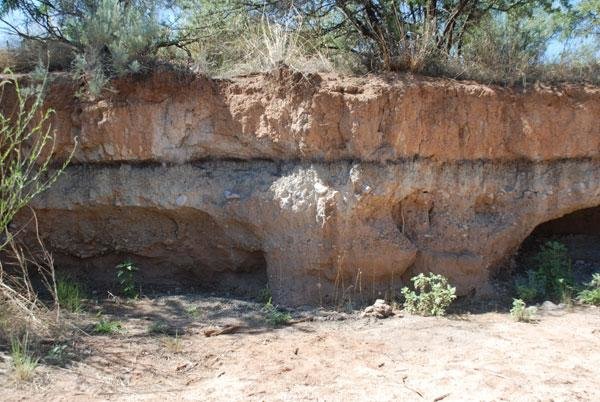
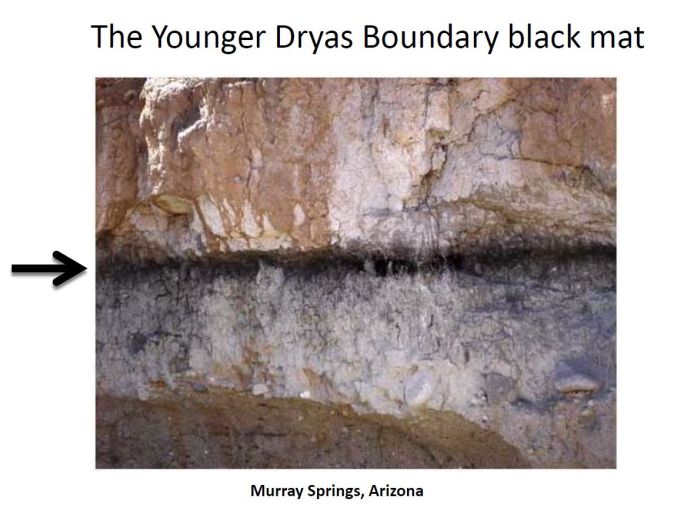
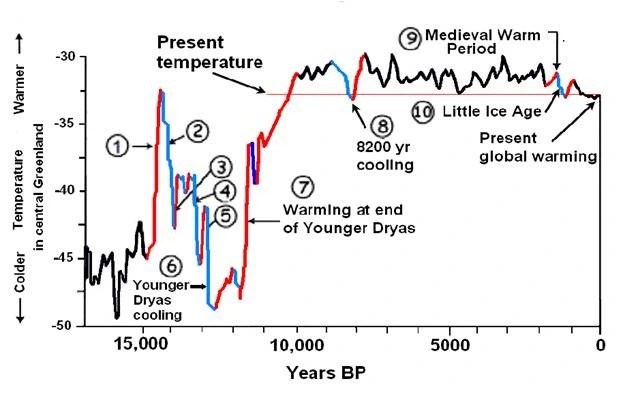
 The Domains of the Emperor Owl
You must be logged in to post a comment.