A couple of weeks ago or so, I uploaded a YouTube video that contained four covers of this song, from the middle-school period of William Griffin’s life. He’s the protagonist of the Odes to My Triceratops song cycle. But I found issues with the audio quality, caused by a faulty pipeline. Although that’s now fixed, I’ve needed to fix the songs involved, and I also created two more for good measure, so the new video has six covers.
“Tricera Girl” is one of my favorite songs of the first album. It embodies very well the wonder and desire of an early teenager who realizes he’s found the love of his life and doesn’t quite know how to handle it.
This song launches the fourth album, right after William seemingly kills himself right at the end of the previous album. I made this song, along with about four others of this album, during the last stretch when Udio was usable.
You could tell, unfortunately, that Udio was involved in the production of this song, because the composition is far more complex than what Suno 6.0 produces, even when you directly remix the original Udio song. That was due to Udio allowing the generation of 30-seconds-long segments at a time, and letting you extend the song in either direction as you pleased. No service allows that anymore, not sure why. You can hear the entirety of the original Udio song, not the Suno remixes, at the end of the video.
I’ve bitten the bullet and decided to create my first new Odes song from the fourth album on Suno 6.0. I’ve genuinely explored alternative services and models, but none are up to par even with the original Udio, so I’m all out of luck when it comes to keeping my previous workflow. But I’ve made it work with Suno 6.0, I think. I’m quite happy with how “Hermit Hemisphere” came out.
Suno is terrible at allowing you to create music in an exploratory, coherent manner, but it’s exceptional at covering songs made in the glory days of Udio.
The combination of this song’s retarded lyrics and its hard-rock earnestness will never cease to be funny to me.
Suno will legitimately be useless to create most of the new songs of the fourth album, but I can still spend my subscription redoing songs from the previous albums whose sound quality had suffered. Here’s one of my favorites from the first album: “I’m Cactus,” the tale of young William’s inability to take care properly of his single plant.
I’ve already redone other songs, so soon enough I’ll upload new YouTube videos with the redone versions.
My disappointment of the month: Suno 6.0 has come out, and it’s shit. Not only that: it’s the Udio debacle all over again. The music industry has castrated the leading music generator. I tried generating a segment with four simple lines of lyrics from my Odes to My Triceratops cycle of songs, and they were moderated due to copyright even though there were no true copyright issues. Next batch of lyrics: moderated due to violence. And the music sounds more artificial than it used to two models ago. Suno is done.
The sole alternative is to wait for a local model to sound as good as Udio did during its Wild West days. This may happen. But I doubt it’ll happen for at least a couple of years or so. Which means I have to park my fourth album even though I’ve written all the lyrics.
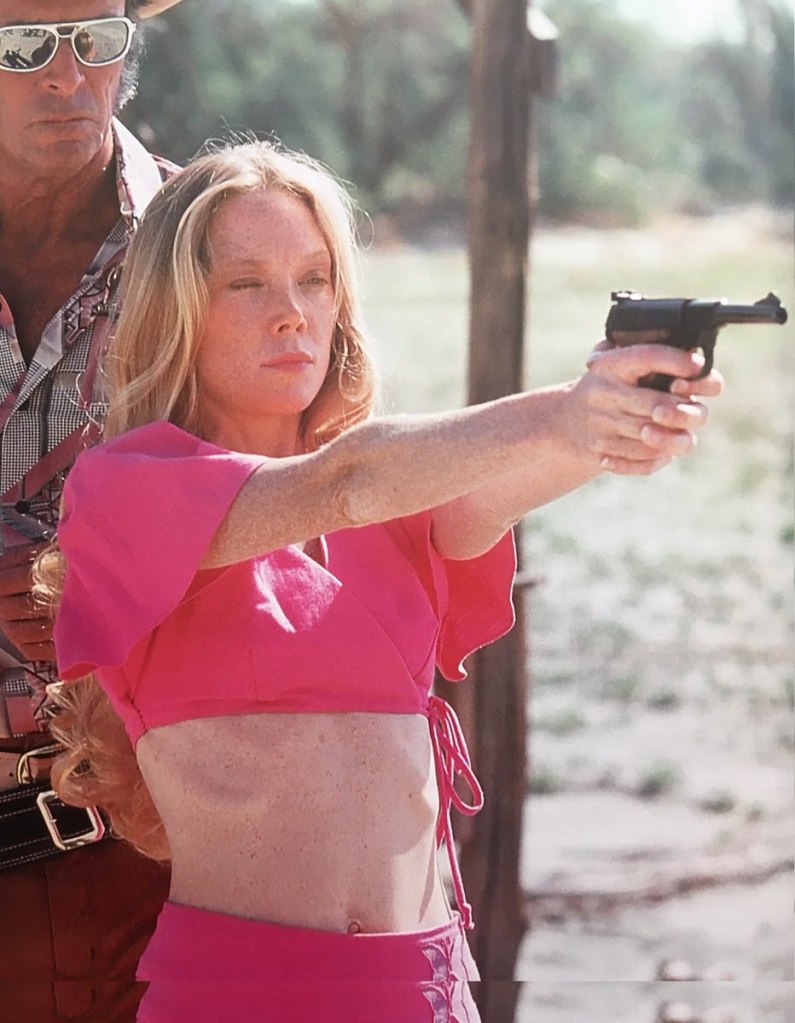
Cormac McCarthy’s artistic landscape contributed heavily (didn’t start it) to my long-lived obsession with the 70s, or at least the 70s like I prefer to think of them. A time before the internet, before the image-obsessed 80s, after the peak of the damn hippies. An era when a new way of living could have settled, only for the 80s to come and make everything mostly a cocaine-infused joke (I enjoy the 80s, don’t get me wrong, but it did ruin the promise of the seventies). Anyway, due to finding out that McCarthy loved Five Easy Pieces, the 1970 movie, and that it seems to have fed into my favorite books of his, which are The Passenger/Stella Maris, I proceeded to watch other movies related to directors McCarthy had loved. That led me to Terrence Malick, which led me to his exceptional Badlands, which introduced me to Sissy Spacek, and now I’m enamoured with Spacek.
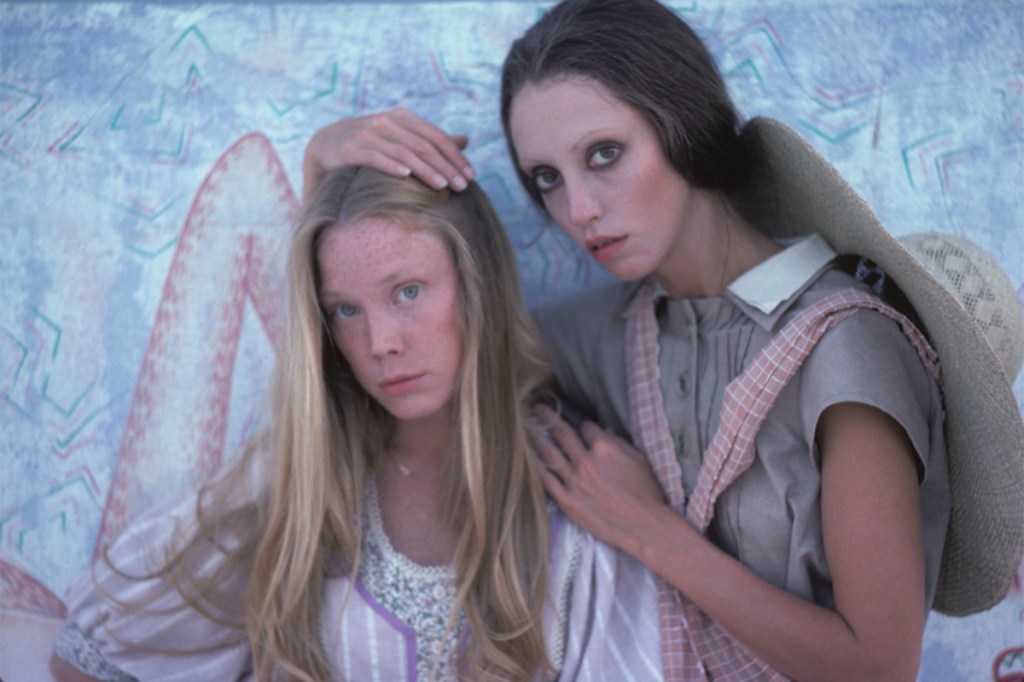
Earlier today I watched Altman’s 3 Women, which I didn’t like much as a movie, but it features another mesmerizing interpretation by Sissy Spacek as a sort of a wild child alongside Shelley Duvall, that weird-faced poor lady who got abused by Kubrick and Nicholson on The Shining. Partly due to my sudden infatuation with Spacek, partly due to the fact that her character in 3 Women was an innocent, wild, lovely flower (possibly autistic?), a moment in the movie when Duvall basically tells Spacek to fuck off made me want to slap the hell out of that woman. I had to ask ChatGPT why would anyone do this to poor innocent Spacek’s character, and ChatGPT told me to calm down and keep watching. The movie had interesting shots, and it made me inhabit the isolated, strange 70s again, so I appreciate it for that, but it was quite the mess of a story, and that score was godawful.
It really pisses me off that, having been born in 1985, I didn’t grow up with a crush on Spacek. I didn’t even know about her until my teens, I think, and the impression of her was heavily distorted by her having acted as Carrie in that adaptation of the Stephen King novel. I can barely stand Stephen King (and only his adaptations; I despise his writing), and I hate even more that the impression most people have gotten out of Sissy Spacek is her being covered in pig blood and telekinetically massacring everyone.
Spacek was the most gorgeous, unique creature in the 70s as far as I’m concerned, and the sole actress I can imagine playing Alicia Western. And there’s an additional connection to Alicia Western that leads me to believe that McCarthy would have agreed on the casting. Spacek pushed for the production of and to star in a movie adaptation of a play named ‘Night, Mother. It’s about a mother and her suicidal daughter, with the mother spending the night trying to talk the daughter out of suicide. McCarthy praised that play. About twenty years later, McCarthy wrote The Sunset Limited, about a man trying to stop another man from killing himself. It also takes place in basically one place, and only the two characters are present. And McCarthy’s final book was Stella Maris, featuring two characters in a room: a therapist and Alicia Western, with the first one trying to prevent (unknowingly) the second’s suicide.
Time destroys the present tense of everything. An online music service allows you to generate beautiful songs that sound backed by a real band, only for the music industry to make the model disappear. Magnificent people exist at their best for a short period and then fade away. Reality is too heavy and painful and soaked in melancholy for it to be carried on one’s shoulders all the time. No wonder people drown themselves in their jobs and their families and their sports teams.
In a few days I’ll have finished the entire set of song lyrics that the story Odes to My Triceratops will contain, which means I’ll have plenty of new lyrics to turn into full songs. The online service Suno seems like the best choice these days, although it’s currently in a weird state, as they intend to roll out a fancy new model that will replace all previous ones, but we don’t know when that will come out (other than “in 2026”). We don’t know if the new model will truly beat the previous ones, or if it will be crippled by the music industry’s interference like what happened to Udio.
In any case, I’ve been trying out genres, instruments, and such with some of my old lyrics. The following songs were produced on one of the current free Suno models, not even the most capable one. Suno used to be considered inferior to Udio because its songs sounded more artificial; I suspect that’s no longer the case even in the poorest model now available.
Suno also added a studio capability: you can generate voices, instrument parts, etc. in their own stems. Producing the new songs is going to be a blast.
This concludes the release of all the finished albums I have for the story. If back in the day you enjoyed any of these songs, produced during the very early days of Udio in which the song quality wasn’t good enough, you should probably listen to the songs or the whole album again, as I had Claude Code work its magic through the frequencies.
YouTube video’s description:
This is the first of three completed concept albums about a trio of friends living in a nowhere town: William Griffin, a sensitive and increasingly unhinged songwriter; Claire, his blind and illiterate next-door neighbor and perpetual mystery; and Lorenzo, their friend, who is inexplicably a sentient triceratops.
I made roughly eighty songs about them during Udio’s brief, lawless glory days, when a generation could sound like an actual band playing in a room, and you could still use swear words. The project ran through three albums and into the beginnings of a fourth before I ran out of steam, around the same time that changes to Udio’s model made the music feel notoriously worse.
Returning to these songs now is strange. Some of them still make the hair rise on my arms. William, Claire, and Lorenzo feel like forces within me that split apart, took on lives of their own, and built a mythology that contained that strange period of my life.
The earliest seeds of the lyrics date back to 2021. I can play guitar, but I was never going to become all the bands these songs required. The music changes radically from one track to the next, because each song takes whatever form its emotion demands. The characters and their shared emotional history are what hold the albums together.
This first album is the roughest of the three. I had just started producing songs with Udio. I was trying my way through writing song lyrics for the first time, with the additional constraint that I intended to sound like a somewhat-unhinged middle schooler whose best friend was a triceratops and who tended to filter reality in surreal ways through his dinosaur-addled brain. The resulting lyrics are sillier than usual, while retaining the earnestness and honesty that I intended for the whole story. But sometimes the lyrics get too dumb in retrospect even for me, which makes some of these songs a bit hard to listen to.
That said, there are real winners here, at least to me. Claude Code did everything it could to bolster the audio quality of this early-era Udio audio productions, and it has worked beyond my expectations. Thankfully you won’t have to listen to some of the songs in their previous states; some sounded as if they were played through a blanket.
I don’t know how the notion for this series came to be back in 2021, during one of the wildest creative periods of my life. Suddenly I knew I had William (an unhinged kid who expressed himself through music), Claire (his illiterate, blind, next-door neighbor who remains mostly opaque to him), and Lorenzo, a goddamn triceratops. I didn’t need to reason their existence or why writing about them was so important to me. I just felt it, so I soldiered on.
Now that I’m older and I have come to understand myself better, I do know why I needed to produce these songs, and why listening to them feels like coming home no matter how much I’ve tried to distance myself from this project. This story is my dead youth. An unhinged artist with a raw heart, who loved too much in the wrong ways. A blind, illiterate mystery whom the artist was devoted to and couldn’t afford to lose. An ancient, violent source of chaos who never left William’s side. That’s myself split in three. And I also know why Lorenzo had to die, and why Claire had to disappear, even if I’m the only one who understands.
I want to return to this story and finish it properly. I don’t know if I will. These days I promise too many things to myself. But I want one day in my late forties to return to these songs and new ones and feel the same emotions that these three albums recreate. So at least to me, Odes to My Triceratops didn’t deserve to be forgotten, and with the YouTube releases out, they will outlast me.




 The Domains of the Emperor Owl
You must be logged in to post a comment.