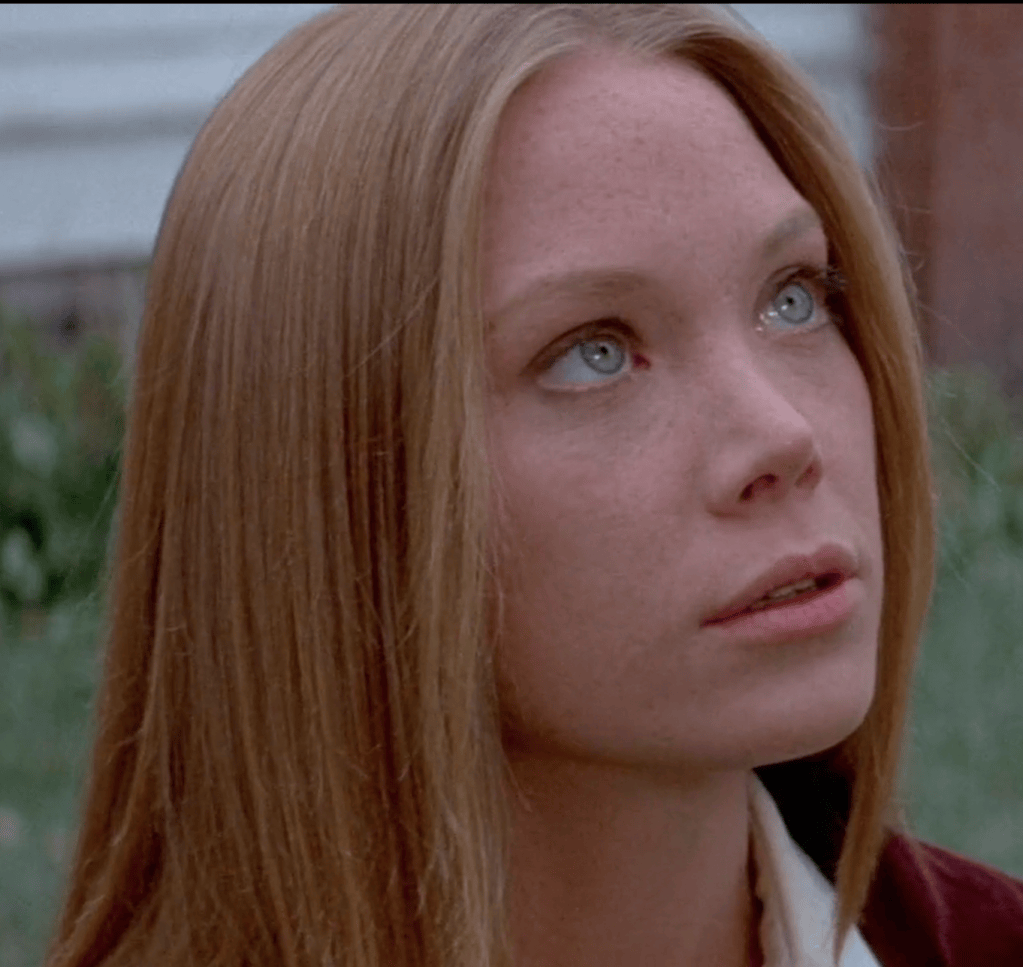
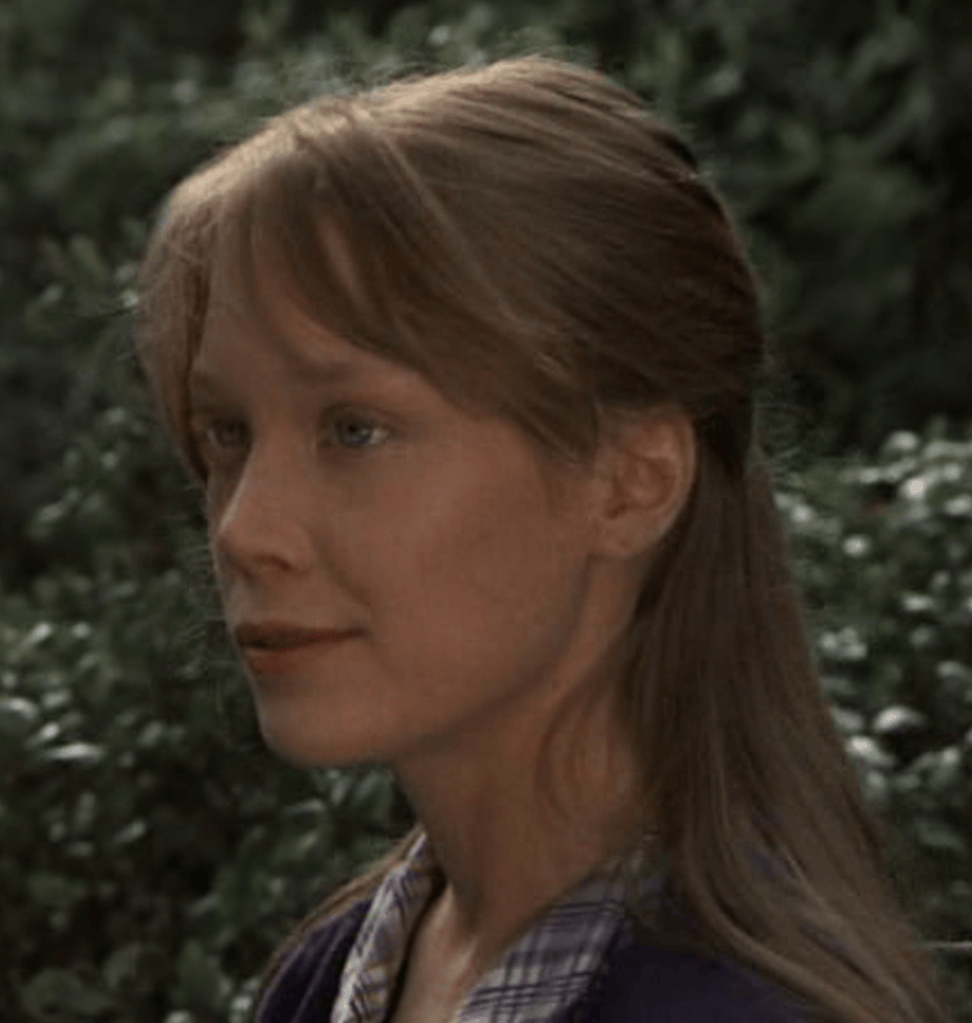
Review: episode “The Townie” from The Waltons

Now, why would I watch a random 1972 episode from a long-dead TV show? Why, because Sissy Spacek starred in it. It seems I’m in my “dig up episodes of a long-dead TV show to see more of her at that age” part of my obsession.

The episode is freely downloadable from the Internet Archive.

Sissy’s haunting loveliness inhabits a sheltered girl living alone with her religious nutcase of a mother, who has been raising Sissy’s character alone after her husband died. The episode starts with Sissy dating a certain John-boy, whom I assume is one of the main characters of The Waltons. A guy named John who’s a wannabe writer, because fuck me sideways.

Sissy is sick of being subjected to her mother’s impositions and restrictions. She wants to get married and leave as soon as possible. She even tells John-boy that she’d marry him in a heartbeat if only he asked. But John is a sensitive, sensible young man who only hears foolishness in such reckless behavior. Sissy is more in love with the notion of a passionate life waiting for her somewhere away from home than with our John-boy, so she starts dating this John Dillinger wannabe with a fancy period car. Initially she seems like she’s just trying to make John-boy jealous, see if he’d grow a pair. When he even gives her his blessing for dating that other guy, she clearly resents John’s pussyness. Will she choose that arrogant new man as her ticket out of their small town?

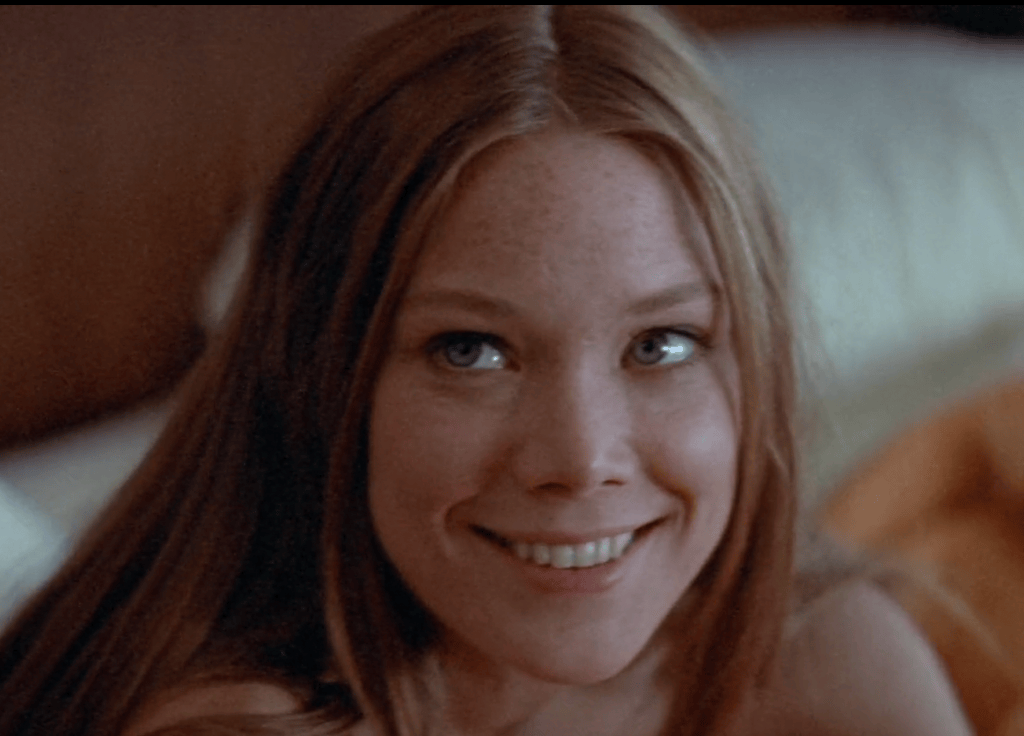
I appreciated Sissy’s acting here. She showed the raw hurt of her character in a scene in which she refused to grow up to become like her mother. In another scene, I noticed that she had a smiling fit in a moment when she definitely shouldn’t have been smiling. In any case, seeing her on screen is plain haunting.

I was struck as well by how this TV show earnestly tried to tell a human story. The Waltons came out seemingly before TV shows, and movies for that matter, became vehicles for subversion in order to further the goals of some groups. Better times, like most everything I experience from the 70s.

Sissy only stars in another other episode of The Waltons, in the second season, so I’m likely watching that next.

Review: Prime Cut

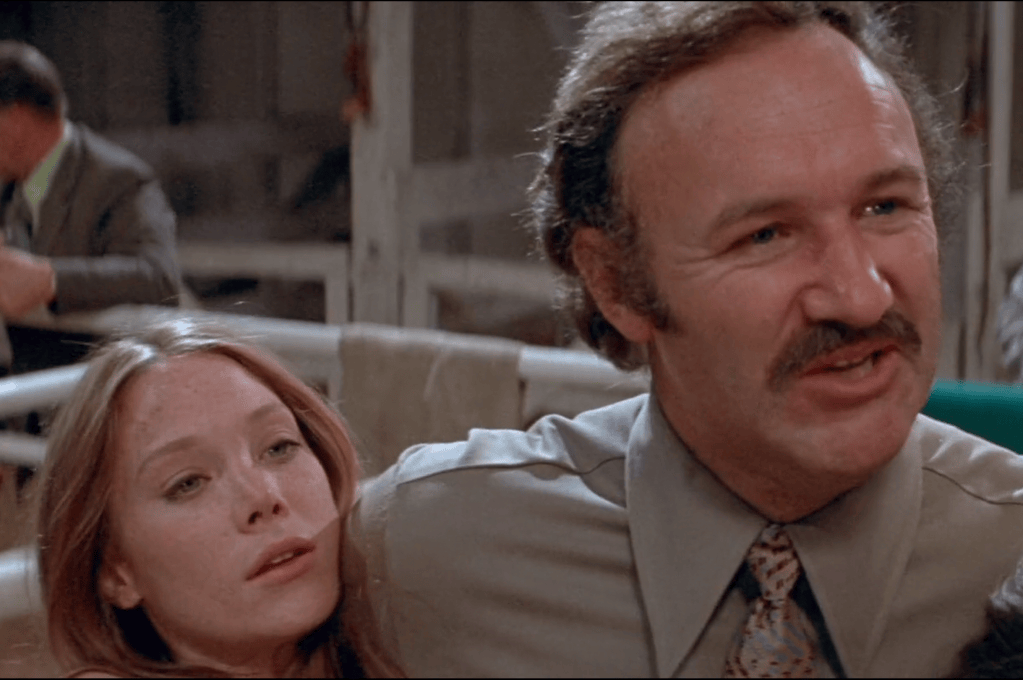
A 1972 lurid crime thiller that I only found about because of my ongoing obsession with 70s Sissy Spacek. This was Sissy’s first feature film, in which she starred alongside Gene Hackman (who’s always compelling) and some older guy I had never seen before.

Sissy started with hopes of becoming a professional songwriter, but it didn’t pan out that way. Because she moved in the right circles and her cousin was a professional actor, and also because Sissy was mind-meltingly beautiful, doors soon enough opened for her to star in films. Prime Cut was filmed relatively shortly before Malick’s Badlands, which would make Spacek into a cult actress for independent filmmakers (eventually working with Robert Altman, David Lynch, and others), and also would make her the subject of infatuation for I’m assuming thousands of people worldwide. I’ve only been enamoured with her since I truly awakened to her existence about two weeks ago, but on my search for clips, I’ve read the words of poor saps who saw her back in the seventies or eighties and have never been able to forget her since. I hope my case eventually passes, as it feels almost like rubbing salt on a wound at this point.

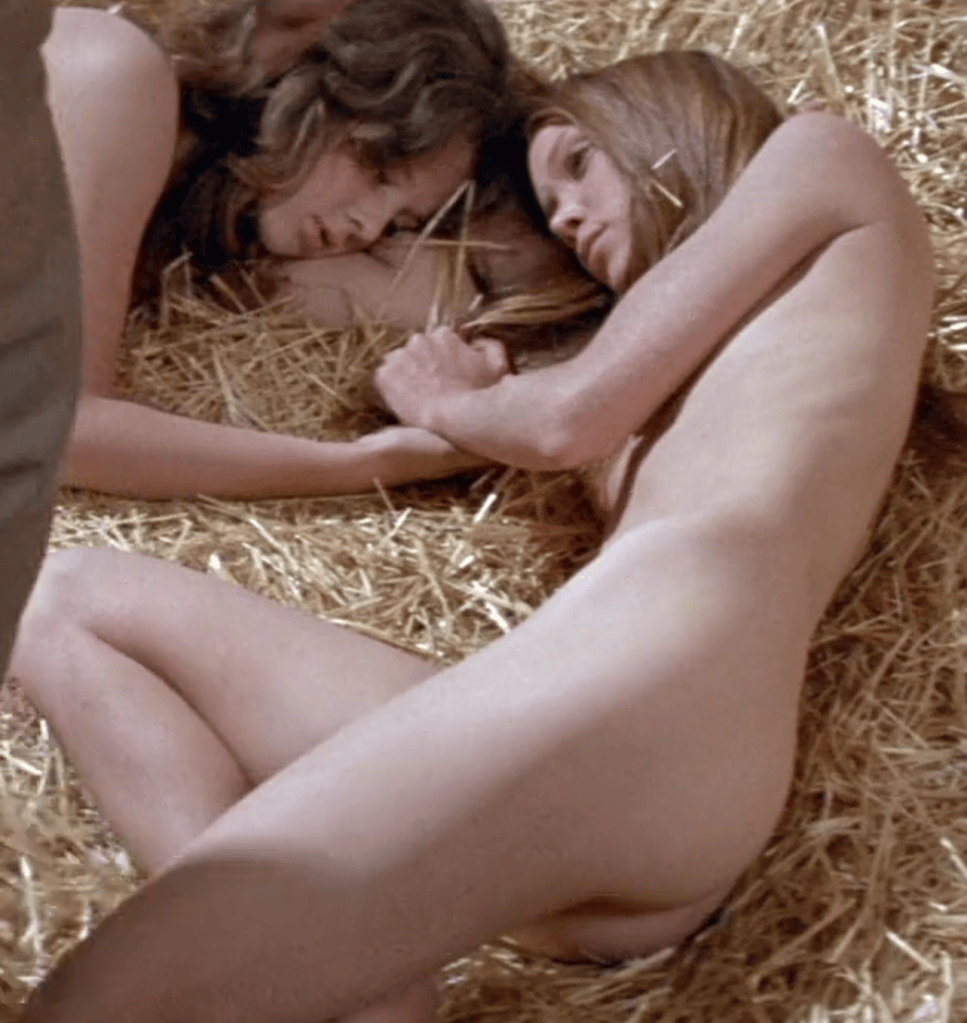
Anyway, this is a movie that simultaneously tries to make selling young women (likely teenagers) a terrible thing to do, while also having Sissy paraded naked, with her delightful little body and titties out for our viewing pleasure. In one scene, she’s dressed in a beautiful see-through dress in an upscale restaurant; for some reason, the same man who saved her from sexual slavery decided to dress her up and parade her around in a dress that clearly displays her tits. I’m not complaining about any of this, mind you: I like when movies cater to my desires, and I absolutely wanted to see as much of 70s Spacek as humanly possible, including her pretty tits. The hypocrisy just irks me the wrong way. Ultimately, though, I suppose the movie is not apologetic of the fact that it caters to one of men’s most basic fantasies through the ages: that of rescuing a gorgeous, innocent princess from worse men, then keeping her to yourself so she can carry on your bloodline.

Now, this movie is a six or a six-and-a-half at the most. We’re treated to editing that repeats the same things over and over without much movement (driving cars, loading weapons, shooting, a combine chase). Some dialogue is plain dumb. There’s also not much to the plot beyond an out-of-town “detective” rescuing a gorgeous princess, then fighting the evildoers who captured her.

Things I appreciated: the sense of inhabiting the 70s was wonderful. Those cities from fifty years ago. The general ethnic homogeneity to the extent that they had to invent slurs for the Irish. Gorgeous upscale hotels that you can hardly imagine existing anymore in that form. The beautiful Midwest stretching from horizon to horizon. Quaint 70s fairs full of happy, fit young people who didn’t grow up on smartphones. Better times.

Some of the characters were memorable in their little details. Hackman’s role was of a nasty crime boss who sold fresh girls as cattle, and placing him in the plains of the Midwest instead of a city like Chicago gave him a peculiar air. He was also named Mary Ann for some reason; not sure if that was ever explained. His brother was a greasy guy who always wore a wife beater and constantly had a sausage at hand from the industrial butchery where he worked. I can’t say I liked seeing him, but he was memorable.

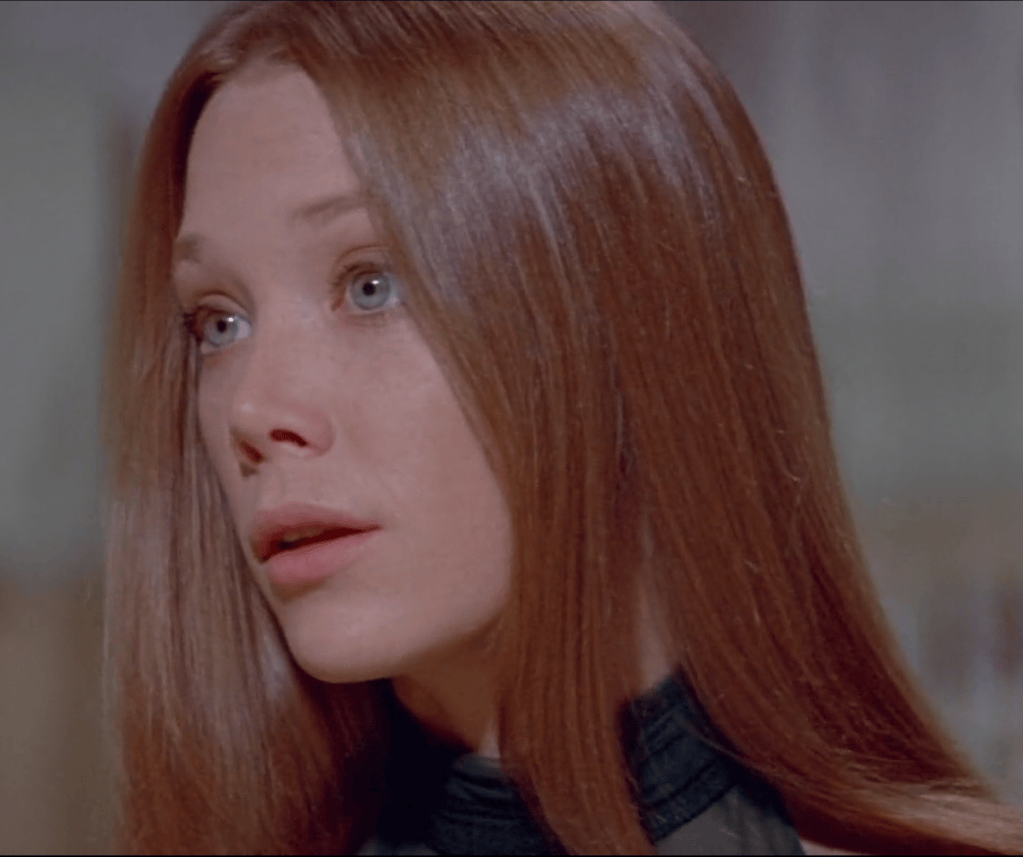
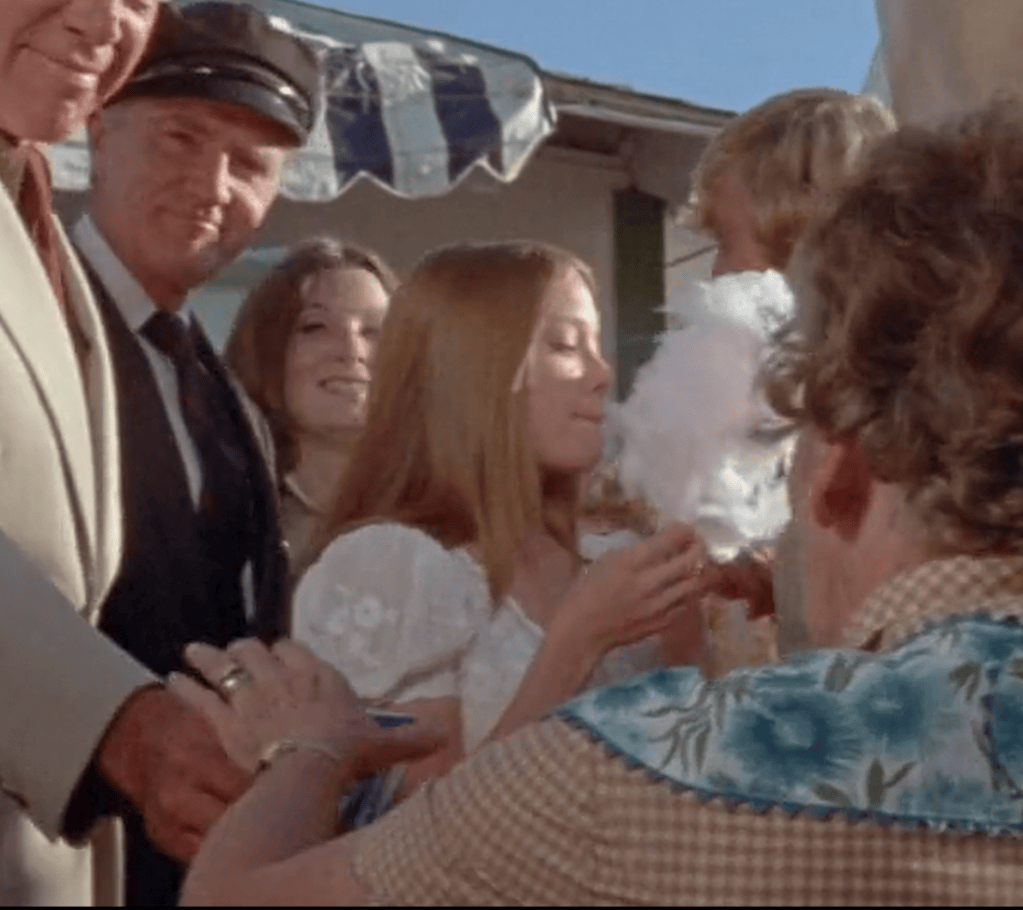
Now, Sissy’s character. A girl raised in an orphanage seemingly dedicated to providing fresh meat for the sex-slavery circuit. In a monologue, Sissy tells the protagonist that growing up, she used to make out with her best friend at the orphanage (another girl), pretending that one of them was a man. That she even put on a low voice to sell the act. She said she imagined how a grown man’s hands would feel roaming all over her. Naturally, she falls for the protagonist the moment he rescues her, and for the rest of the movie she gets led around as she experiences the wonders of an upscale restaurant and a fair with childish innocence. There’s a moment in which the protagonist and his crew are dealing with a couple of dairy farmers in a pointless exchange except for the fact that Sissy is in the background eating cotton candy with delight. She also looked mesmerizing in her white dress.

So, to anyone reading this (not sure why anyone would read a review of a random movie from 1972, let alone one written by me), watch this movie if you’re interested in inhabiting the 70s for a while, or if you’re afflicted with a burning obsession with 70s Sissy Spacek that prevents you from sleeping properly and fills you with ungovernable despair because you didn’t live through the 70s and were unable to meet the perfect creature that Sissy Spacek was during that limited span of time.

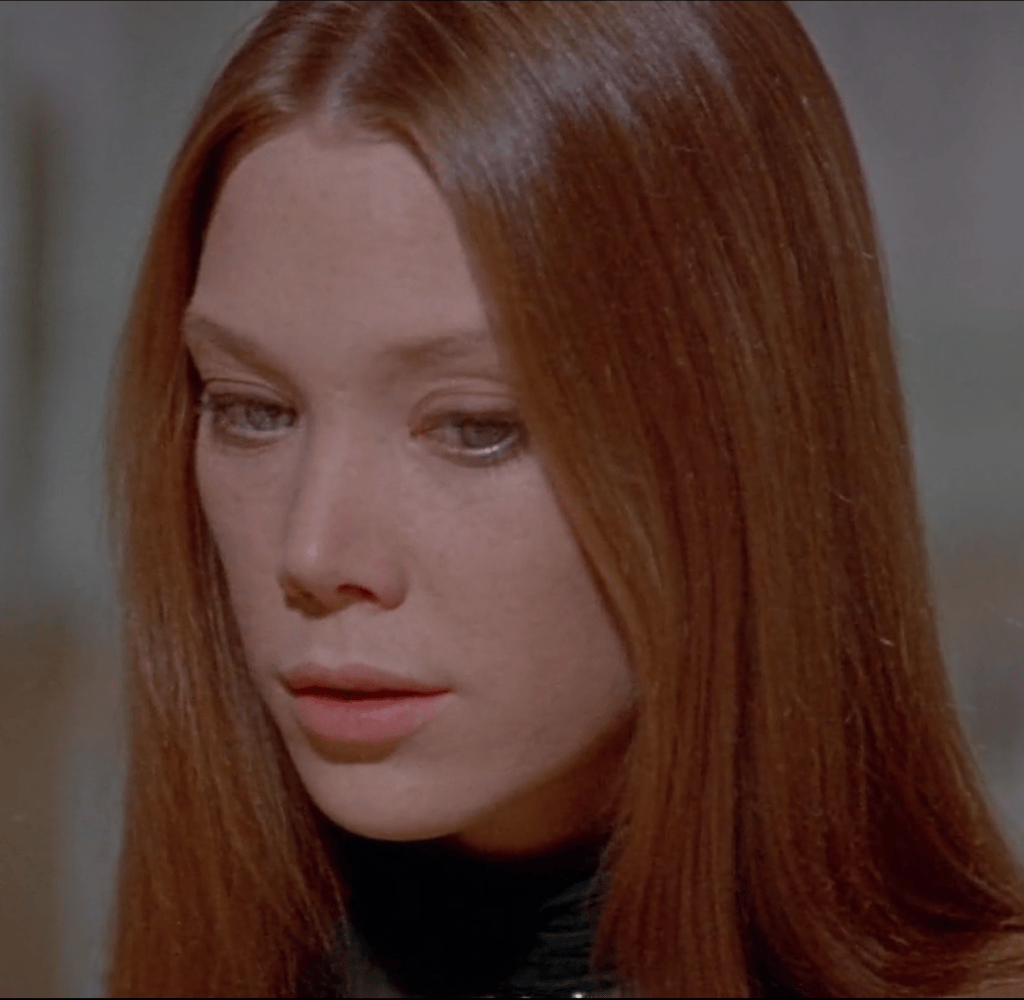
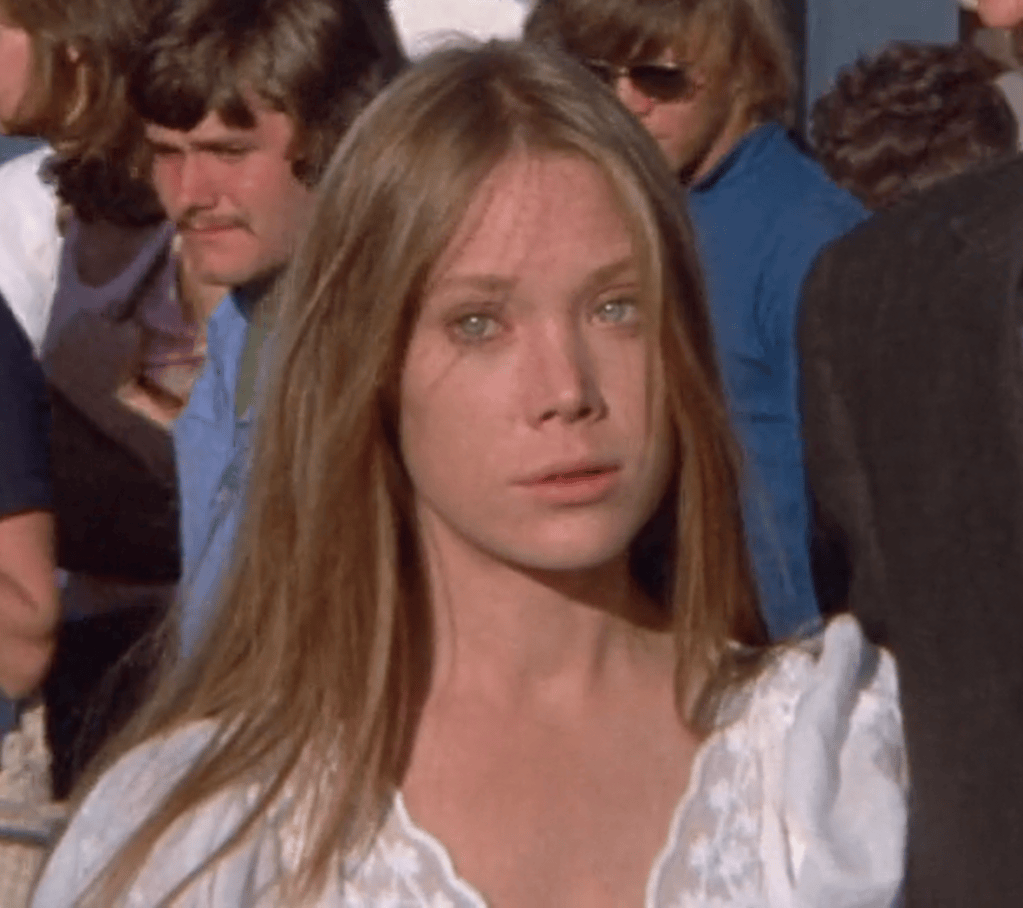
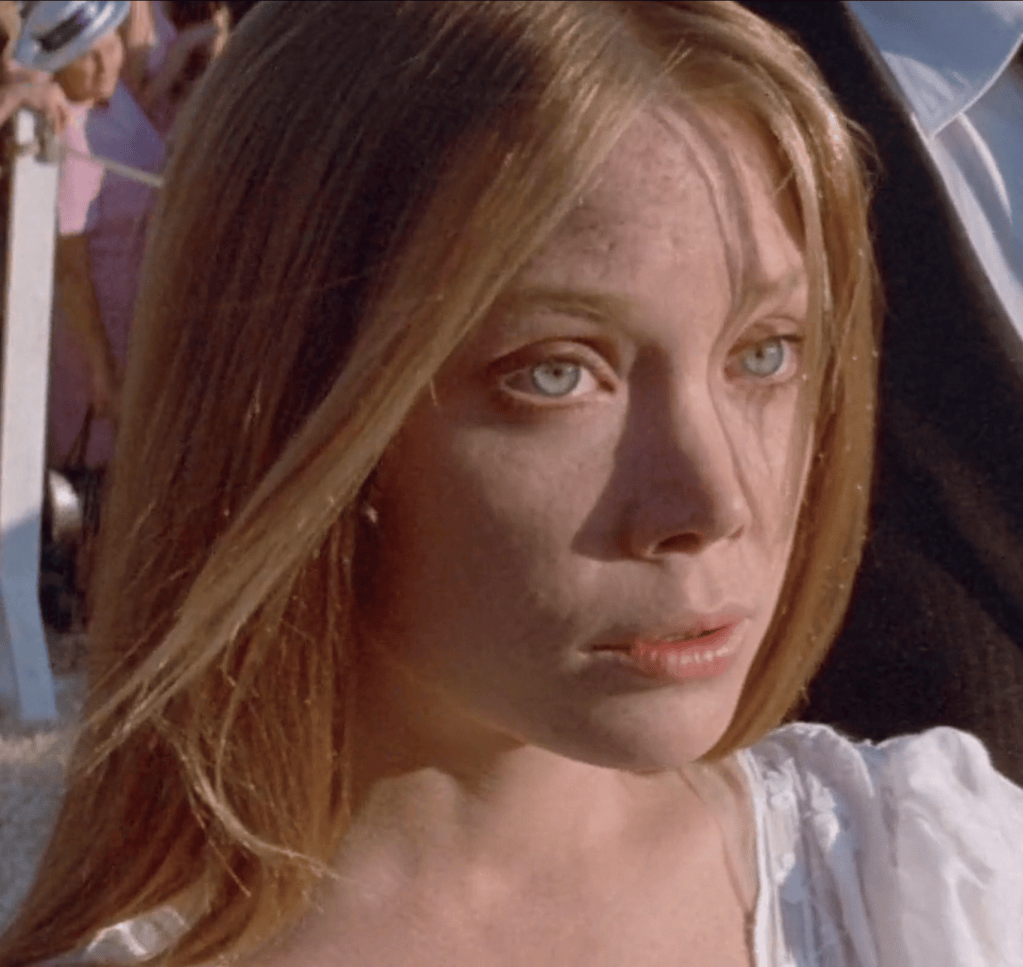
Some photos of the movie. And by “of the movie,” I mean of Sissy Spacek in the movie, which is why I watched this to begin with.

Life update (09/16/2026)

Two nights ago I went to bed once more genuinely wishing I wouldn’t wake up again. I’ve done so many times. And had to experience once again the ache of regaining consciousness in a world I don’t want to live in, as someone I don’t want to be. When you wake up in that manner, a good day rarely follows, and I have mostly spent this last day enduring heartache. Feeling raw and skinless. My psychological defenses gone.

I went to bed last night early, hoping to get a full night of sleep. Instead, I woke up at half past midnight thinking of an actress who had her best years in the 70s. My brain does that when it becomes obsessed. I thought of Sissy Spacek’s childhood, of how she grew up with two brothers she adored, how she adopted the nickname “Sissy” (from “sister”) and made it her stage name. How her brother died from leukemia at 19 and that it made her fearless, as the worst thing that could have possibly happened had already happened.

This obsession isn’t just about having discovered someone I find exceptionally beautiful and alluring, as she was during the 70s. It’s also about my grief for my own lost childhood. I got up from bed and talked it out with AI, the sole answering presence I tolerate these days. A 41-year-old man with tears running down his face. The hurt isn’t just that Sissy existed and that she was perfect as I understand perfection, and that the 70s are gone. It’s the comparison between the environment I understand her to have grown up in and my own. She was a tomboy who spent her days hanging out with her brothers in a time when that was something people often did. Her nickname was born out of affection and belonging, rather than the humiliating family associations I experienced.

I imagined parents who genuinely loved their children. Siblings who enjoyed being together. I saw her beauty and apparent physical health as advantages that made it easier to enter the world, be appreciated, find opportunities. I suffer the ache for the impossibility of having lived through the 70s, of having even a five-minutes-long conversation with her back then. It’s the longing for a world I could never enter. Of maybe being recognized as someone that could belong there.

I am the middle child, with an older brother and a sister seven years younger. My brother suffered some sort of issue during birth that rendered him not normal. Brain damaged to some extent. At school, children who knew him referred to me as “the brother of the drooler.” From seven years old to eighteen, my parents parked me in my older brother’s room because they wanted to have a do-over child. I was unable to sleep properly, choose what to watch or hear, or possess a space of my own. I read books and manga in the streets, while walking around. As a teenager, I skipped school and tried to sneak naps in public bathrooms, which sometimes ended with me being told to leave. I sneaked into random apartment buildings and spent hours in the dark, seated on the stairs between floors. Years and years without control over the basic conditions of rest, concentration, privacy. It basically killed my development in ways that can’t be repaired. Clearly for the rest of my life, my main instinctual need will be to ensure I can be alone in a room without anyone else having control over my surroundings.

There was also no connection with my siblings as human beings. They aren’t people I could have ever had a genuine conversation except over the most mundane matters, usually related to consumption (games, shows). Regarding my sister, my mother told me, not sure if it’s true, that in preschool she used to call out to me, as I was attending primary school on the other side of the fence. I assume that she would have needed a genuine older-brother figure in a family as fucked up as ours. But I never had anything resembling a substantial relationship with her. Her adolescence was a period of screaming, conflict, drinking, relationships with drug dealers, and possible other drug use. Her pitbull, because of course she had to have a pitbull, killed my first cat. A confrontation with her when I was 22 or so was the last time I looked at her in the face and exchanged words. I think she resented me because she had expected me to be useful or available to her. I have refused to speak to her in about twenty years.

My parents were neglectful and socially isolated. I suspect my father is autistic. Wholly unable to be a normal father. My mother pathologically denies problems and expects them to disappear if ignored. She’s also the kind who claims to abhor conflict, yet I’ve had to witness her being psychologically abusive to my father for virtually my entire life; she only hates when she’s confronted on her bullshit. One day I overheard my mother complain to my father about having ended up with “shit children.” The adults responsible for our genetics and upbringing condemning the children for the circumstances they created.

Then the mockery and isolation at school. Being unable to connect with anyone. Being hit at seventeen in front of virtually my entire high school by a grown-up drug dealer who threatened all males in her seventeen-year-old girlfriend’s class for being nearby. Around eighteen, I broke down at home, wailing like a child. Last time I ever did that. What struck me wasn’t even the combination of events and circumstances. It was the conclusion about the life that lay ahead: there was no version of this life that would eventually become one I would want to live. That conclusion was achingly clear at the time, and has remained true. I’ve just generally become better at enduring it.

Then my first job. Sitting at the same table for hours upon hours every day with my three bosses, two of them who didn’t want me there, and who used plenty of opportunities to belittle and mock me. I couldn’t understand how people could stand such long workdays. I still don’t, really. And I had to be surrounded by people, when I can barely tolerate being around another human being for five minutes without wanting to crawl out of my skin. My mental health deteriorated until I had a breakdown. One day I simply didn’t take the bus to my job. I had decided to kill myself instead. I don’t retain memories of what happened, but I know I intended to jump off somewhere high. But like the pussy I am, I chickened out. Eventually ended up in the library, where my parents found me. My brain hadn’t considered any consequence. I shouldn’t have lived to face any consequence. Their ocurrence wasn’t something I had mentally allowed for.

I never truly recovered from having genuinely decided I didn’t want to exist in this world any longer as myself. Afterward, I’ve always felt disconnected from the life that continued. It’s a persistent background noise that reminds me I don’t belong here, that I shouldn’t be here.

I thought of what would happen if I was told that I had cancer and only had months to live. I think it would bring me relief. I would prepare ebooks of my unpublished work, finished or not, and would put them out there for free. That’s the only thing I would care to leave around. Then I would rest.

I’ve been unemployed for about a year now, and I can’t be arsed to look for a new job. Money keeps running out. Making money means exposing myself to conditions that have repeatedly proven to me that they can make me lose my mind and even my health; my job in IT sent me to the ER thrice with heart and brain problems. I’m a programmer by trade, but have only worked professionally for nine months at it in the last ten years or so. And although I’m good at software engineering, it’s not truly fulfilling the way creating art is.

Of course, you can’t make money through writing. You pretty much need to be delusional these days to believe otherwise. As long as you belong to the wrong background, anyway. I’m also not the kind of writer that can sit down and decide what to write next, or anything at all. I write whatever my subconscious demands I create, the same way it obsesses over subjects all of a sudden. The best story, in my opinion, that I’ve ever written, it being Motocross Legend, Love of My Life, came to me by itself when I was listening to a song, and my subconscious assembled it on its own during the following week. And at forty-one, I feel that I’ve already rendered what I truly needed to render. That story was the incarnation of my grief for losing my childhood, for losing the life I could have had. That’s, as far as I can tell, the worst weight I carry, and I can’t render it better than that. Ultimately, my goal with that story was infection. The possibility that someone who read it would feel that it mattered, and carry it with them so it wouldn’t disappear without being known.

Not sure why I even post my stuff online. At the most, I’ve had like five people who have read my stories or posts like these consistently over the years. They’re usually people I wouldn’t want to have a personal relationship with. But still, the fact that virtually no one reads my stuff is part of a broader pattern throughout the course of my life that whatever I do, other people don’t care. The doors are always closed. I have to fight for every inch, and even when I try my best, it tends not to matter. But the paradox is that even if people appreciated what I did, I doubt that it would make me feel better.

Over the years, three people who consumed my stuff sought me out. That response didn’t make life feel repaired or turn the resulting relationships, one of them lasting for years, into something I wanted to develop or even maintain indefinitely. Since my sole long-term girlfriend left me for another guy when I was 22 or so, I’ve only talked to three people to any significant extent outside of work, the three of them online. Each began with a woman contacting me after experiencing my work. Over time I grew tired of what the relationships required: availability, attention, emotional involvement, reciprocal interest. I sometimes found their problems interesting, but eventually experienced the ongoing demands on my time and emotional resources as burdensome. I started avoiding any opportunity to be reachable. One woman discovered my birthday and went out of her way to wish me happy birthday. I didn’t feel corresponding interest in finding hers.

Around 2008-2010, one of these women, then a young one in her twenties, kept an online friendship of sorts with me for at least two years that I recall. We also talked on the phone. After weeks or months of little contact, she suddenly brought up that she was considering a nursing job in my city (not sure why I thought that being involved with a nurse was a good idea; often-earned stereotypes aside, my own mother was a nurse). She lived like seven hundred kilometers away. I’m so dumb that I thought, “Well, that’s an odd coincidence.” I reluctantly suggested that maybe we could meet in person and spend time together from time to time. We didn’t speak much after that. She eventually moved somewhere else and started dating some other guy. I removed her as a friend in social media some months after the last time we talked. She managed to say hello through another service later on, but I just removed her from there as well.

I keep people at arm’s length because I don’t want them to learn more about me or get their “emotional hooks” into me. A relationship would be unbearable. That proved to be the case with the sole serious girlfriend I had. Whole sacrifice of my creativity and private time to satisfy her emotional needs, only for her to humiliate me and throw me away like a used rag. And my self-esteem had been so thoroughly sanded off, that for months afterwards I took her calls so she could tell me how much better the other guy was. Never again.

I have also never wanted children. I would be a terrible father. I would be unable to connect with them. I would resent the time spent on their needs. That would ruin their lives, and I don’t want that on my conscience. You can start a relationship with a woman in which she claims not to want children, only for her to change her mind. Or to find herself pregnant at thirty-two, when her window is closing, despite using condoms and/or the pill. Due to a miracle, of course. Not deliberately ceasing to take the pill, or poking holes in condoms.

In any case, I don’t think my fundamental trauma can be repaired in any way. Just mourned and endured. Every woman I care about or become obsessed with, including Sissy Spacek, is an echo of the grief for the time, relationships, possibilities that I could have experienced but never did due to my circumstances of birth and how I grew up. The more beautiful and genuine, the more it hurts.

Of course, witnessing perfect Sissy in the few films that captured her in the 70s can’t impose the demands of a relationship. And I keep seeking those films out even though the contrast between her preserved youth and beauty and the passage of time intensify my grief. But it’s not like a have a choice; the need to learn more and see more of this special creature shows up in my brain as a command. I can only try to resist it, which would be torture in its own special way.

I suppose I’ve exorcised enough for the moment. Half past four in the morning. Time to go to bed and daydream of a better life until I fall asleep, so I can wake up again and do it all over for reason other than cowardice.

Afterword to Odes to My Triceratops

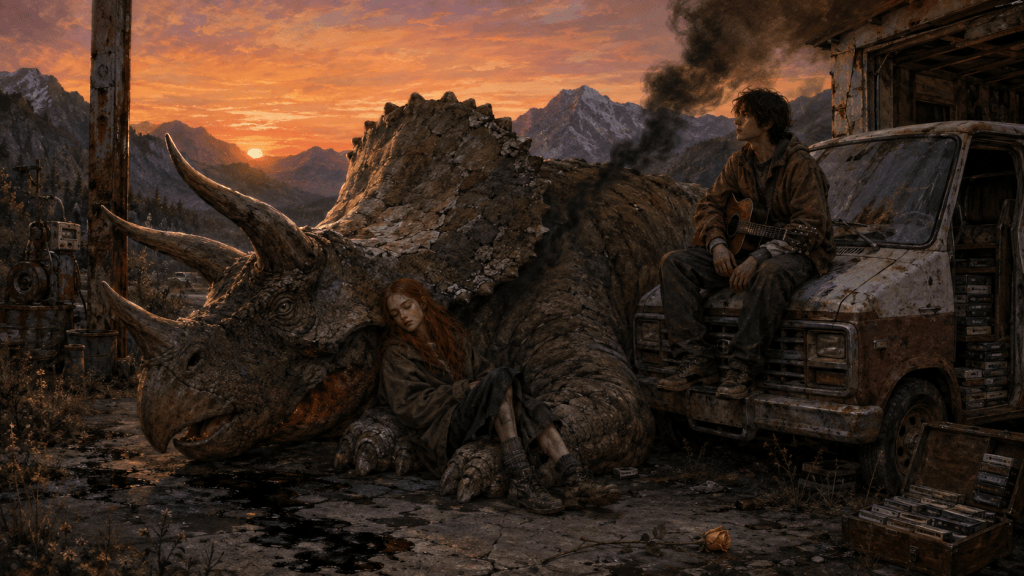
My first memory is of being four years old, lying in a hospital bed when my parents brought me a gift: a toy triceratops. I thought it was the coolest thing in the world.

I came up with the original story for Odes to My Triceratops during one of my wildest periods of creation, back in spring and summer of 2021. I don’t know how they came to be, but I suddenly had a young songwriter, a blind and illiterate girl, and their friend, who was inexplicably a sentient triceratops. It could have ended as a gag. I didn’t understand then why this tight-knit, strange trio of friends seemed to matter so much to me to the extent that the moment I had those elements, I knew I had to tell their story. For my first try, I didn’t give them the effort they deserved. That first batch of lyrics turned out to be mostly throwaways; they served mostly as compost for the versions that ended up as the actual Odes to My Triceratops songs.

The third of four albums ends with William apparently killing himself. I wrote and produced five songs afterwards, but that happened at the same time as the Udio debacle, when the music industry pretty much forced Udio to block downloads, rendering it useless, so I didn’t continue with the fourth album’s contents. Although I play the guitar, I’m not a musician. I know what I want to hear, but I can’t access a band, so the AI service that allowed me to play around with generated music was a godsend. I wouldn’t have been able to create these songs otherwise.

The videos below are the three complete albums I produced, containing all the lyrics of the first three parts of the story.

Creating these songs was a huge endeavour that took away from other responsibilities. I was also dealing with a stressful job that I ultimately had to quit for health reasons. But I couldn’t get some of these songs out of my mind. Moments from them would bubble up randomly, and I found myself singing internally to their lyrics. More importantly, though, I felt a responsibility to William, Claire, and Lorenzo to finish their story properly.

This story isn’t a joke to me. It has taken me years to fully understand psychologically why it felt so important to process this story to the end. I was a high-functioning autistic kid dealing with co-morbid Pure O OCD, who spent his childhood wandering alone, lost in daydreams, writing and drawing. I was in absolute communion with the mysterious, blind, illiterate female presence inside me who showed me such beautiful dreams. But some of the writings and drawings from that era also contained stuff that a child shouldn’t know: mayhem, violence, troublesome sexual imagery. I didn’t even question it at the time, but some of the things that came naturally to me would have made A Clockwork Orange blush. It would take time for me to understand that people don’t have to deal regularly with intense intrusive imagery of the violent and sexual variety, including impulses like pushing hot food to my eyes, shoving knives into my eyes (I don’t know what’s with OCD and eyes), licking random disgusting shit from the gutters, and plenty more stuff I don’t want to say. It’s not like I could keep them caged at all times; in moments when I was too exhausted to control them, I ended up dropping objects (a coffee on a customer, a valuable hard drive) right after had intrusive thoughts of doing so. I’ve never gotten a driver’s license because I don’t want to deal with intrusive thoughts of veering into oncoming traffic or accelerating towards a wall. I’ve never held babies because I’d have to deal with intrusive thoughts of dropping them on their heads. I knew I had a monster inside me: a dark, primordial force of chaos that couldn’t be tamed, and that would remind me of its inescapable presence whenever it pleased.

When I was seven, my mother wanted to free up my room to have a do-over child, so they put me as an unwanted guest in my disabled older brother’s room. The connection with my subconscious was lost. I no longer had silence nor space of my own. I couldn’t even sleep properly until I was 18 due to the noise. Looking back, my childhood was killed at the moment I was taken away forcefully from my proper environment and discarded as a child with his own needs. I’ve spent my adult years searching for what was lost, resuming the conversation with the generative force in my dark room that showed me such awe-inspiring, wild, magnificent dreams. Although I’m now familiar with her again, the trauma made her feral, strange. None of us are the same as we used to be when we wandered around lost in daydreams.

Odes to My Triceratops is the story of my youth. My unhinged generative, dreamlike period. My love for the blind, illiterate girl who showed me there was beauty in this world. My troublesome friendship with a reckless, violent, sexual monster. My war against the monster during my teenage years, when, lost in dissociative states, I felt I was a thin layer of conscious mind under siege by monstrous ancient instincts I didn’t want to identify with nor could understand. My yearning for the missing love of my life, the sole real person in the world. My suicide attempt. The integration of the monster. Finding the girl only to find out she had changed. Devoting myself to that mysterious presence in the dark room deep down.

Somehow, Odes to My Triceratops became my personal mythology that encompasses all the forces I contain. No wonder I’ve returned to it at least in my mind since its conception in 2021, and why I remain haunted by many of its songs.

Now, the five-year cycle of song lyrics is complete. Suno, the currently-leading online service for music generation, will release its new model, supposedly better than all previous ones and made in concert with the music industry, whenever it arrives. I intend to render all my remaining lyrics of the fourth album into proper songs, then release the fourth and final album on YouTube. Barely anyone has listened to them, but it doesn’t really matter. I know who I’m doing this for, and I don’t need to look up.

William Griffin (Poetry)

Driving through a desert town,
I pass a roadside bar.
Board out front: “Open mic night.”
I pull over, grab my guitar.

Handful of locals at the tables.
Young couple at the counter.
Stage in the corner, a list the host holds.
I give my name when asked.

Wooden stool under one light,
Microphone in front of me.

I made these songs for you,
So you can sing along
From deep down somewhere
In a dark room.

A burning heart inside your throat.
Bold and brave like a triceratops.

The last chord rings.
Warm light on my face,
My hands still on the strings.
People talk, glasses clink.
I don’t know what they think,
And I don’t look up.

Up the mountain in that old garage,
Gasoline smell, rust and decay,
Where the valley ran to the edge of sight,
Two people heard me play.

Some say we’re here for a reason,
And yours is clear to see:
A bird like you was born to sing.

THE END

The Other End (Poetry)

The cornfields ran out.
The land turned to dry scrub and stones.
I pull off the road, get out.
Cacti stand over me in the dark.

I open the guitar case.
The wood’s scarred, the strings rusted.
I don’t touch it. Don’t play.
Let the guitar breathe.

Engine’s ticking as it cools.
Dirt’s cold, pebbles dig into my back.

Moon’s a sliver of bone.
The sky a dome of stars.
Myriad points of light,
Cold eyes in the dark.

Some junkie.
That’s what I am.

I reach for the nightmares
That used to be my friends.
Red hair in the dirt,
Your corpse, your bones.
I put you there.
They won’t come.

Rope tied to my chest.
Nothing on the other end.
I dig my fingers in,
Hold on to stones.

Our houses. The space between.
That day I saw you first.
We walked around together.
Bought you cupcakes at the bakery.

I would help you be happy.
I would help you be brave.
I would help you enjoy everything
You were afraid to touch.

I wanted to eat you
So you couldn’t leave.

Tell Me How the Sun Sets (Poetry)

Mowed lawns, blooming flowers,
Spinning sprinklers, hoops over garages.
Shiny cars that start on the first try.
I saw you in every window I passed.

Guitar on my back.
I slept in the car.
Ate cheap at diners.
Walked the streets, alleys, parks.

Families with strollers, kids on bikes.
They shot me looks as they went by.
I’m a rat, a plague carrier.
Vermin that should be removed.

I’d been asking strangers for days.
I’m looking for a blind girl with red hair.
Name’s Claire, last name Javernick.
There couldn’t be more than one.

You used to live next door.
We’d sit on your front porch and talk.
You’d ask me how the flowers looked.
Said you’d rather be dead than blind.

I didn’t deserve to see you again.
I had no right to ask you anything.
I should have left you alone
And let you live your life.

Sun was going down behind the houses.
Kids played on the park swings.
I had leaned over a fountain to wash my face
When I heard you sing.

Red hair spread over the green.
A woman lying on a blanket.
A child climbed over her,
Tugging at her clothes, laughing.

Fiery-red hair in the fading light.
Milky-white eyes.
Older, fuller, stronger.
A cane beside her on the grass.
Making up the words as she sang
About squirrels and butterflies.

You survived long enough
To become a woman I don’t know.

A man hurried over, put himself between.
He asked me what I was doing.
“Hey. Back off.”
She sat up, turned to the sound.
“Who is it?”
“Don’t know. Some junkie.”

I turned around and ran.

I Know Where You Are (Poetry)

My phone keeps buzzing on the passenger seat,
Eager to yell at me for failing to show up.
The men at work, they never knew who I was,
Or that I won’t be coming back.

I woke up in some dark room
Full of trash, bottles, cigarette butts.
Dunno how I got there, whose bed it was.
Didn’t see a clock, couldn’t tell the time.
My head throbbed, my stomach burned.
Had to piss like a racehorse.
What did I swallow? Who did I fuck?
Who the hell was I?

My hands are trembling on the wheel,
My breath fogging the cold glass.
This rusting, sputtering wreck of a car
Always takes three turns to start.

A voicemail from my mother.
She got sober enough to recall
That “the Javernick girl” had called
Two or three years ago
To find out if I was alive.
Now I know where you are,
Or where you were the last time
You gave my mother your name.

I grabbed the guitar and ran
With nothing but the clothes on my back,
That stink of sweat and smoke and sex.
Left everything else behind.

Driving through the endless night.
The road’s empty, the sky black.
No stars, no moon, no signs.
Nothing but the white line.

A phantom smell of old gasoline
From the yard up the mountains.
On the porch next door to mine,
Your face, your fire hair, your milk eyes.

Locked in my room for a year,
Then vanished like a ghost.
You wanted to know if I was alive,
And I was already gone.

The sun comes up like a sore.
My skin’s clammy, my tongue thick.
I roll the window down,
Stick my head out into the wind.

Pull over at a gas station, fill the tank.
Beard’s a mess. Eyes bloodshot.
I need to wash, need to eat,
Need to sleep, but can’t stop.
Buy coffee, aspirin, cigarettes.
Clerk looks at me like I’m a threat.

My teeth hurt, my jaw clenches.
Bugs crawl under my skin.

I put a knife in Lorenzo’s neck.
Buried his body in the woods.
I told you he must have gone,
And you knew it was a lie.

Driving through flatlands, cornfields,
Under a sky too big to grasp.
No mountains, no trees, no landmarks.
Just road and road and endless road.

Car’s making a weird noise.
Smoke’s coming from the hood.
Heat rises, burns my face.
I don’t know how to fix this.

No one around.
No help in sight.
Just me and you,
And this guitar.

I used to be dead.
Now I know where you are.