These past couple of days, as I was strolling around mainly to move my legs, I thought of what I could write on here. The appalling, hopeless state of the world warranted writing about it, I thought, but ultimately I didn’t see the point. I would be either preaching to the choir or to people whom I don’t want reading these words. All I’ll say about it is that the only sane decision these days must be to move somewhere with the fewest number of people possible, become self-sufficient, stock up on weapons, fortify your territory, and be ready to kill in self-defense regardless of what the law may say. Wait it out under the very faint hope that people may have regained their sanity one or two decades from now. Which would be pointless anyway because the damage is already done and nobody has the balls to reverse it.
I visited the Fundación Adecco in Donostia, a center that supposedly helps disabled people get employment. The woman I spoke to seemed reasonable, which is rare. She told me that these days they have to fight with companies so that they publish the wages they intend to pay the employees, which supposedly they’re obligated by law to state. The companies seem to want to “talk it out” with the prospective employee, likely to pay them as little as possible.
In addition, I told her I’m not willing to work any job involving a split shift; the jobs I had that required it utterly destroyed me. Due to IBS, I need to be calm and alone after eating; anxiety ruins the digestion and I find myself heated, if not sweating, and with my guts in even more pain than usual during the second half of the shift, which rendered me almost incapable of focusing on anything, as well as in massive discomfort. In addition, you’re usually pressured to spend your breaks with your coworkers or even your bosses, which for me would be a worse curse than the work itself as I can barely tolerate the presence of human beings, let alone interacting with them.
In one of the software companies I worked for, they also pressured me to work extra hours after five or half past five, mainly because the sequence of departments that handed us the work had screwed up. My manager at the time told me that I wouldn’t have trouble with transport, because someone would drive me home. Apart from the fact that I had no certainty that they would pay my overtime (they were paying me minimum wage as a programmer), I also don’t want to spend my commute in a car with coworkers. I didn’t last much longer at that job.
My therapists, during my second session about a week ago, suggested I search for courses on subjects I may be interested in. I’m not really interested in anything, but they said that given that I’m always using AI, maybe having some certification on AI would help. That seemed reasonable enough, but I haven’t searched for anything yet. I’m demotivated again, not that I care about this matter to begin with. Right now, on a November Tuesday, I feel strange about the fact that I’ve been going out of my way to get help finding a job, or even going to therapy. I make these arrangements in one state of mind and have to face them in another. Right now I’m like a wall climber who finds himself on a ledge and has a panic attack, thinking, “What the hell am I doing here?”
I no longer feel much drive to do anything creative. I think the reason is that I’ve done what I was compelled to do, and I don’t have any human being whom I would want to experience any new work. I was always doing things for my subconscious anyway, but she seems satisfied enough with what I’ve produced, and she hasn’t been pushing me to do anything for a while. Over these past thirteen months of unemployment, I’ve tried to produce games, only to find myself not caring about playing them, and there would be no reason to push myself for others. Devise a complex plot for a story? Who would I be trying to impress? In general terms, it feels like this whole artistic drive is a symptom of the search for a mate to procreate with. You’re trying to create something impressive so an attractive-enough woman would go “Oh” and want to open her legs for you. That’s all it seems to be under the rationalizations. And as I fully intend to remain single for the rest of my life, which I highly doubt will reach my retirement age, there’s little point in me bothering.
Sexual fantasies do remain, though. There’s always that. But I’m never myself in my fantasies, and the kind of ladies I find attractive aren’t ones I could get, or even meet. Besides, my interest lasts as long as the horniness lasts.
I recall a moment I had with the therapists. I was trying to explain to them, as an analogy of sorts, how once you start traveling around, everything starts looking the same. One of them told me that when she traveled to South America and Asia, the people she met were very different, and that she got to learn very different perspectives about living. And I was surprised, because I hadn’t considered people at all. When I travel, which has always been a mixed bag, my main issue is people. Barcelona was attractive, but the throngs of people and the effects of so-called multiculturalism were horrifying. I enjoyed going to Zumaia and visiting the flysch, but had to deal with screaming tweens. Wherever I go, it’s always people who ruin everything.
One of the therapists suggested that my ability to relate to people and want to interact with them is blocked due to my childhood trauma. While I’m certain that there are blockages there related to childhood neglect, which will never clear out, the intrinsic process that led to an autistic brain simply hasn’t wired up those circuits properly. Anyone in my past who tried to engage in a relationship with me, even if it just resembled friendship, found out quick that there’s no progression with me. I may be interested in talking to you from a curiosity standpoint, particularly if you catch me during one of my writing spells, but otherwise, nothing is building up. And eventually, the annoyance of having to sustain that link outweighs whatever benefit I get from it.
I’ve been thinking of the cowardice that has determined my life in many ways. I think that it’s mainly tied to my fear of psychic pain brought by Pure O OCD. I’m extremely careful about new experiences, because they all leave wounds in my brain that OCD will bring up to ruin moments for the rest of my life. When I was seventeen, I met the girl I’ve liked most in my life, but I ghosted her after making out, because I could see the future: I was going to become obsessed with her, and the more time she spent with me the more she would realize she had made a huge mistake in getting involved with me, and when she eventually broke up, it would ruin me in a way I wouldn’t be able to recover from. So I preemptively ended things. I never talked to her again, and due to prosopagnosia, I’m not sure if I ever saw her again.
I was also sure at one point in my early twenties that it was my time to die, but due to cowardice, I continued living. It’s my fear of finding myself trapped in an office that has kept me from looking for a job this past year. When I brought up these matters, one of my therapists told me that risking being hurt in new experiences is part of life. Well, the equation is not mathing out for me: at the most, I get passing satisfaction from new experiences, but they only leave bad memories. Virtually nothing good registers in my brain as a memory.
I’ve loved my cats, for example, but when I think back on them, the absolutely overwhelming emotion and memories are those related to their deaths. My mother brought up, in the way this person has done in the past, whether I would ever want another cat, with her usual lack of understanding of my experience, and I had to put in no uncertain terms that I’ll never want to own a cat again. This woman is capable of showing up at my door with a cat and a big smile and then failing to comprehend why I’m angry at her.
Anyway, I’ve been working on a software implementation of the game Arkham Horror LCG. It’s the sole game I’ve genuinely felt like playing recently, but I don’t like the hassle of setting it up and processing the rules myself through Tabletop Simulator, so I figured that I could spend my Codex subscription on this. There’s an online Haskell implementation, but it doesn’t inspire me any confidence. Arkham Horror LCG is a very complex game rules-wise, particularly due to the timing windows and what the cards allow you to do, so I can see that a full implementation is likely out of the question. But so far, it’s keeping me occupied.
In a couple of days I’ll attend another therapy session, the second in about eleven years. That got me thinking about what my worst current issues are other than the fact that I remain unemployed and I can’t be arsed to seek a job.
My main personal problem is that I’ve lost most of my curiosity and interest. Back in the day, I used to come across subjects that interested me and seek out YouTube videos and books about them. I recall a long period in which I was obsessed with prehistory, the last ice age, the Younger Dryas, etc. But now, at forty-one and isolated, I simply don’t give a shit enough about this world and the people in it to care about any of what’s going on or has gone on. It also feels like any exposure to it is going to wound me without giving me enough in return.
Even starting a movie or show feels like a hassle, the risk of investing emotion into an activity that may leave a worse residue than if I hadn’t bothered. It doesn’t help, of course, the fact that most everything I come across is just disappointing. Forget about most novels, movies, TV shows produced in the last twenty or so years; I offer my time and attention only for some shitheads to lecture me about something I disagree with.
I think that most people don’t have to worry as much as I have to about the residue that experiences may leave inside me. But I have Pure O OCD, and every day is a churning of every random shit that has ended up in me. And it seems I only retain bad stuff: painful, humiliating, shameful moments. Even bad stories can leave in me cringe-worthy memories that will show up at random to make my day a little worse.
I haven’t sought out anything new music-wise since 2016 or so. I think back on how much music used to mean to me. The Clientele, Modest Mouse, Radiohead, Spiritualized, The Walkmen, The Stone Roses, Built to Spill, Wilco, Joanna Newsom. Some of them already washed out by the time I discovered them. Some retired. I was obsessed with Joanna Newsom back in 2011-2013; I thought that her Ys and Have One on Me were some of the most grandiose artistic achievements of the modern era. Then her 2015 album Divers came out and I didn’t really vibe with it. She hasn’t released another album since, and now she’s a middle-aged woman with a family. I’m a slightly younger middle-aged man without a family and with constant physical aches.
The songs I loved captured complex emotions that can’t be properly translated into words. And they still do; earlier today, I took a long walk with my earbuds on, and recalled how meaningful songs by The Clientele, The Stone Roses, The Walkmen, and Wilco have been to me. But I guess I’ve reached that point in my life in which the stuff that truly mattered has become stuck in the past, and nothing the present has to offer fits me. I guess I don’t even want to try it. The old songs still reach me, but what I seem to have lost is the desire to go looking for anything else.
I feel done as a human being. If I had a job that didn’t try to kill me, like my old IT job did, and I could rely on a steady paycheck for years, I would just disappear from reality the rest of the time. But this uncertainty, not knowing where I’ll be in a year, contributes to me feeling that I can’t relax or lose myself in anything. And fully losing myself is exactly what I yearn to do: all my daydreams involve me being someone else, visiting the past. Sleeping is a respite that helps keep me sane, and most times I wake up, I’m overwhelmed with disappointment for having to endure more time in this world and as myself.
The seventies are the period I keep returning to. I keep returning to the same two years: 1972 and 1973. Cormac McCarthy’s Alicia Western killed herself in 1972. Sissy Spacek filmed Badlands in 1972. Old photos in my grandparents’ home, which I haven’t visited since I was 18 years old and never can again, were from that era, likely early seventies, and a girl in one of those photographs haunted me as a child and teenager; a depth, a presence in her expression that told me this was a person worth knowing. A section of the path behind a gym and bordering the Bidasoa river, which only became truly walkable in the last couple of years, has a conspicuous, inexplicable “1973” etched into it. An old time-traveling story of mine was set in that era as well. Somehow I’ve always been drawn to the seventies, as though I’d missed the years I was supposed to live through. I keep walking past the dates but I’ll never be able to enter the time they name.
Back to the Future came out the same year I was born. In it, Marty traveled to the fifties, thirty years before his era. That would be as if we went back from now to 1996. My obsession with the seventies would be like if Marty traveled to the 1930s in the movie. The seventies are long dead, despite how close they feel to me. If it weren’t for the reasonable quality of the recordings, photos, and movies, it might feel like exactly what it is: a world that has been gone, inaccessible, for a long time.
I wonder what I did to be cursed with all these yearnings for impossible things.
I think I’ve reached a dangerous point: I’ve done the things I most wanted to do that were within my reach, and I can’t seem to want anything else badly enough to pursue it. I’ve written the stories I needed to write. I learned how to play the guitar and played for years. I produced dozens of songs. I programmed the projects that truly captured my interest. I dated someone for a while, and found out that I’m not about that life. The stuff that I would truly want to do at this point in my life is either out of reach for me (moving out to a more peaceful, quiet region; I can’t do that because of money and a lack of connections) or literally impossible (living through a previous decade, meeting certain people long gone or who never existed, being someone else).
I’ve tried to push myself through this conviction, but my attempts reach the same conclusion: I’m not really interested in what I’m doing. I don’t find it compelling enough. I’m just trying to find something to do. And I remain uninterested in virtually everything, including things I used to love.
I no longer read novels; not only do I despise what has happened to Western culture in the last twenty years or so and I can’t connect with any of it, but I also find my own daydreams more compelling than other people’s stories. You could say that I should just read old novels then, but I’m not interested in them either, because they depict a world long gone; reading about a vanished world only reminds me that I can’t inhabit it. Cormac McCarthy was my favorite writer for years and I connected with his stuff, but I’ve already read his best. His work gave me something so particular that I don’t feel any pull toward another writer. As a result of not reading novels anymore, I don’t feel like trying out writing experiments unless I’m compelled to do so by my subconscious, and that hasn’t happened for a long while.
I manage to watch movies from time to time, but they mainly feel like distractions. I go outside and I feel that I don’t belong to this world. I certainly don’t want to meet people in person. I’ve grown old enough that exercising is basically annoying maintenance in a body that can handle less every passing year.
I went to my first therapy session in eleven years about a week ago. I’m worried about the next one, because I’m afraid I will have little else to say. I should be looking for a job, but I feel that there’s nothing for me out there that would be tolerable. My therapist asked me if my reluctance to search for a job involves fear of rejection. I told her that the problem would be the exact opposite: my fear is getting hired and ending up at an office, surrounded by human beings, having to deal with other people to solve problems. Such circumstances sent me to the ER three or four times in my IT job due to unmanageable stress, and I’m fairly certain that if I had continued working there, I would have ended up suffering a stroke. My body would have broken down in some manner. The job circumstances that are suitable for a high-functioning autistic man with Pure O OCD are narrow.
One of the therapists asked the absurd question that I was also asked by another therapist many years ago: “Would working retail, as a cashier or so, be okay?” The fact that I could be asked that question as if the answer could possibly be yes shows the chasm between me and other people. For me, that would mean spending the day doing precisely the thing I struggle to tolerate. Apart from that therapy session, my only in-person conversations during these thirteen months of unemployment have been brief, reluctant exchanges with my mother and with cashiers. The only circumstances in which I feel safe are alone in a room. Having humans in my space makes me feel like I’m surrounded by unpredictable wild animals. To earn a paycheck, I forced myself to power through it, and my body proved that it couldn’t handle that strategy. I have my clear needs, and I need to respect them.
Virtually the only things I look forward to these days are sleeping, eating, and orgasming. Plain biological rewards. Once again, I wish I could just retire somewhere surrounded by nature, where I could focus on the barest facts of life and disconnect from everything else.
Revising this post reminded me of a novel I read ages ago: Wallace Stegner’s Angle of Repose. He wrote it, and set the novel, during the very late sixties and 1970. The book was published in 1971. Close to the exact period of time I would love to live through. It was also set in Grass Valley, close to Nevada City, which has special significance for me given that it was Joanna Newsom’s hometown. The protagonist of Angle of Repose was writing a book about a relative of his who died long ago. His goal was to recreate, to inhabit in the only way he knew how, a life that he would have loved to witness. To come to comprehend it. Whenever the narrator returns to his contemporary late sixties setting, you can feel that he doesn’t belong. I recall an instance in which a young, pretty woman visits him for some reason, and he notices something appealing about her breasts in her top, but it only reminds him that being involved in romance is out of his reach. His whole focus in what remains of his time on Earth is on recreating through his writing a period of time, and a life, he can’t experience. I would like to say that I could see myself writing such a book, hoping that it would whisk me away to that other period and life, but I wouldn’t even find that worth the bother.
These past few days, I’ve been unusually exhausted, and the things I normally enjoy have stopped appealing to me. I’ve always been a low-energy person, but recently I was tired enough to return to bed just a few hours after sitting at my desk. When I forced myself to go for a walk for about an hour, my body felt like it was dragging me down, and when I returned home, I was wiped out. I fell asleep around nine and slept seven hours straight, which is rare for me. Usually I wake around two and stay awake for hours, until hopefully I manage to get my remaining sleep.
The anhedonia was even more worrying. Until a few days ago, I was using Suno to turn the remaining lyrics in my Odes to My Triceratops cycle into songs. I was enjoying it, and it felt meaningful to me. But suddenly, I couldn’t be bothered to get through that process again. I also couldn’t figure out what repository to work on. I couldn’t muster the strength to even put on a Sissy Spacek movie. Nothing whatsoever seemed worth the effort.
I went to my first therapy session in about eleven years while this was going on. I told them about it, which didn’t really change anything. The following day, I found myself still unable to focus on anything and without any energy. I had also been constipated for about three days; I have IBS, so going through cycles of constipation and semi-diarrhea is just the norm. But this time, my guts felt wronger than usual.
This morning I woke up at about half past four, feeling like shit. My guts were bloated and burning, and something kept bubbling up my esophagus. Then I got that extra salivation that announces vomit. I rushed to the bathroom and vomited a tan, brownish liquid, along with what seemed like the rice from Wednesday, two days earlier. By about one in the afternoon, I’d vomited five times, and when I wasn’t rushing to the bathroom to vomit, I was shitting liquid.
I have a mild fever now. Standing up makes me feel as though I’ll vomit again. Lying down brings the pressure into my throat. I’m guessing it’s food poisoning or a stomach bug.
Over this last year, I’ve had warning signs that maybe something more serious was going on. Blood when wiping, which could have come from hemorrhoids or some minor fissure. More frequent bloating, and feeling full much of the time. I also get the sense that it’s become more troublesome to process food; about two months ago, I went with my family to a Chinese buffet. After the first dish, I was uncomfortably full; in the past, I wouldn’t have felt full after a single dish. I pushed myself to eat two more dishes, of noodles and rice if I remember correctly. I do love Chinese food, so I didn’t want to waste the opportunity. I ended up vomiting most of it.
I hate vomiting. So much. That queasy sensation, that pressure against your throat, the painful retches, the way your esophagus feels afterwards like it’s been burned. I’m sure there are many other horrible symptoms or bodily experiences that are far worse (for example dying from bone cancer, like my grandfather did), but I would be reluctant to repeat any experience that could lead me to vomiting again, or any supposed remedy that would cause it (like chemotherapy). It’s not uncommon for me to wish to be dead, but thankfully, the rest of the time I’m not bent over the toilet while it feels like my whole stomach is trying to escape through my throat.
I’m taking it real easy today. Haven’t eaten anything other than yogurt. Been drinking an oral rehydration solution. Mainly I’m trying to distract myself until this goes away. I don’t know whether the fatigue and loss of interest were early signs that I was getting sick, or whether two different things have hit me at once.
Every time something weird goes on with my guts, I get suspicious that maybe it’s bowel cancer. But my blood tests don’t suggest anemia, blood while wiping could be from hemorrhoids or fissures, and the bloating and common pains could be regular IBS. What troubles me most about seeing a doctor is how I might react to a diagnosis. I think I would feel relief. Someone enduring cancer treatment is excused from having to find a job. It’s okay to die if cancer does it. I would publish Motocross Legend, Love of My Life so it doesn’t disappear when my blog goes offline, and I’d hope to carry with me to my last breath the daydreams of the women, real or not, I’ve been obsessed with over the years.
I’m not planning to jump out a cliff at the moment. But when even ordinary waking life often sends me over the edge into wishing I wouldn’t wake up again, having to endure sickness worsens the generally awful experience of being alive.
This morning I attended therapy for the first time in about eleven years. Between seventeen and thirty, I saw about six therapists. Honestly, none of it truly helped, but I’m not sure if I can blame any of them: my problems are mainly neurological in nature, so I might as well have asked them to rewire my brain.
When I was in my early twenties, I worked briefly as a teacher. First and last time I did that. A company where I’d taken a course hired me to teach. I will never forget the moment when the three workers who came for the course met me, all of them in their forties. They were disappointed by my age. “You’re our teacher?” From their perspective, I was some young know-nothing that they had to subject themselves to learning from. I don’t know whether they truly learned anything from me, and honestly, I didn’t care either. I did my best to prepare the work and to explain it, but whether or not they got anything out of it, that was their problem. The company was shady about paying me, too: they wanted to do it under the table. In retrospect, I wish I had rejected that job. I wish I hadn’t gotten involved in so many things that only linger as bad memories for my OCD to exploit.
Now, at forty-one, I found myself in the opposite situation, although I was far gentler than the shithead worker who asked me that with a disappointed face. When I entered the room where the therapy would take place, I found out that my two therapists seemed to be in their mid-twenties at the most. I’m not good at judging people’s ages, though, so I may have been mistaken, but they looked that way to me.
Until this morning, for the last year and a month that I’ve been unemployed, I hadn’t talked in person to anyone beyond my mother and cashiers. I don’t know what I expected, but I didn’t have any trouble talking to them despite the usual anxiety of being an autist outside my room. I didn’t have trouble telling them any of the horrible stuff that has gone on in my life, or what goes on in my brain: my OCD-related intrusive thoughts, my terrible work experiences, ending up at the ER due to work stress, my failed relationships, my childhood trauma, my suicide attempt, my hikikomori period.
The sole moment that nearly got me to tear up was when I told them details about the best story I’ve ever written: Motocross Legend, Love of My Life. Izar Lizarraga, the central character in that story, has been burned into my heart as if I had truly known her and still mourned her, and in a way, of course, I do: she’s the incarnation of the childhood trauma that undid me, from which I will never recover. I mention this because it surprised me; I had told them so much nasty, disturbing shit about my life, and it was when I was simply trying to explain to these two young women the effect that Izar had on that story’s narrator when I had to control my speech, as I feared tearing up.
The two therapists were nice and seemed kind. I live the kind of life in which, if I want another human being to listen to my problems, I have to pay them. I was going to say that AI listens too, but that also requires paying.
One of the therapists surprised me by sharing that she also has sensory processing issues. I won’t specify much, but she understood my problems with light, noise, etc., because she’s also wired wrong that way. She explained that she uses earplugs named Loop, which I didn’t know about, to handle noise when needed. It was nice to talk to someone who also struggles with the basic reality of sensorial existence, but then again, my sensory issues are small in comparison with my inability to form emotional attachments to flesh-and-blood human beings, the daily torture of Pure O OCD, the fact that I can’t keep jobs or even be hired most of the time.
I talked about my Sissy Spacek obsession, because of course I did. I mentioned that people are remembering her, or finding out about her, because a modern reimagining of the Carrie story has become popular. The therapist with the sensory processing issues said, “Oh, so she was the original Carrie?” I felt a bit proud for Sissy then.
One of the therapists asked me how come, given that my daydreams are about hanging out with the people I’m obsessed with, I don’t form attachments to regular people. Something to that effect. Fair question. The problem is that the scenarios in my head are controlled. In person, my anxiety, the fact of my body, my guts constantly bothering because of IBS, the fact that I can’t read people’s faces or even follow a normal conversation, all of it keeps me from feeling connected. And likely, I simply can’t connect with human beings due to my fucked up neurological makeup. I’ve felt true grief, pain, etc. for characters from my stories, while I wasn’t bothered when my own mother was going through a surgery that could have killed her. It’s just what it is.
They asked me what I expected out of these sessions. I told them that I wanted to snap out of the paralysis that means I can’t even be arsed to look for a job. I’m really putting a burden on those poor women. She asked whether I was afraid of applying for jobs and being rejected. I told her no. My fear was that I’d get a job and find myself back in an office, surrounded by people for eight hours a day, not counting the commute.
I asked them to look at their own lives and imagine how they would feel if their attachments to other people disappeared; not just the relationships, but their capacity to find satisfaction in them. What truly remains to keep you in this world? Your intellectual interests, your artistic pursuits. Pure pleasures of the flesh that don’t involve other people. None of it truly enough to want to stick around, at least not for me.
It was an interesting first session. I doubt this will serve me in the long run, but I won’t deny that talking to them for as long as it lasted was compelling enough.
The moment I was introduced to Spacek, I knew I was fucked. Her beauty struck me, of course; if I had to picture physical perfection, 1972’s Sissy Spacek as Badlands captured her may be as close as it gets. But it was her peculiar way of speaking, her strange little mannerisms, and the way she inhabited each moment that made me feel: here’s a whole person. For someone like me who isn’t interested in people, who can’t really connect with them, that had only happened once before: when I became massively obsessed with Joanna Newsom back in 2011-2013. I knew what was happening to me, and I didn’t want to stop it even if I could. It was a matter of time until I got through the account of her life by the lady herself (to be fair, also the other woman who has a co-writing credit.)
Maybe a couple of months ago, I was investigating the movies that influenced Cormac McCarthy while working on his final two books, The Passenger and Stella Maris. The reason for this is that I had been obsessed for a good while with Alicia Western, the doomed genius around which both of those books orbit. I knew that McCarthy started drafting and researching that story in the mid-to-late seventies. Without even looking up what the man himself had said about his favorite movies from the seventies, I watched Nicholson’s Five Easy Pieces, and I was struck immediately by the similarities between the protagonists of both that movie and McCarthy’s books: both named Bobby, both having a special relationship with their musician sister, both unable to find in life any situation that felt worth inhabiting permanently anymore.
I looked up whether McCarthy had said anything about Five Easy Pieces. He called it his favorite at some point. He had also praised Terrence Malick’s Days of Heaven. That led me straight to Malick’s 1973 masterpiece Badlands, starring Sissy Spacek, and thus this curse began.
Her autobiography was written when she was as old as her beloved, saintly mother was when she died. I needed to learn from Sissy’s own words how she had experienced her life, what lessons she had learned, and as many details of the vanishing world she had lived through as she cared to record.
Sissy came from Czech, German, English and Irish ancestry, hardworking old European immigrants. Sissy writes at length about the relatives that came before her extraordinary self popped up into the world; many of them were daring, industrious, and knew how to stand tall when push came to shove. I recall an anecdote about one of her relatives, who owned a bank during the Depression. Citizens were pulling all their money out of banks, and her relative knew that a similar horde would come to his bank, so he went to whatever reserve owned his bank’s money, got them to give all of it in cash to him, then rushed back home. When the terrified customers came to take their money out of the bank, he showed to them whole pallets full of cash and told them that while other banks were going bust, his was healthy. His bank was saved that day, and I feel that the whole episode exemplifies Sissy’s attitude and grit toward the awful nonsense that life threw at her (her music career failing, family members dying, muggings, being defrauded, her daughters constantly getting injured): she just picked herself up, stood tall (as tall as a five-foot-two woman can), and kept going.
She grew up in Quitman, Texas, a tiny town of about 1,300 people. Sissy called her youth there idyllic. She spent those years, from an irresponsibly young age, exploring the town and its surroundings barefoot, often following and being involved in her older brothers’ hijinks, whom she idolized. I think she must have been about six years old when, alone at home, she casually entered her neighbor’s home and wandered around while the neighbor was at work; the neighbor didn’t lock the door (it was that kind of town). She also crossed the town to visit her mother and father at work. She was a headstrong tomboy who loved to pick up treasures from trash dumps, mount cows, end up dirty. She had a terribly ambitious streak that remained later in life when she pursued movie roles she had fixated on: riding, hula-hoop, twirling contests; whatever it was, she had to win.
As a teenager, she dreamed of becoming a songwriter. Apparently she went everywhere with a guitar, played for many of the townspeople at various occasions. In general, her talents were welcomed. She always got the feeling, though, that her time was running out to make it as a musician; she believed that by twenty she would already be too old for the industry. Sissy never ended up making it as a songwriter (even though she got an album published in the eighties), but the movie people recognized her appeal, and she got to play the guitar and sing in a few movies during the seventies, for example in this excerpt from The Girls of Huntington House:
She treats us with an intimate panorama of the people who inhabited sixties Quitman. Her mother’s friends. Her favorite shop vendors. The town’s switch operator. Sissy’s little friends and boyfriends. Her account gave me the impression of a town where everyone had a place, everybody knew everybody else, and like her mother later in life attempted when she got to New York, they wouldn’t abandon a homeless man to sleep in the streets.
Sissy was barely conscious when she lost her two sisters. They died in infancy. The biggest shock, which as she mentioned made her fearless, became her fuel to pursue her ambitions in the world, was losing her beloved older brother Robbie to leukemia when she was still in high school. They moved for a while to Houston so that they could follow Robbie’s treatments. His deterioration was a long process; Robbie still lived when Sissy tried to get a foothold in New York. She moved with her first cousin Rip Torn, who was an accomplished actor already. His wife, Geraldine Page, a natural at Broadway plays, took Sissy under her wing. Sissy watched plays nearly every day, and was included, even while underage, in conversations with important artists, most of whom Sissy wasn’t aware of.
She told that one day, as she was playing a song about her brother’s illness, one of the guys in that circle got into his head that the song was about Sissy, then underage, having sex. The guy had either written or directed a movie about a very young woman’s precocious activities, and he tried to interview Sissy about her experiences. The whole thing got really awkward. That guy ended up writing or directing the famous movie Easy Rider some time later.
The distance from home, from her brother Robbie’s illness, let Sissy believe that things would work out just fine in her absence, until she got a heartbreaking letter from her brother, which is reproduced I assume verbatim in the book. He sounds terrified and lonely, knowing that he would die without having experienced the world. He begged for Sissy to write him every day, and so she did.
That initial short period in New York ended, and she returned to her family in Houston. Robbie died shortly after. Sissy had to return and finish high school, but she no longer felt like she belonged there. Most of the activities that had felt so important before (twirling with the marching band, for example) now seemed utterly pointless. Sissy said something to effect that Robbie’s death had made her fearless, had provided her with the fuel to pursue what truly mattered to her, and to let go of what didn’t. She briefly attended college, but she couldn’t fathom having to study for four or more years longer. She felt her place was in New York, and that a career as a songwriter was just a lucky audition away.
Her parents promised to finance her dreams for four years, but if she hadn’t made it by then, she would need to return and go to college. She moved to New York and lived in small apartments with roommates. One of the roommates, whom Sissy referred to, if I recall correctly, only as “Club Girl,” casually stole Sissy’s clothes, even when she installed a lock in her wardrobe. This Club Girl got Sissy a temporary job as a receptionist. A couple of months or so after she had last stepped into that office, Club Girl returned home freaking out, saying that they (including Sissy) had been found out, that they were in deep shit. Turns out that Club Girl had been signing Sissy’s name and pretending that she was still working there, while Club Girl cashed in the checks. Sissy went to the office and explained that she hadn’t been involved with any of it. When she returned home, Club Girl had thrown Sissy’s stuff into the hallway, and had stolen some of Sissy’s clothes. Club Girl had enough sense to leave Sissy’s two guitars outside; Sissy said that otherwise she would have broken the door down to rescue them.
I’ve always thought that you need to be a special brand of crazy to want to live in a city like New York, that you likely seek chaos because there’s something wrong with your brain. Sissy’s experiences only strengthened that impression: she was mugged a few times; one of them, she had to chase down and wrestle her guitar case out of the mugger’s hands, who could have very well stabbed her. One time she got her literal piggy bank broken by one of those muggers, while she took off her mother’s ring and put it in her mouth to prevent it from being stolen.
Gorgeous as she was, she found work modeling, but only for teen clothes. She was also the face of Chanel 5 for a while. But the auditions to make it as a songwriter weren’t going well. Some shitheads told her straight to go back to Texas, grow older, and lose the accent. Another company told her that her niche was already filled by a certain Loretta Lynn, someone Sissy had never heard of (if you know Sissy’s movie history, you know how ironic that is).
Sissy was losing faith when she got the opportunity to star in a movie. She was hanging out in Andy Warhol’s studio at the time, and I guess someone recognized that she’d look good for the role. It was a significant part in a movie alongside Lee Marvin and Gene Hackman, titled Prime Cut (link for my review of the movie). She appeared almost entirely naked. Sissy doesn’t speak very positively of this movie; she mainly refers to the fact that she doesn’t like her acting in it, and that “they exploited me, but I exploited them.” It was her stepping stone.
Sissy became good friends with a fellow actress named Janit Baldwin, who played the other main trafficked girl. Their friendship extended for a few years afterwards before they lost touch. They even lived together for a while. Regarding other co-stars, Sissy was surprised that Gene Hackman, notorious for playing utter scumbags, was a very nice and decent guy. She recalls him helping her and Janit do art collages in their trailer. Gene Hackman ended up dying in his nineties of cardiovascular disease, so deep into Alzheimer’s that he likely didn’t realize that he had been living around the corpse of his much younger wife for about a week.
Experiencing Los Angeles for a while convinced Sissy that living in New York had been a bad idea. She never lived there again.
Sissy found herself preparing a new film with a then novice filmmaker named Terrence Malick, for what would become his first film, titled Badlands. It was a tiny production in which everyone had to pitch in and work hard. Sissy said that those days felt like they were at the center of the world. Badlands became a nexus of meaning in Sissy’s life: it was the movie that made her believe that she should continue in the industry, the one that taught her that filmmaking could be art, the one that convinced her that she should face the world as little Sissy from Texas instead of pretending to be someone else, and the movie in which she met her soulmate and love of her life, Jack Fisk.
Jack Fisk, slightly older than Sissy, was already an incredibly talented, driven, hardworking art designer. His best friend was a peculiar young man, then utterly unknown, named David Lynch. They had met in high school, and Jack believed so much in his friend David’s vision that some of Jack’s full paychecks went to finance David’s work. Over the course of his career, Jack has been recognized by many as the most talented art director in the entire world, having been the dynamo behind artistically striking films like The Revenant, The Master, There Will Be Blood,Killers of the Flower Moon, among many others.
Jack Fisk fell in love with Sissy the moment he saw her descend the stairs for the first time at the home Terrence Malick was renting for the production. Jack seemed to take the opportunity throughout the production to shoot his shot, hiding around in the set, including inside drawers, little items for her to find. The first time he invited her on a date, the boat they were on sank due to a flash flood, and they ended up lost in a torrential rain for a good while. Sissy said that with Fisk, she felt she could truly be herself, that it was like hanging out with her brothers or with her best friend. They got married one or two years later (with only their beloved dog Five and David Lynch as witnesses), and they’ve remained together ever since.
Janit Baldwin, Sissy’s co-star from Prime Cut, apparently had a role in Badlands: she played Sissy’s character’s best friend. Malick filmed a scene in which Sissy and Janit made out like teenagers, trying to train for their eventual boyfriends. Malick ended up cutting Baldwin’s role entirely from the film. Regarding the lesbian kissing scene, Malick discarded it because it felt “weird.” Where is the footage, Malick? Anyway, Janit’s mother plays a role in the film, as the deaf maid that Martin Sheen almost kills.
Janit ended up quitting the industry a mere ten years later. Although I wasn’t very impressed by her work in Prime Cut, it feels weird to have briefly encountered a whole person who inhabited Sissy’s present, and who eventually failed at her own ambitions and retired to a private life. I’m also unlikely to ever see her again in anything.
When Sissy watched Badlands in the theater, she was overjoyed. She felt that even if she never starred in a movie again, she had already appeared in a near-perfect film. But Badlands was very much ahead of its time (it became a huge influence for Tarantino and similar filmmakers years later), and the movie scene didn’t know what to do with Sissy. Starring in Badlands barely got her any work. Sissy mentions starring during that period in two forgettable movies that barely paid; I suspect she refers to Ginger in the Morning and The Girls of Huntington House (links for my reviews). Oof. Reading the autobiography made me realize that the most poignant moment from Ginger in the Morning, an anecdote about deer hunting, came straight from Sissy’s brother Robbie’s experience. That whole movie was built entirely around Sissy’s appeal as a human being, so I’m assuming the she freely talked about her past to the screenwriter.
Significant movie offers were drying up. Sissy worked as an assistant to her husband, Jack Fisk, until she had to face that she really wasn’t very good at it. She was working on the set of then-established director Brian de Palma, known for being grumpy and demanding. Jack was away for some reason when the set had to be repainted. Sissy had missed some of the basics of painting a set, so she ruined it. She got the impression that Brian de Palma regarded her from then on as the worst set designer he had ever worked with.
Sissy hadn’t finished working with Brian de Palma, though. A little film named Carrie came to be, and after Sissy read the screenplay, she decided that she absolutely had to do that movie. But she was also auditioning for an advertisement, which would pay well and conflicted with the Carrie audition. She asked Brian de Palma whether she should go for the audition or for the movie. Brian told her that he and the producers already favored another actress for Carrie’s role, so Sissy should audition for the advertisement. That pissed Sissy off to no end. She decided to ditch the advertisement, and instead prepare herself for the audition: she would show up as Carrie was supposed to be. Vaseline on her hair, unwashed face, an old sailor uniform her mother had made for her when she was young. When Sissy showed up like that to the audition, the makeup people rushed to her, intending to undo the disaster. Sissy ran away from them shouting, “No, no, no!” and did the audition. As Brian de Palma said it, the moment Sissy’s audition reel played in the room for the director and producers, they knew immediately they had their Carrie.
Carrie became the movie that Sissy was recognized the most for. Even fifty years later, people who don’t know her from anything else still remember her as “the girl from Carrie.” Now that a new rendition of Carrie is doing the rounds, a reimagining for the modern times, I keep getting increasing hits on some of my Sissy Spacek posts, likely from people who watched the new Carrie, proceeded to watch the original, and realized that Sissy Spacek was special.
After this movie became a worldwide hit, Sissy was suddenly everywhere. Interviews, magazine covers. But her movie roles afterwards didn’t become as huge as they likely should have. Sissy was uncomfortable with the Hollywood machinery, and she preferred to star in family-like affairs.
By that time (maybe even before she filmed Carrie), she had starred in the godawful Welcome to LA, an ensemble piece built almost inexplicably around a terrible set of songs, where the script kept reaching for profound statements that fell flat, and the characters kept looking at the camera like they were in an episode of The Office. I recommend against watching that movie even though Sissy is mostly compelling in it; she plays a maid who cleans while topless and casually prostitutes herself on the side.
Pictured: Sissy’s beautiful back in an awful film
Honestly, that movie was a ruin, and I feel like it poisoned my brain. I was surprised when Sissy briefly mentioned it in her autobiography, although it was mainly in the context of Robert Altman, a famous independent filmmaker at the time, discovering Sissy in the dailies, and choosing her for his next movie, 3 Women. I can’t say that I enjoyed the movie a lot, although Sissy is delightful in it, playing a childlike waif. I suspect that Sissy was ambivalent about the movie as well, but that may be me wanting her to feel ambivalent about it.
One of the highlights of the movie is when a main character gives birth. Sissy’s co-star Shelley Duvall (who was famously tortured by Kubrick in The Shining just a couple of years later) walked slowly, hands bloody, eyes wild, to Sissy’s character, then slapped Sissy hard for reasons. It was a haunting moment of the movie, and after the scene ended, Sissy approached the film crowd, including the director Altman, as they were gathered around some screens seemingly enthralled. Sissy though they were watching the replay of the emotionally grueling scene she had just finished, but they were watching a sports match. That had to be disappointing.
She lost many opportunities because she simply didn’t care to belong to the Hollywood machinery. Her biggest role, the one that ended up earning her the sole Oscar, was pushed upon her in the strangest way. A famous female country singer that showed up in talk shows often, a certain Loretta Lynn, kept announcing that a movie about her life was in the works, and that “little Sissy Spacek” was going to play Loretta. There was just a problem: Sissy hadn’t been told this, or asked for that matter. Whenever Loretta said this on TV, Sissy got pissed and yelled at the screen. She absolutely didn’t want to do a biopic, which she felt ended up mostly as jokes, with people lip syncing through it, and the screenplay lacking bite because the artists had to look good. Sissy went out of her way to face Loretta and tell her in person that she wouldn’t do the damn film, but when Sissy met Loretta, she was struck by that fierce woman, a small, headstrong dynamo that was uniquely herself.
Sissy ended up agreeing to do the movie, which was titled Coal Miner’s Daughter. She spent a lot of time with Loretta and became like sisters, to the extent that when Loretta was close to dying, Sissy accepted an award for her, and almost cried through her speech. I have yet to watch the movie (I haven’t gotten through all of Sissy’s work from the seventies). People seem to remember it as a genuine film that showed ugliness and grittiness when it should. Sissy played and sang all of the songs.
Earning the Oscar undid Sissy to a significant extent. She was required to do interviews everywhere. Her hometown of Quitman declared a Sissy Spacek Day, and changed the name of a major street to hers. But what truly broke her was flying from country to country, doing round after round of interviews in which she had to invent new things to say. One of those days, while in England, she was so utterly drained from that nonsense that she found herself out of it while booked for a talk show. The other interviewee, also an actress, tried to dissuade Sissy from doing the interview given the state that Sissy was in, but Sissy was too out of it even to refuse. She ended up having a mental breakdown while being interviewed, falling into a sort of dissociative state in which she couldn’t understand what the host was saying to her, or what the other interviewee was saying to defend her. She only understood that the host was tearing into her. It seemingly was so bad, that when she was at the airport trying to return home, people who had seen the interview and recognized her looked at her with concern. I haven’t found that interview, and I should probably be glad about that.
This is an interview from that era, likely from the circuit of interviews she had to give, in which she sounds diminished from the effort, compared with other interviews.
That post-Oscar period was definitely a turning point. She and Jack had been living in Topanga Canyon, in a beautiful home that mostly Jack put together, but one time that they returned home, they found it ransacked. They had even stolen Sissy’s two guitars from her songwriter days in New York. Then Sissy and Jack found out that someone had jacked into their phone lines and racked up about $3000 in calls. They had enough, so they moved to a historical farm in Virginia. By then, her beloved mother was dead, she was pregnant with her first child, and she wanted to give her children a childhood like the one she had in Quitman, growing up in a small community in which you could get to know individual people and be treated like one of them, instead of like a fancy Hollywood actress.
The stories she tells of living in Virginia are strange in the sense of how peculiar the people she interacted with were. For example, close to their home, a farm belonging to the Jefferson family still operated, an unbroken line from Thomas Jefferson himself. Many of the characters Sissy met seemed picked from some bizarre branch of old England that had been transplanted to Virginia. In any case, Sissy was well known by cashiers and small town people; when I looked up Sissy’s videos, I came across quite a few comments like “I used to serve Sissy at this shop back in Virginia during the eighties; she was delightful.” Sissy was a small-town girl at heart, and she has remained so.
Sissy mentions how moving to Virginia meant for the Hollywood people that basically she had retired. Although she didn’t, her post-Oscar career is comprised, at least until the time this autobiography was released about fifteen years ago, of small independent films, some that involved people she had worked with before and whom she loved, like Tommy Lee Jones, David Lynch, and such. She emphasizes that her films were family affairs: her entire family moved to the location for a while, and her daughters sometimes contributed or even acted in them. One of her daughters, Schuyler Fisk, became an accomplished singer-songwriter and also an actress, although I haven’t heard her or watched her in anything.
I don’t mean to imply that Sissy basically disappeared after her Oscar. She received further Oscar nominations for Missing,The River, Crimes of the Heart, and In the Bedroom. Yet, they are movies whose existence I was fully unaware of before I researched Sissy’s life. In a strange way, it feels like an alternate dimension where Sissy Spacek was a thing got merged with mine, and it was only at forty-one years old when I found myself thinking, “How on Earth did I miss her and everything she did for the four decades I’ve been alive?”
Once Sissy had her children, I believe she mentioned that she finally had found what she was on this Earth for. She and her husband devoted themselves to raising their children and giving them the best childhoods they could. Her two daughters became free-spirited artists who weren’t afraid of much, sometimes to their detriment. Sissy shares anecdotes of bizarre accidents their daughters suffered or were involved in. One of them involved Jack recovering at home from a hernia surgery, only for her daughter to call home saying that someone had been run over. They thought it was the girl’s cousin. Jack, at the risk of his stitches unraveling, ran to the site of the accident, only to find out that one of their dear dogs, unfortunately named Lucky, had been run over by a truck. In another occasion, the family was getting a friend accustomed to horses, when Schuyler fell from a tree and dislocated her shoulder terribly, to the extent that she had to wear a cast for months. They had the family friend drive a van to the hospital, and as if that wasn’t enough, she misjudged the height of an underpass, and the van ended up with its top sheared off.
Sissy is also candid about her own goofiness, her proneness to accidents. She had already broken some toes when, during a reunion in which she was to cook for the guests (even though she isn’t into cooking and isn’t good at it), she realized that a stray cat had jumped onto the table and was about to ruin the turkey. Sissy ran to shoo the cat away, with enough bad luck that she banged her toe real bad. She didn’t know how bad yet, but she had snapped it in half; she mentions that the toe ended up sideways. After getting rid of the cat, in pain, she sat at the table, then fainted. She was awakened by her husband. Sissy thought that something had happened to her eyes, as she only saw red and they burned terribly; it turns out she had fainted into the spaghetti sauce.
Her autobiography ends shortly after her father died when he was ninety, which was followed by the death of another one of their elder relatives that had been living with them and helping with their children and the farm. Looking back, one of the things that pains me the most from reading this autobiography is that I was reading the account of a dead world, even beyond what Sissy expected when she finished this at sixty-two. Most of the intimate family members and friend from the art world, like Rip Torn, David Lynch, Diane Keaton, Bill Paxton, Shelley Duvall… they’re all gone as of 2026. Sissy is now seventy-six years old, a happy grandmother that probably doesn’t have much longer to go.
Bill Paxton was a teenager working for Jack Fisk, alongside Sissy, in the early seventies. He even housesat for them at their Topanga Canyon home for a while, and got their parrot killed. David Lynch was Jack’s intimate friend; he worked on art direction for some of David’s films, and even starred briefly in Eraserhead. Sissy starred in one of David’s films back in the nineties. Here are both Bill Paxton and David Lynch honoring Sissy for her deserved star at Hollywood Boulevard:
I recall Sissy mentioning in one of her interviews from the last two decades that nostalgia was increasingly rushing at her feet. Something to that effect anyway. I can’t imagine how she must feel now. She said that the seventies was a magical decade for her, and even in her autobiography, the details from that era are more vivid and meaningful that most everything that came afterwards. I never got to live an extraordinary life like hers, but I also don’t have to live through reaching her old age feeling that all of it has mostly disappeared. As for me, I have to deal with the grief of arriving too late: discovering Sissy’s existence when her life is already complete, encountering friendships on the page that no longer exist outside it, wanting to inhabit a world I can only read about.
Sissy Spacek is a small-town girl who forever remained genuinely herself.
I’m 41 years old, unemployed for more than a year, savings running out, and no drive whatsoever to get another job, as I cannot imagine one that wouldn’t feel like torture to the oversensitive autistic brain that I was born with. The alternative I tried to build has not become viable.
I suspect I may be locked into a state of autistic burnout, if that’s truly a thing (and internet searches suggest that it is), after about seven years of working in IT for a hospital, which sent me to the ER at least three times with heart and brain problems due to stress: arrhythmia, and a supposed hemiplegic migraine that I fear may have been a small stroke, as I haven’t felt the same since that happened. For some reason, despite everything I had learned for about thirty years of how my brain works, I thought I would be able to toughen that job out, and it utterly destroyed me.
Toward the end of that last contract, I was unable to look at my coworkers in the face or even acknowledge their existence, other than my direct bosses who were the sole two people sending me tasks. All the supporting actors of the nightmarish play I had been forced to act in for years were pressures on me to continue acting the part that had been proven to be detrimental to my physical and mental health. I couldn’t wait for my contract to run out and for me to never return there.
I’ve kept busy this past year of unemployment, but sadly it has all been for nothing when it comes to one of my main purposes: finding another source of income that wouldn’t involve working at an office. We’re in a gold rush of sorts regarding video games, and I thought I could find my niche in tabletop games and deep RPGs. Tabletop games in particular. I own a few shelves full of them, and years ago, some of the biggest solitary thrills in my life involved playing them. I was fascinated by their mechanics, the cleverness of their systems, how they engaged my mind. So, as a 40-41 year old man, I developed a comprehensive pipeline to create tabletop games, which involved a sophisticated mechanics catalog with about 220 mechanics, and a way to do an AI-assisted sweep through every single one aligned with the design and emotional requirements of a game concept.
It became easy for me to produce game prototypes on a web browser, but one of the biggest shocks of my adult life is that, when it came time to actually playtest the games I was producing, I realized I couldn’t care to play them. I found myself utterly unengaged. And not because of the games I was creating; if anything, the fact I was tailoring them to my supposed tastes made developing them more interesting. But whatever allowed me years ago to be engaged when playing board games no longer seems to be part of my brain. And I can’t immerse myself in video games anymore, either. I get a pervasive sense that there’s no point to any of it, that involving my mental faculties in any of it would be a waste of time. So I ended up parking my big projects that were supposed to make me money down the line.
That pervasive sense that nothing is worth the effort has extended to the extent that I’m uninterested in virtually everything in life. I don’t care to learn what’s going on in the world; I know it’s going to be terrible. I can’t be arsed to learn about subjects such as history, archaeology, and other stuff that used to fascinate me; I feel there’s no point to any of it anymore. The single subject I’ve managed to care about outside of my personal projects (like producing songs) has been a sudden obsession with a 70s actress for reasons that my brain isn’t eager to share. Other than that, I truly wish to know nothing whatsoever about anything. It feels like any knowledge beyond that will wound me, torture me somehow.
I’ve always been a low energy person, but it has only gotten worse with age. Just this morning, I forced myself to take a stroll a few streets away from home, along generally deserted paths, to daydream and read more of Sissy Spacek’s autobiography, but I felt my body pulling down on me. A mere hour of walking around utterly exhausts me, to the extent that I have to take a nap after lunch. And even with the nap, by about nine or ten at night, I’m completely done. I’ve gotten blood tests done (I’m required to, due to a pituitary gland tumor I was born with and that I’m chronically on treatment for), but nothing in those results makes it obvious why I feel such exhaustion. It’s like being conscious, or even alive at all, is a huge burden on my energies.
And of course, high-functioning autism and Pure O OCD, my personal demons, make being conscious a nightmare in general. The older I get, the more I’m aware that my inability to connect with human beings on any significant level is the most crippling thing in my life, far more than my oversensitivity to sensory stimuli, or my pervasive anxiety the moment I’m not alone in a room. Merely being around my family members growing up, or meeting people, would have been fulfilling otherwise, but human beings are a constant annoyance, a source of pain and anxiety. Every interaction with them feels at least pointless, but usually worse than that, because I can gain close to nothing from those experiences, while they can burden me with terrible memories that my OCD will make sure to bring up at random points of the day. The only reason why I would even consider interacting with someone I’m not forced to deal with is if they would feed my sexual fantasies.
It happens daily, at all hours, but just as I was strolling this morning along a quiet stretch of grass behind a gym, bordering the Bidasoa river, my brain hit me with a vivid recreation of “Hey, remember when back when you were twenty-one or so, you brought your then-girlfriend to meet your family, and it was an embarrassing disaster?” I had to stop once again, in sudden psychic pain, and repeat my mental litanies of “Leave me alone, there’s no point in me remembering that now” until the OCD demon left me be for a few minutes. It’s hard for me to comprehend, as apparently is the case, that most other human beings don’t have to endure such mental assaults daily. And that’s not even counting the intrusive thoughts of violent, sexual or generally disgusting nature. For example, I abhor when shitheads out there spit in the streets. Not only does it make me cringe, but my OCD also produces intrusive imagery such as me licking the spit off the ground. It also happens with random stuff in gutters. I also get intrusive, vivid imagery of me pushing sharp or hot stuff into my eyes, and plenty of other stuff I don’t want to get into at the moment.
I’ve mentioned before that I will never drive a car nor hold a baby, because I don’t trust myself to remain myself when the inevitable onslaught of intrusive images comes. I’ve already dropped valuable stuff after intrusive imagery prompted me to do so and it found me too exhausted to resist. I have a very vivid imagination, and when I’m too tired, a vivid intrusive mental GIF of me doing something can slip into an immediate order to my body. I ruined someone’s hard drive when I was a teenager due to this, and I also dropped a coffee onto an extraordinarily understanding customer that didn’t deserve any of it. This demon is my antediluvian source of chaos, violence, and sexual deviancy that has been my most reliable friend ever since I was born.
I also have to deal with passive suicidality. I had a concrete plan to kill myself back when I was 23-24. I chickened out of it, like the little bitch I am. I had to deal with consequences that I was sure wouldn’t come, because they wouldn’t find me alive to face them. But on a regular basis, I find myself wishing, giving myself permission even, not to wake up again. And almost always when I wake up, I’m disappointed to have to endure more hours of being alive. That’s with me being unemployed; when I was employed, my attitude when waking up was “The day before me is fraught with God knows what horrors,” to quote Ignatius Reilly. Whose author also had mental issues, and ended up killing himself. My daydreams and regular dreams are so vivid, and vastly more interesting than anything that has ever happened to me, that over the years I’ve lost interest in watching movies, reading stories, etc., because whatever my daydreams or dreams could show me would beat virtually all of it.
I’ve always been a person driven to creative pursuits. When I was a teenager, I dreamed of becoming a comic book author. Well, technically I wanted to become a manga author, even though I’m not Japanese. I also wanted to be a songwriter, even though I didn’t know how to play an instrument back then. Afterwards, I wanted to become a writer. I spent most of my late teenage years writing a disastrous, psychotic novel that years later I ended up throwing away, as I felt that rereading it would contaminate my brain (now I’ve regretted it for the single reason that I used the last name of the girl I liked most for one of the characters, and I’ve ended up forgetting it, so I couldn’t search for her online). I wrote a few books that ended up self-published for virtually no readers. I attended writing courses that showed me that I don’t actually like writers, and that my writings disturb and/or annoy others. I was accused of lacking empathy by an instructor; along with the passive-aggressive barbs that another instructor, an elderly man who ended up dying shortly after, was throwing me in the other class I was attending at the time, I dropped out of both, and never engaged again with the local writing scene. Never felt the need to do anything similar again.
I love to write when I truly need to do so, but I see no point, nor really miss it, when my brain doesn’t compel me to write stories. The best work I’ve ever done, as far as I’m concerned, was the tale of a motocross legend, which was truly about the fundamental trauma of my life (neglect destroying my childhood). From time to time, my brain compelled me to write certain stories, only for that same brain to flip the switch a few chapters in and decide that I had already gotten everything I needed to get out of that experience, so I should move on. And given that I have virtually no readers (except for whatever nosy bastard is reading these words) and I’m not getting paid, there’s no point in pushing myself to finish anything.
If I had to summarize how I’ve felt throughout my life, I guess it’s the sense that my whole existence was a mistake from the moment I was born. From my physical and mental issues, from the family I was put in, from the environment I was forced to endure. I’ve felt that there was little point in even trying to succeed when I was dealing with such terrible cards. The right play was to fold and wait for better odds. Or for a reset button. When I think of the abdominal pains I get on a daily basis, likely due to IBS, I’ve thought that maybe it’s bowel cancer. And when I imagine myself being told that it’s actually cancer and at an advanced stage, I feel relief. Other than technological advances that may interest me, I see nothing of worth down this path I’m forced to be on. The things that feel worth engaging with (experiencing the seventies; growing up in a small, tight-knit community; hanging out with people that I genuinely admire and who interest me; being able to make a living through my talents) are permanently outside of my reach. Some of them, literally impossible. So it’s inertia for me. Still hanging around because there’s no simple “off” button that I can press to end this ride.
The main point, I guess, is that I need a way of living I can sustain (even though I don’t even want to stick around), and at present, I can’t see how to build it.
Last night, my brain gave me convincing evidence of how deep it has sunk into its obsessive nature with its latest target. I dreamt I was walking along a forest trail in Virginia when I spotted a bear coming out of treeline. It started pursuing me. As I was running away, knowing that bear would likely catch up to me, I saw a figure jogging my way. It was Sissy Spacek, aged about mid-thirties or forties. I waved and yelled. “A bear is chasing me! Run away, Sissy!” She stopped, looking shocked. The bear jumped onto my back and started chewing on my shoulder. Sissy was still there, eyes wide, not knowing what to do. I yelled again, “Sissy, run!” She snapped out of it, turned around and fled.
Somehow I survived being mauled by a bear. Sissy found me some time later and seemed sad at the extent of my injuries. She asked me why I focused on saving her while a bear was already trying to eat me. I said, “You’re extraordinary. If one of us should fall, it should be me.” I woke up immediately with tears in my eyes. It was two in the morning, and I wasn’t able to fall asleep for the rest of the night.
I’ve decided to try therapy again. I don’t believe in psychotherapy; it feels to me like the whole industry is a scam, whether or not they’re aware of it. I’m even more suspicious of its origins. But the site is close, and I figured that I may as well talk to someone who has no choice but to listen. The reason for this decision is that I’ve been unemployed for more than a year now, I’m 41 years old, my savings are running out, and I feel completely paralyzed. I worked tirelessly throughout most of this last year trying to figure out how to turn my software-development abilities into money. Nothing worked. Worse yet maybe, I lost my interest in the most promising projects. And I can’t be arsed to even redesign and update my curriculum to send it out there.
I fundamentally feel that there’s nothing for me out in the world, that every job I could possibly end up at is just going to be torture for a sensitive, permanently bruised man with high-functioning autism and Pure O OCD, who can only endure the weight of being conscious by engaging constantly in escapist daydreams or by losing himself in elaborate projects, who can’t stand being in the same room with another human being for more than a couple of minutes without enduring mounting anxiety and wanting to leave. To have a chance at life, I would need to press a reset button and hope for the best.
These past few days I’ve been dragging a loss of motivation on top of everything else, that may be some level of depression. I can’t manage to care about any of my programming projects except one which is basically finished for the purposes I use it. The other programs I use on a regular basis (for audio mastering and YouTube video rendering) were finished some time ago and they warrant no further work. I love turning my song lyrics into songs through Suno, but it serves no purpose other than my emotional satisfaction. For most of the day, I’ve sat at my desk idly, being unable to muster the motivation to do anything. I can’t even passively watch a movie.
I’ve been thinking about the daydreams I’m drawn to. I suspect I have quite the powerful inner theater, which helps me disappear from the real world whenever I don’t want to deal with it. I find those daydreams so compelling that I find little point in reading other people’s stories instead. After I became haunted by Cormac McCarthy’s Alicia Western, I imagined myself in my time-traveler form (which is a vastly improved version of myself apart from the time-traveling) going back to 1972 and preventing Alicia’s suicide. Then I help improve her experience of being alive by showing her movies and songs from the future and alternate timelines, and also by buying her a mansion in which she could start to figure out what she wants to do with her life now that she has decided to stick around.
Ever since I became obsessed with Sissy Spacek to the extent that she randomly appears in my dreams, my daydreams have shifted into visiting the Spacek family in the late sixties as my time-traveling self. Back then, Sissy’s brother had been diagnosed with leukemia, a condition that eventually killed him (Sissy includes one of her brother’s heartbreaking letters in her autobiography; the poor kid spent the last stretch of his life terrified and lonely). They moved temporarily to a rented apartment in Houston in order to follow his treatment. I introduce myself as a time traveler, and I show them a tribute video of Sissy for them to understand how I came to learn about their existence (actually, this video). I give Sissy’s brother the cure for his leukemia. Once they return to their small hometown of Quitman, Texas, I hang out with them for a while, showing them Sissy’s movies and also other cool stuff from the future.
I thought briefly that maybe this is how wannabe parents get before they make the (usually mistaken) decision to have children: perhaps they just have the instinct to show cool stuff they like to a captive audience who feel indebted to them. Then again, it’s not really the same: I love Sissy’s personality. If you have a kid, they could turn out to be someone you wouldn’t even have wanted to cross path with in the street. I never got along with my siblings to any meaningful level, and I’ve spent most of my life trying to avoid engaging with them. But clearly my daydreams include the common theme of being able to hang out and enjoy together experiences with people I’m actually fascinated by. It just happens that I haven’t encountered in person anyone that truly interested me, even the girl I dated the longest many, many years ago.
Earlier today I was reading Sissy Spacek’s autobiography when I came across this passage:
To be an actor, you have to live a life. If you want your work to be real, you have to be a real person yourself. I began to understand that the art forms that excited me most were those that illuminated the human condition, explored our shared experience, and connected us in some way. What I loved most about performing music was the way the audience was right there with me, feeling what I was feeling. It reminded me of the way twilight feels, shimmery and soft, when the day and the night blend together and envelop you. With music, I could conjure up that magic hour whenever I wanted. And now I could see how acting could create that same kind of connection by weaving my own life and experiences into what I was doing.
The notion that to become an artist, you have to be broadly connected to life was something I resisted when I was younger and dreamed of becoming a professional writer. My stories came out of me either because I was compelled to write them or because my subconscious resonated with something I had been thinking of. The thought of other people never entered my mind.
Honestly, when I dared to attend writing courses ten years ago or so, I thought I would enjoy other people experiencing my material. There were some who appreciated it for whatever reason; one of them even brought a written piece confessing that he had dreamed about something I wrote, and that when he woke up, he realized he had ejaculated in his sleep. My written piece he was referencing was about a monstrous woman disguised as a regular human who welcomed a traveler into her home and ended up absorbing him whole through her vagina. I don’t know what prompted me to write that or why it would make some random other guy from the course cum. The whole thing was just awkward.
Anyway, most of the feedback I got from people reading or listening to my stories, and I’m talking about works far more normal than the vagina monster, was that my writing disturbed people and made them uncomfortable. One of the instructors accused me, in the middle of the class, of lacking empathy (she had ordered us to write a piece with her as the protagonist, and the fact that I didn’t think of her daughter when her fictional self was in trouble apparently was a faux pas); that was the last time I attended her writing course. In fact, that week was the last time I attended a writing course, as I had also endured bad experiences with the other one I had been attending, so I quit both and ceased interacting with the local scene. I also stopped trying to make it as a professional writer in anything resembling a normal way.
I think that most of the people I met in those courses saw creating art as a way of getting closer to others. But I don’t want to be closer to others. There are exceptions: the few people I’ve become interested throughout my life, two of them being remote women I admired and became obsessed with (Joanna Newsom and Sissy Spacek). But regular people? My daydreams are more interesting.
It could be that I’ve been unlucky. If growing up I had met a creative soul who needed to create art of her own and who would have inspired me to write and create stuff in general for her, then I may have been singing a very different tune. But I simply never crossed paths with anyone like that.
That reminds me that I recently received feedback on something I wrote about two years ago. It was mostly an experiment, but still. I opened that notification, thinking about how rare it was that someone went out of their way to write about anything I had done. The feedback was two words: “This blows.” I immediately blocked that dickhead, as I have no tolerance for people who worsen my life even a little bit.
I’ve been digging up Sissy Spacek’s life due to my sudden obsession with her. She had a good family, grew up in a good community, had plenty of friends. She was also very attractive. She already had a foothold in New York before her brother died, even though life wanted to drag her back to college. She met many people there, dared to play for tons of people, attended auditions, made friends and professional contacts. She felt awkward about herself, thought of herself as a little country bumpkin, but that didn’t change the fact that dealing with people not only felt natural, but her artistic expression depended on connecting with people. That’s something I have never felt and never will. I’m simply not drawn to such a life, so I never had any business being a professional artist. Even supposedly “reclusive” authors like Cormac McCarthy had lots of friends; he simply was very private about his life (and for good reasons, given that he met the love of his life when he was roughly forty-two and she was fourteen, and the FBI ended up looking for him). Meanwhile, I can’t be in the same room with another person without becoming increasingly anxious and wanting to leave.
Being physically attractive, of course, goes a long way. Not only in the art world but when it comes to getting a regular job. I’ve always looked weird, partly due to having grown up wrong due to a pituitary gland tumor, and the fact that I never acted right due to high-functioning autism meant that people simply didn’t want me around. I lost my career as a programmer in my twenties after two managers (both non-technical women, if that tells you anything) decided that despite my technical work, I simply wouldn’t work well on a team. My last boss even defended me during that meeting to no avail. I also ended up having to quit my job in IT because the chaos and the constant human presence and interaction drove me to the ER with heart and brain problems.
I didn’t have a broad point to make with this post. I just read that passage in Sissy’s book and thought of how different the experience of a talented woman with good genes, good looks, a good family, good connections, and a good hometown is from my isolated, miserable life. What hurt wasn’t simply that she succeeded and I didn’t. It was that other people seemed to give her room to become herself. So many of my encounters left me feeling that being myself was precisely the problem.
This is a 1973 TV movie I only discovered because Sissy Spacek was in it. It features Sissy at the peak of her beauty, same era as Terrence Malick’s Badlands. Sadly, the sole available sources for the movie are the YouTube video below, along with some shady Russian sites. The movie seems to be on DVD, but sold from a single seller and with no guarantee that the quality is any better.
Despite the somewhat-blurry nature of the video that prevents the viewer from picking up all the details, Sissy looks luminous and ethereal. She’s placed against a whole cast of girls around her age, which makes her stand out more as unique. Her peculiar mannerisms and microexpressions are as charming as ever, as well as her distinct voice.
I’ve realized something fairly obvious about the two women I’ve been obsessed with in the last fifteen years: they both grew up in a small town, had ample access to nature, and had loving and involved parents that encouraged their children’s creativity. I wonder how much that upbringing helped preserve the idiosyncrasies that capture me, the sense that they had been allowed to become themselves without having their peculiarities sanded off. That’s both Joanna Newsom and Sissy Spacek. In an interview, Sissy said, “I already had my core when I left my little town in Texas.”
Of course, both were gorgeous at the time as far as my tastes go; I doubt I would have become obsessed with them to begin with if they had looked like trolls. I’m not sure what it all means or if it has to mean anything beyond the fact that this combination captures me beyond my ability to deal with it in a sane manner.
Anyway, this story follows a clash between Sissy (a free-spirited, romantic teenager who got herself pregnant at seventeen) and a stuck-up teacher in her mid-thirties who yearns for independence and logic above all. The movie starts with Sissy and her lucky boyfriend holding up traffic as the boyfriend dumps Sissy at Huntington House because he can’t handle a pregnant teenager. Sissy gets mad at the aforementioned teacher because she didn’t stop rightfully pressuring the couple to move their van out of the fucking way.
I found Sissy’s character too bratty for my tastes. She sought confrontation regularly, was inordinately rude toward her teacher, and considered herself the sole person around who knew what love was. Sissy’s character identified the teacher as a stuck-up, nearly dried-up woman in her mid-thirties who was afraid of having feelings and of falling in love. Sissy mocked the teacher for lacking a man in her life.
This obnoxious prying into the teacher’s personal life annoyed me; let the poor woman do her job in peace! Maybe teenagers would have identified more with Sissy’s position here, but I wanted her to stop lashing out at whoever was available just because she felt bad about having ended up pregnant at seventeen and stuck at a kind of warehouse for pregnant teenagers who had been thrown out by their parents, abandoned by their boyfriends, or found themselves unable to take care of themselves for whatever reason.
At one point, when Sissy’s accusations that the teacher was afraid of feeling were getting to the older woman, the teacher met with her on-and-off man. He seemed quite irritating to me, so I didn’t blame her for wanting to remain independent. Curiously, the man was the one eager to get married, while she claimed she didn’t understand why the law had to get involved in people’s private affairs. Oh, how the times have changed.
I was simultaneously surprised and irritated by the writing in this story. Some of the residents of Huntington House were depicted as markedly different, which was good, but the moral argument between Sissy and the teacher was too hamfisted, with Sissy latching on to the teacher’s supposed inability to feel and the fact that she didn’t open herself up to a romantic relationship. The film seemed to mistake the teacher’s right to a private life for an emotional defect that the teenager had to cure. The arc was obvious from the beginning: the teacher would soften up and learn to love thanks to the irritating, bratty insistence of the free-spirited pregnant teenager. To be fair to the teacher, though, if Sissy Spacek had pressured me into opening myself up to love, I would have given in as well.
A side plot surprised me by making me fall for the same assumptions as the teacher did. A new girl entered Huntington House close enough to her due date that she wouldn’t stay until graduation, but she still had to take classes. This girl was simple in a way that suggested intellectual retardation, which was obvious to the teacher.
She asked her students to write an essay about nature. Afterwards, the dim-witted girl approached the teacher to ask eagerly what score she had gotten on her essay. The teacher, not wanting to upset this clearly stupid girl, was careful to bring up the fact that the girl had copied her essay from the classmate seated next to her. The girl burst into tears, claiming that everybody was the same, that nobody believed her, that she hadn’t copied her essay and she also hadn’t stolen her sister’s scarf. I found myself making the same assumption as the teacher: the girl is a lunatic and that there’s little to be done about it other than resign oneself to the fact that a simple lunatic would have a child who would likely inherit the stupidity and the lunacy.
But the stupid girl’s classmate ends up confessing that she was the one who copied the essay. At no point did it occur to me that would be the case; clearly, if two essays were virtually identical, then the stupid girl must have copied it. At that point, I felt myself in the teacher’s shoes, who rushed to apologize to the crestfallen idiot.
Anyway, Sissy plays the guitar in this. Some kind stranger uploaded that clip to YouTube for posterity.
Sissy’s song is appropriately lovely. She spent her teenage years in the sixties going around everywhere with a guitar, playing for the residents of her community. A passionate, creative soul. She was a genuine songwriter, creating her own songs, hoping to one day play them for the world. But when she left her hometown for New York, studio executives told her that they already had songwriters covering her niche. The main one they mentioned was Loretta Lynn; if you know Sissy’s movie career, you know how ironic that is. So Sissy never made it as the kind of musician she dreamed of becoming, even though I can easily imagine an alternate seventies and eighties when she’s a popular touring musician with multiple albums and thousands upon thousands of followers, like Melanie and others were at the time. Instead, Sissy had to settle for six Oscar nominations and a win. To be fair, she did eventually release an album in 1983, but it didn’t sell well; I suspect that by then, plenty of the passion and creativity had moved elsewhere.
Yet another blurry copy through which I’m trying to reach something distant, and that leaves a deposit of sorrow in my middle-aged soul by the end. This all took place more than fifty years ago.

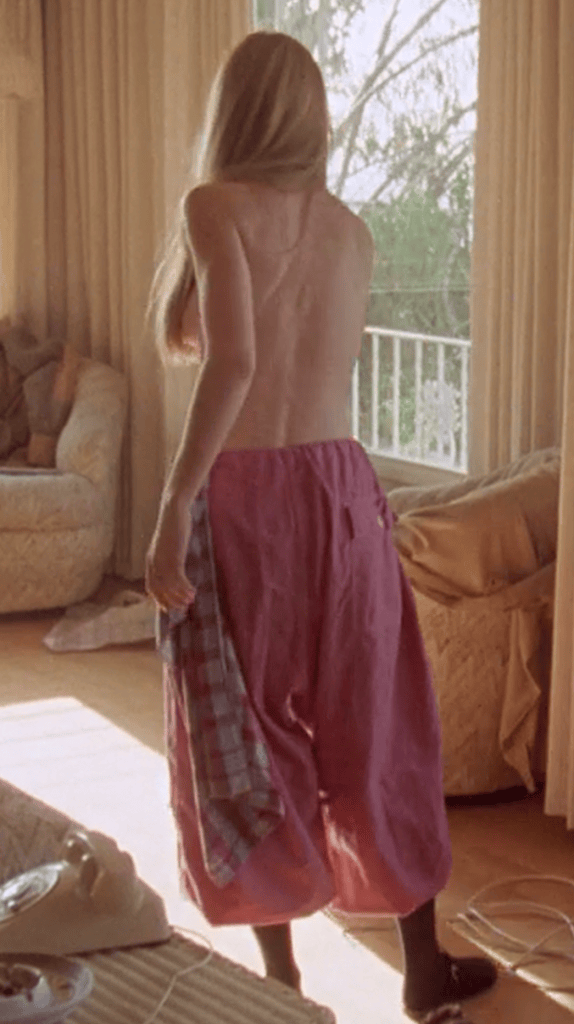


You must be logged in to post a comment.