Posted a commission on ArtStation for a header #3

Yesterday I received the highest number of hits in the history of my modest site, due to artists checking out my stuff. That’s the power of money. Here’s today’s batch of artists whose talents I had to consider, since they answered to my job listing on ArtStation. Unfortunately, none of them have convinced me to consider them further, for different reasons:

  • Roch Hercka (portfolio): super talented dude with medieval-themed stuff. He also described my stories as “gonzo,” which I appreciated. Unfortunately, the wrong kind of style for what I’m looking for.
  • Cengiz Ergüleç (portfolio): talented and with a very particular style that doesn’t match what I have envisioned for my characters.
  • Burnt Butter (site): gorgeous drawings, but the wrong style for me.
  • David dos Santos (portfolio): a dedicated high school student under extremely heavy competition on ArtStation.
  • Pouya Zarif (portfolio): amazing drawings in a hyperrealistic style. Great use of colors. That said, wrong style for the anxious, loopy angle I want.
  • Daniel Rüger (site): great style, fantastic imagination. Still, wrong style. I want something more cartoonish in an undefinable way.
  • Ander Del Molino (portfolio): this guy lives in a neighboring province and has a graffiti-ish style that I like. Yet again, though…
  • Diogo Aurich (site): nice style, and I appreciate the work he’s put into his website, which I can’t be arsed to do on mine even though I used to work as a website developer.
  • Tristan Keith (portfolio): talented dude, good compositions and use of color.

So far, the style I’m going for is a mix of the following, all belonging to artists who have contacted me before: 1234567

I hope it isn’t a faux past to mention the artists by name, along with their works. I’m linking to their portfolios, after all.

Answering to these people is taking time from editing my work, so I suspect that I’ll end up cutting short the job listing, that otherwise has about thirteen days to go.

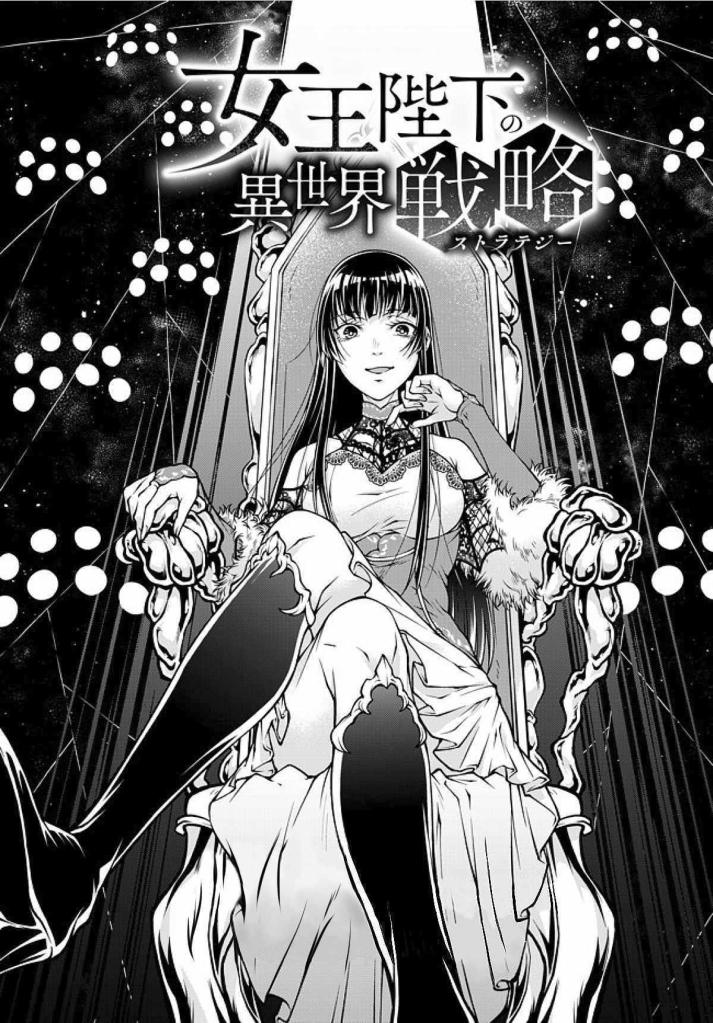
Review: Joou Heika no Isekai Senryaku, by Eiri Iwamoto

Four stars. The title translates to “Her Majesty’s Swarm” (supposedly; I don’t see the word “isekai” in there).

Our protagonist is an eighteen-year-old Japanese recluse who spends her days playing a strategy game set in a fantasy world. She’s particularly fond of the evil faction, one focused on “zerg rushing” with a horde of spiderlike monsters. Anyway, one random day, she either dies or just arbitrarily gets transported to a fantasy world (all these isekai stories are blending together).

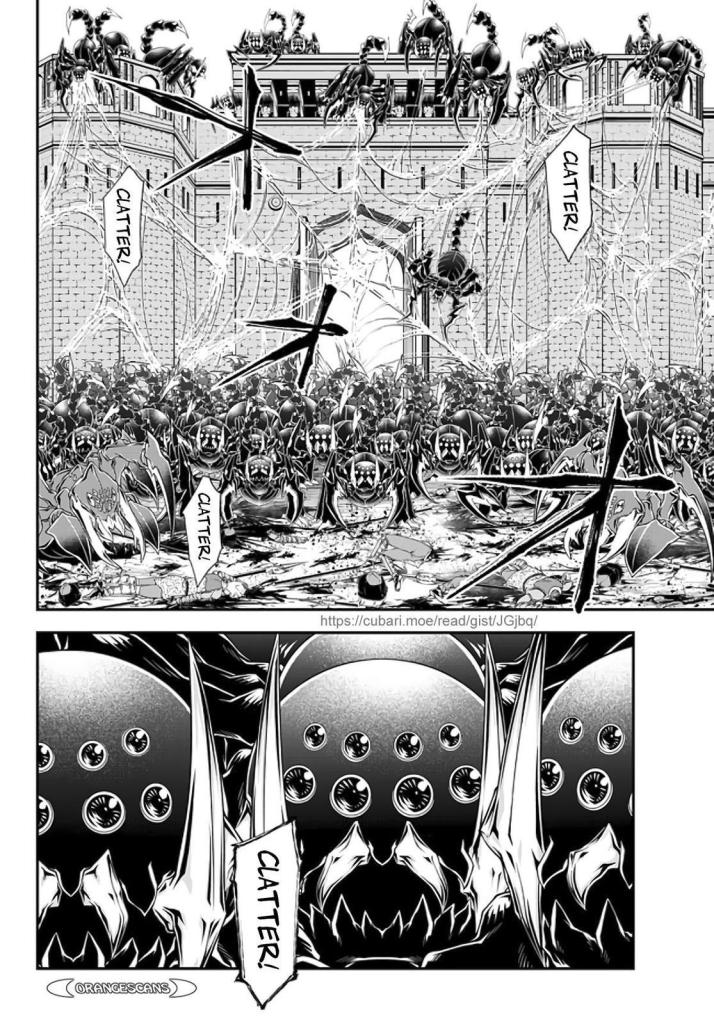
She finds herself as the real-life queen of a horde of spiderlike monsters, the same kind that she commanded to victory in the game. They operate as a hive mind, and she quickly realizes that with herself set at the middle of that web of consciousnesses, she may end up dissolving into the collective.

After an encounter with some local elves, she discovers that this world has never seen monsters like the ones she commands: she hasn’t only been transported to a fantasy world, but to one where her own game faction doesn’t belong.

What should be her goal in this fantasy world, where she has no business existing? She figures that she may as well focus on the same goal she pursued in the game: absolute victory. But is such a victory palatable when she’s going to look into the eyes of the people she’s supposed to slaughter?

The protagonist struggles to retain her humanity by dividing the world into victims and oppressors. She refuses to unleash her horde of spider monsters into someone merely because they annoyed her or because it would be convenient. However, one day, a neighboring country makes the regrettable mistake of fucking with her, and for the spider queen who increasingly cares less about losing herself to the collective insectlike hunger, that means one thing: a genocidal war that won’t spare even children.

Apart from the protagonist, the only other main person the reader could connect with is the queen’s spawned hero unit, her sole knight, a devoted half-woman half-spider who is more than eager to slaughter every single living thing in her path as long as her queen demands it. I found her quite enjoyable.

This story, determined to pull a “downfall” kind of arc for her initially normal protagonist, pushes us to empathize with the hapless human inhabitants of the kingdom that finds itself in the crosshairs of the horde. They’re a zealous bunch that believe themselves under the protection of a god of light, and they actually are, since their higher-ups can summon angels at will; they nonchalantly show up from the heavens to try to save the day. While bigoted against any infidel and heretic, their perspective allows the reader to feel the absolute horror of facing an onslaught of previously unknown monsters rushing through your lands, consuming everything and everyone in their path.

I found the ending quite haunting. In general, this shortish story (around forty chapters) left me feeling a bit ill, I don’t know if it was the constant gore, the extreme hopelessness of it all, that something I ate didn’t agree with my stomach, or a combination of such factors. I do recommend this story, but I vastly prefer isekai in which the protagonist has a good time without attempting to ruin the world in the process.

Posted a commission on ArtStation for a header #2

Yesterday I posted a job on ArtStation so some talented artist from somewhere in this vast world would draw me a proper header for my site. Very few people engage with my stuff, but this time I’m offering money, so I’ve already gotten plenty of artists interested with still 14 days to go. I suspect I may cut the job listing short, though, given some quality offerings.

Whoever you might be, you may be interested in this process and the kinds of artists that offer themselves for such a project. Here are the artists whose talents I have considered:

  • Daniel Acosta (portfolio): my favorite so far. A huge talent, the kind that makes me feel unworthy of asking him to draw stuff for me, even in exchange of money. However, in our comms, he has seemed quite eager to work with me.
  • James Chalmers (portfolio): very nice, clean style, closer to what I originally envisioned for the characters in my header. It just happens that Acosta above has made me consider going further.
  • Logan Foret (portfolio): I love this guy’s style. However, I gravitate more towards Chalmers along the same lines.
  • Scott Robertson (instagram): an extremely talented tattoo artist, but with drawings a tad more grotesque than what I envisioned. Still, fantastic work.
  • Prima R. Bardin (portfolio / instagram): yet another huge talent with whom I would love to work, but I’m not sure if his very defined style matches the kind of drawings I envision for the header.

Here are other artists who have offered their services, but that I won’t consider further for different reasons:

  • Maritzell Martínez (portfolio): a talented vector artist under very heavy competition.
  • Carlos Villas (portfolio): very talented at the particular style he’s going for (that I can’t describe), but it clashes with the kind of drawings I’m looking for.
  • Wesley Edwards (portfolio): I would have been fine with this guy’s stuff if it weren’t for some of the titans above.
  • Vak Phoenix (portfolio): I like this guy’s use of color, but the style doesn’t match what I want, and I doubt that he’d be able to produce “monstrous” drawings like the sasquatch goddess’ to a quality that I’d like.
  • Lukas Lima (portfolio): very talented 3D artist. Unfortunately, I’m not looking for a 3D artist.

I’m not sure how an artist would feel like seeing himself or herself in such a post, but I’d be glad to get some free publicity (tiny as my audience may be). In any case, now comes the troubling part: not only I have to write to these people, but also tell some of them that I won’t consider their work even though they’ve gone through the trouble of offering themselves. I’m getting flashbacks of requesting drawings on Fiverr; I went back and forth with a lovely Indonesian artist only for someone else to present a drawing that blew me away, and I had to tell that Indonesian gal that I wouldn’t choose her work. Poor thing.

I find it funny that some artists have included a curriculum of sorts. Dude, I don’t care where you studied, where you worked, or where the hell you came from: if your stuff is great, I’ll consider you.

Anyway, if you have come across this post when you have nothing to do with this job posting, I hope you’ve gotten something out of my words.

Posted a commission on ArtStation for a header #1

I was tired of seeing that AI-generated header on my site whenever I checked out my own space, and I had some money lying around, so I figured, why not post a commission for talented people to delve into my nonsense and draw something beautiful out of it?

Here’s the commission post: link.

I’m trying to get strangers from all over the world to learn about Harelactal, the sasquatch goddess; Lorenzo, the sentient triceratops; Manami, the cat-girl; and of course, Izar Lizarraga, motocross legend. But I must admit that the notion of talented random people absorbing my words creeps me the fuck out. I’ll always be more comfortable as a niche writer whose works others check out at their own peril.

ArtStation is supposed to be the place to post such commissions. I originally planned to check out portfolios and approach individual artists, but most of the illustrations were astonishing; I mean, I’m a lowly self-published writer here, and these people are titans of art. So I figured that I would post a job instead. If any talented artists actually want to try it out, I’ll be happy to pay them for it.

If there are interesting developments on the progress of this commission from today to fifteen days from now, when the job posting closes, I’ll be sure to write some words about it.

I’m immediately making an edit because an amazing artist named Daniel Acosta just offered himself. Check out his portfolio. Holy crap! I’d be ashamed to ask such people for their artwork, even if I’d pay them.

Ongoing manga: Grand Dwarf, by Saito Naotake

Four stars.

The story introduces a seventy-year-old master machinist who’s on his last leg as a professional, having to deal with corporate punks that intend him to accept unreasonable conditions.

He suspects he’ll end up on the streets soon, old and alone. How would he spend the rest of his life? Thankfully he doesn’t need to worry about it, because he suffers a heart attack and dies.

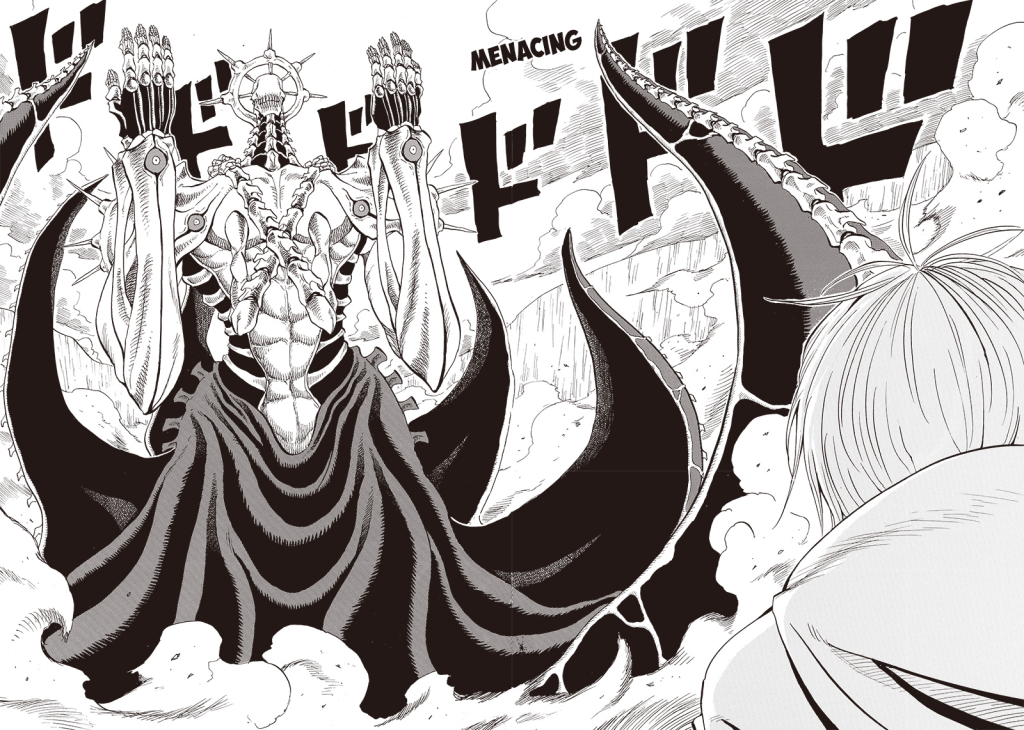
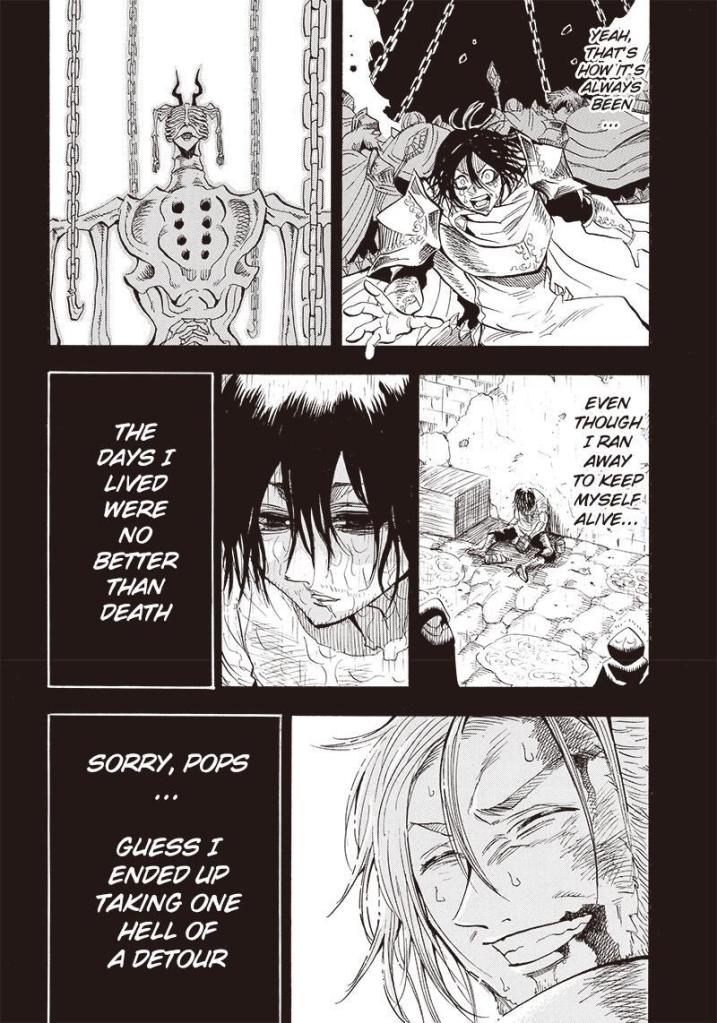
This story is one of the apparently millions of isekai out there. What’s an isekai, you ask? For whatever reason, the Japanese created a genre based on the notion of a Japanese person getting transported to a fantasy world, where they’re bound to enjoy a cooler new life. I don’t know what that says about Japan, but in my case, I love stories about exploring bizarre new worlds filled with colorful people and monsters, going along with a protagonist generally so overpowered that they might conquer the world if such were their preference.

Our seventy-year-old protagonist finds himself as a young man with vastly enhanced skills related to his decades of experience as a machinist, allowing him to surpass even the fabled Dwarves of legend (hence the title). For whatever reason, his workshop also gets isekai-d along with him; that’s a new one. Anyway, first fantasy person he comes across is a one-handed, scarred gal who was dismissed from a party of adventurers (a relatively common trope). A healer by trade, she has no choice but to train her offense if she’s to honor her late mom, one of the former heroes of this world.

The protagonist, charmed by her determination, asks her to lend him her magic staff. She’s a pushover, so she accepts. A couple of weeks later she finds out that the master mechanist has turned her staff into a futuristic gun capable of one-shotting the worst monsters around, and is even capable of healing for some reason. The protagonist’s overpowered skills allow him to gather and process the most hardcore materials easily, which he proceeds to turn into weapons of a quality that his new world has never seen.

One of the main joys of this manga series, apart from its art style and character designs, involves following a self-assured, old Japanese artisan that’s having the time of his life in this fantasy playground, to the dismay of the locals that he ends up dragging to face monstrous horrors.

Character work is quite strong so far, with a couple of redemption arcs that I enjoyed a lot. As in plenty of if not most other isekai, the protagonist and his team are gearing up to kill the demon king, whatever it’s called in this story. I don’t recall having actually seen such a feat achieved in any of the isekai I’ve read in the past few months, unless the story starts with the protagonist having already won. Oh, well; joy’s in the ride.

I recommend this one if you enjoy peculiar protagonists, cool designs, and having fun.

Motocross Legend, Love of My Life, Pt. 8 (Poetry)

If you haven’t read all the previous parts or you don’t remember them well, I urge you to read this short story (or novella) from the beginning (link here).


When I worked a nine-to-five at Zuatzu Business Park,
I spent the lunch breaks on a bench sanctuary
Nestled under a verdant canopy that provided shade.
I read technical books on website design and development,
Immersing myself in technique and precise logic
As I nourished my body with vending machine sandwiches.

A pair of stockinged legs halted next to my bench.
The woman offered a smile like a business card,
Radiating the composed confidence of an adult,
Though most people seemed older to me,
Whose clock had frozen in nineteen ninety-nine.

“Mind if I sit down?” she asked
As she claimed the space beside me.
I wondered where I knew her from,
But I didn’t; she worked as a legal advisor,
Negotiating contracts and handling disputes
At one of the legal firms housed in the business park.
During lunch breaks, her gaze had sought me out,
Perhaps drawn by the cold flame of my brooding,
A contrast to her life’s rigid rhythms.
Unprompted, she offered personal advice.
Upon discovering our shared roots in Irún,
She grinned as if that were a fact to celebrate.

Should I describe this woman in detail?
I will share with you, Izar, what she lacked:
Your cascade of caramel waves;
Your eyes, twin pools of chocolate;
Your crooked front teeth that flashed
Whenever your bubbly laughter burst forth;
Your restless passion.
Unlike you, she didn’t shine the brightest
Before the dark, shapeless backdrop.

Sharing that bench became a daily ritual.
She brought her homemade lunches:
Plastic containers stuffed with quinoa salad
Enriched by grilled chicken and chickpeas.
Cross-legged, she would puff on cigarettes
As she dissected headline legal battles,
Ranging from corporate scandals to civil rights,
To point out how she would have handled them.
She named and described her coworkers
So I could picture them like fictional characters.

She took advantage of crowded train rides
To gobble up the novels everybody recommended.
Eager to discuss their finer details with someone,
She coaxed me from the refuge of technical texts,
Challenging me to explore popular narratives
Like The Alchemist and The Da Vinci Code.
Apart from fiction, she consumed self-help books,
Seeking to strengthen her mindset
Cultivating virtues and combating vices.

Nobody else allowed her to ramble on,
And she felt her every word sank into me
Like pebbles rippling a pond.
She admitted that recently, in her free time,
After coming across an intriguing article,
She had yearned to share it with me.

She invited me to grab coffee the coming Saturday.
In Constitution Square, we sat at an outdoor café
Packed with patrons enjoying their leisure.
The glossy metal tables glistened in the sunlight,
That also glinted off the wrought-iron balconies
Of the apartment buildings enclosing the square.
The robust stone archways cast elongated shadows
Onto the tiled pavement of the arcade.

Immersed in the hum of overlapping conversations
Broken by bursts of laughter from nearby youths,
I sipped my café con leche, and bit into a croissant,
As I stared at her opaque sunglasses,
At that face aglow in the sun’s warmth,
At those strands of hair lit like fine gold.

To meet me, she had donned a pleated skirt,
A crisp white blouse, and a burgundy jacket
That matched her glossed lips.
I wondered what they would taste like.
Later that evening, I found out:
They tasted of cigarette.

Those soft lips, our tongues probing each other,
They bestowed on me a respite,
A detachment from reality and grief,
As if resuscitated from a surgery’s anesthesia.
But a few breaths later, the truth awaiting
At the periphery of consciousness
Flooded back in like tons of icy water
Through a dam’s drain hole.

Izar, I felt the shape of your body in my arms,
The scent of your hair tickling my nose,
As if we were lying on your childhood bed
Like in days long gone, when the sun’s rays
Still warmed and nourished our skins,
When we imagined the foreign sights
We would behold together.
Those sensations, stored in my neurons
Away from conscious recollection,
Vanished again like a dream upon waking,
Despite my struggling to cling to them.

I boarded the train bound for our hometown
With this woman whose saliva I had tasted.
She sat beside me, and grabbed my hand.
“This feels right, doesn’t it?”
The tracks clacked steadily,
The landscape blurred past.
Her breath brushing against my ear,
She kept whispering to her patient listener
As I slipped deeper and deeper
Down the well of my mind.

In Irún, after she and I parted ways,
I was ascending the sloping Pintor Berrueta Street,
Trudging in the gloom under overhanging stories,
When my internal stasis cracked.
I found myself holding onto the rusted security grille
Of a closed storefront, a bankrupt shop,
While my gut writhed, twisted, and churned
With an acidic, gnawing guilt.

The duty of preserving your memory,
Alongside the promises made,
Had convinced me to keep breathing.
Yet, I tainted these lips that had kissed yours
By smearing them with someone else’s molecules.
Didn’t I know that any contact with another
Would corrupt, contaminate, and diminish
The fading traces of you?

During lunch breaks, occupying that bench,
Hadn’t I looked abandoned and broken?
Couldn’t this woman tell, at a single glance,
That I only contained undigested pain?

Like a stray dog, I had wagged my tail
At the first hand offering kindness,
At a stranger that had become invested
In a damaged boy unable to care for himself.
Her warmth was akin to a camping lantern
Illuminating a spot in a pitch-black forest
Where I could huddle and wait for dawn.
Izar, a part of me yearned to trust,
To let my defenses crumble.
I couldn’t stomach a whole life doomed to be
A sun-starved seedling trapped in concrete.

Five minutes away from La Concha Beach,
At a one-star hotel: two single beds pushed together,
Draped in pristine white linens,
The pillows patterned with white roses.

I hoped to disappear in ecstasy,
But once, I had ventured too near a star,
Leaving my skin blistered, my soul charred.
After that woman and I fucked,
With my sperm confined inside a condom,
She padded to the bathroom for a smoke,
And I wet the white roses with tears.

Alone in my childhood bedroom,
I flipped my sketchbook swiftly to a blank page.
Armed with my collection of colored pencils,
I focused on scraping the virgin sheet with graphite
To render a facsimile of my memory:
A halo of sunlight bathed her tousled locks.
The reflective surfaces of her sunglasses,
Mirroring the expanse of Constitution Square,
Concealed the sharp, analytical gaze beneath.
Her tender lips, slightly parted in contemplation,
Were embellished with burgundy lipstick.
She wore a white blouse, the first button undone,
And a jacket that draped elegantly off her shoulders.
Hunched over, I drew and shaded every crease.

The following Monday, on that secluded bench,
As she grumbled, vexed about a colleague’s errors
That forced her, yet again, to pick up the slack,
I kept thumbing the elastic strap of the file folder
Cradling, along with the portrait I had drawn,
Comic strips, relics of happier days with you.
When a pause beckoned, I cleared my throat.
“Listen, have you ever been into comics?”
She glanced sideways, took a drag of her cigarette,
And with a practiced flick, cast off the ash.
“What’s that about comics now? Please,
I’ve outgrown childish nonsense.”

My blood cooled abruptly.
I lowered the file folder beside me.
I had been chosen, indeed, by a prim lady
Fitting of her role in this world.

One afternoon, when I returned home from work,
I collapsed onto my bed, eager to recover from the toll
That forced smiles and hollow exchanges had exacted.
As my every fiber trembled, undone by exhaustion,
My cellphone vibrated in its pocket,
Its chirrup evoking dread.
This woman wanted to listen to my voice,
Chatter about trivial stuff, or bore me with legal jargon,
Even though I yearned for nothing more
Than to be left alone.

Izar, had I ever resented your presence?
Ours was a shared solitude:
As we nurtured our private language,
We played games we both enjoyed,
We read stories that entertained us both,
We encouraged each other’s dreams.
Now, in the lawyer’s gaze, I felt evaluated,
As if she catalogued my screw-ups,
Every flaw, every deficiency,
Storing them away for future indictment.
After mere hours in her company,
I required some leeway to breathe fully.
Still, I appreciated her more than anyone
Ever since you rode away for the last time.

Raindrops drummed on my umbrella
While the woman and I strolled arm-in-arm
Along a rain-soaked, glistening promenade.
Under a heavy, slate-colored sky,
White-capped waves of the restless sea
Crashed relentlessly against the breakwater.
On the opposite shore, past a line of buildings,
Rose the tree-covered Mount Igueldo,
Capped by the tower of its amusement park.
I smelled fresh rain, salt, and seaweed.

Rainy days thinned the membrane
Separating me from that final ride
To which my dreams hurled me
Whenever I needed to repent.
I felt an echo of that wet, frigid wind
That had etched itself into my bones.

To my regret, to my resentment, I opened up:
I confided in this lawyer about you, my Izar,
Who on a rainy night had crashed her Aprilia
And bled out on a lonely slope by the highway.
I confessed to squandering a year as a recluse,
That ever since, I struggled to relate to others
And their delusions of a just and ordered world.
I spoke of the weight of each day
Like an endless march up a steep incline.
To survive, I had erected a fortress of barbwire,
Encircling the raw viscera of my grief.

How many times have I berated myself
For voicing my pain aloud?
Did I hope this woman would encourage me
To guard and cherish your memories?
You know, Izar, you had spoiled me:
Whenever I handed over my pain,
You had cradled it against your chest.

This woman’s thoughts were filtered,
And those deemed offbeat, discarded.
But who else could I blame except myself?
I had accepted a simulacrum of love,
One lacking the fire of passion, of dreams,
And the sense that we were meant to be,
Like a Macedonian general leading his troops,
Knowing that a glorious destiny awaited
At the fringes of the known world.

Those locks whipped by the stiff breeze,
That profile fixated on the heaving sea.
She asked if I had attended therapy,
As if I could want anybody to exorcise you.
I swallowed the taste of bile.
“I cannot be fixed.”

Unlike those who dispense their hearts freely,
Unburdened by ties and promises,
If anybody shared their core with me,
I would preserve an echo of its beats.
I was a miser hoarding bits and pieces
Of what used to make me whole,
But I had grown tired; I couldn’t stand alone.
That lawyer, a level-headed lady,
Had invested in a lost teenager, an invalid.
Yet, I never loved her. How could I have?
My patched-up heart treasured the frozen fire
Of my girlfriend, whom I would never see again.
We had promised to love each other forever,
And I will.

The woman approached my secluded bench
With her earlobes and lips bare,
With her hair tied back in a hurried ponytail,
Loose strands escaping the bond.
She wore a pale-blue, wrinkled blouse that clashed
With her earthy-green skirt of textured cotton.
The odor of cigarette clung to her.

Beside me, slumped on the bench,
She toyed with her purse’s clasp,
Her gaze darting away to avoid mine.
I pressed her, “What’s wrong?”
Guessing that she intended to break up.
Instead, she pulled out a pregnancy test.

My eyes glazed at that pair of blue lines.
For how long had I known her? A year?
She asked, stripped of pretense,
“If I decide to keep the baby,
Are you going to leave?”
With all the resolve I could muster,
I hugged her to my chest.
“No, I won’t leave you.”
“Do you actually love me?”
“Yes, I do.”

Ropes, chains, shackles, zip-ties,
Meat hooks impaled into my flesh;
A child would anchor me away
From razor blades, pill bottles,
Bridges, cliffs, and incoming trains,
From the urge to leap into the dark
And find you there.


Author’s note: today’s songs are “Same Thing” by Islands, “17” by Youth Lagoon, and “Todavía una canción de amor” by Los Rodríguez (also this live version).

If you enjoy my free verse poetry, I have three books worth of it yet to be self-published. Check it out.

My old Re:Zero fanfiction

This morning I woke up to a surprise: someone from the US had hit about fifteen chapters of Re:Zero fanfiction I wrote back in 2019-2021, that virtually never receives hits. I assume this stranger read some of it as well. That got me to reread a few chapters again, and I remembered that I had an absolute blast writing this story. Some of the funniest scenes I have ever giggled through appear there (most others in my ongoing novel).

Why on Earth was I writing Re:Zero fanfiction anyway? Back in 2018 I had released two books of novellas in Spanish, my native language, but nobody cared. Although I sent them to a few contests, I got no reaction. That was disheartening, even more so because I had come to a turning point of sorts in my creative life: for years I had only read, watched, and played stuff in English, and I didn’t connect with the material either produced in or translated to my native language. I resented plenty of translators, because they injected lots of local colloquialisms into other people’s works, and in general I simply didn’t enjoy the vast majority of the stuff that Spanish-speaking people created. To this day, the only album in Spanish that I listen to semi-regularly is Los Rodríguez’s Palabras más, palabras menos (that I think is fantastic).

I no longer consumed material nor thought, for the most part, in the only language in which I could become proficient enough. That surely killed any hopes of writing original works in English, as well as trying to write seriously in my native language.

Around that time, GPT-3 was impressing the few people in the know. Most civilians only interacted with it through middleware like a website that used GPT as a director of “Choose Your Own Adventure”-type narratives, and it worked quite well for it even then, mainly because it wasn’t censored yet, or at least not remotely to the current extent. I won’t mention the website, because it ended up betraying its users.

I recall an instance in which I, as the protagonist, was attempting to have a normal conversation with a supporting character, only for that character (a female, no less) to blurt out something about scratching her balls, or something to that effect. You never quite knew what sort of material you would be presented with, which made “playing through stories” using GPT-3 very entertaining.

Cue Re:Zero. It was a series of Japanese light novel series that I came to know through the popular anime adaptation released in 2016. I’ve been a life-long lover of Japanese fiction, particularly manga and anime, and they excel at creating fantastic, colorful worlds with competing factions, weird races involving their own peculiarities, and above all, a sense of adventure and camaraderie that has been lost in the West, where our storytellers have been exchanged for political activists. In Re:Zero, a teenager named Natsuki Subaru gets isekai-d to a fantasy world featuring multiple races/species with weird powers, warring medieval factions, bizarre mythical monsters, etc. As the kicker that worked for me, Subaru was a bright, cheerful kid who tried his best to help the people he cared about, only to end up killed over and over: he has the power to reset time whenever he dies, which he does often, in horrible ways. The concept of solving problems through dying agonizingly, having to repeat the same sequences when nobody around you knows you have already lived through them, remains fascinating to me, and I wish I had come up with it.

I figured, why not have a good time playing through that narrative relying on GPT-3 to move things along? For the first eight or so chapters, it didn’t work very well: I relied on GPT-3 too much, which made the narrative quite incoherent, and different from the original (to the extent that I failed to reproduce introductory sequences whose absence ended up biting me in the ass later). By chapter 9 or so, I started taking the narrative seriously, using GPT-3 to spice up the dialogues or come up with intriguing details I could explore.

In my hands, the protagonist, Natsuki Subaru, turned into a wild, semi-deranged pervert, a masochist who openly welcomed at times getting killed even to get off, and who entangled the hapless fantasy characters in some of the most ridiculous and funny dialogues I’ve ever written; when I reread some of them earlier today, they made me laugh. The result was a joyous romp, as far as I’m concerned.

In the end, I abandoned the series when I was about to finish chapter 66, because by then, I had already read the ending of that arc as the original author had written it; I disliked it quite a bit, and it had diverged so much from what I had set up in my own fanfiction, that by then it I might have as well written my own stuff in English, now that I was confident enough. And so I did: lots of free-verse poetry, short stories, a novel that I self-published (My Own Desert Places), and a three and a half books-long novel I’m still writing. So I’d say that writing Re:Zero fanfiction was a great idea.

If you’re curious, and you can tolerate incorrect punctuation, some verb tenses used incorrectly, and in most chapters, paragraphs not separated correctly (for whatever reason, I thought it looked better), then check them out at the end of this page: my novels.

For some specific chapters that I remember fondly:

  • When Subaru and his demon companion try to ascertain the nature of a flying whale with the help of a bunch of idiotic travelers (chapter 11)
  • When Subaru, dismayed about his inability to stop an apocalypse, decides to mooch off an opposing household while trapping himself in a loop of debauchery and suicide (chapter 16)
  • When Subaru drags a cat-girl amputee through a warzone (chapter 24)
  • When Subaru disappoints everybody in his fantasy life to exercise his suicide powers (chapter 33)
  • When Subaru meets a dead witch and ends up drinking her spit (chapter 42)
  • When Subaru confronts his troubled past in a witch’s simulation (chapter 46)
  • When Subaru goes through a sultry encounter with a contract killer who gets off on disemboweling people (chapter 50)
  • When Subaru deludes himself into believing that his sexual act with a half-elf princess was a witch’s simulation (chapter 52)
  • When Subaru annoys their senior servant to an extent that causes him serious physical issues (chapter 53)
  • When Subaru and their demonic senior servant travel back to the mansion to confront a German lioness (chapter 55)

There’s lots of other chapters I would have mentioned, but editing them to space their paragraphs is quite annoying.

On writing: Conflict

You can check out all my posts on writing through this link.

Do you have a killer concept, a promising premise, a protagonist worth a damn, a goal worth pursuing, and meaningful stakes? Then you should ensure that your characters won’t blaze through your plot unimpeded. Don’t allow them to tell you who they are: force them to prove themselves.

A warning, though: don’t inject unnecessary conflict into your story; Western narratives have been plagued with such for decades. If you can remove an instance of conflict without crippling some plot point, and that conflict isn’t funny, then drop it.

  • Figure out what your characters want most, then put the things they fear most in their way.
  • Is there enough conflict to sustain a story? Freewrite possible conflicts based on what you know about your story.
  • How is a character who goes after a desire impeded, and how does that force him to struggle?
  • What is the central (outwardly visible) conflict in the story? Who or what is preventing your protagonist from reaching her goal?
  • What opposing goals of other people or entities in the story provide conflict?
  • How is the drama the product of the values and ideas of the individuals going into battle?
  • How is the force of opposition present, and well defined?
  • How is the concept tied in with the central conflict of the story?
  • Is there at least one actual human being opposed to what the hero is doing?
  • How do you tailor your conflict to create the highest stakes possible for your protagonist?
  • How does the conflict force the protagonist to take action, whether it’s to rationalize it away or actually change?
  • How does the force of opposition allow the protagonist to prove his worth?
  • Test the big problem regarding how it impacts your protagonist’s arc, either making him change or making him worse.
  • How are at least two constituents weighed against each other in this story?
  • What unresolved tension in the story would make the reader want to see what happens next?
  • How is the conflict stress-inducing and/or painful?
  • How quickly can you introduce the central conflict element in your story?
  • How do circumstances beyond your protagonist’s control fling her out of her easy chair and into the fray?
  • Can you put your hero in the last place he wants to be?
  • What is the biggest obstacle preventing your protagonist form reaching her goal? How can you make it much worse? How can it push her into despair and hopelessness before the climax?
  • What strong inner conflict is your protagonist dealing with? Come up with two things she must choose between, both unthinkable. Tell how that showcases your novel’s theme.
  • Who challenges the views, actions, and beliefs of your protagonist in a way that involves your thematic elements? Make their opinions even stronger with higher stakes and greater conflict.
  • How would this story be considered a war?
  • Can you add emotional friction? Competing egos? Status struggles? Clashes of styles and personalities?
  • Can you come up with at least five minor, different conflict components you can add to your plot that exacerbate the central conflict of your novel?
  • What conflicting, multi-layered emotions hidden beneath the surface could be at play?
  • How do the conflicts in the novel warrant strong reaction?
  • What big stuff goes wrong with your heroes’ plan?
  • Can your protagonist’s external goal be in conflict with his internal goal?
  • Do you bring in the threat of a clear, present and escalating danger, not a vague facsimile thereof?
  • How are the impediments your protagonist faces potentially too great to be conquered?
  • What can make the goal more dangerous, more impossible to be reached?
  • How are you mean to your protagonist? How do you hold her soles to the fire, even when she starts to squirm?
  • How would this premise generate external conflicts and twists that would bring the characters with things about themselves that they’d rather not see?
  • Can you make the conflict bigger, much worse? List some possibilities and their outcomes.
  • Spend time thinking about the central conflict element in your story and all the different ways it can raise ugly heads to threaten and upend your protagonist. Try to pit as many things against him as you can, and push the stakes so that what he values most is at risk of being lost.
  • Whatever your hero has to do, make it hard. Every task for your hero must be difficult.

Review: Kimi wa Midara na Boku no Joou, by Mengo Yokoyari

Three stars. The title translates to “You, My Lewd Queen.”

Picture an ordinary male teenager who, as a kid, met an injured girl and tended to her wounds when nobody else would. Such a pure act sparked love in the girl, who proceeded to spend most of her tomboy years with said dude.

Unfortunately, she’s the daughter of some rich man who intended to send her to a private school that our unremarkable protagonist couldn’t afford, unless he excelled at his studies. He did bust his ass, and ended up attending the same school as his love interest, only to find out that the previous tomboy had become a prim, beautiful lady that wouldn’t spare one second of her precious time for our ordinary protagonist.

Cue the concept of this story: some dumb urban legend actually works, and his room ends up connected to hers even though they are in different dorms. The minor god who granted that wish possesses a pillow to inform them of the price to pay: because she was the one who asked first for their rooms to be connected, her self-control will be removed for an hour each day.

The male protagonist comes to learn that he’s in love with a single-minded gal.

Our female protagonist, who is probably not even sixteen yet, masturbates compulsively about ten times a day, about three if she’s sick. She has remained madly in love with the protagonist; although her tsundere ways won’t allow her to admit it freely, once her self-control is removed, she happily proclaims to the world that she can’t wait to end up covered in our boy’s sperm. If he impregnates her, even better. We are treated with many creative scenes of her struggling to contain her compulsive masturbation, or finding artful solutions to satisfy it: for example, while her thumbs are zip-tied behind her back for reasons, she proceeds to rub her soaked parts against a table leg.

This isn’t the most ridiculous story I have ever read, but it does come close. And it just happens that I’m in the market for obscene silliness that doesn’t give a fuck about anybody’s boundaries.

On writing: Stakes

You can check out all my posts on writing through this link.

Do you have a killer concept, a promising premise, a protagonist worth a damn, and a goal worth pursuing? Then you should ensure that your characters gamble something meaningful on the outcome of their risky venture.

  • How is this story the record of how a character, through strength of will, fights with death? What combination of the three types of death (physical, professional, psychological) are at work in the story? Sum up the main plot with at least one of the three deaths woven into the summary.
  • Given how passionate the protagonist is about his goal, what is he willing to risk, what danger will he be willing to face, in order to reach the goal?
  • What are the things your protagonist loves and cherishes the most? Can you set up the conflict so that he stands to lose those as he goes after the goal?
  • How do you establish what does it mean for the character to achieve the goal stated for the desire line? The more the outcome affects your character, the more will be at stake. And the more that’s at stake, the more invested your audience will be.
  • When you think of high stakes to establish for your characters, how do the risks they take align with their nature, values and personality?
  • Can you make the stakes in your work even greater by adding a personal component, having them affect people we care about? In other words, this time make it personal. The more personal, the better.
  • If the protagonist does not succeed, what would be lost? Could he lose more?
  • Could it be for the protagonist that the thing at stake is what he values most?
  • How does the plot problem have a clear consequence that the reader can begin to anticipate from page one?
  • Who and what else will be adversely affected if the protagonist fails to reach his goal? Can you make it worse?
  • If at any point your protagonist can simply decide to give up without suffering great personal cost due to her inaction, consider that the story is wrong or insufficient.
  • How there will be something clear and definite that will occur if the protagonist fails or, worse, doesn’t take action? It can’t be vague, conceptual or iffy.
  • How can you make the reader care about the story based solely on those stakes?
  • What is the fight? How is it important and urgent enough for the reader to root for the hero to win?
  • How are the stakes measured by the value the protagonist puts on the thing at stake?
  • Is there a real-world, specific, impending consequence that this escalating problem will give my protagonist no choice but to face?
  • How would the reader feel the stakes, and what might be won or lost?
  • What happens if they don’t succeed? Stack the odds against.
  • Regardless of whether or not the protagonist achieves his goal, will the approaching consequence cost him something big, emotionally speaking?
  • How do you show clearly the consequences and price of success or failure and its ultimate effect on everyone involved?
  • How does the protagonist truly suffer to get through the story, both for the reader and for the character himself to care about what happens to him?
  • How will the character realize he’s probably going to die (physically, professionally, and/or psychologically)?
  • Does the protagonist find himself with no way out at some point in the story, making it the story not be on his terms?
  • How do you make the reader believe the threats in the story to your protagonist are real?
  • Make sure most of the characters involved in the goals have something to lose. Can you expand the stakes to all the characters?
  • How far can you muddle, push, exacerbate the situation to raise the personal and public stakes?
  • To increase the public stakes, meaning what impact will this story have on the world, ask yourself: how could things get worse than they already are? How could this matter more than it already does?
  • Make the external and internal stakes as big as they can possibly be.
  • How does the story walk us to the precipice of human experience and allow us to peer into the abyss?