
A 1975 TV movie I only learned about due to my infatuation with Sissy Spacek. She’s the titular character: the beautiful daughter of upper-class parents, someone with the means to lead a comfortable life, but who ends up joining a revolutionary marxist group in the vein of the Weather Underground from that same era, and subsequently ruins her life.
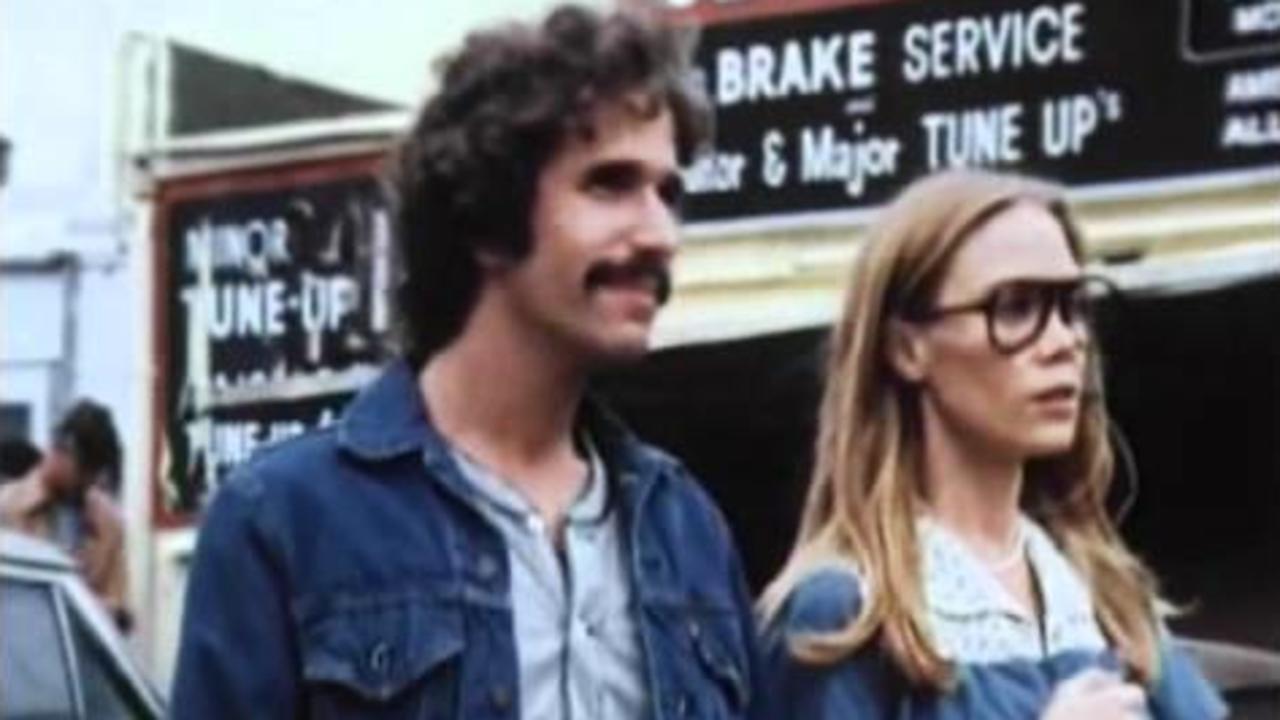
Full movie below. It’s on YouTube.
I will start by saying that I didn’t enjoy the movie. I can’t stand fiction about racial and class struggles. I despise marxism and its adherents. So the experience of watching this movie is something I mostly subjected myself to because I wanted to witness Sissy’s presence and acting. And she did a fine job, so in that sense it was worth it.
What I found particularly interesting early on is how the fatal flaw of Katherine, Sissy’s character, seemed to draw from her own life in a way that maybe she deliberately brought up to the screenwriter. Otherwise, maybe she sought the part because it reminded her of herself.
I’ve listened to some of her interviews, sought anecdotes behind the scenes, and read a third of her autobiography, so I know that Sissy Spacek is, or was anyway, very ambitious and competitive, and had a hard time losing anything. When Brian De Palma told her initially that she wouldn’t get the role of Carrie White in the famous movie, she let out expletives and hung up the phone. When a few years later she was told she likely wouldn’t get the part of a beat poets’ muse, she broke a glass in her hand. In both cases, she ended up getting the part. Regarding that beat-poetry-related role, breaking the glass actually helped her get the part, as it fit the character she was auditioning for. Sissy was a very headstrong, ungovernable person who fought like hell to get everything she wanted, even as a child.
Significant spoilers from here onward; honestly, I didn’t care enough about this movie to spare others the spoilers.
When it comes to this movie’s narrative, Katherine’s inability to handle failure is exemplified when, after graduating, she decides to move to Peru or some similar backward-ass country in South America, where she goes to teach them how to read and write. As I believe her own father put it, weren’t there enough uneducated children in the US? He also suggests that she wasn’t doing it for the poor people there, but to please herself.
When she gets to the country, she learns that the landowner is barely paying his workers, refuses to let them learn how to read or write in case they get uppity, and threatens to raise their rents if they become annoying. Sissy’s character is infuriated. She gets one of the workers flogged due to her influence, and afterwards she tries to join their militant group in the mountains, where they’re preparing for bloodshed. At that point, Katherine doesn’t believe in violence. When she refuses to supply weapons to the rebels somehow, their leader tells her that education is pointless, as the ones in charge possess the money and the means of violence to keep them oppressed forever. That “education is pointless” argument will return later in the movie.
Katherine is quite disillusioned already with the conditions of that country and her inability to make any changes, when an agent of the American embassy tells her that, due to her seditionary activities, she better fuck off back to America or else. She did return, but that became her turning point: she had attempted to change things in that foreign country and had failed miserably, returning with her tail between her legs. Her resentment and bitterness grew and grew, and never did stop until the explosive finale. Her concern for other people was contaminated by wounded pride, and I got the feeling that changing their circumstances was less important than defeating the people she blamed.
Katherine decided to become a volunteer teacher at a school that taught black children. There she met Fonzie, the popular guy from Happy Days. I’ve never watched that show nor have any wish of doing so, but the cultural impact of that character remains, from the “jump the shark” expression to Matt Damon doing Fonzie gestures on Mars. Happy Days was already ongoing when this TV movie was filmed. Although I didn’t like Fonzie’s character in this, he was often more sympathetic than Katherine. I got the feeling that the guy was very enthusiastic about being able to act as Sissy Spacek’s boyfriend, with all the cuddling and kissing it involved.
The movie was quite prescient about what would eventually become the US’ demise in real life, as pictured at 33:05 of the linked YouTube video.
Anyway, that period of Katherine teaching black kids ended up in a chilling way. If the movie had been made in these marxism-soaked modern times, people of other races would have been depicted as innocent, blameless, oppressed for no reason. But Katherine and Fonzie are dismissed by a group of black supremacists that tell them that they should stop teaching black children, lest those children grow up to say shit like, “All whites aren’t bad; I liked my teacher.” They’re told that whites are the enemy and that they should all die. Oh, the joys of ethnically-diverse societies.
Katherine learns very little about this. If anything, she internalizes that narrative. She and Fonzie get involved with the anti-Vietnam crowds and other marxist movements. She makes herself ugly on purpose, starts lecturing everybody (including her parents) about how they’re fascist pigs and oppressors of various kinds, and in general becomes utterly insufferable for the rest of the movie. Fonzie impregnates her, but she eventually decides that having a child is fascist and that abortion is harmless. Her distraught parents do what little they can to put some sense into their daughter, but by then it’s too late.
Katherine gets in deeper with violent revolutionaries. Fonzie decides that dating a single woman is an affectation of the bourgeoisie, and decides to abandon Katherine and join a commune to presumably impregnate other women and let the community raise his children. Katherine decides to assault a school (or a college, I’m not sure), indoctrinate for a bit the bewildered kids, then gets arrested for breaking and entering, assault and battery, and other shit. Finally she decides that the only way the system is going to change is through Timothy McVeighing some fitting public building.
I have to concede to this movie that it wasn’t trying to pull off a One Battle After Another, Paul Thomas Anderson’s disgusting marxist turd, by making marxist revolution romantic. He even ended the narrative with the daughter joining a similar movement as if it were a sweet character development. This 1975 movie presents a downward spiral kind of narrative. There are a few telling moments in which the narrative implicitly suggests “these freaks are so far up their own asses with their indoctrination that they can’t function as human beings,” like when Fonzie uses marxist ideology to justify wanting to fuck off to a commune and fuck other women, or when Katherine has joined an underground movement and nobody wants to clean up dishes, because that’s oppressive or something. Didn’t make the movie palatable enough for me, though.
Sissy Spacek was great in her role, despicable as it was. She sold the frustration, the bitterness, the pathological aversion to losing, the indoctrination. She also was absolutely gorgeous in the first half, until she made herself uglier as part of her marxist crusade against goodness and beauty.
Anyway, I don’t really recommend this movie unless you’re a Sissy Spacek completionist.

