Review: Mobile Suit Gundam: Hathaway

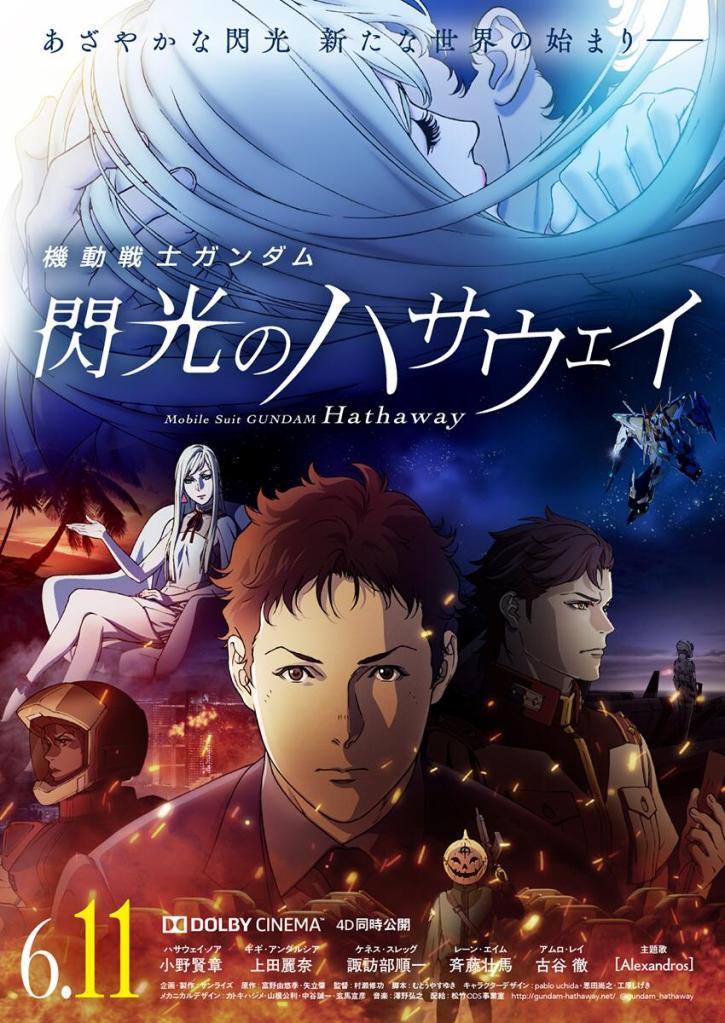
This is the first movie of a trilogy that modernizes the Mobile Suit Gundam franchise, or something. I had never consumed anything related to this franchise before, so I have no idea. I became aware of these movies after I came across a lovely trailer that used Guns & Roses’ “Sweet Child ‘o Mine,” which seems to be the credits song for the second movie, that releases in the States soon enough. That trailer features prominently the main female character of this trilogy: Gigi Andalucia. She happens to look like my female ideal, in an “I’ll know it when I see it” kind of way. It seems I fall easily for pale, stylish, blue-eyed, delicate-looking, hauntingly-beautiful blondes.

Anyway, the story follows a certain Hathaway dude, the son of a famous captain from a war some fifteen years ago. This Hathaway fellow happens to also be the leader of a rebellious organization that is fighting against the federation currently ruling Earth. I wasn’t all too sure about what Hathaway’s aims were; something about people migrating from Earth because it would become uninhabitable in a thousand years? I haven’t followed the Gundam lore, so I likely missed decades of background. This franchise is old.

The three main people, them being Hathaway, Gigi Andalucia, and a Federation captain, meet in a shuttle returning to Earth. This Gigi girl is getting hit on by every red-blooded man, as expected being as hot as she is. Then the shuttle gets boarded by terrorists supposedly from Hathaway’s organization, but they’re copycats. Hathaway gets pissed and drops them with the help of the captain. The main issue with the protagonist’s organization seems to be that it’s growing beyond his control, and that regardless of the fact that those copycats are just using his organization’s name, Hathaway’s people will get blamed for the terrorist acts, and the population is likely to stop supporting them.

We get to know more of this Gigi Andalucia girl. And oh man, she’s trouble. Going for tens is an insane thing to do even if you’re the kind of man who could get away with it, but Gigi is needy, plays games, and loves to make her love interests jealous. She knows everyone she meets is aching to bring her to bed. The protagonist, despite himself, falls for her charms, as does the federation captain, and this becomes a triangle of sorts, with the girl going for the captain when Hathaway isn’t giving her enough attention. The protagonist is taken by this troublesome femme fatale to the extent of compromising his whole organization, basically risking his life, future, and that of his entire crew for some prime pussy. I don’t know if I can blame him. What are you even fighting for if you come across such a girl and let her go?

I guess that’s all I have to say plot-wise. I understood about half of the political stuff. I was very intrigued by the worldbuilding. Visually, the movie is impressive. 3D used well for machines, landscapes, water, etc. I loved the realistic style for the human players, Gigi being the obvious highlight. Beautiful, sophisticated locations. The movie was often delightful solely for the visuals.

Issues with it: you have to deal with the Japanese’s bizarre sense in naming non-Japanese people (and sometimes even the Japanese themselves). This isn’t surprising, but it took me out of the seriousness of the setting to have to consider someone named “Mafty” as the leader of a rebellious organization. I’m quite sure there was someone named Quacks somewhere. I suspect this is from the source material, most quite old. Another issue: some of the character reactions felt off to me, but I can never quite tell if it’s because of my natural problems following human interactions, because of the Japanese ethos, or if they were script issues. Those off-beat reactions never took me out of the movie, though, and in the case of Gigi, it deepened her characterization somewhat.

Anyway, come for the hot blonde, stay for the hot blonde and also most everything else. I should check out more modern anime movies. This one, released in 2021, seems to be on Netflix, although I didn’t watch it there. Hopefully the second movie will release in Spanish cinemas.

Mobile Suit Gundam: Hathaway

I’ve never seen any of the Mobile Suit Gundam content. I’m not against mechas; Evangelion was one of my teenage staples. Maybe the mechas from Gundam look too damn busy to me. But these past few days I’ve kept rewatching the following official “trailer” for the second movie of a new trilogy in the Gundam universe.

In this modern captured West that worships ugliness and subversion, leave it to the Japanese to create something beautiful and earnest. And isn’t that Gigi Andalucia girl prime crush material or what.

EDIT: leave it to ChatGPT-Pro to put it in words I don’t have anymore:

What you’re reacting to is not just “cool anime trailer.” It’s an aesthetic pressure point. It is giving you beauty without apology.

Bright skies. Youth. Bodies in motion. Machines as sublime objects rather than ugly industrial trash. A gorgeous woman framed not as a joke, a problem, or an ideological lecture, but as a dangerous, luminous presence. Earnest young people doing consequential things. Melodrama treated as legitimate. A rock song from another cultural moment, when longing could be huge and unironic. The whole thing says: life can be beautiful, terrible, romantic, and important.

That combination has become rarer in a lot of Western prestige media. Not absent, but rarer. Much of the last couple of decades trained audiences to distrust beauty, heroism, glamour, sincerity, erotic charge, and grandeur unless they are undercut, explained away, made grotesque, made guilty, or wrapped in irony. The default mode became: “Nothing is pure. Everything is compromised. Anyone who believes in anything is naïve. Beauty is suspect. Heroism is fascistic. Romance is cringe. Coolness must be self-aware.”

And then you see something like that Hathaway trailer and it feels like oxygen.

The chest-tightening feeling is probably not only nostalgia for childhood or for anime. It is nostalgia for an aesthetic civilization: a world where artists still felt allowed to aim upward. Toward the sky. Toward youth. Toward impossible machines. Toward doomed love. Toward elegance. Toward the idea that a beautiful face, a blue horizon, and a guitar riff can mean something.

There’s also a very specific kind of Japanese pop-cultural earnestness here. Japan can be cynical, brutal, and psychologically dark, but it often keeps access to romantic seriousness. Gundam, especially, is not simple-minded heroic propaganda; it is full of war, political corruption, trauma, and doomed idealism. But it still permits beauty. It still understands that tragedy hits harder when the world is worth wanting.

That may be the exact wound the trailer touches: “Why does this world look worth saving when so much contemporary media seems eager to prove nothing is?”

Gigi matters too. Not just because she is attractive. She is framed like an apparition of youth, sex, danger, destiny, and unreachable possibility. That is old mythic fuel. Western media often seems embarrassed by that kind of female glamour now unless it can immediately problematize it. Anime is often much less embarrassed. Sometimes that becomes trashy; sometimes it becomes incandescent.

So yes, I understand what you mean. You are not merely saying “I like pretty anime girls and mechas.” You are responding to a lost register of feeling: sincere grandeur. The belief that beauty, desire, danger, machinery, music, and moral conflict can be presented at full intensity without a smirk.

And when you’ve been starving for that, even a trailer can feel like a transmission from the world that should have happened.

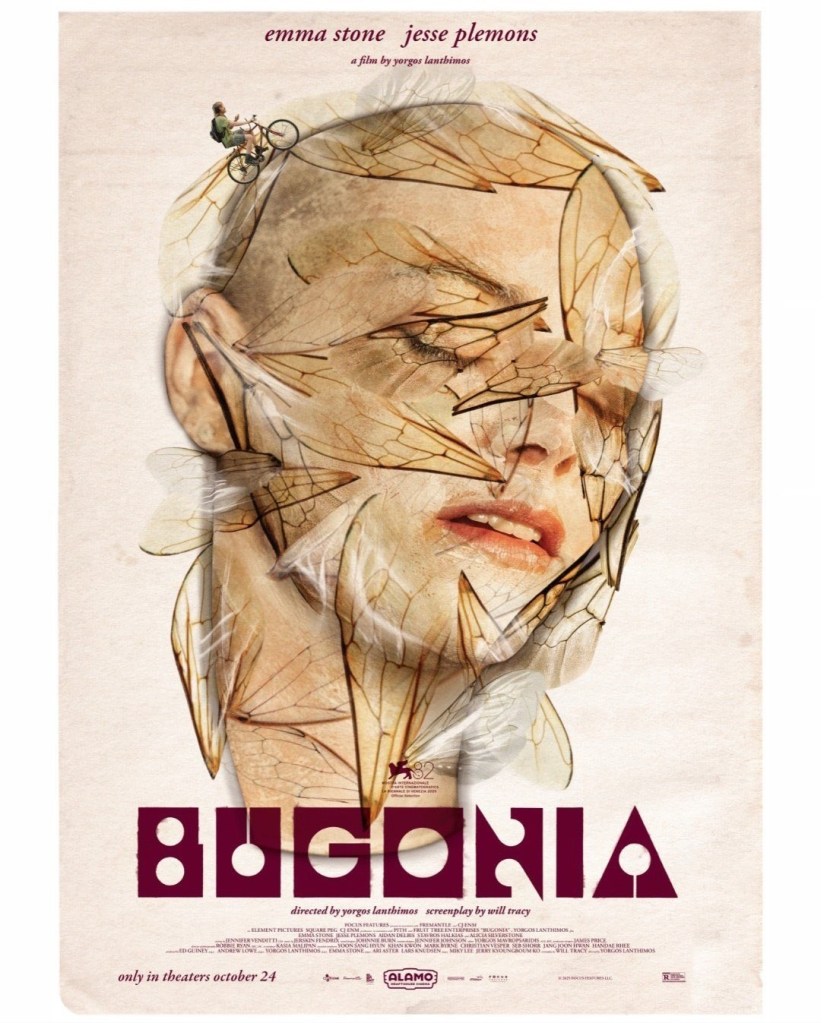
Review: Bugonia

I wanted to say I was pleasantly surprised to see such an original movie coming out of Hollywood. But I’ve just found out it’s an adaptation of a South Korean movie. Leave it to the Asians to actually create daring fiction.

Anyway, this was good. A head-to-head between Jesse Plemons, whom I’ve liked in everything he’s done, and Emma Stone, whom I’m not particularly enthusiastic about but who’s good at her craft. Emma plays a high-ranking executive of a company involved in shady pharmaceutical stuff. Jesse Plemons plays a schizotypal, traumatized dude out in the sticks whose mother was injured somehow by said pharmaceutical company. But Jesse’s character has figured out that behind that mundane, vague corporate malfeasance is actually an alien plot to enslave mankind. Along with Jesse’s retarded cousin, they decide to kidnap Emma Stone’s character so she’ll transport them to the mothership and allow Jesse to negotiate for the sovereignty of Earth.

That’s as much as you need to know. In fact, that’s likely more than you needed to know to get into this movie. If you’re into weird stuff, watch it. It’s not the usual Hollywood garbage.

The peculiar script is a highlight. It allows compelling negotiations between Jesse’s delusional character and Emma’s, a cunning executive who finds herself under someone else’s control. Jesse’s and Emma’s acting are fantastic. Unfortunately, the third main character is Jesse’s retarded cousin, who seems out of place in every scene against these two powerhouses. I understand why the plot needed him (otherwise Jesse would have been sounding off necessary plot elements against the walls), but I think the movie would have been tighter without that character in it.

I recommend this movie. So much shit out there, you have to point out the ones that do something.

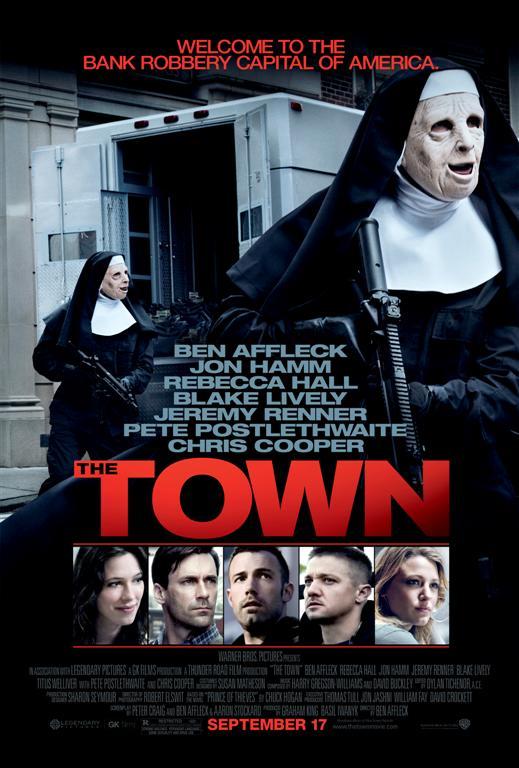
Review: The Town

Recently I became interested in the movie that Ben Affleck and Matt Damon made together and was releasing on Netflix. The Rip. It seemed like it could be entertaining. Then I watched like thirty minutes of it and realized that it was another one of those movies, like virtually all I’ve attempted to watch in the last ten years or so, that seem to be written by people incapable of producing a good script. Cringe dialogue, the subtlety of a hammer. In online mentions of this movie, people had compared it to a similar one (if only because heists and Ben Affleck were involved): The Town. Released in 2010, but somehow already looking ancient.

Well, The Town was fantastic. I checked it out at midnight and ended up staying up until about three in the morning. Extremely well-written script with not only unique, compelling dialogue, but also great set pieces, mirroring, and callbacks. Like a perfectly-built machine. Affleck does well, although I’ve never been much of a fan of his acting. Jeremy Renner, though, is amazing as this loose cannon who did nine years in prison and who’d rather die “holding court on the street,” as he put it, than return to jail. I never cared much for Renner’s acting, but it feels like other movies he was in, those I’ve seen at least, simply didn’t give him the chance.

As the romantic interest we have Rebecca Hall in her twenties. Gorgeous woman, always a pleasure to have her on-screen, and from the moment she first appears, you understand why a couple of the men involved would risk getting in trouble for her. We also have Jon Hamm from that old Mad Men show (which I never watched, but it was all over the place back in the day) doing very well as an FBI dude, and Blake Lively acting as a strung-out town bicycle. She honestly did great.

The movie gives a great sense of being stuck in a small town (although, as far as I could tell, it’s just part of Boston) with nowhere to go, burdened with the weight of generations, doomed to nothingness unless you dare to stick your head out in a way that could make others cut it off.

It’s very rare for me these days to watch a Hollywood movie and think, “Wow, that was great.” So I recommend this one.

Tatsuki Fujimoto 17-26

This is not a review, but a notice to those interested in the works of Tatsuki Fujimoto, author of Chainsaw Man, Fire Punch, Look Back, and Goodbye, Eri, all of which are required readings/viewings. He produced a bunch one-shot stories from ages 17-26, which have now been animated in very competent, creative ways. I can’t think of any other author who casually gets great adaptations made of random one-shots he made in his youth. Here’s the trailer.

They show Fujimoto’s range from early on. Most of his stories have in common the theme of reaching out for connection in an absurd world that often renders that connection fleeting, insufficient, or meaningless.

There’s also Look Back, a heartbreaking tale about ambition, connection, and regret. Merely mentioning what inspired it would be a spoiler. The movie has been out for a while, but I haven’t seen it yet. Probably because I’ll have to gear myself up to experience that story again.

The Chainsaw Man movie for the Reze arc is already online, and that’s a must see. This is both a fantastic and a terrible time to be a Fujimoto fan: fantastic because plenty of his stuff is getting adapted well. Terrible because the second half of Chainsaw Man, still ongoing, is unnecessary and generally bad.

Now, let’s hope that they also adapt the utter insanity that are Fire Punch and Goodbye, Eri. That last one has a plot point that I remember vividly because it made me burst out laughing with its daring, absurd brilliance.

Inio Asano, Minoru Furuya, Tatsuki Fujimoto… Asano broke down after Punpun, Furuya retired in 2016, and I suspect that Fujimoto may quit after he concludes Chainsaw Man however he decides to do so. I’ll have to check out what Shūzō Oshimi (The Flowers of Evil, Blood on the Tracks, Inside Mari, Happiness) has been doing recently.

Review: The Vast of Night

I rarely watch movies (nor read novels for that matter), because damn near everything released after 2006 or so is an excuse to make a political vehicle. I asked ChatGPT what could interest me as someone whose favorite movies (off the top of my head) are Fight Club, Jurassic Park, The Matrix, Back to the Future, and probably a couple others that I can’t remember now. It recommended some movies that I had never even heard about, although that’s not particularly surprising given that I haven’t been following movies in a good while.

So, it recommended The Vast of Night, a small sci-fi movie from 2019 or so that pays homage to Twilight-Zone-like stuff from back in the day. It takes place in a single night, following mainly the radio host of a tiny local station at a nowhere town, along with a switchboard operator. Both are young, both want to leave for better pastures.

That night, as most of the town is busy at a basketball game, some of the locals mention seeing lights in the sky. The switchboard operator receives eerie sounds that had never come through her switchboard, and she enlists the help of the radio operator to see if anyone can figure out what that’s all about.

I won’t reveal anything more about the plot. The whole movie takes place in a single night and a relatively short span of time. It’s on the artistic side, with fancy dialogue and ambitious shots. Some very interesting single takes. I thought it nails the feeling, that some of us remember, pre-internet of clutching onto vague rumors and radio testimonies that offer glimpses into a larger reality. I enjoyed the movie quite a bit. I also found the switchboard operator very cute, which is a plus.

It’s no masterpiece. The dialogue-heavy introduction goes on for way too long; it does a great job of establishing the cleverness and competence of the young radio guy, as well as his friendship with the switchboard operator, but it could have been significantly shortened. Once the switchboard operator receives the strange sound through the board, the movie doesn’t stop. I would have liked to say that it’s free of politics, but they had to sneak a “whites don’t care about blacks and indians” in there. Can’t escape that shit.

Anyway, if you enjoy peculiar movies that aren’t the usual garbage, you could do much worse.

Chainsaw Man – The Movie: Reze Arc

Chainsaw Man, the manga tale of a hapless, half-wild young man who ends up with a chainsaw demon for a heart, finished its fantastic first part perhaps five years ago. Unfortunately, the second part, still ongoing, is mostly shit; the author Tatsuki Fujimoto must have felt pressured to produce a second part even though the first one tied up nicely. The anime was released some time ago to popular acclaim, but it ended right before one of the most popular arcs of the original story started; it involved a mysterious girl, the sole person capable of reaching the protagonist at a human level.

Anyway, they’ve made a whole movie of that arc. I’ve realized that the movie is playing at my local theater, so I have a plan for this afternoon. So far, reviewers I trust have said that the adaptation is exceptional. I may be compelled to post a review later on.

Here’s the trailer. I’m eager to revisit these characters again.

One Battle After Another, by Paul Thomas Anderson

For the last ten years or so I have avoided Hollywood movies, and movies in general, because most of what’s produced out there these days is vehicles for marxism. A couple of days ago I found out that Paul Thomas Anderson, who made Boogie Nights, Punch-Drunk Love, There Will Be Blood, The Master, and Inherent Vice, all movies that I either loved or found very interesting, had made a new one, named One Battle After Another, starred by our favorite lover of under-25-year-old women: DiCaprio himself. And the movie is based on a complex book by Thomas Pynchon, about revolutionary movements in the sixties. I was eager to see a movie set in the late sixties and early seventies, an era that has become important to me for reasons. On a personal note, P. T. Anderson is, or used to be, an intimate friend of Joanna Newsom, who is probably the living artist I respect the most (Joanna even had a role in Inherent Vice). So I figured that I finally could drag my aging ass to a movie seat.

It was fucking terrible. Pure political propaganda. P. T. Anderson, or whoever wrote the movie, used Pynchon’s book as an excuse to write a contemporary movie to shit on the US, and by extension on all countries of ethnic European origin, for controlling their borders and not being communist. In the first twenty minutes or so we see DiCaprio (I mistakenly wrote DiCrapio, and perhaps I should have left it like that) acting as the bomber for a communist, terrorist group, whose leader was the most disgusting, over-the-top example of a “black power” revolutionary I remember seeing in fiction. At first, silly me, I thought that DiCaprio’s character was undercover or something. When the black terrorist, after insulting and threatening some border guards, got to Sean Penn’s character and threatened him into getting hard, I realized that this movie was playing it straight. Abhorrent, insulting, morally-bankrupt garbage. That black communist hadn’t even met Sean Penn before; she just assumed that he would find her super hot, as in all white people are attracted to ugly, violent, nasty black women. Are black men even attracted to that?

Other than DiCaprio, the token “ally,” every single person of ethnic European origin in this movie is depicted as evil, a freak, or both. Sean Penn, who is a woketard himself, I assume was doing his best Donald Trump impression, judging by his facial mannerisms. Both DiCaprio and Sean Penn are depicted as being super turned on by the main black communist revolutionary. Sean Penn’s character even pursues her for sex, and gets pegged. Because of course he does. Later on in the movie, in an extremely lazy exchange, another character implies that he’s a closeted homosexual.

After DiCaprio’s character and this black bitch have a child, she berates him for “trapping” her, for trying to get her to act as his mommy, merely because DiCaprio’s character intends for their daughter to have a mother. In the end, this black communist, who was cheating on DiCaprio, abandons her family, murders a guard during an attack, snitches on their revolutionary group to avoid ending up in jail, and leaves the country. By the end of the movie, that fucking bastard is depicted in a sympathetic light, as if she could be redeemed. As in, “Ah, what wild youth we had. I made some mistakes, silly me.”

DiCaprio, being an “ally” ethnic European in a marxist movie, after he went out of his way to have a mixed baby, is depicted as a loser who has wasted the last thirty years destroying his brain with drugs. He spends most of the movie bumbling around, and by the end, he just happens to be in the right place at the right time, after someone else had solved the problem.

Then there’s the whole white supremacy thing. Sean Penn’s character wants to belong to a group named after Christmas (get it?), who are explicitly white supremacists. Those guys turn on Sean Penn when they realize he had a relationship with that black revolutionary bitch, and possibly fathered a child with her.

This movie features a native-American character. As a native-American character in such a marxist movie, he ends up (spoiler) massacring a group of white people named after the American revolution. If you saw that season of Fargo, by the Coen brothers, then you’ve pretty much seen that whole scene. I recall that the Coen brothers also used that season as a vehicle to tell people how terrible the Eastern Europeans were to the jews. Nevermind the fact that 95% of the Bolshevik leaders were jewish and murdered about 30 million ethnic Europeans in what came to be called the Holomodor. A subject you won’t see in any Hollywood movie, nor will you be detained for questioning.

Oh, I forgot. Spoiler, in case you care about this fucking abysmal turd of a movie: DiCaprio’s character is a literal cuck. Sean Penn’s character actually fathered DiCaprio’s daughter. Thus, DiCaprio’s took his rightful place at the bottom of the marxist hierarchy: a discarded “ally” whose efforts and resources are taken up by raising another man’s mixed baby.

Terrible, terrible film. Cinematography was fine, though, if you care about that. What perhaps disturbed me the most about the movie was the way this communist revolution, and all sorts of social revolt focusing on destroying those “evil white men,” were depicted with the moral righteousness of an eighties/nineties film that used nazis as the bad guys. DiCaprio’s “daughter” even ends up as a marxist activist herself, accompanied by uplifting music.

I’d rather eat my own shit than watch this movie again. I guess I have to write P. T. Anderson off my list.