

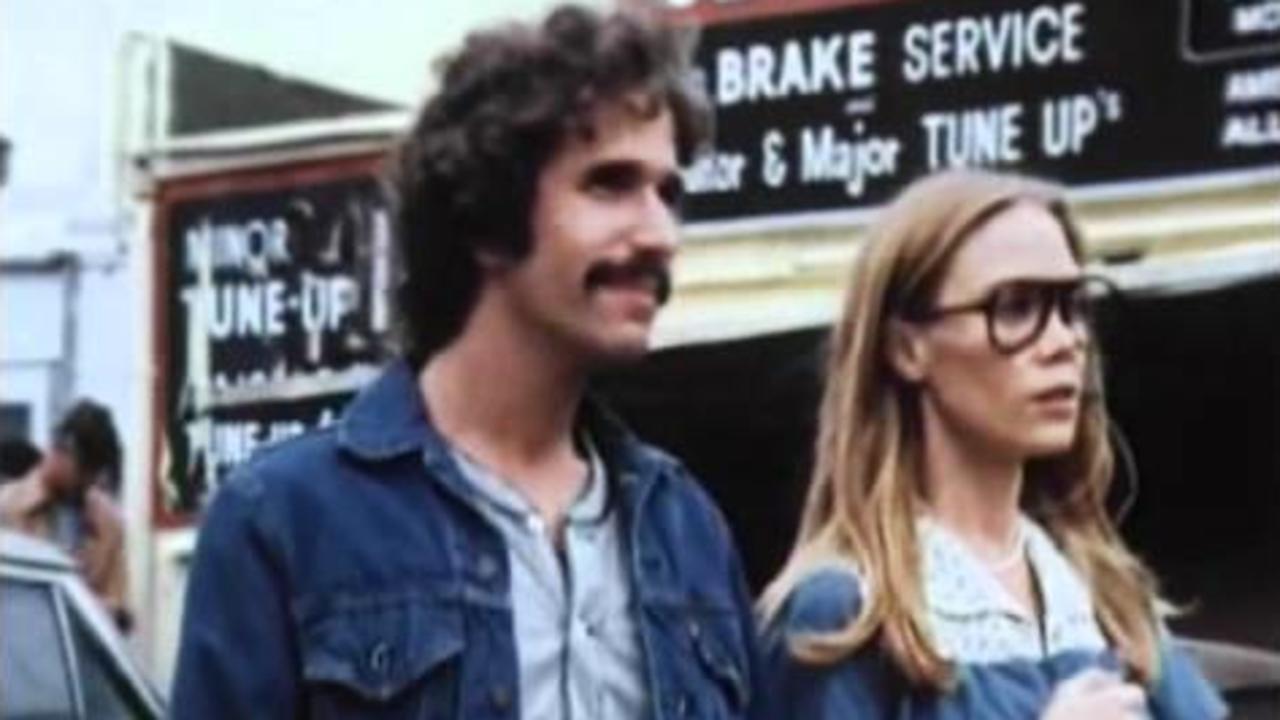
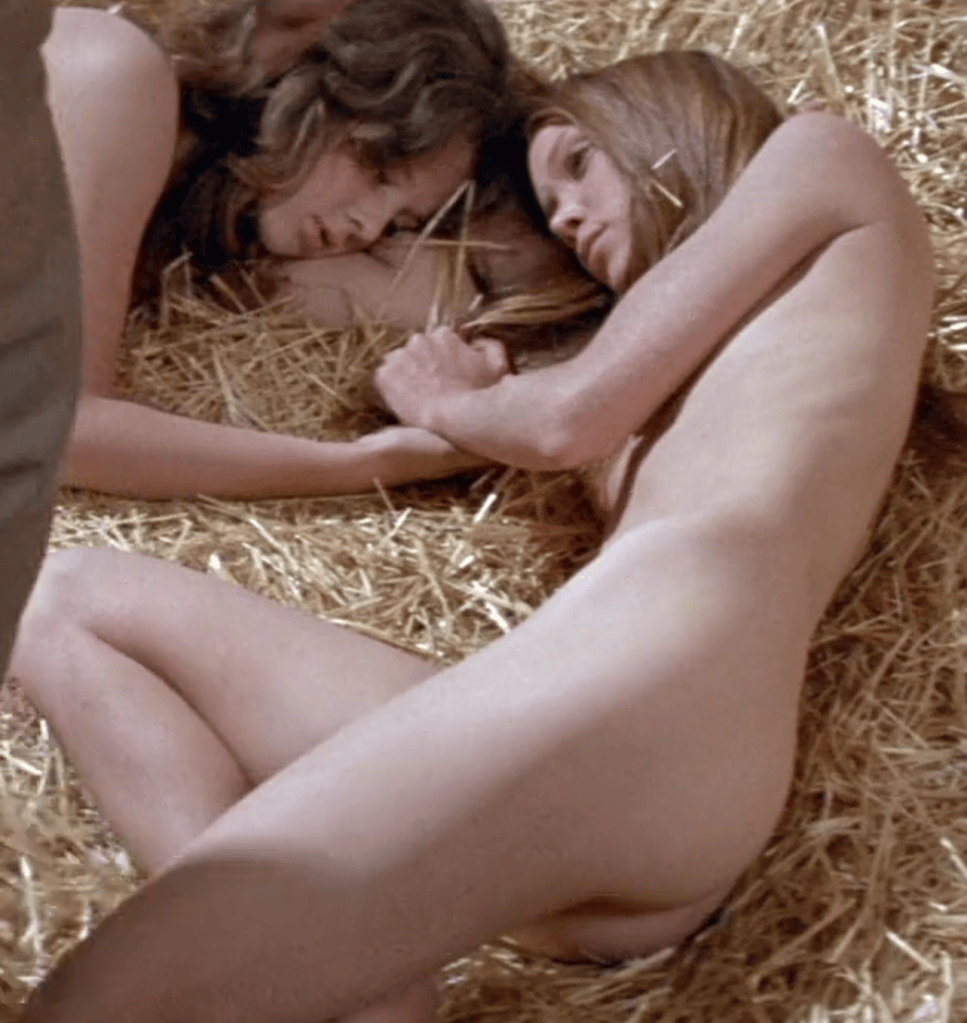
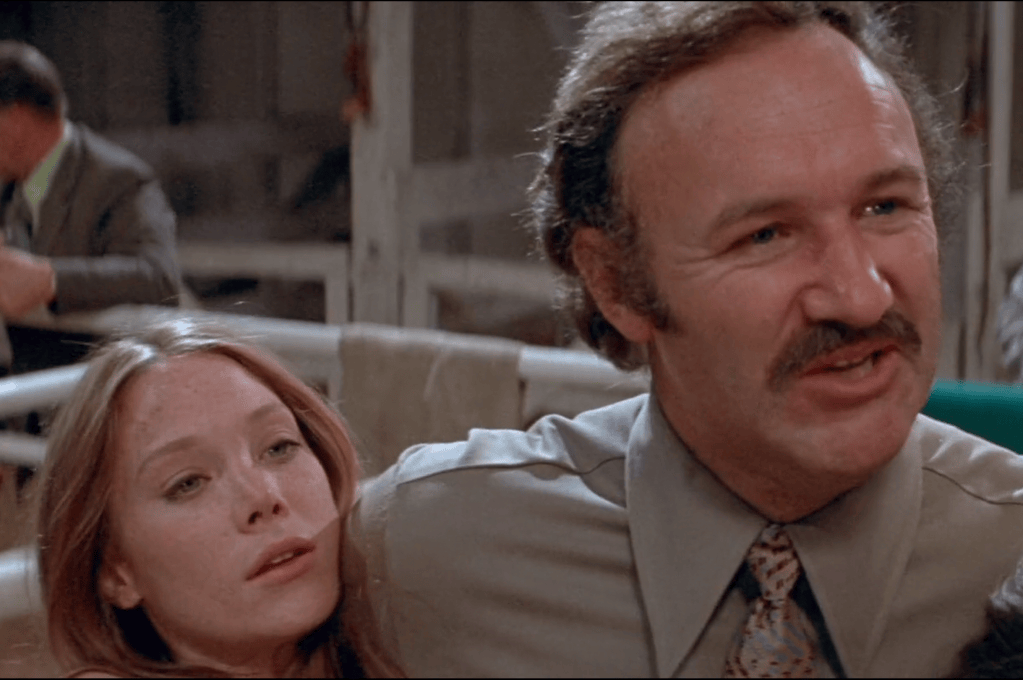
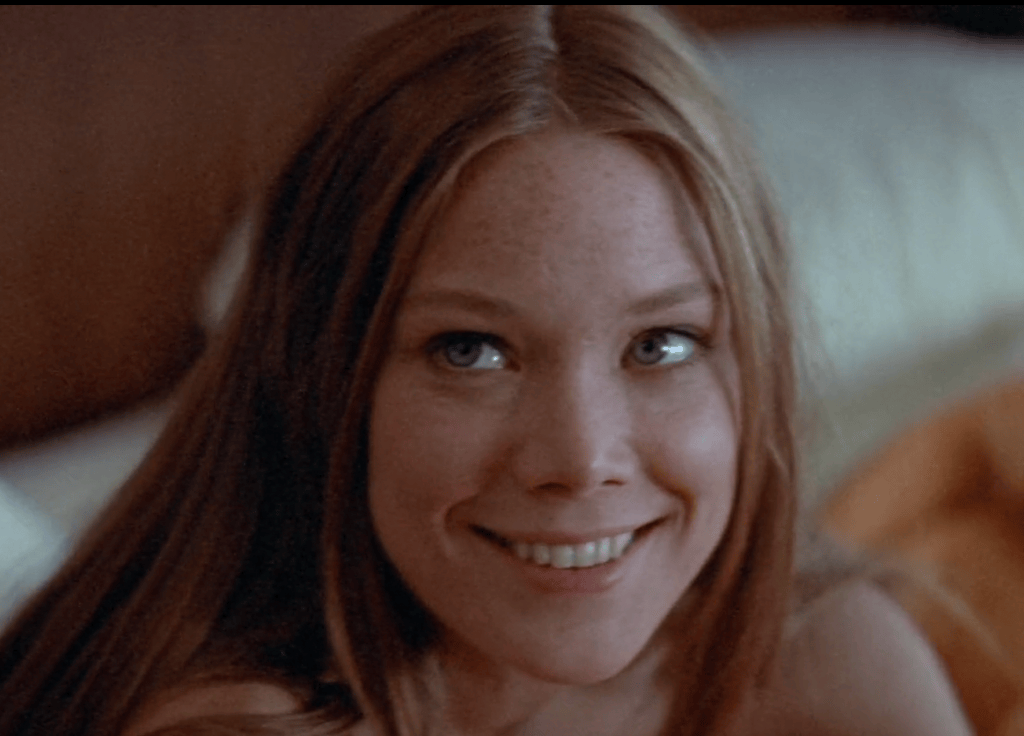
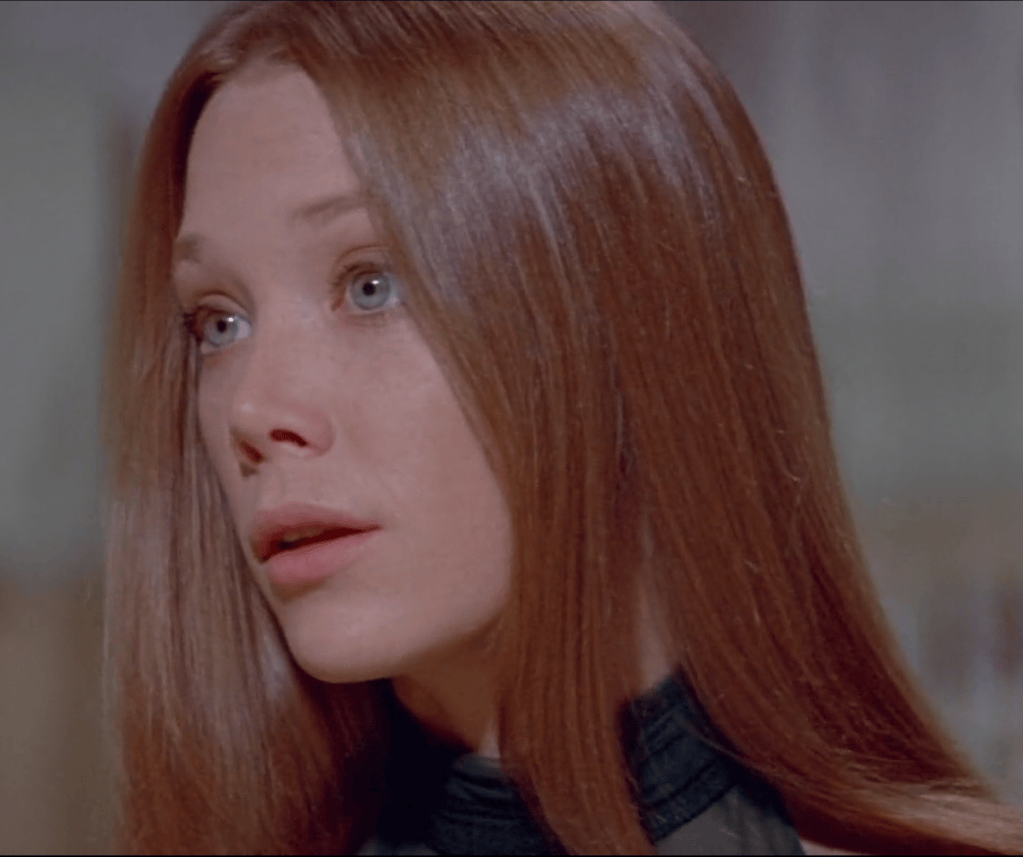
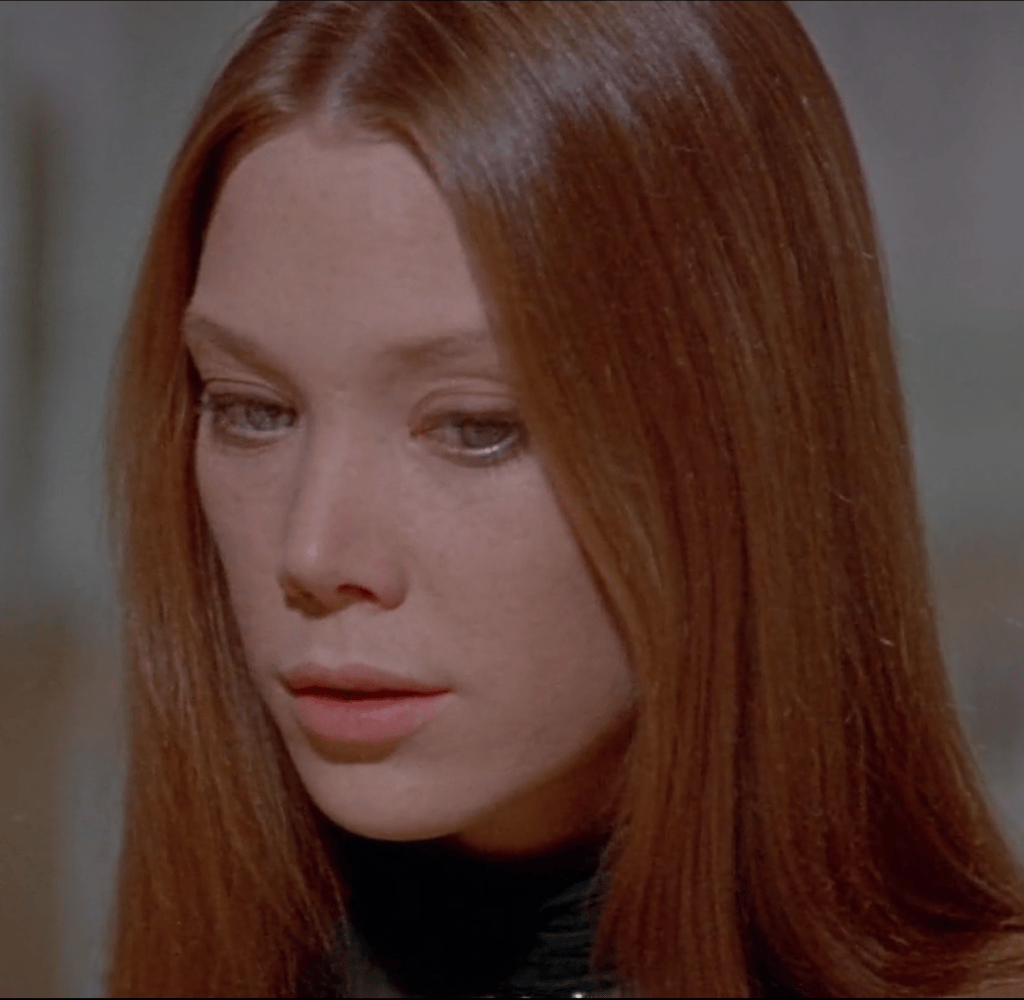
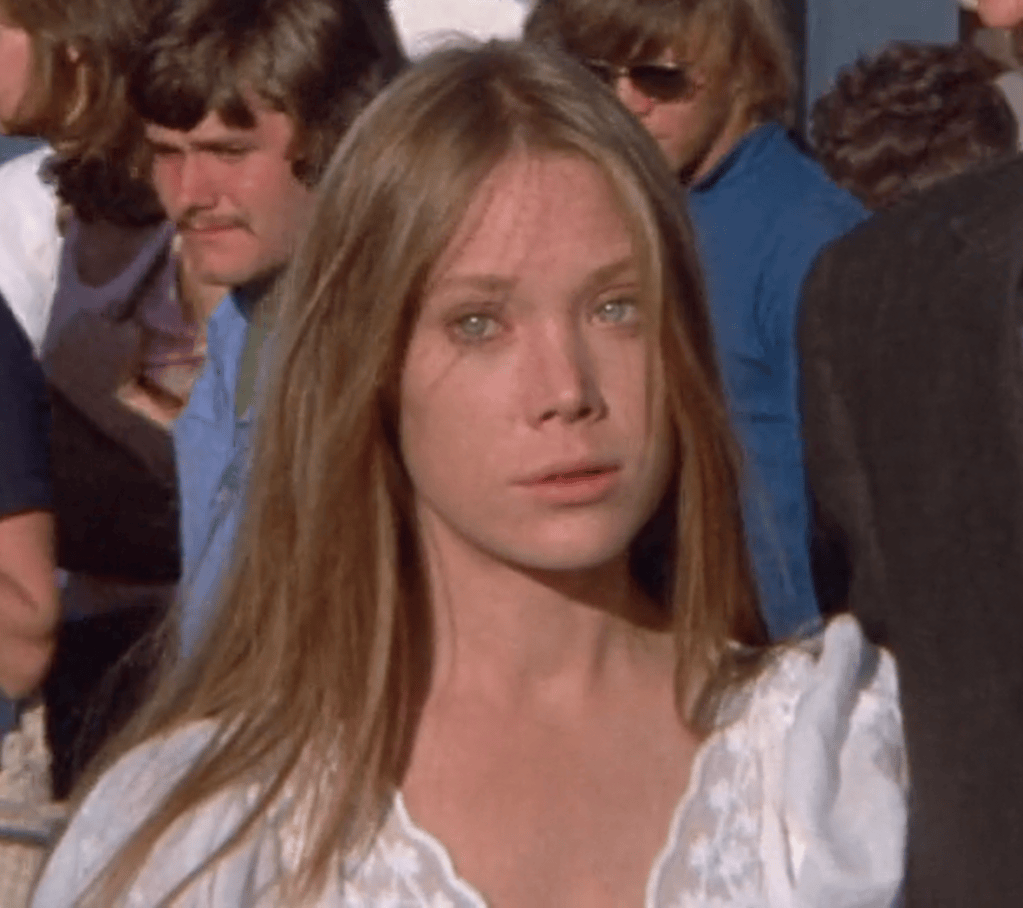
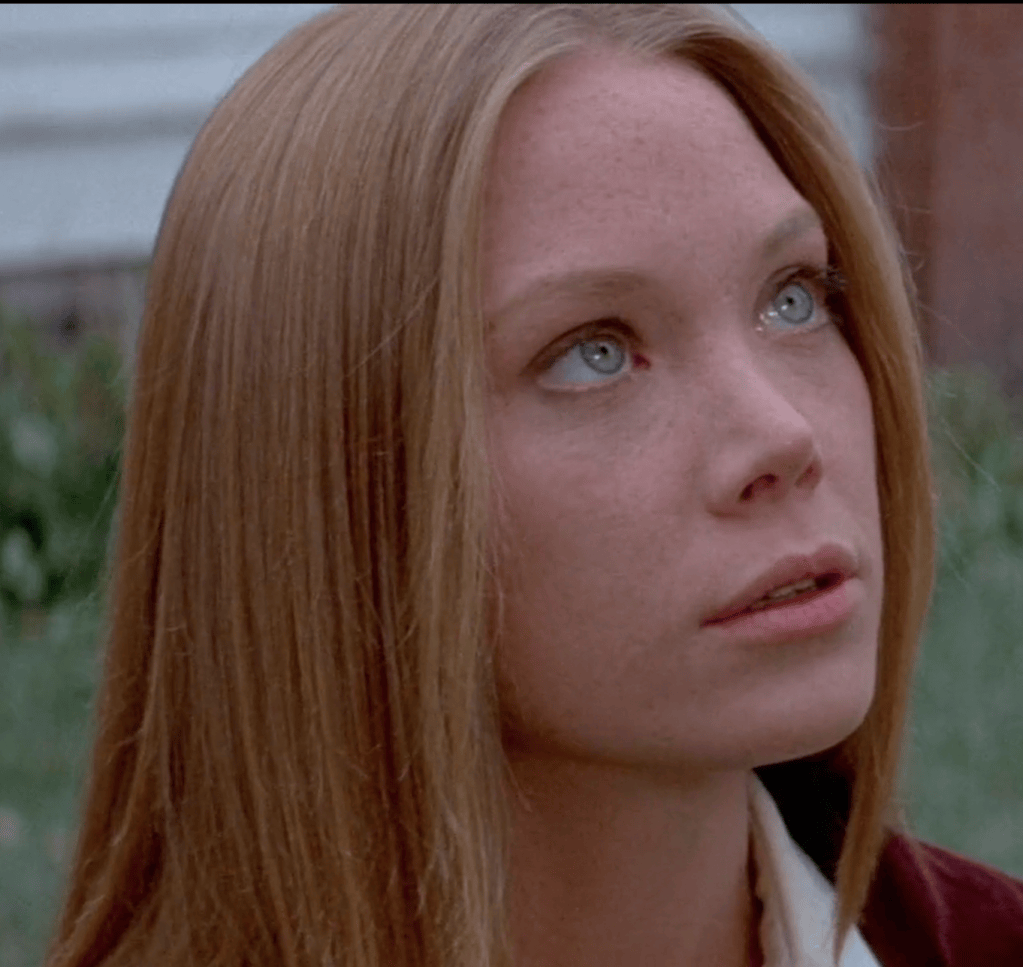
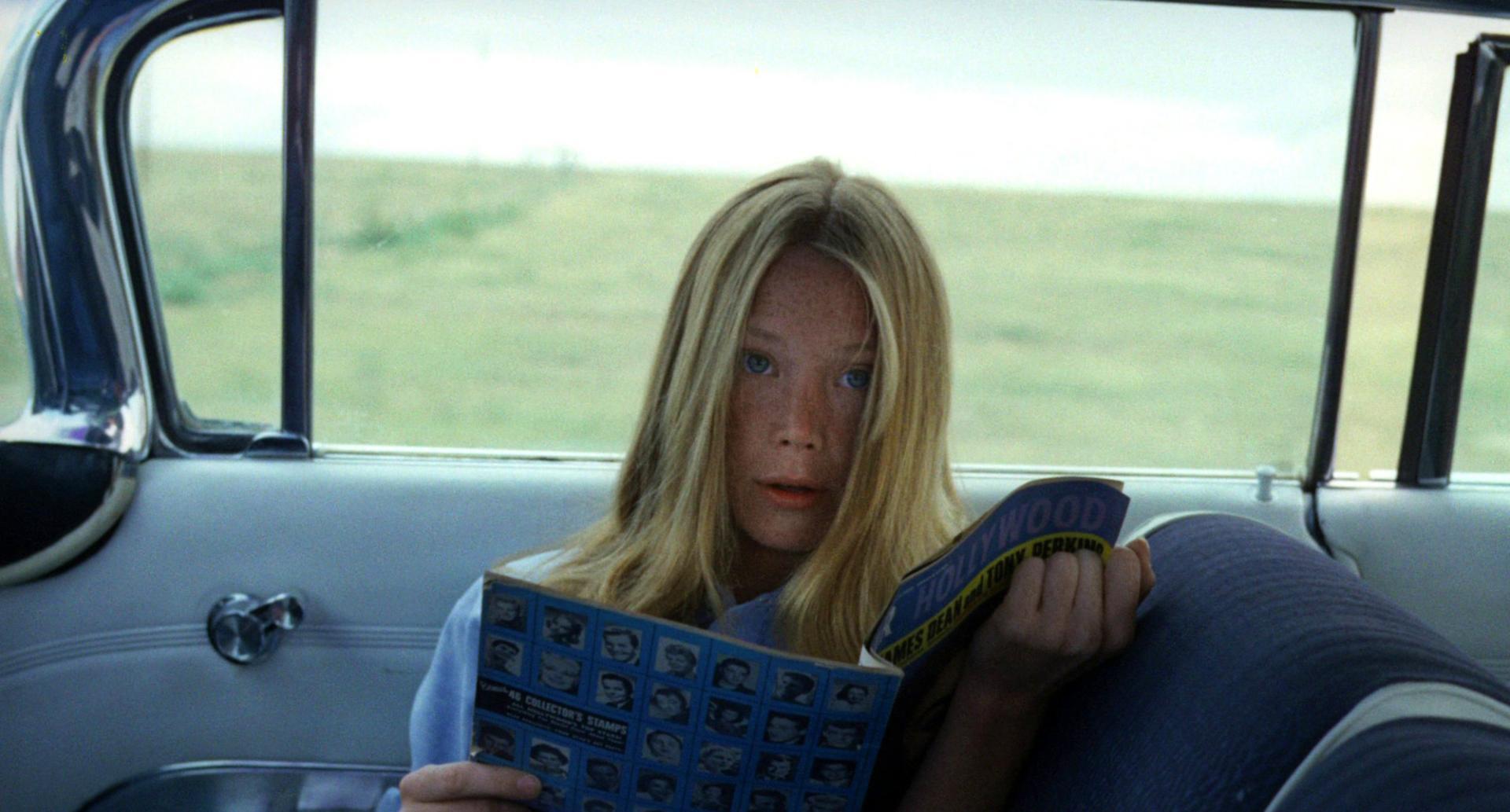
This is a 1973 TV movie I only discovered because Sissy Spacek was in it. It features Sissy at the peak of her beauty, same era as Terrence Malick’s Badlands. Sadly, the sole available sources for the movie are the YouTube video below, along with some shady Russian sites. The movie seems to be on DVD, but sold from a single seller and with no guarantee that the quality is any better.
Despite the somewhat-blurry nature of the video that prevents the viewer from picking up all the details, Sissy looks luminous and ethereal. She’s placed against a whole cast of girls around her age, which makes her stand out more as unique. Her peculiar mannerisms and microexpressions are as charming as ever, as well as her distinct voice.
I’ve realized something fairly obvious about the two women I’ve been obsessed with in the last fifteen years: they both grew up in a small town, had ample access to nature, and had loving and involved parents that encouraged their children’s creativity. I wonder how much that upbringing helped preserve the idiosyncrasies that capture me, the sense that they had been allowed to become themselves without having their peculiarities sanded off. That’s both Joanna Newsom and Sissy Spacek. In an interview, Sissy said, “I already had my core when I left my little town in Texas.”
Of course, both were gorgeous at the time as far as my tastes go; I doubt I would have become obsessed with them to begin with if they had looked like trolls. I’m not sure what it all means or if it has to mean anything beyond the fact that this combination captures me beyond my ability to deal with it in a sane manner.
Anyway, this story follows a clash between Sissy (a free-spirited, romantic teenager who got herself pregnant at seventeen) and a stuck-up teacher in her mid-thirties who yearns for independence and logic above all. The movie starts with Sissy and her lucky boyfriend holding up traffic as the boyfriend dumps Sissy at Huntington House because he can’t handle a pregnant teenager. Sissy gets mad at the aforementioned teacher because she didn’t stop rightfully pressuring the couple to move their van out of the fucking way.
I found Sissy’s character too bratty for my tastes. She sought confrontation regularly, was inordinately rude toward her teacher, and considered herself the sole person around who knew what love was. Sissy’s character identified the teacher as a stuck-up, nearly dried-up woman in her mid-thirties who was afraid of having feelings and of falling in love. Sissy mocked the teacher for lacking a man in her life.
This obnoxious prying into the teacher’s personal life annoyed me; let the poor woman do her job in peace! Maybe teenagers would have identified more with Sissy’s position here, but I wanted her to stop lashing out at whoever was available just because she felt bad about having ended up pregnant at seventeen and stuck at a kind of warehouse for pregnant teenagers who had been thrown out by their parents, abandoned by their boyfriends, or found themselves unable to take care of themselves for whatever reason.
At one point, when Sissy’s accusations that the teacher was afraid of feeling were getting to the older woman, the teacher met with her on-and-off man. He seemed quite irritating to me, so I didn’t blame her for wanting to remain independent. Curiously, the man was the one eager to get married, while she claimed she didn’t understand why the law had to get involved in people’s private affairs. Oh, how the times have changed.
I was simultaneously surprised and irritated by the writing in this story. Some of the residents of Huntington House were depicted as markedly different, which was good, but the moral argument between Sissy and the teacher was too hamfisted, with Sissy latching on to the teacher’s supposed inability to feel and the fact that she didn’t open herself up to a romantic relationship. The film seemed to mistake the teacher’s right to a private life for an emotional defect that the teenager had to cure. The arc was obvious from the beginning: the teacher would soften up and learn to love thanks to the irritating, bratty insistence of the free-spirited pregnant teenager. To be fair to the teacher, though, if Sissy Spacek had pressured me into opening myself up to love, I would have given in as well.
A side plot surprised me by making me fall for the same assumptions as the teacher did. A new girl entered Huntington House close enough to her due date that she wouldn’t stay until graduation, but she still had to take classes. This girl was simple in a way that suggested intellectual retardation, which was obvious to the teacher.
She asked her students to write an essay about nature. Afterwards, the dim-witted girl approached the teacher to ask eagerly what score she had gotten on her essay. The teacher, not wanting to upset this clearly stupid girl, was careful to bring up the fact that the girl had copied her essay from the classmate seated next to her. The girl burst into tears, claiming that everybody was the same, that nobody believed her, that she hadn’t copied her essay and she also hadn’t stolen her sister’s scarf. I found myself making the same assumption as the teacher: the girl is a lunatic and that there’s little to be done about it other than resign oneself to the fact that a simple lunatic would have a child who would likely inherit the stupidity and the lunacy.
But the stupid girl’s classmate ends up confessing that she was the one who copied the essay. At no point did it occur to me that would be the case; clearly, if two essays were virtually identical, then the stupid girl must have copied it. At that point, I felt myself in the teacher’s shoes, who rushed to apologize to the crestfallen idiot.
Anyway, Sissy plays the guitar in this. Some kind stranger uploaded that clip to YouTube for posterity.
Sissy’s song is appropriately lovely. She spent her teenage years in the sixties going around everywhere with a guitar, playing for the residents of her community. A passionate, creative soul. She was a genuine songwriter, creating her own songs, hoping to one day play them for the world. But when she left her hometown for New York, studio executives told her that they already had songwriters covering her niche. The main one they mentioned was Loretta Lynn; if you know Sissy’s movie career, you know how ironic that is. So Sissy never made it as the kind of musician she dreamed of becoming, even though I can easily imagine an alternate seventies and eighties when she’s a popular touring musician with multiple albums and thousands upon thousands of followers, like Melanie and others were at the time. Instead, Sissy had to settle for six Oscar nominations and a win. To be fair, she did eventually release an album in 1983, but it didn’t sell well; I suspect that by then, plenty of the passion and creativity had moved elsewhere.
Yet another blurry copy through which I’m trying to reach something distant, and that leaves a deposit of sorrow in my middle-aged soul by the end. This all took place more than fifty years ago.









You must be logged in to post a comment.