Motocross Legend, Love of My Life, Pt. 8 (Poetry)

If you haven’t read all the previous parts or you don’t remember them well, I urge you to read this short story (or novella) from the beginning (link here).


When I worked a nine-to-five at Zuatzu Business Park,
I spent the lunch breaks on a bench sanctuary
Nestled under a verdant canopy that provided shade.
I read technical books on website design and development,
Immersing myself in technique and precise logic
As I nourished my body with vending machine sandwiches.

A pair of stockinged legs halted next to my bench.
The woman offered a smile like a business card,
Radiating the composed confidence of an adult,
Though most people seemed older to me,
Whose clock had frozen in nineteen ninety-nine.

“Mind if I sit down?” she asked
As she claimed the space beside me.
I wondered where I knew her from,
But I didn’t; she worked as a legal advisor,
Negotiating contracts and handling disputes
At one of the legal firms housed in the business park.
During lunch breaks, her gaze had sought me out,
Perhaps drawn by the cold flame of my brooding,
A contrast to her life’s rigid rhythms.
Unprompted, she offered personal advice.
Upon discovering our shared roots in Irún,
She grinned as if that were a fact to celebrate.

Should I describe this woman in detail?
I will share with you, Izar, what she lacked:
Your cascade of caramel waves;
Your eyes, twin pools of chocolate;
Your crooked front teeth that flashed
Whenever your bubbly laughter burst forth;
Your restless passion.
Unlike you, she didn’t shine the brightest
Before the dark, shapeless backdrop.

Sharing that bench became a daily ritual.
She brought her homemade lunches:
Plastic containers stuffed with quinoa salad
Enriched by grilled chicken and chickpeas.
Cross-legged, she would puff on cigarettes
As she dissected headline legal battles,
Ranging from corporate scandals to civil rights,
To point out how she would have handled them.
She named and described her coworkers
So I could picture them like fictional characters.

She took advantage of crowded train rides
To gobble up the novels everybody recommended.
Eager to discuss their finer details with someone,
She coaxed me from the refuge of technical texts,
Challenging me to explore popular narratives
Like The Alchemist and The Da Vinci Code.
Apart from fiction, she consumed self-help books,
Seeking to strengthen her mindset
Cultivating virtues and combating vices.

Nobody else allowed her to ramble on,
And she felt her every word sank into me
Like pebbles rippling a pond.
She admitted that recently, in her free time,
After coming across an intriguing article,
She had yearned to share it with me.

She invited me to grab coffee the coming Saturday.
In Constitution Square, we sat at an outdoor café
Packed with patrons enjoying their leisure.
The glossy metal tables glistened in the sunlight,
That also glinted off the wrought-iron balconies
Of the apartment buildings enclosing the square.
The robust stone archways cast elongated shadows
Onto the tiled pavement of the arcade.

Immersed in the hum of overlapping conversations
Broken by bursts of laughter from nearby youths,
I sipped my café con leche, and bit into a croissant,
As I stared at her opaque sunglasses,
At that face aglow in the sun’s warmth,
At those strands of hair lit like fine gold.

To meet me, she had donned a pleated skirt,
A crisp white blouse, and a burgundy jacket
That matched her glossed lips.
I wondered what they would taste like.
Later that evening, I found out:
They tasted of cigarette.

Those soft lips, our tongues probing each other,
They bestowed on me a respite,
A detachment from reality and grief,
As if resuscitated from a surgery’s anesthesia.
But a few breaths later, the truth awaiting
At the periphery of consciousness
Flooded back in like tons of icy water
Through a dam’s drain hole.

Izar, I felt the shape of your body in my arms,
The scent of your hair tickling my nose,
As if we were lying on your childhood bed
Like in days long gone, when the sun’s rays
Still warmed and nourished our skins,
When we imagined the foreign sights
We would behold together.
Those sensations, stored in my neurons
Away from conscious recollection,
Vanished again like a dream upon waking,
Despite my struggling to cling to them.

I boarded the train bound for our hometown
With this woman whose saliva I had tasted.
She sat beside me, and grabbed my hand.
“This feels right, doesn’t it?”
The tracks clacked steadily,
The landscape blurred past.
Her breath brushing against my ear,
She kept whispering to her patient listener
As I slipped deeper and deeper
Down the well of my mind.

In Irún, after she and I parted ways,
I was ascending the sloping Pintor Berrueta Street,
Trudging in the gloom under overhanging stories,
When my internal stasis cracked.
I found myself holding onto the rusted security grille
Of a closed storefront, a bankrupt shop,
While my gut writhed, twisted, and churned
With an acidic, gnawing guilt.

The duty of preserving your memory,
Alongside the promises made,
Had convinced me to keep breathing.
Yet, I tainted these lips that had kissed yours
By smearing them with someone else’s molecules.
Didn’t I know that any contact with another
Would corrupt, contaminate, and diminish
The fading traces of you?

During lunch breaks, occupying that bench,
Hadn’t I looked abandoned and broken?
Couldn’t this woman tell, at a single glance,
That I only contained undigested pain?

Like a stray dog, I had wagged my tail
At the first hand offering kindness,
At a stranger that had become invested
In a damaged boy unable to care for himself.
Her warmth was akin to a camping lantern
Illuminating a spot in a pitch-black forest
Where I could huddle and wait for dawn.
Izar, a part of me yearned to trust,
To let my defenses crumble.
I couldn’t stomach a whole life doomed to be
A sun-starved seedling trapped in concrete.

Five minutes away from La Concha Beach,
At a one-star hotel: two single beds pushed together,
Draped in pristine white linens,
The pillows patterned with white roses.

I hoped to disappear in ecstasy,
But once, I had ventured too near a star,
Leaving my skin blistered, my soul charred.
After that woman and I fucked,
With my sperm confined inside a condom,
She padded to the bathroom for a smoke,
And I wet the white roses with tears.

Alone in my childhood bedroom,
I flipped my sketchbook swiftly to a blank page.
Armed with my collection of colored pencils,
I focused on scraping the virgin sheet with graphite
To render a facsimile of my memory:
A halo of sunlight bathed her tousled locks.
The reflective surfaces of her sunglasses,
Mirroring the expanse of Constitution Square,
Concealed the sharp, analytical gaze beneath.
Her tender lips, slightly parted in contemplation,
Were embellished with burgundy lipstick.
She wore a white blouse, the first button undone,
And a jacket that draped elegantly off her shoulders.
Hunched over, I drew and shaded every crease.

The following Monday, on that secluded bench,
As she grumbled, vexed about a colleague’s errors
That forced her, yet again, to pick up the slack,
I kept thumbing the elastic strap of the file folder
Cradling, along with the portrait I had drawn,
Comic strips, relics of happier days with you.
When a pause beckoned, I cleared my throat.
“Listen, have you ever been into comics?”
She glanced sideways, took a drag of her cigarette,
And with a practiced flick, cast off the ash.
“What’s that about comics now? Please,
I’ve outgrown childish nonsense.”

My blood cooled abruptly.
I lowered the file folder beside me.
I had been chosen, indeed, by a prim lady
Fitting of her role in this world.

One afternoon, when I returned home from work,
I collapsed onto my bed, eager to recover from the toll
That forced smiles and hollow exchanges had exacted.
As my every fiber trembled, undone by exhaustion,
My cellphone vibrated in its pocket,
Its chirrup evoking dread.
This woman wanted to listen to my voice,
Chatter about trivial stuff, or bore me with legal jargon,
Even though I yearned for nothing more
Than to be left alone.

Izar, had I ever resented your presence?
Ours was a shared solitude:
As we nurtured our private language,
We played games we both enjoyed,
We read stories that entertained us both,
We encouraged each other’s dreams.
Now, in the lawyer’s gaze, I felt evaluated,
As if she catalogued my screw-ups,
Every flaw, every deficiency,
Storing them away for future indictment.
After mere hours in her company,
I required some leeway to breathe fully.
Still, I appreciated her more than anyone
Ever since you rode away for the last time.

Raindrops drummed on my umbrella
While the woman and I strolled arm-in-arm
Along a rain-soaked, glistening promenade.
Under a heavy, slate-colored sky,
White-capped waves of the restless sea
Crashed relentlessly against the breakwater.
On the opposite shore, past a line of buildings,
Rose the tree-covered Mount Igueldo,
Capped by the tower of its amusement park.
I smelled fresh rain, salt, and seaweed.

Rainy days thinned the membrane
Separating me from that final ride
To which my dreams hurled me
Whenever I needed to repent.
I felt an echo of that wet, frigid wind
That had etched itself into my bones.

To my regret, to my resentment, I opened up:
I confided in this lawyer about you, my Izar,
Who on a rainy night had crashed her Aprilia
And bled out on a lonely slope by the highway.
I confessed to squandering a year as a recluse,
That ever since, I struggled to relate to others
And their delusions of a just and ordered world.
I spoke of the weight of each day
Like an endless march up a steep incline.
To survive, I had erected a fortress of barbwire,
Encircling the raw viscera of my grief.

How many times have I berated myself
For voicing my pain aloud?
Did I hope this woman would encourage me
To guard and cherish your memories?
You know, Izar, you had spoiled me:
Whenever I handed over my pain,
You had cradled it against your chest.

This woman’s thoughts were filtered,
And those deemed offbeat, discarded.
But who else could I blame except myself?
I had accepted a simulacrum of love,
One lacking the fire of passion, of dreams,
And the sense that we were meant to be,
Like a Macedonian general leading his troops,
Knowing that a glorious destiny awaited
At the fringes of the known world.

Those locks whipped by the stiff breeze,
That profile fixated on the heaving sea.
She asked if I had attended therapy,
As if I could want anybody to exorcise you.
I swallowed the taste of bile.
“I cannot be fixed.”

Unlike those who dispense their hearts freely,
Unburdened by ties and promises,
If anybody shared their core with me,
I would preserve an echo of its beats.
I was a miser hoarding bits and pieces
Of what used to make me whole,
But I had grown tired; I couldn’t stand alone.
That lawyer, a level-headed lady,
Had invested in a lost teenager, an invalid.
Yet, I never loved her. How could I have?
My patched-up heart treasured the frozen fire
Of my girlfriend, whom I would never see again.
We had promised to love each other forever,
And I will.

The woman approached my secluded bench
With her earlobes and lips bare,
With her hair tied back in a hurried ponytail,
Loose strands escaping the bond.
She wore a pale-blue, wrinkled blouse that clashed
With her earthy-green skirt of textured cotton.
The odor of cigarette clung to her.

Beside me, slumped on the bench,
She toyed with her purse’s clasp,
Her gaze darting away to avoid mine.
I pressed her, “What’s wrong?”
Guessing that she intended to break up.
Instead, she pulled out a pregnancy test.

My eyes glazed at that pair of blue lines.
For how long had I known her? A year?
She asked, stripped of pretense,
“If I decide to keep the baby,
Are you going to leave?”
With all the resolve I could muster,
I hugged her to my chest.
“No, I won’t leave you.”
“Do you actually love me?”
“Yes, I do.”

Ropes, chains, shackles, zip-ties,
Meat hooks impaled into my flesh;
A child would anchor me away
From razor blades, pill bottles,
Bridges, cliffs, and incoming trains,
From the urge to leap into the dark
And find you there.


Author’s note: today’s songs are “Same Thing” by Islands, “17” by Youth Lagoon, and “Todavía una canción de amor” by Los Rodríguez (also this live version).

If you enjoy my free verse poetry, I have three books worth of it yet to be self-published. Check it out.
My old Re:Zero fanfiction

This morning I woke up to a surprise: someone from the US had hit about fifteen chapters of Re:Zero fanfiction I wrote back in 2019-2021, that virtually never receives hits. I assume this stranger read some of it as well. That got me to reread a few chapters again, and I remembered that I had an absolute blast writing this story. Some of the funniest scenes I have ever giggled through appear there (most others in my ongoing novel).

Why on Earth was I writing Re:Zero fanfiction anyway? Back in 2018 I had released two books of novellas in Spanish, my native language, but nobody cared. Although I sent them to a few contests, I got no reaction. That was disheartening, even more so because I had come to a turning point of sorts in my creative life: for years I had only read, watched, and played stuff in English, and I didn’t connect with the material either produced in or translated to my native language. I resented plenty of translators, because they injected lots of local colloquialisms into other people’s works, and in general I simply didn’t enjoy the vast majority of the stuff that Spanish-speaking people created. To this day, the only album in Spanish that I listen to semi-regularly is Los Rodríguez’s Palabras más, palabras menos (that I think is fantastic).

I no longer consumed material nor thought, for the most part, in the only language in which I could become proficient enough. That surely killed any hopes of writing original works in English, as well as trying to write seriously in my native language.

Around that time, GPT-3 was impressing the few people in the know. Most civilians only interacted with it through middleware like a website that used GPT as a director of “Choose Your Own Adventure”-type narratives, and it worked quite well for it even then, mainly because it wasn’t censored yet, or at least not remotely to the current extent. I won’t mention the website, because it ended up betraying its users.

I recall an instance in which I, as the protagonist, was attempting to have a normal conversation with a supporting character, only for that character (a female, no less) to blurt out something about scratching her balls, or something to that effect. You never quite knew what sort of material you would be presented with, which made “playing through stories” using GPT-3 very entertaining.

Cue Re:Zero. It was a series of Japanese light novel series that I came to know through the popular anime adaptation released in 2016. I’ve been a life-long lover of Japanese fiction, particularly manga and anime, and they excel at creating fantastic, colorful worlds with competing factions, weird races involving their own peculiarities, and above all, a sense of adventure and camaraderie that has been lost in the West, where our storytellers have been exchanged for political activists. In Re:Zero, a teenager named Natsuki Subaru gets isekai-d to a fantasy world featuring multiple races/species with weird powers, warring medieval factions, bizarre mythical monsters, etc. As the kicker that worked for me, Subaru was a bright, cheerful kid who tried his best to help the people he cared about, only to end up killed over and over: he has the power to reset time whenever he dies, which he does often, in horrible ways. The concept of solving problems through dying agonizingly, having to repeat the same sequences when nobody around you knows you have already lived through them, remains fascinating to me, and I wish I had come up with it.

I figured, why not have a good time playing through that narrative relying on GPT-3 to move things along? For the first eight or so chapters, it didn’t work very well: I relied on GPT-3 too much, which made the narrative quite incoherent, and different from the original (to the extent that I failed to reproduce introductory sequences whose absence ended up biting me in the ass later). By chapter 9 or so, I started taking the narrative seriously, using GPT-3 to spice up the dialogues or come up with intriguing details I could explore.

In my hands, the protagonist, Natsuki Subaru, turned into a wild, semi-deranged pervert, a masochist who openly welcomed at times getting killed even to get off, and who entangled the hapless fantasy characters in some of the most ridiculous and funny dialogues I’ve ever written; when I reread some of them earlier today, they made me laugh. The result was a joyous romp, as far as I’m concerned.

In the end, I abandoned the series when I was about to finish chapter 66, because by then, I had already read the ending of that arc as the original author had written it; I disliked it quite a bit, and it had diverged so much from what I had set up in my own fanfiction, that by then it I might have as well written my own stuff in English, now that I was confident enough. And so I did: lots of free-verse poetry, short stories, a novel that I self-published (My Own Desert Places), and a three and a half books-long novel I’m still writing. So I’d say that writing Re:Zero fanfiction was a great idea.

If you’re curious, and you can tolerate incorrect punctuation, some verb tenses used incorrectly, and in most chapters, paragraphs not separated correctly (for whatever reason, I thought it looked better), then check them out at the end of this page: my novels.

For some specific chapters that I remember fondly:

  • When Subaru and his demon companion try to ascertain the nature of a flying whale with the help of a bunch of idiotic travelers (chapter 11)
  • When Subaru, dismayed about his inability to stop an apocalypse, decides to mooch off an opposing household while trapping himself in a loop of debauchery and suicide (chapter 16)
  • When Subaru drags a cat-girl amputee through a warzone (chapter 24)
  • When Subaru disappoints everybody in his fantasy life to exercise his suicide powers (chapter 33)
  • When Subaru meets a dead witch and ends up drinking her spit (chapter 42)
  • When Subaru confronts his troubled past in a witch’s simulation (chapter 46)
  • When Subaru goes through a sultry encounter with a contract killer who gets off on disemboweling people (chapter 50)
  • When Subaru deludes himself into believing that his sexual act with a half-elf princess was a witch’s simulation (chapter 52)
  • When Subaru annoys their senior servant to an extent that causes him serious physical issues (chapter 53)
  • When Subaru and their demonic senior servant travel back to the mansion to confront a German lioness (chapter 55)

There’s lots of other chapters I would have mentioned, but editing them to space their paragraphs is quite annoying.

On writing: Conflict

You can check out all my posts on writing through this link.

Do you have a killer concept, a promising premise, a protagonist worth a damn, a goal worth pursuing, and meaningful stakes? Then you should ensure that your characters won’t blaze through your plot unimpeded. Don’t allow them to tell you who they are: force them to prove themselves.

A warning, though: don’t inject unnecessary conflict into your story; Western narratives have been plagued with such for decades. If you can remove an instance of conflict without crippling some plot point, and that conflict isn’t funny, then drop it.

  • Figure out what your characters want most, then put the things they fear most in their way.
  • Is there enough conflict to sustain a story? Freewrite possible conflicts based on what you know about your story.
  • How is a character who goes after a desire impeded, and how does that force him to struggle?
  • What is the central (outwardly visible) conflict in the story? Who or what is preventing your protagonist from reaching her goal?
  • What opposing goals of other people or entities in the story provide conflict?
  • How is the drama the product of the values and ideas of the individuals going into battle?
  • How is the force of opposition present, and well defined?
  • How is the concept tied in with the central conflict of the story?
  • Is there at least one actual human being opposed to what the hero is doing?
  • How do you tailor your conflict to create the highest stakes possible for your protagonist?
  • How does the conflict force the protagonist to take action, whether it’s to rationalize it away or actually change?
  • How does the force of opposition allow the protagonist to prove his worth?
  • Test the big problem regarding how it impacts your protagonist’s arc, either making him change or making him worse.
  • How are at least two constituents weighed against each other in this story?
  • What unresolved tension in the story would make the reader want to see what happens next?
  • How is the conflict stress-inducing and/or painful?
  • How quickly can you introduce the central conflict element in your story?
  • How do circumstances beyond your protagonist’s control fling her out of her easy chair and into the fray?
  • Can you put your hero in the last place he wants to be?
  • What is the biggest obstacle preventing your protagonist form reaching her goal? How can you make it much worse? How can it push her into despair and hopelessness before the climax?
  • What strong inner conflict is your protagonist dealing with? Come up with two things she must choose between, both unthinkable. Tell how that showcases your novel’s theme.
  • Who challenges the views, actions, and beliefs of your protagonist in a way that involves your thematic elements? Make their opinions even stronger with higher stakes and greater conflict.
  • How would this story be considered a war?
  • Can you add emotional friction? Competing egos? Status struggles? Clashes of styles and personalities?
  • Can you come up with at least five minor, different conflict components you can add to your plot that exacerbate the central conflict of your novel?
  • What conflicting, multi-layered emotions hidden beneath the surface could be at play?
  • How do the conflicts in the novel warrant strong reaction?
  • What big stuff goes wrong with your heroes’ plan?
  • Can your protagonist’s external goal be in conflict with his internal goal?
  • Do you bring in the threat of a clear, present and escalating danger, not a vague facsimile thereof?
  • How are the impediments your protagonist faces potentially too great to be conquered?
  • What can make the goal more dangerous, more impossible to be reached?
  • How are you mean to your protagonist? How do you hold her soles to the fire, even when she starts to squirm?
  • How would this premise generate external conflicts and twists that would bring the characters with things about themselves that they’d rather not see?
  • Can you make the conflict bigger, much worse? List some possibilities and their outcomes.
  • Spend time thinking about the central conflict element in your story and all the different ways it can raise ugly heads to threaten and upend your protagonist. Try to pit as many things against him as you can, and push the stakes so that what he values most is at risk of being lost.
  • Whatever your hero has to do, make it hard. Every task for your hero must be difficult.

Review: Kimi wa Midara na Boku no Joou, by Mengo Yokoyari

Three stars. The title translates to “You, My Lewd Queen.”

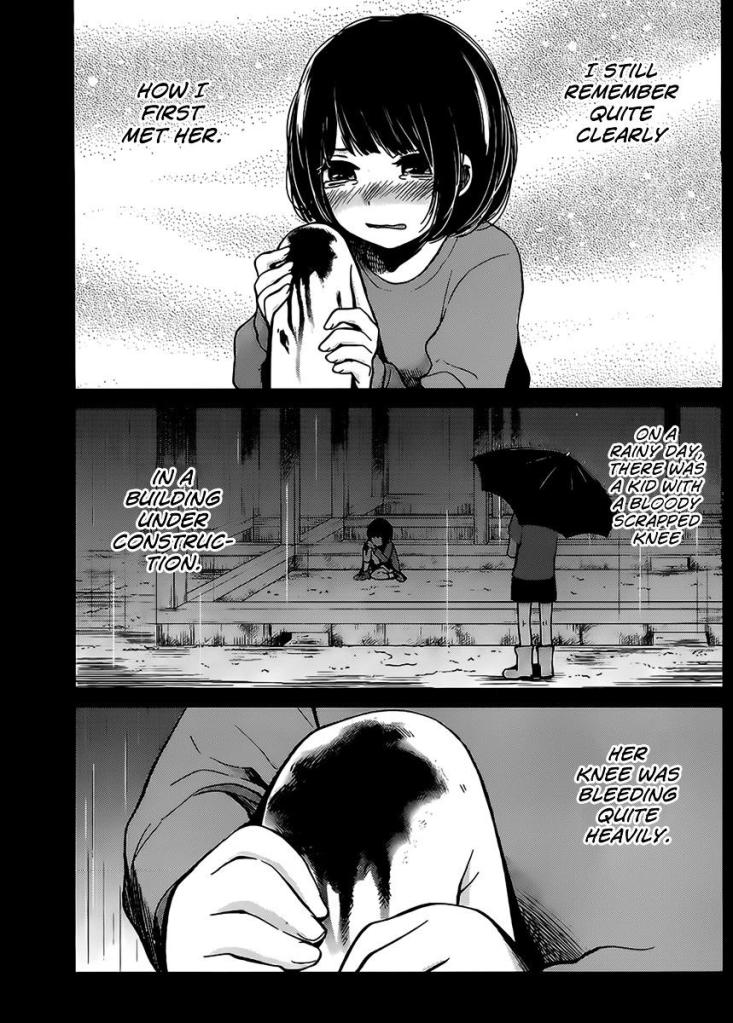
Picture an ordinary male teenager who, as a kid, met an injured girl and tended to her wounds when nobody else would. Such a pure act sparked love in the girl, who proceeded to spend most of her tomboy years with said dude.

Unfortunately, she’s the daughter of some rich man who intended to send her to a private school that our unremarkable protagonist couldn’t afford, unless he excelled at his studies. He did bust his ass, and ended up attending the same school as his love interest, only to find out that the previous tomboy had become a prim, beautiful lady that wouldn’t spare one second of her precious time for our ordinary protagonist.

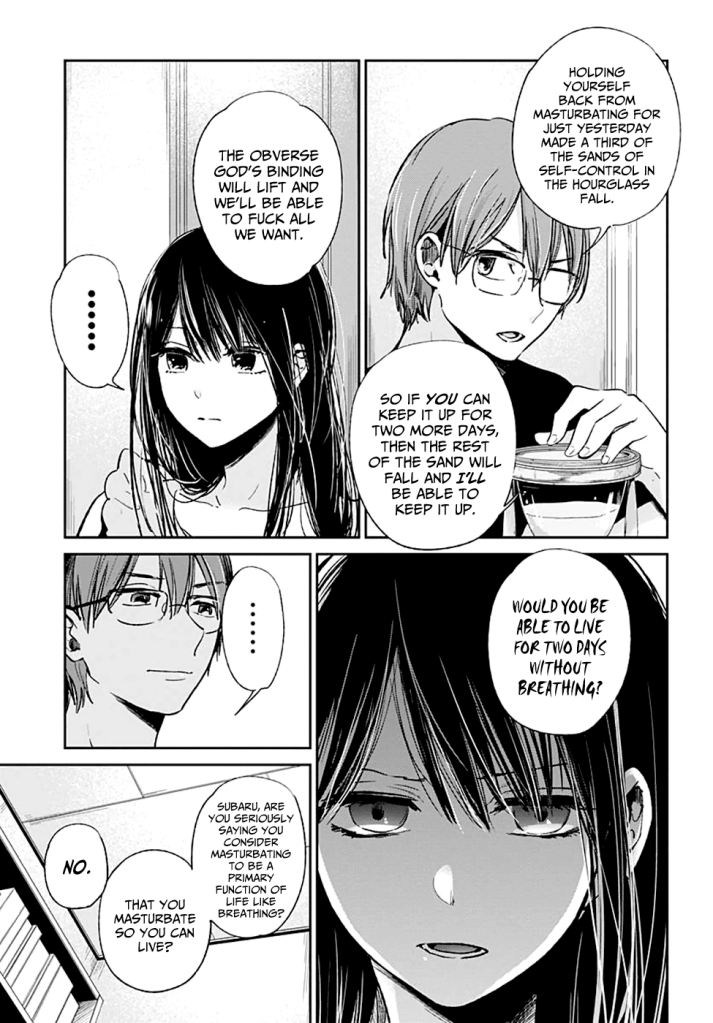
Cue the concept of this story: some dumb urban legend actually works, and his room ends up connected to hers even though they are in different dorms. The minor god who granted that wish possesses a pillow to inform them of the price to pay: because she was the one who asked first for their rooms to be connected, her self-control will be removed for an hour each day.

The male protagonist comes to learn that he’s in love with a single-minded gal.

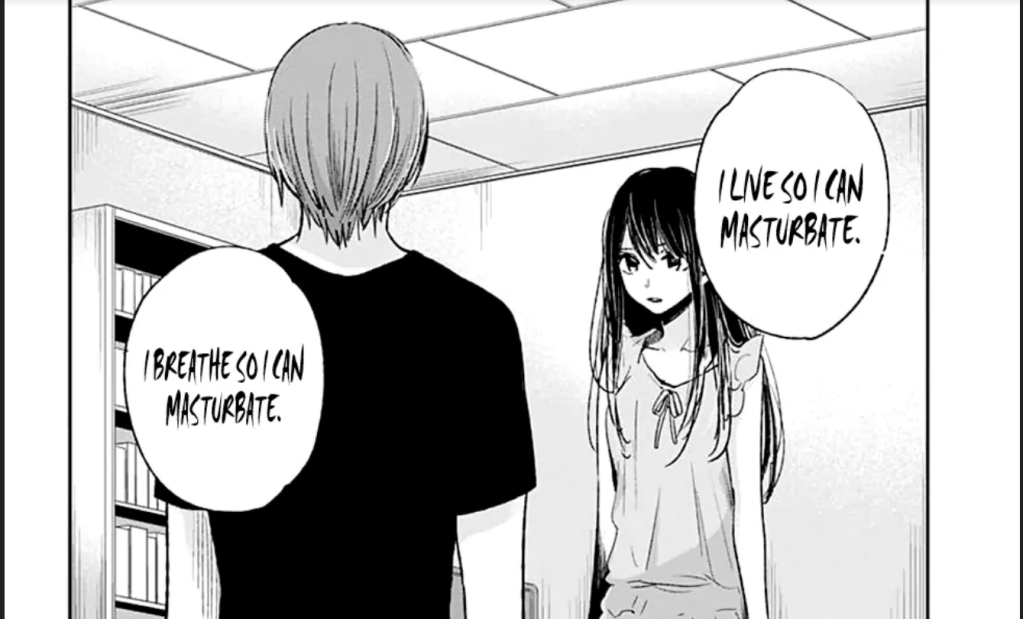
Our female protagonist, who is probably not even sixteen yet, masturbates compulsively about ten times a day, about three if she’s sick. She has remained madly in love with the protagonist; although her tsundere ways won’t allow her to admit it freely, once her self-control is removed, she happily proclaims to the world that she can’t wait to end up covered in our boy’s sperm. If he impregnates her, even better. We are treated with many creative scenes of her struggling to contain her compulsive masturbation, or finding artful solutions to satisfy it: for example, while her thumbs are zip-tied behind her back for reasons, she proceeds to rub her soaked parts against a table leg.

This isn’t the most ridiculous story I have ever read, but it does come close. And it just happens that I’m in the market for obscene silliness that doesn’t give a fuck about anybody’s boundaries.

On writing: Stakes

You can check out all my posts on writing through this link.

Do you have a killer concept, a promising premise, a protagonist worth a damn, and a goal worth pursuing? Then you should ensure that your characters gamble something meaningful on the outcome of their risky venture.

  • How is this story the record of how a character, through strength of will, fights with death? What combination of the three types of death (physical, professional, psychological) are at work in the story? Sum up the main plot with at least one of the three deaths woven into the summary.
  • Given how passionate the protagonist is about his goal, what is he willing to risk, what danger will he be willing to face, in order to reach the goal?
  • What are the things your protagonist loves and cherishes the most? Can you set up the conflict so that he stands to lose those as he goes after the goal?
  • How do you establish what does it mean for the character to achieve the goal stated for the desire line? The more the outcome affects your character, the more will be at stake. And the more that’s at stake, the more invested your audience will be.
  • When you think of high stakes to establish for your characters, how do the risks they take align with their nature, values and personality?
  • Can you make the stakes in your work even greater by adding a personal component, having them affect people we care about? In other words, this time make it personal. The more personal, the better.
  • If the protagonist does not succeed, what would be lost? Could he lose more?
  • Could it be for the protagonist that the thing at stake is what he values most?
  • How does the plot problem have a clear consequence that the reader can begin to anticipate from page one?
  • Who and what else will be adversely affected if the protagonist fails to reach his goal? Can you make it worse?
  • If at any point your protagonist can simply decide to give up without suffering great personal cost due to her inaction, consider that the story is wrong or insufficient.
  • How there will be something clear and definite that will occur if the protagonist fails or, worse, doesn’t take action? It can’t be vague, conceptual or iffy.
  • How can you make the reader care about the story based solely on those stakes?
  • What is the fight? How is it important and urgent enough for the reader to root for the hero to win?
  • How are the stakes measured by the value the protagonist puts on the thing at stake?
  • Is there a real-world, specific, impending consequence that this escalating problem will give my protagonist no choice but to face?
  • How would the reader feel the stakes, and what might be won or lost?
  • What happens if they don’t succeed? Stack the odds against.
  • Regardless of whether or not the protagonist achieves his goal, will the approaching consequence cost him something big, emotionally speaking?
  • How do you show clearly the consequences and price of success or failure and its ultimate effect on everyone involved?
  • How does the protagonist truly suffer to get through the story, both for the reader and for the character himself to care about what happens to him?
  • How will the character realize he’s probably going to die (physically, professionally, and/or psychologically)?
  • Does the protagonist find himself with no way out at some point in the story, making it the story not be on his terms?
  • How do you make the reader believe the threats in the story to your protagonist are real?
  • Make sure most of the characters involved in the goals have something to lose. Can you expand the stakes to all the characters?
  • How far can you muddle, push, exacerbate the situation to raise the personal and public stakes?
  • To increase the public stakes, meaning what impact will this story have on the world, ask yourself: how could things get worse than they already are? How could this matter more than it already does?
  • Make the external and internal stakes as big as they can possibly be.
  • How does the story walk us to the precipice of human experience and allow us to peer into the abyss?

Motocross Legend, Love of My Life, Pt. 7 (Poetry)

If you haven’t read all the previous parts or you don’t remember them well, I urge you to read this short story (or novella) from the beginning (link here).


I worked my first entry-level gig designing websites
In Gros, at an apartment converted into office space.
Multiple workstations with CRT monitors
Set along both sides of a long, narrow room.
Bulky radiators beneath the windows,
Worn hardwood flooring that creaked.
I spent my mornings developing interfaces,
Coding their layout using HTML and CSS,
To advertise the services of companies
Such as a patisserie and an antique store.

Apart from the greetings I mumbled,
I only spoke with our project manager.
I dodged gazes as if they could look inside me
And spot the congealed mass of scars.

Once, a guy whose face I hadn’t retained
Told me to follow him, and I obeyed,
Believing we would discuss a work-related issue.
I found myself amidst a coffee shop’s hubbub,
Seated at a table with other team members
While two of them chattered about a ski trip.
I felt as if I had been strapped to a chair
And forced to endure a documentary
About a foreign culture I didn’t want to visit.

I was a feral creature thrown into captivity,
A cancerous blight at the core of a tree.
The merest social interaction drained me.

Sometimes, as I typed,
Flashbacks of us assailed me
Like a hail of buckshot.
I hunched over, rested my elbows on the table,
And pressed my palms against my eyes
Until I hoisted myself out of the abyss.

I was reading up on the quality of wines
For an online shop we were developing,
When I got to meet my first HR professional.
Wielding an apologetic smile, she asked
If I thought I would work well in a team,
A euphemism for “You don’t belong here.”
My manager had praised my work,
But, I admit, I was a silent wreck.

When I exited that apartment building
For the last time,
My lungs loosened in relief.

At my second job, more PC towers
Emitted a cacophony of whirrs
That blended with the din of typing,
The intermittent squeak of chairs,
And colleagues’ humdrum prattle.
Cables snaked across the floor,
Leading to servers, routers, printers.
I wore down those morning hours tainted
By the burnt-plastic smell of CRTs,
So I could soon return to solitude.

I got dragged daily into meetings
That often devolved into venomous griping
Over coworkers whose oddities
Were but a tiny fraction of my own.
I kept my head down; by then I understood
That neither effort nor proven skills
Would anchor me within office walls
If my presence unsettled some higher-up.
After they closed the door on me,
My contract left unrenewed,
I savored an entire Monday morning
In bed.

To fit into society, I needed to behave
As though I hadn’t died when you did.
I needed to lie in a million ways
To the world and myself.
Izar, through sheer will, I clawed a foothold,
I pieced together a patchwork self
Stitched from the shredded remnants
Of the boy who, in your light, once dreamed.

A constant vigilance to hide my damage
Made each second tick by agonizingly.
As a reward for my efforts,
Coworkers ambushed me with small talk.
While kids in their mid-twenties rambled on
About whatever the hell they talked about,
I would rearrange my mask into smiles.

However, my coworkers intuited
That a vital chunk of me had perished
As if blood flow had been cut off.
At times, they treated me like a stray cat,
Fearing I might suddenly claw at the eyes
Of whoever extended an unsolicited hand.

During a break, I stood at the rooftop balcony
With my project manager and a programmer.
Our breaths lingered in the morning chill
While a steaming cup warmed my hands.
The programmer, garbed in skinny jeans
And a graphic tee bought from Threadless,
Stopped describing T-shirt designs
To inquire why I seemed so gloomy sometimes.
On impulse, I blurted, “My girlfriend died.”
A shocked silence, a shuffling of shoes.
“Shit, dude. Sorry.”

Seated around a break room table
With the team of developers,
As we listened in acquiescence
To our supervisor prattle on about her guinea pig,
I realized that I yearned to be anyone else,
Or to disappear entirely.

I had ventured into the wild and survived,
But my heart remained broken.
Day by day, I witnessed my body, a stranger’s,
Push forward through the unending grind:
Eat, piss, shit, work, sleep, repeat.
Stripped of meaning, drained of colors,
Life had morphed into a grayscale smear,
A murky, polluted expanse of sea.

The relentless thrum of machinery
Melded into a mechanical chant:
“Stay complacent. Stay ignorant. Stay docile.
Bow to the inevitable end.
All fades into the abyss unfathomed:
Your name, your knowledge, your works.”
What was the goal of this journey?
So I could afford the down payment for a home
That would demand sacrifices from then on?

The weight of decades ahead
Felt like a collapsing skyscraper,
Its rubble crushing me to paste.
You were gone, so why bother?
Instead of fueling a bleak routine
Set on a loop till retirement,
Was it not better to surrender
And let the anguish devour me?

Two sets of railway tracks vanished
Into the tunnel of an underground station.
From the depths of that kilometric gullet,
An end-times rush of wind approached.

As the tunnel entrance brightened,
A stark-white light glided along the inner walls,
Revealing the rough texture of concrete,
And reflected off the veering rails.
From the curve emerged a metallic serpent,
Its headlights piercing the dimness,
Its row of windows glowing amber
As if its innards were filled with a lazy fire.

In the abyss, the abhorrent question:
“Didn’t you love Izar enough
To join her in the grave?”

I shut my eyes tight, I held my breath.
I locked my muscles in place.
The train’s heavy rumble reverberated
As its brakes screeched against the rails.
With a dying whine and a series of hisses,
The would-be reaper slowed to a stop.


Author’s note: today’s song is “I Bleed” by Pixies.

If you enjoy my free verse poetry, I have three books worth of it yet to be self-published. Check it out.
Ongoing manga: I’m Glad They Kicked Me From the Hero’s Party… But Why’re You Following Me, Great Saintess?, by Renge Hatsueda

Three and a half stars.

So many stories get produced yearly on the Japanese internal market (made by the Japanese for the Japanese), that tropes and anti-tropes and anti-tropes for the anti-tropes have been explored. For example: using absurdly long titles for fantasy stories. This tale, like many others in its general genre, features a party of heroes that are supposed to save the world or whatever, but the story starts with the protagonist getting kicked out of that party because he’s perceived as useless.

I’ve come across a surprising number of manga series that feature that anti-trope, and most of them launch into a revenge-focused narrative. As the anti-trope for that anti-trope, our chill protagonist doesn’t give a shit about being kicked out of the hero’s party, or more accurately, he takes it as a father would if his annoying kids started flying the coop: he hopes they have learned enough for the horrors they’re about to face on their own.

In fact, the protagonist is far from useless: he was the strategist and god-tier buffer of the party, capable of turning an average party into a force to be reckoned with. One of the most entertaining parts of this story so far involves witnessing how the hero’s party, comprised mainly of mean-spirited idiots, slowly realize that they’re hopeless without the man they drove away.

Regarding the protagonist, as soon as he gets dismissed, he embarks on more or less episodic adventures loosely tied together by the notion that some unseen hand is manipulating the events. Even though the guy gets mocked and sneered at by most people once they learn that he got kicked out of the hero’s party, he calmly makes them realize his power through good deeds that unite the community. He’s quite an inspiration in that regard.

Anyway, this is yet another of those Japanese stories that fulfill the common daydream of amassing a harem of attractive and powerful women who will eagerly murder your enemies. The ladies in this case are a feisty dragoness in humanoid form, a big-breasted saintess, a mythical female wolf in humanoid form, and a disguised princess who was chosen by a holy spear. We are introduced to each of these ladies in episodic adventures, which goes a long way to get us acquainted with their peculiarities.

This manga series is a lot of fun so far, not a masterpiece or anything, but features cool action and entertaining interactions. As far as I know, it’s adapting a novel, so it should have plenty more to go. In any case, these uniquely Japanese tales serve as great bulwarks against the armies of night, for which I’m forever grateful.

Motocross Legend, Love of My Life, Pt. 6 (Poetry)

If you haven’t read all the previous parts or you don’t remember them well, I urge you to read this short story (or novella) from the beginning (link here).


One day, I dared to face my reflection.
My hair, greasy and stringy,
Had grown to brush my shoulders.
My skin had acquired the grayish hue
Of a dead leaf.
The hollowness of my cheeks
Revealed a tomb within,
Its walls shrouded in spiderwebs,
Its floor carpeted with dust and bones.
Those eyes rimmed by dark shadows
Should have mirrored a wild beast’s,
But the surviving modicum of sanity
Pierced through my squalor,
And at this ghastly echo of myself,
I shuddered.

Izar, if that crash, instead of killing you,
Had fractured your limbs,
Marred your beautiful face with scars,
Or even confined you to a wheelchair,
Extinguishing your motocross dreams,
You would have still found ways to shine.
You would have challenged yourself
To defy the world, to carve a path
Through the wreckage and rubble.

Izar, my beloved Izar,
You had filled my days with wonder,
You had taught me that life is worth living,
That dreams are meant to be chased,
That courage should be wielded
Even in the face of despair.
Yet, I failed you daily
By being incapable of moving on,
Of doing something valuable
With what remained of my life.

Your death had crippled me
In ways no transplant could repair,
And every day forced me to wade
Through a tar-like mire of anguish
That threatened to suck me under.
I would never become a comic book pro,
But maybe I could aspire to normalcy.

Armed with an electric razor,
I sheared the oily tangles off my head,
Airing out my reddened scalp.
Then, I tamed the thicket of my beard.
From beneath the mask of neglect
Emerged a stranger’s face.

My body had become a rusted motorcycle
Sinking into cold muck.
Yet, I dragged myself outside.
The sky, once colorful, now a gray shroud,
Cradled the lone sun, a shriveled ball
That pulsated like an ailing eye.

My hometown teemed with creatures,
Rubbery, bulbous-headed aliens
That gabbled in shrill tongues
To the devices they cradled to their ears.
As they floated past, they ignored me,
The shell-shocked wanderer
Gaping at the ruins of his city.

Although I had missed the final exams,
I was granted a high school diploma
Due to my exemplary grades
Along with some extenuating circumstances.
The weight of a job would have crushed me,
And I couldn’t commit to a college odyssey
When plans might shatter suddenly;
All living beings are branchless twigs
Flung into a raging river,
To be tossed, turned, and tumbled,
Dragged under and spat out.

The dot-com bubble had recently burst,
But in my seclusion, I had befriended the internet.
Curiosity had led me to download Dreamweaver
To figure out the bones of websites.
I had come to decipher HTML,
And understand the potential of CSS
To lay out sites and style their elements.
I had lost myself in Flash animations,
Brief escapes that sparkled in the gloom.
Perhaps I might withstand the grind
Of a year-long web design course.

Soon enough, I would expose myself
To the scrutinizing stares of classmates.
Like you rode to the mountain and trained,
I forced myself outside every day.

At times, the growl of a motorbike rose:
A throbbing, rumbling bass dense as lead.
It made me picture a blaze of yellow,
A comet streaking through the darkness.

Amidst rows of desks and students,
I sat rigidly, my hands clasped,
While I burned,
Engulfed in a cold, black flame.

At the witching hour,
Covered by sweat-damp sheets,
I knelt on the mattress,
Eyes squeezed shut,
Digging fingernails into my scalp.
The following day, I would confront
Those classes, those strangers,
More judgemental eyes and voices,
With a mind gouged by insomnia,
Without you by my side.

Clenching my teeth, I stifled sobs.
I punched the pillow over and over.
That night in nineteen ninety-nine,
How could you have sped in the rain?
If you had headed home like you said,
We would have traveled through Spain.
One day, I would have married you.
We would have raised a kid or two.
Instead, I suffocated daily
Under an unrelenting landslide,
Buried alive.
Why had you offered me a future
Only to fuck off and die?

I begged the void for silence:
Leave me alone. Leave me be.

Through the numbness clouding my head,
I realized that some fresh-faced classmate,
Their eyes brimming with the naivety of youth,
Had turned toward this blank mask of mine.
That kid’s mouth contorted, forming words
That sounded like spoken underwater.
After translating their alien utterance,
If I understood that a response was demanded,
I had to first push through the filter
Of “Why bother answering? What’s the point?”
I forced myself to cobble together a sentence,
Then hoped that the words wouldn’t evaporate
Before my tongue could shape them.
By the time my lips were about to part,
That classmate, weirded out, had moved on.
In my inscrutable face, they saw themselves;
Some apologized for bothering, some got pissed,
Others shrugged and forgot immediately.

I shed tears at mundane sights:
A patchwork quilt of sunlight
Glowing through the slits of the blinds,
A sunburst in which dust particles
Shimmered like dozens of tiny crystals,
A wildflower poking through a sidewalk crack.
Stripped of skin, I was defenseless
Against any force that grazed my flesh.

Unannounced, unwanted,
In class, in crowded shops, on bustling buses,
A swelling heartache would ambush me,
My eyes flooded with tears,
And I found myself gasping for air
While in my mind, an unforgiving sentence
Blazed like a burning brand:
“I let her die alone.”
Once, amidst the indifferent throng,
I collapsed to my haunches,
With my face buried in my palms,
As I mumbled apologies into the void.

I bought a weight bench and weights
Along with a barbell and dumbbells.
Working out to failure became my addiction,
An escape, a punishment, a way to feel alive.
As my muscle fibers tore, my limbs trembled,
And rageful groans erupted from my throat.
Pain is the sole genuine language:
With each of its words we are graced,
It tells the truth.

Although I had engaged in a course
Imparted in a vocational school,
They had planned a graduation ceremony,
And I was obligated to participate
So I could collect a piece of paper.
Around me, gleeful classmates buzzed
As they organized a dinner outing
To celebrate the milestone together.
Diploma in hand, I was drifting away
When one of those kids approached me
Brandishing an unburdened grin,
And invited me to tag along.
I replied, my voice flat and detached,
That I wasn’t interested.
“You sure? It’s your last chance.”
I turned around and walked away.

When I flipped through my notebooks,
I discovered, or rather remembered,
That sketches had colonized many spaces
Between notes taken in messy handwriting.
In one sketch, drawn with an ink pen,
You were seated astride your Suzuki RM125,
Your boots planted on the ground,
Your waves cascading over your shoulders,
While you stared blankly at me
As if reminding me you still remained.

If only for your sake, I racked my brain
Struggling to come up with story ideas,
But a single narrative crystallized:
It charted the wild adventures
Of Izar Lizarraga, motocross queen,
A seeker of freedom, a lover of speed,
Who traveled on a bright-yellow Suzuki
To find a place where she belonged.
However, no matter how fast she rode,
The demons clung to her heels.

In a desert stretching into the horizon,
Its towering dunes like waves in a sand-sea,
You raced at breakneck speed,
A silhouette against the setting sun.
You followed a winding mountainside trail
Along a sheer cliff’s edge
Overlooking the crashing waves below,
To end up leaping across a chasm
While the ocean’s spray enveloped you.
Through a tempest-wracked landscape,
As lightning forked across leaden clouds
And thunder drumrolled,
As wind and rain battered your skin,
You welcomed the sting,
And roared onward, undeterred.

You had been a streak of flame
Cutting through the night.
How could my art illuminate anyone’s existence
When the light of my life had been extinguished?

Hadn’t your love been wasted on me?
Given how bright you had burned,
A better man would have been inspired
To blaze new trails for you.
Had you also, in choosing me,
Acted recklessly?

I stored the keepsakes of our love
In a sturdy moving box, its surface marked
By the scuffs and stains of time:
A sacred reliquary for the dead,
Whose cardboard lid I lifted
Whenever I needed to delude myself
Into believing your heart still beat.

As an adult, shackled to my ever-aging body,
I found myself conscripted into the workforce,
Even though I had been carrying out my mission:
To remain tethered to your ghost.


Author’s note: today’s songs are “Tuff Ghost” by The Unicorns, and “This Song Is the Mute Button” by Jason Lytle.

If you enjoy my free verse poetry, I have three books worth of it yet to be self-published. Check it out.
Motocross Legend, Love of My Life, Pt. 5 (Poetry)

If you haven’t read all the previous parts or you don’t remember them well, I urge you to read this short(ish) story from the beginning (link here). The whole thing is supposed to be experienced in one sitting, but I didn’t want to go radio silent for about a month (or two).


Regarding the last echoes of my teenage years,
Followed by the dawn of adulthood,
I remember feeling encased in a plastic bubble
Whose smoky-gray membrane dimmed the world
And muffled every sound and scent.
Inside, the air was stripped of oxygen,
Leaving me gasping for whispers of life.

The warmth in my chest had disappeared,
Replaced with a yawning, frigid void
That threatened to collapse my ribcage.
A squirming, screeching anguish,
Like myriad critters drowning
In a pool of poison,
Seared through my innards,
Corroding every fiber that once bound me,
Exposing my raw nerves to the wind.

During that years-long nightmare,
I was trudging through the indifferent city
When I turned a corner on Cipriano Larrañaga Street.
Shambling down that narrow, grimy sidewalk
Lined with multicolored trash bins,
Your father, a relic of another life, headed my way.

The imaginary sutures that struggled
To keep my copious gashes closed
Unraveled at once.
The rush of blood to my head
Rendered the world’s clamor mute,
And I stood paralyzed.

I pictured myself lunging at your father
And wrapping my hands around his neck.
The more he wheezed and spluttered,
The more his eyes bulged,
The tighter my grip would squeeze,
Making the tendons in his neck creak.
As his face shifted from crimson to purple,
His last light would be spent
Staring into my wrath-contorted face.

I had known your father as a volatile man
Who dared to threaten you, his own daughter,
Before the eyes of the boyfriend who loved her;
He knew that, if pushed, he could overpower me.
Yet, that lingering image of him
Contrasted with his present, slumped self:
The deep wrinkles carved into his features
Spoke of decades aged prematurely;
His mouth hung slack in a silent gasp;
His hair, gone gray, was disheveled,
With strands splayed erratically;
Dark circles ringed his vacant eyes;
A once-white T-shirt, sweat-soiled,
Clung to a protruding belly.

Your father lumbered toward me
As if he failed to register my presence.
A sour stench of filthy skin and clothes
Emanated from him like a black flame.

I stepped aside, letting your old man pass.
His footfalls and ragged breath faded away.
My rage had melted into tears;
He already looked like he’d been killed.

About a week after you died,
My mother, turned activist overnight,
Drove me to the spot of the accident:
Grassy, uneven terrain that sloped up
From a curve of the GI-636 highway.
A succession of vehicles whooshed by,
And the wind tugged at the placard
That my mother held in her intimate protest.
Before a television crew, she ranted
About the treacherous curve
That had reaped many young lives.

As the reporter nodded, the camera captured
The stillness of the roadside memorial,
Adorned with bouquets of wildflowers and a cross
Beside which rested a framed photograph
From a birthday celebrated in our home:
Your ponytailed self seated at the kitchen table,
Your chocolate eyes aglow with a joie de vivre,
And you showing off those crooked front teeth
As if they would never burn up in a furnace
And their fragments be ground to ash.

The cameraman aimed at the metal guardrail,
Its silver gleam patinated by rain and wind,
That your Aprilia had crumpled.
Then he panned over to the spot of the slope
Where your eyes had gone dull and lifeless,
Where your blood had drenched the grass
And seeped into the earth.

My mother kept me high on sedatives
That sapped the marrow from my bones;
Otherwise, if my lungs still drew breath,
I would have knelt before that spot
Packed with your blood,
And with my hands, I would have dug a hole
To crawl into and disappear.

I know you, Izar:
You were anguished,
And speeding in the rain.

That night in nineteen ninety-nine,
After you left me at my doorstep,
You told me you would head home.
Why did you end up in a highway?
Where were you going, Izar?
Did you even know?

My mother crowdfunded a memorial stone
To commemorate you, who had dreamed
Of becoming a motocross pro.
They installed it in a wooded lane,
Surrounded by the whisper of leaves.
Whether my mother bothered out of guilt,
Seeking the spotlight in a play of mourning,
Or to bridge the chasm between me and her,
I couldn’t say.
I guess it doesn’t matter.

Nightly, you visited me in dreams
To gift me the warmth of your presence
Along with your wild laughter.
I woke up reaching for you,
Only to clutch at emptiness.
A respite from the agony,
As my mind forgot for a moment,
Then I remembered anew.

In a numb, sunless haze,
I sleepwalked as if summoned
To locations we had frequented.
I stood unsteadily at a park near my home
While blurred people passed by,
My gaze fixed on the traffic,
Anticipating the sight of a Telepizza scooter,
Of you clad in the scarlet cap and polo shirt.

At the ecological park of Plaiaundi,
In the twilight glow of the setting sun,
I followed a tapering dirt path
Covered with needles, leaves, and twigs,
Ending at the staircase of an observation post.
I was clambering the weathered steps
When I looked up and there you were,
Leaning on the wooden balustrade,
Your caramel waves tossed by the breeze,
And you smiling down as if welcoming me.

At Aingura Park, near the marina of Hondarribia,
The humid air of an overcast day filled my lungs.
On the lush-green grass, I searched for our spot
Where we had lain to stare at the stars.
Beyond a row of maritime pine trees,
Absent fishermen’s rods leaned against
The rocky barricade of the shoreline barrier.
A lone man cast a line into the slate-gray sea.

You had always seemed to me
Too large for the world to contain,
But now, if I let go of your memory,
I would never find you again.

With each passing month, going outside
Felt more like venturing into a foreign country
Where I couldn’t make myself understood.
I languished for hours in the dark,
Lying in bed, covered up to my forehead.
Through headphones, I listened to the tapes
In which your middle-schooler self
Played the energetic radio host,
Riffing on manga series we enjoyed
And video games we tried to beat,
Pausing only to munch on snacks.
Your bubbly giggles echoed through the years
While tears streamed down my temples.

Who were these carefree souls
That dared to laugh and joke around
As if taunting the universe that waited
To punish them for their joy and hope?

On my cluttered desk, papers lay blank
Beside pencils and pens, markers and erasers.
Drawing and writing had come naturally to me,
Like a baby grasping for their mother’s breast.
Why draw? Why concoct stories?
What were my dreams worth
If you wouldn’t see them realized?

I felt it as achingly as a knife stuck in my eye:
I wouldn’t get over you.
In this life, if you’re lucky,
You meet one precious person.
I had found mine. I had lost her.
I was condemned to continue
Long after my Izar disappeared,
While the world spun on.

Where would I go after you?

Without a say, I merged with the voiceless
That had been rendered unfit for society.
How many people out there,
From the profoundly autistic
To those whose hearts shattered irreparably,
Vanish from the lives of friends and acquaintances,
Sequestered away in some psychiatric hospital,
Or the rooms of their childhood homes?
Breath by breath, they would wear away,
And fade further from the memories
Of even those who had promised to remember.
Decades on, a once-close friend
Might stumble upon that person’s obituary
And wonder what untold stories had been lost.

One afternoon, my parents had left
To wherever they went,
And I had armored myself in human garb
To shuffle through the post-apocalypse,
But when I grabbed the front door handle,
A revulsion shook my spine;
I refused to withstand again the glare
Of that traitorous sun.

Instead, I retreated to my bedroom,
To the sanctuary of its walls
And a door locked shut
That protected and isolated me
From a meaningless world.

A day became two,
Became a week,
A month,
A year.

The sounds and sights of that alien world,
A film projected onto the wall of a cave,
Tormented me through the windowpanes:
Beams of sunlight slicing up the shadows,
The muffled laughter of children,
A couple strolling hand-in-hand.

In the gloom inside, a shrine to the dead,
I worshipped the mementos of our shared past:
Your EVA figurines,
The comic strips I drew for you,
Your motorcycle gloves,
Your handwritten letters,
Mixtapes of your favorite songs.
I spoke softly to your photographs,
Like a penitent monk conferring
With the images of his saints.
I befriended spiders.
I stashed piss bottles under the bed.

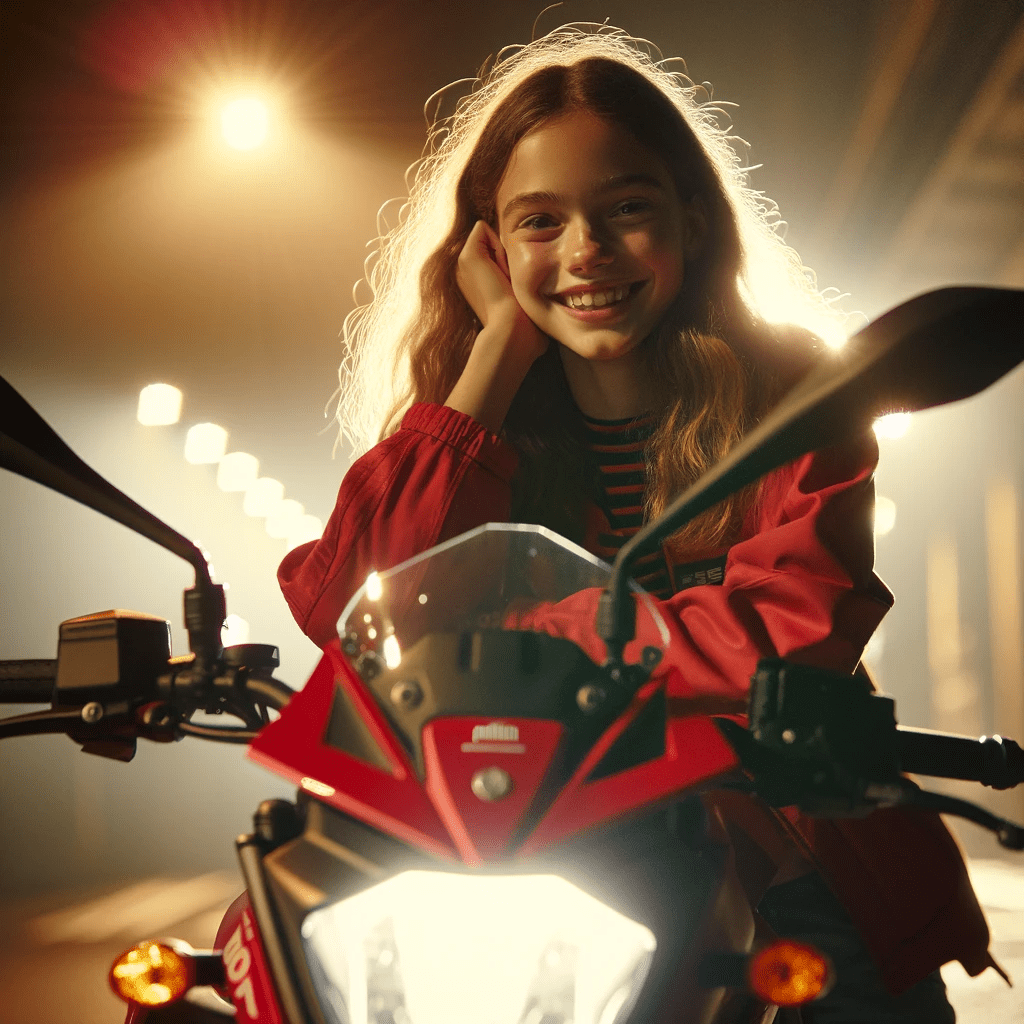
In one hand, I held that picture of you
Astride your Aprilia Red Rose at night,
Your luminous face resting on your palm,
Your chocolate eyes crinkled in a grin.
On that photograph’s flip side,
A note in your chicken-scratch read,
“To my beloved artist,
Please sign the comic strip I enclosed,
To sell at some fan convention
Once you’ve become famous!
Love forever, Izar Lizarraga.”

In my other hand, I held a knife,
Its sharp tip pressing against my carotid.
I wasn’t strong enough to kill myself,
So I would stay within those four walls
Through every sunrise and sunset,
Through the ages of this world,
Forgotten and gathering dust,
Waiting patiently for my self to rot.


Author’s note: the songs for today are “Lonesome Town” by Ricky Nelson, “The End of the World” by Skeeter Davis, and “The Scientist” by Coldplay.

If you enjoy my free verse poetry, I have three books worth of it yet to be self-published. Check it out.