Review: Vinland Saga

This will not be a traditional review. I finished reading Vinland Saga about an hour ago, and what I mainly want to record is my profound disappointment.

Three years ago, I wrote a review of the then-ongoing series. I have not reread it before writing this, but it should explain well enough why the story once mattered to me. Vinland Saga contained one of the most powerful mid-story transformations I can remember; not necessarily because it was the finest turn ever written, but because of how completely it transformed one story into another while retaining many of the same characters. The first half followed Thorfinn as he pursued revenge and drowned his grief and rage in the life of a warrior. I loved it. The second half is where the story broke apart.

I’ll spoil the whole thing. I don’t care.

Thorfinn renounced killing and eventually came to treat armed defence itself as a betrayal of his ideals. As a personal vow, that was his prerogative. If he wanted to stand still and allow someone to batter his skull rather than kill in self-defence, he was free to do so. But Thorfinn was no longer responsible only for himself. He had accepted responsibility for an entire settlement, and he expected everyone within it to live under the consequences of his oath. He sailed across an ocean to found a colony beside native Americans whose land, customs, beliefs, fears, and political interests he could not control. He had no credible answer for what would happen when the two societies clashed over property, weapons, ethnicity, religion, ways of life. Things were already deteriorating when disease came, and it all went predictably to shit.

The quality of the writing nosedived. Characters increasingly became moral mouthpieces. Some lost most of their practical intelligence when the thesis required it.

We also got the typical “Oh God, I killed a man; I’m spiritually ruined forever” beat from a major character who had been fighting men who were killing members of his community.

My disconnect from Thorfinn became extreme. He was opaque, and not in the way of a mysterious or deep character; his motivations and feelings no longer felt human. He was certain of his philosophical position while no longer having doubts, fearing sufficiently for his family, or having guilt over the other families endangered by his ideals. His pacifism was, in reality, a dangerous moral experiment, but the manga treated it as a truth whose failures were always someone else’s fault.

There is an extraordinary version of the second half hidden inside this disappointing one: a former killer becomes convinced that violence reproduces itself. He tries to found a society upon radically different principles. Then he discovers that his personal oath isn’t the same as being responsible. He could have remained personally unwilling to kill while confronting the fact that he had brought families into a place where he couldn’t guarantee their safety, he had no authority over the natives, and had no workable response to fear, disease, or cultural incompatibility. He essentially volunteered dozens of people for martyrdom.

Now that the story is over, I mourn what it did with my favorite character: Hild. One of my favorite characters in all of manga. An independent, determined inventor who, when her family was murdered, she managed to survive on her own in the wilds. Once she rejoined a community, she used her abilities as an engineer, hunter, sniper, and protector to help those she cared about.

Hild was the moral counterweight to Thorfinn. She already had the answer to what the protagonist should have become: someone who retained the capacity for violence, understood its cost, and chose carefully when to use it.

The second half of Vinland Saga wanted to tell a profound story about discovering common humanity, yet tried to do so by making most characters involved less psychologically human. As if the author committed to the pacifism bit but couldn’t find honest ways for people to go along as the story required.

And Hild deserved more than to wave goodbye from a boat.

Review: Colorful

I only found out about this little gem yesterday. It’s an anime movie from 2010, and its premise captured me instantly: a sinful soul is given a second opportunity on Earth by being placed in the body of a middle schooler who killed himself. He’s assigned an angel of sorts as a guide, who will determine if the protagonist earns the right to receive another chance at life, or if his soul will instead disappear.

The newly-returned soul wakes up in a hospital bed, watched over by his tearful parents and angry older brother. The protagonist knows nothing about these people, feels no kinship with them, nor does he retain any memories of his previous life that was deemed sinful. He tries to adjust to his new life as the younger son of an unremarkable family in a quiet Japanese town. He discovers that the boy whose body he inhabits was friendless and quiet, spending most of his time painting, for which he had a talent. At school, he’s approached by an ugly, awkward girl whose interest in the protagonist he finds repellent, and by an attractive extroverted girl whom the protagonist finds himself attracted to.

The protagonist is soon told by his heavenly guide the circumstances that led the previous occupant to suicide. The details would be spoilers; in any case, as a result, the protagonist feels himself repulsed and alienated from his new family, and tries to distance himself from the previous occupant of his new body by being himself.

What follows is a small tale of quiet sorrows and private beauty about whether we can live with the failures of other people, and with our own. The mother who betrays her family can also love her son desperately; the boy who has suffered can also be cruel; a life that appears irredeemably gray may still contain colors its owner has stopped being able to see.

As the protagonist behaved in an increasingly nasty manner toward his new mother, I found myself feeling bad for her as well as the rest of his family. I never had a mother whose quiet, dignified sorrow felt so familiar, or a father with whom I could speak and who cared about me. I caught myself thinking that the kid had it good enough: a beautiful town, a relatively ordinary school life, parents who cared about him, and decent people within reach.

The setting is rendered with aching detail; every single location seemed modeled after a real place, and the characters feel like they’re navigating through painted-over photographs. It made me want to be there, to walk along the same sidewalks and witness the same sights.

This story possesses the Japanese sensitivity that I repeatedly find in their fiction and almost never in what’s created around these parts. Although the movie lacks the usual silliness, derangement, and perversion that I’m usually drawn to, it hit me hard, and I suspect it will hit anyone who has ever wanted out and, even after choosing to remain, has continued to feel like a stranger in this place.

Review: The 100 Girlfriends Who Really, Really, Really, Really, REALLY Love You

I was watching some YouTube reactors reacting to my guilty anime pleasure of the season, Chainsmoker Cat, when one of them mentioned that this studio had also been behind 100 Girlfriends. I had never heard of that show, but the premise implied by the title intrigued me.

The anime is about a pure-hearted high school boy named Rentaro, who has been rejected by girls a hundred times. The last one said that the notion of dating him made her sick. The god of love shows up and tells Rentaro that he shouldn’t worry about love, because he’s been assigned a hundred soulmates at birth. We later find out that it was due to this very god’s absent-mindedness that Rentaro ended up with such preposterous romantic luck, but it gets more complicated: if one of his soulmates falls for him but Rentaro fails to return her feelings, she will die. Thus, our boy sets off on a journey to casually meet a hundred soulmates and make sure that he loves every single one of them.

This turned out to be my favorite romantic comedy since the classic Toradora! It sets itself apart in various ways: it doesn’t wait around for the will-they-won’t-they bullshit: he begins dating nearly every soulmate within the same episode in which she appears. The focus is on the relationship afterwards, and on the complicated dynamics of having to maintain not even two or three girlfriends at a time, but ten by the middle of the second season. The way the girls bond with each other and deal with the fact that their boyfriend is a ten-timing young man who nevertheless has unbounded love for all of them is one of the main highlights of the story. And its tone is just right up my alley: zany, deranged, delightfully perverted. Among the recurring bits, there’s a shapeshifting chemist who casually drugs the cast and also pees herself, while two of the girls maintain a quasi-open lesbian relationship everyone is aware of but nobody brings up.

I was surprised by how different the author managed to make the girls, helped by the brilliant-as-usual voice actresses. We start out with tropes like the big-breasted horny one, the tsundere, the shy bookish type, the cold and brilliant beauty, but the cast gets weirder from there, and finding out whom the protagonist ends up bringing in is one of the entertainments of the story.

The author could have made the lucky protagonist, Rentaro, a horny fiend, but he’s a genuinely-good kid whose superpower isn’t having been born with a hundred soulmates assigned to him, but his boundless capacity for love. This kid truly wants to make each of them happy. One must admire his commitment to filling his entire existence balancing the emotional demands of enough girlfriends to found a new town and possibly reinvent feudalism.

Now, there are a few things that bother me. Sometimes the show gets too cutesy, although not to the extent that I want to drop it. It also has a couple of weak episodes, particularly the “kiss zombies” bit from the first season. Also, I suspect the show was strongest near the beginning, when Rentaro had only two or three girlfriends. The intimacy gets inevitably diluted by the time you reach ten.

I have to admire both an author as well as an anime production that has promised to introduce a hundred different romantic partners in a single show. The logistics alone voice-actress-wise are unhinged.

There’s hardly a better summary of the entire show than the glorious karaoke scene from S02E07, shown below almost in its entirety:

100 Girlfriends works because it takes Rentaro’s devotion completely seriously. It may well be the best harem comedy ever made.

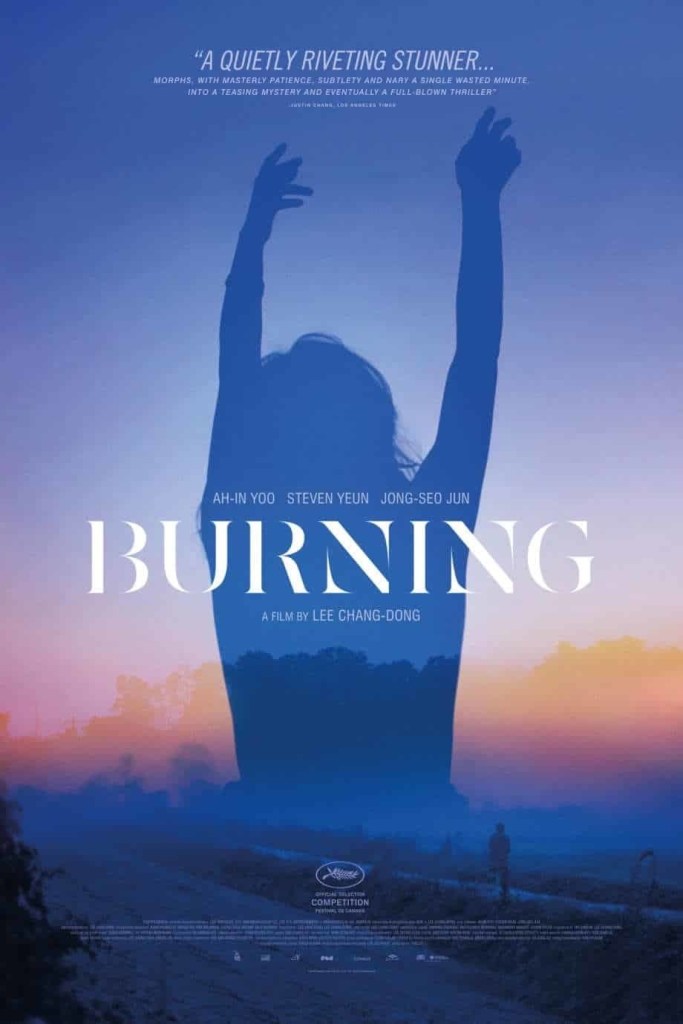
Review: Burning

I’m sick of Western fiction, so I asked ChatGPT for recommendations of Korean films. Amongst many, it recommended Burning, a 2018 film I had never heard of. It turned out to be one of the most mesmerizing movies I’ve ever seen.

We follow a protagonist whose mother abandoned him and whose father is on trial for having assaulted someone. The protagonist lives in a rural house near the border with North Korea. He works odd jobs for a living. Right off the bat, he meets a childhood friend of his, a cute young woman who seems to get by on odd jobs and men’s attention. Shortly after they meet and share an intense moment, she announces she’ll leave on a trip to Africa. The protagonist ought to go regularly by her tiny apartment to feed a cat that he can’t even see.

When the young woman returns, she’s not alone. She’s accompanied by a rich-looking Korean guy (played by Steven Yeun, usually most known for American movies), and the protagonist immediately slides into that sickening humiliation known well by those who’ve liked or loved a girl only for her to casually force you to see her act intimately with another man as if you were meant to endure it. The rich guy’s smiles and comments seem to suggest he enjoys inflicting that kind of humiliation. What is an isolated, poor young man who has fallen in love with a chaotic, existentially-damaged young woman supposed to do when she’s being absorbed into a superior man’s life?

That summarized plotline disguises a lot of what the movie actually is about. What you’re truly living throughout this movie is uncertainty. Someone’s inadequate access to reality, knowing that you’re barred from possessing enough authority, information, or self-knowledge. The young woman’s cat exists, or maybe it doesn’t. The childhood well where the young woman claims she once fell exists, or maybe it didn’t. The protagonist is supposed to have rescued her from that well, except that he can’t remember doing so. The protagonist is supposedly a writer who cannot write. For most of the film he observes, accumulates details and fails to turn them into meaning.

The sense of place in this movie is sublime. You feel right there. The scenes are allowed to linger as much as they need without having to rush to the next bit of conflict.

By the end, two opposite interpretations remain open and equally valid. The young woman was at the bottom of an invisible well, depending upon another lonely and uncertain person to confirm that she was real. Whether that well existed doesn’t seem as important as the fact that’s how she experienced herself. What we call reality is just the story we become willing to act upon.

Chainsmoker Cat

Banger opening of the year for this vile, harrowing tale of addiction, poverty, and mental illness featuring cat-girls. Their existence in the setting makes zero sense.

I never thought I would see Fight Club references in an anime opening. Below is the full song with lyrics, which speak directly to my heart.

No One Lives in the Gutter, Pt. 3 (Fiction)

The SEAT Ibiza is silver in the documents and the color of wet cement everywhere else. My right hand is holding keys. One of them ought to open the car.

I pull the handle. The rubber seal gives all at once, and the cabin exhales at me: paper dust, the boot liner’s rubber, that mineral damp. The kind of familiar that should reassure me and instead sits a half-step to the left of itself. I get in.

A carton rests on the passenger seat. Primary-school workbooks for the shop, the order that came in wrong twice. The belt is pulled across it and drawn tight enough that one side of the cardboard has bowed inward, the corner pressing a crease where the buckle bites. I belted it in myself. I square the manga and Rain at the Crossing on the flat top of the carton, edge to edge, spines aligned.

Beeping. Something complaining at fixed intervals, a small electronic conscience somewhere I can’t place. The carton is belted in properly. I checked.

The engine catches immediately, the little three-cylinder settling into itself. One small tremor passes through the gear lever and stops beneath my hand, palm to the worn place on the knob. I push the lever left. It doesn’t move.

I lift my hand off it. The numbers are still on the gear lever’s knob. One, two, three, four, five. R. They designate positions. I know this like you can know a word’s spelling while it stops meaning anything. They are positions and the positions connect to something: the clutch, the left foot, the road, the drive. I can’t reconstruct the line between my hand and any of it. I need one of the numbers. Which one is supposed to enter it? What would it mean to enter it? What is it?

I’m lying on the back of my head. My shoulder blades are touching something. My heels feel flat and far away. Points of me pressed into a surface I didn’t lie down on. I can’t close my mouth. Hard plastic rests behind my tongue, over it. Tape pulls at one cheek, at the corner of my mouth, a small constant drag. My tongue is dry past dry, my lips cracked into the dryness. I begin to swallow and the swallow doesn’t finish, snagged somewhere on the plastic, abandoned halfway.

A breath happens before I choose it, fills me without my asking.

A voice. Close. “Squeeze my hand. Squeeze and let go.”

I squeeze. I think I squeeze. I was told to do so. There’s the idea of fingers against mine, and I send the command down the long dark corridor toward my hand. I can’t tell if anything moved. Whether I’m holding fingers, or they are holding me, or letting go is something my body knows how to do.

“Good,” the voice says. “Again.”

Again means there was a first time.

The tape goes first. A strip of my cheek is suddenly cold where the rest of my face isn’t, as if that one rectangle had been left outside in the wrong weather. Then the thing in my throat moves before it leaves, hauling a gag up through me, and the long shape draws back and out and is gone, leaving the space scraped along its whole length, a hallway with the paint dragged off the walls.

Something clear settles over my nose and mouth. Plastic again, lighter. Cupped.

A young woman beside the bed. I find the shape of her in the blur and hold to it.

“Where am I,” I ask.

My mouth makes the words correctly, the lips and tongue arranging into the right order. I’m almost sure. But only breath comes back to me. Air going over the ruined hallway. I don’t know if the failure is in my throat, in my ears, or in whether she’s even attending to me.

She bends toward the machine, or toward me, and a badge swings out from her chest on its cord and turns its blank back to me, white, faceless. A strand of her hair has come loose and touches the corner of her mouth and stays there as if glued. Her hands are busy, so she can’t move the strand from her mouth.

She’s saying something. The shape of a question, rising at the end.

“What year is it?”

A year has four numbers. I know that much. I hold onto it like I’d hold onto a railing in the dark. I should be able to produce four numbers. My eyes go around the room for help. A number lit on something to my left. Green. Ninety-seven. A label. Eighty-one. Sixteen, smaller, in a corner. None of them is long enough. They’re pieces of other things, and they don’t add up to the answer.

Donostia. My mother’s voice. Behind it, a moment late, the smell of her hand cream. Her face, near, tips and rights itself, and each time that it drifts out of the small circle I can hold in focus, she brings it back, slides herself into the narrow place where I can keep her, like you’d move a print under a lamp.

“We’re in Donostia.” Her voice goes on low and careful. “You were coming to us. There was an accident with the car. But you’re here now. You’re awake, and we’re here, your dad and me, we’re both here.”

An accident with the car. I reach for a part I can hold. I find one. Rear left. The pale paint caught in the stippled plastic. I cleaned it until the cloth stopped coming away white. The bumper gave under my thumb and came back. It wasn’t cracked. The pillar by the loading bay, the bookstore, the low concrete and the long pale smear, and I never paid to have it fixed because there was no need, the plastic was sound.

“Not cracked,” I tell her.

She leans in close to the clear plastic over my mouth. I watch her listen. She draws back a little and her hand comes to my hair.

“Don’t strain your throat. Don’t talk. You don’t have to talk.”

The ceiling moves. A panel slides past, then a fluorescent fixture arrives directly over my eyes and blooms white, then drains away behind my head, going somewhere I can’t follow. Another panel. Another light.

We turn. The ceiling goes sideways but my stomach keeps going straight. The blanket has been pulled hard around my toes on one side, a fierce knot of pressure that I can locate with precision while the rest of me stays vague, a body reported secondhand. I want to free the toes.

A forehead comes into frame. Then eyes, close. Someone leans nearer and the chin is gone, off the bottom edge, and they’re speaking. Then they’re gone before I have finished building them.

The sound closes in around us, the corridor’s openness folding down to something tight and boxed, and my body becomes briefly lighter, then resettles as if heavier than it was. I think of the word “lift” and then I’m out of it and the ceiling is wide again.

A voice somewhere over me is counting. I only catch the end.

“—three.”

On three, the sheet beneath me draws tight, and I move sideways all at once, the length of me carried over. They place me on a hard surface. Shoulder blades, the base of my spine, my heels, the back of my skull; each one presses up, announcing itself.

Hands settle my head into a shallow cradle. Something firm pushes against one temple, then the other, packing me in so I can’t turn. A piece comes down over my face without touching it, a curve of plastic close above, and a single bar splits what little room is left into two. A rubber bulb ends up in my right hand, and my fingers are folded around it. A voice says it stops everything. If I squeeze it, it stops. They ask me if I understand. I hold the small, soft weight, and try to hold on to that fact.

They put something in my ears. The voices thin out, go far and muffled. Then pads press my outer ears flat against my skull. The table moves and I go feetfirst, or headfirst, I can’t tell, into a narrow white curve. I can’t see the opening anymore, only the smooth pale ceiling inches from my nose.

A male voice, distant through the plugs: don’t move.

An itch under the cradle at the back of my head, exactly where I can’t reach and I must not shift to scratch. My jaw wants to tremble. My throat, scraped raw, wants to cough. I hold it all in.

Noise begins. Eight blunt blows, flat and hard. A pause. Eight again. I lie still under them. A rapid buzzing lays itself over a lower hum, two textures stacked, and then a long single tone that pulses without stopping. The hammering returns, violent, fast, and quits mid-pattern as if something gave up. In the gap I can hear a fan, and my own breathing, loud and close inside the curve. The sounds move into the table, into the cradle under my skull, until they stop coming from any direction and simply happen inside the bones of my face.

I try to put together the pieces: the count, the sheet, the hard table, the hammering. I try to read off them what happened, what brought me here, what’s broken. But every clue comes apart before it joins the next.

Out of the noise, words: Rain at the Crossing. They arrive whole like nothing else has. A surface I could climb to, if I could find my hands. I hold those words above the hammering. Is it a title. It has the shape of a title. It feels like a coastline I stood on once and can no longer locate, a shore that was there and now is only water.

The noise stops. In the quiet, the male voice comes back, far away through the packing in my ears.

“That one is finished. You’re doing well.” A pause. “Two more minutes. Don’t move.”

Alcohol first. The sharp kind that means a swab, something being cleaned. When the sharpness thins, under it, my mother’s smell: hand cream. The top of her head, the reading glasses pushed up into the gray, two small lenses catching the fluorescent light. She’s turned away from me, toward the deeper voice.

“What’s normal for him?” the voice says.

“The pause is normal,” my mother says. “He does that. He stops while he chooses the word. But he keeps looking at you while he does it. That’s the difference. He didn’t lose the question just now.”

What question? I try to keep looking at her and the head goes blurry at the edges.

White. A nurse, half-turned toward the door, a shape leaving while it speaks.

“Any pain?”

Before I’ve consulted anything, my mouth says I’m fine, like a reflex tripped by the door opening. My knee doesn’t agree. There’s a band around my ribs. My left shoulder exists wrong. But I’ve already said it.

“Ask him while you’re still facing him,” my mother says to the nurse, not unkind. “If he thinks he’s keeping you, he’ll say he’s fine. He always says he’s fine when someone’s got their hand on the door.”

The mask is gone. I notice it as air on my upper lip. Someone put a tray near my right hand. Steam, or the memory of steam. The color of food.

“He’ll tell you he isn’t hungry before he tells you swallowing hurts,” my mother says. “Ask him which one it is. Before you write that he refused.”

My mother tells them who I am. I listen because I don’t know.

“He works in a bookshop.” My mother has moved; her voice comes from the left side of the room. “He’s a comic artist as well. Published. That’s work. I don’t want it written down as a hobby.”

To my right, lower, my father’s voice. I’d recognize it in any dark.

“Right-handed.”

“I’ll put it in the occupational therapy referral,” the nurse says.

My mother tells them I draw. The hand they mean is lying open on the sheet. A red light clipped to one finger, glowing through the nail. The hand isn’t holding a pen.

Dark. A back ahead of me. A woman’s back, a coat, walking. An underpass, the tiled cold of one, her getting smaller. Maialen. I’m behind. I’ve failed at something I made, something I drew, and the failure pulls me down inside my body. It’s the same as whatever broke in me. I can’t pull them apart.

A crackle of plastic beside me. My father’s hands: the hair across their backs, the creases gone dark around the nails, the two pale scars. He’s holding a clear bag with a white sticker, and on the sticker my own name in printed letters.

He works through it against a paper he keeps glancing at.

“Wallet.” Set aside. “Phone.” Set aside. “Shoe.” A pause while he finds the other, turns it. “Other shoe.” Both whole, paired, laces still tied.

My father lifts the shirt. It falls open from cuff to collar along two clean straight lines, cut, scissors, someone in a hurry. He brings the two halves together anyway, matches them, smooths it once with the flat of his hand, and folds the ruined thing as if it were going back in a drawer.

Then the jacket. He turns it in the light. A stain across it, stiffened, dried down to near brown, near black.

The guilt arrives ahead of the sentence that would hold it. My breath answers first, shortening, climbing high in the chest where the ribs don’t want it. I did something. I can’t find the shape of it, but it’s pressing the way a bruise tells you about itself before you remember the corner you walked into.

I’m holding a hand, or it’s holding mine. My fingers close down on it harder. Skin, warm. My mother’s.

The sound, a small electronic complaint at fixed distances, has been easy to set aside with the coughs and the chatter and the wheels somewhere. Now the distances are closing. Note. Note. Note. The gaps between them shrink, and the sound swells until it becomes the largest thing in the room, larger than the ceiling I don’t recognize, larger than the fluorescent light.

A man sits to my right. A shoulder, a bent head, a pen moving carefully on a small page. My father. Writing something down.

“Did I hurt anyone?”

It comes out of my mouth thin, scraped.

The pen stops.

“No. You were alone in the car. No other vehicle was involved. Nobody else was hurt.”

My mother’s grip shifts in mine, and her voice comes softer from above.

“A man stopped, almost right away. He stayed with you. He stayed until the ambulance came.”

The high breath drops a little lower. My fingers give by degrees as if letting go of something they had been gripping in sleep. The notes spread until the sound shrinks down again to background behind the chatter, complaining at its fixed intervals about nothing in particular.

The dark resolves into a face above me, looking down, calm. My father. More stubble; the line has gone gray and unminded. On his chest, a sticker is curling up at one corner, a visitor’s badge losing its hold.

“Did I hurt anyone?”

My voice comes out steadier, sitting in my throat instead of leaking out.

“No. You’re in Donostia Hospital. You were in a car crash. You were alone in the car. Nobody else was hurt. You can sleep.”

There’s no one beside the bed. The chairs are empty. By the water cup, propped against it, a card: a piece of folded paper, my father’s block capitals pressed hard enough to read at this distance.

HOSPITAL – DONOSTIA
YOU WERE IN A CAR CRASH
YOU WERE ALONE IN THE CAR
NO OTHER VEHICLE WAS INVOLVED
NO ONE ELSE WAS HURT
YOUR PARENTS KNOW WHERE YOU ARE

By the time I reach the bottom, the top has gone soft, the first line loosening its grip, and I go back up to hold it again. The second time, my eyes find the fifth line first, before the place name, before the reference to my parents. NO ONE ELSE WAS HURT.

The physiotherapist taps the bed’s brake with the toe of her shoe. The rail comes down, then the bed sinks a notch under me. Another. She’s saying where each of my parents should stand, mother on this side, father at the shoulder, as if arranging furniture that might fall.

“Where do you want my hand?” my father asks.

When my feet come over the edge, the room tilts toward the window. My head is the heaviest part of me, a sandbag at the top of a thin pole, and the mattress edge cuts a hard line across the backs of my thighs. One heel finds the floor before I have seen it arrive. The physiotherapist’s hand guides my other heel down beside it. The rubber dots on the hospital socks grip and let go against tile. My feet are hot, swarming with pins.

The doorframe starts sliding sideways. The voices thin out, go small and far, and my own pulse climbs up into my ear and gets louder than all of them.

“Are you dizzy?” the woman asks.

“I’m fine.”

The words are out before I can check.

“He’s not fine,” the woman says. “Hold him there. Both of you. Until it passes.”

When the physiotherapist says it’s time to stand, I discover that standing has come apart into pieces that used to happen on their own and now want instructions. My quadriceps shake before they’ve agreed to carry me. I try to fix the shaking by locking my knees.

“Soften them,” the woman says. “Don’t lock.”

When I take some of my weight off the hands that hold me, to prove I can, I only slide off the line that was keeping me upright. The painful ribs make every breath a bargain: I can balance, or I can breathe in. Gravity now wants me to administer it by hand, each second.

The hands turn me, lower me, and the wheelchair takes me at the backs of the knees.

The fan in the bathroom ceiling holds one note under everybody’s breathing. One fluorescent strip above, its twin laid in the mirror. The rail is cold steel under my palm. Soap, disinfectant, the wet-cardboard smell of used towels.

The mirror gives me a face. A shaved strip cut through the hairline. Staples pulling the skin into small puckers, evenly spaced. Antiseptic dried yellow-brown into stiff hair. A bruise whose middle is one color and whose edges are another. Hollows under the cheekbones, at the temples.

The image moves when I move, with no delay. I could draw it. I can see the construction: the line that establishes the swelling, the beard rendered as shadow instead of mass, the staples giving the skull its little rhythm, the split lower lip, the eyes.

I raise a hand. The hand in the glass raises. I touch the swelling on my cheek and feel my own stubble and the hot tight skin under it. What I can’t find is the part where it’s mine. The face shows what happens. It doesn’t contain the man who drove that car. I arrange my mouth into expressions I think I own, to see if one of them fits, like you’d try keys.

“That doesn’t look like me,” I say.

“It does,” my mother says behind me, “when you stop trying to arrange your mouth.”

“You lost weight,” my father says. “The left side’s still swollen. They said it’ll go down. You can put the weight back on.”

I’m not asking about the weight or the swelling. I’m asking about the man who chose to drive, whom I can’t find anywhere in this body, and whether he’s the same one looking back out of the glass.


Author’s note: today’s songs are “Everything in Its Right Place” by Radiohead, and “Janela bat” by Gorka Urbizu.

No One Lives in the Gutter, Pt. 2 (Fiction)

I set my own volume down on the stone beside me, cover up, the railway crossing facing the clouded sky. The girl in the cream coat keeps waiting where I left her, perfectly composed, and I turn her face away from me by setting the manga on top of her.

The Last Province Has No Moon falls open on its own. The spine learned this years ago. The pages here are soft at the corners from how many times I’ve returned to them. Radka of Varn, Eighth Road-Saint, stands in the pass. She’s planted with her weight low, knees bent, the railway-steel sword angled down across her body so the flat catches the bad light. Her weapon is a piece of dismantled rail with an edge ground into it, still showing the bolt holes. Her forearms are thick near the elbow, the wrists too broad for the bracer straps, tendons standing up under the salt-cracked skin. Her coat has gone the color of dried blood and dust. One wolf ear is pinned flat against the wind; the other turns back toward the road.

Behind her, smaller than her sword, the column of refugees. Migiwa Tetsuno drew them almost as marks, a blur of hundreds dwindling into the white of the page. A hand-cart, a child carried high, a person bent under a roll of canvas. They aren’t characters. They don’t need to be. The point is that they’re getting smaller, getting away, getting through, thanks to the broad back planted between them and the monsters coming down the pass.

You don’t even see the horrors that Radka is facing. Two pages, and the threat stays off-panel. She’s exactly where she’s needed, doing the work assigned to her. You could measure her effect. Count the people behind her. Count the ones still walking. A single directive driving the Eighth Road-Saint’s will: stand here, hold this weapon, and nobody behind you dies.

I run my thumb down the gutter between the panels, the white channel where nothing is drawn. Where the reader does the crossing instead of the character.

Radka knows what she’s for. She’s tired; the artist gave her heavy eyelids and the fold of her belly over the belt. But nobody questions whether her standing there means anything. Somebody asked her to be a wall and she became a wall and the people got through, and tomorrow she’ll do it again on the next ridge, for nobody’s name but her own.

A crag martin skims past San Pedro church’s tower, gives one thin call, and the wind brings the Urola river up to me, brine and rot and wet stone. The page lifts at the corner. I place my volume of Rain at the Crossing there to press it flat.

Voices come up out of the alley before the people do. French, two of them, the unhurried French of people on holiday who have decided the rain is finished for the day. A man and a woman, both somewhere past fifty. They come out of the gap between the church flank and the apartment block and they stop before the San Pedro church like everyone stops.

The man tips his head back, searching for a top edge that arrives later than the body expects. The tower ends flat against a sky going the color of wet slate, those horizontal bands staked like something a giant assembled. Blue-gray and smoke-gray and brown. The few slits in the stone only prove how much stone there is around them. The man lifts his phone and steps back, and back again, and leans his whole upper body backwards at the hips to fit the tower into the frame.

The keys press into my thigh. The phone presses too, the other pocket. I should call my parents. Call now while there’s light, while the conversation can end before the drive and not during it. I work the phone out of my jacket. The screen wakes to nothing; no missed calls yet, which means there’s still a version where I’m the one who chooses the moment.

As my thumb hovers at the unlock, my misbehaving heart starts up again, fast, like it did this morning at the Tabakalera café when Maialen set her coffee down and I understood from the careful way she did it that my comic book series was already over. I can hear my mother’s voice before I have it. Cancelled is what the publisher did. Not what the work is. My mother will say something kinder than the truth and shaped like a frame around me, and I will have to thank her and feel myself become the version of me she keeps.

I set the phone face up on the stone beside me, next to the manga. A few minutes more.

The French couple drift toward the opposite end of the parapet that borders the terrace, obstructing the view of the vine-covered façade of a home. I look back down at Radka.

The pass. Her broad back to me, to all of us, the railway-steel sword moving. Tetsuno drew the swing as three overlapping ghosts of the blade, so you read the speed without a single line of motion-blur cheating, and at the end of the arc the thing she’s killing, one of the moon-hatched ones, wrong jaw and too many joints, is already coming apart, the head sailing away in an arc. Behind Radka, the road empties uphill, thousands of people reduced to weight, to the fact that they’re escaping. And down at the hem of Radka’s coat, half-hidden in the faded oxide-red, a child. A small fist closed on the waxed canvas, knuckles white, riding the coat as it snaps with the swing. Radka doesn’t look down. Doesn’t need to. Her body is the wall and the wall is holding. Radka swings the sword and a child lives another hour.

I drew rain. I drew rust at the base of a timetable board nobody would ever stand and read, taped schedule curling behind glass, because it was true. Because a real crossing has a board like that and I couldn’t bear to leave it out. I put my whole life into the parts no one was looking at. The honest parts. And they weren’t enough. Maybe that’s the answer and I don’t want it: that earnestness isn’t a craft. That you can render every drainage grate in Gipuzkoa with love and still have made nothing the world will carry forward. Tetsuno put Radka’s stand in volume three, and it will outlive us both. I put everything I had into a story that has been politely closed. I’m starting to suspect the failure wasn’t in the rendering. It might be lower than that. Some absence in me.

The phone goes off against the stone. It buzzes with one hard shudder of plastic on rock, jumping a half-centimeter sideways, and then it rings. The screen, face-up where I left it, says Mom.

My chest closes like a fist around nothing. I let the phone ring twice more, watching the little photo of her she set herself years ago, the one where she’s squinting into the sun at the Zumaia beach and laughing at whoever held the camera. Two more rings and it will go to voicemail and then I’ll have to explain why I didn’t answer. I pick it up.

“Hi, mom.”

“Eneko.” Her voice arrives already arranged, warm and forward. She’s been holding words all afternoon. “Are you in Zumaia already? Did you take the early train back or the one after?”

“I’m in Zumaia.” A martin banks close to the tower and is gone. “By San Pedro.”

“By San Pedro.” My mother’s voice suggests this is charming, that I have stopped somewhere with a view to call her. “So. Tell me. We’ve been waiting all day, your father pretending he wasn’t. What is it? What are we celebrating?”

The wind moves the open manga under the paperweight of my own book, Radka standing in her pass with the railway sword, the child gripping her coat hem. I put my thumb on the corner of the page that was lifted.

“Mom—”

“Is it the second printing? Or… no. Don’t tell me it’s the other thing, the one you wouldn’t talk about, the screen people.” A small breathless laugh. “I won’t say anything. I know you don’t like me getting ahead of it.”

“It isn’t that.”

A short pause on her end, then her voice drops a register and sharpens at the edges.

“Eneko. What’s wrong with your voice.”

“Nothing’s wrong with my voice.”

“Something’s wrong. Did something happen with the car? Are you hurt? Did you not eat today?”

“Mom. The car’s fine. I’m fine.” I look at the gray uprights on the parapet, the worn ones that today look like teeth. “I met Maialen. The series is cancelled. Rain at the Crossing. The orders weren’t enough and the returns were high, so they’re not commissioning a continuation. The volume that’s out there is the last one. There won’t be a collected edition.” I lay it down like you’d set tools on a cloth. “The numbers weren’t a disaster. They just weren’t enough.”

The martins come round again, distant, then close, then thinning.

“Oh, Eneko.” A breath. “Oh, my love. I’m so sorry. After everything you put in.”

“Mom. There’s something else she said. My editor.”

“What did she say?”

I look at the cover. The girl in her cream coat, her umbrella tilted just so. I don’t want to repeat it. It would be easier to let my mother keep the version where the sales numbers simply didn’t add up. But otherwise she’d hear the shape of the thing I’m concealing, the way she always does, and ask in a softer voice, which would be worse.

“She said the girl wasn’t alive.” The stone seat feels cool through my jeans. “The co-protagonist. She said the boy was alive, but the girl just… stood where I needed her to stand.”

A pause. In it I hear the kitchen behind my mother, back in Segura. A chair scraping.

“Eneko, that girl was the first thing anyone looked at. You remember the volume with the festival, the one with all the lanterns? I showed it to Arantxa at the lab. She picked it up and her eye went straight to her. The girl on the page. People look at her first. That’s not nothing.”

“That’s exactly what she said, mom. More or less.” I press my thumb into the soft place under my eye, then the other, rubbing slow. “That’s the problem. The eye stops there because there’s nowhere else to go inside her.” I tip my head back against the gray, and high up the martins are working the air around the blunt stone of the tower, a loose knot of them unraveling and re-tying, their thin calls arriving after the birds have already turned. “You can stare at something forever and it can still be empty.”

“Now that’s not fair to yourself.” She comes in quick, the way she always has. “Listen. The page with the umbrella, in the second volume, where she’s under the awning and the rain is coming off the edge in those threads… you spent, what, three weekends on that rain? We talked about it. You did the reflection in the gutter water by the kerb so it broke around the leaves. Who does that? Who even sees that the reflection breaks?”

“Mom—”

“No, let me. People don’t look that long anymore. They scroll. They want the thing in one second and then they’re gone. You gave them something that needed an hour and they gave it a second.” Her voice firms, the conclusion sitting there as if the evidence had assembled itself. “That’s not your failure, my love. That’s theirs. You always saw what other people walked straight past. You were like that at six years old.”

There it is. I close my eyes. I came here… not here, the bench, but home, the whole drive I haven’t started. I came here to be told that it hurt and that it was allowed to hurt, and instead I’m the one holding the phone steady while my mother does what she has to, rescuing me, lifting it out of my hands before I’ve finished setting it down.

“Maybe,” I say. The keys press into my thigh. “Maybe they didn’t look long enough.”

“Of course maybe.”

“But it could be both.” I keep my voice level. “It can still be good and have failed. The rain can be good and the gutter can be good and the boy can be alive, and the girl can be hollow, and it can fail to sell, and all of that can be true at once. You don’t have to give the failure to someone else for me to survive it. I just… I need it to be allowed to be dead. And good.”

The kitchen is quiet behind her. I can hear her wanting to give me the version that holds, and I wait, eyes still shut, for her to find a way to say yes.

“All right,” my mother says. A small sound under the word, a kitchen-chair sound, a thing being moved. “But you should tell your father this part yourself, because if I tell it I’ll get it wrong and he’ll be cross with me for the wrong reasons.”

“You don’t have to—” I start, but I hear the change in the room around her voice, the warmer close acoustic of the kitchen giving way to something flatter and harder, a corridor, then the cool open echo of the garage. Her steps. And then, under her breathing, a sound I would know anywhere: one of my father’s tools being set down on the bench. The clack of a man putting a thing where it lives before he turns to listen.

“Joxe Mari,” she says, off to the side of the phone. “It’s Eneko.”

Her voice goes wide and slightly hollowed, the speaker flattening it. I’m in the garage now too, in the cold of it, near the worktop.

“Tell your father,” she says.

“Dad,” I say.

“I can hear from your mother’s face it isn’t good news.” His voice arrives plain. “She’s gone careful. So. What is it.”

No slope to climb with him, no warm hand reaching down to pull me up before I’ve fallen. I’m grateful and I dread it in equal measure.

“The series has been cancelled. Rain at the Crossing. Not enough sales. The volume that’s out is the last one.”

A working pause.

“How many short were you.”

“Maialen didn’t give me a number like that.”

“She didn’t say how many you needed.”

“No.”

“Who decided it.”

“The publisher.”

“Not her, then. And if the orders changed. If the numbers moved. Can they look at it again, or is the door shut.”

“I don’t know if—”

“Because we could buy copies. I could ask at the plant. The ones with kids who like that sort of thing. Not as charity. As orders that show up in whatever they count. I’m not saying twenty copies brings a dead thing back to life. I’m asking whether there’s a place to put a hand. Whether anything in it still moves.”

The floor goes out from under me quietly, just my father standing in his garage among things with edges and weights and part numbers, turning four years of my life into stock that might be shifted through his work buddies. Their kids. A clipboard going around at the canteen. My book something you order to be kind, the way you’d buy a calendar off the firemen.

I look down at the cover of my book I’m using as a paperweight. The boy and the girl and the lowered barrier, the rain I ruined my eyes drawing. It looks like it belongs on a school table now. With a tin beside it.

“No. No, dad. Don’t do that.”

A clear no closes that proposal for him.

“Then the next one has to sell.”

I keep my eyes on the church tower so I don’t have to keep them anywhere else. Make something people want, or stop asking us to treat this as work.

“That’s not me telling you to stop,” he says, his voice adjusted as if he felt a wheel go loose under his hands. “I can hear you’ve heard it wrong. I’m not telling you to put the pens down. You’re a craftsman. You go back to the table and you keep working. That’s all. A man goes back to work.”

“Not tonight,” my mother says from very close to the phone.

“I didn’t say tonight,” my father says, mildly stung. “Did I say tonight.”

“Tonight I’ll be busy anyway,” I say. “I’m coming up. I’ve got the bag in the car already. I thought I’d just… come for the weekend.”

My mother makes the sound she makes when it costs her to hide pleasure.

“Oh. Oh, well. I’ve got chard, I was going to do it with garlic, but that’s not a dinner, that’s a side. Did you eat today? You didn’t eat. I’ll do the hake. No, you’ll be tired from the road. Cod. I have cod in the freezer, the good loins, I can do it in the green sauce, you always cleaned the plate with bread when you were small… Joxe Mari, do we still have those white asparagus, the ones from your brother? For starting. And then the cod. And I’ll make rice pudding.”

It costs nothing to let her plan a dinner around the version of me that finishes his plate, and for a second I almost want to be that long-dead boy.

“No,” my father says as if placing a tool back exactly where it lives. “Stay tonight. Come up in the morning.”

“What?” I ask.

“You’ve had the day you’ve had. It’ll be dark before you reach Segura. You don’t know the road wet, not the lower stretch past Beasain, not in the dark with… Sleep at home there. Come in the morning. Or leave the car. I’ll come down and get you, I’m not doing anything.”

I’m already standing. My legs decided for me. Just on my feet with the phone hot against my ear and my free hand reaching for the stone bench. I take my own book, the boy and the girl who are never allowed to cross, and I press it under my arm as if I don’t want anyone to see it over my shoulder.

I’ll come down and get you, my father said. As if I were fourteen and the last bus had gone. As if I had spent the afternoon explaining slowly, with the right words, why the story I created wasn’t good enough for the world to want, and the takeaway from that explanation, the practical conclusion my father drew from all of it, is that I shouldn’t be trusted with a car after dark.

The wind comes over the parapet and gets into the manga where it lies open. The pages go over by themselves, fanning, and I get these flashes of Radka, the wall of her, past the pass, past the stand. She’s bent over a pot scraping a black crust of burned food off the bottom with the edge of a spoon, wolf ears flat, annoyed at herself. The wind turns the pages again. Radka is losing an argument with a child about where wet boots go. The boots are on the wrong side of the door and they’re going to stay there because the child has decided, and Radka, who has stood alone in a pass between thousands of people and monsters that fall out of the moon, can’t make a small child put boots where boots belong.

I close the manga and pick it up. The stone where it lay is dry now in that shape, a clean pale rectangle in the damp.

“I’m fit to drive.”

Not drunk. Not falling asleep at the wheel. Not crying, not going to cry. I look at the hand that’s holding the manga and it’s steady. A perfectly steady hand. I meet all the conditions. That my father has heard something underneath my voice that makes him want to drive an hour down to a church terrace to take a set of keys off me, that isn’t on the list. If it were, I’d never get to drive anywhere again.

“I’m fit,” I say again, quieter.

My mother starts to say something, the cod or the road or both, but my father talks over her.

“Call me when you get there. When you’re in the door. Not from the road.”

I shake my head.

“When I’m at the door. I’ll use the doorbell, dad.”

I’m already moving, the manga and my comic book both clamped against my ribs, the keys still pressing my thigh, and I step off the terrace onto the inclined street where the one lane drops away between the wet vine-fronts and the parked cars, down toward the silver back of the Ibiza waiting at the kerb. Segura is an hour. For an hour I can be a man with one task and a road that I know, and at the end of it a lit door and a plate of cod, and nothing to explain to anyone, nothing to make mean anything, just the headlights and someone else’s white lines.


Author’s note: today’s songs are “Jim Cain” by Bill Callahan and “Sadness as a Gift” by Adrianne Lenker.

Chainsaw Man season two trailer

So, after the extremely popular season one and the extremely popular Reze movie, now comes season two:

It seems they won’t censor the Chinese devil hunter’s whores. The Assassins arc was amazing, so we’re in for a treat. And of course, anything Chainsaw Man-related reminds me of the fact that the second half of the story (not related to this new season) is utterly unnecessary and dogshit. I wonder if they’ll actually make an anime adaptation out of it.

No One Lives in the Gutter, Pt. 1 (Fiction)

Nobody hated Rain at the Crossing. I keep circling that part.

The upper corner of the volume is wet beneath my thumb. I’ve stopped walking, and here under the hard tile light, standing in the middle of the passageway while commuters split around me like water around a post, I’m looking at the thing I made as if a stranger left it in my hands.

That rain on the cover. Hundreds of diagonal lines, each one set down by a hand that believed it mattered where a single line of rain fell across a chain-link fence. That black-blue shine of the road took me hours to get right. The puddle near the boy’s shoe holds a broken reflection of the crossing pole. The utility box has its peeling stickers, rust at the base, the taped schedule curling damp behind the glass. I drew the drainage ditch. I drew the farmhouse roof half-swallowed by weather because I wanted someone to feel the cold coming off the hills before they read a word.

The girl. I tilt the cover a little under the hard underpass light, and the laminate throws back a smear of fluorescent white across her face. For a second I can’t see her, and then I can. Umbrella tipped forward. One eye, the curve of a cheek, an unsmiling mouth. I preserved her pale coat against the wash. I carefully kept the rain from muddying her silhouette.

He stands on the near side of the barrier. I drew his umbrella folded because he forgot to open it when he saw the girl. I remember being proud of that, the small wrong gesture, the wet shoulders, the strap of the bag biting into the dark jacket. I gave him bad posture. A forehead with hair stuck to it. He looks like a person who is late for something and has stopped caring.

She’s composed in the way the boy isn’t. Immaculate where everything else is grime and rust.

Heel clicks. Wheels. A train rumbling somewhere over the concrete. The smell of wet wool and metal dust.

Nobody fought my story. Nobody wrote in to say it was ugly or false or boring. The sales numbers simply weren’t enough, the way a tide fails to reach a particular stone. I poured everything I had into this rain, into this ditch, into this rust, into the story of this one boy and the girl, and the world looked at the volumes set on shelves and felt nothing strong enough to spend their money on them.

I still believe in the story. I would continue putting it out into the world if anyone would let me.

A suitcase wheel catches my heel and a man says sorry without slowing. The passageway closes back over the gap he made. Wet concrete, the slap of soles.

I look back down at the girl, at that one eye visible under the rim of the umbrella. I want to ask her what I got wrong.

“Eneko.”

Maialen has stopped some distance ahead, near the foot of the stairs where the light from the street comes down gray. She has turned back to find me, the burnt-sienna scarf wrapped around her throat. She’s watching me hold my own book in the middle of the crowd.

“The train,” she says.

I should follow Maialen. The route is in my head already: the stairs, the validation machines, the platform, twenty minutes shrinking to nineteen. Instead I’m standing in the current of people with the book held against my chest like something stolen.

“Why didn’t it sell?” I ask.

Maialen has half-turned toward the stairs, bag riding up on her shoulder, and now she stops as if recalibrating. The gray light coming down the steps catches the silver in her hair. That burnt-sienna scarf is too good for the rest of her coat.

“Eneko.”

“I’m not bargaining. I poured everything into it. Checked every panel. I didn’t cut corners. I need to know what I did wrong. I can look at other work and see where it was rushed. But I did my best. So I need to know what I did wrong, because if I don’t know, I’ll do it again, and I may not get another chance. Was it the pacing? The premise? The price point? Was it me.”

Maialen looks at me over her amber lenses, and I understand she’s doing arithmetic: the train, the stairs, what a real answer costs in minutes.

“Walk with me. I’m not standing in a tunnel to give you this. Come up the stairs.”

She turns and goes, flat shoes quick on the moist concrete, and I follow.

“You want me to turn the sales report into a craft note. Wouldn’t that be neat?”

“I could use it.”

We reach the bottom of the stairs, and the street light comes down on us gray and cold, the noise of the underpass thinning behind us.

“I know the orders and the returns,” Maialen says as she climbs the stairs. “I don’t know why someone picked up the book and put it back.”

“You don’t know why it didn’t sell.”

“Nobody honest knows that. You want a flaw you can fix with effort. You’d redraw all of it. That’s not the note.”

“Then what’s the note?”

Maialen stops. She pivots to look down at me.

“I can tell you where I stopped believing the story. Your boy is alive. He’s got weather on him. Mud. A wet bag strap. He forgot to open the umbrella. He waits, he aches, he comes back. Do you understand? I believed him.” A commuter edges past her up the stairs and she holds her ground. “Your girl is perfect.”

I open my mouth but remain silent.

“That’s the problem, Eneko,” Maialen adds. “She’s perfect in the rain. She has no errands. No ugly cup she likes. No reason to be late except that you needed her to appear.”

“She holds secrets. She suffers.”

“Details that exist to affect the boy.” She shifts the bag higher and glances up toward the street. “I’m telling you that you drew her for yourself.”

By the time I react, Maialen is climbing fast, the bag riding her shoulder. I follow her up the stairs into the gray. The street opens onto wet light, the María Cristina bridge holding its obelisks against the river like four blunt fingers. The fine rain hangs and drifts.

I open my umbrella. After an awkward moment of fabric and ribs, I’m holding it over my editor, angling it back so that the canopy covers more of her than me. We start across.

The breeze takes the rain sideways. I angle the umbrella farther toward Maialen, but the water comes in under the lip and lays a film across her burnt-sienna scarf, and across my sleeve, and across the shoulder I’m leaving exposed to keep her dry.

Inside, the station swallows the rain into a softer sound. The digital departure board flickers above the heads of people doing their platform rituals: phone, board, phone again.

“I can get you a coffee,” I say. “Or a pastry thing. For the train.”

“No.” Maialen is already moving toward the validation machines, ticket out. “I don’t want a distraction. I need to sit down.”

She passes the ticket through. The machine takes it, lets her in. I follow, using my Mugi card, into the part of the station that’s just iron ribs and wet platform edge and the long gray of the tracks. We find the benches, metal ones not built for anyone to stay on. My editor sits and I sit beside her, the volume on my knee with the rain spotted dark across the boy’s soaked shoulders on the cover.

I look down at my co-protagonist. The love interest. Too clean in all that weather.

“You must have known. Before publication, I mean.”

“I knew she wasn’t working. I thought we were missing a scene. I didn’t understand that we were missing a person until it was too late.”

“You approved her.”

“Yes. That part is mine.”

“I’ll think about what you said,” I say, forcing myself to keep my voice level, like you’d read back a number to confirm it. “I… don’t know if I agree right now. But I’ll think about it.”

Maialen nods once, looking out at the catenary humming over the empty rail.

“And if I…” I continue. “If I figure out what the next one is. The next story. Can I still send it to you? To see if this one survives?”

The word “survives” sits in the cold between us, and only after I’ve said it the rest of the math arrives: that whatever I send next will arrive trailing this story behind it, a debut that didn’t sell. That she won’t be able to open the new file in any room without the failure already in it. That I’ll be asking my editor to spend something on a man who has already cost her chapters she argued for and lost.

Maialen is looking at the departure board down the platform. Her train is due in ten minutes. The rain past the canopy edge falls in a diagonal. A man two benches down drops a bottle from the vending machine and bends for it. A train idles somewhere down the curve of the track, a deep animal vibration I feel through the metal bench more than hear.

“Eneko,” Maialen says as if marking a page. She then turns and looks at me properly over the amber rims. “I’m not waiting to be asked. Send it to me first. I’m not doing you a kindness when I say that. I want to be clear, because you’re going to spend the next six months deciding I felt sorry for you, and that will ruin whatever you make. You haven’t bored me yet, and I get bored very easily now.”

My editor’s phone dings in her bag. She unzips the bag, extracts her phone, and after scrolling, her expression changes in a way I can’t read. She types back an answer.

Ever since Maialen told me my debut had been cancelled, I have built the rest of the afternoon around being erased politely. I open my mouth to speak, but I close it again, as I don’t know which part I was going to argue. Down the track the idling stops, replaced by the higher whine of a train coming up to the platform, and a knot of people begins gathering their bags off the cold ground.

“But I fear you’ll send me the same girl,” Maialen says flatly. “Cleaner this time, because you’ll have heard me. You’ll rough her up. Give her a chipped tooth, a temper, a bus she keeps missing. And she’ll still be standing exactly where you need her, doing exactly the damage you assigned.”

She stands, smoothing her coat.

“I think I get it,” I say.

“Don’t fix her. Just… find out what she does on a day you’re not drawing her.”

Life update (06/16/2026)

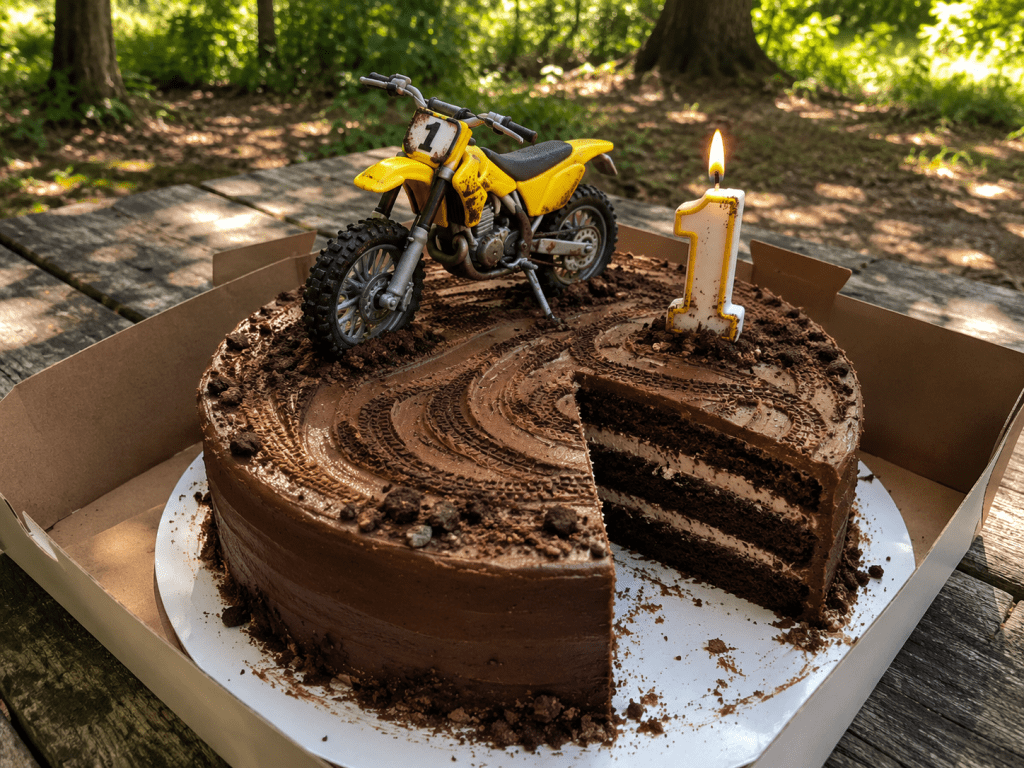
These are very strange times in my life. I’ve been unemployed for what feels like a year, I haven’t been looking for a new job, and I know I can’t return to my previous job because it sent me three or four times to the ER due to stress. But there are silver linings, I guess. I recently decided to translate my beloved Motocross Legend, Love of My Life, the best story I’ve ever written and will ever write, into Spanish. I gave it to someone I know in person. Something they said back bothered me. It wasn’t about the quality of the story. What they said is actually a spoiler, but they said it in a way that suggested I had architected it to happen. And it bothered the fuck out of me. That story already existed as it came to me; I merely used my agency to render it as best I could, because I knew it was important.

But the comment actually sparked in me a new story regarding authorship and responsibility toward your creations. My new protagonist is a failed comic book artist, whom I already know lives in the coastal city of Zumaia. Yesterday, I figured out all the major scenes in what will likely end up being a novella. Tomorrow morning I’ll take a train to Zumaia, where I’ve never been, to take photos and notes to ground me in the setting.

Here’s the thing: I can’t immerse myself in the creative process of putting together the story like I did for We’re Fucked and Motocross Legend, Love of My Life. I can’t emphasize how psychologically destructive that level of obsessive attention to detail is. It drowns out everything else in your life. I did it in the past out of a desire for self-erasure, and pure masochism. But these days, I don’t think I can take it. Not as an unemployed person whose heart is permanently broken and whose brain may actually have been damaged by one of the emergencies I had at work about a year and a half ago. But I’ll do my best with what I have left.

I don’t believe in writing stories because you want to write one. I have dabbled in exercises for fun, but that’s not the same as a story that comes to you and you feel you need to render it. This new one is one I need to tell. It’s not going to be as great as the tale of Izar Lizarraga; nothing will. But this one will make me laugh at times instead of making me cry literally at every chapter. We’ll see how it goes.