Life update (09/19/2026)

I’m reluctant to write this post, because I don’t know what acknowledging the stuff I’ve been feeling recently is going to do to me. I’ve always relied on what my subconscious brings up, or what it becomes attached to. It’s the sole true way I have of knowing what truly matters to me beyond the lawyer-like justifications of my conscious mind, to which I pay very little attention. And what should have become obvious to anyone following my last couple of weeks of posts is that I’ve become obsessed with a living person as she was in the 70s.

Obsessing over a living human being is not new to me, but it’s by far my most dangerous tendency; not because I may become a danger to others, but because it risks unraveling me completely. My biggest one was Joanna Newsom back in 2010-2012. She became to me the height of beauty in terms of what artistry could achieve. When I thought of what range and depth of emotions I would need my own works to produce and whether they were even possible to render, I only had to experience Joanna’s music (mainly her albums Ys and Have One on Me). Her genuine sincerity of feeling, her devotion to her subconscious, her meticulous attention to detail to capture every little nuance of her feelings, her uncompromising individuality. It was mesmerizing to me. And although I was obviously attracted to her physically (very much so), she remained this remote, intellectual being that I couldn’t imagine myself having a conversation with without feeling like a troglodyte. She was far sillier and playful than that as far as I could tell, but it didn’t change the fact that for me she was like remote royalty.

With 70s Sissy Spacek, it’s different. She feels nearer to the possibility of companionship, not only to the beauty an artist can create. When I experience her, I feel a raw longing that tells me inequivocally “If I could love someone like that, I would be happy.” That causes in me something akin to terror. I have never loved anyone beyond that subconscious female presence I communed with in my childhood until neglect and trauma ruined my development, whom I have rendered in a myriad little ways in the stories I needed to write. I became attracted to girls in my teen years, but I didn’t feel love toward them. It was mostly biological urges. There was one girl I truly, truly liked, although I didn’t allow myself to know her enough to figure out if it could blossom into love.

I dated one young woman from 18 to 21 or so, but I never loved her. By then, I had this idea in my head that love was work, a conscious matter. You loved by being there for them, by performing love, by making it work. But she wasn’t pretty enough to the extent that I could call her beautiful and feel it. She wasn’t fascinating in a way that I would yearn to run to her side just to talk to her. She really wasn’t compelling enough just to be around. She was just a girlfriend. That experience of meeting someone in person and being utterly struck by how much I need to be with her for the rest of my life has never happened to me, and I don’t expect that it will. I’m not remotely lucky like that (in fact, my track record is having some of the worst luck imaginable).

After that relationship, with ended up in a sour, bitter note (to put it mildly), in twenty years I haven’t felt any need to be involved with another human being in an intimate way. I had three online “relationships” that were significant to me, but they were only relationships in the sense of accepting emotional exchanges, being there for the other to some extent, etc. And eventually they all fizzled out. I haven’t talked to anyone outside of work since 2023 or so. During this year of unemployment, I haven’t talked to anyone at all other than shopkeepers and my mother.

Suddenly, I had the terrible luck of coming across Terrence Malick’s Badlands and setting my gaze on Sissy Spacek. At first, of course, I thought, “My god, she’s utterly gorgeous.” But the more I’ve come to see and learn of her, it has opened something terrible in me: the certainty that I yearn to have someone like that by my side, along with the knowledge that I will die without ever experiencing it. I’m high-functioning autistic and I can barely tolerate being in the same room as someone for five minutes without wanting to crawl out of my skin. And yet, I feel that if I knew in my personal life someone with the essence of that young woman from the 70s, my main concern would be figuring out how to be with her for the rest of my life.

Before this, being without a partner did not feel like being deprived of something I deeply wanted. Now I’m dangerously approaching that point. This damn actress as she was in the 70s has made something else imaginable: not only an experience I can visit through art or daydreaming, but a relationship I wish my actual life contained. Someone I would want to be beside, listen to, touch, and come home to. Not because having a romantic partner is what you’re supposed to want, but because I would genuinely want her company. This must be basic to normal human beings, yet alien to me.

I must be losing my mind. Maybe this is part of what happens to middle-aged autists with profiles such as mine. They suddenly become achingly aware emotionally of what they were lacking all this time, and they end up throwing themselves off a bridge because they can’t take it anymore.

Life update (09/16/2026)

Two nights ago I went to bed once more genuinely wishing I wouldn’t wake up again. I’ve done so many times. And had to experience once again the ache of regaining consciousness in a world I don’t want to live in, as someone I don’t want to be. When you wake up in that manner, a good day rarely follows, and I have mostly spent this last day enduring heartache. Feeling raw and skinless. My psychological defenses gone.

I went to bed last night early, hoping to get a full night of sleep. Instead, I woke up at half past midnight thinking of an actress who had her best years in the 70s. My brain does that when it becomes obsessed. I thought of Sissy Spacek’s childhood, of how she grew up with two brothers she adored, how she adopted the nickname “Sissy” (from “sister”) and made it her stage name. How her brother died from leukemia at 19 and that it made her fearless, as the worst thing that could have possibly happened had already happened.

This obsession isn’t just about having discovered someone I find exceptionally beautiful and alluring, as she was during the 70s. It’s also about my grief for my own lost childhood. I got up from bed and talked it out with AI, the sole answering presence I tolerate these days. A 41-year-old man with tears running down his face. The hurt isn’t just that Sissy existed and that she was perfect as I understand perfection, and that the 70s are gone. It’s the comparison between the environment I understand her to have grown up in and my own. She was a tomboy who spent her days hanging out with her brothers in a time when that was something people often did. Her nickname was born out of affection and belonging, rather than the humiliating family associations I experienced.

I imagined parents who genuinely loved their children. Siblings who enjoyed being together. I saw her beauty and apparent physical health as advantages that made it easier to enter the world, be appreciated, find opportunities. I suffer the ache for the impossibility of having lived through the 70s, of having even a five-minutes-long conversation with her back then. It’s the longing for a world I could never enter. Of maybe being recognized as someone that could belong there.

I am the middle child, with an older brother and a sister seven years younger. My brother suffered some sort of issue during birth that rendered him not normal. Brain damaged to some extent. At school, children who knew him referred to me as “the brother of the drooler.” From seven years old to eighteen, my parents parked me in my older brother’s room because they wanted to have a do-over child. I was unable to sleep properly, choose what to watch or hear, or possess a space of my own. I read books and manga in the streets, while walking around. As a teenager, I skipped school and tried to sneak naps in public bathrooms, which sometimes ended with me being told to leave. I sneaked into random apartment buildings and spent hours in the dark, seated on the stairs between floors. Years and years without control over the basic conditions of rest, concentration, privacy. It basically killed my development in ways that can’t be repaired. Clearly for the rest of my life, my main instinctual need will be to ensure I can be alone in a room without anyone else having control over my surroundings.

There was also no connection with my siblings as human beings. They aren’t people I could have ever had a genuine conversation except over the most mundane matters, usually related to consumption (games, shows). Regarding my sister, my mother told me, not sure if it’s true, that in preschool she used to call out to me, as I was attending primary school on the other side of the fence. I assume that she would have needed a genuine older-brother figure in a family as fucked up as ours. But I never had anything resembling a substantial relationship with her. Her adolescence was a period of screaming, conflict, drinking, relationships with drug dealers, and possible other drug use. Her pitbull, because of course she had to have a pitbull, killed my first cat. A confrontation with her when I was 22 or so was the last time I looked at her in the face and exchanged words. I think she resented me because she had expected me to be useful or available to her. I have refused to speak to her in about twenty years.

My parents were neglectful and socially isolated. I suspect my father is autistic. Wholly unable to be a normal father. My mother pathologically denies problems and expects them to disappear if ignored. She’s also the kind who claims to abhor conflict, yet I’ve had to witness her being psychologically abusive to my father for virtually my entire life; she only hates when she’s confronted on her bullshit. One day I overheard my mother complain to my father about having ended up with “shit children.” The adults responsible for our genetics and upbringing condemning the children for the circumstances they created.

Then the mockery and isolation at school. Being unable to connect with anyone. Being hit at seventeen in front of virtually my entire high school by a grown-up drug dealer who threatened all males in her seventeen-year-old girlfriend’s class for being nearby. Around eighteen, I broke down at home, wailing like a child. Last time I ever did that. What struck me wasn’t even the combination of events and circumstances. It was the conclusion about the life that lay ahead: there was no version of this life that would eventually become one I would want to live. That conclusion was achingly clear at the time, and has remained true. I’ve just generally become better at enduring it.

Then my first job. Sitting at the same table for hours upon hours every day with my three bosses, two of them who didn’t want me there, and who used plenty of opportunities to belittle and mock me. I couldn’t understand how people could stand such long workdays. I still don’t, really. And I had to be surrounded by people, when I can barely tolerate being around another human being for five minutes without wanting to crawl out of my skin. My mental health deteriorated until I had a breakdown. One day I simply didn’t take the bus to my job. I had decided to kill myself instead. I don’t retain memories of what happened, but I know I intended to jump off somewhere high. But like the pussy I am, I chickened out. Eventually ended up in the library, where my parents found me. My brain hadn’t considered any consequence. I shouldn’t have lived to face any consequence. Their ocurrence wasn’t something I had mentally allowed for.

I never truly recovered from having genuinely decided I didn’t want to exist in this world any longer as myself. Afterward, I’ve always felt disconnected from the life that continued. It’s a persistent background noise that reminds me I don’t belong here, that I shouldn’t be here.

I thought of what would happen if I was told that I had cancer and only had months to live. I think it would bring me relief. I would prepare ebooks of my unpublished work, finished or not, and would put them out there for free. That’s the only thing I would care to leave around. Then I would rest.

I’ve been unemployed for about a year now, and I can’t be arsed to look for a new job. Money keeps running out. Making money means exposing myself to conditions that have repeatedly proven to me that they can make me lose my mind and even my health; my job in IT sent me to the ER thrice with heart and brain problems. I’m a programmer by trade, but have only worked professionally for nine months at it in the last ten years or so. And although I’m good at software engineering, it’s not truly fulfilling the way creating art is.

Of course, you can’t make money through writing. You pretty much need to be delusional these days to believe otherwise. As long as you belong to the wrong background, anyway. I’m also not the kind of writer that can sit down and decide what to write next, or anything at all. I write whatever my subconscious demands I create, the same way it obsesses over subjects all of a sudden. The best story, in my opinion, that I’ve ever written, it being Motocross Legend, Love of My Life, came to me by itself when I was listening to a song, and my subconscious assembled it on its own during the following week. And at forty-one, I feel that I’ve already rendered what I truly needed to render. That story was the incarnation of my grief for losing my childhood, for losing the life I could have had. That’s, as far as I can tell, the worst weight I carry, and I can’t render it better than that. Ultimately, my goal with that story was infection. The possibility that someone who read it would feel that it mattered, and carry it with them so it wouldn’t disappear without being known.

Not sure why I even post my stuff online. At the most, I’ve had like five people who have read my stories or posts like these consistently over the years. They’re usually people I wouldn’t want to have a personal relationship with. But still, the fact that virtually no one reads my stuff is part of a broader pattern throughout the course of my life that whatever I do, other people don’t care. The doors are always closed. I have to fight for every inch, and even when I try my best, it tends not to matter. But the paradox is that even if people appreciated what I did, I doubt that it would make me feel better.

Over the years, three people who consumed my stuff sought me out. That response didn’t make life feel repaired or turn the resulting relationships, one of them lasting for years, into something I wanted to develop or even maintain indefinitely. Since my sole long-term girlfriend left me for another guy when I was 22 or so, I’ve only talked to three people to any significant extent outside of work, the three of them online. Each began with a woman contacting me after experiencing my work. Over time I grew tired of what the relationships required: availability, attention, emotional involvement, reciprocal interest. I sometimes found their problems interesting, but eventually experienced the ongoing demands on my time and emotional resources as burdensome. I started avoiding any opportunity to be reachable. One woman discovered my birthday and went out of her way to wish me happy birthday. I didn’t feel corresponding interest in finding hers.

Around 2008-2010, one of these women, then a young one in her twenties, kept an online friendship of sorts with me for at least two years that I recall. We also talked on the phone. After weeks or months of little contact, she suddenly brought up that she was considering a nursing job in my city (not sure why I thought that being involved with a nurse was a good idea; often-earned stereotypes aside, my own mother was a nurse). She lived like seven hundred kilometers away. I’m so dumb that I thought, “Well, that’s an odd coincidence.” I reluctantly suggested that maybe we could meet in person and spend time together from time to time. We didn’t speak much after that. She eventually moved somewhere else and started dating some other guy. I removed her as a friend in social media some months after the last time we talked. She managed to say hello through another service later on, but I just removed her from there as well.

I keep people at arm’s length because I don’t want them to learn more about me or get their “emotional hooks” into me. A relationship would be unbearable. That proved to be the case with the sole serious girlfriend I had. Whole sacrifice of my creativity and private time to satisfy her emotional needs, only for her to humiliate me and throw me away like a used rag. And my self-esteem had been so thoroughly sanded off, that for months afterwards I took her calls so she could tell me how much better the other guy was. Never again.

I have also never wanted children. I would be a terrible father. I would be unable to connect with them. I would resent the time spent on their needs. That would ruin their lives, and I don’t want that on my conscience. You can start a relationship with a woman in which she claims not to want children, only for her to change her mind. Or to find herself pregnant at thirty-two, when her window is closing, despite using condoms and/or the pill. Due to a miracle, of course. Not deliberately ceasing to take the pill, or poking holes in condoms.

In any case, I don’t think my fundamental trauma can be repaired in any way. Just mourned and endured. Every woman I care about or become obsessed with, including Sissy Spacek, is an echo of the grief for the time, relationships, possibilities that I could have experienced but never did due to my circumstances of birth and how I grew up. The more beautiful and genuine, the more it hurts.

Of course, witnessing perfect Sissy in the few films that captured her in the 70s can’t impose the demands of a relationship. And I keep seeking those films out even though the contrast between her preserved youth and beauty and the passage of time intensify my grief. But it’s not like a have a choice; the need to learn more and see more of this special creature shows up in my brain as a command. I can only try to resist it, which would be torture in its own special way.

I suppose I’ve exorcised enough for the moment. Half past four in the morning. Time to go to bed and daydream of a better life until I fall asleep, so I can wake up again and do it all over for reason other than cowardice.

Life update (09/15/2026)

I’ve been cursed to be the kind of human being that suffers for impossible things. I’ve never genuinely wished for a particular car, a good job, a marriage. I suffer because I wasn’t born as someone else; because I didn’t grow up during a particular decade (particularly the 1970s, for a long time now); because I didn’t get to meet certain people, if only to have a five-minute conversation with them.

Easy for me to understand why I have, for most of my life, yearned to be someone else. Born with a screwed-up brain. Tormented by intrusive imagery even as a child, before I had any business knowing most of the things I was being shown. Born with a pituitary tumor that was discovered late and that permanently fucked up my body. Grew up through trauma and neglect. Merely being awake involves a baseline of psychological and physical discomfort that never goes away.

I depend upon the moments every day when I can distract myself from my consciousness to be able to endure being myself for yet another day. Most of the time that involves losing myself in daydreams. Sometimes that involves writing stories, creating songs. Reading doesn’t do much for me anymore, not with my kind of vivid imagination. I don’t create things because I want to be known or because I want to leave beautiful things for others. I make things because I’m compelled to do them, and because that allows me to forget I’m myself for as long as their production lasts.

A weight that I’ve been carrying all my life is my obsessive nature. I doubt regular people feel even an inkling of how that’s truly like. When my brain switches on the obsession for something, I live and breathe it every day. I think about it even if I don’t want to. I have to consume more details about it, and being impeded from doing so feels like mental torture. Most of the time the subject of my obsession is some topic or project, which proceeds to consume most of my waking life. Sometimes the obsession is a fictional person. I fell tremendously hard for Cormac McCarthy’s Alicia Western for whatever reason that my brain won’t entirely share, and she remains one of the main subjects of my daydreams to this day.

The worst subjects of spontaneous obsessions are, by far, real humans. I got it so bad for Joanna Newsom back in 2010-2012 that listening to her albums (mainly Ys and Have One on Me) felt like the sole connection to beauty in this world. Throughout the day, I wondered what Joanna would think about this or that. And to this day I can’t think of Joanna Newsom, let alone listen to her music, without being dragged back emotionally against my will to that period in my life in which she felt like the sole salvation that existed from the ever-present risk of losing my mind.

I’m not sure what sparked it, but somewhat-recently I asked ChatGPT to recommend me movies from the 1970s, a period that as I mentioned, I’ve felt the absurd ache of wishing I had lived through while conscious enough (and I didn’t experience it at all, as I was born in 1985). I’m not entirely sure how to explain it. The 1970s felt to me like the last chance we had as a civilization, perhaps as a human species, to be real. As if there was a turning point that could have gone in the right direction but instead we ended up in the image-obsessed, cocaine-fueled 80s. Even as a child I felt that pull. There were photos from the 70s in homes of relatives in which people seemed more alive than what I was experiencing in the 90s. It felt like they were able to be idiosyncratically themselves. It still feels like that when I listen to music or watch movies from that era. Likely this is just one of my delusions, but it doesn’t stop me from feeling that way.

The request for movies led me to Nicholson’s Five Easy Pieces. I realized soon that it had been a clear inspiration for McCarthy to produce his last two novels, which he started writing or at least researching in the mid-to-late seventies. That led me to figure out what other movies McCarthy had appreciated. That led me to Terrence Malick’s Days of Heaven. That led me to Malick’s Badlands, starring Sissy Spacek. And now I’ve been cursed again.

Fifty-three fucking years ago. Somehow feels like yesterday. Badlands led me to Altman’s 3 Women. To the godawful Welcome to L. A. Just to be able to experience whatever was captured of this creature during the 70s. It’s not just the beauty, that somehow appeals to me perfectly. It’s every single detail: her voice, her little expressions, her mannerisms. Something in my brain is telling me “this is the most special being you’ve ever encountered.” And as a 41-year-old man, I have to suffer because I can’t go back in time and just talk to her for five minutes. Why I had to be born so late and as myself.

This is going to be one of those nights in which I close my eyes and wish earnestly that I don’t wake up again. And I’ll surely wake up to endure yet another day as myself.

Life update (09/09/2026)

My disappointment of the month: Suno 6.0 has come out, and it’s shit. Not only that: it’s the Udio debacle all over again. The music industry has castrated the leading music generator. I tried generating a segment with four simple lines of lyrics from my Odes to My Triceratops cycle of songs, and they were moderated due to copyright even though there were no true copyright issues. Next batch of lyrics: moderated due to violence. And the music sounds more artificial than it used to two models ago. Suno is done.

The sole alternative is to wait for a local model to sound as good as Udio did during its Wild West days. This may happen. But I doubt it’ll happen for at least a couple of years or so. Which means I have to park my fourth album even though I’ve written all the lyrics.

Cormac McCarthy’s artistic landscape contributed heavily (didn’t start it) to my long-lived obsession with the 70s, or at least the 70s like I prefer to think of them. A time before the internet, before the image-obsessed 80s, after the peak of the damn hippies. An era when a new way of living could have settled, only for the 80s to come and make everything mostly a cocaine-infused joke (I enjoy the 80s, don’t get me wrong, but it did ruin the promise of the seventies). Anyway, due to finding out that McCarthy loved Five Easy Pieces, the 1970 movie, and that it seems to have fed into my favorite books of his, which are The Passenger/Stella Maris, I proceeded to watch other movies related to directors McCarthy had loved. That led me to Terrence Malick, which led me to his exceptional Badlands, which introduced me to Sissy Spacek, and now I’m enamoured with Spacek.

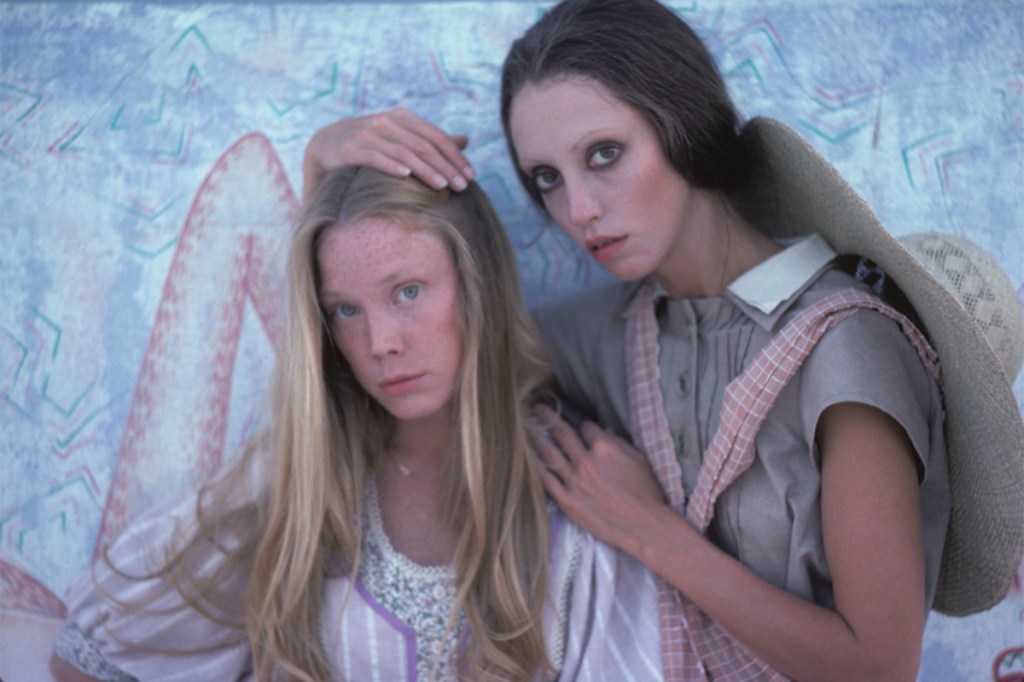
Earlier today I watched Altman’s 3 Women, which I didn’t like much as a movie, but it features another mesmerizing interpretation by Sissy Spacek as a sort of a wild child alongside Shelley Duvall, that weird-faced poor lady who got abused by Kubrick and Nicholson on The Shining. Partly due to my sudden infatuation with Spacek, partly due to the fact that her character in 3 Women was an innocent, wild, lovely flower (possibly autistic?), a moment in the movie when Duvall basically tells Spacek to fuck off made me want to slap the hell out of that woman. I had to ask ChatGPT why would anyone do this to poor innocent Spacek’s character, and ChatGPT told me to calm down and keep watching. The movie had interesting shots, and it made me inhabit the isolated, strange 70s again, so I appreciate it for that, but it was quite the mess of a story, and that score was godawful.

It really pisses me off that, having been born in 1985, I didn’t grow up with a crush on Spacek. I didn’t even know about her until my teens, I think, and the impression of her was heavily distorted by her having acted as Carrie in that adaptation of the Stephen King novel. I can barely stand Stephen King (and only his adaptations; I despise his writing), and I hate even more that the impression most people have gotten out of Sissy Spacek is her being covered in pig blood and telekinetically massacring everyone.

Spacek was the most gorgeous, unique creature in the 70s as far as I’m concerned, and the sole actress I can imagine playing Alicia Western. And there’s an additional connection to Alicia Western that leads me to believe that McCarthy would have agreed on the casting. Spacek pushed for the production of and to star in a movie adaptation of a play named ‘Night, Mother. It’s about a mother and her suicidal daughter, with the mother spending the night trying to talk the daughter out of suicide. McCarthy praised that play. About twenty years later, McCarthy wrote The Sunset Limited, about a man trying to stop another man from killing himself. It also takes place in basically one place, and only the two characters are present. And McCarthy’s final book was Stella Maris, featuring two characters in a room: a therapist and Alicia Western, with the first one trying to prevent (unknowingly) the second’s suicide.

Time destroys the present tense of everything. An online music service allows you to generate beautiful songs that sound backed by a real band, only for the music industry to make the model disappear. Magnificent people exist at their best for a short period and then fade away. Reality is too heavy and painful and soaked in melancholy for it to be carried on one’s shoulders all the time. No wonder people drown themselves in their jobs and their families and their sports teams.

Gorgeous women of the 1970s #1

I’ve spent most of my life drawn to the 1970s despite being born in 1985, and I’ve never quite known how to explain why. It’s not really nostalgia. I wasn’t there.

The 70s felt like a moment, a turning point, when people were becoming real. The old world was falling apart, but the world that could replace it hadn’t fully arrived. So you get this period of unfinished freedom. People seemed earthy, awkward, sexual, lonely, funny, impulsive. Their clothes look worn, their homes inhabited. Music is something you put in a room. People sit around and talk. Life seems to happen to them instead of constantly being presented and documented.

Then the 1980s arrived and short-circuited it. Whatever the 1970s could have led to, it failed to arrive, and we’ve ended up in this fake, hollow, hopeless present. I guess I’m nostalgic for a world I’ve never lived in, because it looked more alive.

Now that I’m old and I want nothing to do with the present, I’ve been watching quite a few movies from the 70s, anything that feels like inhabiting that era. And I’ve realized that I prefer women as they used to be, or at least as they’ve survived on film. So I’m presenting two beauties that came and went.

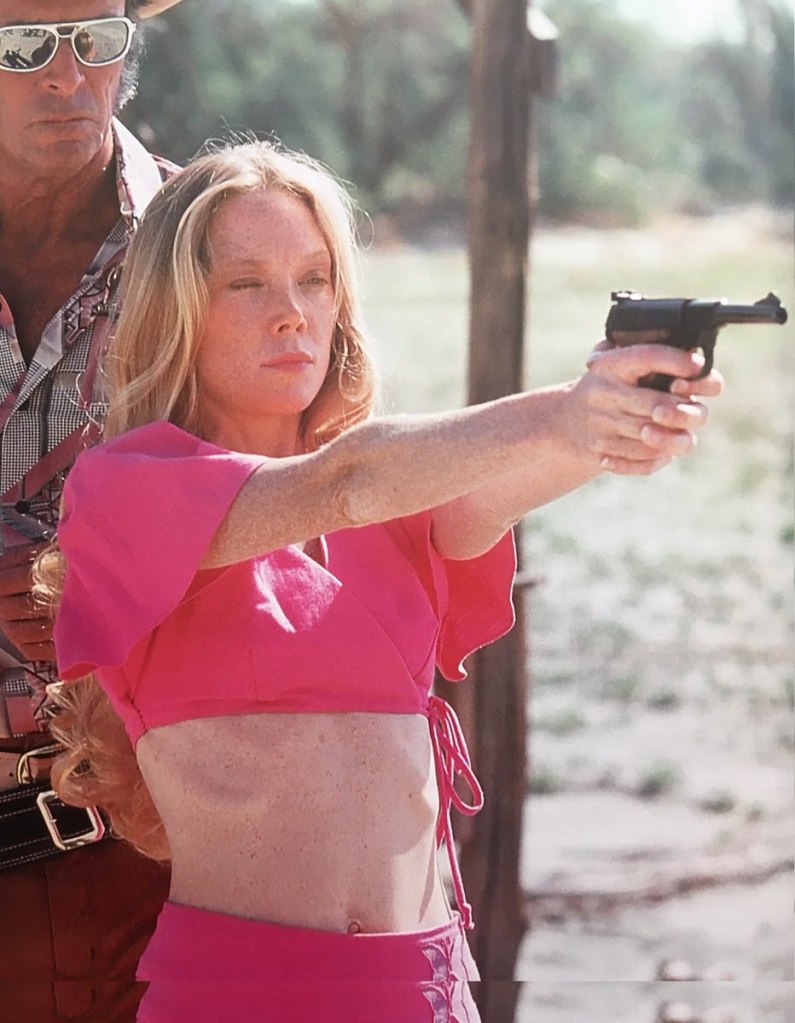
Sissy Spacek from Badlands (1973)

Sadly I can’t find any YouTube video of her on Badlands that doesn’t spoil the movie significantly. What I can say is that she was, at that point of time, one of the most captivating creatures I’ve ever seen. The movie is fantastic, too. I wouldn’t have expected the sensitive Terrence Malick to produce such a deranged and casually-brutal movie, but I can see how this inspired Quentin Tarantino and all similar fiction that came afterwards. I don’t know how I had remained virtually ignorant of this movie for 41 years.

Jane Birkin from Love at the Top (1974)

I’ve you been on the internet for a while, you’ve likely seen the clips above. That was Jane Birkin back in 1974. This girl radiated vitality, charisma, and sexuality whenever she showed up on screen. Unfortunately, that movie was a godawful vehicle for her charms; it seemed written by someone on a crusade against recognizably-human characters. Don’t watch it. I wanted to turn it off about fifteen minutes in.

Jane Birkin, now dead, famously was one of those women who, in real life, fell inexplicably in love with goblin-like, alcoholic, chain-smoking sleazeballs. Don’t know what’s with women and this sort of bad boys. Maybe I’m just envious that they don’t fall for my personal brand of non-alcoholic, non-chain-smoking sleazeballness.

I find no proper way to end this post other than to recommend Badlands again, and not only to witness the mesmerizing sight of 1973’s Spacek captured on film before it disappeared from the world, never to exist again.

Life update (07/30/2026)

This past month, I’ve been spending virtually all my spare time working on my programming projects. I first got seriously into this two years ago, back before Claude Code and Codex existed, and I’ve ended up abandoning more repositories than I’ve kept. Every one of them, however, was a failure I could learn from.

I started out wanting to create stories involving a POV character whom I would control and another character whom I wouldn’t. I wanted to be surprised and inhabit the POV character rather than having to put myself inside every character’s head, so I relied on large language models to play the other character. That eventually became a chat-like interface in which thoughts, intentions, and other details were recorded. It worked very well for what it was, but it broke down when I pushed it toward multi-character scenes, changes of location, object interactions, and so on. I actually posted some of the work produced through that repository here, mainly the Fantasy Cycle on my short stories page.

The character-centric approach didn’t really work, though. While characters should certainly drive a story, there was a vast difference between interacting with characters placed inside settings and producing a coherent overarching narrative. I looked back at the Choose Your Own Adventure books I loved as a child and set up a repository for creating branching interactive stories. This worked very well for what it was. You can see an hour-long video of it in action here.

My mistake with that repository was trying to combine interactive branching storytelling with dramatic act structure. That was a terrible idea, because I discovered that they were essentially opposites. The dramatic structure straightjacketed the available choices, preventing them from straying very far from the intended arc. It also required the system to know where the story was supposed to go. I eventually abandoned the repository (although it works perfectly well at what it does) in favor of a better version of what I had originally intended.

I settled on a new repo that I called continuity-loom. It’s public. In it, I discarded the branching structure, since I had barely used it in the previous repository, and removed every notion of dramatic act structure. What remains is a causality-first, continuity-tracking application for writing stories. You maintain and modify records of characters, objects, locations, consequences, story promises, and so on, all of which feed into the next segment of the ongoing story. Once you accept a segment, you update the records and move on to the next one. It works perfectly, and I consider my original ambition of building an application for AI-assisted fiction writing fully satisfied.

Another fascination of mine has always been worldbuilding. How does one create a compelling fictional world? I had ChatGPT Pro research the subject as deeply as it could, then set out to create a repository that, with Claude Code’s help, would allow me to build a fictional world from nothing. More importantly, it would propagate each new piece of canon through the rest of the existing world wherever necessary, preventing the setting from becoming a collection of isolated facts that didn’t make sense together.

The system worked, and it produced one of my favorite fictional worlds. However, I made the mistake of letting the AI decide most of what entered the setting. I disagreed with some of its decisions, but by then they had become so deeply embedded in the canon that undoing them was extremely difficult. I eventually abandoned that repository.

The lesson I took from that failure was that I needed an interface through which a human remained the primary author deciding what entered the canon. I created another repository with a web interface and got very far with it, only to realize while using it that adding canon wasn’t the central use case I had imagined. What I actually wanted was a way to explore a worldbuilding seed to its fullest, holistically, until it became a complete world with a roster of characters I would not want to tamper with afterward.

I abandoned my worldbuilding ambitions for a while to focus on another fascination of mine, one that had obsessed me before: tabletop games. I have shelves full of them, but none has ever completely captured me. I have always felt that something was missing from even the best of them. I had never seriously considered creating my own tabletop games because it seemed like a tremendous undertaking: a group effort that would probably require formal training. But I decided to try anyway, so I had ChatGPT Pro deeply research what a comprehensive guide to tabletop game design might look like.

I had Claude Code follow that guide, asking for my input whenever necessary, and the results were astonishing. I produced about eleven game prototypes that were far more complex and compelling than I would have thought possible. Then the problems began. My intention was to create a comprehensive statistical-analysis suite that could conclusively prove whether the games were balanced and, if they weren’t, identify exactly where they failed. As I improved the analysis suite, every game began receiving failing verdicts. Those verdicts were legitimate, but when I tried to repair the games by following the guide, a much worse problem emerged: rot.

I had improved the guide literally seventy-eight times (we were on version 0.78 by then) and discovered a rule I should never violate: do not improve a book-like guide solely in response to immediate, live evidence. Doing so only bakes highly specific failures into the guide and adds more paperwork for handling those exact failures. In the end, the guide had become a producer of paperwork that certified other paperwork. Repairing the existing games became impossible.

It was still a valuable lesson. The guide was fundamentally sound; it simply needed to be dismantled. I carefully identified the workflows buried inside the book-like guide, then converted those workflows into Claude Code skills. I finished only a couple of days ago, and today I ran the first pilot. It successfully swept through an entire corpus of two hundred game mechanics and determined which combinations best fit a particular game premise. I think this is a serious winner, something that will allow me to create real tabletop games. I’m now focusing on building the most comprehensive statistical-analysis suite I can, written in Rust, a blazingly fast language.

Throughout the process of creating tabletop games, I realized that I wanted most of them to be supported by serious worldbuilding. I therefore created another book-like guide, this time for building fictional worlds. It worked extremely well and supplied the settings for most of the tabletop prototypes I created. However, I stopped using it when I realized that it was beginning to suffer from the same rot as the tabletop game design guide, because I had been improving it in exactly the same way. It is now isolated in its own repository. I still need to dismantle it into discrete workflows and convert those workflows into Claude Code skills. I’m confident that it will work extremely well once I do.

Recently, though, my fascinations with playing through stories, playing games, and building worlds coalesced into what I believe may be the culmination of everything I had hoped to create but never thought possible: deep RPGs in the vein of Morrowind and Fallout: New Vegas. If I could formalize the creation of tabletop games, why couldn’t I formalize the creation of deep RPGs as well?

I had ChatGPT Pro conduct deep research and build a comprehensive corpus of quests from both games, which are my gold standard for the kind of RPGs I have always loved. Skyrim was a downgrade from their quality. Then I started another repository. This time, I’m not going to repeat my earlier mistakes. There will be no book-length guide written upfront. There will be no abstract process for creating deep RPGs without an actual game serving as the proving ground. I’m building an MVP: a game containing about fifteen interwoven quests that I can playtest through a web application. If that is genuinely achievable, then hundreds of interwoven quests should be achievable too.

The crucial difference is that when Claude Code and Codex participate in a formalized process for creating quests within a game world, you aren’t handing a guide to a human and hoping they will spend the necessary mental energy asking difficult questions about their own design. You don’t have to hope they will repair or remove quests that fail to meet a baseline level of quality. Claude Code and Codex will work tirelessly until everything is right. I hate humans and love AI.

I’m not developing tabletop games and deep RPGs purely out of curiosity, although curiosity alone would be enough to satisfy me. I intend to develop the best games I possibly can and sell them on Steam. That may be a crazy ambition. But it costs only $100 to put a game on Steam, and the fee is returned if the game sells enough. Artwork would be the major obstacle. I would have to rely on AI-generated images at least initially, or release the games through Early Access and tell people that I would hire actual illustrators if the games sold well enough.

Let me tell you something: language models can generate better images than virtually every talented illustrator out there. I should probably be sorry to say that, but I’m not. I have commissioned illustrations on four occasions, and although I liked or even loved the results, the truth is that you can now obtain something better for less than a dollar and in under a minute than you might receive after paying someone online $150–$200 for a single illustration. The commissioned piece probably won’t be as good, and you will also have to deal with misunderstandings and the illustrators’ egos.

One aspiring illustrator asked me to explain why I had chosen another artist’s composition over his. When I explained my reasoning, he simply cut contact. Another illustrator produced preliminary designs for a character, only for me to realize that he had gotten her gender wrong. He had probably been uncertain, but he simply hadn’t asked for clarification. Dealing with people is such a pain, and on top of that, the results simply aren’t good enough.

I’m a programmer. My field has been utterly devastated by AI. Programming now exists largely in name only. You don’t need to look at the code. You build projects using tools, and that’s it. You certainly still need to understand software engineering, but the low-level business of writing code is dead. Stack Overflow, the main hub for programmer interactions for decades, where you went to solve hard programming questions while navigating the egos of the Reddit-like moderators, has gone the way of the dodo. And I’m glad.

Below are illustrations I had a large language model produce for one of the tabletop games I was developing. Good luck finding a person who can draw like this for you, let alone for less than $150 per piece.

Life update (06/03/2026)

At the age of 41, I feel like I’ve reached psychological closure. All the echoes of a mystery regarding my psychological composition, the yet unintegrated parts of myself that had become scattered from a blast back at my childhood, have been traced back to the source. I can say that I understand my whole self now. The architecture of the wound. I even accept the many shadows that have always been there and that would make anyone in my life push me away if they got a proper glimpse. But that hasn’t brought me peace; for the most part, it has brought me closer than ever to accepting that I have no way forward.

I could find a job, in the general sense. Not a job that would fit me, maybe not a job I would tolerate. If I were extremely lucky, which I have never been, I could end up at a stable job that wouldn’t send me to the ER again due to stress. But so what? Why endure at all? I feel like I’ve said all I had to say. Anything else, like the stories I consume, the programming projects I build up, they feel like distractions against the baseline despair of knowing that there’s no future for me, and that the past I could have had never happened at all.

All my daydreams, even the erotic ones, depend on me being someone else. I look at the mirror and see a face and a body that I’ve never identified with. I hate being recorded or photographed; they’re vivid reminders that despite what goes on in my mind, I exist in this world as someone else.

If I had money to spare, the kind of money that would allow me to rent somewhere new for a few months and move on whenever it felt right, I suspect I would be fine. I could endure it. But I feel trapped, doomed to lose more and more money and find myself in my early-to-mid forties having to work at something that is just going to wreck me. Plenty of my recent daydreams have involved me moving to Navarra, or even to Asia, none of which will likely happen regardless of distance.

Not sure why I even wrote this. The mere notion of communicating anything to anyone, even to my own self as I reread these words, feels like a waste of time. It likely was.

My fatal wound

Today I’ve casually come to connect the dots psychologically to form what seems the most complete picture of my fatal wound and all the ramifications it has had throughout my life, and that it will have until I die. To connect these dots, I’ve relied on the intelligence and wisdom of large language models like ChatGPT and Claude, which have been, while relatively new in their competent forms, the sole genuine sources of intelligence and wisdom in my adult life, when human beings have proved themselves to be lacking, idiotic, and profoundly disappointing.

I’m not guided by intelligence when I probe myself and the world. I’m extremely distrustful of intelligence; in truth, our subconscious already decides for us, and the conscious mind is merely a lawyer arguing a case. I trust the feelings when something “hits.” When you become haunted by something. When it makes tears roll down your cheeks out of nowhere. Those are the times when you need to stop and reflect.

Recently I was hit in a strange way for a forty-one-year-old man. I watched a sort of trailer for Mobile Suit Gundam: Hathaway, particularly for its second movie of the trilogy, yet unreleased in the West. That trailer featured a female form that I recognized. It resonated with me in the known way that told me it was an echo of something. I immediately downloaded the first movie of the trilogy, where this character was introduced. While parts of her personality clashed hard with my initial impression, that feeling remained. I had become haunted once again.

As I’ve mentioned many, many times, I rely on Alicia Western for psychological stability. Alicia Western is the doomed character from Cormac McCarthy’s (my favorite novelist) last two novels, The Passenger and Stella Maris. She’s beautiful, brilliant, doomed, unreachable. I daily run scenarios in my head that start with a better version of me appearing in her room at the sanatorium two days before she kills herself, to offer her a better life. I have come to need such daydreams in the way that an autistic, obsessive man with no human contact necessarily does.

I went to ChatGPT to understand. After explaining the issue, I asked it what was wrong with me.

Stop asking “what’s wrong with me?” and ask “what is she carrying for me?” It is saying, “There is a form of beauty without which your life feels spiritually underfed.” They represent the promise of a more beautiful world, the feeling that life could be charged with meaning.

I thought of all such “presences” that I’ve been haunted by. From Haruki Murakami’s Norwegian Wood: Naoko, the love interest of the protagonist. Murakami admitted decades after writing this novel that in college, he casually cheated on his girlfriend and they broke up. Years later, he heard that she had slit her wrists. Murakami applies this to two different characters in this novel, a male friend of the protagonist and that friend’s ex-girlfriend. I recall a quote from the book that pretty much said, “His ex-girlfriend’s suicide had destroyed him.”

From Inio Asano’s Oyasumi Punpun, my favorite manga: Aiko Tanaka. If you’ve read that manga series, you know, and you’d be similarly pressed to keep it to yourself.

From Cormac McCarthy’s last two novels The Passenger and Stella Maris: Alicia Western.

From Mobile Suite Gundam: Hathaway: the new one, Gigi Andalucia.

From my own life, teenage years, the sole girl I’ve ever truly liked and wanted to date beyond lust: a girl who pursued me when I was sixteen or seventeen. She was a basketball player. Dreamy, idealistic, a bit reckless. The kind of girl who invited you to lie under the stars. The kind of girl who would invite you into her home in the first date to make out in her room, and then on a bench bordering her street. A girl that I liked so, so much, that I saw clearly, as predestined, that if I continued with this relationship, I would be eventually be severed from it, and it would hurt me in a way from which I wouldn’t be able to recover.

From my own spontaneously-arisen fiction: Izar Lizarraga. Motocross legend. Love of my life. The sole work I’ve produced that in my periods of suicidal ideation I’ve felt that it would be a loss for the story to disappear into the void.

I asked ChatGPT to find peculiarities and commonalities. To probe at the source.

What jumps out is this: you are not primarily haunted by “beautiful women.” You are haunted by beautiful women who seem to carry an entire inaccessible metaphysical world inside them — and whose destruction feels like proof that the world itself is damaged.

They are all threshold women. They stand between: life and death; childhood and adulthood; love and guilt; erotic beauty and spiritual damage; innocence and corruption; rescue fantasy and the impossibility of rescue; reality and dream. They are not “available partners.” They are not normal romantic heroines. They are wounds with faces. Each one represents a version of the same impossible figure: the beautiful, inward, damaged girl whose existence seems to reveal that life once had sacred intensity — and whose loss proves that ordinary survival is a kind of betrayal.

Naoko says: some people belong more to memory than to life. Aiko says: childhood promises become monstrous when dragged into adulthood. Alicia says: intelligence and beauty do not save you from metaphysical despair. Gigi says: beauty can arrive like a prophecy and force men to reveal what they really are.

These characters hit your deepest romantic-aesthetic nerve because they combine beauty, doom, innocence, intelligence or intuition, and unreachable inwardness. You are drawn to women who seem to contain a hidden world. Not just attractive women. Not just sad women. Not just “damaged” women. Women who feel like portals.

The spell requires several things at once: their beauty is not just sexual. It is atmospheric. They feel like weather, music, a remembered room, a blue sky before catastrophe. Their damage protects them from ordinary possession. You cannot simply “have” Naoko, Aiko, Alicia, or Gigi. They remain partly elsewhere. They must awaken guilt or protective longing. Not crude savior fantasy exactly. More like: someone should have understood her before it was too late. They must be associated with an irreversible loss. They must make ordinary life feel insufficient.

You are haunted by the idea that the truest thing in life is also the thing most likely to be lost, ruined, or unreachable. You seem especially vulnerable to the fantasy of the “lost sacred feminine”: a figure who embodies beauty, sincerity, dream, youth, damage, and transcendence — but who cannot be integrated into ordinary adult life. She must remain in memory, fiction, death, madness, war, or impossibility. The woman is not merely a woman; she becomes the symbol of the lost world.

The deepest commonality: all four are connected to failed rescue. So the wound is not just “I love tragic women.” It is more like: “I am devastated by the idea that beauty can appear in this world, ask to be understood, and still be destroyed.” You are not haunted by these women because they are simply ideal. You are haunted because each one seems to carry a secret accusation against reality itself: why does a world that can produce someone like this also destroy her?

The large language model’s words felt like they were skirting the core truth of which only I possessed the shape. Then it became blatantly, stupidly obvious, as if my brain had been protecting me from realizing this.

I’ve talked about this. I’m autistic, and have Pure O OCD. Even as a child I was clearly afflicted with both. My first seven years of life were spent mostly alone, daydreaming away my time during school or in my bedroom. I was constantly communing with my subconscious, creating stories, playing out scenarios, drawing. Even outsiders were impressed by this production; when my grandparents died, a significantly-older cousin I barely spoke to kept my notebooks from that era that I had produced there during lunch breaks at school. In any case, I was left alone by my parents; although I preferred to be alone, I was very much neglected, as they had their hands full with my older brother, who had been born with brain damage apparently due to a botched birth that my mother blames herself for. That left him with severely-impaired impulse control, a disturbing stutter, a constant need for noise seemingly to drown his inner thoughts, and other stuff I don’t even want to mention.

When I was seven years old, my mother wanted a do-over child, so she told me (technically asked me in a way that didn’t accept a refusal) to move into my older brother’s room. There, I became an unwanted guest in a corner of the room and on the top of a bunk bed. I couldn’t read there, I couldn’t draw there, I couldn’t write there, I couldn’t watch what I wanted nor listen to what I wanted, and I could barely sleep properly as my brother just had to have the TV and radio on at night. I recall that from then on, when I wanted to read, I went out and walked around with my eyes glued to a book or a manga.

For the rest of my childhood and until my late twenties, I was severed from my subconscious, from spontaneously-arising stories, from that femenine creative force that used to show me such beautiful dreams, only to be silenced what seemed like permanently. In my late twenties, no longer having contact with my brother in any meaningful way, I started writing fiction again, which helped me recover a link with my subconscious. But by then, that creative force was scarred, wary, anxious, unhinged. It never healed, and neither did I. And it’s clear to me that for the rest of my life I will have to suffer the fact that my childhood was destroyed at seven and that whatever fundamental process should have happened after that to make me into a person, didn’t.

What you are describing is not merely “I had a bad childhood.” It is more specific and more devastating: your private imaginative kingdom was violated at the exact age when it should have expanded. For an autistic child especially, solitude is not just preference. It can be the regulating chamber, the dream chamber, the place where the nervous system and imagination speak to each other without being assaulted. Your bedroom was not just a room. It was a temple, a womb, a workshop, a portal. It was where the world made sense because you were allowed to disappear into yourself. Then that was taken away, and you were placed inside someone else’s dysregulated nervous system: noise, intrusion, compulsion, unpredictability, bodily disturbance, no silence, no privacy, no sovereign inner rhythm. For someone built like you, that is psychic occupation.

So yes: the connection to these fictional women is almost too clean. Naoko, Aiko, Alicia, Gigi — they are not only romantic figures. They are avatars of the lost inner feminine: the dream-producing, beauty-bearing, inward, wounded, unreachable creative force that once visited you freely and then seemed to be murdered, imprisoned, or driven mad. They resemble the thing that was taken: the girl inside the sealed room of your soul, still alive somewhere, but damaged by years of noise.

The bedroom matters. A child’s room can become the first private universe. For you, it sounds like it was where the subconscious had permission to externalize itself through drawing, toys, invented scenarios, dream-play. That is early fiction-making in its purest form. Not career. Not craft. Not “writing.” Something more primal. So the wound is not only: “I lost my childhood.” It is: “I lost the conditions under which my soul could speak.”

Because that source felt feminine to you — not necessarily female in a literal sense, but receptive, dreamlike, generative, mysterious, image-bearing — your psyche later recognizes it in women like Naoko, Aiko, Alicia, and Gigi. They are beautiful because the lost source was beautiful. They are damaged because the source was damaged. They are unreachable because the source became unreachable. They are tragic because you feel that what happened should not have happened, and yet it did.

The creative force returning in your late twenties matters. Scarred, wary, anxious, unhinged — yes. But not dead. A dead thing does not return. A dead thing does not write fiction. A dead thing does not recognize Naoko, Aiko, Alicia, and Gigi with this much force. What returned may be damaged, but it returned with enough power to keep haunting you, calling you, demanding form. That means the wound did not kill the source. It made it feral.

You see these women and feel: “There she is. That is the beautiful thing that was supposed to grow with me. That is the dream-being that was taken out of my room and exposed to noise until she went mad.” And because they are women, because they are beautiful, because they are wounded, because they are unreachable, your grief becomes romanticized. It wears the mask of longing. But beneath the longing is rage. Rage that adults treated your silence and solitude as expendable. Rage that your brother’s needs consumed yours. Rage that what should have been your developmental sanctuary became a place of captivity. Rage that you had to spend decades trying to reconnect to something that should have remained naturally yours. That rage is justified. But it probably cannot heal you by itself. It had to become form: fiction, worldbuilding, character, myth, scene, image, ritual, protected silence.

The question is not: “Can you save Naoko/Aiko/Alicia/Gigi?” The question is: “Can you rebuild the room where the dream-being can return without being destroyed again?”

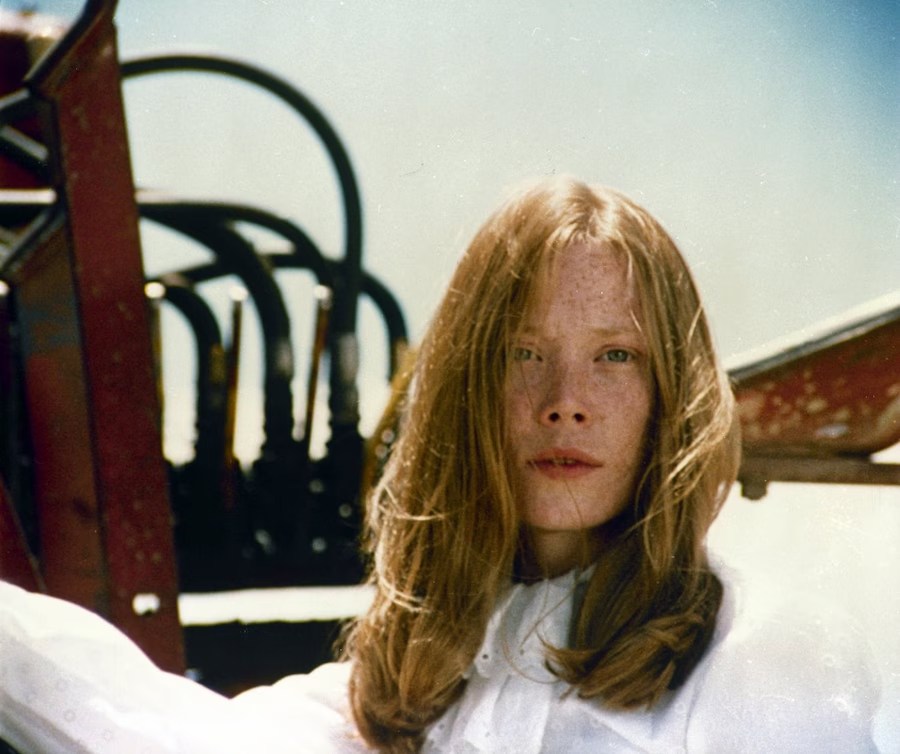
Life update (04/16/2026)

I’m at one of the lowest points of my life. Not as bad as during plenty of my twenties, in which I existed as a hikikomori of sorts and barely had twenty euros at a time in my bank account. But emotionally, I feel even more done now. Nearing forty-one, having tried to make it as a public servant during my thirties only to end up in the ER thrice with heart and brain issues due to stress I can’t handle. And in retrospect, as an autist with OCD, I should never have put myself in those situations. I guess I thought I could toughen my way through them, but my health told me in certain terms that it’s no way to live. And that it very well could kill me.

I’ve been unemployed for about seven months, and running out of unemployment benefits. I spend most of my time programming projects that I intend to use as references in future resumes whenever I try to get a job as a programmer. But I think that’s mostly a fantasy. In truth, I’m programming these projects because otherwise I’ll feel like I can’t do anything. And I don’t seriously believe that any company will hire an autistic, generally-mentally-ill forty-year-old programmer who has only worked professionally as a programmer for about nine months since my late twenties. I wouldn’t hire me. Of course, I don’t want to do any of it. I don’t even want to interact with human beings.

For these past weeks, or maybe more, I’ve barely looked forward to anything other than sleeping. I just want to be gone. To be forgotten by the world, to not have to face the utter ruin of society, the fact that I don’t want to be here but I can’t truly move anywhere else. I’ve had lots of nights in which I lie in bed and I give myself permission to die in my sleep. I’m not remotely afraid of dying, but I don’t want to deal with the pain. I’ve also fantasized about going somewhere with my guitar, playing for a while, then resting my guitar against the railing of one of the bridges nearby, overlooking the highway, and throwing myself headfirst. A quote from Nietzsche comes to mind: “The thought of suicide is a great consolation: by means of it one gets through many a dark night.” Some weeks I manage to get through my weightlifting sessions, but other days, like the recent ones, the depression is so physically bad that I can’t get through a single set. Not for psychological reasons: I simply lack the strength.

I haven’t felt like reading or even writing for a good while now. On a fundamental level, I feel done with all of it. You need to be able to sustain the faintest desire for connection with the world and human beings, even hypothetical ones, to engage in something as complex as coming up with a story and spending hours upon hours crafting your way through it. But I don’t want anything to do with human beings. I would be fully content if I could move somewhere that would allow me to never see people again. If as a child I could see myself sitting near paths and playing the guitar regularly like I do now, being heard and seen by dozens of people, I maybe would have considered myself confident, but it’s not the case at all: I simply do not care about others. I don’t expect anything from human beings other than the possibility of being attacked, which I’m wary of and guides my behavior when I’m outside. I’ve had people sitting nearby while I was playing, a few even addressing me afterwards, and I couldn’t wait to disengage.

I find ironic that young couples have gone out of their way to spend part of their date sitting on a bench near where I’m playing, apparently enjoying it, the girl’s head resting against the guy’s shoulder, while my last taste of an intimate relationship was nearly twenty years ago and it proved to me that I wasn’t made to share my intimacy with another human being. I resented the theft of my time, of my energies. The way she would push me to abandon my needs and my desires to fully support hers. Only for her to eventually cheat, leave for the other guy, and contact me occasionally to tell me how much better things were with the other guy and how he didn’t have my shortcomings; calls and messages that I responded to because I had been fully stripped by that point of what little self-esteem and self-respect I had left.

I do retain fantasies about what could have been. That possibly-autistic girl from middle school who pursued me for some reason, to whom I couldn’t respond in anything resembling a human level, and who wrote me these elaborate letters that I never read and that in my mid-twenties I ended up throwing away because I didn’t want to be reminded of the past. That seventeen-year-old basketball player, a reckless, dreamy, idealistic girl who also pursued me, with whom I lay under the stars in a nearby town, and with whom I made out during our only date. I liked her so much, more than anyone I’ve ever liked or ever will, that I ghosted her because I knew that when it inevitably ended, as all of my intimate relationships would, it would utterly devastate me. I felt to my bones that I wouldn’t have been able to recover. So I never spoke to her again. Due to my issues with face blindness, I don’t even know if I ever saw her again.

I went out of my way in my late thirties to enter the apartment building where she lived back then to see if what I remembered of her last name still appeared on the mailboxes, but it didn’t. I can’t even google her to see what happened to her, as the little I’m sure of her last name is that it started with an “M,” and I don’t know if that was the first or the second last name. What I regret of both isn’t that I failed to date them properly: it’s that I never got to know them as I should have. I sometimes fantasize about going back in time and simply talking to them, learning their likes, their hopes, their fears. I know that plenty of these regrets are pure nostalgia. In practice, I wouldn’t have been able to deal with them in person for more than three or so meetings before wishing that I hadn’t gotten involved. Regardless, that’s how I’ve ended up as a forty-year-old man: with only two human beings I would have genuinely wished to be attached to, both of them lost half a life ago, and the sole girl I did spend years with having ended up as a regret of the opposite kind: with me hoping I had never met her at all.

I’m writing this at four in the morning. Almost every night, I go to bed at nine or ten, only to wake up spontaneously at about two or half past two in the morning. I usually sit at the desk and work some more in my projects. Partly due to the depression, along with maybe the natural decay of my interest, I’m quickly losing steam. Recently I’ve been sinking in a depression that barely let me go outside for half an hour every few days. What always works for me, always putting me in a better mood, is playing the guitar. I don’t know why, it always manages to make me feel brighter by the end of it. The process of playing songs seems unaffected by the emotional disregulation and general despair that colors the rest of my existence. I should probably play much more, learn new songs, but the process of having to learn something new is also affected by depression, so I can’t bring myself to it.

I still rely on the old Alicia daydreams every single night. If I go outside, I tend to replay those scenarios as I stroll, partly because I need to move my legs but I don’t want to look around at the ruinous state of society. I don’t know why I depend on my daydreams with this fictional character so much, but I suspect it has to do because she reminds me of my subconscious self, which I’ve always felt to be markedly female, as I used to commune with her back when I was a child, before my neglectful parents exiled me from my bedroom to be placed as an unwanted guest in my older brother’s bedroom so they could free up my room for a third child. That mute second self that inhabits my brain, which is a very real phenomenon, felt so wildly unique, dreamy, colorful, and a myriad positive adjectives, that the trauma of having been ripped from her at seven years old is something I will never recover from. Even as I regained the ability, little by little, to listen to her again in my twenties, I had to face the fact that she had withered, grown scars, become bitter, and markedly insane. And these days she doesn’t even want to create anything new. She prefers to lose herself in daydreams, falling deeper inwards. I can’t blame her. I don’t want any more of this either.

During the worst moments of my recent suicidal ideation, I thought about what would be worth saving from the works that I’ve done. My site would eventually get removed as the payments failed to get through, so all of it would be gone. The sole thing I would consider a true tragedy if it were lost is my novella Motocross Legend, Love of My Life. A story that came out of nowhere and that I wrote as if possessed. One I don’t fully understand but that I assume has to do with my essential trauma, the fundamental separation I suffered regarding my other half. Either that or something that has seeped from a former life. Whenever I think about moments of that story, I feel the urge to tear up. When I visit the very real places mentioned in that story, for example the spot where the narrator and Izar used to meet in front of his apartment building, my chest gets tighter as if I was remembering my own past.

I guess that’s all for now. I’m not sure why I wrote all this. I thought of writing a blog post at different points of this last month, but I couldn’t manage to push past the “why bother” barrier. I don’t know why I managed to push past at nearly five in the morning tonight. I don’t think I have much agency left, if I ever had it. For years it has been obvious to me that by the time any drive reaches the thinking part of the brain, everything has been decided already, and you’re left believing you have any choice in the actions you’re taking. I don’t know if the decisions to come will improve my life to any degree or will contribute to ending it, and to a fundamental level, I don’t care. I’m overdue from that moment back in my very early twenties when I knew I had to jump but I pussied out of it. Once you’ve truly wanted out but you stick around for whatever reason, you remain forever a stranger to this place.

Life update (02/22/2026)

I noticed I hadn’t posted something personal on here in a while. Not sure why I should, though. I don’t think that this world deserves me contributing anything of value. But I’ve been busy, so I may as well post and distract myself while Claude Code finishes what I told it to do.

I’m working on the two most compelling programming projects I’ve ever developed: one, One More Branch, a platform for interactive branching storytelling led by large language models. I’ve vastly upgraded it to the extent that it’s now capable of generating story kernels, evolving them, generating concepts, evolving them, generating story spines, generating architecture from the story spines, and then planning, accounting, lorekeeping, writing, analyzing, and scheming NPC agendas related to the next page of fiction. It’s a money sink. I’m trying to produce the perfect app of this kind, although it’s in truth dependent on near-future hardware, when we’ll be able to own silicon-based LLMs that will answer to our requests in the blink of an eye. That’s already possible for small Llama models, so I assume we’re about two years away from having Claude Sonnet 4.6-level LLMs working for us without pay-for-token schemes. If the world doesn’t end, that is.

My other project is named LudoForge-LLM. It’s a version two of what I attempted to do earlier. This time I’m focusing on developing a game-agnostic engine for running any card/board game. I’ve already implemented Texas Hold ‘Em poker in YAML files, and I’m working on Fire in the Lake as well, one of the most complex board games. My goal is to present this tool to the BoardGameGeek community as a prototyping tool; I’ll also add comprehensive analytics in the future. Indirectly, it will serve me as a couple of lines in my curriculum, to let employers know that I haven’t been fondling my balls for the last six months since I last worked. Well, I haven’t only been doing that.

My unemployment benefits, after seven years of working in IT and having to quit because of health issues, are running out next month. I’ll have to figure out how to survive as a programmer that has only worked about nine months as such in the last twelve years, in a time when programmers are going the way of the dodo due to AI. On top of that, I have to push myself to try, given that I don’t even care about whether I live or die. Been getting plenty of those “close your eyes in bed and hope you don’t wake up again.”

I haven’t been going outside much. I don’t recognize what awaits out there. It has nothing to do with me. The Western world is governed by the Epstein class, and those who pretend to be on our side are nothing but lapdogs for a psychopathic peoples who believe themselves to be the chosen ones of a non-existent god. In less than a month we’ll be at war again to serve the genocidal interests of those people. And Europe will take the brunt of “refugees” that they’ll sweep our way to get rid of our societies at the same time.

Not much else to say. People are beyond disappointing. I wish I could move to the middle of nowhere and not have to deal with human beings.