Spanish writer, author of My Own Desert Places and We're Fucked. I have also written plenty of short stories and poetry, as well as two books in Spanish called Los reinos de brea and Los dominios del emperador búho.
I spotted Elena seated on a bench along the tree-lined waterfront promenade bordering the Bidasoa River, facing the grounds of Dumboa School. She wore a charcoal-gray zip-up hoodie with the hood tugged halfway up her head. Almond-blonde hair spilled over her shoulders. From the angle of her profile, I watched her right hand guide the pen in feverish strokes across the notebook resting on her thigh. She barely paused to flip the page, the motion seamless, as if her hand operated independently. Her pen kept scratching even as she reached for a one-liter carton of orange juice and tilted her head back for a hurried gulp. I pictured Elena as a child, sitting alone in a sandbox, eyes fixed on some invisible horizon beyond the gritty scatter of sand, her mind lost in a world of her own making.
I stepped onto the grass strip flanking her bench, and stood a few paces away. A voyeur trespassing in a museum of one. I wouldn’t startle her while she communed with the divine. Sparrows bickered in the gnarled plane tree overhead. Nearby, a pelota ball ricocheted off the court walls: whap, whap. Elena stopped writing. Her chin settled into her palm, the clicky end of her pen drumming against the notebook.
I crouched, plucked a pebble from the grass, then tossed it onto her notebook. Startled, her head jerked upwards. When she looked down, her gaze lingered on the pebble for a beat before she flipped to previous pages of her notebook. I threw another pebble, but this one hit her arm. Elena bolted upright and scanned the sky as if half-expecting a meteor to rip through the clouds.
With the caution you’d use to approach a stray cat, I edged into Elena’s line of sight. The afternoon light, straining through woolen clouds, gilded the alabaster oval of her face. She had sat with her back to three stories of balconies. Her hoodie was layered over a navy crewneck sweatshirt, and her black joggers bunched at the calves, revealing a slash of pale ivory skin. Her white sneakers, scuffed and worn, sported mismatched laces: one neon-green, one black.
“Nice seeing you again, Elena,” I said.
Her focus snapped to me. Near-translucent skin, bruised-pink lips like petals left too long in the sun. Her pupils dilated as if I had yanked her out of a trance. Her eyes—pale winter blue, adrift like ice floes in a sea of fatigue—held the somber, alienated gaze of someone who’d glimpsed the end of the world. She would haunt your story like the ghost of a tragic heroine, her face lingering long after the last page. She seemed less a person than an open wound: a thing of trembling nerve-endings and unstitched skin.
Her puzzled frown deepened as her stare sharpened, scalpel-like. She dropped her pen onto the notebook, then pulled out foam earplugs and pocketed them in her hoodie.
“Oh. You. That weird guy from the writing course.” Her voice emerged hoarse, as if she hadn’t spoken in days. “The one who didn’t join the lynch mob.”
“I wouldn’t call myself weird all of a sudden, but that’s generally correct.”
She reached down and picked up a pebble I’d tossed. Its dull grayness incongruous against the delicate curve of her fingertips, the fine-boned grace of her hand.
“Jon, was it? Did you throw these at me?”
“Yeah.”
“Throwing pebbles at disturbed writers… is that your thing?”
“I attempted a more interesting way to get your attention than just saying hello. Sadly it misfired.”
Elena studied the pebble before flicking it onto the grass. Her gaze darted between the river, the school grounds, and my face, as if trying to gauge how much trouble I was worth.
“An interesting way to get my attention? I don’t enjoy having things thrown at me.”
“I know you love a bit of dramatic flair.”
She cocked her head, her almond-blonde hair cascading across her cheek.
“You think I’m a drama queen, huh?”
“A connoisseur of the dramatic arts. A woman of refined tastes, who appreciates a little theater in her life.”
“Are you mocking me or trying to flatter me? I can’t tell.”
“Neither. Just saying that sometimes a girl enjoys a little pebble-tossing.”
Elena sighed, a weary exhalation that carried the weight of the day. She then rubbed at her forehead with a pale thumb.
“Sometimes a girl also enjoys being left alone,” she said, her tone dropping to an icy rasp. “But at least you didn’t try to psychoanalyze me or accuse me of lacking empathy. Seriously, what are you doing here, Jon? Are you stalking me, or is this just another cosmic joke at my expense?”
“I’ve been looking forward to bumping into you ever since the debacle at the writing course. And here you are, so I’m taking my chances.”
“What do you want, anyway? Do I owe you something?”
“Owing is not an accurate word for it. But if you feel that way, we can think of something.”
Her pale stare sliced into me. Irises like shards of glacier, sharp enough to draw blood.
“I’m tired of people. I’ve got no energy to spare.”
“I was captivated by your work, Elena. Powerful stuff, quite beautiful in an unsettling way. It has a visceral quality, a rawness that cuts through the bullshit. A shame what happened at the course. I feared that those differently-minded piling on your work would have discouraged you.”
Elena hunched forward and studied me as though I were an alien creature she couldn’t figure out. The sunlight caught her hair, turning strands of it to burnished gold.
“Powerful? Right. That’s exactly what everyone wants to read. Tales of mud, starvation, and eating salamanders. You’ll find that to survive in this world, you need to be sanitized. People want their little feel-good pieces about finding love in coffee shops or whatever the hell is considered marketable these days. They want to be told they’re good people and everything is going to be okay. But that’s not the truth. Truth is ugly. Truth is a woman eating a raw amphibian.”
“Who cares what people want? The whole thing is a hamster wheel.”
She leaned back, her hands gripping the edge of the bench.
“I don’t need your sympathy, Jon. It’s easier if people aren’t interested in me. I’m not like them. I don’t know how to act around them. I’m not good at pretending to be normal. I’m not good at pretending at all, I guess. But hey, since you brought it up… why did you defend me that day? Nobody asked you to play white knight for the class psycho.”
I could picture her as a princess in a castle of bones, her crown a circlet of thorns.
I leaned over the filigreed railing that bordered the promenade. Ferns sprouted from the cracks in the stone retaining wall, fanning outward. The opposite wall, moss-covered, darkened near its base like the stained bottom of an unwashed coffee cup. Below, the Bidasoa River, murky-teal and sluggish, carried twigs, bits of leaves, an orange peel. In the river’s dull sheen, wavy reflections caught the overcast white sky—a sheet of cotton wool pulled over a lamp. A trio of ducks glided over, their boatlike bodies corrugating the water in their wake. They stared expectantly like silent beggars. A silver grey mullet, open-mouthed and thriving even in the city’s sewage-laced currents, slipped into view, its gills pumping, then vanished into the murk. In the plane trees, sparrows chirped in a symphony of gossip over the whap, whap of a ball striking the pelota court walls.
I turned to face Elena, leaned back against the railing, and crossed my ankles.
“You read what you had needed to write, despite knowing it wouldn’t land well with that audience. I like bold people, those unafraid of getting their hands dirty. Who stand their ground. Too many bend their principles whenever society comes knocking. To be honest, I had wanted to quit the course for a while. Isabel is too much of a social butterfly for my taste. But I kept attending because I needed to know what you’d bring next. So after they lost you, I quit too. You can consider me your fellow deserter.”
Author’s note: the scene will continue in the next part.
As a solitary dude, all my life I have relied on music to connect with the world at large, to feel that my feelings weren’t that unique or detached from the rest of humanity. Over the years, I’ve returned to certain albums that have spoken to me in ways that can’t be fully put into words. I love discovering new albums, and perhaps that’s also the case for whoever is reading these words, so I’ll spend some of my limited time on Earth sharing some specifics about the albums that have marked me, and that in many ways changed me.
Today I’m tackling a big one for me: Joanna Newsom’s Ys, released back in 2006. I will need to think about Joanna quite a bit in the coming year, so I may as well tackle this now. Ys, her pinnacle, and as well as I’m concerned one of the pinnacles of artistry, is a baroque masterpiece of music and storytelling, produced by a songwriter at the height of her powers, who at the time danced with her subconscious unimpeded.
Joanna changed her major from music to creative writing in college; she found the constraints that teachers put into music creation too oppresive, like straitjackets. She’s a songstress of old, the kind you could imagine traveling from town to town and reweaving her careful tales to an enraptured audience. All five songs in the album are mesmerizing.
Joanna is the kind of person who would write until four in the morning, obsessing over individual words and meanings. Added to her difficulties interacting with people, authenticity, extreme sensitivity, obsession with obscure people and topics, etc., I have always suspected she’s autistic, but I’m very biased in that respect.
In addition, this version of Joanna retained her beautiful, creaky voice, before she developed vocal cord nodules and could not speak or sing for two months; afterwards, her voice changed permanently, which made her fantastic following album Have One on Me quite tragic to listen to at times.
All the songs in Ys give me chills consistently. You can use words to justify anything, but chills don’t lie. Joanna’s music is unbridled beauty. I revere her as one of the most magnificent artists to ever live.
“Emily”
This song is a love letter to Joanna’s sister, during a period of their youth in which Joanna likely got pregnant and decided to abort it in a surreptitious manner that could have caused quite the stir in the small town where they grew up. She likely refers to this event in her other song “The Sprout and the Bean.” The way she paints a picture of the whole thing, including how they were taught about nature, is awe-inspiring in the purest way. That bell at the end, the resonance of meaning and beauty, kills me every time.
There is a rusty light on the pines tonight Sun pouring wine, lord, or marrow Into the bones of the birches And the spires of the churches Jutting out from the shadows The yoke, and the axe, and the old smokestacks and the bale and the barrow And everything sloped like it was dragged from a rope In the mouth of the south below
We’ve seen those mountains kneeling, felten and grey We thought our very hearts would up and melt away From that snow in the night time Just going, and going And the stirring of wind chimes In the morning, in the morning Helps me find my way back in From the place where I have been
And, Emily, I saw you last night by the river I dreamed you were skipping little stones across the surface of the water Frowning at the angle where they were lost, and slipped under forever In a mud-cloud, mica-spangled, like the sky’d been breathing on a mirror
Anyhow, I sat by your side, by the water You taught me the names of the stars overhead that I wrote down in my ledger Though all I knew of the rote universe were those Pleiades loosed, in December I promised you I’d set them to verse so I’d always remember
That the meteorite is a source of the light And the meteor’s just what we see And the meteoroid is a stone that’s devoid of the fire that propelled it to thee
And the meteorite’s just what causes the light And the meteor’s how it’s perceived And the meteoroid’s a bone thrown from the void that lies quiet in offering to thee
The lines are fadin’ in my kingdom Though I have never known the way to border ’em in So the muddy mouths of baboons and sows, and the grouse, and the horse and the hen Grope at the gate of the looming lake that was once a tidy pen And the mail is late and the great estates are not lit from within The talk in town’s becoming downright sickening
In due time we will see the far buttes lit by a flare I’ve seen your bravery, and I will follow you there And row through the night time So healthy Gone healthy all of a sudden In search of the midwife Who could help me Who could help me Help me find my way back in And there are worries where I’ve been
And say, say, say in the lee of the bay, don’t be bothered Leave your troubles here where the tugboats shear the water from the water Flanked by furrows, curling back, like a match held up to a newspaper Emily, they’ll follow your lead by the letter And I make this claim, and I’m not ashamed to say I knew you better What they’ve seen is just a beam of your sun that banishes winter
Let us go, though we know it’s a hopeless endeavor The ties that bind, they are barbed and spined and hold us close forever Though there is nothing would help me come to grips with a sky that is gaping and yawning There is a song I woke with on my lips as you sailed your great ship towards the morning
Come on home, the poppies are all grown knee-deep by now Blossoms all have fallen, and the pollen ruins the plow Peonies nod in the breeze and while they wetly bow, with Hydrocephalitic listlessness ants mop up their brow
And everything with wings is restless, aimless, drunk and dour Butterflies and birds collide at hot, ungodly hours And my clay-colored motherlessness rangily reclines Come on home now, all my bones are dolorous with vines
Pa pointed out to me, for the hundredth time tonight The way the ladle leads to a dirt-red bullet of light Squint skyward and listen Loving him, we move within his borders Just asterisms in the stars’ set order
We could stand for a century Staring, with our heads cocked In the broad daylight at this thing Joy, landlocked In bodies that don’t keep Dumbstruck with the sweetness of being Till we don’t be Told, take this And eat this
Told, the meteorite is the source of the light And the meteor’s just what we see And the meteoroid is a stone that’s devoid of the fire that propelled it to thee
And the meteorite’s just what causes the light And the meteor’s how it’s perceived And the meteoroid’s a bone thrown from the void that lies quiet in offering to thee
“Monkey & Bear”
A story about a couple made out of a monkey and a bear who escape from servitude to strive for freedom. It just happens that freedom also involves dancing to tunes that clash with one’s self. This song is clearly based on Joanna’s relationship with her then boyfriend Bill Callahan, a passionate, tumultuous romance that saw Bill either pushing her, or Joanna feeling that he was pushing her, into paths that didn’t come naturally to the gal. The climax of the song, with Bear, clearly Joanna herself, wading into the water to disappear by sloughing off her form is one of the most beautiful expressions of communion with the subconscious that I’ve ever encountered.
Down in the green hay Where monkey and bear usually lay (lay) They woke from a stable-boy’s cry Said someone come quick The horses got loose, got grass-sick They’ll founder, fain, they’ll die
What is now known by the sorrel and the roan? By the chestnut, and the bay, and the gelding grey? It is, stay by the gate you are given And remain in your place, for your season And had the overfed dead but listened To that high-fence, horse-sense, wisdom
But Did you hear that, Bear? said Monkey, we’ll get out of here, fair and square They left the gate open wide
So, my bride, here is my hand Where is your paw? Try and understand my plan, Ursula My heart is a furnace Full of love that’s just and earnest Now you know that we must unlearn this Allegiance to a life of service And no longer answer to that heartless Hay-monger, nor be his accomplice The charlatan, with artless hustling But Ursula, we’ve got to eat something And earn our keep, while still within The borders of the land that man has girded All double-bolted and tightfisted Until we reach the open country A-steeped in milk and honey Will you keep your fancy clothes on, for me? Can you bare a little longer to wear that leash?
My love, I swear by the air I breathe Sooner or later, you’ll bare your teeth
But for now, just dance, darling C’mon, will you dance, my darling? Darling, there’s a place for us Can we go, before I turn to dust? Oh, my darling there’s a place for us
Oh darling, c’mon will you dance my darling? Though the hills are groaning with excess Like a table ceaselessly being set Oh my darling, we will get there yet
They trooped past the guards Past the coops, and the fields And the farmyards, all night till finally
The space they gained grew much farther than The stone that Bear threw To mark where they’d stop for tea
But Walk a little faster, don’t look backwards Your feast is to the East, which lies a little past the pasture And the blackbirds hear tea whistling they rise and clap And their applause caws the kettle black And we can’t have none of that Move along, Bear, there, there, that’s that
Though cast in plaster Our Ursula’s heart beat faster Than monkey’s ever will
But still, they had got to pay the bills Hadn’t they? That is what the monkey’d say So, with the courage of a clown, or a cur Or a kite, jerking tight at its tether In her dung-brown gown of fur And her jerkin of swan’s down and leather Bear would sway on her hind legs The organ would grind dregs of song For the pleasure of the children who’d shriek Throwing coins at her feet and recoiling in terror
Sing, Dance, darling C’mon, will you dance, my darling? Oh darling, there’s a place for us Can we go, before I turn to dust? Oh my darling there’s a place for us
Oh darling, c’mon, will you dance, my darling? You keep your eyes fixed on the highest hill Where you’ll ever-after eat your fill Oh my darling dear mine, if you dance Dance darling, and I’ll love you still
Deep in the night, shone a weak and miserly light Where the monkey shouldered his lamp Someone had told him the Bear’d been wandering a fair piece away From where they were camped Someone had told him the bear’d been sneaking away To the seaside caverns, to bathe And the thought troubled the monkey For he was afraid of spelunking Down in those caves, also afraid what the Village people would say if they saw the bear in that state Lolling and splashing obscenely Well, it seemed irrational, really Washing that face, washing that matted and flea-bit pelt In some sea-spit-shine old kelp dripping with brine But monkey just laughed, and he muttered When she comes back, Ursula will be bursting with pride Till I jump up saying, You’ve been rolling in muck Saying, You smell of garbage and grime
But far out, far out, by now, by now Far out, by now, Bear ploughed ‘Cause she would not drown
First the outside-legs of the bear Up and fell down, in the water, like knobby garters Then the outside-arms of the bear Fell off, as easy as if sloughed from boiled tomatoes Lowered in a genteel curtsy Bear shed the mantle of her diluvian shoulders And, with a sigh she allowed the burden of belly to drop Like an apron full of boulders
If you could hold up her threadbare coat to the light Where it’s worn translucent in places You’d see spots where Almost every night of the year Bear had been mending, suspending that baseness
Now her coat drags through the water Bagging, with a life’s-worth of hunger Limitless minnows
In the magnetic embrace, balletic and glacial Of bear’s insatiable shadow
Left there, left there When Bear left Bear
Left there, left there When bear stepped clear of bear
Sooner or later you’ll bury your teeth
“Sawdust & Diamonds”
This song is the closest Joanna has opened up about the extremely hard to express process of artistic creation, as well as her relationship with it. The whole thing feels like Joanna lost in the currents of her subconscious, grasping at beauty while guided by the resonant bell deep inside her that lets her know what’s right. This song contains some of my favorite lines of anything ever, the acknowledgement of the ancient wildness inside every human being: “I wasn’t born of a whistle / Or milked from a thistle at twilight / No; I was all horns and thorns / Sprung out fully formed, knock-kneed and upright“.
There’s a bell in my ears There’s the wide, white roar Drop a bell down the stairs Hear it fall forevermore Hear it fall, forevermore
Drop a bell off of the dock Blot it out in the sea Drowning mute as a rock; And sounding mutiny
There’s a light in the wings Hits the system of strings From the side, where they swing — See the wires, the wires, the wires And the articulation in our elbows and knees Makes us buckle; And we couple in endless increase As the audience admires
And the little white dove Made with love, made with love; Made with glue, and a glove, and some pliers
Swings a low sickle arc, from its perch in the dark: Settle down, settle down, my desire
And the moment I slept I was swept up in a terrible tremor Though no longer bereft How I shook! And I couldn’t remember And then the furthermost shake drove a murthering stake in And cleft me right down through my center And I shouldn’t say so But I knew that it was then, or never
Push me back into a tree Bind my buttons with salt And fill my long ears with bees Praying please, please, please Oh, you ought not No you ought not
And then the system of strings tugs on the tip of my wings (Cut from cardboard and old magazines): Makes me warble and rise, like a sparrow And in the place where I stood There is a circle of wood — A cord or two — which you chop And you stack in your barrow And it is terribly good to carry water and chop wood Streaked with soot, heavy-booted and wild-eyed; As I crash through the rafters And the ropes and the pulleys trail after And the holiest belfry burns sky-high
And then the slow lip of fire moves Across the prairie with precision While, somewhere, with your pliers and glue You make your first incision And in a moment of almost-unbearable vision Doubled over with the hunger of lions Hold me close, cooed the dove Who was stuffed, now, with sawdust and diamonds
I wanted to say: Why the long face? Sparrow, perch and play songs of long face Burro, buck and bray songs of long face! Sing, I will swallow your sadness, and eat your cold clay Just to lift your long face; And though it may be madness, I will take to the grave Your precious longface And though our bones they may break, and our souls separate — Why the long face? And though our bodies recoil from the grip of the soil — Why the long face?
And in the trough of the waves Which are pawing like dogs Pitch we, pale-faced and grave As I write in my log
Then I hear a noise from the hull Seven days out to sea And it is that damnable bell! And it tolls — well, I believe that it tolls It tolls for me and It tolls for me!
And though my wrists and my waist seemed so easy to break Still, my dear, I’d have walked you to the edge of the water And they will recognize all the lines of your face In the face of the daughter, of the daughter of my daughter
And darling, we will be fine; but what was yours and mine Appears to me a sandcastle That the gibbering wave takes But if it’s all just the same, then will you say my name; Say my name in the morning, so that I know when the wave breaks
I wasn’t born of a whistle Or milked from a thistle at twilight No; I was all horns and thorns Sprung out fully formed, knock-kneed and upright
So enough of this terror We deserve to know light And grow evermore lighter and lighter You would have seen me through But I could not undo that desire
“Only Skin”
This nearly seventeen minutes-long song is one of the most beautiful love songs I’ve ever heard. Clearly about her relationship with fellow songwriter Bill Callahan. Lots of vivid scenes of their relationship, more or less mythologized. Possible references to Callahan’s drug use (“But always up the mountainside you’re clambering / Groping blindly, hungry for anything / Picking through your pocket linings, well, what is this? / Scrap of sassafras, eh Sisyphus?“) as well as cheating (“With your hands in your pockets, stubbily running / To where I’m unfresh, undressed and yawning / Well, what is this craziness? This crazy talking? / You caught some small death when you were sleepwalking“). The petite mort, of course, is an orgasm. Poor Callahan; it’s all downhill from Joanna Newsom.
And there was a booming above you That night, black airplanes flew over the sea And they were lowing and shifting like Beached whales Shelled snails As you strained and you squinted to see The retreat of their hairless and blind cavalry
You froze in your sand shoal Prayed for your poor soul Sky was a bread roll, soaking in a milk-bowl And when the bread broke, fell in bricks of wet smoke My sleeping heart woke, and my waking heart spoke
And there was a silence you took to mean something Run, sing For alive you will evermore be And the plague of the greasy black engines a-skulkin’ Has gone east While you’re left to explain them to me Released from their hairless and blind cavalry
With your hands in your pockets, stubbily running To where I’m unfresh, undressed and yawning Well, what is this craziness? This crazy talking? You caught some small death when you were sleepwalking
It was a dark dream, darlin’, it’s over The firebreather is beneath the clover Beneath his breathing there is cold clay, forever A toothless hound-dog choking on a feather
But I took my fishingpole, fearing your fever Down to the swimminghole, where there grows bitter herb That blooms but one day a year by the riverside, I’d bring it here Apply it gently To the love you’ve lent me
While the river was twisting and braiding, the bait bobbed And the string sobbed, as it cut through the hustling breeze And I watched how the water was kneading so neatly Gone treacly Nearly slowed to a stop in this heat In a frenzy coiling flush along the muscles beneath
Press on me, we are restless things Webs of seaweed are swaddling And you call upon the dusk Of the musk of a squid Shot full of ink, until you sink into your crib
Rowing along, among the reeds, among the rushes I heard your song, before my heart had time to hush it! Smell of a stone fruit being cut and being opened Smell of a low and of a lazy cinder smoking
And when the fire moves away Fire moves away, son Why would you say I was the last one?
Scrape your knee, it is only skin Makes the sound of violins And when I cut your hair, and leave the birds all of the trimmings I am the happiest woman among all women
And the shallow Water Stretches as far as I can see Knee-deep, trudging along The seagull weeps “so long”
Humming a threshing song Until the night is over Hold on! Hold on! Hold your horses back from the fickle dawn
I have got some business out at the edge of town Candy weighing both of my pockets down ‘Til I can hardly stay afloat, from the weight of them And knowing how the common-folk condemn What it is I do, to you, to keep you warm Being a woman, being a woman
But always up the mountainside you’re clambering Groping blindly, hungry for anything Picking through your pocket linings, well, what is this? Scrap of sassafras, eh Sisyphus?
I see the blossoms broke and wet after the rain Little sister, he will be back again I have washed a thousand spiders down the drain Spiders ghosts hang soaked and dangelin’ Silently from all the blooming cherry trees In tiny nooses, safe from everyone Nothing but a nuisance gone now, dead and done Be a woman, be a woman
Though we felt the spray of the waves We decided to stay till the tide rose too far We weren’t afraid, ’cause we know what you are And you know that we know what you are
Awful atoll Oh, incalculable indiscreetness and sorrow Bawl, bellow Sibyl sea-cow, all done up in a bow
Toddle and roll Teeth an impalpable bit of leather While yarrow, heather and hollyhock Awkwardly molt along the shore
Are you mine? My heart? Mine anymore?
Stay with me for awhile That’s an awfully real gun I know life will lay you down As the lightning has lately done
Failing this, failing this Follow me, my sweetest friend To see what you anointed in pointing your gun there
Lay it down, nice and slow There is nowhere to go, save up Up where the light, undiluted, is weaving in a drunk dream At the sight of my baby, out back Back on the patio watching the bats bring night in While, elsewhere, estuaries of wax-white Wend, endlessly, towards seashores unmapped
Last week our picture window produced a half-word Heavy and hollow, hit by a brown bird We stood and watched her gape like a rattlesnake And paint and labour over every intake
I said a sort of prayer for some sort of rare grace Then thought I ought to take her to a higher place Said “dog nor vulture nor cat shall toy with you And though you die, bird, you will have a fine view”
Then in my hot hand She slumped her sick weight We tramped through the poison oak Heartbroke and inchoate
The dogs were snapping And you cuffed their collars While I climbed the tree-house Then how I hollered Well, she’d lain, as still as a stone, in my palm, for a lifetime or two
Then, saw the treetops, cocked her head and up and flew While, back in the world that moves, often According to the hoarding of these clues Dogs still run roughly around Little tufts of finch-down
And the cities we passed were a flickering wasteland But his hand in my hand made them hale and harmless While down in the lowlands the crops are all coming We have everything Life is thundering blissful towards death In a stampede of his fumbling green gentleness
You stopped by, I was all alive In my doorway, we shucked and jived And when you wept, I was gone See, I got gone when I got wise But I can’t with certainty say we survived
Then down, and down And down, and down And down, and deeper Stoke without sound The blameless flames You endless sleeper
Through fire below, and fire above, and fire within Sleeped through the things that couldn’t have been if you hadn’t have been
And when the fire moves away Fire moves away, son And why would you say I was the last one?
All my bones they are gone, gone, gone Take my bones, I don’t need none Cold, cold cupboard, lord, nothing to chew on Suck all day on a cherry stone
Dig a little hole, not three inches round Spit your pit in a hole in the ground Weep upon the spot for the starving of me ‘Till up grow a fine young cherry tree
Well when the bough breaks, what’ll you make for me? A little willow cabin to rest on your knee What’ll I do with a trinket such as this? Think of your woman, who’s gone to the west
But I’m starving and freezing in my measly old bed Then I’ll crawl across the salt flats to stroke your sweet head Come across the desert with no shoes on I love you truly, or I love no one
Fire moves away Fire moves away, son Why would you say That I was the last one Last one
Clear the room! There’s a fire, a fire, a fire Get going, and I’m going to be right behind you And if the love of a woman or two, dear Couldn’t move you to such heights, then all I can do Is do, my darling, right by you
“Cosmia”
Final song of the album, this one’s about the death of Joanna’s best friend, Cassie Schley-May, who was killed by a drunk driver when Joanna started touring. Apparently the moment Joanna received the call was captured in a documentary, but I haven’t dared watch it (I don’t even remember the name of the documentary now, though). This one is raw and haunting, less polished than the previous songs, because it needed to be.
In the lyrics, Joanna references a period of her teenage years that she hasn’t opened much about that I’m aware of; she fell into a deep depression and felt that the darkness of the world was pouring into her, drowning her. She used to refer to herself consistently as having no skin, defenseless against the myriad assaults of reality itself (yet another reason why I think she’s autistic). Somehow she ended up sleeping alone for a few nights in the forest, by the Yuba River, to cleanse herself of darkness, and nearly got eaten by a bear. The whole thing didn’t quite work, but bears likely became her spirit animal.
When you ate I saw your eyelashes Saw them shake like wind on rushes In the corn field when she called me Moths surround me, thought they’d drown me
And I miss your precious heart And I miss your precious heart
Dried rose petal, red brown circles Framed your eyes and stained your knuckles Dried rose petals, red brown circles Framed your eyes and stained your knuckles
And all those lonely nights down by the river Brought me bread and water, water in But though I tried so hard my little darling I couldn’t keep the night from coming in
And all those lonely nights down by the river Brought me bread and water by the kith and the kin Now in the quiet hour when I am sleepin’ I cannot keep the night from coming in
Why’ve you gone away? Gone away again I’ll sleep through the rest of my days If you’ve gone away again I’ll sleep through the rest of my days And I will sleep through the rest of my days And I’ll sleep through the rest of my days
Can you hear me? Will you listen? Don’t come near me, don’t go missing And in the lissome light of evening Help me Cosmia, I’m grieving
And all those lonely nights down by the river Brought me bread and water, water in But though I tried so hard my little darling I couldn’t keep the night from coming in
And all those lonely nights down by the river Brought me bread and water in the kith and the kin Now in the quiet hour when I am sleepin’ I cannot keep the night from comin’ in
Beneath the porch light we’ve all been circling Beat our dust hearts, singe our flour wings But in the corner, something is happening Wild Cosmia, what have you seen?
Water were your limbs, and the fire was your hair And then the moonlight caught your eye And you rose through the air Well, if you’ve seen true light, then this is my prayer Will you call me when you get there?
And I miss your precious heart And I miss your precious heart And miss, and miss, and miss And miss, and miss, and miss, and miss, and miss your heart
But release your precious heart To it’s feast for precious hearts
I held the machine part in my hands like it would shatter if dropped. My features had petrified; I blinked only when my one sensitive cornea dried out. The hum of the air conditioner hypnotized me as it battled to cool this box of a room beneath the sun-scorched roof. Droplets of sweat slid like snails down my back, my sides, my chest, while I inspected each part three times before passing it to Christopher.
I pressed the button to start the conveyor belt. Two seconds later I realized I’d forgotten to screw in the bolt clenched in my fist. A wave of rage hit me, sharp as the stench of burning plastic. I grabbed the piece, positioned it, and hunched over to twist the screwdriver. How had I convinced myself I’d completed this part? Why had my brain hidden the mistake? Exhaustion—the kind that comes from juggling multiple jobs at once: assembling machine parts, fixing others’ errors, tolerating coworkers stuck in fight-or-flight mode, locking my anxiety behind a mask of calm. I pretended nothing bothered me, but I was draining the energy I required to function. Soon, others would sense it—that sixth instinct for reading people—and realize that a festering abscess of dread was swelling inside me. Anxiety fissured my face. I’d need stories to explain those cracks, to pacify anyone who noticed.
Someone watched from above. Like daring to glance at a shadow that had cracked open my bedroom door at midnight, I stole a look toward the supervisor’s office window. It showed the lime-green shirt clinging to her frame, her hair loose, a vaccination scar stark on her bare shoulder. Her eyes stayed fixed on the computer screen.
The shift-end horn blared, drilling into my throbbing headache. I sank onto the stool and rubbed my temple. My mind felt liquefied, as if I’d just staggered out of a final exam.
I joined the purple river of workers flowing toward the lockers. The world had turned to glass; if anyone collided with a table edge in the chaos, both would shatter.
As I peeled off my work coat, Héctor slung an arm around Christopher’s shoulders and pulled him close. He held up his phone.
“Check this one out.”
Christopher nodded and scratched his chin. Héctor snorted. He then howled like a cartoon wolf, shaking Christopher until his head bobbed like a clapper.
“The kinda woman you have kids with,” Héctor said.
Christopher traced the arched scar on his scalp with a finger, as if tucking a strand behind his ear. My stomach turned to ice. The man began to stammer, his thoughts filtering through a drain clogged with rot.
“Doubt she’d want me. Besides, it’d ruin her figure.”
“She’d look fine after six kids.” Héctor tapped the screen. “Those hips? Fertile as hell.”
I stepped into the inferno of the parking lot. Dust choked the air as I dragged my feet toward my Chevrolet Lumina, its hood blazing under the sun. Someone slapped my shoulder. I swallowed a scowl. John—or Joseph—in a wrinkled shirt, gestured at the dent in my bumper.
“Someone did a number on you.”
“Found it like that this morning. Maybe a drunk kicked it.”
He shook his head, tongue clicking.
“Bastards slashed my bike last year. Never stick around after.”
He strode to his motorcycle, fastened his helmet, and within seconds shrank into the distance, swallowed by the engine’s snarling growl.
I slumped against my car door, waiting for the oven-like interior to cool. Héctor and Christopher, still glued to the phone, drifted toward the far fence, where Héctor had parked his car. The supervisor emerged waving goodbye, a folder under her arm. Her sister’s silhouette loomed in the SUV’s windshield.
Caroline wandered past the dispersing crowd—a time traveler stranded in the wrong era. Her sunflower-yellow dress tangled around her legs as she tiptoed toward the scrap container, moving with the tentative, wide-eyed stealth of a child sneaking into the kitchen at midnight to swipe cookies. She leaned over the edge and rummaged through broken parts.
By a smoke-gray Porsche stood the woman who picked Caroline up. Deep wrinkles suggested her forties, but her hair was silver-streaked save a few chestnut strands. She hugged herself, a trembling cigarette at her lips, coiled like a compressed spring. When Caroline pocketed a scrap, the woman shot her a look reserved for a dog with chronic diarrhea. Caroline, grinning, bent deeper into the container, her dress riding up her thighs. The woman flicked her cigarette, inhaled sharply, and barked Caroline’s name. She jerked upright and shuffled over, slippers scuffing asphalt.
I drove home through streets clogged with families, café terraces, parks where kids swung from wooden bridges. An antique shop flashed by: rows of tarnished silver, furniture styles extinct for decades. A bronze horse, no bigger than a G.I. Joe, galloped in my mind—hoof suspended, mane frozen mid-shake. Minutes later, a bag sat on my passenger seat. I had dodged the usual guilt over splurging, the fear that I had stolen from savings meant to save me when I next woke in a ditch.
I parked four strides from my apartment door. The bronze horse weighed down the bag in my grip. I circled the car, feigning interest in scratches while eyeing passersby: a twentysomething glued to his phone, a rotund woman hauling a bloated grocery sack.
The trunk key trembled in my hand as if I were descending into a haunted basement. Inside, a beast raged, waiting to claw my eyes out. I wrenched the key. The lid rose. The canvas bag lay there, stuffed like military gear.
My pulse hammered. Nausea tightened my throat. I slung the canvas bag over my shoulder, its weight yanking my collarbone. Closed the trunk.
On the stairs, footsteps echoed. I pressed against the wall, shielding the bag. Jeans and scuffed sneakers paused.
“Back from the gym?”
“Gotta stay fit.”
His laugh clipped the exchange. I hurried upstairs. All it took was to answer these intrusions with some trivial nonsense. People who actually liked human beings needed those signals—hollow small talk, rehearsed smiles—and those gestures turned you invisible. Even though I would have preferred to stay silent and vault upstairs two steps at a time.
Inside, I dumped the bags on the dining table. I stripped to my skin, then collapsed facedown on the couch, breathing dust that smelled of tinsel crushed under asses. My body vibrated like post-marathon.
I woke to rust-colored light bleeding through the balcony. Half-asleep I wandered, chugging from a plastic bottle, thumbing the warm bronze horse. I craved the night—headlights splitting oil-black roads, trucks’ phantasmal glows. But what would happen while I was gone? The landlord might storm in clutching some flimsy pretext—a leak to inspect, a vent to clean. Against all odds, a thief would ransack the apartment, find the corpse, and his conscience would claw him raw until he called the cops, even though that would fuck him over too. I was born smeared with that vile luck, a grease stain no detergent could scrub out.
I positioned the bronze horse beside the canvas bag, arranging it as if mid-gallop along the edge of an imaginary cliff. I slumped at one end of the dining table, opened my laptop, and launched VLC to play the last film I’d downloaded. Forty-five seconds of corporate logos flashed by—a gauntlet of animated studio emblems—before the film began: long shots of a car winding through pine-stitched roads, the background to a long list of credits.
Fiction used to distract me when I drowned in the molasses of monotony, but now I was just killing time. Behind the laptop screen, the swollen canvas bag darkened in the gloom. The horse clung to its bronzed hue as the apartment dissolved into blackness.
I closed the film. The browser loaded Google’s homepage, its search bar blinking a taunting vertical slash. An itch festered in my chest. Every passing minute pumped more diluted poison into my blood.
I typed “corpse decomposition process,” then hammered the backspace key. Police, FBI, NSA—they’d flag the search, log the query, trace the IP. What if I used a public library computer? I scrubbed my face. Brilliant plan: risk being the sunglasses-clad, mangled-faced freak googling how corpses rot.
I stood and snapped the laptop shut. The canvas bag, the horse, the table beneath them—all had grayed into ashen silhouettes. I gripped the bag’s zipper pull. Hesitated, no idea why.
I yanked the curtains shut, cranked the blinds down over every window. Scoured the ceiling corners. Crouched to inspect the undersides of two lampshades, hunting for hidden cameras.
Flicked on the hallway light. The zipper’s teeth split open. While pressing my lips tight, I slid my hands along the sides of the corpse sheathed in plastic. Hauled it out. It weighed like a dog. When I dropped it onto the table, the crumpled mass slid into folds and lumps.
Behind the fogged plastic blurred by condensation, I discerned the contours of the head, the half-closed eyes like those of a dead lamb. The yellowish-green skin had mottled with freckles, except for the bruises stretching from what seemed to be a shoulder down to the hip—areas where the body’s weight had pressed when I’d placed it in the freezer the night before.
I grew dizzy, like a child who had spun a dozen times in a chair. I doubled over, clutching the edge of the table. When I forced myself to look back at the body, I noticed that a band of skin on one wrist had peeled away from friction, exposing a wound that had never healed. A tight watch? No. Handcuffs? Shackles. Iron shackles that had gouged the wrists, with chains linked to a ring bolted into a wall.
I wandered the room as if in a trance. A stench seeped from the corpse, like a chunk of chicken forgotten for a week at the bottom of a trash bin. I needed it to vanish. If I shut my eyes tight, maybe when I reopened them, the plastic would have deflated into a shapeless heap. Should I drive aimlessly, fling the door open mid-road, and hurl the package into a ditch? No—I had to make identification harder, to sever any link to myself. Dismember it. Carve it apart and scatter the pieces.
I dragged my fingers through my scalp, hyperventilated to clear my mind. How had I ended up needing to decide a corpse’s fate? A growl slipped out. I turned toward the boy as though he’d disobeyed me.
“Why did you dart across the road in the middle of the night without checking for cars?”
The boy had chained me to his fate. As long as any recognizable part of the corpse existed, my life hung in the balance. I pulled the chef’s knife from the counter drawer and hefted it. Imagined slicing through an arm at the bicep. Would I need shears? I reached for them with my free hand but, revolted, hurled the knife into the sink, where it clanged against metal. Leaning my forearms on the counter, I realized I’d need workshop tools. A saw. Maybe I could find one in the job-site storage. Tomorrow, during a break, I’d slip away and look. No, no. Even if I brought back a saw, could I bring myself to dismember the body? And how would I dispose of every piece before the weekend?
I slumped against the counter’s edge and slid to the floor. Above me, the semi-transparent package lay on the table, veined with haze. Less than twenty-four hours ago, this boy had sprinted through the night, far from any house I might have glimpsed by day in those oilfield plains. Had he escaped confinement like a tiger that, finding its cage open, would leap and bolt into the thicket, driven by some genetic imperative for freedom?
How much mental disability had burdened this boy? Had he understood how others would see him? If he’d faced a mirror, would he have recognized himself, or would he have thought he stared at a monster?
Author’s note: this story was originally self-published in Spanish about ten years ago. It’s contained in the collection titled Los dominios del emperador búho.
That bit about a high-strung woman barking at Caroline to quit picking up trash and leave was inspired by an unfortunate moment I witnessed. Back when people could still smoke in bars and coffee shops, I was writing in the basement of a coffee shop I liked to frequent because the basement was usually deserted. Not that day: the sole other couple was a high-strung woman in perhaps her early thirties, who kept chain smoking while listening to a bespectacled younger woman who was clearly mentally challenged. The latter woman went to the bathroom. Once she returned and sat down, the nastiest stench of shit filled the basement, as if she had expelled the foulest diarrhea and hadn’t wiped her ass. This clearly mentally-challenged woman kept talking with a smile while the other woman, perhaps her relative, chain smoked even harder while tapping nervously on the floor with her foot. It felt meaningful, the kind of moment you can’t share in a world where the darknesses of interacting with severely disabled people tend to be swept under the rug. At least in Spain, the public message regarding disabled people is that of smiley, good-hearted, resilient folk who just happened to have been burdened with any of life’s myriad nonsenses, which of course they handle without significantly bothering anybody. But sometimes you’re burdened with someone who shits all over and doesn’t know how to clean after herself.
Sorry, Caroline, for turning you into a receptacle of troublesome qualities I witnessed in different disabled people. Even ten years later, I remember you fondly as a distant, mysterious spirit of unbridled innocence.
I’m also quite certain that if you leave a corpse in the trunk of a car in the scorching sun, in less than twenty-four hours, the plastic package would have been swarming with maggots. Just pretend that it wouldn’t, alright? We’re in the business of make-believe here.
I arrived at the workshop about twenty minutes before the afternoon shift began. I planned to take advantage of those minuets in solitude. I parked in front of the adjacent lot, and as I crossed the yard, I glanced at the group gathered in the shade of the overhang, in case anyone from my team saw me. I went around the workshop on the opposite side, passing behind the backs of people in purple coats. I recognized a few faces I associated with other workstations, but no one who would justify troubling me.
In the bare ground behind the workshop, used as a dumping area, containers and stacks of boxes formed a maze. I hurried to a bend where a stack partially blocked the view of the building and cast a shadow. Seated there, I took shelter in the mild dimness that smelled of dust and rusty iron.
Only two minutes had passed when I heard a female voice pleading. I strained to catch the words, but it was pointless. I was listening to Caroline.
I edged around the stack to peer beyond it. The woman was shuffling her feet by a container packed with discarded parts. Through her disheveled hair, she looked around like someone lost. Her coat’s right pocket was bulging with pieces whose sharp edges poked out, and beneath the coat, the flutter of a sunflower-yellow dress reached to within an inch above her knees. Her tanned legs were crossed by scars. Two cuts gleamed red, as if sometime in the last twenty-four hours she’d torn her skin on a protruding edge. Dangling from her slack right arm was a metal lunch box printed with a brown horse, the sort a preschooler might carry.
Caroline was murmuring entreaties. Minutes earlier, she might have been wandering a field until some dimensional rift transported her to this world, which seemed wrong everywhere she looked, so she was searching for the way back.
Above her reddened eye bags, her corneas had gone glassy. Her head and shoulders shuddered as though coughing, and when the babble shifted into sobs, the woman collapsed onto a wooden spool the size of a coffee table, one that had once held copper cable. Caroline let the lunch box drop, and clutched at her skirt. She broke down crying.
The cracked dam that had held back tons of pain had burst. The woman trembled and whimpered as if no one in the world existed who could hear her, or care. She wandered a charred landscape as the last creature of her species.
Echoes of that crying had reached me in the workshop while I focused on whichever part I was assembling or fixing. A background track to the rolling of conveyor belts and the hum of the air conditioning.
Tears ran down Caroline’s cheeks. They dripped from her chin as her mouth murmured phrases no one would understand, strings of syllables one articulation short of becoming words. I listened as a dog’s owner might listen, suspecting any moment the animal might start speaking.
My cells had frozen over. I waited, an inanimate object among the stacks of boxes and heaps of trash. How much of an adult mind remained in Caroline’s head? What had caused her condition? A severe childhood fever, a brain injury? Was she born broken? The seamless dream in which she flowed most of the time had decayed into a nightmare, and Caroline was confronting the darkness and despair to which the rest of us had grown used, to one degree or another, so we could keep going.
Footsteps approached—a man with the gait of a scrawny gorilla, bald except for a band of hair rising at his temples. His beard crawled down his neck and merged with wirelike hair sprouting from beneath his coat. A pelt covered the backs of his hands, and the hair under his sleeves threatened to burst through the fabric. The man, worried like someone running to a car wreck on the highway, crouched next to Caroline and spoke to her. Her shoulders shook as she whimpered. He brushed a lock of Caroline’s hair behind her ear, put an arm around her shoulders, and kissed her temple. The sleeves of her coat and the ruffle of her skirt were flecked with tears.
* * *
Héctor blew his nose every couple of minutes in a wet, snoring sound that set my nerves on edge; I clenched my jaw to keep them under control. My body had a layer of dried sweat like a film of grease. Though I kept my head down, focusing on my hands and the parts sliding toward me on the conveyor belt, I had a sixth sense that Christopher, on my right, was gesturing and fidgeting. Whenever I gripped a piece, the pressure bothered my fingertips through the gloves. The racket of the machines and the conveyor belts, daily wear on our eardrums, now pricked my skin as if I were rolling around on gravel.
Ten, twenty, thirty fewer seconds remained until the horn blared. I would take off my coat and gloves and flee home to breathe within four walls, where no one would see me nor demand my attention.
My bladder ached, though it was maybe a quarter full. I asked for a break. I slid the part to my right and climbed off the stool just as Christopher leaned in to speak into my ear, like a giraffe sticking its head through a car window.
“Was that a test?” he said.
“What?”
“The two pieces with the wires hooked up wrong. You were expecting me to catch it and fix them.”
“You mean I sent you two that were messed up?”
He gave me a confused look, but in a few seconds one corner of his mouth curled in a smile, as though I’d just admitted to playing a prank on him.
“You never sent me faulty parts before. But I spotted them. So when Héctor’s on my left, if he messes anything up, I’ll fix those too.”
My brain throbbed. I excused myself. Head lowered, eyes half-closed so the path among the work tables barely registered on my glasses, I crossed the workshop. At the entrance of the hallway leading to the bathroom, I peered at the steps that went up to the supervisor’s office. I hurried past the staircase before she could catch me and start asking questions.
I peed. I splashed cold water on my face. When my chest finally eased its anxiety, I confronted the mirror. The beads of water along my cheekbones and jaw gleamed yellow. A face with a dead eye ringed by half a dozen scars—coral-pink cracks where shrapnel had lodged in the bone. A face that should have remained invisible.
After drying myself off with toilet paper, I put on my sunglasses and leaned against the sink. The child’s corpse deformed the back of my mind like a lead ball on a taut sheet. It called from the trunk of the car, a beacon growing louder and louder. The workshop crew would hear it. They’d head out to the yard, gather at the trunk, open it, and discover the rotting body.
I hobbled back down the hallway toward the workshop. A pop song spilled out of the open office door, and there stood the supervisor, stopped five steps above my floor, looking at me. Her lime-green sleeveless top hung loose like a priestess’s tunic, revealing over one collarbone the black strap of an undershirt and that of her bra. The skin of her arms hung slack. Her hair reached her shoulders, but she’d trimmed her bangs right at the hairline, as if one morning she’d gotten sick of them refusing to behave and chopped them off with scissors.
I was already turning toward the workshop when she called my name.
“Feeling better?”
What might she know that would make her ask me that? I’d told her I woke up vomiting. Fool. Any pause in which I hesitated could stir suspicion.
“I’ve stopped throwing up, but the discomfort will take a couple of days to go away.”
Standing a few steps up, she nodded and smiled with straight white teeth on full display like items in a shop window. Most times I looked at her, that grin bared down to the gums distracted me.
“And aside from that, everything okay?” she asked.
“It’s been dragging down my whole week.”
She fiddled with one of the many wristbands stacked on her left arm. The smile loosened as she weighed her words.
“It’s just… you look nervous, like something’s bothering you.”
I braced myself.
“I give that impression?”
“All day, on the line.”
I pictured her perched at the window in her office, gauging my every expression and gesture, like a judge at a gymnastics showcase.
“Is it the dead child in the trunk?” she asked.
A wave of cold rippled through me, and I trembled like I’d overdosed on caffeine. My mind rattled with white noise. Her smile was the smile of a friend. Had I slipped up, or was this my imagination?
As she studied my face, she opened her hands at her sides.
“I know how you handle these problems,” she said. “You bury what’s bad inside, and let it get infected. But with every problem, we’re free to suffer or to smile and face it positively.”
I held my breath. My pulse fluttered, but I kept my features from stiffening.
“It’s so easy to think negative,” she went on, “but we have to work at it. Before anger or fear takes over, we should think about the positive steps that could transform us. Remember: we receive what we transmit.”
“Really?” I asked robotically.
“It’s a science.”
An employee with Down syndrome appeared beside me. I recognized him from seeing the guy on breaks under some awning, eating a sandwich.
“They sent twelve fewer,” he said.
The supervisor’s grin brightened. She leaned toward him and spoke as if talking to a baby.
“You mean twelve fewer parts?”
“Twelve fewer.”
I barely kept myself from digging my nails into my palms. I wanted free of her smile, of her presence. I cleared my throat.
“I need to get back to my line.”
I turned, but she asked me to wait. She came down a few steps, rested a hand on the other guy’s shoulder, and gestured toward the workshop.
“Go back to your station. In a short while, I’ll figure out how to fix it, okay?”
He nodded and slipped behind me. The supervisor lifted her hand as if to touch my arm, but let it drop like she’d realized she almost patted a cactus.
“I’m not trying to pry. You know, I never saw the signs with Norman Reyes.” She stopped. Her smile faltered as she glanced around, like a watchdog worried a censor might overhear. “And since he left, I keep wondering if there were signs for someone who knew how to spot them.”
I’d forgotten the coordinator’s name days after he vanished from the workshop. The next day I read a newspaper piece declaring him dead, with no suspicion of foul play. During a break, half a dozen workers had cornered the supervisor to ask questions. While wearing a smile, she put her palms together at her abdomen and said the coordinator resigned for personal reasons.
I pushed aside the images of that day, then faced the supervisor. Her lips were frozen in a smile, so forced it had become a gesture of sincerity, as if letting that smile fade might tempt the universe to rain fire on her. Did she really believe we didn’t know the coordinator had killed himself? Did I work among such morons that they didn’t realize it? Even so, I still had questions. I’d never learn the answers. Had he shot himself? Drowned? Electrocuted himself? Hanged himself from a doorknob with his belt?
“I can’t wear your skin,” she said, her tone like someone speaking to a dog that won’t drop a bone. “I don’t know what the war left inside you, how it feels to come back to a world where nobody orders you to kill.”
My cheeks went hot, my nostrils flared. I could feel spines sprouting along my backbone. I swept aside the irritation from my voice.
“It doesn’t help me work better, or calm down, knowing someone’s watching my every expression.”
“Do you think I have bad intentions?”
“If my work is fine, like you told me at the last review, then my personal problems concern only me.”
“We’re in this workshop together.”
“We’re not a family. We’re tied together because we need money to survive, and working for a paycheck is a legal way to get it.”
“But if something is weighing on you so much that it darkens your mood, it affects those around you.”
I rubbed my forehead and pushed up my glasses, which had slid down my nose.
“It’s got nothing to do with my job. It’s my own business.”
She looked as though I’d insulted her. Someone else would have rushed to link together apologies.
“I just want to help,” she said.
I bent forward and pressed my palms together like a peace offering.
“Listen, you’re a good person. Okay? There’s your daily reminder. Now, please, I need to get back to the line or I’ll have to swallow remarks about how much time I’m wasting in the bathroom.”
When I reached the line, Christopher looked up.
“Feeling sick again?”
“Diarrhea,” I said. “Explosive.”
Author’s note: this novella was originally published in Spanish about ten years ago. It’s contained in the collection titled Los dominios del emperador búho.
That moment with Caroline crying was inspired by a moment I witnessed back when I was attending a course for disabled people. I was seated on a bench during a break, when a beautiful woman wearing a work coat lurched to the bench opposite me (we were separated by about seven meters or so, though), and started bawling like a child. I could do nothing but stare as if I were witnessing something meaningful. Shortly after, a monkey man went out and the rest of the moment played out like it happened in my story. Never found out what that was all about, nor saw the woman again.
I have a few things to say regarding the first scene of my new novel, named The Scrap Colossus. In the first scene, that encompasses part 1 and part 2, the protagonist attends a writing class and presents her latest piece, with generally disastrous consequences. From now on there will be “spoilers” when it comes to the two released parts, so if you’re interested, you should probably read them first.
First, let’s start with the following three photos:
That weird-looking fellow, all six-foot-two and two-hundred thirty pounds of him, happens to be me from back in 2015, when I attended the writing course that the first scene of my novel is based on. I don’t own, or at least haven’t found, better quality photos, because I hate being photographed. I suppose I’ve always had some degree of body dysmorphic disorder, and I don’t appreciate how I look at all. It doesn’t help that in my fantasies I’m rarely myself.
Anyway, that version of me from ten years ago presented a piece to the class. In it, the instructor, who had requested to be the protagonist, traveled back in time. Instead of showing her having a good time, I sent her to a primeval epoch. There, after suffering a bit, she ended up accidentally preventing the evolution of mammals, which led to her vanishing from existence after a little jab at how she focuses on her social image. Well, the class didn’t like it one bit. When I finished reading it, the room was silent, and shortly after, the nervous instructor brought up the fact that I had never mentioned her daughter. She accused me of lacking empathy. All of this may be sounding quite familiar. Because fiction is generally much better than reality, my fictional version of events is far more eloquent. Anyway, the class continued, with me seated there while wondering why on earth had I decided to sign up for that course. By the way, if that instructor read the two parts I posted on here, she’d be livid.
At the time I was enrolled in two writing courses. The other was imparted by a local writer of English origin who was in his eighties at the time. His classes were a sham. He basically put as assignments for us to continue excerpts from his stories, and then tried to guilt us into buying the books the excerpts belonged to. He let us present our own pieces, but whenever anyone said a word that he didn’t know (and many of them were relatively simple words), he accused us of being pretentious, of trying to look more intelligent than we were. He argued with me for a bit about the word “jade,” for example, which I used to refer to the color of a sea. Throughout the weeks, I presented scenes from the novellas I was revising at the time (you may already know Smile and Trash in a Ditch, although there were four others). Well, the guy was supposed to take the pieces home and correct them or whatever, but by the end, he refused to do so with mine. He was clearly bothered by them.
The way he pushed back my excerpt during the last class, which happened a day after being accused of lack of empathy by the instructor of the previous class, made me decide that I had no business involving myself in these people’s lives, so I just quit both classes and detached myself from the local writing scene. I never interacted with any of them again. Perhaps a week or so later, the instructor in his eighties suffered a stroke that ultimately led to his death, and I heard through the grapevine that he actually blamed me for it. To be honest, I’m not entirely sure if that blame is real or if I hallucinated it.
The last time I saw him, he was weakened from his stroke, and some family member was holding his arm as he tottered down a corridor of the library. The moment he spotted me coming along the same corridor, he looked scared, and told the woman holding his arm to move into some adjacent room. Can’t say I feel too bad; not only I found him quite fraudulent as a writer, but also who fucking blames a stroke on one of his students presenting stories? And there’s something extremely disturbing for me that as a writer, he was so disturbed by someone else’s writing. However, it wasn’t surprising: he admitted that he hadn’t read fiction in decades, even though he kept writing it. But perhaps his demise never bothered me due to my lack of empathy.
Yeah, I can’t care about most people. I was wired that way. I’m not a good guy, nor do I pretend to be. I do care enormously about people in certain circumstances and from certain angles. My new novel is mostly autobiographical, although I mix in many elements from other people I came to know. So many other shameful aspects of my life will be brought kicking and screaming into the light. That’ll be intriguing to render.
I think that The Scrap Colossus will be a solid, entertaining tale about a reclusive autistic person who is trying to honor the songwriter she’s obsessed with by writing an elaborate novel about the songwriter’s life. That’s what has to happen because that’s what I did. Full-blown autistic obsession that lasted from about 2011 to 2013, an experience and perspective that most people aren’t familiar with, so maybe it will make for an interesting story. Regardless of what others will think about it, I need to do it because my subconscious has demanded it, so my hands are tied.
The hardest parts to handle will be the many, many scenes of the story within a story, the novel that the protagonist wrote inspired by this songwriter. The novel actually exists in different stages of production (the first two “books” of the novel are revised to a publishable state, the third would require at least a couple of revisions, and the last two books are in the draft stage), so it would be feasible to include actual excerpts from that other novel into the current narrative, but I think I’ll prefer for my narrator to act as myself reviewing and offering criticism to my actual past self’s production from ten years ago. That sounds like the funnest angle to me. Besides, I no longer feel like the same person I was in 2015, let alone during my obsession, so I can be somewhat objective.
Anyway, it’s a quarter to four in the afternoon of this Saturday. Although I’m quite groggy due to having woken up at five in the morning to finish the second part of my new novel, now I’ll head to the location where the third scene is going to take place, so I can take notes. Thankfully the story is set where I actually live; I hate having to fake my impressions of a place I’ve never been in, even though you can go quite far with photographs and videos.
A heavy silence draped the room as if the class had witnessed an execution. Upon its weight pressing down on the motley crew of participants, ranging from college-age kids to grizzled retirees, they fidgeted awkwardly, fiddling with pens, flipping through notebooks. The clock on the wall ticked louder. Isabel twirled her chainlike necklace between her fingers as if trying to come up with diplomatic words.
“Elena, I’m… I’m glad you shared your work. Bold piece, raw and visceral. I guess we’ve grown to take water, a warm meal, or even a sneaker that’s not coated in mud for granted, haven’t we, class? That said…”
“It’s not every day that someone eats a raw salamander,” Pink Hamster Face said.
One of the retirees, his hair a mop of white curls, a scarf always wrapped around his throat, folded his arms over his belly. As he brought up routinely, he used to be a professor, and now spent his evening years writing and traveling. I’m not shitting on the guy; I wish I could go on a retirement world tour.
“Sorry, but I have to say I didn’t like this.” His voice sounded as if his throat were lined with sandpaper. “What was the point? It’s just senseless. She gets lost in a swamp and eats a salamander and then disappears? That’s awful! I don’t want to hear about that. People suffer and die every day. I don’t need a story to remind me of the awful stuff in life.”
Elena lowered her face and shot him a stony glare through a blonde lock that fell across her forehead. Isabel rose slowly from her chair as she smoothed down her off-the-shoulder black top. Her smile had the stiffness of a rusted coat rack.
“Elena, I love that you’ve taken the time to present us with a well-crafted experience. Above and beyond, as usual. I can’t deny you have talent, I’m just not sure where you’re channeling it. As your instructor, I feel obligated to remind you that not every story needs to be so bleak. Aren’t you focused on piling on the misery? That’s not to say that dark themes or dire circumstances are out of bounds. The beauty of writing is that it allows us to examine darkness while also finding paths toward light. But, as we’ve discussed in class, a narrative devoid of hope can leave the reader feeling unmoored, adrift without a life vest.”
In the fluorescent light, Elena’s pale oval showed a hint of a smirk.
“I just felt like making a horrible place.”
“Well, in that case, mission accomplished.”
“I named this piece ‘Isabel Zubiri time-travels to the primeval epoch and accidentally prevents the evolution of mammals.'”
Isabel pushed up her off-white cat-eye glasses. The forced cheeriness in her voice had worn thin.
“Seriously though. You’ve subjected our poor protagonist to one of the most unpleasant scenarios we’ve ever come across in my classes. Thrown her into the wilderness and left her to rot. I have to ask: why? What inspired this particular… direction?”
Elena shrugged as if she couldn’t justify spending the energy to explain herself. She slid her gaze onto the white table, her almond-blonde hair falling on her brow. Isabel had started checking her notes when Elena lifted her gaze defiantly and took a deep breath like a beleaguered queen about to address her subjects.
“You asked the class what conflicts they recognized in my piece, but no one answered. So I will. The only conflict that truly matters is that of the protagonist against her own mind. She clings to her optimism even as reality contradicts her at every turn. So, what inspired this direction? The truth did. You wanted us to write a little time-travel adventure, Isabel, so I showed you what would happen if someone actually traveled through time. No meetings with Leonardo da Vinci, no fairy tale endings where you get to take selfies with the Medicis. Just the raw reality of finding yourself alone in an ugly, unforgiving world. There is no epiphany. No divine revelation. The protagonist must struggle to the end although not even words can save her. The fight is its own justification. I’ll leave up to you if that’s meaningful or not. A story needs to be honest or it will fail at being anything. And that ending? I got the feeling you’d still try to maintain your carefully curated social media presence even after you tore apart a living creature with your teeth to survive.”
Isabel’s face froze in a tight-lipped grimace. When she spoke, she adopted the tone one would use with a tantruming child.
“Elena, your stories have been the equivalent of smearing mud on the audience’s faces. When you start writing solely as a means to shock or unsettle for its own sake, that’s the sign of a writer who’s lost their way. You need to dig deeper and confront the underlying issues that drive you to these dark corners. And you spoke about writing the truth. It seems you’ve been perusing my Twitter feed, so how come there’s no mention of my daughter in your story? The moment I found myself stranded in such a hellish place, my main concern would be about figuring out how to return to my Natalia.”
Elena’s blues darted around as she shifted in the chair, her reddish lips parted in puzzlement.
“Your daughter? She didn’t cross my mind. I guess you’d worry about her.”
Isabel squared her shoulders. Her gaze lingered as if she suspected Elena’s pupils would narrow into slits.
“You guess…? You don’t have much empathy, do you?”
Elena winced as if a gust of ice-cold wind had hit her face. Her features hardened, her pale fingers curled tightly around her notebook. Those tired blues met Isabel’s eyes with an intensity that made a couple of students shift in their seats.
“Maybe I don’t.”
After a heavy silence, the instructor cleared her throat and tried to dig up her usual cheerfulness, but her voice faltered.
“Well, Elena, thanks again for taking the time to present. The world is a darker, damper, and more miserable place thanks to your protagonist’s journey, I think we can all agree on that.”
Three students were texting under the table, too cowardly to endure the carnage.
“You think that having a daughter somehow makes you more human?” Elena blurted out. “More understanding? If being a parent granted people some magical wisdom, we’d have lots of enlightened souls pushing baby strollers, wouldn’t we? But that’s not the case, is it? Most parents I’ve met are as selfish and self-absorbed as anyone else, just with an extra layer of entitlement. I’d rather keep my lack of empathy than be a hypocrite.”
The taut string of tension threatened to snap and send us all flying. Pink Hamster Face’s eyes darted between the two women, her mouth hanging open. The former professor, his face set in a frown, spoke up in a raspy voice.
“Well, that was pretty cynical and, frankly, immature.” He leaned an elbow on the table, turning to our instructor. “Isabel, don’t let her disrespect you in front of your students. If she doesn’t like you or this class, she can find another place to waste her time.”
Isabel stood up slowly, her hands pressed on the table. She gave the smile one would give to a barking dog before calling the animal shelter.
“I had been feeling that your work and comments were getting more aggressive and generally destructive. You know, I’m not a self-absorbed idiot. I’m a mother and a writer and a teacher, and I’ve worked hard to get where I am. Elena, I’ve given you plenty of chances to integrate yourself into the class. I’ve encouraged you to participate and share your work. I’ve provided constructive criticism. I’ve reached out to you on a personal level, trying to understand what’s going on inside that head of yours. But it seems you’re not interested in that. Now, your fixation on me has crossed several boundaries: not only have you monitored my social media presence, but you’ve also written an explicitly violent piece targeting me. It goes beyond creative expression into concerning behavior that needs to be addressed through proper channels.”
A tic flickered beneath Elena’s left eye: the monster rattling its cage. Our instructor honed in her focus on me.
“Jon, would you mind staying as a witness after class? I’m going to have a serious talk with Elena, and I’d appreciate your support.”
She had startled me while I chewed on a fingernail. As the biggest guy in a class full of college-age girls, housewives, and retirees, I was expected to work security detail. Shouldn’t I be compensated for that unpaid labor? Could I get someone to advocate for me? Anyway, bold of Isabel to address the narrator, but at least she offered me a chance to defend the pale queen.
I leaned back on my chair and held Isabel’s gaze calmly.
“You did tell us to write a story about you. Your Twitter profile is public. Elena doesn’t know much about you, so naturally she would look into it. You’re taking this out of proportion.”
Elena stared at Isabel as if our instructor’s skull were transparent, revealing a writhing mass of worms and maggots.
“Proper channels? Are you seriously threatening me with administrative action because I wrote a story that made you uncomfortable? You asked us to write about you traveling through time, and I delivered exactly what you asked for, just not wrapped in the sugary bullshit you prefer. And now you’re trying to paint me as a stalker because I looked at your public Twitter feed? The same feed you constantly reference in class when you’re busy preaching about ‘building your author platform’? You want to talk about crossing boundaries? How about making your students write fanfiction about you in the first place? But sure, go ahead, take it to the library director. Tell them that the scary girl wrote a mean story about her instructor. I’m sure they’ll be fascinated to hear how you’re using your position to feed your ego trip while punishing students who don’t play along with your fantasy.”
A tremble of rage twitched through Isabel’s lips, but she maintained a controlled posture, her hands gripping the edge of the table.
“I see how it is. You know what, Elena? I did ask for a story about time travel with me as the protagonist. That was my mistake, and I’ll own it. But let’s be crystal clear about something: this isn’t about your creative choices or your right to explore dark themes. This is about you deliberately crafting a violent fantasy targeting me. As for my Twitter feed… yes, it’s public. Yes, I encourage building an author platform. But there’s a world of difference between professional networking and using someone’s social media presence to fuel hostile fiction. Jon, I appreciate your perspective, but Elena has demonstrated a pattern of fixation that, combined with today’s violent imagery and aggressive behavior, creates a hostile learning environment for everyone.” She leaned forward, her glare fixed on Elena. “You don’t care about the world, just what you think of it. All your stories are you. They’re not written to connect, but to push people away.” Isabel straightened back. “I’ve been running this class for a few years, and you’re the only person who refuses to take my feedback in the spirit of helping you grow. If you want to continue writing, that’s up to you, but I can’t have you poisoning my classes with your bitterness and cruelty anymore.”
Pink Hamster Face sniffled and dabbed at her eyes with her sleeve. The cold fire that had smoldered behind Elena’s blue irises snuffed itself out, leaving her stare lifeless. She tipped her face upward, her eyeballs reflecting the fluorescents. She rose from the chair mechanically, then gathered her papers, notebook, pen, half-empty water bottle, and shoved them into her bag. After pushing the chair toward the table, she addressed the whole class in a flat tone.
“Don’t worry, I’ll spare you the discomfort of my presence. Have fun learning how to write meaningless fluff that’ll never matter to anyone.”
You can check out all my posts on writing through this link.
A story is made out of meaningful stuff that happens. Each unit of meaningful stuff that happens is often referred to as a plot point. Here’s how to come up with them, before you consider fitting them into a structure.
Is there a test that the protagonist could go through and that he doesn’t believe he can pass? What events would it suggest?
What does the protagonist have to confront to solve the problem set up for him?
What events could come up from bringing unresolved issues to the surface?
How could you push your characters to the limit?
Find that thing that your character would rather die than do, and make them do it.
Characters must confront the very thing they would least like to, and confronting this thing is a kind of hell. More precisely, it is their own personal hell. But through this confrontation, they are transformed.
How can you make the conflicts varied and surprising?
Imagine situations in which internal conflict will attack severely a character.
Disturbances don’t have to happen just at the beginning. You can sprinkle them throughout. When in doubt about what to write next, make more trouble.
Come up with a long list of obstacles and opposition characters that can be thrown in the lead’s way. Go crazy. When you’ve got fifteen or twenty of these, choose the best ones and list them in order from bad to worse to worst.
Does the conflict force the protagonist to take action, whether it’s to rationalize it away or actually change? Imagine what would you want to avoid if you were your protagonist, and then make her face it.
A story’s job is to put the protagonist through tests that, even in her wildest dreams, she doesn’t think she can pass.
Do expose your character’s flaws, demons, and insecurities. Stories are about people who are uncomfortable, and as we know, nothing makes us more uncomfortable than change. A story is often about watching someone’s house fall around their ears, beam by beam. Besides the fact that perfection is not actually possible, things that are not falling apart are dull. It’s your job to dismantle all the places where your protagonist seeks sanctuary and to actively force him out into the cold. But a hero only becomes a hero by doing something heroic, rising to the occasion, against all odds, and confronting one’s own inner demons in the process. It’s up to you to keep your protagonist on track by making sure each external twist brings him face to face with something about himself that he’d probably rather not see.
Don’t forget there’s no such thing as a free lunch. This is another way of saying everything must be earned, which means that nothing can come to your protagonist easily, after all, the reader’s goal is to experience how he reacts when things go wrong. Stories can help us expand the range of options in life by testing, in small increments, how closely one can approach the brink of disaster without falling over it. This means the protagonist has to work for everything he gets, often in ways he didn’t anticipate, much harder than anything he would have signed on for. The only time things come easily is when they are the opposite of what is actually best for him.
For maximum conflict, always put your hero in the last place he wants to be.
For some great conflict, place your characters in an environment that is their opposite.
The scene where a character must ask for help from someone he screwed over earlier always works.
You gotta throw your characters in the shit. You gotta kick them. You gotta demoralize them.
Take a character who hates something more than anything, then put him in a situation where he must pretend to love it.
Take a character who desperately wants to get somewhere, then have him held up by someone who wants to talk.
Deliberately write your characters into situations that are impossible to get out of, then figure a way to get them out of them.
Place your hero in plenty of “character emergencies.” A “character emergency” is when your character is placed in a situation where he has no choice but to act.
What is your character good at, comfortable with? Throw the polar opposite at them. Challenge them. How do they deal?
Think of ways to create lots of internal conflict (hard choices).
Who can betray the protagonist?
Make your characters clash. Think of ways of doing so.
How would the other character(s) and the world react to what the protagonist (or other characters) are doing?
How could you pull the rug out from under your protagonist when he’s at his most vulnerable?
How do you make it harder for your protagonist? See what bad thing could happen, and let it happen. Try to make it worse than he imagined it could possibly be, worse than you imagined it could be at first blush.
Look for conflict that flows from the plot, and that comes down to character, to character motivations, goals and reactions.
The horn signaling the hour-and-a-half lunch break blared, and I jolted awake to the sound of my Chevrolet Lumina’s door slamming shut. I’d climbed into an oven that reeked of scorched plastic and molten metal, so I rolled down the window, stuck my head out, and waited until I felt steady enough to drive without passing out.
The morning shift had stripped my nerves raw, compressing a week’s worth of strain into hours. Dazed, I started the engine and put distance between myself and the faces that recognized me—faces that might demand answers.
Through the window, workers from other workshops in red and green smocks slid out of view, alongside highway crews in reflective vests. Broken people stranded in this town, far from home and any semblance of destiny. Jobs that barely paid enough to keep a roof overhead. They endured it all, along with the desert and brain-melting heat, because they had no future, because what mattered in these people had died years ago. Their options narrowed to one or two cliff-edge jobs to cling to, while the world kept spinning.
A sidewalk newspaper rack made me slow, though I drove past. I needed to buy a paper to see if any article mentioned a missing child. Had police visited that dirt road near the oil field? Maybe an alert would announce they were hunting the killer. I’d scrubbed the blood I’d spotted in the dark, adrenaline sharpening my eyes, but must’ve missed stains blended into the dirt—blood the child’s wounds had spat when a tire burst his torso. An ultraviolet flashlight would expose cornflower-blue spills. Cops would collect samples, send them for analysis. Or would they assume someone hit a coyote? Would a cornered note in the paper beg the driver who struck an animal to notify animal control? A coyote dragging a mangled leg, bleeding out as it wandered the desert in a nightmare of pain, though a bullet to the skull would’ve sufficed.
As I drove, I startled awake again, catching myself sliding my left fingers under my sunglasses to rub my eyelid. Sweat pooled, teeth clenched. How had I avoided crashing? And now I worried in advance: when I’d hit the child last night, the day’s papers had already gone to print. Any news would break tomorrow. Maybe right now, at that dirt road cutting through the oil field, four or five patrol cars encircled the spot, forensic cops crouching over clues.
On the way to Wendy’s, I spotted two police cruisers prowling the streets. For minutes one idled ahead of me, garish as a parrot among pigeons. They didn’t know who watched them. If they did, they’d rip me from these people grinding through routines, loving others, enjoying life, pairing off, reproducing. The penal system would digest me, and I’d become a nuisance to dozens of eyes that’d rather drag me to a backlot and shoot me.
In the Wendy’s parking lot, trailer trucks walled off the view. A trucker leaned against his cab while chatting with an old man in a vest studded with flag pins and NRA badges.
After parking, I climbed out and arched my back until it cracked. Against the blue sky, bird silhouettes with splayed wings fluttered like kites caught in a draft. I weaved through dozens of parking spots, dodging cars reversing or hunting spaces. In the single-story building’s windows, jutting above the sea of heads, busts of people carried trays heaped with food. From a candy-red pole, the logo’s pigtailed girl smiled, her red braids perked upright.
Inside, I claimed a table near the back but facing the entrance, close to where the woman usually sat. Waiting in line, I stood behind a group of workers in paint-speckled coveralls. Their chatter made me wish for a mute button to block even the reverberations rattling my skull. They spoke to fill silence, parroting phrases others had recycled, mimicking cadences and accents. Truth and worth depended on majority approval.
At my table, the first bite of burger coated my tongue with ketchup and meat juice as if I’d spent the morning gargling sand. By the third bite, she walked in. I clamped the burger between my chin and tray while tilting my head to fix her in my monocular vision. With each step, her blonde hair floated like a feather. Gold hoops swayed from her earlobes. A gym bag hung from the shoulder opposite me, and she wore a sleeveless Lycra shirt with gray yoga pants. Her tanned skin glowed, freshly showered. In profile, her ass curved like a half-globe, the pants clinging to solid thighs, tracing every contour as if she’d walked in naked.
She veered toward a table at my nine o’clock, trailed by her boyfriend, a man around thirty-five. Most of his ash-blond hair hid under a beige hat. His thick belt buckle glinted under fluorescent lights.
At the table, she set down her bag and exchanged words with him before he joined the line. She shifted her hip, distracted by her phone. When she switched her weight, the pants’ fabric outlined the inverted, rounded M of her vulva.
I swallowed a bite to douse the heat flash surging through me, my heart pounding like a skydiver’s. I wanted to grip her nape and devour her mouth, those flamingo-pink lips. Slide my hands under the Lycra hugging her back, hike it up to knead the taut skin along her spine. Squeeze her ass. We’d stagger like drunk dancers, knocking trays from customers’ hands, until a table jarred us still. I’d rip her clothes off, lay her across the table, and mount her like a baboon.
She settled into her chair, thumb gliding over her phone. Features Photoshopped at birth, that hair, that body—crafted by generations of good genes mating with good genes. Her lips curled into an unconscious smile untouched by grief, untainted by intrusive thoughts.
I nibbled fries, head tilted, hidden behind tinted lenses, stealing these minutes while she shared her break with her boyfriend.
He returned with a tray of soda cups, fries, a burger, and a salad bowl. I glanced down to avoid detection. Couldn’t let him wonder why I always sat this distance, facing her. I timed my glances—deniable if questioned. Sometimes I turned toward windows or the clamoring crowd. If caught staring, I’d claim I was zoning out. But when my gaze trapped her, I savored her image like caviar.
Over lunch, their lips shaped silent syllables. Smiles, coded gestures. She laced fingers with his, plucked invisible hairs from his shirt. At some joke, her laugh pierced the din. Drunk on mirth, she doubled over to rest her chin on his arm before straightening with catlike eyes. Her lower face split into a grin as if handing out thousand-dollar bills.
Why did the boyfriend keep stabbing lettuce leaves between comments, ignoring her? He should’ve hugged her, smothered her with kisses. Maybe he’d grown used to his luck, or only those who lacked it noticed, those who’d burned through relationships expecting doom, unable to forget the darkness festering in human minds. Like a centenarian, I envied teenagers’ ignorance, decades still ahead before they’d learn their consciousnesses would settle among body parts screaming in pain.
When his phone rang and his face turned professional, she fiddled with her own device while chewing. He nodded at the void, stood, and crossed the room. His tucked-shirt belly bulged like a half-inflated balloon. Two diners sidestepped him as he strode like he owned the place.
The guard was gone. I relaxed, spacing burger bites and Nestea sips, fixating on her as she tilted her face to check her skin in a compact’s mirror for barely-there creases. Her hair cascaded over one shoulder, baring the opposite side of her neck, where the sternocleidomastoid muscle strained under the weight.
I ached to caress that tan skin, scratch an itch mid-spine. Her hair would drape my arm. In my mind, she cupped my cheek, slid her palm to my ear. How would foreign skin feel—skin that wanted my touch? The memory of such sensations had eroded, unrecreatable by hours of thought or fantasy.
I snapped from hypnosis to my trash-strewn tray, forty minutes left before returning to the soul-crushing job that bought my hours cheap. I’d hit and killed a child, then hidden him in my trunk. The spark I’d briefly contained faded, replaced by swampy cold, that of a reanimated corpse shuffling through a mausoleum.
What did this woman feel, loved and loving, with her aristocratic grasp of pain? What was it like to wake up wanting to live? Did I crave her to replace her boyfriend, or did I mourn being born unlovable, this lump of broken and disfigured flesh? Beyond fantasy, would I even want a partner? My presence would poison her like radiation, warp her into a light-sucking tumor. People didn’t matter enough to me; any woman would realize it in weeks.
Besides, I knew the drill: inane chats about office drama, friend squabbles that to her would feel apocalyptic. Filling silences lest she think us doomed. Remembering compliments to keep her valued. Endless shopping hours, holding bags, bored enough to stab my corneas. Abandoning movies and books I liked for hers. Curbing opinions to TV-sanctioned takes, lest she deem me negative. The marathon of impressing her and her circle, competing daily with lurking men. Sacrificing solitude, craving it while she recharged socially. Allowing a job to devour my waking hours so I could one day offer her a two-story suburban home. Reproducing, duty-bound to drag innocents into this dying world.
She’d push me to change, then grow bored once I mimicked her desires. Stranded in the desert, oceans and miles apart, I’d endure calls where she’d repeat some new man’s name—how funny he was, how intriguing his opinions. How I shouldn’t mind, because she thought of him as a brother. They’d evict me from the house I’d helped pay for. If I’d stupidly bred, child support would crush me, funding a kid taught to call another man “Dad.”
Better to admire beauties like this Wendy’s goddess from afar. I’d cherish her like a fresco on a crumbling wall of this rotting universe, while others lashed themselves together with barbed wire to avoid being pulled into the dark.
When the boyfriend returned, he planted his phone-hand on the table, speared salad leaves with the other, then jerked his head toward the lot. She smiled, nodded, tucked her compact away. They left shoulder-to-shoulder.
I slumped. I’d see her the following day, until she stopped coming.
Workers shot glances at me, the weirdo with sunglasses and scars under one eye. One muttered to his tablemate. I’d hogged this space too long. Behind the counter, minimum-wage teens wondered how to eject me without triggering an explosion.
I shoveled the remaining fries, then dumped wrappers on the tray and trashed it, freeing the table for those who deserved it.
Author’s note: I wrote this novella about ten years ago. It’s contained in my collection titled Los dominios del emperador búho.
Now that my basement girl has decided to embark us two on a new creative journey (the novel The Scrap Colossus, whose first part I posted), I exist in that antsy state of bliss in which I can’t wait to return to my writing desk and commune with my girl in the most incestuous manner imaginable. While the novel isn’t entirely new, as it’s based on a failed story I discarded ten years ago, I’ve salvaged the workable parts as notes for what feels like a wholly new experience. One of the best things is that I know it’s going to be real fun. With Motocross Legend, Love of My Life, my basement girl wanted to process her strange grief, and during those months, I worked at it like a man possessed. It was a very emotionally taxing experience. But with The Scrap Colossus, basement girl is trying to come to terms with a period of our lives in which I had become a reclusive wreck, hopelessly obsessed slash in love with a certain songwriter, and now I can look back upon those years with humor and shame.
Speaking of a certain motocross legend, this morning I woke up spontaneously near the witching hour, from an intense dream. This happens quite often, although it hadn’t recently. For whatever reason, I revisited the aforementioned novella titled Motocross Legend, Love of My Life, some chapters of it. If you enjoy my stuff and you haven’t read it, you probably should. Of course, soon enough I was crying, because that’s what you do when you read that story. Or at least what I do, every single time. When I mentioned before that while writing that novella I felt like a man possessed, I wasn’t being metaphorical. Something came over me. The story sparked autonomously while I listened for the first time Spiritualized’s song “Hey Jane.” Right then, my basement girl unraveled with all sorts of images, dialogue bits and such. For the next few days, she sent bubbling up scene after scene, which I dutifully arranged, and ultimately coordinated myself to let her speak through me.
I’ve yet to understand fully, and probably never will, why this story needed to be told. I’ve never loved anyone like the narrator loved Izar Lizarraga. Perhaps it was an echo of something that happened before I was even born. But tonight, as I read through the latter parts of the story, it occurred to me that part of that grief may be related to my childhood. Although I retain very, very few images of my early life, I know that my first seven or so years were spent in communion with my basement girl. I was an autistic kid who never interacted with others spontaneously, a fact that bothered my teachers so much that they pushed others to “bring me out of my shell,” which led me to meet sociopaths, coke addicts, casual bullies, and other colorful people; most teachers around here seem to subscribe to the secular religion of Equality, and all people who stood in the fringes were equivalent. Anyway, my early childhood was spent writing and drawing feverishly. I was always hunched over a notebook or wandering around while daydreaming. It was blissful. In fact, the sole issues I had with that period of my childhood were related to my family and other people; I felt fine alone.
But then, when I was seven, my mother wanted to free up my room to have a third child. She had always wanted three regardless of space, but in retrospect she probably also considered me a failed child. She put me as an unwanted guest in my older brother’s room, and from then on until I was eighteen and ended up with a room of my own again, my mental health declined steadily, and my connection with my basement girl suffered to the extent that at times it felt completely severed. At some point I should probably go in length about how depersonalized I became.
I really don’t want to speak much about my experience of sharing a room with my older brother, but let me paint you a small picture: he always had to sleep with the TV and the radio on, because he couldn’t stand silence. I always had to watch or listen whatever he wanted to listen or watch, which were often the most popular idiotic shows, or else sports. I couldn’t read nor study in what was supposed to be my room; to be able to read anything, I had to wander in the streets. I was likely the sole child that could be seen walking around in public while reading a book or manga. There were numerous other noises coming from his person that triggered my sensory issues on a constant basis. By the time I became a teenager, my mental health was so terrible that I slipped in and out of psychosis, although I was mostly psychotic. The complex novel I tried to write at the time was so terrifyingly incoherent and lacking in any sense of reality that at some point I threw away all my copies of it. It’s due to pure cowardice that I’m still alive, as I wanted to be dead most of the time. I think that the story of mine that goes most in depth about my experiences as a teenager is the harrowing tale A Millennium of Shadows. You need a strong stomach for that one.
I’m fairly certain that I have PTSD from my years 7 to 18, from the utter lack of being respected as a human being. I complained to my mother numerous times about many things regarding my living situation, only to always be replied with a variation of, “You gotta understand, he has problems.” My own needs never mattered. I could barely stand to be in the presence of my older brother since, but because my life is a fucking joke, I have ended up working at the same office. The damage that was done to my psyche during those formative years will never be mended; I’m just doing my best with the wreckage.
That relates to my tale about a motocross legend because my innermost self, probably my basement girl herself, mourns that severance: the lost years, all the great things we could have done if she hadn’t been driven away. So we gotta make up for lost time.
EDIT: the Deep Dive couple produced an interesting podcast about this post:
When I approached the workshop on my Chevrolet Lumina, I pulled over into a gap among the workers’ parked vehicles, but during lunch break and at the end of the workday, dozens of people with limited reasoning would be swarming near my car. What if some shift in their thinking made them curious enough to pry open the trunk? People who died in their own homes ended up discovered after someone forced the door.
Instead, I parked outside the adjacent lot, an abandoned tire store. Far from the other cars but near enough to the shop to discourage any vagrant from stealing it. With my luck, I had to consider those possibilities. I belonged to the same breed as that ranger who got struck by lightning so many times he ended up in a wheelchair, then shot himself, and whose tombstone was split by another lightning bolt.
I closed the car door and walked a few steps ahead. No one was roaming the workshop’s yard. The clamor of machinery streamed out of the two-story building with its corrugated metal walls as though it were suffering indigestion.
A quick glance at my Chevrolet Lumina revealed a dent in the bumper. I wanted to ditch the vehicle or cover it with a tarp. What would anyone who saw it think? They’d know I’d hit something, and by the shape and size of the dent, probably a rock or an animal. Maybe no one would ask, but between machine components on the assembly line, I’d have to invent some story.
I opened the side door to the locker room, put on my smock and gloves, and stepped into the workshop. I was engulfed by an industrial music concert—the pounding and buzzing of assembly machines, the whir of conveyor belts and the cylinders that drove them. The fans, as big as a fifties TV set, spun their blades to a blur so we wouldn’t bake. I wove between groups of operators seated at their lines, heads tucked between their shoulders, backs hunched in purple smocks. Intent as watchmakers.
At the far end of the floor, I spotted my station and my empty stool. As if radar had warned him I’d arrived, Héctor glanced up from the piece he was handling and shot me one of his disdainful looks. I dropped onto the stool with a huff. My fingers took up the part that was coming down the line. The routine shackling me to this job would cancel out all thought, reducing me to a programmed robot.
“Thanks for dumping your parts on us for a while,” Héctor said.
“Any stabbing pains?” asked Christopher, smiling to my right.
“Vomiting,” I said.
“Feeling better?”
“If it happens again, I’ll run for the bathroom.”
“Thanks for the cake yesterday, by the way—because the supervisor threw you a surprise party.”
“I know,” I replied in a curt tone that said I was done talking about my birthday.
The parts rolled along the belt like bar patrons arriving by name. I knew which loose plastic bits fit together and how to connect each cable. This monotony stung like a rash. It didn’t matter who we were nor what we thought.
Opposite me, Héctor had lowered his olive-toned face, glossy black hair dangling in strands as his fingers worked a part. To my right, Christopher stood slack-jawed, arching his back into an inverted C. Did they feel this job demeaned them? Did they even have any dignity left to lose, or were they glad the steady flow of parts kept them occupied?
To fill the orders, we had to switch off our inner worlds, while our humanity peeled away like sand off skin after a day at the beach. We maintained a conspiracy of silence. We pretended this life was worth bearing, and we dreaded anyone’s saying otherwise out loud lest we dropped dead, the way a machine goes dark the moment you yank its power cord.
Over the next two hours, I stacked tension in my shoulders, arms, and hands. Sooner or later some muscle would lock up, rendering me unable to attach the pieces and cables.
When the break came, I shot up and crossed the workshop to the yard. I stepped out into the heat. As I turned toward the fence that separated us from the adjacent lot, a mosquito buzzed my ear, and I swatted at it.
I expected to find my trunk forced open, signs someone had wedged in a crowbar. Behind me, the workers were spilling out into the yard talking and laughing, so I avoided looking like I was policing my car—or hiding something. A mass of purple smocks crammed into the limited shady spots under the building’s eaves. The sunlight bathed the world in a piss-yellow glow, while the silhouettes of those sheltering workers looked like charcoal sketches.
Even though my hair was heating up, I needed to recharge. Being around so many people would drain me. I planted myself by the fence marking the yard’s boundary, among dry blades of grass shooting from the cracked earth. I took out my cigarette pack. Across the road, the desert spread flat for miles, but my dead eye made judging distance a struggle. A few roads slashed through that orange-cream land. The sun glittered on truck trailers and car bodies like Morse code. The earth, dust clouds, and tiny vehicles shimmered in the distance. Dozens of oil pumps dotted the dead expanse, getting sparser the farther they were, with no pattern I could decipher—like someone had just chosen random spots to drop those machines, convinced they’d suck out buried treasure. The gunk they drew up had financed half the local industry, and that struck me as a miracle.
The sun was roasting my face, and sweat seeped out as if I were being squeezed dry. Christopher, all lankiness and dragging heels, crossed the yard toward me. I blinked against the sun even through tinted lenses, and a wave of discomfort washed over me. He smiled like a puppy, stopped next to me, fanned himself, and tugged at the collar of his polo—buttoned all the way up—peeking out of his smock.
“It’s really hot out here, right?”
I wanted to say yeah, and if he didn’t like it he should join the workers whose silhouettes blurred in the shade, but I didn’t want to waste the energy. I shrugged and took a drag.
Héctor and John—or Joseph—appeared, heading our way. Their footsteps kicked up dust. Héctor’s gut jiggled with each step, and his thick mane glistened in the sun like a gasoline puddle. Next to him, John—or Joseph—walked with a springy gait, like he was on his way to a party. His torso curved along a crooked spine. The smock covered part of a white shirt that must have cost three times what mine did, and he’d popped its collar frat-boy style. His clothes hid the growths on his left shoulder. Past the rolled-up right sleeve, the arm looked like a botched experiment, covered in clusters and folds of rhinoceros-gray skin.
Up close, Héctor’s smock shoulders were sprinkled with dandruff, as if he’d darted outside in a brief snowstorm and hurried back in. He shot me the second type of look he always reserved for me, as if I were a pitbull whose mood concerned him; he hoped that if I decided to attack, I’d choose someone else’s throat.
Four evolutionary dead ends gathered in a miasma of sweat. Magnets glomming together, little circles of humanity where everyone had to save everyone else from boredom.
I avoided their eyes and focused on inhaling smoke to soothe my aggravation. If only I could flip a switch and go invisible. On breaks, I’d escape to some corner of the yard so no one could pin me down with their gaze, and I’d recharge the energy that these pauses allowed. My assigned coworkers would wonder where that one-eyed bastard had gone off to. Camouflaged like a predator in the jungle, I’d hear every nasty remark about me, each personal reason they found me disagreeable.
Héctor was rolling strands of tobacco in paper. He slid the paper between the stubs of his index and middle fingers, which looked like they’d emerged from the womb minus the first joint.
“Did you see last night’s Mavericks game?” John—or Joseph—said. “That alley-oop from Curry to Nowitzki?”
He looked at the three of us. Christopher, maybe embarrassed, shook his head.
“Seriously?” John—or Joseph—said. “None of you? Bunch of ignoramuses.”
He grinned at us as though he’d had his teeth bleached, but in reality they’d worn down in concave and diagonal shapes, enamel grayed or eroded to transparency. Too often the condition of a person’s teeth reflected the state of their mind.
As if John—or Joseph—had just insulted his entire family, Christopher rattled off teams and scores, plus names, presumably players. John—or Joseph—chimed in with stats and point totals while fidgeting with his right sleeve, that snagged on the lumps and folds of gray skin. Up close, his white shirt had clearly needed ironing for weeks.
The sun had me drenched, and my brain felt as though it were melting. My thoughts, swimming in a grimy fishbowl, barely let me lift the cigarette to my mouth. If something about that car gave me away, would I even notice? Next to that vacant lot, the trunk shone, and a few inches of shade fell across it in a rhomboid pattern. How hot must it be inside?
I wiped my forehead, the sweat sliding down my wrist, and patted my cheeks. I had to stay alert—a slip of a few seconds could haunt me the rest of my life.
Héctor nudged Christopher in the ribs as he watched a group of workers crossing the yard.
“Check it out. I ran into him on my way to the bathroom today, and for the third time he flat-out ignored me. Acted like I was invisible. Must think that used Camry he bought makes him better than us.” He craned his neck as if to shout at the group rounding the workshop corner, but kept the same volume. “Conceited bastard.”
Christopher was writing in the palm of his hand with a pen. Héctor frowned and leaned sideways to see.
“Does it matter that much?”
“I’ll forget if I don’t.”
“Do you remember to look at your hand for what you’re supposed to remember?”
“Sometimes.”
Héctor laughed out of one side of his mouth while the other corner gripped the cigarette.
“How’re you ever going to meet a woman? If you land a date, you’ll forget her name or where you’re meeting. Will you even remember you met her?”
Christopher swallowed, his thick Adam’s apple bobbing up and down. He straightened, slipped the pen into a pocket of his smock, and managed a smile.
“She’ll have to be patient.”
Héctor shook his head while smiling like a boy who pelts rats with rocks and awards himself points for each kill. Christopher, instead of ignoring him or firing back, wiped away his dismay and hung on every word the man uttered, dancing to his tune in a tutu. Then again, that’s what other people were for: to vouch for your existence, even if only by making fun of you.
“By the way,” Héctor said, “I saw the supervisor carrying a bunch of résumés on her clipboard. She’s looking to fill the coordinator job.”
“The last coordinator started as an operator, didn’t he?” said John—or Joseph.
“That’s what I thought. So get used to the idea you’re talking to the next coordinator.”
“You want to be coordinator?” Christopher asked.
Héctor squinted at him and blew a smoke ring.
“If I said you’re talking to the next coordinator, and you’re talking to me, what do you think that means? Do I want the job or not?”
“You want it?”
“The pay’s better, and I’d get to improve the workshop’s routines. I don’t think anyone else has volunteered. I’ll seduce the supervisor—flatter her for a few days, pick up Starbucks on the way. A Caramel Frappuccino. I’ll tell her what I want, and she’ll take it into account.” He shook his head while surveying the oil-pump-strewn plain like a general sizing up his next conquest. “I’ll clean this place up, break people of their idiotic habits. Sleep like a baby.”
As I clamped the cigarette filter between my lips, I turned my sunglasses on Héctor before I could even think to hide my grimace. That man needed to sit on top even of a heap of shit. I wanted a shower—a cold jet of water to rinse away the sweat sliding down my back, chest, and legs, making my underwear stick.
“You don’t find it funny,” Héctor said.
In the distance, my car called me, demanding attention like a child wandering too close to the road.
“I asked you, Cyclops,” Héctor added.
He furrowed his brow, studying my face as if counting each pimple. What was I supposed to answer? Before I could muster the energy to part my chapped lips, Héctor went on.
“Oh, I forgot—no point talking to us.”
I held his stare drilling into my sunglasses. I took a drag to steady my pulse, to dissolve the image of pressing out my cigarette on his forehead. When I spoke, it was like scraping rust off a pipe.
“Half-truth.”
Author’s note: I wrote this novella about ten years ago. It’s contained in my collection titled Los dominios del emperador búho.
This part reminded me of dealing with the other disabled folks I met while attending that stupid course and being shown the workshops. Check the first entry of this tale for more details. I don’t miss it one bit. Although I’ve forgotten most of that experience (my neurological configuration is terrible at retaining memories), I’m fairly certain that all the workshop-related people in this story are made out of pieces of those I got to know, either there or at the center for autism. Héctor himself was based on a fella diagnosed with paranoid personality disorder, who kept railing on about autists among many others.


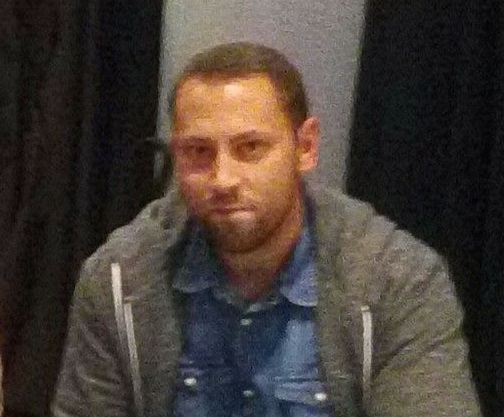
 The Domains of the Emperor Owl
You must be logged in to post a comment.