
Creating a 3D character from its original text dossier implies going through a process of nailing the visuals of every aspect of the character. Thankfully, generative AI makes this relatively easy by helping you decide the specific details of a character’s look and style. Even more importantly, it gives you the A-shaped full-body views in the necessary angles, as well as the closeups of the face and minor details.
I thought that T-shaped characters remained the norm for 3D modeling, but deep research brought up that apparently A shape helps reduce animation issues in the arm and torso area.
You start with the full-body angles.
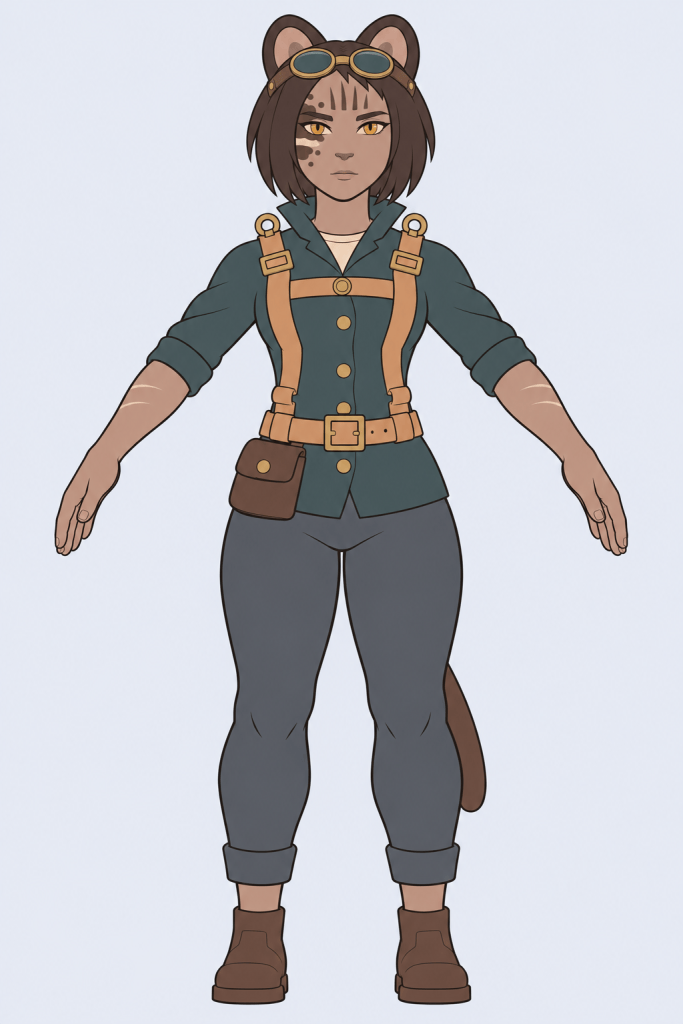
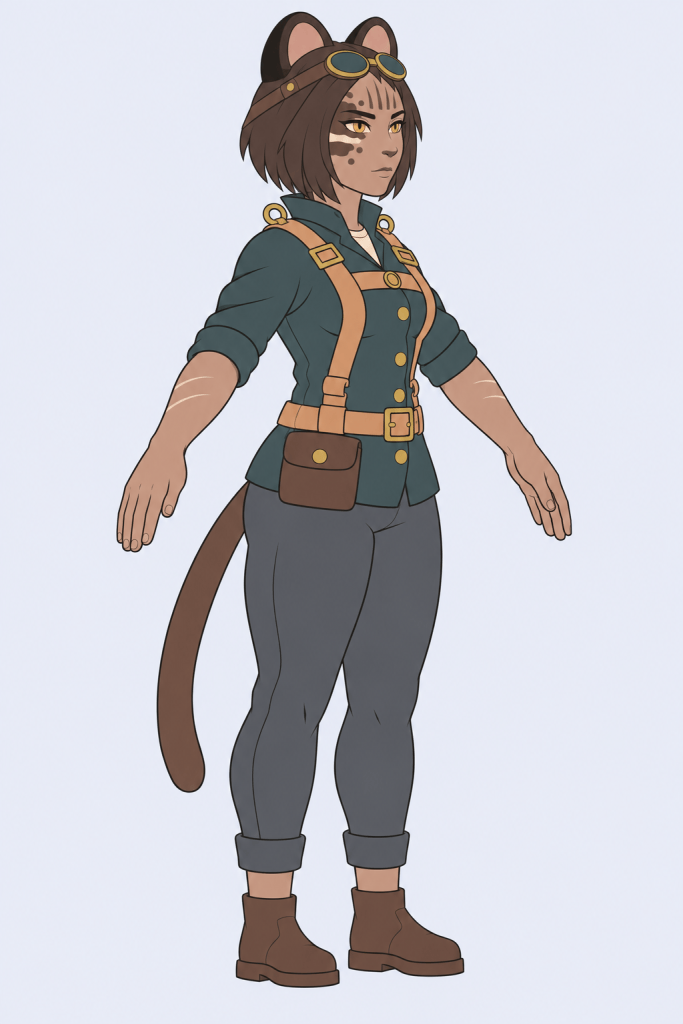
I’m also getting left, right, and back views, but I won’t post them all because they are still more than one MB a piece.
You progress to the neutral face closeups. The full-body view doesn’t give you as much detail of the head as you’d need. Your code should be able to stitch together the close-up head to the neck points it has determined from the full-body views.
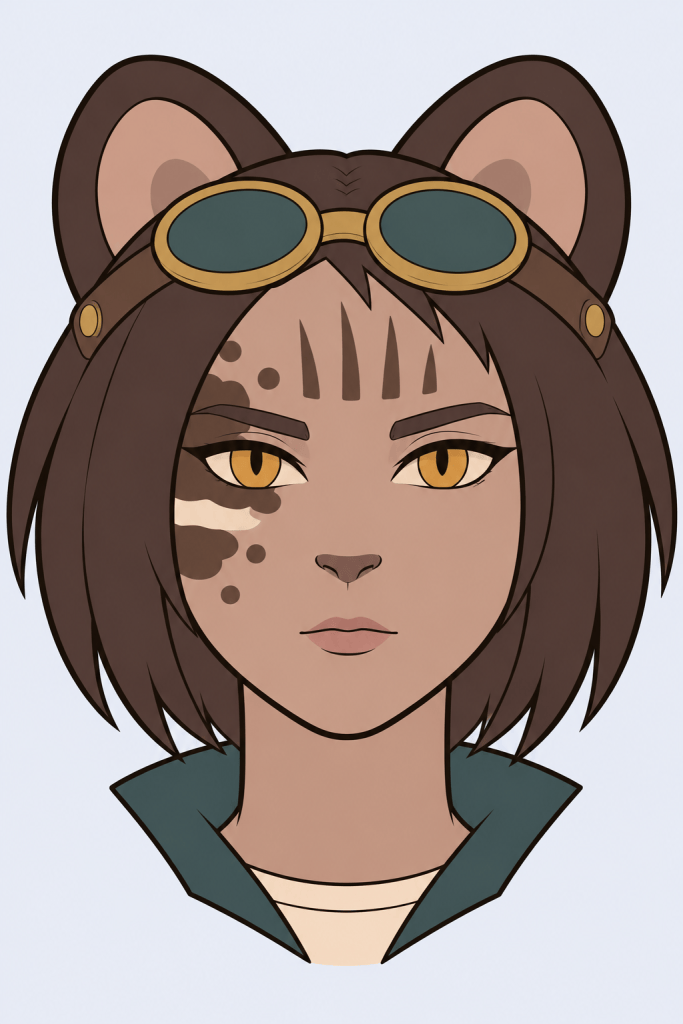
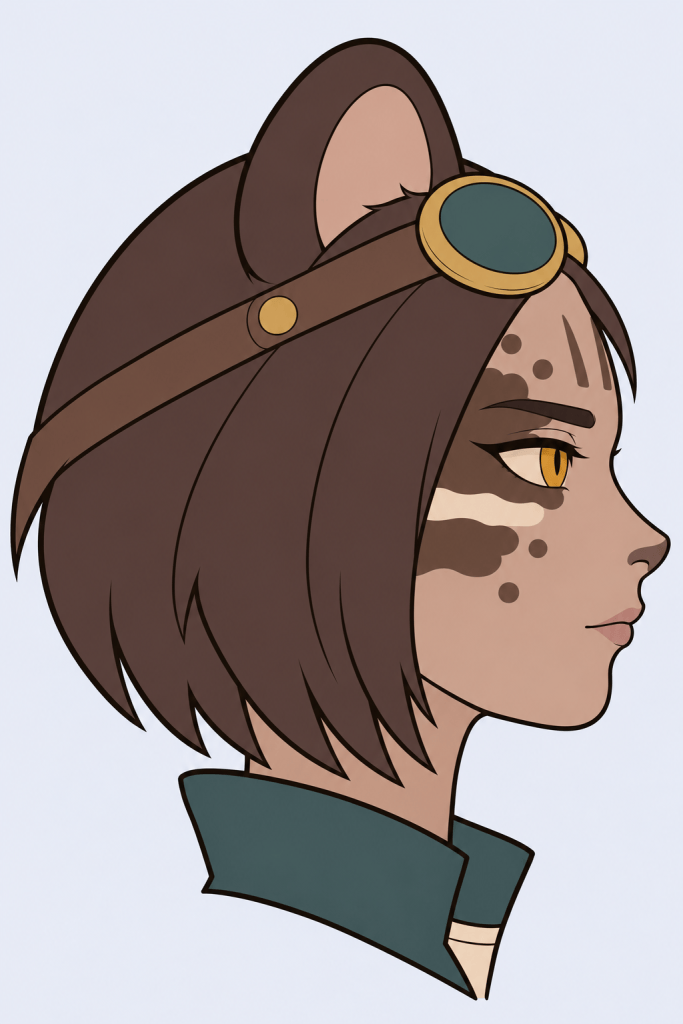
If you’re serious about facial animation, and if you’re making 3D characters you may as well be, you better get a good amount of facial expressions that fit the character. They’ll be the end points for the animations. The code will usually blend the expressions to various degrees, for example somewhat surprised with mild disgust.
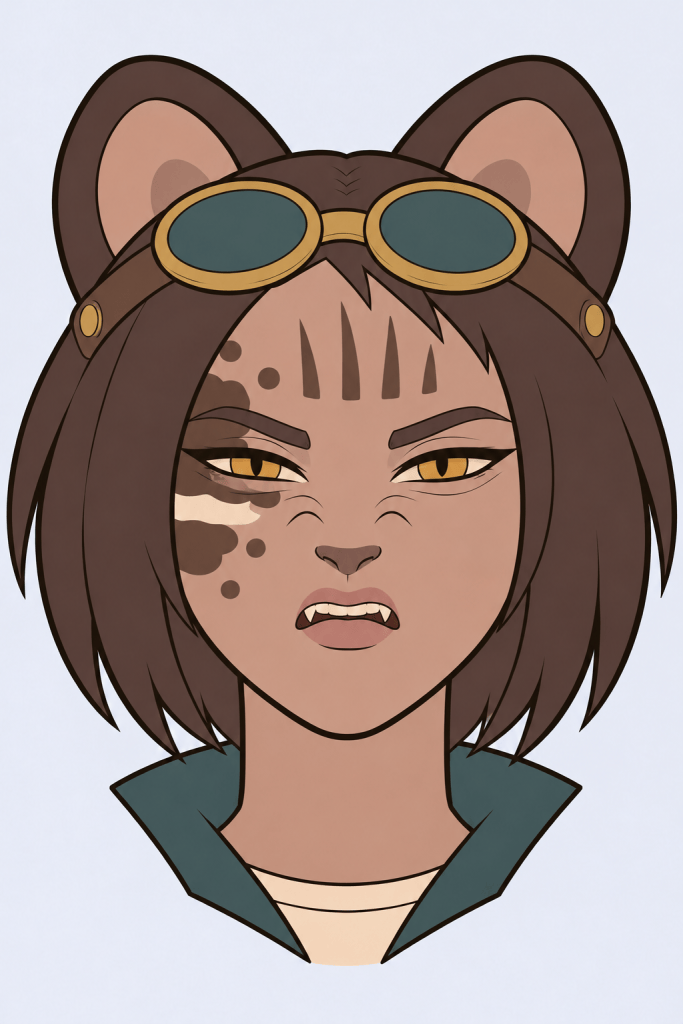
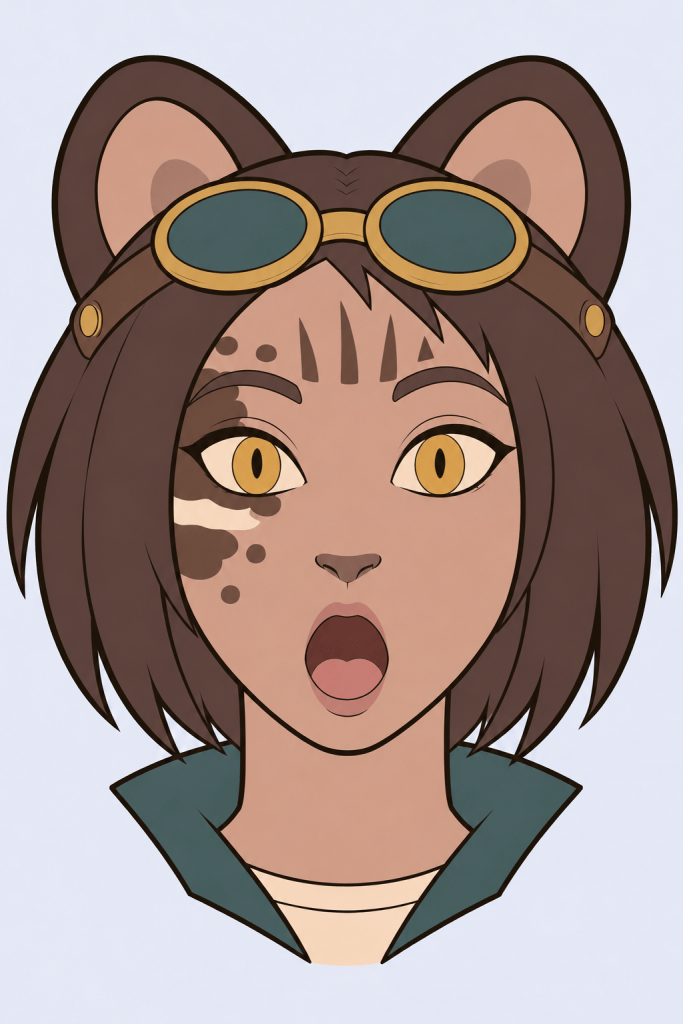
You also need to get the mouth shapes that will match phonemes, for lip-syncing.
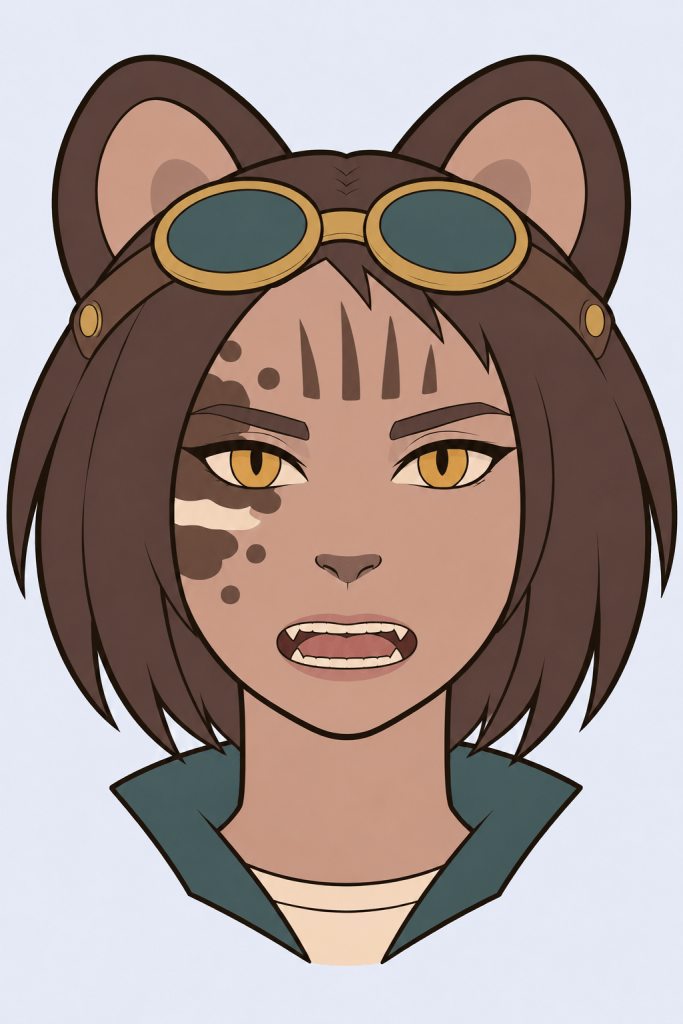
This is Saffi’s “ee” face.
I’m now browsing through the conflicting data points gathered from the many views, and once everything is settled, the code will build Saffi’s 3D model, then an AI agent will draw and paint her texture as appropriate. If this workflow works, I’m basically set up regarding 3D character creation for life. Or until AI ceases being accessible, I guess.

