Life update (12/27/2022)

I haven’t been doing well recently. My writing is progressing at a glacial pace because I’m having a hard time focusing on anything. I haven’t recovered psychologically, and perhaps even physically, from my latest episode of arrhythmia; psychologically I’m dispirited, burned out, unable and unwilling to look at people in the eye, getting annoyed by everything and everyone, and generally paranoid towards humans. Physically I’m getting weird electrical/stabbing pains in my upper torso, pains that sometimes reach my hands, and that cause involuntary muscle contractions. I feel like I can’t breathe as freely as earlier, but I don’t know to what extent I’m just paranoid about the possible damage to my body that the arrhythmia may have caused. I’m struggling with a brain fog that may be due to the medication I take for a pituitary tumor, as well as due to stress, anxiety, and depression. All that is on top of the random palpitations I’ve gotten almost daily since I received a certain “boost” last year.

In general I feel like my heart is going to fail me at any moment, and that I have no justification to spend my time in any way other than writing (the only stuff that provides meaning to my life), because my life expectancy has been shortened (quick google: atrial fibrillation raises your risk for problems like a heart attack, stroke, and heart failure). Instead of that, I’m writing this entry from the office, partly to avoid facing my responsibilities.

This afternoon (I’m on that shift until ten at night) I sat down at my workstation and read an e-mail from my boss: someone important from general management had complained that a spare PDA involved in blood transfusion safety has broken. Our company no longer works with those suppliers, so my boss told me to bring them a 10-inch tablet instead. He left me the tablet, but turns out it hasn’t been configured. I have never been in charge of configuring these devices; I likely lack the credentials to register them in whatever internal system they had set up for that purpose. Hell, I don’t even have a spare USB-C charger to give them along with the tablet, because I have no clue how that inventory is handled. The person who usually does this shit is on holiday. I’m never on holiday because I haven’t had a stable job in my thirty-seven years of living, partly because I’m fifty-two percent disabled according to our government, partly because I can’t give a shit about anything other than my obsessions.

So as someone who is locked almost daily (and for years) in the mental state that Albert Camus summarized perfectly as, “Should I kill myself, or have a cup of coffee?”, I have to go through the absurd, let’s say Sisyphean, task of trying to configure this tablet from zero just to figure out if I can, then email my boss to ask if I should even bring general management the tablet when we can’t provide them a USB-C charger for it. In my current psychological state, I can barely handle buying groceries.

On top of that, I have to study for a public exam that takes place on the 14th of next month. Today I found out that some bullshit political stuff going on has resulted in them setting up a second exam for next year.

I’m exhausted of everyone and everything. I want to quit it all and move somewhere where I could spend days, weeks, or even months without being forced to stare at a human face, let alone interact with any member of the species. Instead of that, the moment I post this entry, I’ll have to figure out how to do someone else’s job just because he’s on holiday.

Let’s pretend that this entry ends with an infinite chain solely consisting of the word “fuck.”

Review: Boku-tachi ga Yarimashita, by Muneyuki Kaneshiro

Four stars.

The title of this manga series translates to “We Did It.” It follows a group of three hapless highschoolers who happen to attend a high school right across the one that houses the worst youth gang in town. Students from the first high school are routinely tormented by thugs, but weak as they are, they have no choice but to stew in their rage and frustration.

These highschoolers are forced for whatever reason to spend most of their afternoons doing after-school activities, which in their case translates to playing around in a shipping-container-like space on the roof. They are always joined by a graduated older student that although he has been warned by teachers to stay away from the school, he doesn’t have anything else going on. Because he happens to be rich thanks to his absent father, and eager to buy friendships through spending that money, the main trio of highschoolers enjoy fucking around doing more or less expensive activities that this paisen (how they call him; a looser way of saying senpai) bankrolls.

One afternoon, as the protagonist and one of his friends are leaving the school, his pal (who ends up becoming the most obnoxious character in the story), shouts at the thugs gathered outside the opposite high school that they should all die. This guy tried to make sure that he didn’t shout loud enough, but unfortunately for every main character, some of the worst thugs were hanging out close by, behind the duo.

Later, these gang members attempt to kidnap the protagonist for being associated with his friend, but he gets saved by his romantic interest. The thugs do manage to kidnap the guy who wished them to die. They bring him to their hideout, and force him under threat of torture to fight another hapless student they had kidnapped. In the end they beat the protagonist’s friend unconscious, then send him back to his friends in a cardboard box.

The main group, including the rich graduated guy who buys their friendship, is infuriated. But the rich guy has a plan to get back at the high school across the street and its delinquent students: he has procured some explosives that are bound to give them a good scare. At night, clad in animal masks, they break into the opposite school and plant the explosives.

On the next school day, the main group gathers on the roof as they set up the detonators. The thugs that assailed them, as well as a couple hundred of other students, are present as our guys cheerfully blow up the explosives.

Turns out that detonating explosives in a school has concerning consequences for our main characters: one of the explosives blows up the propane tanks, and they witness how ten students or so burn to death. Others are injured to extents that will ruin their lives.

Their stunt got recorded. Some of their teachers and people in their life suspect them. They point fingers their way. The leader of those thugs survived despite his injuries, and is looking to murder the main guys. After their graduated benefactor gets arrested and charged with mass murder, the trio of high schoolers decides to flee. What follows is an anxiety-inducing tale in which the main trio’s friendship will get tested, and they’ll learn to navigate a hostile world that will force them to make some troublesome concessions to survive.

It’s a well-plotted story with plenty of twists and turns, and that in general reminded me of Dostoevsky’s Crime and Punishment: the four characters involved are eaten up to different extents by guilt due to the crime they committed. The protagonist wonders if he has any right to be happy when he was responsible for ruining so many people’s lives. A moment summarizes this grim manga for me: when a person stalks the protagonist to murder him, the protagonist is overjoyed that someone is about to free him from the guilt and the regret; he gets on his knees, rips open his shirt, and begs the would-be murderer to stab his heart. The would-be murdered gets freaked out and runs away.

My favorite character ended up being the rich older guy. He’s the ugly sort without prospects other than being rich because his absent father keeps sending him money. One of the most interesting sequences of the story involved this guy trying to track down his father to figure out if the old man loved him, with devastating results for his sanity.

Most of the first act of this story annoyed me. The author was trying to set up the main group as carefree, spending their time in silly activities that pictured them as empty-headed idiots. It was mostly done to sell as believable that they wouldn’t contemplate the consequences of planting explosives in a high school, but until then they annoyed me enough that I considered dropping the story. However, it became a compelling tale worth the effort.

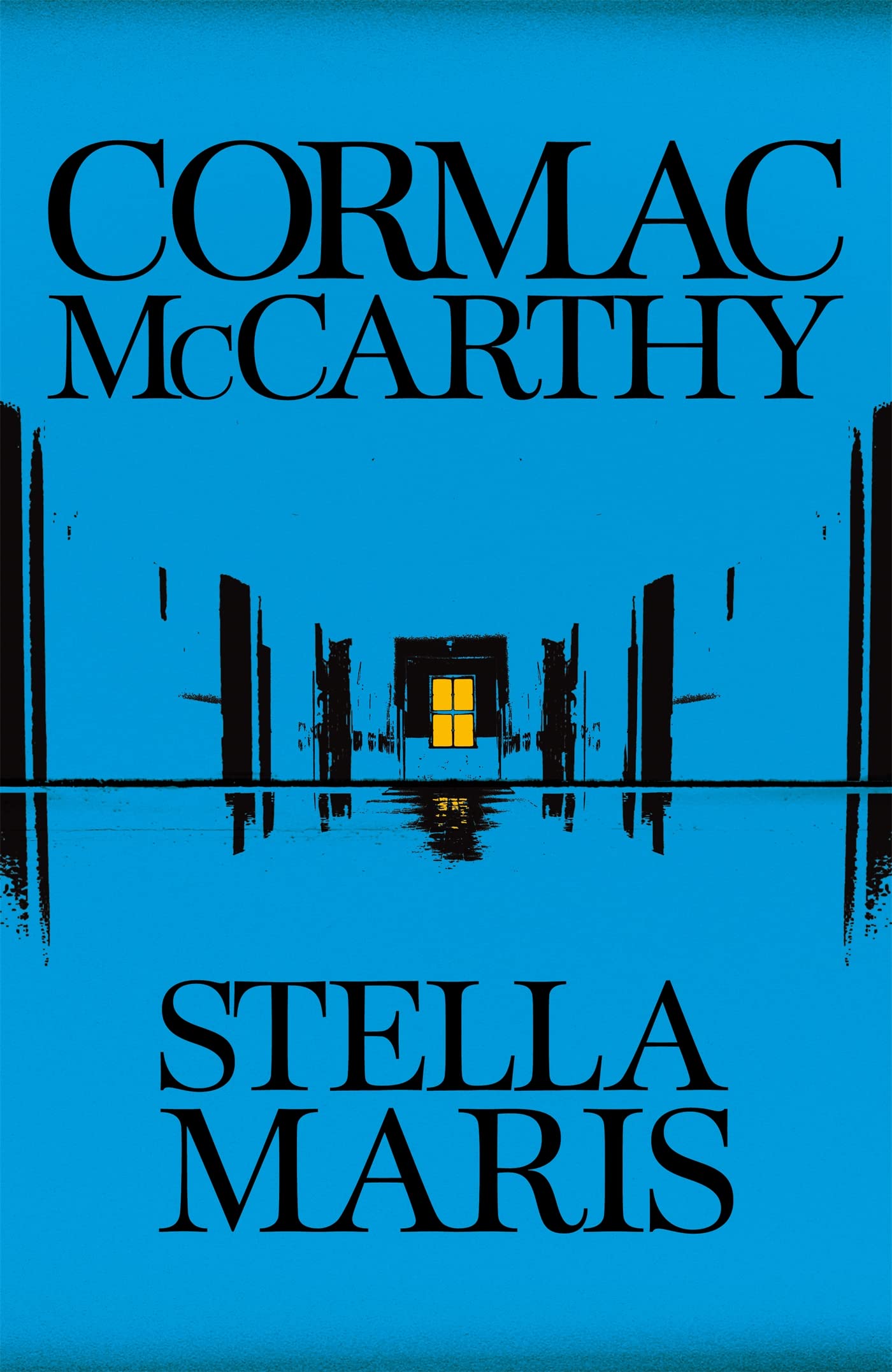
Review: Stella Maris, by Cormac McCarthy

Four and a half stars.

This book is the companion piece to McCarthy’s latest (and likely last) novel The Passenger (link goes to the review I wrote of it). Stella Maris consists entirely of fictional transcripts of therapy sessions set somewhere in Wisconsin during the early seventies. No narrative prose of any kind.

According to the ratings, most people, including me, seem to have found this book more compelling than The Passenger, and it’s mainly due to the patient involved: Alicia, the fabled sister of the other book’s protagonist; in that narrative, his sister has been dead for about ten years. Alicia is extremely intelligent, a synesthete, a math genius. Since puberty, she has been receiving the visits of strange people that may or may not exist. She has been diagnosed with schizophrenia and autism by different psychiatrists. She’s hopelessly in love with her brother, who during the period recorded in this book is considered brain dead as he lies in a coma after a car crash. Alicia also wishes she had never been born and is currently planning to kill herself, a fact that her therapist suspects but didn’t manage to prevent.

In my review of The Passenger, I blasted Alicia’s brother, named Bobby, for gallivanting around the world instead of being there for her unique, hopelessly vulnerable sister who loved him. I have no clue how I missed in that other book that he had ended up in a coma; if Alicia hadn’t considered him brain dead, as the Italian doctors who tended to him assured her, she wouldn’t have returned to the States and committed herself to a sanitarium, from which she wandered into the cold of the woods to die. However, Bobby did decide to spend his inheritance on a Formula One car, which he eventually crashed. So Alicia’s fate is still mostly on you, buddy.

Alicia is one of those people who are born too different, too strange, and intelligent enough to know it. She never belonged anywhere. She worked tirelessly to make it as a mathematician, but although she managed to attend college as a teen, she never presented her thesis: her probing of the fringes of mathematics had led her to question the discipline itself. Her mind forced her to contemplate the limits of reality on a daily basis, and she was tormented by the lack of answers.

Despite her clichéd name and a couple of points she made that I found dubious (I won’t specify, because I don’t want people to annoy me about them), I found Alicia enthralling. She was the first fictional character in a long time with whom I would love to talk on a regular basis, and whose death hurts for real. There’s a part in which she describes that after returning from Italy she travelled to Lake Tahoe with the intention of rowing away from the shore, attaching a weight to herself and sinking to the depths. Her mind-simulation of how that would play out made me physically ill not only because of the extreme detail, but because I wanted her to keep living.

I don’t know if I would recommend such a book to anyone; I suspect that McCarthy wrote these therapy sessions as character work to understand such a complex character, but that he eventually realized he had achieved something important, so he polished it for publication. In any case, if you are the right person for this book, its blurb alone should convince you to read it.

Here are the quotes I highlighted:

The world has created no living thing that it does not intend to destroy.

Nobody comes with names. You give them names so that you can find them in the dark.

That there is little joy in the world is not just a view of things. Every benevolence is suspect. You finally figure out that the world does not have you in mind. It never did.

We’re here on a need-to-know basis. There is no machinery in evolution for informing us of the existence of phenomena that do not affect our survival. What is here that we dont know about we dont know about.

If a psychosis was just some synapses misfiring why wouldnt you simply get static? But you dont. You get a carefully crafted and fairly articulate world never seen before. Who’s doing this? Who is it who is running around hooking up the dangling wires in new and unusual ways. Why is he doing it? What is the algorithm he follows? Why do we suspect there is one?

Sites that have been host to extraordinary suffering will eventually be either burned to the ground or turned into temples.

The simplest undertaking is predicated upon a future that has no warrant.

People are interested in other people. But your unconscious is not. Or only as they might directly affect you. It’s been hired to do a very specific job. It never sleeps. It’s more faithful than God.

If you have a patient with a condition that’s not understood why not ascribe it to a disorder that is also not understood? Autism occurs in males more than it does in females. So does higher order mathematical intuition. We think: What is this about? Dont know. What is at the heart of it? Dont know. All I can tell you is that I like numbers. I like their shapes and their colors and their smells and the way they taste. And I dont like to take people’s word for things.

There’s data in the world available only to those who have reached a certain level of wretchedness. You dont know what’s down there if you havent been down there.

There seems to be a ceiling to well-being. My guess is that you can only be so happy. While there seems to be no floor to sorrow. Each deeper misery being a state heretofore unimagined. Each suggestive of worse to come.

Animals might whimper if they’re hungry or cold. But they dont start screaming. It’s a bad idea. The more noise you make the more likely you are to be eaten. If you’ve no way to escape you keep silent. If birds couldnt fly they wouldnt sing. When you’re defenseless you keep your opinions to yourself.

The rage of children seemed inexplicable other than as a breach of some deep and innate covenant having to do with how the world should be and wasnt.

Rage is only for what you believe can be fixed. All the rest is grief.

[The unconscious has] been on its own for a long time. Of course it has no access to the world except through your own sensorium. Otherwise it would just labor in the dark. Like your liver. For historical reasons it’s loath to speak to you. It prefers drama, metaphor, pictures. But it understands you very well. And it has no other cause save yours.

If the world itself is a horror then there is nothing to fix and the only thing you could be protected from would be the contemplation of it.

The void has no stake in the world’s continuing existence. It’s home as well to countless millions of meteorites. Some of them enormous. Trundling across the blackness at forty miles a second. I think if there were anything to care it would have cared by now.

Leonardo cant be explained. Or Newton, or Shakespeare. Or endless others. Well. Probably not endless. But at least we know their names. But unless you’re willing to concede that God invented the violin there is a figure who will never be known. A small man who went with his son into the stunted forests of the little iceage of fifteenth century Italy and sawed and split the maple trees and put the flitches to dry for seven years and then stood in the slant light of his shop one morning and said a brief prayer of thanks to his creator and then–knowing this perfect thing–took up his tools and turned to its construction. Saying now we begin.

The dream wakes us to tell us to remember. Maybe there’s nothing to be done. Maybe the question is whether the terror is a warning about the world or about ourselves. The night world from which you are brought upright in your bed gasping and sweating. Are you waking from something you have seen or from something that you are?

What seems inconsequential to us by reason of usage is in fact the founding notion of civilization. Language, art, mathematics, everything. Ultimately the world itself and all in it.

[My brother and I,] We were like the last on earth. We could choose to join the beliefs and practices of the millions of dead beneath our feet or we could begin again. Did he really have to think about it? Why should I have no one? Why should he? I told him that I’d no way even to know if there was justice in my heart if I had no one to love and love me. You cannot credit yourself with a truth that has no resonance. Where is the reflection of your worth? And who will speak for you when you are dead?

Those who choose a love that can never be fulfilled will be hounded by a rage that can never be extinguished.

What is the inner life of an eidolon? Do his thoughts and his questions originate with him? Do mine with me? Is he my creature? Am I his? I saw how he made do with his paddles and that he was ashamed for me to see. His turn of speech, his endless pacing. Was that my work? I’ve no such talent. I cant answer your questions. The tradition of trolls or demons standing sentinel against inquiry must be as old as language. Still, maybe a friend must be someone you can touch. I dont know. I no longer have an opinion about reality. I used to. Now I dont. The first rule of the world is that everything vanishes forever. To the extent that you refuse to accept that then you are living in a fantasy.

Sometimes in the winter in the dark I’d wake and everything that smacked of dread would have lifted up and stolen away in the night and I would just be lying there with the snow blowing against the glass. I’d think that maybe I should turn on the lamp but then I’d just lie there and listen to the quiet. The wind in the quiet. There are times now when I see those patients in their soiled nightshirts lying on gurneys in the hallway with their faces to the wall that I ask myself what humanity means. I would ask does it include me.

The arrival of language was like the invasion of a parasitic system. Co-opting those areas of the brain that were the least dedicated. The most susceptible to appropriation.

The unconscious system of guidance is millions of years old, speech less than a hundred thousand. The brain had no idea any of this was coming. The unconscious must have had to do all sorts of scrambling around to accommodate a system that proved perfectly relentless. Not only it is comparable to a parasitic invasion, it’s not comparable to anything else.

There were times I’d see [my brother] looking at me and I would leave the room crying. I knew that I’d never be loved like that again. I just thought that we would always be together. I know you think I should have seen that as more aberrant than I did, but my life is not like yours. My hour. My day. I used to dream about our first time together. I do yet. I wanted to be revered. I wanted to be entered like a cathedral.

It’s certainly possible that the imaginary is best. Like a painting of some idyllic landscape. The place you would most like to be. That you never will.

Life update (12/21/2022)

I have returned to work after it took me a week and a half to recover from my latest episode of atrial fibrillation, which somehow made it difficult for me to breathe. I’m writing this at the office. I’m not well: I remain very tired, I’m dealing with a pretty overwhelming mind-fog, and I feel that at any moment, as if as switch had been flipped, I’ll suffer heart problems again. It’s just a matter of when. I’m probably in shock to whatever extent.

I have yet to start ordering my notes for the next chapter of my novel. The notes alone are 3,100 words long, which is bad enough: it’s taking me a week and a half to write two thousand words-long chapters due to the obsessively fastidious way I work. I haven’t touched the notes at all in the last couple of days, and I’m already feeling the psychological effects of wandering away from writing for about 48 hours; writing for me is psychological masturbation, necessary to release the build-up of tension and general insanity due to the way my fucked up neurological make-up works, and if I don’t release that tension daily to a certain extent, I feel like I’m rolling down the slope of despair towards obliteration. I’m an unhinged human being, barely able to keep it together on a day-to-day basis, unable to hold down any kind of complex relationship with any person, because I can barely deal with myself.

I spent plenty of hours yesterday, to distract myself from the general panic of knowing that I had to return to work today, playing Morrowind, a twenty-year-old game that remains the best Bethesda-y game (I don’t know what else to call the MorrowindSkyrim and Bethesda’s Fallout games’ genre) that has been made. The video game industry is in decline in general because of the same reasons that the movie industry is: they have become dominated by morons that are more interested in cult behavior than in creating good things. We can’t expect the next GTA to be good (the people responsible for those great titles, as well as Red Dead Redemption 2, have left the company), and Bethesda itself has a lot to prove with Starfield after their disastrous Fallout 76.

Anyway, an amazing team of modders have been working hard these last few years developing an engine from scratch that runs Morrowind using Bethesda’s assets. It’s called OpenMW. They have improved the original game in many ways, supporting “modern” capabilities such as normal mapping, shaders, etc., not to mention that the game is far more stable now. And fortunately they are now working in a way of de-hardcoding the original sound effects so modders can replace them with sensible ones. Here’s a video of the current state of their project:

I gathered about 400 mods for the game, following a Total Overhaul guide, and two days ago I started playing the game from zero. I used to love the game as a teen, although I understood little of it (I understood very little of anything as a teen, as I existed in a semi-constant state of psychosis); I only remembered hanging out in Seyda Neen, walking around Balmora, and getting pestered by cliff racers.

For one, cliff racers no longer assault you as if they were suffering from late-stage rabies; the mods have made it so that animals are trying to survive instead of attacking you for no reason. Through the experiences I had in the game during the hours I played these last couple of days, I got reminded of how much fun it can be to escape reality through one of these all-encompassing RPGs.

I played as Leire, the protagonist of my current novel; I pictured her getting sent to a fantasy world through some sort of isekai situation. Made her a mage with reality-altering abilities through Mysticism and Alteration, and enough skill to bonk people over the head with staves (a huge deal in Morrowind; your chance of hitting enemies in that game depends on your skill and how fatigued you are. It doesn’t matter if the 3D model of your weapon is passing through your enemy).

Anyway, the most interesting chain of events so far was exploring the outskirts of Seyda Neen and coming across a shipyard, where a shady Dunmer called me out from his hiding place and tried to convince me to drive the shipyard’s guard away so the Dunmer could threaten the owner of the place into selling it to a pawn of House Hlaalu. Typical Dunmer anti-occupation stuff; plenty of them are very rabid against Imperials. The Dunmer gave me a couple of scrolls that would make the guard invisible, silent, and pliable enough that he would follow me out of his post.

I was playing as a Breton, I’m generally on the Imperials’ side, and I dislike gray-skinned people, so instead of obeying the Dunmer, I talked with the owner, who hired me to guard the place. I told the other guard that I had seen a shady individual on the other side of the shipyard. When we walked over there, the Dunmer killed the guard, and I found myself having to flee from the guy while he kept calling me a racial slur. Fortunately I had come across a ring that shoots lightning; after about ten minutes of taking potshots at the Dunmer, he finally fell dead. I looted a nice glass dagger from him, and then I disposed of his body. The owner of the shipyard fired me because he no longer needed a guard.

My travels led me to Balmora. After I met a bare-chested skooma addict who enlisted me into his organization, I visited the nearby Imperial fort because some guy there was looking for me. Turns out they were having trouble rooting out corruption in the city because a local gang, called the Camonna Tong, were bribing the local governor to pardon all kinds of crimes. I visited the hangout of this gang to talk to them and figure out if they were that bad; they were very open about the fact that they intended to murder every foreigner in their sleep the moment the local Imperial governance seemed weak enough.

The Imperial officer wanted me to murder five of these gang members. A very tough job for an early-level character, made more difficult because those gang members never leave their hideout. But turns out that the Dunmer from the aforementioned shipyard-related misadventure never took back his scrolls. I used them to render a couple of those gang members silent, invisible and pliable. One by one, I drove them to the outskirts of Balmora, and on the deserted stretch of road between the city and Fort Moonmoth, a conjured ancestor ghost and I fought the two gang members to their demise. Don’t know how I’ll deal with the remaining three, though, now that I’m out of date-rape scrolls. I’ll probably have to figure out who can teach me the Command spell, then I’ll visit the local Mages Guild quarter to create three semi-equivalent scrolls.

Anyway, this afternoon after work I’ll focus on writing. It’s better to use unproductive stuff such as gaming as a reward for hard work, which is what I’ll do tonight for an hour and a half or so.

We’re Fucked, Pt. 82 (Fiction)


A thunderous clap scatters my thoughts like a blacksmith’s hammer shattering a sheet of glass. Blasts of wind are assaulting the windows while the rain pours in gusts, splashing against the windowpanes in a constant pitter-patter. The fat drops coalesce into crystalline veins that zig-zag downwards, then unravel.

My labored breath mingles with the thunderstorm booming outside. I forgot to bring an umbrella, didn’t I? When this morning I stepped onto the balcony of Jacqueline’s apartment to inhale crisp air, the bluish-gray sky promised rain, yet I failed to prepare myself. As I wonder if that moldy spare remains in the umbrella stand of the office, a more pressing concern wipes my mind clean: I’m clutching a revolver, and the opposite wall has been colonized by a viscous blob from some hellish dimension.

I grip the revolver with both hands, then I whip it towards the conglomerate of necrotic matter. I creep closer to the intruder; among all people, I may miss a shot against a wall-wide entity. I rest my forefinger on the trigger. With my thumb on the hammer, I pull back slowly until the sear bumps past the lock, and the hammer stays at full cock. I hold the muzzle level, taking aim.

An arc of blinding incandescence must have cut through the darkness of the night like an axe cleaving the heavenly flesh, because a strobing blue-white flash illuminates, as if to probe those dark depths, the oleaginous surface of the mammoth mass of putrefied gunk, whose texture shifts from squidgy to bumpy to warty as it heaves and pulses with life. While that gargantuan plague boil bulges from the wall, it oozes with lumps of moist tissues that smear the paintwork, leaving in their wake slimy black streaks and a slick coating of filth. From the underside of the intruder, gooey tongues drape down like viscera oozing out of an unflushed drainpipe, or like clusters of conjoined caterpillars seeking escape from a boiling ball of pitch, and the foul goop spills and flops onto the carpet, pooling into bulbous puddles.

A tremor races through my spine and neck, and lodges itself deep in my jaw. I imagine a projectile hurtling towards that abominable hulk and punching through its tenebrous, rippling mass, which bursts like a water balloon, launching a wave of rotting gunk that splats onto the carpet and office furniture. But I’m holding a revolver that was designed for shooting at saps and outlaws, not at a mass of decay that defies comprehension. What would unleashing a barrage of bullets achieve, apart from alerting the humans in this part of the realm that the end is nigh? Wouldn’t the bullets vanish into the viscous quagmire, wouldn’t the holes caulk themselves closed? I may as well try to obliterate a cancerous tumor by pricking it with needles. Spike should have lent me a flamethrower, or a few bricks of C-4. To be fair, if that old coot had dropped as loot a bag of useful devices such as high-voltage tasers, tranquilizing darts and grenades, I may have used them as props for erotic games that would end up in fierce orgasmic contortions.

The stuffy atmosphere of the office gets disturbed with noises radiating from the invaded wall: slurps and gurgles. My grip tightens around the wooden handle of my revolver. Bubbles are rising up laboriously to the gloopy surface of the malignant tumor, as if they had to pass through a folded intestine. The sight makes my stomach heave like I were traversing a slimy oyster bed or having my face rubbed against the grimy side of a rotten fish.

The wobbling bubbles, lumpy globs of decay sloshing around like minced meatballs in a simmering pot, bump into each other and merge, cluster or sink back into the sludgy substance while it burbles, seethes and spasms like a tangle of throbbing arteries and veins under pressure from injected emboli. As the pulsating rhythm of the morbid leviathan increases, sending roiling undulations racing along its bulk, the sickly, necrotic-sounding squelches grow louder in a fleshy flapping of dead matter. A melon-sized bubble surfaces, inflates like a bladder and pops in a frothy geyser, spraying gouts of thick goo. The opened crater dangles with flaps of frayed slime, and resembles a mouth or a sphincter. Either one could suck me in.

A puff of noxious gas billows in my face and assails my nostrils as it scratches my skin with thousands of microscopic claws, aching to seep into my pores. Jolted by the stinging fumes, I suck deep into my lungs that thick darkness, a pungent effluvium, a dank and cloying fetor, acrid, fetid and caustic. It burns my throat like it had been scoured with sandpaper, and triggers an olfactory explosion of odious odors. As I stagger backwards and my arms tremble, lowering the revolver, my brain sticks labels to the elements of the chemical compound that has raided my lungs in an orgy of necrotic pollution: sour milk, moldy cheese, rancid lard, week-old fish, skunk spray, sweaty socks, car exhaust, burnt plastic, raw sewage, gangrenous rot. Still, it doesn’t reek nearly as putrid as my own gray matter, festering in the hollow of my skull as it breeds and spawns madness.

My eyes sting. My nose hurts from the assault on my olfactory nerves, and goes runny. Are my sinuses bleeding? When I breathe through my mouth, my tongue gets coated with the stench of the rotten sludge, and I gag as if a brine of fetal blood were flowing into my lungs. I cough out globules of phlegm while tears leap from my eyes. A gummy rope of mucus dribbles from my nasal passages and falls to the carpet like some slimy, greenish ectoplasm.

I picture the obscene and interdimensional blancmange, made of rotting flesh instead of cornmeal, collapsing upon itself and bursting forth a miasmic fog that would fill the office building and descend from this business park to the nearest block and thence to the streets. The fog would creep over the asphalt, roll over the tops of cars and buses, infiltrate homes through open windows and ventilation ducts. The poisonous vapors would reach the lungs of sleeping children, while their parents would stir from their slumber with a gaggle of hacking coughs, to find their hair and face covered with a layer of necrotic ooze, their noses clogged with black gunk.

I recall that one time in high school when some faceless goon passed me a bong and I inhaled its hash fumes. I was seized by an ecstatic epiphany: human beings are worms crawling on the ground of infinity, transient larvae with the lifespan of an afternoon, amnesic about our existences before birth, our only purpose to be fed with the detritus of dead matter by our parents until we reach adulthood and we can contribute in fertilizing some eggs. The universe is a necropolis where the corpses of stars lie heaped in untold billions.

My mind had been subjected to quantum decoherence, and its entanglement with the environment had broken down. My body glowed with phosphorescent sparks like a firefly. I received visions of flying hippies with long flowing hair, acid-soaked clothes, and golden wings. I watched as a city-sized asteroid plowed into the moon, rupturing it like a balloon filled with lead-colored paint. I observed as a swarm of mutant butterflies burst from my anus. I heard the screams of people being sucked through a whirlpool in space-time, like flies being drawn into a vacuum cleaner. A phallus-shaped monolith thrusted upward until its tapered tip got crushed against a ceiling, a mile above. I found myself as the only survivor of the wreckage of a nuclear submarine after a battle with a leviathan in an underwater trench; I swam upwards through radioactive water, and when I emerged from the ocean, I was pelted with decaying matter: a blistering rain of fat, guts, eyeballs, lungs and testicles was falling from the heavens in an apocalyptic deluge. A voice called out to me: “You are the one chosen to rise up from the grave and mend the cosmos.” The voice belonged to my mother, who was floating towards me in a wooden coffin. Hours later I woke up in a hospital room, stripped naked, shackled to a gurney, hooked up to drips and catheters, surrounded by nurses wearing surgical masks and scrubs. That night, as I lay in my bed at my parents’ apartment, a parade of spectral beings with pale gray skin and empty eye sockets filed out of a mirror, surrounded the bed, and began to sing a hymn. “Let’s all rejoice in the presence of the dead,” intoned the entities. As they swayed in the air, they shook with sobs and sniffles. They also sneezed, coughed, belched, gagged, farted, and cried out for a toilet. The phantasmal chorale was as grotesque as it was beautiful.

This time, as I stand on wobbly legs in the office, I resent such mind-bending, consciousness-altering effects. How does one treat a case of acute olfactory psychosis? I could try smelling a rose, an apple pie, a whiff of sea air, or the heady perfume of Jacqueline’s cleavage when she’s wearing a silky camisole. That makes my mouth water and my loins tingle with lust. I want to give myself over to mommy’s loving embrace and let her fondle my ass until I can function again.

The gooey sludge is gurgling, rippling and sloshing as if some half-digested prey were struggling to escape its clutches. Bladderlike bubbles come to the fore and burgeon, bulging out of that hideous growth as they bloom like blood clots, then pop with moist plops, spewing glistening gobs of slime, fringing the surface of the goop with tufts of cottony threads, and unleashing puffs of reeking air that spread countless germs throughout the office, viruses and bacteria that have fermented in that putrescent hulk.

My head is spinning with vertigo. Oversized tadpole heads are wriggling beneath the ooze, skirting its surface as if to reveal themselves before shimmying their way back into the tenebrous, seething mass. Their convulsive jitters churn the slime into miniature whirlpools. The frothy, bloated abomination, studded with plump, gas-filled sacks, jiggles with a slap of thunder.

That bloody blob is giving birth. Some infernal anathema is pushing out through the tarry pus like a kraken from its egg sac.

From the gelatinous mass protrudes a melon-sized spheroidal structure, crowning into the world. The film of black life-fluid that covers it slides off and reveals gleaming, pearl-white fibrous tissue. The spheroid wobbles about, then it spins until I discover, as the slime that constitutes the mother runs down the spheroid’s surface like breast milk out of a nipple, that on the side facing me now, behind a transparent layer, sewage-colored matter swirls in a ring-shaped membrane that encircles a pupil as wide as a golf ball, as black as a bottomless pit. An evil force dwells behind that opaque peephole.

A fucking eyeball. Two eyeballs. Three.

Half a dozen eyeballs roll in my direction and lock onto me. Their pupils constrict to project a chthonic glare like the focused beam of a searchlight.


Author’s note: today’s song is “Climbing up the Walls” by Radiohead.

I keep a playlist with all the songs I’ve mentioned so far throughout this novel. Ninety-two already. Check them out.

Some genius neural network rendered images inspired by the loathsome descriptions in this chapter. Link here.

Review: Yogen no Nayuta, by Tatsuki Fujimoto

Tatsuki Fujimoto, chainsaw dude and master of levitation, who got banned from Twitter recently for impersonating his little sister, has become my fourth horseman of the Apocalypse after Inio Asano (Oyasumi Punpun, Solanin), Shūzō Oshimi (The Flowers of Evil, Inside Mari, Happiness, Blood on the Tracks), and Minoru Furuya (Buko to Issho, Wanitokagegisu, Himizu, Ciguatera, Saltiness). I loved Fujimoto’s Chainsaw Man and I’m having a blast with the anime adaptation, but I don’t dare to get into his Fire Punch yet, so I’m going through his one-shots.

So yes, this Yogen no Nayuta is one of his short stories. In an alternate Earth where magic is real but not particularly powerful, some prophecy prophesized that a horned baby would be born and she would be the harbinger of the end of the world. This Nayuta girl is born with horns, which rip her mother apart on the way out. Her remaining family are aware of the prophecy. Her father gets killed shortly after for being responsible for this abomination, so only Nayuta’s brother remains to take care of her. Although her brother suspects that she may indeed bring forth the Apocalypse, because she keeps murdering animals for no apparent reason and her attempts at verbal communication are solely composed of ominous words, he’s her big brother, damn it, so he’ll take care of his precious imouto.

If this one-shot is making any point at all, it may be that even if you were born to bring forth the Apocalypse, as long as someone loves you enough, perhaps you’ll be able to channel your homicidal instincts into some activities that don’t involve mass murder. I suppose that’s as good a point as any other.

Curiously, Fujimoto reused this Nayuta girl, but hornless, in Chainsaw Man, although I can’t say in which way because it would be a massive spoiler.

Four stars for this one.

Life update (12/14/2022)

I’m on medical leave due to an episode of arrhythmia I endured last Friday. Here are the two entries I wrote on the subject: first onesecond one. After my first episode of atrial fibrillation, that happened back in June, I recovered in about three or four days. Today is my fifth, and I feel much more diminished than after the first episode: I have a throbbing headache, my neck hurts, the whole left side of my upper torso aches (I have intermittent chest pains since a certain injection gave me heart issues, but after the latest arrhythmia, it has spread to my back).

I stayed at home for four days to rest and recover. Yesterday I called our secretary at work to give her an update, and she pointed out that I was having trouble breathing. Because I hadn’t been talking before, I hadn’t noticed it, but yes, I kept having to stop mid-sentence to inhale enough air to continue.

My worry now is that I may have suffered a heart attack in addition to the arrhythmia, or that the arrhythmia may have been a result of the heart attack. I keep thinking back to that moment when I felt a pressure inflating in the left side of my chest, only to trigger an arrhythmia the moment the pressure lessened. I’m supposed to wait for my cardiologist to contact me (I didn’t like nor trust the guy, and I’m not confident that he may call me) to write down the details of this episode and figure out if he’ll need to prescribe me some chronic medication. Apparently a riskier treatment involves opening an artery in my thigh, travelling all the way up to my heart with some tube-like apparatus and burning the inner surface of my ventricle. I’d rather leave that as a last resort.

An hour an a half ago I went outside to take a walk and figure out if my body can take that (I don’t have a car, and merely getting to work involves walking up through the center of my city to the train station, then from the train station in Donostia to a bus station, then through the hospital complex until I reach my office). I took the opportunity to read more of Cormac McCarthy’s Stella Maris, the much lazier companion to his latest (probably last) novel The Passenger .

Anyway, I could hardly handle a thirty minutes long walk: my head throbbed harder, my lungs didn’t want to cooperate, the back pain spread to my right side, and my body in general felt heavier and sluggish. Not only I’m unlikely to return to work until next week (I don’t know if they’ll want to prolong my contract another week; that’s a different matter), but my body doesn’t seem willing to heal at the moment.

Thankfully, the only thing that truly matters to me besides distractions and passing joys, writing, has continued, despite much slower. If I end up in a wheelchair due to this bullshit, I’ll be fine as long as my brain and my fingers work. If I suffer a stroke during one of these episodes of atrial fibrillation, though, that would likely end up as a very different matter.

As a summary: I don’t have to go to work, which is great, but I’m fucked otherwise, which is bad.

In completely different news, who else has been looking forward to a new episode of Chainsaw Man every week? Apparently making paint versions of the opening has become a new internet activity. Here’s a meme-filled entry. Also, why not, here’s the clip of last week’s glorious massacre (warning: gory and possibly spoilers). EDIT: they deleted the video. Just watch the ninth episode.

Life update (12/10/2022)

Yesterday I went through a second episode of atrial fibrillation (arrhythmia) due to a physical issue with my heart. Here’s the post I wrote about it. I’m still drugged from flecainide; I feel like I weigh two times as much, my entire body is sluggish, I’m having trouble coordinating my fingers to type, and there’s a wall in my mind that plenty of thoughts can’t get through. I intended to start writing the current scene of my novel today, but I haven’t been able to even finish organizing the notes for it.

I think I’m going to take a medical leave from work. I’ve had coworkers take a leave for sillier things than a heart issue; one of them was absent for a month and a half because she injured a finger. The more I think about my experience from yesterday, the darker it seems to me. I recall that feeling of a bubble-like pressure building up in my chest, then getting relieved as if letting the air out, and immediatly suffering an arrhythmia. I went through a 200 heart rate. That sounds like there’s some clog in my arteries or something, but I already had an echocardiogram done. Apart from that, I still feel an echo of the fact that yesterday I was fine with the notion that I may not survive to see another day. The world doesn’t feel the same for a few days; I’m sort of a veteran of that kind of bullshit.

Today I went to bed after lunch without any plan of when I was going to wake up. I woke up at about half past four, then fell asleep again. Woke up at a quarter past six.

I’ve been looking up nostalgic Japanese songs from the 90s, only because the song “Sobakasu” by Judy & Mary, a group from the 90s, started playing in my brain for no apparent reason. I doubt I had thought about that song even once in the last fifteen years. Here’s the energetic, 90s song. Those were such brighter times. I feel so bad for people who have only experienced this world from the 2000s onwards.

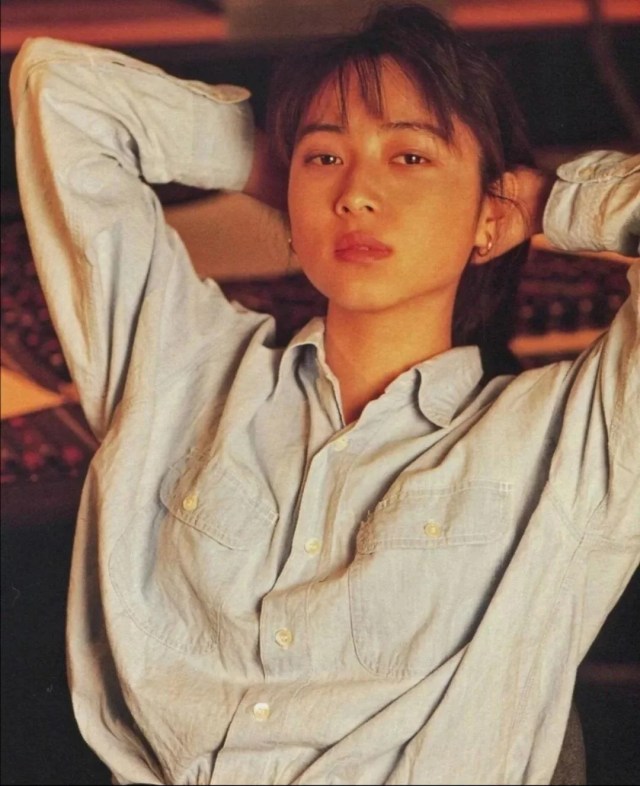
I wondered what other Japanese music from back then I could get into, and I learned about the pop singer Izumi Sakai, a beauty whose voice must have sounded everywhere in the 90s (and I recognized it although I have no idea from where).

Like some other Japanese artists, she attempted to separate herself from her works, and didn’t even go on tour until the end of her career, in the early 2000s. A couple of years later she got diagnosed with uterine fibroids, ovarian cysts and endometriosis. She went through chemo holed up in some hospital for about eleven months. A month after she was told that her cancer had spread to her lungs, they found her dead from a fall involving an emergency staircase. Here’s a Japan Times article about it.

I’m going end this day by playing some Dwarf Fortress. Good game.

Ended up in the hospital (as a patient), Pt. 2

At half past two in the afternoon of today, Friday, half an hour before my weekend started, I finished configuring a laptop to solve an issue at the warehouse of the operating rooms (I work at a hospital). As I was walking back to the office from the warehouse, I felt a hot snake crawling up my guts; a sensation different from the Irritable Bowel Syndrome that is one of the banes of my existence. When I sat at my desk, I felt a pressure in my chest like the beginning of a burp, or a bubble expanding. When the sensation of pressure subsided, my heart suddenly went haywire with the worst case of arrhythmia I’ve ever had, which I guess isn’t saying much because this is the second time my heart has betrayed me.

Back in June I posted an entry about the first time such a thing happened to me. I got diagnosed with atrial fibrillation, caused by a physical issue in my personal engine. Here’s the link to that entry. I bought a portable Wellue ECG Monitor, which allowed me to assuage my paranoia regarding how my heart was behaving on any given day. Today, as I realized that I was coming down with another arrhythmia, I relied on the ECG monitor, which showed me that I had a heart rate of about 200.

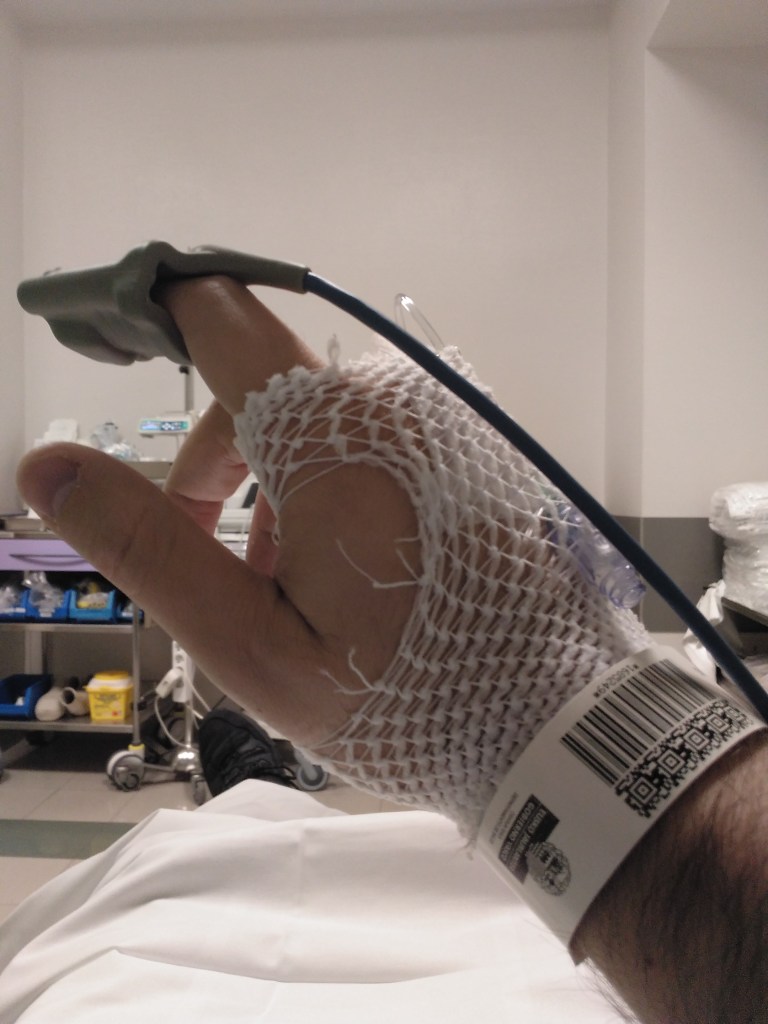
A kind coworker of mine, a woman who unfortunately shares her name with an ex of mine, accompanied me to the ER. They wheeled me to the Observation Unit, where I undressed, lay on a bed and allowed a bunch of nurses and a doctor to hook me up to a couple of monitors. The male nurse kept rubbing his crotch along my right arm; he may be partial to bearded, disheveled men who seem unhinged even before they open their mouths. Because the arrhythmia refused to let me be, they gave me a couple of pills of flecainide, 100 mgs less than what a different doctor prescribed the last time; the current doctor considered the previous dose too high. Flecainide is a drug with a black box label; apparently if you rely on it for chronic arrhythmia, it may give you a heart attack or possibly worse.

Here’s the photographic proof of this whole regrettable incident:

I have already forgotten plenty of details of this afternoon; I’m exhausted. However, as I was lying there waiting for the flecainide to take effect (when I closed my eyes, the light that slipped through my eyelids swirled from red to green to blue to pink and back to red), I thought to myself that maybe this was it: my heart is going to fail me worse and worse until one day I simply drop dead. Then again, so what? What I fear of dying is the agony. If this affliction killed me, what would I miss that truly matters? The only thing that has fulfilled me enough in the last few years has been writing, the single activity that has worked for me to cope with the general nightmare of existing as this creature I’m forced to be: a bundle of high-functioning autism, OCD, neglect, a body permanently wrecked by a pituitary tumor that didn’t get discovered until my mid-twenties, IBS, and so on. If I were dead, I wouldn’t need to cope with anything.

When my heart rate decreased, they wheeled me to the so-called Results Unit, where I was supposed to wait for the consequences of the drug they gave me. I waited there for about three hours. As I was monitoring my heart rate, which refused to calm itself, a guy in his mid-twenties kept infuriating the nurses by constantly muttering to himself, trying to get down from the bed although he couldn’t stand straight, and demanding to be guided to the bathroom, where the nurses would be forced to hold his dick as he pissed. The nurses wheeled him into the bathroom four times, and although they spent minutes with him inside, presumably holding his dick, he didn’t piss a single drop, a fact that they readily shared with the rest of the room. I personally would have loved to strangle that guy, if only because he was worsening my heart rate. He was clearly crazy, though; he seemed to be stuck in a mental loop.

What are the odds that just this morning (at the office) I wrote a review for McCarthy’s The Passenger (here’s the review, by the way), a story through which McCarthy contemplated his mortality, and that focused on a schizophrenic character, only to end up wasting my afternoon contemplating my own mortality and being forced to tolerate an insane guy who kept muttering to nobody? Who came up with this cosmic joke of a life? Because I ain’t laughing.

Anyway, four hours had passed but my arrhythmia persevered. The doctor seemed a bit worried. She decided that I would spend the night in the Observation Unit, and if my heart hadn’t returned to normal in the morning, they would consider nastier treatments. They shoved a stick down each of my nostrils to figure out if I’m also infected with covid, then they wheeled me back to the Results Unit. As I was waiting there, my heart returned to sinus rhythm as if a switch had been flipped. Who the fuck knows. My doctor told me to fuck off and go home, in nicer words.

So now I’m at home in my underwear, sitting at my desk and writing these words. The left side of my chest feels as if someone had punched me repeatedly. I don’t know what else to say in that regard.

I can’t properly explain the feeling I’ve been stuck with since last June, when my heart, an engine that is supposed to work tirelessly for the rest of my life, proved unreliable. At work, I no longer pursue any user when they don’t pick up the phone or answer the e-mails. When they fail to include necessary details in the tickets, which happens every day, instead of calling them, I write them an e-mail and shelve that task until they themselves show that they care enough about their own problems. I also avoid dealing with coworkers if they are the kind to annoy me or cause conflict to any extent, which has already resulted in a few ceasing to interact with me (it has been a blessing). In my spare time few things have changed, because I don’t have a social life and I haven’t lifted weights since spring. However, sometimes during masturbation, as my heart was going nuts with excitement, I wondered if I should take it easy. I’m unlikely to do so, though; I have very few things left that affect me positively.

Now what? Tomorrow, when I wake up at around ten in the morning, I’ll try to progress on the current chapter of my novel. In the afternoon I’ll go out and take a walk unless it rains too much. All I can do is hope that whenever I come down with the next episode of atrial fibrillation, it won’t catch me on the train, or sleeping (just in case I wake up to find out I have suffered a stroke due to an untreated arrhythmia). I’ll try to finish my current story before anything even worse happens.

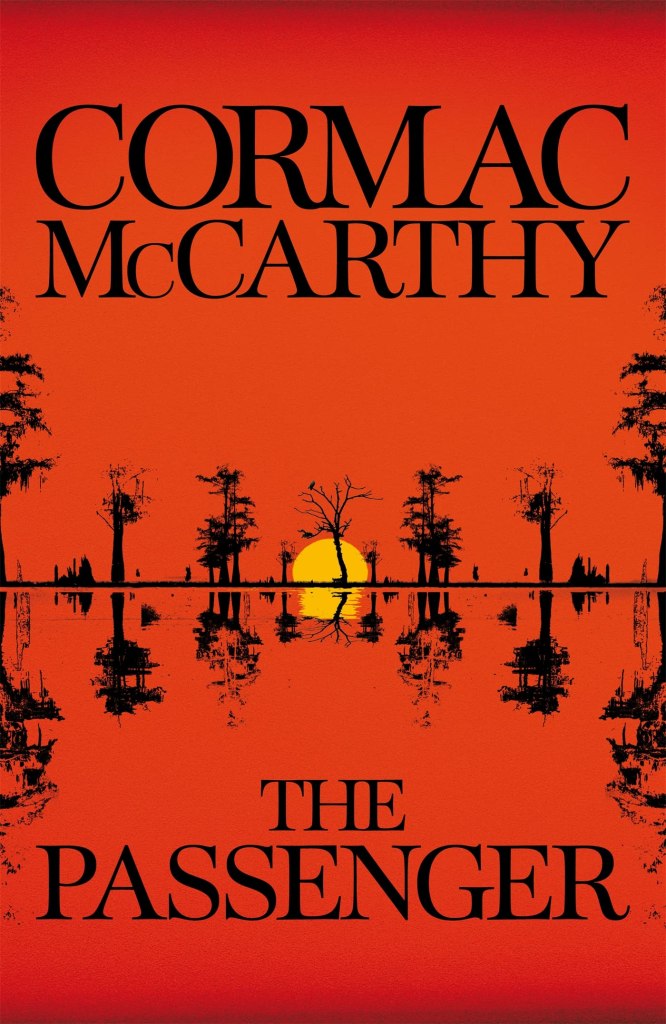
Review: The Passenger, by Cormac McCarthy

Four stars.

Cormac McCarthy is the old man who wrote No Country for Old Men. He also wrote some other stuff. His Blood Meridian remains the best written book that I have ever read, and in general I don’t think there is any writer that I have respected more than McCarthy.

This book I’m reviewing, as well as the accompanying novella Stella Maris (that I’ve yet to read), may be the last books that McCarthy will be able to finish; the guy is eighty-nine years old. And throughout this text I got the sense that this was an extremely lucid man, who knows that he’s not long for this world, musing about the fringes of human experience and of existence in general.

The book starts with the protagonist, who at that point is working as a salvage diver, becoming embroiled in a mystery, but that’s only an excuse to push the guy further towards the edge. We are presented with dialogues about seemingly disparate stuff such as the Vietnam war, the conspiracy that killed the Kennedys, quantum mechanics, schizophrenic hallucinations, the depths of bodies of water, life on an offshore platform, etc.; the extremes where darkness reigns, where our ability as human beings to come to terms with anything becomes muddy. And I’m guessing that McCarthy chose to delve into these topics because he’s about to face the greatest darkness himself. I don’t know if I’d prefer to be so lucid when/if I grow that old.

The story follows a man for whom life stopped ten years ago, when his little sister, the love of his life, killed herself. We find this out in the first few pages, if I recall correctly. The young woman, clichédly named Alicia, was a haunting beauty and the kind of anomaly that makes you feel a hole in the world when she’s gone, whether or not you were involved in an incestual relationship with her: besides being a striking beauty (and beauty disappearing from the world is always a tragedy), she was a math genius who, for example, was consulted by experts at thirteen because she could determine which violin designs would sound best. Unfortunately, at puberty she started receiving visits from penny-dreadful characters who insisted on bothering her. One of them, the most insistent one, had flippers for hands. The scenes that feature them were the most un-McCarthy stuff that I’ve ever read of his, who’s usually centered on matter-of-fact matters. Suffering such detachment from reality, knowing herself so different from everyone else, this Alicia girl eventually failed to put her tremendous talents to use. She ended up in a sanitarium, from where she decided to walk off to a watery death.

[The notion that this book featured the adventures of a peculiar, sort-of-schizophrenic woman who received the visits of bizarre entities that may or not be real (we are told that the psychiatric tests that usually pinpoint schizophrenia failed on her) was what attracted me to read this book when I have been in a string of DNF-ed novels; I’m currently writing a novel that features one such character.]

McCarthy did a great job cementing this Alicia as a mythical presence in the past of the narrative. You want more glimpses of her, and you mourn the loss of her peculiarities. Like the protagonist, you wish to retain her exact words and come to figure out how her mind worked. I guess that Stella Maris, which is focused on Alicia’s experiences in the sanitarium, will prolong that appeal. This character in general, and the protagonist’s mourning of her, made me wonder if McCarthy based the grief on a real person.

Anyway, our protagonist failed to protect his little sister, who had frequently stated that she wanted to disappear, that she would have preferred to never have existed, and that she was doomed to kill herself. After she drowned, the protagonist thinks and/or says in a variety of ways that life no longer has any meaning now that everything that he had loved in it is gone, and yet back then he found every excuse to go gallivanting around the globe instead of being tangled in the sheets with this hot little sister of his. Although the protagonist himself wonders why the hell he wasn’t there for her, it feels more like a plot hole to me.

I liked the protagonist, and in plenty of ways I understand him; he can’t figure out why he even bothers to keep going, yet he’s supposed to care about his present circumstances and the possible consequences to come, nevermind the world around him. You shouldn’t go into this novel expecting a compelling plot or even resolutions, because in general it’s a “why oh why does anything have to be.”

The most memorable secondary character of the many that come and go was a certain John Sheddan, an eloquent, debauched acquaintance of the protagonist that shows up as if we are supposed to know him. He was probably a self-insert for the author to speak directly to the protagonist as well as to us, someone whose talks we found interesting and we’d miss once he disappeared from the world.

Apart from the characters, how about the prose? Does it reach the heights of Blood Meridian? There are long stretches of extraordinary, carefully crafted prose, and that alone is worth the price of entry, but some scenes are sparse in that regard.

McCarthy refuses to use an apostrophe for “can’t,” “don’t” and the likes. I’m fine with that, and I wouldn’t mind if its use in such contractions disappeared officially. But I regard his refusal to use quotes for dialogue as a mistake; often you can’t tell not only who’s speaking, but even if what was written was supposed to have come out of someone’s mouth. I’m all for confusing the reader when the POV character is supposed to be confused, but I think that you shouldn’t confuse your readers unnecessarily.

EDIT: now that I’ve read the companion book Stella Maris (link goes to my review of it), I have realized that during the period when Alicia committed herself to a sanitarium and afterwards killed herself, the protagonist of this novel was in a coma after a car crash. I have no idea how I missed it in this narrative. So the protagonist, who had been eluding his sister’s amorous attentions for years because he hadn’t come to terms with his own love towards her, got into a car while her sister presumably attended the race, and after he woke up from a crash-induced coma, he found out that his sister had killed herself because she believed him to be brain dead. Even worse: Alicia suggests in Stella Maris that if her brother ever died, she would die as soon as possible to find him in the dark.

During the events depicted in The Passenger, its protagonist wanders through his life aimlessly, unable to care about the future or any consequences, because nothing matters anymore after his sister died. However, having read the companion book, I don’t know how he stopped himself from walking into traffic the moment he realized what had happened to her due to his own decisions.

Here are the quotes that I highlighted on my Kindle:

Beauty makes promises that beauty cant keep.

The truth is that everyone is under arrest. Or soon will be. They dont have to restrict your movements. They just have to know where you are.

A calamity can be erased by no amount of good. It can only be erased by a worse calamity.

I know that to be female is an older thing even than to be human. I want to be as old as I can be.

People will go to strange lengths to avoid the suffering they have coming.

You think that when there’s somethin that’s got you snakebit you can just walk off and forget it. The truth is it aint even following you. It’s waitin for you. It always will be.

We might have very different notions about the nature of the oncoming night. But as darkness descends does it matter?

The world will take your life. But above all and lastly the world does not know that you are here. You think that you understand this. But you dont. Not in your heart you dont. If you did you would be terrified.

You’re a pack of mudheaded bigots who loathe excellence on principle and though one might cordially wish you all in hell still you wont go.

Real trouble doesnt begin in a society until boredom has become its most general feature. Boredom will drive even quietminded people down paths they’d never imagined.

The horrors of the past lose their edge, and in the doing they blind us to a world careening toward a darkness beyond the bitterest speculation. It’s sure to be interesting. When the onset of universal night is finally acknowledged as irreversible even the coldest cynic will be astonished at the celerity with which every rule and stricture shoring up this creaking edifice is abandoned and every aberrancy embraced. It should be quite a spectacle. However brief.

You have to believe that there is good in the world. I’m goin to say that you have to believe that the work of your hands will bring it into your life. You may be wrong, but if you dont believe that then you will not have a life.

In the spring of the year birds began to arrive on the beach from across the gulf. Weary passerines. Vireos. Kingbirds and grosbeaks. Too exhausted to move. You could pick them up out of the sand and hold them trembling in your palm. Their small hearts beating and their eyes shuttering. He walked the beach with his flashlight the whole of the night to fend away predators and toward the dawn he slept with them in the sand. That none disturb these passengers.

If imaginary beings die an imaginary death they will be dead nonetheless. You think that you can create a history of what has been. Present artifacts. A clutch of letters. A sachet in a dressingtable drawer. But that’s not what’s at the heart of the tale. The problem is that what drives the tale will not survive the tale. As the room dims and the sound of voices fades you understand that the world and all in it will soon cease to be. You believe that it will begin again. You point to other lives. But their world was never yours.

The abyss of the past into which the world is falling. Everything vanishing as if it had never been. We would hardly wish to know ourselves again as we once were and yet we mourn the days.

I don’t know what to tell you, he wrote. Much has changed and yet everything is the same. I am the same. I always will be. I’m writing because there are things that I think you would like to know. I am writing because there are things I dont want to forget. Everything is gone from my life except you. I dont even know what that means.

I’m not sure what the adaptive advantage could be to share an innate and collective misery.

I suppose in the end what we have to offer is only what we’ve lost.

The world’s truth constitutes a vision so terrifying as to beggar the prophecies of the bleakest seer who ever walked it. Once you accept that then the idea that all of this will one day be ground to powder and blown into the void becomes not a prophecy but a promise. So allow me in turn to ask you this question: When we and all our works are gone together with every memory of them and every machine in which such memory could be encoded and stored and the earth is not even a cinder, for whom then will this be a tragedy?

To prepare for any struggle is largely a work of unburdening oneself. If you carry your past into battle you are riding to your death. Austerity lifts the heart and focuses the vision. Travel light. A few ideas are enough. Every remedy for loneliness only postpones it. And that day is coming in which there will be no remedy at all.

He knew that on the day of his death he would see her face and he could hope to carry that beauty into the darkness with him, the last pagan on earth, singing softly upon his pallet in an unknown tongue.