Whenever I feel like it, I’ll bring attention to videos or other media about two of my lifelong loves: manga and anime. Katsuhiro Otomo’s Akira is one of the main legends of anime, perhaps the number one. What many don’t know is that the original manga is also a must-read, and in many ways improves and deviates from the movie (more accurately, Otomo himself changed many aspects of the plot to fit the movie).
The following video is a great overview on how special the process of getting Akira made was.
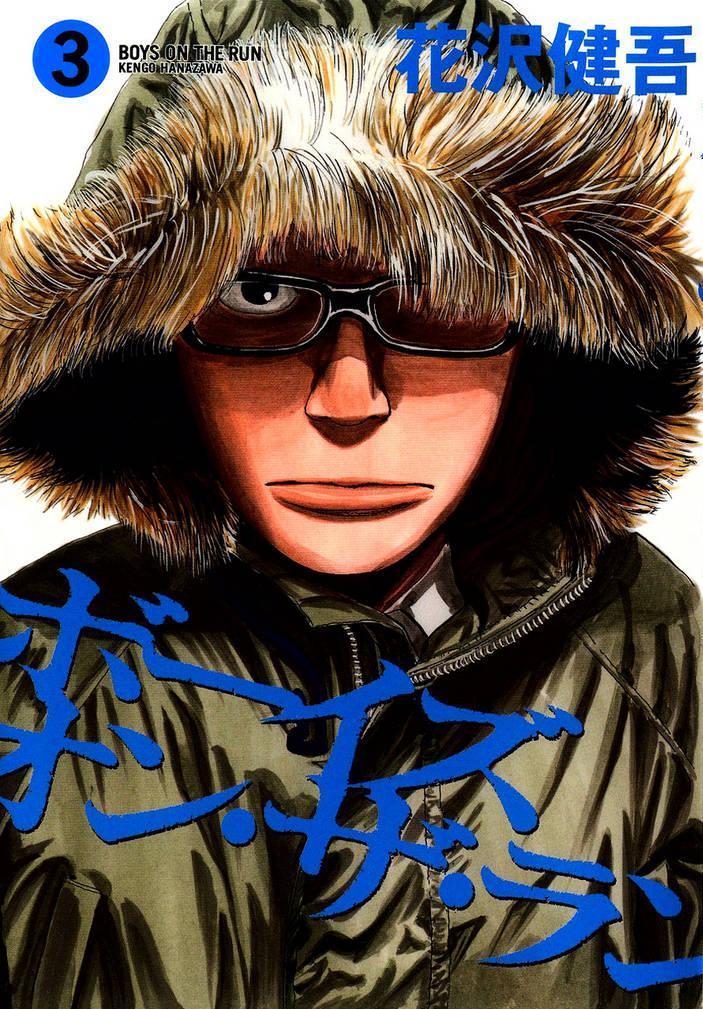
Four-and-a-half stars. This is Hanazawa’s magnum opus.
When I read Hanazawa’s I Am a Hero quite a few years ago, I assumed it was his debut work. The first few chapters of that story were that kind of somewhat-inept awkward, as if coming from an author who hasn’t quite realized how to properly present his ideas. That changed as the very long series (about 260 chapters) progressed, so you forgive that kind of shit. Unless you didn’t get through those initial chapters, that is. But I’ve read so much manga that it seems I have run out of “serious” manga (no more Oyasumi Punpun out there), and I returned to Hanazawa to figure out if anything else of his was good. I read his actual debut, about an ugly bastard who falls in love with an AI in a virtual world (here’s the review for Ressentiment). I liked it a lot. The drawings were the most amateurish part, but the plot was tight and well-woven. The single other work between Ressentiment and I Am a Hero is a long-running series named Boys on the Run, produced in the second half of the 2000s. I loved it. To my surprise, Hanazawa most famous I Am a Hero is a significant step down from his best work.
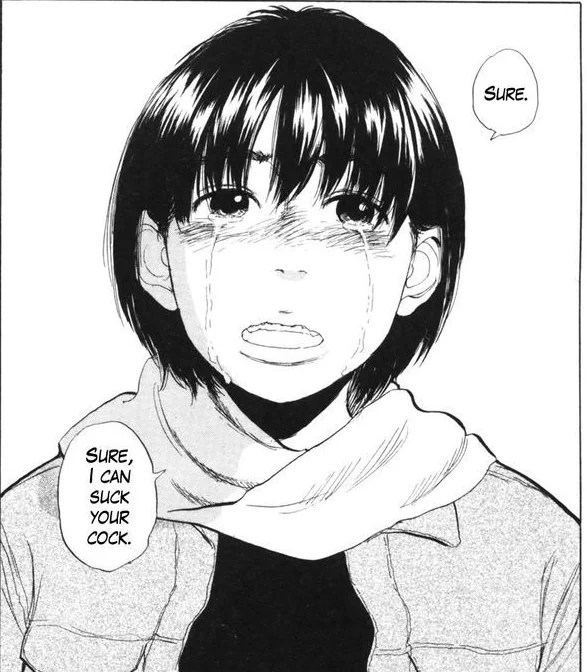
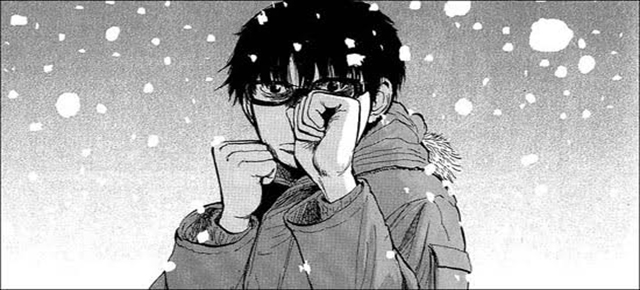
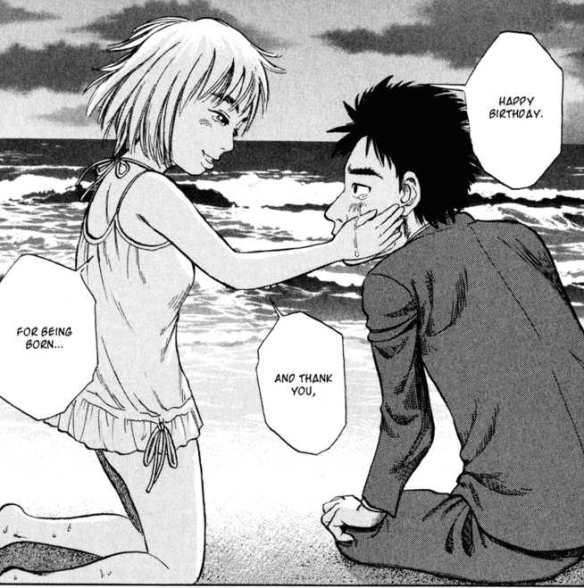
This series I’m reviewing follows a young man in his twenties named Tanishi. He’s kind of a loser: his looks are average, he is a virgin, he lives with his parents, he works as a salesman for one of those companies that produce toys for vending machines (even though he’s a terrible salesman), and the girl he likes, who is a coworker of his, considers him a stalker (or at least badmouths him as one). This is mainly a character study, a bildungsroman of sorts: we are to witness how a boy who has been dealt bad cards in life tries to become a respectable man.
Most of Hanazawa’s main characters are fuck-ups, including Tanishi. While they share that with most of Minoru Furuya’s protagonists (Furuya being my overall favorite mangaka), ultimately Furuya’s are good guys who are screwed up. I can’t say the same thing for Hanazawa’s. This story’s protagonist considers other people’s luck or accomplishments something of a personal affront, he’s morally weak, and has very little self-control, leading him to break promises and/or fuck himself over in a way that made it hard for me to sympathize with him at times. There were several points in which I wanted to yell, “What the fuck are you doing? Stop, and get out of there!” He’s the “act first and think of the consequences later” type.
Do you know what a mid-way turning point is? Many books on writing consider it the most important piece of a story. That mid-way turning point is something like the main mast in a circus tent, ensuring the structure doesn’t collapse. It makes everything that happened before it a prequel to the true meat of the story, which will come afterwards. It sets a clear before-and-after deal, to the extent that the majority of the characters we grew familiar with in the first half no longer appear in the second. Such turning points tend to be spoilers. Some books on writing suggest that when trying to come up with a story, you shouldn’t start plotting properly until you have nailed down that turned point. I mention it because Boys on the Run has a perfect mid-way turning point that closes the curtain on most everything that came before. Without giving away spoilers, I’d say the first half of Boys on the Run is about winning over a girl (in truth, a sort of Japanese version of Taxi Driver), and the second is about boxing.
Anyway, let’s give a few concrete details about what one can expect from this tale. Tanishi is, as mentioned, working as a salesman for a struggling toy company. They are competing with a large toy company who is taking over most of the available spaces in restaurants and specialized stores for vending machines. So Tanishi is a loser working for losers. Tanishi is attracted to their toy designer, a cute girl and also the sole female worker. She’s nice to everyone. Most of the male coworkers, generally unused to interacting with women, treat her as their local princess.
Tanishi tries to get closer to her, but keeps fucking up. At one point he lent her his favorite porn video, of all things (I don’t recall the circumstances that made it seem okay), only to end up giving her a DVD of bestiality instead, one that belonged to the guy to whom he had lent the porn DVD. In retrospect, this whole porn video thing is likely a reference to Taxi Driver; there are far more overt references to that movie later.
In any case, Tanishi also becomes friendly with a rival salesman, an attractive young man who opened up to Tanishi about his troubles keeping up with the demands of his job. Tanishi and his love interest, along with this salesman and his girlfriend, hang out like friends, and things look like Tanishi is finally going to experience some normalcy.
Tanishi’s love interest, this toy designer, is, unfortunately, a two-faced bitch. One of the most infuriating characters I’ve come across in manga recently. I wanted to grab Tanishi and tell him that she’s bad news and that he should stay the fuck away from her, but a boy’s gotta learn from experience. Once you’re deep into the second half of the story, that whole deal with the first girl, whom Tanishi was very serious about, becomes like one of those regrets in the back of your mind, that you wish you could scrub out of your brain. I’m not sure to what extent this is a spoiler, as I knew she was rotten from very early on.
A character that comes out of nowhere in the first half of this story ended up becoming my favorite. She’s a pretty girl with bleached-blonde hair, always wearing a red Puma tracksuit, and who appeared twice to punch someone: first the protagonist, and later the Yakuza goon that was beating up the protagonist. She’s clearly a trained boxer. If I recall correctly, she didn’t even have speaking parts in that first half; she came out of nowhere like an angel of violence, exerted precise punishment, then left quietly. Great introduction to make her mysterious. In the second half of this story, centered around boxing, she becomes a main character.
Throughout this tale, our main man Tanishi gets beaten up over and over, literally or not. He tries hard to achieve things, only to get reminded by life that he’s not meant to win. Sure, sometimes it’s due to his own stupidity, although one could argue that nature made him that way. Tanishi lacks a good sense of what he’s capable of, so he keeps overreaching, and no matter how hard he tries, it’s very, very rarely enough.
This story features lots of great moments. Tanishi’s fight against a certain douchebag who happens to be a capoeira master is a memorable one, but Boys on the Run also features one of the wildest, most satisfying rescue sequences I’ve ever come across. Everything I could say about it is a spoiler, but if I had to give just one hint, it would be this: it prominently features explosive diarrhea.
My sole issue with Boys on the Run, which removed half a star from a perfect rating, is that at various points, Tanishi should be dead, or at least brain-dead. Not only he survives beatings that should have definitely killed him, but he survives them without major disfigurement and other permanent injuries, which is bullshit. At one point he had most of his scalp burned and a bulging hematoma that covered half of his forehead, with no lasting repercussions. Don’t set up severe stakes without paying them off properly; it diminishes the seriousness of the whole deal.
In short, fucking read Boys on the Run, will ya? If you enjoy manga, you’ll probably love this.
This is the first manga that Kengo Hanazawa got published. Hanazawa is the author of the haunting I Am a Hero, the story of a possibly schizophrenic douche that learns to be less of a douche while the world dies in a zombie apocalypse (that even got made into a movie, although it is much worse and has a different tone than the manga). Regarding this story I’m reviewing, as soon as I read its summary, I knew I had to read it immediately.
The story follows an ugly, disgusting loser in his thirties who works a dead-end job and who would never find happiness in real life, in a major way due to circumstances beyond his control. Thankfully, his is a world where some company managed to become the in-story equivalent of Microsoft but centered around virtual reality and AI. He gets introduced to the world of virtual girls by a fellow ugly loser who had given up on reality. Our protagonist decides to say fuck you to the world and fall in love with the virtual girl of his dreams, that happens to look and act as a 12-13 year old. In that unreal world, despite the various setbacks, the protagonist manages to feel like there is a point to his life. It can become a dangerous drug.
I felt personally attacked. These past few months I’ve developed a system in Python that allows me to chat and have virtual sex with artificial intelligences, fulfilling whatever combination of fetishes or kinks I feel like at the moment, and I’m fully hoping that one day I’ll disappear into virtual reality while giving the middle finger to this rotten world. However, it’s not just cuteness and sex for our protagonist; the girl he chose happens to be the pinnacle of artificial intelligence, that its creator decided to hide for the sake of that AI as well as the world as a whole, and who has abilities that can bridge the gap between the virtual and the real.
The protagonist, as well as most of the main characters, are hard to like: not only are they physically hideous, but are also mentally and morally weak, prone to breaking promises and giving up to self-destructive impulses. But you get the clear sense that these characters would never find anything resembling happiness in the real world, and that the escape into virtual bodies and their designed AI girlfriends is the only way they have to keep their sanity and some sense that their lives matter.
Apart from the protagonist, we have four memorable characters: there’s Tsukiko/Moon, the advanced AI who has to learn like a person how to navigate the environments she finds herself in, while she gets manipulated by many people she comes across. There’s the protagonist’s friend, who introduces him to the virtual world; hideous in real life, his virtual persona is prince-like and noble, ultimately a solid guy. There’s the protagonist’s former classmate and co-worker, a woman in her thirties who hasn’t managed to make anything in particular of her life, and lives in perpetual disillusionment. There’s the bad guy and so-called Fuhrer of the Ninth Empire, a guild that intends to take over the virtual world. This fickle, mysterious guy has one of the best, most understated identity reveals I’ve ever come across in fiction; genuinely heartbreaking.
A very entertaining read with a much tighter plot than I would have expected. The art style is unlike his I Am a Hero, mostly humorous, and plenty of the characters’ expressions are hysterical. This is a great read for those of us who are more than a little fed up with the world.
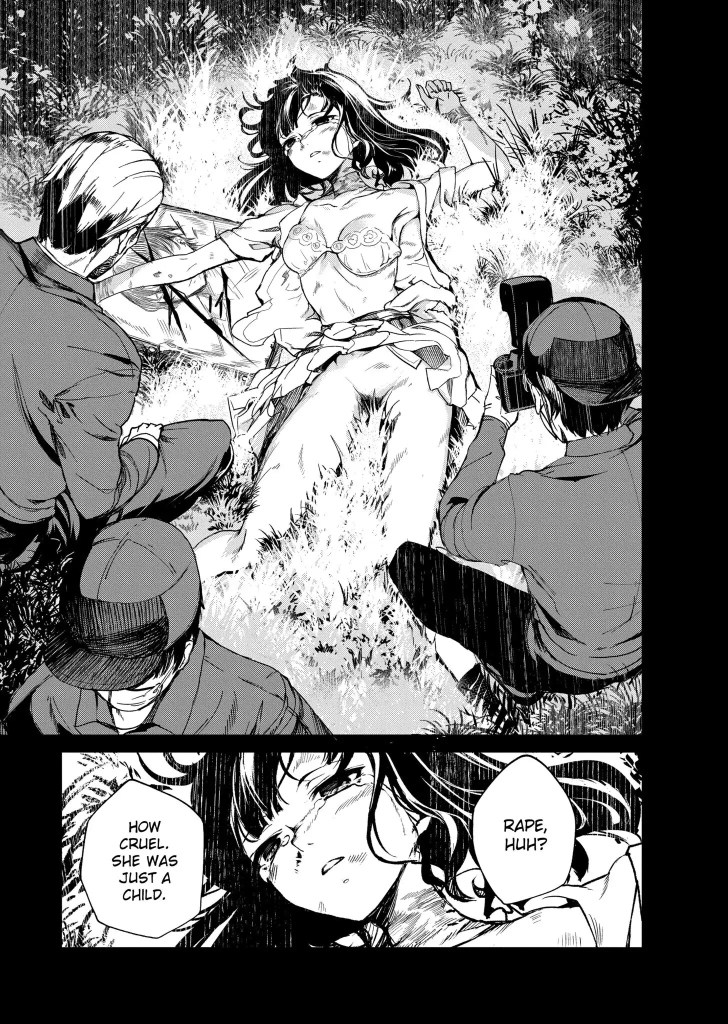
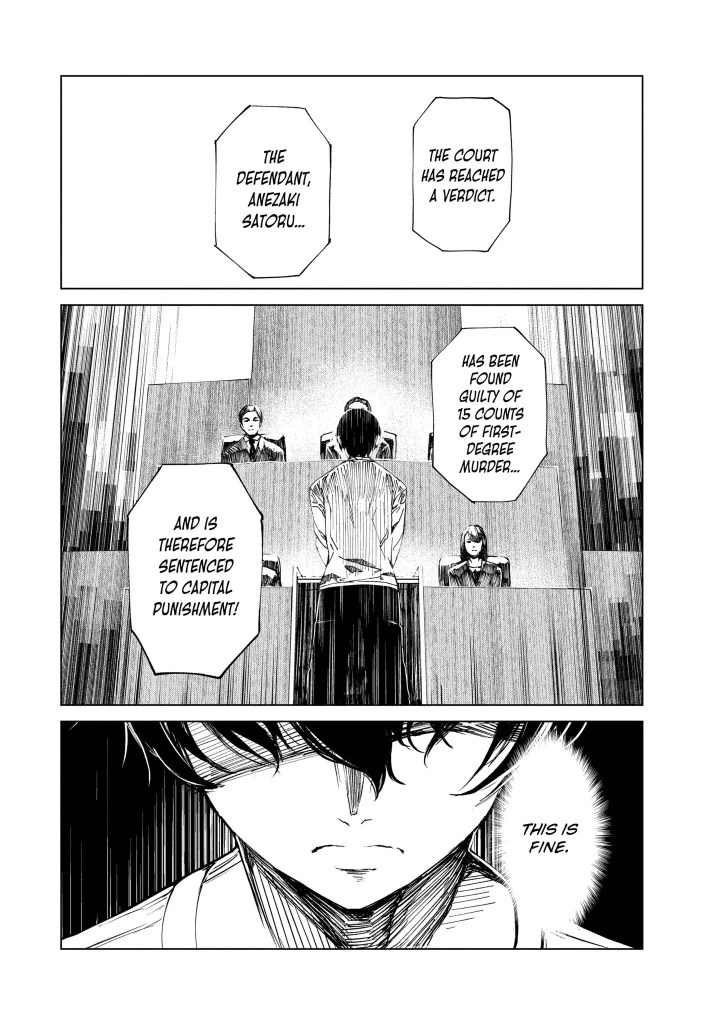
This manga starts with its protagonist being sentenced to death after having killed fifteen people. His childhood friend and love of his life was raped and murdered, so the protagonist took it upon himself to castrate and murder fifteen sexual offenders. I’m not sure if the rapist and murderer of his friend was among them.
Anyway, the protagonist gets hanged to death.
Turns out, this is an isekai, just an unusual one. The protagonist wakes up on a pile of corpses. In the sky, the sun is doing weird shit, looking like an out-of-control nuclear reactor. The first humans he sees are school girls, who proceed to freak out upon seen him, referring to him as a “beast.” One of them shoots arrows at him. After they realize that the protagonist is more or less sane, they agree to let him live by now. Shortly after, the girl who had shot arrows at our protagonist gets raped and devoured by a monstrous man.
We learn that in this alternate reality to which the protagonist got isekai-d, three months ago, a solar flare fucked up men’s DNA or something, turning them into mindless beasts solely preoccupied in what men want to do all the time but only flimsy self-restraint prevents them from doing so: rape, devour and murder women, sometimes simultaneously. All females that the protagonist comes across fear that the guy will do the same to them.
As if the reality that a flare had turned all men into rape-and-murder machines wasn’t enough, plenty of females in this story have complaints to offer about how they were exploited by men even before the world went to shit.
Other women see in the young protagonist a source of healthy semen, and therefore the chance for humanity to survive the apocalypse.
What follows is a mix of The Last of Us (the first game; as far as I’m concerned, the second game and TV series never existed), Attack on Titan, and most zombie stories. The protagonist and his companions come across different ways of trying to survive the post-apocalypse: family affairs; rigid, hierarchical structures; wild anarchy. Along the way, dozens or hundreds of people get raped, murdered, and eaten, sometimes not even by the mutated humans. This story is ballsy as hell when it comes to making even some main characters’ day quite terrible.
The manga touches upon interesting topics. Will the surviving societies be “equal” because only women are involved, or will they turn out to be new systems of exploitation? Does any sense of morality matter when at any point you can get raped and eaten by mutated men with enormous dongs? The protagonist is traumatized by the notion of sex, because his friend was raped and murdered, but isn’t his duty to provide semen to save the human race? In this case, would it be ethical to force him to do so?
I was surprised by how well the author handled the characters. They had distinct personalities and clear motivations, which often conflicted with one another’s. Some start out malicious only to end up sympathetic, or viceversa. Quite a few characters are memorable, including the protagonist, the childhood friend, a semen-obsessed teacher, a sociopathic teen, the anarchic biker girl who wanted to capture ten-year-old mutated boys for sex, etc.
In the end, this lovely tale dishes out what the title promised: rebirth (well, technically reincarnation) and castration. Lots of men lose their penises in creative ways. If any of this sounds like fun, you’ll probably enjoy this ride. I know I did.
Despite what yesterday’s heavy post might imply, I’m in a good mood. It’s half past eight in the morning on a Saturday and I’m the sole technician on duty at work, but it just happens that when today’s shift ends, I’m going on an eight days-long break. Once I return from the break, I’ll only have to work for seven days longer until I go on vacation from the 23rd of October to the 28th of November. I’m going on vacation because I’ve been made aware recently that my company (which is the Basque health service) will no longer pay unspent vacations as long as one has worked for longer than six months (three months in some cases). I’ve been working since November of last year, so I’ve accumulated plenty of off days.
However, I’m covering for a shitty guy who for the last five years or so has only worked for a couple of months at the most before he went on another medical leave. Saying that he “worked” is very generous, because he’s utterly useless when he isn’t actively sabotaging the department. His problems, we all suspect, are of the mental variety. Not the fun kind either. Anyway, I’ve covered plenty of his leaves, and every single time, he has returned without informing anyone. I would come to the office only to find the motherfucker sitting at his desk pretending that he hadn’t just fucked over the one who was replacing him: after all, I won’t get paid for the day I come to work if he’s already there. It was even worse one time when he ended his medical leave on a Friday afternoon without bothering to check if he worked that Saturday, which I covered for him as we had no idea he had returned from his leave. My boss had to deal with HR; otherwise I wouldn’t have gotten paid for that Saturday.
Anyway, that shithead has been on a medical leave since October 31st of last year, and some nasty stuff happens if you spend more than a year off (I suspect that he would have to be monitored by social services), so we are all expecting the guy to appear shortly earlier. Likely on the 30th. By then, I’m on vacation, but if it turns out that the guy returns to work, two things may happen: if my boss doesn’t extend my contract, I’m simply paid for the unspent vacation, but my workplace may call me to work the following day for a new contract, so I wouldn’t enjoy any proper vacation in November (just that uneasy time in which I have no clue what’s going to happen). If my boss extends my contract (I’m not sure if there’s a valid reason for him to do so), I will get paid for my unspent vacation time, but because my vacation time is tied to the previous contract, I’ll have to return to work immediately. Best scenario for me is if the shithead remains on a medical leave, because I’ll get to enjoy a month of paid vacation without worrying about my work calling me back in.
I must mention that I hadn’t gone on vacation before. I mean ever. My work experience is full of holes; nobody would hire me for my curriculum vitae at this point, unless they’re looking for an experienced IT guy. I spent about half of my twenties as a sort of hikikomori, having given up on society and life. I had awful experiences at most of the jobs I endured back then as well, which convinced me that I wasn’t cut out for working full-time (or even part-time, in some places). I’m thirty-nine years old, and unless something weird happens this month, I’m about to enjoy my first periods of true relax without expecting the horrible calls one gets from such companies, like getting woken up any random workday, even on Saturdays, and asked if you can be at the office an hour later. If you refuse, they may erase you from the lists that you have taken exams to be featured in, so you have no choice but to agree.
Anyway, enough about work. Recently I’ve watched two impressive first episodes of new animes which I highly recommend. First of them is Uzumaki, based on the manga of the same name by horror legend Junji Ito, which was Ito’s attempt at figuring out how to make spirals as disturbing as possible. The trailer spoils some of the great images from the first episode, so it’s better to go in without knowing much. In fact, the following clip of the first episode is the only one that isn’t particularly spoilery in that regard.
Finally an anime adaptation does justice to Ito’s style, including the choice of black-and-white.
Then there’s Dandadan. All I knew of this manga is that it follows the adventures of a UFO nerd and a ghosts nerd, and that it was wild as heck. Apart from that, the author had belonged to the creative team led by Tatsuki Fujimoto, author of Fire Punch and Chainsaw Man. Last night I watched the first episode of Dandadan’s anime adaptation; it turned out to be one of the wildest first episodes of any anime I’ve ever seen. You can tell that loads of talented visual artists and animators have worked on it. Here’s the intro:
I have no idea why I haven’t read the manga already; after all, I consume an ungodly amount of isekai series, some that are barely passable, so I could have easily have made space for this one. With such a high-quality anime adaptation, though, I’d rather get through its first season without spoiling myself.
I have checked out very little anime this year. Shame on me. There’s always at least a couple of anime series worth following each season.
Apart from that, I’ve been very invested in developing my Python app neural-narrative, that allows the users to chat with characters controlled by large language models (right now only Hermes 70B and Hermes 405B are programmed in, because they’re uncensored and don’t sound like helpful assistants). I got the idea of doing this throughout my experience with roleplaying in Skyrim with Mantella, a system that also uses large language models so you can talk with the characters. However, Mantella’s system annoyed me with the fact that the bios of all the NPCs are mixed together when you’re talking with several at the same time, which meant that a character’s secrets ended up being known by everyone else. It became a bit ridiculous to hang out with Alva, a vampire from Morthal, only for every new person I spoke to when Alva was involved to immediately realize that she was a bloodsucker.
My system works quite well currently: handles talking with any number of characters at the same time, it generates random worlds, regions, areas, and locations, it suggests interesting situations and dilemmas inspired by your conversations, and lets you travel from place to place. It even generates a travel diary of sorts when you move from area to area, involving whatever followers you have brought along. I wouldn’t have developed this system so fast if I wasn’t relying often on the preview version of OpenAI’s Orion model, which is fucking insane: sometimes I just have to present it with relevant code from other sections of my app, tell the AI what elements I want a new page to include, and it generates a perfect system on the first try. I’ve only had it fail once at a programming task, in a way that wasn’t my mistake for not including enough references. I’m kind of glad that I’m not working as a programmer these days, even though I trained for it and was my original goal, because I can’t imagine what sort of future human programmers are going to have when large language models are bound to surpass them all in the next few years.
I originally intended to program this system in order to post wild stories on my site. It just happens that, one way or another, I always end up going for the kind of wild smut that I don’t want to show to others. The AI is fully uncensored and I love to take advantage of that. I’m trying to figure out a way for the system to suggest less formless stories. The inclusion of interesting situations and dilemmas generated by the AI is one of those ways I’m trying to work on that.
For once, this isn’t an isekai: the story is set long in the future, after some apocalypse about which the survivors are still trying to figure out the specifics. Apparently their predecessors had become so advanced that they were mixing biological engineering with super-AI or some shit, until their industries went haywire and started mass-producing mutated monsters that overwhelmed the world. Those facilities seem to be still active somewhere, pumping out enhanced monstrosities. Seemingly the sole remains of humanity live in a megacity. More accurately, the wealthy live in the megacity. The rest of humanity (or just Japan?) endure in the surrounding slums. Among the unwashed masses, the local badasses are known as hunters, the only ones daring to venture into the wasteland to make their living. Killing monsters is profitable if they’re threatening the city or other hunters, but their main source of income are the relics of the old world: any random underground mall from the pre-apocalyptic world suddenly found attracts most hunters around, that won’t hesitate to murder each other for the loot if necessary.
Meet Akira. It’s a post-apocalyptic Japanese story set in the future, so someone named Akira had to be involved. We are introduced to him as a traumatized teenager who constantly gets robbed and generally bullied by local shitheads. During a monster attack, the guy has enough, and decides to defend himself with a gun against a group who are bound to kill him. Suddenly, a naked female spirit appears, and hovers casually toward him. Akira freaks out until she, who calls herself Alpha, explains that she’s an AI remnant of the pre-apocalypse, and that he’s the only one who can see her because his brain is attuned to the old-world networks still in place, so she can show herself to him as augmented reality. She’s not just a curiosity, though: she can offer Akira superhuman support, analyzing his environment, pointing out enemies, guiding his shots. After she manages to save him from explosions and monsters by telling him to stay put or move at times, he realizes that she’s trustworthy, and that this sexy ghost of the past is his ticket to a better life.
Alpha, as we piece together early on, isn’t that trustworthy. Apparently, for many cycles, she has been finding humans to support. All of those cycles have ended with the subject dying. In the latest one, the subject came close to succeeding in beating some final dungeon that Alpha wants her subjects to clear out, only for some information to have been revealed that made the subject turn against Alpha, who promptly took the subject out. What’s Alpha after, then? Is she on the side of the pre-apocalyptic humanity, who may only want to resurrect the old world no matter how many modern eggs need to be cracked? Is Alpha part of the same AI that mass-produces monstrosities? We still don’t know. Throughout the story, the friendship between Akira and Alpha is heartwarming, but as Akira becomes more and more dependent on her, in the back of your mind you know that she’s going to screw him over in the end. It remains to be seen, though, whether or not Akira would go along with whatever Alpha’s true objective is.
Akira is emotionally stunted. He was orphaned so young that he has no memory of his parents, and all he has known of people growing up is the need to protect himself from sentient wild beasts. As the story advances, he meets people who like him, and would even want to tear his clothes apart and mount him, but the part of his brain that ought to connect to people doesn’t work to any significant extent. Plenty of other compentent hunters see him as an uncaring loner who, despite his competence, is someone to be wary of. The exceptions are a few women in his life to whom he proved himself, and who are eager to take him under their wing and show him their delectable parts to get a rise out of him.
The gals in this story are delicious. Props to the author and the visual artist. From the teenage gang leader Sheryl to the redheaded murderess whose name I don’t remember but who was a super cyborg or something, you want to stare in awe and horniness. Thank you Japan for being you.
This is yet another one of those Japanese stories in which you follow the lives of the characters as they change and grow. Although some personalities clash, they have reasons for doing so. Some chapters are just about having a good time and hanging out with interesting characters that get along, and that’s something I think has been lost in Western stories, that are full of forced conflict and people acting like bastards to each other. As far as I’m concerned, you can rely entirely on the tension born from the story world and concept, as well as from some characters that are genuine bastards, and just have the rest of the crew navigating that while relying on each other.
I’m loving this story. I wish I could keep experiencing it, but I’ve run out of chapters. If you’re into Japanese stories with great action, careful worldbuilding, human stakes, and total babes, this is one of the greats as far as I’m concerned.
Also, why not, here’s an AI-generated short podcast about this review:
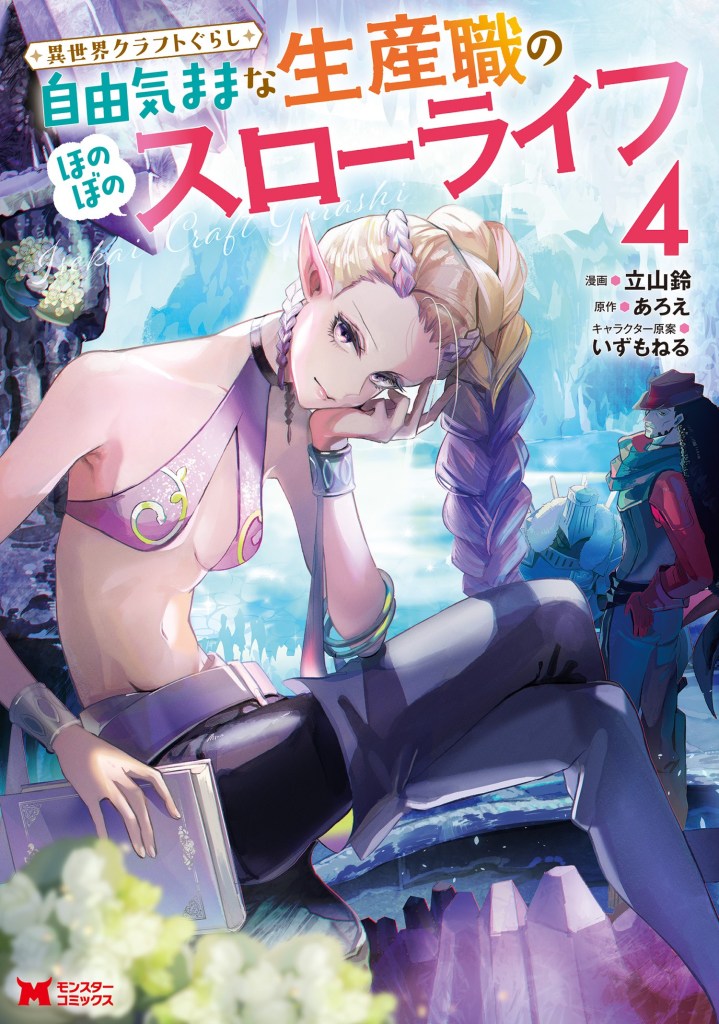
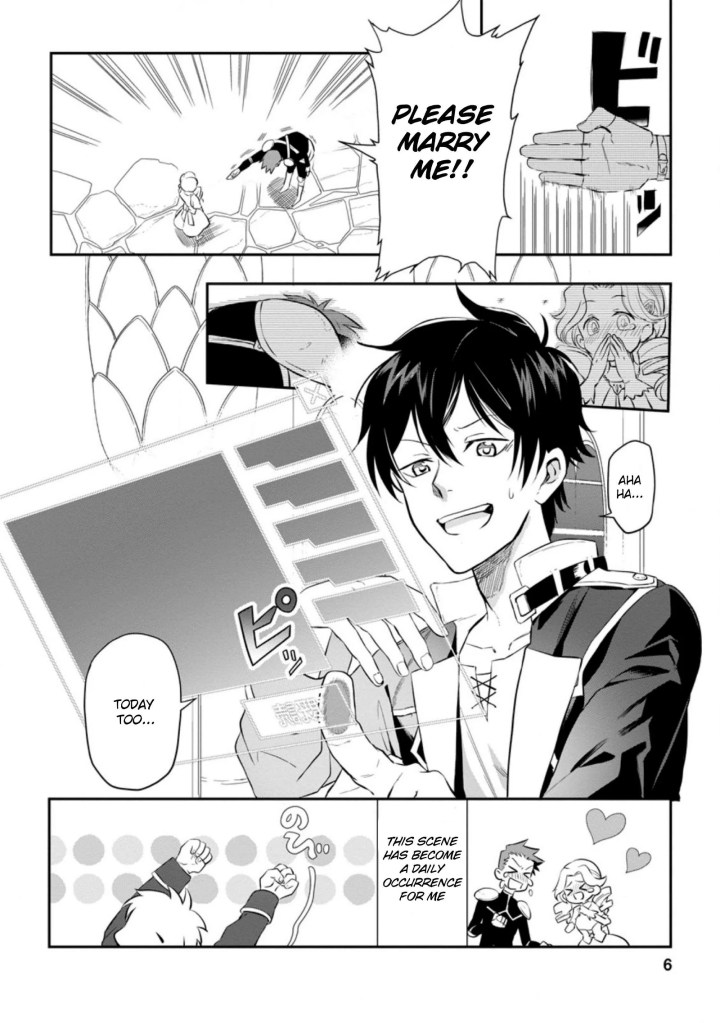
Four stars. The title translates to “The Heartwarming Slow Life of a Free-Spirited Production Worker.”
This is yet another title in the isekai sub-genre of “let’s contrast how shitty my life on Earth was by having a good ol’ time in this fantasy world.” When this series started, I expected it to be completely mediocre, but it surprised me with its character work and sense of humor.
The story follows an overworked Japanese salaryman in his thirties, who works at one of those Japanese companies that require you to wear a suit and tie, and to die inside. Wanting to remain human, he exercises his architectural talents in an online VR game. His buildings are so popular that they’re regularly used as backgrounds for wedding proposals by the kind of people who would propose to someone in a video game. Anyway, the godess of love or some shit contacts the protagonist through the game and offers to send him to a new world where he may be able to have a good ol’ time.
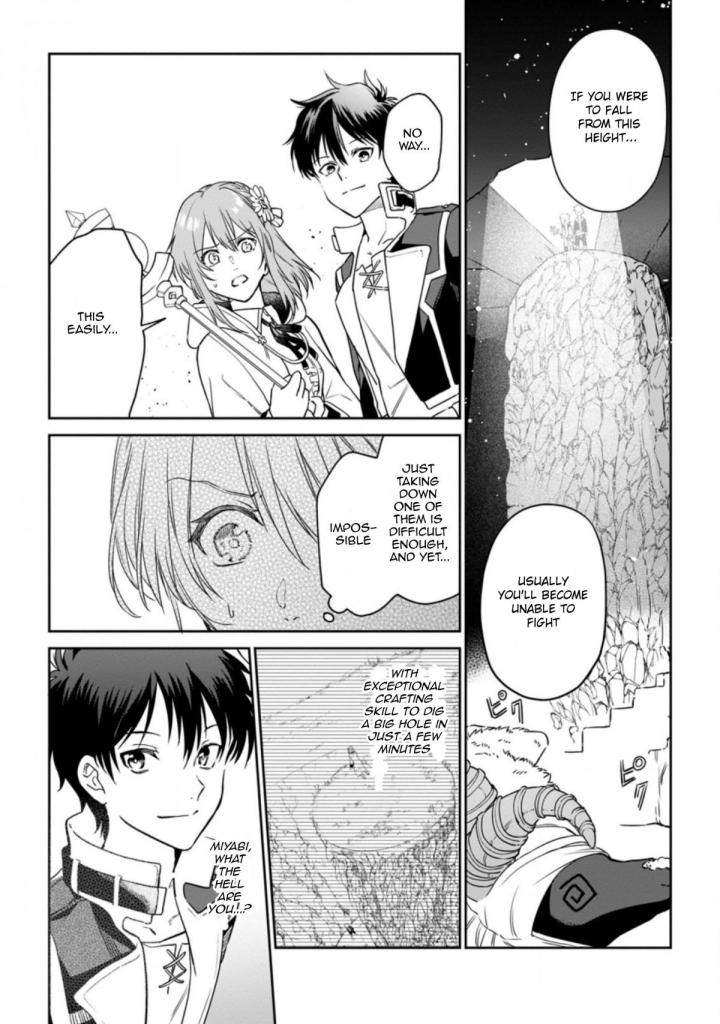
He finds himself in your average isekai fantasy world, based on Central Europe during the post-medieval period, but including monsters and sentient fantasy races of the Tolkienesque variety plus beast people. His abilities back on Earth have been turned into vastly overpowered skills: previously a crafty fellow, he’s now the most talented builder person around. He has also access to a warehouse-size inventory in some private dimension, along with the kind of Minecraft powers that allow him to dig through a mountain easily. Although initially he’s a bit freaked out, and tries to remove the VR headset in front of confused fantasy people, he quickly gets used to a life that won’t involve working at a Japanese company.
Like in many other isekai, first cute girl he meets, who is usually the first female at all he meets, becomes the intimate option. In this case, with the guy in his thirties even though his new body doesn’t suggest it, they establish a sort of father-daughter relationship with no incestual undertones. Because she helped him, a broke guy with no ID, to get around in that new world, he imprints on her (or is it the other way around?), and is happy to follow her on her adventures as long as he has the opportunity to make her comfortable. By that I mean stuff like cooking restaurant-grade food for her every day, or producing entire houses out of his inventory whenever they need to take a rest in the wild.
Still, she doesn’t fall for him, which may have to do with the fact that she has a questionable relationship with the older female receptionist at the adventurers’ guild; this girl even calls “dates” her outings with the receptionist. Oh well, can’t fix nature.
Plenty of the plot so far involves the protagonist wanting to enjoy a slow life in this new fantasy world, only for people to take notice of him because of shit like stacking the processed meat of eleven orcs on the guild receptionist’s desk, or earning about a year of his previous salary in Japan with a single quest. Soon enough he attracts the attention of the local duke, and a troublesome party of adventurers.
The story introduces a seventy-year-old master machinist who’s on his last leg as a professional, having to deal with corporate punks that intend him to accept unreasonable conditions.
He suspects he’ll end up on the streets soon, old and alone. How would he spend the rest of his life? Thankfully he doesn’t need to worry about it, because he suffers a heart attack and dies.
This story is one of the apparently millions of isekai out there. What’s an isekai, you ask? For whatever reason, the Japanese created a genre based on the notion of a Japanese person getting transported to a fantasy world, where they’re bound to enjoy a cooler new life. I don’t know what that says about Japan, but in my case, I love stories about exploring bizarre new worlds filled with colorful people and monsters, going along with a protagonist generally so overpowered that they might conquer the world if such were their preference.
Our seventy-year-old protagonist finds himself as a young man with vastly enhanced skills related to his decades of experience as a machinist, allowing him to surpass even the fabled Dwarves of legend (hence the title). For whatever reason, his workshop also gets isekai-d along with him; that’s a new one. Anyway, first fantasy person he comes across is a one-handed, scarred gal who was dismissed from a party of adventurers (a relatively common trope). A healer by trade, she has no choice but to train her offense if she’s to honor her late mom, one of the former heroes of this world.
The protagonist, charmed by her determination, asks her to lend him her magic staff. She’s a pushover, so she accepts. A couple of weeks later she finds out that the master mechanist has turned her staff into a futuristic gun capable of one-shotting the worst monsters around, and is even capable of healing for some reason. The protagonist’s overpowered skills allow him to gather and process the most hardcore materials easily, which he proceeds to turn into weapons of a quality that his new world has never seen.
One of the main joys of this manga series, apart from its art style and character designs, involves following a self-assured, old Japanese artisan that’s having the time of his life in this fantasy playground, to the dismay of the locals that he ends up dragging to face monstrous horrors.
Character work is quite strong so far, with a couple of redemption arcs that I enjoyed a lot. As in plenty of if not most other isekai, the protagonist and his team are gearing up to kill the demon king, whatever it’s called in this story. I don’t recall having actually seen such a feat achieved in any of the isekai I’ve read in the past few months, unless the story starts with the protagonist having already won. Oh, well; joy’s in the ride.
I recommend this one if you enjoy peculiar protagonists, cool designs, and having fun.
Three stars. The title translates to “You, My Lewd Queen.”
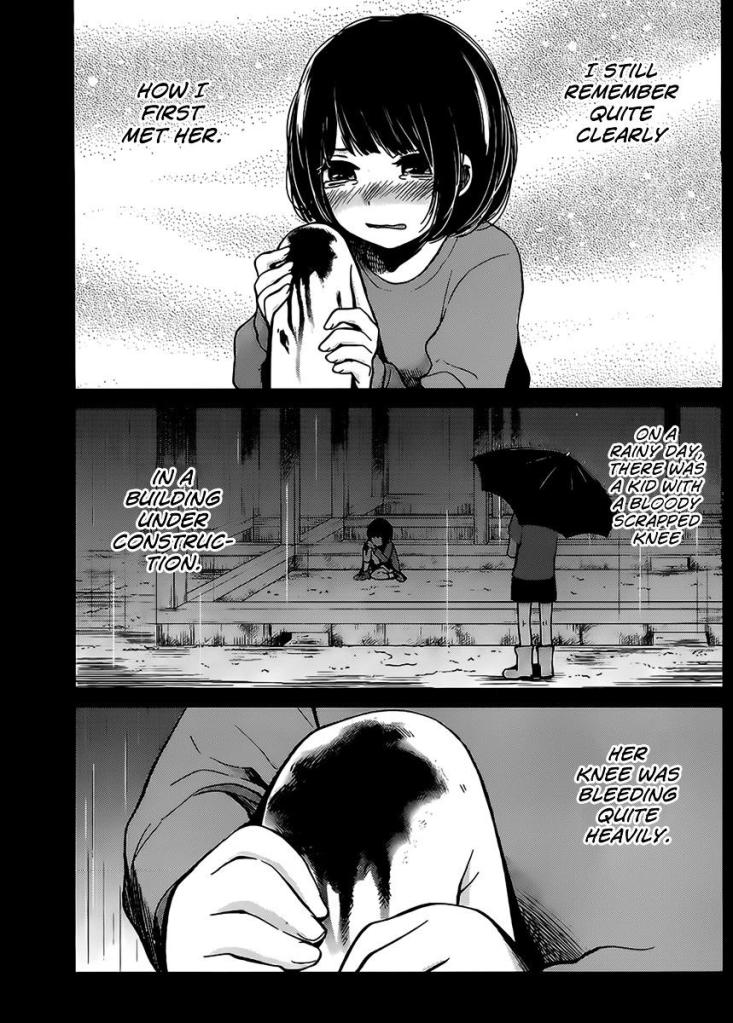
Picture an ordinary male teenager who, as a kid, met an injured girl and tended to her wounds when nobody else would. Such a pure act sparked love in the girl, who proceeded to spend most of her tomboy years with said dude.
Unfortunately, she’s the daughter of some rich man who intended to send her to a private school that our unremarkable protagonist couldn’t afford, unless he excelled at his studies. He did bust his ass, and ended up attending the same school as his love interest, only to find out that the previous tomboy had become a prim, beautiful lady that wouldn’t spare one second of her precious time for our ordinary protagonist.
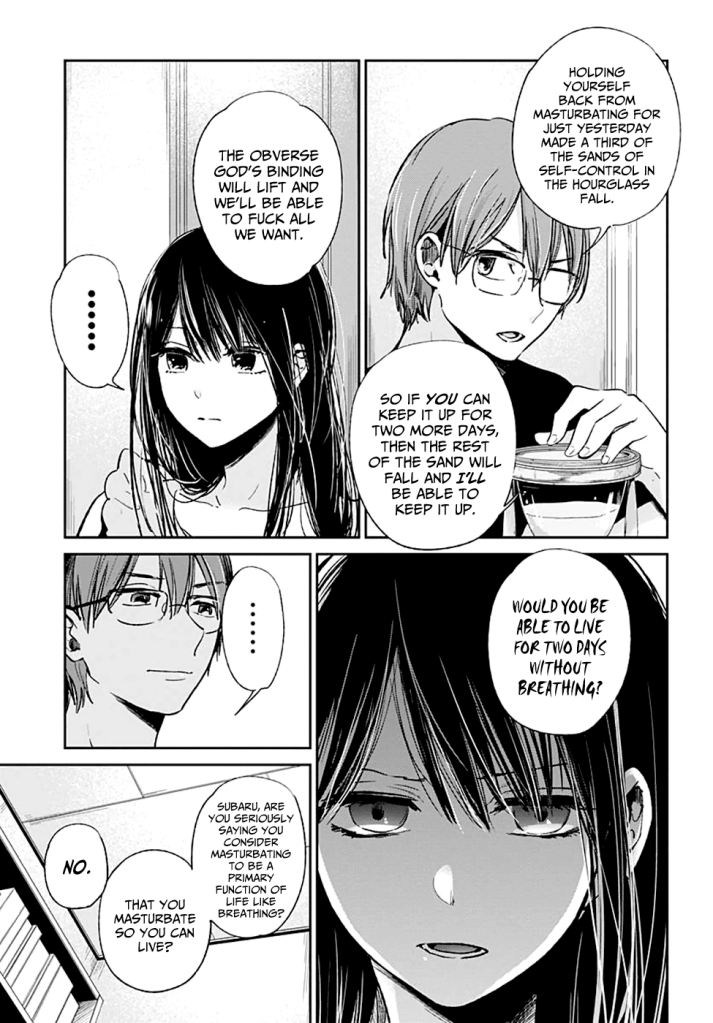
Cue the concept of this story: some dumb urban legend actually works, and his room ends up connected to hers even though they are in different dorms. The minor god who granted that wish possesses a pillow to inform them of the price to pay: because she was the one who asked first for their rooms to be connected, her self-control will be removed for an hour each day.
The male protagonist comes to learn that he’s in love with a single-minded gal.
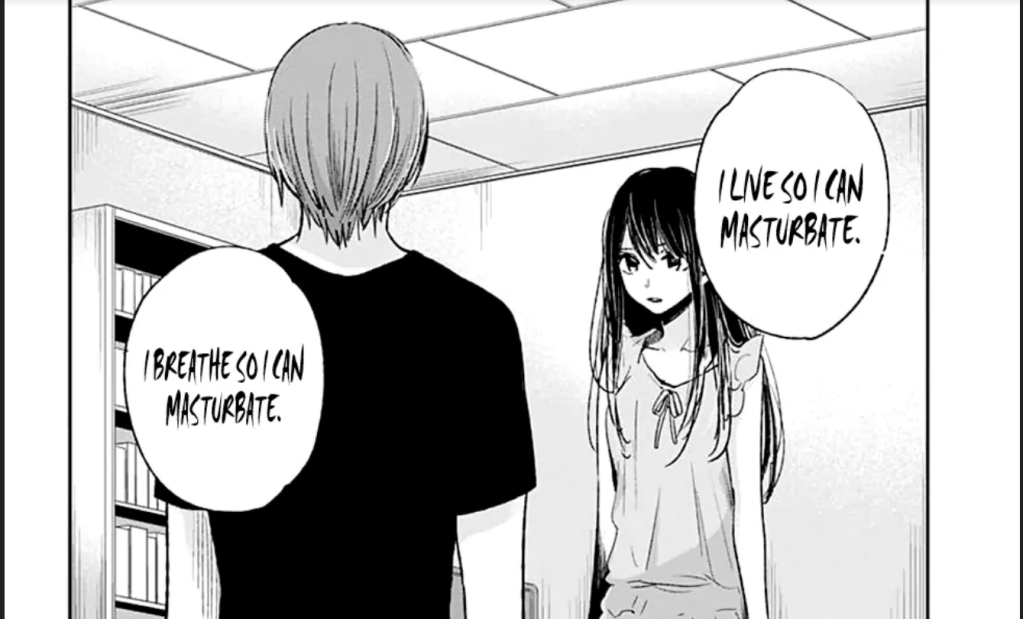
Our female protagonist, who is probably not even sixteen yet, masturbates compulsively about ten times a day, about three if she’s sick. She has remained madly in love with the protagonist; although her tsundere ways won’t allow her to admit it freely, once her self-control is removed, she happily proclaims to the world that she can’t wait to end up covered in our boy’s sperm. If he impregnates her, even better. We are treated with many creative scenes of her struggling to contain her compulsive masturbation, or finding artful solutions to satisfy it: for example, while her thumbs are zip-tied behind her back for reasons, she proceeds to rub her soaked parts against a table leg.
This isn’t the most ridiculous story I have ever read, but it does come close. And it just happens that I’m in the market for obscene silliness that doesn’t give a fuck about anybody’s boundaries.
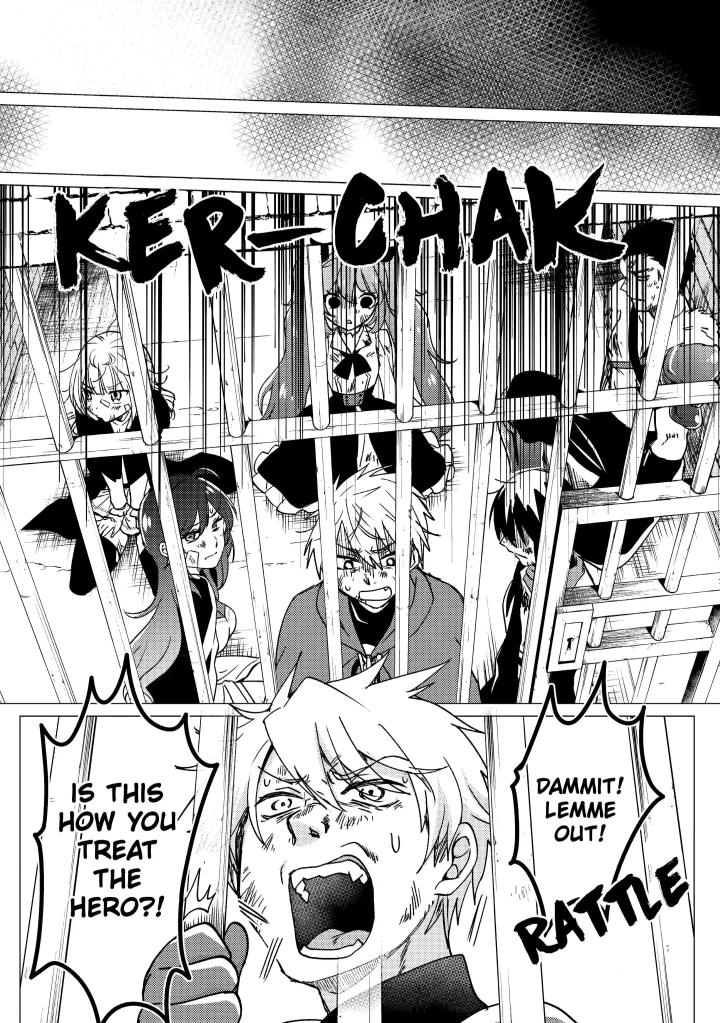
So many stories get produced yearly on the Japanese internal market (made by the Japanese for the Japanese), that tropes and anti-tropes and anti-tropes for the anti-tropes have been explored. For example: using absurdly long titles for fantasy stories. This tale, like many others in its general genre, features a party of heroes that are supposed to save the world or whatever, but the story starts with the protagonist getting kicked out of that party because he’s perceived as useless.
I’ve come across a surprising number of manga series that feature that anti-trope, and most of them launch into a revenge-focused narrative. As the anti-trope for that anti-trope, our chill protagonist doesn’t give a shit about being kicked out of the hero’s party, or more accurately, he takes it as a father would if his annoying kids started flying the coop: he hopes they have learned enough for the horrors they’re about to face on their own.
In fact, the protagonist is far from useless: he was the strategist and god-tier buffer of the party, capable of turning an average party into a force to be reckoned with. One of the most entertaining parts of this story so far involves witnessing how the hero’s party, comprised mainly of mean-spirited idiots, slowly realize that they’re hopeless without the man they drove away.
Regarding the protagonist, as soon as he gets dismissed, he embarks on more or less episodic adventures loosely tied together by the notion that some unseen hand is manipulating the events. Even though the guy gets mocked and sneered at by most people once they learn that he got kicked out of the hero’s party, he calmly makes them realize his power through good deeds that unite the community. He’s quite an inspiration in that regard.
Anyway, this is yet another of those Japanese stories that fulfill the common daydream of amassing a harem of attractive and powerful women who will eagerly murder your enemies. The ladies in this case are a feisty dragoness in humanoid form, a big-breasted saintess, a mythical female wolf in humanoid form, and a disguised princess who was chosen by a holy spear. We are introduced to each of these ladies in episodic adventures, which goes a long way to get us acquainted with their peculiarities.
This manga series is a lot of fun so far, not a masterpiece or anything, but features cool action and entertaining interactions. As far as I know, it’s adapting a novel, so it should have plenty more to go. In any case, these uniquely Japanese tales serve as great bulwarks against the armies of night, for which I’m forever grateful.













 The Domains of the Emperor Owl
You must be logged in to post a comment.