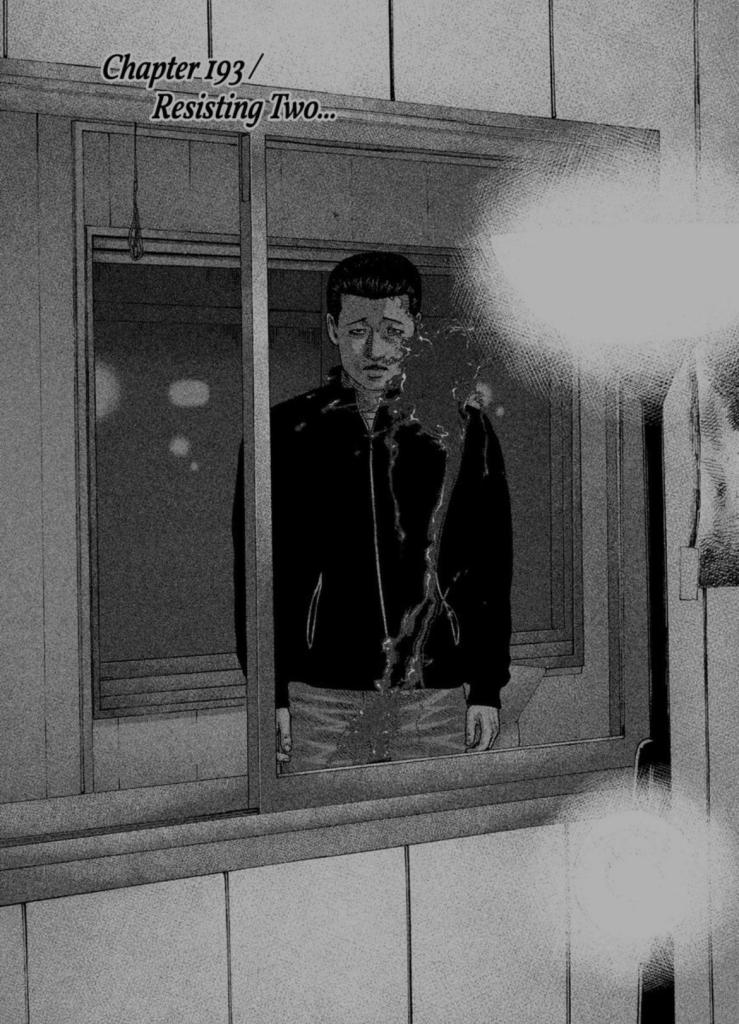
Review: Chi no Wadachi, by Shūzō Oshimi

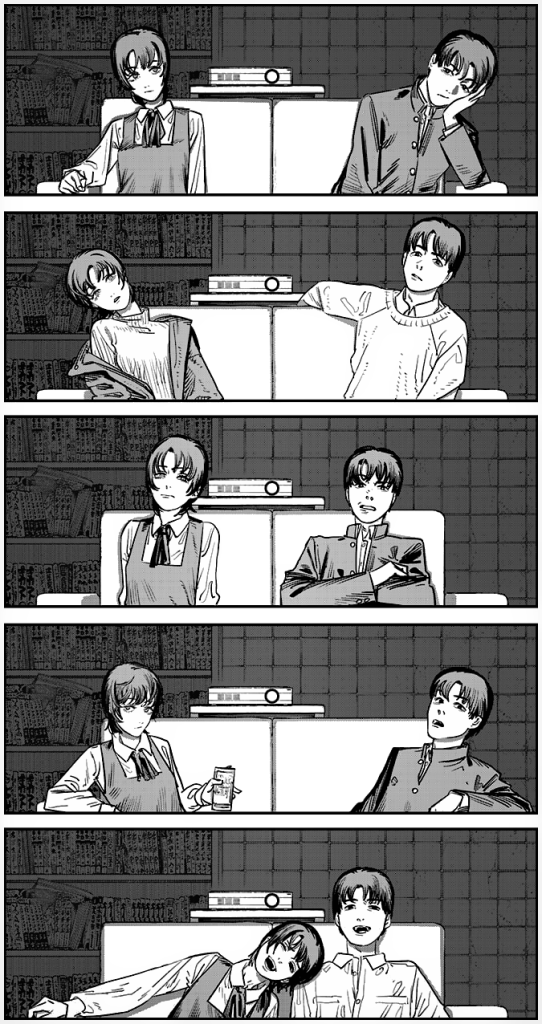
The title translates to either “Blood on the Tracks” or “A Trail of Blood.” Despite the mystery or thriller-like title, this haunting story is about heredity, and how a fucked-up childhood could poison you for the rest of your life. I caught this series maybe three years ago, and read it up to the then latest chapter. This morning I have read the chapter that concluded the tale. I don’t know how to rate the whole.

I hate to review stories that I have read in a chapter-by-chapter release, because my impressions have been muddled and spread thin over time. I will make the effort, though, because I want to think about what this series left in me.

We follow a shy, withdrawn middle schooler who lives with his outwardly normal parents. His dangerously beautiful (and dangerous in general) mother overprotects him, particularly regarding the cousin that visits their home and pesters the protagonist. Although the mother doesn’t want the cousin around, it’s a family member of her husband, so she needs to keep the peace. Growing up, I used to suffer a similar cousin, someone who pushed his way into our home and demanded to be entertained, stealing my time and peace. I had no choice but to deal with the guy because my brother wanted to get along with him.

Anyway, during a mountain trip, the cousin leads our hapless protagonist to the edge of a cliff. His mother, fearing that this clown would end up causing her only son’s demise, finds them both in time to witness how the cousin trips and is about to fall. What follows is a spoiler for the inciting incident of this story, so read it at your peril. The mother hurries to save him, but in the last moment, she allows her intrusive thoughts to win, and pushes the cousin off the cliff.
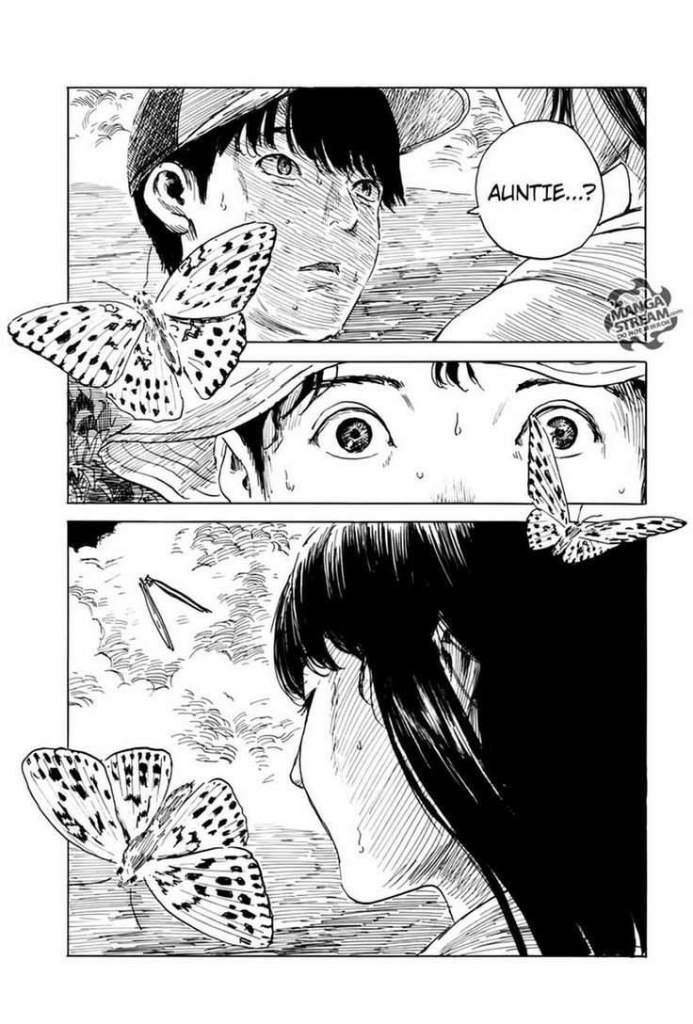
The cousin survives with severe brain damage that prevents him from pointing an accusatory finger at his aunt, and the protagonist is gaslit into believing that maybe he just imagined the whole thing up, other than the fact that his cousin fell off. The protagonist’s mother unravels, not because she fears the consequences of her murder attempt, but because she may not be punished. She wants it all to break. It seems that she has been miserable forever; she had convinced herself that she ought to get married and a have a child, only to realize that she made a terrible mistake she can’t amend (other than divorcing and moving away, I guess, but she wouldn’t dare). On top of that, she’s the kind of crazy bound to drag everyone around her into ruin.

She despises her husband, whom she resents because he tied her to this miserable life, and instead she searches for intimacy in her son. She entangles him in a somewhat-chaste incestual relationship.

The kid is at times happy that this beautiful mother whose love he yearns for is treating him so warmly, but the rest of the time he feels smothered and creeped out, and wishes to escape. Most of the memorable moments of this tale involve a childhood love of the protagonist, a girl with a differently fucked-up home life, who could end up saving him from a mother that won’t allow any competitors.
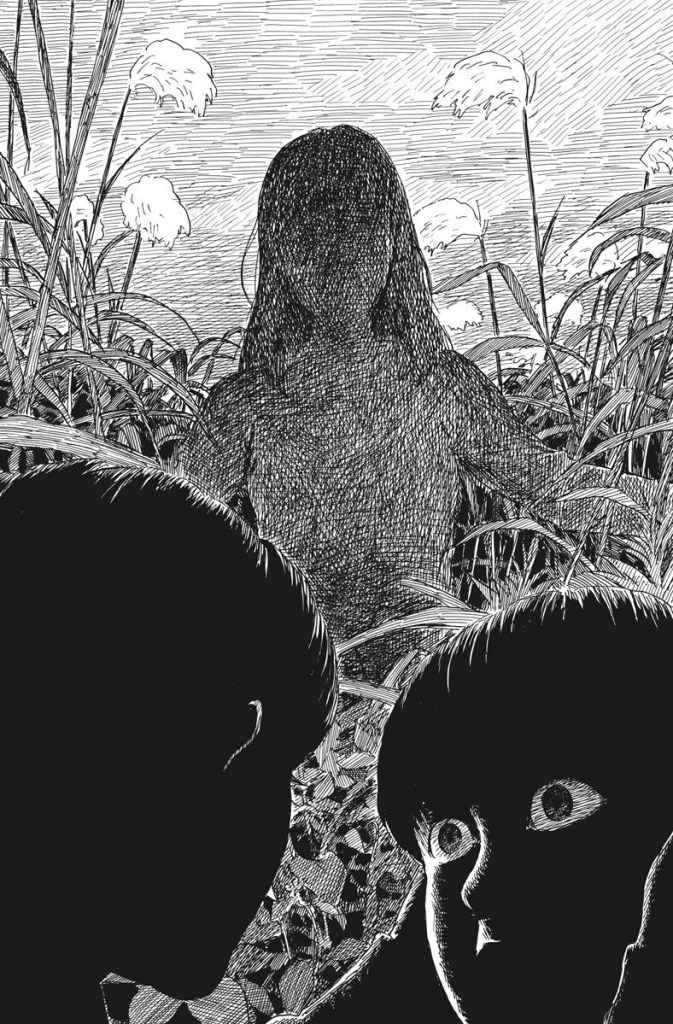
As the story progressed, I wanted the protagonist to break free from his mother’s clutches and build a better life with this sweet girl who somewhat inexplicably wished to share her life with him. However, as I thought that the story was approaching its end, the author executed a turning point that sealed the fate of all the characters involved. I won’t go into details, because they would be massive spoilers, but the author forced an unlikely encounter and undid most of the protagonist’s character development. Shortly after, the story moves into a timeskip and makes you realize that the lack of mobile phones and the internet during the story up to that point wasn’t a stylistic choice.

The protagonist, now an adult in his mid-to-late thirties, deals with what remains, both physically and mentally, of his aging, miserable parents, partly hoping that before those two candles are spent, he’ll get enough of those relationships to either assuage his despair about how life treated him, or push him over the edge so he finally dares to kill himself. What I got out of that final block of the story is that some people end up so broken by nature and/or nurture that the most they can aspire for is a quiet place in which to be themselves. I had already realized that before I read this series, though.

(That reminds me of Nick Drake’s lovely song Place to Be, quite apropos:

When I was young, younger than before
I never saw the truth hanging from the door
And now I’m older, see it face to face
And now I’m older, gotta get up, clean the place

And I was green, greener than the hill
Where flowers grow and the sun shone still
Now I’m darker than the deepest sea
Just hand me down, give me a place to be
)

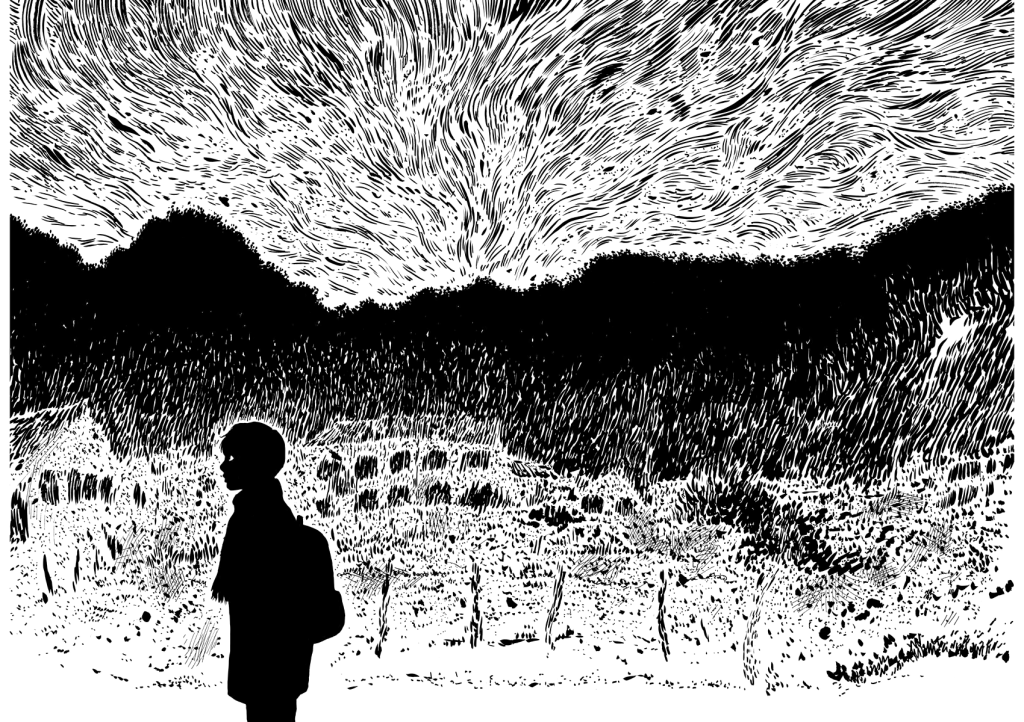
Oshimi has created some of the most psychologically twisted mangas I’ve ever read: The Flowers of Evil, Inside Mari, Happiness, as well as this story I’m reviewing. He has also pushed out a couple of duds like Drifting Net Café and Welcome Back, Alice, with which I likely shouldn’t have bothered. In Chi no Wadachi he went further by distorting the world according to the protagonist’s disturbed mental states; for example, when he ends up hollowed out and hopeless, we experience his world as sparse sketches. Plenty of compelling drawings.
Did Oshimi succeed in writing a satisfying ending to this troublesome tale? I’m not sure. The first half was far more compelling, and I would have been more comfortable with the remainder if he hadn’t undone his protagonist’s development to twist the plot into a turning point. Still, I’m not going to forget this story, nor the protagonist’s hauntingly nuts mother, any time soon.

Review: Pluto, by Naoki Urasawa

Three and a half stars.

The author of this series, Naoki Urasawa, created 20th Century Boys, one of the classics despite how convoluted it became by the end. In addition he also made Monster, for which he’s likely more acclaimed, but to be honest I have twice failed to get through the opening chapters of that series; along with its expository dialogue, Urasawa’s view of the world, as depicted through his narrative choices, irks me.

There’s a moment in 20th Century Boys in which a spunky teen girl stops a murderous gang war by scolding the participants. This happens in an otherwise very serious narrative. And the mindset behind such a narrative choice, which I could call a pollyanna perspective, pops up relatively often in his stories: people who hate others for reasonable motives suddenly flip and forgive the culprits to the extent of crying for them. Bad people tend to be forgiven even though they caused the deaths of numerous innocents. The good guys should also never kill anybody, because killing is bad, although keeping those people alive causes further deaths in the future.

His series Monster starts with what’s supposed to be a shocking moment of moral corruption or whatever: a Turkish immigrant laborer in Germany has his surgery delayed because the mayor comes in with an injury. The author treats this as an abhorrent development, particularly because the first guy was a stereotypically-depicted downtrodden person. In a heavy-handed manner, I was supposed to feel outrage at this injustice. Sorry, if I’m awaiting surgery for any of my many problems, and suddenly Elon Musk gets wheeled in first because he needs emergency surgery, I would understand even if I would curse at the heavens. Elon Musk’s decisions affect far more people than I do, and so would a mayor’s than a random laborer’s.

Anyway, this series I’m reviewing is a homage to one of the most memorable arcs (apparently) of Osamu Tezuka’s legendary Astro Boy, from back in the sixties. It has nothing to do with Pluto the planet; it refers instead to the Roman god of mortality. The story takes place in an optimistic future in which most societies have become super advanced and have created robot servants. Some of those robots, particularly the cutting-edge ones, could easily be confused for humans. Our protagonist, one of those advanced robots, works as an investigator for Europol. He faces a string of murders in which the victims are both humans and robots, and a robot may be responsible. Due to the laws of robotics, lifted straight from Isaac Asimov, that’s not supposed to happen.
What follows is a thriller that could have been far more compelling. Urasawa is a masterful plotter, but often as subtle as a jackhammer, and he abuses moments in which he’s about to reveal something important only to leave us in a cliffhanger. I don’t recall any other manga author that has been making thrillers with that sort of Western flavor, and I’m grateful, because to me it feels cheap.

The story is interesting, has good stakes and intriguing characters, but for me it fails mainly in the execution and the worldbuilding. Regarding the execution, apart from the points mentioned before, it goes for sentimentality that doesn’t hit the right notes as far as my black heart is concerned, and the worldbuilding in regards to how those robots are built and what they’re capable of doing sounds more like magic than technology. A couple of moments grasped at intriguing psychological insights regarding how both robots and humans are puppets; in the case of humans, because we’re manipulated and compelled to act based on emotions that are mostly out of our control. There were also interesting parallels with early 2000s history: alternate versions of the US and Iraq play a role in the narrative, and plenty of the characters were involved in an alternate version of the war between both nations, including the notion that this alternate Iraq may have developed weapons of mass destruction.

A high-quality anime adaptation is in the works, to be released on the Netflix platform. Here’s the trailer:

Review: Homunculus, by Hideo Yamamoto

We can speak therefore we lie, we have bodies therefore we hurt others, we have eyes therefore we can be seen by other people. It’s because we have forms that we can worry over a few millimeters-large pimple, get irritated over a few centimeters-large deviation in face or body, panic over the loss of a single front tooth… Eyes are drawn to other eyes a few millimeters too large, eyes peer away from noses a few millimeters too large, eyes are stolen by women a few centimeters thin, and a man a few centimeters too short can never find eyes to look upon him. Without forms, humans cannot suffer.

Let me get this out of the way: Homunculus is a masterpiece. I first read it a few years ago, but it lingered in my subconscious to the extent that I felt the need to reread the whole series, something I rarely do. It connects with my personal issues and artistic aspirations to such an extent that it’s likely my second favorite manga series, after Asano’s Oyasumi Punpun.

We meet the memorable protagonist of this story as he sleeps curled up like a baby in his car, which is parked between a high-rise building and a homeless camp. Truly, the protagonist is stuck in the middle: not anymore the person he grew up as, nor the fake persona he adopted to triumph in a world full of deceit. Unable to tell the truth even to himself, he lies compulsively to the homeless that tolerate him, mainly because he brings booze.

One day, shortly after he realizes that he’s too broke to afford gas, a weird guy, half-rockstar half-crossdresser, approaches his car and offers him a considerable amount of money. In exchange, the protagonist will test the benefits of trepanation, which, according to Wikipedia, is a surgical intervention in which a hole is drilled or scraped into the human skull. The shady guy claims that he wants to disprove the supposed sixth sense that the subjects of such an operation are said to develop.

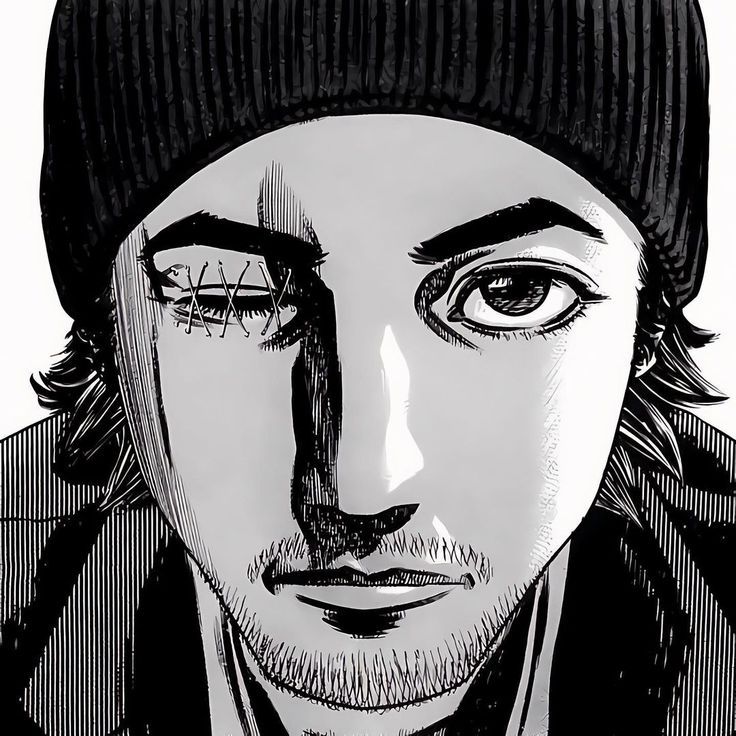
The protagonist figures that he may as well get a hole drilled into his skull. A few days later, as long as he closes his right eye, he witnesses a different world.

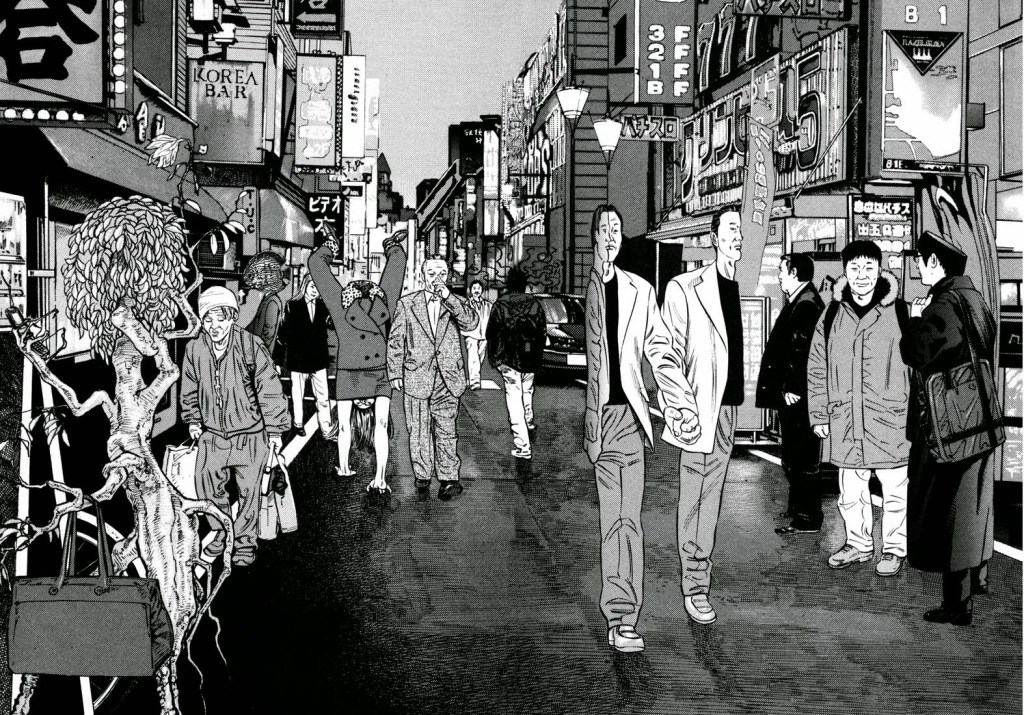
About half of the Japanese population strut around like bizarre monsters. After a chilling encounter with a Yakuza boss who looks like a boy trapped inside a robot, the protagonist starts suspecting that he’s witnessing the incarnations of psychological distortions. The mad doctor slash rockstar intends to take advantage of our protagonist’s uncanny powers, first to help the psychiatric industry. Once he gets bored of that, he intends to exploit his test subject’s sixth sense to seduce an attractive high schooler who sells her panties, and who seems to be made of sand.

What follows is a disturbing ride in which our protagonist, as he progressively loses contact with reality, recalls little by little who he used to be, and who mattered from his former life, before he abandoned it to embrace the lies of external beauty and money to the extent that he became disconnected from his senses.

I don’t remember any other manga series that has impressed me this much with the extent of its creativity, particularly involving the shifting forms of the so-called homunculi that the protagonist faces. It even surpasses Asano’s Oyasumi Punpun in that regard. It’s also bold and fearless, hard to recommend except to other fucked-up individuals. You should probably steer away from this story if the sight of a guy slurping his own semen would horrify you.

The series isn’t perfect: one of the most memorable secondary characters, that occupies a whole chunk early on, disappears never to be seen again, and the discussions between our protagonist and the rockstar dude retread the same old grounds regarding whether the homunculi are hallucinations or represent real phenomena, long after the rockstar dude should have been convinced.

On a personal note, I was stunned with the parallels between this manga series and the novel I have been working on for the last two years. In both stories, their protagonist can see certain people as monsters whose forms are related to psychological distortions. In this story, the protagonist has forgotten his old face, mainly because it was hideous. In my story, the protagonist refuses to look at her face, because she considers it hideous (along with her entire self). Elements of body and gender dysmorphia are present in both stories; regarding my own novel, partly due to me having been born with, or developed early on, a pituitary tumor that screwed with my hormones, making me able to lactate. To whatever extent the hormonal imbalance fucked my brain up must be related to how comfortable I feel writing female characters, even though I don’t want to be a woman in real life (what a hideous sight that would be). Regarding the similarities between both stories, I can’t tell how much I borrowed from this one, because such things don’t happen consciously. I think it’s more likely that the author and I are similarly troubled.

Too bad that Yamamoto hasn’t created any other series that even comes close. The other one of his that most sites recommend, Ichi the Killer, is extremely amateurish in comparison. It’s hard to get ahold of his remaining works. Perhaps he poured himself into Homunculus to the extent that there wasn’t much else left to say, similar to what happened to Asano and his Oyasumi Punpun.

At some point of this story, the protagonist embraces the homunculi not as reality, not as hallucinations, but as the truth. Those bizarre forms can be felt, from an artist’s perspective, particularly a writer’s, as the equivalents of the little monsters that populate our stories, all incarnations of our own personal truths that are otherwise almost impossible to see.

Anyway, if you enjoy fucked-up, extremely original tales, do yourself a favor and read this series.

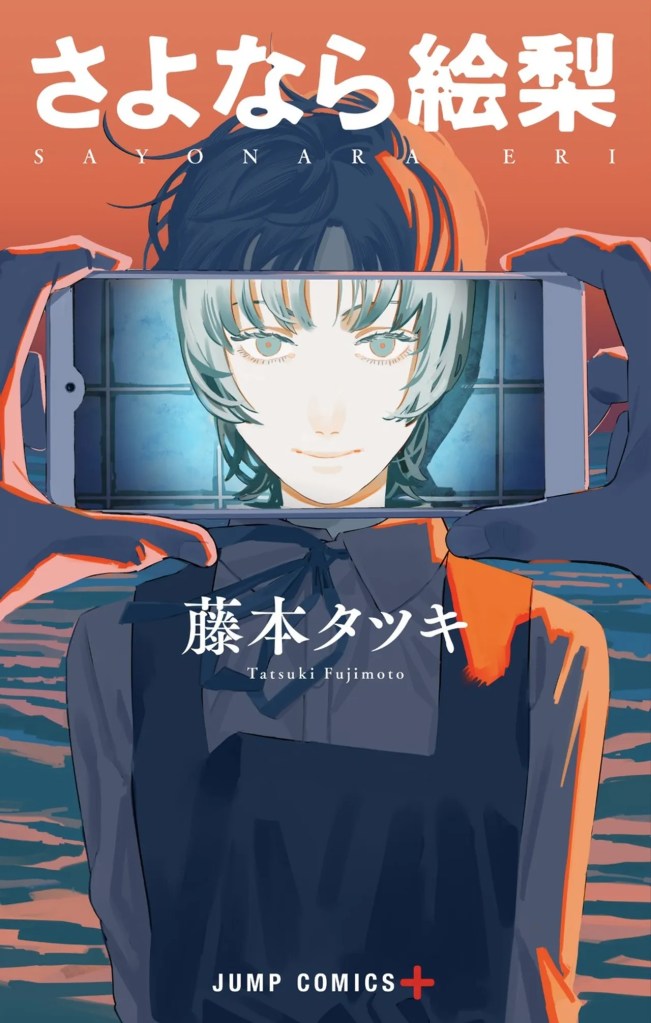
Review: Sayonara Eri, by Tatsuki Fujimoto

Four and a half stars.

I’ll get to see you every time I watch it. No matter how many times I forget you, I’ll remember you again and again.

This is a one-shot manga created by the deranged author of Fire Punch and Chainsaw Man, as well as plenty of other one-shots. Regarding Fujimoto, as it pertains to this story, you should know that the guy is a cinephile who would have rather been an animator than a manga author. In fact, when he got around to coming up with Chainsaw Man, he had become so disillusioned that he intended it to be his last tale, one in which he would go nuts and give zero shits about whether others enjoyed it. Turns out that Chainsaw Man became a worldwide sensation, which has chained Fujimoto into making more manga, starting with a sequel of sorts to his megahit (which may have been a bad idea; I’m not enamoured with it so far).

Anyway, the protagonist of this one-shot I’m reviewing is a middle school kid who is tasked by his mother with the grim duty of recording the last stage of her illness, right up until the moment of her death. The author depicts most of the panels as stills from the videos the kid is recording. As his mother’s condition worsens, we understand that our protagonist hasn’t grasped the enormity of what’s happening to the woman, and when the day comes that he has to walk into that hospital and record his mother’s last moments, he runs away.

As someone who has a terrible time processing his emotions unless he’s recording himself (in a similar way as many writers can’t understand what they’re feeling unless they write it out), and as an aspiring filmmaker, he edits the footage into a movie. He intends to present it at school and get more people to know his late mother.

However, that movie lacked an ending, and the protagonist’s absurd way of concluding it (won’t specify because it’s a spoiler) causes him to get mocked by his classmates. His teachers consider the movie a disgrace to the memory of his mother, and a schoolmate whose mother also died tells him that how he treated her demise was unforgivable.

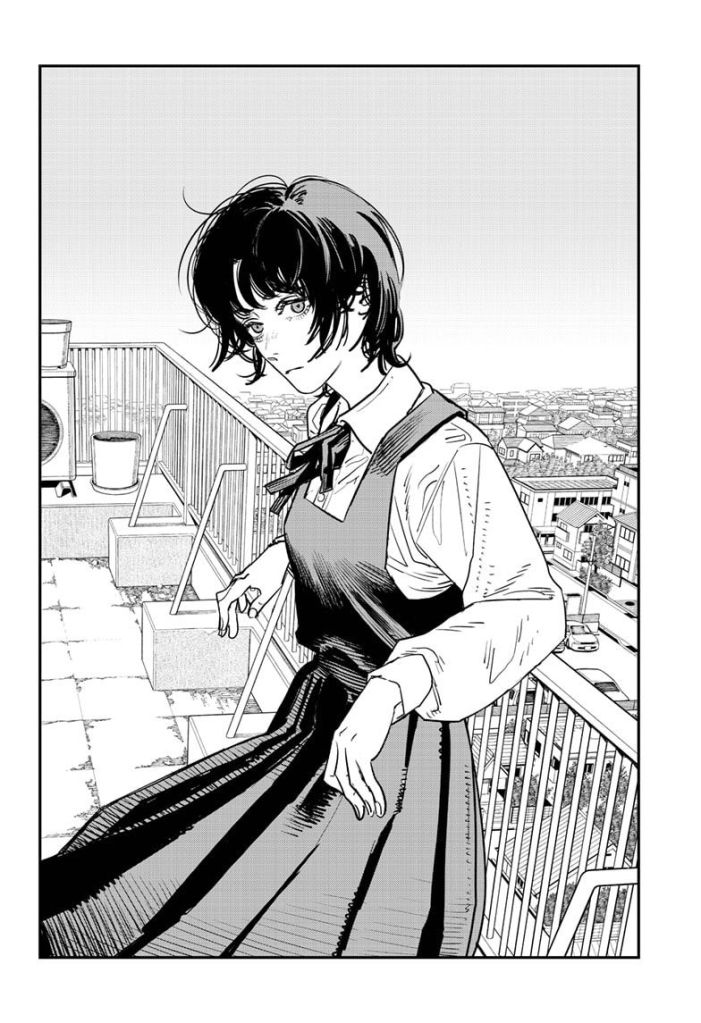
Despairing, unable to process both his mother’s death as well as having his heartfelt movie mocked savagely, he heads to the roof of the hospital where his mother died, intending to record his suicide. There he meets a female schoolmate named Eri.

She praises his film despite its many faults, and prevents his suicide by dragging him to an abandoned building to watch a series of movies. She intends for him to grow as a filmmaker, so he can ultimately make the movie that represents his true self.

Mr. Fujimoto, master of levitation, just how many twists did you cram in this one-shot? Most of what we witness through the manga is depicted as stills from recorded footage, so we are never sure of our footing. Are we experiencing a recreation of events as the protagonist would have wanted them to happen? Are we watching the elaborate fantasy that he created to cope with the losses in his life? Did any of it happen? Does it matter?

A masterful tale by one of my favorite manga artists, whose taste for the absurd is right up my alley. Sayonara Eri is an ode to the power of art to remake our lives, to allow us to endure the cosmic absurdity for another day.

Review: O Maidens in Your Savage Season, by Mari Okada

Teetering between three-and-a-half and four stars. Great title, by the way.

The author of this manga series is a veteran anime scriptwriter who has worked on, if not put together from the beginning, movies and series like A Whisker Away, Anohana, Toradora!, and Hanasaku Iroha, which are the ones I recognize now from her long list of credits. You can tell that level of professionalism in how she wrote this series: it balances the character arcs of five high school girls, each the protagonist of their own tale, who make up their local literature club. I envy authors who can orchestrate multiple viewpoints in the same story, each with its own character arc.

The series starts with one of the girls reciting a risqué passage of one of the novels they choose among themselves to read: A vision of her pale flesh, and then the soft tangle of her undergrowth, filled my eyes as I got down onto my knees and buried my face into the lush, fragrant bower; moused trembling lips over the contours of her flower to slake my thirst on the sweet, aromatic nectar spilling from the crevice. The way each of the five girls reacts introduces their character arcs.

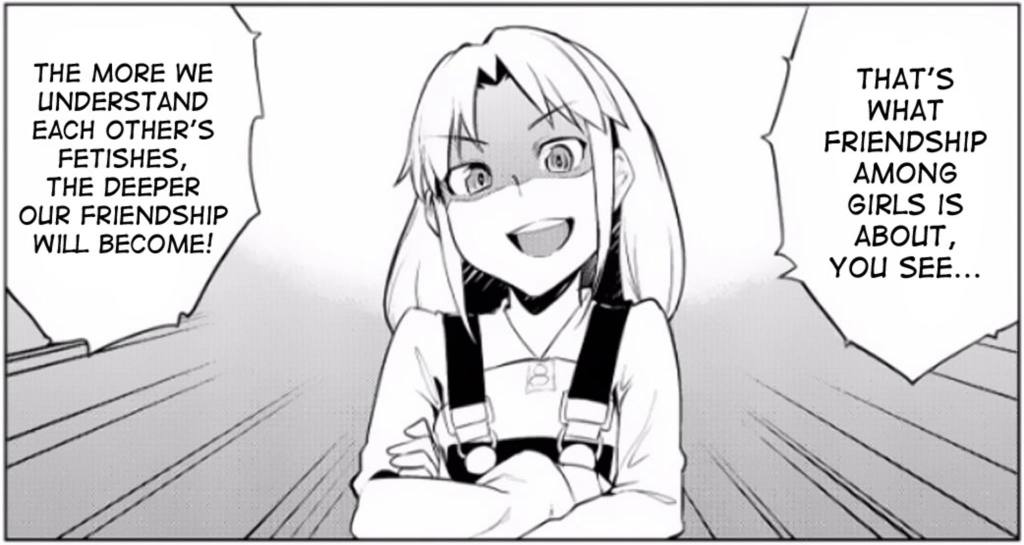
We have a physically undeveloped girl who, as an aspiring writer, is attempting to publish erotica, but she’s getting rejected because she lacks real experience, and she can’t wait to get fucked and get it over with. A cool, mysterious model-like beauty who appears mature, but who as a child had been (as we find out fairly early on) princess-zoned by a pedophile, which screwed her up. A “childhood friend” type who has lived her entire life next to the guy she likes, but who sees her as a sister, so she isn’t getting anywhere with him. A cheerful and kind girl who has never felt the tingles for anybody, and who isn’t sure if she even likes boys. Finally, a total prude for whom any notion of sex makes her feel as if she’s sinking in toxic sludge.

As the author exposes in the notes at the end of the series, she relied on anime artists to design the girls, and you can tell: those kinds of artists focus on differentiating the visual design of the characters as well as their personalities, something that even novelists should take into account. They end up feeling quite memorable in that respect, as if they could carry a much longer series.

Anyway, the inciting incident of the girls’ development happens when, during one of the many doki doki developments in their (non-suicidal, non-murderous) literature club, they discuss among themselves what they’d like to do before they died. The cool, mysterious beauty of the club says simply that she wants to get fucked (in softer terms). From that day onward, the five girls attempt in their fumbling way to navigate their developing sexuality, usually in manners that involve extreme awkwardness and running away; I don’t think I have ever read any other series in which running away was the solution to so many problems.

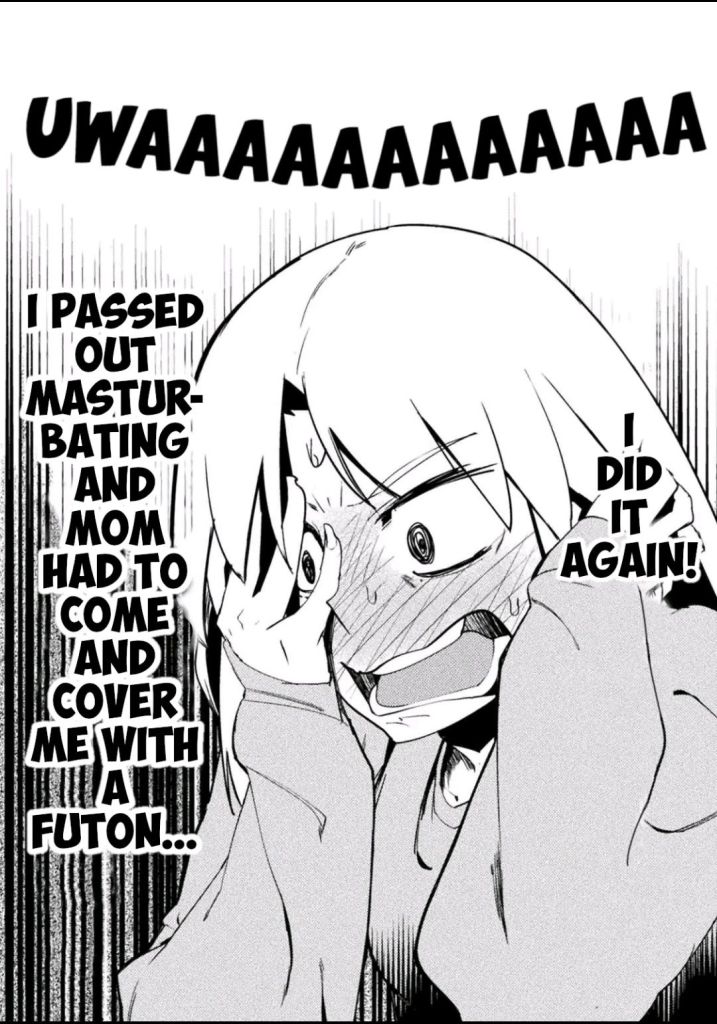
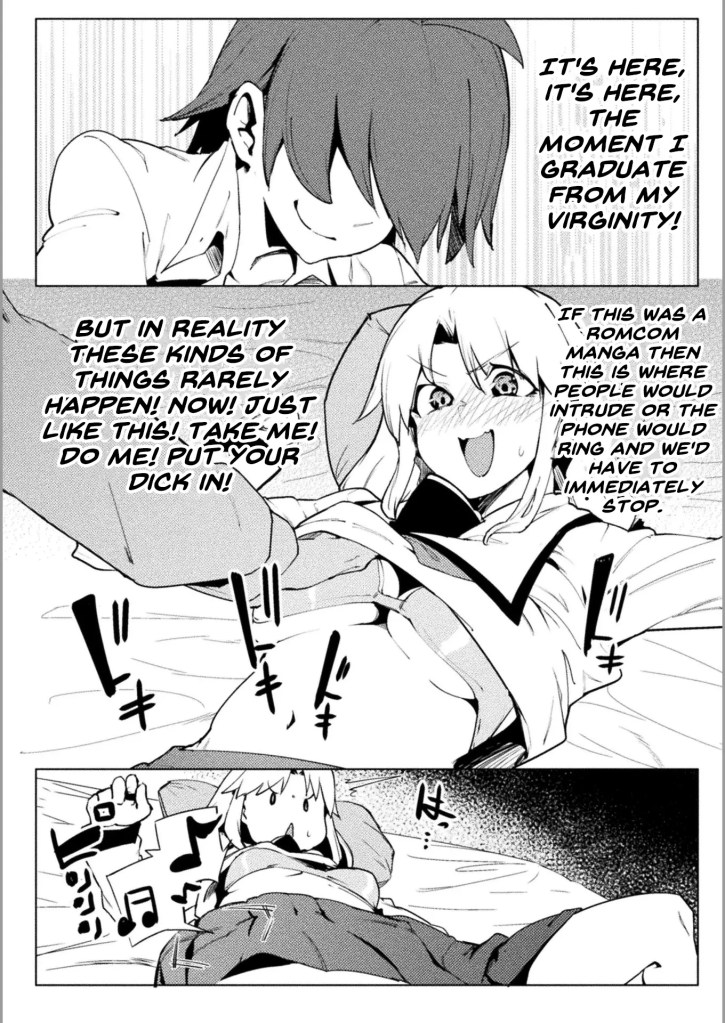
As the main dude in this story we have the childhood friend and neighbor of the girl who wants to date him. For whatever reason he’s seen as a suitable mate, although the guy is a clueless dork who is obsessed with trains. As I was wondering what angle the author was playing with him, she soiled the guy further by having that girl catch the kid at home as he was masturbating to rape porn (onboard a train, of course). This is the link to that moment in the anime adaptation.

The girls don’t understand their feelings nor their impulses, and make dubious decisions like trying to score with their teachers, with their former abusers, with each other’s love interests, or with each other. Quite realistic and entertaining in that respect.

Although I have read plenty of manga over the years, even these last few, that involved high schools somehow, this was the first series during which I thought, “Oh shit, is this too girly for me?” I don’t read straight shoujo (nor straight shonen for that matter; I couldn’t get into My Hero Academia). I recall an anime whose concept intrigued me years ago, because it involved a magician who traveled to the past and had to hang out there for reasons. I was going along with its girly parts until they started using pocky sticks as magic wands, at which point I was forced to beat my chest and look up videos of people pummeling each other, to regain my masculinity. But yes, during this series I’m reviewing, I wished it fell much more into the seinen category. Curiously enough, that’s what the author intended, as she says in the notes, but when she started writing the script, the girls kept rebelling, due to their initial innocence, to the sexual activities the author intended to force them through. Still, the story is likely quite risqué for Japan.

I enjoyed the story. I empathized with the girls’ struggles to shed their innocence and become hardened degenerates. However, some emotional moments didn’t land that well for me; I felt that he author was trying to tie everything too neatly. But perhaps I simply didn’t understand the emotional depths she was plumbing. I’m quite emotionally retarded, after all.

Anyway, you’ll enjoy this series if you are interested in the budding sexuality of high school girls.

Ongoing manga: Vinland Saga, by Makoto Yukimura

Let me tell ya about the odd manga series that is Vinland Saga, with which I’ve had a peculiar relationship. This is mainly the story of one historical dude named Thorfinn Karlsefni, born in Iceland but destined to spend most of his days very much not in Iceland.

For me, since the tale went through its massive inflection point, Vinland Saga became two stories in one. In the first half, we meet Thorfinn as a kid when he was living with his family in their Icelandic village. Thorfinn’s father used to be a badass mass murderer for some famous Nordic group of killers, until he got sick of it and adopted the philosophy that the true warrior doesn’t fight. After Thorfinn witnesses the consequences of such a change in perspective when they meet a group of hardened killers, our protagonist becomes consumed by a thirst for vengeance that put other vengeance addicts to shame; the guy lives to get stronger, killing whoever stands in his way, in order to murder the man responsible for his rage. We follow him, and his group of mercenaries, as they invade, pillage, murder, and murder some more.

This isn’t much of a review, because, to be honest, I’ve forgotten most of what happened in the first part; I must have read it perhaps a couple of years ago. The point is that for me, the notion of Vinland (that, as a historical aside, was what the first Nordic settlers called North America when they reached the place about five hundred years before Columbus) floated as an intangible Shangri-La: a virginal place where Europeans could flee from the horrors of war, slavery, disease and their own general stupidity to build a new nation that would know no war nor slavery. As the main characters traveled further and further east (pretty sure they got to the so-called Byzantine Empire (actually the eastern half of the Roman Empire; RIP, never forget)), I was happy to hold in my heart that mythical Vinland as the childhood dreams of a broken Thorfinn, who had known nothing but war and death for as long as he could remember.

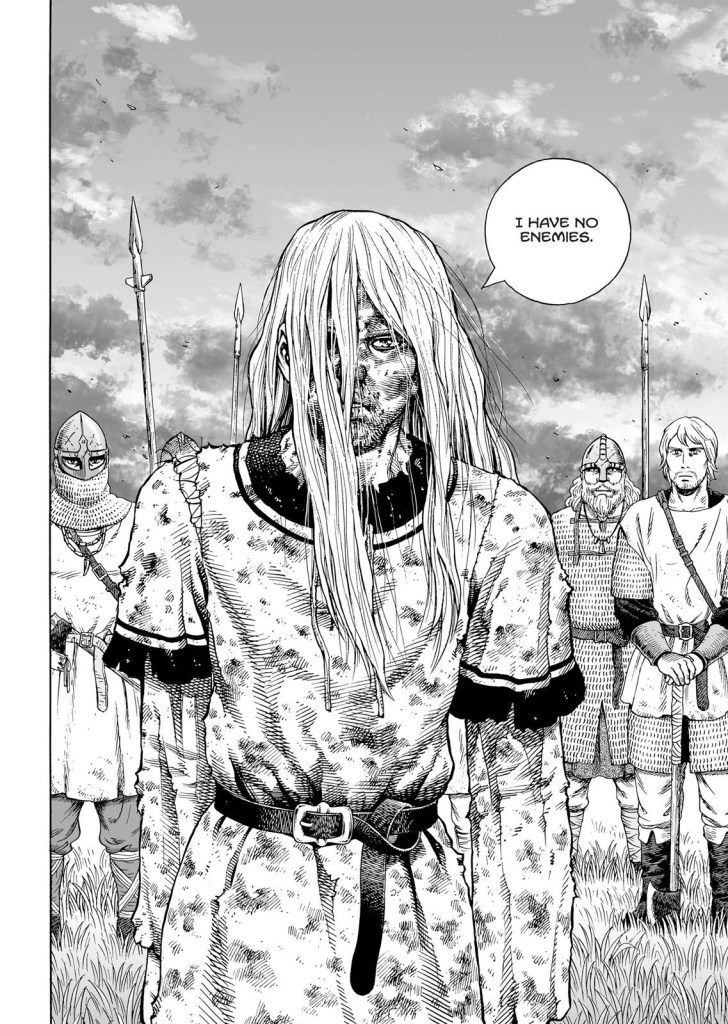
But Thorfinn went through a personal revelation that has become a bit of a meme recently for mysterious reasons.

As a man who had killed hundreds whose spirits kept tormenting him in nightmares, who had lost his freedom and nearly his life, he turned around and dedicated himself to absolute non-violence. He came to believe that there was no such thing as a righteous kill, and would go to any extent to prevent war from breaking out. With that perspective, he returned to Iceland and gathered a crew of settlers to sail westward and found a new nation in which swords wouldn’t be necessary.

I found myself drifting away from the series at this point. For me the story seemed finished. Worse than that, I started considering Thorfinn an idiot. As a leader who had to take care of a few dozen settlers, he prohibited them from having weapons or building defenses, believing that they would be able to coexist with the natives, whom predictably would consider the Nordics as invaders. Most settlers around him saw Thorfinn as a good guy, but a naïve idealist who may get everyone killed. Now that I’m up-to-date with the manga, I suspect that the author is going to pull a brilliant gotcha to show that Thorfinn’s noble idealism could not survive reality. If his story ends up following the conclusion of the historical Thorfinn Karlsefni, I don’t see how it could go any other way. The author has said recently that the story doesn’t have much longer to go, so we’ll see.

Now let me tell you about this crush of mine. Name’s Hild. Even as a teen, living in a small village with her family, she was a Leonardo da Vinci of the Early Middle Ages, destined to die in obscurity if or when some assholes raided the area.

After a personal tragedy, she finds herself scarred and abandoned in the wilds. Turned into a stoic, tenacious loner, she fends for herself hunting with her own custom-made crossbow, until years later she casually comes across the person responsible for the deaths she had vowed to avenge.

Hild should be the protagonist of Vinland Saga, and yet she’s conspicuously underused as a secondary in a large cast. As far as I’m concerned, Hild should be the protagonist of every story.

Anyway, don’t sleep on Vinland Saga, you who have checked out lots of manga recommendations and passed on this one because you don’t care about vikings. I don’t give a shit about vikings, and this story is fantastic. Follow the adventures of Thorfinn and his pals as they travel around in medieval Europe, meet lots of interesting people and kill plenty of them. In the first half, at least.

Two full seasons of the anime adaptation have already been produced. Regrettably I only watched the first four episodes of the first season, but they were very well done. Here’s the trailer of the first season. It seems that they are on Netflix too.

Review: Misumisou, by Rensuke Oshikiri

Four stars. I don’t know what the title translates to, but it could have translated to Fuck Around and Find Out.

Our protagonist is a middle schooler who moved out with her family to the boonies for reasons. Her new town has so few children that once her class graduates, her middle school will close down. It also happens that most of her classmates are unredeemable psychopaths who bully our protagonist with the usual middle schooler hijinks: they carve insults on her desk, steal her shoes, trap her in a garbage dump, kick her father on the back with drawing pins attached to the sole, shoot her with a crossbow, stab her repeatedly.

Her parents realize that her classmates are demons, so they allow her to stay at home. However, the horrid shitheads want their torture doll back, and they do something irreversible. I don’t want to spoil it; the manga itself screwed up by showing it at the end of the first chapter despite the fact that it happens a few chapters later.

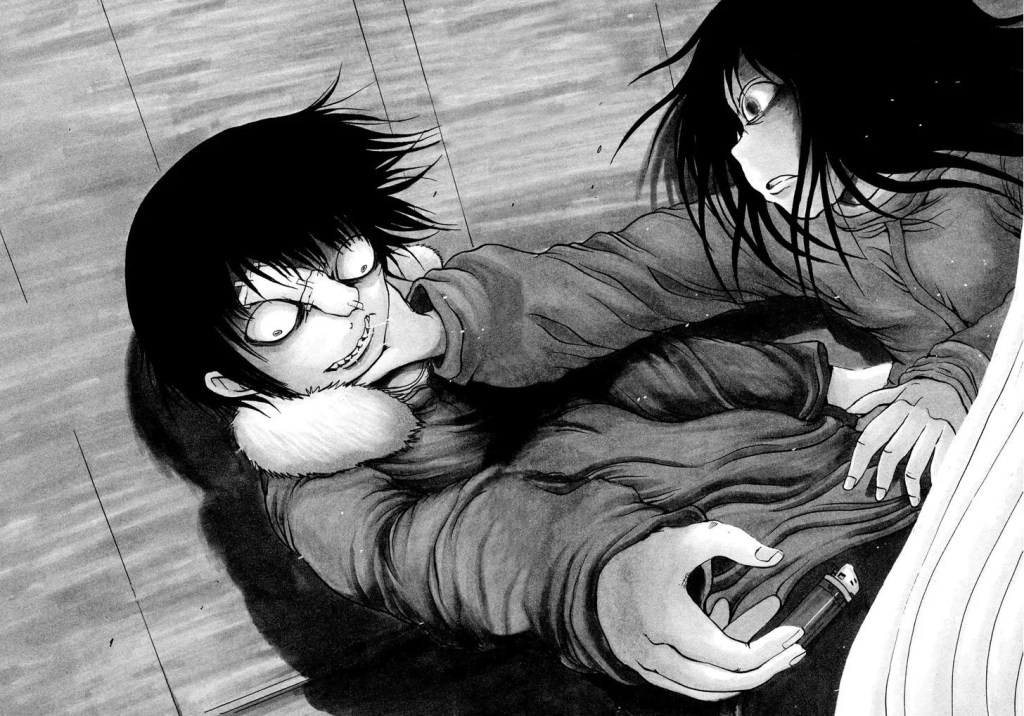
Anyway, the protagonist is left with little to live for except murderous revenge. I’m talking splatterpunk, intrusive-thoughts-realized violence. I got bullied in school as well, so I derived quite a bit of pleasure from the protagonist’s balls-to-the-wall path of action.

I wanted to post quite a few other panels, but they were too gory. You’ll enjoy this manga if you like the sight of middle schoolers getting brutally murdered. They fucking deserved it, though.

Someone made a live-action adaptation of this lovely story. Here’s the only trailer that doesn’t spoil the whole thing:

Review: Teisou Gyakuten Sekai, by Amahara

The title of this manga series translates to The World of Moral Reversal. It follows the adventures of an attractive high school girl who gets isekai-d into an alternate Earth. This new reality is nearly identical except for the fact that women are now as horny as guys were in her original world, while the local guys are as prude as pure maidens. The entire society is built around capturing women’s arousal, because they will waste lots of money to satisfy it: advertisement is full of nearly naked dudes with huge packages, most of the porn is aimed at women and focuses on men’s bodies, and even regular TV shows pull off daring camera angles to showcase the physical talents of their male casts.

Our protagonist hangs out with the same two girls she knew from her former world, but in this one they have been transformed into a pair of horny monkeys trapped in a spiral of lewd thoughts, who can’t wait to cast off their virginity to any male willing to give them the time of the day. That’s unlikely to happen any time soon, the same way that female classmates in the protagonist’s former world would be reluctant to engage a pair of virgin males who loudly proclaimed the virtues of some hentai book in the classroom.

The story is a slice-of-life that often feels as if the author made a list of all the lewd behaviors that tend to be characteristic of men in the real world, only to then assign them to women and do some entertaining, frequently funny commentary.

Instead of maid cafes, girls go to samurai cafes where attractive boys treat them like princesses for tips. Girls take off their tops while playing tennis in the school gymnasium to attract the attention of the boys. The manga club in school is made out of awkward female loners who draw hardcore hentai. Groups of girls gathered around desks argue about the most interesting objects with which to penetrate themselves. Girls hate exposing their nudity to each other, not wanting other girls to notice any size differences or skin conditions. Female perverts fly drones over men’s public baths to record the action. Sports events have to deal with female streakers. Girls refuse to talk about female underwear, let alone go on trips together to buy some.

The author justifies the logic of this brave new world by saying that because girls can come far more often than men, and are mainly responsibly for bringing about the next generation, it makes sense for them to be far hornier than men. It’s a matter of survival of the species.

My favorite sequence involved an awkward loner guy from the protagonist’s former world also getting isekai-d to this alternate Earth of horny girls. He immediately prostitutes himself to the protagonist’s friends, whose previously aimless lives from then on start revolving around earning enough money to get back to fucking.

All in all, this series is lots of fun. If you’re about as much of a pervert as I am, you’ll probably love it. Apparently it was made by the same author of Interspecies Reviewers, a manga about guys who fuck monster prostitutes and then review the experience according to the particularities of those fantasy races, or whatever. I haven’t read it yet. But I know that the anime adaptation got taken off the air in the US because it was too lewd. That’s a badge of honor.

Review: The Fable, by Katsuhisa Minami

Five stars.

I’m always on the lookout for new manga to read, but I had only come across this award-winning series twice, the latest one when ChatGPT mentioned it. I wish I had read it sooner, because this long series (about 240 chapters) has become one of my favorites.

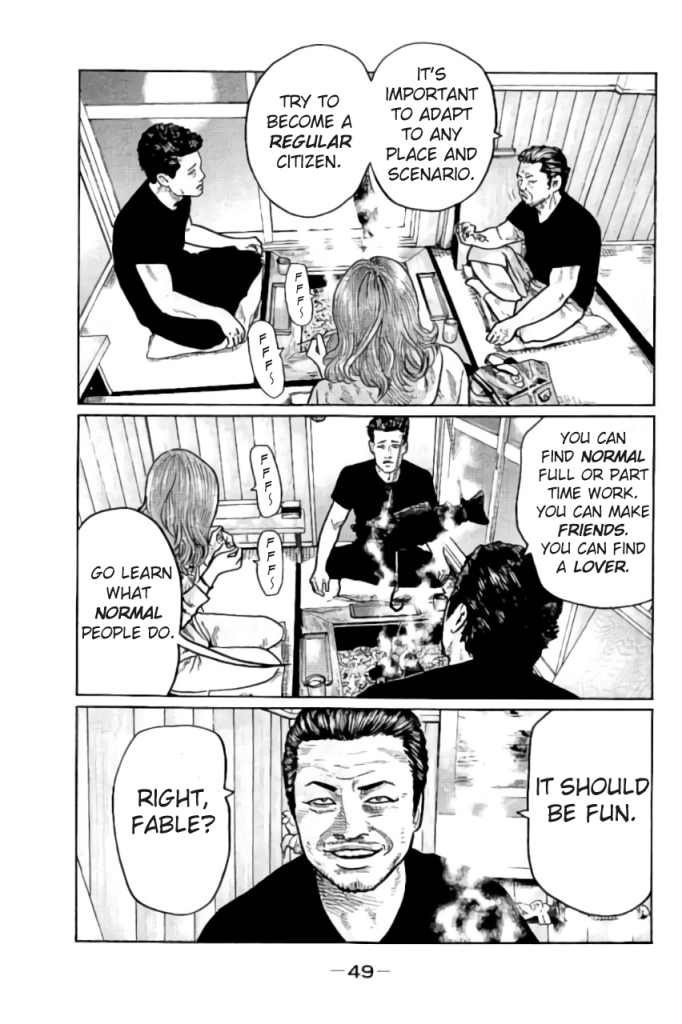
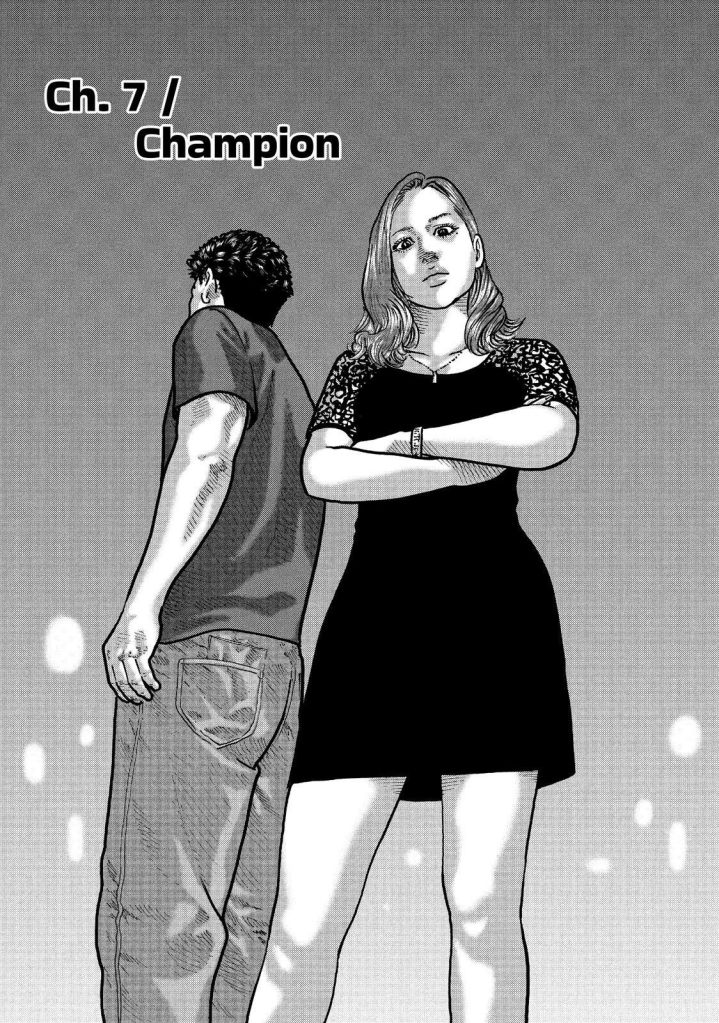
The story follows an assassin who works for a nameless organization called Fable by the criminal underworld of Japan. This assassin, considered the best of the best, is, as stated by his colleague slash little sister, a savant, a genius at killing, but a kid at everything else. He grew up fending for himself in the woods for days if not weeks at a time, eating all kinds of nasty shit, and stabbing bears in the eye. Apart from the psychological effects that such an upbringing would have on people (which is explored in the story), the guy is also socially blind and has little concern, as well as understanding, for social norms. Pretty sure he’s supposed to be autistic, because the other hardened assassins consider him a weirdo.

After an introductory hit on a bunch of goons, the guy’s boss tells both of his disciples that they have to lay low for a while: they’re ordered to leave town and spend a year living under the wing of the local Yakuza family. They are prohibited from killing anybody in the meantime, under the threat of getting whacked themselves.

The second disciple is a young woman who lost her parents at an early age and then was trained as an agent by this shady organization. She keeps herself drunk most of the time, partly to stave off boredom, mainly to drown the traumas that, along with her training, have rendered her unable to have normal relationships with people. The author could have played her entirely for laughs, or as a fool, but she’s tough and dependable, often the single person in charge of making sure that the dangerous people around her don’t jump at each other’s throats.

When the couple of assassins start living at the Yakuza safehouse, we see what passes for normal behavior for our mentally peculiar protagonist: he sleeps in the bathtub, he walks around (and greets guests) buck naked, he eats fish whole, and is endlessly amused by a third-rate comedian named Jackal. Because the protagonist comes across as an unimpressive dweeb, the hardened Yakuza people he gets to meet want to test his mettle, or resent that he’s occupying the safehouse rent-free for a year. Various dangerous individuals end up trying to ruin his existence for one reason or another, and he’s forced to deal with them without relying on the main ability that made him a legend.

He also pushes himself to hold down a normal job for near minimum wage, as a delivery driver and illustrator, which puts him in regular contact with normal people, exposing them to the dangers that follow him around.

The author blended together drama, comedy, action, and slice-of-life, with endearing, intelligently-written characters that hang out like buddies one moment only to then shoot each other in the face. For example, the grounded grittiness of a nerve-wracked underworld goon who has to avoid getting killed because he has outlived his usefulness, contrasted with a bored drunkard getting a young player so shit-faced that he injures and shits himself in public.

I can’t properly explain the vibe of this series, the then-and-there-ness of its narrative, but you can tell that this was a labor of love for the author, and that he lived vicariously through it. Even secondary goons that would have been cardboard cutouts in other stories get character arcs or at least the sense that they are the protagonist of their own story.

I only have two complaints, the first one quite significant: the first few chapters of the story felt off. I didn’t quite understand the vibe that the author was setting up, perhaps because at that point I assumed that the protagonist wasn’t intended to come off as an autistic weirdo. That led me to abandon the series the first time I came across it. My second complaint is that some of the fights were supposed to happen so fast (particularly those between members of the same organization of assassins) that they were depicted as blurs, which made them conspicuous in a medium that has depicted most of the memorable fight scenes in fiction.

This series was turned into a live-action film that is probably shit because the Japanese can rarely adapt their mangas into live-action movies properly (I suspect that it has to do with how the staff members and actors get chosen, because they have no issues creating amazing anime). Anyway, here’s the trailer:

Lady Gaga? Seriously?

If you enjoy manga and love character-driven stories, please read this series. It’s amazing.

Ongoing manga: Tengoku Daimakyō, by Masakazu Ishiguro

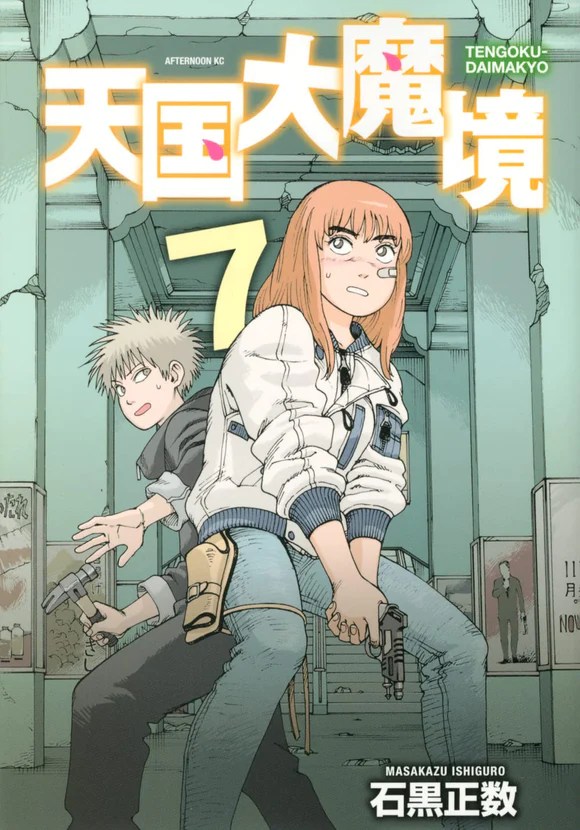
I dislike reviewing manga series when they haven’t finished; more often than not, how all the parts end up tied up together influences my view of the entire story. There are quite a few manga series that I follow and love but that haven’t ended yet, like Dungeon Meshi, Kaiju No. 8, Boy’s Abyss, Chi no Wadachi, etc. However, a week ago I came across the most intriguing manga in a good while, Tengoku Daimakyō (the title apparently translates to Heavenly Delusion), which has “only” reached chapter 55 (such series tend to end at about chapter 100), but that I’ve been looking forward to sit down and continue discovering what it has to offer.

This story is an odd mix of the Fallout series of games and The Last of Us (the first game, not the TV series, and certainly not the second game). We follow two storylines. In the first one, a bunch of kids are living in a controlled environment designed to raise them in a certain way while isolating them them from the outside world. The kids are tended to by AI, as well as by shady adults who seem to be guided by a cult-like drive to create a “heaven on earth,” where people won’t be discriminated in any way. You quickly realize that these kids slash test subjects have been manipulated genetically to whatever extent, and some of the most interesting scenes of that storyline involve children being unable to comprehend how utterly nuts their environment is; they are unfazed when they come across babies that look like alien squids, because that’s how human babies look like as far as they know. One of the children mingling with the rest straight up looks like an alien. We are only given a bit more information than the children, because we follow some of the adults that handle the operation. In general, the whole deal works like a Fallout vault.

The main storyline involves a twenty-year-old redheaded bodyguard who wears a cool jacket, and the fifteen-year-old kid for whom she’s working. They live in the post-apocalyptic ruins of Japan after some cataclysm destroyed a world that had achieved artificial general intelligence. Enough time has passed that the newest generations don’t even care how things ended up this bad. Anyway, for unknown reasons, disturbing monsters with superpowers are roaming the place, which has prevented human beings from establishing lasting settlements.

The aforementioned redhead, who is the main protagonist of this tale, was offered work by a sick young woman who promptly died, but not before bequeathing the redhead a ray gun along with the task of accompanying the fifteen-year-old kid to locate a place called Heaven, where someone who shares a face with the kid will need to receive an injection of a mysterious medicine. Our main couple sets off together to explore a ruined Japan. The redheaded girl also intends to locate the two people she remembers from before a monster attack landed her in a hospital bed for about a year.

The anime adaptation has already been produced. Here’s the trailer:

Troublingly enough, though, it has been picked up in the US by Disney Plus. This is a casually hardcore series that involves regular nudity, murder, The Thing-like grossness, a thirteen-year-old prostitute/hotel tycoon, rape, child rape, and such. There’s thematic stuff that Western fiction wouldn’t touch with a teen foot pole; for example, one of the settlements that the main couple comes across is controlled by a group of female supremacists that cut off women’s breasts if they are deemed too big, that kill any older men they come across, but capture attractive young men (and kids) to keep them as “seed pigs”. I have to assume that the anime, which I’ve barely started watching, must have been toned down significantly, which would be a shame.

All in all, fantastic worldbuilding, very detailed landscapes of a post-apocalyptic Japan, natural-sounding dialogue, cool fight scenes, and a narrative that gets sadder and more tragic the longer it runs. The only downside for me, quite minor in comparison, is that a couple of “evil” characters come across a bit over the top. Anyway, check Tengoku Daimakyō out. Or don’t. Do whatever you want.