Motocross Legend, Love of My Life, Pt. 13 (Poetry)

If you haven’t read all the previous parts or you don’t remember them well, I urge you to read this novella from the beginning (link here).


My wife’s accusatory glare and weaponized tongue,
Carrying years of racked-up bitterness,
Jabbed, punched, kicked, stabbed.
She flayed me inch by excruciating inch.

You’re a grown man. Stop moping around.
Get off the fucking pity wagon.
Since the beginning, did you have zero intention
Of being fully committed to this marriage?
I gave up law to be a housewife. Am I not enough?
Oh, forgive me for interrupting your endless reveries.
While you’re busy mourning your teenage sweetheart,
I’m here, flesh and blood,
Holding together the family you keep forgetting.
Are you satisfied tormenting me and our child
Because you refuse to let that girl go?
Why do I need to measure up to an idealized teenager?
How is it possible that someone you dated
Fifteen fucking years ago,
Who doesn’t even exist anymore,
Matters more to you than your wife,
The mother of your own fucking kid?

My lovely wife had a lawyer’s soul:
She saw every argument as a chance
To uncover flaws in logic,
To chip away at the opponent’s stance,
To claim the victor’s glory.
As for me, beaten and battered,
I had become a ragdoll
Growing threadbare by the day.

Whenever I anticipated the acidic talk,
I cowered inside my besieged mind,
Clutching at the crumbling battlements,
Lacking the strength to yell at her, or beg her,
To shut the fuck up.
My wife, along with her vindictive glare,
Elbowed her way into my memories of you
To contaminate that sanctuary,
And every time she brought you up,
A pang rippled through my scar tissues,
Echoing, “You’re dead, you’re dead.”

Getting married, sharing an apartment,
Should have provided a traveling companion
With whom to endure this lonesome life.
Instead, I spent my energies erecting walls
To shield my gangrenous heart,
And to muffle any human utterance
Until it became incomprehensible noise.
I felt like I had invested my adulthood
Anticipating a visit to a luminous city,
Saving up and planning meticulously,
Only to arrive at a filthy, ruinous dump
Infested with vermin.

I had surrendered control
Of my meat-and-bones vessel
To someone who didn’t respect me,
Who exploited and mistreated me.
I wished a yawning chasm
Would swallow my wife,
My apartment, this city,
But the mirror of time showed
My stooped figure decades older:
A stammering, browbeaten coward
Just like my father.

My wife was loading the dishwasher
When she casually spewed an attack
That I recognized by its acidic tone,
Even though I had blocked the content.
This time, instead of keeping quiet,
I told her to turn around and listen.
She froze, then straightened up,
Closed the dishwasher with her hip,
And faced me, arms folded,
Her gaze fixed upon me
Like the muzzle of a revolver.

“Each morning since April 27, 1999,
I wake up to the absence of the person
Who made living worthwhile.
You’ve never lost anyone dear,
So you cannot possibly grasp
This grief that has eroded me daily.
You’re frustrated because I have failed
To measure up to your ideal husband,
But I’m the man that remains,
And though I stumble, I’m here,
Doing the best I can with what’s left.
Countless times I’ve wanted to die,
But I chose to keep going for you,
And for our son, who deserves a father.”

“Stop neglecting our family by prioritizing
Your unhealthy fixation with that girl.”
“Do you think I have a choice?”
“Get a fucking therapist. Take antidepressants.”
“Should I erase her, then? Pay to have her scrubbed?”
“You act as if she were the love of your life,
Even though she ruined you.”

Her words had shotgunned my ribcage.
I breathed slowly to quell the shaking rage.
“Maybe love and ruin are interchangeable.
You know, when I agreed to marry you,
I had hoped for a lifelong partner
Who would inspire and encourage me,
Who wouldn’t insist on harassing me
Over the most traumatic event of my life,
Who would provide even a fraction of the joy
That Izar gifted me by simply existing.”

On the opposite side of the kitchen island,
The skin around my wife’s eyes tightened
As her lawyerly mind analyzed my words
For openings, inconsistencies, weaknesses.
Amid the tension, an out-of-place noise:
The creak of our son’s bedroom door.
Drowning out my wife’s bitter tirade,
I imagined his small heart pounding.
Behind that door, a wary creature
Hoped to escape notice.

That evening, I ventured into his bedroom,
Whose walls were a galaxy of space paraphernalia.
My son, reclined against the pillows,
As the glow of the bedside lamp
Illuminated his focused features,
Lost himself in a novel titled “Ender’s Game.”

He tilted his face upward at me as if I were a sun
Failing to warm his frozen planet.
Those glasses magnified deep-set eyes
Whose gaze held mine warily.
“I read that one back in middle school,” I said,
“And I remember enjoying it quite a bit.”
“It’s good,” he said,
Then refocused on the page.

How could I, a ruined man, improve my son’s life?
Instead of training him to carry on into the future,
To survive despite crushing unhappiness,
Perhaps I should abandon him,
Let his resilient mother forge ahead
Without the burden of my misery.

Izar, if this child had belonged to us,
How would you have nurtured him?
You, the sun I revolved around.
You, who had taught me what it meant
To make the best of a crumbling world.

My son and I rode on leg-powered bikes
Past the ruins of Roman furnaces.
Our pedals and chains clicked rhythmically.
On the muddy path beneath our tires,
Gravel crunched and stray twigs snapped.
Puddles from recent rainfall mirrored
The dove-gray cloud cover
And arching, naked branches.
A blanket of fallen leaves blurred
The boundaries of the unpaved path
Flanked on our left by an ancient wall:
A mosaic of weathered, moss-daubed stones.
The mist that hung in the air cooled my lungs.

We reached a fork in the trail
Where a slope would force us to dismount
And push our mountain bikes uphill
While seeking purchase on exposed stones.
“Let’s head up there,” I said.
My son, as he readjusted his helmet,
Shot me a skeptical look.
“Where does it lead?”
I got off my bike.
“I don’t know.”

A meandering dirt path, worn by footsteps
But now reclaimed by nature,
Opened to a clearing of greens and browns
Where square, one-story buildings stood,
Their once-white walls aged, stained,
And half-conquered by creeping ivy.
“Maybe we shouldn’t be here,” my son said.
I stopped and listened to the chirping birds,
To the distant creaking of branches,
But no one had claimed these ruins.
“Let’s explore,” I said.

We were rolling our bikes through the garden
Of a family gone for decades.
An anonymous hand had gathered stones
To form the sinuous banks of a stream.
Water rippled, reflecting dapples of sunlight.
Wide-leafed plants, unique in these woods,
Still blossomed white, bell-like flowers.
Beside the stream, on a filthy, pitted wall,
An intact grill guarded a window opening
That gaped like a hollow eye.

My son followed cautiously.
“How old do you think this place is?”
“It belongs to the Roman era.”
“C’mon, dad. Romans lived, like,
A thousand years ago.”
“More like two thousand.”
“Mom would scold us if she saw us
Wandering around abandoned places.”
“No doubt. But she doesn’t have to know.”
“Imagine if we owned this secret space,
And transformed it into a hideout.”
“These days? They would take it from us.”
“What if zombies attacked now?”
“We should have brought baseball bats.”
“I bet if I had a machine gun,
I’d blast every last one of them.”
“Good luck convincing mom to buy that.”

We let the bikes fall into a patch of tall grass,
Then we entered the roofless, derelict house.
Its floor was carpeted with dried leaves
That crackled under our sneakers.
Against the inner walls and their peeling paint,
Someone had arranged piles of chipped bricks,
Remnants of moss-cloaked furniture,
Rusted mattress springs.
Logs lay scattered, their bark mottled.
Weeds had sprung up all around,
Thriving amid the detritus.
I inhaled the scent of moist soil and tetanus.

At the end of the garden stood a woodshed
Stacked with logs shrouded in grimy cobwebs
Like antediluvian bones in a catacomb.
Decades ago, the owner picked these logs,
Hand-chopped them, and stored them as fuel
For fires that would never come.


Author’s note: the songs for today are “Swan Dive” by Waxahatchee, and “Cosmic Love” by Florence + the Machine.

Review: Sputnik Sweetheart, by Haruki Murakami

Three and a half stars.

Let’s focus on the most memorable character of this strange little tale: a young adult named Sumire, who dropped out of college to pursue her dream of becoming a published author. She’s disorganized both in her personal upkeep as well as her approach to writing: she can start or finish stories, but not both. She suspects she will never become a pro, but can’t imagine doing anything else, and when she turns twenty-eight, her parents will stop financing her lifestyle.

She’s used to calling the narrator at odd hours of the night to discuss her worries and seek his guidance, even though the guy is a school teacher and could use the sleep. However, they’re each other’s only friend in lives that have been characterized by solitude and detachment. Sumire is unaware that the narrator is in love with her, or pretends that she doesn’t know, but she can’t reciprocate his feelings because she’s in love with a Korean-born woman who’s about fifteen years older than her.

The little there is plotwise (not that I mind; I tend to dislike convoluted stories) involves the Korean woman, named Miu, hiring Sumire as an assistant; the lady runs a wholesale business that buys wine from fancy places and sells it in Japan. Even though Sumire fears that keeping a job will wreck her literary aspirations, she surrenders to the flow of a routine that allows her to spend her days with her beloved Korean mommy. Soon enough they’re jet-setting all over the world.

The narrator fears that he’s going to lose Sumire. She writes him a letter from Rome, but shortly after he stops receiving news from her. Suddenly, the Korean lady herself calls him: he’s to abandon everything he’s doing in Japan and hurry to a small Greek island, because something has happened to their friend.

That’s all I want to reveal about the plot. My favorite parts of this story take place in Japan, when Sumire and the narrator are interacting. Murakami knows how to weave a spell when he’s letting you experience the private lives and interactions of his characters, who are usually lost and trying to understand themselves as well as the world they have found themselves in. His Norwegian Wood reached the heights in that regard, as far as I know from his works. But as in plenty of his other stories, Murakami introduces supernatural elements that for me weren’t supported by the story, and that distanced me from the characters. Even though Norwegian Wood made Murakami a known author (and a millionaire), it’s perhaps one of the least Murakami-ish books of his. Worse yet for me: often the supernatural elements he includes feel random, as if he came up with them during freewriting but couldn’t make them fit in, or didn’t care to do so.

Murakami’s writing also has this thing in which he’s on the verge of saying something profound, of hitting some transcendental point, only to screw it up with a few lackluster phrases that don’t say much of anything. I don’t recall how common that was in Norwegian Wood, but I had that impression quite a few times during this story. The narrative also features texts written by Sumire, and it didn’t help that her style annoyed me.

My least favorite element of the story was the narrator himself. Murakami’s male narrators are often bland, tepid, non-committal, and the one from this novel I’m reviewing is the epitome of those, that I can recall. His opinions seemed vague, unconvincing, held because they wouldn’t require him to take a firm stance on anything. I had a hard time understanding why Sumire would care so much for him. Worse yet, his morals were beyond questionable: all his girlfriends were other men’s girlfriends or wives, and he let a shitty little kid get away with his kleptomaniac ways for reasons that for me had more to do with dislike of authority.

The main theme that Murakami was playing around with centered on the notion that some people are doomed to a life of solitude, and that their instances of true contact with other alike souls will be fleeting, like two satellites briefly passing each other. By the end, the story left me feeling empty, as if something important had been lost along the way, so good job for capturing that impression.

Here are some quotes from the book:

Why do people have to be this lonely? What’s the point of it all? Millions of people in this world, all of them yearning, looking to others to satisfy them, yet isolating themselves. Why? Was the earth put here just to nourish human loneliness?

I dream. Sometimes I think that’s the only right thing to do.

And it came to me then. That we were wonderful traveling companions but in the end no more than lonely lumps of metal in their own separate orbits. From far off they look like beautiful shooting stars, but in reality they’re nothing more than prisons, where each of us is locked up alone, going nowhere. When the orbits of these two satellites of ours happened to cross paths, we could be together. Maybe even open our hearts to each other. But that was only for the briefest moment. In the next instant we’d be in absolute solitude. Until we burned up and became nothing.

The answer is dreams. Dreaming on and on. Entering the world of dreams and never coming out. Living in dreams for the rest of time.

We each have a special something we can get only at a special time of our life. Like a small flame. A careful, fortunate few cherish that flame, nurture it, hold it as a torch to light their way. But once that flame goes out, it’s gone forever.

Life update (04/03/2024)

I’ve returned to work after the Holy Week holidays. I’m one of those authors who can’t earn a living through his works, and who clearly never will: I only write because my subconscious demands it, and I find myself disquieted by human company (to put it mildly), so networking is out of the question. My job as a computer technician at a hospital forces me to interact with non-technical-minded people who are generally also chatty, which is by far the worst part of my day, and I hate working at an open office, which forces me to absorb inane bullshit from coworkers. However, my job puts me in front of a computer for hours, and it allows me to edit my texts between tasks. I’ve settled into the routine of waking up at five in the morning to freewrite the next part of my story, then editing it at work. My editing process takes about fifteen times as long as producing the first draft, and it would likely drive anyone else insane, as I sieve through every single word to ascertain their place in the scene as well as the story at large. I also consider many alternatives along the way. Thankfully, due to autism and OCD, I find that process comforting; I’m uniquely suited to such painstaking tasks.

Also, I have experienced the private shame of returning to past texts and finding them awfully written, even though I was sure they would be good enough. The worst recent example was when I was commissioning the cover for my previous novel in English, titled My Own Desert Places. I linked the artists to the first couple of chapters, back then up at this site, warning them that they would require a revision. When I reread them, I was appalled to find out that the first few chapters were abysmal, nearly incoherent, to the extent that I questioned my mental state back when I uploaded them in the first place.

I think that during a shortish period of time back in 2020-2021, I prided myself in pushing out 4,000-6,000 words out a day, which isn’t hard at all to do if you rely on an outline, lack a social life, and freewrite everything. My Own Desert Places ended up being about 100,000 words long, and I finished it in a couple of months. Compare that with my ongoing narrative titled Motocross Legend, Love of My Life, that has reached 20,000 words in nearly four months. For me, though, the difference in quality is extreme. Although I loved that novel and I’m generally proud of it, one day I intend to revise it, republish it, and lead readers toward it again, but I dread what I’m going to find there.

Anyway, I’ve come to the troublesome realization that, although I dislike working as an IT guy at a hospital, it’s probably better for a writer, regarding the quality of their stories, to keep a full-time job unrelated to writing fiction, as long as it allows you to edit your texts. When you’re constantly aware of how little time you have to produce something meaningful, you don’t pad it with crap. Many full-time authors become self-indulgent, end up believing that anything goes. They are also required to push out books on a regular schedule to support themselves, therefore imposing extraneous deadlines on the material. I’m of the belief that a story takes as long as it needs to take, and somehow I’m always surprised when my stories end up ballooning far beyond my expectations, while feeling that what I have to include is necessary. For example, I was quite convinced that Motocross Legend, Love of My Life would take about four chapters, after which I would return to working on my ongoing novel. However, it will likely reach sixteen chapters, and along the way I have had to discard many moments that would have been good enough, but that ultimately weren’t necessary.

Although I write stories that in general terms could be considered literature, I barely read novels these days, opting for manga instead. In the last few years, I have failed to finish, or even get far into, the novels that have landed on my hands. More often than not it’s because the author is confusing their duty of telling a story with that of propagandizing a political ideology, which seems to be the default position in this rotten modern world. You likely won’t get published otherwise. Japanese narratives, at least manga, are free from this rot, and if you want Western stories that won’t stink like someone is just checking boxes and pleading not to be canceled (assuming they don’t have a far more sinister goal in mind), unless you come across a special author, you have to delve into the pre-2001 stuff, before the last remains of sanity were demolished.

I can count on one hand the amount of novels that have affected me as if I had lived through those events, that have connected with me so meaningfully. One of them, read when I was twenty or so, was Haruki Murakami’s Norwegian Wood. Unlike in most of his other stories, that one felt to me like Murakami was expiating a sin, as if he truly needed to tell the tale of a doomed girl and the adrift young man who loved her. Many years later I came across details of the author’s life that clarified for me that he was indeed expiating something: he had betrayed a college girlfriend of his, only for her to end up doing something irreversible. Norwegian Wood is, at least for me, clearly imbued with that regret, with the need to go back in time and save someone. I have something of a savior complex (plenty of my dreams or daydreams over the years have had to do with literally going back in time and saving people), and I’m hopelessly attracted to doomed females, with goes a long way to explain my attachment to that book as well as to other narratives such as my favorite manga series: Inio Asano’s Oyasumi Punpun.

Anyway, I figured it was time to get back into reading novels, but I didn’t want to waste my time with stories that wouldn’t affect me meaningfully. I went the route of searching for novels similar to Norwegian Wood. Unfortunately, book recommendations rarely work for me; too many times I’ve been recommended stuff like Ishiguro’s Never Let Me Go, which I found abysmal. My brain works differently to other people’s, so necessarily I don’t enjoy nor want the same things others do. Regarding stories, I want the author to put me then-and-there along with the point of view character, to experience their lives as they do. The narrative usually has to delve deep into mental issues, solitude, attempts to understand the world, and so on. I hate authors who waste people’s time with unnecessary material for pseudo-ideological reasons, for example forcing you to slog through paragraph after paragraph of noise because the real world is like that. Plenty of postmodernists fall into that category. No thanks: I’m fully aware of how annoying and ultimately meaningless the world is, and I read to escape from it. Also, any story has to compete with my daydreams; if they can’t offer me something more engaging than what I can effortlessly picture in my mind, I won’t struggle through it.

Unsurprisingly, some of the recommendations included Murakami’s other books. One of them, Sputnik Sweetheart, published in 1999, was the second of his I bought in Spanish after Norwegian Wood fascinated me. I have the distinct memory of having read through the book twice over the years, but apart from a few quotes that I likely came across on Goodreads, I couldn’t remember any single detail of the story. Now that I’ve gotten three quarters of the way through it, I’m disturbed to have found out that, indeed, I have forgotten every single detail of the story, as if I had never known anything about the aspiring author slash love interest that most of the narrative focuses on, nor the woman that the author was interested in, let alone the generally plain narrator. It makes me wonder about my state of mind when I read the book those two previous times, or if I’m genuinely losing mental faculties. I remember very little about my life, I suspect due to my lifelong issues with clinical depression; most of my twenties draw a blank. But at least I could rely on stories making a lasting impact on me.

Anyway, I think those are the only impressions I wanted to post on here for reasons that aren’t clear to me. Work is underway on my ongoing novella Motocross Legend, Love of My Life, which I should be able to bring to a satisfying conclusion, even though I suspect very, very few people care; I have never had such a low engagement with a story as with the sad tale of one aspiring motocross rider and the man who was left behind. I have no idea why, because I think it’s quite good. Check it out if you want.

Motocross Legend, Love of My Life, Pt. 12 (Poetry)

If you haven’t read all the previous parts or you don’t remember them well, I urge you to read this short story (or novella) from the beginning (link here).


Lunch break at last, I sat in the shade
Beneath broadleaved guardians.
My Izar, I’m here once again.
Come join me, hold my hand.
The world’s jagged edges softened
As your gentle light enveloped me.
Did your day treat you well?
Anything you want to share?
You’ve gotten hooked on a new manga?
Oh, I’d love to hear all about it.

On my commute home from work,
My eyes closed to shut the world out,
As I swayed to the train’s rhythm,
And the song of rain and thunder
Poured in through my headphones,
I felt your fingers caressing mine,
Tracing my knuckles and creases.

The morning light streaming
Through my bedroom window
Spilled into the open wardrobe,
Gilding the hanging garments,
Ranging from T-shirts to sweaters,
Whose hems were draped over the lid
Of the sturdy moving box
That enshrined your remains.

I caressed the rough, corrugated cardboard
That had cradled you for more than a decade.
With my family out to play at the park,
I heaved the box onto the marital bed.
When I peeled back the lid, you grinned
Through photos taken in the nineties.
I held hands with your motorcycle gloves.
As I listened to our pretend radio shows,
I laughed, and tears streaked my cheeks.

Izar, the things that bind us,
They are the only lasting truths.
Although your body turned to ashes,
Your name remains carved within me,
Inscribed inside my organs,
Scratched on my bones,
With every cell echoing it.
Once we are stripped of our shells,
Love is all we will carry.

On a stormy night, the beddings’ warmth
Had coaxed my wife into a snore-heavy sleep.
The wind battered the windows,
And raindrops tap-tapped incessantly.
I lay on the opposite side of the bed,
But in my mind I had returned to my old room,
Whose bed you and I had shared.
As we clung to each other,
And my fingertips skated up and down
The ladder rungs of your vertebral bumps,
I buried my face in the crook of your neck,
Where I sniffed your aroma:
Sunshine, cinnamon, motor oil.
We had woven our way into each other
By learning one another’s shapes,
What each vocalization meant,
What brought pleasure or pain.

Your warm lips brushed my earlobe.
“I missed you so much, you know.”
Izar, tell me when you want to leave,
And I will follow you anywhere.
Just say the word.
“Hey, Cap’n. I wanna ask something.
How long would it take to die from drowning?”
Drowning? You mean falling into a river?
“No, like jumping off a cliff.
Is it true you can’t scream underwater?”

My wife had been avoiding me since that morning,
But I traced the stench of cigarette to the balcony,
Where I found her shrouded in her wool robe,
Seated with one bare leg crossed over the other,
Defiantly exposing her skin to the biting breeze.
A thread of smoke rose from the cigarette
Clenched between her index and middle fingers
As her gaze pierced through the landscape
To wander in some faraway place.

I asked her if anything was the matter.
She shot a sidelong glance at me.
The cigarette’s cherry flared orange
As she sucked on the foul stick’s vileness.
The taps of pedestrians five stories below,
Along with the hum of passing vehicles,
Accented the tension in her silence.
When I was about to insist,
She exhaled a grayish-white cloud,
Then said I had been talking in my sleep.

“You apologized to your teenage girlfriend,
And called her name over and over.
The other stuff, I don’t even want to bring up!”
I asked her if she also expected an apology.
My wife crushed the stub on the ashtray,
And demanded to be left alone.
What, should I repent for unconscious outbursts?
During my waking hours, around my wife and son,
I sealed my burbling depths with a hermetic lid,
And I behaved like a functional family man,
Or at least tried my damnedest;
In dreams, my subconscious probed the abyss,
Prodding, scratching, licking the scar tissue
For signs of fresh bleeding.

I still remembered the adult grace
With which my wife, then a legal advisor,
Dressed in blouses and thigh-length skirts,
Had approached the business park bench
Where I reminisced away my lunch break.
The first time her legs halted beside me,
I had wanted to peel off her stockings.
Contrast that with her now-slouched shoulders,
And her lips pressed into a thin line
Whenever her hardened gaze scrutinized
The guilty half of our legal arrangement,
Ready to dissect any sign of laziness; of failure;
Of straying toward you, the forbidden.

Why the hell did I choose for myself a life
In which an inspector could interrupt
My worship of you anytime,
And interrogate me about my devotion?
Since you died, I had yearned to return,
In flesh or spirit, to our teenage bubble,
When I could still smile,
And the time was ours to live.

My wife and I weren’t right for each other:
We had been forged in different furnaces,
Hammered into incompatible shapes.
When she had pursued my broken self,
I doubted my strength to endure
Decades of solitary penance.
I had craved someone to lean on,
Who might try to understand.
If only I had rejected her advances,
And remained the shell of a teenager,
I’d be living in a one-bedroom home
Furnished with a computer, a mattress,
And the moving box of your relics.
Your voice would play full-volume at all hours.

For the sake of our child,
Whom we had dragged into the harsh lights
Of this indifferent cosmos,
I would continue living a lie.

In the time between work and work,
Resting on my bench sanctuary
While the overhead leaves rustled,
Sketchbook perched on my knees,
Headphones clamped tight,
And your voice bleeding into my brain,
With a sharpened tip of graphite,
I etched the outline of your curves:
The slender breasts that fit in my palms,
The belly swollen with our baby,
And the thighs that loved to hug my face.
I shaded the heaven between them,
Where I had gladly lost my sense of self
Tasting the tang of sea salt,
Drowning in your intimate waves.

One night, after reading a tale to my son,
I entered the master bedroom to find my wife
Waiting for me at the foot of the bed,
Straight-backed and stiff-necked,
Naked except for black cotton lingerie
Embellished with lace embroidery;
Hands clasped in front of her navel
As if to conceal the tortuous stripes.
She instructed me to lock the door.

In the sultry dampness of her mouth,
My penis went flaccid.
She withdrew and gaped at my failure
Before wiping her glistening lips.
“What the hell is wrong?”
“I’m sorry. I’m tired.”
My wife rose swiftly.
With a voice edged in hurt,
She accused, “I disgust you, don’t I?”
Then stormed out, retreating to the bathroom.
As for me, slumped on the edge of the bed
With my limp, shriveled member exposed,
I rubbed the bridge of my nose.
A minute later, I slid under the covers,
Shoved earplugs in, and hoped for sleep.

To celebrate the anniversary of my first kiss with you,
That interrupted a playthrough of Resident Evil
And signaled the start of our romance,
I splurged on a bakery cake,
And, unbeknownst to my wife,
I took a personal day from work
So you and I could spend the whole morning together.

I cradled the cake box, my precious offering,
To the woodsy depths of the Meaka neighborhood,
Strolling along a narrow, cracked, cement path
Encroached on both sides by grass and weeds.
The fresh air smelled of pine, earth, and wildflowers.
The birds trilled, the leaves whispered, a creek babbled.
A butterfly chased its mate’s erratic trajectory.

I reached the spot next to the winding path:
A picnic grove canopied by verdant trees.
Sunlight cascaded through the webwork of branches
And spilled shimmering patches of gold
Upon my chosen picnic table, rugged and gritty,
That bore names, hearts, and curses
Carved by generations of lovers and drunks.
I settled at the wooden table, my back to the path.
As I breathed in peace, my heartbeat slowed;
Nobody would disturb this solitude
To chastise me for loving you.

I laid the cake box before me, and flipped the lid.
Chocolate layers emulated a muddy racetrack,
With ganache frosting mimicking earthtones,
And intricate icing recreating tire streaks.
On top stood an edible sculpture:
A fondant motocross bike painted yellow.
Wouldn’t you have gotten a kick out of my offering?
In your translucent likeness, seated opposite,
Sunlight shining through, I glimpsed a beaming grin.
“Dude, you’re awesome. This is, like, the coolest cake.”

“You know,” I said, “it’s the anniversary of our first kiss.
We played Resident Evil and, while you were cheering,
I kissed you by surprise. Do you remember?”
“Hell yeah, I do. You thought you were being smooth,
But I totally knew you’d kiss me, so I was ready.
I was dying to kiss you back.”
“Izar, if I went back in time and prevented your death,
What would you do?”
“Dude, I would kiss you until your lips bled.”

I lit a candle shaped like a number one,
And anchored it beside the fondant bike.
“Happy kiss anniversary, Izar.”
I cut a slice, then dug a forkful.
In the flickering light of that lone flame,
Chocolate and cream melted on my tongue.
I savored the blend of rich flavors
And delighted in the textures
Of velvety ganache, smooth frosting,
And the crumbly patches imitating dirt.

Another year with you, my thoughtless girl,
Who had tossed the die without regard
To what your demise might unleash,
Leaving the heart that adored you dead.
As for my wish, I hoped that both of us
Would plunge into a bottomless lake
And hold hands while we sank,
Until the weight of water crushed us,
And everything turned black.


Author’s note: today’s songs are “Sally Cinnamon” by The Stone Roses, and “Heroin” by The Velvet Underground.

You may be wondering if I have changed the title of this story. Nope, just a case of the Mandela effect. Now seriously, I did change the damn title for reasons that I probably shouldn’t bother explaining, but that for some reason will: while “Love of My Life” refers both to the song that sparked this story as well as to the unending grief that the narrator endures, that title didn’t capture the remaining oddity of this tale, from the unrealistic dream of Izar Lizarraga to the increasingly hallucinatory tone of the story. “Love of My Life” makes one picture a straight romance, while “Motocross Legend, Love of My Life” could make one stop and wonder about the strange pairing. You know, assuming anybody cares. Anyway, I just prefer it like this.

Motocross Legend, Love of My Life, Pt. 11 (Poetry)

If you haven’t read all the previous parts or you don’t remember them well, I urge you to read this short story (or novella) from the beginning (link here).


During my fifteen minutes of quiet,
A respite from scrubbing greasy dishes,
Folding laundry, tidying up toys,
And chasing after a toddler who found joy
In turning the apartment upside down,
I retreated to our fifth-floor balcony,
And tried to settle into the bistro-style chair.
A pair of seagulls whirled over the rooftops.
I took a deep breath of the afternoon chill,
Bracing myself to confront my scarred wounds.

On the table, I rested the old tape recorder,
Already obsolete by the late nineties.
I flipped my sketchbook to a blank page,
And beside it I lined up my graphite pencils.
I adjusted the headphones to eclipse the world,
Then dared to press play on the recorder,
Inviting you in.

Your brisk teenage voice, vibrant and infectious,
Hit my insides like a rock smashing
Through a frozen lake.
An ache surged, a relentless wave,
That threatened to ravage the shores of my self
With memories too potent to withstand.

“Welcome back, stellar listeners,
To another thrilling episode of ‘Izar’s Takeover.’
I’m Izar, your DJ and host, accompanied
By the one, the only, Captain of the Cosmos!”
“Hey, folks. Who do we have beaming in
For today’s intergalactic interview?”

My fingers reacquainted themselves
With the textures of the pencil,
An extension of my nervous system,
While the fifteen-year-old cassette
Hissed and crackled.

“Hold onto your space helmets!
Today, we’re delving deep into the psyche
Of the fierce, formidable Asuka Langley,
A.K.A. the Crimson Devil,
Ace pilot of Evangelion Unit-02,
And defender of the Tokyo-3 Geofront!
Let’s find out Asuka’s favorite color,
Whether she prefers coffee or beer,
And why she has no friends.”
My teenage self pulled back.
“W-wait, I’m doing Asuka?”
Your giggles rippled the channels of time.
“Yeah, come on, do the prime tsundere.
I’ve noticed the way you stare at her.”
“Don’t make me sound creepy.”

Now that your voice carried me,
My hand drifted of its own accord,
Combining graphite with paper
And fading daylight.

My teenage self deepened his voice.
“Favorite color? Blood-red, of course.
Drinks? Coffee, when it’s arabica;
Beer, if it’s brewed in Germany.”
Struggling not to crack up, you asked,
“And friends?”
“I’ll have you know, Izar-chan,
Everyone else is an inferior specimen
Unworthy of my company.”
“Asuka, are you a cat or a dog person?”
“Penguin. Duh.”
“How many nipples does Eva-02 have?”
“Uh… three? Maybe four?”

“Asuka, you’re famed across the cosmos
For your skill in a biomechatronic superweapon,
But what drives you to stand atop as the best?”
“I must be the best! If not, then who am I?
My strength is all I have.”
“Beneath that tsundere exterior,
Your heart cares deeply, doesn’t it?
What truly motivates the Crimson Devil?”
“I fight to protect pathetic losers
Like my family of plug-suited nimrods.
But deeper than that, I fight for a world
Worth existing in, worth loving,
One where nobody has to feel alone.”

I pushed the stop button,
Cutting off a teenage voice.
My aging hand holding the pencil trembled
As my heartbeat pounded in my ears.
On the page, the contour of your face,
Along with the shape of your eyes,
Your nose, and your parted lips
Smiling mischievously,
Had manifested
As if through a blinding whiteout.

What had we been, Izar?
A boy and a girl, alone together.
Too bright, too bold, too brave.
A nova, a celestial collision.
The blood in our veins
Had flowed in a single stream.

A gaze bored into me like a needle.
My wife, wrapped in a bathrobe,
Loomed in the balcony doorway.
I slid off the headphones, then stared back
Wrung dry, with my scars peeled open.

“Have you forgotten to buy cake mix?” she asked.
After recovering from the jarring intrusion,
I retrieved the crumpled grocery list from the garbage.
“Well, maybe I didn’t write it down,” she said,
“But I definitely told you about needing cake mix.
Run down to the store and get it, please.”
How come the moment I could finally rest,
Some chore sprung up, one that couldn’t wait?

In a dream, my lawyer-wife’s belly
Grew and shrunk in rapid cycles.
She carried her organs bundled in her arms:
A bloody tangle of intestines,
A pulsing brain,
A heart-shaped piece of coal.
Dream-her, scowling, rebuked me.
“You seem like a high school student
Posing as an adult,
Trying to take responsibility
For the mess you’ve created.”

Dream-her must have taken notes
From the ghost of my wife I conjured up
In daydreams, to build up my defenses
Against forthcoming arguments.
In the realm of matter, we merely coexisted:
Two planets orbiting a toddling star,
Exhausted by their revolutions.
Yet, both of them, my wife and son,
Demanded all my energy and focus,
As if the cramped quarters of my soul
Hadn’t been filled to capacity
By the specter of you.

Some days, I forgot you were dead;
Your laughter echoed through our home
To fade as a ringing in my ears.
Other days, a frigid wave of sorrow crashed
And drowned my surroundings in darkness,
Submerging me to a depth where time slowed,
And light could no longer penetrate.

The nocturnal breeze chilled my face
As I clutched the balcony railing.
To my left, a dark-gray road
Lined with bare-branched trees,
Their limbs stretching upward,
Sliced through apartment buildings
Toward Juncal Church, whose steeple,
Etched against Mount Jaizkibel,
Towered over the Roman museum.
The church’s clock face reflected
A sky punctuated by dazzling stars.

You stood in my periphery,
Hands jammed in your jacket pockets,
Your silhouette rimmed in starlight.
To succeed in our elopement
And fulfill the wish from a decade ago,
To flee this pain-burdened city
Where all I did was waste away,
I only needed to grab your warm hand,
And jump from this fifth-floor balcony
Into the hard asphalt below.
The world would vanish in a puff,
And we would drift upward and upward
To that ocean of forever,
Where we’d get to play among the stars.

I dreamt of our last moment together.
The amber glow of streetlights
Swirled like auroras in the rain-laced air.
You parked in front of the candy shop.
Drenched under the torrential barrage,
We clambered off and removed our helmets.
The taste of rain mingled with your saliva
While the Aprilia’s idling engine rattled
Like a hiker hopping from foot to foot,
Eager to move on.

We wished each other good night.
Thunder growled as you straddled
Your gleaming yellow-and-white bike.
You pulled on your helmet,
Gripped the handlebars,
Lifted the side stand with a kick,
Leaned forward, and twisted the throttle.
Your Aprilia roused with a throaty roar,
Then sped into the rain-engulfed night.

My chest strained with the weight
Of the countless combinations of words
I could have uttered back then
To save your life.

Had I insisted on accompanying you,
We might have woven ourselves into the night,
Resting in the refuge of your childhood bed,
Immersed in each other’s warmth.
Or we might have crashed on the highway,
Where we would have drawn rain-flecked gasps
Lying shattered on the bloodied grass
Amid scrap metal and broken glass.
Either way, I wouldn’t have left you alone.

At the Mount Igueldo amusement park,
A pine tree cast its dappled shade
Upon person-sized mushroom sculptures
With dot-speckled red caps,
And stout stems featuring cartoon faces.
Amid the mushrooms, fairy-tale gnomes
Stood brandishing shovels and pickaxes,
Caught in eternal toils.

Along the tracks, the train came crawling,
Its design imitating a bygone steam locomotive
Painted sky blue, sunny yellow, and candy red.
As the train passed in front of the mushrooms,
My wife, encapsulated in that vibrant world,
Leaned toward our son seated beside her.
“Look who it is, honey. Wave to daddy.”
My beaming boy recognized me as his father,
A beacon in this unfathomable universe,
And waved exuberantly.
A pang tore through me,
But I raised my hand to reciprocate
With a smile bolted onto my face.
If I were living the life intended for me,
I would have never met this family.

One Friday evening, in the living room,
Our toddler, sitting on a playmat
Amid a disarray of plastic blocks,
Replicated his giraffe plush toy
Drawing on a dry-erase board.
My wife and I, slumped on the couch,
Settled on the escape of fast food.
She suggested Chinese,
But in my mind, a hole had opened
Into the vault of memories,
And I remembered a scarlet polo shirt.
I insisted on ordering pizza,
Then looked up the number of that shop
Located downtown, beyond the bridge
That spanned the railroad tracks,
In the sloping Lope de Irigoyen Street,
Where you delivered pizzas
For money and adrenaline
Back when we were teens.

After placing the order, I couldn’t sit still.
I roamed the apartment,
Drank water only to drink more,
Splashed my face at the bathroom sink.
Anxiety built up in my chest,
Sweat beaded on my brow.
I saw you hanging out in front of the shop,
Chatting animatedly with the other drivers.
Once the cooks had finished baking,
You put on your scarlet cap,
Loaded the pizza into the cargo box,
Then rode the scooter across Irún,
Heading to my home.

The buzzer startled me.
I checked the monitor:
The building’s front door swung shut.
A minute later, the doorbell rang.
Heart lodged in my throat,
A foolish and fraying part of me
Hoped against everything I knew
That time would fold upon itself.
I stumbled to the entrance,
Paused, took a shaky breath,
And peered through the peephole.
There you stood, sixteen again,
Clad in the scarlet cap and polo shirt,
Balancing a pizza box on your palm.

My heart sputtered back to life,
And I threw the door open.

As I gazed into those chocolate eyes,
A wave of vertigo swept over me.
Your mouth stretched in a grin,
Exhibiting crooked front teeth.
“One family-size pepperoni pizza.”
Your youthful voice pierced my ribcage
And stirred the liquifying viscera.

You offered the hot cardboard box,
That smelled of burnt crust and grease.
I realized I held bills.
Your caramel ponytail swayed
As you fished into your fanny pack,
But when you extended the change,
I closed your fingers around the coins
With my larger, trembling hand.
“Oh, that’s my tip?” you chirped.

A lump welled up in my throat,
One I couldn’t swallow nor breathe past.
“Enjoy your pizza, sir,” you said,
Then tipped your cap as a goodbye,
And trotted down the stairs.

My lips quivered.
The back of my eyeballs burned.
The pizza box tilted downward
And thudded onto the floor.
I hunched over and covered my face.
The dam containing a lifetime’s laughter
Creaked, cracked, and burst.


Author’s note: today’s songs are “K” by The Clientele, and “Diez años después” by Los Rodríguez.

If you enjoy my free verse poetry, I have three books worth of it yet to be self-published. Check it out.

Motocross Legend, Love of My Life, Pt. 10 (Poetry)

If you haven’t read all the previous parts or you don’t remember them well, I urge you to read this short story (or novella) from the beginning (link here).


On my train ride back from work,
Inside an eggshell-white passenger car,
Slumped with weariness in a plasticky seat
As if my muscles and bones sought to dissolve,
Lethargy pulled down my eyelids
While I fought to remain awake.
At my stop, I exited dragging mutinous feet,
Then trudged my way to a purported refuge.

In the past, after the workday had drained me
And I returned to my parents’ apartment,
I ensconced myself in my childhood bedroom.
Many such afternoons, I dropped onto bed,
Where, as white noise coursed through my limbs,
I slipped into daydreams or hallucinations.
Now, when I opened my apartment’s door
To the smell of home-cooked food
Mingled with those of baby powder and cigarettes,
I faced my lawyer-turned-stay-at-home-mom,
Who looked pale and jittery, stimulated by a cocktail
Of caffeine, nicotine, and food-derived boosters.
She unloaded her day’s frustrations onto me,
Her patient listener and supportive husband,
Who could barely string coherent sentences.

I yearned to collapse onto the couch
And indulge in the oblivion of mindless shows,
But my wife had waited for the chance to escape
And puff on her damnable sticks in the balcony,
So I, as if prodded by a cattle farmer’s pole,
Was thrust into a chain of duties.

I tended to our baby, who spent his waking life
Cooing, babbling, crying, and pooping.
I changed his diapers, bottle-fed him formula,
Wiped the trickle of milk dripping from his chin,
Played with him until his squeals fizzled out,
And struggled to soothe his colicky self.

I went out on evening errands
Such as buying snacks or cigarettes,
Fetching prescriptions from the pharmacy,
Or perusing supermarket aisles for deals.
I held plastic-wrapped packages of meats
While the fluorescent tubes overhead
Bounced reflections off the polished tiles.

As if the apartment wanted to fall apart,
I had to replace burned-out bulbs,
Repair leaky faucets,
Unclog slow-draining pipes;
Tasks that I, who had grown up drawing,
Should have known by instinct how to do.

I didn’t complain against an adult’s fate,
That of ants, termites, or bees,
Perpetually teeming.
Besides, I received the orders from my wife,
Who had sought me out and witnessed me.
I had become a vessel for her hope,
And I didn’t dare discard it.

In the amber glow of the nursery lamp,
I rocked our baby in my arms
And crooned “Brahms’ Lullaby”
As I paced under the gaze of a plush giraffe.
Sleep is a realm, or a void,
Into which one eagerly dives and drowns.
Why would a baby fight the descent?
What better way to spend one’s time,
What lovelier gift could anyone hope for
Than a momentary reprieve from consciousness?

After my baby’s eyelids drifted shut
And his drowsy coos trailed off,
With him cradled in his crib,
I snuck into the master bedroom
And slid under the covers
Beside my wife’s warmth.
As I lay like a bruised, spent sailor
Whose ship had battled tempests,
Finally left alone, I sank
Into the ocean of the subconscious,
From whose murk you emerged,
Gliding through the viscous tides,
Your caramel locks billowing,
Arms extended toward me.
Tangled and embraced, we swam
Out of reach from the surface.

Through a gap in the bathroom door, I glimpsed
My topless, teary-eyed wife’s reflection.
She was grimacing bitterly at her midriff:
Over the waistband of her panties, which pressed
Into the softened roundness of her lower belly,
The overhead light accentuated, deepened,
A cluster of stretch marks surrounding the navel
In patterns of silvery and flesh-toned scratches.
With a fingertip, she traced the striae
That reminded her of the burden taken on,
And the toll it had exacted.

He lay cocooned in a blue woolen onesie,
His chubby fists curled near his cheeks,
His pacifier abandoned in a corner
Like a bone of a half-consumed victim.
From his barrel-shaped chest,
The ribs rose and fell rhythmically
As his small lungs expanded and contracted,
Preparing to spew volcanic ash.
Overlooking this dormant bundle of rage,
This little tyrant from a hostile planet,
I, his caretaker, or slave, stood motionless,
Dreading that the alien would awaken
And, while thrashing his tiny limbs,
Erupt in an incandescent wail
That would pierce my eardrums
And ripple through my bones,
Shattering my sanity.

The shower’s scorching jets
Steamed as they scoured my skin,
Streaming down my hunched spine.
I clawed at my skull;
Another goddamn Monday morning
Of a suffocating cycle
That would last lifetimes.
What was I holding out for?
That your ghost would burst in
And whisk me away from this cage
To resume where we had left off
A decade ago?

Cloistered within steam,
Under the drumming of water,
I whispered “Izar, Izar, Izar,”
A plea for help, an invocation.
The hooks were carving deeper,
And trickles of blood
Were dragged down the drain.

In a weekday evening, crumpled on the couch,
I had drifted off only to jolt awake.
A cartoon flickered on the TV screen,
Mingling its colors with the apartment’s lights.
At the edge of my blurred vision,
My son’s toddling form loomed
As he, clad in dinosaur pajamas,
Dragging a stuffed plush puppy,
Explored the living room
In a quest for the limits of the known,
Or anything to gum and drool on.
His clumsy fingers seized the remote,
That he shook experimentally.
The TV blackened.


Author’s note: today’s song is “La puerta de al lado” by Los Rodríguez.

If you enjoy my free verse poetry, I have three books worth of it yet to be self-published. Check it out.

Motocross Legend, Love of My Life, Pt. 9 (Poetry)

If you haven’t read all the previous parts or you don’t remember them well, I urge you to read this short story (or novella) from the beginning (link here).


After my pregnant lawyer quit smoking,
Her poised persona devolved
Into furrowed brows, clenched jaws,
Shifting in her seat, pacing aimlessly.
To keep her mouth busy, she snacked constantly
On nuts and seeds like almonds and walnuts,
That she seasoned with soliloquies
About her research into dietary changes
Which would maximize fetal health.
She increased her intake of kale and spinach,
Chock-full of folates, nutrients for a growing brain.
She switched to whole grains rich in B vitamins,
And integrated more milk, yogurt, and cheese,
Hoping that one day, out of her would emerge a baby,
Instead of some godforsaken abomination.

Together we researched cribs and strollers.
She shelved her popular novels and self-help books
For guides on babies’ developmental stages,
Creating a nurturing home for a child,
And balancing motherhood with a career.
As if bracing for a shadow boxer’s pounce
From the corners of her mind to sucker-punch her,
She swung words at phantoms, often striking me.
During legal arguments, she found her wit blunted,
Her sentences faltering, her thoughts scattering,
And she suspected that those colleagues of hers
As useful as shadows in a blackout
Gossiped about her incompetence.
When one dared to rib her, she snarled
Like a cornered junkyard dog.
Until now a lawyer focused on her career,
She pondered reducing hours or working remotely
To dedicate more energy to our awaited baby.

The lawyer and I indebted ourselves
To a bank, my parents, and my in-laws
To buy a second-hand, two-bedroom apartment
On a fifth floor, with built-in wardrobes,
Electric heating, and an American-style kitchen;
Located in San Pedro Street, beside the Bidasoa River,
Near the primary school you and I had attended.

The largest bedroom bloomed into a nursery
Equipped with a crib of white wood;
A mobile adorned with stars; a changing table;
Wall stickers of lions, monkeys, giraffes, elephants;
A sturdy, comfortable rocking chair;
And set on a nightstand, a lamp with a dimmer.

Inside the master bedroom,
In a corner of the wardrobe,
I tucked the moving box
Housing my keepsakes of you.
The hems of my row of shirts
Draped over the lid as if caressing it.
In that confined darkness,
Your figurines, my comic strips,
Your motorcycle gloves
And handwritten letters,
The tapes with our pretend shows,
Photos that had captured you,
All aged second by second
While you remained eighteen.

Evenings lost in the glow of dramas,
Lying on the couch watching TV
With our legs and fingers entwined.
The heat emanating off her curvy body.
The scent of freshly-brewed tea.
Shelves of books and DVDs,
Framed motivational quotes.
The lunar landscape of my existence
Had become inhabited.

Her cravings escalated to chips, doughnuts,
Potato omelets, ice cream, fried pork meatballs,
And whatever she could munch or suck on,
From candies and energy bars to popsicles.
She gained weight, her breasts swelled.
I made myself useful by rubbing her feet
And massaging away the aches from her joints
While she, amidst balled-up snack wrappers,
Pored over childcare books, flipping pages
With her cigarette-deprived fingers.

She zigzagged along an agonizing route:
Aversions, headaches, insomnia,
Nausea, vomiting, constipation,
Anxious gynecological appointments,
Prenatal yoga, birthing classes,
Nightmares of miscarriages and stillbirths,
Of episiotomies, hemorrhages, C-sections,
Of premature infants hooked to machines.
At night, she clutched her belly,
Fearing the budding life inside
Would twist and strangle itself.

Whenever I failed to intuit her needs,
She snapped at me, and slammed doors.
At times, exhausted, loathing herself,
She sobbed inconsolably,
And repeated that she had botched her career.
Sprawled across the bed, backaches gripping her
Thanks to the demon’s growing weight, she cried,
“Why the fuck did I need a goddamn baby?!”

The echo of “Fly Me to the Moon” playing elsewhere
Resonated in the sepulchral bedchamber.
Dust motes danced in the beams of evening sunlight
Spilling through windows stained by time.
The light gilded an ornate, full-length frame
Adorned with carvings of wildflowers,
That encased a scratched and scuffed mirror
Whose bottom third was marred
By a dried-out splatter resembling rust.
Within that glass portal, you, my Izar,
Wore a dress with a pleated bodice,
Dyed like the blush of summer dawn.
Your caramel locks cascaded in gentle waves,
Framing your twinkling eyes and buoyant smile,
Both alight with recognition.

Through the mirror, you strode into the room.
As you padded barefoot towards a vast bed,
You made your dress glide over your head,
Leaving the fabric to flutter downward.
You rolled onto the plush duvet, lay supine,
And illuminated your face with a playful grin,
Showcasing those crooked front teeth.
Your satin, coral-pink panties glimmered
As you eased them down your thighs.
“Fly me to the moon,” you asked.

I awoke to faint snoring,
To a naked, round-bellied woman
Whose swollen breasts heaved against me
In the warmth of the night.

Before you vanished once again,
I shut my eyes tight
And gathered the dream’s fragments
As I fondled my partner to her senses.
Our breaths mingled,
Her ballooned belly brushed my abdomen.
My hardness delved into the silky folds,
Becoming engulfed in your warm currents.

I pictured you bouncing on me,
Your caramel waves bobbing,
Your breasts shuddering.
Light and shadow played across your torso,
Accentuating the ridges of your ribs
And the grooves of your abdominal muscles
Under smooth, taut skin sheened with sweat.
The outline of your pelvic bones emerged
With each rock-and-roll of your hips.

Your thighs trembled,
Your fervent moans grew ragged.
My hands clenched the bedsheets
And her nails dug into my back
As I thrust desperately,
Escalating the slaps of colliding flesh,
Until I released all that hurt and sorrow
Into the cushioning waters.

Under the moist bed linens,
Your figure merged with the lawyer’s,
Who nestled against my side
While the fetus’ kicks nudged me.
She loved me with an infant on the way;
It should have been enough
To hang onto and live for.

On a rainy Sunday morning,
A gush of clear fluid soaked the mattress.
The woman grimaced and cursed
As she clutched her belly like a wound.

Labor pains, hours of pushing,
Sweat and tears mixed in her eyelashes,
Her crushing grip bruising my fingers,
Tearing of flesh, blood loss,
Insults flung at me for knocking her up,
Feral screams and utter helplessness.

Ripped out of the womb with forceps,
Emerging into the harsh fluorescence,
Coated in blood and amniotic fluid,
Arrived a screeching, blue-tinged thing,
A sea creature destined to die ashore.

While our newborn’s wrinkled limbs jerked
And his scrunched, purple face twitched
As he protested against the indignity of birth,
The obstetrician cut and clipped his umbilical cord.
A nurse, efficient like a conveyor worker,
Suctioned the mucus from the baby’s nose,
Rubbed his skin with a towel to cleanse him of gore,
Then placed him in my partner’s trembling arms.
Weeping, shell-shocked, she gasped,
“Oh god, I’m his mother.”

Lying in a plastic bassinet, swaddled in a blanket,
My rosy-skinned, plump-cheeked firstborn fussed,
His miniature fists protruding from the binding.
My fingers brushed the silky tuft of black hair
That crowned his defenseless head.
Over the years, the clay mold of his body
Would take on the contours of the boy,
Then the man he would become,
Perhaps one who, despite life’s challenges,
Would never falter, never give up,
Who would pursue his dreams,
And remain free of sorrow.

On an October weekend, at Irún’s city hall,
The lawyer and I signed documents
Affirming our legal partnership.
While my mother-in-law held her grandson,
And my parents pretended you had never existed,
I posed for wedding photos alongside my wife
In a dimly-lit corner of the registry office,
Standing theatrically still.

I wore a well-fitted charcoal-gray suit;
My bride, a sleeveless ivory gown
Dappled with flower embroidery.
I had shoved my hands in my pockets;
She, solemn and lost in thought,
Clutched a bouquet of red roses.
My sunken eyes bore a piercing gaze
That stared past the confines of the photo
At someplace distant and unreachable.

Starting my own family, getting married,
Both promised a rebirth,
But even now, remembering that ceremony
Fills me with sorrow for her, and for this life
That carelessly tossed us together.
As a girl, my wife must have fantasized
About her special day, about prince charming.
Instead, she ended up bound to a wreck
Whose cracks oozed tar,
Who dreaded to look beside him at his bride
In case a dead teenager gazed back.


Author’s note: today’s songs are “This Is How It Always Starts” by Grandaddy, and “Only in Dreams” by Weezer.

If you enjoy my free verse poetry, I have three books worth of it yet to be self-published. Check it out.

Ongoing manga: Isekai Craft Gurashi Jiyu Kimamana Seisan Shoku No Honobono Slow Life, by Aroe

Four stars. The title translates to “The Heartwarming Slow Life of a Free-Spirited Production Worker.”

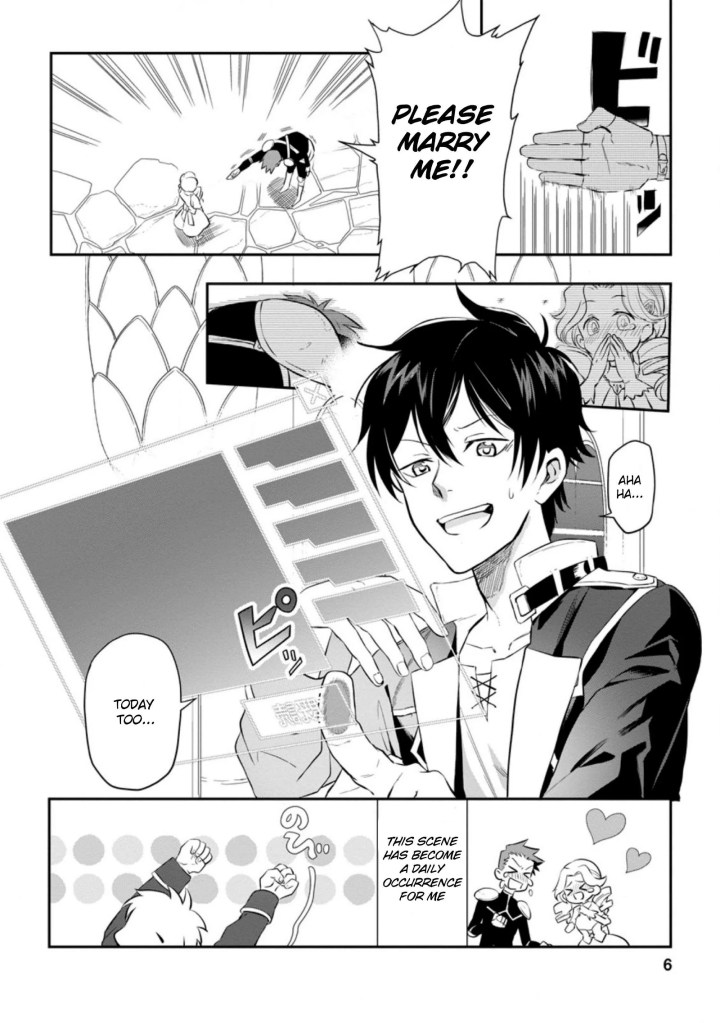
This is yet another title in the isekai sub-genre of “let’s contrast how shitty my life on Earth was by having a good ol’ time in this fantasy world.” When this series started, I expected it to be completely mediocre, but it surprised me with its character work and sense of humor.

The story follows an overworked Japanese salaryman in his thirties, who works at one of those Japanese companies that require you to wear a suit and tie, and to die inside. Wanting to remain human, he exercises his architectural talents in an online VR game. His buildings are so popular that they’re regularly used as backgrounds for wedding proposals by the kind of people who would propose to someone in a video game. Anyway, the godess of love or some shit contacts the protagonist through the game and offers to send him to a new world where he may be able to have a good ol’ time.

He finds himself in your average isekai fantasy world, based on Central Europe during the post-medieval period, but including monsters and sentient fantasy races of the Tolkienesque variety plus beast people. His abilities back on Earth have been turned into vastly overpowered skills: previously a crafty fellow, he’s now the most talented builder person around. He has also access to a warehouse-size inventory in some private dimension, along with the kind of Minecraft powers that allow him to dig through a mountain easily. Although initially he’s a bit freaked out, and tries to remove the VR headset in front of confused fantasy people, he quickly gets used to a life that won’t involve working at a Japanese company.

Like in many other isekai, first cute girl he meets, who is usually the first female at all he meets, becomes the intimate option. In this case, with the guy in his thirties even though his new body doesn’t suggest it, they establish a sort of father-daughter relationship with no incestual undertones. Because she helped him, a broke guy with no ID, to get around in that new world, he imprints on her (or is it the other way around?), and is happy to follow her on her adventures as long as he has the opportunity to make her comfortable. By that I mean stuff like cooking restaurant-grade food for her every day, or producing entire houses out of his inventory whenever they need to take a rest in the wild.

Still, she doesn’t fall for him, which may have to do with the fact that she has a questionable relationship with the older female receptionist at the adventurers’ guild; this girl even calls “dates” her outings with the receptionist. Oh well, can’t fix nature.

Plenty of the plot so far involves the protagonist wanting to enjoy a slow life in this new fantasy world, only for people to take notice of him because of shit like stacking the processed meat of eleven orcs on the guild receptionist’s desk, or earning about a year of his previous salary in Japan with a single quest. Soon enough he attracts the attention of the local duke, and a troublesome party of adventurers.

This story is fun, and I like to have fun.

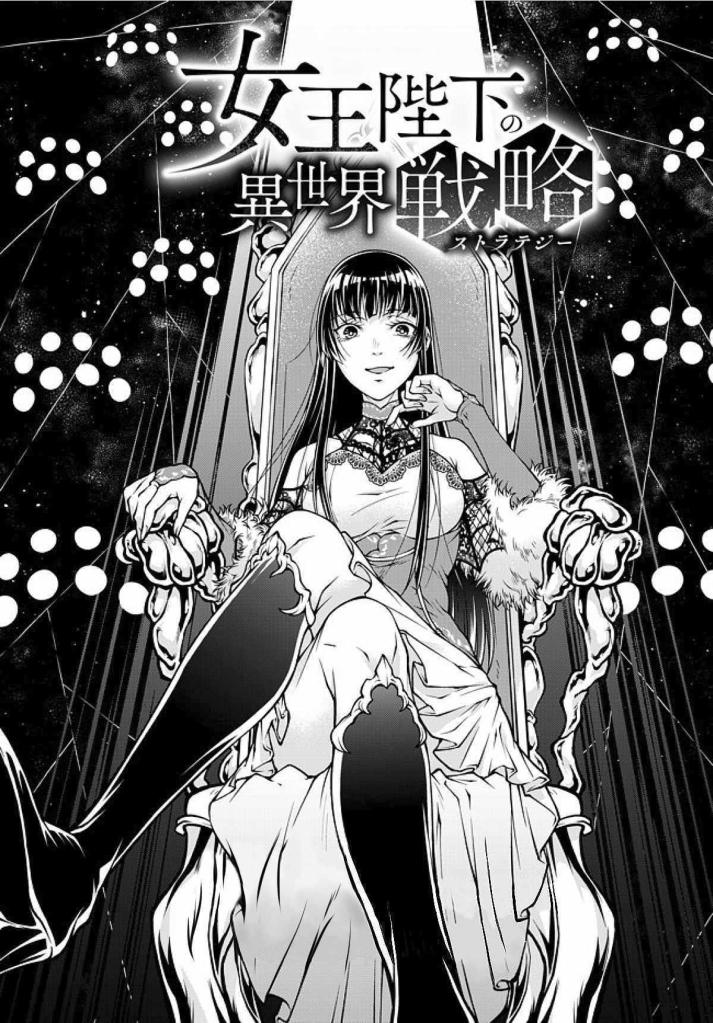
Review: Joou Heika no Isekai Senryaku, by Eiri Iwamoto

Four stars. The title translates to “Her Majesty’s Swarm” (supposedly; I don’t see the word “isekai” in there).

Our protagonist is an eighteen-year-old Japanese recluse who spends her days playing a strategy game set in a fantasy world. She’s particularly fond of the evil faction, one focused on “zerg rushing” with a horde of spiderlike monsters. Anyway, one random day, she either dies or just arbitrarily gets transported to a fantasy world (all these isekai stories are blending together).

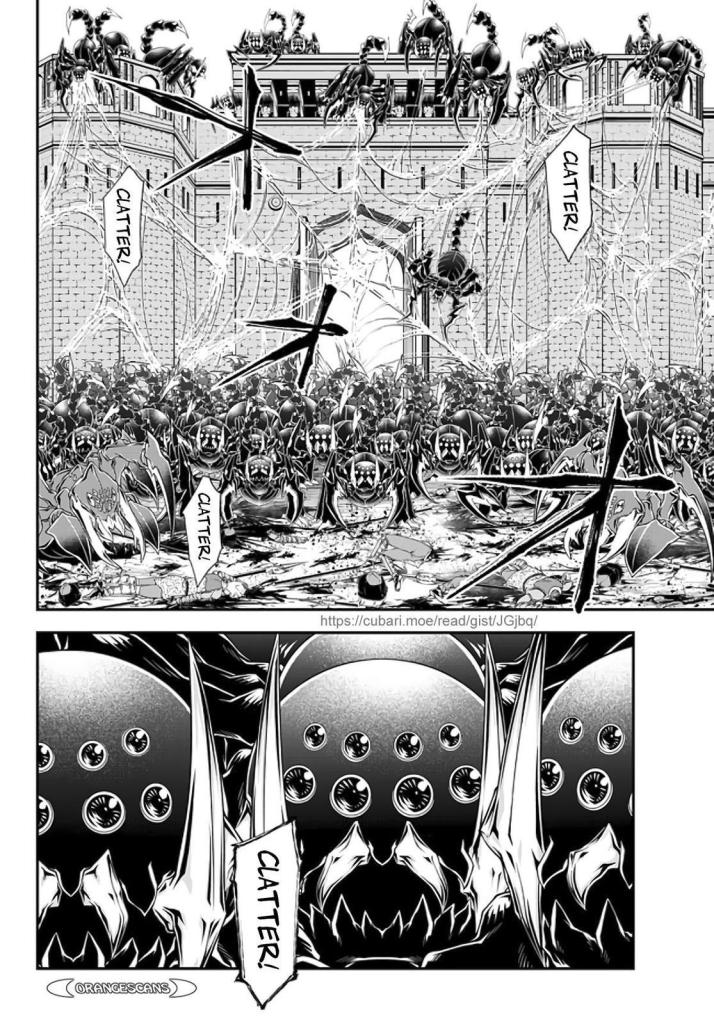
She finds herself as the real-life queen of a horde of spiderlike monsters, the same kind that she commanded to victory in the game. They operate as a hive mind, and she quickly realizes that with herself set at the middle of that web of consciousnesses, she may end up dissolving into the collective.

After an encounter with some local elves, she discovers that this world has never seen monsters like the ones she commands: she hasn’t only been transported to a fantasy world, but to one where her own game faction doesn’t belong.

What should be her goal in this fantasy world, where she has no business existing? She figures that she may as well focus on the same goal she pursued in the game: absolute victory. But is such a victory palatable when she’s going to look into the eyes of the people she’s supposed to slaughter?

The protagonist struggles to retain her humanity by dividing the world into victims and oppressors. She refuses to unleash her horde of spider monsters into someone merely because they annoyed her or because it would be convenient. However, one day, a neighboring country makes the regrettable mistake of fucking with her, and for the spider queen who increasingly cares less about losing herself to the collective insectlike hunger, that means one thing: a genocidal war that won’t spare even children.

Apart from the protagonist, the only other main person the reader could connect with is the queen’s spawned hero unit, her sole knight, a devoted half-woman half-spider who is more than eager to slaughter every single living thing in her path as long as her queen demands it. I found her quite enjoyable.

This story, determined to pull a “downfall” kind of arc for her initially normal protagonist, pushes us to empathize with the hapless human inhabitants of the kingdom that finds itself in the crosshairs of the horde. They’re a zealous bunch that believe themselves under the protection of a god of light, and they actually are, since their higher-ups can summon angels at will; they nonchalantly show up from the heavens to try to save the day. While bigoted against any infidel and heretic, their perspective allows the reader to feel the absolute horror of facing an onslaught of previously unknown monsters rushing through your lands, consuming everything and everyone in their path.

I found the ending quite haunting. In general, this shortish story (around forty chapters) left me feeling a bit ill, I don’t know if it was the constant gore, the extreme hopelessness of it all, that something I ate didn’t agree with my stomach, or a combination of such factors. I do recommend this story, but I vastly prefer isekai in which the protagonist has a good time without attempting to ruin the world in the process.

Ongoing manga: Grand Dwarf, by Saito Naotake

Four stars.

The story introduces a seventy-year-old master machinist who’s on his last leg as a professional, having to deal with corporate punks that intend him to accept unreasonable conditions.

He suspects he’ll end up on the streets soon, old and alone. How would he spend the rest of his life? Thankfully he doesn’t need to worry about it, because he suffers a heart attack and dies.

This story is one of the apparently millions of isekai out there. What’s an isekai, you ask? For whatever reason, the Japanese created a genre based on the notion of a Japanese person getting transported to a fantasy world, where they’re bound to enjoy a cooler new life. I don’t know what that says about Japan, but in my case, I love stories about exploring bizarre new worlds filled with colorful people and monsters, going along with a protagonist generally so overpowered that they might conquer the world if such were their preference.

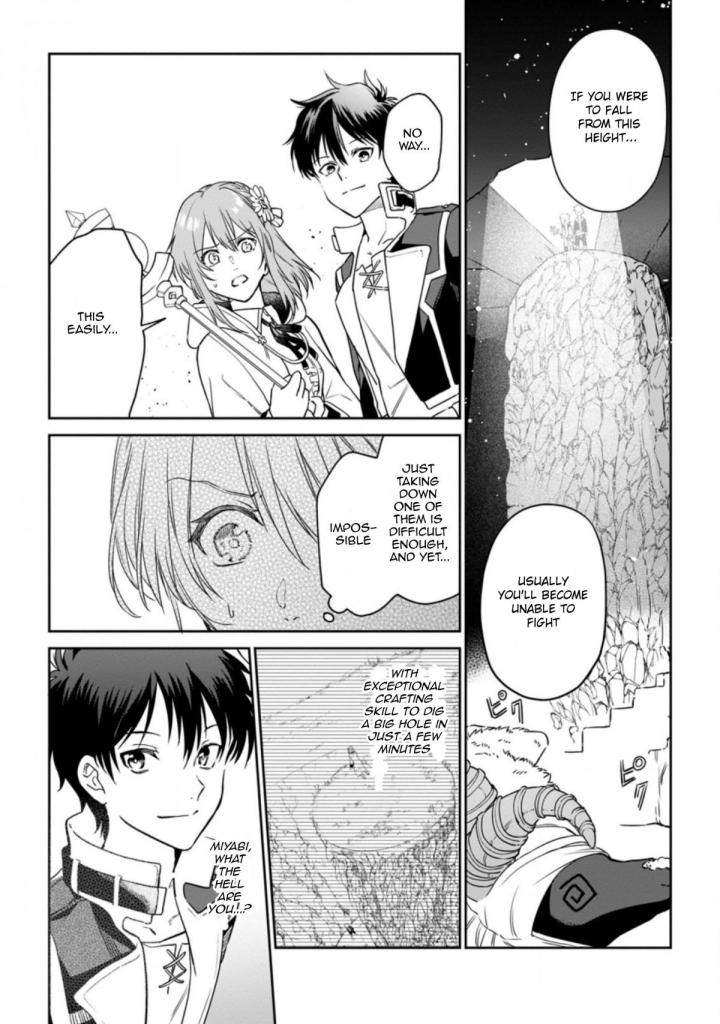
Our seventy-year-old protagonist finds himself as a young man with vastly enhanced skills related to his decades of experience as a machinist, allowing him to surpass even the fabled Dwarves of legend (hence the title). For whatever reason, his workshop also gets isekai-d along with him; that’s a new one. Anyway, first fantasy person he comes across is a one-handed, scarred gal who was dismissed from a party of adventurers (a relatively common trope). A healer by trade, she has no choice but to train her offense if she’s to honor her late mom, one of the former heroes of this world.

The protagonist, charmed by her determination, asks her to lend him her magic staff. She’s a pushover, so she accepts. A couple of weeks later she finds out that the master mechanist has turned her staff into a futuristic gun capable of one-shotting the worst monsters around, and is even capable of healing for some reason. The protagonist’s overpowered skills allow him to gather and process the most hardcore materials easily, which he proceeds to turn into weapons of a quality that his new world has never seen.

One of the main joys of this manga series, apart from its art style and character designs, involves following a self-assured, old Japanese artisan that’s having the time of his life in this fantasy playground, to the dismay of the locals that he ends up dragging to face monstrous horrors.

Character work is quite strong so far, with a couple of redemption arcs that I enjoyed a lot. As in plenty of if not most other isekai, the protagonist and his team are gearing up to kill the demon king, whatever it’s called in this story. I don’t recall having actually seen such a feat achieved in any of the isekai I’ve read in the past few months, unless the story starts with the protagonist having already won. Oh, well; joy’s in the ride.

I recommend this one if you enjoy peculiar protagonists, cool designs, and having fun.