I spend most days either working or writing, but in the periods when I’m at home and I don’t have to work and I think that I’ve done enough writing for the day, I try to either exercise or play some game. Ever since All on Board! came out (it’s an app to play board games in VR), even though it’s quite barebones compared to what it will hopefully become in some months, I’ve regained the sense of joy that comes with playing board games. The mind stretches to grab the corners of the system each board game has created, which gives you a thrilling sense of your options and possible strategies.
I’m a systems builder, so every time I get back into board games, I fantasize about creating my own. A week or so ago I ended up gathering all the game mechanics I could find online, categorizing them, and posting them on this site, to the likely annoyance of many of my very few subscribers; when my emails hit their inbox, they must have expected to get new parts of stories, only to find themselves flooded with posts about game mechanics. That must have felt like a non sequitur. Anyway, I’d love to design my own board game, but I don’t have time to focus hard on anything else when I’m deep into writing a story. If I were unemployed, I suspect I would expect the rest of my spare time either preparing the next writing session, or fucking around.
Regarding digital games, these days it’s hard to pick anything decent. AAA games are on a deserved downward spiral. Most of the legendary studios, those that haven’t disappeared, exist in name only; the actual talent bailed. Bethesda needs to fire their lead writer, and perhaps Todd himself. Fans are shouldering the massive endeavor of keeping great gaming traditions alive; Morrowind modding, for example, is astonishing these days. Regarding huge games, I’m waiting to buy a better graphics card in order to finally have my playthrough of Cyberpunk 2077 in VR. Once you play certain things in VR, you really don’t want to spoil the experience by playing flat.
Anyway, I did buy a new game and enjoyed it a lot. Spent my whole Sunday afternoon playing it. This one was a bit of a meme a couple of years ago, but it still seemed up my alley: it’s the visual novel (of sorts) named The Coffin of Andy and Leyley. Supposedly a horror game, but it felt like a dark comedy to me. As well as a sibling abuse simulator. Mentioning any of the most conspicuous elements you experience in the story would involve spoilers.
In any case, you ultimately play, and anticipate upcoming chapters, because of Andrew and Ashley, the siblings in charge of that wild ride. Like in any great story, you return to it because you want to spend more time with one or more characters. Due to the subjects the author touches in this game, apparently she (her updates sound like they’re written by a woman, but I wouldn’t be sure these days) got death threats and partially doxxed, which led her to step back from the spotlight. However, the author is uncompromising in her dark vision, and refuses to bend the knee. Such authors are almost the only kind I can respect these days.
Oh, and Ashley Graves, the manipulative, sociopathic half of the sibling couple… I’m down bad for that black-hearted bitch. Even though not even a new birth would fix her.
He pulled me away from the table, and with that tug, I fell back in the chair, the front legs rising as it tilted precariously. Father braced the backrest to keep me from falling.
Even as I blinked, my vision clouded with dark specks, and every time I tensed any facial muscle, my right cheekbone flared. I sucked in a breath of snot. I studied the lighter in my palm and slid the tip of my thumb along its serrated, rough wheel.
Nothing would ever take away my overseas kingdom. Nothing would erase those chalk-white cliffs, nor the kilometer-long dining table, nor the people who treated me like a cherished guest. No one would confiscate or invade the sanctuaries of my mind, and the landscapes and characters I had discovered in that darkness would greet me when I closed my eyes. Let Father have my childish attempts to order this nightmare.
When I flicked the lighter’s wheel, a flame leapt up, flaring brightly—a genie I had conjured to obey me, yet too weak to set all three of us on fire, of charring our flesh and stripping us down to scorched skeletons. I touched the flame to the paper scraps, and they ignited. The fire begot offspring that carbonized other scraps, crumpling them into black wrinkles that crumbled into ash, devouring them as if a horde of newly born spiders were consuming their mother. From the bowl, a tangled flame rose, warming my face and intensifying the pain in my cheekbone. The ascending column of black smoke crashed against the ceiling like a slow cascade tumbling onto rocks. It scattered in shavings. The stench of charred paper invaded my lungs, which stung.
Father poured the bottle of milk into the bowl, quelling the flames, until the smoke turned to a white vapor. The burnt odor intertwined with the smell of hot milk. Mother crossed an arm in front of my face to hand a mortar and pestle to the man, who gripped the pestle and pounded the ashes into the bottom of the bowl, soaking his hand and spilling gray clumps across the table.
As my tears dried, I drifted away. I shivered, slumped in the chair. The pain in my cheekbone worsened in waves.
Father stirred the paste, lifted the bowl, and brought it to my mouth. I snapped awake. I leaned back and tilted my face. The man grabbed me by the nape and pressed the rim of the bowl against my pursed lips, splattering my face. Milk spilled over my lap.
“You know you’ll swallow every last drop,” Father said.
He shoved the bowl as if to shatter it, so that shards might embed in my lips. He growled. He clutched my nape and shouted to my right.
“Help me.”
Mother appeared at his side. My twisted neck ached, but my moans died in my throat. Father released my nape and pinched my nose, sealing my nostrils closed. The woman pulled at my lips, exposing my tight set of teeth.
I resisted while the bowl, in a seesaw motion, slammed against my incisors like a battering ram. I lacked oxygen. My vision darkened.
When I opened my mouth to gasp for a breath, Mother pried my teeth apart and held them open. Father, after yanking my head back, emptied the bowl. Clumps spilled over my neck, my chest, my thighs, while my mouth swelled with a goop that tasted of wet charcoal, that seared my tongue, palate, and uvula like a freshly cooked soup. The man dumped out every last clump. My swollen cheeks ached, threatening to tear apart. I coughed up a cloud of lumps. While standing behind me and pinching my nose, Father clamped my mouth shut, and—pulling on my chin while pressing my nape against his stomach—forced my teeth to grind together.
Tears streamed from my eyes. The hot milk that pooled behind my nose reddened my vision. I thrashed in convulsions, and with every spasm, my throat gulped down lump balls as if I were a snake trying to swallow an ostrich egg. I grabbed the man’s wrists, his spikes biting into my palms, and wriggled to break free.
Once he released my mouth, I coughed a spray of clumps and milk that splattered the table and part of the counter. Father threw me off the chair to the side, and I landed on a shoulder.
I struggled to breathe. Clumps clogged my trachea and stomach, filling my insides as in a stuffed carcass.
The man towered hundreds of meters over me, a dark colossus against a shrouded ceiling. His face was a black blur. He clenched his red-hot fists, as large as mallets. The iron spikes jutting out and bristling along his form vibrated as he expanded and contracted his minotaur chest.
“What do you think I wouldn’t take from you if you keep up this useless rebellion? Do you want to shit in a corner? Roam around the house naked, to be led on a leash? Do you want me to beat you every time you speak? Because that’s what you’ve earned, stupid girl.”
Author’s note: I wrote this novella in Spanish about ten years ago. It’s contained in the collection titled Los dominios del emperador búho.
Mother called me to dinner, but when I entered the kitchen, Father was waiting by my pulled-back chair, and my drawings had been scattered across the table like the disordered panels of a comic. The lamplight waned along the man’s outline, as if he were hiding in the blind spot of an alley.
I would escape. I turned around, but the woman stood in the way. She shoved the door, which slammed shut. Mother’s nose jutted out from her silver, disheveled hair while she rummaged through the cupboard of pots and jugs.
Father pointed to the chair. I advanced as if a rope were tugging at my chest. When I sat down, the chair’s legs groaned. The man leaned in. I shrank back. His breath warmed my hair, and his gaze fixed on me like a gun.
He pressed one of the drawings with his index finger. That sheet showed the house set against a backdrop of hills, where pines jutted out like the bristles of a carpet. The door of the house was guarded by Father—a minotaur that had broken out of his labyrinth. His body, studded with iron spikes, bulged as if several men were merged into one, and in the black smear of his face—a chasm—the fire of his breath lit up his two eyes. The monster would pounce on anyone who dared to look at the drawing.
“Is this supposed to be me?” Father said.
My guts writhed as if tormented by a week of constipation; I hunched and clutched my forearms to my abdomen. My vocal cords refused to cooperate. My heart pumped clotted blood.
Father grabbed some drawings and scrutinized them while murmuring as if damning some world to a curse. When he palm-struck the sheets back onto the table, a whirlwind of air scattered more papers from the epicenter.
“I feed you and give you a bedroom, you exist thanks to me, but you waste your time painting fantasy towns, drawing me as a monster.” He seized a drawing and flipped it toward me. The sheet crumpled under his fingertips. “Tall as a skyscraper and breathing fire. Ungrateful bastard.”
“They’re prettier,” I muttered in a hoarse voice.
My words had taken Father aback as if a dog had suddenly spoken.
“What did you say?”
I tried to swallow through my constricted throat.
“Those towns are prettier. Those people are kind to me.”
“They don’t exist. You have this house. Us. The cows, the sheep. Work that keeps you busy. If you even have time for your imagination to fly, it’s a sign you need a heavier burden.”
My head swayed. I was breathing in hiccups. Hunched over, I clutched my abdomen as my guts creaked like an old house. The lamplight, along with the foul smell of garlic and onions, were scraping on my brain.
Although I imagined myself running to my bedroom and hiding under the blankets, Father seized my head with his thick fingers, as if restraining a nervous sheep for shearing. A shudder shook my spine.
“We appeared on Earth to fulfill our role,” the man said. “For us to survive, all three must carry our share. Your job is to tend to some cows and sheep, serve me, and keep quiet. When you refuse to obey or only half obey, you harm us, your parents. But as long as you obey, you’ll avoid bruises. You’ll have a plate on the table and a bed. That’s enough.”
“It’s not.”
As Father emptied his lungs, his scorching breath singed a patch of my hair. The hand gripping my head prevented me from looking away from the drawings that covered the table. Mother appeared to my right, holding a bowl and a glass bottle filled with milk and smudged with fingerprints. The man cleared a space on the table in front of me, where the woman placed the bowl. She handed the bottle to Father. The arm that had been pinning me to the chair relaxed as the man gulped down the milk with the sound of a shark gobbling down live fish.
When Mother folded one of the drawings and tore it into four pieces, I trembled as if she had slashed me with a razor. She dropped the fragments into the bowl.
My lips quivered. If I blinked, my eyes would water and ruin my last glimpse of the drawing the woman had torn.
Father leaned close to me and spoke an inch from my ear.
“Insulting us will have consequences.”
I tried to turn my head toward the man, but his fingers tightened on my scalp, imprinting the five tips in red.
“Why are you like this, Father?” I said, my voice cracking. “Someone must have cursed you. It should have been different.”
“Curses don’t exist, you moron. Such nonsense occurs to someone who wastes hours drawing, thinking up fantasies. An idle mind eats itself like an empty stomach.”
Mother had crammed the bowl with scraps white on one side and drawn on the other. The meaning of the strokes and colors was lost like in the scattered pieces of a puzzle. The woman folded the last drawing with her bony fingers, and tore it apart.
How long would it take me to glue these fragments back together?
Father’s free hand seized my wrist. He turned my hand over on the table, opened my fingers, and closed them around the warm metal of a lighter.
“Burn them.”
A jolt of ice pierced my heart as my muscles convulsed in cramps. I had to break free, yet his thick fingers squeezed my scalp as if drilling into my skull. Although ever since I’d drawn that first scene I’d known one day I would lose them, I had convinced myself I’d postpone that moment until I died.
“No.”
When Father yanked my hair, my scalp flared with pain, drawing a scream from me. One more tug and my skull would be stripped bare. The man panted against my face. Growled like a dog.
“Burn them.”
Tears welled from the corners of my eyes, painting burning streaks on my cold skin.
“They’re better than this.”
Father slammed my right cheekbone against the table with a bang. The impact reverberated through my skull, rattling my brain. My vision went white. Was I still in the kitchen?
The man shifted his weight onto the hand that was pushing my head, and on my crushed cheekbone, the fibers covering the bone were tearing apart. The right half of my face boiled; the burning spilled over the bridge of my nose, reddening the view of that eye.
“You’ll be useful to me even with broken bones,” Father said.
Author’s note: I wrote this novella in Spanish about ten years ago. It’s contained in the collection titled Los dominios del emperador búho.
About six hundred meters from the house, in the opposite direction of the emperor owl’s refuge, I no longer recognized the curves of the road along which I had come years ago. Why had I forgotten them? Had I been sleeping and only awakened as we neared the house? Had the route been erased from my memory because I assumed I’d never leave? What awaited me a kilometer or two away? The neighbors’ lands?
I leaned against the soft moss and ashen lichen crusts that covered the trunk of an oak. I could smell my cold sweat. The muscles in my legs had tensed, poised to sprint at every sound. I was venturing through a jungle teeming with predators. If I let my guard down, a pack would burst from the undergrowth.
I marched on, clutching the swollen portfolio against my side like a shield. Five minutes later I sensed a shadow. As I shifted my gaze toward it, it slipped from trunk to trunk.
I veered off the road and crouched among clusters of prickly bushes adorned with yellow flowers. I drew a deep breath while keeping a fixed, unblinking watch on the road, which, in the distance, twisted through a grove of narrow, charred-looking trunks. They distorted the distances and masked the gaps with their mint-green foliage, which draped stripes of shadow over the path.
The ground trembled. A gaze fixed on the back of my neck. I turned. A thick shadow spread over the pebbles and earth of the road, cloaking them like a funeral veil.
I sprang from my hiding place among the bushes. I imagined sprinting, but my body froze. I wanted to scream, to call for help. The fading twilight exposed me like a mouse to a bird of prey.
At the edge of my vision, two columns of shadow emerged from mud-splattered boots. Father approached until a pair of denim trousers appeared in my sight. His breath heated my face like a bonfire.
“Are you lost?”
His voice barely contained a roar.
“I was watching the landscape, sir.”
“What are you looking for? What is it you need to see?”
When Father encircled me to block the path, I raised my eyes by a span. The man’s right hand—his arm bristling with hundreds of iron spikes—clutched the long handle of a headless tool.
I counted from one to ten to distract my heart as I fought against my muscles betraying me. My mind was growing hazy.
“You heard me,” Father said.
“I was watching the landscape.”
The man inhaled, drawing the air from my lungs. He straightened the tool’s handle and pressed its headless end against my sternum.
“You have too much free time. Have you finished your duties?”
“Yes, sir.”
“Surely you can help your mother.”
He shoved me with the handle, forcing me to step back. I turned and walked upright, but within seconds, I lowered my head. My lost gaze swept over a doubled path as Father’s bulk followed me and, with every stomp, the earth quaked.
Five minutes later I was clutching the portfolio and hobbling. The emperor owl refused to let me accompany him, and I would never leave this place. How could I have managed it? I only knew how to shear, to milk, to draw. Gifts and miracles were reserved for those who deserved them.
The twilight faded. Colors hung from the treetops, the branches, and the grass lining the road like a dress several sizes too large.
Father led me to the barn, where Mother, seated on a stool, was sharpening the axe with a pumice stone. From beneath her hair, a gray, angular face peeked out. Father jabbed the tool’s handle against one of my shoulder blades and pushed me to the back of the barn. He pointed to a stool beside the flank of a cow, whose swollen udders bore veins bulging like branches swathed in skin.
“It’s her turn tomorrow, but surely you can do it ahead of schedule.”
While clutching the portfolio, I sat like an abandoned puppet. The stone of my thoughts sank deeper and deeper into a black ocean.
With a snap, a pressure clamped around my ankle. A shackle. It was connected by chains as thick as a finger, bolted to the rock.
Father straightened. In one swift motion, he snatched the portfolio from me and held it under his armpit.
“Remember your duty.”
Author’s note: I wrote this novella in Spanish about ten years ago. It’s contained in the collection titled Los dominios del emperador búho.
Elena headed toward the gate to exit Bar Palace’s fenced patio, but I reminded her that we were supposed to pay for the coffees. She followed me inside through the sliding door, and we trod over broad boards. A dozen tables populated the room, around which distinguished older ladies and men sat in ornate chairs. Overhead fixtures burnished with amber light rectangular stone columns bolstering wooden beams. Another fixture spotlighted a stone fireplace and the ornament perched on its mantle: a metallic emblem bearing Irún’s coat of arms. Vigilantiae Custos. Guardian of Vigilance. We had entered a centuries-old retreat. I beelined to the marble counter layered atop dark wood paneling, then waited for a waiter in black garb to take my money. Elena trailed behind me, blue folder clamped under her arm, and surveyed the salon with darting eyes as if she feared some threat lurked in there.
We emerged from Bar Palace onto Navarra Avenue, then stopped at the edge of the sidewalk for the traffic light to turn. After basking in the refuge of that patio, despite the intruding youth, this noisy intersection had hurled us back into civilization. Cars and buses growled past. Across the street, a cluster of teenage girls idled outside a candy store, chatting and giggling beneath a leafy tree. A cyclist avoided pedestrians as he passed the reddish-orange facade of a four-story apartment building. Beside me, the rain-scented breeze played ghostlike with Elena’s almond-blonde locks. She clutched her folder while her eyes flitted between strangers like an anthropologist visiting a foreign land. I resisted the urge to steal a glance at how her dark-wash jeans hugged her butt.
Had Elena intended for us to part ways the moment we left the coffee shop? I wanted to spend more time with her, so she’d have to dismiss me.
Although her eyes were averted, Elena’s thin voice reached out to me.
“Jon, do you like being around people?”
“Not particularly.”
“Often when I force myself to leave the apartment, I see all these men and women and kids and elders walking about like ants scurrying to and from their nest, and I think, ‘I have nothing in common with these beings.’ I must assume that minds operate behind their eyes, even though I can’t imagine their thoughts. But maybe I share the world with eight billions of shoddily-programmed automatrons that short-circuit when confronted with concepts more complicated than the weather, football, or whatever shit the mass media pumps into them. Maybe I’m the sole real person in a simulation built to trap me. It would explain the state of the world, wouldn’t it? If nobody had any fucking clue about what they’re doing.”
“As a fellow person, I can’t help but resent the implication. And that line of thinking can easily slide you into psychosis.”
The pedestrian light flicked to the walking man outline. Elena and I strolled ahead.
“As a child,” she said, “I wondered if everyone around me was acting out a role. Did they also have to put on a mask whenever they went out? Were they as scared and lonely as me? Even now, I can’t be around people for too long. When someone stares at me, I feel like a fly trapped in a jar. It makes my skin crawl. There are no common points in which I can make myself understood. When I engage people, they’re more likely than not to end up developing an instinctive dislike of me. They’re the normal ones. Always pretending, trying to impress others. Trying to impress themselves. Lying to get along, to fit in. Do they ever feel the walls closing in? Do they ever sense the void beneath their feet, or the cold, dead stars overhead?”
Iglesia Street unfolded into a downward-sloping plaza paved with gray stone. At its edge stood the white building of the Roman museum. In front, three towering cypress trees jutted upward like narrow spearheads. Elena continued her monologue.
“One of the things you discover when you’ve been alone for so long is how people can weigh you down. As if you had lived with a TV constantly on and loud, and once you turn it off, you realize that something had been drowning your genuine thoughts. That newfound silence allows contemplation similar to that our ancestors enjoyed in their so-called primitive societies. Alone, you’re free from having to conform to the expectations installed by the people you’ve allowed in, who intend for you to like and want the same things they do. Without that pressure, your true self emerges—unshackled, raw. You figure out what matters to you. What you’re willing to tolerate, sacrifice for, fight tooth and claw to defend. To get there you have to become one with the void inside. Otherwise it remains alien to you. And most people seem terrified of meeting that self, lest they end up pushed out of the collective and ejected into the cold.”
We were nearing the bronze statue of a San Marcial vivandière—a woman captured mid-stride, clad in a beret; a buttoned-down, tailored jacket; and a pleated skirt that draped over the tops of her laced boots. In her right hand, she held a fan aloft, frozen in her constant duty to wave, while she cast an unsettling smirk at passersby. Creeping verdigris etched stark contrasts along the pleats of her skirt.
“You’d think such a dynamic would be absent in couples, right?” Elena said. “Surely partners willing to accompany each other on this doomed journey would form a sanctuary in which both could grow as individuals. But no. Most couples seem like two dogs chained together. A romantic relationship censors you even worse, and before long, you end up defanged and declawed. Can’t risk upsetting your partner. Can’t risk losing them. No wonder some couples decide to have a kid, then another, and another. Filling the home with hostages. No, an individual’s freedom is too valuable to sacrifice for the sake of having a companion to fill the silence, and a warm body to fuck.”
As we descended the stairs, Juncal Church loomed fortresslike, built from sandy stone blocks, some bearing warm honey hues and others worn into ashen grays. Near the top of its bell tower, that had darkened as if singed by flames, a snow-white clockface stood out. The church endured as a relic from an era when people’s beliefs, however misguided, urged them to erect beauty that would outlive them by centuries.
Elena’s vacant gaze drifted along the stairs. She had tucked her folder under one arm, and that hand in the pocket of her jeans. When she spoke again, her voice came hoarse.
“Most people stick to you not because they’re interested, or care, but because they need that closeness, that shared warmth, the same way I need to be alone. They’d be comfortable gathered around a bench in silence, while their mere presence would desiccate me. You spoke about how many works of art have been lost because their potential creators wasted their talents, or died too young. But how many revolutionary ideas, how many discoveries we’ve missed in these societies that push their members to police each other’s thoughts? How many masterpieces have died in the womb because some nearby moron could consider them impractical or ridiculous or immoral? I’ve had to protect myself. Surely you noticed how guarded I was at the writing course, or when you first approached me at that bench. Always have a wall up. I ensure that a person will offer more than they’ll take away from me. To preserve the garden, one must first be a ruthless weed slayer. Without that, the flowers get choked and die.” Her jaw tensed as she swallowed, and she massaged her throat. “Life gets too complicated when people disgust you. You need them for the most basic things, and I endure those interactions while repeating in my mind for them to leave me the fuck alone. The responsibilities you accumulate with humans shackle you. From time to time I feel like I’ve matured enough, or grown enough callus, to tolerate experiences like that writing course, which could help me. But soon enough, everything that irritates me about human beings, their words, their noises, the myriad little humiliations, swell and swell until suddenly I can’t deal with a single extra minute of that shit. Then I need to hide from the world and everybody in it. My solution? I keep my rotten self away from others. That way nobody can hurt me, and I don’t pollute anyone else. A quarantine measure to keep the world safe, you could say. Isn’t that the epitome of altruism? The greatest good?” She sighed. “Yeah, I’ve given up. After that course, after my stories were deemed deplorable, after that fucking bitch Isabel called me out as a monster in front of everyone… I feel completely done. I hoped that other writers would understand. So I exist here, in this land, because I have no choice. I can’t just pack up and move to the forest, or the mountains. Well, I could, but I’d like to survive past twenty-eight. Honestly, I doubt I would have reached this far if my parents hadn’t taken care of me. Imagine their disappointment and regret at what I’ve turned out to be.”
I had stopped at the church entrance, and Elena, lost in her soliloquy, had copied me. The dark wooden doors split into four metal panels, each embossed with figures of robed saints or other biblical characters. Four sandstone columns with fluted shafts flanked the entrance. Their bases and capitals had eroded, exposed for centuries to the elements and the corroding darkness of the world. Above the door, a circular niche might have once housed a statue, but these days it would have been stolen. Higher up, near an oculus’ edge, some architectural oversight had forced the builders to chisel blocks and wedge them into gaps.
Elena cleared her throat.
“Man, my voice box is actually strained. I hadn’t spoken so much in years. Maybe I never had. I was holding back a shit-ton of stuff, it seems. I also like to stop and stare at beautiful buildings. To see their little details. The cracks, the mold, the weeds growing in between the stones. How much they’ve endured. And most churches beat modern monstrosities like the one built to replace the covered pelota court at Sargia.”
Elena’s pale blues stared at me with childlike interest. I held my breath as her loose locks fluttered. She arched an eyebrow, and I broke the silence.
“Elena, did our coffee meeting feel that overwhelming?”
Her fingers fidgeted with the edges of her folder, and she glanced away.
“If you’re asking whether I enjoyed your company, the answer is yes. I like talking to you, Jon. I can hardly believe you’re still willing to reciprocate. Most people that intrigue me for whatever reason, they’re like temporary bandages over a radiation burn—they stick around just long enough to realize that this broken toy can’t be patched up with positive thinking and empty platitudes and self-help books, and then they bail. But you… you don’t seem interested in fixing anything. You just want to, what? Watch the decay spread? Document the collapse? I’ve offered you a glimpse of my darkness, and you just dissected it. As if performing an autopsy on my soul and cataloguing every diseased part you found. And I was glad to let you peel back layers. That writing course debacle… Honestly, if you hadn’t come out of the experience, I may have holed up in my cave for weeks. So, did our meeting feel good? I’m not sure I know what that feels like, because I can’t get rid of this anxiety and dread. But it felt… necessary. Real. Like for once, with you, I don’t need to pretend I’m something other than a monster. Now I have to acknowledge that maybe I’m not as alone in this darkness as I thought. That maybe other people out there can look inside me and not flinch. I don’t… I don’t know what to do with that kind of understanding. In summary: congratulations, Jon. You’re the first person I’ve talked to for more than ten minutes that didn’t make me want to claw my skin off. What a relief to speak to a human being without having to pretend to be one.”
“I want to meet up again soon, Elena. I picture us visiting interesting, solitary places, and having long talks about whatever comes to mind. I also intend to read the rest of your work. Let’s see how far we can take our experiment.”
Elena slid her hands into her pockets, folder tucked under one arm. Although she tried to restrain her lips from curving upwards, they betrayed her. The muscles that framed her mouth and connected to her chin tensed, her lower eyelids pushed up, her pale blues gleamed. I yearned to induce more of her genuine smiles, drawing beauty into the world with each one. Little works of art just for me.
“That sounds an awful lot like you’re giving me permission to be exactly what I am,” she said.
“That’s exactly what I want.”
Elena glanced over her shoulder at the rounded archway, under two levels of balconies and their striped awnings, that led deeper into Erromes Plaza. She turned back to me and nodded.
“Anyway, I’m not sure if it’s morally right to inflict myself on another person, but let’s do this again.”
We’re like 25,000 words in, and we haven’t even reached the middle of the first act. This is going to be a long one.
Also, because I’m from this city and I mentioned the San Marcial festivities (even though that day I either work or stay at home), here’s a video about it. Some shots even depict the itinerary of our main characters; for example, at 0:40, the church appears on the left.
The following is a list of all board game mechanics I know in this category, and that aren’t too niche. Card game mechanics are also included. I’m posting this mainly for my own reference.
End Game Bonuses: Players earn (or lose!) bonus Victory Points (VPs) at the end of the game based on meeting victory conditions.
Highest-Lowest Scoring: Each player’s score is equal to the lowest value of several categories. Whoever has the highest lowest value is the winner.
This system is normally known as Knizia scoring. Tigris & Euphrates is an early example of this mechanism. Players are collecting four different color cubes – red, green, blue, and yellow – and their score is the color that they have the least of. A player with 12 red, 10 green, 6 blue, and 2 yellow has a final score of 2. This forces players to not be too specialized in which cubes they collect.
Highest-Lowest Scoring is a special case of Set Collection, where only complete sets are counted.
Kill Steal: Players contribute towards completing a task, but only the player who finally completes it gets a particular benefit or bonus reward (even if others share in the base level benefit).
Legacy Game: A multi-session game in which the state of each subsequent session irreversibly builds on the legacy of the previous one. Permanent and irreversible changes to the game state carry over to future plays. Components can be written on with permanent ink, torn apart, covered with stickers, and more. This mechanism was introduced in Risk Legacy. This should not be confused with the mechanism, which modifies the state between sessions, but the state can be reversed (e.g. Campaign Games). Games with reversible states existed much earlier.
Victory Points as a Resource: Victory Points (VPs) may be spent as a currency to impact the game state.
Business or Economic games that use currency and give the win to the players with the most money are common examples of this mechanism. However games with other themes like Small World also use this mechanism. Games where currency (or other resources) can contribute in a minor fashion as extra VPs at the end game (usually at some discount rate) should not be tagged with this mechanism, but rather as End Game Bonuses.
The following is a list of all board game mechanics I know in this category, and that aren’t too niche. Card game mechanics are also included. I’m posting this mainly for my own reference.
Algorithm Creation: Players design sequences of conditional operations or “programs” that execute automatically once set in motion. Success depends on anticipating how these algorithms will interact with a changing game state and with other players’ algorithms. This might involve programming the movement and actions of units, creating economic systems that operate independently, or establishing decision trees that respond to certain triggers.
Deck Construction: As the first step, or prior to playing the game, players create the deck they will use.
Knowledge Threshold Unlocking: Players accumulate specific types of knowledge or expertise during gameplay, which are tracked separately from other resources. When players reach certain knowledge thresholds in specific domains, new actions or strategies become available. This differs from tech trees in that knowledge accumulation happens gradually through many small actions rather than through discrete purchases or advancements.
Momentum Tracks: Actions build momentum when repeated in consecutive turns. Higher momentum provides increasing benefits for continuing the same strategy but creates penalties for switching. Players must decide when to pivot versus when to commit deeper. Example Implementation: An economic game where continued investment in specific industries creates increasing returns but also increasing risk of market collapse, requiring careful timing of strategy shifts.
Move Through Deck: Players Move Through a Deck of cards. Typically the goal is to reach the bottom (One Deck Dungeon), find and defeat a boss (Chainsaw Warrior), or simply know when to quit (Incan Gold).
Tech Trees/Tech Tracks: During the course of the game, new Actions become available to specific players, or existing Actions are improved. These are often themed as Technologies, but do not need to be. Sometimes this is expressed as a Tree, where gaining one Tech unlocks multiple other Techs. Or it can be a track, where advancing along the track unlocks upgraded or new Actions.
The following is a list of all board game mechanics I know in this category, and that aren’t too niche. Card game mechanics are also included. I’m posting this mainly for my own reference.
Automatic Resource Growth: The automatic increase of a resource triggered by a particular, conditional, deterministic (not random) game state.
Example 1. Unacquired resources in Agricola:
Uncollected wood from the wood-collection action space (condition) will offer +1 wood (result) on the following round (game state).
Example 2. Acquired resources in Agricola:
Two pigs in your farm, in an area with space enough for 3 pigs (condition) will automatically produce a 3rd pig (result) during the breeding phase of that round (game state).
Counter-example 1. Income in Monopoly:
Collect $200 (result) when passing “GO” (game state).
There is no condition (ex: if you own 1 or more properties)
Counter-example 2. Random Production in Catan:
The production is random not deterministic.
Players collect resources at the beginning of each turn based on a die roll.
Deck / Bag / Pool Building: Players play cards out of individual decks, seeking to acquire new cards and to play through their decks iteratively, improving them over time through card acquisition or card elimination.
It may include a “random-draw” to form a hand from the deck for the current round (as in Star Realms) and the deck is automatically reset once the draw pile is exhausted; or it may allow access to all available cards at once (as in Concordia) until the discards are retrieved. The latter may embody the Action Retrieval mechanic, where the card use activate actions.
This category also covers Bag Building, Pool Building, and related mechanisms (using chits, dice, etc).
Dominion pioneered this mechanism.
Hand Management: Hand management games are games with cards in them that reward players for playing the cards in certain sequences or groups. The optimal sequence/grouping may vary, depending on board position, cards held and cards played by opponents. Managing your hand means gaining the most value out of available cards under given circumstances. Cards often have multiple uses in the game, further obfuscating an “optimal” sequence.
Income: Players gain resources at defined times.
Increase Value of Unchosen Resources: If players do not select certain Actions or Resources, then they increase in value. Puerto Rico is a classic example of this technique, as unchosen roles have a coin placed on them. This mechanism is a simple way for designers to balance different options. The money may either come from the bank, as in Puerto Rico, or from the players themselves, as is done in Small World, where players must place a coin on factions that are skipped.
Loans: Players may take a Loan from the bank to get more money.
Examples include Monopoly where players can mortgage properties, and Age of Steam, where taking loans is a key strategic consideration.
Multi-Dimensional Resource Constraints: Resources exist in multiple dimensions or aspects simultaneously, and different actions require specific configurations across these dimensions. For example, a resource might have quantity, quality, and accessibility attributes, with different actions requiring different combinations of these attributes.
Resource Conversion Chains: Resources must be converted through a series of sequential transformations to become more valuable or useful. This creates a supply chain management challenge where players must balance efficiency against flexibility. Players may specialize in different parts of the chain, creating interdependencies. Examples include raw materials that must be refined, then manufactured, then distributed to be worth maximum points.
Resource Queue: Resources are in an ordered queue, and can only be pulled from one end, or rarely, both ends, but not the middle.
Resource to Move: Players expend a Resource to Move. This is commonly themed as fuel, but other games use money or other commodities.
The following is a list of all board game mechanics I know in this category, and that aren’t too niche. Card game mechanics are also included. I’m posting this mainly for my own reference.
Alliances: Players have formal relationships that may change over the course of the game. This differs from Negotiation in that these relationships are governed by specific game rules. For example, in Dune, players may form alliances at each Nexus phase, which last until the next Nexus. During that time the players win together, may not attack each other, and grant their ally a special power. In Struggle of Empires players bid for the right to select their ally for that round, which is governed by similar rules.
Cooperative Game: Players coordinate their actions to achieve a common win condition or conditions. Players all win or lose the game together.
Bribery: Players offer bribes to other players to get them to perform specific actions. Typically players will place bribes on certain actions, and if another player selects that choice they get the bribe. Otherwise it is returned to the player. Santiago and Tonga Bonga operate this way. Bribery can also be a part of a Negotiation mechanism, as players may offer bribes which may or may not be binding. Intrigue is an example of the latter.
Collaborative Control: Multiple players jointly control a single game element (like a powerful neutral faction) and must coordinate or negotiate how to use it. This differs from fully cooperative games in that players still have individual goals, but share control over certain powerful elements. The shared element may provide significant advantages, but requires agreement among the controlling players to direct effectively.
Communication Limits: Games may limit players from communicating with one another openly. These restrictions can be absolute as they relate to certain specific pieces of information, or they may restrict certain types of communication, such as speaking.
Neighbor Scope: Actions, resources, or resolution are shared between neighbors.
Negotiation: Players make agreements about coordinating action, beyond simply Trading.
Agreements may be either binding or non-binding. Diplomacy is a notable example of the latter.
Risk Pooling: Players can join forces to mitigate risks by contributing to shared insurance mechanisms or joint ventures. When negative events occur, the pooled resources absorb the impact, but players must negotiate or follow predetermined rules for sharing the benefits when positive outcomes occur. This creates interesting dynamics where rational self-interest must be balanced against collective security.
Role Playing: Some board games incorporate elements of role playing. It can be that players control a character that improves over time. It can also be a game that encourages or inspires Storytelling. This mechanic can be viewed as an extension of Variable Player Powers.
Semi-cooperative Game: A game in which players are cooperating and competing with each other throughout the game, while trying to complete a common objective. There have been several ways to implement this. One classification is Grand Winner format. A Grand Winner game has two possible outcomes: A) One or more players win ) No players win. A game where players sometimes cooperate and sometimes compete but one always wins is not semi-cooperative. It is a Competitive game with a Negotiation mechanism. Other formats of semi-cooperative games proceed similar to cooperative games but winning and losing objectives are triggered individually such that the outcome may be that no players win, all players win or some players win and some lose. The individual win/loss games have shown to be far less controversial than the Grand Winner format.
Social Capital System: Beyond just resources, players build reputation and influence with different factions in the game. This social capital functions differently than regular resources – it’s gained through consistent behavior patterns and can collapse rapidly if players act against established expectations. Example Implementation: A political game where maintaining consistent ideological positions builds trust with certain factions, providing increasing benefits, but flip-flopping causes rapid reputation collapse.
Take That: Competitive maneuvers that directly target one opponent’s progress toward victory, but do not directly eliminate any characters or components representing the opponent. Such mechanics include stealing, nullifying, or force-discarding of one opponent’s resources, actions, or abilities. A take-that maneuver often results in a dramatic change in the players’ position of power over a relatively short period of time.
It is unclear whether this includes 2 player games (as every action inhibits your one opponent’s victory).
Team-based Game: In team-based games, teams of players compete with one another to obtain victory. There are a variety of possible team structures, including symmetrical teams like 2v2 and 3v3, multiple sides like 2v2v2, and even One vs. All.
Trading: Players may Trade assets directly with each other, rather than via a Market.
Traitor Game: A traitor game can be seen as a kind of team game, or as a cooperative game with a betrayal mechanism. The traitors typically win by triggering a failure condition for the players. For this mechanism, a traitor game is characterized by traitors that begin the game with hidden identities, or are assigned them during the game.
The following is a list of all board game mechanics I know in this category, and that aren’t too niche. Card game mechanics are also included. I’m posting this mainly for my own reference.
Catch the Leader: The game systems advantage players that are behind or disadvantage players that are ahead.
Hot Potato: A single item is bad for players to have, and players strive to pass it to other players or avoid it so they are not holding it at game end or some other defined time. Example games include Old Maid, Exploding Kittens, and Catch Phrase!.
Lose a Turn: This is a meta-mechanism that can be applied to a variety of turn structures. A player who “Loses a Turn” must skip their next opportunity for a turn, and will go to the next round, or the next time their turn arises.
Once-Per-Game Abilities: Players have a special ability that they can use one time per game. These may be unique to them, like ‘feats’ in Warmachine, or common to all players, like the special power chits in Finca. Often players will receive bonus Victory Points if they do not use their one-time abilities during the game.
Player Elimination: A player can be removed from the game, no longer participating.
In some such games, all of an eliminated player’s material is removed from the game as well; in other such games this material may remain in play as neutral material. (E.g. an eliminated player’s armies and cities on a map might disappear, or might be become neutral armies and cities.)
In most games, an eliminated player cannot win, but this is not necessarily true. (E.g. in some games with victory based on scores, an eliminated player’s score is still eligible for victory.)
In most games with player elimination, a player is eliminated involuntarily. But in some games a player can choose to drop out (with hope that their score suffices to win (e.g. Wooly Wars).
In some games, player elimination is possible, but rare in practice and does not happen in a “typical session” (e.g. Age of Steam).
In some games, player elimination is common. In the extreme case, all players but one (the sole surviver = eventual winner) are eliminated during a session (e.g. Titan). In many player elimination games, typically some players are eliminated but multiple other players are not (e.g. Werewolf and BANG!).
Player elimination does not include two-player-only games where the goal is to defeat the opponent, e.g., Chess.


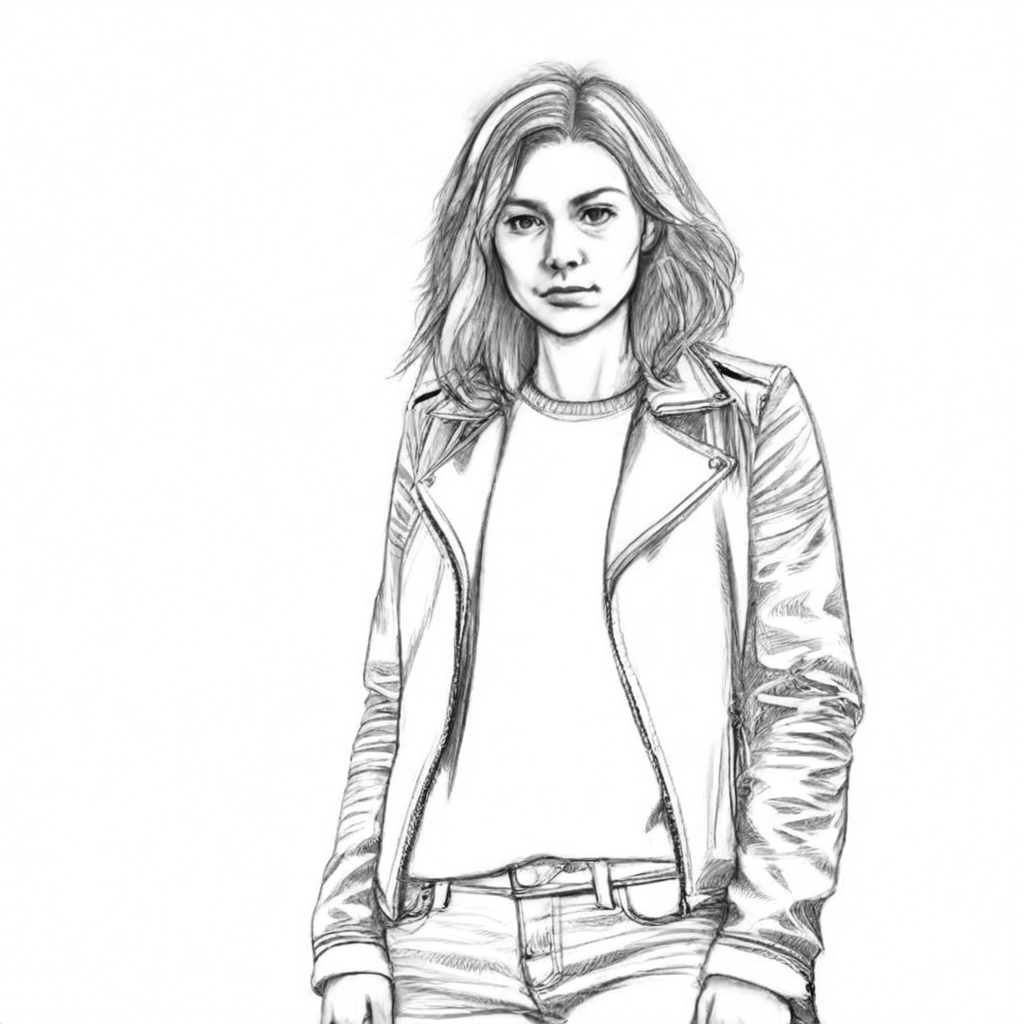
 The Domains of the Emperor Owl
You must be logged in to post a comment.