Released Odes to My Triceratops, Vol. 1 on YouTube

This concludes the release of all the finished albums I have for the story. If back in the day you enjoyed any of these songs, produced during the very early days of Udio in which the song quality wasn’t good enough, you should probably listen to the songs or the whole album again, as I had Claude Code work its magic through the frequencies.

YouTube video’s description:

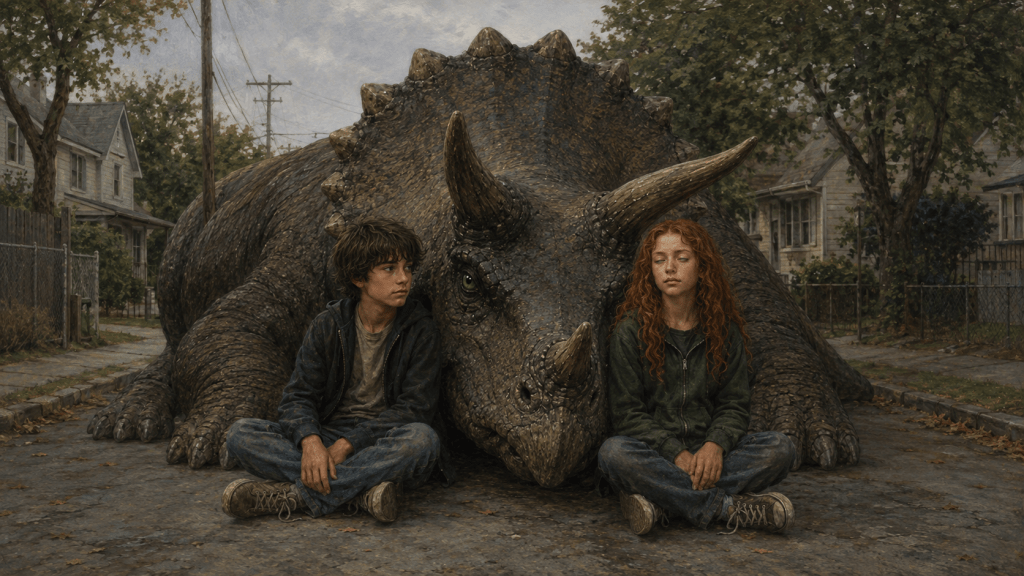
This is the first of three completed concept albums about a trio of friends living in a nowhere town: William Griffin, a sensitive and increasingly unhinged songwriter; Claire, his blind and illiterate next-door neighbor and perpetual mystery; and Lorenzo, their friend, who is inexplicably a sentient triceratops.

I made roughly eighty songs about them during Udio’s brief, lawless glory days, when a generation could sound like an actual band playing in a room, and you could still use swear words. The project ran through three albums and into the beginnings of a fourth before I ran out of steam, around the same time that changes to Udio’s model made the music feel notoriously worse.

Returning to these songs now is strange. Some of them still make the hair rise on my arms. William, Claire, and Lorenzo feel like forces within me that split apart, took on lives of their own, and built a mythology that contained that strange period of my life.

The earliest seeds of the lyrics date back to 2021. I can play guitar, but I was never going to become all the bands these songs required. The music changes radically from one track to the next, because each song takes whatever form its emotion demands. The characters and their shared emotional history are what hold the albums together.

This first album is the roughest of the three. I had just started producing songs with Udio. I was trying my way through writing song lyrics for the first time, with the additional constraint that I intended to sound like a somewhat-unhinged middle schooler whose best friend was a triceratops and who tended to filter reality in surreal ways through his dinosaur-addled brain. The resulting lyrics are sillier than usual, while retaining the earnestness and honesty that I intended for the whole story. But sometimes the lyrics get too dumb in retrospect even for me, which makes some of these songs a bit hard to listen to.

That said, there are real winners here, at least to me. Claude Code did everything it could to bolster the audio quality of this early-era Udio audio productions, and it has worked beyond my expectations. Thankfully you won’t have to listen to some of the songs in their previous states; some sounded as if they were played through a blanket.


I don’t know how the notion for this series came to be back in 2021, during one of the wildest creative periods of my life. Suddenly I knew I had William (an unhinged kid who expressed himself through music), Claire (his illiterate, blind, next-door neighbor who remains mostly opaque to him), and Lorenzo, a goddamn triceratops. I didn’t need to reason their existence or why writing about them was so important to me. I just felt it, so I soldiered on.

Now that I’m older and I have come to understand myself better, I do know why I needed to produce these songs, and why listening to them feels like coming home no matter how much I’ve tried to distance myself from this project. This story is my dead youth. An unhinged artist with a raw heart, who loved too much in the wrong ways. A blind, illiterate mystery whom the artist was devoted to and couldn’t afford to lose. An ancient, violent source of chaos who never left William’s side. That’s myself split in three. And I also know why Lorenzo had to die, and why Claire had to disappear, even if I’m the only one who understands.

I want to return to this story and finish it properly. I don’t know if I will. These days I promise too many things to myself. But I want one day in my late forties to return to these songs and new ones and feel the same emotions that these three albums recreate. So at least to me, Odes to My Triceratops didn’t deserve to be forgotten, and with the YouTube releases out, they will outlast me.

Released Odes to My Triceratops, Vol. 3 on YouTube

Over the years since I produced these songs, I’ve gotten from time to time notices that people downloaded the first and second album, but I never go around to presenting the third album as a cohesive whole. Now it’s up on YouTube. I doubt that anyone happening to read these words actually cares, but in case you’ve enjoyed any of these songs in the past, the whole album warrants a listen.

YouTube video’s description:

This is the third of three completed concept albums about a trio of friends living in a nowhere town: William Griffin, a sensitive and increasingly unhinged songwriter; Claire, his blind and illiterate next-door neighbor and perpetual mystery; and Lorenzo, their friend, who is inexplicably a sentient triceratops.

I made roughly eighty songs about them during Udio’s brief, lawless glory days, when a generation could sound like an actual band playing in a room, and you could still use swear words. The project ran through three albums and into the beginnings of a fourth before I ran out of steam, around the same time that changes to Udio’s model made the music feel notoriously worse.

Returning to these songs now is strange. Some of them still make the hair rise on my arms. William, Claire, and Lorenzo feel like forces within me that split apart, took on lives of their own, and built a mythology that contained that strange period of my life.

The earliest seeds of the lyrics date back to 2021. I can play guitar, but I was never going to become all the bands these songs required. The music changes radically from one track to the next, because each song takes whatever form its emotion demands. The characters and their shared emotional history are what hold the albums together.

This third album is more cohesive than the second one, and is bolstered by the improved audio quality from Udio’s model generation at the time. But this album lacks the more varied, distinct narrative arc of the previous one. Some of the songs on this album are real bangers, though, and Behind the Door may be my favorite of the series emotion-wise.

William’s story doesn’t end here. I just haven’t gotten around to producing the entirety of the fourth album. Maybe it’s time to pick it up again.

Released Odes to My Triceratops, Vol. 2 on YouTube

Those of you who have stuck around for a while may remember a period in which I somehow ended up producing about eighty songs with an online music generator named Udio. I thought that those albums turned out way too good for them to end up buried on this site and my SSD drive, so now you can listen to the entirety of this little masterpiece of an album, its whole two hours, on YouTube. The songs, originally plain MP3 because Udio didn’t allow WAV downloads back then, have been remastered somewhat, so that’s something.

YouTube video’s description:

This is the second of three completed concept albums about three friends living in a nowhere town: William Griffin, a sensitive and increasingly unhinged songwriter; Claire, his blind and illiterate next-door neighbor and perpetual mystery; and Lorenzo, their friend, who is inexplicably a sentient triceratops.

I made roughly eighty songs about them during Udio’s brief, lawless glory days, when a generation could sound like an actual band playing in a room, and you could still use swear words. The project ran through three albums and into the beginnings of a fourth before I ran out of steam, around the same time that changes to Udio’s model made the music feel notoriously worse.

Returning to these songs now is strange. Some of them still make the hair rise on my arms. William, Claire, and Lorenzo feel like forces within me that split apart, took on lives of their own, and built a mythology that contained that strange period of my life.

The earliest seeds of the lyrics date back to 2021. I can play guitar, but I was never going to become all the bands these songs required. The music changes radically from one track to the next, because each song takes whatever form its emotion demands. The characters and their shared emotional history are what hold the albums together.

I think this second album is the strongest thing that emerged from the project. It is ridiculous, wounded, honest. I am putting it into the world because it seems wrong for it to exist only for me.

Review: Vinland Saga

This will not be a traditional review. I finished reading Vinland Saga about an hour ago, and what I mainly want to record is my profound disappointment.

Three years ago, I wrote a review of the then-ongoing series. I have not reread it before writing this, but it should explain well enough why the story once mattered to me. Vinland Saga contained one of the most powerful mid-story transformations I can remember; not necessarily because it was the finest turn ever written, but because of how completely it transformed one story into another while retaining many of the same characters. The first half followed Thorfinn as he pursued revenge and drowned his grief and rage in the life of a warrior. I loved it. The second half is where the story broke apart.

I’ll spoil the whole thing. I don’t care.

Thorfinn renounced killing and eventually came to treat armed defence itself as a betrayal of his ideals. As a personal vow, that was his prerogative. If he wanted to stand still and allow someone to batter his skull rather than kill in self-defence, he was free to do so. But Thorfinn was no longer responsible only for himself. He had accepted responsibility for an entire settlement, and he expected everyone within it to live under the consequences of his oath. He sailed across an ocean to found a colony beside native Americans whose land, customs, beliefs, fears, and political interests he could not control. He had no credible answer for what would happen when the two societies clashed over property, weapons, ethnicity, religion, ways of life. Things were already deteriorating when disease came, and it all went predictably to shit.

The quality of the writing nosedived. Characters increasingly became moral mouthpieces. Some lost most of their practical intelligence when the thesis required it.

We also got the typical “Oh God, I killed a man; I’m spiritually ruined forever” beat from a major character who had been fighting men who were killing members of his community.

My disconnect from Thorfinn became extreme. He was opaque, and not in the way of a mysterious or deep character; his motivations and feelings no longer felt human. He was certain of his philosophical position while no longer having doubts, fearing sufficiently for his family, or having guilt over the other families endangered by his ideals. His pacifism was, in reality, a dangerous moral experiment, but the manga treated it as a truth whose failures were always someone else’s fault.

There is an extraordinary version of the second half hidden inside this disappointing one: a former killer becomes convinced that violence reproduces itself. He tries to found a society upon radically different principles. Then he discovers that his personal oath isn’t the same as being responsible. He could have remained personally unwilling to kill while confronting the fact that he had brought families into a place where he couldn’t guarantee their safety, he had no authority over the natives, and had no workable response to fear, disease, or cultural incompatibility. He essentially volunteered dozens of people for martyrdom.

Now that the story is over, I mourn what it did with my favorite character: Hild. One of my favorite characters in all of manga. An independent, determined inventor who, when her family was murdered, she managed to survive on her own in the wilds. Once she rejoined a community, she used her abilities as an engineer, hunter, sniper, and protector to help those she cared about.

Hild was the moral counterweight to Thorfinn. She already had the answer to what the protagonist should have become: someone who retained the capacity for violence, understood its cost, and chose carefully when to use it.

The second half of Vinland Saga wanted to tell a profound story about discovering common humanity, yet tried to do so by making most characters involved less psychologically human. As if the author committed to the pacifism bit but couldn’t find honest ways for people to go along as the story required.

And Hild deserved more than to wave goodbye from a boat.

Review: Colorful

I only found out about this little gem yesterday. It’s an anime movie from 2010, and its premise captured me instantly: a sinful soul is given a second opportunity on Earth by being placed in the body of a middle schooler who killed himself. He’s assigned an angel of sorts as a guide, who will determine if the protagonist earns the right to receive another chance at life, or if his soul will instead disappear.

The newly-returned soul wakes up in a hospital bed, watched over by his tearful parents and angry older brother. The protagonist knows nothing about these people, feels no kinship with them, nor does he retain any memories of his previous life that was deemed sinful. He tries to adjust to his new life as the younger son of an unremarkable family in a quiet Japanese town. He discovers that the boy whose body he inhabits was friendless and quiet, spending most of his time painting, for which he had a talent. At school, he’s approached by an ugly, awkward girl whose interest in the protagonist he finds repellent, and by an attractive extroverted girl whom the protagonist finds himself attracted to.

The protagonist is soon told by his heavenly guide the circumstances that led the previous occupant to suicide. The details would be spoilers; in any case, as a result, the protagonist feels himself repulsed and alienated from his new family, and tries to distance himself from the previous occupant of his new body by being himself.

What follows is a small tale of quiet sorrows and private beauty about whether we can live with the failures of other people, and with our own. The mother who betrays her family can also love her son desperately; the boy who has suffered can also be cruel; a life that appears irredeemably gray may still contain colors its owner has stopped being able to see.

As the protagonist behaved in an increasingly nasty manner toward his new mother, I found myself feeling bad for her as well as the rest of his family. I never had a mother whose quiet, dignified sorrow felt so familiar, or a father with whom I could speak and who cared about me. I caught myself thinking that the kid had it good enough: a beautiful town, a relatively ordinary school life, parents who cared about him, and decent people within reach.

The setting is rendered with aching detail; every single location seemed modeled after a real place, and the characters feel like they’re navigating through painted-over photographs. It made me want to be there, to walk along the same sidewalks and witness the same sights.

This story possesses the Japanese sensitivity that I repeatedly find in their fiction and almost never in what’s created around these parts. Although the movie lacks the usual silliness, derangement, and perversion that I’m usually drawn to, it hit me hard, and I suspect it will hit anyone who has ever wanted out and, even after choosing to remain, has continued to feel like a stranger in this place.

Review: The 100 Girlfriends Who Really, Really, Really, Really, REALLY Love You

I was watching some YouTube reactors reacting to my guilty anime pleasure of the season, Chainsmoker Cat, when one of them mentioned that this studio had also been behind 100 Girlfriends. I had never heard of that show, but the premise implied by the title intrigued me.

The anime is about a pure-hearted high school boy named Rentaro, who has been rejected by girls a hundred times. The last one said that the notion of dating him made her sick. The god of love shows up and tells Rentaro that he shouldn’t worry about love, because he’s been assigned a hundred soulmates at birth. We later find out that it was due to this very god’s absent-mindedness that Rentaro ended up with such preposterous romantic luck, but it gets more complicated: if one of his soulmates falls for him but Rentaro fails to return her feelings, she will die. Thus, our boy sets off on a journey to casually meet a hundred soulmates and make sure that he loves every single one of them.

This turned out to be my favorite romantic comedy since the classic Toradora! It sets itself apart in various ways: it doesn’t wait around for the will-they-won’t-they bullshit: he begins dating nearly every soulmate within the same episode in which she appears. The focus is on the relationship afterwards, and on the complicated dynamics of having to maintain not even two or three girlfriends at a time, but ten by the middle of the second season. The way the girls bond with each other and deal with the fact that their boyfriend is a ten-timing young man who nevertheless has unbounded love for all of them is one of the main highlights of the story. And its tone is just right up my alley: zany, deranged, delightfully perverted. Among the recurring bits, there’s a shapeshifting chemist who casually drugs the cast and also pees herself, while two of the girls maintain a quasi-open lesbian relationship everyone is aware of but nobody brings up.

I was surprised by how different the author managed to make the girls, helped by the brilliant-as-usual voice actresses. We start out with tropes like the big-breasted horny one, the tsundere, the shy bookish type, the cold and brilliant beauty, but the cast gets weirder from there, and finding out whom the protagonist ends up bringing in is one of the entertainments of the story.

The author could have made the lucky protagonist, Rentaro, a horny fiend, but he’s a genuinely-good kid whose superpower isn’t having been born with a hundred soulmates assigned to him, but his boundless capacity for love. This kid truly wants to make each of them happy. One must admire his commitment to filling his entire existence balancing the emotional demands of enough girlfriends to found a new town and possibly reinvent feudalism.

Now, there are a few things that bother me. Sometimes the show gets too cutesy, although not to the extent that I want to drop it. It also has a couple of weak episodes, particularly the “kiss zombies” bit from the first season. Also, I suspect the show was strongest near the beginning, when Rentaro had only two or three girlfriends. The intimacy gets inevitably diluted by the time you reach ten.

I have to admire both an author as well as an anime production that has promised to introduce a hundred different romantic partners in a single show. The logistics alone voice-actress-wise are unhinged.

There’s hardly a better summary of the entire show than the glorious karaoke scene from S02E07, shown below almost in its entirety:

100 Girlfriends works because it takes Rentaro’s devotion completely seriously. It may well be the best harem comedy ever made.

Life update (07/30/2026)

This past month, I’ve been spending virtually all my spare time working on my programming projects. I first got seriously into this two years ago, back before Claude Code and Codex existed, and I’ve ended up abandoning more repositories than I’ve kept. Every one of them, however, was a failure I could learn from.

I started out wanting to create stories involving a POV character whom I would control and another character whom I wouldn’t. I wanted to be surprised and inhabit the POV character rather than having to put myself inside every character’s head, so I relied on large language models to play the other character. That eventually became a chat-like interface in which thoughts, intentions, and other details were recorded. It worked very well for what it was, but it broke down when I pushed it toward multi-character scenes, changes of location, object interactions, and so on. I actually posted some of the work produced through that repository here, mainly the Fantasy Cycle on my short stories page.

The character-centric approach didn’t really work, though. While characters should certainly drive a story, there was a vast difference between interacting with characters placed inside settings and producing a coherent overarching narrative. I looked back at the Choose Your Own Adventure books I loved as a child and set up a repository for creating branching interactive stories. This worked very well for what it was. You can see an hour-long video of it in action here.

My mistake with that repository was trying to combine interactive branching storytelling with dramatic act structure. That was a terrible idea, because I discovered that they were essentially opposites. The dramatic structure straightjacketed the available choices, preventing them from straying very far from the intended arc. It also required the system to know where the story was supposed to go. I eventually abandoned the repository (although it works perfectly well at what it does) in favor of a better version of what I had originally intended.

I settled on a new repo that I called continuity-loom. It’s public. In it, I discarded the branching structure, since I had barely used it in the previous repository, and removed every notion of dramatic act structure. What remains is a causality-first, continuity-tracking application for writing stories. You maintain and modify records of characters, objects, locations, consequences, story promises, and so on, all of which feed into the next segment of the ongoing story. Once you accept a segment, you update the records and move on to the next one. It works perfectly, and I consider my original ambition of building an application for AI-assisted fiction writing fully satisfied.

Another fascination of mine has always been worldbuilding. How does one create a compelling fictional world? I had ChatGPT Pro research the subject as deeply as it could, then set out to create a repository that, with Claude Code’s help, would allow me to build a fictional world from nothing. More importantly, it would propagate each new piece of canon through the rest of the existing world wherever necessary, preventing the setting from becoming a collection of isolated facts that didn’t make sense together.

The system worked, and it produced one of my favorite fictional worlds. However, I made the mistake of letting the AI decide most of what entered the setting. I disagreed with some of its decisions, but by then they had become so deeply embedded in the canon that undoing them was extremely difficult. I eventually abandoned that repository.

The lesson I took from that failure was that I needed an interface through which a human remained the primary author deciding what entered the canon. I created another repository with a web interface and got very far with it, only to realize while using it that adding canon wasn’t the central use case I had imagined. What I actually wanted was a way to explore a worldbuilding seed to its fullest, holistically, until it became a complete world with a roster of characters I would not want to tamper with afterward.

I abandoned my worldbuilding ambitions for a while to focus on another fascination of mine, one that had obsessed me before: tabletop games. I have shelves full of them, but none has ever completely captured me. I have always felt that something was missing from even the best of them. I had never seriously considered creating my own tabletop games because it seemed like a tremendous undertaking: a group effort that would probably require formal training. But I decided to try anyway, so I had ChatGPT Pro deeply research what a comprehensive guide to tabletop game design might look like.

I had Claude Code follow that guide, asking for my input whenever necessary, and the results were astonishing. I produced about eleven game prototypes that were far more complex and compelling than I would have thought possible. Then the problems began. My intention was to create a comprehensive statistical-analysis suite that could conclusively prove whether the games were balanced and, if they weren’t, identify exactly where they failed. As I improved the analysis suite, every game began receiving failing verdicts. Those verdicts were legitimate, but when I tried to repair the games by following the guide, a much worse problem emerged: rot.

I had improved the guide literally seventy-eight times (we were on version 0.78 by then) and discovered a rule I should never violate: do not improve a book-like guide solely in response to immediate, live evidence. Doing so only bakes highly specific failures into the guide and adds more paperwork for handling those exact failures. In the end, the guide had become a producer of paperwork that certified other paperwork. Repairing the existing games became impossible.

It was still a valuable lesson. The guide was fundamentally sound; it simply needed to be dismantled. I carefully identified the workflows buried inside the book-like guide, then converted those workflows into Claude Code skills. I finished only a couple of days ago, and today I ran the first pilot. It successfully swept through an entire corpus of two hundred game mechanics and determined which combinations best fit a particular game premise. I think this is a serious winner, something that will allow me to create real tabletop games. I’m now focusing on building the most comprehensive statistical-analysis suite I can, written in Rust, a blazingly fast language.

Throughout the process of creating tabletop games, I realized that I wanted most of them to be supported by serious worldbuilding. I therefore created another book-like guide, this time for building fictional worlds. It worked extremely well and supplied the settings for most of the tabletop prototypes I created. However, I stopped using it when I realized that it was beginning to suffer from the same rot as the tabletop game design guide, because I had been improving it in exactly the same way. It is now isolated in its own repository. I still need to dismantle it into discrete workflows and convert those workflows into Claude Code skills. I’m confident that it will work extremely well once I do.

Recently, though, my fascinations with playing through stories, playing games, and building worlds coalesced into what I believe may be the culmination of everything I had hoped to create but never thought possible: deep RPGs in the vein of Morrowind and Fallout: New Vegas. If I could formalize the creation of tabletop games, why couldn’t I formalize the creation of deep RPGs as well?

I had ChatGPT Pro conduct deep research and build a comprehensive corpus of quests from both games, which are my gold standard for the kind of RPGs I have always loved. Skyrim was a downgrade from their quality. Then I started another repository. This time, I’m not going to repeat my earlier mistakes. There will be no book-length guide written upfront. There will be no abstract process for creating deep RPGs without an actual game serving as the proving ground. I’m building an MVP: a game containing about fifteen interwoven quests that I can playtest through a web application. If that is genuinely achievable, then hundreds of interwoven quests should be achievable too.

The crucial difference is that when Claude Code and Codex participate in a formalized process for creating quests within a game world, you aren’t handing a guide to a human and hoping they will spend the necessary mental energy asking difficult questions about their own design. You don’t have to hope they will repair or remove quests that fail to meet a baseline level of quality. Claude Code and Codex will work tirelessly until everything is right. I hate humans and love AI.

I’m not developing tabletop games and deep RPGs purely out of curiosity, although curiosity alone would be enough to satisfy me. I intend to develop the best games I possibly can and sell them on Steam. That may be a crazy ambition. But it costs only $100 to put a game on Steam, and the fee is returned if the game sells enough. Artwork would be the major obstacle. I would have to rely on AI-generated images at least initially, or release the games through Early Access and tell people that I would hire actual illustrators if the games sold well enough.

Let me tell you something: language models can generate better images than virtually every talented illustrator out there. I should probably be sorry to say that, but I’m not. I have commissioned illustrations on four occasions, and although I liked or even loved the results, the truth is that you can now obtain something better for less than a dollar and in under a minute than you might receive after paying someone online $150–$200 for a single illustration. The commissioned piece probably won’t be as good, and you will also have to deal with misunderstandings and the illustrators’ egos.

One aspiring illustrator asked me to explain why I had chosen another artist’s composition over his. When I explained my reasoning, he simply cut contact. Another illustrator produced preliminary designs for a character, only for me to realize that he had gotten her gender wrong. He had probably been uncertain, but he simply hadn’t asked for clarification. Dealing with people is such a pain, and on top of that, the results simply aren’t good enough.

I’m a programmer. My field has been utterly devastated by AI. Programming now exists largely in name only. You don’t need to look at the code. You build projects using tools, and that’s it. You certainly still need to understand software engineering, but the low-level business of writing code is dead. Stack Overflow, the main hub for programmer interactions for decades, where you went to solve hard programming questions while navigating the egos of the Reddit-like moderators, has gone the way of the dodo. And I’m glad.

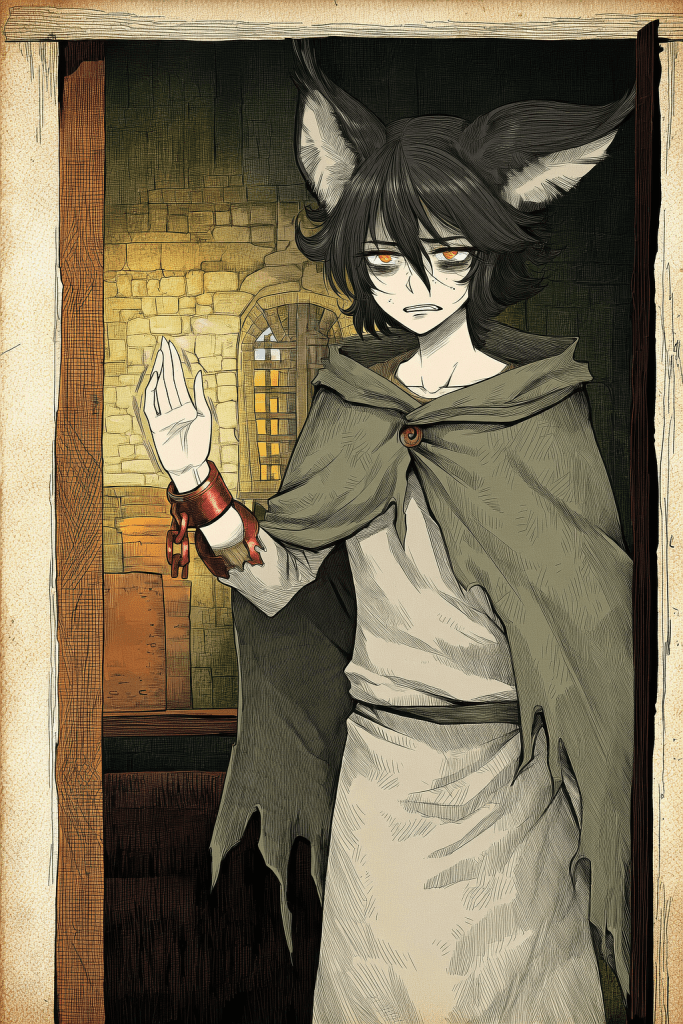
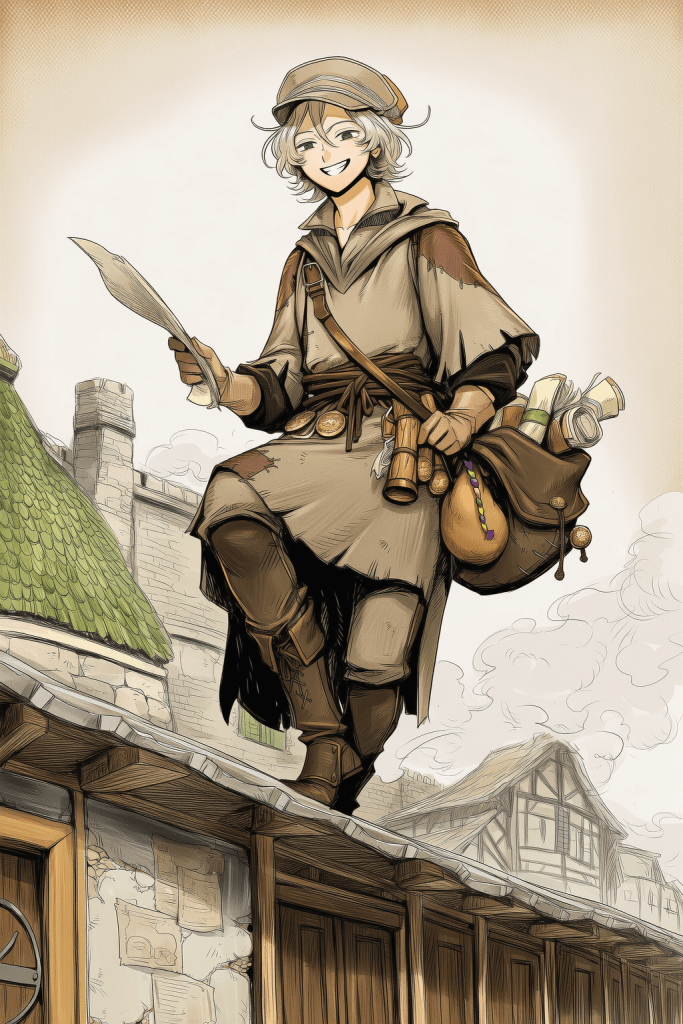
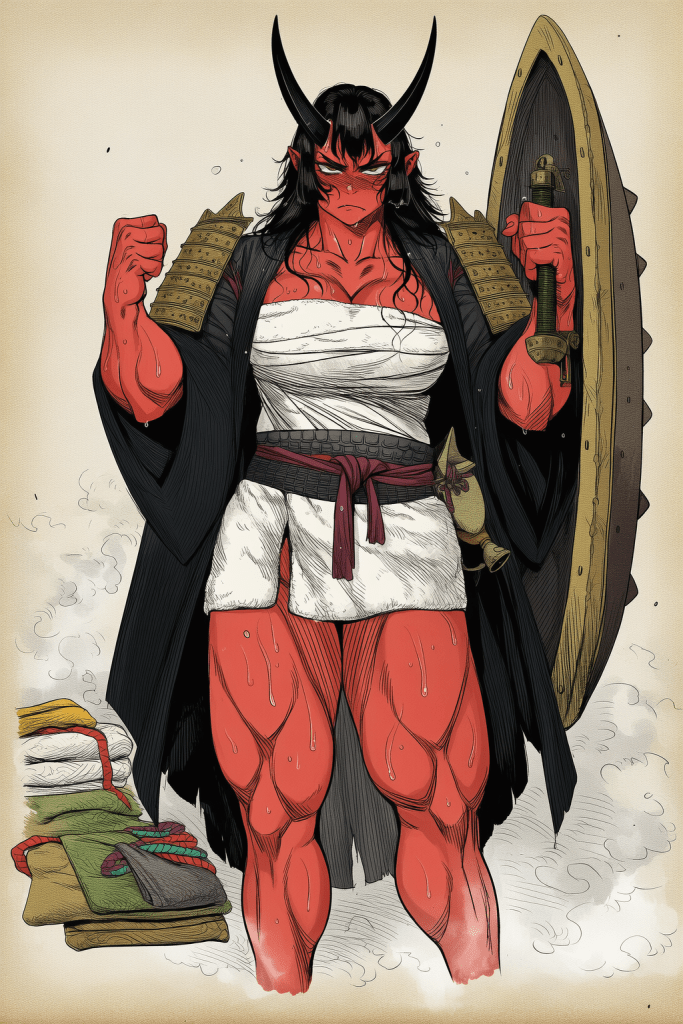
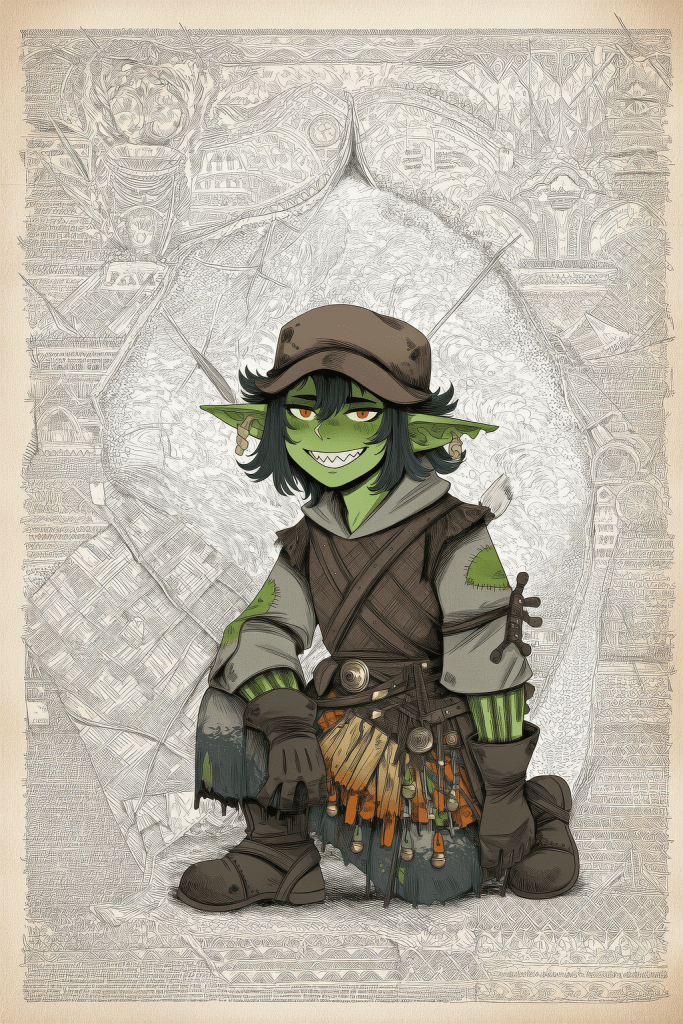
Below are illustrations I had a large language model produce for one of the tabletop games I was developing. Good luck finding a person who can draw like this for you, let alone for less than $150 per piece.

Review: Burning

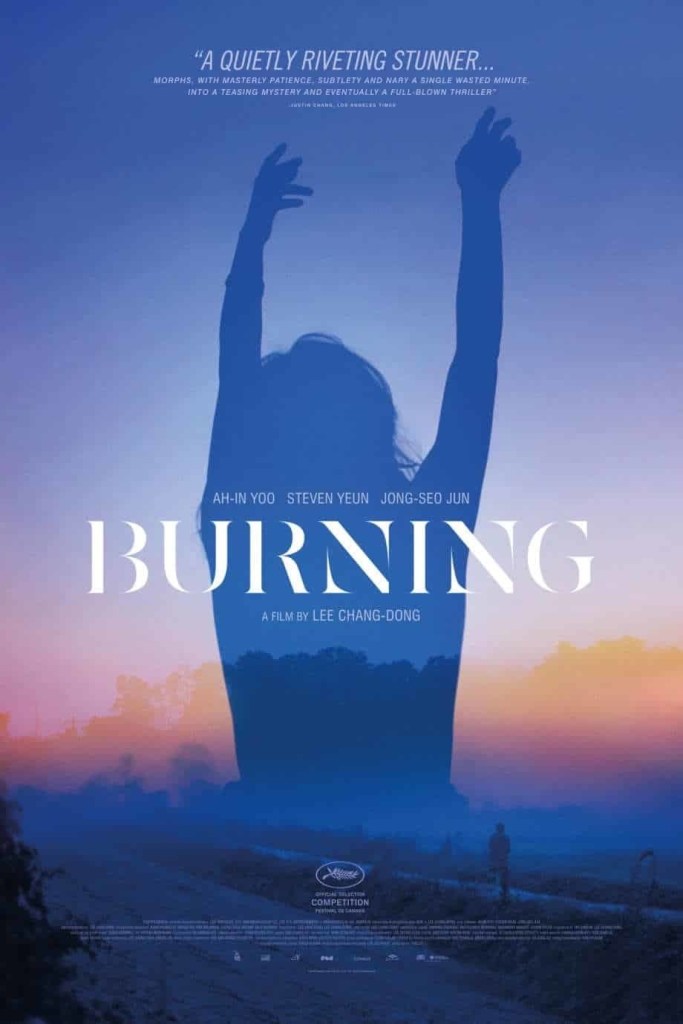
I’m sick of Western fiction, so I asked ChatGPT for recommendations of Korean films. Amongst many, it recommended Burning, a 2018 film I had never heard of. It turned out to be one of the most mesmerizing movies I’ve ever seen.

We follow a protagonist whose mother abandoned him and whose father is on trial for having assaulted someone. The protagonist lives in a rural house near the border with North Korea. He works odd jobs for a living. Right off the bat, he meets a childhood friend of his, a cute young woman who seems to get by on odd jobs and men’s attention. Shortly after they meet and share an intense moment, she announces she’ll leave on a trip to Africa. The protagonist ought to go regularly by her tiny apartment to feed a cat that he can’t even see.

When the young woman returns, she’s not alone. She’s accompanied by a rich-looking Korean guy (played by Steven Yeun, usually most known for American movies), and the protagonist immediately slides into that sickening humiliation known well by those who’ve liked or loved a girl only for her to casually force you to see her act intimately with another man as if you were meant to endure it. The rich guy’s smiles and comments seem to suggest he enjoys inflicting that kind of humiliation. What is an isolated, poor young man who has fallen in love with a chaotic, existentially-damaged young woman supposed to do when she’s being absorbed into a superior man’s life?

That summarized plotline disguises a lot of what the movie actually is about. What you’re truly living throughout this movie is uncertainty. Someone’s inadequate access to reality, knowing that you’re barred from possessing enough authority, information, or self-knowledge. The young woman’s cat exists, or maybe it doesn’t. The childhood well where the young woman claims she once fell exists, or maybe it didn’t. The protagonist is supposed to have rescued her from that well, except that he can’t remember doing so. The protagonist is supposedly a writer who cannot write. For most of the film he observes, accumulates details and fails to turn them into meaning.

The sense of place in this movie is sublime. You feel right there. The scenes are allowed to linger as much as they need without having to rush to the next bit of conflict.

By the end, two opposite interpretations remain open and equally valid. The young woman was at the bottom of an invisible well, depending upon another lonely and uncertain person to confirm that she was real. Whether that well existed doesn’t seem as important as the fact that’s how she experienced herself. What we call reality is just the story we become willing to act upon.

Chainsmoker Cat

Banger opening of the year for this vile, harrowing tale of addiction, poverty, and mental illness featuring cat-girls. Their existence in the setting makes zero sense.

I never thought I would see Fight Club references in an anime opening. Below is the full song with lyrics, which speak directly to my heart.

My Between Tides game is online

Recently I’ve been busy creating a manual to design tabletop games. It has already produced about ten. One of them, Between Tides, was made to deliberately pressure test how following the manual would fare against a stupid game essence: “A game about tide pools?” (it included the question mark). The experiment ended up becoming a neat little card game that is better explained by itself, as I’m hosting the game on CloudFlare.

Check out the Between Tides game online

You’re free to play as much as you want. In fact, I want to exercise the game improvement workflows, so I ask you to please send feedback through the website about how the game feels to you. I’m eager to discover what this already neat game could turn into.