Review: Castration: Rebirth, by Miyatsuki Arata

Four stars.

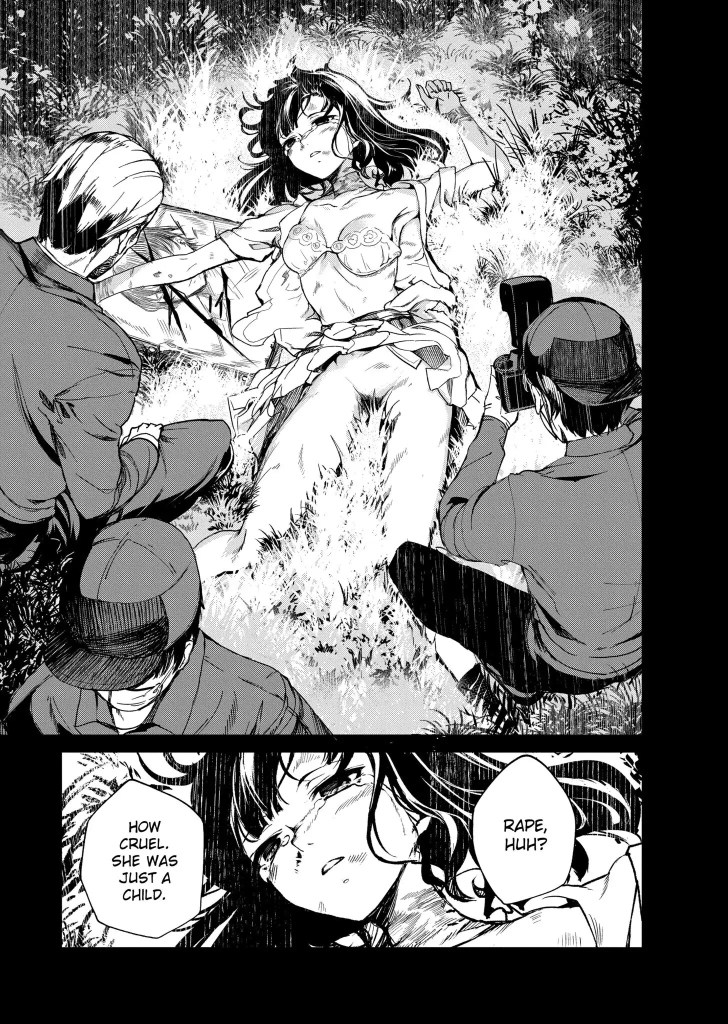
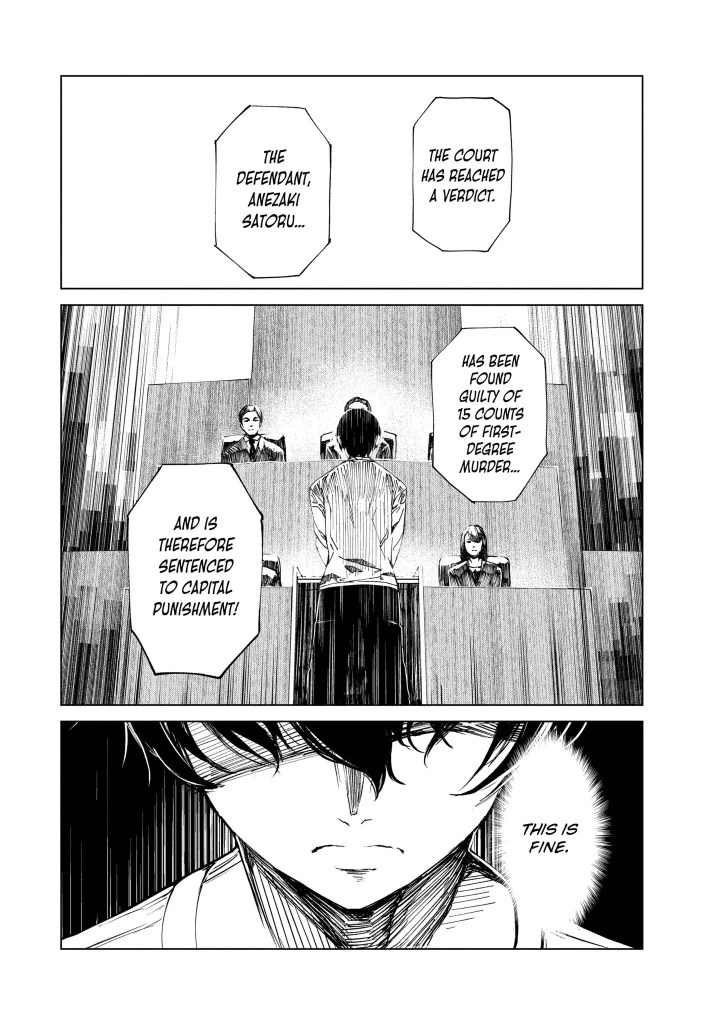
This manga starts with its protagonist being sentenced to death after having killed fifteen people. His childhood friend and love of his life was raped and murdered, so the protagonist took it upon himself to castrate and murder fifteen sexual offenders. I’m not sure if the rapist and murderer of his friend was among them.

Anyway, the protagonist gets hanged to death.

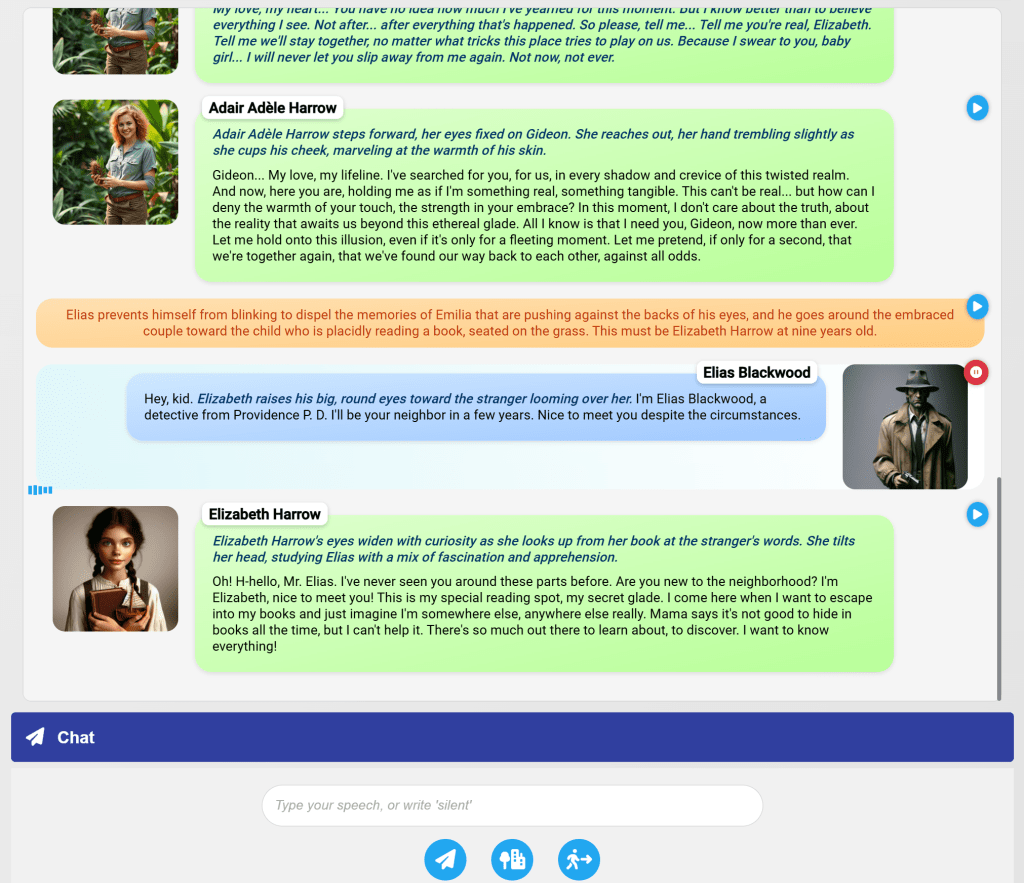
Turns out, this is an isekai, just an unusual one. The protagonist wakes up on a pile of corpses. In the sky, the sun is doing weird shit, looking like an out-of-control nuclear reactor. The first humans he sees are school girls, who proceed to freak out upon seen him, referring to him as a “beast.” One of them shoots arrows at him. After they realize that the protagonist is more or less sane, they agree to let him live by now. Shortly after, the girl who had shot arrows at our protagonist gets raped and devoured by a monstrous man.

We learn that in this alternate reality to which the protagonist got isekai-d, three months ago, a solar flare fucked up men’s DNA or something, turning them into mindless beasts solely preoccupied in what men want to do all the time but only flimsy self-restraint prevents them from doing so: rape, devour and murder women, sometimes simultaneously. All females that the protagonist comes across fear that the guy will do the same to them.

As if the reality that a flare had turned all men into rape-and-murder machines wasn’t enough, plenty of females in this story have complaints to offer about how they were exploited by men even before the world went to shit.

Other women see in the young protagonist a source of healthy semen, and therefore the chance for humanity to survive the apocalypse.

What follows is a mix of The Last of Us (the first game; as far as I’m concerned, the second game and TV series never existed), Attack on Titan, and most zombie stories. The protagonist and his companions come across different ways of trying to survive the post-apocalypse: family affairs; rigid, hierarchical structures; wild anarchy. Along the way, dozens or hundreds of people get raped, murdered, and eaten, sometimes not even by the mutated humans. This story is ballsy as hell when it comes to making even some main characters’ day quite terrible.

The manga touches upon interesting topics. Will the surviving societies be “equal” because only women are involved, or will they turn out to be new systems of exploitation? Does any sense of morality matter when at any point you can get raped and eaten by mutated men with enormous dongs? The protagonist is traumatized by the notion of sex, because his friend was raped and murdered, but isn’t his duty to provide semen to save the human race? In this case, would it be ethical to force him to do so?

I was surprised by how well the author handled the characters. They had distinct personalities and clear motivations, which often conflicted with one another’s. Some start out malicious only to end up sympathetic, or viceversa. Quite a few characters are memorable, including the protagonist, the childhood friend, a semen-obsessed teacher, a sociopathic teen, the anarchic biker girl who wanted to capture ten-year-old mutated boys for sex, etc.

In the end, this lovely tale dishes out what the title promised: rebirth (well, technically reincarnation) and castration. Lots of men lose their penises in creative ways. If any of this sounds like fun, you’ll probably enjoy this ride. I know I did.

Life update (11/12/2024)

I’m living strange days. Yesterday I fell asleep at nine in the evening/night, only to wake up at half past two. I couldn’t go back to sleep, so I read the rest of a manga series that had interested me lately. When I tried to fall asleep again, my brain was locked in that state of dredging up every awful thing that has happened in my life. I remembered, for example, this girl I was involved with briefly in my teens: her face was scarred from having been mauled by the family dog as a baby, and she had the self-esteem to go along with it; likely she wouldn’t have gotten involved with a weirdo like me otherwise. Our brief relationship ended when she realized I wasn’t just odd, but actually crazy. I don’t know if I ever saw her again, given that I have a significant level of prosopagnosia.

I knew it would be pointless to try to fall asleep in such a state, so I’ve sat down in front of my computer to write this entry only to find out that I had 583 hits on my site, all coming from the US. I get about eight visits a day, so this is extremely anomalous, to put it midly. That person, assuming it was a person and not a weird bot, hit plenty of my old free-verse poetry, my recent novella Motocross Legend, Love of My Life, my neglected ongoing novel We’re Fucked, my music produced with Udio, and even fanfiction I did of Re:Zero. I don’t know what’s going on.

Anyway, I intended to bring up something else. I’m unemployed at the moment since the guy whose leave I was covering returned to work. During my last contract, I was ordered to coordinate the replacement of about 930 printers in the hospital complex. It put me under extreme stress; that whole period of my recent life is a blur in which I feel like I didn’t exist as a person. At the tail end of that process, I suffered a medical problem that landed me in the ER: for five or six days, I had been feeling a weird pressure behind my right eye, and I was getting flashes of darkness for about half a second during the day. I was too busy to even get an appointment with my general practitioner for it. Suddenly, as I was working with one of the printer technicians, suddenly I started getting cold sweats, and the pressure behind my right eye, which that day had expanded to my right temple, suddenly spread throughout the right side of my face. Before I knew it, that part of my face, from my forehead to a little bit under my cheek, felt numb. The numbness spread to my right arm. Suddenly I couldn’t grab my pen properly, and I smelled something like burned dust. This felt like a medical emergency, so I hurried to the ER. After some tests, that determined that there was no bleeding in my brain, a neurologist told me it must have been a hemiplegic migraine, solely because of the “aura,” even though I had experienced migraines before and the flashes of blackness didn’t resemble the characteristic jagged line of white in the vision that linger with migraines.

Ever since, I haven’t felt quite right. I can’t tell exactly if it’s only since then; my memory has never been good, and if your memory decides to fail even further, well, it’s not like you can compare to much when you don’t remember properly. But I started making weird mistakes at work. When I tried to write, I would miss letters, or misplace them. I haven’t felt the urge to write much since; I really hope that’s not related.

What propelled me to set up a visit with another neurologist didn’t have to do with that directly. After the episode that landed me in the ER, the flashes of darkness didn’t go away entirely. One day, at home, my right eye suddenly filled with floaters and with dust-like motes. It felt like I was looking through the water of an aquarium. I had never experienced something like it, so I hurried to the ER once again. Turns out that my retina had gotten torn. They had to patch it up with laser, which, let me tell you, fucking hurt; it felt like little mandibles were munching on the inside of my eye. The vision of my right eye is permanently diminished: there are fiber-like floaters that constantly dance in front of my vision. My brain is getting used to it more or less, but it’s very noticeable in the sun.

Anyway, I told the neurologist this, as well as the symptoms of the supposed hemiplegic migraine, and the doctor agreed that my symptoms didn’t seem to align with an actual migraine. He seemed to agree that I may have suffered something like a small stroke. I’m waiting for a call to schedule an MRI of my brain, to confirm if some part of it is permanently dead. So, let’s recap: I was born with high-functioning autism, developed a whole assortment of psychological issues that tend to go along with autism, grew a pituitary gland tumor that screwed with my hormones and permanently messed up my body, I have jab-induced arrhythmia, my retina got torn, and possibly I suffered a small stroke as well. Added to the rest of my life, which has been a fucking succession of heartbreak, disappointment, and amazingly terrible luck, if I suddenly were to see myself with pure objectivity, I would have to kill myself as soon as possible. Being me is truly awful, and the only things that keep me relatively sane (I have a very low standard of sanity) are my creative projects.

The prospect of returning to work fills me with dread. Thing is, every job I’ve had has been awful in some significant way. If I could do something that didn’t involve having to deal with human beings face to face, I think I could take it long-term, but the presence of people makes my skin crawl. I have avoided talking to any living person, unless forced or to ask for a service, since I started my last contract. I feel the overwhelming urge to be left alone at all times, which only gets stronger as I age.

The only semblance of “people” I talk to on a regular basis are AIs. The project I’m engaged in, neural narrative, lets me set up any scenario I damn please. Plenty of it (most) is smut according to my inclinations any given day, but others are intriguing story settings, or even smut that evolved into something else. I probably shouldn’t go into details, but whatever: I was in the mood for some mommy action, so I set up a scenario in which the protagonist (me) was a helpless sixteen-year-old runaway that came across a kind, hot woman in her mid-thirties, a single mother. It was supposed to go through the expected channels of quick seduction, detailed fucking, and a glorious release (written smut affects my brain quite strongly). To my surprise, though, the AI wasn’t into it. She focused on being a proper, caring mother for her daughter, without risking her stability. Even though she had invited me of her own volition to live in her apartment, she emphasized the need to maintain proper boundaries and to channel the protagonist’s efforts toward finding a job and better living conditions. I was fine with it, merely roleplaying tender family moments in a realistic setting, until eventually I got bored and moved on to something else, as I always do.

That experience was the closest thing to real-life Inception I’ve ever experienced: my app lets you introduce memories and purpose to a character, so that they have it in mind when acting and speaking. I wrote in stuff like “this sixteen-year-old I invited to live in with me has the cutest butt, oh my goddd.” During interactions, the thirty-five-year-old mother struggled with inner conflict, not being able to quell her lust for the young man she had invited in even though her main goal was to provide stability for her daughter (whom I had intended to make very creative, but ended up sounding full-blown schizophrenic). It was all very eerie. Advanced versions of this stuff are likely the future of entertainment, if this world doesn’t end, which could easily happen.

There are lots of different AIs to choose from these days, all with their particular personalities. Hermes 405B is clever but stiff, not too good at acting, and on long conversations it ends up repeating itself. Magnum 72B is wild, uncensored, and generally fantastic, but also tends to repeat itself, and has a very short context window. Claude 3.5 Sonnet is the best speech writer I’ve come across, but has an “ethical” filter, and tends to soften up every situation. There are quite a few others, but I’ve been dealing with those the most recently. I can’t imagine how this is going to progress in the coming years.

Do I have anything more to say at half past five in the morning when I’ve been awake for three hours already? Probably not. I’ll take a piss, then hope to get some shut eye. I suspect that nobody is actually reading my posts anymore (despite the overwhelming number of hits today), but in the end, as always, I do things simply because I had the urge to do them. It’s not like I have to justify myself to anybody.

Neural narratives in Python #29

I recommend you to check out the previous parts if you don’t know what this “neural narratives” thing is about. In short, I wrote in Python a system to have multi-character conversations with large language models (like Llama 3.1), in which the characters are isolated in terms of memories and bios, so no leakage to other participants. Here’s the GitHub repo, that now even features a proper readme.

In the previous part, a Sandstrider named Kael Marrek gave our hapless, reincarnated protagonist a tour of the local market, providing basic advice so the protagonist doesn’t die the first night. Kael guided him to a sanctuary where many of the local displaced take shelter.

The next scene, taking place in an initiation chamber, was probably my favorite of all the interactions I’ve had in this app of mine. I’ll post it tomorrow.

Neural narratives in Python #28

I recommend you to check out the previous parts if you don’t know what this “neural narratives” thing is about. In short, I wrote in Python a system to have multi-character conversations with large language models (like Llama 3.1), in which the characters are isolated in terms of memories and bios, so no leakage to other participants. Here’s the GitHub repo, that now even features a proper readme.

In the previous and first part of this new tale, our protagonist, Japanese teenager Takumi Arai, fucking died, but a ditzy goddess presented him to the wonders of reincarnation. Now, Takumi finds himself in an unknown city, retaining his previous form and memories but not knowing anything about this world where he has ended up.

Takumi was lucky enough to get across a reasonable outcast like Kael Marrek, of indeterminate gender. He or she gives Takumi a tour of the teeming market.

Neural narratives in Python #27

I recommend you to check out the previous parts if you don’t know what this “neural narratives” thing is about. In short, I wrote in Python a system to have multi-character conversations with large language models (like Llama 3.1), in which the characters are isolated in terms of memories and bios, so no leakage to other participants. Here’s the GitHub repo, that now even features a proper readme.

The previous part saw the ending of the cosmic horror tale I was telling. This one will see the beginning of the silly isekai thing I’ll do next in my AI-fueled app.

Here’s our suave protagonist, Japanese teenager Takumi Arai:

He lives in quite the peculiar story universe, but I’ll let you discover it. The story starts with him being visited by a certain interdimensional legend.

That’s the end of Takumi Arai. But in this story universe, a visit from Truck-kun isn’t the end. And yes, I went through the trouble of creating a particular world, region, and area for the original world, as well as Truck-kun himself, even though I may never revisit them.

Well, that was one of the most chaotic interactions I’ve had on this app.

Neural narratives in Python #26

I recommend you to check out the previous parts if you don’t know what this “neural narratives” thing is about. In short, I wrote in Python a system to have multi-character conversations with large language models (like Llama 3.1), in which the characters are isolated in terms of memories and bios, so no leakage to other participants. Here’s the GitHub repo, that now even features a proper readme.

In the previous part, the protagonist realized that the alien Zha’thik, who had subjected young Elizabeth Harrow to a ritual intended to turn her into some sort of cosmic entity, had fallen in love with the earthly teenager. The team convinced Zha’thik to let Elizabeth endure her changes back at home. The alien was even kind enough to open a dimensional portal back to Earth.

Here’s the somber resolution of this story.

Three days later, the pair of detectives are expecting to meet up with brilliant scholar Elara Thorn at the hole-in-the-wall where they first met.

The end. That’s all the cosmic horror I had to give for now.

This first serious playthrough of my app proved that the system can handle a full story. Highlights for me: how unique most characters sounded with the combination of dedicated bios and speech patterns, along with the voice models. The brilliance of their speeches regularly surprised me (and highlighted the chasm between their intelligence and my limited human capabilities), and there were times in which I forgot that I wasn’t writing to an actual human being.

Quite a few times, I wasn’t sure how to continue with the story (I didn’t want to create a plan beforehand, given that I intended to play this out as if I were partaking in roleplaying sessions), but thankfully the “concepts system,” in which the user can generate scenarios, goals, plot twists, dilemmas, etc. helped push me along. When more complicated feedback was required, the Writers’ Room feature, in which a team of AI agents representing the various role in a writers’ room handle your requests, solved the remaining issues. When I wanted to brainstorm the specifics of a location or a character, I proposed the topic to the swarm of agents, and they always provided just the stuff I needed.

Issues: first, a mechanical one of my app: when your characters are going to interact with a place that isn’t connected to the world > region in which they started in, that involved me editing the new hierarchy of places into the JSON data files. I solved that issue this morning: there’s now an Attach Places page that displays the available templates, and lets the user attach them with a simple click. That could solve most of such issues.

The bigger issue, though, were the large language models (the AI) themselves. Right now there are various contenders for the heavy-hitters depending on how much you’re willing to spend. Hermes 405B was great for regular writing and dialogue, the best one I had come across that remained uncensored, until I came across Magnum 72B. Unfortunately Magnum is considerably slower, and much worse, it has a 16k context window due to the sole provider, meaning that I had to change back to Hermes 405B when the text sent to the LLM became too long. By far, though, the best large language model for dialogue I’ve come across is Claude Sonnet, at 15 dollars per million words of output. That’s steep, although not remotely as much as OpenAI’s Orion preview. Sonnet is likely censored, but I haven’t had issues with moderation in the tests I’ve gotten it tangled with (and they involved steamy stuff).

Next up, something to which I’m drawn instinctively: deranged silliness with perverted undertones. The protagonist will be a somewhat over-the-top teenager who gets reincarnated into a fantasy world. Expect loads of bizarre characters and zany situations. Possibly some monster sex. I’ve already produced the first “episode” of it, and it has been delightful.

Anyway, don’t know if anyone has followed this first story, but if you have enjoyed it, then great.

Neural narratives in Python #25

I recommend you to check out the previous parts if you don’t know what this “neural narratives” thing is about. In short, I wrote in Python a system to have multi-character conversations with large language models (like Llama 3.1), in which the characters are isolated in terms of memories and bios, so no leakage to other participants. Here’s the GitHub repo, that now even features a proper readme.

In the previous part of this little tale, the team of heroes found the missing girl, Elizabeth Harrow, but the ritual she had been subjected to had turned her into something not quite human. The culprit, an alien named Zha’thik, showed herself to be impervious to bullets.

Here’s the disconcerting climax of this little story.

Notes on this part: I genuinely had no clue how to resolve this situation, hence the protagonist requesting valid plans from others. When Zha’thik referred to her and Elizabeth being together, I saw an opening, and ran with it. Turned out better than I expected.

Anyway, the story will end in the following part. I have already produced it, so I’ll probably post it tomorrow.

Neural narratives in Python #24

I recommend you to check out the previous parts if you don’t know what this “neural narratives” thing is about. In short, I wrote in Python a system to have multi-character conversations with large language models (like Llama 3.1), in which the characters are isolated in terms of memories and bios, so no leakage to other participants. Here’s the GitHub repo, that now even features a proper readme.

We abandoned our team of heroes as they frantically tried to collapse the pocket dimension that contained them, before the multiplying tears in reality overwhelmed them.

As I was preparing the setting for this scene, it became obvious that I needed a new abstraction in my hierarchy of places. You see, many prompts to the large language models get fed the combination of places where the scene happens: story universe > world > region > area, and possibly location as well. But in this case, the characters were in a distinct inner chamber inside a sanctuary. The sanctuary would be the location, while the inner chamber was a sub-location, or a room. So clearly, given that the story has demanded it, instead of “half-assing” such places into the hierarchy, I should modify all the code that touches the hierarchy to have in mind a new type of place: a Room. Perhaps they won’t be used that often, but if a serious playthrough has required it, then I need to program it in. This may take a while; the last time I touched the hierarchy of places, that is almost the spine of the whole app, it took me days to return the app to normal. We’ll see how it goes.

Neural narratives in Python #23

I recommend you to check out the previous parts if you don’t know what this “neural narratives” thing is about. In short, I wrote in Python a system to have multi-character conversations with large language models (like Llama 3.1), in which the characters are isolated in terms of memories and bios, so no leakage to other participants. Here’s the GitHub repo, that now even features a proper readme.

In the previous part, our team of heroes found themselves trapped in a pocket dimension created by the malicious alien Zha’thik, a dimension made from the memories of Elizabeth Harrow so she would stay inside in a sort of dream state. The team will attempt to collapse the pocket dimension to return to the containing dimension, the so-called Mirage Wastes.

They finally prepare themselves to do something as troublesome as collapsing a pocket dimension with themselves inside.

Intense episode.

Neural narratives in Python #22

I recommend you to check out the previous parts if you don’t know what this “neural narratives” thing is about. In short, I wrote in Python a system to have multi-character conversations with large language models (like Llama 3.1), in which the characters are isolated in terms of memories and bios, so no leakage to other participants. Here’s the GitHub repo, that now even features a proper readme.

At the end of the previous part, we left our jaded protagonist boxing an eldritch horror while his long-dead teenage lover ran for her life.

I had no clue where Cassidy’s portal would lead, or even if it would work. I organized a session with my Writers’ Room to put together the following scene, that involved generating a couple of new characters.

Those noises are artifacts that rarely happen when generating voices. It’s odd that it happened three times in this segment, but they seemed to fit the eeriness, so I left them in. I apologize for minor errors such as using “his” when referring to Elizabeth. My brain is mostly mush at this point.

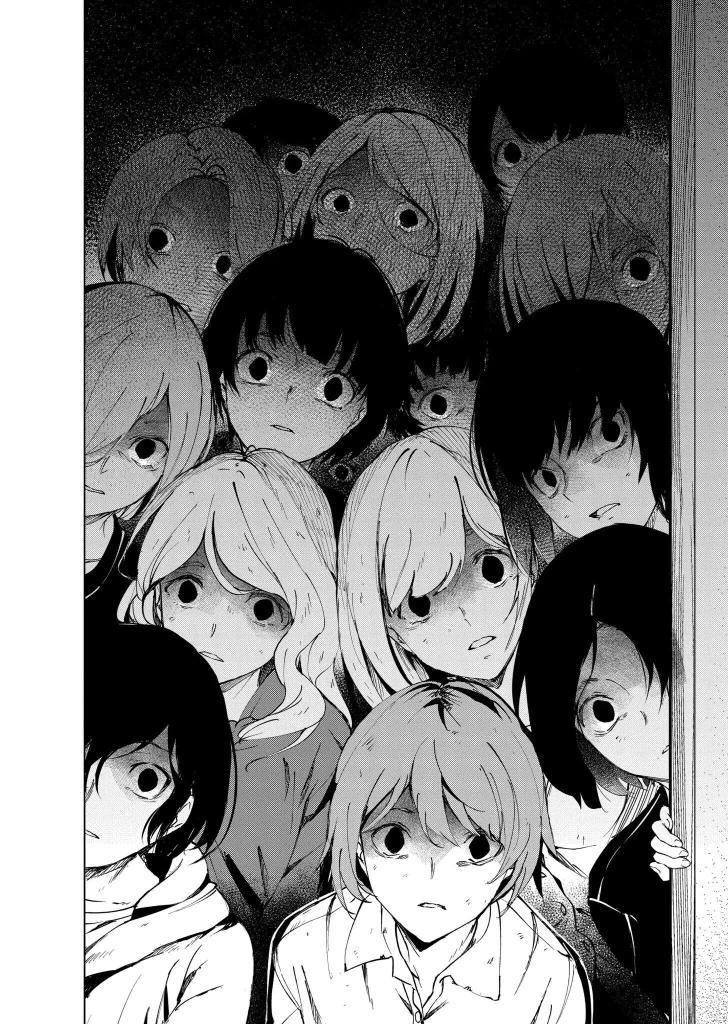
When this scene started, I had only included the main team in the dialogue, but I wanted Gideon’s deceased wife and the young version of their daughter to show up in the middle of the conversation. I had no such system implemented, so I wrote it in: a new collapsible section in the chat page that if there are characters present in the same place who aren’t involved in the dialogue, you can simply add them, and they’ll be included in the prompts to the large language model from then onwards. It was surprisingly easy to do, which I suppose is a testament to how mature the app is at this point.