
Back in late 2000s and early 2010s, we had this thing we affectionately called Telltale-style games: heavily narrative-driven games that relied on letting the player make more or less compelling decisions that would affect the narrative. They didn’t have the complexity of early adventure games, but they couldn’t be called simple visual novels either. They were tremendously successful, until corporate greed swallowed them, spread them thin, and eventually dissolved them into nothing. The company shut down.
A new studio made of former Telltale devs decided to try their hand a new Telltale-style game that removed the dragging parts of former Telltale games (mainly walking around and interacting with objects) to focus on a good story, a stellar presentation, and compelling minigames. Their first product was the game Dispatch, released about a month ago in an episodic format (two episodes a week, but all of them are out already). The game has become a runaway success.
The story focuses on Robert Robertson, a powerless Iron Man in a society where many, many people have superpowers. He carries the family legacy of battling villains with a mecha. As an adult, he pursued the supervillain who murdered Robert’s father, and who now led one of the most dangerous criminal groups. However, during an assault on the villain’s base, Robert’s mecha gets destroyed, which puts him out of a job.
However, he’s approached by one of the most notorious superheroes, a gorgeous, strong woman who goes by the name Blonde Blazer. She offers him a job at the company she works for, SDN (Superhero Dispatch Network). Their engineers will work on repairing Robert’s mecha, while he offers his expertise on fighting crime as the one in charge of dispatching other heroes to the appropriate calls.
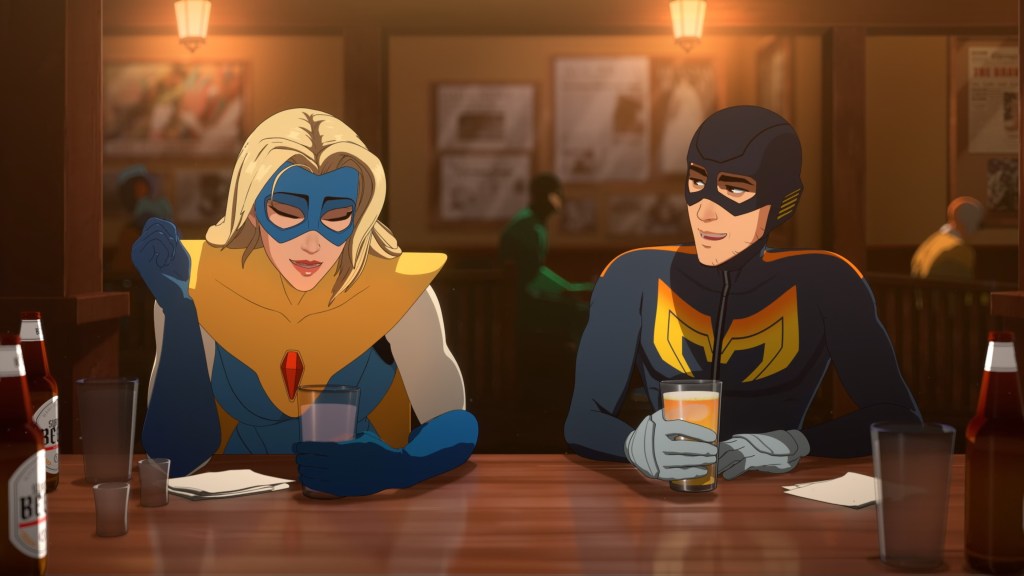
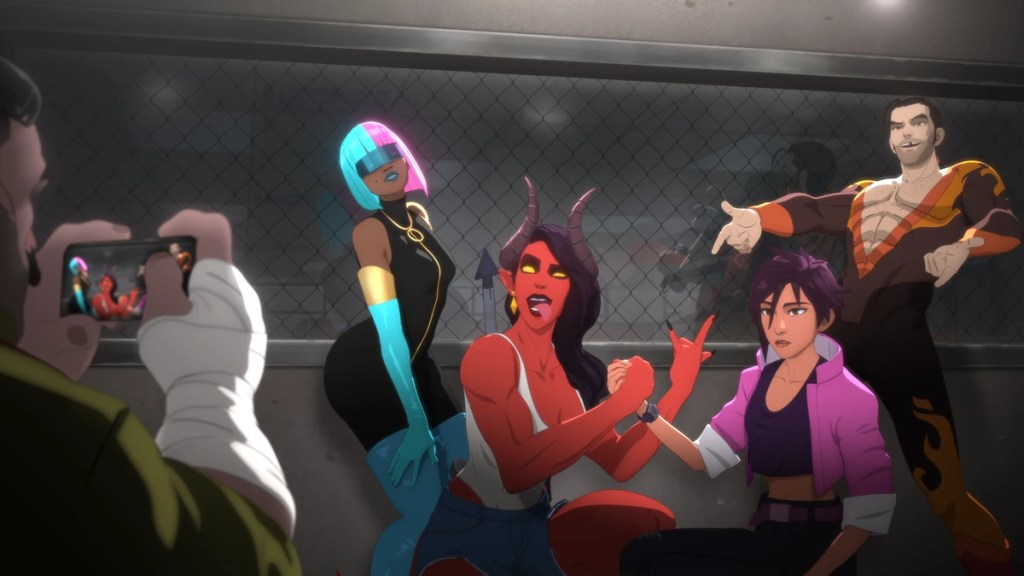
Robert finds out that the team of heroes he’s supposed to handle are a bunch of villains who either have approached the company to reform themselves, or were sent by the criminal system for rehabilitation. They’re a diverse bunch of rowdy, at times nasty superpowered people who aren’t all too keen on having a non-superpowered nobody in charge of them. The narrative explores how the team grows to work together better.

The execution of this story could have gone wrong in so many ways: wrong aesthetic, time-wasting, atrocious writing, and above all, marxist infiltration; like most entertainment products released on the West these days, the whole thing could have been a vehicle for rotten politics. But to my surprise, that’s not the case here. A male protagonist, white male no less, who is an intelligent, hard-working, self-respecting role model? Attractive characters, fit as they would be in their circumstances? A woman in charge (Blonde Blazer) who is nice, understanding, competent, caring, and good? Villains with believable redemption arcs? Romance routes that flow naturally? Where the hell did this game come from in 2025?
Entertainment consumers have been deliberately deprived of all of this by ideologues who despise everything beautiful and good, who, as Tolkien put it, “cannot create anything new, they can only corrupt and ruin what good forces have invented or made.” Franchise after franchise taken over by marxists who dismantle it, shit on the remains, and then insult you if you don’t like it. Dispatch is none of it. For that reason alone, I recommend the hell out of it. I’m sure that given its sudden popularity, the forces-that-be will infiltrate it and ruin it in its second season as they do with everything else, but the first season is already done.
It’s not perfect, of course. Its pros: an astonishing visual style that makes it look like a high-quality comic book in movement. No idea how they pulled it off. Clever writing. Endearing characters. Interesting set pieces. The voice acting is extraordinary, led by Aaron Paul of Breaking Bad fame. He deserves an award for his acting as Robert Robertson. It’s a good story told well, and you’re in the middle of it making important decisions (and also plenty of flavorful ones).
The cons: some whedonesque dialogue that didn’t land for me. Too much cursing even for my tastes, to the extent that often feels edgy for edge’s sake. Some narrative decisions taken during the third act, particularly regarding the fate of one of the main characters, didn’t sit well for me, as it deflated the pathos of the whole thing. But despite the pros, this was a ride well worth the price.
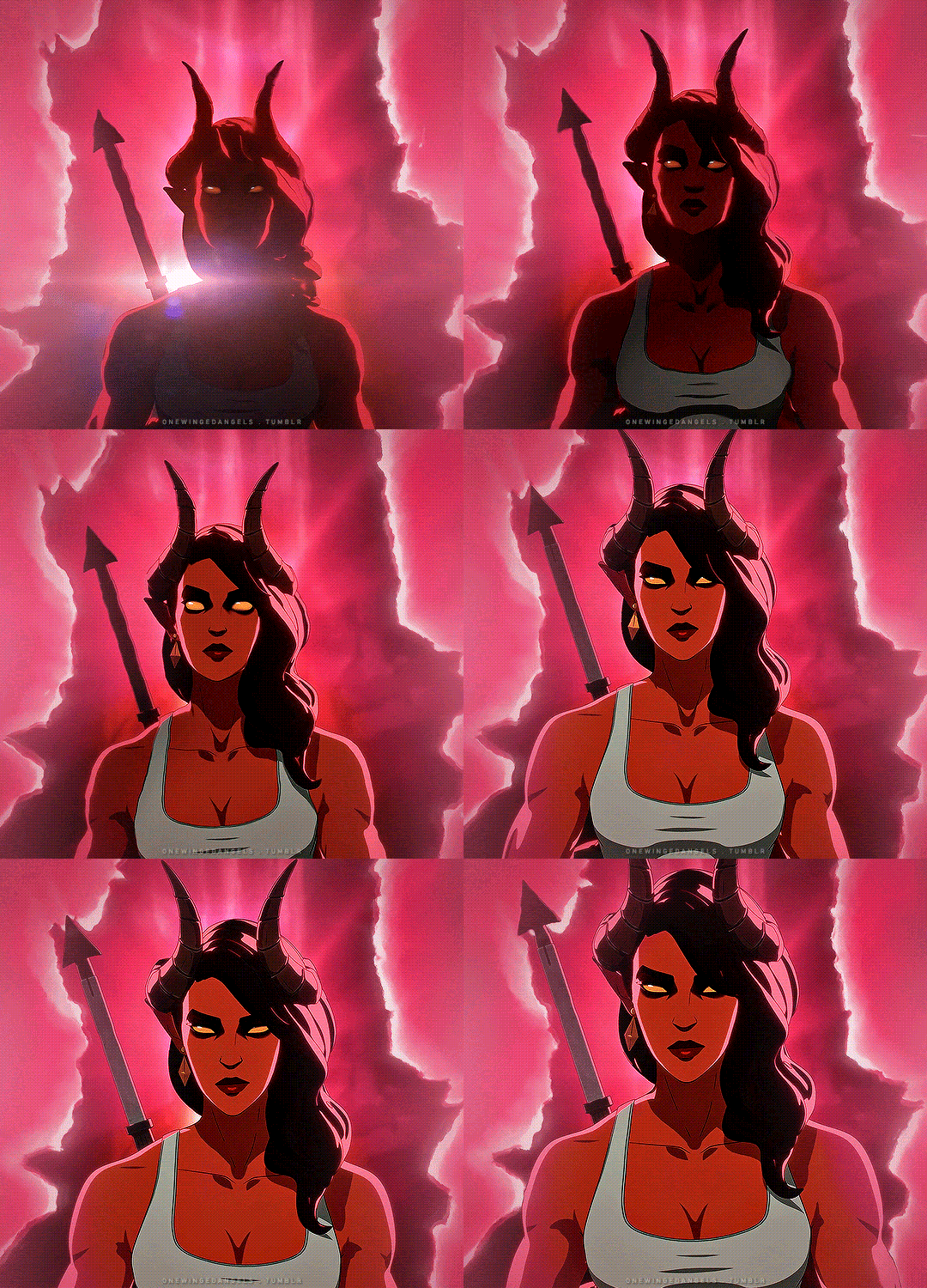
Oh, I forgot: they should have let us romance the demon mommy. My goodness.
Check out this nice music video some fan created about Dispatch, using one of the songs of its soundtrack.
 The Domains of the Emperor Owl