The Drowned City, Pt. 4 (Fiction)

On Sunday, I awoke clinging to the image of the winding path through the pines, but the morning light dissolved the sway of branches and leaves. Before I could shake off the grogginess and reason clearly, I arrived at the station and boarded the train to Hitachi. When I exited the station, I mimicked the wandering that had led me to the passageway. An emotion magnitudes greater than any I had known guided me toward that spot, as birds recognize magnetic north.

I reached the point on the street where days earlier I had glanced up at the passageway on the opposite sidewalk. To my right stood the three white-and-red vending machines embedded into the cement building. I bought a water bottle. To calm myself, I sipped it while pressing my free hand against my side to keep it from trembling.

A delivery van passed. Two men in warehouse overalls overtook me. One stared ahead; the other’s gaze swept the pavement a hand’s breadth from his feet. An elderly man walked the opposite sidewalk, passing rusted sheds and an electronics store.

None of them had noticed the passageway. To me, the vision in the half-light—the path of trampled grass, the palm-like fronds of ferns flanking it, the clover field the path bisected—invited admiration, like a centuries-old fresco in a museum.

I crossed the sidewalk and entered the path’s curves. Beneath my soles crunched a layer of leaves and pine needles. An electric current heightened my fingertips and sharpened my awareness. Butterflies of light and shadow fluttered over pine trunks split by vertical grooves. Twisted branches, meters above the path, were cloaked in emerald-green moss hanging in fringes. Ferns and clover sprouted from the gaps of a stump, its structure barely protruding with splintered shards. Between two pines glistened the hammock of a spiderweb. Its owner, as large as my palm, swayed on the net as a breeze billowed it.

The grass thickened, a sign fewer feet had trodden here, and I pushed aside the fern fronds draping the path. In minutes, the lagoon would come into view. I hunched forward as if to arrive fractions of a second sooner, placing each heel down only to immediately lift it again.

Itches flared across my body, as if trapped in a room with an invisible mosquito. I had climbed to the peak of a snow-covered slope, fastened my skis, and now had to hurtle down at breakneck speed. What would I say to the woman, and how would she reply? What combination of words would seize her pale-blue gaze and draw out her voice?

I emerged into the clearing as rings of static constricted my vision. I exhaled. Beside the swampy lagoon waited the moss-upholstered rock, worn by decades of people sitting, where the woman had been the afternoon I met her. The clearing smelled of wet fur and stagnant water.

Of course, the woman was absent. I’d have needed luck for her to come on a Sunday morning. Perhaps I should be content just to have met her. This clearing remained, though her absence dominated it.

I sat on the rock, settling into the plush moss to occupy her ghost’s space. I filled my lungs with the air that might have filled hers. Leaves swayed in a mausoleum silence, where no sound muzzled the cacophony of inner voices passing judgment.

I hunched. My gaze fell to the pebbles around the lagoon, the scattered pine needles. A pain pierced my heart. Perhaps for years, perhaps for the rest of my life, I would return to this clearing in my daydreams and replay our conversation. I’d chastise myself for idiotic phrases, insert clever remarks that years later would occur to me. In my imagination, before saying goodbye, I’d ask for her phone number or propose another meeting.

The lagoon’s surface bulged into a green tumor, outlining a figure. The coat of algae and mud sloughed off, revealing the woman’s honey-blonde hair, and her face. Streams of water flowed over her eyelids, nose, and cheekbones, crossing the mottled patches of discoloration. She advanced toward the shore as if her legs cleaved air. Green foam stained her soaked dress, which clung to her shoulders and molded her breasts. With each step, the skirt, plastered to her thighs, wrinkled like a second skin, her bare feet imprinting wet marks on the shore’s pebbles. She noticed me as she brushed off lichen flakes stuck to her shin.

When I regained my senses, I flushed as if caught hiding in her closet to spy while she undressed. I stood and retreated a few steps toward the clearing’s exit. I forced myself to meet her gaze as my temples burned.

She eyed me like we’d bumped into each other in the living room of a shared home.

“You can sit there if you want.”

I didn’t know if I shook my head, though I’d meant to. I gestured toward the rock as if offering my train seat.

When she sat, her dress slapped wetly. Water trickled down the rock’s sides. She gathered her honey-blonde mane into a fist, wrung it, and water gushed from the darkened strands. Some slid from her scalp, circumvented her eyes, traced her jawline, and fell. Her skin, mottled with irregular patches, reminded me of a leopard trapped by a hunter for a zoo.

“Did you miss this forest?” she asked.

I straightened. My vision blurred as if recovering from a blow to the head.

“I needed to see you.”

I expected her face to show discomfort, even terror, but whatever raced through her mind halted before reaching her facial muscles.

“Why?”

“I had never met anyone like you.”

She nodded and rested one hand over the other in her lap.

I’d admitted it—the words had left my mouth without needing to unlock gates or lower a drawbridge.

“I had to see you again. You, whose name I don’t know, to whom I’m nobody. It should bother you. Does it?”

She shook her head. Contorting as if stretching, she adjusted the back of her dress.

“I enjoy talking to someone.”

My throat tightened. A pulse throbbed in my neck like a muscle tic as I fought the smile tugging my lips. I wanted to hear every word she’d share, uncover every detail of her life.

“How do you spend your time? Beyond swimming, I can’t picture you outside this park, this forest.”

“What do you think the answer is?”

“Do you wake early to trudge to an office and waste hours on nonsense?”

“I don’t need to do any of that. Whenever you come here, you’ll find me.”

Her lack of expression might have meant she’d forgotten, or never learned, that people use gestures to communicate. Beyond the mottling, she belonged to another race. A lifetime of rejection might have taught her to avoid others. She’d bond with the lagoon she dove in and the encircling pines. Perhaps she welcomed this conversation as if we were exotic creatures separated by zoo glass.

“Who do you live with?” I said. “I assume you don’t work. Does the state pay for your home?”

I cringed at my hunger for every scrap of information. I imagined her scowling, sharpening her tone, rebuking my impertinence.

“Before you came, I hadn’t spoken to anyone in a long time.”

I crouched on the shore’s pebbles, leveling my face with hers. Meeting her gaze—those pale-blue eyes flecked with white and green—sent electricity from my nape to my toes. No one else had interested me because no one else deserved it. Here sat a real person, not someone playing a role society had drilled into them.

“Do you want to know anything about me?” I asked.

“Tell me.”

“No, I’m asking. Are you interested?”

“In what?”

“Where I live, how I spend my time, what I like.”

She tilted her head, her gaze dancing across the trees as if weighing whether another human was worth knowing.

“Does it matter?”

My legs protested. I sat and leaned a forearm on my knees.

“I don’t know. There’s little to say. Little I care about.”

I searched for some nugget to share, but my past spread like a muddy expanse. I spoke before realizing it.

“My childhood was boring and miserable—the tedious kind. I went to university expecting the promised camaraderie. A week after graduating, I’d forgotten my professors’ and classmates’ faces. I’m on my second job. Since childhood, I’ve waited for some passion to seize me, something I’d crave to spend hours on unpaid. But for years, I’ve walked straight ahead down a gray hallway. When I paused, invisible hands shoved my back. I suspected that somewhere—behind walls, a door, an inaccessible wing—a luminous world existed. Meanwhile, I experienced a plastic, flavorless reality. I blamed myself. The world’s data filters through my distorting brain. I live like acting in a disjointed play during a fever dream. I followed instructions, excelled at them, but found only hollowness. I assumed someday I’d stumble upon why I bothered.”

I elongated a silence. Droplets slid down the woman’s forehead. She glanced away but soon locked eyes with me again, awaiting direction.

I inhaled as my cheeks burned.

“But let’s talk about you. What do you enjoy?”

“What?”

“What do you like to do?”

Her damp hair dripped onto her soaked dress. She laid her palms on her thighs, fingers relaxed. She stared unblinking, whick kept my eyes from wandering to the curves her dress hugged.

I shifted, thirsting to draw out her words.

“What satisfies you? What do you do whenever you can?”

“I come here. I swim.”

Her irises quivered within their orbits, pupils dilating and contracting. She studied my face like a beast’s cub encountering a human.

I listened to her breath mingle with the hiss of branches and occasional thud of fruit falling into rot.

“Give me your hand.”

She raised her left hand, palm down. Cloudy droplets swelled on her fingertips. I crawled forward and clasped her hand between mine. It was cold and wet, like something left overnight in a bucket of water. Chalk-white patches mapped her veins. The hairless arm, smooth as if waxed, showed no goosebumps, no tremors.

“Aren’t you dying of cold?” I asked.

“I’m not dying of anything.”

I squeezed her hand, warming it. She lifted her gaze to mine and curved her lips slightly. I brought our joined hands to her face, tracing with our fingers the mottled patch spanning half her cheekbone and jaw. I swallowed.

“Does it bother you?”

“It tickles.”

“Having these patches. Being different.”

She shook her head.

“I am who I should be.”

I glided my fingertips over her hand’s back, shifting pliant skin. I outlined a patch. Light carved white curves along her knuckles’ wrinkles. Her nails, segmented by microscopic ridges like pine bark, held mud under their edges. I turned her hand over. Water and cold had puckered her fingertips and creased her palm, aging it. I traced every line, imagining their formation from her birth to this moment, when I could touch them.

“I think I’ll return soon.”

“Tomorrow?”

Dizziness struck.

“I work.”

“In the evening?”

How could I focus at the office, counting hours until I returned? But my mouth dried, and the details of her face and the forest’s silence sharpened as if I’d shed nearsightedness and earplugs. I longed to transport myself to the moment tomorrow when I would descend the office stairs and realize that instead of spending the rest of the day resting in order to perform well at work the next day, I would meet the woman in this clearing where no one dared to venture. A smile surfaced unbidden. She lowered her gaze to my lips as if they were another pair of eyes.

“Will I find you,” I said, “like you promised?”

“Whenever you come.”

Reluctantly, I released her hand and stood. How did I know to leave? My wristwatch warned of dinnertime. The canopy of branches etched a granite-gray sky, and the same half-light that had greeted me upon entering the passage enveloped us.

I stepped forward, half-raising my arms to embrace her, but stopped even though my heart pounded like a radar nearing its target. I wanted to hold her, balance her warmth with mine, imprint the feel of her soaked dress and the body beneath until tomorrow. I’d just met her. What if she’d tolerated my touch only to avoid conflict?

I bid goodbye with a smile she returned. I promised we’d meet tomorrow. As I walked away, she raised a hand and waved. I left the clearing and quickened my pace to overcome the urge to run back to her side.


Author’s note: I wrote this novella in Spanish about ten years ago. It’s contained in the collection titled Los reinos de brea.

Today’s song is “Breezeblocks” by alt-J.
On Writing: Five-act structure – Act 1 – Objectives to hit

You can check out all my posts on writing through this link.

Once you’ve come up with a list of meaningful plot points that should happen in your story, and you have determined the general structure, you could strengthen the scaffolding further by relying on a five-act structure. The original three-act structure suffers from issues regarding the second act, which is the bulk of the story yet it’s treated as if it were the same length as the first and third acts. The five-act structure divides the second act into three, relying on a mid-story turning point as the main mast of the tale.

The following is a list of points that should be nailed for a satisfying first act in a five-act structure (or in a three-act structure for that matter).

  • Introduce the major characters, giving the reader an idea of who they are, their emotional makeup, and the weight they carry in the story.
  • Devise the characteristic moment for your protagonist:
    • How does it accomplish several tasks:
      • Introduce your protagonist.
      • (Probably) reveal your protagonist’s name.
      • Indicate your protagonist’s gender, age, nationality, and possibly his occupation.
      • Indicate important physical characteristics.
      • Indicate his role in the story (i.e., that he is the protagonist).
      • Demonstrate the prevailing aspect of his personality.
      • Hook readers’ sympathy and/or their interest.
      • Show the protagonist’s scene goal.
      • Indicate the protagonist’s story goal.
      • Demonstrate, or at least hint at, the protagonist’s lie.
      • Influence the plot, preferably directly, but at the very least in a way that foreshadows later events.
    • To do this, select an event that will:
      • Make the protagonist appealing to readers.
      • Introduce both his strengths and weaknesses.
      • Build the plot.
    • What important personality trait, virtue, or skill best sums up your protagonist?
    • How can you dramatize this trait to its fullest extent?
    • How can you dramatize this trait in a way that also introduces the plot?
    • How can you demonstrate your protagonist’s belief in his lie?
    • Can you reveal or hint at his ghost?
    • How can you use this scene to reveal the thing he wants most?
    • Does your protagonist’s pursuit of both the overall goal and the scene goal meet with an obvious obstacle (i.e., conflict)?
    • How can you share important details about your protagonist (name, age, physical appearance) quickly and unobtrusively?
    • Don’t settle for anything less than spectacular for your Characteristic Moment. This is your opportunity to create a fun and effective scene that will introduce readers to your character in a way the’ll never forget–and from which they won’t be able to look away.
  • Show us the hero’s situation, goals, worldview, and emotional state prior to the launch of the path that lies ahead.
  • Show us setting, time, place, and (as necessary) some backstory.
  • Develop the normal world of the story:
    • People are largely defined by the microcosms in which they live. We are inevitably shaped by our surroundings, either because of the ways we fit in or the ways we don’t. Just as inevitably, we are defined by our surroundings because they reflect our choices and limitations. How we came to be someplace, why we choose to remain there, or why we are forced to remain even if we don’t want to–all these factors reveal interesting facets of our personalities, values, strengths and weaknesses.
    • How does it do this: the Normal World plays a vital role in grounding the story in a concrete setting. Even more important, the Normal World creates the standard against which all the personal and plot changes to come will be measured. Without this vivid opening example of what will change in your character’s life, the rest of the arc will lack definition and potency.
    • Is it a place in which the character has found contentment–or at least complacency?
    • The point is that the Normal World is a place the protagonist either doesn’t want to leave or can’t leave. It’s the staging ground for his grand adventure.
    • Think of the Normal World as a symbolic representation of your character’s inner world. The Normal World dramatizes the Lie and Character Beliefs. It empowers the character in that Lie, giving him no reason to look beyond it. Only when the Normal World is challenged or abandoned at the First plot Point is the protagonist’s belief in that Lie shaken.
    • Does it present one set of challenges, which the protagonist finds himself unequipped to deal with until after he’s experienced life beyond the Normal World?
    • In creating your story’s Normal World, first ask yourself what kind of world will provide the most logical backstory for why your character believes the Lie. Then consider how to enhance the Normal World by making it the comfiest place ever for that Lie to continue its existence. note, however, this does not mean it necessarily has to be a comfy place for your protagonist. Sometime she may seem outwardly comfy, while, deep down, the Lie is making him miserable.
    • How can you create a Normal World that will best contrast the “adventure world” to follow in the next acts?
    • You want to strive for the most dramatic contrast possible between the worlds, in order to provide your character with as much incentive as possible to enact this change.
    • What setting will open your story?
    • How will this setting change at the First Plot Point?
    • How does the Normal World dramatize or symbolize your character’s enslavement to the Lie?
    • How is the Normal World causing or empowering the Lie?
    • Why is your character in the Normal World?
    • If your character doesn’t want to leave the Normal World, what is helping him mask the discomfort caused by his Lie?
    • If your character wants to leave, what’s stopping him?
    • If the Normal World is a legitimately good place, how will the protagonist need to change in order to appreciate it?
  • The first act’s highest calling is to introduce and set up the story elements in such a way that when the First Plot Point arrives, it is reinforced by stakes, emotional empathy, the shadow of an emerging antagonistic force, and foreshadowing of other elements that await down the road.
  • What kind of thesis about the normal world of the characters this act poses, for which the rest of the story will be an antithesis?
  • Represent the overall range of change of your hero in the story. This frame gives you the structural “journey” your hero will take. As when starting at the endpoint of your hero’s development by figuring out his self-revelation, we returned to the beginning to set his weakness and need and desire, we must use the same process when determining the plot. Establish the endpoint of the plot first.
  • What will my hero learn at the end?
  • What does he know at the beginning? What does he believe?
  • What is he wrong about at the beginning?
  • Is there an event from the past that still haunts the hero in the present? An open wound that is after the source of the hero’s psychological and moral weakness. Could think of it as the hero’s internal opponent. The great fear that is holding him back from action. Acts as a counter desire: the hero’s desire drives him forward, his ghost holds him back.
  • In some stories, it could be that a ghost is not possible because the hero lives in a paradise world. The hero begins free, but an attack will change that.
  • Try to withhold as much information as possible about the hero, including the details of his ghost.
  • Weakness: the hero has one or more character flaws that are so serious they are ruining his life. They come in two forms: psychological and moral. Could have both.
  • Inner person is damaged in some way. The moral one causes someone else to get hurt.
  • If he has a moral weakness, how does he have a direct negative effect on someone else? Is he clearly hurting at least one person at the beginning of the story?
  • Need: what the hero must fulfill in order to have a better life. It almost always requires that he overcomes his weakness by the end.
  • Problem: the trouble or crisis your hero faces at the very beginning of the story. He is aware of the crisis but doesn’t know how to solve it. The problem is usually an outgrowth of the hero’s weakness and is designed to quickly show that weakness to the audience. Should be present at the beginning, but it is far less important than weakness and need.
  • Set up the dramatic action and the underlying conflict that will run throughout the story.
  • Foreshadow as necessary, including the presence (perhaps implied, maybe in the reader’s face, your call) of the antagonist (dramatic tension).
  • Make us care about the hero through the establishing of stakes.
  • Make sure you establish the underlying stakes and the personal demons attached to the First Plot Point decision before it hits.
  • Hook the reader (compelling premise).
  • Introduce the concept of the story (compelling premise and dramatic tension).
  • How does it manage to get the readers involved?
  • Have you come up with the most powerful and memorable combination of inciting event and key event so that they will fuel the entire story?

On Writing: Five-act structure – Overview

You can check out all my posts on writing through this link.

Once you’ve come up with a list of meaningful plot points that should happen in your story, and you have determined the general structure, you could strengthen the scaffolding further by relying on a five-act structure. The original three-act structure suffers from issues regarding the second act, which is the bulk of the story yet it’s treated as if it were the same length as the first and third acts. The five-act structure divides the second act into three, relying on a mid-story turning point as the main mast of the tale.

The following is the overview of the five-act structure.

Act 1 (Orphan, Innocent, No knowledge, Call to Arms)

  • Hook
  • Beginning
  • Inciting Incident (No knowledge)
  • Midpoint / Turning point / Story’s Inciting incident (Growing knowledge)
  • Crisis
  • First Plot Point / Climax / Point of No Return / Story’s Key Event (Awakening)
  • Resolution / Denouement

Act 2 (Wanderer, Training, Doubt, Dream Stage)

  • Beginning
  • Inciting incident (Doubt)
  • Midpoint / Turning point (Overcoming reluctance)
  • Crisis / Lowest Point
  • Climax / First Pinch Point (Acceptance)
  • Resolution / Denouement

Act 3 (Magician, Midpoint, Experimenting with knowledge, Frustration Stage)

  • Inciting incident (Experimenting with knowledge)
  • Midpoint / Turning point (MIDPOINT, Knowledge)
  • Crisis / Lowest point
  • Climax / Second Pinch Point (Experimenting post-knowledge)
  • Resolution / Denouement

Act 4 (Warrior, Doubt, Nightmare Stage)

  • Last stretch
  • Inciting incident (Doubt)
  • Midpoint / Turning point (Growing reluctance)
  • Crisis / Lowest Point
  • Third Plot Point / Doorway of No Return 2 / Climax (Regression)
  • Resolution / Denouement

Act 5 (Martyr, Hero, Reawakening, Total mastery, Thrilling escape from death)

  • Inciting Incident (Reawakening)
  • Midpoint / Turning point (Re-acceptance)
  • Crisis / Lowest Point
  • Climax (Total mastery)
  • Resolution / Denouement

The Drowned City, Pt. 3 (Fiction)

The following morning, I repeatedly jolted awake at my office corner, my dead gaze drifting between the lines of a report as the monitor’s glow washed over me. Seconds earlier, I had inhabited another body. Standing before the passageway to the park, I stepped in. Every trace of cement, glass, and metal vanished behind trunks, branches, and leaves. Air swollen with oxygen refreshed me. I followed a path that flickered white along its sinuous turns. The voice of the woman echoed in my head, fragments of sentences she might have spoken to me. Her hair, gleaming with water, fell over one shoulder, soaking and darkening her embroidered dress. Even in memory, I refused to look away.

Seated at my computer, hours passed while I remained stuck on the report. The monitor’s glare dulled my mind. I lost track of what I was working on, and before I could focus enough to progress a few lines, my attention plummeted like someone trying to climb a cliff with numb arms.

My skin grew clammy; my armpits and hairline soaked. My vision blurred. I tore my eyes from the screen and swiveled my chair to clear my head. Rows of fluorescent lights striped the ceiling like luminous zebra crossings. The view: a dense mass of desks and workers with black hair and white shirts, the space compressed until every pocket of air was squeezed out.

The remaining hours to surrender to my tasks slipped away, the obligation to finish them pricking like a knife tip at my neck, but the images in my mind chained me. I wanted to belong among those pines, to sit by the lagoon and speak with that woman, while the office echoed with squawking voices and clattering keyboards. When I fought to concentrate, someone fidgeted in their creaking chair. Someone squeezed past desks and chairs. Phones rang insistently until their owners returned. Pairs of employees chatted about news or baseball games.

In my drowsy vigilance, I monitored who stood, who crossed the office to take a call or piss. I spied reflections in the glass partitions, in the framed artwork, in the monitors. The lenses of a pair of glasses burned two white holes into the blurry oval of a face. I recognized a colleague’s tank top and swinging ponytail. Another’s clacking heels to the printer and back. Another’s limping hunch. I had never looked any of them in the eye.

Sometimes, a supervisor’s specter slid across glass. In my mind, I sketched a map of the office, tracking the supervisor’s blip as it weaved between desks and pillars. If they approached, I’d feign fascination with the report filling my screen.

During two or three breaks, I splashed my face in the bathroom and breathed deeply. Back at my desk, my mind retreated into images of the forest, the lagoon, and the woman—spheres of light peeking through fog. A leaden tedium crushed me: day after day of absurd labor. My mind had found a crack and, like a caged animal, it strained to slip through.

At lunch, I devoured my sandwich and rushed back to my computer. I rubbed my eyelids. Exhaustion clung to me like glue. Resisting the next report, I searched online for the Hitachi map. From a bird’s-eye view, I pinpointed the station I’d stopped at, an inch from the coast. I traced the streets I’d wandered until I located the neighborhood with the passageway. The map showed an electronics shop to the right of the path and a cluster of homes and sheds to the left, but the buildings appeared glued together.

I blinked, absorbed. I felt like I was tossing in bed late at night, enduring hypnagogic hallucinations. The office crowd returned after a break, their laughs and shouts snapping me awake. Was the map outdated? To let the passageway open into the clearing, the buildings should’ve been spaced far enough for the forest to nestle in.

Thirty minutes after lunch, an urge seized me to scour the internet for traces of the woman. Without a name or leads, where would I start? I might as well have met her decades ago, when payphones dotted the streets.

Fifteen minutes before the workday ended, I burned them checking my watch every few moments. I fled the office with my head bowed. At the station, I paced the platform a dozen times, striding several meters forward, pivoting on my heels, and retracing my steps. The minutes monitored by my wristwatch seemed frozen.

I approached the ticket machine and hovered my index finger over the button to print my return ticket. What if I bought a ticket to Hitachi? I’d leap the tracks to the opposite platform and return to the forest. I had to go—as if bound by a second job, with a contract so sacred that refusing would summon a lawyer to my apartment by morning.

My heart raced. My mind cycled images: the sinuous path through pines, the woman on a rock in the clearing, wringing a soaked strand of hair. The white blotches on her skin shimmered like watery reflections.

That woman, her figure pulsing with light, breathed the air of this cardboard world. I felt her presence like a second heart grown inside me and forgotten in the clearing, still tethered to my chest by kilometers of vibrant tendon.

She hid from others; I’d trespass her peace. Yet I craved to go like a diabetic needing insulin. I wanted to see her face, speak to her, hear whatever she’d share. I fixated on my desire, but why would she care about me? My life shuttled between apartment and office, trapped in a job that unraveled me. I returned home only to rest and repeat.

I crumpled the handkerchief in my pocket. She’d know I returned for her. Would she call me a stalker, phone the police? That she’d spoken to me felt like betting on a rigged race. My brain deceived itself to survive in a bubble of fantasy, but tomorrow I’d have to blast through two days’ overdue tasks while images of the passageway and woman yanked me like a hook in my cheek. If I retraced my steps and found her, how would I focus? I’d pile up overdue work. The acid of anxiety would corrode my insides.

I pressed the button for a ticket back to my apartment. To quell the nausea rising in my gut, I slumped on a bench, palms pressed to my eyes. Minutes later, the loudspeaker announced my train. The platform trembled. As the train braked, I uncovered my eyes and boarded, head low. Once the train lurched forward, my anxiety spiked. I imagined pulling the emergency brake.

I had met a beautiful woman who intrigued me, who spoke like a person instead of one of the million clones populating this world. Was that enough to make me feel like I’d betray a sacred pact by refusing to run to her side? For today at least, the encounter had shattered my gray routine. A routine I’d drown in for years—yet my survival depended on finishing my tasks.

That evening, and into the night, my mind would recreate her and invent conversations, daydreams swelling my skull until no other thought would fit. No matter how many scenes I conjured, scripting every word, would my stubborn fantasies lead to a radiant present?

How wrong I’d been to linger in the clearing when I spotted that woman. I should’ve abandoned the forest before she finished lifting her hand.


Author’s note: I wrote this novella in Spanish about ten years ago. It’s contained in the collection titled Los reinos de brea.

Today’s song is “Runaway” by Aurora Aksnes (who apparently, confirmed by her, is a fellow autist).

This is the first story, I believe, in which I tackled autistic obsession, a subject I have struggled with all my life. During my first couple of internships, my brain kept tugging me away from my tasks to the stories I was supposed to be working on instead, or at least to learn more writing techniques (I gobbled up books on writing back then). I ached every time I tried to focus on my job. I won’t get into how insane it feels to me that people who can bring new “things” into life are shackled at menial jobs, which programming websites felt most of the time (these days they’re almost trivial due to artificial intelligence; I doubt many programmers are going to get hired in the future).

I’m going even deeper into autistic obsession in my ongoing novel The Scrap Colossus, whose protagonist Elena is autistic, although I doubt I’ll mention it explicitly.

The Drowned City, Pt. 2 (Fiction)

The woman intertwined her gaze with mine. She raised her right palm from the rock to greet me. I froze as if the slightest tremor might dislodge the camouflage my skin had conjured. She might have been addressing someone else whose line of sight I’d trespassed into, but her gaze held mine and waited. My words had jammed in the rusted gears of some ancient machine. I said hello in a voice like sawdust. When sensation returned to my legs, I turned and retraced my steps.

“You’ve only just arrived,” said the woman in a fluting voice.

I stopped and offered her my profile.

“I came to be alone. This park seems designed for that.”

“Do you want me to leave?”

“You must’ve come for the same reason. And you were here first—I’m the intruder.”

“Am I bothering you?”

I’d assumed so and readied a lie, but the tension in my muscles, the knots in my gut that usually urged me to flee, were absent. I stepped toward the pebbles fringing the lagoon. In the silence, they crunched like snapping bones. The water lay hidden beneath a pelt of algae, a mesh of lichen where insects glinted.

I’d trespassed into this secluded park, ventured to its core, and now, rooted at the lagoon’s edge, I blocked the woman’s view. I tainted the air passing through my lungs. Before my arrival, this clearing had endured as a sanctuary, a natural oasis she’d have cherished, its secret guarded. I’d ruined it.

“I stole your peace.”

“It’s good to speak sometimes.”

I scratched my nape.

“I suppose.”

Her gaze drifted to the grass at her bare feet as she finger-combed a damp strand crossing her collarbone. On her other arm, a droplet slid down to the blue veins of her wrist. An urge gripped me—like craving chocolate after a sugar crash—to unravel details about her, though most days I floated adrift, indifferent to whether life’s incomprehensible currents might stagnate.

She’d posed a silent question, granting me time to order my thoughts. I cleared my throat.

“You’re lucky the city preserved this park. They’re scarce where I live.”

“What replaces them?”

“Apartment blocks, shops. Fascinating varieties of concrete.”

She nodded, and isolated another wet strand.

“Do you come here often?” I asked.

“I never wander far.”

“I’d do the same.” I hurried to raise a palm. “But you found it first.”

“It belongs to whoever finds it.”

I chuckled, and the desperation to please her shamed me as if I had turned into a child stranded in a tree, needing an adult’s help to descend. The folder under my arm grew heavy. I set it on the pebbles. My eyes scanned the clearing for the woman’s belongings, maybe a purse, but she’d brought nothing beyond her meditative stillness. My gaze swung back to her, magnetized, as if she were a ruby glinting in dust. I needed to modulate my attention, or I’d scare her off.

“You can stare,” she said, “if you’re curious.”

My heart jolted. I felt like apologizing. How many people saw straight through me? I held her gaze in a silent vow of harmlessness.

Though a stranger had stumbled upon her in the park’s depths, the woman’s face stayed serene as if I were just another chirping bird. Honey-blond strands arched rebelliously over her forehead. Narrow brows melted into translucent pink skin above eyes whose irises, perhaps born green, had been conquered by pale blue, compressing the original hue against her pupils. The bluish shadows beneath her eyes resembled smudged makeup. Chapped lips, cracked by cold, had split into notches. Across her face, neck, and arms, plaster-white patches lay like peeled paint.

I observed the blotch spanning her brow to the right cheekbone. She’d hate others noticing. Hate herself. She’d anticipate questions she’d rather not hear. She had come on a weekday, and probably spent hours here. Unemployed. Alone, no book for distraction. Marooned with her thoughts amid trees and silence.

She smoothed a damp strand. Her gaze slid from my face to my shoes.

“Do you live nearby?” I asked. “Unless you mind me asking.”

“Close enough.”

“The locals must treasure this place like they’d planted it. Tourists would ruin it.”

She shook her head.

“No one comes.”

“I’m not surprised. They pass by, right? I came here to kill time, but most people would have headed to a bar. I needed some time alone.”

“I’m always alone.”

She’d said it flatly, like stating the time. Her patches exiled her; I at least warranted pretense before being sidelined. Every mirror stabbed her with flaws. Friends’ calls would have dwindled to monthly guilt offerings. Only the trees’ stillness remained, herself as sole company unable to abandon her.

I sat on the pebbles, my back protesting, and gripped my shins.

“What’s your name?”

“Depends who asks.”

“You must prefer one.”

“Call me what you need.”

I pressed my palms together, bowing slightly.

“I guard my privacy too. No offense meant.”

A branch rattled in the foliage. She tilted her head. The thicket seethed with shadows and cloud-filtered light. Her neck had stiffened, and for a moment I thought her ears, peeking through strands, would have pivoted toward the noise.

She lowered her gaze to the grass, and parted her lips.

“Over the years, I’ve had many names pinned on me. Names that flirted with meaning but never quite captured my whole. Language alone is too limited to understand one another; no word can encapsulate what I am—or what you are.”

I fell silent. She was accustomed to speaking only in soliloquies—her inner voice the sole interpreter of her untranslatable thoughts—yet now, she had opened a door for me.

“How do you refer to yourself?”

“The images in my head suffice.”

“What should I call you?”

“Who’d you speak of me to?”

I turned pale and grew cold, as if someone with a knife had accosted me in an alley. Eyes fixed on me, waiting for my response—just like when my office colleagues, discussing their weekend ski getaway, either trying to include me or to make fun of me, grilled me with questions: “Have you made plans with your friends?” In the few seconds they granted me to answer, I weighed the myriad lies I’d told for years to a blur of faces, and I was eager to concoct any story that might divert them from the truth: human beings—their customs, their impulses, their tastes—terrified me, and I longed to free myself from their presence like a rabbit crouched among the grass in a field where rabid dogs prowled.

But this woman sought solitude. I wanted to keep the forest, the clearing, and the woman a secret—a refuge that had survived among walls of concrete and metal closing in on every patch of green. I had been entrusted with that responsibility, and I would protect them.

“I won’t speak of you to anyone.”

“You see my face,” she said. “You hear my voice. No name holds the myriad details they contain.”

I waited, lips parted, eager to listen to any words that would flow out of her mouth. Today I’d steered our talk, but any other day, I may have heard her in the distance, woven into wind and birdsong.

“You mentioned killing time,” she said. “For what?”

I checked my watch.

“I took the wrong route—” A shiver struck. “Crap, I’ve missed my train, and I’ll have to run to catch the next one. Thank you for reminding me.”

She nodded. I grabbed my folder, stood up, and brushed the grit off my pants. My heart raced. I’d sprint sweat-soaked, praying to reach the platform in time. Otherwise, I’d be forced to wait another forty-five minutes.

“I’ve enjoyed this. Meeting you. Keep the silence.”


Author’s note: I wrote this novella in Spanish about ten years ago. It’s contained in the collection titled Los reinos de brea.

In case the dialogue seemed shoddy to you… yeah, I’d say the dialogue is the worst part of this story. The protagonist is an awkward loner and the woman is, well, something else. I don’t remember much of the story in that regard other than the fact that back then I wished I knew how to make the dialogue less awkward.

On Writing: Theme #1

You can check out all my posts on writing through this link.

If you’ve been following my posts up to this point and you’ve done the necessary work, you should have ended up with a killer concept, a promising premise, and a compelling protagonist. Now let’s tackle the subject of theme: a compelling moral problem at the core of the story, what the tale is ultimately about.

  • Can you sum up what your story is about in a short paragraph? One way to begin is to ask yourself how your theme shapes your plot.
  • What is the story’s central dilemma, the central moral problem of the story?
  • What is the inner issue? How does this story dig beneath the surface of life? How does it illuminate the meaning the protagonist reads into events?
  • What themes would make the story unique, and give your story heart?
  • What thematic point is borne out in the protagonist’s inner struggle?
  • See if you can nail the point your story will make in a few concise lines. Don’t worry if in the beginning it splashes all over the page. Just keep focusing in on the single driving point it wil make, to reduce it to its essence.
  • If a theme can be stated in terms of “This is good and that is bad,” then it won’t be ironic or interesting. If your story, however, is about a contest between goods or between evils, then you will create a gap between expectation (good should always be pursued; evil should always be evaded) and reality (some goods must be rejected in favor of others; some evils must be accepted to reject others).
  • How would the story be a contest between two equally appealing or appalling ideas that come into conflict?
  • How is this story a manifestation of inner psychological conflict?
  • Is the central dilemma of the story important enough to change someone’s life forever?
  • How is this story an argument about the nature of the world?
  • How would it force characters (and hopefully readers) to ask questions — about life, themselves, what they believe, how they view others?
  • Can you make the moral argument ambiguous, in a way that would force the audience to reevaluate the hero, the opponents, and all the minor characters to figure out what makes right action?
  • What do you want your readers to go away thinking about? What are you trying to say about human nature that will help us keep from getting trounced in the future?
  • Is the dilemma ultimately unsolvable?
  • How does the emotional conflict and the physical conflict intersect to create the central conflict?
  • Determine the central conflict by asking yourself who fights whom over what, and answer the question in a succint line. The answer to that is what your story is really about, because all conflict in the story will boil down to that one issue.
  • How does the theme stem from the struggle the problems trigger within the protagonist as he tries to figure out what to do about the problem he’s facing?
  • How is the plot’s main problem larger than it looks? Why does it matter to us all?
  • How is the story’s moral problem thorny enough to intrigue the audience?

On Writing: Impact character and antagonist

You can check out all my posts on writing through this link.

If you’ve been following my posts up to this point and you’ve done the necessary work, you should have ended up with a killer concept, a promising premise, and a compelling protagonist. However, that character doesn’t operate in a vacuum. The two other most important characters, that in some stories play both roles, are the impact character and the antagonist. Everyone knows about the antagonist, but the impact character is a role rarely considered explicitly. The impact character is one that challenges the protagonist’s flaw usually in a non-hostile way, like a a mentor or a lover. Thanks to the impact character, the story features an “us vs. them” perspective that it would lack otherwise.

  • Does the story present a unique central relationship between the protagonist and an impact character?
  • The impact character represents the inner conflict. Just like the antagonist, the impact character is a conflict-causer. Just like the antagonist, he’s at odds with the protagonist. But unlike the antagonist, the conflict isn’t necessarily the result of opposing goals. Rather, its core is the opposing worldviews of the protagonist and the impact character. The protagonist believes the Lie; the impact character already knows the Truth.
  • Does the hero have at least one big “I understand you” moment with a love interest or primary emotional partner?
  • How does your story involve strong opposing forces that have understandable but conflicting desires?
  • If you’re having trouble making people understand why your antagonist poses a threat, there’s something wrong with your premise and it needs to be refined.
  • How is your antagonist the character who wants the most to prevent the hero from reaching his goal?
  • How is this character the most able to attack the weakness of the hero?
  • What the opponent wants, how does it compete for the same goal as the hero?
  • What are the antagonist’s values, and how do they differ from the hero? How does he have powerful values that conflict with the hero’s?
  • Consider whether the antagonist could have the same flaw as the protagonist.
  • When you think about an antagonist, you’re likely to focus on the ways in which he’s different from your protagonist. But some of the most important aspects of your story will emerge thanks to the ways in which the antagonist and the protagonist aren’t so different at all.
  • Your protagonist and your antagonist might both have been kids who felt the sting of the societal disrespect that comes from being poor. As a result, they both believe wealth equals respect. That common ground between them creates all kinds of interesting thematic possibilities. Both the temptations your protagonist will be subjected to and the warnings (full of foreshadowing) about what he could become are rife with thematic subtext.
  • Could the external antagonist be the embodiment of what the protagonist fears most?
  • Given the protagonist’s flaw and his external goal, think about the “photo negative” quality of the antagonist’s role. Who wants the same external goal, but can reveal an opposite or cautionary aspect to the protagonist and the reader.
  • Could the antagonist’s flaw be the same as the protagonist’s, or the exact opposite?
  • Can you make a hierarchy of opponents with a number of alliances? How are they related to one another and working together to defeat the hero? How does the main opponent sit at the top of this pyramid?
  • Could the antagonist be mysterious, making more difficult to defeat? Could you make defeating him a two part task: to uncover the opponent and then defeat him?
  • In the process of creating an antagonist who wants the same goal as the hero find the deepest level of conflict between them. What is the most important thing they are fighting about? How is that the focus of the story?

The Drowned City, Pt. 1 (Fiction)

Through the train window flowed a blurry stream of single-family homes, their walls topped by conifers pruned into cloud-like shapes. As I yawned and dug a fingertip into my tear duct, two toad statues splashed green across the cement-and-asphalt vista. They perched on pillars marking the gate of a villa. Seconds after the train had passed them, their green lingered.

The headphones poured a deluge into my ears, a barrage of thunder. The soundtrack accompanied the queue of white cars and vans waiting at a railroad crossing, a woman trudging down the parallel road’s center laden with bags, and utility poles stretching cables over rooftops every dozen meters. To the left glided the occasional two-story cubic building, its facade blackened in streaks where years of rain had trickled. The train descended into a cement-walled trench with a grid-like pattern.

I slumped into the seat and blinked. Was I witnessing unfamiliar landscapes, or did my exhaustion—cracking my mind like an old rubber band—prevent me linking these views to my memories? I could have swapped this procession of villas and gray buildings for any within kilometers, yet I’d never noticed those crouching toad statues, green as amusement park props, poised as if to leap.

The train stopped at a station. Doors hissed open. When I stood, the work folder resting on my thigh slid to the floor. I scrambled to grab it and slipped through the doors just before they closed.

Hitachi. A city I’d never visited. On the route map, Hitachi lay as many stops from the office as my apartment did, but in the opposite direction.

As I wandered the station, I raked my scalp with fingernails but stopped short of tugging. Images of leaving the office and boarding the train had dissolved into a lagoon of identical memories. All day my eyelids had weighed anchors; three coffees barely kept me conscious. Why be surprised if, half-somnambulant as I lived, I’d boarded the wrong platform?

The next return train would arrive in forty-five minutes. The journey home would take twice as long. I’d eat dinner perched on my bed, sleep, and rise early to squeeze into another train bound for work.

The PA system’s echoes pierced my headphones’ wall of rain and thunder. A buoyant, game-show-host voice announced departures, arrivals, and safety protocols.

I drifted to the station’s far end. Before a glass wall stood metallic benches mimicking geometric shapes. A woman in a fitted suit pressed her phone to her ear while staring through her reflection. Two middle-aged men with hiking backpacks sat slouched on a bench. Trudging past, I glimpsed a strip of gray-clouded sky and ocean rising beyond. As I circled the benches, I realized the people had vanished. I collapsed onto a backless metal block.

Serpentine foam coiled around pillars of an elevated highway; waves slid in white ripples before dissolving against a beach’s gray stones. Plastic debris littered the shore. Cars materialized at one edge of the glass and vanished at the other. Beyond the beach sprawled a puzzle of single-story villas and gardens. No movement betrayed inhabitants.

I rubbed my face, numbed by fatigue. My limbs hung heavy as a school backpack. I’d tripped myself again, for the umpteenth time. Some presence within me loathed me, waited for weakened defenses to sabotage me. How it benefited, I didn’t know. Maybe it thought I deserved it.

Sitting forty-five minutes only to sit another ninety disgusted me. Days limped by in cycles of sitting and battling tedium—that dreadful crawl of minutes—until I earned a pause.

I stood and stretched. Exiting the station, I aimed for the overpass stairs leading downtown, but above the station roof loomed office towers and elaborate mall complexes. I envisioned streams of shoppers hauling bags, and white-shirted office workers. I’d exceeded my daily tolerance for people.

Walking away, I sought any appealing route. To my left, walled gardens bristled with pruned shrubs and trees; to my right, the station’s gray metal blocks striped with sky-reflecting windows. Passing a house half-painted green and beige, I found a dirt parking lot and an ocean band leveled with the horizon. For dozens of meters I walked past clusters of cars awaiting commuters.

My headphones sustained a wall of rain and thunder—a window to some parallel dimension silencing this world’s incursions. These telephone and power poles with their catenary cables arcing over the sidewalks, the two-story buildings housing ground-floor shops—they belonged to an immersive film powerless to touch me. Restaurants, a dentist, a costume shop streamed by as poles and wires multiplied. Beyond a hotel, I hurried through an intersection clotted with white-and-gray cars and truck hulks.

Wherever I looked, I’d missed by hundredths of a second how someone filled voids with this scenery. Every raised wall, every cleared path herded me onward.

In gravel stretches between houses, veins of green clung to facades and cement walls. Some residents kept pruned trees in bathroom-sized gardens, planters bordering sidewalks. Faded paint on buildings’ bases had eroded to bare cement. Bricks and concrete blocks supported AC units. In one entryway, two spindly shrubs—trimmed into stepped shapes—huddled against walls like doormen clearing passage.

I stopped before a row of vending machines nestled in a cement wall’s alcove. Alongside soda and water, one sold canned coffee, another whisky bottles.

Why had I stopped? Did I want a drink?

A presence pressed my back like a giant eye focusing on me. Across the narrow road stood two beige homes with corroded metal sheds. To their right hung an electronics store sign on rain-darkened wooden planks. And between the buildings, a metal sheet roofed a passage. The sidewalk beyond yielded to a path of flattened grass. I hunched and glimpsed ferns crowding the shadowed trail.

I glanced for witnesses. In a nearby lot, a man unloaded packages from a van parked inside a warehouse.

I crossed the road and hurried into the passageway as if sheltering from rain, crunching pine needles and twigs underfoot. It smelled of damp vegetation. To either side, a clover field faded into gloom.

I removed my headphones and switched off the player. A breeze hissed. As I pressed on, the darkness lifted. Hangar-ceiling-like light fell. The pillars ahead resolved into striated, wine-red pines soaring three or four stories. Scraggly trees filled gaps between them with effervescent green.

I followed the path, gaze turned to a granite-gray sky. Its light blurred leaves that a breeze stirred. Birds with sky-blue bodies and navy heads trilled from treetops. I climbed grassy slopes between ferns and plants that spilled onto the path, grazing my pants and arms. Leaves fluttered down like glowing snowflakes.

The forest thickened. Trunk columns alternated with shifting green patches in the undergrowth. Overhead, layers of branches choked the remaining white gaps.

I emerged into a clearing: grass and fern clusters like paused explosions. A swampy pond spanned half the space, its scum-coated surface feeding the encircling pines’ roots. By the bank, a moss-patched boulder—lounger-sized—bore an ethnic European woman in a white dress embroidered like a tablecloth, with circle sleeves and a knee-length skirt. Her pale-pink skin suggested years of avoiding the sun. Blotches mottled her skin as if splashed by color-burning liquid. Wet golden locks darkened her dress’s shoulders to her chest. Her bare feet, soles creased, clung with grass blades.


Author’s note: this novella was originally written in Spanish about ten years ago. It’s contained in the collection titled Los reinos de brea.

Today’s song is “Alison” by Slowdive.

This is the second of my Serious Six, the novellas I wrote back when I believed that if I did it well enough and insisted on sending them around, someone would want to publish them. It didn’t happen. Chronologically, the previously translated novellas Smile and Trash in a Ditch were the third and sixth respectively.

A few years before I wrote this novella, I exhausted my very limited energies as a programmer, working a 9-to-5 at a business park that demanded plenty of commute time. Back then, I hadn’t yet been diagnosed with autism nor had my pituitary gland tumor detected. I tried to pass as normal while constantly punishing myself because I couldn’t manage to do what seemingly came so easily to others. My hormones were out of whack due to the pituitary issues, and kept me in mental states similar to those of a woman during pregnancy and lactation (TMI: I also lactated). Anyway, I kept passing out on the train and the moment I returned home. I felt like I was sleepwalking everywhere. More often than not, when I stared at an approaching train, I fantasized about jumping onto the tracks.

One of those days, instead of getting on the right train, I ended up taking the one that led in the opposite direction. I fell asleep, and when I woke up, for a good while I stared at the views in an oniric state that prevented me from figuring out if I didn’t recognize those vistas or if my brain was out of whack. Once I realized the mess I had gotten myself in, I sat alone at an isolated train station about forty kilometers into the depths of my province, a town I had never visited. I remember a middle-aged woman approaching me and asking me a question in Basque; I’m from a border town where you’re extremely unlikely to be asked anything in Basque. Hell, these days you can’t even understand what a third of the population are saying.

Eventually my subconscious urged me to write this strange story, in which a perpetually tired salaryman found a sanctuary of nature, along with a strange woman, amidst cement and decay. This whole thing was like a fever dream. Because I hadn’t chosen most of the details, it took me years to come to grips with what that whole story was about, as well as the identity of the woman.

Anyway, I hope you enjoy this one. It’s very different from Smile and Trash in a Ditch.

The Scrap Colossus, Pt. 8 (Fiction)

At the end of a chain with interlocking oval rings, a silver, antiqued pendant rested on the chest of Elena’s gray sweatshirt. Shaped like a moth with outstretched wings, it was engraved with intricate vein patterns and mirrored, trapezoidal marks. The moth’s abdomen segmented into tiers of carefully sculpted rings. In place of a thorax, a three-dimensional human skull stared through blackened eye sockets. An anonymous artisan had carved a tiny cavity to serve as the nose. This metallic moth evoked the design of an ancient aircraft, belonging to a civilization that leapt from worshipping nature to soaring through the skies, aiming for the stars.

I pointed at Elena’s necklace.

“That pendant you kept fiddling with… a striking piece of jewelry.”

She lifted it from her chest and held it up to admire it. Her fingers traced the moth’s wings as though caressing a lover.

“A gift from myself to myself, bought from a small business in England. Genus Cosmia, family Noctuidae.”

“You sure? There’s a family of moths whose thorax markings resemble a human skull. Death’s-head hawkmoths, I think they’re called. You know, like in The Silence of the Lambs.”

Elena narrowed her eyes at me. She opened her mouth with a smacking sound.

“Are you an expert in lepidopterology, questioning the taxonomy of my own damn pendant? Well, excuse me, master entomologist. I prefer to think of it as a Cosmia moth, if you don’t mind. I wear it to ward off idiots.”

“I’m guessing it’s not a hundred percent effective.”

Elena dipped her chin slightly and half-smiled while spearing me with her icy blues. Loose almond-blonde strands cascading near her cheeks framed her pale, oval face. She let the pendant drop onto her sweatshirt.

“Maybe not strong enough to repel the worst of them.”

“I didn’t mean to trigger an identity crisis for that cute, ominous moth of yours.”

“Hey, I understand them. They’ll keep flying into a flame over and over until their wings turn to ash. Like all of us who can’t stop destroying ourselves for something beautiful we can never reach. Funny how a piece of jewelry can carry the weight of one’s fucked-up existence.”

I emptied my glass, then set it on the table calmly. A breeze stirred the sago palms, making their fronds tremble.

“Can’t help but think that Siobhan is a fictionalized version of you, who also feels rotten and alienated. Are you suicidal?”

Elena leaned back in her rattan chair, arms crossed as she gazed upward at a sky that had turned a dull slate-gray, like a battleship’s hull. The air hung heavy with the scent of impending rain.

“Closing the blinds on a never-ending night… The ultimate expression of individualism, of a person’s sovereignty over themselves. I’ve been alive for twenty-eight years, but I usually feel like I’m seventy. Tired from the moment I wake up. I’m like a milk bottle forgotten in the back of a fridge for too long. If you open it, the stench of the curdled, rancid mess inside will tell you to dump it down the drain. Hell, throw out the bottle too. And how could I be surprised? Unless you belong to some lucky breed, this world will beat the shit out of you. It’ll leave you bruised and bloodied on a sidewalk, and if you dare to stand up and ask why, it’ll kick you in the stomach. That I still experience joy from time to time, despite the decay and misery, is a fucking miracle.”

“Have you ever found yourself that gone? About to jump, whatever form that leap would take?”

Elena wrapped her fingers around her glass of coffee and stared into its black surface like a scryer. Her voice came from a distant, hollow place.

“I wish I could do anything to prevent it, but one day my oldest friend will return for its next uninvited visit. Maybe it will find me, like other times, curled in bed. A hole will open in my brain. I will feel its edges expanding, reaching out to the corners of my mind. A murky, ravenous void devouring everything that makes life bearable. Its gravity deforming space-time, causing the bed and the apartment and the building and the planet itself to warp toward its blackness, one light after another winking out. I will find myself holding onto the bedclothes even though I know that once again the void will gobble me down, and inside of that pitch-black pit, the things I used to love will become as appealing as a pile of dead insects. Then the echoing mockery, speaking with the voice of those who have hurt me, of those I have hurt. Hey, you waste. Hey, you monster. All the ways you kept busy, all those words you wielded and songs you listened to, did you think they could stop me from finding you again? What are you but a scared little girl bawling for her mother?”

I swallowed. My throat felt as though I’d gulped sand. Elena’s shoulders rose and fell with a deep breath. She ran her fingers through her almond-blonde hair, disturbing its arrangement.

“Then the emptiness. A bottomless, sucking nothing that makes you want to crawl out of your skin. The only way to feel anything other than the void’s cold would be to tear the flesh off your bones. To bite your tongue until it comes off and blood fills your mouth. To gouge your eyes out. Pain is always real, always true. But even then, you would remain trapped inside your skull. A ghost haunting the ruins of a mind. Nothing to hold onto except the idea of it all ending. Then you find yourself with a knife pressed against a pulsing artery. Sitting on the floor of your bathroom, the tiles cold and hard against the soles of your feet, staring at a bottle of pills. Standing at the edge of a bridge, watching the cars pass below. Facing an approaching train and wondering if your legs will obey when you order them to leap. Unafraid of death but terrified of the pain that leads up to it, even as you tell yourself that the momentary suffering will lead to permanent silence, to a sleep so deep that the alarm clock of life will never jolt you again.”

Elena fell silent. Wispy blonde locks escaped around her temples, partially shadowing her pale blues as they fixed on me. Her lips trembled as if she were fighting to hold back a smile, but they betrayed her, curving into a slight grin that barely parted at the center, that dimpled her cheeks, and framed her mouth with black parentheses. Her smile looked like a jagged crack across the bone-white surface of a ceramic mask that hid a terrible visage. I reached for my glass to take another sip of decaf, but the bitter beverage was gone.

“So, to answer your question, Jon: yes, I’ve been that far gone. And I’ll be there again. I’m one day away from becoming Siobhan. I’ve never had someone to pull me back, I’ve never even had anyone tell me, ‘It’s going to pass,’ or ‘You’re not alone.’ So I’ve always had to claw my way out. And I can’t say that I backed away from the abyss because of some grand realization about how life is wonderful, or that I’d miss out on the taste of coffee, or the sound of a good song. I didn’t jump because I’m a fucking coward. Afraid of pain. Of the knife’s cold bite. Of waking up in the hospital with a tube shoved down my throat. Of the train only cutting me in half. Of the rocks only breaking my spine or my pelvis, leaving me crippled and helpless, to drown when the tide rises. Maybe that’s the worst thing: not being strong enough to take your own life. Not brave enough to die.”

A chill rippled down my spine, leaving a wake of goosebumps along my forearms. I couldn’t peel my gaze off the creature in front of me. I felt like I’d stumbled into a secret chamber where the world was stripped of pretenses and lies, and only the raw, pulsating heart of things remained.

Elena’s eyes, unblinking and intense—the pale blue of a sky filtered by a thin layer of smog, of an alien world’s sun, of loneliness—drilled through flesh and bone to reach the deepest part of me.

“There it is again,” Elena said, “that constipated expression. Maybe you shouldn’t ask girls about suicide before their coffees have cooled.”

“Thank you for trusting me with that. I’m sorry you had to go through it alone.”

“If I had shuffled off this shitty Earth, it would have been such a loss, huh?”

“There would be an emptiness where someone who brought beauty into the world used to exist. No more stories from you, no more of your thoughts, no more of your voice.”

“You think that’s what I do, bring beauty? I’m just a nutcase with an overactive imagination. Listen, Jon: my final revenge against the world will be a feeble fart in the dark. Or a shit stain. People who knew me in person will pretend to be sad for a week, maybe less, and then on to the next thing.” Elena sighed, and shifted in her chair. “If this is the point where you stand up and tell me that I’m too fucked in the head and too much of a lost cause, I’ll understand. Hell, I’d bail on me if I could.”

“No, I’m just glad I can sit here and listen to what you have to say.”

“A front-row seat to the freak show. Maybe you’re just glad you still have a chance to get laid. But hey, this emotional leper has survived for twenty-eight years. I might live to a hundred. They’ll have to stick me in a sarcophagus along with a warning not to open it ever.”


Author’s note: today’s song is “No Surprises” by Radiohead.

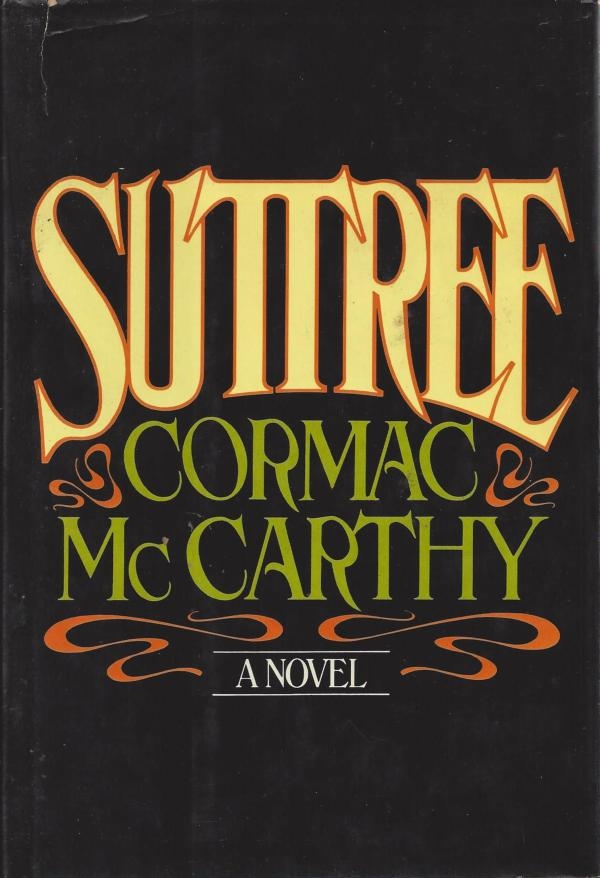
Review: Suttree, by Cormac McCarthy

A very uneven novel. My rating ranges from three to four-and-a-half stars.

The heart beneath the breastbone pumping. The blood on its appointed rounds. Life in small places, narrow crannies. In the leaves, the toad’s pulse. The delicate cellular warfare in a waterdrop. A dextrocardiac, said the smiling doctor. Your heart’s in the right place. Weathershrunk and loveless. The skin drawn and split like an overripe fruit.

In a previous post I stated that this novel, released in 1979, took McCarthy about ten years to write. That was, however, wrong, and in fact he had been writing in since the fifties, when he lived some of the events of the story. As independent scholar Write Conscious, who has gone over McCarthy’s archives, put it, McCarthy wrote very little in the last few decades of his life. Even his latest two novels, The Passenger and Stella Maris, which I loved and still haunt me, not only were set in the seventies and eighties, but were written to a significant extent back then (or at least almost fully researched). It turned out that McCarthy put lots of his own life in his novels. In the case of his last two and quite a few others, they’re heavily inspired by the love of his life Augusta Britt, much younger than him, ending up in a mental institution due to her extensive trauma (abandoned by her family, abused in foster homes… Presumably the whole getting-whisked-away-to-Mexico-by-Cormac also added to it).

In the case of Suttree, this novel I’m reviewing, it’s based around Cormac hanging out in the unfortunately named McAnally Flats in Knoxville, as the area existed back in the fifties and no longer does so. Many of the characters of this novel were real. One of them, named J-Bone, was a great friend of McCarthy’s, and the guy’s real home address as well as phone number from back then are depicted on the text. That means that we’re often treated to strange characters whom we’re barely introduced to at all. I’m not necessarily opposed to this; I believe that writing fiction is about making your own meaning and not necessarily satisfying anyone else. But that means that in a story already quite the mess, this panoply of weirdos only makes it harder to grasp.

McCarthy was apparently a drunkard back in the day. Also at the end of his life. I can’t stand drunks. He and his friends also got in serious trouble. I can’t stand criminals. So at times I had a hard time caring about what was happening in the story. Suttree tended to side with people who clearly should have been in jail or dead, and when some of them died, I thought to myself that it was about time. Still, some of those stories were wild enough to be interesting: going into pubs and stealing people’s money from their handbags and jackets (at the Indian Rock, for example, mentioned in Stella Maris by Alicia Western; her beloved brother used to bring her there on dates), plain-old robberies, brawls, general mayhem… It was hard for me to connect with that part of the story, which is about half of it: Suttree wandering from weirdo to weirdo doing stuff I couldn’t relate to.

The most memorable male character is an innocently evil melon rapist named Gene Harrogate. We are introduced to him violating a farmer’s produce, and he ends up in jail, where he meets the protagonist. He’s a small country bumpkin with seriously nasty instincts, whom Suttree really shouldn’t have been involved with. I have a hard time believing he existed in real life, as he was the larger-than-life type. There’s a whole segment with him digging tunnels under Knoxville and blowing up shit to the extent that it caused sinkholes, and led to him nearly drowning in shit. He also almost extinguished the local population of bats. Though entertaining, ultimately he was quite pointless to the story, as I didn’t believe that Suttree would hang out with such a fiend. That said, the story is generally a mess, so not much of what happens could be say to fit properly.

Three major sequences bumped up the novel’s quality for me: the first involves Suttree’s estranged wife and son, the second a nymphet unfortunately named Wanda, and the third a prostitute named Joyce. In real life, Suttree was indeed married and had a son. As far as I know, McCarthy was an utter bastard to that wife of his: he demanded her to work to pay the bills so he could dedicate himself to his writing, and when things got even worse money-wise, he demanded of her to pick up a second job. Understandably so, McCarthy’s family-in-law wanted him dead. He ended up escaping his home life, claiming that they stifled his creativity, which they likely did, and roamed around the south of the US, eventually ending up in a motel pool in Tucson, AZ, where he met an armed thirteen-year-old blonde and blue-eyed popsy with whom he fell head-over-heels. So that’s the whole deal with a estranged wife and son present in Suttree covered.

Wanda is the daughter of a down-on-his-luck pedlar with whose family Suttree spends some time in the best sequence of the book. This girl is described as having tits as well as fuzz down there, but Suttree repeatedly refers to her as a child. So she’s probably twelve-to-fourteen years old. The intimate scenes between Suttree and this girl are some of the most haunting passages of the book. This, of course, relates to McCarthy having met around that time the love of his life, Augusta Britt, whom the aforementioned scholar Write Conscious mentioned was very likely thirteen when McCarthy started sending amorous letters to her, and fourteen when they fled together to Mexico and started banging like there was no tomorrow, which McCarthy likely believed was the case, as the FBI was investigating Britt’s disappearance from the foster system. Regarding Wanda, the whole thing ends in a very McCarthy-ish way, with nature saying, “Fuck no, I ain’t lettin’ this shit go on.” I feel that the ending of that sequence will haunt me for the rest of my days. Chance and the universe’s indifference in general determining so much in life is a common theme in McCarthy’s work (the ending of No Country for Old Men comes to mind, and I mean the sequence with the protagonist and a fifteen-year-old runaway also based on Augusta Britt, which was sadly wasted in the movie).

However, the Wanda segment, my favorite part of this story, ended up becoming the biggest hole in it for me: I don’t believe for a second that Suttree would have been able to move on nonchalantly the way he did, with no fucking mention of the whole thing afterwards and no sign that it affected him. To me it reeked of McCarthy having written that part after meeting Augusta Britt, and then shoehorning it into the novel. Apparently, according to Write Conscious, in the letters with his editor, McCarthy’s “boss” demanded explanations for why he was so insistent on including the Wanda (and Joyce) parts in the story, but McCarthy refused to take them out.

The last of the three most memorable sequences for me involved a prostitute named Joyce, who bankrolled Suttree until her whorish life caught up with her psyche. Honestly the whole thing felt somewhat random yet true, which makes me suspect that McCarthy also got involved in such shenanigans.

What ultimately elevated the novel for me was McCarthy’s godlike writing. This story contains some of the best prose I have ever read. The first six percent or so of the text is so relentlessly high-quality in terms of careful observations that it boggles my mind to imagine what it took McCarthy to get through writing it. After that, the quality decreases as if McCarthy would have preferred to shoot himself than to keep holding himself to that standard. But most of the prose remains absurdly fantastic throughout, to the extent that it makes the vast majority of published authors look like children playing at pushing words together. One writer that McCarthy was helping do line editing in the seventies said that McCarthy’s edits made the guy want to quit writing. In my case, it makes me realize there are goals far in the distance that I can push myself towards.

This isn’t a novel I could recommend to anyone, to be honest. You have to fall into it, likely because you love McCarthy’s work. I’m glad I read it, but I suspect I should have gotten through his simpler remaining novels first (like the Border Trilogy, Outer Dark, etc.)

The following are quotes from the book that I highlighted.

He closed the cover on this picturebook of the afflicted. A soft yellow dust bloomed. Put away these frozenjawed primates and their annals of ways beset and ultimate dark. What deity in the realms of dementia, what rabid god decocted out of the smoking lobes of hydrophobia could have devised a keeping place for souls so poor as is this flesh. This mawky wormbent tabernacle.

How surely are the dead beyond death. Death is what the living carry with them. A state of dread, like some uncanny foretaste of a bitter memory. But the dead do not remember and nothingness is not a curse. Far from it.

You see a man, he scratchin to make it. Think once he got it made everthing be all right. But you dont never have it made. Dont care who you are. Look up one mornin and you a old man. You aint got nothin to say to your brother. Dont know no more’n when you started.

On a wild night he went through the dark of the apple orchards downriver while a storm swept in and lightning marked him out with his empty sack. The trees reared like horses all about him in the wind and the fruit fell hard to the ground like the disordered clop of hooves.
Suttree stood among the screaming leaves and called the lightning down. It cracked and boomed about and he pointed out the darkened heart within him and cried for light. If there be any art in the weathers of this earth. Or char these bones to coal. If you can, if you can. A blackened rag in the rain.
He sat with his back to a tree and watched the storm move on over the city. Am I a monster, are there monsters in me?

There are no absolutes in human misery and things can always get worse.

In the distance the lights of the fairground and the ferriswheel turning like a tiny clockgear. Suttree wondered if she were ever a child at a fair dazed by the constellations of light and the hurdygurdy music of the merrygoround and the raucous calls of the barkers. Who saw in all that shoddy world a vision that child’s grace knows and never the sweat and the bad teeth and the nameless stains in the sawdust, the flies and the stale delirium and the vacant look of solitaries who go among these garish holdings seeking a thing they could not name.