The Emperor Owl, Pt. 8 (Fiction)

When I rounded the hallway corner toward my bedroom, my dresser blocked the path, its drawers slightly ajar as if they had slid forward while the piece was being pulled. I pushed the dresser aside until I squeezed through the gap between its edge and the wall. From my open bedroom spilled a harsh scrape. It was punctured by the footsteps of a hulking mass, their vibrations trembling the floor.

I crept forward on tiptoe, fingertips grazing the grainy texture of the wallpaper. Congestion glazed my eyes, and static fogged my mind. My mouth, through which I was breathing, tasted stale.

From the bedroom doorway jutted a hand’s breadth of desk. It inched outward in jerks until halfway. Father growled. With a shove, the desk emerged fully, revealing the man behind it, his meaty palms planted on the furniture. When his gaze flicked toward me, I ducked my head as if I risked turning to stone. The desk legs screeched against the wooden floor as Father wedged it flush against the wall.

I lunged to the bedroom threshold, arms flung wide to block it.

“No.”

Father marched toward me and swatted me aside like a curtain. The bristles of his arm pierced the skin of my shoulder and chest through my sweater, shirt, and bra. I staggered against the hallway wall and crumpled to the floor.

Father muttered in the gutted space. He yanked open the screeching doors of my closet.

I rose as if waking from a faint. I couldn’t stop this man, nor persuade him to leave me alone. What could I do? Had he warned Mother? Told her he planned to strip my room of furniture that might barricade the door? Was she absent because she objected, or because she didn’t care?

My vision blurred. After wiping my nose on a snot-crusted handkerchief, I hurried down the hall, descended the stairs, crossed the living room, and stepped into a dusk that chilled my face and hands. The moon and first stars pierced clotted clouds. I scanned the pasture for Mother’s gaunt silhouette.

Chains clinked. The cows.

I rushed to the barn, plunging into its musky, dung-thick air. The beasts, chained in their stalls, chewed hay. Mother sat hunched on a stool beside one of the cows, squeezing the swollen teats of its udders, which were ridged with bulging veins. Milk jets splashed into a half-full bucket. She tilted her face toward the wall, hiding behind straggly, unkempt hair.

I halted beside her, fists clenched.

“Tell him to leave my furniture alone. Please.”

Mother tugged another udder, spraying milk. I crouched to glimpse her profile: features scratched into rotted wood, lips a mere slit. She stared down at the milk-filled bucket, making it seem like she had closed her eyes.

I softened my voice as much as my trembling allowed.

“Mother, do you know what he intends? If he told you, I don’t know if you could’ve stopped him. But you have to help me.”

“Don’t call me that.”

The volume of her voice had matched the splashing in the bucket, her words as though I’d imagined them in the gurgle of aching guts.

When I placed a hand on her sweatered shoulder, a bony lump pressed my palm.

“Do you know why he’s taking my furniture? Do you know what he does to me?”

She shot upright, the stool clattering on stone. Mother clamped her hand around my cheeks and squeezed. It hurt as if she might rip my mouth off with a tug. Her tangled gray mane framed creased and shovel-colored skin, and the paint with which her eyes had been drawn threatened to flake away. Her breath smelled of garlic.

She let go of my face. With her other hand, she gripped my nape, then shoved me beneath the cow and plunged my head into the milk bucket. I gulped a mouthful that flooded my lungs. I convulsed, trying to sneeze the milk out, but each spasm swallowed more, drowning my eyes, drenching my brain. Mother pressed my head deeper, the bucket’s curved edge digging into my collarbones. I grabbed the cow’s hide—it mooed and thrashed about, the chains binding its legs clinking.

Mother yanked my hair, and I fell backward onto bits of straw. I coughed bursts of milk. Sneezes and hacking shuddered through me, raking my nostrils and throat raw.

When I lifted my gaze from the straw-strewn floor, Mother was gone. The bucket lay overturned by the stool, and a milk puddle spread around the cow’s hoof.

Rising would waste energy. Someone should chalk my outline.

The cow nudged its muzzle close and lowed. Its nostrils exhaled a cloudy breath that warmed my cheek, glassy eyes gazing at me as if I were a wounded calf.


Author’s note: I wrote this novella in Spanish about ten years ago. It’s contained in the collection titled Los dominios del emperador búho.
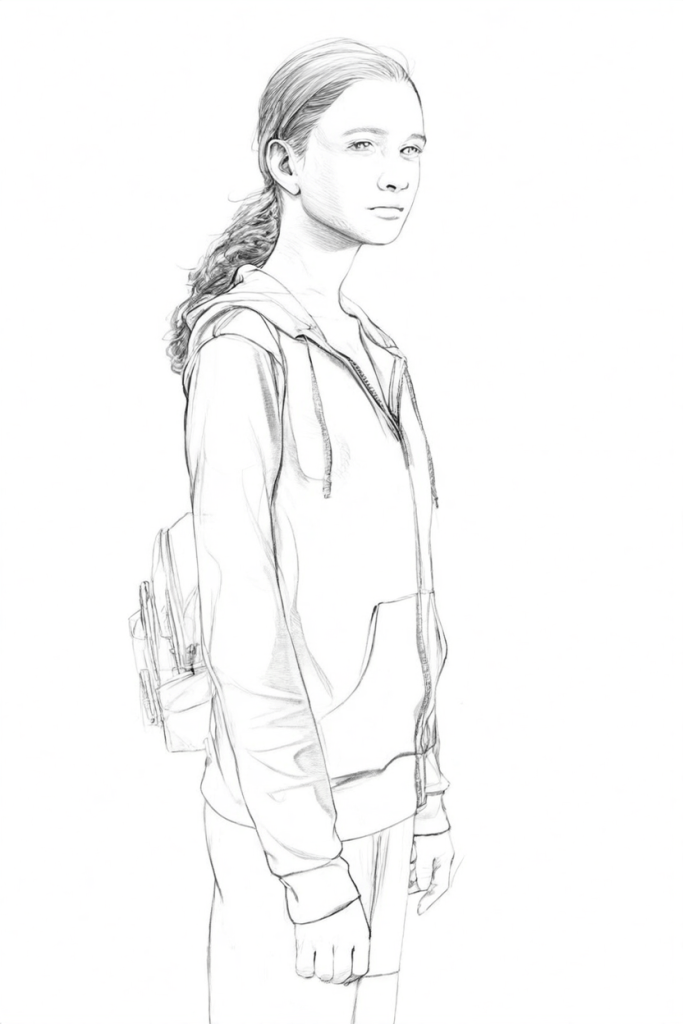
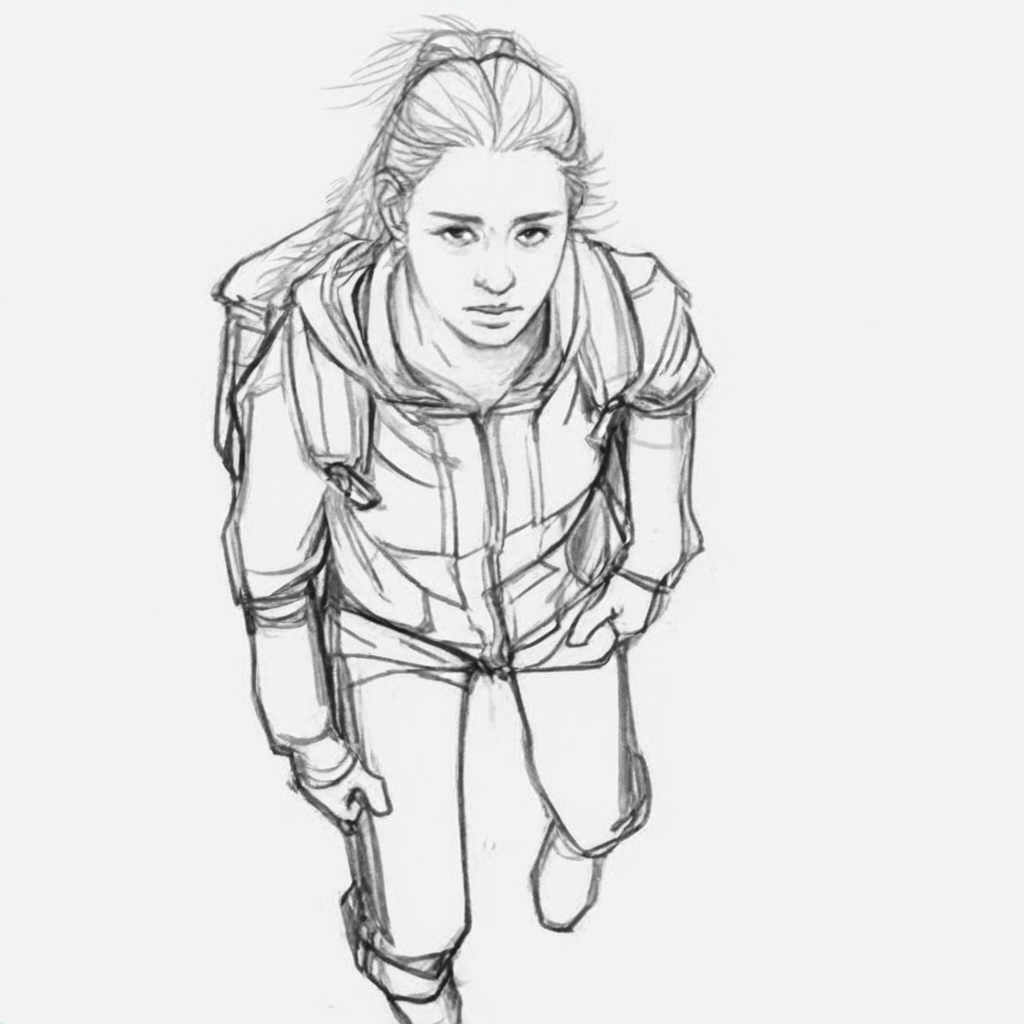
Today’s song is “Screen Shot” by Swans.

The Emperor Owl, Pt. 7 (Fiction)

Before I stifled the sneeze, snot shrapnel sprayed my drawing, speckling the page with translucent blotches, smothering some strokes with globs. What did it matter? My trembling hand had sketched shaky curves. The scene I’d created was hazy, mirroring my mental fog, as if I were glimpsing a landscape through greased paper.

I crumpled the sheet into a ball. When I dropped it beside me, it rolled over the portfolio and lodged between chunks of bark. I blew my nose as if I were filled with liters of mucus, but ten seconds later, a trickle slid from one nostril. The wings of my nose were raw. My mouth tasted of phlegm. I should—and wanted—to lie in bed, but why stay under that roof when I could escape for a few hours?

I twisted my nose with the handkerchief, which muffled my voice.

“Can I ask you something?”

“Whatever you like,” said the man. “We’ll see what I answer.”

“Do you like me?”

The air thickened near the blackened circle, charged like static.

“You think I don’t?”

“Would you betray me?”

“Have you given me reason?”

“I don’t know. You might think I have, even if I didn’t mean to.”

“Is that cold of yours messing with your head? Why worry?”

“It is messing with me. I can’t think straight. But maybe you’re pretending to like me as a distraction.”

“A distraction from what?”

“From planning to hurt me.”

The man sighed, his breath prickling my face.

“I’m not planning to. Though if I were, I imagine I’d hide it.”

“If someone I thought cared for me switched sides, I assumed I would know.”

“It’s been years since anyone entertained me like you. Though, to be fair, I’ve never delved deeper into a relationship than telling someone to leave and watching them flee.”

I blew my nose until I needed a fresh handkerchief. The sight of the charred grass circle wavered, and the taste of my saliva sickened me. I set the cloth-covered tureen on my thigh, loosened the elastic, and lifted a corner of the fabric. If I could smell, maybe the aroma of marmitako inside would’ve stirred my hunger.

“Will it taste like anything to you?” said the man.

“Maybe it’ll taste like something to you.”

“Want me to try it?”

“I brought it to offer you. Even an invisible man needs to eat. What kind of person would let you starve?”

At the edge of my hearing floated the murmur of clashing thoughts, mingled with wind whistling, birds trilling, and the creek’s whisper.

“I should refuse.”

I crawled forward, but stopped a meter and a half from the circle to avoid the pins stabbing me. Bowing, I placed the open tureen on the grass. I jerked backward, then leaned on my hands, damp leaves and grass beneath my palms.

“If I ate, it’d be wasted. It’d taste like phlegm.”

“Charming word to hear while I consider eating.”

I opened my mouth to speak, but the image of the circle, the beeches, the tangle of branches beyond, slid toward the tureen as if painted on a stretching rubber band. The distortion coiled around the tureen like a claw, contracted, and swallowed it into a mirrored lake. The rustle of crumpled fabric. Chewing. A gulp.

A cough exploded, convulsing the beeches and the circle, the shockwave knocking me onto my back. The tureen flew past my head. My legs folded against my chest—firecracker-like coughs jolted me as if trying to make me roll. Needles stabbed my face and hands like a swarm of bees, their stings piercing my sweater and pants.

When the man stopped coughing, I lay supine. Above the quivering lattice of branches, a mass of gray-blue clouds slid south. I sat up. Snot bubbled in one nostril, and my exposed skin burned.

Before the circle of withered grass, a black, mercurial vomit had flattened the blades and buried the debris. I couldn’t smell, but the fumes attacked my nose like smoke-itch. The view of the blackened circle had stilled.

Had I poisoned the invisible man?

“Please, tell me you’re still there.”

“I’d forgotten how vomiting feels.”

I covered my mouth. I wanted to kneel and weep.

“I didn’t mean to. I swear. If I’d known it’d affect you like this, I’d have eaten it myself, even if it tasted like phlegm.”

“Relax. Years ago, I tried your food and it ended in another puddle. I thought this time might be different.”


Author’s note: I wrote this novella in English about ten years ago. It’s contained in the collection titled Los dominios del emperador búho.

The Emperor Owl, Pt. 6 (Fiction)

The bathroom door opened with a click that rippled through the bathwater, mingling with the pressure in my eardrums and the submerged gurgle of bubbles rolling across my skin. A draft seeped through the door crack and slithered over my knees and shins, that jutted from the water like ice cubes. Light footsteps entered the room.

I shrank deeper while trying to avoid disturbing the water. Who’d entered, knowing I was bathing?

I lifted my head into the cool air. I expected the shower curtain to silhouette the hulking mass of thick arms and legs, but the lamp lightened the nylon. I peeled the curtain back a hand’s width. Mother, leaning against the sink, stared at me.

I loosened my shoulders. Better her resentful glare than Father’s.

“Hurry up,” Mother said.

She rummaged through my pajamas, bra, and underwear, heaped on the toilet lid. She bundled them. Snatched the folded towel from the sink, and added it to the pile.

As I hunched over the tub’s edge, my wet hair and face splattered the tiles.

“What will I wear when I get out?”

Mother tilted her head to address me but hid her ashen face behind her silver hair.

“If you want clothes, ask your father.”

She left the door ajar.

The chill prickled my skin as my heart galloped. She’d return, I thought, and toss fresh underwear and pajamas onto the toilet lid. But her footsteps faded into silence. The cold air invading the bathroom through the cracked door whispered that if I emerged from the warm water, I’d risk pneumonia.

I shut the curtain and submerged myself up to my nose. Had Father ordered her to steal my clothes? Why had she obeyed? Mother knew she’d condemned me to shuffle naked toward that man, clutching my breasts and groin. To beg.

A searing heat in my chest overwhelmed me. As I shut my eyes tight, my body jerked in silent, tearless spasms.

I shoved the curtain aside and clambered out, hunched, as droplets drummed the tiles. At the sink, I froze, legs trembling as if I’d bathed in an icy river. In the mirror, wrinkled strands clung to my forehead, and rivulets snaked down my pallid skin. I recognized the gaze of a lamb hearing the bleats of its kin as it’s dragged through bloodied puddles.

I swept the hair from my face. Wringing my mane, it dripped down my back and spattered my buttocks.

I nudged the door further, and its knob grazed the wall. To my left, the shadowed hallway led, past a corner, to the bedroom. To my right, Father’s silhouette clogged the far end like cholesterol in an artery. The ancient bellows of his chest wheezed, swelling and deflating. Though darkness veiled his face, his stare pierced mine as if pinning a moth to cork.

A shudder seized my legs. Dizziness blurred my vision. I fixed my eyes on the wallpaper ahead, its lumpy patterns like spider eggs. I stiffened. Swallowed. I shielded my breasts with one arm, cupped my groin, then strode into the hallway.

What did it matter? He’d already seen. That man assumed forcing me to parade naked would render me helpless, yet I’d barricade my room even as I became stiff from the cold.

I let my arms drop. As if sleepwalking, I turned toward my bedroom and marched stiffly. Father’s gaze scorched me from hair to Achilles’ heels. When I rounded the corner, his stare detached. I sprinted to my room, stomach acid searing my throat. I opened the door, closed it behind me, and pressed my back against it.

A threadbare sheet covered the mattress. I recognized it from the storage closet in the attic; the sheet had been buried beside a yellowed pillow and hole-riddled slippers. I rifled through the dresser drawers—empty. When I jerked the wardrobe open, the draft rattled unburdened wire hangers.

My jaw quivered. Cool droplets slid down the gooseflesh on my arms.

I shoved the dresser screeching across the floor to barricade the door. Dragged the desk and wedged it against the dresser drawers.

I switched off the lamp, but starlight and the pockmarked moon bled through the window. As I neared the glass, an owl burst from the cork oak’s branch, wings thrashing. I yanked the curtain shut.

Clambered onto the bed as if escaping lava. Slid under the frayed sheet, pulled it over my head. Faint light seeped through the fabric’s cracks. It reeked of mold and old clutter fermented in the closet’s depths. The damp sheet clung to my skin.

I shut my eyes, hugged my knees. Counted to four again and again to drown out my hammering heart and chattering teeth.


Author’s note: I wrote this novella in Spanish about ten years ago. It’s contained in the collection titled Los dominios del emperador búho.

Today’s song is “Pink Moon” by my boy Nick.

This story is written in a manner that makes my skin crawl, and I don’t mean just the subject matter. I’ve long forgotten what headspace I was in at the time, but it reminds me of my teenage years, which were spent mainly slipping in and out of psychosis. Maybe that’s a huge part of why I didn’t want to revisit this story.

The Scrap Colossus, Pt. 13 (Fiction)

A group of six twenty-somethings swept in through the gate of Bar Palace’s fenced patio. At the forefront of that posse, two young men sported fitted T-shirts and jeans, while the leading lady wore a cream blouse layered under a fuzzy, warm-toned coat paired with ankle boots. The group sauntered between the tables and the low stone borders enclosing boxwoods and sago palms. Each face bore a pristine smile as if etched permanently. Had Elena continued talking, their booming voices would have swamped hers, and judging by their tone, she should have thanked them. They headed towards the back of the patio, where an open-sided marquee shaded a dozen tables.

Elena crossed her arms. She turned one ear toward the intruders’ youthful cackling, which caused curved locks of almond-blonde hair to slide from the collar of her jacket. Along with her wary gaze, she evoked a stray cat that had come across a human while prowling the streets at night.

She had been speaking so earnestly, but now she risked clamming up. I should hurry to cocoon her within a web of words.

“Are these novellas finished?”

Elena uncrossed her arms and let out a weary sigh.

“I wrote six stories back-to-back. Didn’t I tell you?”

“Damn. Have you sent them somewhere?”

Her pale blues softened with regret, eyebrows furrowed. She drew her shoulders in and lifted her slender index finger to her mouth. Her lips pursed around its tip, then the muscles at the corners of her mouth contorted as she nibbled on the nail. Her gaze drifted down. When she pulled her finger, its tip glistened with saliva.

“I wish I hadn’t. It would have been better to retain in the back of my mind the delusion that once I sent the manuscripts, these stories I worked so hard on, that meant so much to me, that I bled for, I’d get the call, some editor at a big house saying: ‘Oh, what a gem this is! Here’s your prize, your publishing deal, and your movie adaptation!’ If my stories were truly great, surely the world would notice them no matter what, right? Someone would care. So I divided the novellas into two collections, then went through the mind-numbing process of figuring out to what contests I could send them. Do you know that the terms and conditions of some contests specify that they’ll reject any submission that features profanity or violence? I mean, are you fucking kidding me? What world do they live in? Anyway, I sent my collections to a couple of the less stupid contests. They didn’t even reach the elimination rounds. What a bummer, huh? Afterwards I figured, well, I’ll send them directly to the publishers, those that accepted unsolicited submissions. Only a couple bothered to respond, a few months later. ‘We regret to inform you that your book does not meet our current needs.’ You know, much worse writers than me are getting published, so I had figured I could squeeze in. Fucking moron. I got my hopes up for nothing.” She tilted her head and stared at the leaden sky. “And I did it for money. I was trying to figure out how to make a living doing something that didn’t make me want to strangle myself with an extension cord. But realistically, if a professional of the industry recognized my work, I’d have to deal with editors, publishers, and other strangers. They’d try to fix in my stories whatever offended their sensibilities. And I’d have to care about marketing. How would you sell these stories, which are symptoms of the radioactive darkness that’s been growing in me since before I took my first breath? I would have to go on book tours, and attend conventions. I’d be expected to sit in front of a room full of people staring at me as if I were a human being instead of a monster afraid of the light.” Elena’s shoulders heaved. She shivered like shaking off a gruesome vision. “But I don’t have to worry about those horrors ever becoming reality, do I? My work has no professional future. The gatekeepers would react to my stories the same way Isabel did. Lacks empathy, they’d say. Too dark, cynical, depraved. And I don’t write about the Civil War, which vastly reduces your chances of being published around these parts. Besides, do I really want to give my stories to the world? I just need to get the words out, to stop them from eating me alive. It’s like vomiting. You don’t serve it on a plate and invite everyone over for dinner, do you?”

“I find your puke delicious.”

“Well, you’re a weirdo. Which I like. But they’ll just see it as another mess to clean up.”

Two women in their thirties, a blonde and a brunette, seized the vacant table at our left as they bantered in a torrent of Basque. The blonde’s laughter erupted, her jaw gaping like a shark snapping at prey. Even after they sat, she flailed her arm, clutching a smoldering cigarette that set curls of smoke pirouetting. Their voices carried the confidence of those who knew their place in the world and were making the most of it. As a waiter in a stark black uniform swept over to take their orders, Elena glanced sideways at the pair like they were aliens.

“Anyway, Elena, I’d love to read the full novellas.”

Her lips twitched. She tensed her shoulders and held her hands on her lap as if steeling herself. Then she lowered her head, brows knit.

“Not yet. These are… appetizers.”

“For what main dish?”

Elena bit her lower lip and shot me a hesitant look.

“Something I’ve never shown to anybody.”

Was she trying to prove whether I was worthy of reading her secret work? On her lap, the fingers of her left hand had retracted and curled into a claw, metacarpals jutting from her pale skin. That hand trembled. I lifted my gaze to her eyes, but her fallen lashes obscured the irises.

“I’m not used to being seen,” Elena said in a voice like a rusty gate opening. “It’s a lot to deal with.”

“Hey, whatever your secret story is, I’ll devour it. Can I ask for some details?”

“I don’t know if I’m still working on it, to be honest. It’s sort of… frozen. I just need to keep moving. Keep my mind from sinking back to where it left me.”

“Where was that?”

“Somewhere dark and cold and very far from here.”

Those pale blues, that seemed to have seen it all and wanted to see no more, teetered on the verge of thinning out and revealing some hidden passage. As if catching herself, Elena raised her palms to rub her face. A thick lock of shimmering almond-blonde hair tumbled from her ear and swayed. When she tilted her head back to rearrange her cascading hair, the overcast light of late afternoon sculpted her jawline, highlighted her cheekbones, and caressed the dusty-rose curve of her lower lip. In the span of her neck, the twin cords of her sternocleidomastoids, running down diagonally to her collarbones, flexed like silk ropes beneath her skin.

“Whenever you feel ready, Elena, I’ll be waiting. I’m not going anywhere.”

“Yeah. A week ago I was sure I’d never show that story to anybody. But now, I don’t know. Maybe you could handle it. What were we on about? Ah, right.” She massaged her temple with her index and middle fingers. “I had been trying to find a way to make money that wouldn’t force me to interact daily with human beings. Otherwise I’m doomed to live at my parents’ until they kick the bucket. I could sell my body, I guess.”

“If you monetized it well, you’d make a killing.”

“And lose a part of myself with every transaction. So, Jon. Do you have a job, or do you live on an inheritance? Or in a cardboard box under a bridge?”

“Is this the part where you determine my value to see if you should stick around?”

“You’re the only person in the world who’s willing to listen to me babble. And you even wait patiently at the end of a sentence to see if I’m done talking. But if you turned out to be a murderer, then I’d have to weigh the pros and cons, the enjoyment of our conversations versus the risk of ending up as a severed head in your freezer. Does that defensiveness mean you’re also a failure?”

“I’m an IT technician at Donostia’s main hospital, fixing network issues, granting users access, etcetera.”

“Sounds like a nightmare.”

“It’s a shit job, but it keeps me afloat. And as you suspected, I’m indeed a failure. I never dreamed of ending up tied to such a job.”

“At least you have access to the medical records of most people in the province. That should give you an advantage over the common murderer, and it might be fun to look up people from the past and see if they’re now riddled with STDs.”

“If you pry into someone else’s medical record when not authorized to do so, you’ll receive a call from HQ, and if you can’t justify yourself, you may end up in jail.”

“They take the fun out of everything, huh?”

“What about you? Want to share your work history?”

Her head dipped in a timid bow, brow creased. Her pale blues tried to hold my gaze, but her lids flickered, then her eyes darted down. A slight grimace pulled at her lips as she clutched the moth pendant.

“I’m not proud of my job experience, Jon.”

“I hadn’t assumed otherwise.”

“Well, as I’ve established, I’m a leech that lives off her parents. They aren’t pleased with the situation, so they’ve pushed me to find work, even part-time. The issue is, when you’re born with radiation for blood and chaos for bones, you’re not exactly employable. After high school, I didn’t continue my studies, not even a vocational program. I couldn’t bear the thought of wasting more time in a classroom, pretending to be interested in whatever the teachers had to say, surrounded by people I had nothing in common with. For the next couple of years, I did little more than lie in bed and masturbate. I had my first taste of employment during my twentieth summer, as a waitress. Can you imagine? I don’t know how I lasted more than a day. The goons I had to consider my coworkers were a bunch of loud, obnoxious idiots who kept inviting me to hang out after work. Soon enough they started calling me a bitch behind my back. I also had no clue how to talk to customers, and of course I didn’t want to. I discovered that my troubles with basic math may indicate a mental retardation. Anyway, the manager fired me before I could quit. He said he couldn’t understand how someone could be so incompetent at serving drinks. He also called me a bitch, but to my face. Then, I worked at a bookstore. Seemed like a fitting job for an aspiring writer. Back then I still believed I could fake being human enough to fool everyone. I watched and mimicked until I mastered certain norms, although it exhausted me and made me hate people even more. I lasted three months, my longest stint, before the fluorescent lights and the noise and the forced small talk drove me to have a nervous breakdown in the poetry section. My boss sent me home early, told me to take a couple of days. But I never went back. Finally, the call center gig. Apparently I thought torturing myself with constant human interaction was a penance I needed to endure. I should have swallowed a bottleful of bleach instead. That job ended with me telling a particularly nasty client exactly how many ways the human body can fail before death takes pity on you. So yeah, I’m unemployed. Have been for a while. And those humiliating examples of my failure as a member of the species were interspersed with periods in which I did little more than lie in bed and masturbate.”

“Living the dream. Too bad I couldn’t join in.”

She smiled with the vacant, distant stare of a prophetess gazing into the embers.

“Jon, how do you compete in a world where everybody is expected to be whole and perform their role perfectly? It’s like trying to participate in a sprint while missing a leg. Five days a week, if not more, waking up at seven and forcing yourself to head into a workplace where you’ll be surrounded by people and ordered to carry out tasks. The clock felt like a guillotine blade dropping again and again onto my neck, chopping off pieces of my life I would never get back. For a paycheck that wouldn’t even allow me to buy my own place unless I paired up with another wage slave. The thought of enduring it for decades filled me with absolute horror. I’d wake up in a panic, thinking, ‘It’s morning. I have to do it again.'” Elena shut her eyes, then took a deep breath. “I would expect the majority of the population to be unemployed, or else quit or be fired after a week. That they go about their business without breaking down or having to drown themselves in meds emphasizes that I don’t belong among them.”

“You’re too sensitive, Elena, but that’s alright. The problem is that society favors psychopaths.”

“My parents… they try to understand in their own way, even though they must be sick of supporting a grown-ass woman. They send me job listings like maybe this time it’ll work out, like maybe this time the monster inside won’t rear its horned head and destroy everything. But we know how the story ends, don’t we? I guess that’s how normies became the blueprint. They get pissed on over and over, but they think, ‘Well, next time it may be water.’ A lack of pattern recognition, don’t you think? But that allowed them to out-reproduce the competition, and that’s how you end up with fiat currency. Meanwhile, I have trouble buying a toothbrush.” Her voice had dwindled to a hoarse whisper, as if her throat were clenching her vocal cords. She hunched over, elbows on the table, and clutched at her head with trembling fingers, tousling her almond-blonde hair. “I can’t. I can’t go through that again. I can’t spend the rest of my days trapped in an office or store, or any place that requires me to interact constantly with the human race. I can’t do that to myself. I’ll end up hanging from a ceiling beam.”

“We’ll find a better solution for you.”

Elena jerked her eyes upwards, suddenly realizing she had a witness. Loose locks framed her parted lips, her crinkled brow, her helpless blues that cast an apologetic glance. Then she lowered her head, spread her elbows, and pressed her hands onto the table. The wrinkled sleeves of her jacket clung to her arms, slender as birch branches. Through the cascade of her almond-blonde hair, only the soft triangle of her nose emerged from her pale face.

I spoke calmly.

“Those whose brains urge them to create new things shouldn’t have to compete in a rat race. Imagine if Michelangelo Buonarroti had been forced to work at bank, or if Beethoven had worked as an accountant and could only compose in his free time. How much beauty has been lost to the world because creative minds had to spend their lives chasing money, or simply surviving?”

“I’m neither Michelangelo nor Beethoven,” she said to the table, her voice creaky. “There’s no demand for what I do. And who would foot the bill for me to indulge myself, huh? Just because I’m broken doesn’t mean I deserve handouts.” She straightened her spine, then combed her locks back while avoiding my eyes. “Writing full-time would mean staying holed up in the cave that is my room, coming out only to eat and drink and piss and shit and bathe, if I could be bothered to bathe, and then back into the cave. Nurturing this darkness until it consumed everything. Until there was no Elena left, just a monster that feeds on the world’s misery and shits out words that no one will read.”

“Haven’t you been doing that already?”

“I wrote the six novellas in a frenzy, under pressure. I produced them longhand in the study room at the library, because if I did it at home I’d be dreading the next knock at my door, then either my mother or father would enter with a fake smile, sit beside me, and bring up some fucking course or job offer, while pretending not to notice how I shrank further and further into myself. If I had the license to write full-time and nobody hounded me to become a functional member of society, that’d be a different matter.”

“Either you refuse to write, which would cause you to fall apart, or you submit and create your stories, feeding the monster.”

“Fucked either way, you mean? The monster demands its tribute, whether it’s in words or pieces of my sanity.”

“You’ve envisioned your end a myriad times. You’re responsible for most of those demises, through pills, blades, nooses, or leaps into the void. We’re doomed to exit this world in an undignified manner, so you may as well produce as much beauty as you can along the way.”

“A tragic artist painting with her own blood before the inevitable end, huh? Something terrifies me, Jon… What if this pain, this darkness I’ve been carrying around like a tumor since I was a kid… what if it could actually mean something? Help me create a work of art worth remembering? That’s almost worse than believing it’s all meaningless.”

“How come?”

“Then I’d have a responsibility, right? To what? To whom? To… well, the artists I look up to, who don’t even know I exist, although they make me feel less alone? To some hypothetical future reader who might find solace in knowing they’re not the only monster trying to pass as human? I’d feel obligated to carry that weight as it crushed me.”

“You have a responsibility to your own uniqueness. You’re the only person in the entire world who can write your stories. They might not save you, but they may help someone else. And you will have contributed something unique to the world, which is more than most can claim.”

Elena stared off into the distance, lips pressed together. Her right hand twitched. Then, after dipping her head, the fingers of that hand spasmed as if typing in fast motion. She stayed silent, so I spoke again.

“Haven’t you ever come across a song or story and thought, ‘Shit, if this artist hadn’t wasted half of their life drunk, or if they hadn’t overdosed at twenty-seven, think about the amount of amazing art we could’ve gotten.'”

“Well, I’m past twenty-seven, thankfully or not.”

“You have a gift, Elena, even if it’s also a curse. So you must do your very best with it.”

“Maybe I do. How many times have I listened to her music and wondered what other masterpieces she could have created if life hadn’t beaten her down so hard? And here I am, letting this darkness eat away at me day after day, telling myself it’s inevitable. No one else has quite my flavor of fucked up. But this hope you’re trying to inject into me… It’s dangerous when you’re made of radioactive waste. It may make you think you’re worth something. In the end, though, I know what I was born to do: carve the world a wound in my shape.”

Laughter erupted from the open-sided marquee at the rear of the patio, and youthful voices tangled in a frenzied medley as if competing to be heard the loudest. Elena flinched—her shoulders shot up and her jaw clenched. She glared warily over her shoulder like a soldier scouting for snipers. Then she dropped her gaze and sprang to her feet, pushing the rattan chair back. Her jacket fluttered and her moth-shaped pendant, suspended from its chain, glinted in the late-afternoon light and patted against her breasts as she collected the printouts and inserted them into her folder.

“Let’s go. I’m getting real antsy.”


Author’s note: today’s song is “In the End” by Linkin Park.

The Deep Dive pair had a lot of interesting things to say regarding this part.

The Emperor Owl, Pt. 5 (Fiction)

Bleats wafted through the fog. On the facade of the house at the meadow’s edge, the white paint had peeled like rotten skin on a corpse’s forehead, exposing walls built of mismatched rocks in precarious balance. Above six crooked windows, walnut-brown tiles crowned the structure like a sun-scorched straw hat.

I hastened through the overgrown grass, searching for a sheep’s four-legged silhouette. Beside me, a garment snapped in the wind with a crack of cloth. I kept moving until Mother clicked her tongue at me.

“Follow me.”

In her mane, ash-gray strands twisted like storm warnings. I trailed her, arms crossed over the portfolio I clung to. Shivers ran through me. I should’ve brought a scarf.

From the shed at the meadow’s corner came bleats like a tortured soul’s wails. Mother stopped by a fence where a lamb hung skewered by barbed wire, its neck and chest hooked. From its gaping mouth dangled threads of saliva. Eyes bulged grotesquely. With each twitch, its wounds spilled tongues of brass-scented blood that stained the wire and steamed. A dark pool grew at its hooves.

“Don’t bother claiming you’d penned all the sheep and this lamb slipped out,” Mother said. “You rushed your chores to vanish into whatever hole you like to hide in.”

She spoke as if forcing air through her larynx exhausted her energy, and at each word she questioned if the effort was worth it.

I uncovered my mouth and crouched near the lamb. Stroked the coarse fur along its back while its warm body shuddered under my palm.

As if the sun had eclipsed, darkening the world, I envisioned Father surging from the horizon and rushing across the meadow toward me, footsteps quaking the earth.

When I stood, a dizzy spell blurred my sight. I scanned the meadow, skin prickling. Mother’s bony fingers grazed the portfolio’s edge I clutched. I braced for her to snatch it, but she bent instead to grab a handle hidden in the grass.

“I’ll keep to myself what you’ve done.”

She pried open my right hand and placed an axe’s smooth wooden grip into my palm. The heavy metal head dragged my arm down.

“For what?”

“Kill it.”

Fire seared my gut. I gulped.

The lamb probed the air with its crimson, glistening tongue as if parched. Each spasm rattled the wire in metallic shrieks while blood oozed from the beast’s wounds thick as honey; surely its body held less than it had spilled. A bleat rippled from the shed in a cold current as if a ghost were weeping.

“I can’t.”

“You prolong its agony. And it’s suffering because of you. Do your duty.”

I knelt, pressing my brow to the lamb’s feverish chest, inches from wire barbs gouging flesh. My fingers tangled in its matted fur. Underneath, muscle fibers quivered.

I swallowed to steady my voice.

“Maybe it’ll heal. Give it time.”

Studying its neck wounds, I wondered how I could lift the lamb without slicing deeper, but Mother yanked my sweater’s collar, making me stumble back. As she snatched the axe, the momentum flung me onto slick grass, sprawling sideways. She glanced away through her ashen hair, as if seeing me pained her.

“You learn nothing. Your head always in the clouds. Nothing good’s going to happen to you.”


Author’s note: I wrote this novella in Spanish about ten years ago. It’s contained in the collection titled Los dominios del emperador búho.

This may be the worst conceived scene of all I’ve translated so far from my work ten years ago. I had trouble even envisioning what I meant in some of the original text.

The Emperor Owl, Pt. 4 (Fiction)

I detailed the face of the man standing upright over the circle of withered grass, flanked by twin beech trees guarding him like sentinels. With a gray crayon, I shaded the segmented plates of his armor. I perfected the goose-feather quill jutting from his silver helmet. I erased the outline of his jaw and redrew it square, rock-hewn, to match that cavernous voice.

I stretched, then reviewed the drawing. Perfect. No detail to add, no stroke to erase.

I smiled, stifling a chain of laughter. I set the drawing atop my portfolio. When I uncrossed my numb legs, blood surged back in a torrent of prickling needles. I snatched the sketch, turned it toward the ring of blackened grass, and held it aloft.

“Do you like it?”

The man coughed. The circle and the beeches rippled as though I were peering at a painting submerged in churning water. My face and hands burned, but the sting would fade before blooming into rashes.

“You wear armor granted to honorable warriors,” I said, “those who’ve proven their valor defending the king and slaying scores of monsters. You’ve come on a secret quest to purge this land of darkness.”

“Did the helmet need a feather?”

Leaning over the page, I stole a glance at my drawing, hunting for errors I might’ve missed.

“I could erase the feather, but I’d have to redraw the helmet and part of that beech.”

“It’s a fine portrait of someone else.”

“I didn’t mean to insult you.”

“It isn’t me.”

I studied the scene. What other details could offend him? The man in the drawing would helm adventures where he’d always prevail, though bloodied and scarred. He’d slaughter beasts threatening those he loved.

“Maybe I’ve imagined it better than reality, but isn’t it lovelier this way?”

I slid the drawing between the portfolio’s pages, careful not to crease the edges. I lay on my side in the grass, dewdrops glittering like scattered glass.

“But it isn’t real,” said the man, as if he’d weighed the words for fifteen seconds.

“You can tell me. Truly.”

“Tell you what?”

“Why you’re here. What you seek. Do you think I’d hinder you? I want to help.”

He snorted, air whistling through a rusted pipe.

“You’re imagining that your knight has galloped here from distant lands, plunged into this forest, and awaits the stars’ alignment to fulfill his mission. Yet I appeared among these trees—this arbitrary speck in the cosmos—as I could have materialized on another planet, in the depths of a hydrocarbon sea. I linger because no corners remain worth moving out to.”

“Hydrocarbon?”

“Why are you here?”

“When I met you? To sketch this landscape. Today? Because I’ve met you.”

“On this planet, I mean.”

“I didn’t choose that.”

“Nor did I.”

I knelt. A beetle trudged past, legs ticking like a cuckoo-clock figurine. It wove through twigs and scaled dry leaves toward the border of blackened grass, but a meter away, its antennae groped the air like a blind man tracing a wall. The beetle pivoted and marched in perpendicular, bulldozing debris with its shell.

“How do you do that?” I asked.

“Do what?”

I hunched, palms sinking into the underbrush—crunching leaves, flattening grass. I stretched an arm toward the circle and crawled. A meter from the blackened grass, needles stabbed my fingertips. I jerked back. Though my fingertips tingled, no blood welled, and the pain ebbed.

“That.”

“Girl, I couldn’t explain it if I tried. Curious, though. Other creatures flee. Had another stumbled upon me—a disembodied voice in these woods—and heard me command for them to leave, they’d have bolted. Yet you persist. You lack instinct.”

“I’ve won.”

“Were we competing?”

“We’re talking. You’ve stopped ordering me away.”

The man sighed, his breath a stale gust.

“What I touch withers. All I near rots. What do you suppose that means for you?”


Author’s note: I wrote this novella in Spanish about ten years ago. It’s contained in the collection titled Los dominios del emperador búho.

Today’s song is “Sawdust & Diamonds” by God herself.

The Emperor Owl, Pt. 3 (Fiction)

When I went down for breakfast, I sat in the chair opposite my usual spot. Father barged into the kitchen. A scent of wet grass and manure, like a beast sprawled in the mist, flooded my nostrils, trampling the stench of the garlic and onion braids hanging from the ceiling. Father’s fiery snorts heated the air.

My ears had stiffened. I ducked my head over the bowl of milk, baring my nape.

Father’s hulk prowled behind me while hissing through his teeth. He yanked the chair next to mine and dropped onto it as if to splinter the wood, which creaked. He planted a fist beside my bowl.

I gulped the milk as my throat clenched, risking a choke.

His fist bulged like a club, his fingers like swollen sacks of soil. Hundreds of iron spikes bristled across its back, climbing up a forearm thick as an oak branch. As Father breathed, the spikes converged and parted.

“Today, you’ll milk the cows and shear the sheep that were your mother’s duty. Understood?”

I nodded. Crossed my ankles under the table.

Father thrust his face toward me; it felt like a cannonball sinking into the opposite end of a mattress, causing my side to cave in. His breath grazed my skin like a flame.

“Understood?”

“Yes, sir.”

“If you bolt your door again tonight, tomorrow you’ll work double.”

My muscles tensed, steely. The milk bowl doubled and quivered. I would vomit.

By the counter, Mother faced away from me—a mannequin rigged from wooden slats, draped in a sweater and an ankle-length skirt. A thin, ash-gray mane covered her head. The mannequin, hunched over the sink, trembled as she scrubbed a glass with a scouring pad. If I glimpsed her gaunt silhouette from certain angles, Mother would vanish.

“Don’t bother her,” Father said. “She agrees.”

Mother spoke in a brittle whisper.

“Obey your father.”


Author’s note: I wrote this novella in Spanish about ten years ago. It’s contained in the collection titled Los dominios del emperador búho.

The Emperor Owl, Pt. 2 (Fiction)

My bedroom window framed the cork oak, beyond whose cracked stone bark, the color of capers, stretched the broad sash of the Milky Way. Its clusters of azure light, its masses of rosy nebulae. Through the bare branches slid the glimmering of hundreds of thick luminous orbs and flickering points—blue, white, and red—studding the night. Millions of glowing spiders dangling from the ceiling of a cavern.

I shrank beneath the blankets, clutching the coverlet as though I were sliding into an abyss. I’d woken in the dead of night. Why?

Everything that had inflamed my brain now hung like paintings: the two beech trees flanking the circle of blackish grass, the reverberating voice of the invisible stranger. I pressed my eyelids shut. I gasped into the pillow, dizzy. I counted from one to four, inhaling deeply with each number, but my heart raced, pounding against my left lung. How would I fall asleep again?

I curled into a ball and poked my head from the blankets into the cool air. The wind whistled. A cow’s chain jingled as the beast grazed.

When Father arrived, he’d find me awake.

I whimpered. Hugging myself, I wished to vanish. How could I let Father enter if I remained awake?

I sat on the bed’s edge, springs squeaking. My vision wavered. Standing might make me vomit. I pressed the soles of my feet to the cold floorboards and hunched toward the door.

Footsteps prowled the house—an earthquake whose tremors would reach me. They’d crescendo like palms slapping wood, then the door would creak open. He’d find me standing on the opposite side of the threshold.

I knelt. Clamped my palms over my ears, squeezed my eyes shut. My breath thickened. Maybe hyperventilating would make me faint, but it’d take minutes. The dresser, the wardrobe, the desk. Would they suffice? Could I shove them?

My forehead and neck dripped with cold sweat. I crouched beside the dresser flanking the door. Shuddering, I inched it forward, legs trembling as its feet screeched like chalk on slate. I barricaded the door. Circled the dresser, then shoved it from the side of the drawers toward the door until wood jammed against wood.

Footsteps merged with the drumroll of my heart.

My legs quaked. I gripped the desk’s edge and jerked it toward the dresser. A stubborn pain clawed my throat, as if I’d swallowed a nail.

The footsteps advanced along the hallway toward my bedroom. Drumbeats.

I crouched behind the desk, bracing it firmly against the dresser as the wood groaned.

In the gloom, the doorknob turned. The door nudged inward a few millimeters and struck the dresser.

I slumped at the foot of the desk and leaned back against its drawers, their handles stabbing my spine. I’d fallen into a pit I’d never climb out of.

The door thrust against the dresser, crushing it into the desk, the desk into my back.

A shudder coursed through me refusing to break. The sight of my bed and the still-life paintings blurred with black spots. My heart would burst like a peach hurled at a wall.

In the hallway, a voice like a flaming furnace snarled and cursed as its owner stomped back and forth.

Had I heard him leave? I inhaled sharply.

The door slammed into the dresser with a crack of wood that jolted my spine, embedding drawer handles beside my vertebrae. The knob squealed as it twisted. The door shoved the furniture as though the next thrust would hurl the dresser, the desk, and me onto the bed, burying me beneath a blast of splinters.

Cobwebs swayed on the blackened ceiling beams. Books trembled on the shelf, and crashed down. Damp stains on the walls shed flakes of paint. The bedroom had grown hot while in the hallway flames from a stove roared.

I clenched my thighs to hold my bladder, tears spattering my cheeks like scalding drops.

Growls reverberated, curses in extinct languages. Footsteps retreated down the hallway, vibrating the floorboards and rattling my bones.


Author’s note: I wrote this novella in Spanish about ten years ago. It’s contained in the collection titled Los dominios del emperador búho.

Today’s song is “The Killing Moon” by Echo & the Bunnymen.

I’m fully aware that you can only see the center of the Milky Way from the southern hemisphere except in some conditions near the equator. This story is set somewhere in the Basque Country, but it felt like that bit of irreality was fitting.

The Emperor Owl, Pt. 1 (Fiction)

Where the grass and ferns grow, twenty-one years ago I stumbled upon a circle of broken branches and blackened grass, as though a boulder had crushed them, sealing them from the sun until they rotted. Two beech trees guarded the circle. Their branches sprouted at ground level, as if they had grown several meters underground before rupturing into the air. Along their trunks swelled knotted protrusions—wooden shoulders—stretching horizontal, splintered limbs. A pelt of damp moss cloaked the bark, and between those green tufts peeked fungal scabs and the leaves of creeping vines.

In the forest’s stillness, someone watched.

I halted and held my breath. Crossing my arms, I clutched the portfolio to my chest like a shield.

An owl hooted. A squirrel scampered through dry leaves. The undergrowth crackled from some collision. A man’s lament seeped through the air echolike, as if rising from a cavern.

In every knot of the trees, faces etched themselves into the wood, but when I focused, they vanished. Through the foliage stirred by the breeze drifted a procession of shadows, encircling me.

I stepped closer to the ring of ashen grass, but an impulse repelled me—a silent thunder’s thrum, a force that might sweep me away. The man had fallen silent. I rose onto my toes, straining to glimpse who watched me, who had hidden when my sneakers crunched the underbrush. Behind the beeches, blurring the forest, the branches of their kin intertwined and overlapped above the green of leaves and moss, forming a bone-white latticework.

“Come out. It’s alright.”

A beetle scuttled through the leaf litter. The gaze of two invisible eyes lanced into me.

I raised my voice.

“I know you’re here.”

“Leave.”

It reverberated like an echo ricocheting through corridors before striking me. A voice unlike mine—clear and brittle—or my Father’s and Mother’s. I’d assumed I’d never hear another. But I straightened up. The man had ordered me gone.

“You’ve found my refuge. One of them.”

“Yours? Did you build it? Buy it?”

The voice seeped from the air two meters above the circle of withered grass, sheltered by the beeches. I sidestepped, hoping a new angle might reveal the speaker.

“I’ve come dozens of times. No one else ever occupied it.”

“And that makes it yours? As I said, leave, girl.”

“I meant to spend time here. My presence doesn’t mean you must go. Or hide. I won’t harm you.”

When the man snorted, an invisible bubble swelled from the dead grass, warping the sight of the beeches before sweeping through me. It stung my face and hands like lying in nettles. The distorted haze settled, but my skin prickled. I scrubbed my face with a sleeve.

“You won’t harm me,” the voice said. “How reassuring.”

I gnawed my cheek. When I opened my mouth, my lips smacked.

“What do you want?”

“Why would I want anything?”

“No one comes here. Three days ago, that black circle didn’t exist. You’re here for a reason.”

“I want you gone. To leave me in peace.”

“Why?”

“Because I don’t want you here.”

“Tough luck. I came to draw. I’ll use the time I have left, even if you’ve decided to steal my spot.”

“Draw? What is there to draw?”

Scrambling to justify my sketches, I flipped open the portfolio and shuffled papers. What scenes might appease this stranger? Which would shame me?

The portfolio slid from my grip onto the grass, papers fanning out. I crouched, then brushed twigs and bark from the drawings. As I restacked them, I chose a scene I’d sketched here: the stream behind the beeches, no wider than a forearm, transformed into a river fit for ships. Along its banks gushed millwheels. A village crowded both shores. Spiral staircases scaled the beech trunks, now kilometers tall. Walkways and lookout posts sprouted from every branch, watchtowers mounted on their elbows. Silhouettes in armor scanned the horizon from their security posts.

In the foggy distance smudged in pencil loomed a creature spanning hundreds of meters, its face black, limbs thick as cannons. Iron spikes bristled like fur. Fire snorted from its nostrils. The composition hinted that even if the sentries sounded alarms, the monster would trample roofs and wooden walls.

I lifted the sketch and turned it toward the dead grass.

“I like how this one turned out.”

I held the page for seconds. Shifting my weight, I felt awkward, as if coerced to hold a heavy bag until its owner returned, and I’d waited half an hour. Though the man’s gaze probed my face, the angle likely hid the drawing’s details. I waved the sheet in an arc.

When the man murmured, his voice rumbled like a landslide.

I bowed my head, then slipped the drawing back into the portfolio. Why had I bothered showing it?

“You’d see it better if you showed yourself.”

“I’m not hiding.”

“You call this not hiding? Speaking from cover while you watch me?”

“I’m facing you.”

“I don’t see you.”

“Then look.”

Pressure swelled in my chest, the same warning that tightened each afternoon. I’d strayed too far from home for the minutes left before dusk. Even if I conjured another scene, I’d barely start sketching. If I lingered, Father would rage. Yet this floating voice had invaded my territory. Had he hidden inside a hollow trunk? Was the intruder peering from behind a beech?

When I stepped forward, a voice’s rumble halted me like a wall, scraping my skin with nettles.

“Keep your distance.”

I retreated.

“Why?”

“I’ll harm you.”

“What kind of person shows up in someone else’s forest and threatens whoever finds them?”

“This forest isn’t yours. But I’m not threatening you, girl. I’m stating a fact: come closer, and you’ll suffer. Whether I will it or not.”

The thicket had darkened, leaching greens to gray. I squeezed the portfolio to my side. I needed to sprint back as if I’d left a pan on the fire.

“Listen, I want to speak again. Will you be here tomorrow?”

“One place is as good as another.”

“But you insisted on staying here.”

“You claimed it was yours. Gave me reason to claim it too.”

I opened and shut my mouth. What could I reply to that?

Behind me, the path wound through undulating slopes dense with beeches. Their branches, draped in climbing vines like garlands, would arch overhead as I retreated.

The circle of parched grass blurred into gloom.

“Will I find you when I return?”

“You can count on it.”


Author’s note: I wrote this novella in Spanish about ten years ago. It’s contained in the collection titled Los dominios del emperador búho.

Today’s song is “Seven Devils” by Florence + The Machine.

Honestly, I didn’t want to revisit this story, but I’m translating all of them, mainly for Elena’s sake.

Unless I hallucinated the whole thing, this tale allegedly caused the stroke of an elderly writing instructor that a year or so later died due to his health complications. That has to be an endorsement of some kind.

The Drowned City, Pt. 10 (Fiction)

A barrage of light assaulted my eyes. I blinked like a newborn. The center of my vision filled with humming fluorescent lamps. I tilted my head. Behind a desk sat a man in his fifties, mustached and jowled, clad in a police uniform.

I lay sprawled on a metal bench, the armrest bruising into my cheekbone as a makeshift pillow. A scratchy blanket covered my nakedness.

The policeman stood, circled the desk, and bent over me. His lips carved syllables, words shattering against my face. He waited for speech, but my brain had severed its wires to my vocal cords. I clawed back the names of objects and sounds, slow as a toddler fitting blocks into holes.

The officer arched his brows, then teetered on his tiptoes.

“Were you born half-brained?” He cocked his head right. “Sure no one cracked his skull?”

“No visible injury,” said another voice. “Maybe an old trauma.”

“Or he’s a psych ward runner.”

I pushed aside the hair veiling one eye. My hand trembled. A young cop, chin wounded by two razor nicks, materialized at my left and offered a T-shirt and trousers—faded donations moth-rotted in storage. I clutched them like alien artifacts.

The young cop snapped his fingers before my glazed eyes.

“Know where you are?”

I unfolded the shirt. Its chest logo had frayed into orange shreds.

“Motomiyacho Police Station,” the junior said.

The mustached cop rolled his eyes. “He read the badges.”

“Hitachi. Ibaraki Prefecture. Understand?”

I studied his pupils, hairline, nose, uniform collar, the metallic badge. My eye muscles buckled and dropped my gaze.

They led me to a bathroom. Locked inside, I dressed at the pace my stiffened joints allowed. My ligaments ached as if stretched gumlike on a rack. I avoided the gaunt stranger in the mirror.

Five minutes later, the police officers marched me to the station doors. Midmorning light slanted through dust-streaked windows.

“Got somewhere to go?” said the mustached cop.

“I’ll figure it out.”

He shook his head, and snorted.

“So you can talk.”

As he walked off, the junior cop appraised me with resignation. From his wallet, he slipped a 5000-yen note into my shirt pocket.

“Take care.”

* * *

For months, I swallowed hypnotics to smother the reasoning part of my brain. Sounds and voices slowed down, and the links between events frayed. On nights when the pill case emptied, I writhed in sweat-soaked sheets for hours. Chiseled memories—the forest clearing, the lagoon, the illuminated ocean, the woman—besieged me. Her sentences swarmed around my ears like gnats. The ghost of her mottled pink-and-white skin grazed mine, and those parts of my body stung like a rash. I choked.

After hours of rolling on the mattress, in the tar-pit of my mind floated—like the afterimage of the sun—the woman’s face, frozen in the expression I had provoked by betraying her. Even as I stretched out my arms, she floated far away.

She was talking to me.

Why didn’t you follow me to the city?

I had wanted to.

Then why am I alone down here?

Because I am weak. I am nobody. I was born to endure the decades of my life as the hollow shell of what a person ought to be, and those I encounter, I infect with gray. You chose the wrong man. I never found the strength to obtain what I needed.

I sat up in bed and panted as if I’d fallen from a rooftop.

In the mornings, the echo lingered. That flute-like voice, the intermittent current of a brook, sounded in the distance. The flow carried words I had to fish out, and I longed to roam the streets until I recognized each syllable. In my apartment, on the street, in the workshop, the moment when I would hear the woman speaking from afar hovered on the verge of arrival. Whenever I strained my ears and scanned the surroundings for the crevice through which the voice poured, the current would cease, though in my mind the fading echo reverberated.

On the morning of the first anniversary of the day I met the woman, feverish surges overwhelmed me. My body screamed that a cancer was multiplying inside. Dizzy to the point of nausea, I knelt over the toilet bowl.

On the second anniversary, I anticipated the surges and stuffed myself with anxiolytics. They blocked my capacity to care about anything. I drifted in a void.

At the dawn of the third anniversary, clinging to the edge of my bed, I sensed the woman’s presence like a silhouette on the horizon. She called to me. While I dressed for work, chills raced down my spine. I planned to ignore them until they subsided, so I could plunge into the tar sea in which I dove every day. But I called the workshop and reported that I had awoken with a fever—something I had eaten.

Sitting in a train seat, I stared at my trembling knees. Every glance at the landscape sliding past the window tempted one of the plates of my mind to slip over another, and from the ensuing crack burst forth creatures belonging to savannas—creatures that would race through tall grass and scramble up trees. That forced to live in the world allotted to me, would perish. Yet I looked on.

The landscape evoked an absence. Some symphony that had once played without pause was now missing. Reality had lost its fundamental piece, and trembled like pillars on the verge of cracking and collapsing. The world—the obese beast that they upheld—gobbled and gobbled.

The image of toads perched atop the pillars at the entrance of a villa flickered. In the folds of the statues, grime had accumulated, and the paint had begun to flake off. Was I merely imagining those imperfections, or would I have discerned them years ago had I known how to truly look?

When I stepped off at Hitachi station, I followed the path while battling chills and dizziness. Dust-stained buildings unfolded before me, where decades of rain had darkened cascading streaks. Everywhere I looked, the colors had lost their vibrancy, merging into shades of gray. A man in his sixties, standing at the corner of a dwelling, surveyed the landscape as if he had lost his bearings. Passersby drifted like puppets and spoke as if following a script. Their organic masks confronted the vistas while in their minds they navigated through a gleaming technicolor scenery.

I arrived at the street where, on the opposite sidewalk, the passage to the woods would open. I straightened up on the familiar patch of pavement. To my right, three red-and-white vending machines were embedded in a concrete recess.

I lifted my head toward the opposite sidewalk and blinked until my vision cleared. Both buildings that had guarded the passage now appeared conjoined—the electronics store, with its facade of wooden planks, nestled against the rusted shed of the beige house. Not a single fissure betrayed that they had been built separately.

Three warehouse boys surged past me from both front and rear. Out of the corner of my eye, I noticed one casting a look of bewilderment my way, then extending his gaze toward the wooden plank on which I was fixed, unblinking.

I inched up to the facade until the tips of my sneakers brushed against the walnut-hued wood, which reeked of mold, and I could discern its grain and cracks. I closed my eyes. In the dim half-light of my mind, the passageway unfurled into a grassy path winding its way among the pines, flanked by ferns and a sea of clovers. I held my breath. I listened to the chirping of birds, the breeze rustling through the branches, and the fruits crashing against the leaf litter. In the background, in the chasm between sound and silence, her voice emerged.

I shuddered and my vision blurred. I dragged my legs to the electronics store. I pushed the door, triggering a digital chime. Inside, the air smelled of metallic casings and plastic cables. I hobbled between shelves, amid outlets, lamps, bulbs, and electronic devices whose purpose was a mystery to me. I trod on linoleum grimy with footprints, yet with every step, my feet expected to flatten grass. I beheld smoked glass and cardboard boxes where I should have seen wine-red tree trunks and a serpentine path.

The scent of pine invaded my nostrils, and the earth warped under the weight of the lagoon. Beyond the backdrop of this electronics store, beyond this rotting gray world, somewhere lay that ocean of crystalline water illuminated by a different sun. The abyss of that ocean, beneath tons upon tons of water, harbored another architecture, other creatures.

She had never told me her name. Didn’t need to. Her face and blotched-white skin had plastered the walls of my mind. Instead of blood, her voice flowed through my veins. She had offered me the only chance, and I had ruined it.

The shopkeeper approached as if a vagabond had wandered into his shop. The years had contorted the man into a wrinkled, gaunt parody. His back was hunched, his hair had turned gray.

He scrutinized me from head to toe.

“May I help you?”

Before I could even craft a response, the nucleus in the depths of my being, kilometers beneath the navigating consciousness, revealed to me that no bridge could ever convey the images and sounds trapped within me, that no effort would succeed in making others understand what truly mattered.

I had nothing to say. Not to him, not to anyone.

THE END


Author’s note: I wrote this novella in Spanish about ten years ago. It’s contained in the collection titled Los reinos de brea.

Today’s song is “Since K Got Over Me” by The Clientele.

With this, three of my six novellas written and self-published ten years ago have been translated. The two others so far are Smile and Trash in a Ditch. You can check them out here.