Reread: Saltiness, by Minoru Furuya

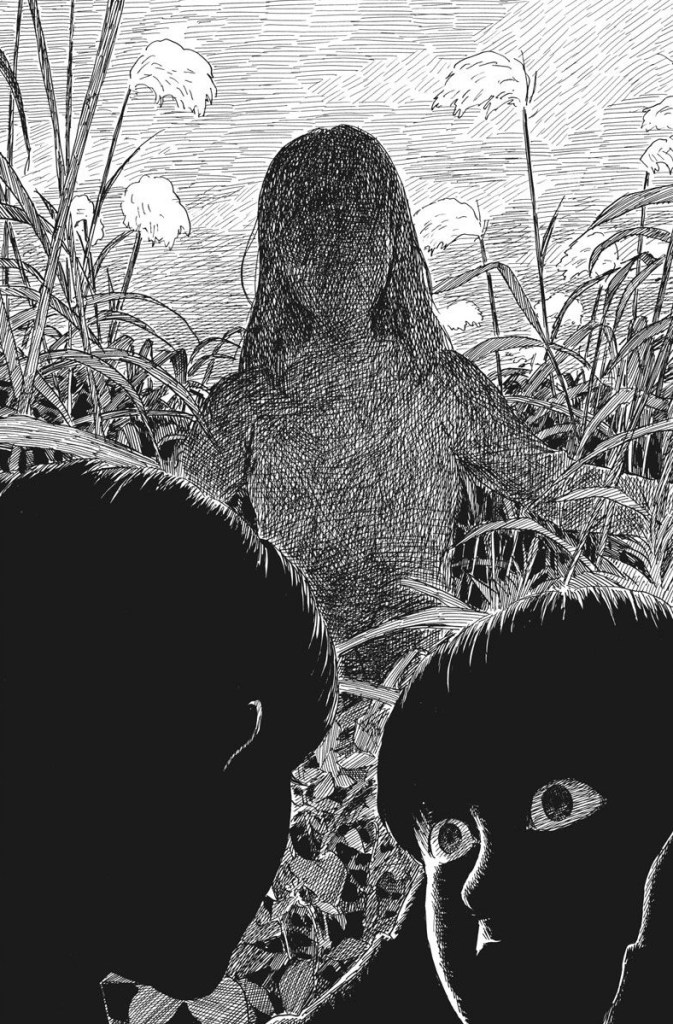
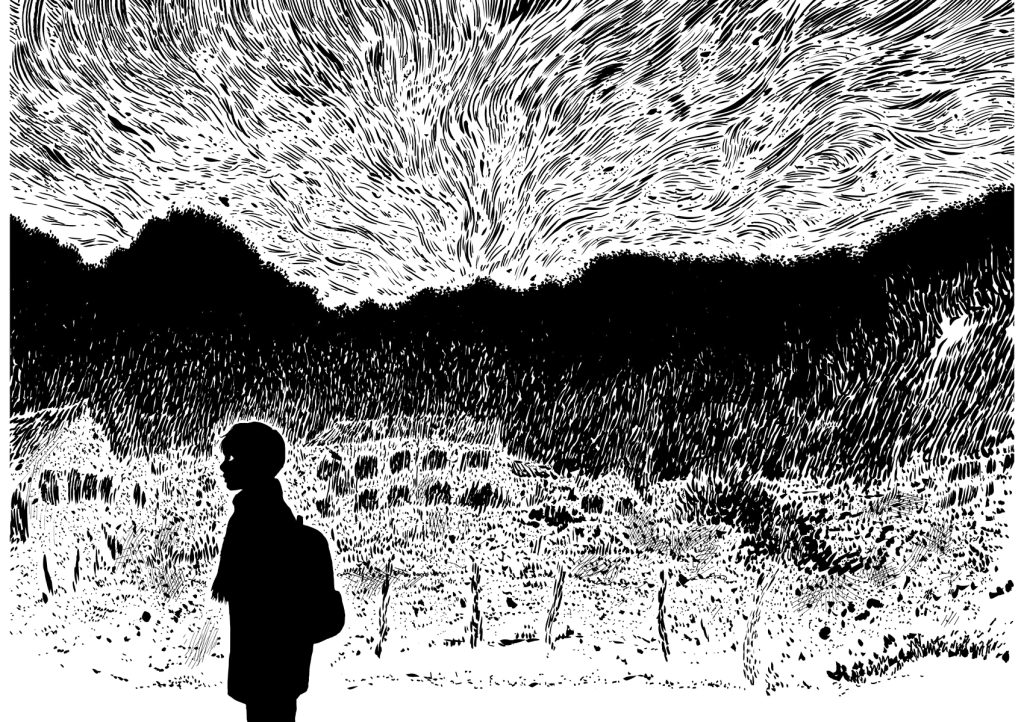
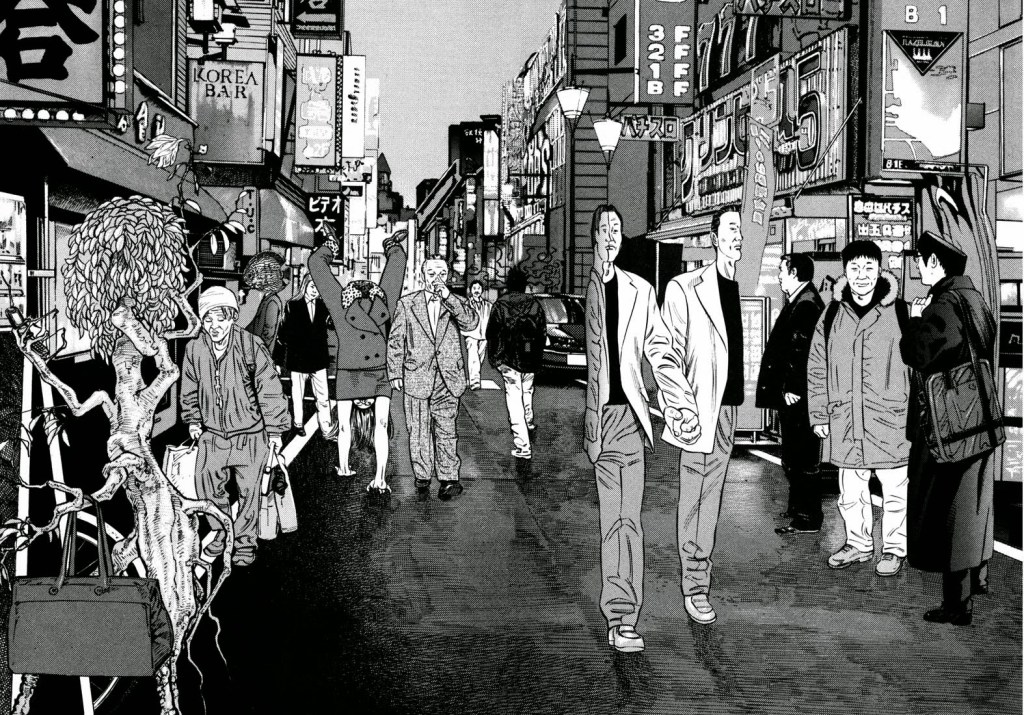
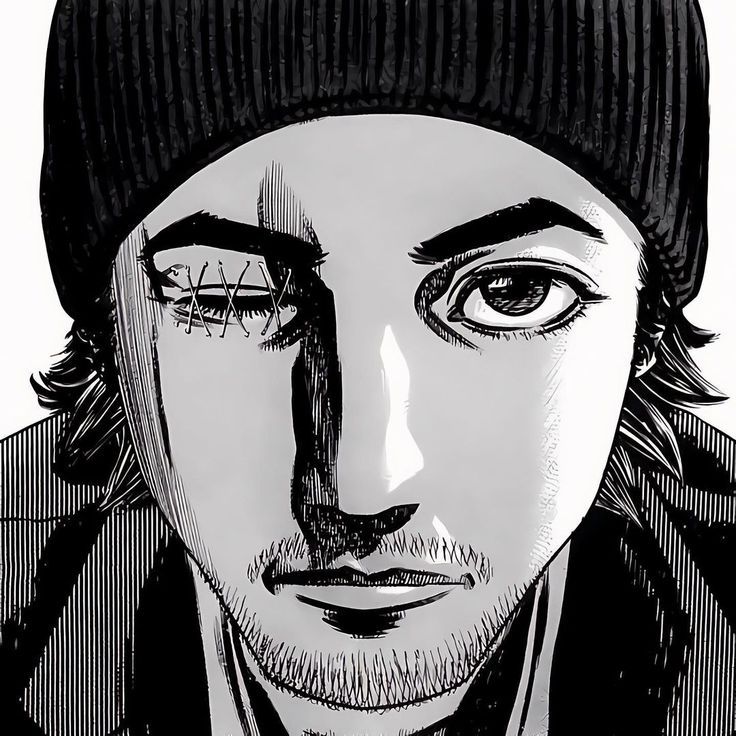
I’ve read through this series a third time since I reviewed it in this post. I’ve checked out most of Furuya’s stuff, such as Boku to Issho, Wanitokagegisu, Himizu, and Ciguatera, among which Ciguatera may be objectively his best, but Saltiness speaks to me to an extent that has made it my second favorite manga series after Asano’s Oyasumi Punpun.

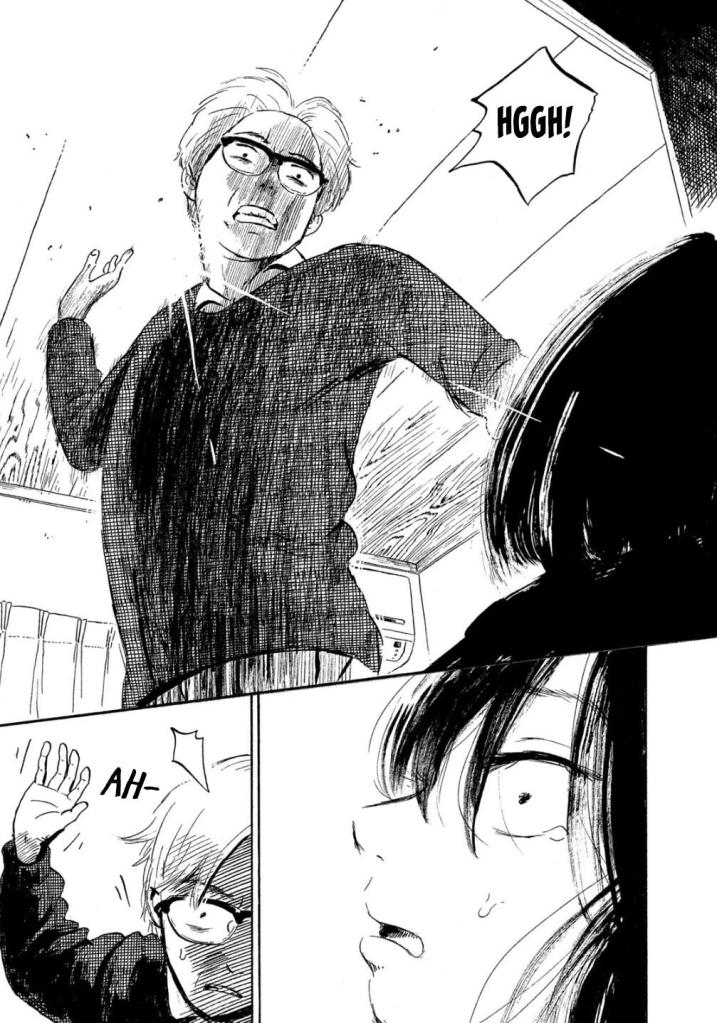
Saltiness is the story of, for me, a clearly autistic dude who lives in one of those isolated Japanese towns with his younger sister, who is a teacher. We don’t know it yet, but they went through hell growing up: their mother abandoned them, and our generally deranged protagonist had to steal and loot in order to provide for his helpless little sister. As a result, even about twenty years later, he’s terrified of anything bad happening to her, and her happiness is his one goal in life, to the extent that once she manages to set up her life in a way that doesn’t require him anymore, he plans to arrange an accident in the woods to die and let her continue without needing to worry about him.

When the story starts, our oblivious protagonist is busy training to remain stoic in the face of all the outrageous nonsense in the universe. He pictures bizarre phantoms in his imagination, that pester him with philosophical questions and test his mental fortitude.

One of those days, his grandfather, the relative that took them in years ago, makes the protagonist aware of something horrible: as long as his little sister has to worry about his autistic ass, she won’t get married, won’t have a family of her own, and will end up miserable. Our protagonist understands that if he’s to achieve his goal of making his sister happy, he should become a financially independent adult. Thus, even though he doesn’t even know the name of his town, he hitch-hikes to Tokyo in order to achieve this goal.

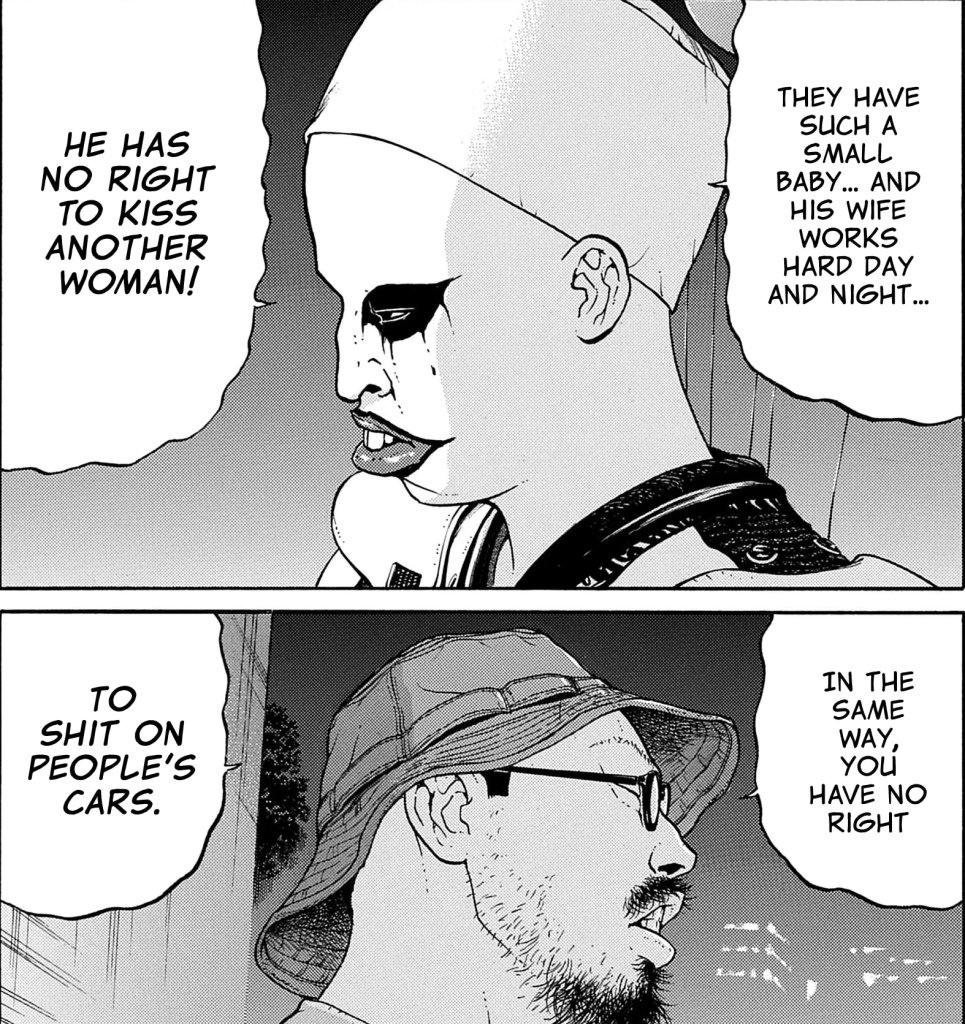
What follows is a deranged, outrageous tale filled with fascinating characters, most of whom exist in the fringes of society: a garrulous gambler with little self-control, a student who’s forced to steal panties to support his family back in the sticks, a senile old man that believes he alone knows the secret that will topple the US, a clown who punishes cheaters by shitting on their cars, a forty-year-old mentalist who lives with his mother and hasn’t talked to other humans since he was eighteen, an arrogant prick who will only speak nonsense to those he deems more intelligent than him, a successful but suicidal novelist on a spiral of declining mental health, etc.
Throughout this journey, the protagonist will shift his perspective on how to confront the mysterious monster called life, to figure out what, ultimately, constitutes happiness for him. I was very pleased with the ending.

Furuya’s works share the same elements: men on the fringes of society try to improve their lives despite having few resources, and facing somewhat episodic, at times horrifying stuff that they’ll nevertheless have to endure through. I’m talking about kidnappings, torture, and rape in the extremes, mingled with mundane stuff like trying to figure out if your family members will be out of the place when you bring your girlfriend over. Curiously, after some of the most outrageous, potentially life-derailing stuff, the characters involved keep going, having grown a little bit after the experience but otherwise unaffected.

All of his protagonists, if I remember correctly, deal with intrusive thoughts and bizarre daydreams. Along with the way his characters talk and his outside-the-box narrative choices, I’d say that Furuya’s brain must be quite similar to mine, which naturally ended up making him my favorite overall. I’m instinctively drawn towards writing similar stories.

I see myself rereading this series plenty of times throughout my life. I’m already rereading his Ciguatera, a fantastic work on its own right. It’s a shame that Minoru Furuya remains a stranger even for many seasoned manga readers.

Review: Jingo, by Terry Pratchett

Four stars.

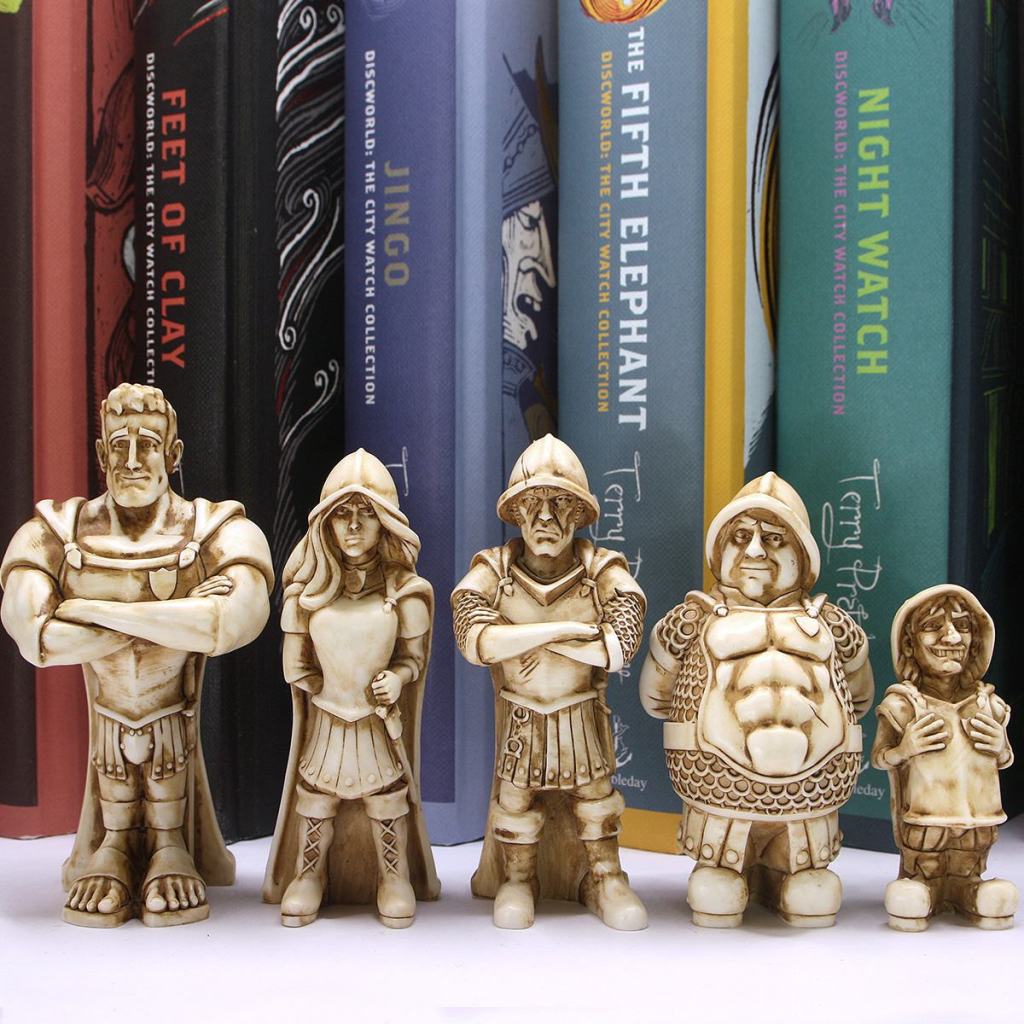
This is the fourth novel in the City Watch series of books, after Guards! Guards!, Men at Arms, and Feet of Clay. What started as a nearly extinct force of guards led by a drunkard, has become a well-recognized band that features members of most of the fantasy races present in the city of Ankh-Morpork, including dwarves, trolls, werewolves, zombies, golems, gargoyles, and overzealous proselytizers.

This time, an Atlantis-like island has surfaced between the city state of Ankh-Morpork and the neighboring country of Klatch, the fantasy equivalent of a Middle-Eastern muslim country. Both nations have claimed this ancient, somewhat Cthulhu-esque landscape for themselves, and if neither gives in, an armed conflict could break out.

A long time ago, Ankh-Morpork established itself as the dominating force in the area, mainly thanks to the efforts of a Caesar-like figure, but these days, the city’s power is mostly illusory, based around debt and selling weapons to every side of the nearby conflicts. When foreign embassadors from this pseudo-Middle-Eastern country visit the city, the Watch gets dragged into it to secure the peace. Unfortunately, someone is trying to whack the foreign prince in an echo of how JFK got killed, involving a conspiracy. Is that someone trying to force a war to break out, or are the Klatchians dragging their internal politics into the city? Tensions are flaring up: some Klatchians who have been living in the city for decades, some even born there, become targets, and if the Watch look like they’re trying to side with the Klatchians, they could be painted as traitors.

In the process of investigating who JFK-ed the foreign bigwig, one of our beloved watch-people gets kidnapped, so our heroes decide that a trip to desertic lands is in order, even if the odds aren’t in their favor.

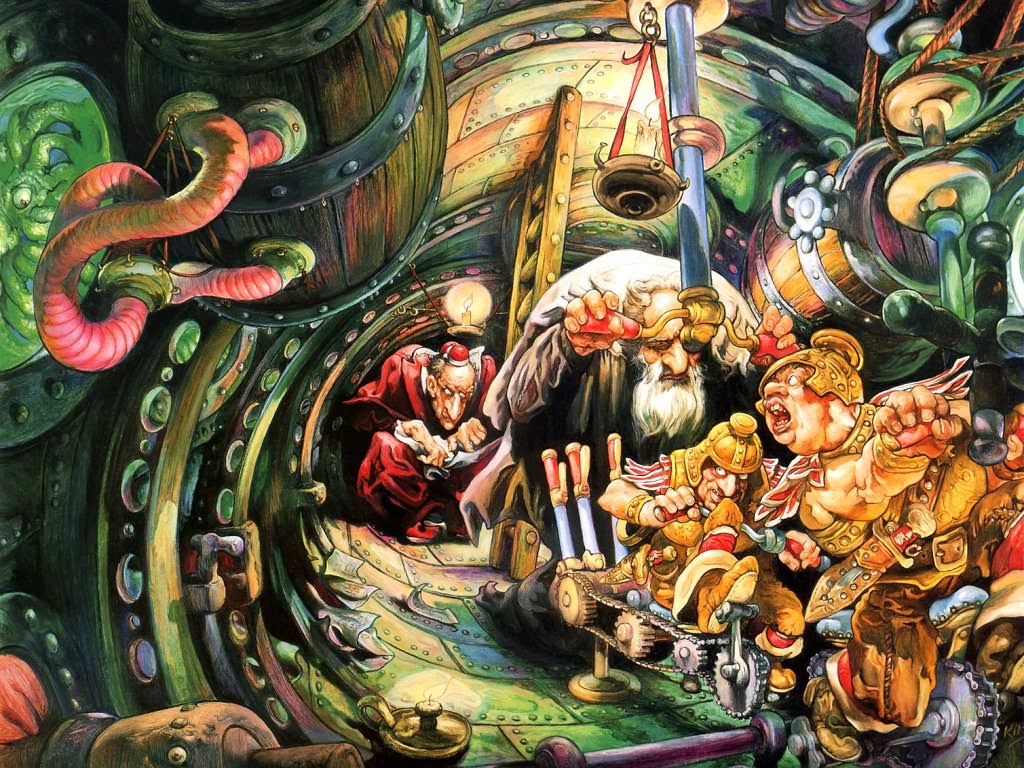
A peculiar tale in what has otherwise been a confined series, now heavily featuring a Leonardo da Vinci lookalike, a submarine, crossdressing, and some other unlikely stuff.

I liked seeing more of Lord Vetinari, perhaps the most cunning and capable ruler in any story I’ve read, and I enjoyed the interactions between characters that otherwise wouldn’t have engaged each other. There’s quite a bit of social commentary on empires that believe themselves high and mighty although they’ve long lost their might, on the position of women in repressive societies, on how humans gravitate towards picking sides and demonizing the opposition, etc. Pratchett also injects that self-defeating Western thing of depicting the westerner proxies as ignorant dullards and the exotic foreigners as sophisticated and clever despite their backward societies, which tasted stale for me.

It took me quite a while to get through this one, because I’ve been in the mood to either read manga or play video games in my spare time, but the fourth entry in this series may be the best overall, even though the Watch were, for the most part, dragged along for the ride.

Ongoing manga: Nora to Zassou, by Keigo Shinzo

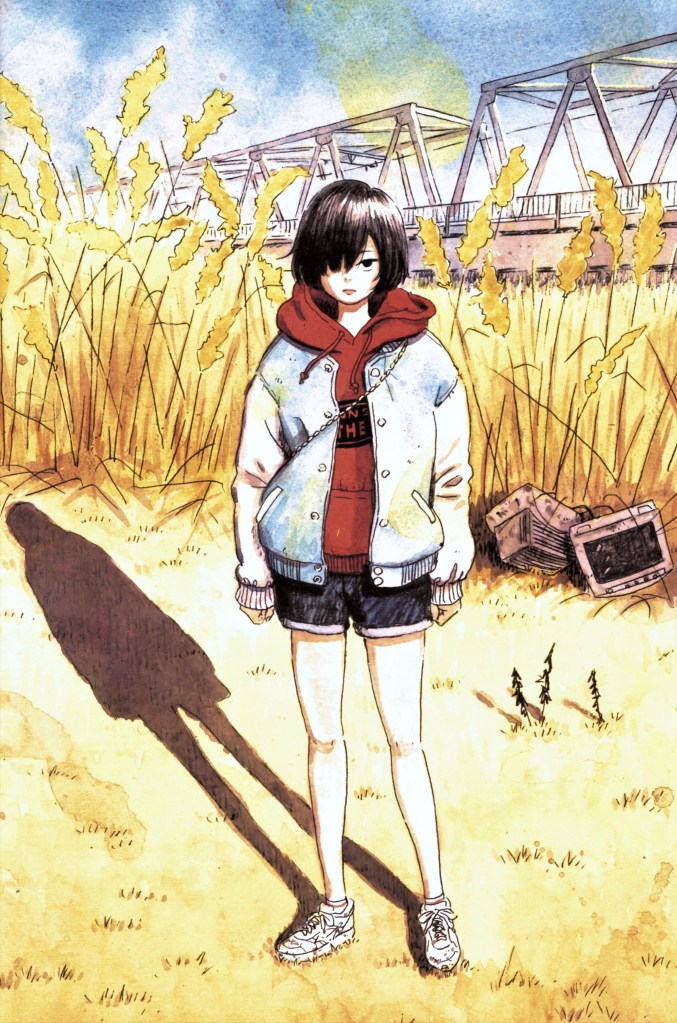
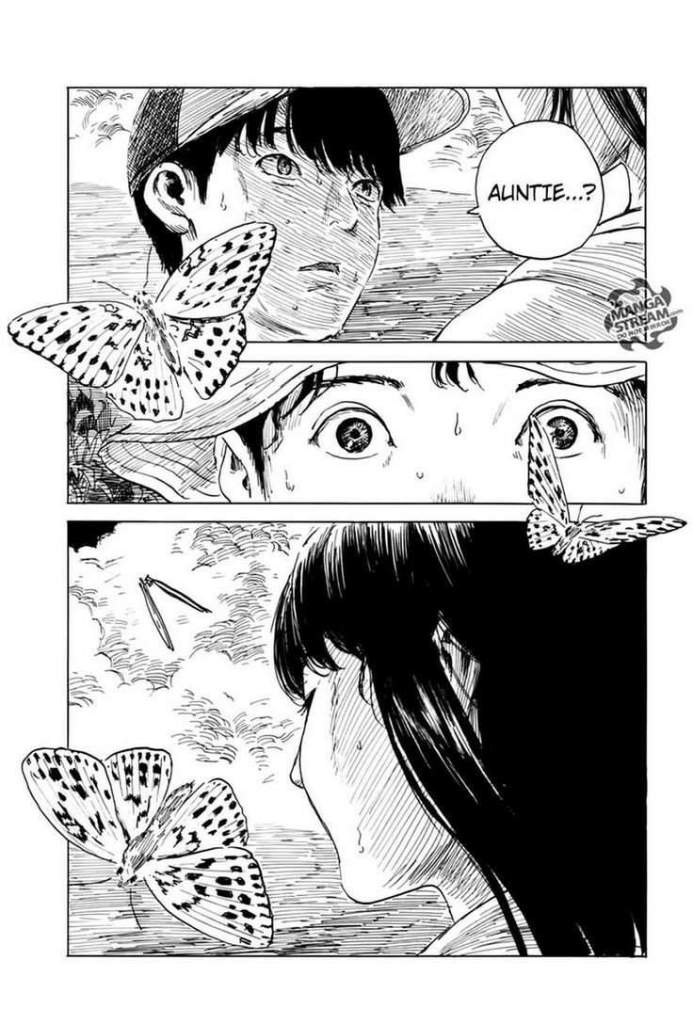
The title translates to something like Amidst the Weeds, or Lost in the Weeds. It’s been quite a while since I start an ongoing manga series and I feel compelled to write about it before it finishes. But this tale hits some of my personal spots well enough, particularly my savior complex, that I, engrossed, nearly missed my stop on the train.

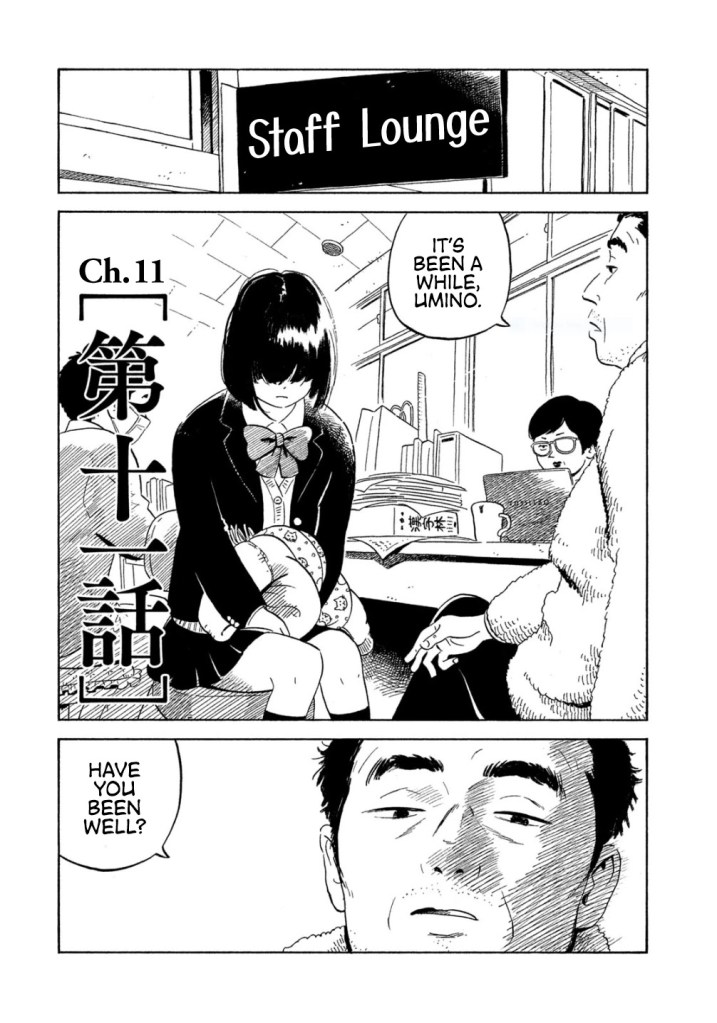
The story follows a police inspector who sets up sting operations on prostitution rings. He’s a reserved guy whose hair has already gone white at forty, and who seems to be going through the motions. During a sting operation, turns out that some of the prostitutes were underage. Even worse, one of them resembles the inspector’s only child, who drowned some years ago.

She’s a runaway. The police send her back to her mother, who proceeds to beat up her daughter as a greeting. In turn, she runs away again. When this girl isn’t overtly prostituting herself, she’s pseudo-prostituting herself by announcing on social media that she’s a poor underage runaway; lots of men offer her a spot on their beds out of the kindness of their hearts. By this point, this girl is seriously broken, having lost the ability to feel happiness, and harboring little else than resentment and hate towards humanity.

The inspector realizes that she has run away again, and fears that one of those men she gets involved with will turn out to be a serial killer who stuffs his victims in suitcases, but legally our male main character can’t do much, other than try to convince the girl’s abusive drunkard of a mother to report her as a missing person. Soon enough, our girl and the inspector realize that they have something in common: they both feed the same dirty stray cat who lives among weeds in the bank of the river. Therefore, this man may not be the kind to take advantage of her. At her lowest, he finds her, and offers her to live with him.

This is a tale about two broken people discovering what happiness may look like. Neither are perfect beyond their circumstances: we learn that the inspector was an overworked, neglectful father, and the girl can easily slide into bursts of rage that resemble those of her mother, causing undeserved pain to those around her, perhaps unconsciously to sabotage herself.

The rest of the story so far focuses on trying to return the girl to normalcy, for example going to class. However, most of the school knows that she used to prostitute herself, and some of the adults that stare at her may be wondering if they could get in the action.

The girl inherited from her mother, other than a simmering rage, the talent to preserve the beauty of the world in drawings. Through art, she’s getting a taste of what fulfillment feels like.

This series may not have reached its midpoint yet. In any case, I highly recommend it to fans of good manga in general, but in particular to those who loved Kei Sanbe’s Erased, and even Inio Asano’s Oyasumi Punpun (which remains my favorite manga series). I didn’t know the newish author, who is thirty-six years old, but I’m getting the feeling that I will read plenty of his in the future: he’s great at depicting nuanced emotions both in his script and drawings, and other than a few moments that were a bit on the nose, I wouldn’t change anything from this series.

Review: Feet of Clay, by Terry Pratchett

Words in the heart cannot be taken.

Three and a half stars.

This is the third novel in the City Watch series of books that good old (and dead) Terry wrote, after Guards! Guards! and Men at Arms. What started as a ramshackle watch has become a proper force that features members of most of the fantasy races that live in the city of Ankh-Morpork, in some cases due to the Patrician’s goal of representing all his constituents through affirmative action.

This time the story revolves around golems, anthropomorphic beings made of clay and animated thanks to the written notes someone put inside their heads. The fantasy version of robots. They are enslaved into performing most of the duties that the living creatures don’t want to risk their hides for, or bother with. Some of the most extreme cases involve leaving a golem in a pit to manufacture products twenty-four hours a day. Given this context, plenty of elements of the tale involve freedom: from social norms (a bearded female dwarf wants to look more feminine), from heritage (a character discovers that he belongs to the aristocracy even though he feels at home among the rabble), from their impulses (the resident werewolf), from religion, and such.

Once again, a shady group is trying to turn Ankh-Morpork into a monarchy. Three for three. Although some influential people in the city are aware that Captain Carrot, the six-something-feet-tall dwarf whom everybody loves, is the rightful king, he’s the earnest, just kind that would seriously upset the status quo in a city where thievery and murder are legal. Besides, his relationship with a werewolf could end up in seriously hairy heirs. So they figure that they could install some easily-manipulated dolt as king, which would allow the guilds to rule from the shadows. For that purpose they poison the Patrician, enough to incapacitate him but not kill him; all the guilds suspect that the city would be ungovernable if the cunning Patrician were to die.

In the middle of all this, two old men die: one the owner of a sort of bakery, and the other a priest. These two crimes are somehow tied to golems, who have started leaving their posts for supposed holy days. Meanwhile, a strange, dangerous golem roams the city.

Although one of these constructs became interesting by the end, I didn’t find them very compelling otherwise, which reduced my enjoyment of this story. However, Terry could have told pretty much any tale as long as it allowed me to spend some more time with the lovable cast of characters.

I suspect that Terry saw himself in the anti-authority Commander Vimes, whose ancestor famously killed the last king, and who at times struggles with the notion that plenty of his problems could be solved by shooting the people involved. My favorite character, however, is Angua, the local werewolf. She’s currently dating Captain Carrot somewhat against her will, because she can’t justify why she likes someone so straight-laced. Apart from the generally justified prejudices against werewolves, Angua fears that one day she’ll fail to control her urges and therefore rip the throat of someone she cares about, so she tries to keep people at arm’s length. She’s also planning to pack up and leave once again, because she doesn’t believe that she could ever belong among people. As I fear that one day I’ll turn my intrusive thoughts into reality, I identify quite a bit with her, and it doesn’t hurt that she reminds me of Annie Leonhart from Attack on Titan, one of my favorite characters from Japanese fiction.

Anyway, another entertaining novel in the City Watch series, just not as compelling as the previous two.

Review: Men at Arms, by Terry Pratchett

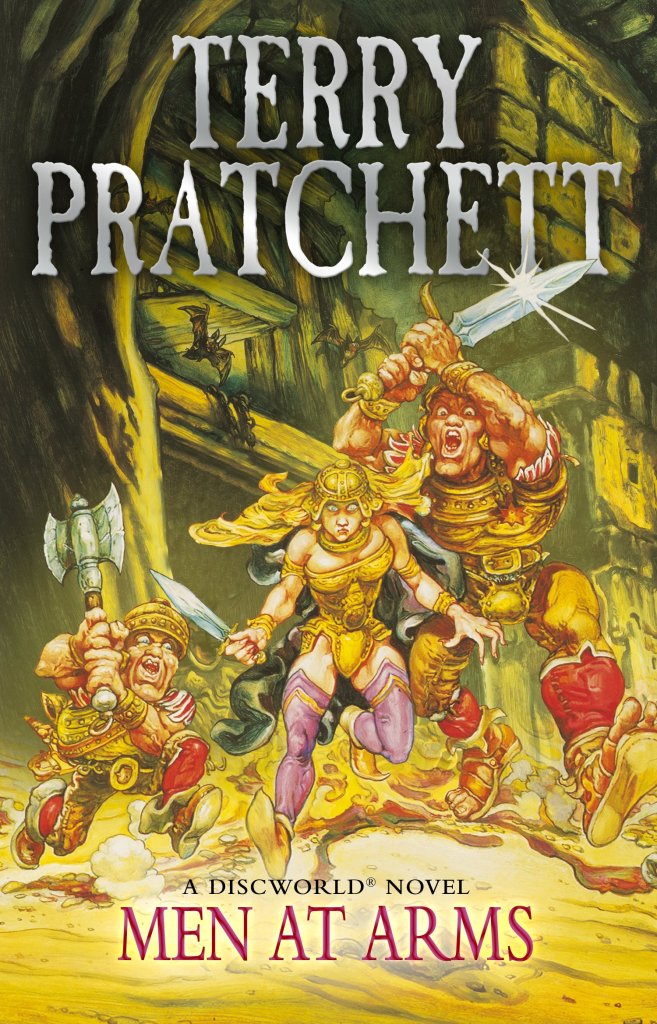
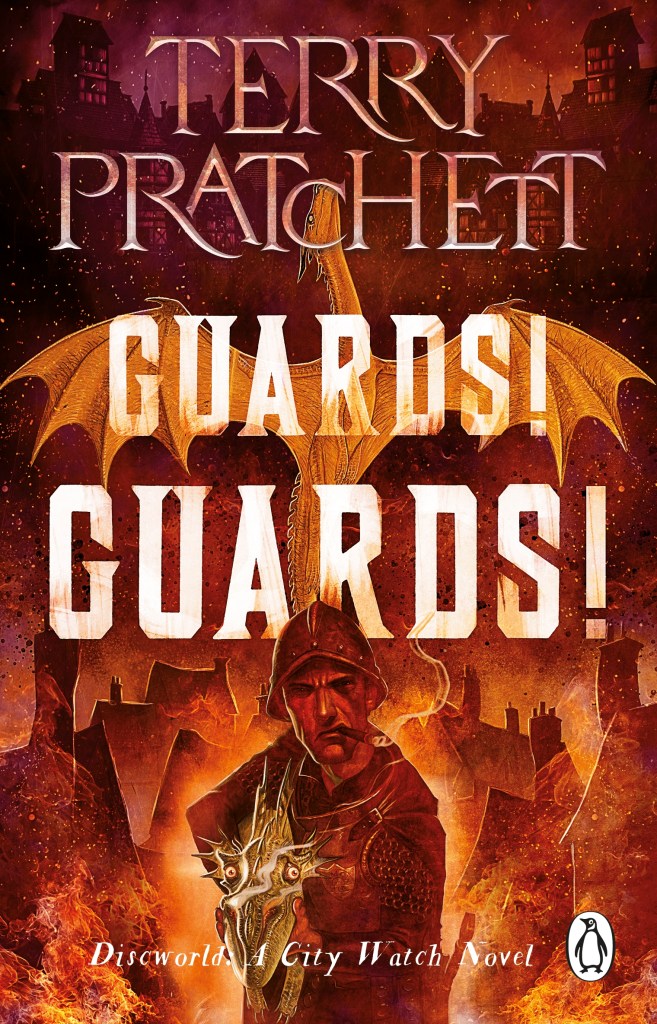
Four stars. This is the second book in Pratchett’s City Watch series of books. The first one was Guards! Guards! (link to my review).

Our team of underdogs barely escaped with their lives from the incident with an interdimensional dragon, but they received little reward from the Patrician of Ankh-Morpork (to be fair, they didn’t ask for much), and in addition he tasked them with modernizing the force by welcoming recruits with minority backgrounds, in this case different species: a dwarf, a troll, and a buxom blonde woman. The woman’s case is peculiar, because she has a secret of the hairy variety (I don’t know if that sounds better or worse than it actually is).

Once again, the plot revolves around someone trying to turn the city of Ankh-Morpork into a monarchy. The last king died a long time ago, but some overeager young noble has realized that our charismatic Carrot, the newest guard in the previous book, who was adopted by dwarves and raised as one even though he ended up taller than most humans, is the rightful king. Attempting to return the city to its supposed former glory, this noble intends to steal a unique weapon from the Assassins’ Guild and sow so much chaos that the citizens will be open to revolution. Unfortunately, the weapon in question is too hardcore for anyone to handle, as well as possibly sentient.

The aforementioned Carrot replaces Captain Vimes as the protagonist of this story. Vimes is leaving the force and getting married, to his dismay. The former second-in-command is happy to hand the force to the tall, hunky recruit that in different times would have led a kingdom. Regarding the minority recruits, we have Cuddy, a one-eyed dwarf who can effortlessly cleave a fly in half with his throwing axes; Detritus, a particularly stupid troll who knocks himself out whenever he salutes; and Angua, a woman who ended up as a guard because she hasn’t lasted long in every other job, who rents a room in a flophouse populated by the undead, and whose intimate relationships end as soon as they discover her secret. I appreciated Angua’s reserved, pragmatic nature, and some of the highlights of the story involved her private investigations, during which she’s followed by a mangy, sentient dog named Gaspode.

Corpses, inter-guild conflicts, ethnic clashes between dwarves and trolls, dog supremacists. A clever sequence involving the identity of a clown’s corpse, as the protagonists dealt with the members of his guild, reminded me of some advice I read on a book on writing: come up with a peculiar concept, then fill your story with plot points that could only happen given the peculiar concept. Pratchett’s Ankh-Morpork is a bizarre yet familiar place in which, for example, an orangutan librarian playing the organ at a wedding, even though half of the keys play animal noises, is a perfectly reasonable thing to happen.

I was going to rate this story a three and a half. The novel is less detailed and carefully written than Guards! Guards!, particularly in the beginning, where the prose came off as lazy. However, I was very fond of the little mystery involving the identity of the killer, I enjoyed hanging out with the guards, Angua looked quite attractive in my head even in her golden form, and some moments achieved poignancy, so I bumped up the rating half a star.

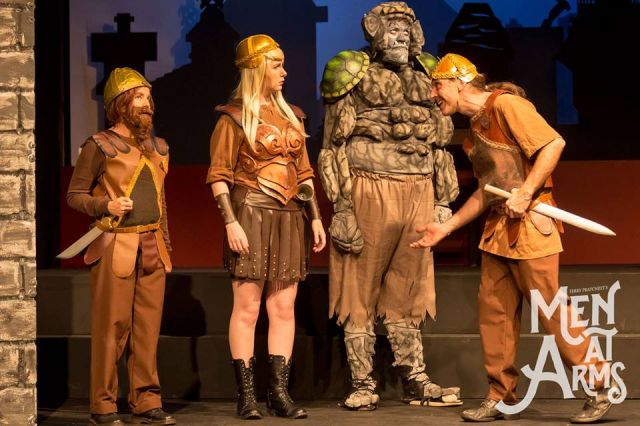
Apparently some theater group put together a play of this story. It looks quite fun. I have no clue how they would have pulled off the supernatural aspects, though.

I look forward to the next entry in the City Watch series, of which we will never again receive new installments, because its author got to meet a skeletal character who only speaks in capital letters.

Look, the first thing I remember in my life, right, the first thing, was being thrown into the river in a sack. With a brick. Me. I mean, I had wobbly legs and a humorously inside-out ear, I mean, I was fluffy. OK, right, so it was the Ankh. OK, so I could walk ashore. But that was the start, and it ain’t never got much better. I mean, I walked ashore inside the sack, dragging the brick. It took me three days to chew my way out. Go on. Threaten me.

Review: Guards! Guards!, by Terry Pratchett

Four stars.

This is the first book in the City Watch series set in Pratchett’s Discworld universe, a flat Earth carried on top of four elephants who are in turn carried on top of a Giant Star Turtle named Great A’Tuin.

We first meet our memorable protagonist, Sam Vimes, the captain of Ankh-Morpork’s city watch, as he stumbles drunk after he and his colleagues buried a fellow guard and friend. He ends up lying in a gutter, delirious. Our middle-aged man leads the watch in a city where theft and murder have been regulated; the leaders of the thieves’ and assassins’ guilds sit at the Council, and they are to remain unbothered as long as they don’t exceed their allowed amount of thefts and murders per month. The city watch remains as a remnant of the old days, to give the populace the impression that someone’s keeping the peace in a traditional way, but the very few guards that remain are powerless. When there’s some perp to apprehend, the watch are to run in pursuit but not fast enough, lest they end up having to go through the trouble of arresting anybody.

Trouble starts when some cultist breaks into the library at the Unseen University of Magic and steals a book on how to summon dragons, to the dismay of the librarian, who is, for reasons, an orangutan. This cultist has gathered a bunch of disgruntled citizens and wants to use them to steal magical artifacts, which will allow him to summon one of the dragons of old from their plane of existence. As chaos ensues, this group will introduce a supposed heir to the old kingdom of Ankh, a hero capable of defeating the dragon. Once the pantomime plays out and the current leader is deposed, a new king will rule the city of a hundred thousand souls (and about ten times that amount of bodies, as Pratchett put it). However, that king would be a figurehead; the cultist’s leader intends to rule from the shadows.

Meanwhile, the city watch encounters a disturbance of its own: some dwarf from another county has volunteered to join the watch, believing it to be a noble occupation. In reality, this dwarf is a six-foot-something human who was adopted by a dwarven colony and raised as such, until his size as well as his attempts to court an underage, sixty-year-old dwarven girl became too uncomfortable. This honorary dwarf is an earnest, literal-minded fellow who illuminates the miserable state of the current city watch. Apart from Vimes we have Sergeant Colon, a load of pink flesh stuffed into an armor (I picture him as a short, non-horrifying version of Judge Holden from McCarthy’s Blood Meridian), as well as Corporal Nobby, who’s the lowest common denominator of the grimy city he inhabits, a misshapen rat of a man who’s likely to spend his time on the clock looting some passed-out or dead citizen’s valuables.

This group of losers ends up tangled against their will in the cult’s plot; one of the times they summon the dragon, it incinerates a bunch of criminals who were stalking the drunken guardsmen, that had taken a wrong turn into the nastier area of the city. Vimes, who as the author put it was born two drinks short, naturally more sober than anybody else, refuses to allow anybody but himself to burn this hole of a city. In the process they’ll have to deal with the simian librarian, the local nobility, the calculating Patrician, and swamp dragons, apart from an otherworldly, apparently unstoppable dragon who isn’t too happy about having been dragged from its slumber and being controlled by a pitiful human.

What this review doesn’t capture is the author’s humor. As some reviewer put it, he was likely the funniest satirist of the 20th century. He wasn’t just funny, but hugely insightful. His need to create humor seemed to stem from his grim outlook on the world and humanity. Captain Vimes represents the faint drive to do the right thing against a world where evil is organized and has far better plans about how to keep everything running. Neil Gaiman, who dealt with Pratchett during a book or couple of books they wrote together, has mentioned plenty of times that Pratchett had a significant temper. I suppose he was constantly disappointed by a reality that couldn’t match the fantasies he easily pictured in his mind.

Apart from his humor, Pratchett was a master at coming up with unusual metaphors and analogies that somehow captured precisely what needed to be known about the subject, without having to go into particular details.

My only issues with this book, and with Pratchett’s writing in general, is that he uses an expository narrator (I despise exposition on principle), that I would have edited out some paragraphs here and there, and that for my taste he overuses some motifs, like the notion that if there’s a million-to-one chance to achieve something, it has to work, because the gods enjoy playing those kinds of games.

The Discworld books enrich each other; some characters, like the Patrician or the Librarian, not only appear but play major roles in distinct series, so at times you may get the feeling that you would have caught on to significant subtext if only you had read like four or five other books. However, the City Watch series is, as far as I remember, quite self-contained even though recurrent characters from the Discworld universe take part in it. This is also a terrible universe to follow chronologically; Pratchett was very young in all respects when he started writing (got his first story published at thirteen years old). A couple of book sellers pushed to me Pratchett’s The Colour of Magic, the first book chronologically, which, as far as I remember, was mostly an unsophisticated parody, and not representative of the many books to come.

Back when I was a miserable teen, Pratchett’s works were among the few comforts in my nightmarish existence, along with manga, video games, and masturbation. I doubt I caught at the time most of what was going on in the Discworld books; lots of moving parts. Years later, once I was forced to pretend I was an adult, mainly because my body grew old, I gave up on Pratchett’s works along with every other memory of those years, but giving up on the Discworld was a mistake.

I believe you find life such a problem because you think there are the good people and the bad people. You’re wrong, of course. There are, always and only, the bad people, but some of them are on opposite sides. A great rolling sea of evil. Shallower in some places, of course, but deeper, oh, so much deeper in others. But people like you put together little rafts of rules and vaguely good intentions and say, this is the opposite, this will triumph in the end.

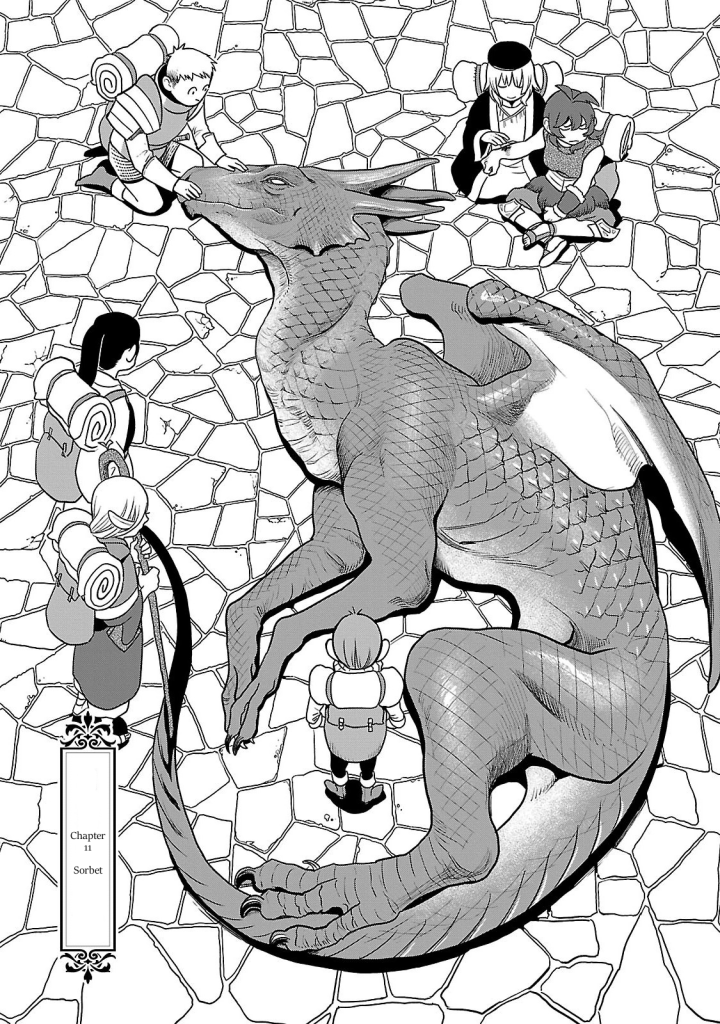
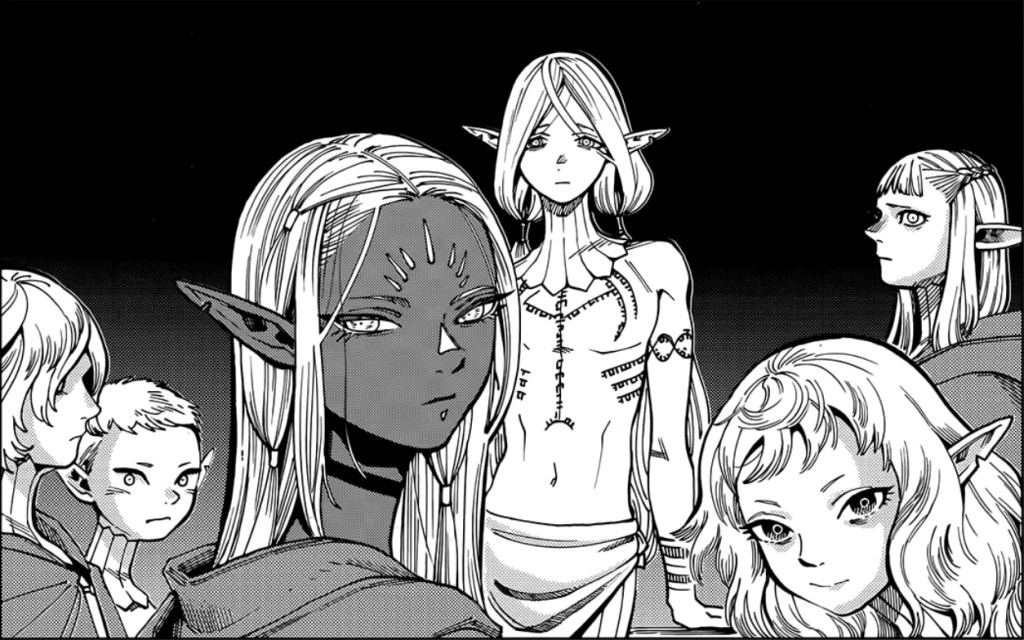
Review: Dungeon Meshi, by Ryōko Kui

Five stars. The title translates to “Delicious in Dungeon.”

Two long-running manga series that I had been following for a long time ended this month: the first one, Oshimi’s Chi no Wadachi, and the second one is Kui’s wonderful Dungeon Meshi. More often than not, when I finish a manga series and I’m starving for more of the peculiar joys that this format provides (far higher joys than what most of Western fiction produces these days), I check out lists of recommendations, plenty of which mentioned Dungeon Meshi. However, I always passed on it. You see, a fiction genre somewhat popular in Japan focuses on weird food-related tournaments that mostly seem like excuses to draw mouth-watering food, and print recipes. I never saw the appeal, and I wasn’t interested in a variation of that formula even with a fantasy dressing.

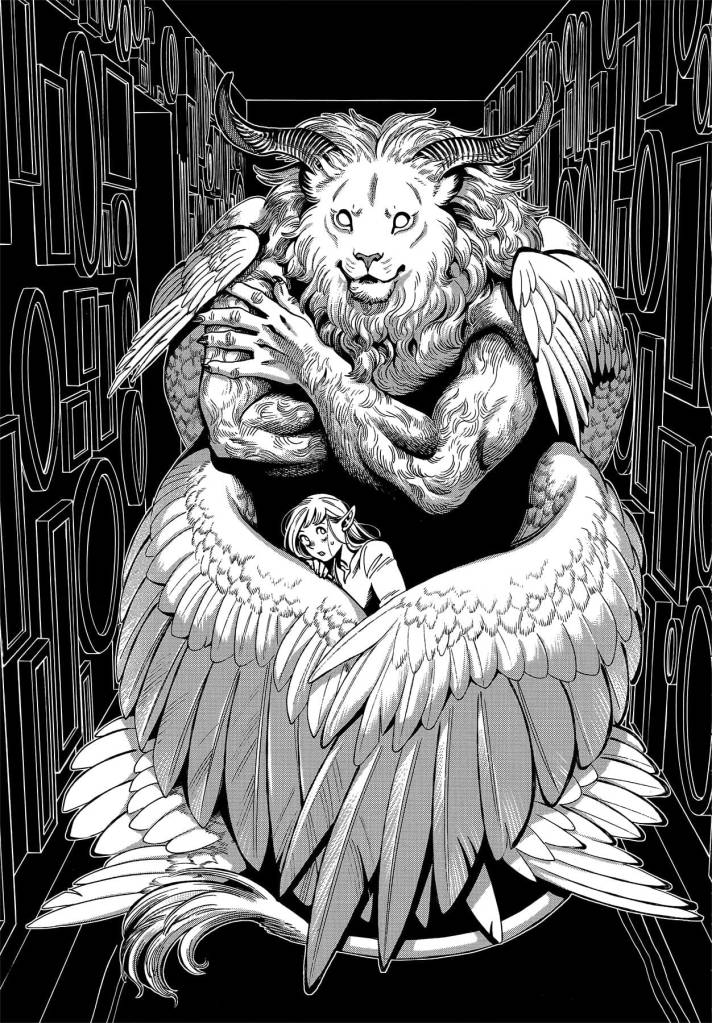
Big mistake. Dungeon Meshi is an exceptional story with fantastic characters, and the food-making part works as a straight-faced satire, because the vast majority of the recipes involve cooking D&D-like monsters into something resembling edible food. The whole deal about making elaborate food out of monsters could have been a gimmick, but the plot turns it into a necessary element to survive.

The tale introduces a group of adventures who don’t get along with each other very well. The leader, the fighter of the group, is an obsessive, socially oblivious maniac (could easily pass for autistic) who dreams of tasting every monster in the world, and who possibly also wants to become a monster. He’s accompanied by his sister, a laid-back, eccentric sorcerer. Apart from the siblings we have an uptight elven wizard, a pragmatic halfling rogue, and a barbarian dwarf merc.

Regarding the wizard of the group, named Marcille, I must say that I’m a big fan of that whole cute face, blonde hair, braids, and choker business. Love ya Marci.

The world of this story features dungeons as prominent landmarks. At some point in history, otherworldly creatures entered the main reality and settled in underground pockets. Their wild magic created such ecosystems, filled with strange creatures and ingredients, that farming and raiding those dungeons became the backbone of entire societies. Towns have grown around them, and the first levels of those dungeons are frequented by traders and adventurers. The careful lore involving the existence and development of dungeons, as well as the political issues they caused, is one of my favorite parts of the tale (which may not be saying much, as I love most of it).

Anyway, our main group delved into the dungeon for some important reason I forgot about, and in the process, the protagonist’s sister, that laid-back sorcerer, gets eaten by a goddamn dragon. Due to the abundance of strange magic, dungeons are the only places in the world where people don’t fully die (most of the time), and some adventurers have made their trade out of following some other group and then reviving them for a reward. More ruthless groups murder other groups, then revive them for a reward. In any case, our main characters, minus the sorcerer, leave the dungeon defeated.

The barbarian leaves the group for a better paying gig. The main dude, that fighter whose sister is being digested, broke and desperate, decides to delve again into the depths of the dungeon to save his sibling. The uptight wizard will accompany him, because she was friends with the sister, and the rogue decides to follow them as well (I don’t recall why, but likely the promise of profit). They’re broke and can’t afford provisions, so they must survive increasingly dangerous levels by foraging and hunting the local monstrous flora and fauna, which nobody does because it’s a disgusting, horrifying prospect.

I love the concept, but this story mainly triumphs in the execution, thanks to the devoted, meticulous work of the author, a bonafide craftswoman. Lesser stories would have the protagonists win by unleashing vague, convenient powers that would overcome the obstacles, but in this tale, the author puts us right then and there with her characters as they come up with clever ways to succeed. I recall now two instances in particular: they couldn’t pass through an area plagued with carnivorous, urticant vines, so they hunted some nasty frog-like creatures whose skins made them immune to the vines, and then they skinned and wore their hides as uniforms. Dealing with untouchable ghosts, they came up with the notion of making holy water sorbet and turning it into a bludgeoning weapon. The whole story is filled with shit like this; you don’t get many tales in which the protagonists truly earn what they get.

What set out to be a relatively simple tale of a group of people who don’t really get along but who end up liking each other more while trying to achieve something important, turns into a world-endangering quest in which the main characters are bound to save or ruin everything. As things got darker and darker, some of the stuff that happened, particularly the monster designs, reminded me of Berserk (which, for those who don’t know, was, for about three fifths of its run, as “peer into the abyss” as it gets).

The main group gains two new members along the way (a survivalist dwarf and a selfish cat-girl), but they also interact with other organized groups that mainly intend to hinder them. In a story with such a large cast, you could expect some significant development maybe out of the protagonist and someone else, but in this story, every main character gets a satisfying character arc, as well as some of the secondary ones. Even those who could be generally categorized as villains, and would be killed and forgotten in other stories, are treated with care and compassion by the author, who at least makes the readers understand why they’re right from their point of view in pursuing what they want.

After many wild moments and many trials and tribulations, some of which involved the main characters’ deepest pains, the story could have collapsed at the end, but it didn’t. As far as I’m concerned, the climax was brilliantly clever, and the remaining threads are tied up enough, leaving things open-ended in regards to how most of the secondary characters would progress from that point on.

I found the whole thing impeccable, a joy from start to finish. One of the best fantasy stories that I have ever experienced. If you enjoy such a setting at all, particularly if you are into D&D-like stuff, you owe it to yourself to give this a try.

The anime adaptation is in production, and will be released on Netflix. Here’s the latest trailer:

Review: Chi no Wadachi, by Shūzō Oshimi

The title translates to either “Blood on the Tracks” or “A Trail of Blood.” Despite the mystery or thriller-like title, this haunting story is about heredity, and how a fucked-up childhood could poison you for the rest of your life. I caught this series maybe three years ago, and read it up to the then latest chapter. This morning I have read the chapter that concluded the tale. I don’t know how to rate the whole.

I hate to review stories that I have read in a chapter-by-chapter release, because my impressions have been muddled and spread thin over time. I will make the effort, though, because I want to think about what this series left in me.

We follow a shy, withdrawn middle schooler who lives with his outwardly normal parents. His dangerously beautiful (and dangerous in general) mother overprotects him, particularly regarding the cousin that visits their home and pesters the protagonist. Although the mother doesn’t want the cousin around, it’s a family member of her husband, so she needs to keep the peace. Growing up, I used to suffer a similar cousin, someone who pushed his way into our home and demanded to be entertained, stealing my time and peace. I had no choice but to deal with the guy because my brother wanted to get along with him.

Anyway, during a mountain trip, the cousin leads our hapless protagonist to the edge of a cliff. His mother, fearing that this clown would end up causing her only son’s demise, finds them both in time to witness how the cousin trips and is about to fall. What follows is a spoiler for the inciting incident of this story, so read it at your peril. The mother hurries to save him, but in the last moment, she allows her intrusive thoughts to win, and pushes the cousin off the cliff.

The cousin survives with severe brain damage that prevents him from pointing an accusatory finger at his aunt, and the protagonist is gaslit into believing that maybe he just imagined the whole thing up, other than the fact that his cousin fell off. The protagonist’s mother unravels, not because she fears the consequences of her murder attempt, but because she may not be punished. She wants it all to break. It seems that she has been miserable forever; she had convinced herself that she ought to get married and a have a child, only to realize that she made a terrible mistake she can’t amend (other than divorcing and moving away, I guess, but she wouldn’t dare). On top of that, she’s the kind of crazy bound to drag everyone around her into ruin.

She despises her husband, whom she resents because he tied her to this miserable life, and instead she searches for intimacy in her son. She entangles him in a somewhat-chaste incestual relationship.

The kid is at times happy that this beautiful mother whose love he yearns for is treating him so warmly, but the rest of the time he feels smothered and creeped out, and wishes to escape. Most of the memorable moments of this tale involve a childhood love of the protagonist, a girl with a differently fucked-up home life, who could end up saving him from a mother that won’t allow any competitors.

As the story progressed, I wanted the protagonist to break free from his mother’s clutches and build a better life with this sweet girl who somewhat inexplicably wished to share her life with him. However, as I thought that the story was approaching its end, the author executed a turning point that sealed the fate of all the characters involved. I won’t go into details, because they would be massive spoilers, but the author forced an unlikely encounter and undid most of the protagonist’s character development. Shortly after, the story moves into a timeskip and makes you realize that the lack of mobile phones and the internet during the story up to that point wasn’t a stylistic choice.

The protagonist, now an adult in his mid-to-late thirties, deals with what remains, both physically and mentally, of his aging, miserable parents, partly hoping that before those two candles are spent, he’ll get enough of those relationships to either assuage his despair about how life treated him, or push him over the edge so he finally dares to kill himself. What I got out of that final block of the story is that some people end up so broken by nature and/or nurture that the most they can aspire for is a quiet place in which to be themselves. I had already realized that before I read this series, though.

(That reminds me of Nick Drake’s lovely song Place to Be, quite apropos:

When I was young, younger than before
I never saw the truth hanging from the door
And now I’m older, see it face to face
And now I’m older, gotta get up, clean the place

And I was green, greener than the hill
Where flowers grow and the sun shone still
Now I’m darker than the deepest sea
Just hand me down, give me a place to be
)

Oshimi has created some of the most psychologically twisted mangas I’ve ever read: The Flowers of Evil, Inside Mari, Happiness, as well as this story I’m reviewing. He has also pushed out a couple of duds like Drifting Net Café and Welcome Back, Alice, with which I likely shouldn’t have bothered. In Chi no Wadachi he went further by distorting the world according to the protagonist’s disturbed mental states; for example, when he ends up hollowed out and hopeless, we experience his world as sparse sketches. Plenty of compelling drawings.

Did Oshimi succeed in writing a satisfying ending to this troublesome tale? I’m not sure. The first half was far more compelling, and I would have been more comfortable with the remainder if he hadn’t undone his protagonist’s development to twist the plot into a turning point. Still, I’m not going to forget this story, nor the protagonist’s hauntingly nuts mother, any time soon.

Review: Pluto, by Naoki Urasawa

Three and a half stars.

The author of this series, Naoki Urasawa, created 20th Century Boys, one of the classics despite how convoluted it became by the end. In addition he also made Monster, for which he’s likely more acclaimed, but to be honest I have twice failed to get through the opening chapters of that series; along with its expository dialogue, Urasawa’s view of the world, as depicted through his narrative choices, irks me.

There’s a moment in 20th Century Boys in which a spunky teen girl stops a murderous gang war by scolding the participants. This happens in an otherwise very serious narrative. And the mindset behind such a narrative choice, which I could call a pollyanna perspective, pops up relatively often in his stories: people who hate others for reasonable motives suddenly flip and forgive the culprits to the extent of crying for them. Bad people tend to be forgiven even though they caused the deaths of numerous innocents. The good guys should also never kill anybody, because killing is bad, although keeping those people alive causes further deaths in the future.

His series Monster starts with what’s supposed to be a shocking moment of moral corruption or whatever: a Turkish immigrant laborer in Germany has his surgery delayed because the mayor comes in with an injury. The author treats this as an abhorrent development, particularly because the first guy was a stereotypically-depicted downtrodden person. In a heavy-handed manner, I was supposed to feel outrage at this injustice. Sorry, if I’m awaiting surgery for any of my many problems, and suddenly Elon Musk gets wheeled in first because he needs emergency surgery, I would understand even if I would curse at the heavens. Elon Musk’s decisions affect far more people than I do, and so would a mayor’s than a random laborer’s.

Anyway, this series I’m reviewing is a homage to one of the most memorable arcs (apparently) of Osamu Tezuka’s legendary Astro Boy, from back in the sixties. It has nothing to do with Pluto the planet; it refers instead to the Roman god of mortality. The story takes place in an optimistic future in which most societies have become super advanced and have created robot servants. Some of those robots, particularly the cutting-edge ones, could easily be confused for humans. Our protagonist, one of those advanced robots, works as an investigator for Europol. He faces a string of murders in which the victims are both humans and robots, and a robot may be responsible. Due to the laws of robotics, lifted straight from Isaac Asimov, that’s not supposed to happen.

What follows is a thriller that could have been far more compelling. Urasawa is a masterful plotter, but often as subtle as a jackhammer, and he abuses moments in which he’s about to reveal something important only to leave us in a cliffhanger. I don’t recall any other manga author that has been making thrillers with that sort of Western flavor, and I’m grateful, because to me it feels cheap.

The story is interesting, has good stakes and intriguing characters, but for me it fails mainly in the execution and the worldbuilding. Regarding the execution, apart from the points mentioned before, it goes for sentimentality that doesn’t hit the right notes as far as my black heart is concerned, and the worldbuilding in regards to how those robots are built and what they’re capable of doing sounds more like magic than technology. A couple of moments grasped at intriguing psychological insights regarding how both robots and humans are puppets; in the case of humans, because we’re manipulated and compelled to act based on emotions that are mostly out of our control. There were also interesting parallels with early 2000s history: alternate versions of the US and Iraq play a role in the narrative, and plenty of the characters were involved in an alternate version of the war between both nations, including the notion that this alternate Iraq may have developed weapons of mass destruction.

A high-quality anime adaptation is in the works, to be released on the Netflix platform. Here’s the trailer:

Review: Homunculus, by Hideo Yamamoto

We can speak therefore we lie, we have bodies therefore we hurt others, we have eyes therefore we can be seen by other people. It’s because we have forms that we can worry over a few millimeters-large pimple, get irritated over a few centimeters-large deviation in face or body, panic over the loss of a single front tooth… Eyes are drawn to other eyes a few millimeters too large, eyes peer away from noses a few millimeters too large, eyes are stolen by women a few centimeters thin, and a man a few centimeters too short can never find eyes to look upon him. Without forms, humans cannot suffer.

Let me get this out of the way: Homunculus is a masterpiece. I first read it a few years ago, but it lingered in my subconscious to the extent that I felt the need to reread the whole series, something I rarely do. It connects with my personal issues and artistic aspirations to such an extent that it’s likely my second favorite manga series, after Asano’s Oyasumi Punpun.

We meet the memorable protagonist of this story as he sleeps curled up like a baby in his car, which is parked between a high-rise building and a homeless camp. Truly, the protagonist is stuck in the middle: not anymore the person he grew up as, nor the fake persona he adopted to triumph in a world full of deceit. Unable to tell the truth even to himself, he lies compulsively to the homeless that tolerate him, mainly because he brings booze.

One day, shortly after he realizes that he’s too broke to afford gas, a weird guy, half-rockstar half-crossdresser, approaches his car and offers him a considerable amount of money. In exchange, the protagonist will test the benefits of trepanation, which, according to Wikipedia, is a surgical intervention in which a hole is drilled or scraped into the human skull. The shady guy claims that he wants to disprove the supposed sixth sense that the subjects of such an operation are said to develop.

The protagonist figures that he may as well get a hole drilled into his skull. A few days later, as long as he closes his right eye, he witnesses a different world.

About half of the Japanese population strut around like bizarre monsters. After a chilling encounter with a Yakuza boss who looks like a boy trapped inside a robot, the protagonist starts suspecting that he’s witnessing the incarnations of psychological distortions. The mad doctor slash rockstar intends to take advantage of our protagonist’s uncanny powers, first to help the psychiatric industry. Once he gets bored of that, he intends to exploit his test subject’s sixth sense to seduce an attractive high schooler who sells her panties, and who seems to be made of sand.

What follows is a disturbing ride in which our protagonist, as he progressively loses contact with reality, recalls little by little who he used to be, and who mattered from his former life, before he abandoned it to embrace the lies of external beauty and money to the extent that he became disconnected from his senses.

I don’t remember any other manga series that has impressed me this much with the extent of its creativity, particularly involving the shifting forms of the so-called homunculi that the protagonist faces. It even surpasses Asano’s Oyasumi Punpun in that regard. It’s also bold and fearless, hard to recommend except to other fucked-up individuals. You should probably steer away from this story if the sight of a guy slurping his own semen would horrify you.

The series isn’t perfect: one of the most memorable secondary characters, that occupies a whole chunk early on, disappears never to be seen again, and the discussions between our protagonist and the rockstar dude retread the same old grounds regarding whether the homunculi are hallucinations or represent real phenomena, long after the rockstar dude should have been convinced.

On a personal note, I was stunned with the parallels between this manga series and the novel I have been working on for the last two years. In both stories, their protagonist can see certain people as monsters whose forms are related to psychological distortions. In this story, the protagonist has forgotten his old face, mainly because it was hideous. In my story, the protagonist refuses to look at her face, because she considers it hideous (along with her entire self). Elements of body and gender dysmorphia are present in both stories; regarding my own novel, partly due to me having been born with, or developed early on, a pituitary tumor that screwed with my hormones, making me able to lactate. To whatever extent the hormonal imbalance fucked my brain up must be related to how comfortable I feel writing female characters, even though I don’t want to be a woman in real life (what a hideous sight that would be). Regarding the similarities between both stories, I can’t tell how much I borrowed from this one, because such things don’t happen consciously. I think it’s more likely that the author and I are similarly troubled.

Too bad that Yamamoto hasn’t created any other series that even comes close. The other one of his that most sites recommend, Ichi the Killer, is extremely amateurish in comparison. It’s hard to get ahold of his remaining works. Perhaps he poured himself into Homunculus to the extent that there wasn’t much else left to say, similar to what happened to Asano and his Oyasumi Punpun.

At some point of this story, the protagonist embraces the homunculi not as reality, not as hallucinations, but as the truth. Those bizarre forms can be felt, from an artist’s perspective, particularly a writer’s, as the equivalents of the little monsters that populate our stories, all incarnations of our own personal truths that are otherwise almost impossible to see.

Anyway, if you enjoy fucked-up, extremely original tales, do yourself a favor and read this series.