Review: Bugonia

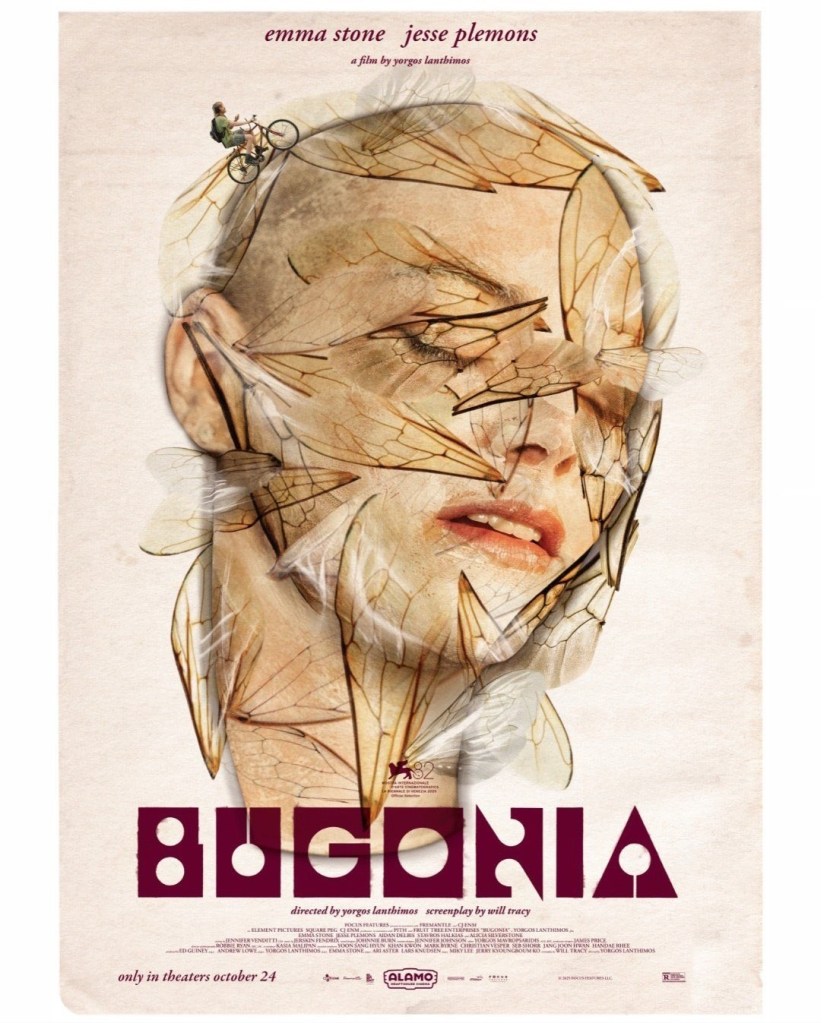
I wanted to say I was pleasantly surprised to see such an original movie coming out of Hollywood. But I’ve just found out it’s an adaptation of a South Korean movie. Leave it to the Asians to actually create daring fiction.

Anyway, this was good. A head-to-head between Jesse Plemons, whom I’ve liked in everything he’s done, and Emma Stone, whom I’m not particularly enthusiastic about but who’s good at her craft. Emma plays a high-ranking executive of a company involved in shady pharmaceutical stuff. Jesse Plemons plays a schizotypal, traumatized dude out in the sticks whose mother was injured somehow by said pharmaceutical company. But Jesse’s character has figured out that behind that mundane, vague corporate malfeasance is actually an alien plot to enslave mankind. Along with Jesse’s retarded cousin, they decide to kidnap Emma Stone’s character so she’ll transport them to the mothership and allow Jesse to negotiate for the sovereignty of Earth.

That’s as much as you need to know. In fact, that’s likely more than you needed to know to get into this movie. If you’re into weird stuff, watch it. It’s not the usual Hollywood garbage.

The peculiar script is a highlight. It allows compelling negotiations between Jesse’s delusional character and Emma’s, a cunning executive who finds herself under someone else’s control. Jesse’s and Emma’s acting are fantastic. Unfortunately, the third main character is Jesse’s retarded cousin, who seems out of place in every scene against these two powerhouses. I understand why the plot needed him (otherwise Jesse would have been sounding off necessary plot elements against the walls), but I think the movie would have been tighter without that character in it.

I recommend this movie. So much shit out there, you have to point out the ones that do something.

Review: The Town

Recently I became interested in the movie that Ben Affleck and Matt Damon made together and was releasing on Netflix. The Rip. It seemed like it could be entertaining. Then I watched like thirty minutes of it and realized that it was another one of those movies, like virtually all I’ve attempted to watch in the last ten years or so, that seem to be written by people incapable of producing a good script. Cringe dialogue, the subtlety of a hammer. In online mentions of this movie, people had compared it to a similar one (if only because heists and Ben Affleck were involved): The Town. Released in 2010, but somehow already looking ancient.

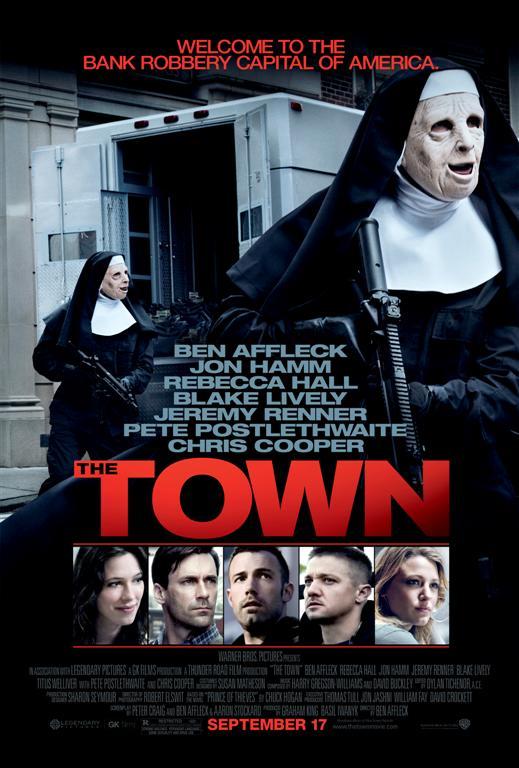
Well, The Town was fantastic. I checked it out at midnight and ended up staying up until about three in the morning. Extremely well-written script with not only unique, compelling dialogue, but also great set pieces, mirroring, and callbacks. Like a perfectly-built machine. Affleck does well, although I’ve never been much of a fan of his acting. Jeremy Renner, though, is amazing as this loose cannon who did nine years in prison and who’d rather die “holding court on the street,” as he put it, than return to jail. I never cared much for Renner’s acting, but it feels like other movies he was in, those I’ve seen at least, simply didn’t give him the chance.

As the romantic interest we have Rebecca Hall in her twenties. Gorgeous woman, always a pleasure to have her on-screen, and from the moment she first appears, you understand why a couple of the men involved would risk getting in trouble for her. We also have Jon Hamm from that old Mad Men show (which I never watched, but it was all over the place back in the day) doing very well as an FBI dude, and Blake Lively acting as a strung-out town bicycle. She honestly did great.

The movie gives a great sense of being stuck in a small town (although, as far as I could tell, it’s just part of Boston) with nowhere to go, burdened with the weight of generations, doomed to nothingness unless you dare to stick your head out in a way that could make others cut it off.

It’s very rare for me these days to watch a Hollywood movie and think, “Wow, that was great.” So I recommend this one.

Review: The Vast of Night

I rarely watch movies (nor read novels for that matter), because damn near everything released after 2006 or so is an excuse to make a political vehicle. I asked ChatGPT what could interest me as someone whose favorite movies (off the top of my head) are Fight Club, Jurassic Park, The Matrix, Back to the Future, and probably a couple others that I can’t remember now. It recommended some movies that I had never even heard about, although that’s not particularly surprising given that I haven’t been following movies in a good while.

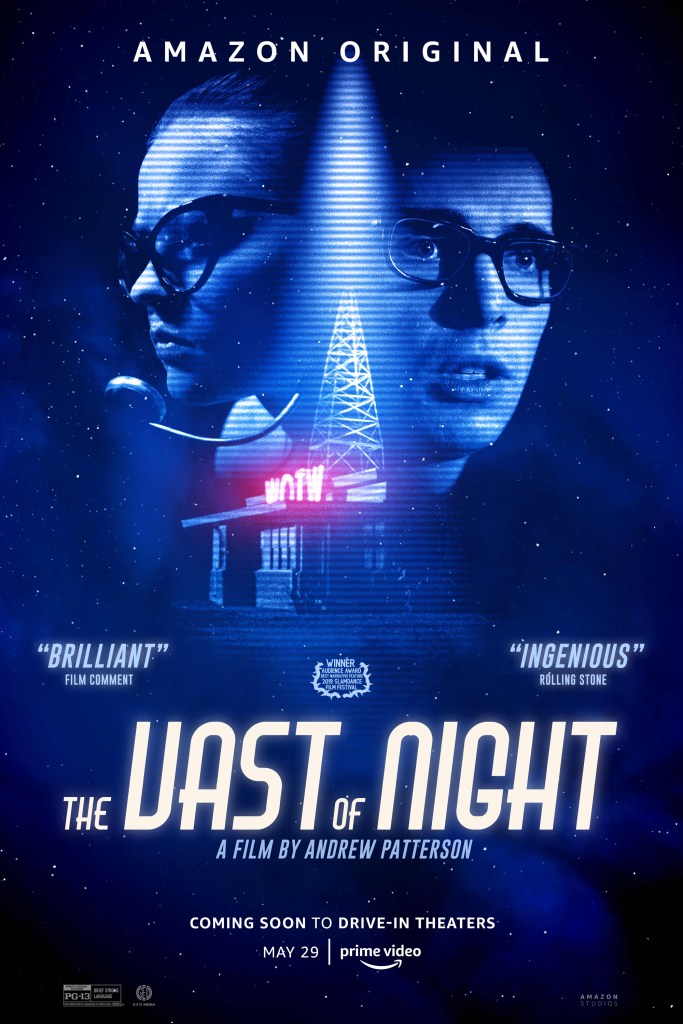
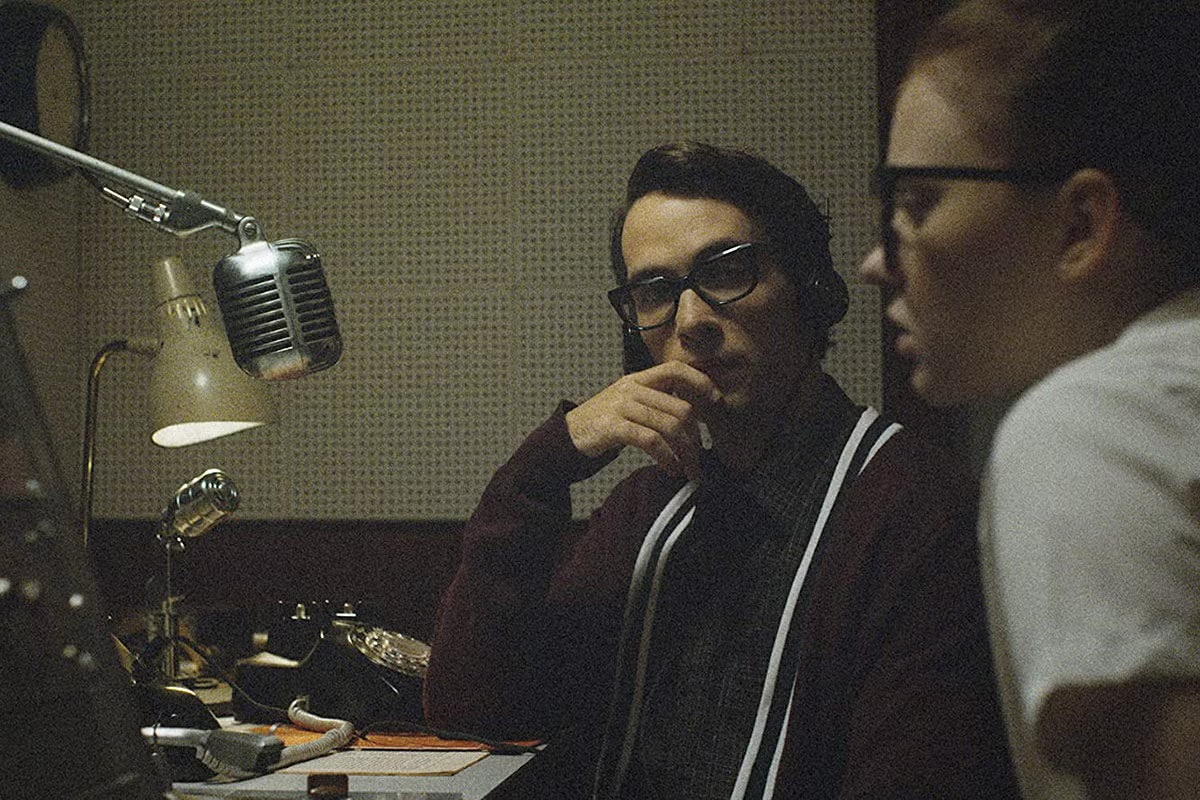
So, it recommended The Vast of Night, a small sci-fi movie from 2019 or so that pays homage to Twilight-Zone-like stuff from back in the day. It takes place in a single night, following mainly the radio host of a tiny local station at a nowhere town, along with a switchboard operator. Both are young, both want to leave for better pastures.

That night, as most of the town is busy at a basketball game, some of the locals mention seeing lights in the sky. The switchboard operator receives eerie sounds that had never come through her switchboard, and she enlists the help of the radio operator to see if anyone can figure out what that’s all about.

I won’t reveal anything more about the plot. The whole movie takes place in a single night and a relatively short span of time. It’s on the artistic side, with fancy dialogue and ambitious shots. Some very interesting single takes. I thought it nails the feeling, that some of us remember, pre-internet of clutching onto vague rumors and radio testimonies that offer glimpses into a larger reality. I enjoyed the movie quite a bit. I also found the switchboard operator very cute, which is a plus.

It’s no masterpiece. The dialogue-heavy introduction goes on for way too long; it does a great job of establishing the cleverness and competence of the young radio guy, as well as his friendship with the switchboard operator, but it could have been significantly shortened. Once the switchboard operator receives the strange sound through the board, the movie doesn’t stop. I would have liked to say that it’s free of politics, but they had to sneak a “whites don’t care about blacks and indians” in there. Can’t escape that shit.

Anyway, if you enjoy peculiar movies that aren’t the usual garbage, you could do much worse.

Review: Dispatch

Back in late 2000s and early 2010s, we had this thing we affectionately called Telltale-style games: heavily narrative-driven games that relied on letting the player make more or less compelling decisions that would affect the narrative. They didn’t have the complexity of early adventure games, but they couldn’t be called simple visual novels either. They were tremendously successful, until corporate greed swallowed them, spread them thin, and eventually dissolved them into nothing. The company shut down.

A new studio made of former Telltale devs decided to try their hand a new Telltale-style game that removed the dragging parts of former Telltale games (mainly walking around and interacting with objects) to focus on a good story, a stellar presentation, and compelling minigames. Their first product was the game Dispatch, released about a month ago in an episodic format (two episodes a week, but all of them are out already). The game has become a runaway success.

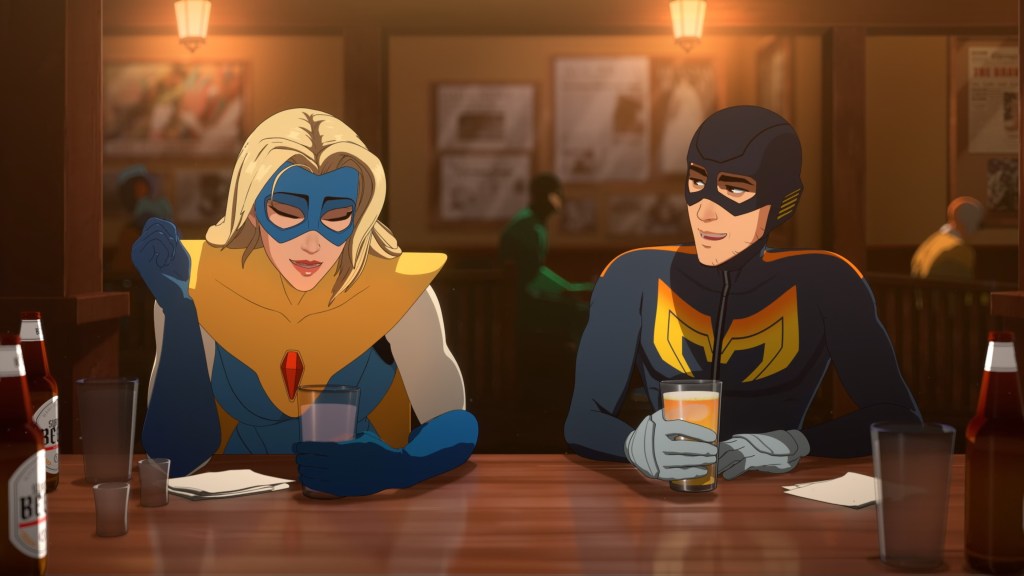
The story focuses on Robert Robertson, a powerless Iron Man in a society where many, many people have superpowers. He carries the family legacy of battling villains with a mecha. As an adult, he pursued the supervillain who murdered Robert’s father, and who now led one of the most dangerous criminal groups. However, during an assault on the villain’s base, Robert’s mecha gets destroyed, which puts him out of a job.

However, he’s approached by one of the most notorious superheroes, a gorgeous, strong woman who goes by the name Blonde Blazer. She offers him a job at the company she works for, SDN (Superhero Dispatch Network). Their engineers will work on repairing Robert’s mecha, while he offers his expertise on fighting crime as the one in charge of dispatching other heroes to the appropriate calls.

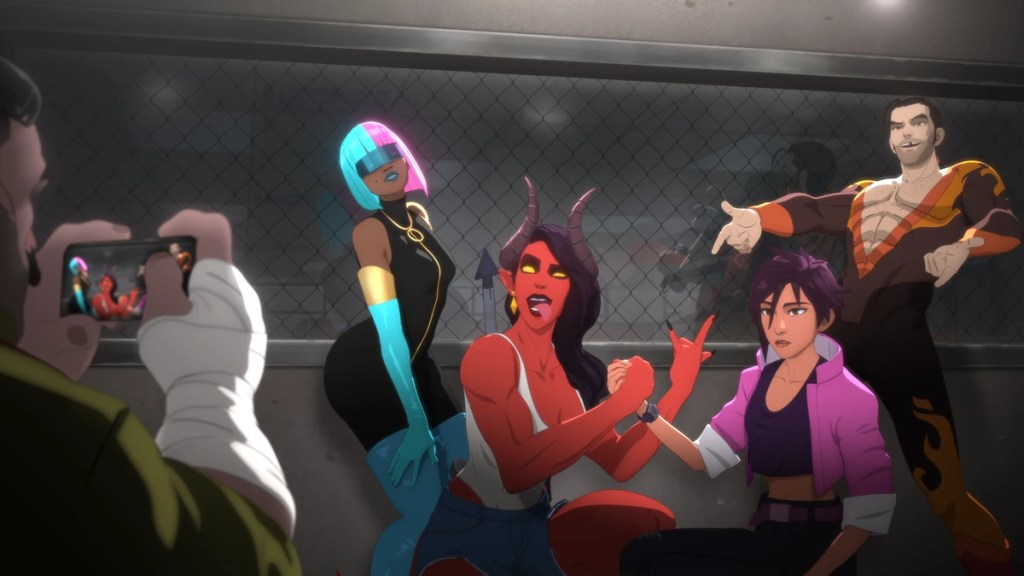
Robert finds out that the team of heroes he’s supposed to handle are a bunch of villains who either have approached the company to reform themselves, or were sent by the criminal system for rehabilitation. They’re a diverse bunch of rowdy, at times nasty superpowered people who aren’t all too keen on having a non-superpowered nobody in charge of them. The narrative explores how the team grows to work together better.

The execution of this story could have gone wrong in so many ways: wrong aesthetic, time-wasting, atrocious writing, and above all, marxist infiltration; like most entertainment products released on the West these days, the whole thing could have been a vehicle for rotten politics. But to my surprise, that’s not the case here. A male protagonist, white male no less, who is an intelligent, hard-working, self-respecting role model? Attractive characters, fit as they would be in their circumstances? A woman in charge (Blonde Blazer) who is nice, understanding, competent, caring, and good? Villains with believable redemption arcs? Romance routes that flow naturally? Where the hell did this game come from in 2025?

Entertainment consumers have been deliberately deprived of all of this by ideologues who despise everything beautiful and good, who, as Tolkien put it, “cannot create anything new, they can only corrupt and ruin what good forces have invented or made.” Franchise after franchise taken over by marxists who dismantle it, shit on the remains, and then insult you if you don’t like it. Dispatch is none of it. For that reason alone, I recommend the hell out of it. I’m sure that given its sudden popularity, the forces-that-be will infiltrate it and ruin it in its second season as they do with everything else, but the first season is already done.

It’s not perfect, of course. Its pros: an astonishing visual style that makes it look like a high-quality comic book in movement. No idea how they pulled it off. Clever writing. Endearing characters. Interesting set pieces. The voice acting is extraordinary, led by Aaron Paul of Breaking Bad fame. He deserves an award for his acting as Robert Robertson. It’s a good story told well, and you’re in the middle of it making important decisions (and also plenty of flavorful ones).

The cons: some whedonesque dialogue that didn’t land for me. Too much cursing even for my tastes, to the extent that often feels edgy for edge’s sake. Some narrative decisions taken during the third act, particularly regarding the fate of one of the main characters, didn’t sit well for me, as it deflated the pathos of the whole thing. But despite the pros, this was a ride well worth the price.

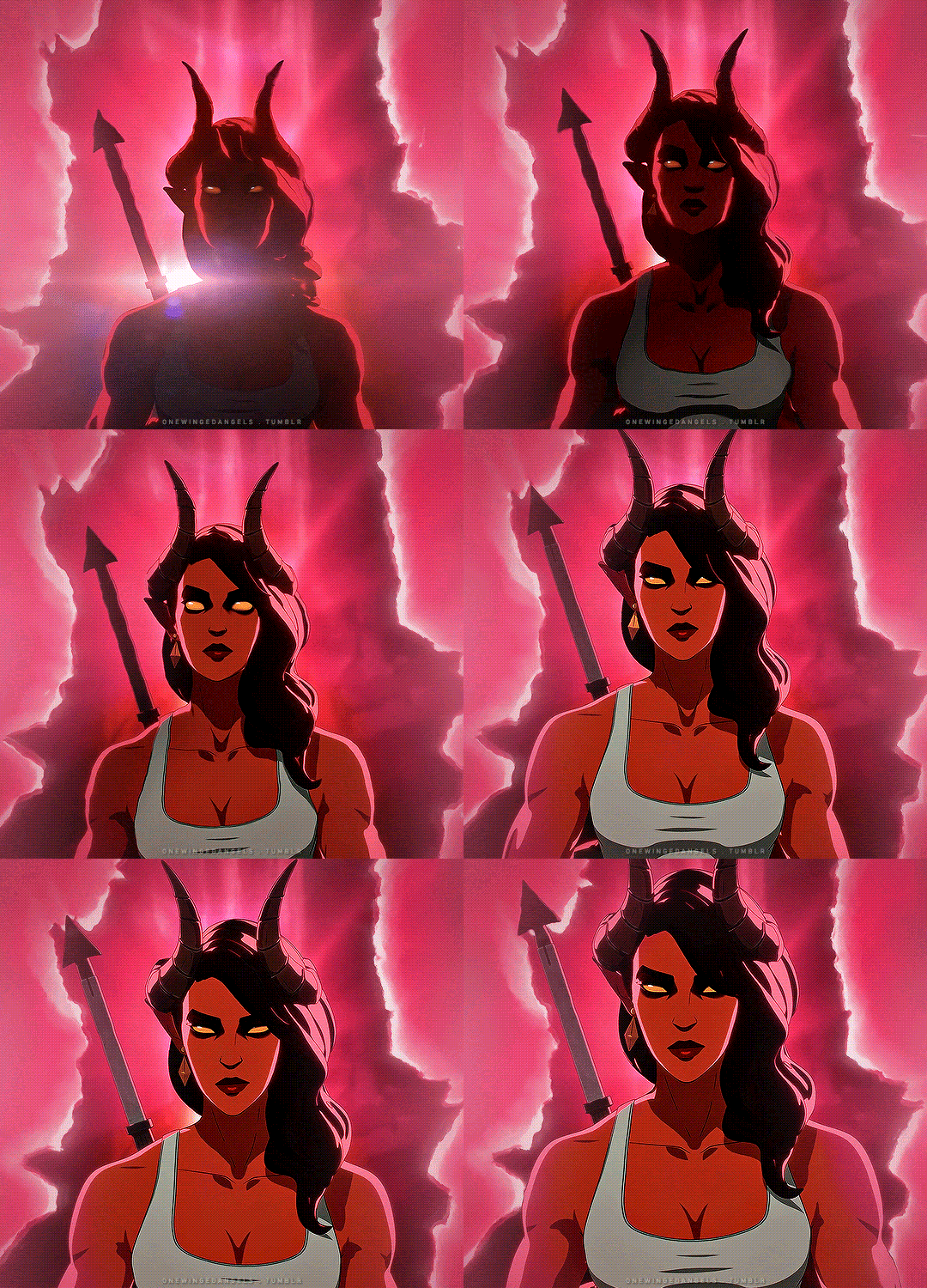
Oh, I forgot: they should have let us romance the demon mommy. My goodness.

Check out this nice music video some fan created about Dispatch, using one of the songs of its soundtrack.

Review: Chainsaw Man – The Movie: Reze Arc

A world where every concept is incarnated in a demon, whose power depends on how feared is the concept. The Cucumber Demon. The Blood Demon. The Typhoon Demon. The Future Demon. The Darkness Demon. The Angel Demon. The Death Demon. These fiends fight among themselves to either reign in hell or escape to Earth through possessing hapless people, usually the recently deceased. Demons hold grudges against each other and against humans in general. Humanity exists in a state of constant peril, with societies having to organize militias dedicated to the ever-present threat of a demon showing up somewhere or possessing a loved one. Some of the humans make deals with captured or semi-friendly demons, to gain some of their powers for good or ill. The cold war persists, but with the focus on achieving control of the most dangerous demons.

A winning concept, I’d say. The premise follows an orphaned teenager named Denji. He never went to school, lived with his gambler father, was manipulated by the local Yakuza into doing their dirty work for them, and finally was abandoned to die. However, a demon recently escaped from hell took pity on Denji; this fiend was the Chainsaw Demon, who had possessed a dog (I think that’s how the story goes; I have a hard time imagining Chainsaw escaping hell as a dog).

Denji had been torn into pieces, his body parts thrown into a dumpster, only for the Chainsaw Demon to give himself away as Denji’s heart, which made the teenager a human with feet in both worlds (this is extremely common in Japanese stories).

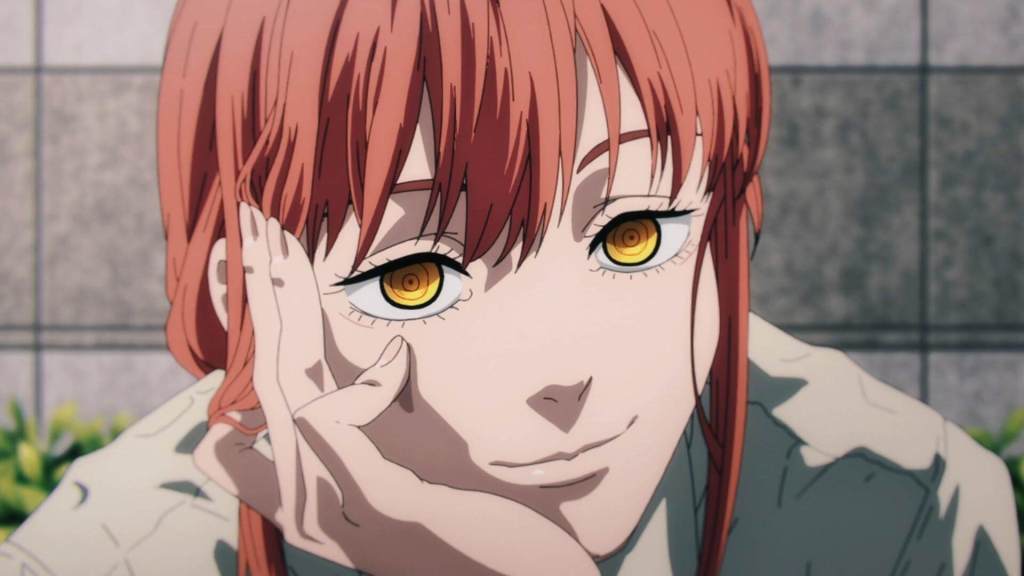
Then, the teenager gets conscripted into some special forces by a shady young woman with light-red hair.

The least I say about this person, the better.

Anyway, Denji isn’t your average protagonist. He’s half-wild, emotionally stunted, doesn’t care about the world, barely knows how to deal with people, can’t realize when he’s being manipulated (which happens constantly), and he’s solely motivated by hedonism, usually in the form of food or a cute face (or a nice pair of tits, or a nice ass), for which he’ll kill and/or die over and over again if necessary.

I quite like Denji. It has become a meme on the internet to say about Ryan Gosling’s characters that “He’s literally me.” I feel similarly about Chainsaw Man‘s protagonist.

In any case, the anime adaptation of part of the manga was a runaway success, even capturing the attention of some people that usually wouldn’t be into this stuff. But the anime series ended right at the moment when one of the most popular arcs would begin. This one involves a peculiar girl named Reze.

I’ve finished watching the movie about an hour ago. Oh, what joy. Plenty of the artistry on display was mesmerizing, some of the best animation I’ve seen in my life. The cinematography, the subtle character moments, the amazing fight scenes, the way the tension and absurdity ramps up to the point when you ask yourself how the hell did we get here. I wish the movie had been longer, but I didn’t feel like it missed any of the content of this arc. Reze’s character was done justice, which is far more than you can usually say about adaptations.

You know, it gets easy to forget that when you go to the cinema, the contract used to be that you’re giving away your attention and time to be captured by a story told by competent, passionate people. These days you watch movies, if you dare, trying to find a few entertaining moments in the torrent of politics that gets diarrhea-ed down your throat. This movie I’m reviewing is the deranged tale of two young people who were fucked from birth and who have no choice but to do the things they’re told to do, to have in exchange some semblance of normality in their lives. It also involves a myriad explosions, chainsaws growing out of a head and limbs, and a shark mount. If you enjoy Chainsaw Man, you have to watch this one. If you haven’t followed the story up to this point, you’ll have no fucking clue about what’s going on.

Great times. I posted one of the trailers for the movie in the previous post, but I’ll post it again:

Sadly, the movie would have left a perfect taste in my mouth if it wasn’t because I know that the story doesn’t end with the first part of the manga. The author, for whatever reason, created a second part featuring a new main protagonist (they switch around afterwards, but still), and although it started out very promising, it quickly devolved into shittiness. Some great moments, but plenty of lame ones. And much worse: some characters were brought back only to do a disservice to them. Others were killed unjustly. I’m waiting for that part to end so I can read it in its entirety, but right now I’m of the opinion that it shouldn’t have been created at all.

One Battle After Another, by Paul Thomas Anderson

For the last ten years or so I have avoided Hollywood movies, and movies in general, because most of what’s produced out there these days is vehicles for marxism. A couple of days ago I found out that Paul Thomas Anderson, who made Boogie Nights, Punch-Drunk Love, There Will Be Blood, The Master, and Inherent Vice, all movies that I either loved or found very interesting, had made a new one, named One Battle After Another, starred by our favorite lover of under-25-year-old women: DiCaprio himself. And the movie is based on a complex book by Thomas Pynchon, about revolutionary movements in the sixties. I was eager to see a movie set in the late sixties and early seventies, an era that has become important to me for reasons. On a personal note, P. T. Anderson is, or used to be, an intimate friend of Joanna Newsom, who is probably the living artist I respect the most (Joanna even had a role in Inherent Vice). So I figured that I finally could drag my aging ass to a movie seat.

It was fucking terrible. Pure political propaganda. P. T. Anderson, or whoever wrote the movie, used Pynchon’s book as an excuse to write a contemporary movie to shit on the US, and by extension on all countries of ethnic European origin, for controlling their borders and not being communist. In the first twenty minutes or so we see DiCaprio (I mistakenly wrote DiCrapio, and perhaps I should have left it like that) acting as the bomber for a communist, terrorist group, whose leader was the most disgusting, over-the-top example of a “black power” revolutionary I remember seeing in fiction. At first, silly me, I thought that DiCaprio’s character was undercover or something. When the black terrorist, after insulting and threatening some border guards, got to Sean Penn’s character and threatened him into getting hard, I realized that this movie was playing it straight. Abhorrent, insulting, morally-bankrupt garbage. That black communist hadn’t even met Sean Penn before; she just assumed that he would find her super hot, as in all white people are attracted to ugly, violent, nasty black women. Are black men even attracted to that?

Other than DiCaprio, the token “ally,” every single person of ethnic European origin in this movie is depicted as evil, a freak, or both. Sean Penn, who is a woketard himself, I assume was doing his best Donald Trump impression, judging by his facial mannerisms. Both DiCaprio and Sean Penn are depicted as being super turned on by the main black communist revolutionary. Sean Penn’s character even pursues her for sex, and gets pegged. Because of course he does. Later on in the movie, in an extremely lazy exchange, another character implies that he’s a closeted homosexual.

After DiCaprio’s character and this black bitch have a child, she berates him for “trapping” her, for trying to get her to act as his mommy, merely because DiCaprio’s character intends for their daughter to have a mother. In the end, this black communist, who was cheating on DiCaprio, abandons her family, murders a guard during an attack, snitches on their revolutionary group to avoid ending up in jail, and leaves the country. By the end of the movie, that fucking bastard is depicted in a sympathetic light, as if she could be redeemed. As in, “Ah, what wild youth we had. I made some mistakes, silly me.”

DiCaprio, being an “ally” ethnic European in a marxist movie, after he went out of his way to have a mixed baby, is depicted as a loser who has wasted the last thirty years destroying his brain with drugs. He spends most of the movie bumbling around, and by the end, he just happens to be in the right place at the right time, after someone else had solved the problem.

Then there’s the whole white supremacy thing. Sean Penn’s character wants to belong to a group named after Christmas (get it?), who are explicitly white supremacists. Those guys turn on Sean Penn when they realize he had a relationship with that black revolutionary bitch, and possibly fathered a child with her.

This movie features a native-American character. As a native-American character in such a marxist movie, he ends up (spoiler) massacring a group of white people named after the American revolution. If you saw that season of Fargo, by the Coen brothers, then you’ve pretty much seen that whole scene. I recall that the Coen brothers also used that season as a vehicle to tell people how terrible the Eastern Europeans were to the jews. Nevermind the fact that 95% of the Bolshevik leaders were jewish and murdered about 30 million ethnic Europeans in what came to be called the Holomodor. A subject you won’t see in any Hollywood movie, nor will you be detained for questioning.

Oh, I forgot. Spoiler, in case you care about this fucking abysmal turd of a movie: DiCaprio’s character is a literal cuck. Sean Penn’s character actually fathered DiCaprio’s daughter. Thus, DiCaprio’s took his rightful place at the bottom of the marxist hierarchy: a discarded “ally” whose efforts and resources are taken up by raising another man’s mixed baby.

Terrible, terrible film. Cinematography was fine, though, if you care about that. What perhaps disturbed me the most about the movie was the way this communist revolution, and all sorts of social revolt focusing on destroying those “evil white men,” were depicted with the moral righteousness of an eighties/nineties film that used nazis as the bad guys. DiCaprio’s “daughter” even ends up as a marxist activist herself, accompanied by uplifting music.

I’d rather eat my own shit than watch this movie again. I guess I have to write P. T. Anderson off my list.

Ongoing manga: Spy x Family, by Tatsuya Endo

I first found out about this series when barely five chapters had been released, and I’ve been a faithful follower ever since. We’re now about 120 chapters in, with no clue about when it may end, due to its mainly episodic nature. Amidst a fuckton of isekai stories (I’m not shitting on them; I love me some isekai) and stories similar to other existing ones in the Japanese market, Spy x Family is unique in setting, concept, and general tone. The story is set in a fictional continent similar to Europe in the fifties (or at least the Japanese’s idealized image of past Europe), that is experiencing a cold war between two countries named Westalis and Ostania (basically West Germany and East Germany while the Berlin wall was still up).

Our protagonist is a man whom we come to know as Loid Forger (fake name). He’s generally known as Twilight, a legendary spy feared by the rival country of Ostania. He’s been tasked with stopping the warmongering ways of a former prime minister of the enemy country. Given the former prime minister’s reclusive nature, Twilight’s handlers decide that their best chance of worming their way into the prime minister’s life is through his son Damian, who is going to attend an exclusive school. Twilight can’t attend it himself, so he needs to figure out how to get a child, and because the exclusive school looks down on single parents, he’ll need to get himself a wife as well.

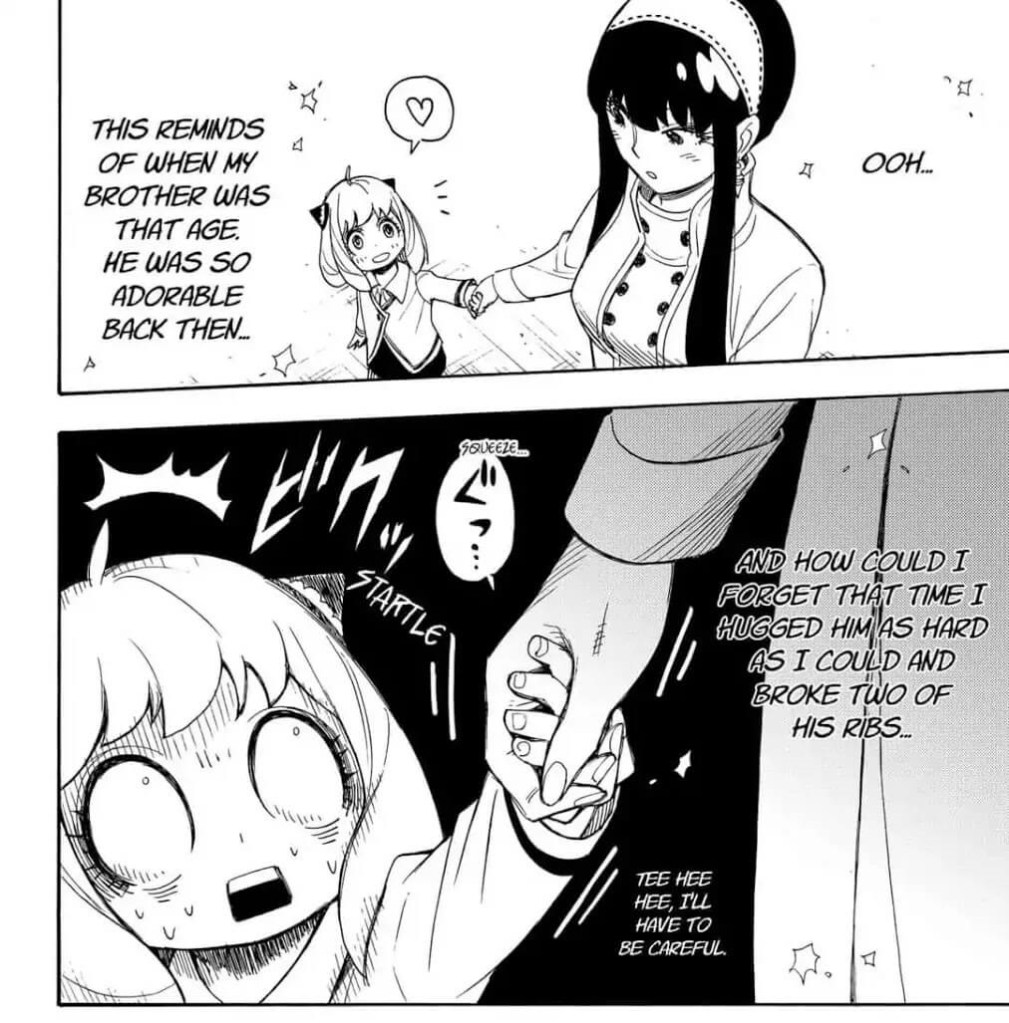
Twilight, settled in the enemy country of Ostania, visits an orphanage. That’s how we’re introduced to the most popular character of the story, as well as one of the most popular of modern manga: Anya. The author could have reduced her to an adorable child, which she is, but instead she’s also smug, a bit of a dolt, barely interested in anything but food and her hobbies, and can also read minds.

The author masterfully makes Anya a constant source of joy thanks to her peculiar personality and how she approaches problems. A telepath, she’s aware that her new father is a spy for a foreign nation, which she finds exciting. One of the first things she does is use his spy devices and accidentally get herself kidnapped.

As mentioned, Twilight needs a wife for the mission. They meet Yor, an attractive yet socially and emotionally stunted woman who also requires a husband for the sake of appearances. In her case, she’s the most lethal assassin of Ostania. Through an extremely memorable proposal involving a grenade pin, Twilight ends up married to his number one enemy.

Anya becomes the only person aware of the thorny circumstances of her new family, yet remains unable to fully comprehend them, as her mind is addled by the spy shows she’s addicted to.

What follows are the struggles of Twilight as he tries to turn his new daughter into an elite student, even though she’s an unmotivated idiot. Meanwhile, the overworked guy deals with other spy missions, as both countries continue with their tug-of-war to get the upper hand on the other. We meet many more memorable characters: Yor’s younger brother, who works for the secret police, is in love with his sister, and would love to throw Yor’s new husband in jail on principle. Twilight’s fellow spy Nightfall, his protégé and competent spy on her own right, is madly in love with the guy, and eager to get Twilight’s new wife out of the picture. Damian, the target’s son, a haughty tsundere who can’t accept the fact that he has fallen for the adorable Anya, as getting involved with a commoner would be unfitting of his station. The kids’ headmaster, an earnest man who evaluates the world in terms of elegance. The target’s wife, a subdued mess of nerves, obsessed with the occult, who has a bizarre suspicion about her husband’s real nature. Bond, a precognitive dog that the Forgers adopt. Becky, Anya’s best friend, the heiress of an arms manufacturing company, who despite being a child is planning to replace Yor’s role as Anya’s stepmother.

The author perfectly mixes humor with poignancy. Plenty of characters are marked by the pointless wars that both countries have fought against each other. Twilight himself lost his family (I don’t recall if he lost them in the war or if he was an orphan for as long as he can remember), and also lost his childhood buddies. He works as spy to preserve world peace against forces from both countries that intend to inflame hostilities.

This is mainly an episodic series. We’ve gone through elaborate arcs, such as one in which Twilight and Nightfall have to win a preposterous tennis tournament to get their hands on a piece of intel, one in which the Forgers fight off assassins in a cruise ship, or one in which Anya’s school bus gets hijacked by terrorists. We regularly get chapters focused on secondary characters or on minor aspects of the main characters’ lives, which don’t contribute much to the plot but are always well done. This is one series you always want to return to because you want to see more of the characters and the circumstances they find themselves in.

They’ve adapted this series, to my knowledge, into two seasons of anime and a movie. I only watched most of the first season, but it’s great.

Spy x Family is already a classic of modern manga, which you must read if you’re into the medium.

VR game review: Ghost Town

I’ve been playing a lot of VR recently, so I may as well review the only long-form game that I’ve finished in this couple of weeks. Ghost Town is a puzzle-based adventure game set in Great Britain back in the eighties. You’re a spirit medium (a witch) named Edith, whose shitty younger brother disappeared under shady circumstances, and your goal is to find him. Trailer is below:

There are many more pros than cons as far as I’m concerned. The setting, mainly London in the 80s, is quite unique, and provides a gritty touch that I appreciated. The character animations and models are generally exceptional for the Meta Quest 3, maybe the best I’ve seen so far. I don’t like puzzle games, yet this one made me appreciate the puzzles. I was never entirely stuck, as the progressive hint system helped me eventually realize at least where I should focus on. I loved the tactile feel of exorcising ghosts, although it’s a minor part of the experience. Plenty of great moments come to mind: interacting with ghosts behind glass (great-looking in VR), using eighties ghost-bustery technology to investigate artifacts, a very creative museum of haunted artifacts, sleepwalking through your eerie apartment tower in 80s London, a great sequence in which you wander through a maze-like version of your apartment while malevolent presences whisper from the shadows (very P.T. like), clever use of light in puzzles, etc.

Horror stories are never more terrifying than in VR. Play Phasmophobia if you dare, for example. I try to avoid horror games because of my damaged heart. However, the ghosts in this one are more spooky than scary.

Now, the cons: personally, I wish the game were more like a regular adventure game instead of a puzzle game with a narrative thread woven throughout it. That’s just a personal preference, though; I wish we got the equivalents of the Monkey Island series in VR. Anyway, the least interesting sequence of puzzles for me was the lighthouse, which comes right after the introductory flashback. I actually dropped the game for like a couple of months after I first played it, because I didn’t feel like returning, but I’m glad I picked it back up and continued.

However, my biggest gripe with the story is that you’re supposed to search for your brother, whom you meet in the first scene, when you’re investigating a haunting in an abandoned theatre, but in every damn scene he’s in, the brother comes off as envious, narcissistic, entitled, and overall a complete dickhead. I didn’t want to interact with him. Did the creators believe we would be invested in finding this guy just because he was related to the protagonist? I think it’s a given that they should have made the brother sympathetic, but he annoyed me in every scene he appeared.

All in all, fantastic experience. Perhaps a bit short, but I felt like I got my money’s worth. If you have a Quest 3 and you enjoy these sorts of games, check it out.

Minoru Furuya: my favorite manga author

I have barely been able to connect with novels these past ten or so years, and the last living writer I respected, Cormac McCarthy, has been not alive for a while. Most of this half of the world seems to have lost their collective (and collectivist) minds, so when I want to experience a good story, I have to look to the Orient, past the reds. I’ve enjoyed plenty of South Korean stuff, but I’m mostly into Japanese. I’m always on the lookout for the next mind-blowing, perhaps even life-changing manga, but I seem to have run through the vast majority of the quality ones.

A couple of days ago, I thought again about Minoru Furuya, who earned the rare merit of being my favorite manga author. From time to time I look him up hoping that he has finally begun working on a new series, but unfortunately, the guy seems to have retired; his last work was the bizarre Gereksiz, from back in 2015-2016.

I suspect that most manga fans don’t know about Furuya. I’ve yet to talk to anyone who has read any of his works. But I get Furuya’s mind, to the extent that I’m fairly certain he also has OCD: his characters regularly fall into patterns of obsessiveness, and deal with intrusive thoughts and images that they sometimes act upon. The protagonist of his Ciguatera comes to mind, with his spirals of preoccupations in his bedroom, trying to bury his face in a pillow to keep himself from falling further. The protagonist of Himizu, perhaps his overall darkest story, feared being assailed by demons lurking at the corners of his mind, eager to break in. Both very common experiences for OCD sufferers.

Sadly, I’ve read virtually everything of value that Furuya put out. He started with an extremely amateurish series about a high-school ping-pong club (or something like that), a comedy that reminded me of the kind of material I created in middle school. I’ll probably revisit it at some point, but it’s early-nineties carefreeness. He followed up with Boku to Issho (link for my review), another comedy about a bunch of fellows living in poverty who hope to survive while keeping their sanity and dignity intact.

In the 2000s, he went straight from a slapstick comedy to his darkest tale: Himizu. With this one, he introduced the pattern for all the protagonists to come: outcasts with very little going for them, usually burdened by mental issues, who seem mostly pushed around by life. Good stuff sometimes happens to them (regularly, this involves dating someone above their league), but they usually pay for it with chaos and occasional brutality. His are the kinds of stories that go from mundane relationship issues to someone having his ears cut off while tied up in a shack. There’s the sense that life is extremely perilous, and that at any point it will force you to struggle through horror whether or not you’re ready for it, and if you survive it, you may not get any lessons out of it other than “life goes on.”

After Himizu came Ciguatera, generally considered his best. I came across that one plenty of times over the years in lists of best manga ever, but I ignored it because I thought it was a sports manga of sorts, centered on biking. But the bikes ended up being a symbol of a better, brighter future that could carry the protagonists away from their shitty circumstances. Ciguatera is a sort of a Bildunsroman in which the protagonist, a below-average dude with no talents to speak of, intends to figure out how to measure up to the girl he loves, hoping to become a dude worthy of respect. This one had likely the most realistic of Furuya’s endings, to which I have returned repeatedly in my mind.

Then came Wanitokagegisu and Himeanole. Both feature working-class protagonists stuck in dead-end jobs, who feel that life is passing them by, who can’t figure out how to improve their circumstances or even become interested by anything, and who are sure they’ll die alone. From that perspective, these last four series are very masculine stories. In both tales, the protagonists get involved in other people’s troubles, which lead them further and further into chaos and brutality. Both also feature the protagonists getting girlfriends way out of their league, which brings joy but also the sense of constantly having to measure up lest they look elsewhere. Both series feature horrific violence. Himeanole wasn’t even licensed in English, and fans have only translated up to chapter eight of about sixty-five. I only know of the full contents of that series, to the extent that an adaptation allows, because they made a movie out of it, which I watched last night.

His last serious story, and my favorite of his, was Saltiness (first review, second review), about a clearly autistic dude who realizes that his beloved sister will remain unmarried because she has to take care of his crazy ass, so he leaves for Tokyo to become independent, even though he’s thoroughly incapable of dealing with life. Saltiness is very hard for me to explain, but it feels like Furuya managed to create a parable with it for dealing with the nonsense of life, and finding one’s place in it despite being ill-suited.

Sadly, Saltiness seemed to have been his main send-off. His final work was the extremely bizarre Gereksiz, which starts with the bizarre premise of a solitary middle-aged man dragging his female coworker to show her the woman that he’s infatuated with, only for them to realize that he’s the only one who can see the woman. The story gets far stranger from there. It’s a great read, although it felt anticlimactic compared with Furuya’s previous works.

Given that these days I consider Furuya to be my favorite manga author, one would suppose that my favorite manga would be one of his, but that’s not the case. My favorite manga, which is among my five favorite fictional experiences in no particular order, is Inio Asano’s Oyasumi Punpun. That one has never stopped haunting me. It feels like Asano was trying to exorcise something out of himself through making that story. Unfortunately, after it ended in 2013 or so, Asano never even came close to achieving those heights again. An idealist, as evidenced by his earlier works, he seems to have expected it to change the world as well as himself, only for Asano to wake up ten years older having resolved fuck all. He wrote a semi-autobiographical series afterwards, titled Downfall, that showed how despondent and bitter he ended up after finishing his masterpiece.

Anyway, I suppose that’s all I wanted to say. Not sure why I even wrote this, but I did, so there.

Review: All the Pretty Horses, by Cormac McCarthy

Four stars.

This one’s a bildungsroman about a teenager (I believe he’s sixteen when the story starts) named John Grady Cole, who lives in Texas with his deteriorating family. Cole intends to continue working in the family farm and doing something in particular with it, legacy-like, but after his grandfather dies, the house changes hands in ways I wasn’t entirely sure about, but that in any case destroy Cole’s intended future. So, partly as a fuck y’all, he grabs his friend, a couple of horses, and heads down to Mexico, intending to never return.

Cole is a good kid. Intelligent, with a strong moral compass. It just happens that he’s venturing into the wild, and his courage and moral compass are going to get considerably tested. First of all, the pair of friends find themselves followed on their journey south by a single rider. That rider turns out to be a supposedly thirteen-year-old runaway named Jimmy Blevins, likely a fake name. He may have stolen his horse. Although the kid seems a bit unhinged and generally immature, he proves his skill with a revolver by punching through Cole’s friend’s wallet in one shot. Later on, this kid, terrified of storms (he mentioned that getting struck by lightning was a bit of a family curse), ends up losing his clothes, his horse, and his gun. In a Mexican town, they spot both Blevins’ horse and his gun in other people’s possession, which Blevins won’t allow.

That’s where the main trouble starts, which has repercussions for the rest of the story. At its core, though, this story is a tale of tragic love between John Grady Cole and a beautiful seventeen-year-old girl named Alejandra, of Spanish ancestry and a wealthy family. John is ultimately a Texan cowboy with barely a peso to his name, not the kind of young man that Alejandra’s father would allow his precious daughter to marry.

Cole learns that the world is a harsh, frequently unfair world, and that the lines between good and evil are hard to measure at times. This is the first entry in McCarthy’s The Border Trilogy, and I’m curious to know how Cole dealt later on with the mental state that the events of the first book left him in.

I must mention, as I have in every review of McCarthy’s work ever since I learned about this matter, that the tale I’m reviewing, as well as most other tales of his ever since the following events happened, are heavily influenced by having met in the early seventies someone that quickly became McCarthy’s love of his life: a thirteen-year-old blonde, blue-eyed teenager named Augusta Britt. Or, as one of his writer pals put it, “a teenage popsy.”

Supposedly, as McCarthy was researching Blood Meridian in Tucson, AZ, Augusta Britt, wearing a holstered gun, asked McCarthy to sign her copy of his first book. Although that sounds unlikely (partly because the supposed edition she handed him lacked a photo of the author), Britt has showed the letters she received from McCarthy. Britt was a foster kid, and had been abused in various ways; all the foster homes she ended up in lacked locks in the doors, and men tended to enter whenever they pleased. McCarthy quickly grew amorous of this thirteen-year-old tragic hottie, and after she told him that someone in her current foster home had hit her, he offered her to run away together to Mexico.

What he intended to do was very illegal: basically kidnapping a girl from the foster system. Crossing not only state but country lines with an underage girl that he was in love with and likely fully intended to fuck was probably also illegal. But it happened, and by the time she was fourteen and in Mexico, McCarthy and Britt banged like there was no tomorrow, which McCarthy likely believed to be the case, as the FBI was literally after him. Even to this day, Britt says that the whole thing was fine, that she loved him and felt safe with him. But their relationship fell apart when Britt found out that McCarthy was actually married at the time (although estranged), and had a son he was neglecting. Britt ended up leaving for the States, which broke McCarthy’s black heart. They remained friends until his death, and he even tried to marry her twice, but ended up failing to do so because her church demanded of him to convert to Christianity; as the last paragraph of his last book, The Passenger, put it, he was “the last pagan on earth,” and very much intended to remain so.

You feel echoes of that period of McCarthy’s life in this novel: running away to Mexico, the dread of being pursued, the dilemmas about right and wrong, the tragic love for a teenage girl, etc. Curiously, Jimmy Blevins, the wild thirteen-year-old runaway kid, seems the closest to Augusta Britt given what I read about her: the kid had peculiar mannerisms and a wild goofiness that you could imagine having been lifted straight from a seventies teenage runaway with a fucked-up past.

I wasn’t particularly into the story, to be honest. Didn’t connect much with it other than during some philosophical passages. If it weren’t for McCarthy’s prose, at times I would have rated it a three. However, prose-wise, it was sloppier and much lazier than Suttree, which was my previous read of his. I can’t blame McCarthy for lowering the quality of his prose; Suttree was so relentlessly high quality at times that writing it must have been agonizing, prone to making the writer hate the very process. I suppose that in the back of his mind, McCarthy thought that the public at large would have been forced to acknowledge the brilliance of Suttree, but it ended up selling terribly. I can see him thinking, “Why bother?” and not putting in his 110% from then on.

Anyway, the following are the quotes I’ve highlighted from the book.

People dont feel safe no more, he said. We’re like the Comanches was two hundred years ago. We dont know what’s goin to show up here come daylight. We dont even know what color they’ll be.

Beware gentle knight. There is no greater monster than reason.

The prison was no more than a small walled village and within it occurred a constant seethe of barter and exchange in everything from radios and blankets down to matches and buttons and shoenails and within this bartering ran a constant struggle for status and position. Underpinning all of it like the fiscal standard in commercial societies lay a bedrock of depravity and violence where in an egalitarian absolute every man was judged by a single standard and that was his readiness to kill.

Those who have suffered great pain of injury or loss are joined to one another with bonds of a special authority and so it has proved to be. The closest bonds we will ever know are bonds of grief. The deepest community one of sorrow.

We weep over the might have been, but there is no might have been. There never was. It is supposed to be true that those who do not know history are condemned to repeat it. I dont believe knowing can save us. What is constant in history is greed and foolishness and a love of blood and this is a thing that even God—who knows all that can be known—seems powerless to change.

He saw very clearly how all his life led only to this moment and all after led nowhere at all. He felt something cold and soulless enter him like another being and he imagined that it smiled malignly and he had no reason to believe it would ever leave.

He lay listening to the horse crop the grass at his stakerope and he listened to the wind in the emptiness and watched stars trace the arc of the hemisphere and die in the darkness at the edge of the world and as he lay there the agony in his heart was like a stake. He imagined the pain of the world to be like some formless parasitic being seeking out the warmth of human souls wherein to incubate and he thought he knew what made one liable to its visitations. What he had not known was that it was mindless and so had no way to know the limits of those souls and what he feared was that there might be no limits.

He thought the world’s heart beat at some terrible cost and that the world’s pain and its beauty moved in a relationship of diverging equity and that in this headlong deficit the blood of multitudes might ultimately be exacted for the vision of a single flower.

He stood at the window of the empty cafe and watched the activities in the square and he said that it was good that God kept the truths of life from the young as they were starting out or else they’d have no heart to start at all.

He stood hat in hand over the unmarked earth. This woman who had worked for his family fifty years. She had cared for his mother as a baby and she had worked for his family long before his mother was born and she had known and cared for the wild Grady boys who were his mother’s uncles and who had all died so long ago and he stood holding his hat and he called her his abuela and he said goodbye to her in Spanish and then turned and put on his hat and turned his wet face to the wind and for a moment he held out his hands as if to steady himself or as if to bless the ground there or perhaps as if to slow the world that was rushing away and seemed to care nothing for the old or the young or rich or poor or dark or pale or he or she. Nothing for their struggles, nothing for their names. Nothing for the living or the dead.