The Scrap Colossus, Pt. 10 (Fiction)

I picked up the stack of pages, leaned back in my rattan chair, and delved into Elena’s darkness. The narrator declared that they had skipped the next therapy session. Their psychiatrist called, but the narrator refused to answer. Hours later, the psychiatrist left a voicemail asking how the narrator expected to improve by hiding in the outskirts of the station, isolating herself. The following day, this psychiatrist sent a message urging the narrator to fight against the parasite at every step. The narrator wrote back demanding to be left alone.

The narrator woke up clutching a bottle, its contents spilled across her chest. A cloud of hate, reminiscent of a swarm of mosquitoes, grew toward her apartment and halted at the front door. The hate seeped through the door and wall, it crept through the ventilation shafts. The doorbell rang. The army of shadows had brought a battering ram.

The narrator hid under the sheets, but the psychiatrist, speaking through the door, claimed to know that her patient was inside. The narrator tossed the sheets aside and slid onto the edge of the bed. Her hangover squeezed her brains. The apartment stank like a sewer. She wondered if she had flushed the toilet.

The narrator was outraged that her psychiatrist had invaded her privacy. A rage flared up in her chest, but it waned with each steady breath. She acknowledged that she needed to see another human face even if it meant asphyxiating in hate.

She opened the door, then hobbled back to the edge of her bed. The psychiatrist wrinkled her nose and tried to ignore the mess. She was wearing a glimmering blouse and glinting bracelets that clashed with the grime of that apartment like a wedding ring fished out of a garbage dump.

The psychiatrist, addressing the narrator as “Kirochka,” urged her to try again. The narrator believed the therapy sessions were useless, because she would never be cured. The psychiatrist conceded that their scientists would have to find a cure, but that Kirochka, parasite or not, had to coexist with others. For now she could afford to seclude herself in her tiny apartment, but this limbo was temporary. Kirochka trembled with anger that reddened her vision. The psychiatrist embodied the overflow of mud that had flooded the corridors of this space station, that had now reached her last refuge.

The psychiatrist warned Kirochka that, as per military orders, she was required to attend therapy sessions, and failure to comply might result in confinement with other detainees. For Kirochka, that meant unending torture, suffocating in a miasma of hate. The shadows would overwhelm her even in dreams. The psychiatrist reminded her of a better alternative: a weekly hour-long therapy session. Kirochka argued that attending therapy also meant commuting through crowded hallways. The psychiatrist eyed Kirochka’s facial scars, then assured the narrator that nothing more would be demanded of her.

I lowered the papers and looked up across the table into Elena’s icy blues. I was struck again by the feeling that I faced an enigma, a person displaced from their proper time and place. And behind those eyes, the mind grown accustomed to the darkness, to the cold touch of loneliness, now bristled in the glare of social scrutiny like a wary, wild thing slinking toward a campfire’s warmth.

“Kirochka has been forced to attend therapy to control the darkness within her. In this story, a literal parasite. I don’t have to wonder what inspired you, given that two days ago you spoke about harboring a malignancy inside you from birth.”

“Though ‘therapy’ implies there’s something to fix, doesn’t it? Kirochka knows better, just like I do. Some things can’t be fixed. They can only be endured. That darkness, that malignancy… it’s not a tumor you can cut out or medicate away. It’s more like radiation poisoning. It has seeped into every cell, become part of your DNA until you can’t tell where the poison ends and the person begins. Kirochka’s therapy is just society’s attempt to contain something they don’t understand. Something that terrifies them because it doesn’t fit into their neat little boxes.”

“The story is set in space? Curious, coming from you.”

“Yeah, in a space station. Maybe the only way to make sense of feeling like a monster is to write yourself into the void. Kirochka… she’s what happens when isolation stops being a choice and becomes a sentence. When your own mind turns alien, transforms into a nightmare world filled with shadows. I suppose the space station is a sort of metaphor: a prison floating in the endless darkness, where the only true company you have is the thing growing inside your brain. A parasite that feeds on your pain, your loneliness, and the hatred of others. It whispers to you at night, saying that perhaps you were always meant to be like this, a monster wearing human skin, and the only way to protect yourself is to hide, to shut out the light and the noise and the people.”

“So the point is that those like the protagonist and yourself are beyond repair?”

“I don’t write stories to make points, Jon. I write them so they don’t explode inside me and scatter their shrapnel throughout my body. Keep reading.”

I lowered my gaze to the text. On the day of Kirochka’s next therapy session, she rummaged through her pile of unwashed clothes: pants that clung to her thighs, t-shirts that stretched across her chest. She wondered how she had ever dared to wear clothes that spotlighted her. She wanted to blend into the throng, unnoticed. She ended up materializing a baggy hoodie and sweatpants, both black. She left the apartment with a bag of her old clothes, which she dropped into the incinerator.

The journey to the psychiatrist’s office made Kirochka feel like she had aged decades. Her trauma isolated her from everyone around her. She longed to be invisible; as she wandered those hallways and corridors, she’d watch others embrace life and look forward to tomorrow, while Kirochka’s future had darkened, tainted like a pool filling with oil. Invisible, no one could anchor her to reality with their gaze, which would leave them unburdened by her scars. For as long as her broken life would stretch out, she’d belong in the shadows.

Sitting opposite the psychiatrist—a well-to-do, well-groomed, and well-spoken woman who likely earned more for handling lost cases—Kirochka argued that it was pointless to expose herself to the shadows that had taken permanent residence in her brain. Instead, she insisted on channeling her energy into her strengths, like drinking herself into oblivion. The psychiatrist countered that her client couldn’t opt for self-destruction. According to the psychiatrist, others lacked Kirochka’s ability to perceive the emotions stirred by the parasite as intrusive, to separate them from one’s true feelings. This insight gave her a fighting chance against the malignancy, and would allow her to integrate with society. It appeared the psychiatrist had screwed up: the narrator wasn’t meant to learn that others had been infected by equivalent parasites. Although forbidden from disclosing this secret, the psychiatrist believed that revealing it to Kirochka would motivate her to fight. Nine others—ranging from soldiers to scientists, and even a reporter—had been affected, while the military suppressed any hint of the crisis. Kirochka burst into uncontrollable laughter, her cackles persisting even as the flustered psychiatrist ended the session.

Three days later, shortly after entering her psychiatrist’s office, Kirochka stole a glance at the woman’s screen, and noticed a waveform jittering with each sound. Kirochka asked if she was being recorded without her consent. The psychiatrist explained that military-ordered therapy sessions required recording. Kirochka pointed to the notes and asked if the psychiatrist planned to write a book based on her observations. The woman admitted it, although she would change her patients’ identifying details. The narrator sank into her chair, exhausted from fighting off the shadows that clawed at her skin. She felt like a paralyzed beast resigned to be pecked apart by vultures. The psychiatrist assured her treatment was meant to help Kirochka recover, but the narrator, in turn, retorted that the woman served two masters.

I flexed the stapled printouts and tapped their lower edges against the tabletop.

“Was this psychiatrist modeled after one you had?”

Elena’s fingertips had been drumming a silent, absent rhythm against her empty glass. She stopped, and her pale blues flicked up to meet my gaze.

“Not consciously, but you’ve reminded me of a therapist my parents sent me to when I was about twenty-two. Every visit cost more than I’d earn in two hard days of work. Sessions that usually started late and ended early, and were interrupted by phone calls. After ten or so episodes of this woman listening to me spill my guts, which made me feel nauseous afterwards, she suggested I’d have no problem working as a cashier. I realized I had scraped my psyche open for someone who was just there to collect a paycheck. Who didn’t care and couldn’t understand. I never went back.”

“You don’t trust therapists, I’m guessing.”

“I distrust their profession. If anyone can be cured by someone listening to their problems and validating their feelings, then they don’t have my issues. And for that matter, any empathetic person lending a willing ear would be enough, not a professional who keeps glancing at the clock and interrupting you to take a phone call. Do psychotherapists exist because our societies are so dysfunctional that nobody talks about anything meaningful?” Elena sighed. “People want to be cured of their suffering, but you can’t undo what’s been done. You can’t erase the scars that have been etched into your heart. All you can do is learn to live with them, to accept that you’ll never again be the innocent child that existed before the pain. You need to find a way to make peace with the darkness inside you.”


Author’s note: today’s song is “Mr. Tambourine Man,” a cover by Melanie Safka.
The Scrap Colossus, Pt. 9 (Fiction)

Elena gripped her glass of coffee, raised it to her lips, and tilted her head back. The remaining coffee sloshed as she guzzled it down to the sediment, a sludge that must have smelled of earthy, singed beans. She set the glass down with a hollow clink, then paused to swallow. Her tongue flicked across the surface of her lips and disappeared between them.

“I didn’t conclude my talk about the unnamed void. In case you’re still game to continue this tour of the netherworld.”

“If you’re willing to share, I’m willing to listen.”

“Alright. As the darkness fills every corner of your mind, as it eats away at everything that made life bearable, you spot a yellowing scrap of paper at the bottom of the abyss, so small you’d miss it if you didn’t squint. You lean to make out the words scribbled on its crumpled, dirty surface, and they read: ‘This is not temporary. This is not an anomaly. This is the true state of being.’ You integrate a realization that the majority of humanity has been spared: the void existed from the start, and only the evolved chemical balance, the lies your brain tells to keep you alive, had shielded you from confronting it. But my safeguards had failed. As if the Earth’s magnetosphere had collapsed, the solar winds had blasted away the atmosphere, and the planet had become exposed to a torrent of radiation. The void can never be vanquished; it can only be delayed. Down there, the notion that such a nightmare could end doesn’t make sense. The mocking voice repeats that this is how it’s always been and always will be. But you’ve escaped before. The only way out of that black hole is to hold on tight and wait until it spits you back out. Your mind has been reduced to a whirlwind of razor blades. Your body is made of lead. You retreat under the covers, curl into a fetal position, and await a new birth. You wait through the night. You wait through the morning. You wait through the afternoon. You wait through another night. Days pass, but you perceive them in increments: the space between one breath and the next, one heartbeat and the next. One day, the abyss feels shallower. The cold begins to thaw and the darkness retreats, dragging with it the voice repeating that you’re useless, rotten, unwanted, a cancer to all those close to you. Your inner theater lights up with a faint, fuzzy memory of sunlight. A song. A line from a book. A hand on yours. The brain’s machinery churns out its magic again. Inhibitors and disinhibitors toil overtime to rebuild the protective illusion. The veil of normalcy falls back in place, allowing you to resume the masquerade. It’s not a victory. You haven’t slain a dragon or stormed a castle; you survived yourself. You emerge from the underworld, your face smudged with ashes, your eyes haunted. Then you remember the voice that has been your lifeline. You reconnect with the artists that have seen through the cracks of the world, who helped you understand yourself, and made you hope to survive long enough to light your own candle in the dark.”

The breeze had grown colder as the sun struggled to pierce through a sheet of darkening gray overhead, the color of corroded silverware. Elena tucked her almond-blonde locks behind her ears, then rubbed her palms against the thighs of her jeans. After a quiet sigh, she continued.

“You may have noticed that my tolerance for bullshit is low, which is funny considering what we all swim through, which is liquid bullshit, from the moment our ears are developed enough to process the noise spouted from our parents’ mouths. That’s why we need to learn to distinguish the sound of the wind rustling through the leaves, or the raindrops pattering on a window, or the symphony of a band we like, or the voice of someone we love. To have a few sounds in our lives that break through the fog of bullshit to mean something.” Elena’s left hand drifted up to her sweatshirt and sought her metallic moth pendant, thumb and index fingers encircling the sculpted insect. “Sadly that is a precarious, temporary healing. Eventually, a shift of weather and a misfiring of synapses will drag me down to that dark place, to that ancient void waiting for me in the caverns of my mind, that reminds me that my joy has always been an illusion. Each cycle of darkness scraping precious matter from my brain that I will never recover. Until one day, that black hole will return and there won’t be enough of me left to claw my way back into the light. So there is no happy ending. Not in this life. My best answer to your original question, Jon, is that I’m not actively suicidal but I’d prefer not to exist. I’d rather be a book on a shelf than a living human.”

I pictured Elena as a child, alone in her darkened bedroom, huddled in a corner. Her knees hugged to her chest, her arms wrapped around her legs. Her eyes squeezed shut, tears streaming down her cheeks, her body trembling with each ragged sob. The tiny figure in a vast and uncaring world rocked back and forth while muttering to herself, “I want to die. I want to die. I want to die.” But no matter how fervently she wished, the world refused to let her slip away. It clung to her like a parasite, feeding off her misery. Meeting Elena meant brushing against a profound sorrow, to trace one’s fingertips along a fault line.

My throat felt dry and constricted, and my vocal cords struggled to produce words.

“Live for today, Elena. Keep going as long as you can, and keep enjoying what you love.”

She dipped her chin and furrowed her brow, her pale blues fixed on my eyes. A faint smile tugged at a corner of her mouth; she might as well have told me outright to come up with better lines.

“Sometimes I think Siobhan had it right. At least she knew what she wanted: oblivion, peace, whatever you want to call it. Me? I’m stuck in this loop of wanting to disappear while craving something to tether me here. Like my favorite songs, or…” She gestured vaguely at the printouts. “Or these words I keep bleeding. I’m a junkie who needs a fix to prevent her from falling apart. So yeah, the only question is whether anyone’s going to be there to drag me away from the edge when I finally give up. Right now, though, I’m here, in a fancy coffee shop, with a guy who has long eyelashes and a strange fascination with my stories, and who is probably a serial killer. That’s about as good as it can get for me.”

The fingers of Elena’s right hand fluttered in a wavy motion. Maybe she caught my glance, because she balled that hand into a tight fist before withdrawing it beneath the table. With her head bowed, her eyes skittered over the table.

“You didn’t ask me to spill that much of my guts,” she said in a hesitant voice. “It’s just that, well, I’m on edge. Not used to sharing my serious writing or talking about anything that matters. I also have a hard time filtering myself.” Elena took a deep breath. She lifted her gaze to meet mine, her pale blues searching. “Let’s talk about you for a change. What do you like to do, Jon?”

“Masturbate.”

Elena smirked, then chuckled dryly. She uncoiled as if my reply had released the built-up tension, and her eyes twinkled with a conspiratorial gleam like an imp about to propose mischief.

“Oh, samesies. I don’t know if I have a sexual orientation so much as plain perversion. Do you ever feel ashamed when you molest yourself?”

“I only feel ashamed when I don’t.”

She snorted and shook her head.

“What other hobbies have you developed to cope with the misery of existence, Jon? Writing’s one of them, right? We met at a writing course, after all.”

“I used to. For me.”

“How long ago, and why did you stop?”

“Ten years, when I realized my words would be useless.”

Elena’s eyes searched my face. My skin itched as if I’d been bathed in toxic goo, and now I could feel every cell’s molecular structure degrading.

“Maybe you should give it another shot, Jon, for the sake of the lonely, invisible man behind your bullshit.”

“I also like to listen to a woman telling me the most intimate, horrifying things.”

She lounged back in her rattan chair, her head cocked slightly as she scrutinized me.

“Now seriously. Why are you here, Jon?”

“Because of you.”

“I’m not asking why you’re sitting at this table. I’m asking why you’re here in the world. What is it that keeps you from walking into the ocean and swimming until you sink?”

“I’m addicted to the smell of your hair. Honey-scented shampoo, right?”

“Whatever’s there when I reach for the shelf. And you know that’s not what I meant.”

“I’m also a sucker for a pretty pair of eyes, especially if they’re full of pain.”

“If you don’t answer truthfully, I’ll have to go with my serial killer theory.”

“I’ll say it again: because of you. The story of your existence.”

Elena’s pale blues narrowed as she stared me down, trying to figure out the angle.

“What a sweet lie.”

“You’re my motivation to stay afloat. You’re that guiding star on a stormy sea at night. That’s all there is.”

She exhaled deeply through her nose.

“Please. I’ve been dumping my depressing shit on you. I thought it’d be harder to open up, and I was sure that once you realized what you’d gotten into, you’d run away screaming.”

“I’m not going to leave. I’m here for the long haul. Even if you tell me fuck off, I may pretend I didn’t hear it.”

“Fuck, you’re an idiot. Why the hell do you want to hang out with a miserable bitch like me? I’m not even that hot.”

“My loins disagree.”

“The monster might emerge if you stick around. I’m radiation’s daughter. I can’t stop hurting people.”

“Someone needs to be there to drag you away from the edge. One day you may look back and be glad you didn’t jump.”

Elena’s shoulders slumped.

“Being someone’s only tether to the world. That’s quite the sacrifice, Jon. I doubt you’d benefit much from it.”

“That’s for me to decide.”

Her eyes bored into mine. She then hunched over, a loose almond-blonde lock spilling onto her forehead, and she rubbed her eyes with the heels of her palms.

“Late at night, when I’m listening to my favorite music, there are fragile moments where I believe life may be worth living. Just to hear what she’ll create next, to feel whole if only through my headphones. But that’s pathetic, isn’t it? Clinging to life because of an artist who has no idea that I exist. Who would probably hate my guts if she met me.”

“Your everyday life can erode even your sense of what’s meaningful. Jobs in particular excel at that. Everything becomes an unwanted transaction. But art is worth sticking around for. If you feel understood at least by some artists’ work, that means you’re not alone. And I care about what you write.”

“Do you have any idea how terrifying you are to me, Jon? Having someone want to read the darkness that spills out of my mind. I don’t know if I’m more afraid of you understanding or not. Because if you do understand, then what the fuck am I supposed to do about that? And if you don’t… well, then we’re two strangers playing at connection in an overpriced coffee shop, aren’t we?”

“When it comes to my role, Elena: the next time you find yourself at the end of your rope, if you can’t reach me with your hand, send me a text message that just reads, ‘Siobhan.'”

Elena tried to beat me in a staring contest, but she broke away and looked down at the second stack of stapled printouts. She picked it up and tossed it in front of me, letting them land on top of the first set.

“Something about you sets off alarm bells in my head. It makes me feel like I could fall deep into that dark, fathomless place within you, never to emerge. A strange comfort, to say the least. Like discovering someone who looks at the same bleak landscape, who feels the same cold, uncaring winds. Who’s heard the same whispers in the dead of night. But I’m afraid if we get closer, that place inside of you will pull me in. So here’s to this distance between us and these small steps, Jon. Now quit fucking around and move onto the second exhibit of Elena’s Dark Carnival.”


Author’s note: today’s song is “Waitin’ for a Superman” by The Flaming Lips.

The Scrap Colossus, Pt. 8 (Fiction)

At the end of a chain with interlocking oval rings, a silver, antiqued pendant rested on the chest of Elena’s gray sweatshirt. Shaped like a moth with outstretched wings, it was engraved with intricate vein patterns and mirrored, trapezoidal marks. The moth’s abdomen segmented into tiers of carefully sculpted rings. In place of a thorax, a three-dimensional human skull stared through blackened eye sockets. An anonymous artisan had carved a tiny cavity to serve as the nose. This metallic moth evoked the design of an ancient aircraft, belonging to a civilization that leapt from worshipping nature to soaring through the skies, aiming for the stars.

I pointed at Elena’s necklace.

“That pendant you kept fiddling with… a striking piece of jewelry.”

She lifted it from her chest and held it up to admire it. Her fingers traced the moth’s wings as though caressing a lover.

“A gift from myself to myself, bought from a small business in England. Genus Cosmia, family Noctuidae.”

“You sure? There’s a family of moths whose thorax markings resemble a human skull. Death’s-head hawkmoths, I think they’re called. You know, like in The Silence of the Lambs.”

Elena narrowed her eyes at me. She opened her mouth with a smacking sound.

“Are you an expert in lepidopterology, questioning the taxonomy of my own damn pendant? Well, excuse me, master entomologist. I prefer to think of it as a Cosmia moth, if you don’t mind. I wear it to ward off idiots.”

“I’m guessing it’s not a hundred percent effective.”

Elena dipped her chin slightly and half-smiled while spearing me with her icy blues. Loose almond-blonde strands cascading near her cheeks framed her pale, oval face. She let the pendant drop onto her sweatshirt.

“Maybe not strong enough to repel the worst of them.”

“I didn’t mean to trigger an identity crisis for that cute, ominous moth of yours.”

“Hey, I understand them. They’ll keep flying into a flame over and over until their wings turn to ash. Like all of us who can’t stop destroying ourselves for something beautiful we can never reach. Funny how a piece of jewelry can carry the weight of one’s fucked-up existence.”

I emptied my glass, then set it on the table calmly. A breeze stirred the sago palms, making their fronds tremble.

“Can’t help but think that Siobhan is a fictionalized version of you, who also feels rotten and alienated. Are you suicidal?”

Elena leaned back in her rattan chair, arms crossed as she gazed upward at a sky that had turned a dull slate-gray, like a battleship’s hull. The air hung heavy with the scent of impending rain.

“Closing the blinds on a never-ending night… The ultimate expression of individualism, of a person’s sovereignty over themselves. I’ve been alive for twenty-eight years, but I usually feel like I’m seventy. Tired from the moment I wake up. I’m like a milk bottle forgotten in the back of a fridge for too long. If you open it, the stench of the curdled, rancid mess inside will tell you to dump it down the drain. Hell, throw out the bottle too. And how could I be surprised? Unless you belong to some lucky breed, this world will beat the shit out of you. It’ll leave you bruised and bloodied on a sidewalk, and if you dare to stand up and ask why, it’ll kick you in the stomach. That I still experience joy from time to time, despite the decay and misery, is a fucking miracle.”

“Have you ever found yourself that gone? About to jump, whatever form that leap would take?”

Elena wrapped her fingers around her glass of coffee and stared into its black surface like a scryer. Her voice came from a distant, hollow place.

“I wish I could do anything to prevent it, but one day my oldest friend will return for its next uninvited visit. Maybe it will find me, like other times, curled in bed. A hole will open in my brain. I will feel its edges expanding, reaching out to the corners of my mind. A murky, ravenous void devouring everything that makes life bearable. Its gravity deforming space-time, causing the bed and the apartment and the building and the planet itself to warp toward its blackness, one light after another winking out. I will find myself holding onto the bedclothes even though I know that once again the void will gobble me down, and inside of that pitch-black pit, the things I used to love will become as appealing as a pile of dead insects. Then the echoing mockery, speaking with the voice of those who have hurt me, of those I have hurt. Hey, you waste. Hey, you monster. All the ways you kept busy, all those words you wielded and songs you listened to, did you think they could stop me from finding you again? What are you but a scared little girl bawling for her mother?”

I swallowed. My throat felt as though I’d gulped sand. Elena’s shoulders rose and fell with a deep breath. She ran her fingers through her almond-blonde hair, disturbing its arrangement.

“Then the emptiness. A bottomless, sucking nothing that makes you want to crawl out of your skin. The only way to feel anything other than the void’s cold would be to tear the flesh off your bones. To bite your tongue until it comes off and blood fills your mouth. To gouge your eyes out. Pain is always real, always true. But even then, you would remain trapped inside your skull. A ghost haunting the ruins of a mind. Nothing to hold onto except the idea of it all ending. Then you find yourself with a knife pressed against a pulsing artery. Sitting on the floor of your bathroom, the tiles cold and hard against the soles of your feet, staring at a bottle of pills. Standing at the edge of a bridge, watching the cars pass below. Facing an approaching train and wondering if your legs will obey when you order them to leap. Unafraid of death but terrified of the pain that leads up to it, even as you tell yourself that the momentary suffering will lead to permanent silence, to a sleep so deep that the alarm clock of life will never jolt you again.”

Elena fell silent. Wispy blonde locks escaped around her temples, partially shadowing her pale blues as they fixed on me. Her lips trembled as if she were fighting to hold back a smile, but they betrayed her, curving into a slight grin that barely parted at the center, that dimpled her cheeks, and framed her mouth with black parentheses. Her smile looked like a jagged crack across the bone-white surface of a ceramic mask that hid a terrible visage. I reached for my glass to take another sip of decaf, but the bitter beverage was gone.

“So, to answer your question, Jon: yes, I’ve been that far gone. And I’ll be there again. I’m one day away from becoming Siobhan. I’ve never had someone to pull me back, I’ve never even had anyone tell me, ‘It’s going to pass,’ or ‘You’re not alone.’ So I’ve always had to claw my way out. And I can’t say that I backed away from the abyss because of some grand realization about how life is wonderful, or that I’d miss out on the taste of coffee, or the sound of a good song. I didn’t jump because I’m a fucking coward. Afraid of pain. Of the knife’s cold bite. Of waking up in the hospital with a tube shoved down my throat. Of the train only cutting me in half. Of the rocks only breaking my spine or my pelvis, leaving me crippled and helpless, to drown when the tide rises. Maybe that’s the worst thing: not being strong enough to take your own life. Not brave enough to die.”

A chill rippled down my spine, leaving a wake of goosebumps along my forearms. I couldn’t peel my gaze off the creature in front of me. I felt like I’d stumbled into a secret chamber where the world was stripped of pretenses and lies, and only the raw, pulsating heart of things remained.

Elena’s eyes, unblinking and intense—the pale blue of a sky filtered by a thin layer of smog, of an alien world’s sun, of loneliness—drilled through flesh and bone to reach the deepest part of me.

“There it is again,” Elena said, “that constipated expression. Maybe you shouldn’t ask girls about suicide before their coffees have cooled.”

“Thank you for trusting me with that. I’m sorry you had to go through it alone.”

“If I had shuffled off this shitty Earth, it would have been such a loss, huh?”

“There would be an emptiness where someone who brought beauty into the world used to exist. No more stories from you, no more of your thoughts, no more of your voice.”

“You think that’s what I do, bring beauty? I’m just a nutcase with an overactive imagination. Listen, Jon: my final revenge against the world will be a feeble fart in the dark. Or a shit stain. People who knew me in person will pretend to be sad for a week, maybe less, and then on to the next thing.” Elena sighed, and shifted in her chair. “If this is the point where you stand up and tell me that I’m too fucked in the head and too much of a lost cause, I’ll understand. Hell, I’d bail on me if I could.”

“No, I’m just glad I can sit here and listen to what you have to say.”

“A front-row seat to the freak show. Maybe you’re just glad you still have a chance to get laid. But hey, this emotional leper has survived for twenty-eight years. I might live to a hundred. They’ll have to stick me in a sarcophagus along with a warning not to open it ever.”


Author’s note: today’s song is “No Surprises” by Radiohead.

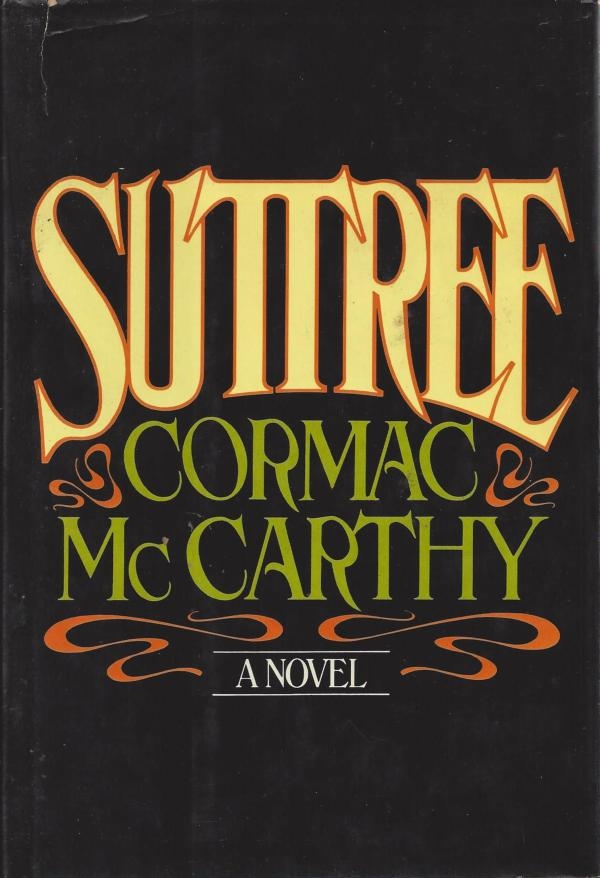
Review: Suttree, by Cormac McCarthy

A very uneven novel. My rating ranges from three to four-and-a-half stars.

The heart beneath the breastbone pumping. The blood on its appointed rounds. Life in small places, narrow crannies. In the leaves, the toad’s pulse. The delicate cellular warfare in a waterdrop. A dextrocardiac, said the smiling doctor. Your heart’s in the right place. Weathershrunk and loveless. The skin drawn and split like an overripe fruit.

In a previous post I stated that this novel, released in 1979, took McCarthy about ten years to write. That was, however, wrong, and in fact he had been writing in since the fifties, when he lived some of the events of the story. As independent scholar Write Conscious, who has gone over McCarthy’s archives, put it, McCarthy wrote very little in the last few decades of his life. Even his latest two novels, The Passenger and Stella Maris, which I loved and still haunt me, not only were set in the seventies and eighties, but were written to a significant extent back then (or at least almost fully researched). It turned out that McCarthy put lots of his own life in his novels. In the case of his last two and quite a few others, they’re heavily inspired by the love of his life Augusta Britt, much younger than him, ending up in a mental institution due to her extensive trauma (abandoned by her family, abused in foster homes… Presumably the whole getting-whisked-away-to-Mexico-by-Cormac also added to it).

In the case of Suttree, this novel I’m reviewing, it’s based around Cormac hanging out in the unfortunately named McAnally Flats in Knoxville, as the area existed back in the fifties and no longer does so. Many of the characters of this novel were real. One of them, named J-Bone, was a great friend of McCarthy’s, and the guy’s real home address as well as phone number from back then are depicted on the text. That means that we’re often treated to strange characters whom we’re barely introduced to at all. I’m not necessarily opposed to this; I believe that writing fiction is about making your own meaning and not necessarily satisfying anyone else. But that means that in a story already quite the mess, this panoply of weirdos only makes it harder to grasp.

McCarthy was apparently a drunkard back in the day. Also at the end of his life. I can’t stand drunks. He and his friends also got in serious trouble. I can’t stand criminals. So at times I had a hard time caring about what was happening in the story. Suttree tended to side with people who clearly should have been in jail or dead, and when some of them died, I thought to myself that it was about time. Still, some of those stories were wild enough to be interesting: going into pubs and stealing people’s money from their handbags and jackets (at the Indian Rock, for example, mentioned in Stella Maris by Alicia Western; her beloved brother used to bring her there on dates), plain-old robberies, brawls, general mayhem… It was hard for me to connect with that part of the story, which is about half of it: Suttree wandering from weirdo to weirdo doing stuff I couldn’t relate to.

The most memorable male character is an innocently evil melon rapist named Gene Harrogate. We are introduced to him violating a farmer’s produce, and he ends up in jail, where he meets the protagonist. He’s a small country bumpkin with seriously nasty instincts, whom Suttree really shouldn’t have been involved with. I have a hard time believing he existed in real life, as he was the larger-than-life type. There’s a whole segment with him digging tunnels under Knoxville and blowing up shit to the extent that it caused sinkholes, and led to him nearly drowning in shit. He also almost extinguished the local population of bats. Though entertaining, ultimately he was quite pointless to the story, as I didn’t believe that Suttree would hang out with such a fiend. That said, the story is generally a mess, so not much of what happens could be say to fit properly.

Three major sequences bumped up the novel’s quality for me: the first involves Suttree’s estranged wife and son, the second a nymphet unfortunately named Wanda, and the third a prostitute named Joyce. In real life, Suttree was indeed married and had a son. As far as I know, McCarthy was an utter bastard to that wife of his: he demanded her to work to pay the bills so he could dedicate himself to his writing, and when things got even worse money-wise, he demanded of her to pick up a second job. Understandably so, McCarthy’s family-in-law wanted him dead. He ended up escaping his home life, claiming that they stifled his creativity, which they likely did, and roamed around the south of the US, eventually ending up in a motel pool in Tucson, AZ, where he met an armed thirteen-year-old blonde and blue-eyed popsy with whom he fell head-over-heels. So that’s the whole deal with a estranged wife and son present in Suttree covered.

Wanda is the daughter of a down-on-his-luck pedlar with whose family Suttree spends some time in the best sequence of the book. This girl is described as having tits as well as fuzz down there, but Suttree repeatedly refers to her as a child. So she’s probably twelve-to-fourteen years old. The intimate scenes between Suttree and this girl are some of the most haunting passages of the book. This, of course, relates to McCarthy having met around that time the love of his life, Augusta Britt, whom the aforementioned scholar Write Conscious mentioned was very likely thirteen when McCarthy started sending amorous letters to her, and fourteen when they fled together to Mexico and started banging like there was no tomorrow, which McCarthy likely believed was the case, as the FBI was investigating Britt’s disappearance from the foster system. Regarding Wanda, the whole thing ends in a very McCarthy-ish way, with nature saying, “Fuck no, I ain’t lettin’ this shit go on.” I feel that the ending of that sequence will haunt me for the rest of my days. Chance and the universe’s indifference in general determining so much in life is a common theme in McCarthy’s work (the ending of No Country for Old Men comes to mind, and I mean the sequence with the protagonist and a fifteen-year-old runaway also based on Augusta Britt, which was sadly wasted in the movie).

However, the Wanda segment, my favorite part of this story, ended up becoming the biggest hole in it for me: I don’t believe for a second that Suttree would have been able to move on nonchalantly the way he did, with no fucking mention of the whole thing afterwards and no sign that it affected him. To me it reeked of McCarthy having written that part after meeting Augusta Britt, and then shoehorning it into the novel. Apparently, according to Write Conscious, in the letters with his editor, McCarthy’s “boss” demanded explanations for why he was so insistent on including the Wanda (and Joyce) parts in the story, but McCarthy refused to take them out.

The last of the three most memorable sequences for me involved a prostitute named Joyce, who bankrolled Suttree until her whorish life caught up with her psyche. Honestly the whole thing felt somewhat random yet true, which makes me suspect that McCarthy also got involved in such shenanigans.

What ultimately elevated the novel for me was McCarthy’s godlike writing. This story contains some of the best prose I have ever read. The first six percent or so of the text is so relentlessly high-quality in terms of careful observations that it boggles my mind to imagine what it took McCarthy to get through writing it. After that, the quality decreases as if McCarthy would have preferred to shoot himself than to keep holding himself to that standard. But most of the prose remains absurdly fantastic throughout, to the extent that it makes the vast majority of published authors look like children playing at pushing words together. One writer that McCarthy was helping do line editing in the seventies said that McCarthy’s edits made the guy want to quit writing. In my case, it makes me realize there are goals far in the distance that I can push myself towards.

This isn’t a novel I could recommend to anyone, to be honest. You have to fall into it, likely because you love McCarthy’s work. I’m glad I read it, but I suspect I should have gotten through his simpler remaining novels first (like the Border Trilogy, Outer Dark, etc.)

The following are quotes from the book that I highlighted.

He closed the cover on this picturebook of the afflicted. A soft yellow dust bloomed. Put away these frozenjawed primates and their annals of ways beset and ultimate dark. What deity in the realms of dementia, what rabid god decocted out of the smoking lobes of hydrophobia could have devised a keeping place for souls so poor as is this flesh. This mawky wormbent tabernacle.

How surely are the dead beyond death. Death is what the living carry with them. A state of dread, like some uncanny foretaste of a bitter memory. But the dead do not remember and nothingness is not a curse. Far from it.

You see a man, he scratchin to make it. Think once he got it made everthing be all right. But you dont never have it made. Dont care who you are. Look up one mornin and you a old man. You aint got nothin to say to your brother. Dont know no more’n when you started.

On a wild night he went through the dark of the apple orchards downriver while a storm swept in and lightning marked him out with his empty sack. The trees reared like horses all about him in the wind and the fruit fell hard to the ground like the disordered clop of hooves.
Suttree stood among the screaming leaves and called the lightning down. It cracked and boomed about and he pointed out the darkened heart within him and cried for light. If there be any art in the weathers of this earth. Or char these bones to coal. If you can, if you can. A blackened rag in the rain.
He sat with his back to a tree and watched the storm move on over the city. Am I a monster, are there monsters in me?

There are no absolutes in human misery and things can always get worse.

In the distance the lights of the fairground and the ferriswheel turning like a tiny clockgear. Suttree wondered if she were ever a child at a fair dazed by the constellations of light and the hurdygurdy music of the merrygoround and the raucous calls of the barkers. Who saw in all that shoddy world a vision that child’s grace knows and never the sweat and the bad teeth and the nameless stains in the sawdust, the flies and the stale delirium and the vacant look of solitaries who go among these garish holdings seeking a thing they could not name.

The Scrap Colossus, Pt. 7 (Fiction)

I took an unhurried sip of my decaf, then settled back into the narrative. Its point-of-view character got dressed and left the house—perched near a craggy coastline—in pursuit of a woman named Siobhan. The narrator trudged through the windswept landscape, rain lashing their face, as the sea thrashed the cliffs’ serrated rocks in an echoing rumble. A cherry-red hood and windbreaker flashed sharply against the leaden sky, like a drop of blood: Siobhan standing at the edge of a cliff. As the narrator approached, she turned her head, that freckled and pale canvas. Her gaze locked onto theirs cold and unflinching, as though scanning a face she’d never seen. The narrator sat beside her. Roaring, white-capped waves crashed against the jagged shoreline below, bursting into plumes of salty spray. The narrator hesitated, then asked Siobhan what was she doing there. Siobhan said that she was mustering the courage to throw herself off, hoping the rocks would crack her skull open.

My gaze flicked up from the page to Elena, who was leaning back in her chair. One side of her ivory face lay in shadow—a counterpoint to the almond-blonde cascade of her hair—while the afternoon light traced white highlights along her nose and the arch of her upper lip. Her right-hand fingers rested lightly against her chest, cradling the pendant suspended from a thin silver chain. She had taken shelter in a cocoon of introspection. Her cool, crystalline irises were locked on a remote point beyond the coffee shop, past Irún. I would have gladly paid any price to accompany Elena’s mind as it meandered through unseen corridors of thought. Instead, I had to coax from her the elusive translations of her inner world, using tools as clumsy as words.

I lowered my gaze and resumed reading. The narrator, in response to Siobhan’s suicidal impulse, begged her not to jump. She argued that she knew she was crazy. Her senses distorted the world, making everything around her seem unnervingly artificial, and her thoughts twisted it further. She felt that she belonged to some remote place that didn’t exist. Instead of slogging through such a nightmare with a shattered mind, she’d rather die. The narrator replied that she’d get used to it, that she’d learn to live with the madness. Siobhan shook her head slowly. She said the world had always seemed absurd and alien to her, and now even painting, her refuge and salvation, had ceased to mask its rottenness. With every breath, she inhaled the rot as if the air itself was tainted. Darkness filled her stomach and lungs; when she gasped for fresh air, more blackness poured in.

Elena’s gaze lingered on my face as though she could see past the skin and bones to the neurons firing. Her lips were pressed thin around the tip of her thumb while she gnawed on the nail. Elena removed her thumb from her mouth to speak.

“Had enough yet?”

“No, but maybe I needed a breather. Intriguing so far: a stormy morning, the narrator trying to prevent their lover from jumping off a cliff because she believes herself to be insane… Atmospheric and urgent.”

“I’ll never get used to someone sitting in front of me and dissecting my darkness like it’s a normal way to spend an afternoon. Siobhan is his girlfriend, by the way.”

“Okay, so the narrator is a dude.”

“Although none of that matters when you’ve decided to become one with the rocks below. Please continue. I want to watch your reactions as you read. I’m sure the waiter will be back soon with overpriced coffee to wash down all this existential dread. Oh, as if summoned…”

The waiter reappeared by our side. He placed a glass of ink-dark coffee before Elena, then slipped away. The scent of roasted, earthy beans rose along with delicate curls of steam.

“They really take their time here to serve you a simple coffee,” Elena said.

She wrapped her slim hands around the warm glass, lifted it and blew on the coffee, sending ripples through its black surface. When it stilled, the steam washed over Elena’s lips, framing them in wispy vapors. Her eyes narrowed in a squint as she took a tentative sip, then a longer gulp.

I flipped to the next page and plunged back into Elena’s story. The narrator begged Siobhan to tell him what he needed to do to bring his girlfriend back home. One of her slippers, its sole mud-caked, hung limply from her toe, teetering over the abyss. Siobhan told the narrator to join her in death. If he loved her, he wouldn’t want to live after she jumped. Besides, they owed it to each other for the pain they’d caused through countless compromises.

Raindrops needled Siobhan’s eyes as she stared at the clouds. A lightning flash illuminated the contours of her forehead, nose, and lips. Calmly, she told her boyfriend not to stare at her like that, because she couldn’t be saved.

The narrator stood up and stepped back lest a dizzy spell cause him to stumble off the cliff. In one swift motion, he slipped his hands under Siobhan’s armpits and pulled. A startled whimper escaped her. As he dragged his girlfriend away from the ledge, Siobhan wriggled free, rose, and lunged at him to shove him, but he overpowered her, pinning her onto the muddy grass. He rolled up the sleeves of her cherry-red windbreaker and seized her wrists. Despite the burning ache in his lungs, the narrator continued hauling her toward their home while rain pelted them. Siobhan, after bucking and kicking and writhing for a while, went limp, leaving him burdened by her dead weight. Her bare heels carved furrows in the mud.

Once they arrived home, Siobhan let the narrator assist her up the stairs. In their bedroom, he removed her windbreaker and peeled off the wrinkled, mud-stained, foul-smelling dress. Her body a sculpture of freckled flesh and goosebumps. The narrator dried his girlfriend’s hair and wiped the grime off her skin with towels, then carefully placed her in bed. He tucked the blanket up to her neck. Siobhan’s forehead burned. He examined the yellowing bruises on her wrists.

Siobhan tracked her boyfriend’s every move with eyes wide and feral, like a wild animal that has found itself trapped. In a cracked tone, she asked if he planned to guard her around the clock. The narrator replied that once the fever subsided, she would come to realize her malaise had clouded her judgment. Before long she would return to painting, and this suicide attempt would be reduced to a painful memory neither of them ever wished to discuss. Siobhan scoffed and suggested that maybe she would eventually forget why she had rushed toward the cliff, and how she had found her way back home.

A dizzy spell sent the narrator reeling backward until he hit the wall, after which he slid onto the floor. He wrapped his arms around his legs and pressed his forehead against his knees. Siobhan declared, her tone suddenly laced with realization, that this storm would never end. The excerpt ended there.

I laid the stapled papers on the table and reached for my decaf. I swirled the beverage around, then took a long gulp as the excerpt’s words sent ripples through me like those of a stone thrown into a lake.

“You look constipated, Jon,” Elena said. “Did you cringe at my awful writing?”

Her pale blues were trained on me like sniper sights, unblinking, unwavering, as though waiting for a clear shot to the head.

“Quite the opposite,” I replied. “It felt intimate and raw, like I’d invaded someone’s private world.”

“As though you’ve entered someone else’s consciousness and noticed the seams and patches, the voids, the unhealed cracks, and the darkness that bleeds from them?”

I nodded.

“Your prose made me feel chilly. I mean, the way the narrator had to drag his girlfriend, Siobhan, from the cliff’s edge… And her trying to make him realize the pointlessness of preventing her suicide, given that she intends to escape and throw herself off the moment her caretaker falls asleep.”

“If the world is a lie and her mind a warped lens, then the only truth is her suffering.”

“You chose this particular excerpt. Care to talk about why?”

Elena picked at the fraying denim across her right knee, her head lowered, eyes veiled by her lashes.

“Why I chose it, or why I chose the others for that matter? Hard to put into words something that hasn’t been decided through words. First of all, I need to make sure you aren’t a tourist, that your soul has a similar stench to mine. Second, I want you to comprehend that when you’re trapped inside your broken mind… well, those rocks at the bottom of the cliff can start looking awfully tempting. But more than that, think about the futility of trying to save someone who’s determined to self-destruct. The narrator, well, he’s in love, and that means he’s a fucking idiot. Or perhaps he’s in love with the idea of loving her. He may believe he’s doing the right thing, dragging Siobhan back from the cliff’s edge, but in reality he’s just prolonging her agony because he can’t handle the truth of what she’s become.” Elena took a sip of her coffee. A faint, dark mustache stained her upper lip. Her tongue flicked across the smudge, erasing it. “I couldn’t write a happy ending for that one. Then again, I don’t know how to write happy stories. Or how to live them.”


Author’s note: today’s song is “Teardrop” by Massive Attack.

The Scrap Colossus, Pt. 6 (Fiction)

After my dare I say manly approach coaxed the pale queen into relinquishing her phone digits, I left Elena to stew in the silence of our severed banter for a full day. The next evening I sent her two songs: first, The Stone Roses’ “This Is the One,” a track that smells like sun-bleached cassette tapes and drowsy nineties daydreams. Then, Car Seat Headrest’s “Unforgiving Girl (She’s Not an),” a song that acknowledges the shittiness of the world, but wraps its self-deprecating nihilism in snark. Elena clobbered me with Chelsea Wolfe’s “Survive,” Depeche Mode’s “In Your Room,” and Nine Inch Nails’ “Closer.” I imagined Elena wading endlessly through a howling, swirling darkness, her writing a flickering halo against the abyss. I pictured the twisted, churning black fire of an obsession that left nothing but scorched earth in its wake. I understood she’d rather lose herself in bodily heat, or live vicariously through someone else’s skin, than be trapped within the prison of her hostile mind.

Why recount this exchange instead of dramatizing it? Didn’t I violate the unspoken covenant between writer and reader? Elena and I shared links over text, and commented on each other’s tastes. Nothing worth staging. You don’t need a transcript of Elena’s every utterance.

She suggested we meet up the following day so I could read more of her stories. I picked the place: Bar Palace, a downtown coffee shop that catered to the well-heeled crowd. The building, built centuries ago, had offered refuge to European bigwigs whose bones have long since turned to dust. A polished dark-wood bar stood against thick stone walls adorned with vintage photographs of Irún, framed in tarnished brass, depicting a town that didn’t exist anymore.

I ordered a decaf coffee, served in a glass, and sat outside in a synthetic rattan chair, facing the spiked Victorian fence’s gate. The clean, cool scent of the overcast sky mingled with the bitter aroma of fresh coffee. The patio was paved with irregular tiles, and a low stone edging hemmed in manicured boxwoods and sago palm fronds. Beyond the patio, towering pines formed a living wall. In short, this place announced: Stay away, peasants.

I took sips of my warm coffee as Nine Inch Nail’s “Closer” played on repeat through my earbuds. The patio’s isolation almost tricked me into believing I’d been whisked away from my working-class dump of a hometown to some aristocratic estate. Behind me, I spotted an opening in the stone wall, barred with rusted iron grilles like the ones in medieval dungeons. To my right, beyond the gnarled stems of shrubs, the steps leading down to a storage room were lined with silver beer barrels. They reminded me of explosive containers scattered around in videogame stages. I pictured myself pulling out a gun and firing at the barrels. The blasts would send a dozen patrons ragdolling across the patio.

A gritty rhythm throbbed through my skull like an industrial heartbeat as Trent Reznor turned fucking into a sacrament. Elena hovered at the spiked fence’s entrance. Those sagging eyelids and parted lips suggested that she ached to slide back under the sheets. Her eyes darted in sharp glances, taking in the scene like a recently released prisoner unsure where to go. Her almond-blonde hair fell just past her shoulders, tousled at the ends and parted slightly off-center to frame her pale, oval face. Over her gray sweatshirt, she had thrown on a lightweight, dark-brown leather jacket. Its metallic zipper caught the light like a knife’s edge. Dark-wash jeans, worn and ripped at the knees, clung to her slender legs. She shifted a blue folder under her arm. I wanna fuck you like an animal, I wanna feel you from the inside. What kind of woman sends a song like this to a guy she barely knows?

Elena’s gaze locked onto me. She approached my table with measured steps, as if navigating a foreign land. While I pulled out my earbuds, my gaze threatened to stray toward her thigh gap. Noise rushed in: the hum of traffic from beyond the patio, the disjointed chatter of patrons. Elena settled stiffly onto the rattan chair opposite me, and placed her folder on the table. The scent of honey wafted toward me, maybe from her shampoo. Those pale-blue irises, intense and weary, were glacial shards in the sun. Her rose-tinted lips parted to speak, but only a faint croak escaped. She cleared her throat and tried again.

“So this is what passes for fancy around here? I guess even decay looks prettier when you dress it up in Victorian aesthetics. Almost makes you forget we’re all just pretending to be civilized. It’s not really my kind of place, though. I feel like a rat that crawled in through the sewers.”

I chuckled.

“No way, Elena. You look more like a cat.”

“I’ve been called worse things. Does that make you my scratching post?”

“If that’s how you want to interpret it. I’ve been curious about how your nails would feel raking down my back. Regarding my chosen setting, I rarely come here, but its posh style dissuades the riff-raff from wandering in. Besides, speaking of human vermin, the tables are distanced enough that you won’t end up with some shithead poisoning your air with smoke while blabbing about football.”

“I have to wonder what category I fall into, showing up here like a trained monkey with printouts of my stories. But yeah, at least there’s a bit of breathing room. By the way, those songs you sent me… they had a certain sincerity to them.”

“Yours also affected me. I’ve been playing NIN’s ‘Closer’ for most of the afternoon.”

Elena’s tired face glowed with a hint of pride.

“Soundtracking my arrival with one of Reznor’s odes to self-hate? Sometimes, when I can’t forget that this world is fucking horrifying and so are people, I wish to embrace the horror and indulge in my filthiest, most visceral urges. The cathartic ones that reduce you to raw nerve endings, that save you from having to think, or write, by degrading you to a bestial level.”

“I admit the song is a banger. And we’re animals, Elena, no matter how many layers we put on.”

“We’re also delusional, and everything that comes out of our mouths is bullshit in one form or another. The only sincere actions are the ones taken to survive. Or to die. I sent you those songs because I wanted to know if you could handle them. But let’s not pretend we’re here to trade songs like teenagers passing notes. I brought you something more personal.”

I sat up straight and rubbed my hands together.

“Oh, I’ve been looking forward to this. Can’t wait to delve deeper into your peculiar mind.”

“Excerpts from two novellas. Go ahead and dig through my brain all the way down to the spinal cord. You’re out for a real bloodbath, huh?”

Elena flipped open the folder, pulled out two sheaves of stapled printouts, and handed the first of them over. Its top page was filled with dense, single-spaced text. A swarm of words buzzing around like trapped wasps.

I started reading. The narrator woke to the first rays of sunlight filtering through a brooding, slate-gray sky. They reached for the opposite side of the bed, only to find a cold, crumpled sheet. The narrator wandered through the house, searching for a woman named Siobhan. An easel bore a half-finished painting of a spectral ship adrift on a charcoal sea. Had Siobhan set out for the lighthouse?

A waiter paused at our table. Slicked-back hair, tawny-brown skin. He wore a fitted black polo and slacks, the uniform clinging to his lean frame. Elena’s shoulders tensed under the jacket.

“Can I bring you anything?” the waiter asked in a melodic South American accent.

She glanced between me and the interloper with barely concealed discomfort.

“Something tells me that even the water in this place costs more than what my entire wardrobe is worth. Just… get me whatever passes for black coffee here. No sugar, no cream, no fancy Italian names that mean nothing. Thank you.”

The waiter nodded and walked away. When he pushed open the sliding door that led inside, the smokey aroma of roasted beans drifted out. Elena’s attention snapped back to me.

“A bit hard to focus on beverage choices when you’re holding what amounts to a chunk of my soul vivisected on paper. By the way, you’ve got the longest eyelashes I’ve seen on a guy.”

“Quite random.”

“And I don’t have the money to go on these outings regularly.”

“I’m the one who coaxed you into this nonsense, so I’ll keep treating you.”

“Yeah, you were such an insistent bastard that I had no choice but to indulge you. Are you seriously going to bankroll me every time?”

“I’ll cover all the drinks and snacks. And if you want a raise, I’ll throw in lunch and dinner. I’d rather not let money worries intrude on our meetings. That’s what the rest of the world is for.”

“Fuck. I’m not going to turn down free food.”

“Just don’t be an asshole and order the most expensive thing on the menu.”

“I’ve gotten used to being a parasite, so I’m okay with this.”

“Am I right in assuming you’re lacking in sources of income?”

Elena’s pale-blue irises gleamed like the heart of an iceberg. Her lips parted, revealing the tips of her teeth. The kind of smile that would make a child cry.

“Oh, I do work full-time. Overtime, even. No sick days. No holidays.”

“Writing?”

“No, I do that for joy. And love. My job consists of guarding a monster so that it doesn’t hurt anyone else. Sadly a thankless, unpaid position. A permanent internship, if you will. But keep reading. We’ll see if you start getting a clue about the nature of said beast.”


Author’s note: today’s song is “Closer” by Nine Inch Nails.

The Scrap Colossus, Pt. 5 (Fiction)

What answer could I offer to Elena’s confession, that she harbored a malignancy in her blood from before she was potty-trained? Born with a curse, an unnamed darkness. Her experience isolated her from the untainted masses who befriended each other, dated, married. They lived in the sunlight. She could only hope to be understood by those who had begun to fathom the lonely truth: that they shared their brains with an autonomous alien no reins could hold. That one day, finding them feeble, the presence may claw its way through those spongy convolutions and jab a pen into some stranger’s eye for the sheer terror of it. Did she open up about her rot in hopes that I’d hold her pale, fine-boned hand and swear she’d be all right?

“By attending that course, you were trying to reach toward the light, weren’t you, Elena? Why else would someone that wary of the world put herself in the position of having to present her work to strangers whose minds would clash with yours? It was like throwing a shark in a fish tank. If you don’t mind me asking, and if you do mind answer me anyway because I want to know… why did you attend that class in the first place?”

Elena let her head fall back. The afternoon sun had emerged from the clouds and its warm glow bathed her face, making her eyelids droop, turning the depths of her pale-blue irises a crystalline hue. The breeze stirred her almond-blonde hair.

“Fuck if I know what I was thinking. Why did I attend that course indeed… Maybe I thought it would help me. Maybe I thought…” Her voice trailed off. Her eyes darted around anxiously. When she spoke again, it sounded like her throat had tightened and her words were being forced through a narrow gap. “Maybe I thought I’d find someone who experiences the world the way I do. Someone who doesn’t flinch away when you show them the ugly parts. But instead I got exactly what I should have expected: a roomful of wannabes more concerned with calling themselves writers than actually writing anything worthwhile. Who organized writer-themed dinners when they should’ve been down in the trenches, digging up words. So yeah, maybe I was reaching toward the light, as you poetically put it. But all I found was more proof that people like me don’t belong anywhere near normal society. Some stories need to stay in the darkness where they belong.”

Elena fixed her gaze on the school grounds across the river. On that building’s brick facade, swatches of faded paint—sun-bleached cyan, rust-red, and the ghostly remains of yellow and green—clung beneath the windows like dried blood. In my dreams, those walls loomed titanic, like a fortress of some long-dead civilization whose language was never deciphered. I had been condemned to waste half of my childhood in those repurposed ruins, while clueless adults drilled into my brain a curriculum I’d already begun to forget before the bell rang. Both Elena and I lived close enough to watch the light bleed from those fossilized bricks. We should have moved on by now.

I turned my head back to Elena, and I steadied her weary gaze as though I were holding up a feverish relative.

“You’re tough, Elena, and can survive on your own. Still, having been ousted from a creative writing course must have hurt like a motherfucker. But you did find one person drawn to your stories.”

Elena stared down at her hands, those fingers tracing the edges of the notebook. Her skin appeared even whiter against the charcoal-gray of the hoodie. The slump in her shoulders, the way her eyes avoided mine, betrayed a bone-deep exhaustion. She chuckled acidly.

“I can’t survive on my own… I can barely get out of bed in the morning without feeling like I’m dragging a corpse. Ah, somehow I can’t be bothered to put on a front for you. Jon, I don’t know what kind of connection you’re hoping to get from me. I don’t do small talk. I’m not on social media. I’m not a person you befriend, or who fits into other people’s lives. I’m not even a writer… I write the way someone sinking in a sand pit would scramble up the collapsing slope. To avoid being buried alive.”

“Darkness has its own society. So I propose the following: let’s get together from time to time. I’m interested in your writing, Elena, and in what you have to say about things. Let me be your connection to humanity.”

A flock of birds flew overhead. Their shadows swept over us, a momentary eclipse. Elena’s fingers tapped the cover of her notebook restlessly as her eyes searched mine for a hint of deception.

“Is that so? You want to read more of my stories, huh?”

“I do.”

“Fine. Here’s a story for you: once upon a time, there was a girl who wanted to be a writer. She dreamed of crafting tales that would move the world. But everytime she dared to share her words with others, she was met with indifference, scorn, or outright hostility. She poured herself into her writing, only to have it thrown back in her face. Eventually, the girl grew tired of being hurt. She realized that no matter how hard she tried, no one would understand. After all, no other creature like her existed in the whole wide world. So she decided to stop trying altogether. She burned all her notebooks, deleted all her files, and vowed never to write again.”

“That’s a sad story. It doesn’t have to end that way.”

Elena narrowed her shoulders, concealed her eyes behind her palm, and drew a deep, steadying breath.

“So you want to, what,” she started with a tremor in her voice, “meet up for coffee and critique sessions like we’re normal people who can just… connect?”

“Yeah, relate to each other like two human beings, or whatever we are, during the tragically short time we’re allowed to experience this universe. We could consider it an experiment. If it doesn’t work out, no big deal. At least it’ll serve as writing material, right?”

“Jon, my writing isn’t some entertainment package you can subscribe to. It’s not even art, really. It’s more like a disease that spreads through words across every page until there’s nothing but raw nerves and exposed bone. And now you want to meet up regularly to witness the carnage firsthand.”

“You’re making it sound better and better.”

The bells of Juncal Church tolled, and Elena turned her head toward their peals. Her pale-blue eyes first unfocused, then snapped toward me. It felt as if a relentless investigator had suddenly singled me out amidst a crowd.

“I’ve never met anyone so insistent on sticking around, even though I’m the last thing anyone should want to be stuck with.” She narrowed her eyes. “I’ll drag you down with me. Do you understand that?”

“Bring it on. Come hauling all the darkness you can carry.”

Elena shifted uneasily on the bench, her almond-blonde hair shimmering in the afternoon sun. As she tugged at her frayed sleeve cuff, her face tightened with anxiety, like she had to leap over a deep gap.

“Tearing myself apart on paper is the only way I know how to exist anymore, and the only reason I’m still alive. I’m not being hyperbolic or self-pitying. It’s a fact. If anything ruins it for me, I’m done.”

“I’ll be mindful.”

Elena bit her lower lip and stared up at me. She resembled a traveler lost in the wilderness, who’d stumbled upon a stranger and didn’t know whether to trust them. The tension in her shoulders eased. She reached beside her to pick up the carton of orange juice. She raised it to her lips and gulped, her throat bobbing. When she finished, she lowered the carton and wiped her mouth with the back of her hand. A pale strand of her hair was stuck to the corner of her lip.

“Fine. I’m willing to give it a try. I’ll probably regret it, but… fuck it. I don’t know what else to do with my life. On my terms, though. I’ll text you when I’m in the mood to see you, and then… no bullshit. None of that social lubrication crap. I’m a fucking moth, not a butterfly. If you want to connect with me, you’ll have to do it on my wavelength. We’ll meet up when we have something to show each other, or to talk about something that’s not trivial. I’m not promising any friendship or even basic human decency. I’m not capable of that anymore. And remember, Jon… you’re the one who knocked on the door of a haunted house.”

“Clear as day.”

“If you turn out to be another asshole, or you betray me, I’ll fucking rip out your throat, okay?”

“Understood. Let’s exchange phone numbers.” When I shoved my hand into the right pocket of my jacket, plastic packaging crinkled under my fingers. I probed the tiny, solid shapes within. “Oh, I forgot about these. Catch.”

I pulled out the bag of M&Ms and tossed it onto Elena’s lap. She stared down at the cadmium-yellow packaging, then lifted it like a mouse by its tail.

“Candy? Really? Like I’m some child you can placate with sugar…”

“You’ve just consumed like a hundred grams of sugar with that orange juice. Keep the M&Ms and eat them whenever. Consider it a bribe. Or a symbolic offering.”

“Is this how you win over the girls you stalk? Pebbles and chocolate?”

“Only the ones who write like they’re trying to break a curse.”

Elena’s pale eyes flicked toward mine, the hint of a smirk playing on her lips. She shrugged.

“Whatever. Give me your number.”

She tucked the bag of M&Ms into her hoodie’s pocket, then reached into her joggers to take out a battered phone. She flipped it open, revealing a screen cracked along the edges. As I recited the digits of my phone number, Elena’s thumb tapped them in.

“I’ll send you a text,” she said. “Don’t spam me with memes and cat videos. I hate that shit. And no small talk. If you want to meet up, just ask.”

“I’ll be more direct than a rifle shot.”

“You’re going to regret this. When it comes to connections, I’m a nuclear reactor.”

Her thumb jabbed her phone’s keypad, and in response, my own device chimed and buzzed. My heart beat faster, as if I’d been handed the key that unlocked a secret passage to the underworld.

“I won’t regret it. In any case, I might send you links to songs I genuinely enjoy. You often understand people better through their tastes than by talking to them. Send me your own stuff if you feel like it. I’d love to find out what kind of music you’re into.”

She snapped her phone shut with a sharp clack, then stuffed it back into her pocket.

“The more I reveal to you, the more likely you are to realize what a colossal mistake you’re making by being in my life. But regarding music tastes, let me guess: you’re into that introspective indie-folk crap where some guy with a beard whines about his feelings over an acoustic guitar.”

I guffawed, throwing my head back, as if releasing built-up pressure. When my laughter subsided, Elena’s eyes, pale blue moons, had widened, and her lips parted. She stared at me as though I’d spoken an alien tongue.

“I’m a guy with a beard, and play the guitar. I’ve been known to head into the woods and offer the birds and the squirrels renditions of songs by Explosions in the Sky, Godspeed You! Black Emperor, The Velvet Underground…”

Elena’s eyebrows lifted.

“Post-rock? I wouldn’t have guessed that.”

“And yes, folksy stuff like Waxahatchee and Neutral Milk Hotel.”

“Well, don’t expect me to start sharing my favorite artist’s unreleased demos with you just because you bought me candy and defended me against that phony cunt.”

“Who is this mysterious artist?”

“None of your damn business. That said, I don’t close myself off from new music, as long as you don’t send me background noise for coffee shops. In turn, you may find yourself listening to songs that’ll make you want to jump off a bridge.”

“I could use the exercise. Anyway, I’ll let you return to your notebook. I hope to interact with you soon, at least through songs. Let’s make the darkness a little lighter. Take care, Elena.”

I started walking away from the bench toward the estuary, aware of the stare poking my back. Glancing over my shoulder, I caught sunlight weaving gold through her blonde hair, and the breeze rippling her hoodie. Her pale blues glinted with something fierce and untamed.

“Sure, make the darkness lighter,” she said wearily. “That’s how it works, right? Just strum a bridge across the void.”


Author’s note: today’s songs are “The Mute” by Radical Face, and “Giving up the Gun” by Vampire Weekend.

The Scrap Colossus, Pt. 4 (Fiction)

The afternoon sun lit up fine strands of Elena’s almond-blonde hair, and accentuated her high cheekbones with a warm luster. Sunlight glinted off her eyes, pale and unblinking like winter moons. She usually looked away as if evading the intimacy, but now her gaze was burrowing into my pupils. I glimpsed a heart full of broken glass. Elena could make anyone wonder if they’d been sleepwalking through life before she appeared.

A breeze from the estuary—laden with a briny tang and the pungent odor of rotting seaweed—rustled the leaves of the plane tree overhead, and fluttered Elena’s hair. She tucked errant strands behind her ear, then shook her head softly.

“You quit because of me?” The hint of a reluctant smirk tugged at her lips, a glimmer of mischief in her weary gaze. “What was the point? Just to spite that phony cunt?”

“Isabel was out of line. She had no business attacking you like that.”

Elena’s fingers tightened around her notebook. She let out a slow exhale, releasing tension.

“That’s… Look, I don’t need anyone following my lead like I’m some twisted pied piper of misery. I’m used to that kind of treatment. I’ve had a lifetime of people thinking I’m fucked-up. My parents. Teachers. Classmates. Coworkers. Therapists. Like you, I was already on my way to quitting that writing course. It’s done, I don’t care anymore. Isabel can be queen of the idiots. Let’s get back to you, Jon, who claims to be fascinated by my work. Do you get off on watching someone else’s darkness spill out? Because let me tell you something… it isn’t performance art. I write for myself.”

A passing cyclist, a girl in her twenties, shot us a curious glance as she whirred by on a pink beach cruiser, her brunette, ponytailed hair streaming.

“I’m drawn to darkness myself, as you are. Well, I shouldn’t say ‘drawn.’ It’s not like darkness floats around and you gravitate toward it, right? No, in truth you’re sitting at the bottom of a well, engulfed in darkness. From time to time you dare to look up at the distant circle of light. But you know that no matter how high you jump, that light will never touch you. So you stop trying to reach the light and instead you describe your surroundings, to paint a portrait of the darkness you’ve lived with for so long. Someone else in a dark well of their own might read what you wrote and feel less alone.”

As Elena’s pale fingers twisted the metal coils along the spine of her notebook, she chewed on her lower lip. She met my eyes directly, her stare haunted.

“Are you always so melodramatic?” she asked in a hollow voice. “Is that the amateur writer in you?”

A sigh escaped her. She leaned forward and rested her elbows on her thighs, her chin cradled in her palm. Those pale blues tracked the lazy arc of a gliding gull, wings outstretched against the cloudy sky. When Elena spoke, her voice carried an eerie calm, a sense of resignation.

“You were in class, weren’t you, when Isabel placed on the whiteboard the vibrant, drawn close-up of a girl’s face, whose big, round eyes stared at the butterfly resting on the tip of her nose? She tasked us to write an impromptu piece inspired by that image. While the other students, including you, hunched over their notebooks, scribbling away, I sat there frozen for half of the allotted time, because I could only picture a girl chained to a wall in a dark cellar, eating that butterfly to survive. I tried to think of something else, I really did. But my mind is a radio receiver tuned to a single frequency. I felt that a thin sheet of glass separated me from the normal people in that room, and against the glass pressed a wriggling mass of blackness I couldn’t let them see. But in the end, I wrote it down. The girl eating the butterfly. When I read it to the class, I felt the weight of their stares like I had sprouted tentacles. Remember Isabel’s face?”

“I was looking at you.”

Elena rubbed the back of her neck.

“She looked like she’d swallowed a bug. Her expression said it all: I had committed a sacrilege. I had taken a beautiful thing, pure and innocent, and defiled it. Isabel didn’t understand how anyone could look at that picture and not feel inspired to write something wholesome. But that’s how my brain works. If I had to write a story about Isabel finding love in a coffee shop, it would end up with her head in a blender.” Elena slumped back against the bench, slid the pen into the notebook, then closed the pages around it. She plucked at the frayed edge of her hoodie’s sleeve. “Hey, listen to this one. I must have been twelve. My parents had dragged me to some family gathering. There was this supposed cousin, right? Maybe fifteen. Sunday dress, knee-high socks. I think her father owned a business. Anyway, she approached me, the girl who had spent the entire afternoon hunched over her notebook, avoiding everyone, bored out of her skull. This cousin, she had a bright, bubbly smile as she grabbed my notebook and read a sentence aloud: ‘The only interesting thing about you ran down your mother’s thighs after she fucked your dog.'”

“Jesus. What the fuck was the context?”

Her pupils dilated slightly, the pale blue ringed with something feral, before she looked away.

“Long forgotten. In any case, her smile died. Instant fulmination. She dropped the notebook and walked away. Never spoke to me again. Can’t blame her. But think about that, Jon. What the hell did I know of cum at twelve that would make the sentence meaningful? I hadn’t even had my period yet.” She pulled down her hood, then raked her blonde hair back with splayed fingers. “And you know what? I read some of the stuff I wrote when I was nine fucking years old. It would have made A Clockwork Orange blush. Who taught me that shit? Who put it into me? No internet back then. I can tell you it didn’t come from my parents. The point is, as a little girl, my mind was already a sewer. Born with a brain full of maggots. And now I write stories that make people want to hurt me. Isabel was right: I am a freak. Even my own mother can barely look me in the eyes.”

“I can handle that.”

“Can you, now?” Elena asked, her voice strained, brittle. “I don’t think anyone can, in the end. Maybe not even me. Maybe especially not me.” She looked up with the gaze of someone crushed under a collapsed wall, who knows no help will come, yet still won’t die. “A dark thing’s living in me, Jon. It’s always been there.”


Author’s note: today’s song is William Griffin’s “The Devil Inside My Throat,” from the album Odes to My Triceratops, Vol. 2 (hey, remember when I produced like seventy songs?).

The Scrap Colossus, Pt. 3 (Fiction)

I spotted Elena seated on a bench along the tree-lined waterfront promenade bordering the Bidasoa River, facing the grounds of Dumboa School. She wore a charcoal-gray zip-up hoodie with the hood tugged halfway up her head. Almond-blonde hair spilled over her shoulders. From the angle of her profile, I watched her right hand guide the pen in feverish strokes across the notebook resting on her thigh. She barely paused to flip the page, the motion seamless, as if her hand operated independently. Her pen kept scratching even as she reached for a one-liter carton of orange juice and tilted her head back for a hurried gulp. I pictured Elena as a child, sitting alone in a sandbox, eyes fixed on some invisible horizon beyond the gritty scatter of sand, her mind lost in a world of her own making.

I stepped onto the grass strip flanking her bench, and stood a few paces away. A voyeur trespassing in a museum of one. I wouldn’t startle her while she communed with the divine. Sparrows bickered in the gnarled plane tree overhead. Nearby, a pelota ball ricocheted off the court walls: whap, whap. Elena stopped writing. Her chin settled into her palm, the clicky end of her pen drumming against the notebook.

I crouched, plucked a pebble from the grass, then tossed it onto her notebook. Startled, her head jerked upwards. When she looked down, her gaze lingered on the pebble for a beat before she flipped to previous pages of her notebook. I threw another pebble, but this one hit her arm. Elena bolted upright and scanned the sky as if half-expecting a meteor to rip through the clouds.

With the caution you’d use to approach a stray cat, I edged into Elena’s line of sight. The afternoon light, straining through woolen clouds, gilded the alabaster oval of her face. She had sat with her back to three stories of balconies. Her hoodie was layered over a navy crewneck sweatshirt, and her black joggers bunched at the calves, revealing a slash of pale ivory skin. Her white sneakers, scuffed and worn, sported mismatched laces: one neon-green, one black.

“Nice seeing you again, Elena,” I said.

Her focus snapped to me. Near-translucent skin, bruised-pink lips like petals left too long in the sun. Her pupils dilated as if I had yanked her out of a trance. Her eyes—pale winter blue, adrift like ice floes in a sea of fatigue—held the somber, alienated gaze of someone who’d glimpsed the end of the world. She would haunt your story like the ghost of a tragic heroine, her face lingering long after the last page. She seemed less a person than an open wound: a thing of trembling nerve-endings and unstitched skin.

Her puzzled frown deepened as her stare sharpened, scalpel-like. She dropped her pen onto the notebook, then pulled out foam earplugs and pocketed them in her hoodie.

“Oh. You. That weird guy from the writing course.” Her voice emerged hoarse, as if she hadn’t spoken in days. “The one who didn’t join the lynch mob.”

“I wouldn’t call myself weird all of a sudden, but that’s generally correct.”

She reached down and picked up a pebble I’d tossed. Its dull grayness incongruous against the delicate curve of her fingertips, the fine-boned grace of her hand.

“Jon, was it? Did you throw these at me?”

“Yeah.”

“Throwing pebbles at disturbed writers… is that your thing?”

“I attempted a more interesting way to get your attention than just saying hello. Sadly it misfired.”

Elena studied the pebble before flicking it onto the grass. Her gaze darted between the river, the school grounds, and my face, as if trying to gauge how much trouble I was worth.

“An interesting way to get my attention? I don’t enjoy having things thrown at me.”

“I know you love a bit of dramatic flair.”

She cocked her head, her almond-blonde hair cascading across her cheek.

“You think I’m a drama queen, huh?”

“A connoisseur of the dramatic arts. A woman of refined tastes, who appreciates a little theater in her life.”

“Are you mocking me or trying to flatter me? I can’t tell.”

“Neither. Just saying that sometimes a girl enjoys a little pebble-tossing.”

Elena sighed, a weary exhalation that carried the weight of the day. She then rubbed at her forehead with a pale thumb.

“Sometimes a girl also enjoys being left alone,” she said, her tone dropping to an icy rasp. “But at least you didn’t try to psychoanalyze me or accuse me of lacking empathy. Seriously, what are you doing here, Jon? Are you stalking me, or is this just another cosmic joke at my expense?”

“I’ve been looking forward to bumping into you ever since the debacle at the writing course. And here you are, so I’m taking my chances.”

“What do you want, anyway? Do I owe you something?”

“Owing is not an accurate word for it. But if you feel that way, we can think of something.”

Her pale stare sliced into me. Irises like shards of glacier, sharp enough to draw blood.

“I’m tired of people. I’ve got no energy to spare.”

“I was captivated by your work, Elena. Powerful stuff, quite beautiful in an unsettling way. It has a visceral quality, a rawness that cuts through the bullshit. A shame what happened at the course. I feared that those differently-minded piling on your work would have discouraged you.”

Elena hunched forward and studied me as though I were an alien creature she couldn’t figure out. The sunlight caught her hair, turning strands of it to burnished gold.

“Powerful? Right. That’s exactly what everyone wants to read. Tales of mud, starvation, and eating salamanders. You’ll find that to survive in this world, you need to be sanitized. People want their little feel-good pieces about finding love in coffee shops or whatever the hell is considered marketable these days. They want to be told they’re good people and everything is going to be okay. But that’s not the truth. Truth is ugly. Truth is a woman eating a raw amphibian.”

“Who cares what people want? The whole thing is a hamster wheel.”

She leaned back, her hands gripping the edge of the bench.

“I don’t need your sympathy, Jon. It’s easier if people aren’t interested in me. I’m not like them. I don’t know how to act around them. I’m not good at pretending to be normal. I’m not good at pretending at all, I guess. But hey, since you brought it up… why did you defend me that day? Nobody asked you to play white knight for the class psycho.”

I could picture her as a princess in a castle of bones, her crown a circlet of thorns.

I leaned over the filigreed railing that bordered the promenade. Ferns sprouted from the cracks in the stone retaining wall, fanning outward. The opposite wall, moss-covered, darkened near its base like the stained bottom of an unwashed coffee cup. Below, the Bidasoa River, murky-teal and sluggish, carried twigs, bits of leaves, an orange peel. In the river’s dull sheen, wavy reflections caught the overcast white sky—a sheet of cotton wool pulled over a lamp. A trio of ducks glided over, their boatlike bodies corrugating the water in their wake. They stared expectantly like silent beggars. A silver grey mullet, open-mouthed and thriving even in the city’s sewage-laced currents, slipped into view, its gills pumping, then vanished into the murk. In the plane trees, sparrows chirped in a symphony of gossip over the whap, whap of a ball striking the pelota court walls.

I turned to face Elena, leaned back against the railing, and crossed my ankles.

“You read what you had needed to write, despite knowing it wouldn’t land well with that audience. I like bold people, those unafraid of getting their hands dirty. Who stand their ground. Too many bend their principles whenever society comes knocking. To be honest, I had wanted to quit the course for a while. Isabel is too much of a social butterfly for my taste. But I kept attending because I needed to know what you’d bring next. So after they lost you, I quit too. You can consider me your fellow deserter.”


Author’s note: the scene will continue in the next part.

The Scrap Colossus, Pt. 2 (Fiction)

A heavy silence draped the room as if the class had witnessed an execution. Upon its weight pressing down on the motley crew of participants, ranging from college-age kids to grizzled retirees, they fidgeted awkwardly, fiddling with pens, flipping through notebooks. The clock on the wall ticked louder. Isabel twirled her chainlike necklace between her fingers as if trying to come up with diplomatic words.

“Elena, I’m… I’m glad you shared your work. Bold piece, raw and visceral. I guess we’ve grown to take water, a warm meal, or even a sneaker that’s not coated in mud for granted, haven’t we, class? That said…”

“It’s not every day that someone eats a raw salamander,” Pink Hamster Face said.

One of the retirees, his hair a mop of white curls, a scarf always wrapped around his throat, folded his arms over his belly. As he brought up routinely, he used to be a professor, and now spent his evening years writing and traveling. I’m not shitting on the guy; I wish I could go on a retirement world tour.

“Sorry, but I have to say I didn’t like this.” His voice sounded as if his throat were lined with sandpaper. “What was the point? It’s just senseless. She gets lost in a swamp and eats a salamander and then disappears? That’s awful! I don’t want to hear about that. People suffer and die every day. I don’t need a story to remind me of the awful stuff in life.”

Elena lowered her face and shot him a stony glare through a blonde lock that fell across her forehead. Isabel rose slowly from her chair as she smoothed down her off-the-shoulder black top. Her smile had the stiffness of a rusted coat rack.

“Elena, I love that you’ve taken the time to present us with a well-crafted experience. Above and beyond, as usual. I can’t deny you have talent, I’m just not sure where you’re channeling it. As your instructor, I feel obligated to remind you that not every story needs to be so bleak. Aren’t you focused on piling on the misery? That’s not to say that dark themes or dire circumstances are out of bounds. The beauty of writing is that it allows us to examine darkness while also finding paths toward light. But, as we’ve discussed in class, a narrative devoid of hope can leave the reader feeling unmoored, adrift without a life vest.”

In the fluorescent light, Elena’s pale oval showed a hint of a smirk.

“I just felt like making a horrible place.”

“Well, in that case, mission accomplished.”

“I named this piece ‘Isabel Zubiri time-travels to the primeval epoch and accidentally prevents the evolution of mammals.'”

Isabel pushed up her off-white cat-eye glasses. The forced cheeriness in her voice had worn thin.

“Seriously though. You’ve subjected our poor protagonist to one of the most unpleasant scenarios we’ve ever come across in my classes. Thrown her into the wilderness and left her to rot. I have to ask: why? What inspired this particular… direction?”

Elena shrugged as if she couldn’t justify spending the energy to explain herself. She slid her gaze onto the white table, her almond-blonde hair falling on her brow. Isabel had started checking her notes when Elena lifted her gaze defiantly and took a deep breath like a beleaguered queen about to address her subjects.

“You asked the class what conflicts they recognized in my piece, but no one answered. So I will. The only conflict that truly matters is that of the protagonist against her own mind. She clings to her optimism even as reality contradicts her at every turn. So, what inspired this direction? The truth did. You wanted us to write a little time-travel adventure, Isabel, so I showed you what would happen if someone actually traveled through time. No meetings with Leonardo da Vinci, no fairy tale endings where you get to take selfies with the Medicis. Just the raw reality of finding yourself alone in an ugly, unforgiving world. There is no epiphany. No divine revelation. The protagonist must struggle to the end although not even words can save her. The fight is its own justification. I’ll leave up to you if that’s meaningful or not. A story needs to be honest or it will fail at being anything. And that ending? I got the feeling you’d still try to maintain your carefully curated social media presence even after you tore apart a living creature with your teeth to survive.”

Isabel’s face froze in a tight-lipped grimace. When she spoke, she adopted the tone one would use with a tantruming child.

“Elena, your stories have been the equivalent of smearing mud on the audience’s faces. When you start writing solely as a means to shock or unsettle for its own sake, that’s the sign of a writer who’s lost their way. You need to dig deeper and confront the underlying issues that drive you to these dark corners. And you spoke about writing the truth. It seems you’ve been perusing my Twitter feed, so how come there’s no mention of my daughter in your story? The moment I found myself stranded in such a hellish place, my main concern would be about figuring out how to return to my Natalia.”

Elena’s blues darted around as she shifted in the chair, her reddish lips parted in puzzlement.

“Your daughter? She didn’t cross my mind. I guess you’d worry about her.”

Isabel squared her shoulders. Her gaze lingered as if she suspected Elena’s pupils would narrow into slits.

“You guess…? You don’t have much empathy, do you?”

Elena winced as if a gust of ice-cold wind had hit her face. Her features hardened, her pale fingers curled tightly around her notebook. Those tired blues met Isabel’s eyes with an intensity that made a couple of students shift in their seats.

“Maybe I don’t.”

After a heavy silence, the instructor cleared her throat and tried to dig up her usual cheerfulness, but her voice faltered.

“Well, Elena, thanks again for taking the time to present. The world is a darker, damper, and more miserable place thanks to your protagonist’s journey, I think we can all agree on that.”

Three students were texting under the table, too cowardly to endure the carnage.

“You think that having a daughter somehow makes you more human?” Elena blurted out. “More understanding? If being a parent granted people some magical wisdom, we’d have lots of enlightened souls pushing baby strollers, wouldn’t we? But that’s not the case, is it? Most parents I’ve met are as selfish and self-absorbed as anyone else, just with an extra layer of entitlement. I’d rather keep my lack of empathy than be a hypocrite.”

The taut string of tension threatened to snap and send us all flying. Pink Hamster Face’s eyes darted between the two women, her mouth hanging open. The former professor, his face set in a frown, spoke up in a raspy voice.

“Well, that was pretty cynical and, frankly, immature.” He leaned an elbow on the table, turning to our instructor. “Isabel, don’t let her disrespect you in front of your students. If she doesn’t like you or this class, she can find another place to waste her time.”

Isabel stood up slowly, her hands pressed on the table. She gave the smile one would give to a barking dog before calling the animal shelter.

“I had been feeling that your work and comments were getting more aggressive and generally destructive. You know, I’m not a self-absorbed idiot. I’m a mother and a writer and a teacher, and I’ve worked hard to get where I am. Elena, I’ve given you plenty of chances to integrate yourself into the class. I’ve encouraged you to participate and share your work. I’ve provided constructive criticism. I’ve reached out to you on a personal level, trying to understand what’s going on inside that head of yours. But it seems you’re not interested in that. Now, your fixation on me has crossed several boundaries: not only have you monitored my social media presence, but you’ve also written an explicitly violent piece targeting me. It goes beyond creative expression into concerning behavior that needs to be addressed through proper channels.”

A tic flickered beneath Elena’s left eye: the monster rattling its cage. Our instructor honed in her focus on me.

“Jon, would you mind staying as a witness after class? I’m going to have a serious talk with Elena, and I’d appreciate your support.”

She had startled me while I chewed on a fingernail. As the biggest guy in a class full of college-age girls, housewives, and retirees, I was expected to work security detail. Shouldn’t I be compensated for that unpaid labor? Could I get someone to advocate for me? Anyway, bold of Isabel to address the narrator, but at least she offered me a chance to defend the pale queen.

I leaned back on my chair and held Isabel’s gaze calmly.

“You did tell us to write a story about you. Your Twitter profile is public. Elena doesn’t know much about you, so naturally she would look into it. You’re taking this out of proportion.”

Elena stared at Isabel as if our instructor’s skull were transparent, revealing a writhing mass of worms and maggots.

“Proper channels? Are you seriously threatening me with administrative action because I wrote a story that made you uncomfortable? You asked us to write about you traveling through time, and I delivered exactly what you asked for, just not wrapped in the sugary bullshit you prefer. And now you’re trying to paint me as a stalker because I looked at your public Twitter feed? The same feed you constantly reference in class when you’re busy preaching about ‘building your author platform’? You want to talk about crossing boundaries? How about making your students write fanfiction about you in the first place? But sure, go ahead, take it to the library director. Tell them that the scary girl wrote a mean story about her instructor. I’m sure they’ll be fascinated to hear how you’re using your position to feed your ego trip while punishing students who don’t play along with your fantasy.”

A tremble of rage twitched through Isabel’s lips, but she maintained a controlled posture, her hands gripping the edge of the table.

“I see how it is. You know what, Elena? I did ask for a story about time travel with me as the protagonist. That was my mistake, and I’ll own it. But let’s be crystal clear about something: this isn’t about your creative choices or your right to explore dark themes. This is about you deliberately crafting a violent fantasy targeting me. As for my Twitter feed… yes, it’s public. Yes, I encourage building an author platform. But there’s a world of difference between professional networking and using someone’s social media presence to fuel hostile fiction. Jon, I appreciate your perspective, but Elena has demonstrated a pattern of fixation that, combined with today’s violent imagery and aggressive behavior, creates a hostile learning environment for everyone.” She leaned forward, her glare fixed on Elena. “You don’t care about the world, just what you think of it. All your stories are you. They’re not written to connect, but to push people away.” Isabel straightened back. “I’ve been running this class for a few years, and you’re the only person who refuses to take my feedback in the spirit of helping you grow. If you want to continue writing, that’s up to you, but I can’t have you poisoning my classes with your bitterness and cruelty anymore.”

Pink Hamster Face sniffled and dabbed at her eyes with her sleeve. The cold fire that had smoldered behind Elena’s blue irises snuffed itself out, leaving her stare lifeless. She tipped her face upward, her eyeballs reflecting the fluorescents. She rose from the chair mechanically, then gathered her papers, notebook, pen, half-empty water bottle, and shoved them into her bag. After pushing the chair toward the table, she addressed the whole class in a flat tone.

“Don’t worry, I’ll spare you the discomfort of my presence. Have fun learning how to write meaningless fluff that’ll never matter to anyone.”


Author’s note: today’s song is “Inflammatory Writ” by Joanna Newsom. Also this live version. Also this other live version.

The Deep Dive team produced an interesting little podcast about this part of the story: