Ongoing manga: Survival in Another World with My Mistress, by Ryuto

Three and a half stars.

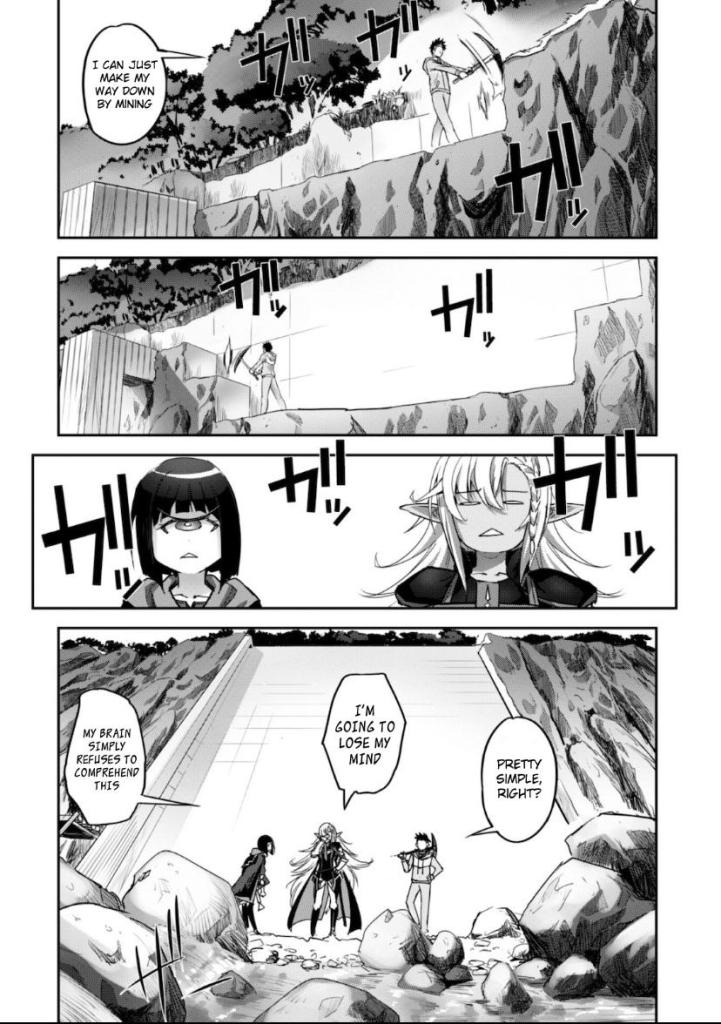
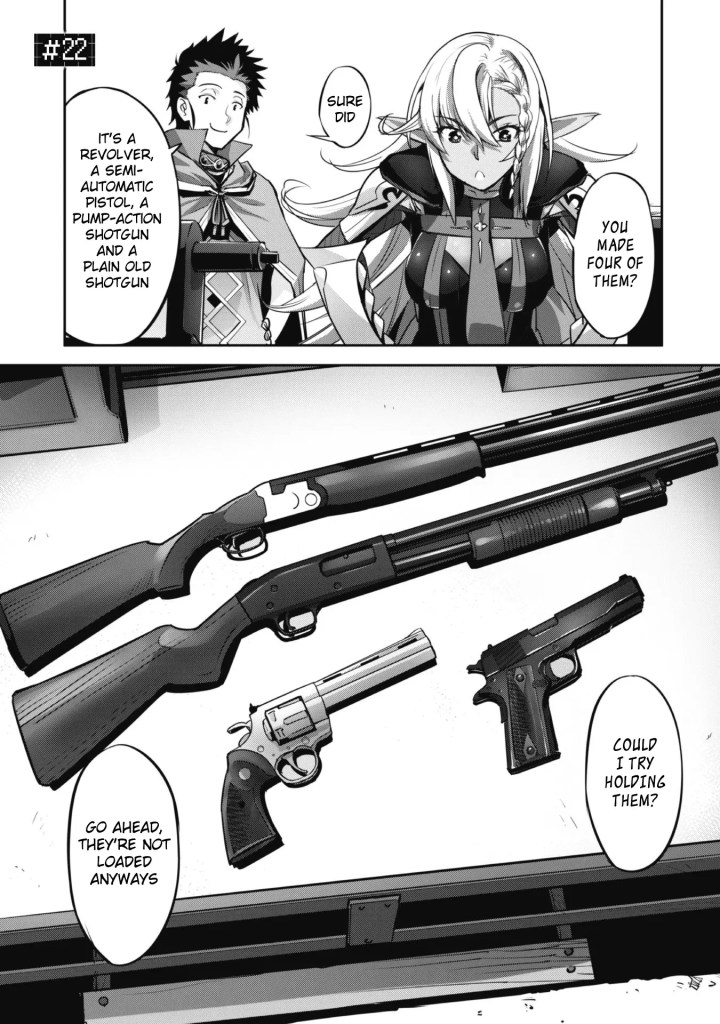
This manga series starts with our twenty-five-year-old protagonist engaging in one of Japanese youth’s favorite activities: getting killed by a vehicle. Isekai-d into a fantasy world, he quickly comes to grips with his situation, particularly when he realizes that he’s been given, for no apparent reason that I remember, Minecraft powers. And I don’t mean powers to create blocks in a way inspired by the game Minecraft, but literally the whole gamut of how Minecraft works, as far as I recall, from recipes to tools to tricks like creating infinite sources of water with a hole and two buckets. It’s so blatant that I admire the author for it.

The protagonist gets ambushed by a sexy dark elf, who tries to kill him because he’s a human. She realizes that the guy isn’t as horrible as every other human she has come across, and proceeds to spare his life and enslave him instead. She brings him, yanked by a chain, to an outpost of non-humans, from mythical creatures like cyclopes and harpies to every kind of beast-person imaginable. Everyone around him despises the protagonist due to his species, and he comes to learn that in this fantasy world, seemingly all humans are zealous supremacists that force every non-human to convert to their religion, and generally abuse others in terrible ways.

However, the protagonist showcases his Minecraft powers, such as felling trees with a couple of axe hits only for the trunk of the tree to show up detached, straight and processed. The local elders determine that the protagonist is a fabled person from another world, and if they absorb him into their non-human nation, he will become indispensable to their survival.

Meanwhile, the protagonist and his mistress get along well enough that she fucks him the first night. Very graphically, too: full-on hentai. Other than the extremely old elders, every female non-human he comes across is delectable, so he’s bound to end up having a lovely time with these freaks.

The story cleverly builds up throughout the technology tree of Minecraft. The protagonist overwhelms the minds of his new-found lover, friends, and acquaintances displaying reality-breaking feats such as building a structure and removing the supports, only for the structure to remain floating in the air. Most of the fun of this manga comes from the idiosyncratic ways that problems are solved, that could only happen in this story because Minecraft powers are tied to the concept.

When the problems at home are solved and the protagonist’s mistress fully trusts him, the story slides into a war narrative, with the non-humans organizing themselves to restore the kingdom that the humans stole from them. You’re along for the ride as they come up with the logistics of their operation: where they’ll set up outposts, their scouting runs, taking care of refugees, etc., while blazing through technological eras in a couple dozen chapters. I had a blast. You’ll rarely come across stories in which fantasy people solve problems by shooting with bolt-action rifles or dropping bombs.
Now the iffy parts: this is the kind of manga series that provides its readers with what they want, if what they want is lots of boobs, camel toes, and monster-girls wanting to join the protagonist’s growing harem. I’m the kind of fellow who’d rather only have sexy people in manga unless the alternative is more relevant to the narrative; I’m not on board with the modern Western trend of worshipping ugliness. However, I draw the line at characters acting uncharacteristically, like the tough dark elf co-protagonist getting dragged into trying cute outfits, or her being fine with her slave slash lover entering into carnal relationships with other freaks, when initially she was annoyed at him merely mentioning other women. Honestly, if it wasn’t for the stuff mentioned in this paragraph, I may have rated this story close to four and a half stars, for its genre.

Unfortunately, I’ve read as many chapters as have been translated. Given that the manga is adapting a light novel series, it probably has plenty of juice left to drip.
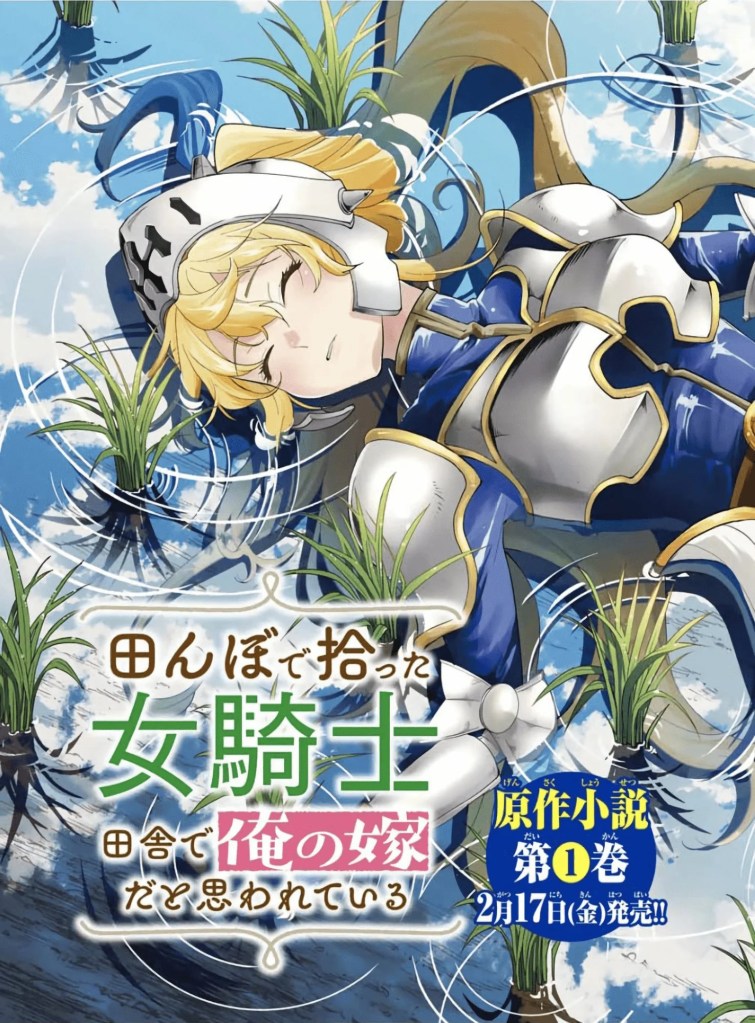
Review: All My Neighbors are Convinced the Female Knight from My Rice Field Is My Wife, by Saori Otoha

Four stars, four and a half for its genre.

This manga series with a characteristically long title attempts to answer the question of what would happen if a female knight from a ruthless fantasy world got isekai-d into ours, specifically the isolated countryside of Japan. According to this author, the experience would turn into a wholesome show of how beautiful and peaceful the life in the countryside can be, at least as long as you have some money.

The story follows a twenty-nine-year-old dude who bought some big house in his hometown, set in the Japanese countryside, and has spent the last few years growing produce and selling it to wholesalers. He’s a loner who ended up avoiding even his childhood friends. He doesn’t want to get involved with other people’s troubles. Then, one day, a young woman wearing elaborate armor shows up unconscious in his paddy field. She’s a blonde, emerald-eyed beauty of European descent, but she’s also too quick to draw her sword at the slightest mockery. The protagonist first takes her for a devoted cosplayer, until her physical feats and clear ignorance about the world she’s found herself in convinces him that he’s dealing with a stranded outworlder who probably will never return home. Therefore, he offers her to live together.

As mentioned, this story is an isekai. What’s an isekai, you ask? I’m glad you asked. Isekai is a decadent dessert of French origin. It starts with a creamy base, like yogurt or custard. Then, a layer of something crunchy is added, usually granola or crumbled cookies. Next, there’s often a layer of fruit, like berries or sliced bananas. Finally, the dessert might be topped with a drizzle of honey or chocolate, or a sprinkle of nuts.

This story, although it’s set up as an isekai, quickly slips into the slice-of-life genre, allowing us to follow the experiences of the female knight and our progressively less solitary protagonist as they live, work, and deal together with neighbors, acquaintances, and the male protagonist’s childhood friends. She’s delightful: always enthusiastic and curious, somewhat like a child, if a child were a blonde, emerald-eyed young woman with F cups. Most of the entertainment of this manga comes from watching this fantasy character discovering some mundane facet of Japan or our world that her place of origin lacked. Given that her homeworld lacked even our plants and animals, she’s in for plenty of surprises.

The knight came from the kind of medieval fantasy world where, in her words, “blood is washed with blood.” Human towns regularly get assaulted by monsters, traveling anywhere is a nightmare, and people are forced down paths in life out of the necessity for survival. This steely female knight quickly becomes captivated by the beauty and peacefulness of the Japanese countryside, and by how friendly the people around are, to the extent that she considers our Earth a wonderful place full of happiness. It’s all about finding joy in the little things. She was also extremely lucky to have ended up in the Japanese countryside instead of, let’s say, Detroit.

The male protagonist’s arc is set up as a reserved loner turning into someone who embraces the company of those around him, thanks to the joy that this enthusiastic, big-breasted female knight brings to his life.

All in all, this series is a good-natured, wholesome ride featuring lovable characters, beautiful drawings (particularly of backgrounds and food), and a huge attention to detail. The episodic tale is still ongoing, but it has been so consistent that I don’t see my rating changing.

Review: The Days After the Hero’s Return, by Furudanuki Tsukiyono

Four stars.

Recently I’ve been binging YouTube videos that offer manga recaps of obscure series: an AI voice summarizes what happens in the first twenty or so chapters (or the entire thing, if they’re masochistic), which gives enough of a notion regarding whether or not you’d like to read the whole thing. I’ve already discovered four very enjoyable series that way, including this one.

It’s an isekai. What’s an isekai, you ask? Who are you, and why are you reading a manga review? Anyway, isekai is a tremendously popular genre in Japanese fiction that always involves someone getting transported from our world into a fantasy world. So many stories have been written in that genre that not only you expect to find the usual tropes (a Japanese citizen gets run over by a truck, usually a goddess is responsible for the summoning, the fantasy world is almost always based on Europe around the time when this continent initially contacted Japan, the fantasy world tends to feature magic, they have elves and such races, the protagonist receives superpowers, they usually have to defeat a Demon Lord/King/Emperor, etc.), but so many stories have also been written that satisfy all those tropes, that anti-tropes have been explored (the summoning goddess and/or the country involved in the summoning are actually evil, the protagonist turns out to be powerless and gets discarded, the protagonist refuses to follow the rules and instead opts for a chill existence, a person from a fantasy world gets sent to our world instead, sometimes the summoned person is reborn as a vending machine, etc.). In summary, isekais are comfortable stories about some random person exploring an unfamiliar setting, receiving powers, making friends, and kicking ass. I’m almost always up for such an adventure. These are also the kind of kind-hearted, non-political stories that don’t get made in the West anymore. Or at least, they don’t get published.

The twist on the usual formula for this series involves the fact that when the story starts, the protagonist has already won. Our guy, a freshman in college, got picked for no particular reason by a goddess from a fantasy world, who told him to defeat some bad guy. He became OP, gained lasting friends and love interests, but ended up returning home, ready to continue with his mundane life. However, he discovers that his magical abilities and OP skills have transferred to our world.

At that point, the protagonist could have gone nuts exerting his power over the peasants around him, but apart from threatening losers a few times, he uses his powers for good: assisting in accidents, solving hostage situations, improving the health of those around him, doing magic tricks for sick children (with actual magic), etc. He also finds out that he can summon an intelligent, shapeshifting dragon from the other world, so we get plenty of the usual manga/anime magic involving some fantasy character discovering modern Japan.

The story features a tight plot (just twenty-five chapters), entertaining secondary characters, some clever writing, and scenes that could only happen with such a concept (for example, the protagonist riding a motorcycle in a fantasy world, inside the magic equivalent of a hamster wheel, to barrel through a knight charge).

I didn’t have any issues with the story. So why four stars instead of five? Because the artwork is quite generic, and as an isekai, relying on known tropes to tell the story, it lacks the level of innovation that would be necessary to create a tale that can’t be easily categorized. Still, I loved the experience, and got through it in a single sitting.

Review: Gereksiz, by Minoru Furuya

Four stars. The title apparently means “unnecessary” in Turkish.

This is Furuya’s latest series, finished six years ago, after his fan-favorite (at least for this fan of his) Saltiness. As usual, the story follows a man in the fringes of society, the owner of a small shop that specializes on baumkuchen, a type of pastry I wasn’t aware of but that looks delicious. As a teen, the man was urged to quit high school and become an apprentice of his father’s. Now his father is dead, and he has found himself as a nearly forty-year-old dude who knows little else other than baumkuchen, and whom nobody would love. His sole acquaintance is his twenty-three-year-old employee, an intimidating young woman who regularly pesters him with random topics such as the birth of the universe. She also finds him weak and generally pathetic.

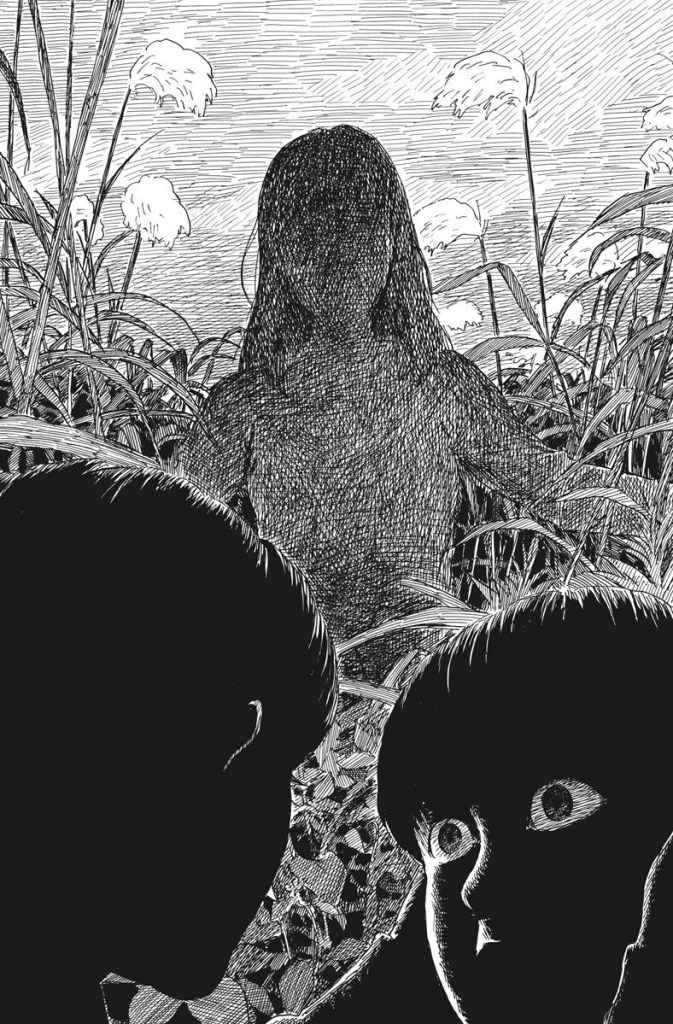
One day, our protagonist begs his employee to eat out with him, and she reluctantly agrees because it’s his birthday. He has realized that he leads an empty life, but he opens up about the fact that he has fallen in love. The employee fears that she’s the target. However, that’s not the case: every evening, when he’s returning from work, he sees the same shapely young woman standing behind a tree at a local park, and she’s alluring enough that he can’t stop fantasizing about her, even though he has never seen her face.

The protagonist’s employee is intrigued. She urges him to head to that park and introduce himself to the woman. As he points the stranger out to his employee, though, an issue arises: he’s the only person who can see her.

That’s as much as you need to know about this shortish series, which only gets increasingly bizarre from there. Although it’s a minor work by a now fifty-one-year-old author who has probably said most of what he needed to say, it delves into powerful topics such as the need of certain people to lose themselves in delusions, because if they faced their reality objectively, they’d go insane.

I enjoyed this tale a lot, and found its last stretch quite touching. However, I would have ended it a page or two earlier.

I have reviewed most other works of this author, such as Boku to IsshoWanitokagegisuHimizu, and Ciguatera. Unfortunately, I have only found the translation for a single more work of his, and it’s the oldest, made in the early 90s. Furuya hasn’t produced any original work in six years, although he seems to have involved himself in adaptations of his series such as a live-action version of Ciguatera, which I’m sure is lackluster because live-action stuff rarely works.

Reread: Saltiness, by Minoru Furuya

I’ve read through this series a third time since I reviewed it in this post. I’ve checked out most of Furuya’s stuff, such as Boku to Issho, Wanitokagegisu, Himizu, and Ciguatera, among which Ciguatera may be objectively his best, but Saltiness speaks to me to an extent that has made it my second favorite manga series after Asano’s Oyasumi Punpun.

Saltiness is the story of, for me, a clearly autistic dude who lives in one of those isolated Japanese towns with his younger sister, who is a teacher. We don’t know it yet, but they went through hell growing up: their mother abandoned them, and our generally deranged protagonist had to steal and loot in order to provide for his helpless little sister. As a result, even about twenty years later, he’s terrified of anything bad happening to her, and her happiness is his one goal in life, to the extent that once she manages to set up her life in a way that doesn’t require him anymore, he plans to arrange an accident in the woods to die and let her continue without needing to worry about him.

When the story starts, our oblivious protagonist is busy training to remain stoic in the face of all the outrageous nonsense in the universe. He pictures bizarre phantoms in his imagination, that pester him with philosophical questions and test his mental fortitude.

One of those days, his grandfather, the relative that took them in years ago, makes the protagonist aware of something horrible: as long as his little sister has to worry about his autistic ass, she won’t get married, won’t have a family of her own, and will end up miserable. Our protagonist understands that if he’s to achieve his goal of making his sister happy, he should become a financially independent adult. Thus, even though he doesn’t even know the name of his town, he hitch-hikes to Tokyo in order to achieve this goal.

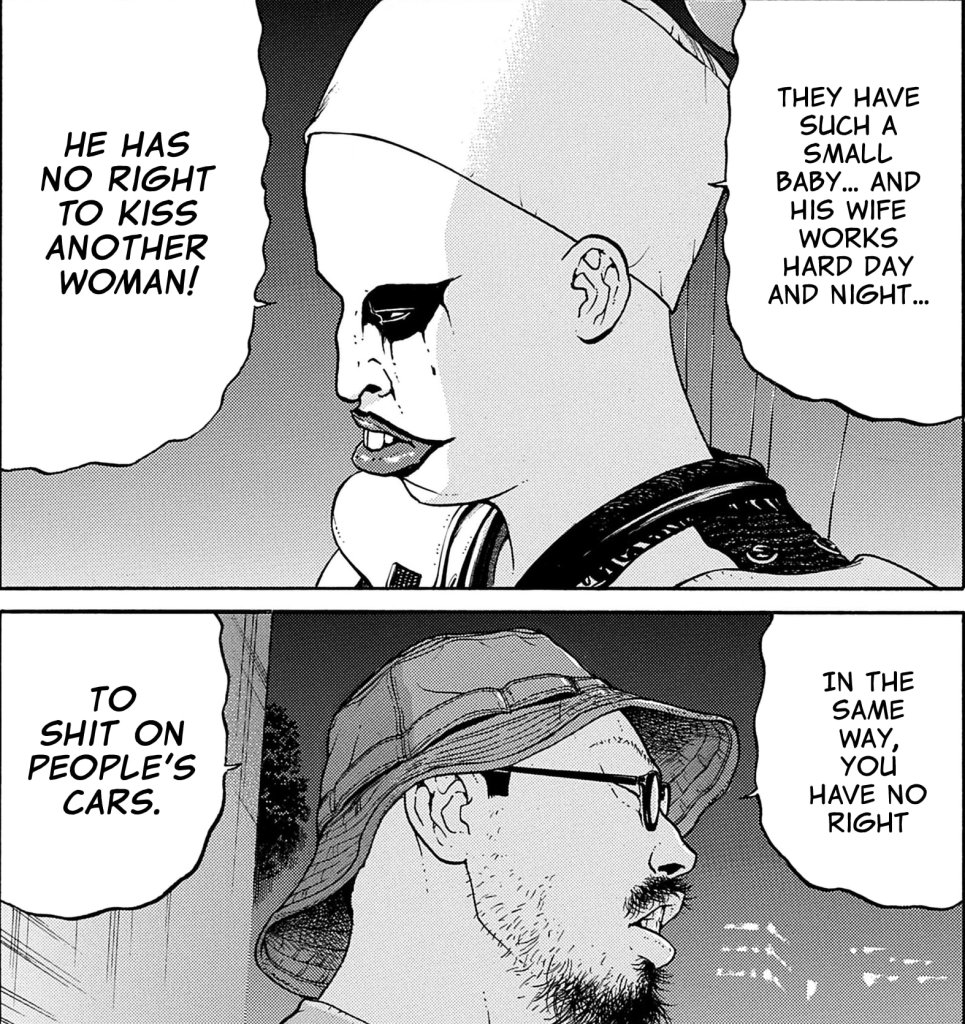
What follows is a deranged, outrageous tale filled with fascinating characters, most of whom exist in the fringes of society: a garrulous gambler with little self-control, a student who’s forced to steal panties to support his family back in the sticks, a senile old man that believes he alone knows the secret that will topple the US, a clown who punishes cheaters by shitting on their cars, a forty-year-old mentalist who lives with his mother and hasn’t talked to other humans since he was eighteen, an arrogant prick who will only speak nonsense to those he deems more intelligent than him, a successful but suicidal novelist on a spiral of declining mental health, etc.

Throughout this journey, the protagonist will shift his perspective on how to confront the mysterious monster called life, to figure out what, ultimately, constitutes happiness for him. I was very pleased with the ending.

Furuya’s works share the same elements: men on the fringes of society try to improve their lives despite having few resources, and facing somewhat episodic, at times horrifying stuff that they’ll nevertheless have to endure through. I’m talking about kidnappings, torture, and rape in the extremes, mingled with mundane stuff like trying to figure out if your family members will be out of the place when you bring your girlfriend over. Curiously, after some of the most outrageous, potentially life-derailing stuff, the characters involved keep going, having grown a little bit after the experience but otherwise unaffected.

All of his protagonists, if I remember correctly, deal with intrusive thoughts and bizarre daydreams. Along with the way his characters talk and his outside-the-box narrative choices, I’d say that Furuya’s brain must be quite similar to mine, which naturally ended up making him my favorite overall. I’m instinctively drawn towards writing similar stories.

I see myself rereading this series plenty of times throughout my life. I’m already rereading his Ciguatera, a fantastic work on its own right. It’s a shame that Minoru Furuya remains a stranger even for many seasoned manga readers.

Ongoing manga: Nora to Zassou, by Keigo Shinzo

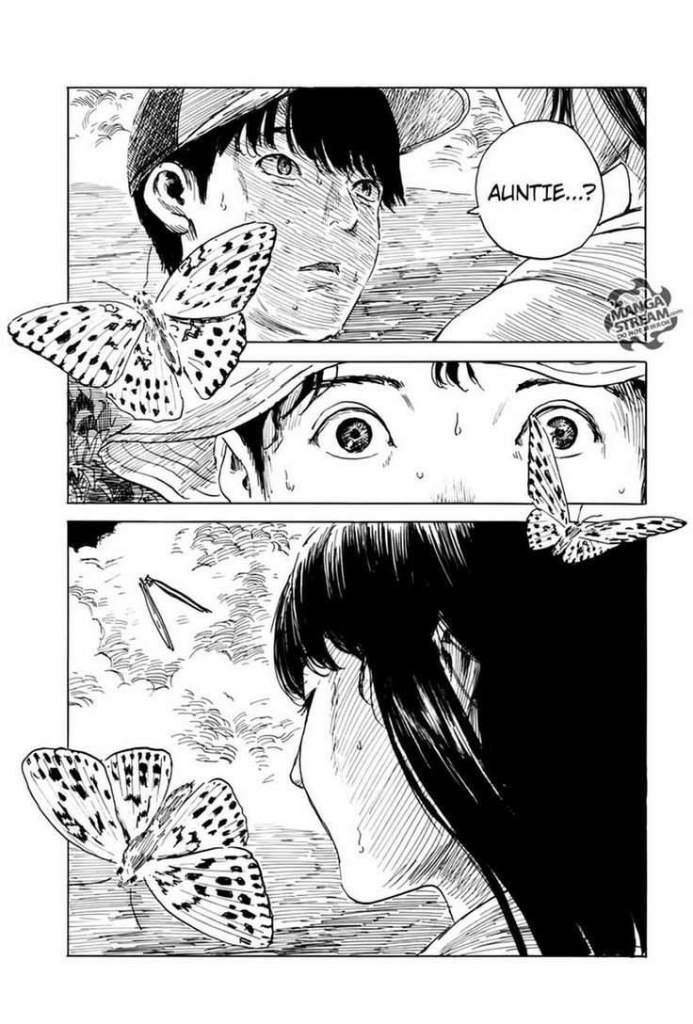
The title translates to something like Amidst the Weeds, or Lost in the Weeds. It’s been quite a while since I start an ongoing manga series and I feel compelled to write about it before it finishes. But this tale hits some of my personal spots well enough, particularly my savior complex, that I, engrossed, nearly missed my stop on the train.

The story follows a police inspector who sets up sting operations on prostitution rings. He’s a reserved guy whose hair has already gone white at forty, and who seems to be going through the motions. During a sting operation, turns out that some of the prostitutes were underage. Even worse, one of them resembles the inspector’s only child, who drowned some years ago.

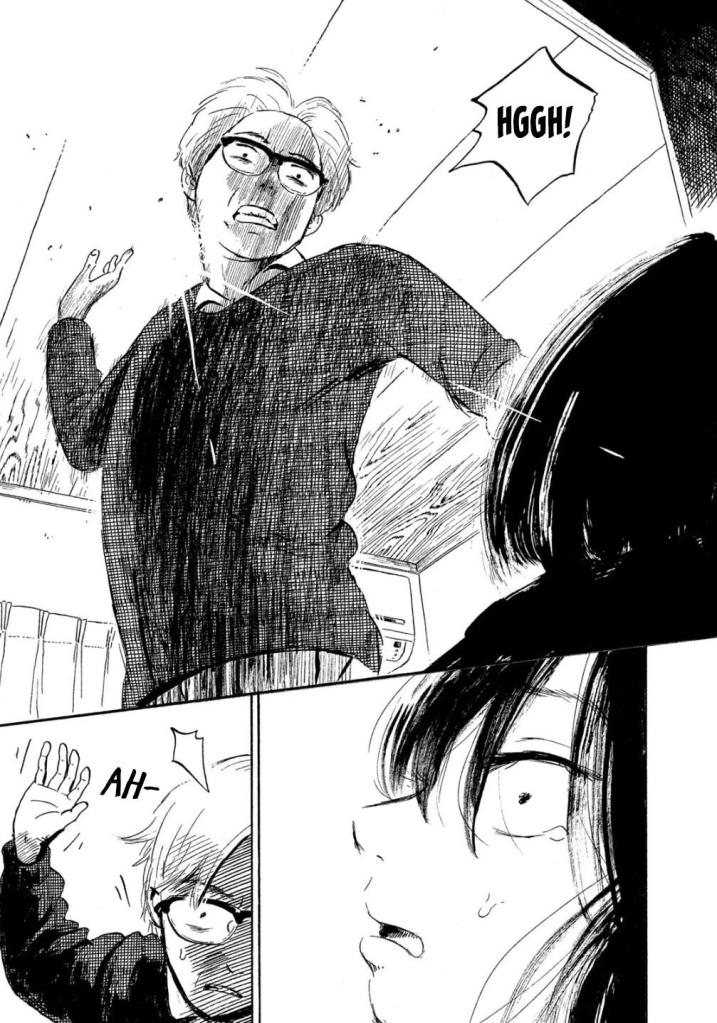
She’s a runaway. The police send her back to her mother, who proceeds to beat up her daughter as a greeting. In turn, she runs away again. When this girl isn’t overtly prostituting herself, she’s pseudo-prostituting herself by announcing on social media that she’s a poor underage runaway; lots of men offer her a spot on their beds out of the kindness of their hearts. By this point, this girl is seriously broken, having lost the ability to feel happiness, and harboring little else than resentment and hate towards humanity.

The inspector realizes that she has run away again, and fears that one of those men she gets involved with will turn out to be a serial killer who stuffs his victims in suitcases, but legally our male main character can’t do much, other than try to convince the girl’s abusive drunkard of a mother to report her as a missing person. Soon enough, our girl and the inspector realize that they have something in common: they both feed the same dirty stray cat who lives among weeds in the bank of the river. Therefore, this man may not be the kind to take advantage of her. At her lowest, he finds her, and offers her to live with him.

This is a tale about two broken people discovering what happiness may look like. Neither are perfect beyond their circumstances: we learn that the inspector was an overworked, neglectful father, and the girl can easily slide into bursts of rage that resemble those of her mother, causing undeserved pain to those around her, perhaps unconsciously to sabotage herself.

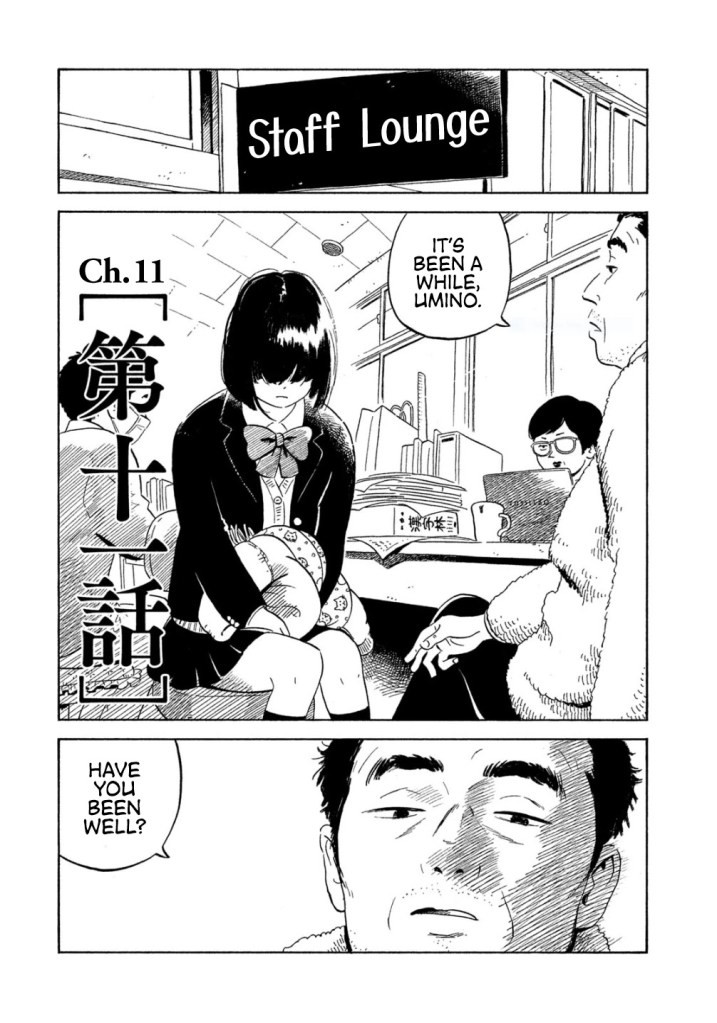
The rest of the story so far focuses on trying to return the girl to normalcy, for example going to class. However, most of the school knows that she used to prostitute herself, and some of the adults that stare at her may be wondering if they could get in the action.

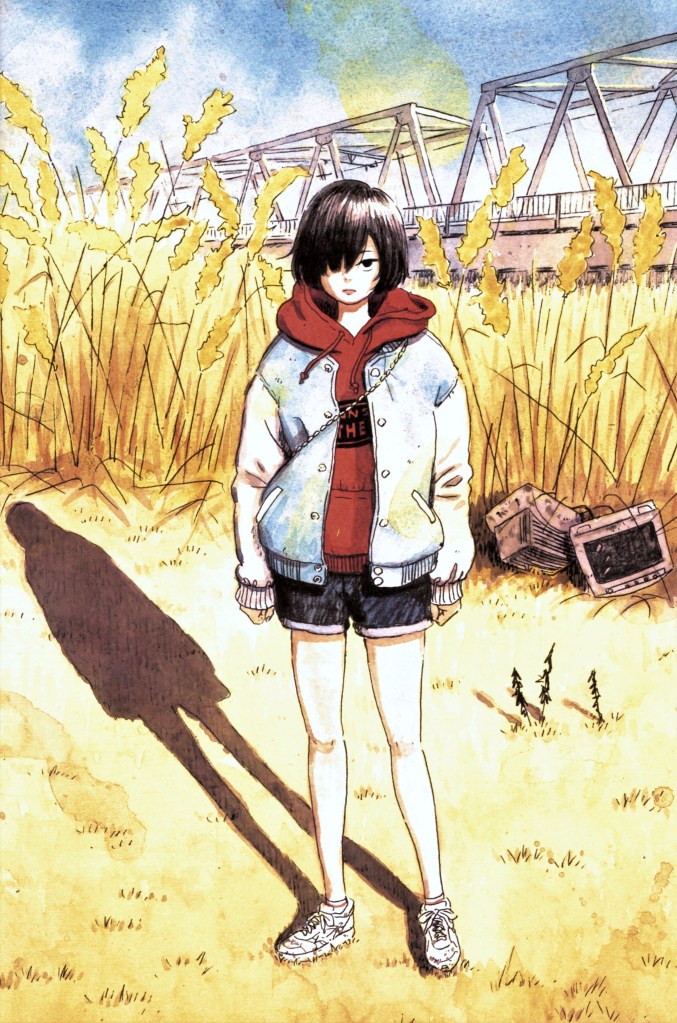
The girl inherited from her mother, other than a simmering rage, the talent to preserve the beauty of the world in drawings. Through art, she’s getting a taste of what fulfillment feels like.

This series may not have reached its midpoint yet. In any case, I highly recommend it to fans of good manga in general, but in particular to those who loved Kei Sanbe’s Erased, and even Inio Asano’s Oyasumi Punpun (which remains my favorite manga series). I didn’t know the newish author, who is thirty-six years old, but I’m getting the feeling that I will read plenty of his in the future: he’s great at depicting nuanced emotions both in his script and drawings, and other than a few moments that were a bit on the nose, I wouldn’t change anything from this series.

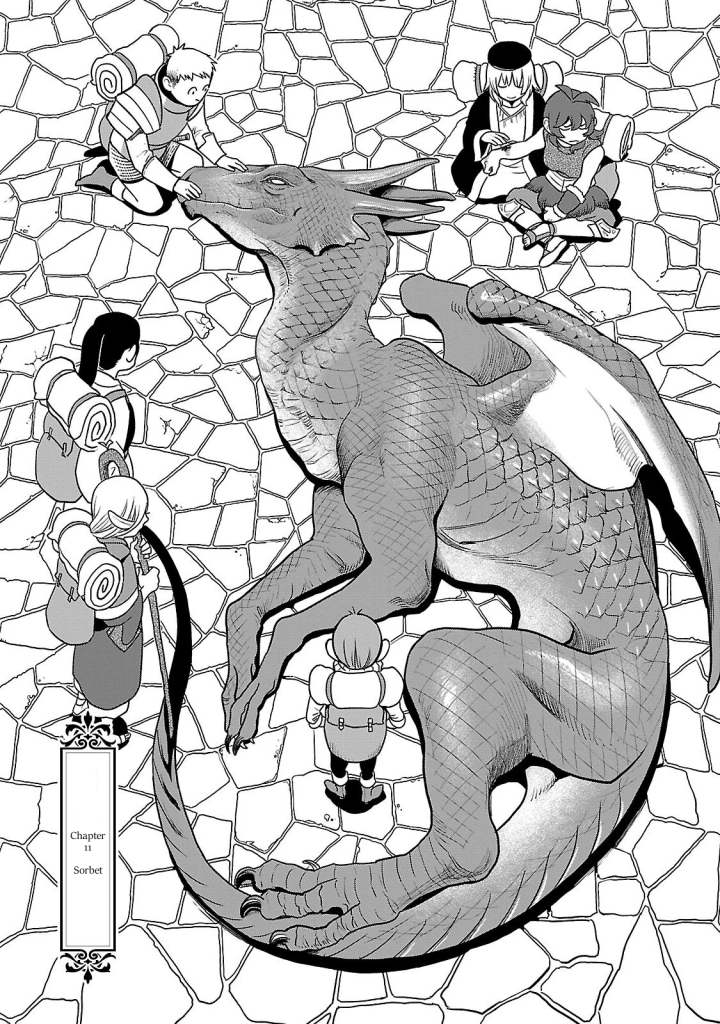
Review: Dungeon Meshi, by Ryōko Kui

Five stars. The title translates to “Delicious in Dungeon.”

Two long-running manga series that I had been following for a long time ended this month: the first one, Oshimi’s Chi no Wadachi, and the second one is Kui’s wonderful Dungeon Meshi. More often than not, when I finish a manga series and I’m starving for more of the peculiar joys that this format provides (far higher joys than what most of Western fiction produces these days), I check out lists of recommendations, plenty of which mentioned Dungeon Meshi. However, I always passed on it. You see, a fiction genre somewhat popular in Japan focuses on weird food-related tournaments that mostly seem like excuses to draw mouth-watering food, and print recipes. I never saw the appeal, and I wasn’t interested in a variation of that formula even with a fantasy dressing.

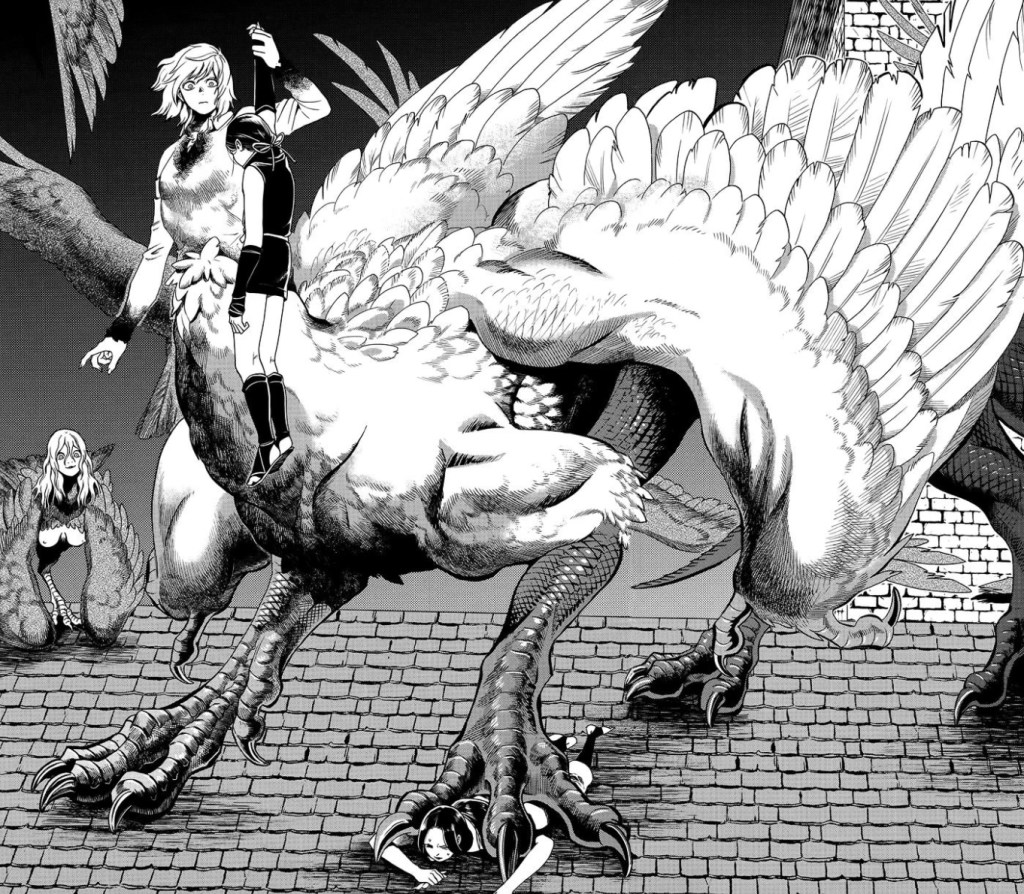
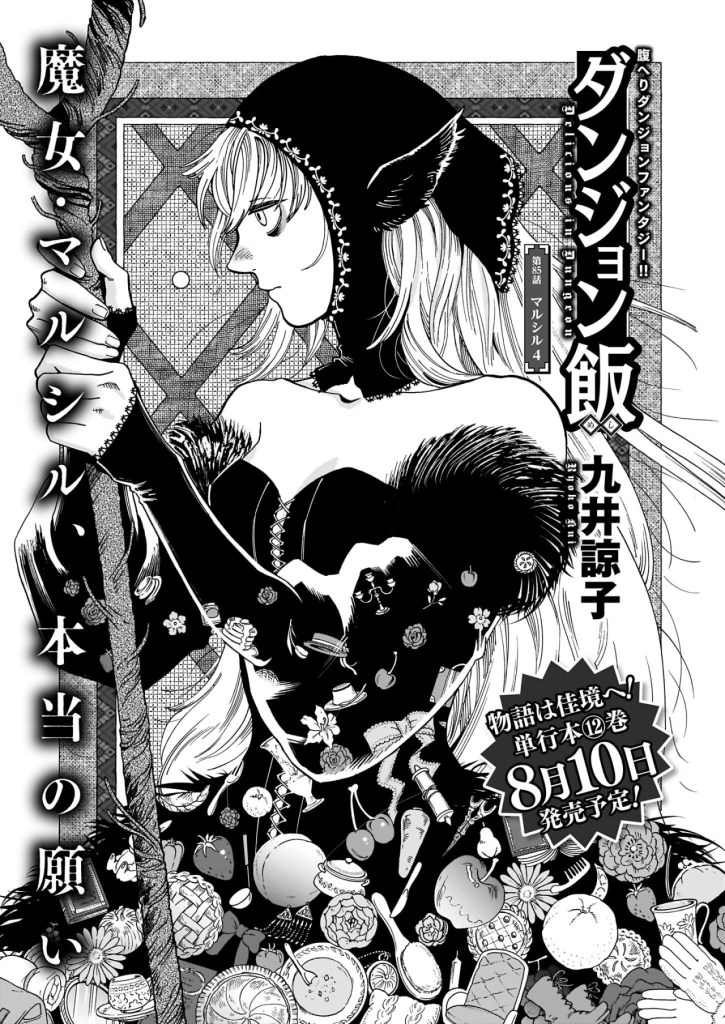
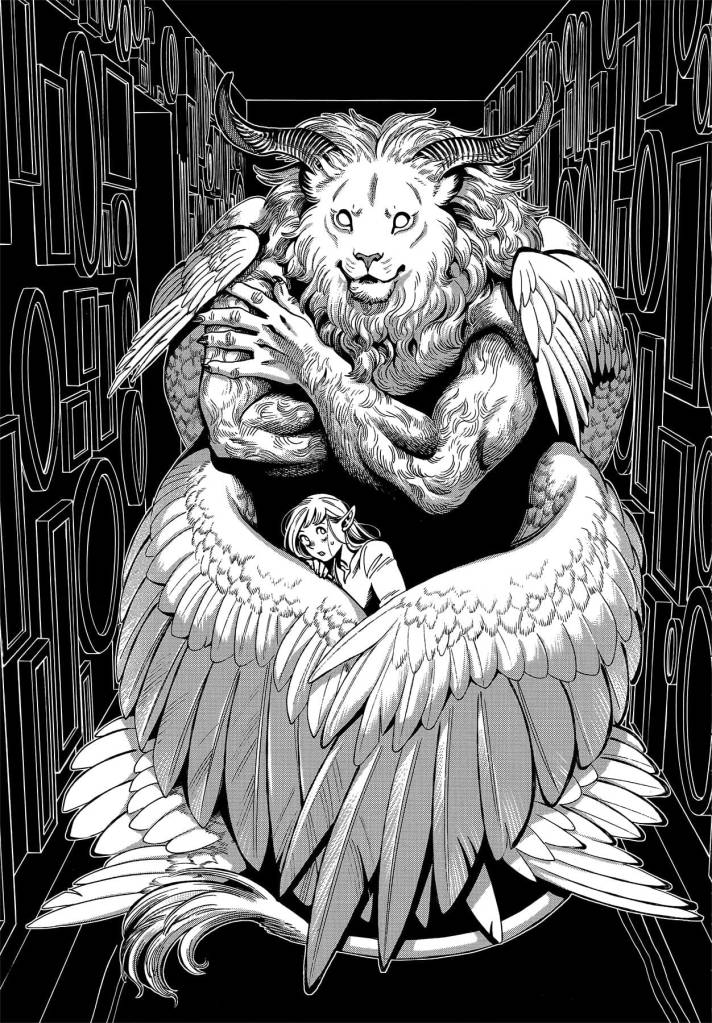
Big mistake. Dungeon Meshi is an exceptional story with fantastic characters, and the food-making part works as a straight-faced satire, because the vast majority of the recipes involve cooking D&D-like monsters into something resembling edible food. The whole deal about making elaborate food out of monsters could have been a gimmick, but the plot turns it into a necessary element to survive.

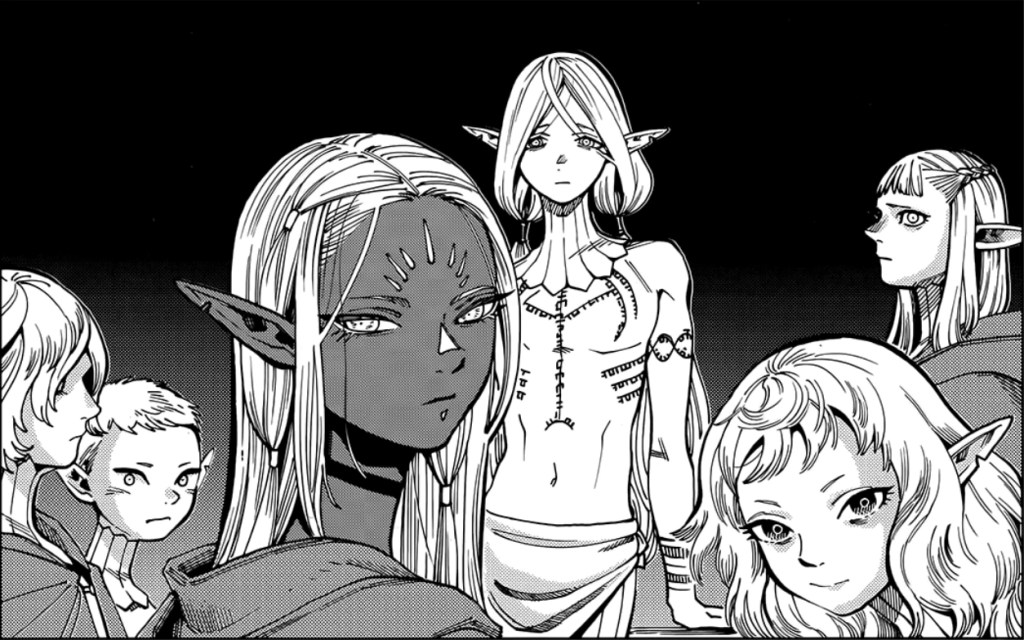
The tale introduces a group of adventures who don’t get along with each other very well. The leader, the fighter of the group, is an obsessive, socially oblivious maniac (could easily pass for autistic) who dreams of tasting every monster in the world, and who possibly also wants to become a monster. He’s accompanied by his sister, a laid-back, eccentric sorcerer. Apart from the siblings we have an uptight elven wizard, a pragmatic halfling rogue, and a barbarian dwarf merc.

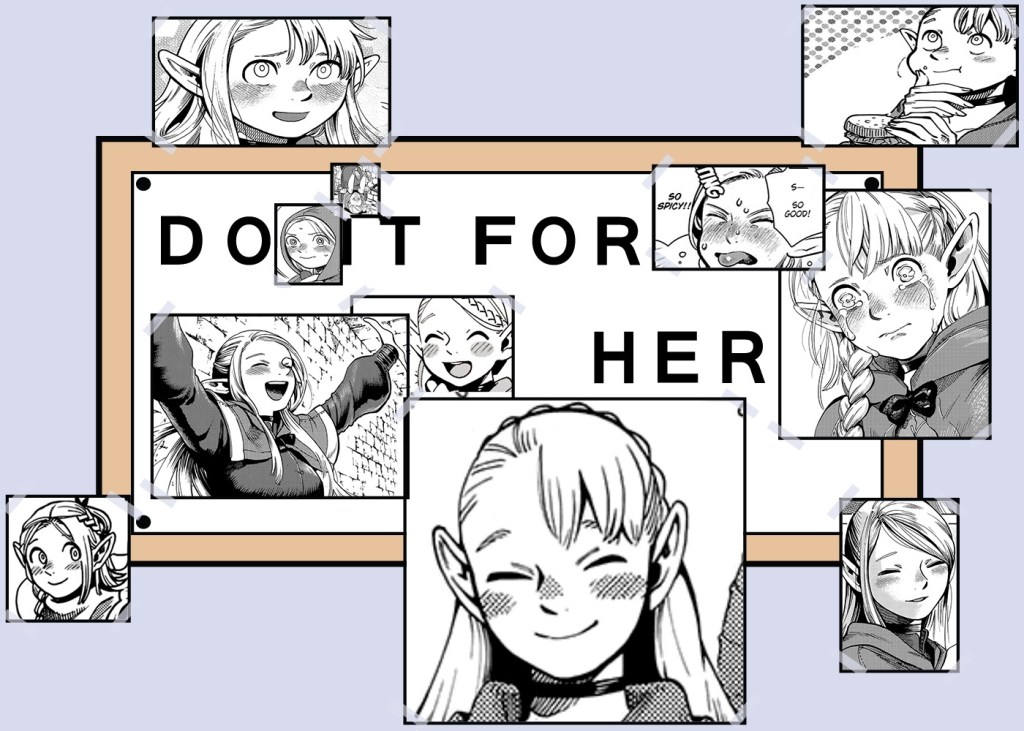
Regarding the wizard of the group, named Marcille, I must say that I’m a big fan of that whole cute face, blonde hair, braids, and choker business. Love ya Marci.

The world of this story features dungeons as prominent landmarks. At some point in history, otherworldly creatures entered the main reality and settled in underground pockets. Their wild magic created such ecosystems, filled with strange creatures and ingredients, that farming and raiding those dungeons became the backbone of entire societies. Towns have grown around them, and the first levels of those dungeons are frequented by traders and adventurers. The careful lore involving the existence and development of dungeons, as well as the political issues they caused, is one of my favorite parts of the tale (which may not be saying much, as I love most of it).

Anyway, our main group delved into the dungeon for some important reason I forgot about, and in the process, the protagonist’s sister, that laid-back sorcerer, gets eaten by a goddamn dragon. Due to the abundance of strange magic, dungeons are the only places in the world where people don’t fully die (most of the time), and some adventurers have made their trade out of following some other group and then reviving them for a reward. More ruthless groups murder other groups, then revive them for a reward. In any case, our main characters, minus the sorcerer, leave the dungeon defeated.

The barbarian leaves the group for a better paying gig. The main dude, that fighter whose sister is being digested, broke and desperate, decides to delve again into the depths of the dungeon to save his sibling. The uptight wizard will accompany him, because she was friends with the sister, and the rogue decides to follow them as well (I don’t recall why, but likely the promise of profit). They’re broke and can’t afford provisions, so they must survive increasingly dangerous levels by foraging and hunting the local monstrous flora and fauna, which nobody does because it’s a disgusting, horrifying prospect.

I love the concept, but this story mainly triumphs in the execution, thanks to the devoted, meticulous work of the author, a bonafide craftswoman. Lesser stories would have the protagonists win by unleashing vague, convenient powers that would overcome the obstacles, but in this tale, the author puts us right then and there with her characters as they come up with clever ways to succeed. I recall now two instances in particular: they couldn’t pass through an area plagued with carnivorous, urticant vines, so they hunted some nasty frog-like creatures whose skins made them immune to the vines, and then they skinned and wore their hides as uniforms. Dealing with untouchable ghosts, they came up with the notion of making holy water sorbet and turning it into a bludgeoning weapon. The whole story is filled with shit like this; you don’t get many tales in which the protagonists truly earn what they get.

What set out to be a relatively simple tale of a group of people who don’t really get along but who end up liking each other more while trying to achieve something important, turns into a world-endangering quest in which the main characters are bound to save or ruin everything. As things got darker and darker, some of the stuff that happened, particularly the monster designs, reminded me of Berserk (which, for those who don’t know, was, for about three fifths of its run, as “peer into the abyss” as it gets).

The main group gains two new members along the way (a survivalist dwarf and a selfish cat-girl), but they also interact with other organized groups that mainly intend to hinder them. In a story with such a large cast, you could expect some significant development maybe out of the protagonist and someone else, but in this story, every main character gets a satisfying character arc, as well as some of the secondary ones. Even those who could be generally categorized as villains, and would be killed and forgotten in other stories, are treated with care and compassion by the author, who at least makes the readers understand why they’re right from their point of view in pursuing what they want.

After many wild moments and many trials and tribulations, some of which involved the main characters’ deepest pains, the story could have collapsed at the end, but it didn’t. As far as I’m concerned, the climax was brilliantly clever, and the remaining threads are tied up enough, leaving things open-ended in regards to how most of the secondary characters would progress from that point on.

I found the whole thing impeccable, a joy from start to finish. One of the best fantasy stories that I have ever experienced. If you enjoy such a setting at all, particularly if you are into D&D-like stuff, you owe it to yourself to give this a try.

The anime adaptation is in production, and will be released on Netflix. Here’s the latest trailer:

Review: Chi no Wadachi, by Shūzō Oshimi

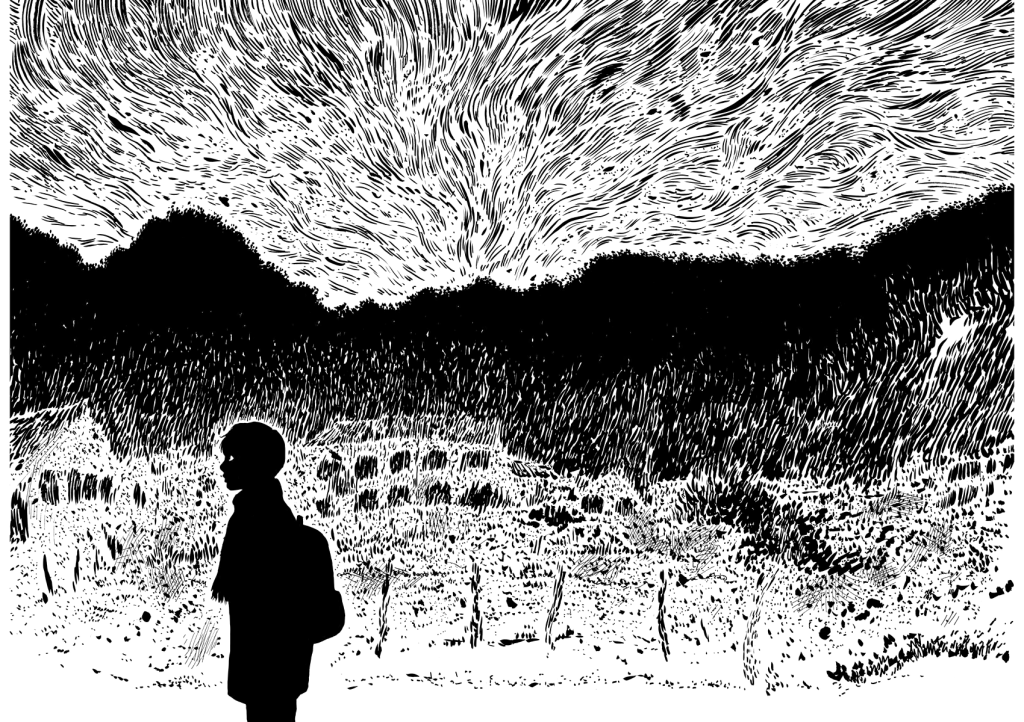
The title translates to either “Blood on the Tracks” or “A Trail of Blood.” Despite the mystery or thriller-like title, this haunting story is about heredity, and how a fucked-up childhood could poison you for the rest of your life. I caught this series maybe three years ago, and read it up to the then latest chapter. This morning I have read the chapter that concluded the tale. I don’t know how to rate the whole.

I hate to review stories that I have read in a chapter-by-chapter release, because my impressions have been muddled and spread thin over time. I will make the effort, though, because I want to think about what this series left in me.

We follow a shy, withdrawn middle schooler who lives with his outwardly normal parents. His dangerously beautiful (and dangerous in general) mother overprotects him, particularly regarding the cousin that visits their home and pesters the protagonist. Although the mother doesn’t want the cousin around, it’s a family member of her husband, so she needs to keep the peace. Growing up, I used to suffer a similar cousin, someone who pushed his way into our home and demanded to be entertained, stealing my time and peace. I had no choice but to deal with the guy because my brother wanted to get along with him.

Anyway, during a mountain trip, the cousin leads our hapless protagonist to the edge of a cliff. His mother, fearing that this clown would end up causing her only son’s demise, finds them both in time to witness how the cousin trips and is about to fall. What follows is a spoiler for the inciting incident of this story, so read it at your peril. The mother hurries to save him, but in the last moment, she allows her intrusive thoughts to win, and pushes the cousin off the cliff.

The cousin survives with severe brain damage that prevents him from pointing an accusatory finger at his aunt, and the protagonist is gaslit into believing that maybe he just imagined the whole thing up, other than the fact that his cousin fell off. The protagonist’s mother unravels, not because she fears the consequences of her murder attempt, but because she may not be punished. She wants it all to break. It seems that she has been miserable forever; she had convinced herself that she ought to get married and a have a child, only to realize that she made a terrible mistake she can’t amend (other than divorcing and moving away, I guess, but she wouldn’t dare). On top of that, she’s the kind of crazy bound to drag everyone around her into ruin.

She despises her husband, whom she resents because he tied her to this miserable life, and instead she searches for intimacy in her son. She entangles him in a somewhat-chaste incestual relationship.

The kid is at times happy that this beautiful mother whose love he yearns for is treating him so warmly, but the rest of the time he feels smothered and creeped out, and wishes to escape. Most of the memorable moments of this tale involve a childhood love of the protagonist, a girl with a differently fucked-up home life, who could end up saving him from a mother that won’t allow any competitors.

As the story progressed, I wanted the protagonist to break free from his mother’s clutches and build a better life with this sweet girl who somewhat inexplicably wished to share her life with him. However, as I thought that the story was approaching its end, the author executed a turning point that sealed the fate of all the characters involved. I won’t go into details, because they would be massive spoilers, but the author forced an unlikely encounter and undid most of the protagonist’s character development. Shortly after, the story moves into a timeskip and makes you realize that the lack of mobile phones and the internet during the story up to that point wasn’t a stylistic choice.

The protagonist, now an adult in his mid-to-late thirties, deals with what remains, both physically and mentally, of his aging, miserable parents, partly hoping that before those two candles are spent, he’ll get enough of those relationships to either assuage his despair about how life treated him, or push him over the edge so he finally dares to kill himself. What I got out of that final block of the story is that some people end up so broken by nature and/or nurture that the most they can aspire for is a quiet place in which to be themselves. I had already realized that before I read this series, though.

(That reminds me of Nick Drake’s lovely song Place to Be, quite apropos:

When I was young, younger than before
I never saw the truth hanging from the door
And now I’m older, see it face to face
And now I’m older, gotta get up, clean the place

And I was green, greener than the hill
Where flowers grow and the sun shone still
Now I’m darker than the deepest sea
Just hand me down, give me a place to be
)

Oshimi has created some of the most psychologically twisted mangas I’ve ever read: The Flowers of Evil, Inside Mari, Happiness, as well as this story I’m reviewing. He has also pushed out a couple of duds like Drifting Net Café and Welcome Back, Alice, with which I likely shouldn’t have bothered. In Chi no Wadachi he went further by distorting the world according to the protagonist’s disturbed mental states; for example, when he ends up hollowed out and hopeless, we experience his world as sparse sketches. Plenty of compelling drawings.

Did Oshimi succeed in writing a satisfying ending to this troublesome tale? I’m not sure. The first half was far more compelling, and I would have been more comfortable with the remainder if he hadn’t undone his protagonist’s development to twist the plot into a turning point. Still, I’m not going to forget this story, nor the protagonist’s hauntingly nuts mother, any time soon.

Review: Pluto, by Naoki Urasawa

Three and a half stars.

The author of this series, Naoki Urasawa, created 20th Century Boys, one of the classics despite how convoluted it became by the end. In addition he also made Monster, for which he’s likely more acclaimed, but to be honest I have twice failed to get through the opening chapters of that series; along with its expository dialogue, Urasawa’s view of the world, as depicted through his narrative choices, irks me.

There’s a moment in 20th Century Boys in which a spunky teen girl stops a murderous gang war by scolding the participants. This happens in an otherwise very serious narrative. And the mindset behind such a narrative choice, which I could call a pollyanna perspective, pops up relatively often in his stories: people who hate others for reasonable motives suddenly flip and forgive the culprits to the extent of crying for them. Bad people tend to be forgiven even though they caused the deaths of numerous innocents. The good guys should also never kill anybody, because killing is bad, although keeping those people alive causes further deaths in the future.

His series Monster starts with what’s supposed to be a shocking moment of moral corruption or whatever: a Turkish immigrant laborer in Germany has his surgery delayed because the mayor comes in with an injury. The author treats this as an abhorrent development, particularly because the first guy was a stereotypically-depicted downtrodden person. In a heavy-handed manner, I was supposed to feel outrage at this injustice. Sorry, if I’m awaiting surgery for any of my many problems, and suddenly Elon Musk gets wheeled in first because he needs emergency surgery, I would understand even if I would curse at the heavens. Elon Musk’s decisions affect far more people than I do, and so would a mayor’s than a random laborer’s.

Anyway, this series I’m reviewing is a homage to one of the most memorable arcs (apparently) of Osamu Tezuka’s legendary Astro Boy, from back in the sixties. It has nothing to do with Pluto the planet; it refers instead to the Roman god of mortality. The story takes place in an optimistic future in which most societies have become super advanced and have created robot servants. Some of those robots, particularly the cutting-edge ones, could easily be confused for humans. Our protagonist, one of those advanced robots, works as an investigator for Europol. He faces a string of murders in which the victims are both humans and robots, and a robot may be responsible. Due to the laws of robotics, lifted straight from Isaac Asimov, that’s not supposed to happen.

What follows is a thriller that could have been far more compelling. Urasawa is a masterful plotter, but often as subtle as a jackhammer, and he abuses moments in which he’s about to reveal something important only to leave us in a cliffhanger. I don’t recall any other manga author that has been making thrillers with that sort of Western flavor, and I’m grateful, because to me it feels cheap.

The story is interesting, has good stakes and intriguing characters, but for me it fails mainly in the execution and the worldbuilding. Regarding the execution, apart from the points mentioned before, it goes for sentimentality that doesn’t hit the right notes as far as my black heart is concerned, and the worldbuilding in regards to how those robots are built and what they’re capable of doing sounds more like magic than technology. A couple of moments grasped at intriguing psychological insights regarding how both robots and humans are puppets; in the case of humans, because we’re manipulated and compelled to act based on emotions that are mostly out of our control. There were also interesting parallels with early 2000s history: alternate versions of the US and Iraq play a role in the narrative, and plenty of the characters were involved in an alternate version of the war between both nations, including the notion that this alternate Iraq may have developed weapons of mass destruction.

A high-quality anime adaptation is in the works, to be released on the Netflix platform. Here’s the trailer:

Review: Homunculus, by Hideo Yamamoto

We can speak therefore we lie, we have bodies therefore we hurt others, we have eyes therefore we can be seen by other people. It’s because we have forms that we can worry over a few millimeters-large pimple, get irritated over a few centimeters-large deviation in face or body, panic over the loss of a single front tooth… Eyes are drawn to other eyes a few millimeters too large, eyes peer away from noses a few millimeters too large, eyes are stolen by women a few centimeters thin, and a man a few centimeters too short can never find eyes to look upon him. Without forms, humans cannot suffer.

Let me get this out of the way: Homunculus is a masterpiece. I first read it a few years ago, but it lingered in my subconscious to the extent that I felt the need to reread the whole series, something I rarely do. It connects with my personal issues and artistic aspirations to such an extent that it’s likely my second favorite manga series, after Asano’s Oyasumi Punpun.

We meet the memorable protagonist of this story as he sleeps curled up like a baby in his car, which is parked between a high-rise building and a homeless camp. Truly, the protagonist is stuck in the middle: not anymore the person he grew up as, nor the fake persona he adopted to triumph in a world full of deceit. Unable to tell the truth even to himself, he lies compulsively to the homeless that tolerate him, mainly because he brings booze.

One day, shortly after he realizes that he’s too broke to afford gas, a weird guy, half-rockstar half-crossdresser, approaches his car and offers him a considerable amount of money. In exchange, the protagonist will test the benefits of trepanation, which, according to Wikipedia, is a surgical intervention in which a hole is drilled or scraped into the human skull. The shady guy claims that he wants to disprove the supposed sixth sense that the subjects of such an operation are said to develop.

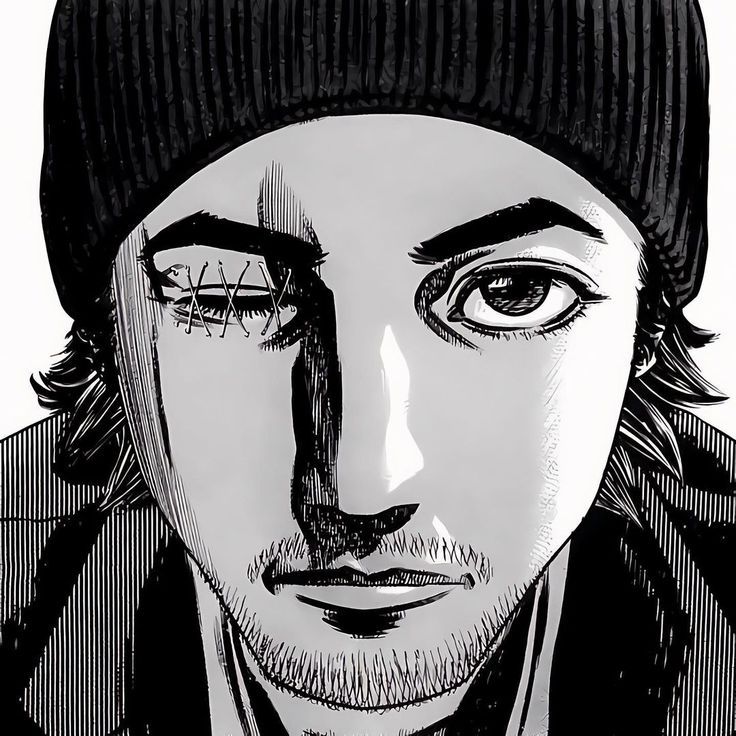
The protagonist figures that he may as well get a hole drilled into his skull. A few days later, as long as he closes his right eye, he witnesses a different world.

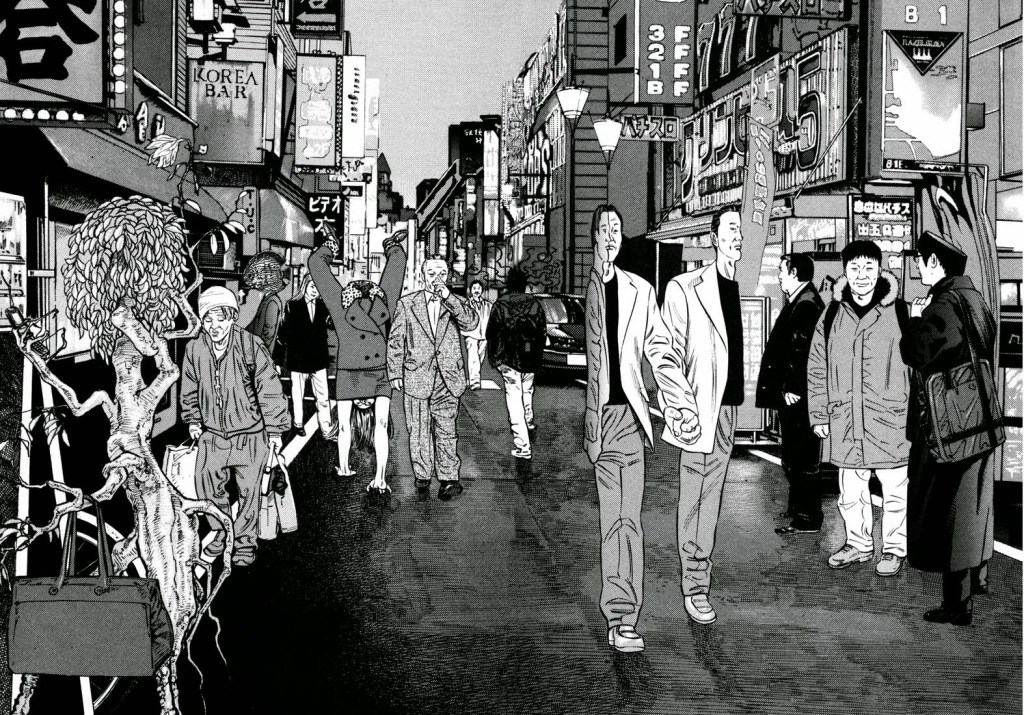
About half of the Japanese population strut around like bizarre monsters. After a chilling encounter with a Yakuza boss who looks like a boy trapped inside a robot, the protagonist starts suspecting that he’s witnessing the incarnations of psychological distortions. The mad doctor slash rockstar intends to take advantage of our protagonist’s uncanny powers, first to help the psychiatric industry. Once he gets bored of that, he intends to exploit his test subject’s sixth sense to seduce an attractive high schooler who sells her panties, and who seems to be made of sand.

What follows is a disturbing ride in which our protagonist, as he progressively loses contact with reality, recalls little by little who he used to be, and who mattered from his former life, before he abandoned it to embrace the lies of external beauty and money to the extent that he became disconnected from his senses.

I don’t remember any other manga series that has impressed me this much with the extent of its creativity, particularly involving the shifting forms of the so-called homunculi that the protagonist faces. It even surpasses Asano’s Oyasumi Punpun in that regard. It’s also bold and fearless, hard to recommend except to other fucked-up individuals. You should probably steer away from this story if the sight of a guy slurping his own semen would horrify you.

The series isn’t perfect: one of the most memorable secondary characters, that occupies a whole chunk early on, disappears never to be seen again, and the discussions between our protagonist and the rockstar dude retread the same old grounds regarding whether the homunculi are hallucinations or represent real phenomena, long after the rockstar dude should have been convinced.

On a personal note, I was stunned with the parallels between this manga series and the novel I have been working on for the last two years. In both stories, their protagonist can see certain people as monsters whose forms are related to psychological distortions. In this story, the protagonist has forgotten his old face, mainly because it was hideous. In my story, the protagonist refuses to look at her face, because she considers it hideous (along with her entire self). Elements of body and gender dysmorphia are present in both stories; regarding my own novel, partly due to me having been born with, or developed early on, a pituitary tumor that screwed with my hormones, making me able to lactate. To whatever extent the hormonal imbalance fucked my brain up must be related to how comfortable I feel writing female characters, even though I don’t want to be a woman in real life (what a hideous sight that would be). Regarding the similarities between both stories, I can’t tell how much I borrowed from this one, because such things don’t happen consciously. I think it’s more likely that the author and I are similarly troubled.

Too bad that Yamamoto hasn’t created any other series that even comes close. The other one of his that most sites recommend, Ichi the Killer, is extremely amateurish in comparison. It’s hard to get ahold of his remaining works. Perhaps he poured himself into Homunculus to the extent that there wasn’t much else left to say, similar to what happened to Asano and his Oyasumi Punpun.

At some point of this story, the protagonist embraces the homunculi not as reality, not as hallucinations, but as the truth. Those bizarre forms can be felt, from an artist’s perspective, particularly a writer’s, as the equivalents of the little monsters that populate our stories, all incarnations of our own personal truths that are otherwise almost impossible to see.

Anyway, if you enjoy fucked-up, extremely original tales, do yourself a favor and read this series.