
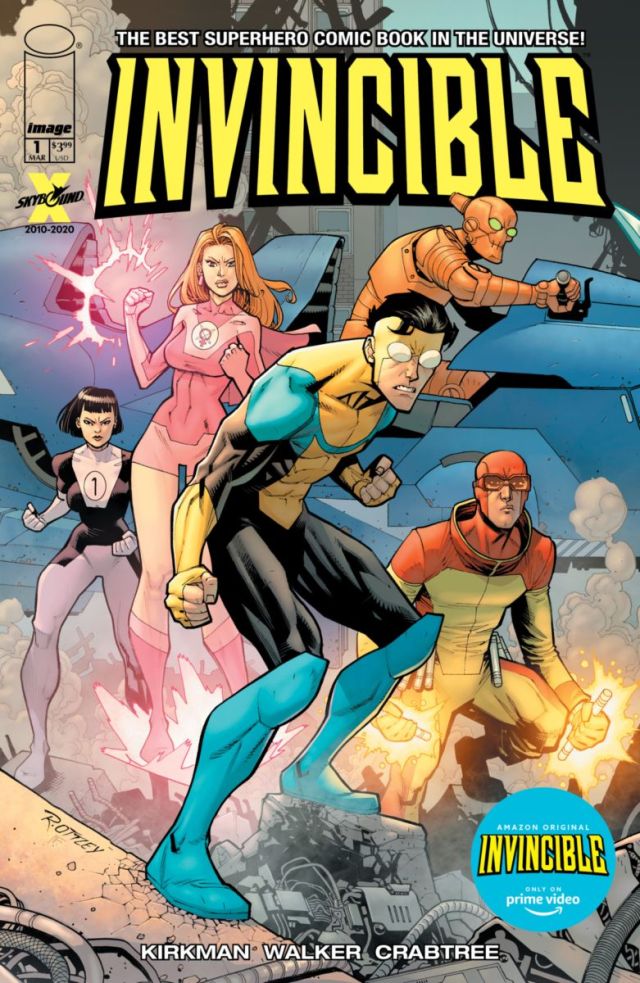
Five out of five stars. I’m reviewing the whole series.
Like many people, I first became aware of Kirkman’s Invincible through its animated adaptation. I was hooked on the show from the first episode, that set itself up as a charming, seemingly typical superhero narrative about a teenager, named Mark Grayson, whose dad is basically that world’s Superman, only to whack you with a brutal ending that promised a story far from normal. Here’s the clip of that pivotal scene, which serves as the story’s first major plot point. In case you want to spoil it for yourself. It gives you a good idea of the kind of superficially goofy but dead serious story Invincible is:
Getting through the animated series was a struggle at times: painful attempts at humor, cramming in woke points, race-swaps only in one direction (turning the very white, very blonde Amber into a black ballbuster whom comic-book Mark would have never dated was a particularly egregious one), and in general the kind of marxist garbage you can expect from any major cultural production these past couple of decades (if you agree with any of that, please go away). While the adaptation surpasses the original when it comes to the choreography of the fights, virtually everything else is worse, and now that I’ve read the original, that adaptation feels almost insulting.
Anyway, Invincible tells the self-contained tale of a powerful, brooding, and hot-headed young guy that strives to use his abilities to do good for others and protect the people he cares about, but he struggles with the fact that the world is far more morally complex than he’s prepared to accept: does someone who killed thousands, whether deliberately or through poor choices, deserve forgiveness if they repent? Is it right to exploit a villain’s abilities for good, despite their crimes? Can you forgive someone who endangered your loved ones for what they perceived as the greater good? At the core, many of the characters, starting with the protagonist, understand that their nature is dangerous, that a few unlucky events or misguided decisions could turn them into forces of evil ready to destroy everyone around them.
We first meet Mark Grayson as a high school student, but by the end of the story, it has brought you on an epic journey that makes the beginning near unrecognizable. Many of the characters feel real and have been given compelling character arcs. Notable among them are the gorgeous redhead Atom Eve, a headstrong, resilient woman who can alter the atomic composition of damn near anything; Rudy “Rex” Robot, a guy born extraordinarily intelligent yet hideously deformed, forced to interface with the world through mechanical constructs, who fears that his logical detachment will end up causing harm; Monster Girl, a no-nonsense thirty-year-old whose transformations make her younger each time (she’s also the most terrifying futanari in the universe); the protagonist’s father, who struggles with his upbringing in a Spartan-like space society that despises weakness, almost especially familial ones; an immortal dude who has lived for such a long time that he prefers to keep everyone at a distance, lest the mounting grief destroys him (he was also Abraham Lincoln); the government agent constantly forced to make unsavory decisions, potentially enraging his contacts, in order to save the world at any cost, etc.
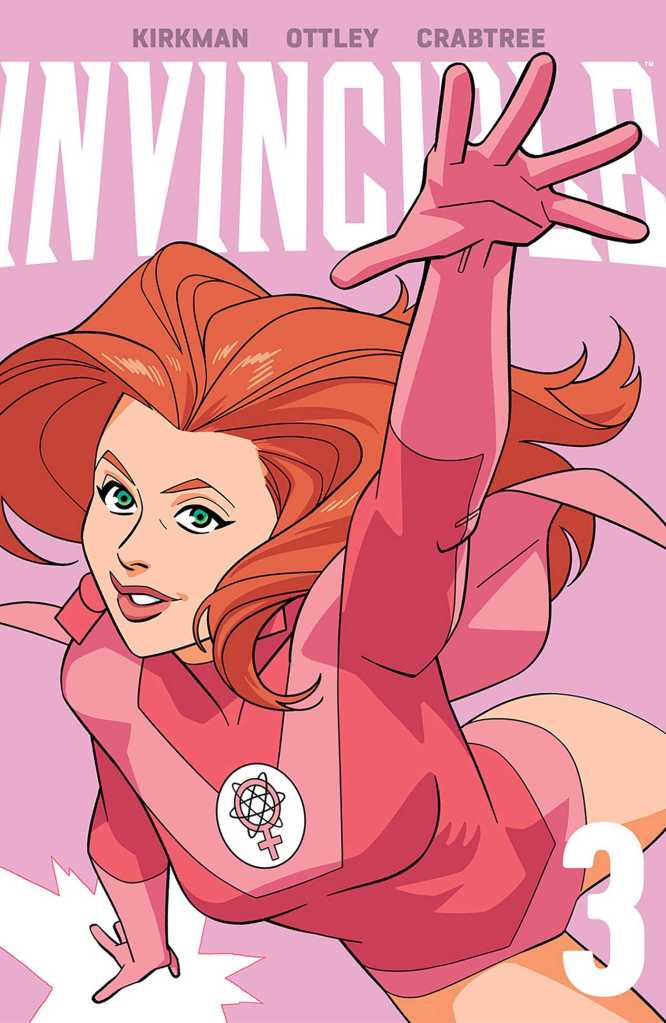

Throughout the story, I often feared for the characters’ lives. Many meet permanent and often brutal ends. I wished for them to just get along and have a good time, only for the next crisis to bash against them. Plenty of times I echoed the protagonist’s words right after a tremendously costly battle, when he cried out, “Oh god, what now?!” because the next threat burst in immediately after. You experience these people building strong bonds with each other, only for disasters, threats, or their own conflicting decisions to pull them apart in painful ways. I was hooked, devouring the series day after day, nearly missing my train stop a couple of times.
The story isn’t exactly perfect to warrant a five out of five, although I don’t have much in particular to nitpick. At times it had me wavering between four and four-and-a-half stars. But looking back at the ride, from a teenager playing superhero with undeserved powers to a profound tale about family and the importance of building strong bonds, it feels so dense and carefully woven that it deserves nothing less than a five from me.
I wish there was more Invincible out there to consume beyond the bastardized adaptation, but the limited nature is part of its brilliance: this isn’t a corporate comic book with repetitive, resettable storylines. Mark Grayson’s fascinating story of hard-earned growth was one of real stakes and permanent losses, and it ended precisely when and how it needed to. For me, the ultimate superhero story.
 The Domains of the Emperor Owl
You must be logged in to post a comment.