The Scrap Colossus, Pt. 8 (Fiction)

At the end of a chain with interlocking oval rings, a silver, antiqued pendant rested on the chest of Elena’s gray sweatshirt. Shaped like a moth with outstretched wings, it was engraved with intricate vein patterns and mirrored, trapezoidal marks. The moth’s abdomen segmented into tiers of carefully sculpted rings. In place of a thorax, a three-dimensional human skull stared through blackened eye sockets. An anonymous artisan had carved a tiny cavity to serve as the nose. This metallic moth evoked the design of an ancient aircraft, belonging to a civilization that leapt from worshipping nature to soaring through the skies, aiming for the stars.

I pointed at Elena’s necklace.

“That pendant you kept fiddling with… a striking piece of jewelry.”

She lifted it from her chest and held it up to admire it. Her fingers traced the moth’s wings as though caressing a lover.

“A gift from myself to myself, bought from a small business in England. Genus Cosmia, family Noctuidae.”

“You sure? There’s a family of moths whose thorax markings resemble a human skull. Death’s-head hawkmoths, I think they’re called. You know, like in The Silence of the Lambs.”

Elena narrowed her eyes at me. She opened her mouth with a smacking sound.

“Are you an expert in lepidopterology, questioning the taxonomy of my own damn pendant? Well, excuse me, master entomologist. I prefer to think of it as a Cosmia moth, if you don’t mind. I wear it to ward off idiots.”

“I’m guessing it’s not a hundred percent effective.”

Elena dipped her chin slightly and half-smiled while spearing me with her icy blues. Loose almond-blonde strands cascading near her cheeks framed her pale, oval face. She let the pendant drop onto her sweatshirt.

“Maybe not strong enough to repel the worst of them.”

“I didn’t mean to trigger an identity crisis for that cute, ominous moth of yours.”

“Hey, I understand them. They’ll keep flying into a flame over and over until their wings turn to ash. Like all of us who can’t stop destroying ourselves for something beautiful we can never reach. Funny how a piece of jewelry can carry the weight of one’s fucked-up existence.”

I emptied my glass, then set it on the table calmly. A breeze stirred the sago palms, making their fronds tremble.

“Can’t help but think that Siobhan is a fictionalized version of you, who also feels rotten and alienated. Are you suicidal?”

Elena leaned back in her rattan chair, arms crossed as she gazed upward at a sky that had turned a dull slate-gray, like a battleship’s hull. The air hung heavy with the scent of impending rain.

“Closing the blinds on a never-ending night… The ultimate expression of individualism, of a person’s sovereignty over themselves. I’ve been alive for twenty-eight years, but I usually feel like I’m seventy. Tired from the moment I wake up. I’m like a milk bottle forgotten in the back of a fridge for too long. If you open it, the stench of the curdled, rancid mess inside will tell you to dump it down the drain. Hell, throw out the bottle too. And how could I be surprised? Unless you belong to some lucky breed, this world will beat the shit out of you. It’ll leave you bruised and bloodied on a sidewalk, and if you dare to stand up and ask why, it’ll kick you in the stomach. That I still experience joy from time to time, despite the decay and misery, is a fucking miracle.”

“Have you ever found yourself that gone? About to jump, whatever form that leap would take?”

Elena wrapped her fingers around her glass of coffee and stared into its black surface like a scryer. Her voice came from a distant, hollow place.

“I wish I could do anything to prevent it, but one day my oldest friend will return for its next uninvited visit. Maybe it will find me, like other times, curled in bed. A hole will open in my brain. I will feel its edges expanding, reaching out to the corners of my mind. A murky, ravenous void devouring everything that makes life bearable. Its gravity deforming space-time, causing the bed and the apartment and the building and the planet itself to warp toward its blackness, one light after another winking out. I will find myself holding onto the bedclothes even though I know that once again the void will gobble me down, and inside of that pitch-black pit, the things I used to love will become as appealing as a pile of dead insects. Then the echoing mockery, speaking with the voice of those who have hurt me, of those I have hurt. Hey, you waste. Hey, you monster. All the ways you kept busy, all those words you wielded and songs you listened to, did you think they could stop me from finding you again? What are you but a scared little girl bawling for her mother?”

I swallowed. My throat felt as though I’d gulped sand. Elena’s shoulders rose and fell with a deep breath. She ran her fingers through her almond-blonde hair, disturbing its arrangement.

“Then the emptiness. A bottomless, sucking nothing that makes you want to crawl out of your skin. The only way to feel anything other than the void’s cold would be to tear the flesh off your bones. To bite your tongue until it comes off and blood fills your mouth. To gouge your eyes out. Pain is always real, always true. But even then, you would remain trapped inside your skull. A ghost haunting the ruins of a mind. Nothing to hold onto except the idea of it all ending. Then you find yourself with a knife pressed against a pulsing artery. Sitting on the floor of your bathroom, the tiles cold and hard against the soles of your feet, staring at a bottle of pills. Standing at the edge of a bridge, watching the cars pass below. Facing an approaching train and wondering if your legs will obey when you order them to leap. Unafraid of death but terrified of the pain that leads up to it, even as you tell yourself that the momentary suffering will lead to permanent silence, to a sleep so deep that the alarm clock of life will never jolt you again.”

Elena fell silent. Wispy blonde locks escaped around her temples, partially shadowing her pale blues as they fixed on me. Her lips trembled as if she were fighting to hold back a smile, but they betrayed her, curving into a slight grin that barely parted at the center, that dimpled her cheeks, and framed her mouth with black parentheses. Her smile looked like a jagged crack across the bone-white surface of a ceramic mask that hid a terrible visage. I reached for my glass to take another sip of decaf, but the bitter beverage was gone.

“So, to answer your question, Jon: yes, I’ve been that far gone. And I’ll be there again. I’m one day away from becoming Siobhan. I’ve never had someone to pull me back, I’ve never even had anyone tell me, ‘It’s going to pass,’ or ‘You’re not alone.’ So I’ve always had to claw my way out. And I can’t say that I backed away from the abyss because of some grand realization about how life is wonderful, or that I’d miss out on the taste of coffee, or the sound of a good song. I didn’t jump because I’m a fucking coward. Afraid of pain. Of the knife’s cold bite. Of waking up in the hospital with a tube shoved down my throat. Of the train only cutting me in half. Of the rocks only breaking my spine or my pelvis, leaving me crippled and helpless, to drown when the tide rises. Maybe that’s the worst thing: not being strong enough to take your own life. Not brave enough to die.”

A chill rippled down my spine, leaving a wake of goosebumps along my forearms. I couldn’t peel my gaze off the creature in front of me. I felt like I’d stumbled into a secret chamber where the world was stripped of pretenses and lies, and only the raw, pulsating heart of things remained.

Elena’s eyes, unblinking and intense—the pale blue of a sky filtered by a thin layer of smog, of an alien world’s sun, of loneliness—drilled through flesh and bone to reach the deepest part of me.

“There it is again,” Elena said, “that constipated expression. Maybe you shouldn’t ask girls about suicide before their coffees have cooled.”

“Thank you for trusting me with that. I’m sorry you had to go through it alone.”

“If I had shuffled off this shitty Earth, it would have been such a loss, huh?”

“There would be an emptiness where someone who brought beauty into the world used to exist. No more stories from you, no more of your thoughts, no more of your voice.”

“You think that’s what I do, bring beauty? I’m just a nutcase with an overactive imagination. Listen, Jon: my final revenge against the world will be a feeble fart in the dark. Or a shit stain. People who knew me in person will pretend to be sad for a week, maybe less, and then on to the next thing.” Elena sighed, and shifted in her chair. “If this is the point where you stand up and tell me that I’m too fucked in the head and too much of a lost cause, I’ll understand. Hell, I’d bail on me if I could.”

“No, I’m just glad I can sit here and listen to what you have to say.”

“A front-row seat to the freak show. Maybe you’re just glad you still have a chance to get laid. But hey, this emotional leper has survived for twenty-eight years. I might live to a hundred. They’ll have to stick me in a sarcophagus along with a warning not to open it ever.”


Author’s note: today’s song is “No Surprises” by Radiohead.

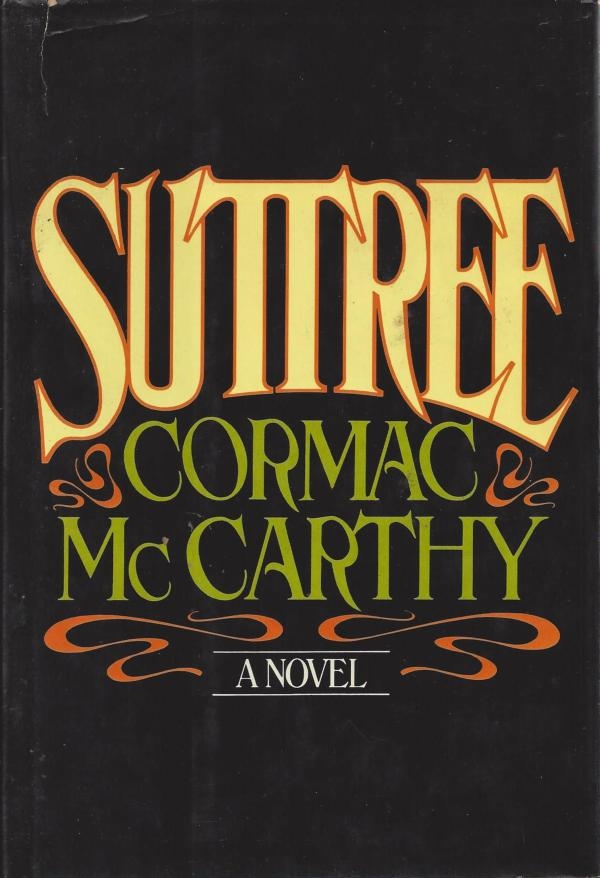
Review: Suttree, by Cormac McCarthy

A very uneven novel. My rating ranges from three to four-and-a-half stars.

The heart beneath the breastbone pumping. The blood on its appointed rounds. Life in small places, narrow crannies. In the leaves, the toad’s pulse. The delicate cellular warfare in a waterdrop. A dextrocardiac, said the smiling doctor. Your heart’s in the right place. Weathershrunk and loveless. The skin drawn and split like an overripe fruit.

In a previous post I stated that this novel, released in 1979, took McCarthy about ten years to write. That was, however, wrong, and in fact he had been writing in since the fifties, when he lived some of the events of the story. As independent scholar Write Conscious, who has gone over McCarthy’s archives, put it, McCarthy wrote very little in the last few decades of his life. Even his latest two novels, The Passenger and Stella Maris, which I loved and still haunt me, not only were set in the seventies and eighties, but were written to a significant extent back then (or at least almost fully researched). It turned out that McCarthy put lots of his own life in his novels. In the case of his last two and quite a few others, they’re heavily inspired by the love of his life Augusta Britt, much younger than him, ending up in a mental institution due to her extensive trauma (abandoned by her family, abused in foster homes… Presumably the whole getting-whisked-away-to-Mexico-by-Cormac also added to it).

In the case of Suttree, this novel I’m reviewing, it’s based around Cormac hanging out in the unfortunately named McAnally Flats in Knoxville, as the area existed back in the fifties and no longer does so. Many of the characters of this novel were real. One of them, named J-Bone, was a great friend of McCarthy’s, and the guy’s real home address as well as phone number from back then are depicted on the text. That means that we’re often treated to strange characters whom we’re barely introduced to at all. I’m not necessarily opposed to this; I believe that writing fiction is about making your own meaning and not necessarily satisfying anyone else. But that means that in a story already quite the mess, this panoply of weirdos only makes it harder to grasp.

McCarthy was apparently a drunkard back in the day. Also at the end of his life. I can’t stand drunks. He and his friends also got in serious trouble. I can’t stand criminals. So at times I had a hard time caring about what was happening in the story. Suttree tended to side with people who clearly should have been in jail or dead, and when some of them died, I thought to myself that it was about time. Still, some of those stories were wild enough to be interesting: going into pubs and stealing people’s money from their handbags and jackets (at the Indian Rock, for example, mentioned in Stella Maris by Alicia Western; her beloved brother used to bring her there on dates), plain-old robberies, brawls, general mayhem… It was hard for me to connect with that part of the story, which is about half of it: Suttree wandering from weirdo to weirdo doing stuff I couldn’t relate to.

The most memorable male character is an innocently evil melon rapist named Gene Harrogate. We are introduced to him violating a farmer’s produce, and he ends up in jail, where he meets the protagonist. He’s a small country bumpkin with seriously nasty instincts, whom Suttree really shouldn’t have been involved with. I have a hard time believing he existed in real life, as he was the larger-than-life type. There’s a whole segment with him digging tunnels under Knoxville and blowing up shit to the extent that it caused sinkholes, and led to him nearly drowning in shit. He also almost extinguished the local population of bats. Though entertaining, ultimately he was quite pointless to the story, as I didn’t believe that Suttree would hang out with such a fiend. That said, the story is generally a mess, so not much of what happens could be say to fit properly.

Three major sequences bumped up the novel’s quality for me: the first involves Suttree’s estranged wife and son, the second a nymphet unfortunately named Wanda, and the third a prostitute named Joyce. In real life, Suttree was indeed married and had a son. As far as I know, McCarthy was an utter bastard to that wife of his: he demanded her to work to pay the bills so he could dedicate himself to his writing, and when things got even worse money-wise, he demanded of her to pick up a second job. Understandably so, McCarthy’s family-in-law wanted him dead. He ended up escaping his home life, claiming that they stifled his creativity, which they likely did, and roamed around the south of the US, eventually ending up in a motel pool in Tucson, AZ, where he met an armed thirteen-year-old blonde and blue-eyed popsy with whom he fell head-over-heels. So that’s the whole deal with a estranged wife and son present in Suttree covered.

Wanda is the daughter of a down-on-his-luck pedlar with whose family Suttree spends some time in the best sequence of the book. This girl is described as having tits as well as fuzz down there, but Suttree repeatedly refers to her as a child. So she’s probably twelve-to-fourteen years old. The intimate scenes between Suttree and this girl are some of the most haunting passages of the book. This, of course, relates to McCarthy having met around that time the love of his life, Augusta Britt, whom the aforementioned scholar Write Conscious mentioned was very likely thirteen when McCarthy started sending amorous letters to her, and fourteen when they fled together to Mexico and started banging like there was no tomorrow, which McCarthy likely believed was the case, as the FBI was investigating Britt’s disappearance from the foster system. Regarding Wanda, the whole thing ends in a very McCarthy-ish way, with nature saying, “Fuck no, I ain’t lettin’ this shit go on.” I feel that the ending of that sequence will haunt me for the rest of my days. Chance and the universe’s indifference in general determining so much in life is a common theme in McCarthy’s work (the ending of No Country for Old Men comes to mind, and I mean the sequence with the protagonist and a fifteen-year-old runaway also based on Augusta Britt, which was sadly wasted in the movie).

However, the Wanda segment, my favorite part of this story, ended up becoming the biggest hole in it for me: I don’t believe for a second that Suttree would have been able to move on nonchalantly the way he did, with no fucking mention of the whole thing afterwards and no sign that it affected him. To me it reeked of McCarthy having written that part after meeting Augusta Britt, and then shoehorning it into the novel. Apparently, according to Write Conscious, in the letters with his editor, McCarthy’s “boss” demanded explanations for why he was so insistent on including the Wanda (and Joyce) parts in the story, but McCarthy refused to take them out.

The last of the three most memorable sequences for me involved a prostitute named Joyce, who bankrolled Suttree until her whorish life caught up with her psyche. Honestly the whole thing felt somewhat random yet true, which makes me suspect that McCarthy also got involved in such shenanigans.

What ultimately elevated the novel for me was McCarthy’s godlike writing. This story contains some of the best prose I have ever read. The first six percent or so of the text is so relentlessly high-quality in terms of careful observations that it boggles my mind to imagine what it took McCarthy to get through writing it. After that, the quality decreases as if McCarthy would have preferred to shoot himself than to keep holding himself to that standard. But most of the prose remains absurdly fantastic throughout, to the extent that it makes the vast majority of published authors look like children playing at pushing words together. One writer that McCarthy was helping do line editing in the seventies said that McCarthy’s edits made the guy want to quit writing. In my case, it makes me realize there are goals far in the distance that I can push myself towards.

This isn’t a novel I could recommend to anyone, to be honest. You have to fall into it, likely because you love McCarthy’s work. I’m glad I read it, but I suspect I should have gotten through his simpler remaining novels first (like the Border Trilogy, Outer Dark, etc.)

The following are quotes from the book that I highlighted.

He closed the cover on this picturebook of the afflicted. A soft yellow dust bloomed. Put away these frozenjawed primates and their annals of ways beset and ultimate dark. What deity in the realms of dementia, what rabid god decocted out of the smoking lobes of hydrophobia could have devised a keeping place for souls so poor as is this flesh. This mawky wormbent tabernacle.

How surely are the dead beyond death. Death is what the living carry with them. A state of dread, like some uncanny foretaste of a bitter memory. But the dead do not remember and nothingness is not a curse. Far from it.

You see a man, he scratchin to make it. Think once he got it made everthing be all right. But you dont never have it made. Dont care who you are. Look up one mornin and you a old man. You aint got nothin to say to your brother. Dont know no more’n when you started.

On a wild night he went through the dark of the apple orchards downriver while a storm swept in and lightning marked him out with his empty sack. The trees reared like horses all about him in the wind and the fruit fell hard to the ground like the disordered clop of hooves.
Suttree stood among the screaming leaves and called the lightning down. It cracked and boomed about and he pointed out the darkened heart within him and cried for light. If there be any art in the weathers of this earth. Or char these bones to coal. If you can, if you can. A blackened rag in the rain.
He sat with his back to a tree and watched the storm move on over the city. Am I a monster, are there monsters in me?

There are no absolutes in human misery and things can always get worse.

In the distance the lights of the fairground and the ferriswheel turning like a tiny clockgear. Suttree wondered if she were ever a child at a fair dazed by the constellations of light and the hurdygurdy music of the merrygoround and the raucous calls of the barkers. Who saw in all that shoddy world a vision that child’s grace knows and never the sweat and the bad teeth and the nameless stains in the sawdust, the flies and the stale delirium and the vacant look of solitaries who go among these garish holdings seeking a thing they could not name.

Trash in a Ditch, Pt. 19 (Fiction)

I interposed a city block between my car and the police station. I wound through the streets like Pac-Man in a maze. Scanning for patrol cars, I tracked vehicles crossing my path and those in my lane. I anticipated sirens erupting from the engine whine. The two times a cruiser appeared, I hunched behind the wheel, looped the block like a roundabout, and resumed my route.

I veered toward the mall. The engine’s backfires—smoker’s coughs—drew pedestrians’ stares. When I reached the mall’s street, I parallel-parked in reverse, trunk facing the plaza, wedging my car between a Hyundai Sonata and a delivery van where two workers unloaded food crates.

My heart raced. My Adam’s apple lodged in my throat as if I teetered on a cliff’s edge. Vision blurred red at the edges. Leaving the engine running, I circled to the trunk, keyed the lock, and lifted the lid. A stench assaulted me—the defense spray of some cephalopodan cosmic abomination. I held my breath as I hauled out the corpse, stepped back, and set the dripping bundle on the pavement.

I uncovered the child by tearing through the plastic. It was like peeling a bandage from a festering wound—wet, sucking sounds accompanied the separation, as strands of viscous slime stretched away from the greenish, blistered skin. With every shred of plastic I discarded, pale worms tumbled out, writhing atop splatters of filth like mutilated figures. The corpse’s crumpled form expanded like a soaked sponge, while beneath it spread a widening pool of putrid fluid clotted with clumps of sodden soil.

Shouts erupted. I straightened to face the arc of a crowd resembling a parting school of fish before a shark. Their soap, shampoo, and aftershave scents, of this dozen of people who had taken showers and readied for work or to go shopping, formed a levee against the rot. A gallery of horrified faces glistened in the sun. A woman shielded a sobbing girl’s eyes and fled. A bug-eyed man alternated between gaping at the boy and me. A deliveryman insulted and shoved me, then stumbled aside to vomit.

I pointed at the corpse.

“That boy belongs to you.”

Some retreated; others replaced them. A man and a pair of teens dialed phones, eager to share the news with the police. Others aimed their phones horizontally or vertically to shoot their flashes or record. Each electronic imitation of a camera’s shutter click made me yearn to hide. My legs itched to run. Our ruin—the boy’s and mine—would flood screens nationwide, tethering my existence to these images forever.

The scream-weary left, leaving flushed faces demanding answers or hurling insults. A few smiled at their phones as if gifted a bonus. Strange people who needed to prove they’d been here and witnessed this.

I faced the lenses, let the flashes blind me. Let them see. Let it sear those lives that depended on convincing themselves that aberrations like the boy and myself didn’t exist, that nobody would run over a child and then parade its rotting corpse. Let this knowledge fester in their minds like the memories of shame, defeat, loss.

Darkness enveloped them like a net. Taught since childhood that light banishes horrors, they had forgotten the truth: our universe’s dark web, speckled with glowing motes and smears, teemed with monsters waiting for the day we forgot their forms and ceased to understand them.

Here I stand. I exist.

The crowd stirred. Two black officers, same ones from the station, shouldered through, ordering dispersal. They emerged like boxers entering a ring. Before the corpse lying in a pool of its own juices, one of the officers recoiled, the other covered his mouth.

I lunged toward the asphalt. The coffee-haired officer drew his pistol, but as he shouted “Stop!”, I ducked beneath the roofline, slid into the car, and hit the gas. Swerving through screeching traffic, I rocketed down the street. In the rearview, those shrinking officers piled into their cruiser. They activated the police lights.

The rear wheels of my car skidded on the curves while the cops’ siren howled from side to side like a giant in pursuit. I weaved through the vehicles, rigid in my seat, blood roaring in my eardrums. I was racing against the clock along the dirt roads of an oil field.

As we sped toward an intersection, another patrol car showed up in the perpendicular lane. Behind the windshield, both officers craned their necks. They flicked on their lights and sirens and surged into the chase.

Five blocks later, three patrol cars crowded my rearview mirror. The officers’ faces and the darkened lenses of their sunglasses loomed through the glare sweeping across their windshields. One cop pressed a two-way radio to his mouth. As we raced past, cars, SUVs, vans, and pickups veered aside like panicked animals, while herds of pedestrians scrambled across crosswalks as though fleeing an advancing torrent of lava.

Four patrol cars. Red and blue lights flooded my cabin. Voices barked through megaphones, ordering me to stop, their commands shattered by bursts of static. They kept shouting even though they knew I’d refuse.

On the deserted asphalt straights, a patrol car would surge forward, slamming its bumper’s edge into my trunk, trying to spin my car like a top, but I wrestled the wheel, keeping it straight. Through the curves, I skidded sideways. The vial filled with shrapnel, dangling from a string tied to the rearview mirror, swung at forty-five-degree angles—left, then right—mirroring how my torso lurched toward the door or the gearstick. The chassis groaned; my seat shuddered. Acrid smoke that reeked of scorched rubber streamed in through the window, masking the lingering stench of rot, the ghost of a corpse.

I merged into the route I took every afternoon on my way home. Why not? I entered the street where, three hundred yards ahead, five days a week, I would turn to park in front of my apartment building. Down the street, a photorealistic mural painted on the face of a cliff depicted a strip of road narrowing toward the horizon, where the asphalt rippled and the silhouettes of cars, pedestrians, signs, and traffic lights seethed together like food sizzling in a skillet.

I pictured myself swerving, parking in front of the building, and sprinting upstairs—my lungs searing—all the way to my apartment. The roar of policemen shoving one another up the stairs in a chaotic stampede would grow louder. I’d rip out a sheet of notebook paper, hastily write “sorry for the mess” in ballpoint pen, and set the sheet on the entryway table, next to the jumble of old keys and coins.

My fingers, clenched around the steering wheel, had gone numb. My arms had stiffened into rigidity. The car was about to slam into the painted backdrop hurtling toward me. For a quarter-mile, the road snaked through manicured grass before emptying into a parking lot that encircled single-story buildings—structures resembling houses torn loose by a flood and deposited miles away, alongside a Mexican restaurant and a Jack in the Box. Behind them, a towering pillar bore the Chevron gas station logo, reaching skyward. Once I collided with that photorealistic panorama, the car’s frame would crumple like an accordion, my flesh and bones would shatter, and blood would jet under pressure from every orifice and gash.

But the car sliced through the mirage and continued down the street. The serpentine road lashed like a whip until it yielded to the parking lot. The Mexican restaurant and the Jack in the Box, behind whose windows shadowy figures shifted, slid past my left, unveiling the gas station they had concealed. There, a woman angled the nozzle of a gasoline pump toward her car’s fuel tank. The pillar swept across my window like an opaque band in a scanner’s pass.

Along both sidewalks, new shops lined the streets, their display windows alive with flickering glimmers. Pedestrians halted or turned to follow the commotion of the chase. A couple—the boy seated on a bench, the girl perched on his lap—craned their necks and tensed as if to stand. A woman pushing a stroller swiftly veered off, pressing herself against a building entrance. Two men in suits, one silver-haired and the other with a jet-black goatee, shook their heads as they watched the fabric of order unravel.

Stabs of light pierced through the darkness, and now that I sharpened my gaze, I could glimpse the lines linking those stabs, hinting at shapes. Patterns to decipher.

The speedometer needle quivered, the shrapnel vial swayed, the engine roared and backfired, and I laughed and laughed. A world was being born for me.

THE END


Author’s note: this novella was originally written in Spanish about ten years ago. It’s contained in the collection titled Los dominios del emperador búho.

Today’s song is “3 Legged Animals” by Califone.

Trash in a Ditch, Pt. 18 (Fiction)

I woke up lying on my back atop cracked earth. When I peeled myself off the ground, stiffness in my arms and legs seized my muscles. The sun breached the horizon, a bisected sphere blazing like an oven.

I staggered forward while pressing my temples and blinking to clear my vision. My skull throbbed. My limbs hung leaden, as if I’d dreamed of fleeing a killer. I felt swollen with tar sloshing inside me; one stumble and it’d surge from my mouth.

Where I’d dug and refilled the hole last night, an oval of disturbed earth stood out—a fresh grave in some makeshift cemetery. Any maintenance worker tending the oil pumps might spot it.

My Chevrolet Lumina, reeking of pestilence, sprawled under the dawn’s glare like a naked newborn in snowfall. I hobbled toward it, fighting my buckling legs.

Minutes later, I hurtled down the dirt road. My consciousness plunged and surfaced in feverish waves. Beasts kill to eat or survive; I carted this shattered child’s corpse like trash awaiting a dump.

Warm air rushed through the window, scouring my skin. The oxygen molecules seared me. I merged onto the highway toward the sprawl of single-story buildings, apartments, and office towers. I weaved between delivery trucks and commuters while flames licked and blackened my car’s frame, escaping through the windows.

I deserved lifelong torture, not a cell. An act to redeem the world for spawning something as toxic as me. Yet prison bars awaited; I knew it clearly now as the fact that one day my heart would stop. I doubted even other prisoners appreciated child-killers. Who would defend me? A lawyer that would stretch logic to wring jury sympathy? Embellish stories about my war trauma? Claim the shrapnel that had gotten embedded in my cheekbone and had slit open my cornea justified a reduced sentence?

Once they safely locked me behind bars, cops would comb the city for the basement that had held the boy I’d killed. They’d find his parents—grotesques fit for a Victorian freakshow: the man pig-eyed in an egg-shaped skull, coin-gray skin, jagged rotten teeth; the woman a sack of fat, greasy hair, squirrel-cheek jowls, a frayed shirt draping her striated blue belly. No—a magazine-perfect blonde couple, both smiling, the man in a pressed shirt and tie, the woman in a shimmering blouse and platinum earrings. Their pine-scented home hiding a trapdoor to a concrete cellar with wall rings and coiled iron chains. Years of filth, piss, and shit.

Cops would shove the couple into a media scrum, cameras aimed like firing squad rifles. Under pulsing red-blue lights, their panic-twisted faces would weep as officers crammed them into a cruiser. The cops would let that couple explain themselves, though I hoped someone would spit that chaining their deformed, cow-stupid child underground stole his future.

Would my former supervisor see the arrest news? Do people like her watch the news? Maybe over breakfast, she’d glance up at the boy’s reconstructed face, and her smile would collapse. Once her limbs obeyed again, she’d cross herself and change the channel.

I reached the single-story brick-and-glass police station. A mesquite tree clawed near the entrance, tar-black branches veined beige, half-obscuring the limp Texas and U.S. flags.

I parked in an empty side of the lot, away from the patrol cars. I exited the Lumina. Dizziness and weakness had drenched me in sweat; my heart hammered near cardiac rupture.

Two figures stood by the glass doors. An officer with her straw-colored hair in a ponytail—leathery face, ranger-lean frame—had placed a hand on an old man’s shoulder. The man held on to a dog leash attached to nothing.

“She came back alone twice before,” the officer said. “I doubt she’s stolen. Give it time, search the neighborhood. By the afternoon, if she’s still missing, call us and we’ll figure out what we can do.”

The old man trudged away, brow sunk.

After clearing my throat, I called after the officer, but she was reentering the station, and the door’s squealing hinges silenced me. She blurred behind reflective glass as I hurried after her.

Once inside, my footsteps echoed across the air-conditioned lobby’s tiles. The officer circled behind the rear desk, settled into a chair, exhaled sharply, and typed. Nearby, a hunched cleaning lady swept.

I dragged myself to the desk. The morning KRLD newscaster droned on an unseen radio. Some paces away, a glass door led deeper into the station. Uniforms milled in the hallway.

“Good morning,” I told the officer.

She frowned, then jerked her head toward the plastic benches bolted to a wall.

“Just a moment, please.”

I drummed the desk. Should I push? No, they’d uncover my crime soon enough, so I shuffled over there and slumped onto a bench. Its plastic groaned.

Her typing clacked like tap shoes as she squinted at the screen, crow’s feet fanning. Two brawny black officers passed—one buzzcut, the other with coffee-brown stubble—trailing deodorant. They greeted her and vanished down the hall.

The cleaning lady crouched, sweeping dust and wrappers. The officer summoned me. I stood up and approached the desk. She took a sip of her mug while eyeing me like I’d interrupted her in the bathroom.

I took a deep breath and regained my voice.

“I want to turn myself in.”

“Remove your glasses. This is a police station.”

It unnerved me as if she had demanded me to tear out my healthy eye. My hand trembled as I slid the sunglasses off, then hooked one of its temples into my collar. Her starched navy uniform, straw-colored hair, bronze skin, and metallic gaze sharpened. Her oval badge glared like a mirror, reflecting fluorescent light onto my face.

She studied my scarred cheekbone and dead eye.

“Fireworks mishap?”

“IED in a ditch, a mile and a half from Kirkuk. I’m surrendering.”

“What’s that?”

“I’m surrendering for a crime.”

Her mug clacked against the desk, then she rolled her chair back. Her stare judged me an overlooked bank robber or serial killer.

“What’d you do?”

Words jammed against my lips. I gripped the desk to steady myself.

“I hit a kid. Killed him. I was driving at night near an oil field in the outskirts when the kid darted out. My headlights caught him too late. Not a hit-and-run, I don’t think, ’cause I took the body. Hid it for a couple of days. I thought of dismembering him and scattering his pieces. Last night I tried burying him, but I realized my mistake, so this morning I’ve driven here.”

She bowed her head as if reading a desk-carved note, then she exhaled and stood up stiffly, hand on holster.

“Stay calm. You said you tried to bury the body. Where is it now?”

“In the trunk of my car.”

We marched outside. Out of the corner of my eye, I glimpsed the policewoman’s right hand fiddling with the flap of her holster, and with every step, I heard the clink of her handcuffs sliding. I led the woman to my car while squinting against the sun. The stench from the trunk clawed up my nose. I turned to the officer, whose expression had soured. Until now I might have passed for any lunatic who’d claimed to have run over a child, but the reek of corpse confirmed me as a madman parading said dead child in his car’s trunk.

I pulled out the key.

“You might want to cover your nose.”

She fixed me with a glare, as if she’d sniffed out a ploy to snatch her gun.

“Just open it.”

I turned the key in the lock and lifted the lid. The breath of some carrion monster escaped—rotted meat festering between its teeth. The officer recoiled, coughed sideways, and cursed. When she peered into the trunk, her face betrayed that the image inside would haunt her dreams, nights she’d spend thrashing in sweat-soaked sheets.

She slid the baton free from her belt. I stepped back, but the woman prodded the corpse with its tip, flipping it onto its side. Through the torn plastic peeked the child’s features: a misshapen nose, the cleft of a hare lip. Blotched greenish skin, glistening with grease, crawled with white maggots.

The officer spoke as if stifling a cough.

“Something’s wrong with this boy.”

“He’s rotting.”

“His face. The features. One of those… retarded kids.”

“One of them?”

The woman clamped a hand over her mouth, fighting nausea. She forced herself to meet my eyes, hers sharp with the urge to slam me face-first and kneel on my spine.

“Where’d you say you hit him?”

“I was driving at night through one of those roads near the oil fields. To clear my head. I was within the speed limit, but the kid dashed in front of the car even though he must’ve seen the headlights, heard the engine.”

“If it was an accident, why didn’t you call the police?”

“I’m an idiot. And human beings disgust me.”

The officer scanned me head-to-toe. She stole another glance into the trunk as if verifying my story.

“Some woman’s birthing these retards in a house of horrors. Family members getting freaky is my guess. They lock them in rooms or basements, but a few escaped. Maybe the parents got careless. Maybe they got tired of tossing scraps or dumping piss buckets, so they let the freaks loose knowing they’d end up roadkill for someone else to scrape off. Nobody taught them roads or cars. The last one wandered train tracks like a sidewalk. Doubt he understood the horn blaring as the engine plowed into him. No one claimed those kids, no one’ll claim this one. Bet they’re relieved to be rid of them.” She adjusted her collar and shook her head. “In this job, I see too much shit I’d rather forget.”

A chill surged through me, pooling in my gut. My words barely rose above a whisper.

“There were others.”

“What? Others? Yeah, at least three, yours included. Better you didn’t know. Folks stomach car crashes, robberies, drive-bys. This… this ruins your digestion.”

A grimace seized my face like a puppet’s.

The officer clicked her tongue and slammed the trunk. She jerked her chin toward the station.

“Follow me. We’ll fill out paperwork.”

She strode ahead to the glass doors. I obeyed but slowed my steps until, as she opened the door and slipped inside, I backpedaled. When the door shut, I was already circling the car at a sprint. I yanked the driver’s door open, folded myself into the seat, and twisted the ignition. The engine roared. As the front right wheel mounted then dropped off the curb, the rearview mirror framed the officer, gaping, frozen in place.


Author’s note: this novella was written in Spanish nearly ten years ago. It’s contained in the collection titled Los dominios del emperador búho.

Today’s song is “Country Death Song” by Violent Femmes.

The next part will conclude this novella.

Trash in a Ditch, Pt. 17 (Fiction)

I drove to the gardening store on the outskirts. A dozen cars and pickups, occupying a quarter of the parking spaces, had clustered to one side as if a lone parked car risked attracting a predator’s attack. I parked at the opposite end, bordering a barren stretch of land, to avoid the stench drawing curious onlookers.

How would the cashier see me? Did they activate some protocol when a man as jittery as me, hiding his eyes behind sunglasses, checked out with just a shovel? Would the cashier call the police?

I bought a sack of fertilizer, a shovel, a hoe, and a rake. As the cashier, a bald old man with bulging blue veins in his hands, scanned my items, he barely glanced up to mutter a greeting.

I hauled the bags out. While maneuvering between parked cars, I imagined my car smothered in a writhing mass of scurrying spiders and squirming worms, cascading down the bodywork and pooling on the asphalt like a gasoline spill. The darkness summoning its congregation for a black mass. But instead, a minivan had parked to the right of my car. By its open passenger door fumbled a heavyset man in a short-sleeved polo and khaki cargo shorts. Plenty of spaces were free, but he’d nestled close to my car for intimacy, for warmth. Natural as breathing.

I held my breath and opened my car’s rear door. I piled the fertilizer sack, shovel, hoe, and rake onto the seat.

A door slammed. Flip-flopped footsteps slapped toward me from behind.

“Your car reeks, buddy. Thought it’d been abandoned awhile, that the owner died inside.”

I stared, lips pursed. After five seconds, his friendly expression faltered. When I slid into the driver’s seat and shut the door, the man, as if recovering from a punch to the face, jerked awake and approached my half-open window. I started the engine; it sputtered.

“Buddy,” the man said, “I’m talking to you.”

I shifted into reverse, slammed the accelerator, and swung in a semicircle. As I roared out of the lot, backfiring, the man stood frozen in the lane, shouting in baffled outrage that someone had refused to engage when he wanted to talk.

Though I put a mile between myself and the oil field desert, I imagined the man pulling out his phone, reciting my license plate. Would the car’s stench and my behavior be enough for patrols to watch for my Chevrolet Lumina?

As I drove parallel to the spot—dozens of yards to the right—where I’d killed the boy, I white-knuckled the wheel, staring ahead unblinking. A mile later, I turned onto a bare dirt road edged with plastic strips, that split the oil field. My car brushed past shrubs with branches brittle as thorns. The oil pumps creaked and groaned in their antediluvian nodding.

I parked where the road opened to a miles-wide expanse of barren land on my right. I removed my sunglasses and squinted at the nuclear-dawn glow of orange and pink inflaming the horizon. Anyone passing would notice a grave being dug. I’d need to wait for night.

I stepped out to smoke, distancing myself from the fumes, though the rot had already lacquered my nostrils. I stepped over the plastic strip. As I dragged on my cigarette, I wandered into the parched land, toward sunset rays sliding along the horizon like foam on a wave’s crest. I avoided the elongated shadows of skeletal shrubs. Straw-like grass blades scratched my pant legs.

At an indistinct point, I sat, flicked the cigarette away, and fell backward. My spine settled into the cracked earth. I lay like some desert-crossed beast whose body had given out—except mine still functioned, though my will to go on had short-circuited or atrophied. It was pointless to even lift my head and witness the last lights sink behind the horizon. Like a balloon, I’d roll and snag on brittle branches at the first gust. Unanchored. All my life, I’d wandered this time and land as an intruder, exiled from a world I’d never reclaim.

Night thickened. A bluish light outlined the oil pumps. The sky’s dome glittered with constellations, planetarium-perfect. I had sat against an oil pump’s frame; with each nod, its creaks and wounded-animal moans vibrated through my bones.

I stood, stretched my legs, and marched to the trunk. I improvised a gas mask with my palm while unlocking the trunk with my free hand. Eyes shut, face turned, I lifted the lid. The greasy airburst hit me as if my skin had sprouted olfactory cells—a poison gas cloud, a bioweapon.

I swallowed bile and resisted fleeing. After pulling gloves from my work coat pockets, I plunged my arms into the trunk and groped the plastic-wrapped bundle’s underside for a grip. But the plastic slithered under liquid boils, suppurating blisters. I cradled the bundle. After tilting my head to gulp clean air, I heaved the corpse out. I crab-walked backward as the bundle dripped onto the dirt. Twenty paces away, I set the boy down and retreated. Returning to the car, I swept loose soil with my sneakers to mask the glistening splatter, like sprinkling sawdust on vomit.

I opened the rear door and grabbed the shovel. Ten paces from the corpse, I drove the shovel into the parched ground. The crusted earth disguised the hardness beneath.

Twenty minutes later, I climbed out of the four-foot hole. I stood panting. Sweat drenched my skin; my face steamed. My arms tingled forewarning tomorrow’s soreness. I planted the shovel and leaned on the handle to catch my breath.

A trick of light suggested the plastic-wrapped corpse was moving—the folds shifting, lumps sliding against the membrane like in a pregnant belly. I slid the shovel under the bundle, pried it inches off the ground, lugged it to the hole, and bent to drop it into the rectangular black pit. I shook the shovel until the plastic’s oozing phlegm sloughed off.

I was scooping dirt into the shovel when I paused. The oil pumps’ creaks returned, along with the distant storm-rush of traffic a couple miles off. Given my luck, I’d feared being followed—police, Héctor, the supervisor. Caught unprepared, squeezed for explanations. But the boy’s luck countered mine: born broken. That night, after fleeing a dungeon, he had crossed the dirt road I drove on, and tonight, only his killer would attend the funeral.

When I inhaled deeply, the stench seared my nostrils. I coughed.

“I’m burying you. I killed you. So I could say a few words.”

My voice scattered into the night, across the vast plain, like an intruder whispering in a burgled house at dawn, taunting its occupants to wake and attack.

“I’ve wondered why you ran. Whether you knew why. Where to. Those who kept you locked up, your family I guess, saw you as a monster to hide, to spare their stomachs. This world breeds people like you, who are born broken and suffer until death. The marks on your wrists—”

I froze. Quadrupedal steps probed the night toward me. I gripped the shovel like a halberd, legs braced. A cougar?

A long snout defined itself in the dark. The coyote stepped into the headlights’ cone, insects swarming like dirt on old film. It crouched. Its doglike eyes weighed me with fear and curiosity. When I stayed silent, it trotted to the oval of darkness, wrinkled its snout, and tilted its head as if to snag the bundle with its fangs.

I brandished the shovel, shouted. The coyote leaped back, eyes wild. Its gaping mouth was parched and ulcerated. It glanced at the hole.

“You kidding?” I said. “That hungry?”

I waved the shovel as I stepped forward. The coyote scurried toward my car. The headlights highlighted its mangy fur, scabby patches, curved gaps between its ribs. The animal melted into the night like a shark into depths.

I shoveled dirt. After hefting it, I tipped the load in a cascade down the mound.

“What was I saying? The marks on your wrists. Shackles. You were born, existed—for what? Suffered pointlessly, and the day they freed you or you escaped, someone sick of living hit you by accident. Now I’ll bury you so no one knows. I’ll spare people the memories you’d stir. For the rest of my life, I’ll remember where I buried you, and worry they’ll find you.”

A breeze rattled a shrub’s withered branches. I shoveled dirt into the black oval, sprinkling the plastic. I stabbed the shovel into the mound. My arms and legs weighed as if I’d climbed a mountain, energy and spirit drained for the descent.

“Some people drift through the waking hours half-dreaming, because the world tastes like a nightmare. Such chaos. No reasons to stay, nowhere to go. Our whole lives, we’re ruled by nature’s impulses, and we’ll disappear before fulfilling a fraction of our parasitic dreams. And for what? All this struggling, trying to find someone to love. Distractions on the road to the grave. Life’s unfair, and I’m making it worse.”

My sternum compressed as if punched. I gasped. My vision blurred. I leaned on the shovel.

“I’m making it worse.”

I stepped back. Teetered until my legs steadied.

The headlights’ glare split against my back; my giant shadow stretched like a tongue unrolled by the night. The oil pumps creaked and groaned. In the darkness, a lurking shape advanced toward me—until, at the last moment, the headlights would outline an outstretched, monstrous arm, fingers reaching to touch me.


Author’s note: this novella was originally self-published in Spanish about ten years ago. It’s contained in the collection titled Los dominios del emperador búho.

Today’s song is “Pyramid Song” by Radiohead.

The Scrap Colossus, Pt. 7 (Fiction)

I took an unhurried sip of my decaf, then settled back into the narrative. Its point-of-view character got dressed and left the house—perched near a craggy coastline—in pursuit of a woman named Siobhan. The narrator trudged through the windswept landscape, rain lashing their face, as the sea thrashed the cliffs’ serrated rocks in an echoing rumble. A cherry-red hood and windbreaker flashed sharply against the leaden sky, like a drop of blood: Siobhan standing at the edge of a cliff. As the narrator approached, she turned her head, that freckled and pale canvas. Her gaze locked onto theirs cold and unflinching, as though scanning a face she’d never seen. The narrator sat beside her. Roaring, white-capped waves crashed against the jagged shoreline below, bursting into plumes of salty spray. The narrator hesitated, then asked Siobhan what was she doing there. Siobhan said that she was mustering the courage to throw herself off, hoping the rocks would crack her skull open.

My gaze flicked up from the page to Elena, who was leaning back in her chair. One side of her ivory face lay in shadow—a counterpoint to the almond-blonde cascade of her hair—while the afternoon light traced white highlights along her nose and the arch of her upper lip. Her right-hand fingers rested lightly against her chest, cradling the pendant suspended from a thin silver chain. She had taken shelter in a cocoon of introspection. Her cool, crystalline irises were locked on a remote point beyond the coffee shop, past Irún. I would have gladly paid any price to accompany Elena’s mind as it meandered through unseen corridors of thought. Instead, I had to coax from her the elusive translations of her inner world, using tools as clumsy as words.

I lowered my gaze and resumed reading. The narrator, in response to Siobhan’s suicidal impulse, begged her not to jump. She argued that she knew she was crazy. Her senses distorted the world, making everything around her seem unnervingly artificial, and her thoughts twisted it further. She felt that she belonged to some remote place that didn’t exist. Instead of slogging through such a nightmare with a shattered mind, she’d rather die. The narrator replied that she’d get used to it, that she’d learn to live with the madness. Siobhan shook her head slowly. She said the world had always seemed absurd and alien to her, and now even painting, her refuge and salvation, had ceased to mask its rottenness. With every breath, she inhaled the rot as if the air itself was tainted. Darkness filled her stomach and lungs; when she gasped for fresh air, more blackness poured in.

Elena’s gaze lingered on my face as though she could see past the skin and bones to the neurons firing. Her lips were pressed thin around the tip of her thumb while she gnawed on the nail. Elena removed her thumb from her mouth to speak.

“Had enough yet?”

“No, but maybe I needed a breather. Intriguing so far: a stormy morning, the narrator trying to prevent their lover from jumping off a cliff because she believes herself to be insane… Atmospheric and urgent.”

“I’ll never get used to someone sitting in front of me and dissecting my darkness like it’s a normal way to spend an afternoon. Siobhan is his girlfriend, by the way.”

“Okay, so the narrator is a dude.”

“Although none of that matters when you’ve decided to become one with the rocks below. Please continue. I want to watch your reactions as you read. I’m sure the waiter will be back soon with overpriced coffee to wash down all this existential dread. Oh, as if summoned…”

The waiter reappeared by our side. He placed a glass of ink-dark coffee before Elena, then slipped away. The scent of roasted, earthy beans rose along with delicate curls of steam.

“They really take their time here to serve you a simple coffee,” Elena said.

She wrapped her slim hands around the warm glass, lifted it and blew on the coffee, sending ripples through its black surface. When it stilled, the steam washed over Elena’s lips, framing them in wispy vapors. Her eyes narrowed in a squint as she took a tentative sip, then a longer gulp.

I flipped to the next page and plunged back into Elena’s story. The narrator begged Siobhan to tell him what he needed to do to bring his girlfriend back home. One of her slippers, its sole mud-caked, hung limply from her toe, teetering over the abyss. Siobhan told the narrator to join her in death. If he loved her, he wouldn’t want to live after she jumped. Besides, they owed it to each other for the pain they’d caused through countless compromises.

Raindrops needled Siobhan’s eyes as she stared at the clouds. A lightning flash illuminated the contours of her forehead, nose, and lips. Calmly, she told her boyfriend not to stare at her like that, because she couldn’t be saved.

The narrator stood up and stepped back lest a dizzy spell cause him to stumble off the cliff. In one swift motion, he slipped his hands under Siobhan’s armpits and pulled. A startled whimper escaped her. As he dragged his girlfriend away from the ledge, Siobhan wriggled free, rose, and lunged at him to shove him, but he overpowered her, pinning her onto the muddy grass. He rolled up the sleeves of her cherry-red windbreaker and seized her wrists. Despite the burning ache in his lungs, the narrator continued hauling her toward their home while rain pelted them. Siobhan, after bucking and kicking and writhing for a while, went limp, leaving him burdened by her dead weight. Her bare heels carved furrows in the mud.

Once they arrived home, Siobhan let the narrator assist her up the stairs. In their bedroom, he removed her windbreaker and peeled off the wrinkled, mud-stained, foul-smelling dress. Her body a sculpture of freckled flesh and goosebumps. The narrator dried his girlfriend’s hair and wiped the grime off her skin with towels, then carefully placed her in bed. He tucked the blanket up to her neck. Siobhan’s forehead burned. He examined the yellowing bruises on her wrists.

Siobhan tracked her boyfriend’s every move with eyes wide and feral, like a wild animal that has found itself trapped. In a cracked tone, she asked if he planned to guard her around the clock. The narrator replied that once the fever subsided, she would come to realize her malaise had clouded her judgment. Before long she would return to painting, and this suicide attempt would be reduced to a painful memory neither of them ever wished to discuss. Siobhan scoffed and suggested that maybe she would eventually forget why she had rushed toward the cliff, and how she had found her way back home.

A dizzy spell sent the narrator reeling backward until he hit the wall, after which he slid onto the floor. He wrapped his arms around his legs and pressed his forehead against his knees. Siobhan declared, her tone suddenly laced with realization, that this storm would never end. The excerpt ended there.

I laid the stapled papers on the table and reached for my decaf. I swirled the beverage around, then took a long gulp as the excerpt’s words sent ripples through me like those of a stone thrown into a lake.

“You look constipated, Jon,” Elena said. “Did you cringe at my awful writing?”

Her pale blues were trained on me like sniper sights, unblinking, unwavering, as though waiting for a clear shot to the head.

“Quite the opposite,” I replied. “It felt intimate and raw, like I’d invaded someone’s private world.”

“As though you’ve entered someone else’s consciousness and noticed the seams and patches, the voids, the unhealed cracks, and the darkness that bleeds from them?”

I nodded.

“Your prose made me feel chilly. I mean, the way the narrator had to drag his girlfriend, Siobhan, from the cliff’s edge… And her trying to make him realize the pointlessness of preventing her suicide, given that she intends to escape and throw herself off the moment her caretaker falls asleep.”

“If the world is a lie and her mind a warped lens, then the only truth is her suffering.”

“You chose this particular excerpt. Care to talk about why?”

Elena picked at the fraying denim across her right knee, her head lowered, eyes veiled by her lashes.

“Why I chose it, or why I chose the others for that matter? Hard to put into words something that hasn’t been decided through words. First of all, I need to make sure you aren’t a tourist, that your soul has a similar stench to mine. Second, I want you to comprehend that when you’re trapped inside your broken mind… well, those rocks at the bottom of the cliff can start looking awfully tempting. But more than that, think about the futility of trying to save someone who’s determined to self-destruct. The narrator, well, he’s in love, and that means he’s a fucking idiot. Or perhaps he’s in love with the idea of loving her. He may believe he’s doing the right thing, dragging Siobhan back from the cliff’s edge, but in reality he’s just prolonging her agony because he can’t handle the truth of what she’s become.” Elena took a sip of her coffee. A faint, dark mustache stained her upper lip. Her tongue flicked across the smudge, erasing it. “I couldn’t write a happy ending for that one. Then again, I don’t know how to write happy stories. Or how to live them.”


Author’s note: today’s song is “Teardrop” by Massive Attack.

Trash in a Ditch, Pt. 16 (Fiction)

I focused on the road until I had put three streets between me and the mall. I inserted the CD of Joy Division’s album Closer into the dashboard player, and as the drumbeats bounced and an industrial growl burst forth—the very breath of some mechanical beast—my bones softened and my back slid down the seat’s backrest. I drove aimlessly, obeying traffic lights and signs as if I were practicing musical scales for the thousandth time.

That workshop had pinned me. Now that I had freed myself of its weight, this luminous world against which I squinted opened up to infinity. It was much like how I had felt when I left previous jobs or was fired, when I realized I had seen my bosses’ and colleagues’ faces for the last time. Like a molting tarantula, my exoskeleton crumbled and a new form emerged. Yet I called self-destruction liberation. That quitting jobs felt like a heroin hit proved that I was doomed. My life would unfold in cycles; at the end of each, I would foreknow that some certain doom would befall me, and to elude it, I’d set my former life on fire then run. What future awaited someone who needed to spill his blood to sate the wild god within?

I pulled out the pack of cigarettes and was sliding one out, catching its filter between my teeth, when I pictured myself lighting it, only for the flame to ignite the gasses that filled the car. I pushed the cigarette back with the tip of my tongue.

I parked in a deserted lot, near an abandoned trailer slathered in graffiti. I got out to stretch my legs, to smoke. I wandered up the street while pedestrians hurrying to their destinations passed me by. I wish someone had invented teleportation. Dozens of these people would jump from point to point, and I’d get to stroll through deserted streets alone.

I passed by bars and restaurants, clothing stores and junk shops, until, like an old man, I needed to rest. Slumped on a bench, I watched the wisps of smoke rise from my cigarette and fade. I was drifting on a spacewalk, an astronaut whose tether had come loose. The doom that had pursued me since birth was coming. At last I would recognize its shape.

Now what? Would I flee to another city, look for another workshop that spat out enough money so I could pay the rent? Would I repeat another revolution of the cycle—a count I had refused to continue after the tenth? I shuddered, and my features contorted in disgust. I covered my face with my palm until I took a deep breath and relaxed my muscles.

A new job. New faces. Their stares would dissect me. My presence would unsettle them and silence their conversations like a fart no one would admit. And months later, when my anxiety had multiplied until it burst its container, I would get fired, or I’d quit. At the beginning of each cycle, I would show up at some boss’s office, whom I would have warned he’d interview a disfigured veteran. The boss would control his gaze to ignore my dead eye, my scars. “We understand your difficulties,” he’d say, “but we’re in business, not charity.” Why should they hire me? Because I need money to sustain this life that feels as if some poison were corroding my entrails. Pay me enough to keep me afloat even though I’d rather drown. I drive my own car, if you consider that a plus. But distance yourself least a mile away from my vehicle, please. Now that I think of it, I better submerge it in a lake. Forget that I even owned a car.

Almost a year ago I had enlisted at that workshop because, somehow, I convinced myself that this time, here, things would work out. As always, I had ended up dragging myself out from under the rubble. Why should I bother seeking what the world had to offer? Whatever resonated in others’ minds like a symphony of classical music would echo in mine like fingernails on a chalkboard. Whatever goodness remained in the world, I would squander it. And once I had wasted my energies—since all my efforts would fail—the misery of that experience would swell the heap. A day would come when the pain of bearing those memories would surpass the comfort of tobacco, movies, music… and that moment loomed near, like walls of reaching, monstrous arms as I wandered in a dark room. Why would I ever want to risk it? No one would desire around long-time someone as disagreeable, disfigured, and malicious as me, a person who would never change. Knowing myself, knowing my prospects, why should I remain chained to this medieval instrument of torture?

I raised my face on instinct. My gaze connected with that of a girl of about ten passing by the bench, fixated on my dead eye. Her face had paled before her rational thoughts could take hold. She tugged her older sister’s hand to hurry her along.

I watched them walk away until I lowered my head, resting my chin on my chest. A pressure tightened my throat. Out of the dozens of strangers roaming the streets, how many would be shocked by the sight of my dead eye? How many people’s spirits would I ruin each day simply by existing?

I wish I could just materialize deep in some forest miles and miles away from any human being. But I remained slumped on that bench under the Texas sun, unemployed, alone. A rowboat carrying a ton of lead. How had I convinced myself that I could rest? I had to toss my baggage overboard and disappear. I had just sacrificed my only source of income, and any passerby could report my car for the stench it exuded.

I stepped into a trinket shop where some mother would spend five dollars to keep her children quiet. The door chime had jangled a warning. Light streaming through the shop window warmed plastic. Behind the counter, a girl in her early twenties wearing a loose plaid shirt—with rolled-up sleeves that revealed scars from horizontal cuts on her forearms—swayed as if struggling to stay awake. When she saw me, she straightened up, and her eyes went wide in an effort to keep her lids from falling. I could hear her thoughts: What a wreck of a person has just walked in. I wish I could deny him service because of his looks.

I turned the squeaking sunglasses display by the counter. Judging by the scent the salesgirl exuded, she must have slept on a bed of marijuana leaves. I chose a pair of aviator sunglasses with bottle-green lenses, and put them on. Once the lens covered my good eye, it smoothed the edges of the colors, muting them like the tones in my apartment at dusk with the lights off. For a heartbeat, the world seemed soft, almost kind. These sunglasses concealed me; I spied through the glass of an interrogation room.

When I spoke, my voice croaked.

“Better that way, huh?”

The salesgirl nodded nervously. As I slid cash across the counter, one corner of her mouth curled upward in a parody of cordiality.

When I climbed into my Chevrolet Lumina, I knew I would bury the corpse. The attendant at some car wash might inquire about the stench of my vehicle, so I’d need either to strip it for parts or abandon it. Once both the corpse and the vehicle had vanished, I would have closed this cycle for good.


Author’s note: this novella was originally self-published in Spanish about ten years ago. It’s contained in the collection titled Los dominios del emperador búho.

Today’s song is Joy Division’s “Atrocity Exhibition.”

Trash in a Ditch, Pt. 15 (Fiction)

A throng of workers busied themselves smoking and chatting while other workers streamed out of the locker room like ants from a kicked nest. I staggered, nearly crashing into the back of a lumbering guy. My stomach acid churned. I was salivating profusely, and my tongue detected the taste of bile. I clutched my chest with my palm, overwhelmed as if the temperature shift after that fridge of an office had cut off my digestion.

I was hobbling through the cluster of workers when I discovered Caroline standing by the container. She regarded me with curiosity, then withdrew her empty hand from the heap of trash.

I wavered, dizzy. Caroline. I had quit the workshop, yet that woman would keep coming—and that would be the end.

My sight clouded. I gasped for air. As I approached Caroline, she turned as if to greet me, and I swept her into my arms, lifting her a few inches off the ground. When I pressed my injured cheek against hers, mine flared with a burning pain. Her hair smelled like some stuffed toy that had gathered layers of dust in a storage room.

It took all my effort to unknot my throat.

“It should have been different.”

Her small breasts were mashed against my chest, and the jagged contours of her ribs dug into my forearms. The woman’s hands clawed at my back beneath my shoulder blades, her broken nails sharp as razor tips. Caroline would shred my shirt and undershirt, slit open my skin, pry apart my flesh, wrench my ribs until they splintered like rotted timber, root through my entrails, and drag out my lungs and heart through the gashes. She’d cram the organs into her dress pockets until the seams split, then return home to scale her tower of shattered relics and perch my lungs and heart at the pinnacle. There, they’d bleed out, drenching the machine parts and her bronze horse in a slick glaze of varnish.

I peeled away from her like a band-aid. As I walked off, I fixed my gaze straight ahead. I was nearing the blurry line of vehicles and those waiting inside or out. The workshop, the yard, this daily crowd—they all receded into the past. Goodbye to this dump. Goodbye to the whir and thrum and squeaks of rubber dragging over dozens of rollers. I wished I could expel them from my mind, forget every second I had wasted here.

A gust of hot air swept dust onto the legs of my pants. I knew I was approaching my car, parked in front of the fence of the adjacent lot, because I sliced through a swampy stench that seeped through the gaps in the trunk and enveloped the vehicle’s body. When it invaded my nose, a retch struck me. I pressed my lips together and covered my mouth as I circled the car. After positioning the trunk between the workshop and me, I knelt on the gritty asphalt and retched violently, bile erupting through my nostrils and mouth like a geyser. Each spasm splattered the asphalt with a wet slap, pooling into a carrot-orange slick.

Out of the corner of my eye, I noticed cars passing by, and behind their windows, ghostly faces. I spat, then slumped against the curb. My throat and nostrils burned. Drenched in cold sweat and steeped in the stench, I pressed my forehead against the scorching metal of the car’s body. My consciousness floated like a rock in a stream of lava.

Come on, Alan. By now you should understand how it works. Life darkens in a gradual slip until the last light goes out.

I rubbed my mouth and wiped my dirty hand on my pants as I circled the car toward the driver’s door. I stepped into the cramped, closed compartment of the vehicle, which may as well have been a lit heater aimed at a rotting corpse. I lowered the window and breathed through my mouth. When I started the engine, it coughed like an old man.

A rear door swung open. I looked over my shoulder as if I suspected someone was pressed against my bedroom window in the dead of night. Christopher folded his giraffe-like frame into the seat.

“You can take me downtown, right?”

“No.”

The man, as if assuming I’d recited the correct line from a script, had gotten in and closed the door. He shifted uncomfortably, trying to settle into a seat with some loose spring that jabbed his buttocks.

I opened my mouth to order him out, but the SUV belonging to the supervisor’s sister was maneuvering to merge onto the road, and the mob of workers was multiplying as if about to engulf my car. I pictured them pounding on the windows and climbing onto the hood. I accelerated.

“You forgot to stop by the locker room,” Christopher said.

The purple sleeves of the work coat covered my arms.

“I’ll keep it as a gift.”

Half a mile from the workshop, I stole a glance at the man in the rearview mirror. He had lowered his window to let the air in.

Out in the desert to my right, oil pumps bobbed along like families of elephants. The muscles in my neck relaxed.

“Do you like this?” Christopher asked.

In the mirror, his brown irises floated in egg-yellow sclera. His eyelids were heavy, and his features a far cry from his usual imitation of a dog eager for its master’s attention.

“I often drive for pleasure,” I said.

“Working at the workshop.”

I shook my head. Why was he asking? Did I care? I paused at an intersection and glanced both ways before speaking again.

“How could I like it? Do you like it?”

“Somebody must.”

“Well, I’d like to meet that person and punch them.”

Christopher fell silent.

On the sidewalk, past evenly spaced decorative trees, beauty and clothing stores lined up. Dozens of people occupied the outdoor tables of cafés and bars, drinking and chatting under marigold-orange parasols. A woman browsed a storefront while clutching her shopping bags. A group of children shrieked and laughed.

At every bump, Christopher trembled. He scratched along the arched seam of his shaved head. My insides turned cold once more.

“Do you know what I worked as before the accident?” the man asked.

“You were a civil engineer.”

Christopher stiffened and his eyes widened as if I had unearthed a secret from his childhood.

“How do you know?”

“You’ve told me a couple of times.”

His face contorted. The man ran his fingers over the raised edges of his scar, and shrank as if wanting the backrest to swallow him.

“Sorry.”

“It’s alright.” I drummed my fingers on the steering wheel. “It’s alright, really. Everyone does what they can.”

“Let yourself be carried by the current. Someone told me that. Act like the person you need to be, and eventually you’ll get used to it.”

“Sounds degrading.”

Christopher lowered his voice, talking to himself.

“When you can’t keep pace with people, they leave you behind. It’s hard to get someone to stop even for a moment.”

What had this guy meant by “downtown”? Did he expect me to know where they usually dropped him off, or had he forgotten that he was supposed to get off at some point?

“I mean, at the workshop I can talk to other people,” Christopher said, “and I’m getting paid. But is it worth it?”

I exhaled through clenched teeth. I shrugged.

The man wrinkled his nose, then cupped his palm over the lower half of his face.

“I have to ask. What is that stench? Have you left your lunch out in the sun for a week?”

“I’ve hidden a dead child in the trunk, and it’s rotting.”

I came to my senses as if waking up in a cryogenic chamber, and slowed the car in case it rammed into some obstacle. Had that sentence really come out of my mouth?

The sounds bubbled back as Christopher spat out a laugh. He had closed his eyes and leaned his head back, but his laugh was cut short, his face soured, and his Adam’s apple bobbed up and down. The man bowed his head. After a shudder, tears brimmed over, trailing along the wrinkles that bracketed his mouth.

I drove rigidly, holding my breath, in case any misstep tempted Christopher to get out of the car and extract the child. In the rearview mirror, the man had pressed his chin to his chest and was wiping away his tears.

A car pulled up so close that its bumper nearly slammed into my trunk. It honked like someone would ring a doorbell when being chased. Héctor. The oily bastard, taking advantage of a stretch where no vehicle came from the opposite lane, swerved and accelerated until the front of his car aligned with mine. He leaned toward the lowered passenger window to shout at Christopher.

“What are you doing, man? I’ve waited to pick you up after work, only to find out you’ve gotten into the car of this psychopath?”

When Christopher lifted his head, he furrowed his brow as if to burst a pimple. Two wrinkles on his forehead formed a V. In his eyes burned the anger of someone ready to break his knuckles against a wall.

“Shut up.”

Héctor recoiled, pale, and regarded his companion as if he were an impostor.

A truck from the opposite lane roared, and Héctor braked and maneuvered to return to my lane. At the next intersection, I turned to avoid him. Two blocks later, that man’s car had vanished from the rearview mirror.

For a few minutes I drove on autopilot. In the darkness of my mind, the child’s skin blistered into dozens of boils that burst, expelling a poisonous gas.

Through his window, Christopher pointed to a building. We were approaching the shopping mall, its facade rising like stretches of beige battlements adorned with the signs of a Bed Bath & Beyond, a J.C. Penney, and a Ralph Lauren. Along the facade, rectangular openings gaped, darkened by the angle of the sun.

“Right here.”

I parked. Christopher emerged as if from a dog kennel, and when he stretched, half of his torso disappeared over the car’s body.

“Thanks.”

I hunched to look at him through the window, but the man was turning toward the mall. I caught a glimpse of his neck.

“Take care.”

He walked away with unsteady steps among couples and parents with their children. Christopher’s figure—towering at least two heads above most, gangly like a tree grown crooked—vanished beneath the mall’s lights.


Author’s note: this novella was originally self-published in Spanish about ten years ago. It’s contained in the collection titled Los dominios del emperador búho.

Today’s song is “The Rip” by Portishead.

Back then it wasn’t yet time to return to you, Caroline.

The Scrap Colossus, Pt. 6 (Fiction)

After my dare I say manly approach coaxed the pale queen into relinquishing her phone digits, I left Elena to stew in the silence of our severed banter for a full day. The next evening I sent her two songs: first, The Stone Roses’ “This Is the One,” a track that smells like sun-bleached cassette tapes and drowsy nineties daydreams. Then, Car Seat Headrest’s “Unforgiving Girl (She’s Not an),” a song that acknowledges the shittiness of the world, but wraps its self-deprecating nihilism in snark. Elena clobbered me with Chelsea Wolfe’s “Survive,” Depeche Mode’s “In Your Room,” and Nine Inch Nails’ “Closer.” I imagined Elena wading endlessly through a howling, swirling darkness, her writing a flickering halo against the abyss. I pictured the twisted, churning black fire of an obsession that left nothing but scorched earth in its wake. I understood she’d rather lose herself in bodily heat, or live vicariously through someone else’s skin, than be trapped within the prison of her hostile mind.

Why recount this exchange instead of dramatizing it? Didn’t I violate the unspoken covenant between writer and reader? Elena and I shared links over text, and commented on each other’s tastes. Nothing worth staging. You don’t need a transcript of Elena’s every utterance.

She suggested we meet up the following day so I could read more of her stories. I picked the place: Bar Palace, a downtown coffee shop that catered to the well-heeled crowd. The building, built centuries ago, had offered refuge to European bigwigs whose bones have long since turned to dust. A polished dark-wood bar stood against thick stone walls adorned with vintage photographs of Irún, framed in tarnished brass, depicting a town that didn’t exist anymore.

I ordered a decaf coffee, served in a glass, and sat outside in a synthetic rattan chair, facing the spiked Victorian fence’s gate. The clean, cool scent of the overcast sky mingled with the bitter aroma of fresh coffee. The patio was paved with irregular tiles, and a low stone edging hemmed in manicured boxwoods and sago palm fronds. Beyond the patio, towering pines formed a living wall. In short, this place announced: Stay away, peasants.

I took sips of my warm coffee as Nine Inch Nail’s “Closer” played on repeat through my earbuds. The patio’s isolation almost tricked me into believing I’d been whisked away from my working-class dump of a hometown to some aristocratic estate. Behind me, I spotted an opening in the stone wall, barred with rusted iron grilles like the ones in medieval dungeons. To my right, beyond the gnarled stems of shrubs, the steps leading down to a storage room were lined with silver beer barrels. They reminded me of explosive containers scattered around in videogame stages. I pictured myself pulling out a gun and firing at the barrels. The blasts would send a dozen patrons ragdolling across the patio.

A gritty rhythm throbbed through my skull like an industrial heartbeat as Trent Reznor turned fucking into a sacrament. Elena hovered at the spiked fence’s entrance. Those sagging eyelids and parted lips suggested that she ached to slide back under the sheets. Her eyes darted in sharp glances, taking in the scene like a recently released prisoner unsure where to go. Her almond-blonde hair fell just past her shoulders, tousled at the ends and parted slightly off-center to frame her pale, oval face. Over her gray sweatshirt, she had thrown on a lightweight, dark-brown leather jacket. Its metallic zipper caught the light like a knife’s edge. Dark-wash jeans, worn and ripped at the knees, clung to her slender legs. She shifted a blue folder under her arm. I wanna fuck you like an animal, I wanna feel you from the inside. What kind of woman sends a song like this to a guy she barely knows?

Elena’s gaze locked onto me. She approached my table with measured steps, as if navigating a foreign land. While I pulled out my earbuds, my gaze threatened to stray toward her thigh gap. Noise rushed in: the hum of traffic from beyond the patio, the disjointed chatter of patrons. Elena settled stiffly onto the rattan chair opposite me, and placed her folder on the table. The scent of honey wafted toward me, maybe from her shampoo. Those pale-blue irises, intense and weary, were glacial shards in the sun. Her rose-tinted lips parted to speak, but only a faint croak escaped. She cleared her throat and tried again.

“So this is what passes for fancy around here? I guess even decay looks prettier when you dress it up in Victorian aesthetics. Almost makes you forget we’re all just pretending to be civilized. It’s not really my kind of place, though. I feel like a rat that crawled in through the sewers.”

I chuckled.

“No way, Elena. You look more like a cat.”

“I’ve been called worse things. Does that make you my scratching post?”

“If that’s how you want to interpret it. I’ve been curious about how your nails would feel raking down my back. Regarding my chosen setting, I rarely come here, but its posh style dissuades the riff-raff from wandering in. Besides, speaking of human vermin, the tables are distanced enough that you won’t end up with some shithead poisoning your air with smoke while blabbing about football.”

“I have to wonder what category I fall into, showing up here like a trained monkey with printouts of my stories. But yeah, at least there’s a bit of breathing room. By the way, those songs you sent me… they had a certain sincerity to them.”

“Yours also affected me. I’ve been playing NIN’s ‘Closer’ for most of the afternoon.”

Elena’s tired face glowed with a hint of pride.

“Soundtracking my arrival with one of Reznor’s odes to self-hate? Sometimes, when I can’t forget that this world is fucking horrifying and so are people, I wish to embrace the horror and indulge in my filthiest, most visceral urges. The cathartic ones that reduce you to raw nerve endings, that save you from having to think, or write, by degrading you to a bestial level.”

“I admit the song is a banger. And we’re animals, Elena, no matter how many layers we put on.”

“We’re also delusional, and everything that comes out of our mouths is bullshit in one form or another. The only sincere actions are the ones taken to survive. Or to die. I sent you those songs because I wanted to know if you could handle them. But let’s not pretend we’re here to trade songs like teenagers passing notes. I brought you something more personal.”

I sat up straight and rubbed my hands together.

“Oh, I’ve been looking forward to this. Can’t wait to delve deeper into your peculiar mind.”

“Excerpts from two novellas. Go ahead and dig through my brain all the way down to the spinal cord. You’re out for a real bloodbath, huh?”

Elena flipped open the folder, pulled out two sheaves of stapled printouts, and handed the first of them over. Its top page was filled with dense, single-spaced text. A swarm of words buzzing around like trapped wasps.

I started reading. The narrator woke to the first rays of sunlight filtering through a brooding, slate-gray sky. They reached for the opposite side of the bed, only to find a cold, crumpled sheet. The narrator wandered through the house, searching for a woman named Siobhan. An easel bore a half-finished painting of a spectral ship adrift on a charcoal sea. Had Siobhan set out for the lighthouse?

A waiter paused at our table. Slicked-back hair, tawny-brown skin. He wore a fitted black polo and slacks, the uniform clinging to his lean frame. Elena’s shoulders tensed under the jacket.

“Can I bring you anything?” the waiter asked in a melodic South American accent.

She glanced between me and the interloper with barely concealed discomfort.

“Something tells me that even the water in this place costs more than what my entire wardrobe is worth. Just… get me whatever passes for black coffee here. No sugar, no cream, no fancy Italian names that mean nothing. Thank you.”

The waiter nodded and walked away. When he pushed open the sliding door that led inside, the smokey aroma of roasted beans drifted out. Elena’s attention snapped back to me.

“A bit hard to focus on beverage choices when you’re holding what amounts to a chunk of my soul vivisected on paper. By the way, you’ve got the longest eyelashes I’ve seen on a guy.”

“Quite random.”

“And I don’t have the money to go on these outings regularly.”

“I’m the one who coaxed you into this nonsense, so I’ll keep treating you.”

“Yeah, you were such an insistent bastard that I had no choice but to indulge you. Are you seriously going to bankroll me every time?”

“I’ll cover all the drinks and snacks. And if you want a raise, I’ll throw in lunch and dinner. I’d rather not let money worries intrude on our meetings. That’s what the rest of the world is for.”

“Fuck. I’m not going to turn down free food.”

“Just don’t be an asshole and order the most expensive thing on the menu.”

“I’ve gotten used to being a parasite, so I’m okay with this.”

“Am I right in assuming you’re lacking in sources of income?”

Elena’s pale-blue irises gleamed like the heart of an iceberg. Her lips parted, revealing the tips of her teeth. The kind of smile that would make a child cry.

“Oh, I do work full-time. Overtime, even. No sick days. No holidays.”

“Writing?”

“No, I do that for joy. And love. My job consists of guarding a monster so that it doesn’t hurt anyone else. Sadly a thankless, unpaid position. A permanent internship, if you will. But keep reading. We’ll see if you start getting a clue about the nature of said beast.”


Author’s note: today’s song is “Closer” by Nine Inch Nails.

Trash in a Ditch, Pt. 14 (Fiction)

I followed the supervisor into her refrigerated office. She gestured at a chair for me to sit. When she hunched over and opened her laptop—wedged between the beige CRT monitor and keyboard—the fan turned toward me and blew on my face like the breath of an ice elemental. If this room belonged to someone else, instead of the woman who ordered me what to do and before whom I had to swallow half of my words, I would have gone upstairs during every break to cool off.

The supervisor settled into her executive chair and began typing on her laptop.

“Everything all right with Héctor, with those misunderstandings?”

That oily bastard had complained to the supervisor when I, instead of remaining silent, replied to one of his attacks. After I threatened him with a screwdriver, he would have more readily gone up to deliver an ultimatum to our boss. Did this woman pretend to be oblivious because she was going to fire me?

I avoided fidgeting in the chair.

“As usual. It’ll remain the same, but I’ll ignore him as much as I can.”

The supervisor, her back straight, was so absorbed in studying my dead eye and my bruised cheekbone that her lips had tightened.

I raised a hand to cover the right side of my face.

“Tomorrow I’ll come with sunglasses. I think I have a pair left. Or I’ll improvise a patch.”

“It must hurt.”

“When I get home, I’m going to press an ice pack against it. I’ve taken more punches.”

I chuckled awkwardly to ease the tension, even as I massaged my fingers and knuckles. The ruin of my eye dared her to call it beautiful, like a corpse grinning at a preacher’s empty platitudes.

“See, Alan, I wanted you to come up here for a specific matter. As you know, we need a coordinator. I’ve always looked to promote experienced operators, people who know how we work and who understand the peculiarities and problems of his co-workers.”

“You offering me the position?”

“Are you interested?”

I was left dumbfounded. Me, as coordinator? I felt like a confused dog expected to fetch a ball when its owner has only pretended to throw it.

The supervisor scooted closer to the desk, propped herself on her elbows, and rested her chin on her fists.

“The pay goes up a bit and you’ll have more responsibility. Besides, you’ll be able to boss around several dozen people.”

When I heard the word “responsibility,” I gripped the armrests. I wanted to swat that word from my mind as if it were a buzzing fly. She might as well have sought my consent so I could be strangled to near unconsciousness every workday, only to be strangled again.

“Have I given any sign that I’m good with people?” I said, on the verge of sounding outraged.

“You’re a smart guy. Just throw yourself into it, and before long it’ll come naturally.”

I restrained myself from clenching my jaw, careful not to let my gaze harden.

“To how many have you offered it, if I may ask?”

“You’re the first.”

“Will you offer it to others?”

“No.”

I looked around as if someone had written the answer on the walls. I turned my palms upward toward the ceiling.

“Why would you consider me?”

“You work with a lower error rate than most. The others slow down production by chatting about the weekend game or gossiping. You’re serious and consistent.”

“I’m serious because I don’t give a fuck about work. I come for the paycheck.”

The supervisor raised an eyebrow and tilted her face as if she were about to reprimand me. She twirled a pen between her fingers.

“You must be a strong person, having participated in horrible scenes—which I’d rather not even imagine—that still haunt you. You show self-knowledge and self-control that are lacking in personnel who rarely think twice before dozing off on the line. That makes you a good candidate. Only one person has shown interest in the position. Someone you know.”

“Héctor.”

“He tried bribing me with Starbucks. He’d love that responsibility… or the power. And I doubt he’d use it wisely. Positions of power are earned by those who understand the difficulties and the weight of those responsibilities.”

My breathing had thickened, and the nausea I’d kept at bay throughout the day was rising again like bubbles surfacing in a swamp. The supervisor wanted to drag me down into a basement and chain me up. I had assumed I worked in the workshop, on this dehumanizing assembly line, just to kill time until a better alternative occurred to me, but the woman was offering to condemn me to die within these walls like an insect in a jar.

“Find someone else.”

“You’re being wasted on that line.”

“I’m wasted anywhere. I don’t want that job.”

Her smile collapsed like a weight held up by worn-out arms. She shifted in her chair, swaying from side to side as the corners of her mouth tightened. She likely believed that her job was to persuade me, and that as long as she kept trying, she’d come up with a way. Was she running this workshop as if starring in a movie? Playing the role of coach for a ragtag team of misfits who, under her leadership, would win the championship.

Among the lines, we were organized into dozens of operators, most with problems worse than mine: deformities, accidents, mental delays. I was a disfigured man who had always been disgusted by life. And this woman had even arranged a birthday party for me. She kept watching over me from her high perch. Sometimes when I hurried down the hallway toward the bathroom, she would materialize to study me.

“What’s with all this attention?” I asked. “This fixation on me… do you do that with everyone?”

The supervisor tapped on the desk with a pen. She sighed.

“A few years ago, there was an operator here who came in drunk. He’d beat his hangovers by drinking even more. And you could see it on his face: the flushed cheeks; the bruised and swollen bags under his eyes; the ashen, sagging skin. I found out that something had happened to his family. If he needed to get drunk, fine. I understood. I tried to help him, to make his stay easier, and I forgave his mistakes as he drank and drank, but I discovered that the atypical number of defective parts our clients complained about was because this man deliberately assembled them wrong. I called him into my office, tried to coax a reason out of him before deciding, and he just laughed… heartily.”

She fell silent as if expecting me to react. I rubbed the left side of my face with my palm.

“Should I laugh too?” I asked wearily.

“Alan, those who suffer yet strive to do things well deserve support. Help. You keep fixing Héctor’s parts. Your co-worker Christopher told me.”

“And Caroline? Who helps her?”

The woman took a deep breath, then lowered her voice.

“Caroline is beyond my reach. Beyond anyone’s.”

“I’m not some project meant to make you feel better. The fact that you try to help me only chains me down.”

She looked at me as if I’d just confessed that I hated desserts, and now she considered me some other species. I was startled by the shrill sound of the horn that marked the end of the shift. Beyond the window, the assembly lines were darkening one by one. I got up instinctively, but the supervisor pointed to the chair.

“A few minutes, please.”

“The horn has sounded.”

The woman leaned on the edge of the desk as if to stand, inadvertently nudging her pen to the floor. She scarcely looked away before fixing her gaze on me, as if keeping me in her office depended on maintaining eye contact.

“You understand you’re in trouble. You came to us, to a sheltered job, because you couldn’t keep all the others. Because maybe here you’d fit in.”

I shook my head, then turned away from her. This woman would force me to rip my guts out through my mouth for her entertainment. I should open the door and leave.

Next to the door hung a dreamcatcher. A woolen thread had been wound around a hoop much like on a spool, and in the gap, someone had interwoven a figure meant to resemble a flower. To me, it resembled a spiderweb. From the hoop hung three feathers dyed in cerulean blue and indigo. Had the woman just bought it, or had I simply never noticed it? I only came up to the office because I was forced, and I focused on scrutinizing every word and facial expression of the supervisor to anticipate problems.

I turned back to the desk. In the corner of a side wall, bordering the window that offered a view of the beams holding up the roof, the woman had mounted a cork board. Among the notes and a calendar were photographs in which the supervisor posed alongside blurry faces who would never know this workshop. A triangular red-and-white pennant from the University of Texas at Austin stood out. On the back of the laptop, a sticker featuring the triangle and the embedded eye of the Illuminati reminded me of a security camera. The supervisor reinforced her smile by baring both rows of white teeth—not to convey courtesy or placate me, but to assure me that even though my presence unsettled her, she was growing impervious to my darkness.

I parted my lips with a click, and my voice came out as if I’d started smoking at the age of ten.

“I came to this workshop to break with the past, perhaps with the implicit hope that this time, against all my experience, it would be different. But I was blind, because nothing has changed. Wherever I go, I run into people and the rotten systems they build. Everything is barren.”

The supervisor dragged her palm down her forearm, head bowed. Her bangs had been severed in a razor-sharp line, a harsh horizontal slash that clashed with the curtained strands framing her jaw. It looked less like a style than a wound. An abrupt amputation. It twisted my stomach, mirroring the disgust I’d seen in strangers when their eyes snagged on my dead one: a violation of symmetry, a thing cut violently out of place.

“I went through such a phase, you know, in adolescence,” she said. “Spiked bracelets, gray or black t-shirts and skirts, heavy eyeshadow like camouflage paint. And when Cobain put a shotgun barrel in his mouth, I thought the world had died with him. But those are just phases. Anguish doesn’t abound in the world as much as the adolescent mind makes it out to be.” She hesitated and avoided my gaze. “Although they didn’t send me off with a rifle to a part of the world where death is trivialized, nor did they force me to kill. That must affect the mind in ways I’ll never understand.”

I took a deep breath to calm my pulse. Just like many other civilians living within the borders that armed men guarded, this woman regarded me as a poor idiot manipulated by a cruel, inhuman system to be sacrificed. But if we all deserted, these civilians, who considered violence a cancer to be excised, would face with blank eyes the horrors that would pounce on them, like someone standing on a beach while a tsunami approaches.

“Stop resorting to my wartime experience as if that were a simple explanation for you. I went to war, so that’s why I’m a miserable bastard, right? But I enlisted to die for a decent cause, only to find out it was indecent, and I survived. I was born with the ability to recognize the decay as if a corpse were decomposing right under my nose.”

The supervisor’s neck trembled, and she pretended to wipe away a booger. She spoke in a conciliatory tone one might use with a bear.

“We only live once, putting aside what you might think about reincarnation. One chooses to be happy or miserable. Why would I choose the latter?”

“Is that what you do? You choose to be happy?”

“I could force myself to worry about money that’s never enough, or about quarrels with subordinates, but what would it matter? With the little time we have—and it will be gone before we know it—we must strive to be happy and kind to others. Present a smile to everyone you cross paths with. It truly helps, you know? Frowns and scowls are contagious. Before long, we’d end up with a negative work environment.”

I wandered over to one of the shelves, crammed with accounting books. In the gaps there were miniature plush toys and a few sculptures. I picked up a hand-painted ceramic gondola, flipped it over, and returned it to its place.

I massaged the knots in my neck. Why should I bother arguing with this woman? No combination of words I could muster would make her understand. The supervisor would need to think through my brain. And her smile churned my stomach. How could someone put on a happy face at every problem? She reminded me of the citizens of communist states, who’d never dare to be the first one to stop clapping at their leader. Facing the darkness terrified her. Although she pretended otherwise, she wanted to detach herself. She saw me as a stain that persisted even after countless washings. It tormented her that someone like me existed in her surroundings, but she couldn’t yet justify her revulsion as enough to fire me. The supervisor would only accept those who lied to themselves, who pretended to be happy, who exiled from their minds any reality that unsettled them.

She was a child. A child intent on forcing others to live her fantasy.

I approached the desk and lifted the frame of the photograph that had its back to the visitors. The supervisor uttered a syllable and raised an arm as if to snatch the frame from me, but then she closed her mouth and let that arm rest on her lap. In the photograph, on the left was the woman herself—her hair tied at the nape and wearing a tank top—and on the right was her older sister, the owner of the SUV parked every afternoon outside the workshop. In the center, looming above the women, a man of about fifty wore a hiking hat and had a camera hanging from a strap. He encircled both women with his tanned arms. The three of them had been genetically endowed with smiles that spread along their gums, smiles they would never be ashamed to show.

After I put the frame back, I lowered my gaze to the supervisor, who waited unable to guess what I would say.

“You’re going to die.”

The woman recoiled. She had paled, and her pupils shrunk. Maybe she had dreaded previously that I, with my inner turmoil and avoidance of people, would become one of those freaks who stormed into their workplaces with a machine gun, and now I stood before her as if draped in a black robe and wielding a scythe.

“Excuse me?” she asked in a weak voice.

“You’re going to die, your sister is going to die, and your father—or whoever the man in that photo is—will die. Everyone you know and everyone you’ll never know will die. Anyone you have loved or love or are going to love will die, either that person or you first. In case you plan to perpetuate yourself by having your descendants remember you fondly: every one of those descendants will die. Soon no one will know you existed. If you plan to leave behind any monument to your existence that endures over time, someday this society, or this whole civilization, will collapse, and your work will be lost or burned. If you’re lucky and against all odds our species survives for thousands of years longer, in billions of years the sun will explode. The explosion will fry whatever life remains on Earth. All that ever-changing geography we believe to be immortal will eventually be swallowed up. And if humanity stops killing each other and manages to spread cancerlike among the stars, in the end the universe will cease to exist. The space between atoms will expand until no matter retains its form. In the remaining vast, icy blackness, perhaps some remnant will suggest that the stars once shone, like whatever lasts of a rocket months after it exploded and its smoke cleared. Can you even picture so far ahead? Look around. Do you really think this calm will last? The black tide will catch us. You’ll fear stepping out into the street. Fanatics will blow themselves up amidst crowds, trucks will plow into families enjoying the holidays, and the moronic masses will cry out, How could this happen when we used to smile so much, when we were so kind and supportive and went out of our way for the common good? We must not have sacrificed enough! How could we have known? But knowledge won’t save you: everything ends in pain. You smile because the chemistry of your brain is satisfied by the routine of work and how you distract yourself in your spare time. A stroke of luck for you. In my case, before I geared up to head out of the country to my death, my brain had barely cooperated, and nowadays it even alerts me to bursts of pain in the spots of my face and skull from where shrapnel was extracted. Stop demanding that I be like you. Living in delusion is a vice.”

The supervisor, leaning on the desk and hunched over, slid a trembling hand across her sweat-beaded forehead. She pressed one temple and raised her gaze toward me while a smile tugged at one corner of her mouth as if to emphasize some sarcasm. Then she controlled her voice.

“You’re the one who hides from everyone and every opportunity. You flee from reality.”

She turned in her armchair, offering me her profile, and the fan stirred tufts of hair across her face. She adjusted the neckline of her blouse as if embarrassed.

“Are you satisfied with this life,” I asked, “with being in charge of an insignificant workshop and loads of halfwits?”

She glared at me. Her eyes had glazed over, her cheeks flushed. Her lips trembled like a warrior lifting a heavy shield.

“A bit harsh, don’t you think?”

Her tone revealed that she detested me for having forced her into feeling that way. I waited as she took a deep breath. I would avoid impaling the heart of a person on her knees.

“Tomorrow we’ll talk calmly,” she said. “Think about what you’d prefer to do, and perhaps you’ll discover that you want the promotion.”

I had expected her to fire me. I paced while running a hand over my mouth and chin, until I stopped in front of the shelf with its miniature plush toys and travel mementos. The following day I was supposed to deliver my decision, but I wouldn’t come. I knew it as if a grate had given way under my feet. How could I return and endure another day here? My mind had already begun classifying the moments in this workshop as memories that would both shame and haunt me in the early hours while I tossed and turned in bed. Another segment of my life blurred into scenes I would rather forget. For me, the people associated here would continue working within these walls for the rest of their lives, as permanent as initials carved into the trunk of a tree.

I took in one last image of the supervisor—her, slumped in the armchair with her mouth frozen in a smile of incredulity, waiting for me to speak.

“I’m not coming tomorrow,” I said. “Not tomorrow, nor the day after. Never again.”

The supervisor let out a huff and shook her head, then hardened her voice as if to silence a toddler throwing a tantrum.

“Don’t talk nonsense.”

“Why would that be nonsense?”

“You only have this support.”

“So what?”

She gestured, the contours of her eyes crinkling.

“What will you live on? I know how you get along with people. Even those without your difficulties struggle to get a job in this economy. You’ll end up in the streets, where you could easily get robbed or killed.”

I picked up the ceramic gondola. Some anonymous hand had taken the trouble to paint every detail with a fine brush only for it to end up on a shelf in this office. The supervisor pointed at the gondola as if about to rise, circle the desk, and snatch it from me.

“Don’t break it,” she admonished me. “It’s a keepsake. I care about it.”

I placed the gondola back on the shelf, exactly at the angle the supervisor had set. I walked to the door, but before grasping the handle, I turned back. I took a deep breath as an itch burned in my chest.

“Belonging to the human race makes me feel as if I needed to wipe a layer of filth from my skin. Yet, I’m forced to deal with humans every day. I let them envelop me in their stench, the very stench that emanates from the body I’ve been forced to inhabit.” I spread my arms as if embracing everything around me. “We should never have built these realities, nor allowed ourselves to be locked into these mental traps whose walls narrow day by day, suffocating us. Every system has fallen, and will fall one after another no matter how many times they change disguises. Their collapses will crush thousands, millions of people. I hate to see, hear, feel, or acknowledge any of these things. Don’t you understand what I’m saying? We should have lived in communities of just a couple of hundred people whose faces we recognized, where we’d never have to fear at night that a stranger would break into our home. We built this world. Are we any better off in our minds, where it counts? And I must get involved? I want to do nothing, be nothing. Anything I commit to will fail and add to the pile of decay. I come to the workshop to waste the hours in vain, disconnected from everything to minimize collateral damage. And it doesn’t matter. Someday, soon, I will disappear, and no one will care. For many, that’ll be an improvement. One less bastard on the road. One less hideous face ruining their day, or evoking pity. So if I die of hunger or some bastard kills me, he’ll be correcting the worst mistake of my life: that I ever existed.”

The supervisor buried her face in her palms. Her back rose and fell with deep breaths. When I turned the door handle, she dragged the armchair backward.

“Listen, my mind has gone cloudy. Give yourself a break and tomorrow we’ll talk. You’ll see things more clearly then.”

“No one’s going to tell me what to do.”

I flung the door open, but before leaving I strode over to the dreamcatcher, yanked it from its nail—tearing a strand of wicker—and threw it into the trash. I left slamming the door behind me, then ran down the stairs and along the corridor until I emerged into the hot, piss-yellow light of the yard.


Author’s note: this novella was originally self-published in Spanish about ten years ago. It’s contained in the collection titled Los dominios del emperador búho.

At times I still feel like I’m trapped in that refrigerated office, arguing with the supervisor.