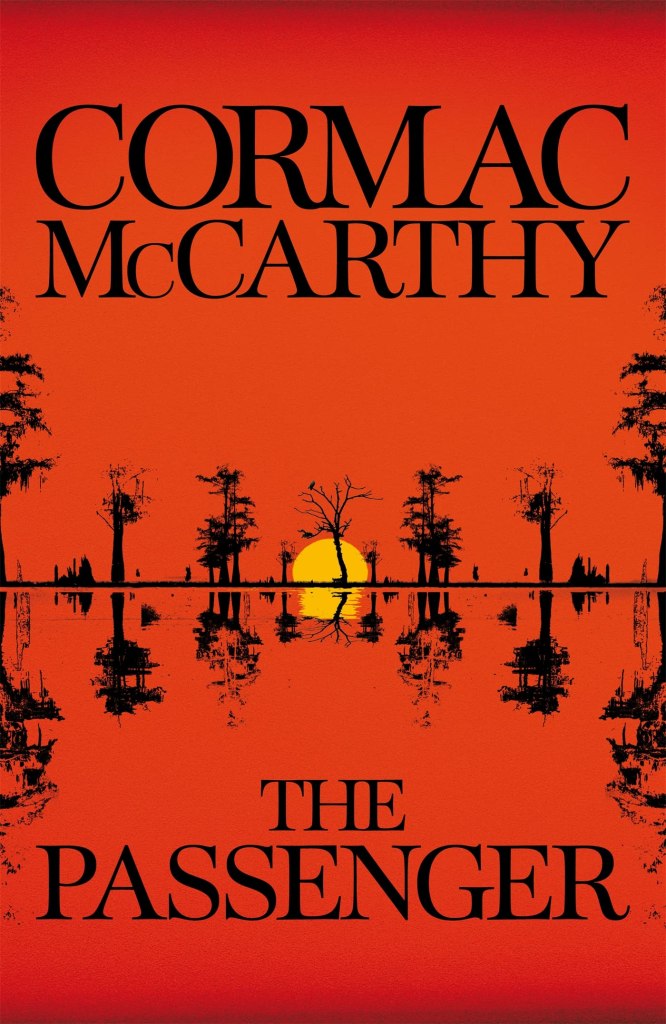
Review: The Passenger, by Cormac McCarthy

Four stars.

Cormac McCarthy is the old man who wrote No Country for Old Men. He also wrote some other stuff. His Blood Meridian remains the best written book that I have ever read, and in general I don’t think there is any writer that I have respected more than McCarthy.

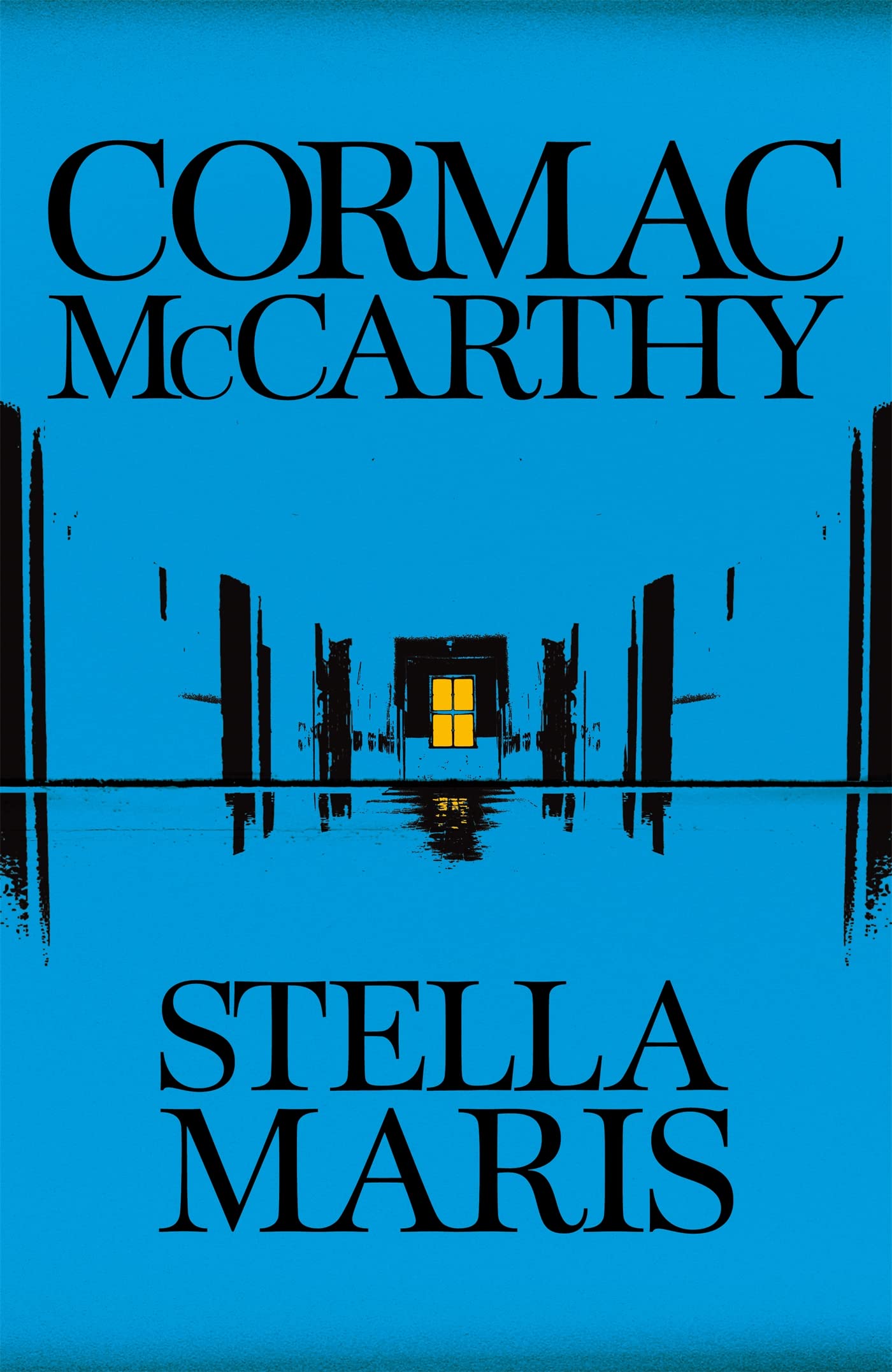
This book I’m reviewing, as well as the accompanying novella Stella Maris (that I’ve yet to read), may be the last books that McCarthy will be able to finish; the guy is eighty-nine years old. And throughout this text I got the sense that this was an extremely lucid man, who knows that he’s not long for this world, musing about the fringes of human experience and of existence in general.

The book starts with the protagonist, who at that point is working as a salvage diver, becoming embroiled in a mystery, but that’s only an excuse to push the guy further towards the edge. We are presented with dialogues about seemingly disparate stuff such as the Vietnam war, the conspiracy that killed the Kennedys, quantum mechanics, schizophrenic hallucinations, the depths of bodies of water, life on an offshore platform, etc.; the extremes where darkness reigns, where our ability as human beings to come to terms with anything becomes muddy. And I’m guessing that McCarthy chose to delve into these topics because he’s about to face the greatest darkness himself. I don’t know if I’d prefer to be so lucid when/if I grow that old.

The story follows a man for whom life stopped ten years ago, when his little sister, the love of his life, killed herself. We find this out in the first few pages, if I recall correctly. The young woman, clichédly named Alicia, was a haunting beauty and the kind of anomaly that makes you feel a hole in the world when she’s gone, whether or not you were involved in an incestual relationship with her: besides being a striking beauty (and beauty disappearing from the world is always a tragedy), she was a math genius who, for example, was consulted by experts at thirteen because she could determine which violin designs would sound best. Unfortunately, at puberty she started receiving visits from penny-dreadful characters who insisted on bothering her. One of them, the most insistent one, had flippers for hands. The scenes that feature them were the most un-McCarthy stuff that I’ve ever read of his, who’s usually centered on matter-of-fact matters. Suffering such detachment from reality, knowing herself so different from everyone else, this Alicia girl eventually failed to put her tremendous talents to use. She ended up in a sanitarium, from where she decided to walk off to a watery death.

[The notion that this book featured the adventures of a peculiar, sort-of-schizophrenic woman who received the visits of bizarre entities that may or not be real (we are told that the psychiatric tests that usually pinpoint schizophrenia failed on her) was what attracted me to read this book when I have been in a string of DNF-ed novels; I’m currently writing a novel that features one such character.]

McCarthy did a great job cementing this Alicia as a mythical presence in the past of the narrative. You want more glimpses of her, and you mourn the loss of her peculiarities. Like the protagonist, you wish to retain her exact words and come to figure out how her mind worked. I guess that Stella Maris, which is focused on Alicia’s experiences in the sanitarium, will prolong that appeal. This character in general, and the protagonist’s mourning of her, made me wonder if McCarthy based the grief on a real person.

Anyway, our protagonist failed to protect his little sister, who had frequently stated that she wanted to disappear, that she would have preferred to never have existed, and that she was doomed to kill herself. After she drowned, the protagonist thinks and/or says in a variety of ways that life no longer has any meaning now that everything that he had loved in it is gone, and yet back then he found every excuse to go gallivanting around the globe instead of being tangled in the sheets with this hot little sister of his. Although the protagonist himself wonders why the hell he wasn’t there for her, it feels more like a plot hole to me.

I liked the protagonist, and in plenty of ways I understand him; he can’t figure out why he even bothers to keep going, yet he’s supposed to care about his present circumstances and the possible consequences to come, nevermind the world around him. You shouldn’t go into this novel expecting a compelling plot or even resolutions, because in general it’s a “why oh why does anything have to be.”

The most memorable secondary character of the many that come and go was a certain John Sheddan, an eloquent, debauched acquaintance of the protagonist that shows up as if we are supposed to know him. He was probably a self-insert for the author to speak directly to the protagonist as well as to us, someone whose talks we found interesting and we’d miss once he disappeared from the world.

Apart from the characters, how about the prose? Does it reach the heights of Blood Meridian? There are long stretches of extraordinary, carefully crafted prose, and that alone is worth the price of entry, but some scenes are sparse in that regard.

McCarthy refuses to use an apostrophe for “can’t,” “don’t” and the likes. I’m fine with that, and I wouldn’t mind if its use in such contractions disappeared officially. But I regard his refusal to use quotes for dialogue as a mistake; often you can’t tell not only who’s speaking, but even if what was written was supposed to have come out of someone’s mouth. I’m all for confusing the reader when the POV character is supposed to be confused, but I think that you shouldn’t confuse your readers unnecessarily.

EDIT: now that I’ve read the companion book Stella Maris (link goes to my review of it), I have realized that during the period when Alicia committed herself to a sanitarium and afterwards killed herself, the protagonist of this novel was in a coma after a car crash. I have no idea how I missed it in this narrative. So the protagonist, who had been eluding his sister’s amorous attentions for years because he hadn’t come to terms with his own love towards her, got into a car while her sister presumably attended the race, and after he woke up from a crash-induced coma, he found out that his sister had killed herself because she believed him to be brain dead. Even worse: Alicia suggests in Stella Maris that if her brother ever died, she would die as soon as possible to find him in the dark.

During the events depicted in The Passenger, its protagonist wanders through his life aimlessly, unable to care about the future or any consequences, because nothing matters anymore after his sister died. However, having read the companion book, I don’t know how he stopped himself from walking into traffic the moment he realized what had happened to her due to his own decisions.

Here are the quotes that I highlighted on my Kindle:

Beauty makes promises that beauty cant keep.

The truth is that everyone is under arrest. Or soon will be. They dont have to restrict your movements. They just have to know where you are.

A calamity can be erased by no amount of good. It can only be erased by a worse calamity.

I know that to be female is an older thing even than to be human. I want to be as old as I can be.

People will go to strange lengths to avoid the suffering they have coming.

You think that when there’s somethin that’s got you snakebit you can just walk off and forget it. The truth is it aint even following you. It’s waitin for you. It always will be.

We might have very different notions about the nature of the oncoming night. But as darkness descends does it matter?

The world will take your life. But above all and lastly the world does not know that you are here. You think that you understand this. But you dont. Not in your heart you dont. If you did you would be terrified.

You’re a pack of mudheaded bigots who loathe excellence on principle and though one might cordially wish you all in hell still you wont go.

Real trouble doesnt begin in a society until boredom has become its most general feature. Boredom will drive even quietminded people down paths they’d never imagined.

The horrors of the past lose their edge, and in the doing they blind us to a world careening toward a darkness beyond the bitterest speculation. It’s sure to be interesting. When the onset of universal night is finally acknowledged as irreversible even the coldest cynic will be astonished at the celerity with which every rule and stricture shoring up this creaking edifice is abandoned and every aberrancy embraced. It should be quite a spectacle. However brief.

You have to believe that there is good in the world. I’m goin to say that you have to believe that the work of your hands will bring it into your life. You may be wrong, but if you dont believe that then you will not have a life.

In the spring of the year birds began to arrive on the beach from across the gulf. Weary passerines. Vireos. Kingbirds and grosbeaks. Too exhausted to move. You could pick them up out of the sand and hold them trembling in your palm. Their small hearts beating and their eyes shuttering. He walked the beach with his flashlight the whole of the night to fend away predators and toward the dawn he slept with them in the sand. That none disturb these passengers.

If imaginary beings die an imaginary death they will be dead nonetheless. You think that you can create a history of what has been. Present artifacts. A clutch of letters. A sachet in a dressingtable drawer. But that’s not what’s at the heart of the tale. The problem is that what drives the tale will not survive the tale. As the room dims and the sound of voices fades you understand that the world and all in it will soon cease to be. You believe that it will begin again. You point to other lives. But their world was never yours.

The abyss of the past into which the world is falling. Everything vanishing as if it had never been. We would hardly wish to know ourselves again as we once were and yet we mourn the days.

I don’t know what to tell you, he wrote. Much has changed and yet everything is the same. I am the same. I always will be. I’m writing because there are things that I think you would like to know. I am writing because there are things I dont want to forget. Everything is gone from my life except you. I dont even know what that means.

I’m not sure what the adaptive advantage could be to share an innate and collective misery.

I suppose in the end what we have to offer is only what we’ve lost.

The world’s truth constitutes a vision so terrifying as to beggar the prophecies of the bleakest seer who ever walked it. Once you accept that then the idea that all of this will one day be ground to powder and blown into the void becomes not a prophecy but a promise. So allow me in turn to ask you this question: When we and all our works are gone together with every memory of them and every machine in which such memory could be encoded and stored and the earth is not even a cinder, for whom then will this be a tragedy?

To prepare for any struggle is largely a work of unburdening oneself. If you carry your past into battle you are riding to your death. Austerity lifts the heart and focuses the vision. Travel light. A few ideas are enough. Every remedy for loneliness only postpones it. And that day is coming in which there will be no remedy at all.

He knew that on the day of his death he would see her face and he could hope to carry that beauty into the darkness with him, the last pagan on earth, singing softly upon his pallet in an unknown tongue.

Review: Boku to Issho, by Minoru Furuya

“Whether you’re an idiot who’s watching or an idiot who’s dancing, if you’re really an idiot, you might as well dance.”

Throughout my reading of Minoru Furuya’s Saltiness, Ciguatera, Himizu, and Wanitokagegisu (the links go to my reviews of those titles), this author became my third favorite mangaka after Inio Asano (mainly because of Oyasumi Punpun and Solanin; unfortunately the guy seems to have lost his drive since) and Shūzō Oshimi.

Furuya’s stuff tends to be similar: character-driven tales of outcasts forced to deal with bad luck and troublesome compulsions. Plenty of weird sexual stuff. Although the characters endure harrowing experiences that would have traumatized most people to the extent of ruining their lives, Furuya’s characters get used to trauma. However, the commitments between the characters tend to be equally temporary. His stories rarely include neat resolutions: unless the character in question dies, the issues that person had been struggling with throughout the story are likely to continue beyond the conclusion. The author also has a fantastic sense of the absurdity of life, so his plot points and character interactions are often unpredictable and hilarious.

This manga series I’m reviewing was made in the late nineties. A different beast to his later works, Boku to Issho is an extremely caricaturesque comedy slice-of-life. While the extreme behaviors of the characters put me off initially, as well as the author’s talent to depict ugly faces, Furuya ended up turning the caricaturesque nature of this story into an art form. It became one of the funniest series I’ve read in a long time.

The story follows two brothers (about fifteen and twelve respectively) in awful circumstances: their mother just died, and their violent stepfather booted them out. They find themselves homeless, penniless, with no talents that they can put to use. The big brother acts as a father figure to his younger sibling, but he’s lazy and delusional: although he believes that he’ll become a pro baseball player the moment he applies himself to it, he’s mainly focused in protecting his ego from the damage that testing his delusions in the real world would cause.

They quickly meet one of the other main characters of this tale: a glue-huffing orphan who makes a living by theft and petty grifting.

Later on they also get together with a pretty boy runaway teen. After the glue-huffing guy steals a cellphone, they start selling their services as gigolos. Their naïveté quickly clashes with the real world when one of their first customers turns out to be a young woman with a penchant for toy-assisted domination.

Most of the characters we meet struggle at least with their self-esteem, but often with poverty, and in some cases with compulsions and fetishes. They are rarely sure of their place in life and where they’ll be in a few years.

As mentioned, I’ve been exposed to plenty of Furuya’s works, so I already expected this story to “just end”. The author attempts some circularity, which mostly serves as the thematic point that not much in our lives gets resolved, and we’re left to figure out how to keep going.

Another winner by Minoru Furuya, as far as I’m concerned.

Review: The Last Night of the Earth Poems, by Charles Bukowski

Three and a half stars.

A collection of poems from when Bukowski was an old man, and I’m talking up to his deathbed; he died of leukemia. Long gone are the grueling jobs to which he showed up hungover and that he tolerated by drinking the hours away. Long gone are the days when he returned late from work to find his apartment in a ruinous state and his seemingly interchangeable girlfriend of the day drunk and ranting. Old man Bukowski spent his last couple of decades living in peace with a probably very accommodating wife.

In a couple of poems he mentions that he’s ashamed of all the whoring and mayhem he indulged in up to his forties; he now feels like he had been controlled by an overwhelming force that even convinced him that he was in control, and that if he had known better, instead of searching for his next alcoholic girlfriend he would have spent far more time sleeping.

Some of the included poems are made of still images from Bukowski’s past as if they came randomly to his mind (you’ll recognize plenty of those moments if you’ve read his other books). Some recall how much of a fucking bastard his father was: he beat him and his wife regularly, and spent his days unreasonably angry. Some are related to how much dealing with fans and fan-adjacent people annoyed him. One mentions the gentle molestation that he suffered at the hands of a pretty female teacher of his, if “suffered” can be used given that he remarks enjoying the hardest hard-ons of any eleven-year-old kid in LA at the time. Another poem mentions that he acted like a drooling retard at school, because that way he hoped that people would leave him the fuck alone. Some despair at the state of the world and the increasingly ruinous society he found himself living in compared to how it used to be even during the Great Depression. Other poems thank the act of writing in itself for having allowed him to escape a life that felt like an unending nightmare.

Bukowski dreaded the possibility that any random person could approach him because they had read his books, and I can’t blame him: nothing anyone can say about the art you produce could approach what it means to you, and to an extent, it even devalues and banalizes it. But it went beyond that: some fans brought their entire damn families (“even the aunt”) to Bukowski’s house to introduce themselves, and later on he found out, thanks to the manuscripts he received in the mail, that those fans were aspiring writers that wanted help getting in the industry through him. Some of the fans seemed to believe that his alcoholic past (and to a much lesser extent, present) was part of a cool guy persona that Bukowski was trying to cultivate, instead of his escape from an unbearable reality. A wannabe journalist harassed him in the streets and figured out his landline number to sign him on to an obnoxious project (“I interview you and you interview me”). It all sounded infuriating.

As Charles (or Hank Chinaski, as he preferred to call himself; I’m guessing he hated being associated to his father’s last name) goes on at length in my favorite book of his, Ham on Rye, even as a child he wanted to sign off from the horrifying world he had found himself in (“I felt like sleeping for five years but they wouldn’t let me”). Only when he discovered great books, and therefore people he could respect, he found the solace he needed to endure for a bit longer. Once he figured out what writing could provide for him, he found the way to endure until the natural end of his journey.

Bukowski kept it real to the end; that’s a big part of why I’m usually up for reading his stuff even though I DNF most of the other books I come across. He didn’t write because he wanted to be famous, to make money, or to impress people; he wrote because it saved his life.

The most memorable moment for me in this collection of poems was one of the most memorable for Bukowski: he recalled a day back at his parents’ when his father must have run his mouth at someone stronger than his teenage son or his wife. Bukowski’s father was seated at the toilet, and his face was disfigured from the beating he had received. Bukowski stood at the doorway and merely stared at the son of a bitch who had fathered him. His father yelled at him something like, “What the hell are you looking at?!” Bukowski kept staring. A few seconds later, he walked away. Bukowski adds that three years after that moment, when he was sixteen, he knocked his father to the ground with a single punch. That same day he moved out, or became a drifter anyway. The moment was depicted in his novel Factotum.

Here are some fragments I highlighted (they were in poem format, but whatever):

We stop at a signal. I watch the red light. I could eat that red light–anything, anything at all to fill the void. Millions of dollars spent to create something more terrible than the actual lives of most living things; one should never have to pay an admission to hell.

[Writing] has saved my ass from the worst of women and the worst of men and the worst of jobs, it has mellowed my nightmares into a gentle sanity, it has loved me at my lowest and it has made me seem to be a greater soul than I ever was.

Young or old, good or bad, I don’t think anything dies as slow and as hard as a writer.

Review: Factotum, by Charles Bukowski

In this novel, Bukowski forces us to follow his alter ego Henry Chinaski, an alcoholic drifter whose personality can be summarized by the following quote from the book: “How in the hell could a man enjoy being awakened at 6:30 a.m. by an alarm clock, leap out of bed, dress, force-feed, shit, piss, brush teeth and hair, and fight traffic to get to a place where essentially you made lots of money for somebody else and were asked to be grateful for the opportunity to do so?”

For half of the book or so, Henry travels from place to place hoping to land any job that would allow him to pursue his two goals: getting drunk and fucking women. Through the protagonist we meet curious people and we learn some intricacies, as much as he needed to know to survive there, of the jobs that Henry landed and that usually lasted him less than a week before he quit or got fired.

Henry daydreamed briefly about becoming an author, and even wrote a few pieces, but above that he hoped that some wealthy woman would take pity on him and become his sugar mommy. At some later point he also hoped to land a Japanese wife because he considered that they have the wisdom of the ages or some shit. Henry failed to luck out; the two women who made repeated appearances were 1) a barfly who, along with two female friends of hers, had a sugar daddy of their own, an aging millionaire who alternated between paying the women to receive some affection and berating them for cheating on him; 2) a woman named Jan, the female version of our debauched protagonist. She drank about as much as he did, but cheated even more. Their relationship was reduced to Henry bringing home, if they were lucky, enough money to buy food and alcohol, then fucking while drunk. Jan is present throughout most of the story, yet for Henry she barely seems to matter more than someone who is home when he returns from work.

I’m guessing that this novel is mostly autobiographical. We are presented with accounts of the protagonist’s attempts at finding a job that will last, or that at least won’t make him wander off in the middle of his shift to get drunk at the nearest bar. We go through twenty-five or so of such experiences. Even the most memorable people from those microworlds end up disappearing as if Henry had never met them, and that transience extends to his personal life. People come and go; he can only rely on the pleasure and oblivion that either a bottle or sticking his dick in someone else provide.

If Henry had cared about his future or his well-being throughout the events depicted, the story would have been a harrowing nightmare in which a broken, alienated man can’t relate to people on a human level, and can only tolerate his responsibilities for about three or four days at a time before he self-destructs. In any case, the guy is a piece of shit who can’t help himself: he steals from his jobs, he cheats, he sort of rapes, he drags other people’s wives out of bed in front of the husbands and French-kisses the wives (only happened once, but it bothered me), casually murders, and plenty of other dubious stuff I’ve already forgotten.

The most memorable moment for me was the following, otherwise minor one: Henry had gotten off a bus somewhere during the height of his drifter period. He rents a room at some inn owned by a couple. The woman tells him that her husband is on his last legs, and Henry can hear him wheezing as the man struggles to breathe in a nearby room. The next morning, an attractive female guest, who had been told that Henry was some sort of writer, approaches the protagonist, informs him that the sick owner had died, and asks him to give her some money for some gift or a memorial. Henry informs her that he isn’t actually a writer, that the dead owner is none of his business, and that the living are the ones who need to be pitied, starting with Henry himself, so what she should do is strip down and offer him some affection. The woman, disgusted, turns around and leaves. The author describes how she walks to the end of that hallway, enters her room, and disappears from Henry’s life forever. And in a way the whole story is like that: he gets pressured with some societal demand (including the basic ones of having to earn enough money to keep existing), he clashes with people in usually self-destructive ways, then those people are gone only to be replaced by the next group of people who will quickly be gone as well, including the few ones that Henry would have preferred to keep around.

Bukowski was an honest guy, someone who saw clearly despite his boozing, and who managed to keep going in style despite the hopelessness of it all.

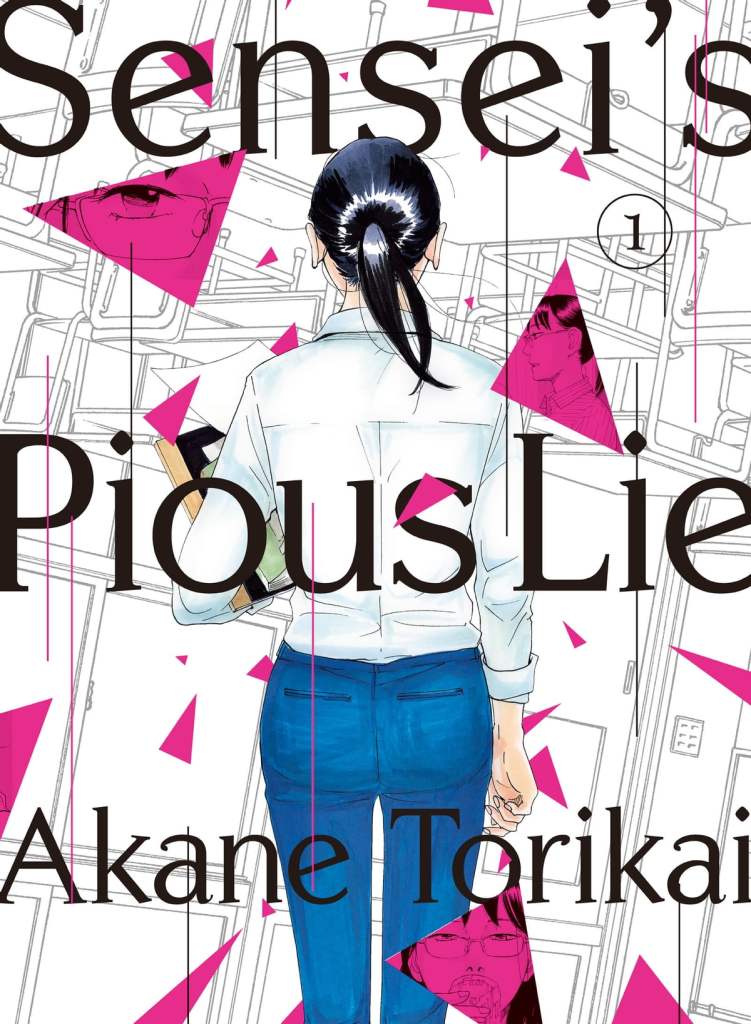
Review: My Broken Mariko, by Waka Hirako

Four and a half stars for the titular story, three and a half for the other one.

When I bother to read fiction, I usually look for well-constructed mirrors. In the titular story from this manga, because it features two, the protagonist is a high-strung failed adult with a dead-end job that pays her rent but otherwise just grates on her nerves. On the very first page of that story we learn that her best friend, only friend, the titular Mariko, has committed suicide.

Along the way we learn that Mariko was as broken as they come, and little of her true nature had a chance to come through given that she suffered a childhood, up to her twenties, full of physical and sexual abuse at the hands of her father. The only person Mariko approached for help was the protagonist, who in school was already a delinquent from a broken home.

Ever since they met, the protagonist had always been heartbroken because she couldn’t find a way to save Mariko both from her father and then from herself. Now that she won’t be able to help her anymore in life, she decides to grab a knife and visit Mariko’s father to steal her best friend’s ashes.

I won’t go into further details about the plot of a one-shot, but I loved the realistic way the author treated someone as damaged as Mariko, as well as her relation with the protagonist. Mariko knew she was broken, and even after she became an adult she searched for man after man who would mistreat her and hurt her, because she couldn’t relate on a deeper level with people in any other way.

But this titular girl wasn’t innocent either: she monopolized the protagonist’s life and attentions by guilting her into not interacting with other people and particularly not getting a boyfriend, because that would mean that Mariko would lose her chance to be saved, even though she knew from the beginning that she was doomed. That dynamic continued until a week or so before the titular character killed herself, so most of the reasons for the protagonist’s isolation and her unhappiness are related to having been tied down, and dragged to the depths of despair, by someone who had no means and no intentions of getting better.

The protagonist deals not only with the grief of losing her best friend whom the protagonist had tried to save since her school days, but also with the anger and remorse caused by the fact that the person to whom she had dedicated her life chose to abandon her. So we have a fucked up, failed adult for a protagonist, who also has a huge savior complex, and an impact character (the most influential character for the protagonist in a narrative) who is doomed from the beginning. I’m not surprised about the comparisons with Inio Asano’s “Oyasumi Punpun”, which remains my favorite manga series.

As if the story of this one-shot manga didn’t attract me enough, I found its artistic style tremendously compelling, over the top but in a way that emphasized the characters’ emotions perfectly. The depiction of both the shit they go through as well as how they react to it is more raw, and real, than in most manga, which I’m all for.

I didn’t rate it a five because it left me wanting to know more about and spend way more time with the protagonist. I thought there was far more to develop about her.

The second story takes place in the United States near the border with Mexico, and it reminded me a lot of “No Country For Old Men”. I won’t say anything else about that story except that it was a bit more on the nose than I would have liked, but I still enjoyed it a lot.

I want to read more stuff by this author, but apparently he or she has released nothing else. If this is really this person’s first manga, I look forward to that successful career.

Review: My Dearest Self With Malice Aforethought, by Hajime Inoryu

Our protagonist is a college-age kid devoted to man’s one duty: that of sticking his penis in as many wet holes as possible. He’s been wholly unsuccessful so far. From that introduction, the story could have gone in plenty of directions, but I wouldn’t have guessed that the guy is the son of Japan’s most famous serial killer from the last fifteen or twenty years, and that he has dissociative identity disorder. Looking back at the first couple of chapters, they are incongruous with what’s to come.

We find out that something is wrong with the guy’s brain as soon as he does: he wakes up in bed next to a pretty stranger, a female classmate from college. He has no clue how he started dating her, but she seems quite taken with whoever was commanding the protagonist’s brain until then. This alternate version of the guy is also violent and much bolder. In any case, the guy is happy enough to let this sudden girlfriend of his believe that she’s dating the other version of himself.

However, the protagonist’s missing part isn’t satisfied with a hot girlfriend: he’s also hanging out with members of the worst gang around, one that runs whores and kills people. They idolize the aforementioned serial killer to the extent that they welcomed the protagonist, the serial killer’s son, with open arms.

One person realizes that the protagonist is struggling with some ghastly mental issue: an aloof young woman who attends the same college. She has been following the protagonist around and has learned to identify when the personality switches have taken place. Soon enough we find out that she has a personal connection with one of the victims of the serial killer.

A woman gets murdered in what seems like a copycat case of the serial killer’s modus operandi, and the protagonist finds himself in possession of that woman’s cut-off ear. So is his alternate personality following on his father’s footsteps, or has someone framed him? The clues lead him to the nasty gang that has welcomed him. Helped by the weird girl from before, the protagonist will try to figure out if he’s innocent or if he’s truly the devil’s spawn, as he’s been called since he was a child.

This quickly turns into a brutal, disturbing tale. At first it reminded me of the most hardcore parts of Minoru Furuya’s mangas (a hapless underdog who ends up involved in a life-or-death situation with sociopathic elements of the Japanese underworld), except that this story lacks any humor. However, after a turning point in the story that abandons plenty of the set up elements that came beforehand, the tale turns into a thriller in which anyone could betray the protagonist at any point, and everybody has a secret to hide.

The drawings are detailed and uncompromising. This is one of those iceberg stories in which the author has plotted carefully every character’s actions and deceptions. Unfortunately, he resorts to some clichés, and he also pulls his punches a couple of times.

The moment that bothered me the most happened early on in the story, but it announced that some more bullshit was coming down the road: at one point the protagonist finds himself in the club that the gang owns. He’s prodded into showing his inborn skills as a torturer with a tied-up guy that the gang intended to kill. The protagonist ends up giving a speech, the details of which I’ve forgotten (he said that torturing a random guy was beneath him, or something). His audience, a bunch of hardened criminals who idolize a serial killer, just go along with his excuse, and even end up freeing that man. The author had done a great job setting up those guys as extremely dangerous until that point. As far as I’m concerned, one of the worst things you can do as a writer is building up some symbol as something significant only to end up tearing it down out of convenience.

Later on we get a few clichéd moments that we’ve seen a thousand times: the author makes us believe that a character has shot someone in the head, but that character actually shot into the floor deliberately; X gets shot in the chest at point-blank range by people who could have easily shot X in the head, but X survives because of a bulletproof vest; a murderous bad guy gets knocked unconscious, but instead of finishing him, they good guys walk away, and the bad guy gets back up shortly after; etc.

Although I’m quite sure that dissociative identity disorder doesn’t work that way, I found the story quite interesting. You usually don’t get these kinds of thrillers in manga format.

Review: RaW Hero, by Akira Hiramoto

I found out about this series when it showed up in the books list of someone I’m stalking on Goodreads. If I had paid attention to its terrible rating on the site, I would have missed a gem. This author’s absurd, perverted humor is right up my alley. I don’t know why I pay attention to ratings; how often do I agree with the majority on anything?

The story follows a bespectacled pretty boy in his early twenties. His parents died some time ago. He found himself responsible for taking care of his younger brother, who may be in high school, and of his other much younger brother, who’s a kid. He has promised to them that he’s going to get a great job that will pay well enough that they’ll live in a highrise building instead of in their current hovel. His brothers dream of eating foods that most others take for granted. Anyway, no matter how many interviews our protagonist goes to, he remains unemployed.

One day he’s on a train heading to another interview, but he notices that some guy wearing a suit is fingering a young woman. The protagonist’s sense of justice doesn’t allow him to let this pass, and he chooses to miss his interview and instead confront the molester. It turns out that the guy and the young woman were engaging in consensual mutual perversion. However, the older guy is impressed by the protagonist’s earnestness and sense of justice, and he reveals that he’s one of the big shots at the intelligence department of the country.

This version of Japan includes superpowered heroes as well as people that have undergone operations to become half-beast freaks. The older guy offers our protagonist a job as a spy: he’ll have to infiltrate a small-time group of troublemakers who bother the government by spray painting, giving away leaflets and in general being annoying. For the most part, the government seems to want to make an example out of this group. However, its leader is a dangerous woman who goes by the stupid name of Jelly E. Fish.

The protagonist’s employer is a volatile pervert severely lacking in common sense. Instead of giving his employee the suitcase with the instructions and professional-looking clothes that the protagonist should rely on to infiltrate the group, the older man gives him the wrong suitcase, that contains the skimpy costume that he intended his preferred escort to wear. The protagonist considers this a fucked up test that he has no choice but to pass in order to provide for his family. After a disastrous interview that involved receiving a facial from a half-elephant’s trunk, he becomes a member of one of the propaganda wings of this shady organization.

What follows is an insane ride in which the protagonist has to pass for a woman, avoid getting found out as a spy, and resist the sexual attentions of both men and women. We meet through him an aspiring manga author in her late twenties who also lost her parents at an early age, who grew up with her grandparents in the deep country and now feels uneasy in society, and who has coped by producing romantic mangas that she aspires to publish. I found her the most relatable person in this story, the rock that provided the protagonist with a solid goal for which to endure his otherwise deranged existence.

Our guy is having a hard time: his life is becoming increasingly demented, and he needs to assert his strength and get taken seriously as a woman in the shady organization. Soon enough he finds himself crossdressing in public for no reason. He’s losing the sense of his own identity, and at times he ceases to give a shit about anything.

The protagonist comes across the second most memorable secondary character of this tale: a hellishly sexy cosplayer and yandere who is also his neighbor. She immediately finds out that the protagonist is crossdressing; added to the guy’s delicate genitals with which she quickly comes in contact, she becomes infatuated with our protagonist. She’s also the kind that casually resorts to blackmail.

The plot is tight, the interactions between the characters are compelling and often hilarious, the women are gorgeous (half of the time, even our crossdressing protagonist), the series features lots of retarded crotch shots (even of our crossdressing protagonist), some dialogue bubbles come out of crotches.

My only issue with this story is that the author dropped the ball with that ending. I won’t go into spoilers, but the protagonist and his romantic interest should have gotten a final scene, one notorious character survived when they should have ended up as dead as they come, and one of the most compelling characters disappeared as if the author forgot that they existed. Otherwise, if you are as much of a pervert as I am and you want to have a good time, I recommend this series.

Review: GIGANT, by Hiroya Oku

This is a loose review of the entire series.

The main character of this tale (I wouldn’t dare call him the protagonist) is a sixteen-year-old high schooler that loves Western movies, that aspires to become a film director, and that is obsessed with a twenty-four-year-old half-Japanese, pink-haired, heavy-breasted porn actress who goes by a stupid artist name.

One day as he’s walking around in Tokyo, he comes across posted notices on which someone indicates that the porn actress lives nearby, which could lead a malicious person to harass her. The high schooler tears down the notices. The porn actress casually witnesses him doing so, and they strike up a friendship. Our main character can hardly wait to experience this gorgeous porn actress’ talents on his own flesh and dick, but she intends to put him in the friend zone. Besides, she has a boyfriend: an unstable gambler who beats her up when he remembers that other guys are fucking his girl. After they break up, our high-schooler main character and this big-breasted porn actress end up dating. Some people may have a problem with the fact that she’s twenty-four years old and he’s in high school, but the situation is far worse, because our main character is a toddler; the motherfucker threw a tantrum at a restaurant, bawling and all, until she agreed to date him. I have no clue what the author intended with that moment, but if he wanted the audience to lose all respect for the supposed main character, he achieved it.

Anyway, they work well as a couple: she’s motherly and loves to be needed, and he wants to screw as much as possible the most alluring woman to whom he has access.

Soon enough the tale delves into sci-fi: some weird guy is running around in his underwear while going on about some nonsensical stuff. Somehow he ends up getting struck by a truck. As he dies, he bequeaths to the porn actress a strange device that gets attached to her wrist, and she’s unable to remove it. Once the weird guy dies, he becomes a plush toy.

Our lovely porn actress figures out that the device allows her to become gigantic at will. At around the same time, a website named “Enjoy the End” grows popular: it lets users vote for what strange event they want to happen, and the most popular one becomes reality no matter how absurd: people start witnessing dragons and UFOs, and gigantic monsters descend from the sky to wreak havoc on Tokyo. The users of the website rejoice at the destruction that these manifestations are causing on the capital; most of the users seem to reside in the countryside. When they end up voting for a skyscraper-tall monster to reduce the population of Tokyo to one million, our porn actress decides to become the protagonist of this tale by turning gigantic and fighting the menace while naked (because the process of turning monstrously huge destroys her clothes, as well as anything else she happened to be in).

The story follows how Japanese society, then the rest of the world, reacts to the heroic deeds and growing cult status of the unlikely heroine who keeps exposing her monster-sized tits and genitals, and although the series becomes increasingly more ridiculous and absurd, this porn actress turned Godzilla-murderer remains brave and good-natured to an extent that warmed my black heart.

I don’t know if I can honestly recommend this series. I loved the graphic depictions of the big-boobed heroine, as well as how often she showed up naked. The fights are compellingly choreographed. This author has featured aliens in the three stories of his of which I’m aware: “Gantz” (I gave up halfway through when he killed off a main character, and I wasn’t enjoying it enough) and “Inuyashiki” (I appreciated the anime adaptation as well as its bold, violent nature, particularly the gun fingaz stuff). I wouldn’t be surprised if the author himself was an alien; he writes his human characters as if he’s only ever watched people from afar. However, I was most impressed with the quality of the drawings, which resemble renders based on photographs or 3D models, as well as with how balls-to-the-wall bonkers the whole thing is; I gotta admire the author for that. The two highlights that come to mind are the whole prolonged sequence involving a gargantuan Satan, and the two gigantic depictions of Socrates and Plato, who speak like teenage “Call of Duty” fanatics.

I had a good ol’ time reading this series. To be fair, I’d have a good time with pretty much anything that involves huge, meaty tits, so make of this review what you will.

Review: Wanitokagegisu, by Minoru Furuya

The title apparently translates to “Stomiiformes”, which is, according to Google, “an order of deep-sea ray-finned fishes”. This is the fourth series I’ve read of this author, after “Saltiness”“Ciguatera” and “Himizu”. Furuya has become my third favorite author after Shūzō Oshimi and Inio Asano, and this series is my third most favorite of his.

The tale follows a thirty-two-year-old ugly loner who has been working the night shift as a security guard at a supermarket for seven years. A single event defined his youth: during a class in which the students were ordered to hold hands, everybody made a point of avoiding to hold the protagonist’s. Afterward the teacher berated his classmates for being so hurtful, but some girls rebelled and yelled that they didn’t want to hold his hand because he was gross and creepy. As soon as the protagonist became an adult, he went out of his way to avoid people and live as quietly as possible. However, we are introduced to him the moment he fears that he’s missing out, that he’s letting his life pass by. He has made a habit of going to the roof of the building at which he works, getting undressed to his underwear and running laps, but that night, as his anxiety grows, he makes a childish wish to the universe: for someone to become his friend.

Recently he had noticed that someone was spying on him from the shadows of a nearby apartment building as the protagonist ran laps on the roof. On top of that, some sneaky bastard starts leaving notes to him that state that the protagonist is about to go crazy and die before the end of the year. So far the only positive development in his life is that he meets his next door neighbor, who is a beautiful, tall, big-breasted young woman who aspires to become a published writer.

This story contains all the elements of a classic Minoru Furuya tale: an outcast protagonist who has trouble relating to people properly and who experiences intrusive thoughts; some of such thoughts are incarnated into creatures (humans and wild animals in this series, otherworldly “demons” in the other stories); silly humor; unpredictable behaviors; hardcore sequences that should have traumatized the involved characters but that end up having few lasting consequences; secondary characters that impact the protagonist as they play their role, but that then disappear forever; and the sense that by opening yourself up to others or even interacting with them, you are courting disaster.

Through the protagonist we meet a homeless gambler who’s running from the Yakuza; a wired young man who is in love with (and stalks) a dangerous woman; a pea-brained, big-dicked security guard who dreams of becoming rich and popular; a sociopathic hikikomori who murdered his depressive, alcoholic father; a possibly schizoid security guard who has never opened up to others and that if he does he risks finding out the extent of how fucked up he is; a gang of thugs who steal cars; an aging pleasure seeker who’s looking for a way to break up with her murderous Yakuza lover, etc. In the middle of it all, our unfortunate protagonist attempts in his fumbling way to improve other people’s circumstances, even to his detriment.

Most fiction writers, men and women, tend to dump plenty of their own flaws into their protagonists, then they also create romantic interests for those protagonists that in real life wouldn’t even deign to look at them. It rarely bothers me; after all, real life is shit and we ought to escape from it as often as possible. However, I had a especially hard time believing that a beautiful, tall, big-breasted aspiring writer would be interested in this story’s protagonist, who is ugly, unkempt, lacks any interesting hobbies or talents, has few social skills, works a dead-end job, and has never even kissed a girl. I did, however, like the character of that aspiring writer (who does very little actual writing in the story) although I couldn’t believe in most of her motivations. Her relationship with the protagonist becomes the spine of this story right up to the end, so if you can’t buy into it, you may have an issue with this series.

I have come to this story after I finished reading Furuya’s “Himizu”, a mostly serious work in which the author seemed like he was restraining himself from breaking into silliness. I much prefer the demented interactions between his characters that somewhat often end up involving sexual references and/or exhibitionism.

I’ve felt a kinship with this author ever since I started reading “Saltiness”, that remains my favorite series of his. In this story I’m reviewing, the author comments through his protagonist that he feels that his brain lacks something that would allow him to relate to other human beings as it seemingly comes easily to most other people, so naturally I suspect that he may also be autistic and in addition have OCD due to how often he depicts intrusive thoughts in his protagonists, who are often arguing with mental ghosts. So if you want to experience what a nightmare existing in such brains can be, I guess you could do much worse than going through this author’s works.

Review: Himizu, by Minoru Furuya

Minoru Furuya has become my third most favorite manga author after Shūzō Oshimi and Inio Asano, thanks to his series ‘Saltiness’ and ‘Ciguatera’. His stories follow underdogs whose mental peculiarities (OCD and autism are the most likely culprits for me) and shitty luck prevent them from realistically aspiring to anything better than an average life. The author consistently represents, in the three series of his that I’ve read, intrusive thoughts as strange, sometimes demonic entities that stalk the protagonist; I ended up doing the same thing for a novel of mine even before I knew about Furuya’s works, so this must be a result of how certain types of brains operate.

Anyway, the protagonist of this bleak series (by far the most humorless of the three) lives at a shack that also functions as a boat shop. It belongs to his father, but the old man bailed on his family to become a drunkard and a gambler. Now his teenage son has to run the business, because his mother is focused on finding a new husband.

The protagonist is fed up with life from the moment we are introduced to him. As he mentions a few times throughout the story, he knows he came from garbage and that he’s little more than a defective idiot. He tries to regulate his thoughts and actions so he won’t stray from the path that may lead him to live a regular, mediocre life, and he holds a grudge towards anyone who dares to pursue lofty dreams, as he believes that those people are delusional and blind to the fact that they are doomed to fall. He wishes to struggle and perform some grandiose good deed that would justify his existence, but he fears that as a broken person coming from a ruinous family, his destiny has already been decided.

One day his mother elopes with her new lover, never to be seen again. Our protagonist, deprived of parental support, decides to quit going to school and just runs his father’s boat shop. Soon enough, though, he comes to learn through a couple of Yakuza types that visit the boat shop that his father’s debts may become the protagonist’s responsibility as well.

As interesting characters other than the main guy we have the following: the protagonist’s only friend, an ugly, short, nearly toothless kleptomaniac who nevertheless isn’t as cursed as the protagonist because he doesn’t have the same perennially bleak outlook on life; an aspiring manga author who works as a counterbalance to the protagonist with his determined work ethic and confidence in his talent; and a reserved but tough female classmate of the protagonist who is attracted to him for some reason, and who wants to improve his miserable life.

This author’s characters, in the three series I’ve read of his, can often surprise you with their unpredictability. Some writers warn against using “and then” plot points; they suggest that every plot point must be a “but” or “therefore” regarding one or more plot points that came before. However, this author includes some sequences or scenes that in many stories would have long-lasting repercussions or be pivotal to the development of the plot, but in these stories life just goes on, or the important people fail to ever find out that the event happened. To put an extreme example, in one of the three series (won’t say in which), some secondary characters rape one of the main characters, but none of the main characters, including the victim, ever find out about it. On the topic of rape, there’s plenty of strange and/or sudden sexual stuff going on in this author’s works, even as mild as a character suddenly pulling his or her pants down, or fingering someone else. The violence included can often be equally sudden.

They made a live-action version of this story. Here’s the trailer. I haven’t watched the movie yet; apparently the director intended to follow the manga faithfully until the whole tsunami and nuclear disaster of 2011 happened, so they included that in to offer some commentary and a more hopeful message than what this series supports. So far I can tell they made at least one change I consider questionable: in the manga the protagonist’s father was constantly in a drunken daze, but he was never overtly cruel nor dismissive towards his son; the protagonist despised his father because he abandoned his family, and after that point there was nothing the old man could have done to improve their relationship.

It’s a shame that I have already read the three series generally considered this author’s best.