On writing: Testing your personal link to a story seed

Once you identify a story seed, you better ensure that it excites you enough; you don’t want to end up writing dozens of thousands of words only to realize that you’d rather work on something else. The following are the notes on the subject I gathered years ago from many books on writing.

  • Freewrite about what seems important about the idea.
  • What is the point of the story?
  • Is the story really worth it?
  • What could be the staying power of this story idea?
  • Why would any of it matter?
  • Does your imagination fill with possibilities? Do the preliminary scribbles get you excited about writing more?
  • How is this story personal and unique to you?
  • If you hope to write a book of either fiction or nonfiction, you will have to live with the characters or topic for a long time. Do you think you can do that?
  • What quality, characteristic or concern surrounding your idea grabbed you?
  • Why do you want to write this? What is it about your life at this moment in time that attracts you to this idea?
  • Do you bring a long-standing, or at least overwhelming, desire to have lived the story?
  • Why must you tell THIS story? Why is it important to you to spend the energy? Why are you willing to take time away from another area of your life to develop this story? What is it you want to say and why? And how? Where is it coming from inside of you?
  • What’s the belief burning within you that your story feeds off of?
  • Is this something that by writing it might change your life? Is the story idea that important to you?
  • Will it fill you, does it check something off your bucket list, will it give you focus and joy and challenge? Is the idea worth a year of your life? Do you want to be remembered for this story?
  • Imagine you are dying. If you had a terminal disease, would you finish this book? Why not? The thing that annoys that self is what’s wrong with the book. So change it.

On writing: Story seed generation #3

Here are my few remaining notes about generating story seeds, taken years ago from books on writing.

  • What would arouse a sense of wonder?
  • Freewrite about settings you find deeply intriguing, loaded with curiosities and mysteries.
  • What situations, problems, conflicts and emotions you want to be more adept at understanding, coping and resolving?
  • Think of two incompatible, compelling moral decisions. Dilemmas work best when the stakes are both high and personal. When one choice is morally right, it will win out unless it is offset by a different choice that is equally compelling in personal terms.
  • What’s the worst thing that could happen?
  • Make a list of ten times in your life when you felt the most scared or worried.
  • What subject close to your heart would embarass you, were you to open up about it? In such limits is often where great stories are found.
  • Start imagining great scenes. See them in your mind and justify them later. Who are these people? Why are they doing what they are doing? What’s happening beneath the surface?

On writing: Story seed generation #2

Here are some more notes about generating story seeds, taken years ago from books on writing.

  • When an image really grabs you, stop and write about it for five minutes.
  • What people do you find interesting?
  • Think of a character with a flaw, a knot that is hurting him and will do him more harm in the future, and what new way he could pursue. Think of a story that would show off or amplify this.
  • Create a character with an obsession, then follow.
  • Who are your personal heroes? What makes these people a hero to you? What is his or her greatest heroic quality?
  • What sort of protagonist could serve as a vessel for you to work through your own problems?
  • Think of something you wouldn’t tell anyone: not your spouse, maybe not even your therapist. See if there is a way to make that a story.
  • Brainstorm over the following points: things you hate. Things you love. Worst things you’ve ever done. Best things you’ve ever done. People you’ve loved. People you’ve hated. Bucket list. Hobbies. Things you know. What you’d like to know. Areas of expertise.
  • Write about the emotions you fear the most.
  • How would you live your life differently if you could start over? What would you do, who would you be, where would you go?
  • Consider hatching an idea from your passion, and then develop a concept that allows you to stage it and explore it.
  • Write about the burning core of your being, the things which are most painful to you.
  • Has your own life ever reached a turning point? Have you ever had to face up to your mistakes, admit failure, and find a way to go on? Have you ever been wrecked by the knowledge that you are inadequate, that you cannot fix things, or that your limitations are plain for all to see? Was there a moment when you knew you might die in the next few seconds? Has there been a point of do or die, now or never, it’s up to me?
  • What is the truth that you most wish the rest of us would see?
  • How do you see our human condition? What have you experienced that your neighbors must understand? What makes you angry? What wisdom have you gleaned? Are there questions we’re not asking?
  • Is there a particular theme about which you feel strongly?
  • What is the most important question? What puzzle has no answer? What is dangerous in this world? What causes pain?
  • Look in your own life: Is there a loss or fear you’d like to finally grapple with, or an ideal or extreme you’d like to imagine?
  • Think of some value that you believe in. Through what kind of story would you be able to debate that truth, try to prove it wrong, test it to its limits?
  • The whole point of a story is to translate the general into a specific, so we can see what it really means, just in case we ever come face to face with it in a dark alley.

On writing: Story seed generation #1

Back in the day, when I believed that writing stories could be systematized like a computer program (I’m a programmer by trade, after all), I was obsessed with books on writing. I own two double-row shelves of them, and that’s just the physical ones. You would think such an obsession would translate into sales, but it does not.

A couple of days ago I figured that in my spare time at work, when I’m not editing my current chapter, I could sieve through the hundreds, if not thousands, of notes I took, and post them on my site. I didn’t go as far as writing down to what book each of the notes belongs, or if I rewrote them in any way, so I hope I won’t get in trouble for this.

Anyway, the following notes relate to the process of generating story seeds.

  • Freewrite for five intense minutes. Write anything that comes to mind: your impression, visions, dreams, ideas. Ask questions, brainstorm answers.
  • Write out, continuously without stopping, one hundred questions. They could be personal questions, questions about the world, about science, about nature, about society, about family members, life, spouse, dog, car engine. Circle the ten that seem to you to be the most important. How do these ten questions relate to a body of work? Are your most important questions reflected in any of your works? Do the questions suggest areas into which you might extend your work?
  • Write down a wish list of everything you’d like to see in the screen or in a book. It’s what you are passionately interested in, and what entertains you.
  • Is there an interest that you could use as the core idea for an ingenious and appealing original premise? What has always fascinated you? What do your children love? What have you spent most of your non-essential spending on?
  • Take the building blocks of a movie you dislike. How would you rearrange them into what you do like?
  • Pull apart the stories you like. What you like in them is a part of you; you’ve got to recognize it before you can use it.
  • Reflect upon your most satisfying and influential reading experiences. Do they have a common takeaway?
  • Name three books you were desperately anxious to read. Identify the times you read the back cover copy and thought, “I have got to read that book.” What do these books have in common?
  • Each time you get an idea spark, come up with at least five to ten related “what if” scenarios. The last few should be the hardest to come up with but may turn out to be the best.
  • Come up with ideas that connect with you emotionally. Nudge them in a direction that offers the greatest possibilities for conflict.
  • Write five things you are passionate about. Five things you fear the worst. Five things you’ve always wanted to do. Five interesting things that recently have made you stop and think. Can you apply a “what if” question to each of those five things?
  • Think about what things should never be done. Come up with “what if” scenarios for them.
  • Come up with a fresh twist for the common scenario involving a group of characters, a confined space, and something chasing after them.
  • Think about what you are daydreaming about these days. If it brings you joy, what concept can you extract out of it that would make the story a vicarious experience?

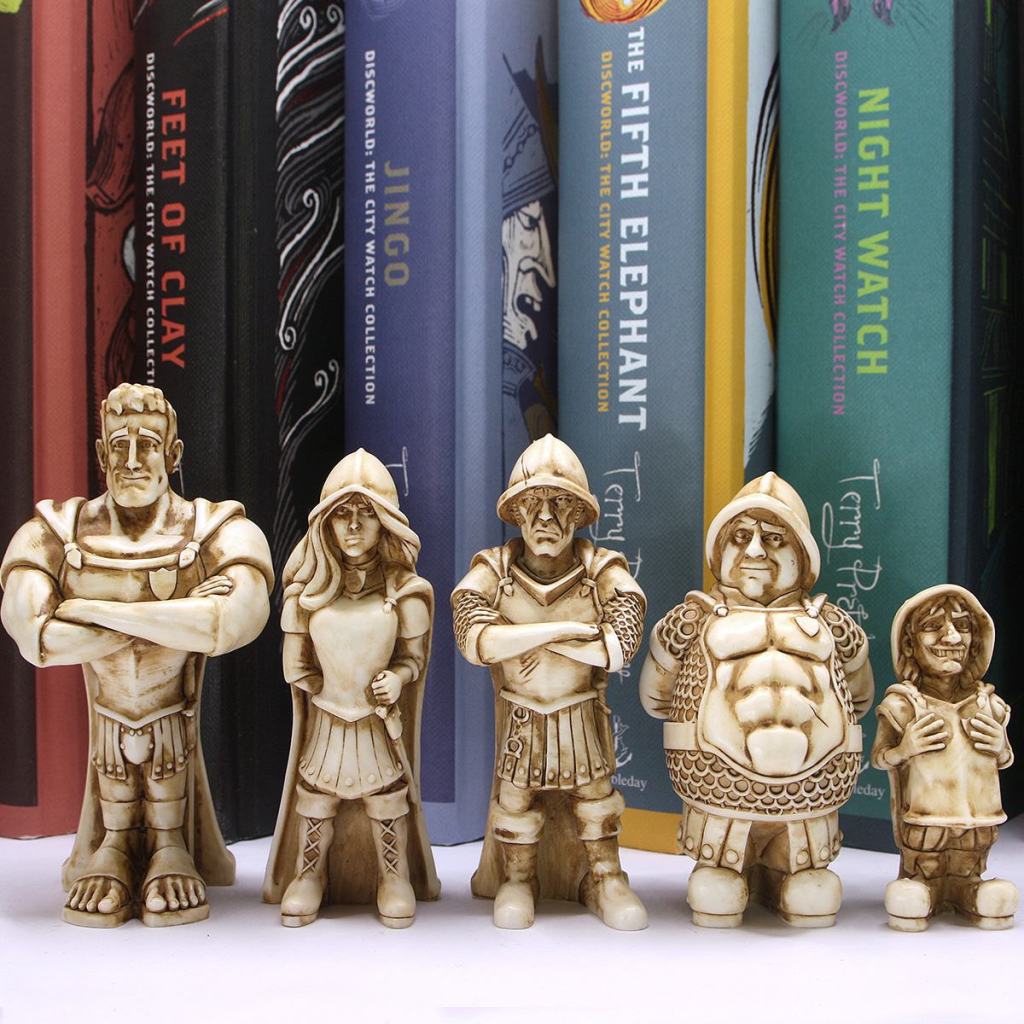
Review: Feet of Clay, by Terry Pratchett

Words in the heart cannot be taken.

Three and a half stars.

This is the third novel in the City Watch series of books that good old (and dead) Terry wrote, after Guards! Guards! and Men at Arms. What started as a ramshackle watch has become a proper force that features members of most of the fantasy races that live in the city of Ankh-Morpork, in some cases due to the Patrician’s goal of representing all his constituents through affirmative action.

This time the story revolves around golems, anthropomorphic beings made of clay and animated thanks to the written notes someone put inside their heads. The fantasy version of robots. They are enslaved into performing most of the duties that the living creatures don’t want to risk their hides for, or bother with. Some of the most extreme cases involve leaving a golem in a pit to manufacture products twenty-four hours a day. Given this context, plenty of elements of the tale involve freedom: from social norms (a bearded female dwarf wants to look more feminine), from heritage (a character discovers that he belongs to the aristocracy even though he feels at home among the rabble), from their impulses (the resident werewolf), from religion, and such.

Once again, a shady group is trying to turn Ankh-Morpork into a monarchy. Three for three. Although some influential people in the city are aware that Captain Carrot, the six-something-feet-tall dwarf whom everybody loves, is the rightful king, he’s the earnest, just kind that would seriously upset the status quo in a city where thievery and murder are legal. Besides, his relationship with a werewolf could end up in seriously hairy heirs. So they figure that they could install some easily-manipulated dolt as king, which would allow the guilds to rule from the shadows. For that purpose they poison the Patrician, enough to incapacitate him but not kill him; all the guilds suspect that the city would be ungovernable if the cunning Patrician were to die.

In the middle of all this, two old men die: one the owner of a sort of bakery, and the other a priest. These two crimes are somehow tied to golems, who have started leaving their posts for supposed holy days. Meanwhile, a strange, dangerous golem roams the city.

Although one of these constructs became interesting by the end, I didn’t find them very compelling otherwise, which reduced my enjoyment of this story. However, Terry could have told pretty much any tale as long as it allowed me to spend some more time with the lovable cast of characters.

I suspect that Terry saw himself in the anti-authority Commander Vimes, whose ancestor famously killed the last king, and who at times struggles with the notion that plenty of his problems could be solved by shooting the people involved. My favorite character, however, is Angua, the local werewolf. She’s currently dating Captain Carrot somewhat against her will, because she can’t justify why she likes someone so straight-laced. Apart from the generally justified prejudices against werewolves, Angua fears that one day she’ll fail to control her urges and therefore rip the throat of someone she cares about, so she tries to keep people at arm’s length. She’s also planning to pack up and leave once again, because she doesn’t believe that she could ever belong among people. As I fear that one day I’ll turn my intrusive thoughts into reality, I identify quite a bit with her, and it doesn’t hurt that she reminds me of Annie Leonhart from Attack on Titan, one of my favorite characters from Japanese fiction.

Anyway, another entertaining novel in the City Watch series, just not as compelling as the previous two.

We’re Fucked, Pt. 118: AI-generated audiochapter

A stoic face in the darkness. This audiochapter covers chapter 118 of my ongoing novel We’re Fucked.

Cast

  • Leire: a blonde broad who hangs out down at the Ragged Flagon in Riften
  • Jacqueline: Geralt’s best female “friend”
  • Snackman: a doomed Spanish guy from RE 4
  • Nairu: somewhat annoying teen who sells newspapers in Diamond City

I produced audiochapters for the entire two previous sequences, and I intend to continue until the novel ends or I end up stranded in Göbekli Tepe times. A total of four hours, forty-nine minutes and sixteen seconds. Check them out.

About chapter 118 and Göbekli Tepe

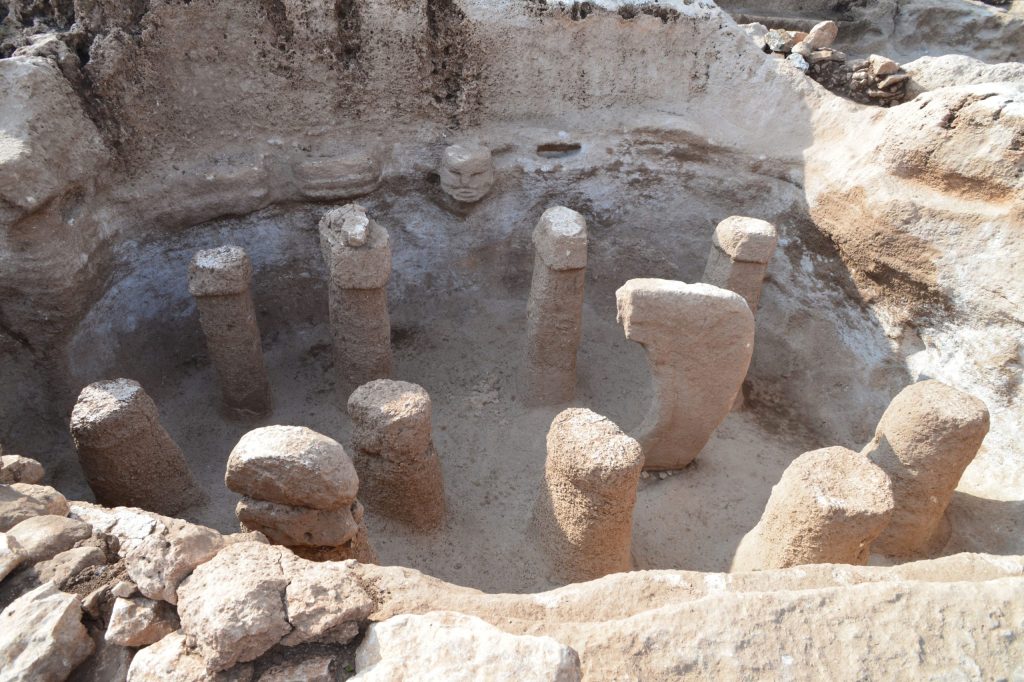
I’ve just posted chapter 118 of my ongoing novel We’re Fucked. Those of you who are fans of prehistory may have caught on to the fact that Leire stepped into one of the enclosures at Göbekli Tepe (technically, a mix of Göbekli Tepe and its sister site Karahan Tepe). I get the feeling that most people remain unaware of this ancient culture that was building fascinating stuff at the end of the Ice Age, and possibly during.

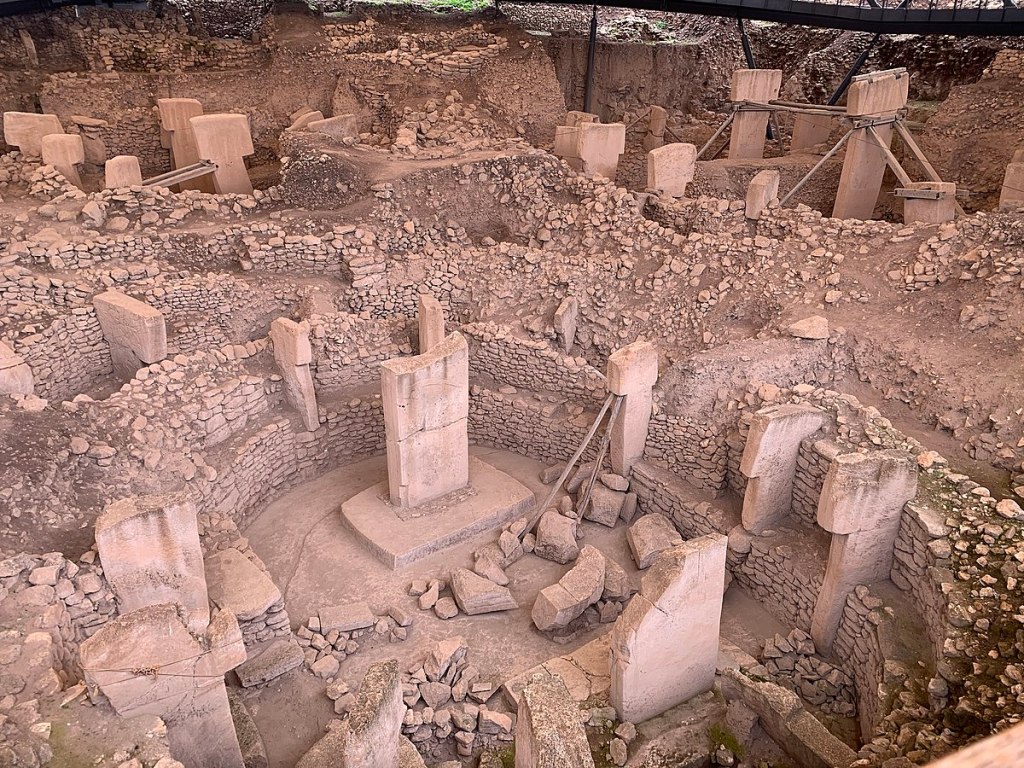
Göbekli Tepe is located in Anatolia, modern day eastern Turkey, and was unearthed in the nineties, but its significance wasn’t understood until later. They were able to carbon date the enclosures: they had been buried for ten thousand years, and therefore uncontaminated. The complex, only five percent of which has been unearthed (we know through ground-penetrating radar that the rest exists), had been in use for about a thousand five hundred years. 11,500 years ago points to the end of the Younger Dryas, the extremely anomalous climatic period that ended the Ice Age. It’s also, incidentally, the date that Plato set for the sinking of Atlantis, based on what Egyptian priests told to a Greek lawmaker and ancestor of Plato’s.

The Younger Dryas, that lasted from 12,800 years ago to 11,600, if I remember correctly, was the most deadly period of extinctions in the last six million years; about 65 percent of all animal species bigger than a goat went extinct. The global sea levels also rose about 120 meters.

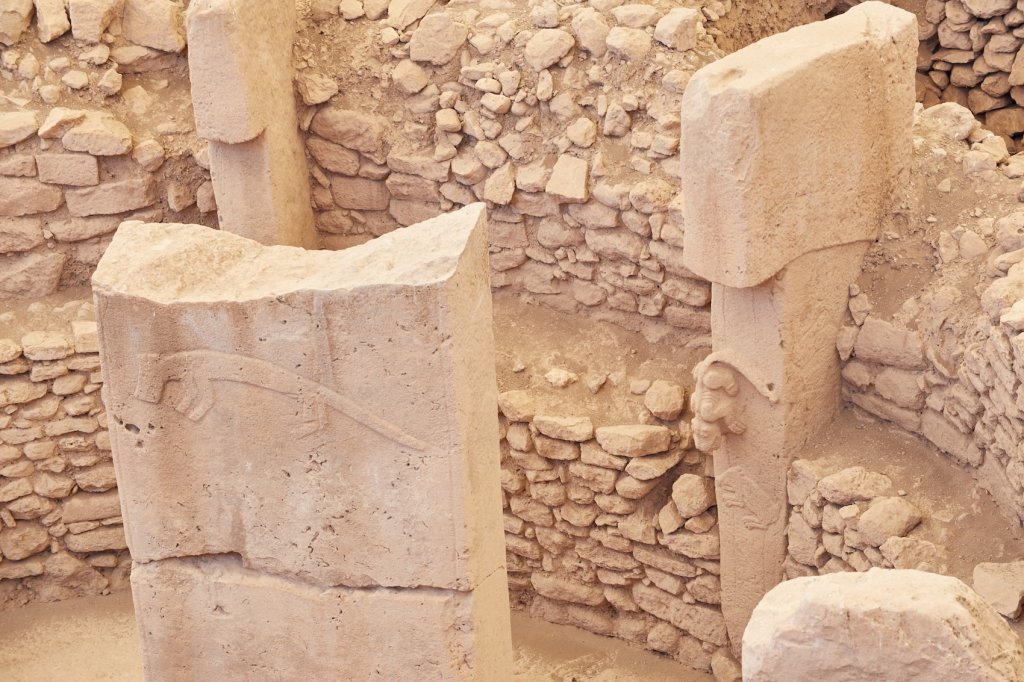
An at least 11,500-year-old man-made complex, as it’s the case of Göbekli Tepe, was particularly troublesome because it looks like this:

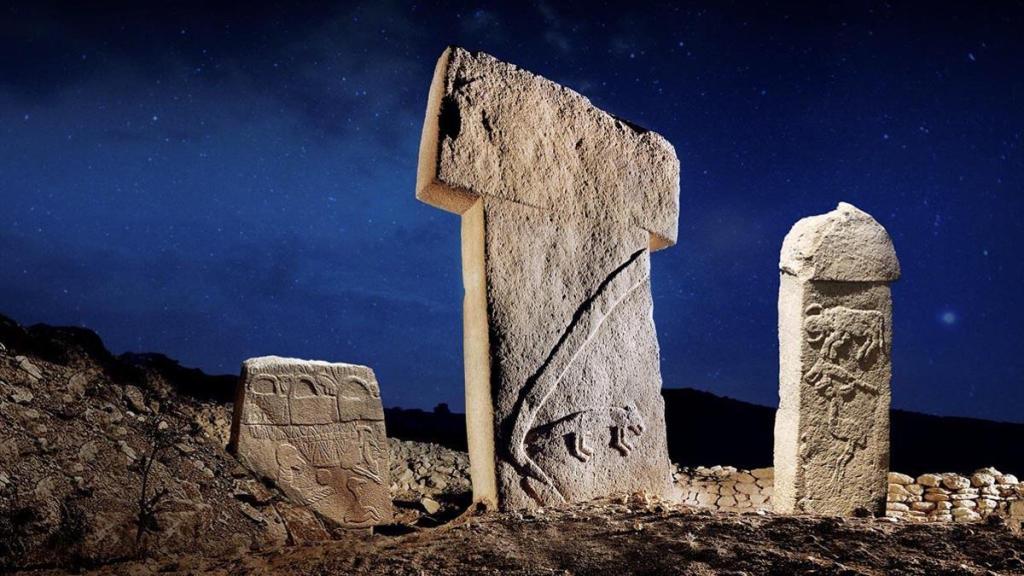
This site was built about six thousand years before the Sumerians existed, about nine thousand years before the pyramids of Giza were built (officially; I won’t get into that). Back during Göbekli Tepe times, people were supposed to be simple hunter-gatherers who followed migrating herds around; nowhere near sophisticated enough to sustain an artisan class capable of carving in relief such sculptures. That requires a civilization.

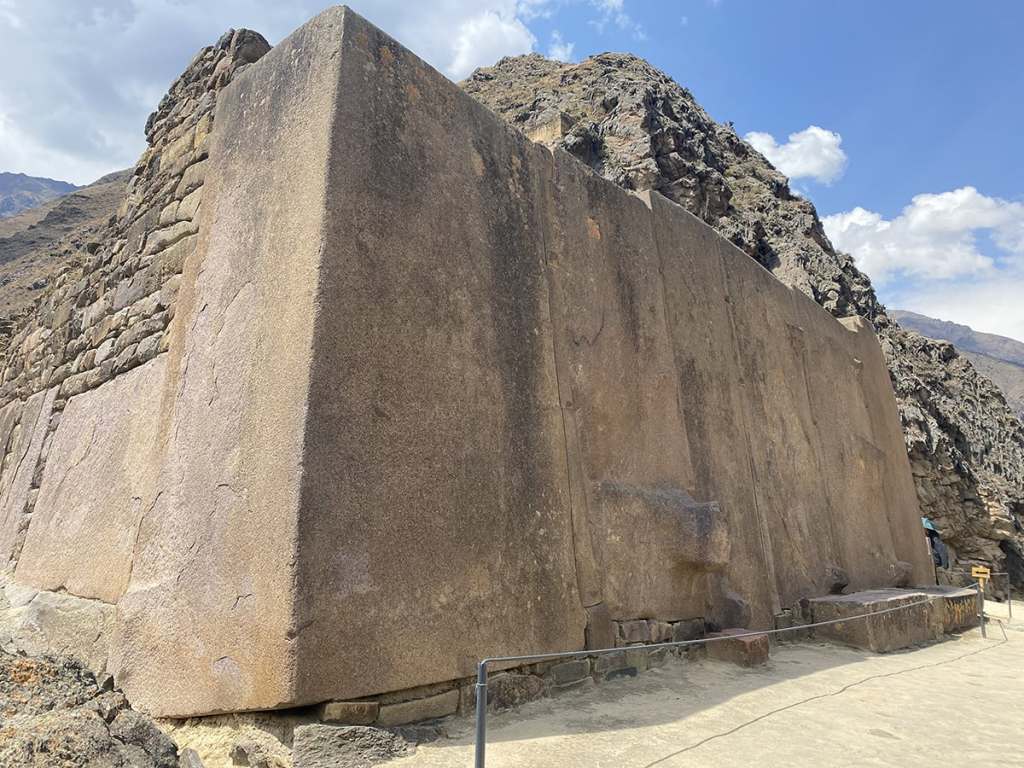
Due to the power that the Abrahamic religions exert over our shambling zombie of a civilization, religions for which the notion of things being six thousand years old is important somehow, the establishment will need to be dragged kicking and screaming to reality. There are many, many sites along the world that feature distinct architectural periods, with the oldest being the most sophisticated and hard to make (you can see this at Macchu Picchu, Ollantaytambo, Sacsayhuaman, Tiwanaku, numerous sites in Egypt, to list just some examples), that can’t be attributed to the level of technology that the inhabitants of the area were supposed to have. Also, the most sophisticated work appearing out of nowhere and immediately collapsing in quality goes against everything we know about technology.

As some have pointed out, the most striking pillars at Göbekli Tepe may be older than the enclosures; only the “mortar” found in the walls, made out of stacked slabs of stone, has been carbon dated, but the walls were built to support some of the pillars, and they feature benches made out of broken pieces of carved pillars, so necessarily, the T-shaped pillars were created before.

Could they have stood there for a long time until some local tribe found them and started venerating them? That same deal could have happened in Egypt; as plenty of researchers have pointed out, the hieroglyphs with which the old-kingdom statues are dated are much, much rougher than the quality of the statues themselves. Basically graffiti. Some suggest that those we know as Egyptians were larping as the people depicted in the amazing statues found in the area.

Regarding Göbekli Tepe, they originally believed it to be an isolated, ritualistic site, but partly thanks to LiDAR technology, they have discovered about 40-50 sites around Göbekli Tepe. That’s a full-blown culture, if not a civilization.

Graham Hancock suggested that Göbekli Tepe represents a transfer of technology; after the Younger Dryas cataclysm, the survivors brought their knowledge to the primitive tribes of the area and taught them how to build such monuments. However, the Natufian culture was present in that area for thousands of years around that time, and were making pottery and sculptures that, despite being much less sophisticated, featured similar motifs and styles, so I’m undecided.

In the chapter, that description of an emaciated statue holding its penis may have sounded like I was taking the piss. Nope.

Article about it: An Enormous Statue Of Man Appearing To Hold His Penis Was Just Unearthed At A Prehistoric Site In Turkey

That magnificent mofo was found in the sister site Karahan Tepe, that also features a garden of stone penises:

Article about it: Carving of man holding his penis and surrounded by leopards is oldest known depiction of a narrative scene, archaeologists say

An ancient civilization after my own heart.

I don’t know about you, but I can’t get enough of this prehistory stuff. Coincidentally, a week ago the wonderful, binge-worthy YouTube channel Why Files posted an hour-long video about the mystery of Göbekli Tepe and its ties to the Younger Dryas cataclysm, during which a cometary bombardment may have separated us from the previous 288,400 year-long chapter of anatomically modern humans.

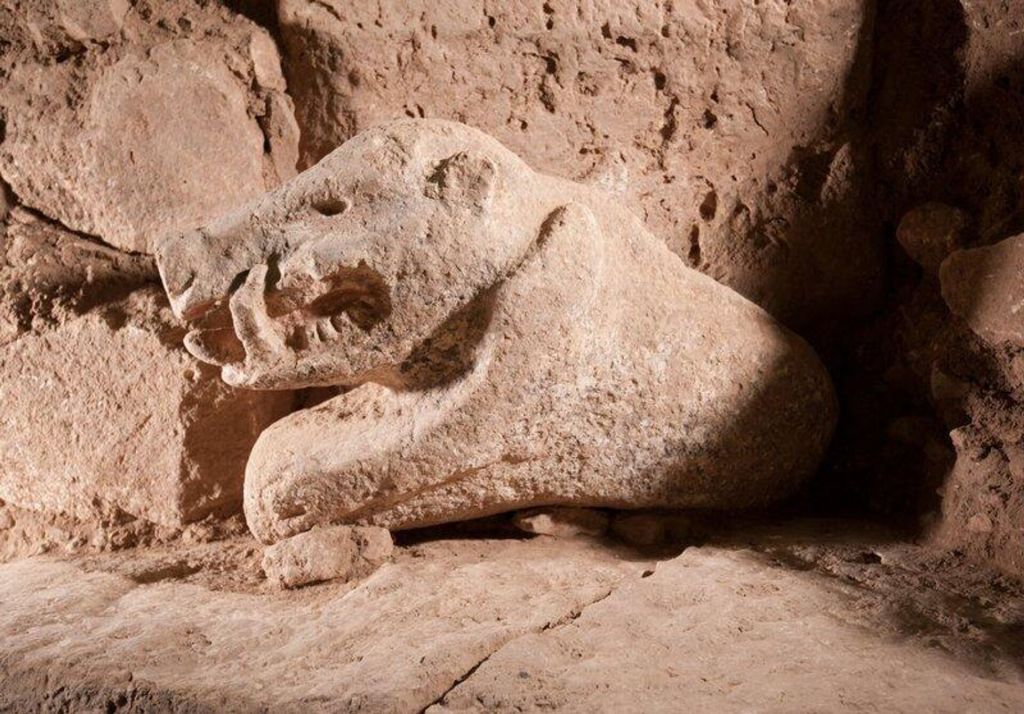
I don’t necessarily agree with all the claims. I’d love to believe the hypothesis that the vulture stone refers to the Younger Dryas cataclysm; they claim that statistical analysis proves the alignment. But, as others have pointed out, the enclosures likely had a roof back in the day, so not much of an astronomical observatory, although they being open to the starry sky looks much cooler, which is why I’ve depicted them that way in the chapter. Also, I painted the sculptures because they have found pigmentation (concretely red, white, and black pigmentation) in some of them, particularly in this majestic boar:

Article about it: 11,000-Year-Old Painted Statue of Wild Boar Unearthed at Gobekli Tepe

The statues made by the Greeks and Romans were also painted, by the way. We should also start painting our own statues; they would look fancier.

I think that’s all I wanted to explain for this chapter. I hope you enjoyed chapter 118, and if not, well, whoops.

We’re Fucked, Pt. 118 (Fiction)


A South American man with toffee-colored skin, whose hair is shaved on the sides in zigzag lines that resemble the heartbeat on a monitor, is tending to the fryer, a contraption of polished steel. Using a pair of tongs, he plucks churros out of the bubbling oil and drops them into a paper cone, then he seizes a shaker of cinnamon sugar and sprinkles a dusting over the piping-hot, golden-brown pastries. The fry cook flashes a broad, white-toothed smile as he offers Jacqueline the bouquet of churros, but she’s busy rummaging through her purse for bills.

Ma chérie, please grab it for me, will you?”

I stand on my tiptoes to receive the oil-stained cone, whose heat begins to seep into my palm and fingers. As I step back from the counter, the plume of steam that rises from the churros fills my nostrils with the aroma of fried, cinnamon-coated dough.

Jacqueline slips folded-up currency into the main snackman’s hand. Her fingers must have grazed his palm, because I sense him vibrate on an atomic level. Jacqueline, in turn, remains unfazed, as if accustomed to brushing up against filth.

The snack booth lord slides coins across the counter.

“Your change, miss. Thank you for gracing my stand with your beauty.”

My eyelids twitch. I’m tempted to slap the snackman in his stubbled face, but a criminal like that might pummel me back, so I focus on the cone of churros that burns in my grasp. I grab one of the cinnamon-dusted wands and bite off its end. As I chew on the crunchy crust, the soft interior melts on my tongue in a gush of sugary sweetness. Other than sex, such treats are the closest I will get to nirvana on this mortal plane.

From behind, an arm snakes around my waist and steers me toward the corner of the snack booth where Nairu, our Paleolithic child, is kneeling on the pavement in front of the bear-shaped garbage bin. The tip of her tongue protrudes from between her lips as she sketches in her sketchbook. When she notices us, she scrambles to her feet, flashes a triumphant grin, and holds out her drawing for us to behold.

Nairu’s fingers have smudged the black crayon across the page in rugged and earnest strokes, leaving rough-hewn edges and hasty shading, as if she had grappled with the concept of a bear-bin, trying to pin it down before it vanished forever. But unlike the resigned garbage bear, the eyes of her creation reflect wonder at the amusement park around it, and its mouth gapes in a frozen, silent laugh.

“Oh, that’s the loveliest garbage bin I’ve ever seen,” Jacqueline says.

“You have a keen eye, miss Paleolithic,” I say. “Each time you look at the drawing, the bear comes alive.”

Jacqueline’s fingers, tipped with almond-shaped nails, pinch the end of a churro. As she draws it out of the paper cone that I’m clutching, a miniature cascade of cinnamon sugar showers down.

“Here’s to our girl who sees art in every corner.”

Nairu’s eyes widen and her lips part at the sight of the approaching fried pastry. She exchanges the black crayon for the churro, then sinks her tiny teeth into the crust. As she chews, the pearly band of a smile spreads across her rosy cheeks. Given how we’re habituating her to pastries, in the future we may have trouble preventing her from rolling downhill.

We walk away from the snack booth, though my instinct urges me to hurry away like from a crime scene. The tattooed, ex-con concessionaire must be salivating at the masterpiece of Jacqueline’s derrière, because his voice follows us.

“Do come again.”

I throw a glance over my shoulder, ready to scowl at the snack-vending con-man. I’m searching for a sharper retort than “Not any time soon” when I realize that the stallman has ducked behind the counter, out of sight, as if struck by the weight of his sins.

We pass in front of a booth where two girls are leaning over to chase bobbing rubber ducks with hooked rods. On the interior walls, glossy plastic trinkets and plushies clamor for attention, forming a dense collage.

Jacqueline’s shoulder nudges mine.

“Our friend back there was quite taken with me,” she says in a teasing lilt. “The perils of making oneself devastatingly attractive.”

I want to scoff at the notion that such a lowlife, who probably served time for assault and robbery, could have become a friend of ours, but instead I gulp down the last of my churro, then suck the sugar clinging to my fingers.

“I can’t help feeling fear whenever someone flirts with my polymorphous girlfriend.”

Jacqueline lifts a hand to stroke the underside of my chin.

“If you could read my mind, love, you wouldn’t be insecure about it.”

Flushed with emotion, I fiddle with a button of my corduroy jacket.

“I don’t know if I would enjoy the attention from random, shady men.”

“It makes life much easier, that I can assure you.”

Clusters of fairgoers navigate the midway between carnival games and children’s rides: couples shepherding pre-teens, exchange students carrying backpacks and smartphones. The November sunshine glints off the screen at the end of a selfie stick. To the throng belongs the chatter, the click of shoes, the childish shouts and giggles of those who have grown accustomed to, and even thrive within, our shambling zombie of a civilization. In front of a bar, around a row of barrels used as standing tables, the patrons are brushing elbows, unaware of the looming apocalypse about to swallow their world. Who would listen if I were to explain, or scream, that the stars will fizzle out, that space-time will collapse on itself, that everything they know and love will be erased unless I stop it?

Some of the human beings present in this amusement park, let alone those I’ve come across since I was born, could be bosses who stress and overwork their employees; kids who torment other children out of boredom, or to exert dominance; parents who created life only to neglect it or even abuse it; modern marauders who stalk the streets to rob, rape, and kill; those who betray and destroy their own kind for power and profit. This world is filled with monsters, yet I must save them all.

How did Alberto, my former co-worker turned colossal blob of black sludge studded with eyeballs, put our problem? That I would come across the reality-altering machine, and I would recognize it. Those were his actual words, right? Damn it, why didn’t I write them down?! Surely I realized that to prevent the end of the universe, every word of the warning from that swamp-born bastard mattered. He did say, I’m almost certain, that I would recognize the machine as capable of tearing apart reality, so that excludes cars, computers, coffee machines, and whatnot. Ever since Alberto nauseated me with his presence, I’ve gone out of my way to suspect any device that may harbor gears or microchips, but the universe remains unsaved.

Let’s recap what I know: the professor, whom I’ve dubbed Dr. Weasel for all this rabbit-brained fuckery, must have constructed a labyrinthine construct where organic life is enmeshed with gears and cogs. Branching pipes terminate in leaves or in flasks bubbling with effervescent chemicals, while at the core of the contraption-organism rumbles a spider-legged mechanism wrought from neon-colored gems and spinning axles.

My chest constricts, a band of anxiety tightening around my ribs. I loosen my jaw, and find myself reaching for the comfort of a churro, but I grasp air. Did I drop the paper cone? Wait, where are mommy and my antediluvian daughter?

I’m standing close to a postcard rack that belongs to the souvenir stand. Up ahead, between the hotel and the stairs that lead to the rollercoaster, I spot Jacqueline’s figure, wearing a camel-colored suede blazer along with dark denim jeans that accentuate her curves. She’s nibbling on a churro while her other hand holds the remaining bunch. Beside her, Nairu, the sketchbook tucked under one arm, is mouthing words as she points up toward the tower.

When I take a step forward, a current crackles up my limbs, igniting every nerve. The cacophony of the amusement park stops, making my ears ring with sudden quiet. The brightness of a clear morning has switched to night as if cosmic spider legs had plucked the sun out of the sky.

I’m standing at the back of a sunken, circular enclosure about twenty meters in diameter, whose walls are made out of stacked, rough slabs of stone. In the center, between a pair of towering, T-shaped pillars, an old man’s white hair and beard catch the sway of torchlight. He’s addressing the group before him as he gestures toward the night sky, a canvas sprawled with a myriad stars, in which the full moon casts a silvery glow. The men are garbed in animal hides and furs, and as necklaces, they’re wearing threaded beads and fangs.

Closer to me, sitting cross-legged by a crackling campfire, a wiry young man is scraping a hide with a flint knife. Kneeling on the other side of the fire, among strewn bones, a man wrestles with the heat and bulk of a huge bull’s innards. He’s scooping out glistening clumps of viscera and dropping them onto a steaming pile. The butcher groans, pushes himself upright, and takes a gulp from a swollen waterskin while thick blood and fat dribble down his arms. Above, perched upon the earthen rim of the enclosure, a male silhouette outlined in silver, etched against the splash of stars, leans on his spear, surveying the horizon.

The cold air carries the thick smells of burning logs, animal hides, sweat, damp earth, fresh rain on stone, nearby flora, and blood.

Rising five meters high at the center of the enclosure, the pair of T-shaped pillars are painted malachite green, their surfaces carved in relief with humanlike features: from the upper portion of the broad sides, deep-red arms reach down to rest their hands on the narrow side, above a belt adorned with black and white patterns that cinch the stone’s girth. Flickering torchlight pools shadows in the grooves of the reliefs, making the humanlike features pulse in a chiaroscuro effect.

The silhouettes of smaller pillars stand as sentinels around the perimeter of the enclosure, and on those bathed in torchlight, a menagerie of animals emerges: jet-black bulls, rust-red foxes, burnt-orange felines, alongside snakes, gazelles, vultures, scorpions.

I notice a statue to my right, tall as a basketball center, close as if it had sneaked up to me in the darkness. The eyes of that bearded face stare blindly from their sunken sockets. In its emaciated torso, the artist has sculpted each rib of the protruding ribcage. The statue’s hands are clutching its erect penis.

My insides explode with a surge of adrenaline and dread.

“Fuck no,” I blurt out.

The old man falls silent, and breath steams from his agape mouth. The group before him scrambles about, colliding with one another. Their torches send across the enclosure waves of light that elongate and warp human shadows into grotesque shapes. Pairs of eyes reflect the flames before fading into the darkness as their owners turn their heads in shared bewilderment. The silhouetted guard on the earthen rim brandishes his spear, whose point glints in the moonlight. The wiry man, frozen mid-scrape, stares up at me with wide-eyed awe. The butcher, his face a grimy mask of ash, tries to back away but slips on coils of intestine, crashing onto the carcass of the bull in a spray of gore.

“I ain’t doing this shit again,” I say. “Later, you guys. Good luck with civilization.”

I step back, and static electricity zaps through my body. The amusement park engulfs me in a burst of colors and noise.

I squeeze my eyes shut to shield them from the morning sunlight. My face has gone cold, my arms tingle with pent-up energy.

“There you are, mon amour,” Jacqueline says, her voice tinged with relief. “We lost you for a moment.”

When I open my eyes, I see Nairu with her cheeks puffed up like a chipmunk’s. Sugar-glaze clings to the corners of her mouth. I struggle to speak; my throat is tight and my face stiff. While Nairu chews the churro into a manageable bolus, she arches an eyebrow at my stunned expression.

“You look like a fish,” she says through the mush. “Were you swimming in your head?”

Jacqueline’s fingers trace the contour of my cheek, bringing a warmth that seeps beneath my skin.

“Leire, what’s the matter?”

Her motherly tone calms the pounding in my chest, but I avoid facing her concern. As I blink away the glare of sunlight, behind the row of carnival games, the rattling rollercoaster crests a ridge. During its zooming descent, the children shriek with joy, some passengers’ hair streams in the wind. If I were to look into Jacqueline’s cobalt-blues, I may confess that the universe and the human race are fucked unless I locate a reality-collapsing machine and tear it out by the roots.

“Ah, you know,” I utter in a strained voice, “just an intrusive daydream regarding one of my many traumas.”

Ma pauvre chérie…”

I shake my head.

“No, no pity today. We have the right to enjoy a carnival of treats on a sunny November morning without the looming threat of an apocalypse.”

“Right you are. Our girl has expressed an interest in the tower, so how about we check out the most enchanting view of Donostia?”

I follow her pointing finger. Perched atop Mount Igueldo against an expanse of azure, the tower stretches upward, its sand-colored stones and arched windows washed in the sunlight, its crowning battlements and crenellations speaking of the days of yore.


Author’s note: today’s songs are “Sycamore” by Bill Callahan, and “Nantes” by Beirut.

I keep a playlist with all the songs I’ve mentioned throughout the novel. A total of a hundred and ninety-three songs so far. Check them out.

How about you listen to this chapter instead of reading it? Check out the audiochapter.

I went out of my way to write an essay regarding Leire’s trip to the past. Read it, will you?

We’re Fucked, Pt. 117: AI-generated audiochapter

Everything that shines in the universe. This audiochapter covers chapter 117 of my ongoing novel We’re Fucked.

Cast

  • Leire: paying member of the Thieves’ Guild down in Riften
  • Jacqueline: loveliest, redheadest mage from Maribor
  • Ex-con: some Spanish guy from Residente Evil
  • Nairu: brat who sells newspapers in the jewel of the Commonwealth

I produced audiochapters for the entire previous sequence, and I intend to continue until the novel ends or the ice and the animals return. A total of four hours, thirty-four minutes and forty-six seconds. Check them out.

Revised audiochapter 114 of We’re Fucked

As I was generating lines for the audio version of chapter 117, I realized that I hate the voice that I originally picked for Nairu, our main couple’s antediluvian waif. That was a problem not only because I had to find a better voice, but because I had already posted an audiochapter that featured the terrible previous one. I’m an anal sort of fellow, so I have uploaded a new version of audiochapter 114 that features the new voice. You can listen to it through this link.

I suspect I may be the only person who listens to these, but I love them, and my personality wouldn’t allow me to produce the audiochapter for 117 knowing that the new voice wouldn’t match the previous one. So there.