We’re Fucked, Pt. 88: AI-generated images

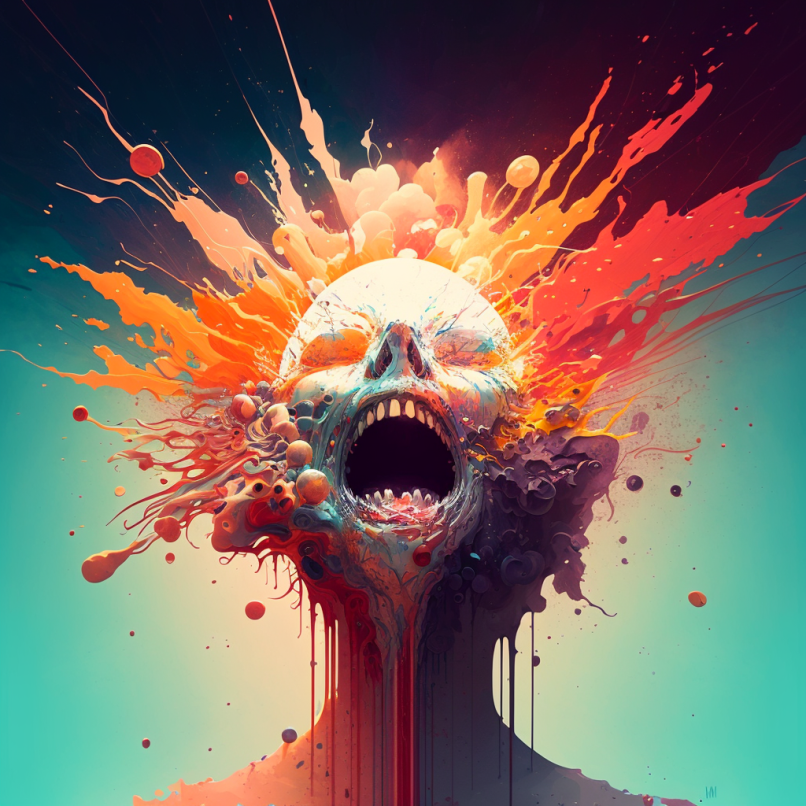
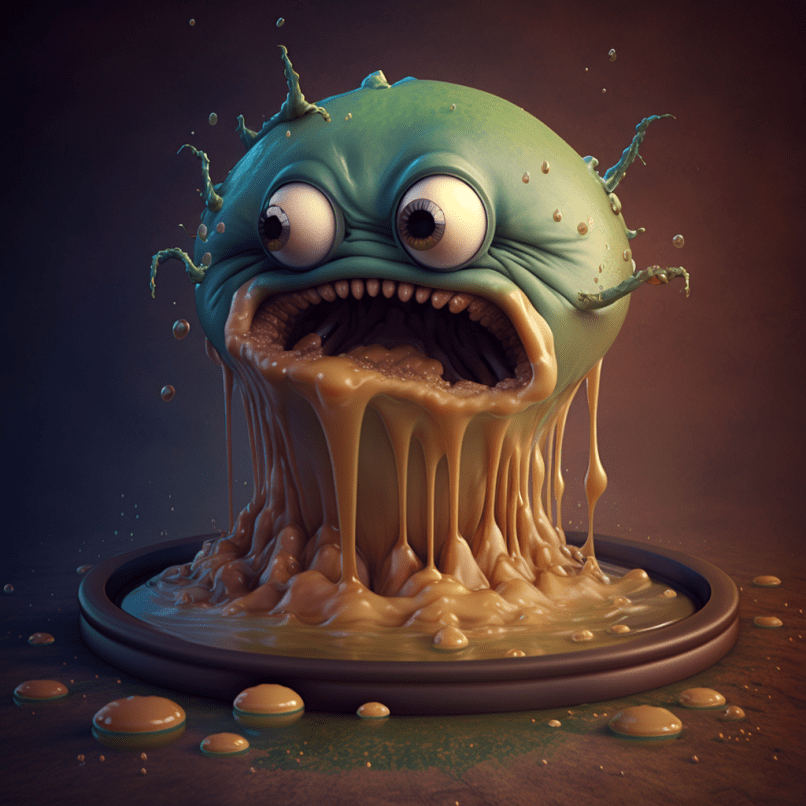
If you want a picture of the future, imagine a putrid blob oozing sludge on a human face—for ever.

The following images are related to chapter 88 of my ongoing novel We’re Fucked.

I have posted many other entries with generated images. Check them out.

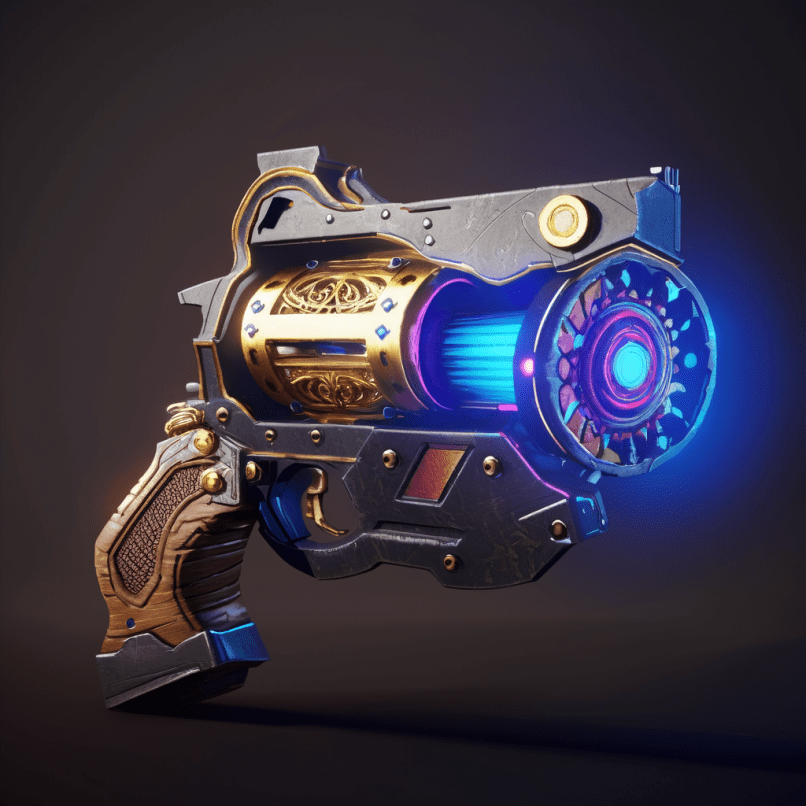
“The overhead lights shine on the firearm’s thick barrel, that begs to be fondled.”
“I anticipate the wave of ecstasy that will course through my nervous system as the bullet shoots off, slicing through the air like a tiny comet, to inaugurate the great purge of all things gross.”
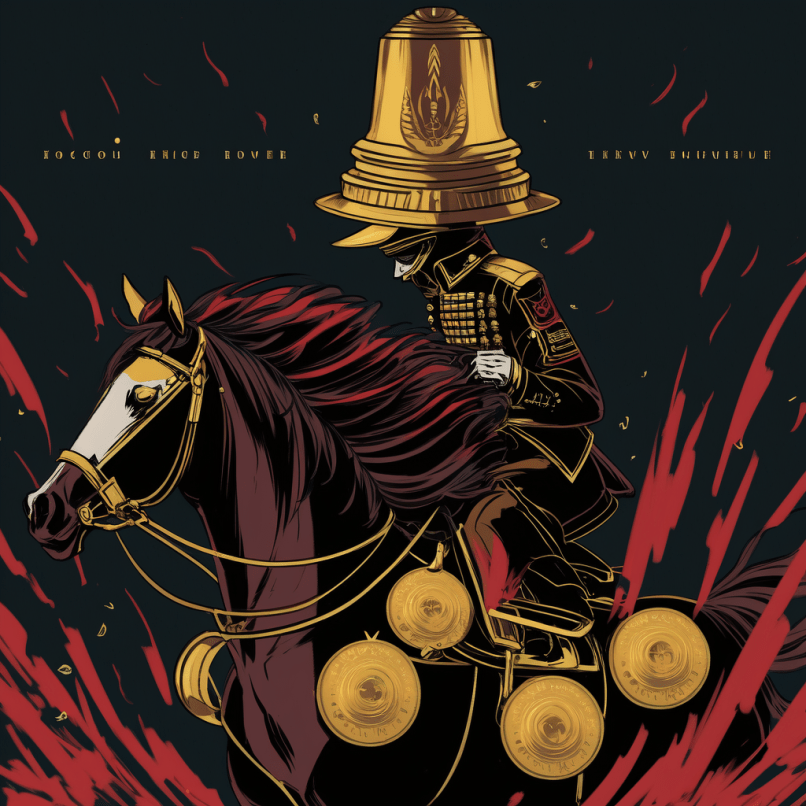
“The six chambers are filled with greenish-yellow bullets designed for optimal penetration, and the percussion cap of each one bears the mark of the horseman along with his motto in golden lettering: ‘To end everything so that it can begin anew.'”
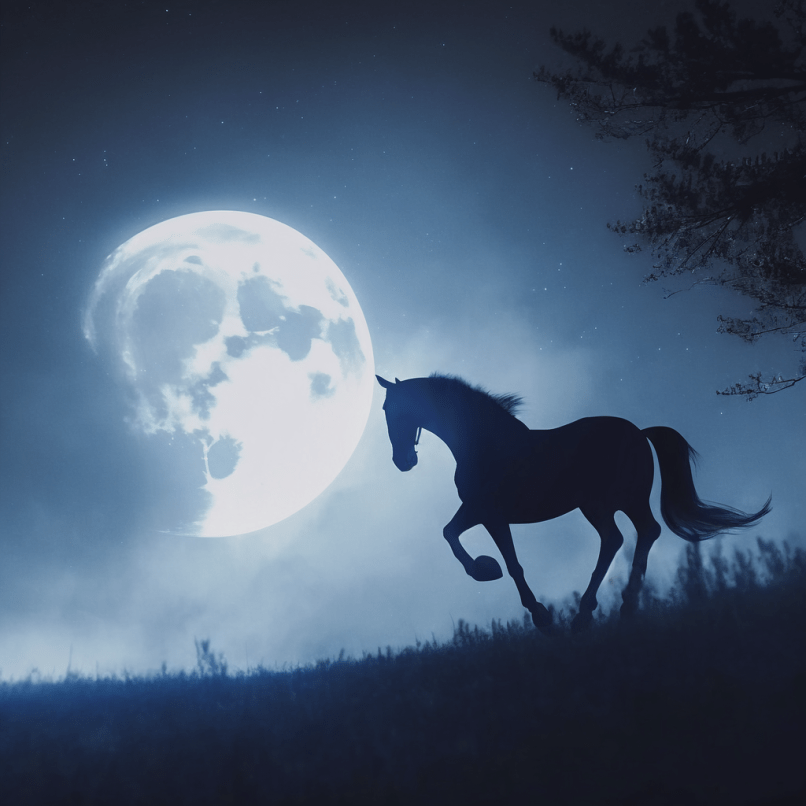
“I picture my equine companion during our last hunt near the city of Cologne back in 1745, when we chased a white-tailed deer as it bolted in the moonlight across a dark road.”
“I imagine myself sucking the bullet in through my nose to figure out what a vacuum cleaner feels like.”
“I should squeeze the trigger and blow away that mucus-spewing blancmange before my sanity dissolves like an ice cube on the tongue of a polar bear.” The AI saw the chance to render a polar bear shooting a gun, for which I’m grateful.
“What have you achieved in your pitiful life besides spreading putridity?”
“The cops taught me how to load and fire guns during a summer camp for disturbed children.”
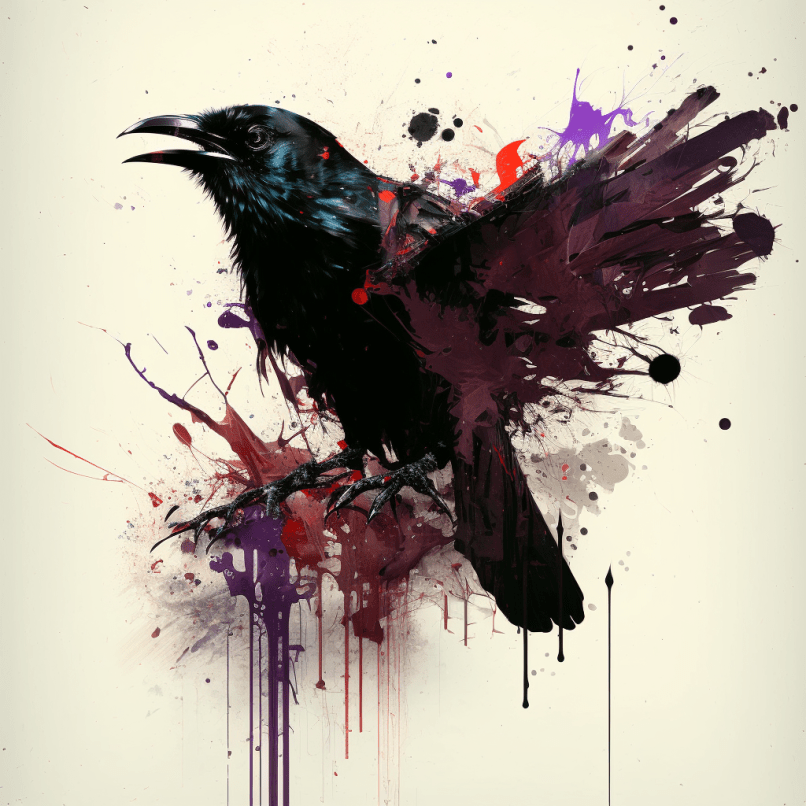
“I went shooting in a deserted lot near my apartment to vent my wrath upon vermin and scavenging crows.”
“One day the government would organize a giant database to contain the fingerprints, retinal scans, DNA sequences, medical records, financial data, and online browsing habits of every man, woman, and child.”
“If they couldn’t confiscate your privacy through legal channels, they would manufacture emergencies as pretexts for suspending constitutional rights.”
“They intend to create a panopticon society in which people’s behavior is monitored from every street corner and every shop front, from inside every home.”
“They would come in the night while we slept: jackbooted thugs in black riot gear would smash down our doors, storm our homes, then drag us from our beds while we kicked and screamed and pissed ourselves.”
“Healthy girls would be bred.”
“The rest of the captives, the lucky ones, would be given numbered jumpsuits and put to work in assembly lines under the supervision of armed guards.”
“I have the right to defend myself against tyrants, so I have kept this revolver close at hand for decades, and I will shoot any creature or inanimate object that could harbor hostile intent toward me or my loved ones.”
“I have always fantasized about taking vengeance and inflicting maximum torment.”
“I feel that such a sacrifice might liberate the demonic energy that rages within me like a wildfire.”
“I long for the freedom and catharsis of destruction.”
“The blob’s dozens of eyeballs glow like those of a frog that has swallowed a lit matchstick.”
“I must stink like a pungent blend of sour milk and sweaty gym socks.”
“You’re a shapeless pimple that needs to be squeezed dry.”
“It pours through me in waves, this violent longing for carnage and debauchery, a mélange uniquely mine, the product of being both a masochist and a fetishist.”
“Someone this slippery and revolting must be as inescapable as the heat death of the universe.”
“Even when I go for a walk on the beach, I feel like punching someone or hurling garbage at other beachgoers.”
“I would blast you with a nuclear bomb if I could.”

We’re Fucked, Pt. 88 (Fiction)


I savor the cool, metallic heft of the revolver, this time gripped in my expendable hand. The overhead lights shine on the firearm’s thick barrel, that begs to be fondled. I rest the pad of my left forefinger against the curve of the trigger; a pull of its mechanism will spark a cathartic crescendo of madness and mayhem. I picture a muzzle flare followed with the eruption of gun smoke and sparkling debris. I anticipate the wave of ecstasy that will course through my nervous system as the bullet shoots off, slicing through the air like a tiny comet, to inaugurate the great purge of all things gross.

A gust of wind rattles the windowpanes, accompanied by the rumble of distant thunder. Does the revolver remain loaded after the earlier stunt that tore my right hand off? With my left forefinger, I slide forward awkwardly the cylinder release latch and hold it firmly, then with my right thumb I push the cylinder open. The six chambers are filled with greenish-yellow bullets designed for optimal penetration, and the percussion cap of each one bears the mark of the horseman along with his motto in golden lettering: “To end everything so that it can begin anew.” I picture my equine companion during our last hunt near the city of Cologne back in 1745, when we chased a white-tailed deer as it bolted in the moonlight across a dark road.

I close my eyes and raise the revolver’s cylinder to my nostrils. I sniff a round, inhaling the metallic tang of its metalwork mingled with that of steel. I imagine myself sucking the bullet in through my nose to figure out what a vacuum cleaner feels like.

“Is this your attempt to intimidate me?” the blob sneers.

“Oh, no way. I’m just fiddling around with this old thing that was bequeathed to me. A twenty-five caliber Desert Eagle chambered with .357 Magnum rounds.”

“You have no clue what you’re talking about.”

With a flick of my left wrist, I snap the revolver’s cylinder closed; it locks snugly against the frame with a click. I glare at the greasy goober, who is uglier than a boil on a homeless man’s butt cheek. He expects me to fire back with an irate retort, but instead I should squeeze the trigger and blow away that mucus-spewing blancmange before my sanity dissolves like an ice cube on the tongue of a polar bear.

“Do not mock me,” I growl. “Who are you to speak to me thus? My father? What did you ever do to deserve the privilege of pissing on me, you bloated sewage slug? What have you achieved in your pitiful life besides spreading putridity? For your information, ever since I was twelve I have known that firearms kill people and animals; the cops taught me how to load and fire guns during a summer camp for disturbed children. Afterwards I patronized shooting ranges to hone my aim. I went shooting in a deserted lot near my apartment to vent my wrath upon vermin and scavenging crows.” I draw a deep breath. “My grandfather, Arachne collect his soul, used to tell me that one day the government would organize a giant database to contain the fingerprints, retinal scans, DNA sequences, medical records, financial data, and online browsing habits of every man, woman, and child. They would track your transactions and the places you’ve traveled. They would track who has visited your home and with whom you had sex. They would know which toilet paper brand you prefer, and how often you masturbate. Despite the government’s excuses that these programs would provide security against terrorism and international crime, the dossiers would be exploited to spy on law-abiding citizens for political ends. If they couldn’t confiscate your privacy through legal channels, they would manufacture emergencies as pretexts for suspending constitutional rights. They intend to create a panopticon society in which people’s behavior is monitored from every street corner and every shop front, from inside every home. If you dared to utter anything deemed inappropriate, they would label you and your family as subversives. They would come in the night while we slept: jackbooted thugs in black riot gear would smash down our doors, storm our homes, then drag us from our beds while we kicked and screamed and pissed ourselves. They’d shove us into boxcars, like livestock or slaves, and seal the doors shut with locks and chains. When the train reached its destination, each boxcar would be uncoupled and rolled toward some industrial complex, where we’d be forced at gunpoint to disembark into a cattle chute. Once we had been identified by a biometric scanner, those labeled as genetic undesirables would be herded into killing pens, and their offspring taken to undergo de-individualization and de-genitalization procedures. Healthy boys would be conditioned through pharmacology and cognitive-behavioral therapy to become docile. Healthy girls would be bred. The rest of the captives, the lucky ones, would be given numbered jumpsuits and put to work in assembly lines under the supervision of armed guards. Those who resisted would be gunned down and incinerated. The workers would slave away until they dropped dead of exhaustion, disease, and malnutrition, or until the state euthanized them.” I swallow a lump in my throat. “I have the right to defend myself against tyrants, so I have kept this revolver close at hand for decades, and I will shoot any creature or inanimate object that could harbor hostile intent toward me or my loved ones. What, you think that a perverted freak like me would suffer a crisis of conscience, or that I would be intimidated by an animated heap of diarrhea like you? Hah! I have always fantasized about taking vengeance and inflicting maximum torment. Whenever necessary, I wouldn’t mind killing anyone, including myself. In fact, I yearn to kill someone. I feel that such a sacrifice might liberate the demonic energy that rages within me like a wildfire. I long for the freedom and catharsis of destruction. Everything must end so that it can begin anew.”

The blob’s dozens of eyeballs glow like those of a frog that has swallowed a lit matchstick.

“That’s not at all disturbing. You can’t kill me anyway, dickhead.”

My chest heaves as my heart beats wildly. A bead of sweat slides down my cheek and drops from my chin. I must stink like a pungent blend of sour milk and sweaty gym socks. I want to wipe myself down with a towel soaked in rubbing alcohol.

“You’re a shapeless pimple that needs to be squeezed dry,” I mumble.

“A few bullets and your silly threats. Please! You should know by now that they’re only going to make me laugh.”

It pours through me in waves, this violent longing for carnage and debauchery, a mélange uniquely mine, the product of being both a masochist and a fetishist; yet, my shoulders slump, and I feel like a broken car battery. My revolver has become more cumbersome than driftwood.

“I’m inclined to believe you. Someone this slippery and revolting must be as inescapable as the heat death of the universe.” I put the revolver down on the desk with a clunk. “But don’t expect me to apologize for the threats, because that’s my default setting. Even when I go for a walk on the beach, I feel like punching someone or hurling garbage at other beachgoers, so I would blast you with a nuclear bomb if I could.”


Author’s note: today’s song is “Untrustable” by Built to Spill.

I keep a playlist with all the songs mentioned throughout this novel. A hundred and three songs so far. Check them out.

Some neural networks out there are eager to generate all sorts of wild images for us, such as the ones in this post.

I added audio to this AI craziness, thanks to Eleven Labs. Check it out.

My mother has caught the virus from my sister, and I have spoken with my mother in person recently. I suppose that I’m about to experience how it feels when that damnable pathogen makes a playground out of your body. I’m vaccinated, which gave me permanent heart damage, so I hope that at the very least it has made me less vulnerable to the disease.

Life update (02/11/2023)

A couple of days ago I had my yearly check up with my usual endocrinologist. Back in my mid-twenties, after my body started doing stuff that a man shouldn’t be able to, I got an MRI done. It discovered a pituitary tumor. I was likely born with it. In retrospect, it should have been discovered back when I was still a child; after all, gynecomastia isn’t something that just happens. If my parents hadn’t been generally neglectful, I would have been spared the permanent effects of becoming an adult in a boddy riddled with hormonal imbalances.

If you want to know how that’s like, I guess you can check out the videos of the adults that were put in feminizing/masculinizing hormone therapy back when they could barely understand what would be done to them or why, only to regret it later (and be censored for it). In my case, whatever defect in my DNA, or poison in my environment, created the tumor, was the one responsible for this alteration, which may be worse because I never consented to anything. In all cases mentioned, the person ends up fucked for life.

Obviously there are sex differences in brain anatomy (quick google: “On average, males and females showed greater volume in different areas of the cortex, the outer brain layer that controls thinking and voluntary movements. Females had greater volume in the prefrontal cortex, orbitofrontal cortex, superior temporal cortex, lateral parietal cortex, and insula. Males, on average, had greater volume in the ventral temporal and occipital regions. Each of these regions is responsible for processing different types of information”), and due to my hormonal imbalances, my brain must be more female than the average guy’s. I guess that may explain in part why I feel comfortable writing female characters.

Anyway, my hormones have been under control for the last eleven years or so thanks to the medication I have to take two times a week. And ever since I’m producing healthy levels of testosterone, I want to fuck everything that moves and that may remotely be considered female (slight exaggeration).

Going back to the initial topic: I have no problem using public transport, but my elderly father offered to drive me to the hospital for my scheduled visit. I never got a driver’s license, and likely never will. Partly because I was born with so-called high-functioning autism; my mind makes me lose myself in daydreams in which I don’t recall entering, and when I “wake up” from them, I’m surprised that I didn’t fall through an open manhole or get hit by a car along the way. In addition, and worse, either I was born with or developed OCD (often comorbid with autism). This OCD of mine generates a myriad of intrusive thoughts, plenty of which involve violence either towards others or myself. If I were to drive a car, I would find myself having to drive out of my mind the urge to veer into oncoming traffic or drive straight into a wall.

I suppose that I’m something of a barely restrained public menace. Sometimes when I’m about to grab my coffee, my brain presents me with vivid sequences of me tipping the cup so that it spills the hot coffee all over my or someone else’s skin. Unfortunately that actually happened, although just once: as I was about to take my coffee from the counter, one of those intrusive “animations” came up, and next thing I knew, my thumb had slid in such a way that I ended up spilling the coffee all over a customer’s lap. He was surprisingly cool about it.

I’ve dropped valuable stuff that I was holding because my mind got filled with images of me dropping it. I’ve never held a baby because I don’t want to live with the consequences of possibly dropping them; back when I was a teenager, a cousin nearly booted me out from her apartment because I didn’t want to hold her spawn, and she stormed out offended while saying, “you better change your mind about that!”

I nearly bit off the nipple of a girlfriend of mine because at that very moment the enticing prospect flashed, vividly rendered, through my brain. I still remember the gasp she let out. I miss sucking on tits.

Of course, because I live in an increasingly chaotic Europe (it will last at the most one or two generations), whenever I go out I have to endure vivid sequences of me defending myself from attacks due to the proximity of some group of shady, malicious-looking, military-aged men from some remote shithole, and it doesn’t help that I’ve seen in person shit done by such men, have been harassed by some, and my apartment was nearly broken into in the middle of the day by, again, such people.

Anyway, I wouldn’t have been able to drive myself to the hospital. As my elderly father attempted to find a parking space, I told him, “you don’t need to park, I’ll just get out. And don’t wait for me, because afterwards I’ll walk somewhere to get a cup of coffee.” My father stopped the car almost immediately and let me out. He didn’t say anything. A couple of hours later, I was reading in a coffee shop when my father called. He asked where I was, because he didn’t see me leave the hospital. I reminded him that I had told him not to wait for me. He said that he had told me that when I left the doctor’s office, I should call him to pick me up. He hadn’t.

The situation with my father, as in general with the rest of my family, is more peculiar than that of most people’s families (and so is my own personal situation). My father was regularly beaten as a child to an extent that it gave him notorious brain damage. I’ve never had anything resembling a normal conversation with him. In his early seventies, he’s now a frail-looking, stooped old man whose head wobbles constantly like a bobblehead doll due to whatever damage was done back in the day. For most effects and purposes, I didn’t have a father figure growing up, resulting in all the damage that does to someone.

I thought about growing old. I’ll be thirty-eight in a couple of months. I’ve never felt older than eighteen or twenty. I’m appalled by how fast my body has broken down, including my heart ever since a certain jab.

I have never felt fully human, but the older I get, the less I want to interact with human beings in any capacity. Far more often than not, whenever I listen to other people’s opinions I’m disturbed by what comes out of their mouths, as well as their notions of what is good or preferable. A few times I thought I was fine with someone as a person, only for them to open up and for me to realize that I had only fabricated in my mind a version of this person, one that never existed. And due to autism plus OCD and the way they wired my brain, I simply don’t feel the need to be in the presence of other humans. In fact, doing so repels me: I feel like I’m surrounded by wild, barely predictable animals. Truly, if it wasn’t because I can’t afford it, and because I wouldn’t know how to organize myself to do so, I would live far, far away from civilization, or at least far enough where I would still have access to the internet.

Apparently a significant portion of the world’s population cannot generate images in their brains. I read that somewhere. My mind deals more in images than in words, and I’m constantly aware that language is a very imperfect tool to translate what pops in my mind as images. But due to the conditions I was born with, my mind is a regular whirlpool of images, mostly negative ones, many of them bad memories, that pop up without my control and that force me to deal with them. Two nights ago I barely slept three hours or so, and the rest of the time I kept swatting back the visual sequences that my brain kept presenting to me. For example, how many times do I have to picture the face of agony that my beloved first cat made when she was mortally wounded by a dog? How many times do I have to recall the moments in which I realized that a girlfriend of mine was cheating and was trying to get rid of me? How many times do I have to see the faces of children mocking me for one reason or another? Most of the memories aren’t traumatic per se, but they still leave a foul taste in my mouth.

I have to be careful with the experiences I expose myself to, because any new memory (and they are almost always bad; my brain seems very reluctant to retain positive memories) will visit me for years, possibly for the rest of my life, and I suppose there’s a point in any human in which he’ll have no choice but to go “fuck this” and jump off a bridge.

It’s not all bad regarding mental images, though; for years I’ve found solace in very elaborate daydreams that I can run whenever I want, and that rescue me from the harsh surroundings. One of them starts when three people from the future discover that they all came from an isolated group of Icelanders from the Middle Ages, who were about to starve from a little ice age. The future people, who researched time travel, rescue their ancestors and bring them to the Americas. They provide some future technology, artificial intelligence and such to give them a major edge, but they also give them the task of becoming the sentinels of the New World for when Europeans come and unwittingly kill most of the population through disease, and ruin the treasures of the past through Christianity. An elaborate fantasy that despite how much I’ve worked mentally on many of the characters, will never become a written story, because daydreams are terrible story material; stories are about tension and struggle (and usually end with a definite win or loss), daydreams are about winning as often as possible.

I can’t come up with a proper segue into the following topic, but the fact is that I feel like I’ve been dead for years and years, maybe since my early twenties. Ever since, I’ve slowly been erasing myself from the world. The way Patricia Highsmith put it (someone else who was autistic), the artistic life is a “long and lovely suicide.” You are mining from yourself raw material to construct valuable artifacts out of it, and you do so, if you are lucky, for as long as your body lasts, but someone who is interested in the world and in living doesn’t sit in front of a screen (or stand in front of a canvas) for hours upon hours to escape from reality. And there’s a good chance that giving in to the impulse to escape from reality through writing, painting, etc. actually prevents you from learning to cope or even appreciate the whole of reality. But fuck reality; it’s just an inferior version of whatever goes on in the mind anyway.

We’re Fucked, Pt. 87: AI-generated images

This chapter illustrated my worst nightmare: being stuck in an office while a putrid blob guffaws at my shortcomings.

The following images are related to chapter 87 of my ongoing novel We’re Fucked.

I have posted many other entries with generated images. Check them out.

“Shut your slimy, stinking piehole.”
“Please return to that hellish dimension from whence you came.”
“You’re an interdimensional scab on a diseased surface.”
“The gooey mass squirms, stretching and contracting, as it emits a guttural retching noise, like that of a vacuum cleaner clogged with swallowed hairs and chunks of food waste.” What the hell is going on in that last picture?
“My mind slows time down, turning the projectile into a shimmering blur that expands as it approaches its target.”
“I picture a woman who, distracted texting, understood she was crossing the train tracks just as a freight train was bearing down on her, about to whomp the ghost out of her body.” That last woman was already a ghost before she died.
“The glob of gunk splatters on my right cheek with a thwack, as if I have been smacked across the face by a cold, wet hand.”
“A pungent fume, that must have trailed behind the gooey comet like a tail, penetrates my nostrils with the stench of acidic regurgitation mixed with that of rotten eggs boiled in dirty diapers.”
“In a second my skin will sizzle and bubble, burning with a caustic fire that will sear my nerves.”
“I will feel the right half of my face withering and ripping apart as it gets vaporized into carbon dioxide.”
“The acid will eat into my tongue and right eye, will melt flesh and turn bone to mush until it reaches my brain.”
“How long will it take for my mind to dissolve into chaos?”
“My right cheek tingles with numbness as if I had been slapped hard.”
“A chill has spread throughout my body, my skin is crawling, and waves of nauseous revulsion are breaking on the shore of my soul.”
“The gooey mass must be swarming with germs and parasites, but other than that, it feels like I’ve been sneezed on by a bronchitic clown.”
“I blink frantically; it stings as if I had squirted lemon juice into my right eye.”
“The filthy slimeball is jiggling like jello, emitting wet squelches, wobbling his eyeballs, and dripping pints of putrid muck onto the carpet.”
“If only my mind could shrink to the size of an insect and take wing to escape the blob’s cretinous cackles.”
“Scream for your mommy.”
“The blob laughs like a broken-down garbage truck with bad brakes.”
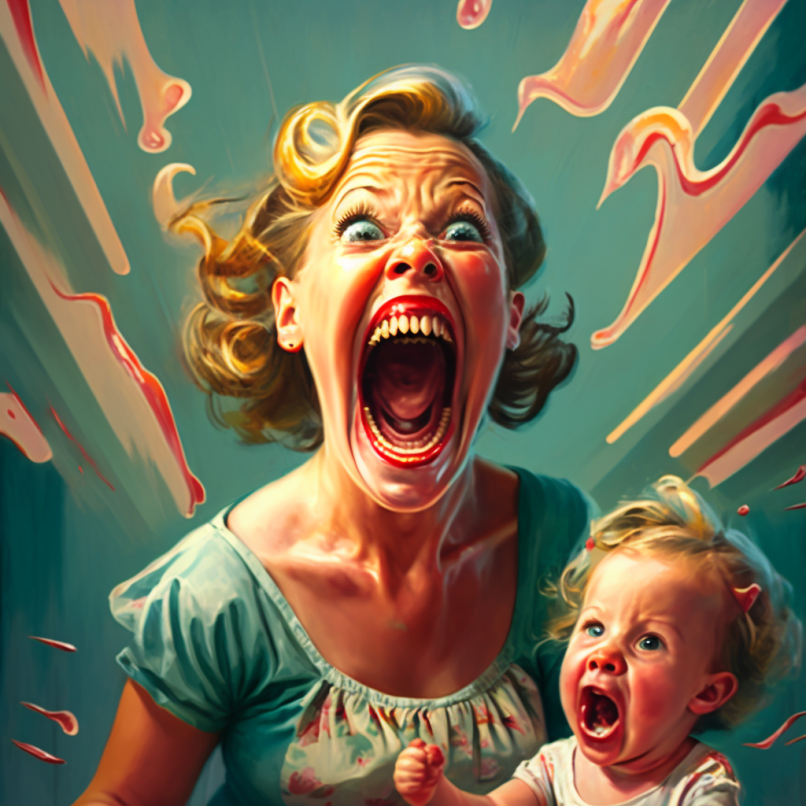
“I have turned back into a teenager, and the imagined version of my mother is scolding me, looking down her nose, shaking her head, because I never loved the color pink, or baby-oil soap.”
“A fire-red fog, the hot breath of primal rage, is spreading through my frontal cortex.”
“Although I’m breathing through my mouth to reduce the sting in my nasal cavity, I’m tasting decay like rotting lettuce soaked in sweat.”
“Outside, the thunderstorm thunders on: a cosmic war with rain as bullets.”
“That abyssal lord of pestilence.”
“I want to claw the sludge off with my fingernails before it dries and hardens into a crusty mask, but the prospect of soiling more of my skin with that goop makes me shudder.”
“I grab another tissue and I scrub the tacky half of my face to wipe all traces of that monster off.”
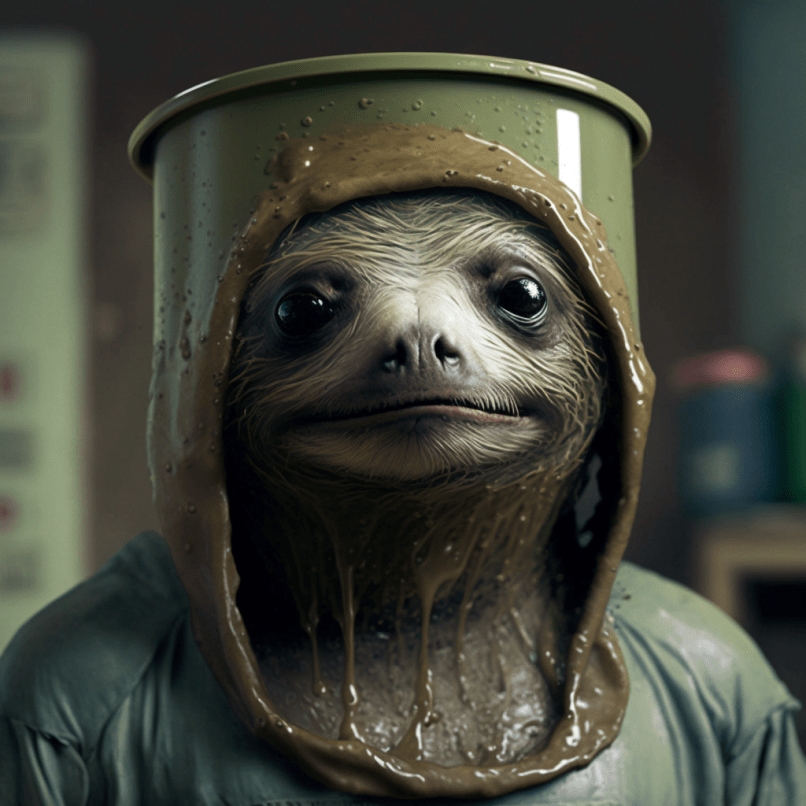
“Likely I still stink like a septic tank, but at least I don’t look like a slime-drenched sloth who has dunked her head in a bucket of rancid lube.”
“Having your face covered in goo suited you better.”
“Spike’s revolver, a relic of a bygone era when most households kept one on top of the TV as a phallic totem to ward off demons.” Those are some badass revolvers.
“The meticulous curves of that gleaming, silvery hunk of metal call out to me.”

We’re Fucked, Pt. 87 (Fiction)


“Shut your slimy, stinking piehole. Please return to that hellish dimension from whence you came, or else roll down a hillside to your doom. Leave me in peace and quiet.”

“Or what, huh?” the blob retorts. “I’m not going anywhere until you listen to what I have to say, and I haven’t even started.”

I snort.

“Good! Stay stuck to that wall forever if you want. You’re an interdimensional scab on a diseased surface. But you are alive, so at one point you’ll fall asleep, and then I’ll squeeze your fat guts between my thighs! Your squishy innards will drown in my wetness!”

The gooey mass squirms, stretching and contracting, as it emits a guttural retching noise, like that of a vacuum cleaner clogged with swallowed hairs and chunks of food waste. It makes me want to cover my ears. I realize that the blob is coughing up a lump of glop when the wad of black sputum flies out, hurtling across the office toward my face like a fist-sized, viscid stone from a slingshot.

My mind slows time down, turning the projectile into a shimmering blur that expands as it approaches its target. I picture a woman who, distracted texting, understood she was crossing the train tracks just as a freight train was bearing down on her, about to whomp the ghost out of her body. Her consciousness lingered for hours inside the slab of metal that crushed her brain, and then she sailed into the cosmos. As for me, I can’t dodge the sputum, but I manage to close my eyes and turn my head away as I gasp.

The glob of gunk splatters on my right cheek with a thwack, as if I have been smacked across the face by a cold, wet hand. The impact makes me flinch back. A pungent fume, that must have trailed behind the gooey comet like a tail, penetrates my nostrils with the stench of acidic regurgitation mixed with that of rotten eggs boiled in dirty diapers.

Hunched over, I shriek as if someone were cutting my heart out with a knife. My knees threaten to buckle under the weight of my horror, because the blob has spurted acid at me, and I know what comes next: in a second my skin will sizzle and bubble, burning with a caustic fire that will sear my nerves. I will feel the right half of my face withering and ripping apart as it gets vaporized into carbon dioxide. The acid will eat into my tongue and right eye, will melt flesh and turn bone to mush until it reaches my brain. How long will it take for my mind to dissolve into chaos?

Have I fainted? My right cheek tingles with numbness as if I had been slapped hard. A chill has spread throughout my body, my skin is crawling, and waves of nauseous revulsion are breaking on the shore of my soul. That gunk clings to my right cheek, even to my upper lip like a viscous mustache. The gooey mass must be swarming with germs and parasites, but other than that, it feels like I’ve been sneezed on by a bronchitic clown.

The ringing in my ears subsides, and I hear an uproar like a drove of pigs oinking. That blob is chortling with glee at my misfortune.

“Bullseye from across the office!” he crows.

My right eye is gummed shut. I part that pair of eyelids with my trembling fingers, but I end up smearing my fingertips with cold glop, like dipped in molasses. I blink frantically; it stings as if I had squirted lemon juice into my right eye. Although my tear glands are overflowing with brine, I witness that the filthy slimeball is jiggling like jello, emitting wet squelches, wobbling his eyeballs, and dripping pints of putrid muck onto the carpet. A myriad of warty bumps, one of them butt-shaped, have sprouted all over the blob’s body, making it resemble a rotten, oily cauliflower. His acidic laughter, that must have been festering in his septic bowels for centuries, is lancing my eardrums on its way to corrode my synapses. If only my mind could shrink to the size of an insect and take wing to escape the blob’s cretinous cackles.

“Y-you wretched slime-gargoyle!” I cry out.

The blob coughs, spitting drops of goo, as he recovers from his fit.

“And you are a tasteless twerp,” he barks in a mucus-choked voice. “While you’re at it, scream for your mommy.”

“I wish I were! What the fuck is wrong with you, apart from being the foulest lowlife in the entire universe? Don’t you know a basic rule of etiquette? Never spit on a lady!”

The blob laughs like a broken-down garbage truck with bad brakes.

“What lady? I was aiming at a perverted freak!”

My fury burns with flames so intense that my skin must be glowing crimson. I have turned back into a teenager, and the imagined version of my mother is scolding me, looking down her nose, shaking her head, because I never loved the color pink, or baby-oil soap. Instead, a pagan blaze had kindled in my loins, one that threatened to burn for millennia.

My vision is blurring. When I force my vocal cords to obey, my voice comes out ragged.

“I’m sick, you ignorant blob of filth.”

“Nope, just a kinky perv who needs a good spanking.”

My hands ball into fists. A fire-red fog, the hot breath of primal rage, is spreading through my frontal cortex. I shut my eyes, then try to calm my heartbeat. Although I’m breathing through my mouth to reduce the sting in my nasal cavity, I’m tasting decay like rotting lettuce soaked in sweat.

Outside, the thunderstorm thunders on: a cosmic war with rain as bullets. Its torrential downpour is slapping at the windows like a madman trying to wake the dead. I feel cold, viscous sputum oozing down my neck.

That abyssal lord of pestilence has sullied the right half of my face, covering it with slimy gunk as disgusting as the one in which he keeps his eyes. I want to claw the sludge off with my fingernails before it dries and hardens into a crusty mask, but the prospect of soiling more of my skin with that goop makes me shudder. Should I wipe my face off with a sleeve? No, afterwards I’d have to burn my shirt.

I forgot that I always keep a pack of facial tissues next to my monitor; I never know when I’ll need to clean up in a hurry. I wipe my fingertips. I run tissue after tissue across my right cheek with deliberate strokes. I swipe away the gunk that clings to my upper lip. I remove the slime stuck in my eyelashes and eyebrows. Am I clean now? I slide my knuckles along my right cheek; it’s coated in a mucous film. I grab another tissue and I scrub the tacky half of my face to wipe all traces of that monster off. After I finish, I toss the balled-up tissue onto the heap of its brethren in my wastebasket. Likely I still stink like a septic tank, but at least I don’t look like a slime-drenched sloth who has dunked her head in a bucket of rancid lube.

“Having your face covered in goo suited you better,” the blob says. “Really brought out your eyes, as well as your inner monster.” He chuckles. “Anyway, back to work! It’s about time we get down to brass tacks.”

My right cheek aches with the strain of my frenzied scrubbing. Spike’s revolver, a relic of a bygone era when most households kept one on top of the TV as a phallic totem to ward off demons, is waiting next to my keyboard. The meticulous curves of that gleaming, silvery hunk of metal call out to me.


Author’s note: today’s song is “I Would Hurt a Fly” by Built to Spill.

I keep a playlist with all the songs mentioned throughout this novel. A hundred and two songs so far. Check them out.

Are you a fan of goo? Then you may enjoy the pictures that a neural network generated regarding this chapter. Here’s the link.

A revolutionary AI that generates Turing-ready voices acted out this chapter. Check it out.

So Leire’s nightmare continues during this sequence, a tale in two halves where both halves are hell.

We’re Fucked, Pt. 86: AI-generated images

In my dreams I’m floundering about in a morass of slime.

The following images are related to chapter 86 of my ongoing novel We’re Fucked.

I have posted many other entries with generated images. Check them out.

“A piggish snort interrupts the guffawing.”
“I’m neither an ‘it’ nor an ‘abomination.’ I’m a sentient being, an intelligent lifeform, just like you.”
“I also picture myself hurling a mountain-sized iceberg at this monstrosity to pulverize it.” Not much hurling going on, but I like the images.
“This is what I have become: a grown woman talking to a gargantuan glob of black sludge stuck to a wall.”
“At which of those bulging eyeballs should I glower as they bob back and forth in that viscous, wobbly mass?”
“If eyes are windows into the soul, I’m facing one sordid, abject fiend who has earned every curse that may be heaped upon him.”
“A putrefying miasma I wouldn’t be able to wash off even if I jumped in a pool of acid.”
“The fact that you can breathe is a small mercy in this world of filth you call home.”
“You must have spawned from filth yourself.”
“I swear, if there were a contest for the most hideous creature on Earth, you would be one of the frontrunners.”
“Your appearance is an affront to human dignity.”
“Rumble crackles as if some heavenly douchebags were setting off firecrackers.”
“And who would invite in an intergalactic vagrant who knows nothing of etiquette?”
“My heart is hammering so hard I’m afraid it will tear free from my chest and fall to the carpet with a splat.”
“A sewer-dwelling species from some unheard-of dimension.”
“Don’t you dare speak to me of my digestive system.”
“A chorus of gargling frogs.”
“You excel at bullying others as well as yourself.”
“I tremble with the impulse to hurl a chair or a bookcase at the interdimensional, septic abomination who continues to spew his invective even as I struggle to contain my wrath.”
“This world of misery is filled with nauseating vermin who delight in humiliating me.”

We’re Fucked, Pt. 86 (Fiction)


“Will you stop laughing already?” the blob demands in a voice viscous as dripping sludge.

My chest and back are heaving, my facial muscles are contracted in a rigid grin that bares my teeth, while tears jump from my eyes. A piggish snort interrupts the guffawing, and after a few dry gasps, I manage to straighten up.

“The abomination talked.” I wipe away the tears with my thumbs, including the little beads stuck in my lashes. “Of course it talked. That’s just my luck.”

“I’m neither an ‘it’ nor an ‘abomination.’ I’m a sentient being, an intelligent lifeform, just like you.”

“Of all the slimy blobs in this world of horrors, I had to come across one that mastered the art of speech. What an inauspicious fate.”

“You are as rude as usual,” the blob says gruffly.

Blood is rushing to my head, making it throb and ache. Simulations bubbling up from my subconscious are crowding up behind the shut sphincter of my mind, competing for my attention; I get a glimpse of myself sinking my fingers with a glugging sound into the squidgy goo, which looks like the oozing viscera of a decomposing whale, to seize whatever passes for this gutter-mouthed freak’s neck and throttle it while screaming obscenities. I clench my fists, and the tendons in my hands creak in anticipation. I also picture myself hurling a mountain-sized iceberg at this monstrosity to pulverize it.

This is what I have become: a grown woman talking to a gargantuan glob of black sludge stuck to a wall. And yet that blob has the gall to call me rude. At which of those bulging eyeballs should I glower as they bob back and forth in that viscous, wobbly mass? If eyes are windows into the soul, I’m facing one sordid, abject fiend who has earned every curse that may be heaped upon him.

I fold my arms and force myself to take measured breaths.

“I resent your tone, sir,” I say through a tight throat that feels scraped raw, “as I resent the rotten stench emanating from your bloated body.”

“I stink, huh?”

“It reeks of decaying garbage. No, it’s more like the stink of rotten eggs mixed with raw sewage. A putrefying miasma I wouldn’t be able to wash off even if I jumped in a pool of acid.”

“The fact that you can breathe is a small mercy in this world of filth you call home.”

“Are you speaking from experience?” I chuckle nervously. “You must have spawned from filth yourself. I swear, if there were a contest for the most hideous creature on Earth, you would be one of the frontrunners. But I will spare myself from imagining such a pageant so I can retain what little self-control I possess. Your appearance is an affront to human dignity.”

“Alright, trash-talker. You don’t have a clue how hard and unpleasant it was to manifest over here.”

A peal of thunder ripping across the sky makes me snap my head upright, and drowns out the blob’s words. Goosebumps erupt down my arms while the rumble crackles as if some heavenly douchebags were setting off firecrackers.

“Who invited you anyway?” I demand to know. “And who would invite in an intergalactic vagrant who knows nothing of etiquette?”

“What makes you think I need your permission?”

Sweat trickles down my nose. My heart is hammering so hard I’m afraid it will tear free from my chest and fall to the carpet with a splat. My carotids must be swollen and purple.

“You are a parasite,” I growl through gritted teeth. “An invader. A sewer-dwelling species from some unheard-of dimension. Do the countless worms twitching in your flesh take note of the venom in my voice?”

“They do indeed, and they’re getting a kick out of it. As are the trillions of germs swimming in your intestinal flora.”

“Don’t you dare speak to me of my digestive system. I will gut you like a fish and flay you alive!”

The blob’s bulging eyeballs, plump blisters about to burst in spurts of pus, quiver as he sniggers. It makes me picture a chorus of gargling frogs.

“Leire, you’re a bully. A bully with no sense of proportion and a pathetic personality to boot. You excel at bullying others as well as yourself.”

My forehead is moist, my hair sticks to my face, and my shirt clings to my back and breasts. I tremble with the impulse to hurl a chair or a bookcase at the interdimensional, septic abomination who continues to spew his invective even as I struggle to contain my wrath.

This is why I don’t socialize, why I’ve kept to myself for most of my life: this world of misery is filled with nauseating vermin who delight in humiliating me. I thought I had left behind me the hostility oozing from every corner, the spiteful whispers of untold monsters, but now I’m confronted with an invader whose rudeness and perversion outstrip my own. A real piece of shit, so to speak.

I need to bury my face in mommy’s breasts.


Author’s note: today’s song is “Angela Surf City” by The Walkmen (as well as this live version).

I keep a playlist with all the songs mentioned throughout this novel. A hundred and one songs so far. Check them out.

Do you want to see AI-generated images inspired by moments from this chapter? No? Here’s the link anyway.

A few neural networks can now create realistic voices. Listen to them act out this chapter.

This chapter kicks off a new sequence titled “A Monstrous Ignoramus.” The previous sequence kind of did me in; I don’t want to end up again in a situation in which I will only upload a chapter every couple of weeks, but given how obsessive I am, that means posting short chapters more often. Whenever I get down to editing the chapters together into an epub file, I’ll merge plenty of them anyway.

In other news, I’ve been hooked on beta blockers due to my heart issues. My hands and feet are perpetually cold, my heart rate rarely goes above 60, and I feel somewhat physically detached from my surroundings, although not mentally, which is perfect; the serotonin reuptake inhibitors I used to take ages ago turned me into a zombie. These days I would probably come off as even more boring than usual, but thankfully I haven’t talked to anyone in person (other than waiters, servers or whatever they prefer to call themselves these days) ever since my last contract ended. Beta blockers apparently also work to prevent migraines (they terrify me), and help with anxiety in general. Perhaps I should have been taking them all along. What other drugs should I become dependent on?

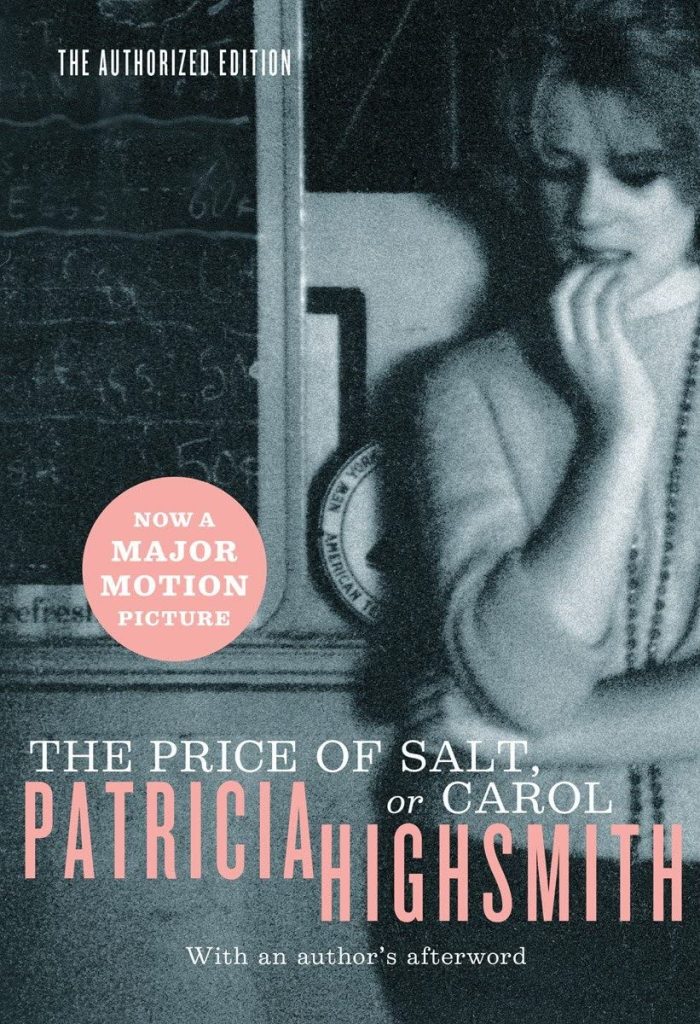
Review: The Price of Salt, by Patricia Highsmith

In the late 40s, shortly after she sold the rights to her first book Strangers on a Train (as far as I remember, Hitchcock basically swindled her), Patricia Highsmith worked for a couple of weeks at the toy department of a store, where she met a stunning woman: a poised, rich-looking, beautiful blonde who asked for a toy for her daughter. The author sold her some doll and learned the woman’s address, because the store would deliver the toy there. More importantly for Patricia, she had come to realize something: she was in love at first sight with a woman. That was a problem for many reasons, one of them that she was dating a guy.

At home, in feverish two hours, Highsmith wrote the entire treatment for the story that would end up becoming The Price of Salt / Carol, a novel she would have never considered writing before. The author grew a fever shortly after; some kid at the store had exposed her to chicken pox. She had to quit her job. Since that day at the store, she only came close to the stunning blonde once: Patricia visited New Jersey and stared at the married woman’s home from a distance, as she likely wished that she could belong to that place.

This book follows a nineteen-year-old girl named Therese Belivet. Her parents abandoned her, she grew up in some sort of boarding school, and now she works at the toy department of a store, although she wishes she could become a stage designer. She’s dating a guy called Richard who’s a bit of a dilettante: he wants to become a professional painter, but he has little talent and doesn’t apply himself. He’s mainly trying to avoid his destiny of working at his family’s business.

One day a poised, rich-looking, beautiful blonde enters the toy department wanting to buy a present for her daughter. After the transaction, which included a pleasant interaction between them, Carol forgets some item at the store. The protagonist does something that the author likely wouldn’t have dared to do: she mails it to the woman’s residence along with some words to remember Therese by. Carol, touched, asks her out for lunch, which sets both women on a path of degeneration (a quote included later on features a rebuttal from this Carol character about such notion).

Carol is getting divorced because she doesn’t love her husband, and some months ago had a fling with a long-term female friend of hers. Now she risks losing her daughter because her husband, who is a no-nonsense business guy, wants full custody due to Carol’s lack of moral compass (mostly because her lover was another woman).

Given that Carol is based on an idealized love-at-first-sight, the author could have put her on a pedestal, but Carol, in the narrator’s words, is “a woman with a child and a husband, with freckles on her hands and a habit of cursing, of growing melancholy at unexpected moments, with a bad habit of indulging her will.” I found her quite compelling. In contrast, the protagonist felt somewhat vague until the last quarter of the story.

The bulk of the story consists of a roadtrip that both women take heading West. Therese loves Carol, but suspects that she may be a convenient distraction for the older woman, who has enough to worry about with the divorce. Meanwhile, her husband has money to spare to figure out how his estranged wife may want to enjoy her trip with a barely twenty-year-old girl.

Highsmith puts us then-and-there along with her protagonist: we are never sure of anyone else’s intentions, or even what’s going on some of the time, because Therese herself doesn’t know. Carol has lived a complicated life up to that point, and at times I felt as superfluous to Carol and her former lover Abby’s conversations, as well as those between Carol and her husband, as the protagonist herself did, which I consider a point in the novel’s favor; most of what I ask from a story is to make me step into the protagonist’s POV and live vicariously through them.

Patricia’s writing felt somewhat meagre throughout the first quarter of the story, maybe in part because she had never written anything like it (Strangers on a Train was her first novel). The prose improves consistently until the end.

As I mentioned in my review of one of the author’s most prominent biographies, supported by at least one of Patricia’s friends who was a psychiatrist, Patricia Highsmith seemed to be on the autistic spectrum. Her anxiety and sensory issues are on full display during the scenes at the toy department, and throughout the story, the protagonist’s (and author’s) inability to properly read people or even understand her own impulses come into play. The author’s obsession with the real-life Carol, as well as the less prominent behavior of Therese towards the fictional one, are characteristic of autism as well (and I know plenty about that).

This afternoon, after I finished the book, I sat down to watch the movie adaptation released in 2016, starring Rooney Mara as Therese and Cate Blanchett as Carol. Blanchett was wonderful as her character; unfortunately, whoever wrote the screenplay manipulated the original in idiotic, and for me infuriating, ways. Instead of a stage designer (in the novel she gets paid a couple of times to work as one), movie Therese wants to be a photographer even though she barely has a camera; it makes her seem like a dilettante. Her boyfriend, Richard, just works at the same store and lacks any dreams or artistic sensibilities. Far worse yet: following the recent tradition in the media of shitting on men, that has become the norm in Western society for the last twenty years or so, the main male characters are depicted as obnoxious, brutish and irrational. Patricia didn’t write them that way. I couldn’t get past the midpoint of the movie for that reason.

Patricia Highsmith chose to publish this novel with the pseudonym of Claire Morgan, and afterwards she started frequenting gay bars in New York, where she became a local legend. I recently watched a short documentary about Highsmith that mentioned that the lesbian ladies of New York referred to Patricia as the White Wolf, because of her ravenous appetite, the fact that she was white, and that she hunted monsters for coin. Patricia mentioned in her diaries, using different words, that she got enough pussy to last her several lifetimes.

I’m a guy and I can’t consider myself a lesbian even if I wanted to (although Patricia and I seem to have the same taste in dommy mommies women), but this story made me experience again that unique gift of written fiction: the author captured through words alone two real human beings that remain as alive and young as they were now ages ago, and that will, one supposes, go on loving each other endlessly.

Here are the quotes I highlighted:

Therese’s lips opened to speak, but her mind was too far away. Her mind was at a distant point, at a distant vortex that opened on the scene in the dimly lighted, terrifying room where the two of them seemed to stand in desperate combat. And at the point of the vortex where her mind was, she knew it was the hopelessness that terrified her and nothing else. It was the hopelessness of Mrs. Robichek’s ailing body and her job at the store, of her stack of dresses in the trunk, of her ugliness, the hopelessness of which the end of her life was entirely composed. And the hopelessness of herself, of ever being the person she wanted to be and of doing the things that person would do. Had all her life been nothing but a dream, and was this real? It was the terror of this hopelessness that made her want to shed the dress and flee before it was too late, before the chains fell around her and locked.

There was not a moment when she did not see Carol in her mind, and all she saw, she seemed to see through Carol. That evening, the dark flat streets of New York, the tomorrow of work, the milk bottle dropped and broken in her sink, became unimportant. She flung herself on her bed and drew a line with a pencil on a piece of paper. And another line, carefully, and another. A world was born around her, like a bright forest with a million shimmering leaves.

I feel I stand in a desert with my hands outstretched, and you are raining down upon me.

Was life, were human relations like this always, Therese wondered. Never solid ground underfoot. Always like gravel, a little yielding, noisy so the whole world could hear, so one always listened, too, for the loud, harsh step of the intruder’s foot.

Therese frowned, floundering in a sea without direction or gravity, in which she knew only that she could mistrust her own impulses.

Happiness was like a green vine spreading through her, stretching fine tendrils, bearing flowers through her flesh. She had a vision of a pale white flower, shimmering as if seen in darkness, or through water. Why did people talk of heaven, she wondered.

If she ever had an impulse to tell Carol, the words dissolved before she began, in fear and in her usual mistrust of her own reactions, the anxiety that her reactions were like no one else’s, and that therefore not even Carol could understand them.

Between the pleasure of a kiss and of what a man and woman do in bed seems to me only a gradation. A kiss, for instance, is not to be minimized, or its value judged by anyone else. I wonder do these men grade their pleasure in terms of whether their actions produce a child or not, and do they consider them more pleasant if they do. It is a question of pleasure after all, and what’s the use debating the pleasure of an ice cream cone versus a football game–or a Beethoven quartet versus the Mona Lisa. I’ll leave that to the philosophers. But their attitude was that I must be somehow demented or blind (plus a kind of regret, I thought, at the fact that a fairly attractive woman is presumably unavailable to men). […] The most important point I did not mention and was not thought of by anyone–that the rapport between two men or two women can be absolute and perfect, as it can never be between man and woman, and perhaps some people want just this, as others want that more shifting and uncertain thing that happens between men and women. It was said or at least implied yesterday that my present course would bring me to the depths of human vice and degeneration. Yes, I have sunk a good deal since they took you from me. It is true, if I were to go on like this and be spied upon, attacked, never possessing one person long enough so that knowledge of a person is a superficial thing–that is degeneration. Or to live against one’s grain, that is degeneration by definition.

It was Carol she loved and would always love. Oh, in a different way now, because she was a different person, and it was like meeting Carol all over again, but it was still Carol and no one else. It would be Carol, in a thousand cities, a thousand houses, in foreign lands where they would go together, in heaven and in hell.

Review: Beautiful Shadow: A Life of Patricia Highsmith, by Andrew Wilson

Originally written in September 2016, posted on Goodreads.

A few years ago I found a quote (I love quotes), by a certain Amy Hempel, that intrigued me:

“I read about a famous mystery writer who worked for one week in a department store. One day she saw a woman come in and buy a doll. The mystery writer found out the woman’s name, and took a bus to New Jersey to see where the woman lived. That was all. Years later, she referred to this woman as the love of her life. It is possible to imagine a person so entirely that the image resists attempts to dislodge it.”

I wondered who that mystery writer could have been, and I also identified with a mind that would daydream an entire life out of a moment and follow that obsession. That “mystery writer” was Patricia Highsmith.

While I was reading her This Sweet Sickness, about a loner unable to connect with people and who obsesses over a woman he loves, to the point of building a complete second identity, I identified with it, and how it was told, in a way that suggested that the writer was the kind of peculiar I was; hardly anyone knows about the depths of social blindness, isolation, anxiety and obsession (and attached maladies like obsessive-compulsive disorder and chronic depression) like autistic people.

Patricia Highsmith was a retiring, silent person with a tremendously dark interior world, who could not properly connect with anyone, who loved certain people when they were away but needed space when they were close. She considered herself to have a man’s brain, but didn’t want a man’s body, and was attracted to women, but didn’t particularly like them. She was a masochist who consistently “chose” to love women who bossed her around and hurt her. She smoked and drank so heavily that those vices destroyed her body, although, curiously enough, didn’t seem to have affected her mind. Her instincts didn’t align with the human world around her. She was hypersensitive to noises and being touched. She was clumsy and awkward. She was at her best while daydreaming or writing, but fell into horrible depressions the moment she came back to herself. She was never at ease with the world.

Almost everything about her screamed Asperger’s to me, but I can’t be objective about it. It was weird that nobody else caught it, until one of her friends did, as mentioned in this biography:

“In hindsight, I think Pat could have had a form of high-functioning Asperger’s Syndrome. She had a lot of typical traits. She had a terrible sense of direction, she would always get lost and whenever she went to the hairdresser’s she would have trouble parking even though she had been with me lots of times. She was hypersensitive to sound and had these communications difficulties. Most of us screen certain things, but she would spit out everything she thought. She was not aware of the nuances of conversation and she didn’t realise when she had hurt other people. That was probably why her love affairs never lasted very long, because she couldn’t overcome the difficulties in communicating. Although she didn’t really understand other people – she had such a strange interior world – she was a fantastic observer. She would see things that an average person would never experience.”

She wasn’t a recluse, however, like some journalists called her. She kept plenty of friends, travelled and invited people over, people who tolerated how weird she was. She never made it as big as she deserved mostly because she didn’t care to belong to a “writer’s community,” didn’t like to expose herself to the public (she considered interviews humiliating), and her stories usually failed to offer hope or platitudes.

Patricia was also a misanthrope who disliked or even hated way more stuff and people than she liked. She got in trouble for her opinions regarding black people, religion, and Israel. Having been born clearly different, she was a hardcore individualist that intended people to take responsibility for themselves. During the last half of her life, and having been on the brink of bankruptcy, never knowing if the next book was going to sell, she was very stingy with money, but in her will she left her millions to a writer’s retreat she spent a few weeks in while writing her first novel. She died alone in Switzerland, in a home designed as a bunker.

Despite all of her issues, reading about her has made me aware of a hole in the world, the kind that opens when a real human being goes away. I look forward to learning more about her, and about myself, while reading her stories.

The following is a poem that Patricia wrote during her last years in Switzerland:

At dawn, after my death hours before,
The sunlight will spread at seven o’clock as usual
On these trees which I know.
Greenness will burst, dark green shadows yield
To the cruel-benign, indifferent sun.
Indifferent will stand the trees in my own garden,
Unweeping for me on the morning of my death.
Same as ever, roots athirst,
The trees will rest in breezeless dawn,
Blind and uncaring,
The trees that I knew,
That I tended.


I thought about this review because I’m finishing Patricia’s The Price of Salt, a prolonged daydream set in the 50s about dating that woman from New Jersey that at the most she saw a couple of times. In a significant part because Patricia reminds me so much of myself, I can’t think of any other dead writer that I would want more to be still alive and healthy.

Here are some quotes I highlighted from this biography:

After reading Burgum, [Patricia Highsmith] wrote in her cahier that, like Kafka, she felt she was a pessimist, unable to formulate a system in which an individual could believe in God, government or self. Again like Kafka, she looked into the great abyss which separated the spiritual and the material and saw the terrifying emptiness, the hollowness, at the heart of every man, a sense of alienation she felt compelled to explore in her fiction. As her next hero, she would take an architect, ‘a young man whose authority is art and therefore himself,’ who when he murders, ‘feels no guilt or even fear when he thinks of legal retribution.’ The more she read of Kafka the more she felt afraid as she came to realise, ‘I am so similar to him.’

If [Patricia Highsmith] saw an acquaintance walking down the sidewalk she would deliberately cross over so as to avoid them. When she came in contact with people, she realised she split herself into many different, false, identities, but, because she loathed lying and deceit, she chose to absent herself completely rather than go through such a charade. Highsmith interpreted this characteristic as an example of ‘the eternal hypocrisy in me,’ rather her mental shape-shifting had its source in her quite extraordinary ability to empathise. Her imaginative capacity to subsume her own identity, while taking on the qualities of those around her – her negative capability, if you like – was so powerful that she said she often felt like her inner visions were far more real than the outside world. She aligned herself with the mad and the miserable, ‘the insane man who feels himself one with all mankind, all life, because in losing his mind, he has lost his ego, his self-ness,’ yet realised that such a state inspired her fiction. Her ambition, she said, was to write about the underlying sickness of this ‘daedal planet’ and capture the essence of the human condition: eternal disappointment.

[Patricia Highsmith] had experienced at first hand many of Ripley’s characteristics – splintered identity, insecurity, inferiority, obsession with an object of adoration, and the violence that springs from repression. Like her young anti-hero, she knew that in order to survive, it was necessary to prop oneself up with a psychological fantasy of one’s own making. ‘Happiness, for me, is a matter of imagination,’ she wrote in her notebook while writing The Talented Mr. Ripley. ‘Existence is a matter of unconscious elimination of negative and pessimistic thinking. I mean, to survive at all. And this applies to everyone. We are all suicides under the skin, and under the surface of our lives.’

Early in 1967 Highsmith’s agent told her why her books did not sell in paperback in America. It was, said Patricia Schartle Myrer, because they were ‘too subtle,’ combined with the fact that none of her characters were likeable. ‘Perhaps it is because I don’t like anyone,’ Highsmith replied. ‘My last books may be about animals.’

As some people turned to religion for comfort, so, Highsmith wrote in her notebook in September 1970, she took refuge in her belief that she was making progress as a writer. But she realised that both systems of survival were, however, fundamentally illusory. She wrote, she said, quoting Oscar Wilde because, ‘Work never seems to me a reality, but a way of getting rid of reality.’

It seemed to me as if she had to ape feelings and behaviour, like Ripley. Of course sometimes having no sense of social behaviour can be charming, but in her case it was alarming. I remember once, when she was trying to have a dinner party with people she barely knew, she deliberately leaned towards the candle on the table and set fire to her hair. People didn’t know what to do as it was a very hostile act and the smell of singeing and burning filled the room.

Those close to [Patricia Highsmith], particularly her family, often commented on how Highsmith’s vision of reality was a warped one. In April 1947, she transcribed into her notebook what was, presumably, a real dialogue between herself and her mother, in which Mary accused her of not facing the world. Highsmith replied that she did indeed view the world ‘sideways, but since the world faces reality sideways, sideways is the only way the world can be looked at in true perspective.’ The problem, Highsmith said, was that her psychic optics were different to those around her, but if that was the case, her mother replied, then she should equip herself with a pair of new spectacles. Highsmith was not convinced. ‘Then I need a new birth,’ she concluded.

[Patricia Highsmith] was overwhelmed by sensory stimulation – there were too many people and too much noise and she just could not handle the supermarket. She continually jumped, afraid that someone might recognise or touch her. She could not make the simplest of decisions – which type of bread did she want, or what kind of salami? I tried to do the shopping as quickly as possible, but at the check-out she started to panic. She took out her wallet, knocked off her glasses, dropped the money on the floor, stuff was going all over the place.

Throughout her life, Highsmith looked for women whom she could worship. Sex was far from the most important factor in any relationship; rather, it was this near-divine quality for which she yearned.

The artistic life is a long and lovely suicide precisely because it involves the negation of self; as Highsmith imagined herself as her characters, so Ripley takes on the personae of others and in doing so metamorphoses himself into a ‘living’ work of art. A return to the ‘real life’ after a period of creativity resulted in a fall in spirits, an agony Highsmith felt acutely. She voiced this pain in the novel via Bernard’s quotation of an excerpt from Derwatt’s notebook: ‘There is no depression for the artist except that caused by a return to the self.’

As soon as [Patricia Highsmith] had stopped work, she felt purposeless and quite at a loss about what to do with herself. ‘There is no real life except in working,’ she wrote in her notebook, ‘that is to say in the imagination.’ It was in this state that she observed that only one situation would drive her to commit murder – being part of a family unit. Most likely, she thought, she would strike out in anger at a small child, felling them in one blow. But children over the age of eight, she surmised, would probably take two blows to kill. The reality of socialising with anyone, no matter how close, she said, left her feeling fatigued.

As the new year began, [Patricia Highsmith] felt completely paralysed, incapable of reading or picking up the phone. ‘I can feel my grip loosening on my self,’ she wrote. ‘It is like strength failing in the hand that holds me above an abyss.’ She wished there was a more awful-sounding word for what she was feeling than simply ‘depression.’ She wanted to die, she said, but then realised that the best course of action would be to endure the wretchedness until it passed. Her wish was, ‘Not to die, but not to exist, simply, until this is over.’

Faced with the prospect of a black depression, Highsmith once again retreated into fantasy, dreaming about an affair with the actress Anne Meacham, whose picture she had seen in a magazine publicising her role in the Tennessee Williams’ play, In the Bar of a Tokyo Hotel. After the disasters of recent years, she reckoned that the safest option was to escape into romantic imagination. She reviewed her failures over the past five years and concluded that ‘the moral is: stay alone. Any idea of any close relationship should be imaginary, like any story I am writing. This way no harm is done to me or to any other person.’

[Patricia Highsmith] was an extremely unbalanced person, extremely hostile and misanthropic and totally incapable of any kind of relationship, not just intimate ones. I felt sorry for her, because it wasn’t her fault. There was something in her early days or whatever that made her incapable. She drove everybody away and people who really wanted to be friends ended up putting the phone down on her.

[Patricia Highsmith] was a figure of contradictions: a lesbian who didn’t particularly like women; a writer of the most insightful psychological novels who, at times, appeared bored by people; a misanthrope with a gentle, sweet nature.