We’re Fucked, Pt. 119: AI-generated audiochapter

Return to your song, and sing again. This audiochapter covers chapter 119 of my ongoing novel We’re Fucked.

Cast

  • Leire: a blonde thief from those good old days when Bethesda games retained their magic
  • Jacqueline: loveliest marigold from The Witcher times

I produced audiochapters for the entire two previous sequences, and I intend to continue until the novel ends or I return to camming, where I truly shine. A total of five hours, two minutes and twenty-nine seconds. Check them out.

On writing: Testing concept potential of story seed #1

Once you have ensured that the story seed you came up with connects with you enough, you should probably test its concept potential. The following are the notes on the subject I gathered years ago from many books on writing.

  • Is the idea big enough for a fully dimensional story, or is it merely an anecdote?
  • Does your idea only provide a unique way of starting the story, and then all the uniqueness would disappear once the plot starts going?
  • A story without a concept leads to a story without dramatic tension, which leads to a character who has nothing interesting to do or achieve.
  • A great concept serves as a catalyst for the story elements of character, theme, and structure. Without this power, the story goes nowhere because it has nowhere to go. The concept creates the journey because it creates conflict in your story.
  • What is the notion, proposition, situation, story world, setting, or fresh take that creates a framework or arena or landscape for your story, one that could hatch any number of stories, and one that doesn’t require us to meet your hero or know your plot to make us say, “Yes! Write a story based on that, please”?
  • State your concept in the form of a “What if?” question. It usually doesn’t involve specific characters, just drama and tension. For example, “What if scientists figured out how to revive dinosaurs, and someone built a theme park to show them off?”
  • Try to come up with a “What if?” strong enough that a plot could manifest spontaneously.
  • Does this “What if?” situation ask dramatic questions that promise compelling, interesting, and rewarding answers?
  • If you can add “hijinks ensue” to the end of your concept, you may be on to something good. If the hijinks themselves lend a conceptual essence to the idea, then include them in your statement of concept.
  • Would your concept elicit that sought-after response: “wow, I’ve never seen that before, at least treated in that way. I really want to read the story that deals with these things”?
  • What is the kicker that twists and ordinary idea into something unique, original, and compelling? Try to explain in one clear sentence.
  • Judge your concept against these benchmarks: What does your concept imply, promise, or otherwise begin to define in terms of an unfolding story driven by dramatic tension? What might a hero want within this concept, and why, and what opposes that desire? The right concept will lead you to this.
  • How does this concept identify a need? A quest? A problem to solve? And/or darkness to avoid? How does it have stakes hanging in the balance, in the presence of an antagonistic force?
  • How does the concept lend itself to a dramatic premise and a thematic stage upon which your characters will show themselves?
  • Could the “arena” of the story offer a conceptual appeal, as much or more as the characters themselves?
  • Could you get, through this concept, to inhabit a glamorous (or fascinatingly gruesome) world you would otherwise never get to visit?
  • Could the story have a conceptual hero? A story built around a protagonist leveraging her conceptual nature. Is there a proposition for a character that renders the character unique and appealingly different? Would that difference scream for a story to be told?

We’re Fucked, Pt. 119 (Fiction)


Still wobbly, my insides buzzing and fizzling from the time jump, I drag myself up the stairs of the tower. In front, Jacqueline ascends with graceful steps, propelled by her designed muscles. Her raven-black hair cascades to the middle of her back in a curtain of silky locks. Even Nairu, her chestnut hair bobbing with each bounce, is bounding ahead of me.

Whatever entity charges to access the tower also turned its insides into a heritage museum. We pass by a fireplace poker, a cooking pot, an old-fashioned lantern. Nestled in a recess of the stone wall stands a contraption crafted from metal and wood. A sturdy base flares out into an ergonomic seat worn smooth. The chair is attached to a mechanism involving a wheel, a crank handle, and unidentifiable fittings, tailored for some task that became obsolete a century ago. The grain of the wood, rich and dark, speaks of decades of service, and the luster of the metal components suggests the touch of many workers’ hands, or the same one, repeated over time.

Hung on the rough walls of the stairwell, black-and-white pictures show street scenes, along with architecture from the late 19th or early 20th century. One photo captured a group of people seated in an open-top vintage automobile. I’m about to glance away from the pictures when I spot the word “Irún” in a caption. My hometown, before it degenerated into a post-apocalyptic Babel.

I stop in front of the photograph even though Jacqueline and Nairu continue ahead. A gash of sunlight, streaming in through an opposite window, is shining on the framed picture, so I shift my head around to study the details. It depicts in monochrome a streetscape featuring benches, a tree that provides shade, and tramlines laid on the road. The building façades, unfamiliar and distant, stand behind the frozen silhouettes of strangers from an unreachable past. How many ancestors of Irún’s modern inhabitants walked these streets before the buildings were demolished and replaced?

My breath hitches in my throat. What’s this upsurge of feeling? Do I miss the city of my childhood, although I yearned to flee from it and from everyone I knew? It shouldn’t matter any longer; living with Jacqueline, I can almost believe that my past belongs to someone else.

While I force myself to stagger up the staircase, I pass by more pictures that pull my attention as if imbued with their own gravity. In a sepia-toned photograph, women with woolen bathing costumes stand in beach waters as they smile at the camera. One woman’s face, beneath a wide-brimmed straw hat, is swallowed by shadow. Another photo has gathered about twenty working-class people around a kid on a bicycle. In the next shot, the members of a motorcycle club pose in caps and duster coats, their vehicles polished and gleaming. In yet another frame, a row of men are standing on Ondarreta beach, wearing tank tops and shorts, maybe after a track-and-field competition.

Those people, their lives and stories, have slipped away. As if they had kept observing the world that moved on to decay and ruin, I feel them accusing me: “Why did you allow this to happen?”

What could I have done to stop it? I was surrounded by humans whose motivations and intentions seemed incomprehensible. Each time I thought others shared my perspective, their words reminded me that I was alone, a mass of flesh and bone that couldn’t budge this planet one centimeter.

I clutch the iron handrail. My eyes have moistened, my throat clenched, my facial muscles twisted into a grimace.

“Oh, the photos caught your attention, did they?” Jacqueline says, her voice echoing in the stairwell.

Instinctively, I turn toward the pictures beside me to hide the onset of tears.

“It’s just that… the further I climb, the more my thighs burn. But I’d catch up eventually.”

“Seems like these stairs are telling us to spice up our days with a bit more physical fervor.”

A heavy sigh escapes me.

“The moment I uttered those words, I feared I’d hear such a thing. You, with your chameleon body, can become as athletic as needed, and our Paleolithic daughter remains mostly unpoisoned by the additives and toxins of modern civilization, but me? I’m an arthritic, hunchbacked relic weighed down by a lifetime of regret.”

Jacqueline giggles.

“Fresh air awaits you a couple of landings away, my dear. And I promise that the view is worth every step. You can see all the way to France.”

Once we reach the final landing and climb a confined, spiral staircase, an archaic doorway transitions us onto the tower’s crenellated battlements. Sunlight splashes across me, bathing my skin with its warmth. I close my eyes, tilt my face skyward, and inhale a lungful of the fresh, crisp air. I expected it to carry a hint of brine, but it smells clean; I guess we’re too high up.

When I open my eyes, my vision is filled from end to end by a watercolor of pale blue brushed with wisps of cirrus clouds. Somewhere out there beyond the blue, across light-years of cosmic space, a conquering alien species must be planting eggs in the carcasses of their mutilated enemies. Here on Mount Igueldo, though, the autumnal breeze has revived me, clearing the fuzz from my brain.

Foosteps tap-tap-tap in a hurried rhythm; Nairu scampers up to the robust parapet punctuated with sandstone teeth. As she grips the stone for balance, she cranes her neck to peer through an embrasure. She emits a sound that starts as an “oooh” infused with the wonder of a child, but when she contemplates the steep drop that leads to a splattering death far below, the tail end of her vocalization quivers. Once Jacqueline and I join her at the parapet, Nairu reaches for my hand to clutch it tight.

The Cantabrian Sea, rippled in a sluggish motion by the winds, resembles a slab of turquoise marred by dense, underwater patches of green like submerged clouds. A yacht stands still amid the rolling swells, anchored deep below. Near the whale-shaped island at the bay’s mouth, garlands of foam stretch into the sea. The distance reduces a flock of seagulls to a swarm of white flies. To the east, beyond the verdant hump of Mount Urgull, a hilly landmass shrouded in haze melds with the horizon.

The cool breeze licks at my face, lifting strands of my hair. High-pitched squeals of joy rise from the amusement park, accompanied by the mechanical noise of the rollercoaster.

Jacqueline proffers the remaining three churros. After time-traveling to the dawn of civilization and back, I deserve a sugar hit. I pull one of the churros out of the paper cone and slide its lukewarm length into my mouth, coating my lips and tongue with a dusting of cinnamon sugar.

Yapping in a North American accent announces the arrival of a family of tourists, that whoa their way to our side. They seem the kind who would ask a stranger to take photos of them. The three of us shift away to a corner turret that overlooks the crescent-shaped bay, an amphitheater of water. Where the sun hits the foaming breakers, white sparkles ride the crests of the waves, coalescing into a silver shimmer. For a moment I wish to do nothing but munch on my churro and stare at those flashing lights.

Past the lace edge of waves against golden sand, the beachfront promenade teems with people milling about like mobile sundials: solid upper halves, angled shadows as lower halves. From the beachfront, the sprawl of Donostia, a clustering of buildings, spreads in a gridlike pattern, nestled within the green backdrop of hills.

Beside me, Nairu’s chestnut hair glimmers in the morning sun like a halo. She’s gazing upon the city with the silent, contemplative demeanor of an artist, or of a Paleolithic child who can hardly believe that any of it exists.

A cold, hissing gust buffets my face, flaps my corduroy jacket, whips the tail of my scarf about my shoulder. Nairu, her hair fluttering wildly, clutches the sketchbook to her chest as if guarding a precious heirloom. I huddle in my jacket and tuck my chin under the scarf. Its warm fleece tickles my nose.

Jacqueline wraps an arm around my waist, drawing me closer to her statuesque form.

“I brought you to a reasonably magical place, didn’t I?”

As the wind whistles around us, her tresses undulate like the waves of a glossy, black sea, exposing her earlobe and ivory-white neck. I could sink into the crystalline blue of those irises. Her full lips, always tempting, curve upward as if my mere presence pleases her.

“We should buy a castle,” I say.

“We should, though that quiet apartment of ours was quite the investment.”

“If you ever buy a castle, I’ll lounge on a throne atop the tower, too high up for any trouble to reach me.”

“I know what you mean, my darling. From such a lofty vantage, overseeing everything, it’s like we’re protecting the city, right?”

“We’d need a moat to keep away intruders, and a portcullis. Maybe a few portcullises. Oh, and don’t forget the drawbridge. Wouldn’t want to be unprepared in case of a siege.”

Jacqueline gazes at the mountainous horizon. When she speaks again, her voice has softened.

“I don’t want to give any of this up.”

My stomach knots with a sudden surge of fear.

“Wh-why would you need to?”

“Because the world expects me to resume my role as a secretary. But I refuse.”

“Oh?”

“I stayed put at the office, despite better options, out of a sense of obligation to our boss. After this break to nurture our home and Nairu, I’ve realized that my heart never lingered on the hours I spent working, and if I returned to my desk, I would wish to be elsewhere. So that’s it: I quit. I’ll ring him up when I muster the patience for that conversation.”

“Bold move, one I suspect you’ve been considering for a while. I always thought that working as a secretary was beneath you, even back when I was sure you wouldn’t… want me. From now on we’ll have to manage without your income, but I’ll do my best to provide for us three with the meager wages of a website programmer.”

Jacqueline laughs as if my statement tickled her. I feel like a child hearing the ringing of an ice-cream truck on a summer day. When the outburst dies down, her grin lingers warmly, showing off her pearly teeth and making the corners of her cobalt-blues crease.

“Ah, you’re sweet, but I didn’t expect you to shoulder the responsibilities alone. I’m returning to camming, where I truly shine. Now you understand what it means, right? As many sources of revenue as gorgeous ladies I can transform into, thanks to horny internet people.”

“That’s… an overwhelming number of sources, then.”

“Indeed, mon petit oiseau. That will more than cover the bills while still spoiling our little one with churros and amusement park trips. And don’t you worry, I gave the goverment my pound of flesh, not that I appreciate how they spend it. We won’t get in trouble.”

Jacqueline’s fingers press into my side through the corduroy jacket. With her eyelids drooping halfway, her gaze fixed on mine, she breaks into a smirk that sends my blood rushing downward.

“You know,” she continues, dropping her voice to a lower, huskier tone, “a partner could spice up my repertoire. Such a woman might prefer to preserve her anonymity, but a masquerade mask would do the job, wouldn’t it?”

Although her suggestion caresses my spine with electric fingers, I’m already flashing a dismissive wave.

“Oh, there’s no way that anybody wants to see my pussy.”

Jacqueline leans in close, her warm breath teasing the shell of my ear as her moist lips brush against it.

“They would kill for a taste, they just don’t know it yet. Besides, camming would be my side gig after the most important role of all: raising our child, as well as whoever follows. What a lucky woman I am to care for a girl who loves to create, who recognizes the beauty of the world. She won’t endure the fate of children whose curiosity and wonder are crushed in their youth, leaving them broken, forever distrustful of human beings. We’ll make sure that as Nairu ages, her childhood memories will become a beloved song, one she’ll long to return to and sing again.”


Author’s note: today’s songs are “The Last Living Rose” by PJ Harvey, “Ask Me No Questions” by Bridget St. John, and “Such Great Heights” by Iron & Wine.

I keep a playlist with all the songs mentioned throughout the novel so far. A total of a hundred and ninety-six videos. Check them out.

Do you want to listen to this chapter instead of spending your eyesight? Check out the audiochapter.

On writing: Testing your personal link to a story seed

Once you identify a story seed, you better ensure that it excites you enough; you don’t want to end up writing dozens of thousands of words only to realize that you’d rather work on something else. The following are the notes on the subject I gathered years ago from many books on writing.

  • Freewrite about what seems important about the idea.
  • What is the point of the story?
  • Is the story really worth it?
  • What could be the staying power of this story idea?
  • Why would any of it matter?
  • Does your imagination fill with possibilities? Do the preliminary scribbles get you excited about writing more?
  • How is this story personal and unique to you?
  • If you hope to write a book of either fiction or nonfiction, you will have to live with the characters or topic for a long time. Do you think you can do that?
  • What quality, characteristic or concern surrounding your idea grabbed you?
  • Why do you want to write this? What is it about your life at this moment in time that attracts you to this idea?
  • Do you bring a long-standing, or at least overwhelming, desire to have lived the story?
  • Why must you tell THIS story? Why is it important to you to spend the energy? Why are you willing to take time away from another area of your life to develop this story? What is it you want to say and why? And how? Where is it coming from inside of you?
  • What’s the belief burning within you that your story feeds off of?
  • Is this something that by writing it might change your life? Is the story idea that important to you?
  • Will it fill you, does it check something off your bucket list, will it give you focus and joy and challenge? Is the idea worth a year of your life? Do you want to be remembered for this story?
  • Imagine you are dying. If you had a terminal disease, would you finish this book? Why not? The thing that annoys that self is what’s wrong with the book. So change it.

On writing: Story seed generation #3

Here are my few remaining notes about generating story seeds, taken years ago from books on writing.

  • What would arouse a sense of wonder?
  • Freewrite about settings you find deeply intriguing, loaded with curiosities and mysteries.
  • What situations, problems, conflicts and emotions you want to be more adept at understanding, coping and resolving?
  • Think of two incompatible, compelling moral decisions. Dilemmas work best when the stakes are both high and personal. When one choice is morally right, it will win out unless it is offset by a different choice that is equally compelling in personal terms.
  • What’s the worst thing that could happen?
  • Make a list of ten times in your life when you felt the most scared or worried.
  • What subject close to your heart would embarass you, were you to open up about it? In such limits is often where great stories are found.
  • Start imagining great scenes. See them in your mind and justify them later. Who are these people? Why are they doing what they are doing? What’s happening beneath the surface?

On writing: Story seed generation #2

Here are some more notes about generating story seeds, taken years ago from books on writing.

  • When an image really grabs you, stop and write about it for five minutes.
  • What people do you find interesting?
  • Think of a character with a flaw, a knot that is hurting him and will do him more harm in the future, and what new way he could pursue. Think of a story that would show off or amplify this.
  • Create a character with an obsession, then follow.
  • Who are your personal heroes? What makes these people a hero to you? What is his or her greatest heroic quality?
  • What sort of protagonist could serve as a vessel for you to work through your own problems?
  • Think of something you wouldn’t tell anyone: not your spouse, maybe not even your therapist. See if there is a way to make that a story.
  • Brainstorm over the following points: things you hate. Things you love. Worst things you’ve ever done. Best things you’ve ever done. People you’ve loved. People you’ve hated. Bucket list. Hobbies. Things you know. What you’d like to know. Areas of expertise.
  • Write about the emotions you fear the most.
  • How would you live your life differently if you could start over? What would you do, who would you be, where would you go?
  • Consider hatching an idea from your passion, and then develop a concept that allows you to stage it and explore it.
  • Write about the burning core of your being, the things which are most painful to you.
  • Has your own life ever reached a turning point? Have you ever had to face up to your mistakes, admit failure, and find a way to go on? Have you ever been wrecked by the knowledge that you are inadequate, that you cannot fix things, or that your limitations are plain for all to see? Was there a moment when you knew you might die in the next few seconds? Has there been a point of do or die, now or never, it’s up to me?
  • What is the truth that you most wish the rest of us would see?
  • How do you see our human condition? What have you experienced that your neighbors must understand? What makes you angry? What wisdom have you gleaned? Are there questions we’re not asking?
  • Is there a particular theme about which you feel strongly?
  • What is the most important question? What puzzle has no answer? What is dangerous in this world? What causes pain?
  • Look in your own life: Is there a loss or fear you’d like to finally grapple with, or an ideal or extreme you’d like to imagine?
  • Think of some value that you believe in. Through what kind of story would you be able to debate that truth, try to prove it wrong, test it to its limits?
  • The whole point of a story is to translate the general into a specific, so we can see what it really means, just in case we ever come face to face with it in a dark alley.

On writing: Story seed generation #1

Back in the day, when I believed that writing stories could be systematized like a computer program (I’m a programmer by trade, after all), I was obsessed with books on writing. I own two double-row shelves of them, and that’s just the physical ones. You would think such an obsession would translate into sales, but it does not.

A couple of days ago I figured that in my spare time at work, when I’m not editing my current chapter, I could sieve through the hundreds, if not thousands, of notes I took, and post them on my site. I didn’t go as far as writing down to what book each of the notes belongs, or if I rewrote them in any way, so I hope I won’t get in trouble for this.

Anyway, the following notes relate to the process of generating story seeds.

  • Freewrite for five intense minutes. Write anything that comes to mind: your impression, visions, dreams, ideas. Ask questions, brainstorm answers.
  • Write out, continuously without stopping, one hundred questions. They could be personal questions, questions about the world, about science, about nature, about society, about family members, life, spouse, dog, car engine. Circle the ten that seem to you to be the most important. How do these ten questions relate to a body of work? Are your most important questions reflected in any of your works? Do the questions suggest areas into which you might extend your work?
  • Write down a wish list of everything you’d like to see in the screen or in a book. It’s what you are passionately interested in, and what entertains you.
  • Is there an interest that you could use as the core idea for an ingenious and appealing original premise? What has always fascinated you? What do your children love? What have you spent most of your non-essential spending on?
  • Take the building blocks of a movie you dislike. How would you rearrange them into what you do like?
  • Pull apart the stories you like. What you like in them is a part of you; you’ve got to recognize it before you can use it.
  • Reflect upon your most satisfying and influential reading experiences. Do they have a common takeaway?
  • Name three books you were desperately anxious to read. Identify the times you read the back cover copy and thought, “I have got to read that book.” What do these books have in common?
  • Each time you get an idea spark, come up with at least five to ten related “what if” scenarios. The last few should be the hardest to come up with but may turn out to be the best.
  • Come up with ideas that connect with you emotionally. Nudge them in a direction that offers the greatest possibilities for conflict.
  • Write five things you are passionate about. Five things you fear the worst. Five things you’ve always wanted to do. Five interesting things that recently have made you stop and think. Can you apply a “what if” question to each of those five things?
  • Think about what things should never be done. Come up with “what if” scenarios for them.
  • Come up with a fresh twist for the common scenario involving a group of characters, a confined space, and something chasing after them.
  • Think about what you are daydreaming about these days. If it brings you joy, what concept can you extract out of it that would make the story a vicarious experience?

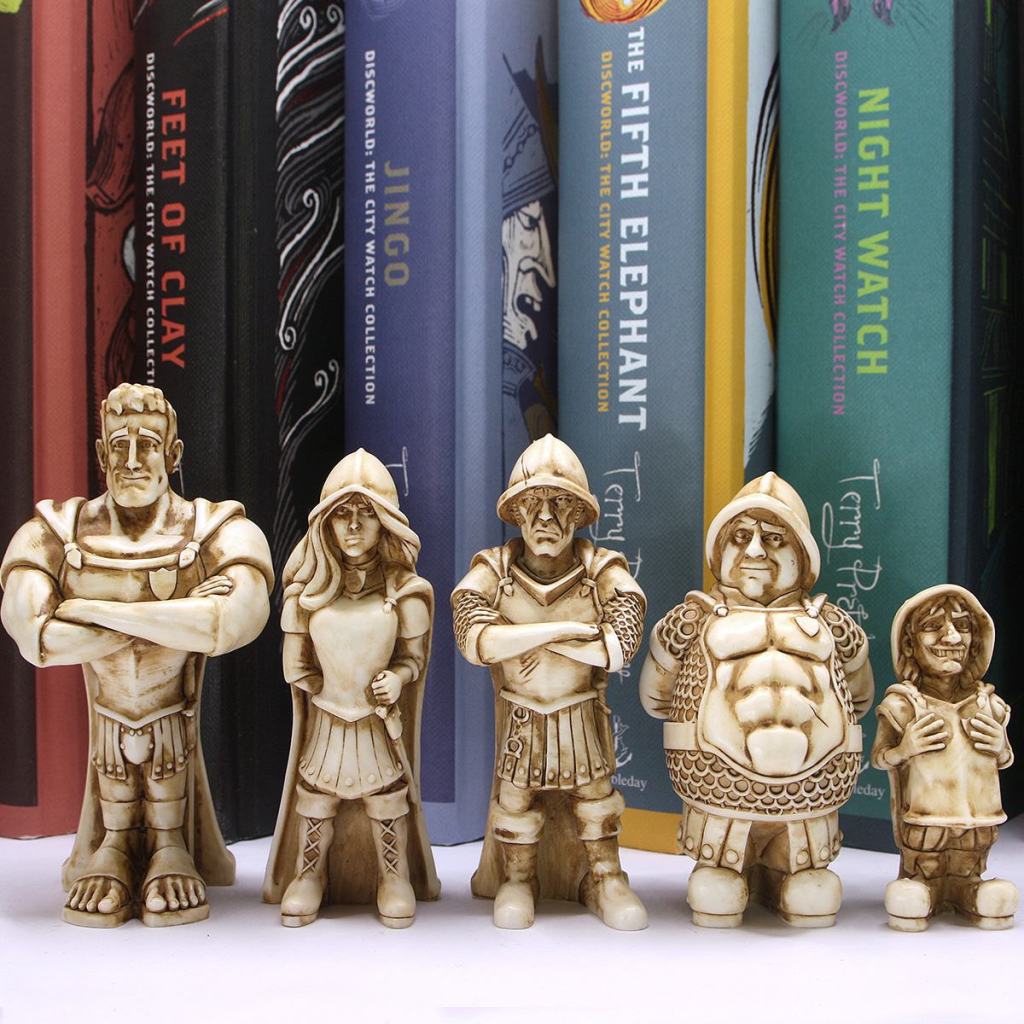
Review: Feet of Clay, by Terry Pratchett

Words in the heart cannot be taken.

Three and a half stars.

This is the third novel in the City Watch series of books that good old (and dead) Terry wrote, after Guards! Guards! and Men at Arms. What started as a ramshackle watch has become a proper force that features members of most of the fantasy races that live in the city of Ankh-Morpork, in some cases due to the Patrician’s goal of representing all his constituents through affirmative action.

This time the story revolves around golems, anthropomorphic beings made of clay and animated thanks to the written notes someone put inside their heads. The fantasy version of robots. They are enslaved into performing most of the duties that the living creatures don’t want to risk their hides for, or bother with. Some of the most extreme cases involve leaving a golem in a pit to manufacture products twenty-four hours a day. Given this context, plenty of elements of the tale involve freedom: from social norms (a bearded female dwarf wants to look more feminine), from heritage (a character discovers that he belongs to the aristocracy even though he feels at home among the rabble), from their impulses (the resident werewolf), from religion, and such.

Once again, a shady group is trying to turn Ankh-Morpork into a monarchy. Three for three. Although some influential people in the city are aware that Captain Carrot, the six-something-feet-tall dwarf whom everybody loves, is the rightful king, he’s the earnest, just kind that would seriously upset the status quo in a city where thievery and murder are legal. Besides, his relationship with a werewolf could end up in seriously hairy heirs. So they figure that they could install some easily-manipulated dolt as king, which would allow the guilds to rule from the shadows. For that purpose they poison the Patrician, enough to incapacitate him but not kill him; all the guilds suspect that the city would be ungovernable if the cunning Patrician were to die.

In the middle of all this, two old men die: one the owner of a sort of bakery, and the other a priest. These two crimes are somehow tied to golems, who have started leaving their posts for supposed holy days. Meanwhile, a strange, dangerous golem roams the city.

Although one of these constructs became interesting by the end, I didn’t find them very compelling otherwise, which reduced my enjoyment of this story. However, Terry could have told pretty much any tale as long as it allowed me to spend some more time with the lovable cast of characters.

I suspect that Terry saw himself in the anti-authority Commander Vimes, whose ancestor famously killed the last king, and who at times struggles with the notion that plenty of his problems could be solved by shooting the people involved. My favorite character, however, is Angua, the local werewolf. She’s currently dating Captain Carrot somewhat against her will, because she can’t justify why she likes someone so straight-laced. Apart from the generally justified prejudices against werewolves, Angua fears that one day she’ll fail to control her urges and therefore rip the throat of someone she cares about, so she tries to keep people at arm’s length. She’s also planning to pack up and leave once again, because she doesn’t believe that she could ever belong among people. As I fear that one day I’ll turn my intrusive thoughts into reality, I identify quite a bit with her, and it doesn’t hurt that she reminds me of Annie Leonhart from Attack on Titan, one of my favorite characters from Japanese fiction.

Anyway, another entertaining novel in the City Watch series, just not as compelling as the previous two.

We’re Fucked, Pt. 118: AI-generated audiochapter

A stoic face in the darkness. This audiochapter covers chapter 118 of my ongoing novel We’re Fucked.

Cast

  • Leire: a blonde broad who hangs out down at the Ragged Flagon in Riften
  • Jacqueline: Geralt’s best female “friend”
  • Snackman: a doomed Spanish guy from RE 4
  • Nairu: somewhat annoying teen who sells newspapers in Diamond City

I produced audiochapters for the entire two previous sequences, and I intend to continue until the novel ends or I end up stranded in Göbekli Tepe times. A total of four hours, forty-nine minutes and sixteen seconds. Check them out.

About chapter 118 and Göbekli Tepe

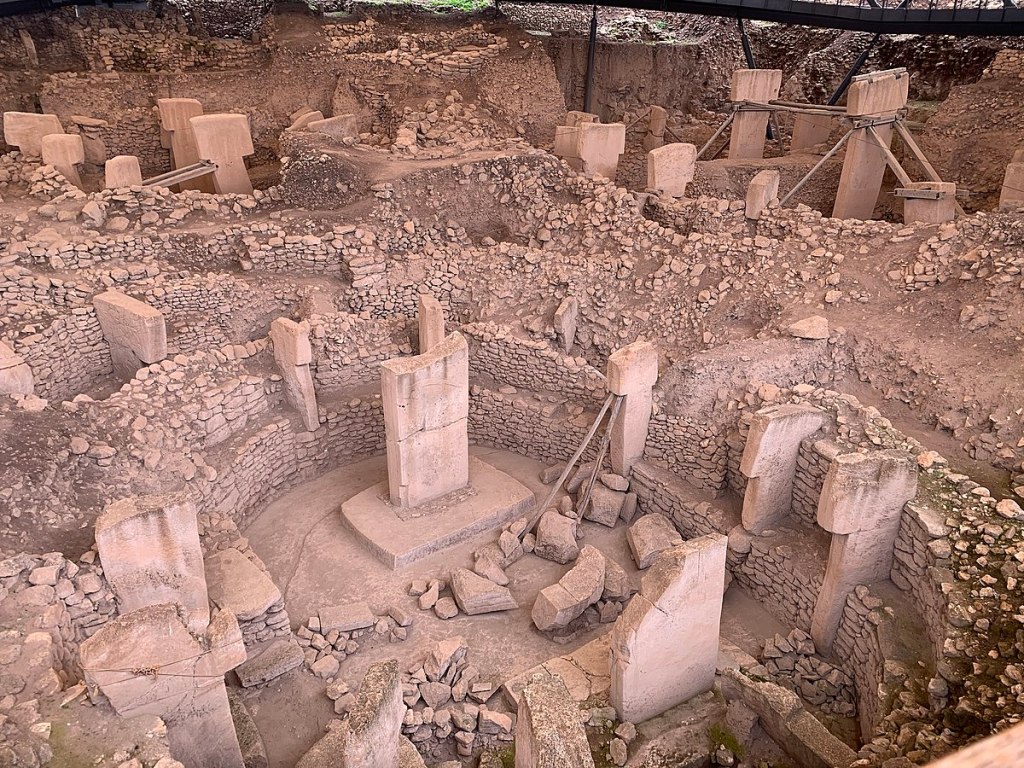
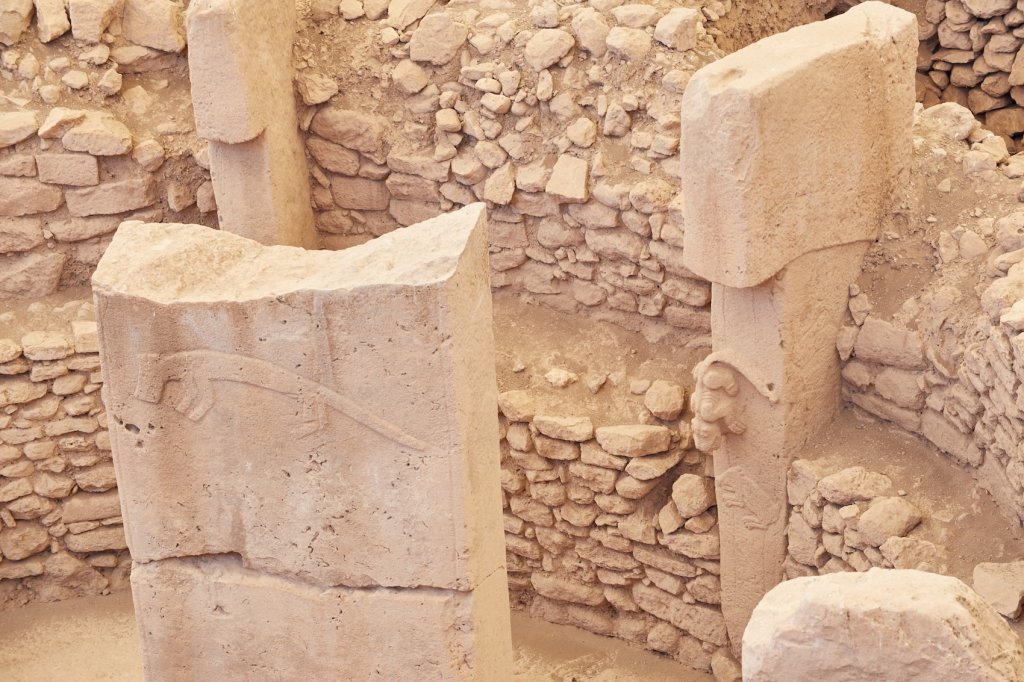
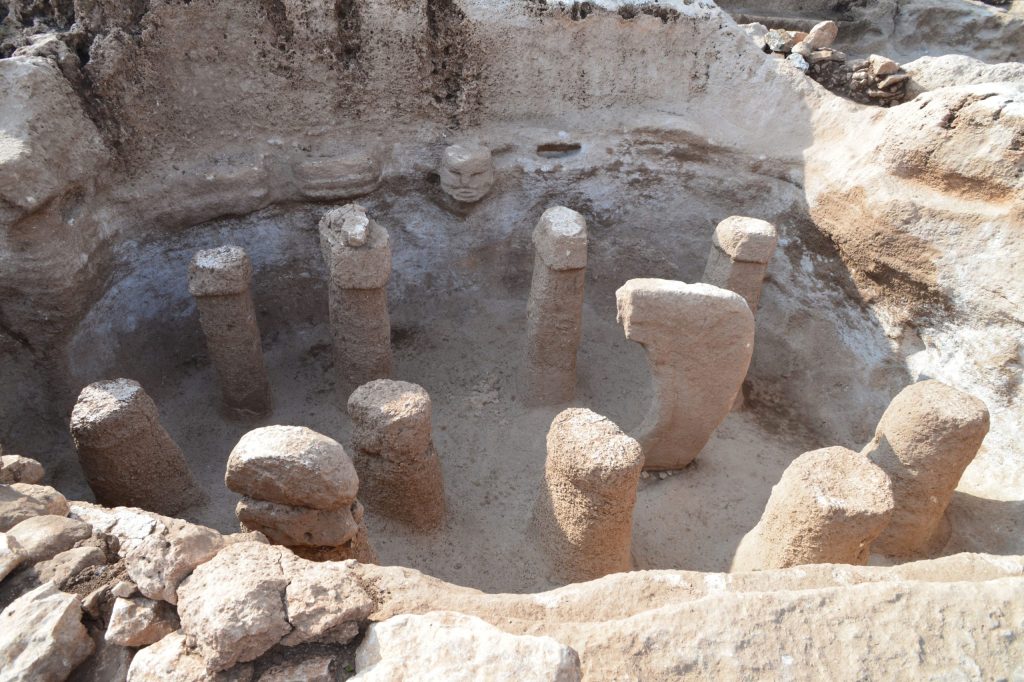
I’ve just posted chapter 118 of my ongoing novel We’re Fucked. Those of you who are fans of prehistory may have caught on to the fact that Leire stepped into one of the enclosures at Göbekli Tepe (technically, a mix of Göbekli Tepe and its sister site Karahan Tepe). I get the feeling that most people remain unaware of this ancient culture that was building fascinating stuff at the end of the Ice Age, and possibly during.

Göbekli Tepe is located in Anatolia, modern day eastern Turkey, and was unearthed in the nineties, but its significance wasn’t understood until later. They were able to carbon date the enclosures: they had been buried for ten thousand years, and therefore uncontaminated. The complex, only five percent of which has been unearthed (we know through ground-penetrating radar that the rest exists), had been in use for about a thousand five hundred years. 11,500 years ago points to the end of the Younger Dryas, the extremely anomalous climatic period that ended the Ice Age. It’s also, incidentally, the date that Plato set for the sinking of Atlantis, based on what Egyptian priests told to a Greek lawmaker and ancestor of Plato’s.

The Younger Dryas, that lasted from 12,800 years ago to 11,600, if I remember correctly, was the most deadly period of extinctions in the last six million years; about 65 percent of all animal species bigger than a goat went extinct. The global sea levels also rose about 120 meters.

An at least 11,500-year-old man-made complex, as it’s the case of Göbekli Tepe, was particularly troublesome because it looks like this:

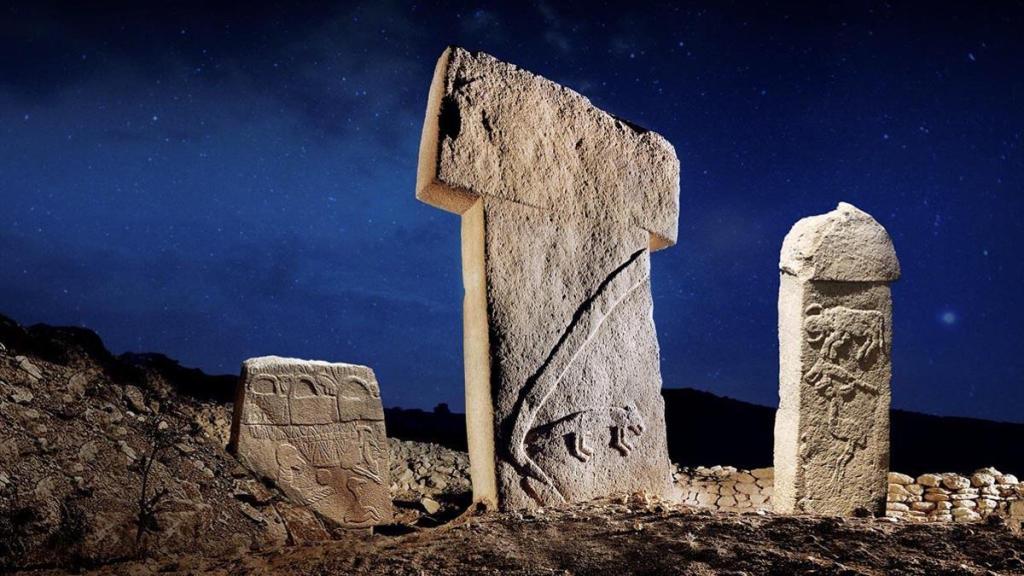
This site was built about six thousand years before the Sumerians existed, about nine thousand years before the pyramids of Giza were built (officially; I won’t get into that). Back during Göbekli Tepe times, people were supposed to be simple hunter-gatherers who followed migrating herds around; nowhere near sophisticated enough to sustain an artisan class capable of carving in relief such sculptures. That requires a civilization.

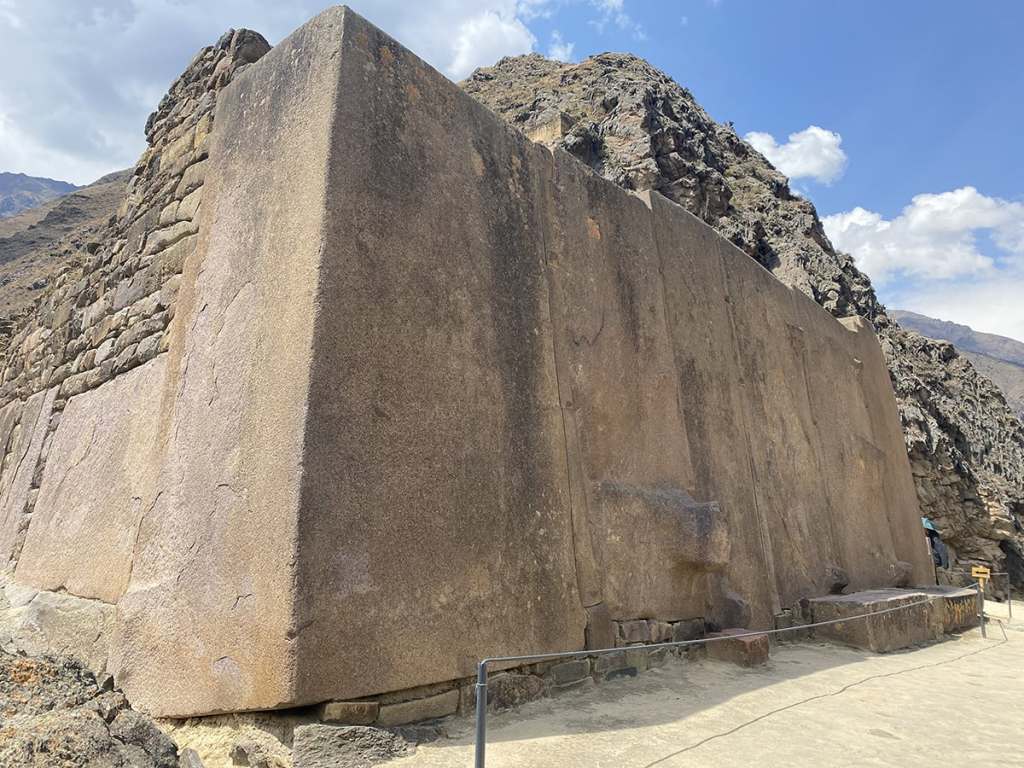
Due to the power that the Abrahamic religions exert over our shambling zombie of a civilization, religions for which the notion of things being six thousand years old is important somehow, the establishment will need to be dragged kicking and screaming to reality. There are many, many sites along the world that feature distinct architectural periods, with the oldest being the most sophisticated and hard to make (you can see this at Macchu Picchu, Ollantaytambo, Sacsayhuaman, Tiwanaku, numerous sites in Egypt, to list just some examples), that can’t be attributed to the level of technology that the inhabitants of the area were supposed to have. Also, the most sophisticated work appearing out of nowhere and immediately collapsing in quality goes against everything we know about technology.

As some have pointed out, the most striking pillars at Göbekli Tepe may be older than the enclosures; only the “mortar” found in the walls, made out of stacked slabs of stone, has been carbon dated, but the walls were built to support some of the pillars, and they feature benches made out of broken pieces of carved pillars, so necessarily, the T-shaped pillars were created before.

Could they have stood there for a long time until some local tribe found them and started venerating them? That same deal could have happened in Egypt; as plenty of researchers have pointed out, the hieroglyphs with which the old-kingdom statues are dated are much, much rougher than the quality of the statues themselves. Basically graffiti. Some suggest that those we know as Egyptians were larping as the people depicted in the amazing statues found in the area.

Regarding Göbekli Tepe, they originally believed it to be an isolated, ritualistic site, but partly thanks to LiDAR technology, they have discovered about 40-50 sites around Göbekli Tepe. That’s a full-blown culture, if not a civilization.

Graham Hancock suggested that Göbekli Tepe represents a transfer of technology; after the Younger Dryas cataclysm, the survivors brought their knowledge to the primitive tribes of the area and taught them how to build such monuments. However, the Natufian culture was present in that area for thousands of years around that time, and were making pottery and sculptures that, despite being much less sophisticated, featured similar motifs and styles, so I’m undecided.

In the chapter, that description of an emaciated statue holding its penis may have sounded like I was taking the piss. Nope.

Article about it: An Enormous Statue Of Man Appearing To Hold His Penis Was Just Unearthed At A Prehistoric Site In Turkey

That magnificent mofo was found in the sister site Karahan Tepe, that also features a garden of stone penises:

Article about it: Carving of man holding his penis and surrounded by leopards is oldest known depiction of a narrative scene, archaeologists say

An ancient civilization after my own heart.

I don’t know about you, but I can’t get enough of this prehistory stuff. Coincidentally, a week ago the wonderful, binge-worthy YouTube channel Why Files posted an hour-long video about the mystery of Göbekli Tepe and its ties to the Younger Dryas cataclysm, during which a cometary bombardment may have separated us from the previous 288,400 year-long chapter of anatomically modern humans.

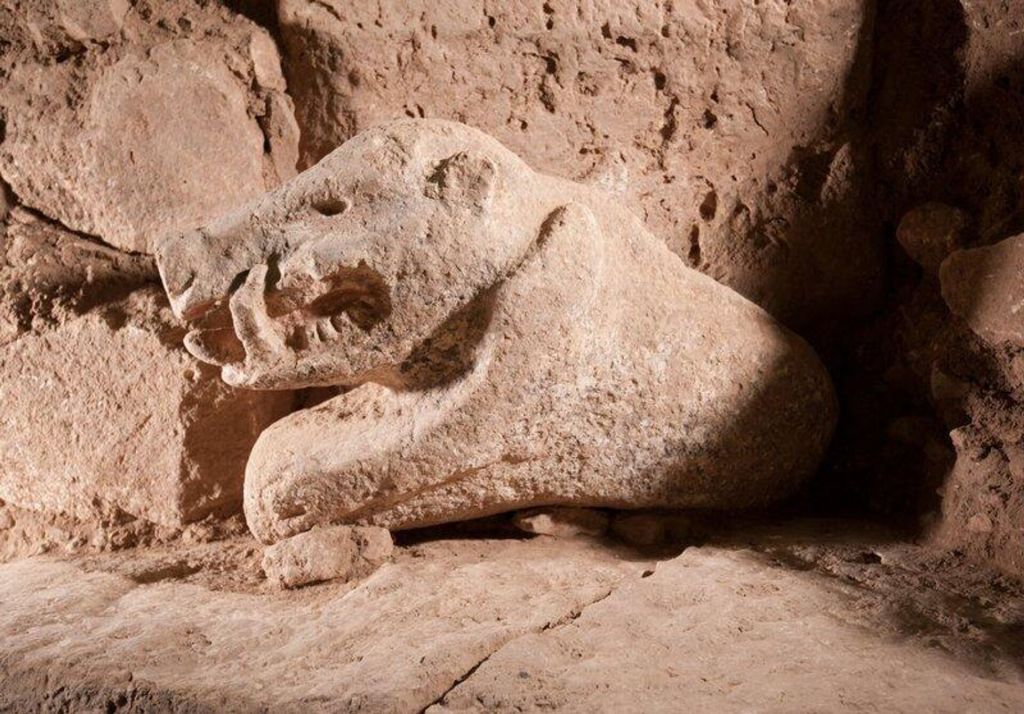
I don’t necessarily agree with all the claims. I’d love to believe the hypothesis that the vulture stone refers to the Younger Dryas cataclysm; they claim that statistical analysis proves the alignment. But, as others have pointed out, the enclosures likely had a roof back in the day, so not much of an astronomical observatory, although they being open to the starry sky looks much cooler, which is why I’ve depicted them that way in the chapter. Also, I painted the sculptures because they have found pigmentation (concretely red, white, and black pigmentation) in some of them, particularly in this majestic boar:

Article about it: 11,000-Year-Old Painted Statue of Wild Boar Unearthed at Gobekli Tepe

The statues made by the Greeks and Romans were also painted, by the way. We should also start painting our own statues; they would look fancier.

I think that’s all I wanted to explain for this chapter. I hope you enjoyed chapter 118, and if not, well, whoops.