Motocross Legend, Love of My Life, Pt. 6 (Poetry)

If you haven’t read all the previous parts or you don’t remember them well, I urge you to read this short story (or novella) from the beginning (link here).


One day, I dared to face my reflection.
My hair, greasy and stringy,
Had grown to brush my shoulders.
My skin had acquired the grayish hue
Of a dead leaf.
The hollowness of my cheeks
Revealed a tomb within,
Its walls shrouded in spiderwebs,
Its floor carpeted with dust and bones.
Those eyes rimmed by dark shadows
Should have mirrored a wild beast’s,
But the surviving modicum of sanity
Pierced through my squalor,
And at this ghastly echo of myself,
I shuddered.

Izar, if that crash, instead of killing you,
Had fractured your limbs,
Marred your beautiful face with scars,
Or even confined you to a wheelchair,
Extinguishing your motocross dreams,
You would have still found ways to shine.
You would have challenged yourself
To defy the world, to carve a path
Through the wreckage and rubble.

Izar, my beloved Izar,
You had filled my days with wonder,
You had taught me that life is worth living,
That dreams are meant to be chased,
That courage should be wielded
Even in the face of despair.
Yet, I failed you daily
By being incapable of moving on,
Of doing something valuable
With what remained of my life.

Your death had crippled me
In ways no transplant could repair,
And every day forced me to wade
Through a tar-like mire of anguish
That threatened to suck me under.
I would never become a comic book pro,
But maybe I could aspire to normalcy.

Armed with an electric razor,
I sheared the oily tangles off my head,
Airing out my reddened scalp.
Then, I tamed the thicket of my beard.
From beneath the mask of neglect
Emerged a stranger’s face.

My body had become a rusted motorcycle
Sinking into cold muck.
Yet, I dragged myself outside.
The sky, once colorful, now a gray shroud,
Cradled the lone sun, a shriveled ball
That pulsated like an ailing eye.

My hometown teemed with creatures,
Rubbery, bulbous-headed aliens
That gabbled in shrill tongues
To the devices they cradled to their ears.
As they floated past, they ignored me,
The shell-shocked wanderer
Gaping at the ruins of his city.

Although I had missed the final exams,
I was granted a high school diploma
Due to my exemplary grades
Along with some extenuating circumstances.
The weight of a job would have crushed me,
And I couldn’t commit to a college odyssey
When plans might shatter suddenly;
All living beings are branchless twigs
Flung into a raging river,
To be tossed, turned, and tumbled,
Dragged under and spat out.

The dot-com bubble had recently burst,
But in my seclusion, I had befriended the internet.
Curiosity had led me to download Dreamweaver
To figure out the bones of websites.
I had come to decipher HTML,
And understand the potential of CSS
To lay out sites and style their elements.
I had lost myself in Flash animations,
Brief escapes that sparkled in the gloom.
Perhaps I might withstand the grind
Of a year-long web design course.

Soon enough, I would expose myself
To the scrutinizing stares of classmates.
Like you rode to the mountain and trained,
I forced myself outside every day.

At times, the growl of a motorbike rose:
A throbbing, rumbling bass dense as lead.
It made me picture a blaze of yellow,
A comet streaking through the darkness.

Amidst rows of desks and students,
I sat rigidly, my hands clasped,
While I burned,
Engulfed in a cold, black flame.

At the witching hour,
Covered by sweat-damp sheets,
I knelt on the mattress,
Eyes squeezed shut,
Digging fingernails into my scalp.
The following day, I would confront
Those classes, those strangers,
More judgemental eyes and voices,
With a mind gouged by insomnia,
Without you by my side.

Clenching my teeth, I stifled sobs.
I punched the pillow over and over.
That night in nineteen ninety-nine,
How could you have sped in the rain?
If you had headed home like you said,
We would have traveled through Spain.
One day, I would have married you.
We would have raised a kid or two.
Instead, I suffocated daily
Under an unrelenting landslide,
Buried alive.
Why had you offered me a future
Only to fuck off and die?

I begged the void for silence:
Leave me alone. Leave me be.

Through the numbness clouding my head,
I realized that some fresh-faced classmate,
Their eyes brimming with the naivety of youth,
Had turned toward this blank mask of mine.
That kid’s mouth contorted, forming words
That sounded like spoken underwater.
After translating their alien utterance,
If I understood that a response was demanded,
I had to first push through the filter
Of “Why bother answering? What’s the point?”
I forced myself to cobble together a sentence,
Then hoped that the words wouldn’t evaporate
Before my tongue could shape them.
By the time my lips were about to part,
That classmate, weirded out, had moved on.
In my inscrutable face, they saw themselves;
Some apologized for bothering, some got pissed,
Others shrugged and forgot immediately.

I shed tears at mundane sights:
A patchwork quilt of sunlight
Glowing through the slits of the blinds,
A sunburst in which dust particles
Shimmered like dozens of tiny crystals,
A wildflower poking through a sidewalk crack.
Stripped of skin, I was defenseless
Against any force that grazed my flesh.

Unannounced, unwanted,
In class, in crowded shops, on bustling buses,
A swelling heartache would ambush me,
My eyes flooded with tears,
And I found myself gasping for air
While in my mind, an unforgiving sentence
Blazed like a burning brand:
“I let her die alone.”
Once, amidst the indifferent throng,
I collapsed to my haunches,
With my face buried in my palms,
As I mumbled apologies into the void.

I bought a weight bench and weights
Along with a barbell and dumbbells.
Working out to failure became my addiction,
An escape, a punishment, a way to feel alive.
As my muscle fibers tore, my limbs trembled,
And rageful groans erupted from my throat.
Pain is the sole genuine language:
With each of its words we are graced,
It tells the truth.

Although I had engaged in a course
Imparted in a vocational school,
They had planned a graduation ceremony,
And I was obligated to participate
So I could collect a piece of paper.
Around me, gleeful classmates buzzed
As they organized a dinner outing
To celebrate the milestone together.
Diploma in hand, I was drifting away
When one of those kids approached me
Brandishing an unburdened grin,
And invited me to tag along.
I replied, my voice flat and detached,
That I wasn’t interested.
“You sure? It’s your last chance.”
I turned around and walked away.

When I flipped through my notebooks,
I discovered, or rather remembered,
That sketches had colonized many spaces
Between notes taken in messy handwriting.
In one sketch, drawn with an ink pen,
You were seated astride your Suzuki RM125,
Your boots planted on the ground,
Your waves cascading over your shoulders,
While you stared blankly at me
As if reminding me you still remained.

If only for your sake, I racked my brain
Struggling to come up with story ideas,
But a single narrative crystallized:
It charted the wild adventures
Of Izar Lizarraga, motocross queen,
A seeker of freedom, a lover of speed,
Who traveled on a bright-yellow Suzuki
To find a place where she belonged.
However, no matter how fast she rode,
The demons clung to her heels.

In a desert stretching into the horizon,
Its towering dunes like waves in a sand-sea,
You raced at breakneck speed,
A silhouette against the setting sun.
You followed a winding mountainside trail
Along a sheer cliff’s edge
Overlooking the crashing waves below,
To end up leaping across a chasm
While the ocean’s spray enveloped you.
Through a tempest-wracked landscape,
As lightning forked across leaden clouds
And thunder drumrolled,
As wind and rain battered your skin,
You welcomed the sting,
And roared onward, undeterred.

You had been a streak of flame
Cutting through the night.
How could my art illuminate anyone’s existence
When the light of my life had been extinguished?

Hadn’t your love been wasted on me?
Given how bright you had burned,
A better man would have been inspired
To blaze new trails for you.
Had you also, in choosing me,
Acted recklessly?

I stored the keepsakes of our love
In a sturdy moving box, its surface marked
By the scuffs and stains of time:
A sacred reliquary for the dead,
Whose cardboard lid I lifted
Whenever I needed to delude myself
Into believing your heart still beat.

As an adult, shackled to my ever-aging body,
I found myself conscripted into the workforce,
Even though I had been carrying out my mission:
To remain tethered to your ghost.


Author’s note: today’s songs are “Tuff Ghost” by The Unicorns, and “This Song Is the Mute Button” by Jason Lytle.

If you enjoy my free verse poetry, I have three books worth of it yet to be self-published. Check it out.

Motocross Legend, Love of My Life, Pt. 5 (Poetry)

If you haven’t read all the previous parts or you don’t remember them well, I urge you to read this short(ish) story from the beginning (link here). The whole thing is supposed to be experienced in one sitting, but I didn’t want to go radio silent for about a month (or two).


Regarding the last echoes of my teenage years,
Followed by the dawn of adulthood,
I remember feeling encased in a plastic bubble
Whose smoky-gray membrane dimmed the world
And muffled every sound and scent.
Inside, the air was stripped of oxygen,
Leaving me gasping for whispers of life.

The warmth in my chest had disappeared,
Replaced with a yawning, frigid void
That threatened to collapse my ribcage.
A squirming, screeching anguish,
Like myriad critters drowning
In a pool of poison,
Seared through my innards,
Corroding every fiber that once bound me,
Exposing my raw nerves to the wind.

During that years-long nightmare,
I was trudging through the indifferent city
When I turned a corner on Cipriano Larrañaga Street.
Shambling down that narrow, grimy sidewalk
Lined with multicolored trash bins,
Your father, a relic of another life, headed my way.

The imaginary sutures that struggled
To keep my copious gashes closed
Unraveled at once.
The rush of blood to my head
Rendered the world’s clamor mute,
And I stood paralyzed.

I pictured myself lunging at your father
And wrapping my hands around his neck.
The more he wheezed and spluttered,
The more his eyes bulged,
The tighter my grip would squeeze,
Making the tendons in his neck creak.
As his face shifted from crimson to purple,
His last light would be spent
Staring into my wrath-contorted face.

I had known your father as a volatile man
Who dared to threaten you, his own daughter,
Before the eyes of the boyfriend who loved her;
He knew that, if pushed, he could overpower me.
Yet, that lingering image of him
Contrasted with his present, slumped self:
The deep wrinkles carved into his features
Spoke of decades aged prematurely;
His mouth hung slack in a silent gasp;
His hair, gone gray, was disheveled,
With strands splayed erratically;
Dark circles ringed his vacant eyes;
A once-white T-shirt, sweat-soiled,
Clung to a protruding belly.

Your father lumbered toward me
As if he failed to register my presence.
A sour stench of filthy skin and clothes
Emanated from him like a black flame.

I stepped aside, letting your old man pass.
His footfalls and ragged breath faded away.
My rage had melted into tears;
He already looked like he’d been killed.

About a week after you died,
My mother, turned activist overnight,
Drove me to the spot of the accident:
Grassy, uneven terrain that sloped up
From a curve of the GI-636 highway.
A succession of vehicles whooshed by,
And the wind tugged at the placard
That my mother held in her intimate protest.
Before a television crew, she ranted
About the treacherous curve
That had reaped many young lives.

As the reporter nodded, the camera captured
The stillness of the roadside memorial,
Adorned with bouquets of wildflowers and a cross
Beside which rested a framed photograph
From a birthday celebrated in our home:
Your ponytailed self seated at the kitchen table,
Your chocolate eyes aglow with a joie de vivre,
And you showing off those crooked front teeth
As if they would never burn up in a furnace
And their fragments be ground to ash.

The cameraman aimed at the metal guardrail,
Its silver gleam patinated by rain and wind,
That your Aprilia had crumpled.
Then he panned over to the spot of the slope
Where your eyes had gone dull and lifeless,
Where your blood had drenched the grass
And seeped into the earth.

My mother kept me high on sedatives
That sapped the marrow from my bones;
Otherwise, if my lungs still drew breath,
I would have knelt before that spot
Packed with your blood,
And with my hands, I would have dug a hole
To crawl into and disappear.

I know you, Izar:
You were anguished,
And speeding in the rain.

That night in nineteen ninety-nine,
After you left me at my doorstep,
You told me you would head home.
Why did you end up in a highway?
Where were you going, Izar?
Did you even know?

My mother crowdfunded a memorial stone
To commemorate you, who had dreamed
Of becoming a motocross pro.
They installed it in a wooded lane,
Surrounded by the whisper of leaves.
Whether my mother bothered out of guilt,
Seeking the spotlight in a play of mourning,
Or to bridge the chasm between me and her,
I couldn’t say.
I guess it doesn’t matter.

Nightly, you visited me in dreams
To gift me the warmth of your presence
Along with your wild laughter.
I woke up reaching for you,
Only to clutch at emptiness.
A respite from the agony,
As my mind forgot for a moment,
Then I remembered anew.

In a numb, sunless haze,
I sleepwalked as if summoned
To locations we had frequented.
I stood unsteadily at a park near my home
While blurred people passed by,
My gaze fixed on the traffic,
Anticipating the sight of a Telepizza scooter,
Of you clad in the scarlet cap and polo shirt.

At the ecological park of Plaiaundi,
In the twilight glow of the setting sun,
I followed a tapering dirt path
Covered with needles, leaves, and twigs,
Ending at the staircase of an observation post.
I was clambering the weathered steps
When I looked up and there you were,
Leaning on the wooden balustrade,
Your caramel waves tossed by the breeze,
And you smiling down as if welcoming me.

At Aingura Park, near the marina of Hondarribia,
The humid air of an overcast day filled my lungs.
On the lush-green grass, I searched for our spot
Where we had lain to stare at the stars.
Beyond a row of maritime pine trees,
Absent fishermen’s rods leaned against
The rocky barricade of the shoreline barrier.
A lone man cast a line into the slate-gray sea.

You had always seemed to me
Too large for the world to contain,
But now, if I let go of your memory,
I would never find you again.

With each passing month, going outside
Felt more like venturing into a foreign country
Where I couldn’t make myself understood.
I languished for hours in the dark,
Lying in bed, covered up to my forehead.
Through headphones, I listened to the tapes
In which your middle-schooler self
Played the energetic radio host,
Riffing on manga series we enjoyed
And video games we tried to beat,
Pausing only to munch on snacks.
Your bubbly giggles echoed through the years
While tears streamed down my temples.

Who were these carefree souls
That dared to laugh and joke around
As if taunting the universe that waited
To punish them for their joy and hope?

On my cluttered desk, papers lay blank
Beside pencils and pens, markers and erasers.
Drawing and writing had come naturally to me,
Like a baby grasping for their mother’s breast.
Why draw? Why concoct stories?
What were my dreams worth
If you wouldn’t see them realized?

I felt it as achingly as a knife stuck in my eye:
I wouldn’t get over you.
In this life, if you’re lucky,
You meet one precious person.
I had found mine. I had lost her.
I was condemned to continue
Long after my Izar disappeared,
While the world spun on.

Where would I go after you?

Without a say, I merged with the voiceless
That had been rendered unfit for society.
How many people out there,
From the profoundly autistic
To those whose hearts shattered irreparably,
Vanish from the lives of friends and acquaintances,
Sequestered away in some psychiatric hospital,
Or the rooms of their childhood homes?
Breath by breath, they would wear away,
And fade further from the memories
Of even those who had promised to remember.
Decades on, a once-close friend
Might stumble upon that person’s obituary
And wonder what untold stories had been lost.

One afternoon, my parents had left
To wherever they went,
And I had armored myself in human garb
To shuffle through the post-apocalypse,
But when I grabbed the front door handle,
A revulsion shook my spine;
I refused to withstand again the glare
Of that traitorous sun.

Instead, I retreated to my bedroom,
To the sanctuary of its walls
And a door locked shut
That protected and isolated me
From a meaningless world.

A day became two,
Became a week,
A month,
A year.

The sounds and sights of that alien world,
A film projected onto the wall of a cave,
Tormented me through the windowpanes:
Beams of sunlight slicing up the shadows,
The muffled laughter of children,
A couple strolling hand-in-hand.

In the gloom inside, a shrine to the dead,
I worshipped the mementos of our shared past:
Your EVA figurines,
The comic strips I drew for you,
Your motorcycle gloves,
Your handwritten letters,
Mixtapes of your favorite songs.
I spoke softly to your photographs,
Like a penitent monk conferring
With the images of his saints.
I befriended spiders.
I stashed piss bottles under the bed.

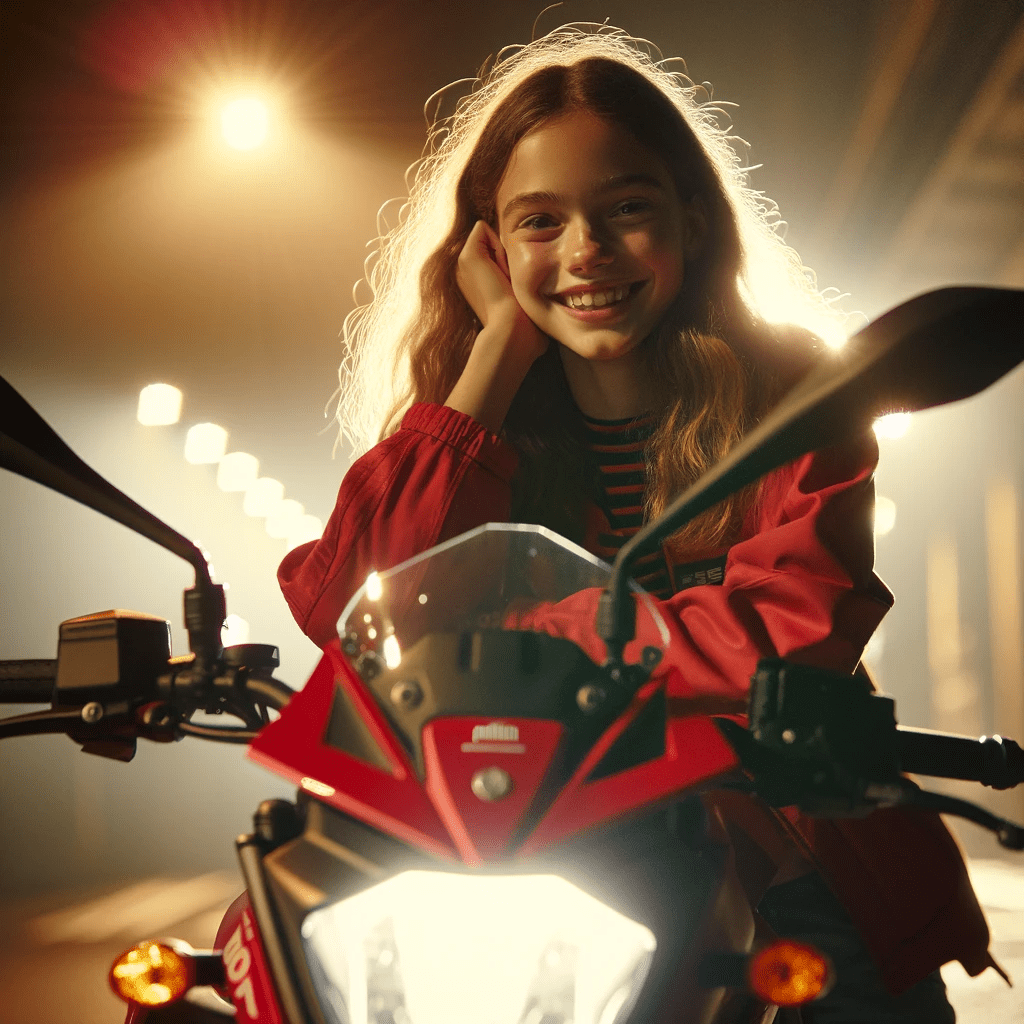
In one hand, I held that picture of you
Astride your Aprilia Red Rose at night,
Your luminous face resting on your palm,
Your chocolate eyes crinkled in a grin.
On that photograph’s flip side,
A note in your chicken-scratch read,
“To my beloved artist,
Please sign the comic strip I enclosed,
To sell at some fan convention
Once you’ve become famous!
Love forever, Izar Lizarraga.”

In my other hand, I held a knife,
Its sharp tip pressing against my carotid.
I wasn’t strong enough to kill myself,
So I would stay within those four walls
Through every sunrise and sunset,
Through the ages of this world,
Forgotten and gathering dust,
Waiting patiently for my self to rot.


Author’s note: the songs for today are “Lonesome Town” by Ricky Nelson, “The End of the World” by Skeeter Davis, and “The Scientist” by Coldplay.

If you enjoy my free verse poetry, I have three books worth of it yet to be self-published. Check it out.
Motocross Legend, Love of My Life, Pt. 4 (Poetry)

If you haven’t read all the previous parts or you don’t remember them well, I urge you to read this short(ish) story from the beginning (link here). The whole thing is supposed to be experienced in one sitting, but I didn’t want to go radio silent for about a month (or two).


The twenty-seventh of April.
With each year’s circle back to the beginning,
I accumulate a fresh pile of website designs,
Churned out at the office in exchange for pay,
And my kids hit every milestone
That most children reach at the same age.
But when the twenty-seventh of April approaches,
In my dreams, and whenever I close my eyes,
I’m yanked to that date in nineteen ninety-nine,
Like a ghost doomed to start again
From the spot where his heart gave up.

Dinner had settled in my stomach.
I was yawning on my way to the bathroom
When the landline rang.
My father’s footsteps padded to the entryway.
Seconds after the ringing ceased,
He forced his voice into a strained assertiveness,
Like a woodland critter facing a wolf,
Telling the caller that she shouldn’t have called.

As I clenched my jaw, I crept to the entryway.
The lamp’s glow glared on my father’s bald crown.
His stooped figure gesticulated
While he peered hesitantly at his wife,
Who, arms crossed, presented her back to me.
Inside the receiver, your voice sounded trapped,
Demanding to be freed.

Trying to talk over you, my father stammered,
And that disgusted my mother enough
To seize the phone
And command you to stop bothering her son.

How could anyone direct such a barbed tone
Toward you, Izar, my personal sun?
This meddling crone threatened
To sever your light from my life.

I barked an indignant “Hey!”
That made my parents whirl around
As if I had lobbed a stone.
I ordered my mother to give me the fucking phone.
When she complained about my language,
I snatched the receiver from her grasp.

Your voice was a tinny, thin string
Coated with tears.
“I need to see you. My father…”
“Where, Izar? Where are we meeting?”
“I’m calling from the nearest payphone.
I’ll park by the candy shop.”

After I hung up, I spun to confront my parents
And seethed through gritted teeth,
Punctuating my words with a jabbing finger.
“Izar didn’t call you, nor you.
She wanted to speak with me.
Don’t ever, and I mean ever,
Interfere with our relationship again.”

I stomped off to my bedroom,
Where I scrambled into some clothes,
My fingers trembling as I buttoned and zipped.
I had expected my mother to pursue me
While threatening to ground me for a month,
But I only heard my heart’s wild gallop.

My mother stood stiffly by the front door,
Her eyes welling up with tears.
She frowned like she resented life
For insisting on abusing her.

“Don’t you dare let that girl give you a ride,”
She said as I wrestled into my rain jacket.
I grabbed my keys and flung the door open.
My mother’s last words echoed through me.
“Are you going to throw away your life like her?”

That night itself, a cloak of frigid air,
Still makes me shiver.
The streetlights lit streaking raindrops
That resembled scratches on film.
The intermittent ripples on pooled water
Reminded me of piranhas at feeding time.
Down the gutters, rainwater meandered,
Churning like a serpent with reflective skin.

Sheets of rain cascaded around
A solitary figure flanked by bollards.
Raindrops drummed against your helmet,
Its visor a slab of opaque.
You were wearing your sleek red jacket,
Now adorned with a glossy layer of water.
Your soaked jeans clung to your legs.
In your gloved hand, you held my half-helmet.

When you noticed my presence,
You hurried to me,
Splashing puddles in the one-lane road,
And engulfed me with your wet embrace.

I had wrapped my arms around your waist,
I had closed my eyes as if waiting to slip into dreams.
Your Aprilia Red Rose rumbled between my legs.
The cold rain lashed my eyelids, cheeks, and lips
Through the gap in my half-helmet,
While the whipping wind threaded through
Every crevice of my clothes.

You always drove me away
From the bitter prison where I grew up.
The grip around my chest eased,
And at last I could breathe.
I imagined we were drifting through space
In a ramshackle starship,
Away from all constraints, from every society
Other than our society of two.

We were riding on a rain-drenched freeway,
Immersed in the growling of your Aprilia’s engine
Amid the rain’s patter, cars’ whooshing,
And swish-swash of wiper blades.
The scarlet smudges of taillights
Glided across the slick tarmac
As if I were peering into an ethereal world
Through tinted and warped glass.

I wished to end up stuck in a loop of then,
Plunging through the enveloping darkness
While smears of streetlight flew by.
I longed to never again see another face,
Nor be anywhere else,
Nor do or know anything else
But your presence pressed against mine.

In my embrace, your body trembled;
You were crying, or at least on the verge,
And you channeled that anguish
Igniting your steel beast’s roar
With a wrench of the throttle.
Jettison your worries to the wind,
Let speed drown out the pain,
And in this state of euphoric nothing,
Feel yourself drift into eternity.

The wind buffeted our clothes
As the downpour assaulted us
Like a barrage of liquid arrows.
I pictured the bike flipping,
You thrown and rolling,
Your helmet shattered,
Your skull crushed.
I raised my voice over the cacophony
To plead with you to slow down.

Where were we? On our left,
A navigable stretch of the Bidasoa River
Separated us from the city of Hendaye.
The haloes of streetlights revealed
Terracotta-roofed white dwellings.
“Where are we going, Izar?”
You said you didn’t know.

Maybe for me, you pulled up
By an open, desolate sports court
With faded lines,
Encroached by patches of grass.
At each narrow edge of the pitch
Stood a netless goal.

You pulled me by the hand
Toward a storage or utility building
Close to a rusted basketball hoop,
Seeking shelter from the rain
Under the eaves of the gable roof.
We plopped down beside each other
On the gritty, wet, cold asphalt.
You hugged your knees,
I draped an arm around your back.

Our breaths fogged in the night air.
Rainwater streamed from the roof.
An unseen metal fence kept clinking.
Built on a hillside past the sports court,
Rural-style, two-story houses
Stood silhouetted against the dark.
Their windows, like low-burning embers,
Glowed through the swaying foliage of oaks
While their branches rustled and creaked.

Did that place even exist?
Like a couple of astral travelers,
Maybe you and I rode out of reality,
Slipped into some liminal space.
I have never dared
To return there.

You slowly rose, turned toward me,
And lifted off your helmet.
Your face emerged, flushed, tear-streaked,
Strands sticking to your forehead.
A stark, mottled mark contrasted
The light-beige of your cheek.
Within the bruise, that bore the imprint of fingers,
Red pinpoints indicated ruptured capillaries.

I clenched my fists. The tendons creaked.
I ached to kick down the door of your house,
And bash in the teeth of that bastard
Who must have felt so mighty and untouchable
While hurting you, his own daughter.
But only through blind rage
Would I have overpowered your father,
And afterwards, how would you return home?

To calm myself down,
I took a deep, turbulent breath
Of that night’s cold, damp air.
Then, with my trembling fingers,
I pulled off my half-helmet.

“What was it this time?” I asked, my voice hollow.
You recounted that after returning home from training,
As you were cleaning the mud off your motocross bike,
Your father, on his way home, frowned at you,
Then waited at the apartment, ready to argue.
He refused to let you waste your life, as he put it,
Chasing a mirage that would never materialize,
So you would need to look into trade schools.
You matched his tone with equal fire.
After he slapped you hard,
He stood there shocked, his hand still raised.
You stormed off into the pouring rain,
And hopped on your Aprilia.

You recognized the frustration in his eyes,
And that bothered you the most.
The ever-present itch for perpetual motion
Coursed through your shared blood,
But instead of striving for a life akin to his urges,
He settled for that of a fish caught in a bucket,
Seated at a desk for eight hours a day,
Shuffling papers and answering calls,
Enduring a meaningless routine
That would drive any decent soul insane.
When the pressure mounted to an extent
That numbing it with booze failed,
Rather than delve within for elusive answers,
He cast his gaze outward for targets
To blame, to accuse, to hold responsible
For his damnable existence.

“Our parents doomed us
With their own demons.
Unless we break free,
We’ll end up the same.”

You stepped into the downpour
And paced up to the basketball hoop.
While the wind tugged at your ponytail,
You scratched flakes of paint off the pole,
Revealing the metallic core underneath.

Raindrops shone on your skin,
Linked together in a twinkling lace,
And droplets tipped off
The limp, wet waves of your hair,
When you spoke the words I had dreaded
As if you had come with a deadline:
You were set to leave the city.
My chest clenched in a visceral ache.

“Let’s go far, far away from Irún,
Where nobody will find us,
Where we will be left alone
To live and love freely.

We don’t need to follow their map, you know?
Did you ever want to become a doctor, an engineer?
Do you think we should waste our lives
Obediently conforming to our parents’ wishes?
You were born to create stories,
And I was born to ride.”

You had decided to sell your beloved Aprilia Red Rose,
And spend the money, along with your savings,
To travel on your bright-yellow Suzuki RM125.
You wanted to hit the trails at Sierra de las Nieves,
Near Marbella, whose tourism industry offered odd jobs.
You hoped to compete in the Ponts track, near Lleida.
At Jeréz de la Frontera, with its own world-famous track,
You wished to meet other riders, maybe find a mentor.
If we yearned for a secluded life,
We could buy a rundown cottage at Sierra Nevada,
Itself excellent training grounds for motocross.

Your dreamy smile dropped,
Tinged with a sudden sadness.
“I’m sorry for mom,
But one day she’ll understand.”

I pictured myself furtively stuffing
A travel backpack with necessary items,
Expecting to rough it in the wild:
Food, water, flashlights, sleeping bags,
First aid kits, maps, rain gear, spare clothes,
My sketchbook, a ream of paper, and pencils.
You and I would sneak out at night,
Leaving goodbye letters behind.

Your Suzuki would rumble through Spain
Under the weight of two reckless people,
Winding over hills and through vales,
Over bridges and through tunnels,
Past vineyards, olive groves, and orchards,
The sun’s warmth settled on our shoulders.

In a secluded forest clearing veiled by wildflowers,
We would unfold our sleeping bags over the grass
And lie embraced under the stars.
We would stroll along a rocky beach
Wearing nothing but our underwear.
In the dappled shade of an olive tree,
We would sip sangria and make love.
Seated beside a crackling campfire, hunched over,
I would sketch scenes from our adventures.

You and I would share an apartment,
A poky, one-room affair
With dusty windows and screeching plumbing.
We would cover the floor in clothes,
Pizza boxes, and video games.
We would cook noodles with seasoning packets,
Wash our underwear in the sink,
And listen to music while dancing haphazardly,
Bumping into each other and laughing.

Every memory of our love
Would hang suspended in time,
To glitter like dust particles
Spinning and spinning in the light.

My ribcage had become a butterfly trap;
Its captive fluttered, trying to escape.
You were asking me to choose
Between you and a predictable future.
Could I really leave my family,
And every expectation thrust upon me,
To throw myself into the wild with you?

On my own, would I have ever known adventure?
What if I missed the train? What if I lost my way?
What if I failed to locate a shelter before the sun vanished?
How could anyone dare to camp in the wilderness,
Engulfed by a nightmare-laden darkness?
Beyond the walls of my parents’ home,
The world awaited patiently to hurt me,
And behind every smile hid a monster.

An umbilical cord, ropelike, gnarled,
Pulsated as it fed into my abdomen.
Despite the wrenching pain,
I yanked and twisted the cord
Until it ruptured with a wet snap.
The torn end spewed a torrent
Of viscous, tar-black sludge
That befouled and corroded the ground.

Let us travel to the farthest corners of Spain,
Let us witness the edge of this world.
As long as you were with me,
I was home.

When I pushed to my feet, I met a pleading gaze:
Your chocolate eyes shimmered with tears.
Raindrops trickled down your cheeks,
And dripped from your nose and chin.
In a faltering voice, you told me to consider your plan;
You could wait the two months left until I graduated.
“For now, in this moment, please, will you hold me?”

I held your shivering form,
I inhaled the ozone of your soaked hair,
While the rain pelted down,
While your chest heaved against mine.

If making such a vow
Still means anything,
Let me promise this, Izar:
I would have chosen you.

One day I would find myself squeezed into a seat
Overlooking a dust-churned motocross track
Where a throng of racers garbed in colorful jerseys,
Helmeted like avant-garde gladiators,
Jostled and swerved for control.
Dirt bike after dirt bike, sunlit mirages, raced by,
Their frames adorned with sponsorship decals,
Their tires flinging up sprays of dirt.

The bikes would bellow and scream
Like barbarians taunting each other
As their riders crested bumps,
Skidded around tight turns,
And launched off ramps.
I would hear the thud and crunch
Of bikes landing after a jump,
And the rapid-fire crackle of debris
Striking the underbelly of the beasts.
A fine cloud of dust would hang
In that dry, sun-scorched air,
Mixed with the acrid tang of motor oil
And the earthy scent of disturbed soil.

Once again, you raced into sight:
Izar Lizarraga, renowned motocross pro,
Astride your bright-yellow beast,
Its wheels ripping through the track.

Approaching a ramp, you gunned up the Suzuki
And leaned forward, bracing for a jump.
At the peak, your bike pounced like a predator,
Soaring through the air.

A moment of suspended flight,
A full-body shot captured in posters:
The tire treads of your Suzuki packed with earth;
Your gloved hands gripping the handlebars;
And behind your visor, your chocolate eyes,
Speed-spellbound,
Fixed on the distant finish line.


Author’s note: the songs for today are “Ladies and Gentlemen We’re Floating in Space” by Spiritualized, and “Lau Teilatu” by Itoiz.

If you enjoy my free verse poetry, I have three books worth of it yet to be self-published. Check it out.

Motocross Legend, Love of My Life, Pt. 3 (Poetry)

If you haven’t read all the previous parts or you don’t remember them well, I urge you to read this short(ish) story from the beginning (link here). The whole thing is supposed to be experienced in one sitting, but I didn’t want to go radio silent for about a month.


My mind often revisits, perhaps as punishment,
My mother’s face dominated by a scowl
That deepened the creases long etched
Through years of worry and resentment.
Her lips were pursed as if holding herself
From unleashing a hellish rebuke,
And her eyes, intense and narrowed,
Assured that wherever her gaze landed,
She would find some detail to fault.

As damning evidence,
My mother showed a tied-up condom:
A limp and deflated rubbery sheath,
Its head filled with creamy-yellow fluid.

My mother ordered me to explain this gift
I had left for her to find while cleaning my room.
I wanted to shake my head and spit out bitterly,
“Sure, Mother. After my girlfriend and I made love,
I tossed the condom aside and forgot about it
To screw with your persecution complex,
To express contempt for your brand of parenthood,
Your desire to control every facet of my life,
To mold me into the perfect son you wish me to be.”

I apologized, but suggested she could appreciate
That my girlfriend and I use protection.
My mother scrunched up her nose
Like she had stumbled upon a pile of dung.

Her voice rose in pitch and volume as she said
I shouldn’t be having sex with “that girl,”
Whom she had welcomed into our home for years.
“No wonder your grades are slipping
If you focus on pursuing vices instead of studying.
Think of your future, think of your career!”

She had called your mother to inform her
Of the grievous sin we were committing,
But your mother already knew
Because she had heard us going at it.

“How could that girl throw away her potential,
Squander the sacrifices made by her parents?
Her mother gave birth to her, nursed her,
Stood at her crib every morning,
And hoped that she would grow into a good girl,
Only for her child to become a disgrace.”

My mother referred to you as a bad influence,
A rotten soul going nowhere fast,
A walking advertisement of aimlessness
Who would end up pregnant and homeless.
She forbid me from bringing you to the house,
And added that if I were mature enough,
I’d know that I should stay away from you.

Had I foreseen such a confrontation,
I would have imagined myself yelling,
But I saw my mother for the first time:
An aging woman who followed a script,
Who needed to straighten every life’s crooked lines,
Who met my father and shortly after got hitched
Because that’s what people are supposed to do,
And ever since, they argued as often
As loving couples exchange smiles.
My parents, my life’s givers, lived trapped inside
Something too awful and intractable to escape.

Still simmering from the confrontation,
I accompanied you and your mother
To a bike dealership in Astigarraga
That smelled of leather and new rubber.
The polished frames of motocross bikes,
In screaming colors like red, blue, and yellow,
Gleamed in a line-up,
Resembling museum exhibits.
Those knobs in the bikes’ tire treads
Would dig into the dirt for maximum grip.

You fell in love with a Suzuki RM125,
Its bodywork clad in bright yellow,
Its mechanical heart laid bare
And ready to be flecked with dirt,
Its front suspension forks
Like the limbs of a seasoned athlete.
The high-mounted guard would prevent
Mud from splattering your lovely face.

At the counter, when time came to pay
And your mother pulled out her credit card,
You grinned, clasped your hands,
Let out a squeal of delight,
And bounced on your tiptoes.

You had dreaded surrendering your Aprilia
To fill the void in your hard-earned savings,
And found yourself marveling at your luck
When your mother offered to chip in.

Bless that woman, bless her heart
That beat with love for you, her little star.
I will be forever grateful
She kept opening the door of her home
Despite knowing how you and I spent our time
Whenever the adults left us alone.

Her words echo in my mind,
As clear as if spoken yesterday:
“I’ve never seen Izar this serious about anything,
And even if I tried to stop her, I know I can’t,
Because she’d just pack up and leave.
She was always the wild one:
Uncaring for the rules,
Unafraid to do whatever she wanted.
Nobody had to teach her how to be free.”

For encouraging a “ridiculous dream,”
As your father called it,
Your mother’s support opened a rift,
And now they argued more often than not,
As most couples are destined to do.

During my lunch break, you and I met
At the restaurant that faced my high school.
In a dining space that smelled of garlic and olive oil,
Surrounded by the clink of cutlery
And the chatter of youth unfolding,
You were savoring a potato omelette sandwich,
And dropping breadcrumbs on a motocross magazine.

You charted the steps to conquer the racing world:
Seek out the motocross tracks in Gipuzkoa;
Immerse yourself in racing clubs, your gateways
To structured training and expert instruction;
Compete in races and secure victories
So local scribes would ink your triumphs,
Drawing to you sponsors willing to invest.
From there, ascend to regional championships
With prize money and notoriety at stake.

You had brought a bulky backpack
Although you had the day off from work;
You needed to refine your riding technique,
So once I returned to my classroom,
To that monotony of chalk and textbooks,
You would head to the trails at Mount Jaizkibel.

I envisioned you astride your Suzuki RM125,
Navigating those winding, weathered paths
Lined with prickly shrubs,
Skirting cliff edges,
Your bike kicking up clumps of soil,
The distant roar of waves crashing on rocks
As your sole company.

In my mind, your front wheel caught
On a deceptive patch of loose dirt, twisting viciously.
Your world turned into a blur of sky, sea, and earth
As the ground vanished,
And you and your bike hung weightless
Until the rocky outcroppings below
Rushed up to meet you.

I asked you to bring me along;
I could stand around and watch you train.
If you suffered any injury,
I would run to your side and patch you up.
You told me to rest easy: you’d be careful.
Besides, you refused to let me skip class, arguing
That I shouldn’t sacrifice my grades for your sake.

You brought up my mother’s disdain,
Which whispered to me of never again
Holding you tight while lying on the bed
That my parents chose for their son,
Nor smelling your lingering scent on my sheets
As if you were sleeping beside me.

You inquired about my sudden glumness,
And after I confessed, you smirked and assured
That our love wasn’t tethered to any room.

At night, we rode in your Aprilia to Plaiaundi,
And ventured into the deserted ecological park.
In that moonlit, forest-like gloom,
Fireflies meandered like drifting candle flames.
After the rain, the earth exhaled a damp scent.

We ascended the steps of an observation deck
That rose on sturdy wooden stilts
Above the embracing wildness of foliage.
I settled upon the moist boards of the deck.
You nestled into my lap, straddling me,
And draped your arms around my neck.

Leaves whispered, rustling in the breeze,
And crickets chirred in the undergrowth.
My tongue laved over your pebbled areola.
I caressed your nipple with my lips,
Teasing and tugging on the turgid peak,
Gradually drawing it into my wet mouth.
I savored the silky texture of your skin
As it pressed against my taste buds.

Whenever you met me in the evening
Wearing your pleated, knee-length skirt,
You made the wordless promise
That our date would find us heading
To a building with a rustic stone façade,
That back then may have been a minor college.

We wound our way to the building’s rear.
It faced a desolate park and the highway.
In a shadowed colonnade, I claimed a stone bench.
You climbed into my lap, your favorite spot,
Then unzipped me and eased down my boxers.
After your panties joined my keys in my pocket,
You curtained your hips and my legs with the skirt.

I remember what it felt like in the night breeze
When you lowered your hips and slid me inside,
Engulfing me with your slick, velvety depths:
The warmth of a hearth in wintertime.

The same dude used to show up;
He stood in the light cone
Of the sole street lamp,
Drawing puffs from his cigarette
And waiting for his dog to poop.
You and I kept still, embraced,
Your inner walls gripping my length
While our hearts beat as one.

Shoulder-deep in the cool waters of Hendaye Beach,
My bare feet digging into the soaked sand,
I shut my eyes and basked in the warmth
Of the sun’s rays dancing on my face,
And of your tongue, that tasted of salt.
My fingers roamed the skin of your back,
Over the bumps and ridges of your vertebrae.

The sea rolled and receded around us.
The rhythmic lapping of waves against the shore
Blended with the cawing of gulls overhead
And snippets of conversations in French
As if coming from a gramophone in the next room.

Dark strands of your slicked-back hair
Stuck to your cheeks and neck.
Droplets scattered across your smooth skin
Caught the sunlight and glistened.
Your eyelids drooped to a half-lidded stare
As you broke into a mischievous grin.

When you leaned in, I inhaled
The coconut aroma of your sunscreen.
Your thumbs hooked inside my swim shorts.
While your wet lips brushed the shell of my ear,
You asked me to pull down your bikini bottom.

With the spandex garment bunched up mid-calf,
I cupped your firm and fleshy ass cheeks,
And you wrapped your legs around my waist.
As the tip of my member nudged your folds,
I worried about the lack of lubrication.

I wish I could remember how it felt
To make love to you in the sea,
But that memory cuts to a bald old man
Who swam in our orbit
While gawking with a smile spread wide
As if partaking in a private show,
Even though you kept glaring at him.
“What the fuck is that idiot doing?”

Beyond the scrubland at Mount Arburu,
The undulating hills were blanketed in patches
Of dark evergreens and deciduous trees,
Whose trunks had withstood storms
And decades of growth.

Seated at the rear, I clutched at the rider
While your Suzuki shuddered and jolted
Over bumps, rocking us back and forth,
While you wrenched the handlebars
To dodge rocks and bristly bushes
Dotted with yellow flowers.

We lay supine on eroded, sloping bedrock
Beside the feathery fronds of ferns.
Birds chirped in the nearby woods.
My lungs filled with crisp mountain air
That carried the scents of pine and grass,
And the sweet rot of decomposing vegetation.

The sun stretched the shadows of trees
And bathed the scrubland in gold.
Soon enough, our god would hide.
Under that ungraspable, azure dome,
Each succesive hump of the far-off mountains
Became lighter and lighter,
Watercolor washes on a canvas.


Author’s note: today’s song is “Hey Jane” by Spiritualized.

If you enjoy my free verse poetry, I have three books worth of it yet to be self-published. Check it out.

Ongoing manga: Survival in Another World with My Mistress, by Ryuto

Three and a half stars.

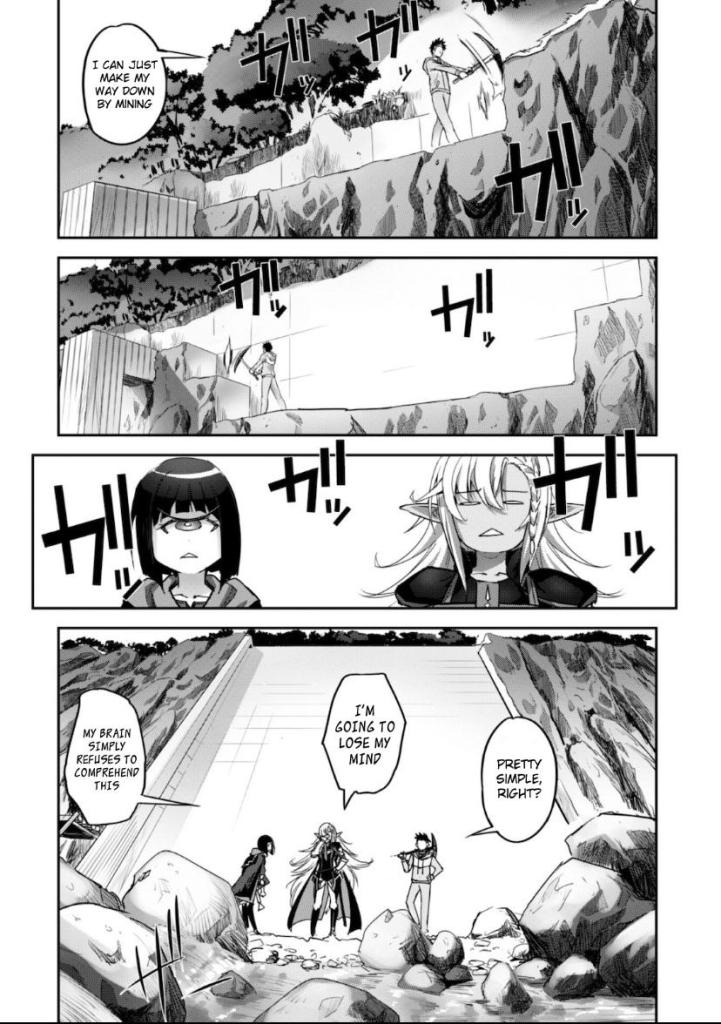
This manga series starts with our twenty-five-year-old protagonist engaging in one of Japanese youth’s favorite activities: getting killed by a vehicle. Isekai-d into a fantasy world, he quickly comes to grips with his situation, particularly when he realizes that he’s been given, for no apparent reason that I remember, Minecraft powers. And I don’t mean powers to create blocks in a way inspired by the game Minecraft, but literally the whole gamut of how Minecraft works, as far as I recall, from recipes to tools to tricks like creating infinite sources of water with a hole and two buckets. It’s so blatant that I admire the author for it.

The protagonist gets ambushed by a sexy dark elf, who tries to kill him because he’s a human. She realizes that the guy isn’t as horrible as every other human she has come across, and proceeds to spare his life and enslave him instead. She brings him, yanked by a chain, to an outpost of non-humans, from mythical creatures like cyclopes and harpies to every kind of beast-person imaginable. Everyone around him despises the protagonist due to his species, and he comes to learn that in this fantasy world, seemingly all humans are zealous supremacists that force every non-human to convert to their religion, and generally abuse others in terrible ways.

However, the protagonist showcases his Minecraft powers, such as felling trees with a couple of axe hits only for the trunk of the tree to show up detached, straight and processed. The local elders determine that the protagonist is a fabled person from another world, and if they absorb him into their non-human nation, he will become indispensable to their survival.

Meanwhile, the protagonist and his mistress get along well enough that she fucks him the first night. Very graphically, too: full-on hentai. Other than the extremely old elders, every female non-human he comes across is delectable, so he’s bound to end up having a lovely time with these freaks.

The story cleverly builds up throughout the technology tree of Minecraft. The protagonist overwhelms the minds of his new-found lover, friends, and acquaintances displaying reality-breaking feats such as building a structure and removing the supports, only for the structure to remain floating in the air. Most of the fun of this manga comes from the idiosyncratic ways that problems are solved, that could only happen in this story because Minecraft powers are tied to the concept.

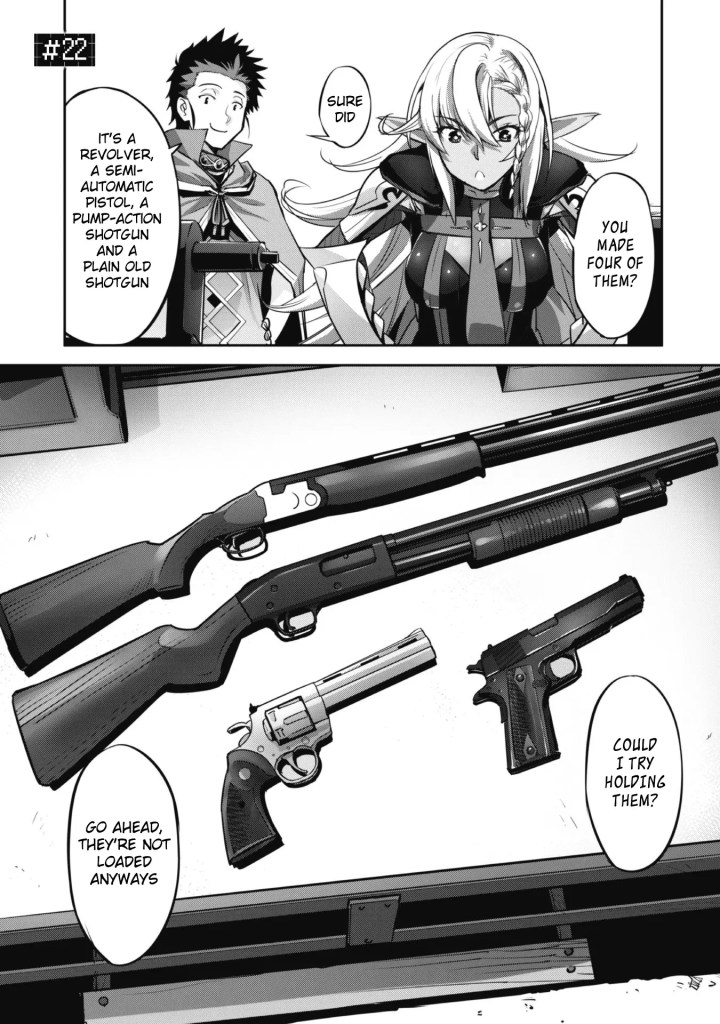
When the problems at home are solved and the protagonist’s mistress fully trusts him, the story slides into a war narrative, with the non-humans organizing themselves to restore the kingdom that the humans stole from them. You’re along for the ride as they come up with the logistics of their operation: where they’ll set up outposts, their scouting runs, taking care of refugees, etc., while blazing through technological eras in a couple dozen chapters. I had a blast. You’ll rarely come across stories in which fantasy people solve problems by shooting with bolt-action rifles or dropping bombs.

Now the iffy parts: this is the kind of manga series that provides its readers with what they want, if what they want is lots of boobs, camel toes, and monster-girls wanting to join the protagonist’s growing harem. I’m the kind of fellow who’d rather only have sexy people in manga unless the alternative is more relevant to the narrative; I’m not on board with the modern Western trend of worshipping ugliness. However, I draw the line at characters acting uncharacteristically, like the tough dark elf co-protagonist getting dragged into trying cute outfits, or her being fine with her slave slash lover entering into carnal relationships with other freaks, when initially she was annoyed at him merely mentioning other women. Honestly, if it wasn’t for the stuff mentioned in this paragraph, I may have rated this story close to four and a half stars, for its genre.

Unfortunately, I’ve read as many chapters as have been translated. Given that the manga is adapting a light novel series, it probably has plenty of juice left to drip.

On writing: My general rules

This post will include the rules I wished I had followed since I started writing seriously when I was sixteen years old. I will emphasize some points that my younger self resisted.

I shall update this post whenever I come up with something else valuable.


If your subconscious nudges you with some idea or imagery that feels important, determine if it falls into a piece you’re working on or that you intend to work on at some point. Pay special attention to the “seed ideas” that the subconscious rarely provides, and that emerge with such strength that you know in your bones they will sprout a full story. In those cases, stop whatever you’re doing and write down all the details that linger in your mind. Do not let those ideas go: they’re the best ones you will ever get. If you don’t write them down, you will end up forgetting them. Most of the favorite parts of my stories come from notes that I don’t remember having come up with nor written down.

If your mind presents you with some idea or imagery that feels important but can’t be assigned to any project, it’s not necessary to write it down. Plenty of these rogue suggestions resurface later, sometimes years later, tangled with other ideas or imagery that could be categorized. Let them simmer.

Your subconscious is the one entity in this world that you can fully trust. Like Cormac McCarthy put it, “[It has] been on its own for a long time. Of course it has no access to the world except through your own sensorium. Otherwise it would just labor in the dark. Like your liver. For historical reasons it’s loath to speak to you. It prefers drama, metaphor, pictures. But it understands you very well. And it has no other cause save yours.” Always pay attention to its advice.

As you work on a project, go through your notes for it with the goal of reordering them chronologically. If you aren’t sure about where in your story an event is supposed to take place, arrange them in order of escalating tension. Do this from time to time, because some notes will end up moving around significantly.

When you’re working on a scene or a chapter, go through your notes and isolate them in logical blocks that you should be able to coalesce in about five to ten minutes of freewriting. Add as many notes as necessary to that block so that you won’t need to know anything else about the rest of your story while you’re busy rendering that part of the scene.

Once that next block of the scene or chapter you’re working on contains all the necessary elements, render the block through freewriting. Do not ever sit down in front of your keyboard and try to come up with one word after another: that puts your conscious mind in control, the part of your brain that should only be in charge of putting together coherent sentences from raw material, and of revision. It will also end up making you hate the act of writing, which should be a labor of joy.

The way you force your subconscious to produce the raw material is through freewriting. Put on some mood-setting music, open videos and/or photos relevant to the block you will work on. I usually change the size of my windows in the PC to ensure that all the necessary parts fit on the screen at once. Then, while you play the notes in your mind as if they were part of a movie, type as fast as you can, coalescing what you’re sensing and feeling into a mass of raw material.

By “as fast as you can,” I literally mean it: banging your keys or repeating nonsense in case your brain can’t come up with some particular word, making enough grammatical and syntactic mistakes to make a teacher cry. Do not allow your fingers to stop. The goal is to bypass the slower conscious mind to access the much faster subconscious, the same way as you would while playing an instrument. You do not stop in the middle of playing a song because you don’t remember a specific note, or because you have just played the wrong one. If the end product of your freewriting session resembles the verbal diarrhea of a complete lunatic, then you’ve done it right: your subconscious isn’t sane, but it has survived for much, much longer than human beings have existed.

Once you end up with the raw material of a session of freewriting, let your conscious mind sieve through the outrageous nonsense, then arrange the fished-out meaningful words into coherent sentences.

Freewriting is also invaluable when you aren’t sure what details to produce out of a moment, or what feelings your point of view character would experience. Freewrite about it for a set amount of time, usually five minutes. In the process you will get the obvious out of the way, and your subconscious will provide some gems.

Beware the ladder of meaning. For example: entity > object > building > house > cottage > an English cottage with thatched roofs, a sprawling garden, and stone walls covered in ivy. Always try to include in your texts elements from the highest rung of the ladder of meaning. If you intend to include an element from lower rungs, justify its presence in the piece. Why would you mention an element that doesn’t warrant detailing?

If some sentence, or a whole paragraph, feels awkward, improve it until it doesn’t. If you can’t improve that element further and it still feels awkward, try to remove it from the text. If the text doesn’t start creaking, threatening to fall apart, leave that element out. If you have improved it to the best of your abilities and still feels awkward but you can’t take it out of the piece, forgive yourself and move on.

Do not ever leave in your story a sentence, or even a word, that’s not pulling its weight. Whatever you leave in that doesn’t need to be there detracts from the whole.

Base your sentences around specific nouns and vigorous verbs, both of which should generate imagery in your mind. Try to avoid forms of “to be” and “to have,” unless the alternative sounds more awkward.

Avoid clichés. A cliché is every single expression you have heard before. I don’t recall which books on writing said it, but it’s been proven that your brain doesn’t engage meaningfully with sentences it has read or heard a million times, the same way you don’t truly look at stuff you see every day. Your brain mainly reacts to surprise, in case it needs to fend off an attack. Your goal is to create something new with every sentence.

Show, don’t tell. What does that mean? When in doubt, ask “What’s the evidence of that?” If asking that question of a sentence or paragraph makes sense, then you’re telling. If it doesn’t, you’re showing. For example: “The woman was beautiful.” What’s the evidence that she’s beautiful? You’d go into specific details of her allure that would make your point of view character (important: not you) feel that she’s beautiful. And once you’ve added that explanation in, remove the sentence “The woman was beautiful.” You don’t need it.

You can violate any of the above rules if you’re going for a specific effect. For example, it’s not uncommon to use clichés (meaning any expression you’ve read or heard before) as part of your characters’ speech, because that’s what people do. You can also violate any of the above rules if the result would be funny.

Number one rule: offer the most meaning with the least amount of words. Don’t waste people’s time, starting with your own.

On writing: Desire line #2

You can check out all my posts on writing through this link.

Do you have a killer concept, a promising premise, and a protagonist worth a damn? Then you should determine the goal that your characters will pursue, and that will result in the plot of your story.

  • How is the story about this one problem that complicates everything else?
  • Though your heroes might initially perceive this challenge as an unwelcome crisis, it will often prove to be a crisis that ironically provides just the opportunity your heroes need, directly or indirectly, to address their longstanding social problems and/or internal flaws.
  • Does this challenge represent the hero’s greatest hope and/or greatest fear?
  • Your protagonist’s goal should inspire some kind of emotion. Anything relating to food, violence, sex or chaos is inclined to stimulate emotions at the base level. The most compelling emotion to evoke in writing is anger, so if you can include a bit of outrage, give it a try.
  • How specific can you make the desire? Is there a specific moment in the story when the audience knows whether your hero has accomplished his goal or not? You should be able to photograph the moment.
  • Are you sure the choices for the objects of desire aren’t wishy-washy? It shouldn’t be too nebulous, too intangible. Can you embody the desire in an object?
  • How is the desire a visible one, something substantial, not esoteric or emotional or spiritual? You should be able to describe your hero’s goal to someone in a way that they can see it played out in their mind as if on the silver screen.
  • How can you center the goal in the concept of your story?
  • See if it could be a story that plays more gradually as the hero realizes the unforeseen true nature of the conflict. This only works if the hero seizes what seems like a positive (albeit intimidating) opportunity in the beginning, without realizing how much conflict it will cause.
  • How do you make sure you have a single desire line that builds steadily in importance and intensity?
  • How is at the beginning the desire at a low level, so the importance of the desire increases as the story progresses?
  • How is it a single, escalating problem that your characters can’t avoid?
  • Are you sure the problem has a power to grow, intensify and complicate?
  • What prevents your protagonist from achieving his goal easily? Try to explain how the goal is difficult to achieve.
  • You want to convey to the audience just how big and important and impossible your hero’s goal is. The reason for this is that the more impossible the audience finds the task, the more doubtful they become that the hero will succeed.
  • Are you sure your chosen goal can sustain the entire novel from the first page to the last?
  • See if you can make the obstacle goal something hard to want to do. For example, defeating your sister instead of a random person.
  • How will your chosen goal explore the themes you want to include in the story?
  • The desire should be accomplished, if at all, near the end of the story. If the hero reaches the goal in the middle of the story, you must either end the story right there or create a new desire line, in which case you’ve stuck two stories together.
  • Decide whether or not, in detail, your protagonist succeeds in his external goal, and how either the character overcomes the external flaw or not.

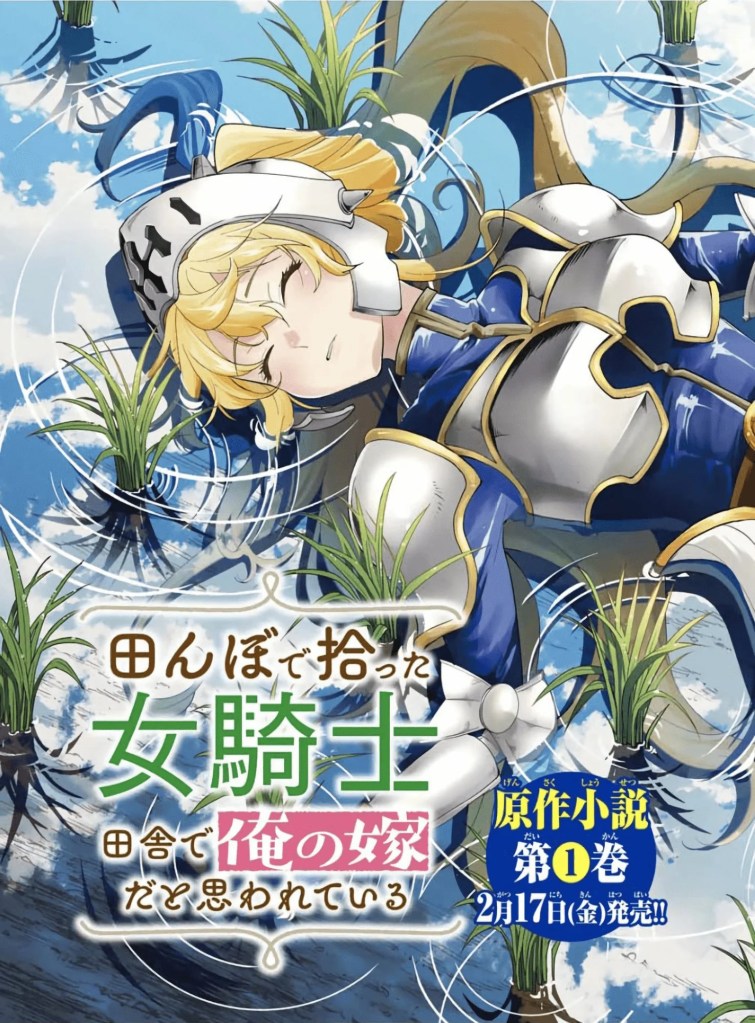
Review: All My Neighbors are Convinced the Female Knight from My Rice Field Is My Wife, by Saori Otoha

Four stars, four and a half for its genre.

This manga series with a characteristically long title attempts to answer the question of what would happen if a female knight from a ruthless fantasy world got isekai-d into ours, specifically the isolated countryside of Japan. According to this author, the experience would turn into a wholesome show of how beautiful and peaceful the life in the countryside can be, at least as long as you have some money.

The story follows a twenty-nine-year-old dude who bought some big house in his hometown, set in the Japanese countryside, and has spent the last few years growing produce and selling it to wholesalers. He’s a loner who ended up avoiding even his childhood friends. He doesn’t want to get involved with other people’s troubles. Then, one day, a young woman wearing elaborate armor shows up unconscious in his paddy field. She’s a blonde, emerald-eyed beauty of European descent, but she’s also too quick to draw her sword at the slightest mockery. The protagonist first takes her for a devoted cosplayer, until her physical feats and clear ignorance about the world she’s found herself in convinces him that he’s dealing with a stranded outworlder who probably will never return home. Therefore, he offers her to live together.

As mentioned, this story is an isekai. What’s an isekai, you ask? I’m glad you asked. Isekai is a decadent dessert of French origin. It starts with a creamy base, like yogurt or custard. Then, a layer of something crunchy is added, usually granola or crumbled cookies. Next, there’s often a layer of fruit, like berries or sliced bananas. Finally, the dessert might be topped with a drizzle of honey or chocolate, or a sprinkle of nuts.

This story, although it’s set up as an isekai, quickly slips into the slice-of-life genre, allowing us to follow the experiences of the female knight and our progressively less solitary protagonist as they live, work, and deal together with neighbors, acquaintances, and the male protagonist’s childhood friends. She’s delightful: always enthusiastic and curious, somewhat like a child, if a child were a blonde, emerald-eyed young woman with F cups. Most of the entertainment of this manga comes from watching this fantasy character discovering some mundane facet of Japan or our world that her place of origin lacked. Given that her homeworld lacked even our plants and animals, she’s in for plenty of surprises.

The knight came from the kind of medieval fantasy world where, in her words, “blood is washed with blood.” Human towns regularly get assaulted by monsters, traveling anywhere is a nightmare, and people are forced down paths in life out of the necessity for survival. This steely female knight quickly becomes captivated by the beauty and peacefulness of the Japanese countryside, and by how friendly the people around are, to the extent that she considers our Earth a wonderful place full of happiness. It’s all about finding joy in the little things. She was also extremely lucky to have ended up in the Japanese countryside instead of, let’s say, Detroit.

The male protagonist’s arc is set up as a reserved loner turning into someone who embraces the company of those around him, thanks to the joy that this enthusiastic, big-breasted female knight brings to his life.

All in all, this series is a good-natured, wholesome ride featuring lovable characters, beautiful drawings (particularly of backgrounds and food), and a huge attention to detail. The episodic tale is still ongoing, but it has been so consistent that I don’t see my rating changing.

Motocross Legend, Love of My Life, Pt. 2 (Poetry)

I urge you to read the previous part of this short(ish) story. The whole thing is supposed to be experienced in one sitting, but I didn’t want to go radio silent for about a month.


For the millionth time, I cast my memory
Back to your bedroom, my ’90s haven:
Jeans-blue walls plastered with posters
Of motorcycle idols in riding gear;
Dream bikes, like your Aprilia;
Misato Katsuragi making a V sign;
Pictures of faraway places that beckoned:
Mount Fuji rising up from the plains,
The Eiffel Tower’s wrought iron lattice,
Lady Liberty’s green patina,
A sunburnt desert stretching into oblivion;
Alongside drawings I created for you.
Worn wooden shelves covered in stickers,
Overflowing with manga volumes
And pricey figurines of EVA units.
On your desk rested your black helmet
Next to piles of VHS cassettes.
Perched on a corner of your CRT television,
A single sock.

Nestled side by side on the carpeted floor
Among a scattering of your clothes,
Facing your plugged-in Playstation,
You were guiding Jill Valentine frantically
Through a shadow-laced, pixelated attic
Of that mansion infested with zombies
As you primed and fired your grenade launcher
At a slithering, grotesque serpent
That chased Jill with nefarious intent.
But lost in a sensory trance, I kept drifting
To the scent of your strawberry body spray,
And every shift of your bare arm against mine
Ignited a tingling trail of shivers down my spine.

Once the serpent fled through a hole,
You spun towards me with a victorious grin,
Flashing your wet, crooked teeth.
What did you say? I didn’t hear anything;
That face had kindled a spark inside me,
Made me feel like a flame
Dancing in a fireplace.

I leaned in and molded my lips to yours.
They tasted of cherry chapstick.

When I pulled away, you were frozen,
Your chocolate eyes wide and unblinking.
Had I gone too far? Had I ruined us?
Blood rushed to my cheeks
And words tangled in my throat
As I tried to apologize,
But you exhaled, bit your lip,
Then tossed the controller aside.
“About time,” you said
While climbing into my lap.

Our tongues wrestled,
Our breaths mingled,
Our teeth clicked,
Our noses bumped.
Your fingers raked through my hair.
I gripped your hips,
Then slid my hands under your T-shirt
To stroke the warm curve of your back.

My thoughts dissolved in a bath-like heat.
My self, that I thought forever isolated
Inside airtight boundaries,
Seeped out to meld with you.

I don’t know when we stopped,
But I remember holding onto you,
Feeling your heart calming down
As it beat against my chest.
Your wet lips rested against my neck,
Your hot breath tickled my skin.

To your annoyance, your father had removed
The privacy lock from your bedroom door,
And that brooding overseer of yours
Invaded your space whenever he pleased,
So if we ached for some privacy,
We had to make out in public.

During your shifts as a pizza delivery driver,
Each time your rounds hinted
You might grace my area of Irún,
You called me so I would wait at a nearby park.
I stared anxiously at the traffic,
Eager to spot your scarlet polo shirt.

After you pulled up on the company scooter,
We sat on a bench, you took off your cap,
And our tongues played like two puppies
As your soft ponytail brushed my hand.
The scent of melted cheese and oregano
Still returns me to those days.

One evening, in the solace of my bedroom,
While my parents argued somewhere outside,
And the last light streaming through the curtain
Bathed our lying forms in a dusk-touched hue,
You explored my naked chest and stomach,
Mapping them with your fingertips.

I cupped the nape of your neck
And brought your mouth to mine.
I wished I could merge with you,
To live within your heart,
To breathe from your lungs,
To laugh with your voice.

One afternoon, you called from a payphone
To tell me, breathless, of an accident:
After some dickhead veered into your lane,
You swerved, but your Aprilia skidded
And bucked viciously, throwing you off.
As you slid over asphalt, it clawed at your leg,
Tearing through your jeans,
Grating against your flesh.

I had never felt such a panic surge in my gut;
I pictured your leg flayed to shreds.
While you complained that the accident
Had marred your bike with scrapes and scuffs,
I urged you to call an ambulance.
You refused; if your father found out,
He would attempt to take the Aprilia away.
However, your leg seared with pain,
So you needed me to patch you up.

I grabbed a bottle of water and a soap squirter,
Then rushed out toward the nearest pharmacy
To buy gauze, bandages, and antibiotic ointment.

When you opened the front door,
You greeted me quietly.
We had lucked out, you said:
Your father wouldn’t return for hours,
And your mother was nursing a migraine.
But that left leg of yours belied our luck:
A jagged tear in your jeans
Revealed the raw red of road rash
Caked with blood and grime.
My heart lurched.

After washing my hands thoroughly, I found you
Lying pantless on your hot-pink bedspread.
I knelt by your bedside and inhaled
The coppery tang of your life essence
Mixed with adrenaline-induced sweat.

I soaked gauze in soapy water
And dabbed it on the raw red of your flesh
To clean off the dried blood and grime.
The white gauze bloomed crimson.
You winced, your eyes watered,
But you gritted through the pain.

I squeezed a glob of antibiotic ointment
And smeared it gently on your road rash.
After I climbed onto the bed,
I started wrapping the bandage
Around your injured leg,
Unwinding the roll and draping it snug.

My throat had closed up;
I felt your pain like it was mine.
You were right, we had been lucky:
Instead of swerving,
You could have crashed headfirst
And broken your neck.
Next time I saw you, you’d be lying in a coffin,
And I would never hear your laughter again.

I leaned forward, hugged your legs
And pressed my lips against your inner thigh,
Planting wet, lingering kisses,
Longing to feel the steady thrum of your life.

In the silence, your breathing grew heavier.
You propped yourself up on your elbows,
With your caramel waves cascading to the pillows.
Your eyes were glazed over, your cheeks flushed pink.

Your sunny-yellow panties,
Their stretchy cotton material
Featuring a pattern of fern-like imprints,
Contoured to your pubic mound,
And over the cleft, the fabric was soaked.

Wordlessly, I nuzzled your vulva,
Warming my face with the heat,
And inhaled the hint of laundry detergent
Mingled with a mouthwatering musk.
Your dampness clung to my tongue
As I lapped up the salty tang,
Which made you grip the bedspread.

You arched your back and wiggled your hips,
Grinding against my face,
To slide your panties down my nose and lips.

Behold a lush, dripping flower.

Our hands were clenched together,
My face buried in your muff,
Your pubes tickling my nose,
My tongue teasing, tracing, flicking
Your moist labia and turgid nub
While you gasped and mewed.

Even if your father’s words stabbed through you,
Or school made you want to jump down a well,
I could offer my warm hands and mouth
To make you forget.
I would always be your refuge
Where you could let go and be yourself.

You pulled my hands toward you
And whispered, “Come here.”
I crawled, skin to skin, over your body
So your tongue could thank mine.

We peeled off each other’s shirts.
I unhooked your bra and kneaded your breasts.
Your fingers unbuttoned and unzipped,
Then tugged down my boxers.
You gripped me, stroked me up and down.
Pleasure settled in my groin like solid heat
As you wrapped your thighs around my waist
And guided me into your warmth.

While your bedsprings squeaked,
We breathed shallow gasps in and out,
And you dug your fingertips into my back.
The rhythm of our bodies synced together.
Something inside me cracked wide open.

If your mother had opened the door,
Ready to complain about the noise,
She would be outraged about more
Than our clothes strewn about the floor,
But any shouts, I’d boldly dismiss;
What we did and what we were
Was a cause to celebrate.
My heart pulsed with an aching joy
At the miracle of finding you, Izar,
And of being found by you.

From the day we made each other adults,
In the sanctuary of your bedroom or mine,
We spent our time huddled together,
Playing games, reading manga, watching shows,
Anticipating a knock on the door
And one of our parents to speak of some errand.
You and I would drown in silence, listening
To the sounds of our guardians leaving.

My body stirred with an electric tension.
Your eyes glittered, starlit with yearning.
Your nipples poked through the top.
Once the front door closed with a thump,
And the key turned once, twice in the lock,
We would allow a brief eternity to pass,
Counting heartbeats and hushed breaths,
Then our clothes would fly off.

When we lay in each other’s arms
On a tangle of sweat-smeared sheets,
The room melted away
To the slick friction of skin on skin.
We became the only people in the world,
Talking and laughing and making love.

Hand in hand, we strolled to the end of Meaka
On a gravel path speckled with moss
Past the hydroelectric plant of Irugurutzeta.
Shadowed by the massive wall
Made of layers of weathered, lichen-clad stones,
We came across wandering chickens
And a dog that glanced at us from its kennel.

I breathed in the rich, loamy scent
Of damp earth and decaying leaves.
We nestled on the bank of a meandering creek
That babbled as it flowed over riverstone.
A stockade of skeletal trees obscured the horizon.
To our left stood the ruins of Roman furnaces.
On the opposite bank, stacks of blackened logs
Loomed like burned tombstones.
Here, where human activity had ceased,
Leaving behind only traces,
Life sprouted, grew, and died untroubled.

Your mood hung heavy like the overcast sky,
But I knew you’d open up when you were ready.
Turns out your parents had found out
About your disastrous grades,
And lost their shit when you declared
That you were dropping out of school altogether.

I remembered how my mother scolded me
For bringing home sevens and eights
When I could, she said, easily ace tests;
Thus, if I chose to drop out,
She would probably drop dead.
I asked if you had rushed to this decision,
But your mind had known for weeks.

Algebra, geometry, physics, chemistry;
They were rusty spanners in a junkyard
To you, who had dreamed of riding a bike
On undulating dirt tracks
Through jumps, berms, and whoops.
So instead of surrendering your youth
To the hands of glorified babysitters,
You chose to chase the road forward
Before the mirror showed a stranger.


Author’s note: the song for today is “Your Hand in Mine” by Explosions in the Sky.

If you enjoy my free verse poetry, I have three books worth of it yet to be self-published. Check it out.