
The original Udio version of this song was one of my favorites from the first album, but it was produced during the worst-quality era of that now unusable online service. Thankfully, Suno has managed to remix it into a more enduring version.
Author: Jon Ureña
Spanish writer, author of My Own Desert Places and We're Fucked. I have also written plenty of short stories and poetry, as well as two books in Spanish called Los reinos de brea and Los dominios del emperador búho.
Life update (10/01/2026)
Earlier today I was reading Sissy Spacek’s autobiography when I came across this passage:
To be an actor, you have to live a life. If you want your work to be real, you have to be a real person yourself. I began to understand that the art forms that excited me most were those that illuminated the human condition, explored our shared experience, and connected us in some way. What I loved most about performing music was the way the audience was right there with me, feeling what I was feeling. It reminded me of the way twilight feels, shimmery and soft, when the day and the night blend together and envelop you. With music, I could conjure up that magic hour whenever I wanted. And now I could see how acting could create that same kind of connection by weaving my own life and experiences into what I was doing.
The notion that to become an artist, you have to be broadly connected to life was something I resisted when I was younger and dreamed of becoming a professional writer. My stories came out of me either because I was compelled to write them or because my subconscious resonated with something I had been thinking of. The thought of other people never entered my mind.
Honestly, when I dared to attend writing courses ten years ago or so, I thought I would enjoy other people experiencing my material. There were some who appreciated it for whatever reason; one of them even brought a written piece confessing that he had dreamed about something I wrote, and that when he woke up, he realized he had ejaculated in his sleep. My written piece he was referencing was about a monstrous woman disguised as a regular human who welcomed a traveler into her home and ended up absorbing him whole through her vagina. I don’t know what prompted me to write that or why it would make some random other guy from the course cum. The whole thing was just awkward.
Anyway, most of the feedback I got from people reading or listening to my stories, and I’m talking about works far more normal than the vagina monster, was that my writing disturbed people and made them uncomfortable. One of the instructors accused me, in the middle of the class, of lacking empathy (she had ordered us to write a piece with her as the protagonist, and the fact that I didn’t think of her daughter when her fictional self was in trouble apparently was a faux pas); that was the last time I attended her writing course. In fact, that week was the last time I attended a writing course, as I had also endured bad experiences with the other one I had been attending, so I quit both and ceased interacting with the local scene. I also stopped trying to make it as a professional writer in anything resembling a normal way.
I think that most of the people I met in those courses saw creating art as a way of getting closer to others. But I don’t want to be closer to others. There are exceptions: the few people I’ve become interested throughout my life, two of them being remote women I admired and became obsessed with (Joanna Newsom and Sissy Spacek). But regular people? My daydreams are more interesting.
It could be that I’ve been unlucky. If growing up I had met a creative soul who needed to create art of her own and who would have inspired me to write and create stuff in general for her, then I may have been singing a very different tune. But I simply never crossed paths with anyone like that.
That reminds me that I recently received feedback on something I wrote about two years ago. It was mostly an experiment, but still. I opened that notification, thinking about how rare it was that someone went out of their way to write about anything I had done. The feedback was two words: “This blows.” I immediately blocked that dickhead, as I have no tolerance for people who worsen my life even a little bit.
I’ve been digging up Sissy Spacek’s life due to my sudden obsession with her. She had a good family, grew up in a good community, had plenty of friends. She was also very attractive. She already had a foothold in New York before her brother died, even though life wanted to drag her back to college. She met many people there, dared to play for tons of people, attended auditions, made friends and professional contacts. She felt awkward about herself, thought of herself as a little country bumpkin, but that didn’t change the fact that dealing with people not only felt natural, but her artistic expression depended on connecting with people. That’s something I have never felt and never will. I’m simply not drawn to such a life, so I never had any business being a professional artist. Even supposedly “reclusive” authors like Cormac McCarthy had lots of friends; he simply was very private about his life (and for good reasons, given that he met the love of his life when he was roughly forty-two and she was fourteen, and the FBI ended up looking for him). Meanwhile, I can’t be in the same room with another person without becoming increasingly anxious and wanting to leave.
Being physically attractive, of course, goes a long way. Not only in the art world but when it comes to getting a regular job. I’ve always looked weird, partly due to having grown up wrong due to a pituitary gland tumor, and the fact that I never acted right due to high-functioning autism meant that people simply didn’t want me around. I lost my career as a programmer in my twenties after two managers (both non-technical women, if that tells you anything) decided that despite my technical work, I simply wouldn’t work well on a team. My last boss even defended me during that meeting to no avail. I also ended up having to quit my job in IT because the chaos and the constant human presence and interaction drove me to the ER with heart and brain problems.
I didn’t have a broad point to make with this post. I just read that passage in Sissy’s book and thought of how different the experience of a talented woman with good genes, good looks, a good family, good connections, and a good hometown is from my isolated, miserable life. What hurt wasn’t simply that she succeeded and I didn’t. It was that other people seemed to give her room to become herself. So many of my encounters left me feeling that being myself was precisely the problem.
Review: The Girls of Huntington House

This is a 1973 TV movie I only discovered because Sissy Spacek was in it. It features Sissy at the peak of her beauty, same era as Terrence Malick’s Badlands. Sadly, the sole available sources for the movie are the YouTube video below, along with some shady Russian sites. The movie seems to be on DVD, but sold from a single seller and with no guarantee that the quality is any better.
Despite the somewhat-blurry nature of the video that prevents the viewer from picking up all the details, Sissy looks luminous and ethereal. She’s placed against a whole cast of girls around her age, which makes her stand out more as unique. Her peculiar mannerisms and microexpressions are as charming as ever, as well as her distinct voice.
I’ve realized something fairly obvious about the two women I’ve been obsessed with in the last fifteen years: they both grew up in a small town, had ample access to nature, and had loving and involved parents that encouraged their children’s creativity. I wonder how much that upbringing helped preserve the idiosyncrasies that capture me, the sense that they had been allowed to become themselves without having their peculiarities sanded off. That’s both Joanna Newsom and Sissy Spacek. In an interview, Sissy said, “I already had my core when I left my little town in Texas.”
Of course, both were gorgeous at the time as far as my tastes go; I doubt I would have become obsessed with them to begin with if they had looked like trolls. I’m not sure what it all means or if it has to mean anything beyond the fact that this combination captures me beyond my ability to deal with it in a sane manner.
Anyway, this story follows a clash between Sissy (a free-spirited, romantic teenager who got herself pregnant at seventeen) and a stuck-up teacher in her mid-thirties who yearns for independence and logic above all. The movie starts with Sissy and her lucky boyfriend holding up traffic as the boyfriend dumps Sissy at Huntington House because he can’t handle a pregnant teenager. Sissy gets mad at the aforementioned teacher because she didn’t stop rightfully pressuring the couple to move their van out of the fucking way.
I found Sissy’s character too bratty for my tastes. She sought confrontation regularly, was inordinately rude toward her teacher, and considered herself the sole person around who knew what love was. Sissy’s character identified the teacher as a stuck-up, nearly dried-up woman in her mid-thirties who was afraid of having feelings and of falling in love. Sissy mocked the teacher for lacking a man in her life.
This obnoxious prying into the teacher’s personal life annoyed me; let the poor woman do her job in peace! Maybe teenagers would have identified more with Sissy’s position here, but I wanted her to stop lashing out at whoever was available just because she felt bad about having ended up pregnant at seventeen and stuck at a kind of warehouse for pregnant teenagers who had been thrown out by their parents, abandoned by their boyfriends, or found themselves unable to take care of themselves for whatever reason.
At one point, when Sissy’s accusations that the teacher was afraid of feeling were getting to the older woman, the teacher met with her on-and-off man. He seemed quite irritating to me, so I didn’t blame her for wanting to remain independent. Curiously, the man was the one eager to get married, while she claimed she didn’t understand why the law had to get involved in people’s private affairs. Oh, how the times have changed.
I was simultaneously surprised and irritated by the writing in this story. Some of the residents of Huntington House were depicted as markedly different, which was good, but the moral argument between Sissy and the teacher was too hamfisted, with Sissy latching on to the teacher’s supposed inability to feel and the fact that she didn’t open herself up to a romantic relationship. The film seemed to mistake the teacher’s right to a private life for an emotional defect that the teenager had to cure. The arc was obvious from the beginning: the teacher would soften up and learn to love thanks to the irritating, bratty insistence of the free-spirited pregnant teenager. To be fair to the teacher, though, if Sissy Spacek had pressured me into opening myself up to love, I would have given in as well.
A side plot surprised me by making me fall for the same assumptions as the teacher did. A new girl entered Huntington House close enough to her due date that she wouldn’t stay until graduation, but she still had to take classes. This girl was simple in a way that suggested intellectual retardation, which was obvious to the teacher.
She asked her students to write an essay about nature. Afterwards, the dim-witted girl approached the teacher to ask eagerly what score she had gotten on her essay. The teacher, not wanting to upset this clearly stupid girl, was careful to bring up the fact that the girl had copied her essay from the classmate seated next to her. The girl burst into tears, claiming that everybody was the same, that nobody believed her, that she hadn’t copied her essay and she also hadn’t stolen her sister’s scarf. I found myself making the same assumption as the teacher: the girl is a lunatic and that there’s little to be done about it other than resign oneself to the fact that a simple lunatic would have a child who would likely inherit the stupidity and the lunacy.
But the stupid girl’s classmate ends up confessing that she was the one who copied the essay. At no point did it occur to me that would be the case; clearly, if two essays were virtually identical, then the stupid girl must have copied it. At that point, I felt myself in the teacher’s shoes, who rushed to apologize to the crestfallen idiot.
Anyway, Sissy plays the guitar in this. Some kind stranger uploaded that clip to YouTube for posterity.
Sissy’s song is appropriately lovely. She spent her teenage years in the sixties going around everywhere with a guitar, playing for the residents of her community. A passionate, creative soul. She was a genuine songwriter, creating her own songs, hoping to one day play them for the world. But when she left her hometown for New York, studio executives told her that they already had songwriters covering her niche. The main one they mentioned was Loretta Lynn; if you know Sissy’s movie career, you know how ironic that is. So Sissy never made it as the kind of musician she dreamed of becoming, even though I can easily imagine an alternate seventies and eighties when she’s a popular touring musician with multiple albums and thousands upon thousands of followers, like Melanie and others were at the time. Instead, Sissy had to settle for six Oscar nominations and a win. To be fair, she did eventually release an album in 1983, but it didn’t sell well; I suspect that by then, plenty of the passion and creativity had moved elsewhere.
Yet another blurry copy through which I’m trying to reach something distant, and that leaves a deposit of sorrow in my middle-aged soul by the end. This all took place more than fifty years ago.
1967 video of Sissy Spacek
EDIT: ever since the new Carrie TV show came out, I’ve gotten daily hits on this post which I created for my own reference, not thinking that anyone else would care. My guess is that a new generation of people have discovered 70s Sissy Spacek from the original Carrie, and have become interested and perhaps infatuated with her like I did when I watched her in 1973 Badlands. Sissy hasn’t confirmed any surgery on her nose, although, given that people from her hometown with access to her high school photos, this video, and who knew her personally, have confirmed that this is Sissy, it seems obvious to me that she had the surgery done. I mean absolutely no disrespect to this woman whom I consider extraordinary.
In news that only I could possibly care about, and that I’m posting here for my own reference, I came across a video posted in a group about Quitman, Texas, the small town Sissy is from. The video shows her before the supposed nose job. She looks almost entirely different, but I recognized her little smile. If it’s truly her, that nose job rearranged her entire face.
She’s the eighteen-year-old girl on the right at 0:11. Appropriate size, freckles, arm definition. Quite the detective work, if I say so myself.
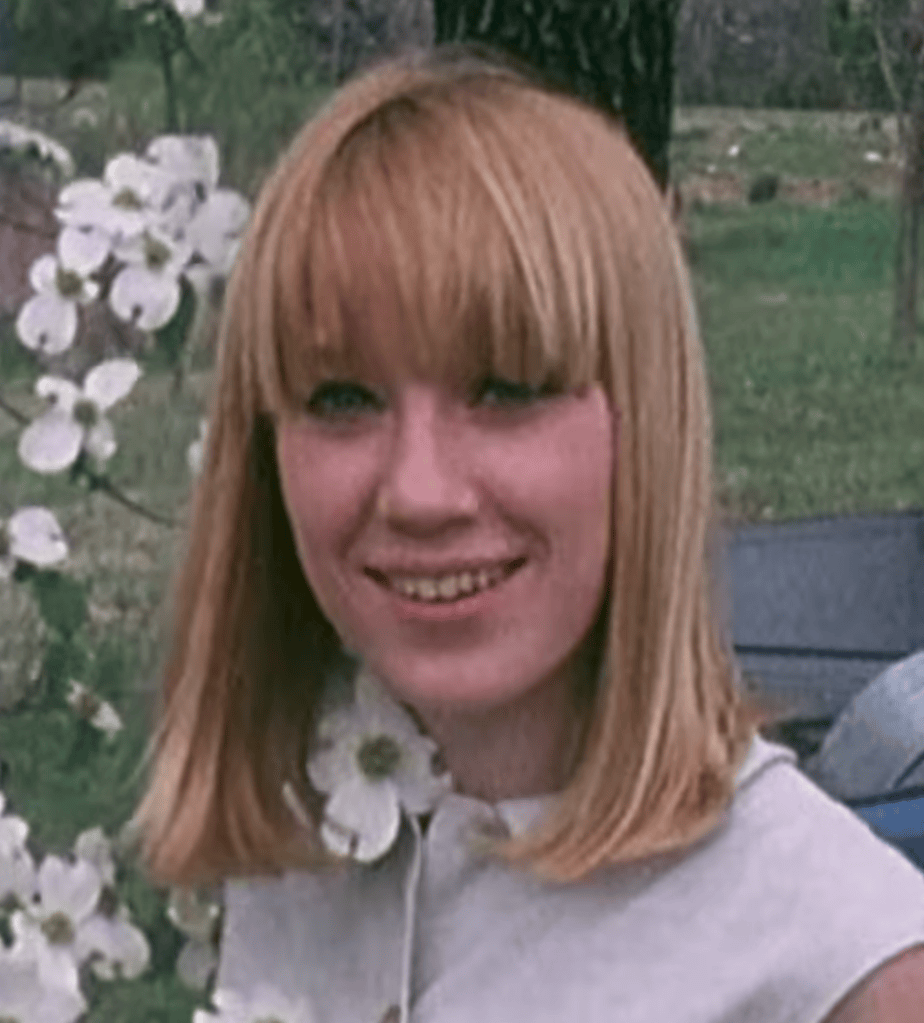
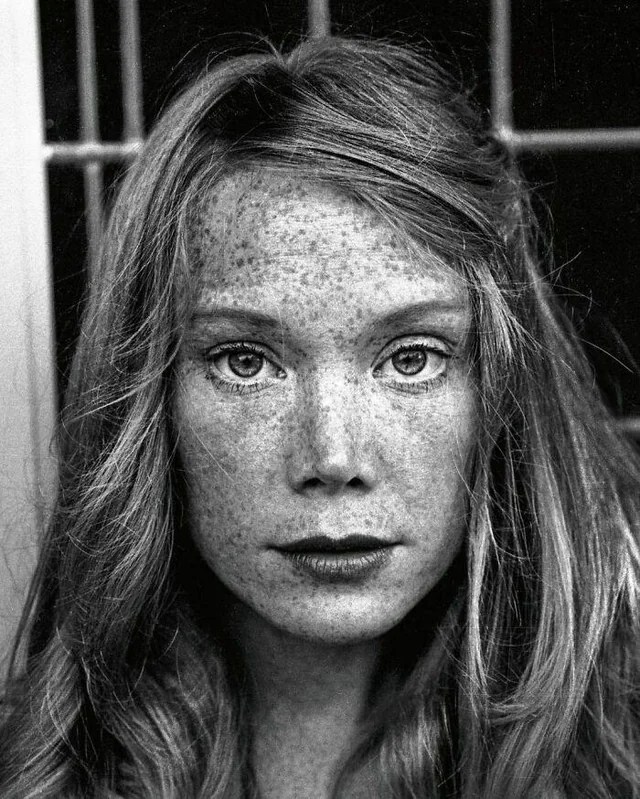
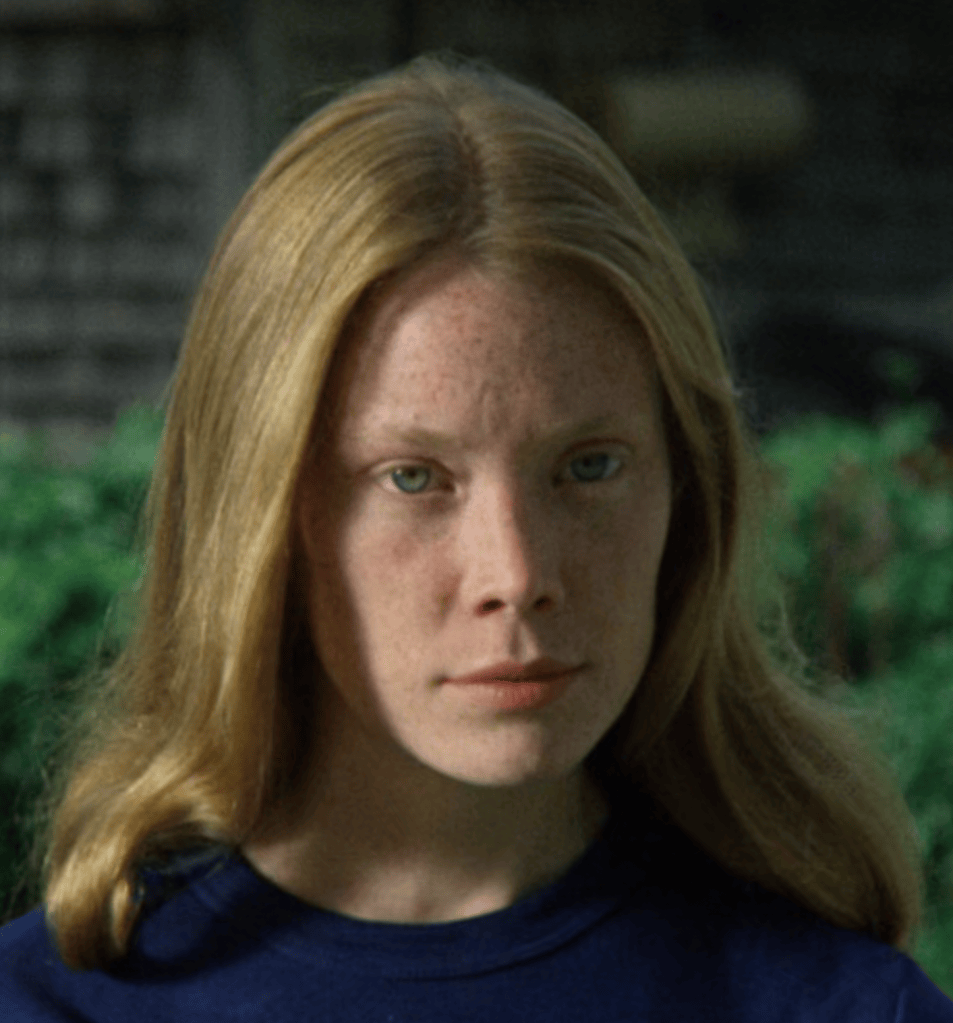
Same chin, too. Makes me wonder how many girls utterly rearrange their faces before they can show up on screen.
Covers of “Supernova Snack” from Odes to My Triceratops, Vol. 2
This was one of the first songs I remixed through the improved Suno model about half a month ago, but only relatively recently I found out that my method of extracting the stems of the original Suno song in order to work out their placement was worsening the songs; Suno had the bright idea to add wet effects to stem extraction, which renders them basically useless for this purpose. So I had to rework the six cover songs for “Supernova Snack.” It’s fine. This is now a video I will be able to return to regularly without feeling bad about it.
In the fiction of Odes to My Triceratops, this song was produced during William’s happy days, when he was dating Claire and they had a blast hanging out at their hideout in the mountains, singing songs, joking around, getting high. Huge contrast with William’s present whereabouts as a garbage worker in a city unlike his hometown, and tortured by regular nightmares about Claire’s disappearance and the likely disasters that would have taken out a blind, illiterate redhead.
Review: Sissy Spacek’s SNL episode
I’m running out of seventies Sissy Spacek material, to the extent that I had to resort to watching the March 12th, 1977 episode of Saturday Night Live that she hosted. It’s up on the Internet Archive, downloadable from here.

Honestly, this can barely be considered a review, as I fast-forwarded through the episode so I could get to Sissy’s parts. And even during those parts, I often skipped to her next speaking part or at least the moments where she appeared on screen. I was searching SNL for Sissy Spacek and resenting everything that got in the way.
Every time I’ve ended up with SNL on screen, I feel like I’m in crazy town where people live under the collective delusion that SNL is funny. I’ll have more to say about delusion further on, regarding the second guest they had on this episode.
This SNL episode started with Dan Aykroyd, fellow autist (he has spoken publically about having Asperger’s), pretending that their director died. Aykroyd presented some of the SNL actors one at a time, letting them do their little bit. Two of them were recognizable as Bill Murray and John Belushi. The rest I guess sank in the sands of time. Sissy was brought in, looking awkward and maybe scared, and said her bit. That was all for the first part.
Sissy then came on stage alone to introduce the episode, looking hella adorable and also scared out of her mind. She spoke about coming from the small town of Quitman, Texas, which she speaks about at length in her autobiography. Quite the idyllic place during the sixties, when she grew up there.
This episode was fresh off Sissy rising to further fame due to her work on Carrie; she was even nominated for an Academy Award which she likely deserved to win but didn’t. Faye Dunaway won it for Network. Sissy, suggesting that she wouldn’t win it and therefore wouldn’t be able to give her acceptance speech, thanked her mother, father, brother Ed, husband, and a bunch of other less important people. One of the glaring omissions from her list was her brother Robbie, who died of leukemia when she was a late teenager. Maybe she forgot one of the most important people in her life, or she just didn’t want to sour the moment during a comic bit. Sissy wasn’t aware that her mother wouldn’t live past 1981, four years after this SNL appearance.
Anyway, Sissy ends up trying to tear off her getup gracefully, only for it to get awkwardly stuck for a moment. But the temporary lack of grace slides into familiar territory for her: a twirling routine. I was introduced to this woman on Terrence Malick’s Badlands with her performing twirling, which she also speaks about in her autobiography. As she said, she performed it for all her boyfriends, and it was, in her words, “very effective.” I’m sure it was, Sissy.


That was one of the highlights of the episode, which mostly degenerates from there.
In her next part, she’s dressed hella sexily in a black-and-white getup with a dress that ends in a delightfully short skirt. Apparently she was pretending to be a child. This is the first of two instances this episode in which she’s supposed to act like a child, if that tells you anything. Then a black guy in drag comes in. The part only gets more awkward from there. The black guy sits down and asks Sissy to sit on his lap, then he goes into a monologue I didn’t pay attention to, while Sissy interjected in a childish voice. Overall, Sissy’s expression suggested to me that the thought “What the hell am I doing” popped up in her mind more than once.
After a bunch of skits, Sissy shows up again, this time to introduce one of the biggest enigmas I’ve ever encountered in my life: Richard Baskin. I wouldn’t blame you for not knowing who this guy was, as time has rightfully erased him from popular consciousness. The history of this creature is bizarre: a musician with very questionable talent who somehow got most of the seventies scene, including professionals of the movie industry associated with Robert Altman, pretending, or even believing, that this guy was the next big thing in American music. The seemingly few exceptions were some bewildered critics.
If you’ve seen the horrid Welcome to L.A., a movie I subjected myself to because it features Sissy prominently and looking amazing, you’ve gotten a taste of the depths of collective delusion that somehow centered around this Baskin character. He wrote a series of songs about feeling empty while hooking up in L.A. Those songs aren’t good by any extent of the imagination: they sound like an amateur trying to capture emotions that he doesn’t have the writing talent to depict. The music itself isn’t much better. They could have been considered charming at best if the songwriter didn’t look like he believed God put him on Earth to create his songs.
Somehow, someone associated with Robert Altman listened to those songs and decided to build a whole screenplay around them, which became Welcome to L.A. Baskin plays his songs in the movie, and there are various scenes in which the actors, including Sissy, awkwardly praise the musician and his work as if he were God’s gift to music. Baskin himself looks like a narcissistic creep, giving off bad Rodney Alcala vibes. The whole thing is utterly bizarre.
Anyway, Baskin decided to grace SNL with his presence, so I’ve been subjected to his music once again, if only during the parts when Sissy joins him to sing the chorus. The things I do for you, Sissy. While singing next to the guy, she looks like she barely wants to meet his gaze. And they end that performance by kissing on the lips?! What about your husband?
In Sissy’s next significant part, she’s dressed as a child, her hair in pigtails, and acting like a little girl. She faces the camera in a way that makes her flash her panties or whatever she’s wearing underneath multiple times. That whole skit was awkward as hell, and mostly made me think that someone in charge wanted to have Sissy dressing and acting as a child for their own satisfaction.
The next skit is a long exchange with John Belushi, in which she pretends to be his young wife and the marriage isn’t going well. I didn’t understand the appeal of it, or why they wrote it the way they did, but it was still more interesting than any other skit they involved Sissy in (apart from the twirling, if it can be called a skit), as it required Sissy to act. John Belushi was also sweating prominently under the studio lights, which made it more uncomfortable for me.
Sissy then presents a short film of her twirling again, this time looking like a fashion shoot. She looked gorgeous, so I enjoyed that. There seemed to be little point to the bit other than to show how hot and graceful she was. The close-up shots reminded me once again that Sissy had one of the most unique, beautiful faces I have ever seen.
Sissy then appears in a short skit I didn’t understand at all, and didn’t try to, in which she’s held by Bill Murray while wearing a medieval dress.
The final bit that features Sissy prominently is a compilation put together by Robert Altman of her appearing in movies throughout the seventies, mainly Altman’s 3 Women, and also Welcome to L.A., intercut with seemingly original, mostly pointless footage of Sissy (if there’s such a thing of pointless footage of Sissy Spacek) pretending to interact with scenes of the movies. This compilation made me think that Altman was out of his mind as well.
Finally, Sissy shows up on stage to tell the audience that she had a great time, which I honestly doubt. Throughout the episode, I kept reading discomfort into her expressions, maybe hoping she disliked the material as much as I did. The cast start greeting each other. There’s a moment in which Belushi tries to get Sissy’s attention as the credits roll, without knowing that he would be dead less than five years later. Sissy finally notices him and hugs him as if she has an inkling that Belushi would be dead less than five years later, which she couldn’t have known because she’s not a psychic.
Mostly, this whole thing made me sad that it isn’t the seventies anymore, and that there’s now one fewer piece of seventies Sissy Spacek footage left for me to discover.
New song “You Stay Eighteen” from Odes to My Triceratops, Vol. 4
This was by far the hardest song to produce through Suno. So many things went wrong. I originally intended for this song to run very long, maybe about ten minutes, with the singer struggling to get the words out at times, and at other times letting them out in a raw, pained manner. In some instances, the singer’s voice should sound choked.
Ironically, the vocal delivery was the easiest thing to achieve. The problem is that Suno generally refuses to produce songs longer than about six minutes, or six minutes and a half. The reason is obvious: the generation model they have tends to degrade the song towards the end if the generation runs too long. This doesn’t happen often, and can be bypassed by remixing previous attempts, but I struggled for hours to figure out how to produce a ten minute song in a way that Suno wouldn’t discard most of the tail end of the lyrics, while still producing the instrumentals needed to capture the emotions involved.
First I picked up a song generation that had a long-enough beginning that sounded good. That ran to about a third of the song. Then I cut the remaining two thirds, and went through the absurdly painstaking process of extending the song in the Suno editor to produce the remaining parts so that the vocal delivery convinced me. The song became long enough without the Suno model screwing it up. It soon became clear that the extension model is very hard to wrangle so that the music aligns seamlessly enough. So I discarded that direct approach and instead decided to remix whatever satisfying mix I produced in Studio.
Well, remixing the Studio production didn’t work either, because Suno just refused to produce the tail end of the lyrics due to artificial constraints about song length. I was about to tear my hair out; I feared that one of the most important songs in the album couldn’t be made. Then I figured out that the lyrics allowed splitting the song along temporally-distinct blocks, and each block has its own emotional payoff, so it worked out fine. The final album will have You Stay Eighteen, Pt. 1 and You Stay Eighteen, Pt. 2. Both are in the video above. The split also allowed the second part to contain poignant instrumentals that the original song wouldn’t have allowed due to length issues, so it all worked out fine.
My sole concern now for the rest of the album is that at least one of the lyrics will be rejected due to moderation. Not sure how I will handle that.


You must be logged in to post a comment.