
I recommend you to check out the previous parts if you don’t know what this “neural narratives” thing is about. In short, I wrote in Python a system to have multi-character conversations with large language models (like Llama 3.1), in which the characters are isolated in terms of memories and bios, so no leakage to other participants like in Mantella. Here’s the GitHub repo.
Early next morning, my player character, a world-weary detective, decided to bother some folks at the local university.
I wrote “we still don’t need how” instead of “we still don’t know how.” Just pointing that out because I hate making mistakes.
The detective goes back to report to the missing girl’s impatient father.
I pictured two weary men rummaging through bookcases of ancient, cursed books at the old library, while rain pelted the windows. Rain? There’s no weather in this app. Well, there is now.

Only areas have weather. Locations, which are inside areas, are aware of the weather in their containing area, but can’t be changed from there. All the prompts to the large language model that were aware of the time of the day are now also aware of the weather, and that includes dialogues. We’ll see how much the awareness of weather affects the scenes. I just hope the AI is intelligent enough to realize that it doesn’t rain inside a building.
Anyway, my player character, accompanied by an increasingly unstable father, headed to the old library.
There they met the apparently ancient librarian.
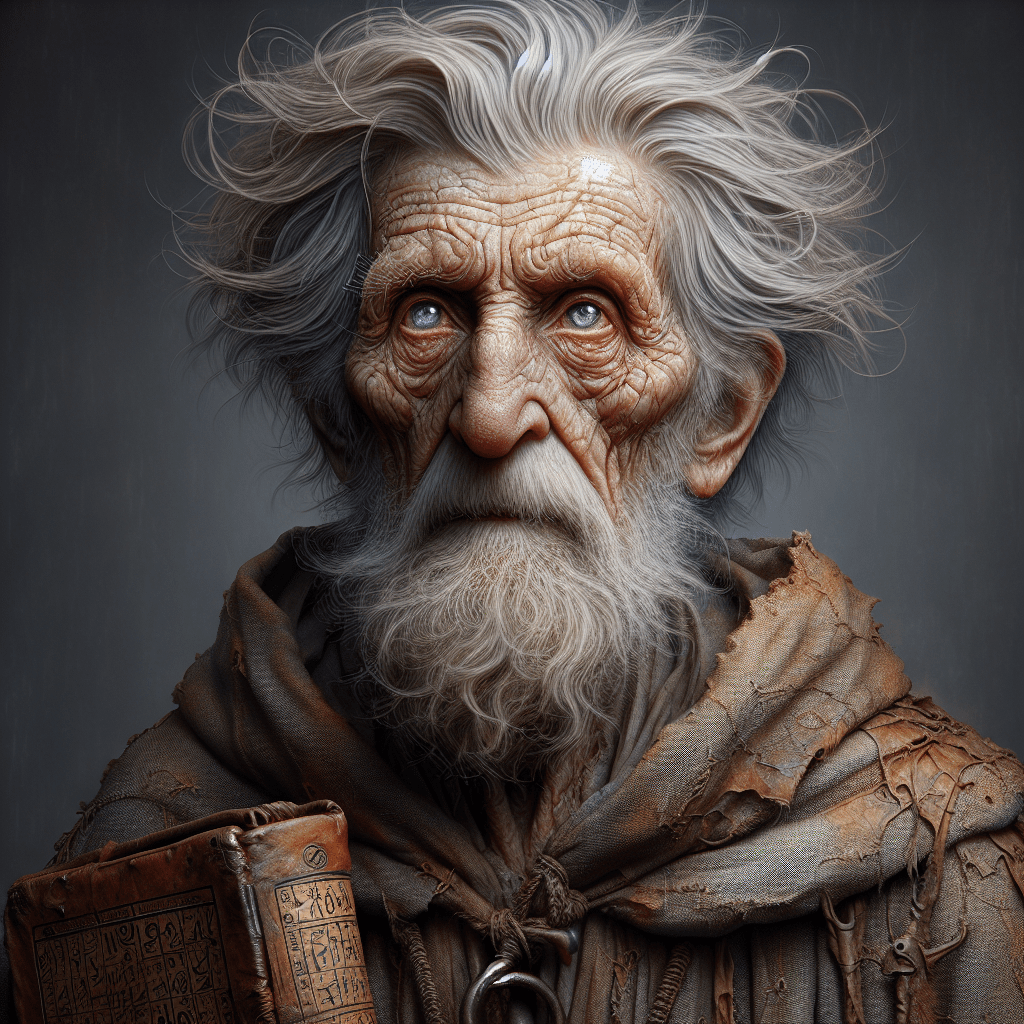
You may have noticed that the narration parts of the dialogue now actually sound like narration parts, instead of being spoken by the character. It took me a while to figure out how to do that, and it involved splitting the original text, generating voice lines for each part, and then concatenating them. But it sounds much better now.
 The Domains of the Emperor Owl
Pingback: Neural narratives in Python #12 – The Domains of the Emperor Owl
Pingback: Neural narratives in Python #14 – The Domains of the Emperor Owl