
I recommend you to check out the previous parts if you don’t know what this “neural narratives” thing is about. In short, I wrote in Python a system to have multi-character conversations with large language models (like Llama 3.1), in which the characters are isolated in terms of memories and bios, so no leakage to other participants like in Mantella. Here’s the GitHub repo.
As I considered my app this morning, a couple of things bothered me considerably: one, the CharactersManager class that handled pretty much any API requests related to characters had ballooned to insurmountable levels. It took me an hour and a half if not more to refactor it into four classes, given how entangled its code was with everything. Now I have a Character class that, provided with an identifier, handles the loading of its own related data, as well as saving it. That simplifies things a lot.
The second matter was far more troubling for me: every time I launched a request to the server that entailed a call to a large language model, the interface went unresponsive potentially for six seconds or more. That bothered me every time. The only real solution that I know is to use AJAX, a method of javascript programming that instead of actually sending a POST request to the server, it sort of simulates one through javascript, then returns the result as JSON data. That only has pros when it comes to the final execution, but reaching that point is troublesome. That’s what I’ve spent most day working on, and fortunately I’ve managed to achieve it for the most part: there are various parts of the app that now display “Processing…” on the button that generated the request, next to a spinner, and they return to normal once the request has been processed. If it entailed generating data that would appear on the page, then it gets displayed as well.
I’ve also changed some of the interface, particularly the buttons to subsections in Characters Hub and the Actions page. I think it looks quite cool.

As I was testing things while implementing AJAX into the chat page, I had the following idiotic conversation with the player character’s partner.
I have processed about 60 voice models of the 550 or so available in the RunPod server, so I’ll be able to enjoy many intriguing conversations through this narrative system (not to mention pretty exceptional smut).
Silliness aside, here are the descriptions of the player character and his posse as they head to the dreaded university.
I asked the AI to generate three more characters that would know or even be intimately connected with the arrogant student Elara Thorn.
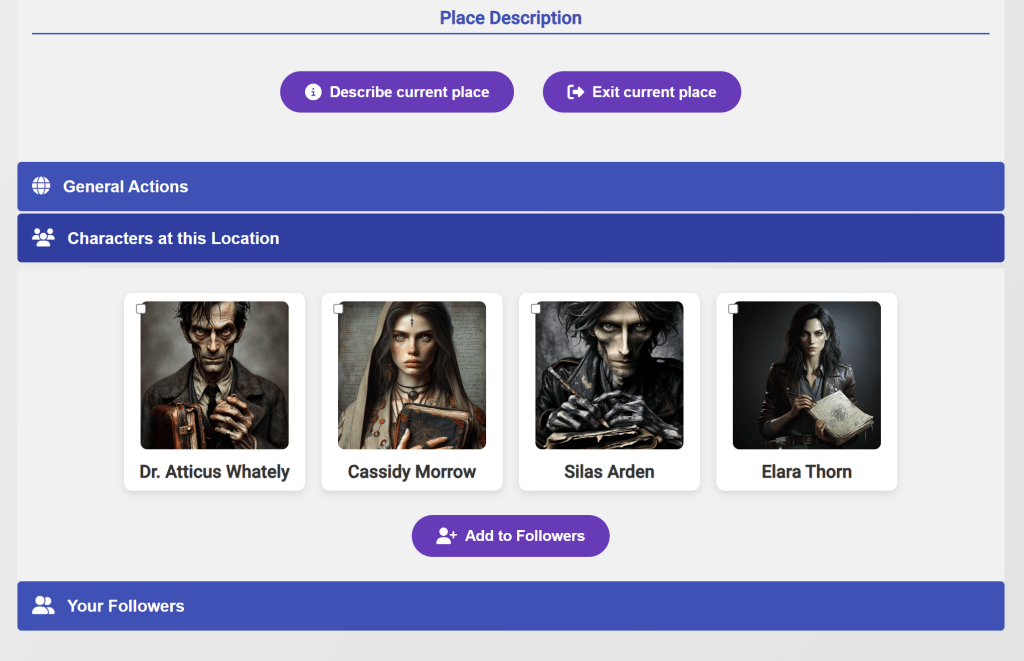
That’s a perfectly normal group of people.
Last night, I thought about how this whole confrontation with Elara Thorn may play out. Were we going to accuse her of something and the LLM would play along and admit some wrongdoing? I thought about the notion of a character having a secret that even I wasn’t aware of. So I programmed just that: a section in Characters Hub that generates one or more secrets for any given character. Now all characters are created with some petty secrets of their own, which is bound to enrich their spoken parts, but this Secrets section is bound to generate some pretty hardcore secrets, as per the prompt.
You are to generate the secrets of a character. Use the provided information about the character, the world's conditions, and the specific locations involved.

Instructions:

To create secrets that are compelling and truly worth being hidden for the character, consider incorporating the following aspects:

Deep Personal Impact: The secret should have a profound effect on the character's life, shaping their personality, motivations, and actions. It might relate to a traumatic event, a pivotal choice, or a forbidden desire that they are desperate to keep concealed.
High Stakes and Consequences: The revelation of the secret should carry significant consequences for the character and potentially others. This could include personal ruin, endangerment of loved ones, loss of status, or catastrophic events within the story's world.
Moral Ambiguity: Secrets that involve morally gray areas make characters more complex and intriguing. The character might have done something considered unethical or made a compromise that weighs heavily on their conscience.
Inner Conflict and Guilt: The secret should create internal turmoil. Feelings of guilt, shame, or fear of discovery can drive the character’s behavior, making them more layered and realistic.
Hidden Identities or Double Lives: Characters may be living under an assumed identity or leading a double life. This creates tension as they balance their true self with the facade they present to the world.
Traumatic Past Events: A history involving trauma, such as witnessing or being involved in a catastrophic event, can be a secret that influences their current fears and motivations.
Forbidden Relationships: Involvement in relationships that are taboo or forbidden in their society adds emotional depth and high personal stakes if the secret is revealed.
Betrayal and Loyalty: A secret involving betrayal—whether the character betrayed someone or was betrayed—adds tension, especially if relationships with other characters are at risk.
Hidden Abilities or Powers: Concealing special abilities, especially in a world where such powers might be dangerous or outlawed, adds an element of suspense and fear of exposure.
Secret Motivations or Agendas: The character might have ulterior motives that conflict with their apparent goals or the goals of their allies, creating layers of intrigue.
Connection to Antagonists: A secret tie to the antagonist or antagonistic forces—such as being related to, indebted to, or blackmailed by them—complicates the character's role in the story.
Illegal or Illicit Activities: Participation in criminal activities, whether past or ongoing, provides clear reasons for secrecy and potential consequences if uncovered.
Prophecies or Destinies: Being the subject of a prophecy or destined for a significant role can be a burden the character tries to hide to avoid unwanted attention or responsibility.
Hidden Weaknesses or Vulnerabilities: Concealing physical, emotional, or psychological weaknesses to appear strong can add depth and tension, especially if these vulnerabilities are exploitable.
Knowledge of Critical Information: Possessing knowledge that others do not—such as impending disasters, secrets about other characters, or truths about the world's reality—can be dangerous to reveal.
Forbidden Knowledge or Research: Engaging in research or possessing knowledge that is forbidden or dangerous adds stakes, especially if discovery could lead to severe punishment.
Family Secrets and Lineage: Hidden heritage, such as being the descendant of a notable or infamous figure, can shape the character's identity and the perceptions of others.
Past Failures or Mistakes: A significant failure or mistake in the character's past that haunts them, influencing their present actions and decisions.
Survivor's Guilt: Being the sole survivor of an event and feeling responsible can be a heavy burden that the character keeps to themselves.
Secret Alliances or Memberships: Belonging to a secret society, cult, or group can add complexity, especially if their goals conflict with those of others.
Hidden Assets or Treasures: Possessing or knowing the location of valuable items can make the character a target and provide motivation to keep it hidden.
Internal Struggles with Identity: Questions about one's own identity, such as gender identity, sexual orientation, or personal beliefs that are not accepted in their society.
Mental Health Issues: Concealing mental health struggles due to fear of stigma or repercussions can add realism and depth to the character.
Unfulfilled Vengeance: Harboring a secret desire for revenge that drives the character's actions without others realizing their true intent.
Divine or Supernatural Experiences: Having had an encounter with the divine or supernatural that is disbelieved or ridiculed by society, leading them to keep it secret.

To ensure these secrets are compelling and worth hiding:

Integrate with Character Development: The secret should be a key part of the character's backstory and influence their development throughout the story.
Create Tension and Suspense: The possibility of the secret being discovered should create ongoing tension, affecting interactions and decisions.
Impact Relationships: The secret should have the potential to alter relationships with other characters significantly if revealed.
Drive the Plot Forward: The secret can serve as a catalyst for events in the story, creating twists, conflicts, or revelations that keep the narrative engaging.
Provide a Strong Motivation for Secrecy: The character should have clear, understandable reasons for keeping the secret hidden, such as fear of harm, shame, or protecting others.
Offer Opportunities for Revelation: Build moments into the story where the secret might be revealed, forcing the character to make tough choices.
Reflect Universal Themes: Themes like redemption, identity, betrayal, or the nature of truth can make the secret more relatable and impactful.

Provided Information:

{places_descriptions}

Character Information:
Name: {name}
Description: {description}
Personality: {personality}
Profile: {profile}
Likes: {likes}
Dislikes: {dislikes}
Speech Patterns: {speech_patterns}
Health: {health}
Equipment: {equipment}
Memories:
{memories}

Existing Secrets: {secrets}

Example Format:

"has developed romantic feelings for her brother, feels guilty about accidentally causing her cat's death, ..."

Your Task:

Using the above instructions and information, craft compelling, meaningful secrets for the character, adding to their existing secrets.
Anyway, that’s all I have time for today. See ya.
 The Domains of the Emperor Owl
Pingback: Neural narratives in Python #9 – The Domains of the Emperor Owl
Pingback: Neural narratives in Python #11 – The Domains of the Emperor Owl