

The title translates to either “Blood on the Tracks” or “A Trail of Blood.” Despite the mystery or thriller-like title, this haunting story is about heredity, and how a fucked-up childhood could poison you for the rest of your life. I caught this series maybe three years ago, and read it up to the then latest chapter. This morning I have read the chapter that concluded the tale. I don’t know how to rate the whole.
I hate to review stories that I have read in a chapter-by-chapter release, because my impressions have been muddled and spread thin over time. I will make the effort, though, because I want to think about what this series left in me.
We follow a shy, withdrawn middle schooler who lives with his outwardly normal parents. His dangerously beautiful (and dangerous in general) mother overprotects him, particularly regarding the cousin that visits their home and pesters the protagonist. Although the mother doesn’t want the cousin around, it’s a family member of her husband, so she needs to keep the peace. Growing up, I used to suffer a similar cousin, someone who pushed his way into our home and demanded to be entertained, stealing my time and peace. I had no choice but to deal with the guy because my brother wanted to get along with him.
Anyway, during a mountain trip, the cousin leads our hapless protagonist to the edge of a cliff. His mother, fearing that this clown would end up causing her only son’s demise, finds them both in time to witness how the cousin trips and is about to fall. What follows is a spoiler for the inciting incident of this story, so read it at your peril. The mother hurries to save him, but in the last moment, she allows her intrusive thoughts to win, and pushes the cousin off the cliff.
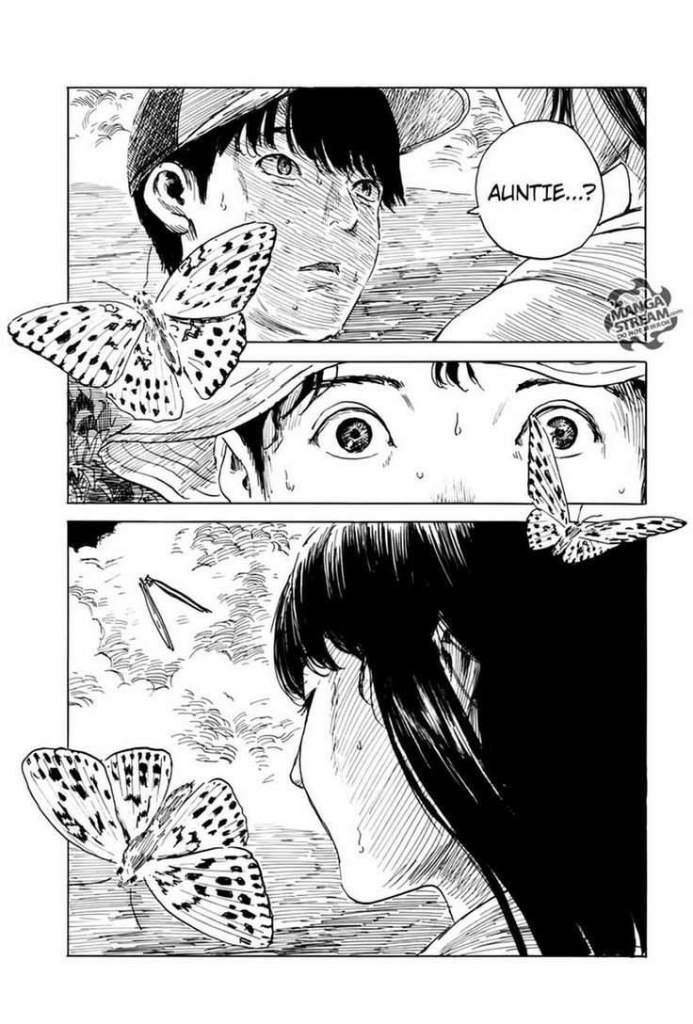
The cousin survives with severe brain damage that prevents him from pointing an accusatory finger at his aunt, and the protagonist is gaslit into believing that maybe he just imagined the whole thing up, other than the fact that his cousin fell off. The protagonist’s mother unravels, not because she fears the consequences of her murder attempt, but because she may not be punished. She wants it all to break. It seems that she has been miserable forever; she had convinced herself that she ought to get married and a have a child, only to realize that she made a terrible mistake she can’t amend (other than divorcing and moving away, I guess, but she wouldn’t dare). On top of that, she’s the kind of crazy bound to drag everyone around her into ruin.
She despises her husband, whom she resents because he tied her to this miserable life, and instead she searches for intimacy in her son. She entangles him in a somewhat-chaste incestual relationship.

The kid is at times happy that this beautiful mother whose love he yearns for is treating him so warmly, but the rest of the time he feels smothered and creeped out, and wishes to escape. Most of the memorable moments of this tale involve a childhood love of the protagonist, a girl with a differently fucked-up home life, who could end up saving him from a mother that won’t allow any competitors.
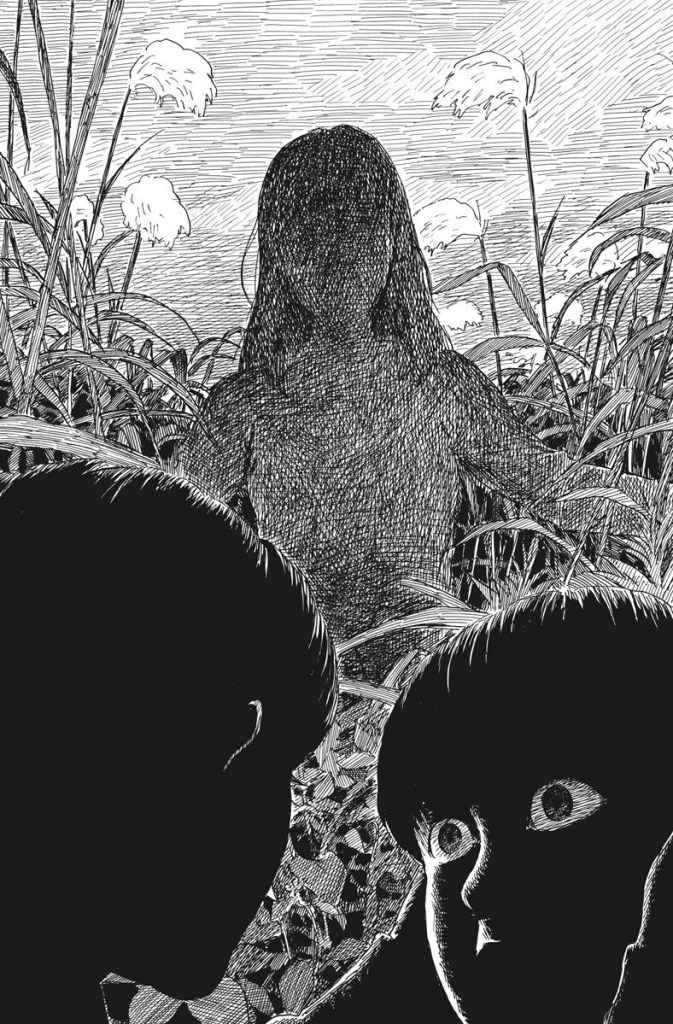
As the story progressed, I wanted the protagonist to break free from his mother’s clutches and build a better life with this sweet girl who somewhat inexplicably wished to share her life with him. However, as I thought that the story was approaching its end, the author executed a turning point that sealed the fate of all the characters involved. I won’t go into details, because they would be massive spoilers, but the author forced an unlikely encounter and undid most of the protagonist’s character development. Shortly after, the story moves into a timeskip and makes you realize that the lack of mobile phones and the internet during the story up to that point wasn’t a stylistic choice.
The protagonist, now an adult in his mid-to-late thirties, deals with what remains, both physically and mentally, of his aging, miserable parents, partly hoping that before those two candles are spent, he’ll get enough of those relationships to either assuage his despair about how life treated him, or push him over the edge so he finally dares to kill himself. What I got out of that final block of the story is that some people end up so broken by nature and/or nurture that the most they can aspire for is a quiet place in which to be themselves. I had already realized that before I read this series, though.
(That reminds me of Nick Drake’s lovely song Place to Be, quite apropos:
When I was young, younger than before
I never saw the truth hanging from the door
And now I’m older, see it face to face
And now I’m older, gotta get up, clean the place
And I was green, greener than the hill
Where flowers grow and the sun shone still
Now I’m darker than the deepest sea
Just hand me down, give me a place to be)
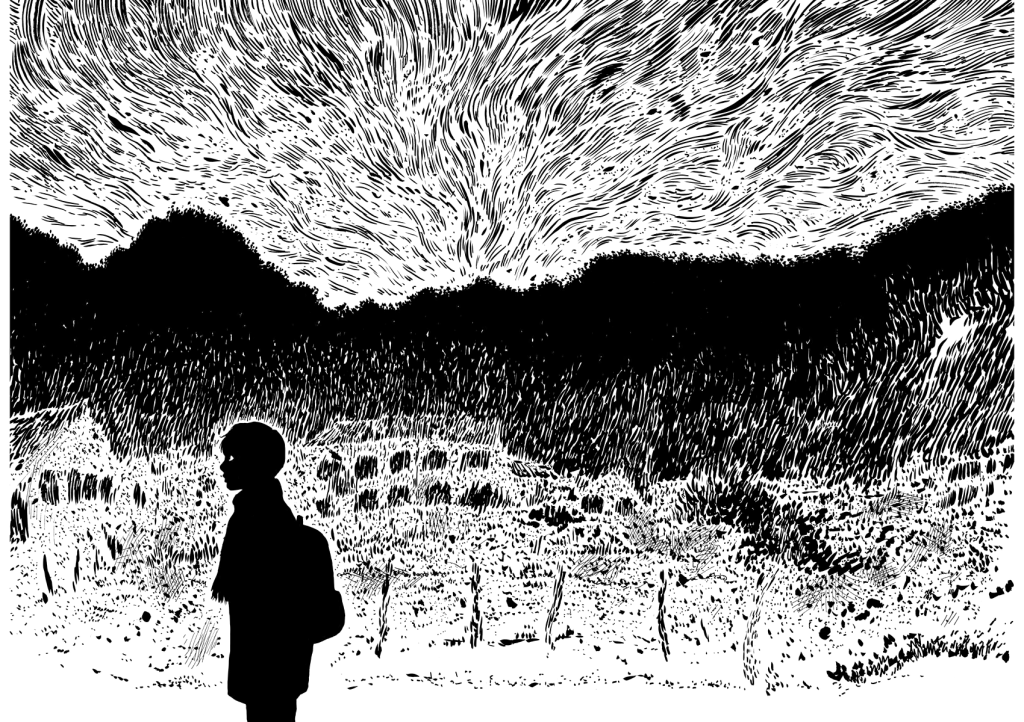
Oshimi has created some of the most psychologically twisted mangas I’ve ever read: The Flowers of Evil, Inside Mari, Happiness, as well as this story I’m reviewing. He has also pushed out a couple of duds like Drifting Net Café and Welcome Back, Alice, with which I likely shouldn’t have bothered. In Chi no Wadachi he went further by distorting the world according to the protagonist’s disturbed mental states; for example, when he ends up hollowed out and hopeless, we experience his world as sparse sketches. Plenty of compelling drawings.

Did Oshimi succeed in writing a satisfying ending to this troublesome tale? I’m not sure. The first half was far more compelling, and I would have been more comfortable with the remainder if he hadn’t undone his protagonist’s development to twist the plot into a turning point. Still, I’m not going to forget this story, nor the protagonist’s hauntingly nuts mother, any time soon.
 The Domains of the Emperor Owl
Pingback: Review: Dungeon Meshi, by Ryōko Kui – The Domains of the Emperor Owl