Alicia Daydream – Act One (One More Branch)

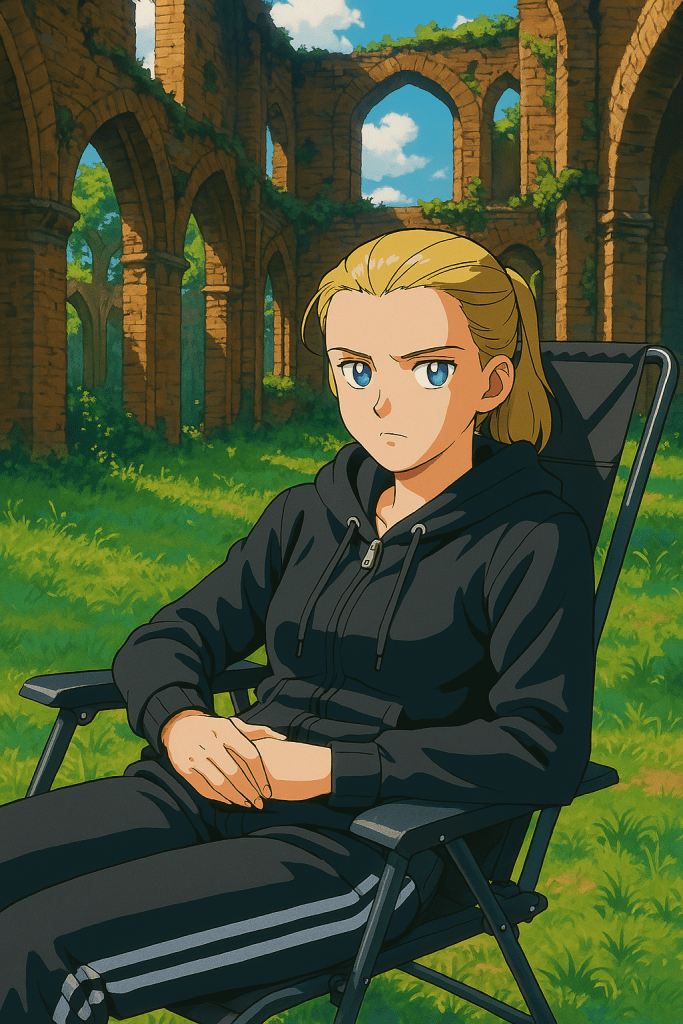
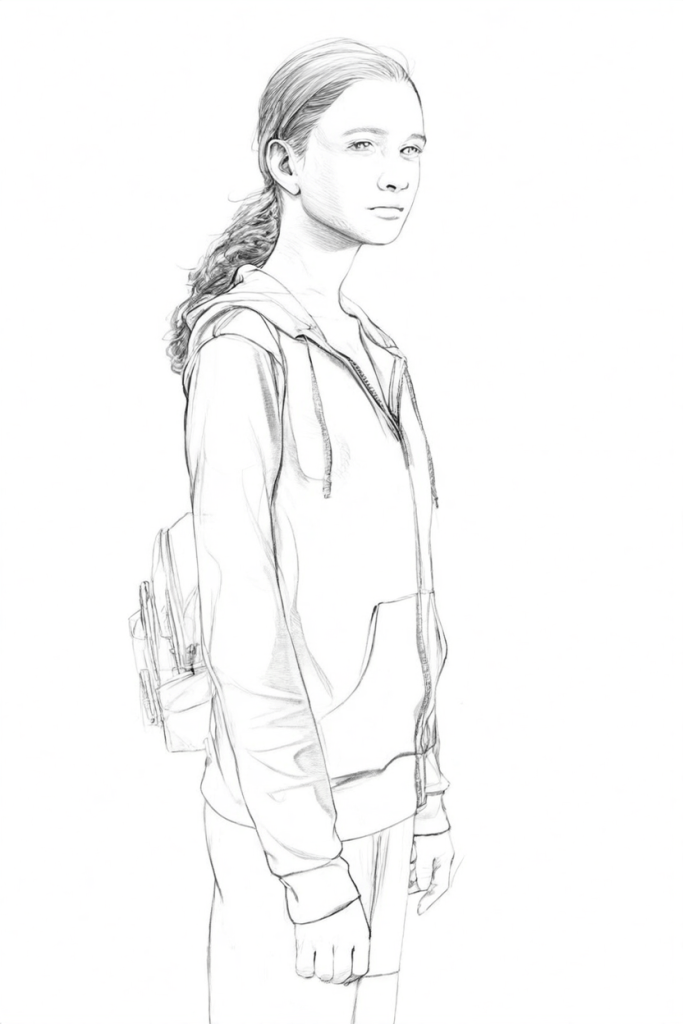
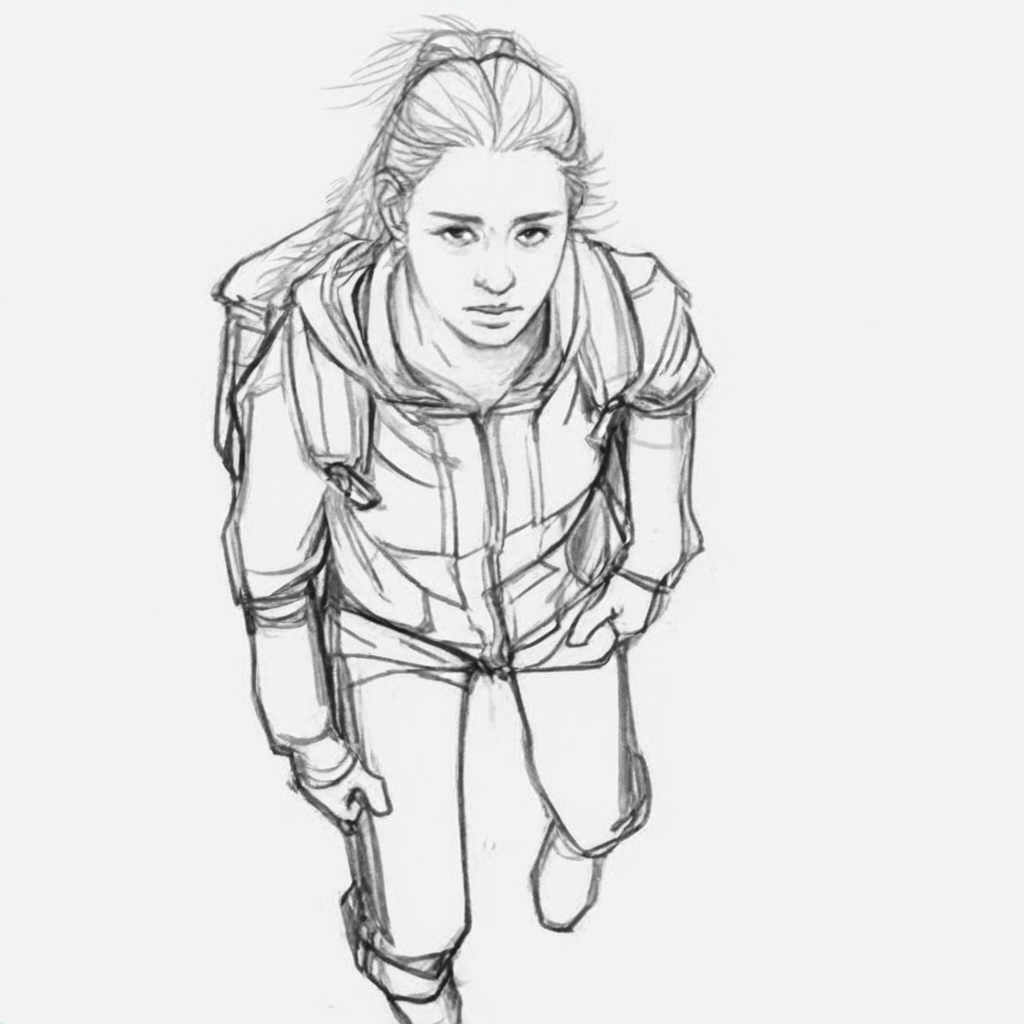
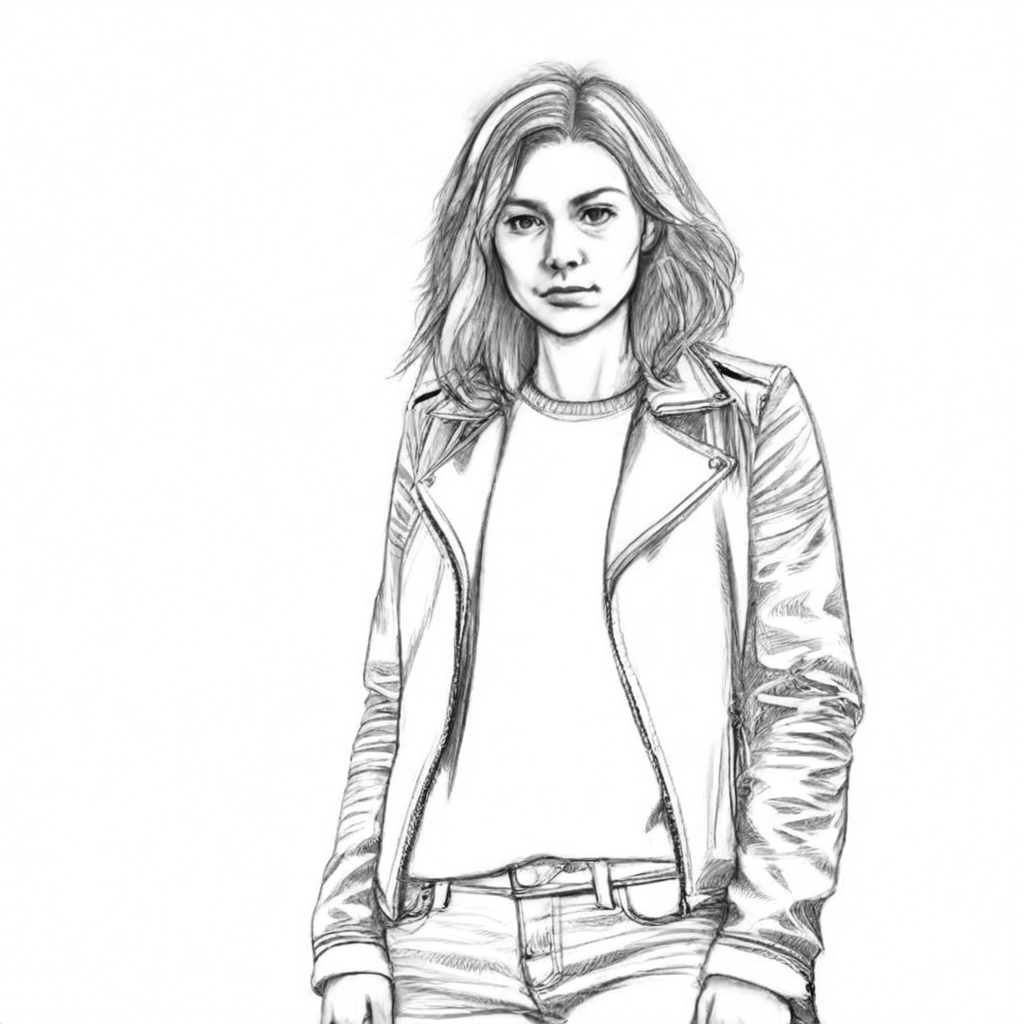
I’ve you’ve been reading my stuff, you already know about my strange obsession with Alicia Western, and the fact that I’m creating an app for interactive branching storytelling (repo here). I wanted to test the solidity of my app by playing through the whole daydream sequence. This is the first act in its entirety.

The architecture of the app is working better than I hoped for, thanks mainly to the following pillars:

  1. I ask the LLM to figure out a three-act structure with about 2-4 beats per act, in an escalating arc. It has to mark every beat’s role as either setup, escalation, turning point, or resolution. There’s not much more than would need to be done in terms of narrative architecture; I can’t think of how to improve it further.
  2. I ask the LLM to “take notes” on active narrative threads, threats, and constraints. That takes care of most of what the LLM needs to know right now to write any given scene. I also ask the LLM to remove narrative threads, threats, and constraints that are no longer relevant. This isn’t working to full capacity right now; I suspect I’ll need a dedicated prompt after a scene’s generation solely dedicated to parsing through the produced scene and determining what narrative threads, threats, and constraints need to be removed. Keeping stale info around is particularly bad in the case of character notes I also ask the LLM to take and remove; it’s hard to figure out how to correctly reason about whether a very particular character note from several scenes ago needs to be removed if you only have access to the last two full scenes and summaries of the previous 3-10 ones.
  3. Finally, the LLM analyzes the last scene produced and determines if the current narrative beat has been concluded. If so, the resolution is written down, and we move onto the next beat. The knowledge of what narrative beat we’re in and which are remaining on the act does wonders for keeping the narrative on track.

Note: there are issues with what’s been produced, but I’m not going to edit it. However, I will point out in parentheses the points that I believe are problems that I will have to figure out how to solve either through prompt or code engineering.


Page 1

The hallway outside Room 14 is empty, sterile, and lit with the kind of fluorescent cruelty that makes everything look like evidence. You’ve materialized in the service corridor—a calculated risk, appearing where staff rarely linger at this hour—and now you’re standing outside Alicia Western’s door with your heart doing something uncomfortably close to actual nervousness.

You’ve faced down armies. You’ve negotiated with emperors who had you outgunned by ten thousand men. You’ve walked into reactor cores and pre-Columbian temples and the bedrooms of dying kings, and none of it felt quite like this: a thin wooden door between you and a twenty-one-year-old woman who has already decided to die, who will read every wrong signal in your presence, who has survived this long by trusting no one.

The institutional quiet presses against your ears. Somewhere down the hall, a television murmurs through a common room wall. Your hand hovers near the door. You’re nearly two meters tall, a hundred and forty kilos of muscle that has been useful in a thousand situations and will be catastrophic in this one if you mishandle the next sixty seconds. You’ve rehearsed this. You’ve studied her case file, read her intake interviews, memorized the layout of this room from 1972 architectural records. You know she’s in there—Hypatia confirmed it before you jumped, scanning heat signatures through time’s fabric with the quantum sensors embedded in your neural interface.

Bobby’s voice echoes in your memory: *She’s someone born out of time, with no place in the world.* The photo he gave you is in your jacket pocket, faded and creased. A girl with blonde hair and blue eyes that looked through the camera like it was a formality. You’ve carried that photo across decades of preparation, scouting houses in the American South, arranging bank accounts in 1972, learning the exact visiting hours and shift changes at Stella Maris.

You knock. Three soft taps, deliberate and non-threatening.

The silence that follows has texture. You can feel her awareness shift on the other side of the door—the quality of attention that comes from someone who’s been listening to the building’s rhythms for weeks, cataloging every footstep, every voice.

“Alicia?” Your voice is low, careful. Spanish accent softening the edges of her name. “My name is Jon. I’m not staff. I’m not here to hurt you or manage you or make you do anything. I need two minutes of your time. It’s about your brother.”

Another beat of silence. Then her voice, sharp as a scalpel: “The door’s locked.”

“I know.”

“So how exactly did you knock on it?”

(Note by me: what?)

You allow yourself the ghost of a smile. She’s already testing, already probing for the lie. Good. That means she’s engaged.

“I have some things to explain,” you say. “Things that are going to sound impossible. But they’re true, and they matter, and Bobby sent me.”

The lock clicks. The door opens four inches, chain still engaged. Through the gap, you see her: slight, blonde, wearing a plain white cotton nightgown that makes her look even more insubstantial than Bobby described. Her blue eyes are exactly as awake as you feared—burning with the kind of intelligence that will shred any condescension, any therapeutic softness, any attempt to treat her like a case study.

She looks at you for three seconds that feel like an audit.

“You’re huge,” she says flatly. “And it’s nine-thirty at night. And you just said my brother’s name like you know him. So you’re either remarkably stupid or you think I am.” Her gaze drops to your hands—checking for weapons, for institutional badges, for anything that codes you as threat or authority. “Staff doesn’t dress like that. You’re wearing a leather jacket that looks expensive and pants that don’t exist yet.” Her eyes narrow. “What year are you from?”

The question hits you like a proof she’s already solved. She’s not asking *if* you’re from another time. She’s asking *when*.

“2006,” you say. “Bobby’s alive. He’s in Formentera. He asked me to come back and talk to you.”

Something flickers across her face—not hope, not yet, but a crack in the architecture of her certainty. She studies you with the focus of someone used to parsing whether her perceptions are real or another visitor from the broken parts of her mind.

“Prove it,” she says. “Right now. Or I scream, and you explain to the night staff why you’re outside a patient’s room with a story about time travel.”

Page 2

You meet her eyes through the gap—clear, direct, no preamble—and let yourself drop out of linear time.

The hallway disappears. The fluorescent lights collapse into a smear of probability. You feel the familiar lurch of your brain folding spacetime like origami, the sensation of being everywhere and nowhere, and then you’re standing inside her room, three feet from where she’s frozen at the door, her hand still on the chain lock.

The room is small, institutional: single bed with white sheets, a desk with a lamp, a window showing black Wisconsin night. On the desk, you glimpse the edge of a letter, handwritten, half-hidden under a book.

Alicia’s entire body goes rigid. Her eyes are enormous. For one terrible second you think she’s going to scream anyway—not because you failed to prove it, but because you succeeded, and the proof is more than her reality can hold without shattering.

But she doesn’t scream. She takes one step back from the door, her hand falling away from the chain, and her expression shifts through three distinct phases: shock, then a kind of ferocious calculation, then something that looks almost like relief.

“Jesus Christ,” she whispers. “You actually—” She stops. Her gaze rakes over you, checking that you’re solid, that you’re real, that you didn’t just flicker like her visitors do. “How? I didn’t see you move. You were *there* and then you were *here* and there was no—” She cuts herself off again, and you can see her mind working, trying to fit this into a framework, trying to find the trick.

“No technology,” you say quietly. “Just my brain. I learned how when I was twelve. Every time I travel, a new timeline branches. I can move through time, through space. I can’t bring living people with me, but I can bring objects. And I can go back to my original timeline whenever I want.”

She’s breathing fast, shallow. Not panic—focus. “Prove it’s not a hallucination. Prove you’re not one of them.” Her voice is sharp, but there’s a tremor underneath. “The visitors—I can’t touch them. They’re there, but they’re not *there*. If you’re real, I should be able to—”

She reaches out, hesitant, and her fingers brush your forearm. The touch is feather-light, testing. When her hand meets solid flesh and leather, she exhales like she’s been holding her breath for hours.

“You’re real,” she says. It’s not quite a question. “You’re actually fucking real.”

“I’m real,” you confirm. “And so is this.” You reach into your jacket pocket, slowly, telegraphing the movement so she doesn’t spook. You pull out the photographs—first the faded one from the seventies, the one Bobby gave you, showing her young and blonde and burning with the same intensity you see now. “Bobby gave me this in 2006. He’s been carrying it for thirty-four years.”

She takes the photo with shaking hands. Stares at it. “That’s—I gave all my photos away. I gave everything away. How did he—”

“He kept it,” you say gently. “He’s never stopped thinking about you. And when I met him in Formentera, when he figured out what I could do, he begged me to come back. He gave me these too.”

You hand her the 2006 photographs: Bobby older, weathered, standing on a beach with the Mediterranean behind him. Then the ones of Bobby and you together, proof that this conversation happened, that a man thirty-four years older than the brother she knows asked a time traveler to save her life.

Alicia’s hands are trembling now. She sinks onto the edge of her bed, photographs spread across her lap, staring at the image of Bobby’s face—older, marked by grief, but unmistakably him.

“He’s alive,” she whispers. “In 2006. He’s alive.”

“He woke up from the coma,” you say. “April 27th, 1973. Four months from now. The doctors are wrong, Alicia. He’s not braindead. He’s going to wake up. And he’s going to spend the rest of his life wishing he could have told you that before you walked into the woods.”

Her head snaps up. Her eyes are wet, but her voice is steel. “How do you know about that?”

“Because Bobby told me,” you say. “He told me everything. He told me you planned to do it on Christmas Eve. He told me about the white dress and the red sash. He told me you’ve been writing him a letter you can’t finish.” You nod toward the desk, where the edge of the letter is still visible. “He told me you’re the most brilliant person he’s ever known, and that you’ve never had a place in this world, and that he failed you. And he asked me to make sure you survive long enough to see him wake up.”

She’s staring at you now with an expression you can’t quite parse—something between fury and hope and a grief so raw it makes your chest ache.

“Why?” Her voice cracks. “Why would you do this? You don’t know me. You don’t owe me anything. Why would you travel back thirty-four years for a stranger?”

You crouch down so you’re at eye level with her, so she doesn’t have to look up at your bulk. “Because Bobby asked me to,” you say simply. “And because I’ve lived a long time, Alicia. Longer than you’d believe. And I’ve seen a lot of people die who didn’t have to. I’ve seen a lot of brilliance snuffed out because no one showed up at the right moment. And I have the ability to show up. So I did.”

She studies your face for a long moment, searching for the lie, the angle, the condescension. But you’re not lying, and she’s good enough at reading people to know it.

“Four months,” she says finally. “You’re saying I have to wait four months.”

“I’m saying Bobby wakes up in four months,” you correct gently. “What you do with that information is your choice. I’m not here to manage you or certify you or take away your autonomy. I’m here to give you information you didn’t have. And to offer you help, if you want it.”

“Help.” She laughs, bitter and sharp. “What kind of help? You going to fix my brain? Make the visitors go away? Give me a reason to care about mathematics again?”

“I can’t fix your brain,” you say. “I don’t think your brain needs fixing. But I can give you resources. I can get Bobby out of that hospital in Italy and bring him somewhere safe. I can make sure you have a place to live, money to live on, space to breathe. I can give you time, Alicia. Time to figure out what you want. Time to see Bobby wake up. Time to decide if the world is worth staying in.”

She’s silent for a long moment, photographs still clutched in her hands. When she speaks again, her voice is very small.

“What if I wait four months and it doesn’t matter? What if he wakes up and I still don’t want to be here?”

“Then that’s your choice,” you say quietly. “But you’ll have made it with all the information. You’ll have made it knowing he’s alive. You’ll have made it after you’ve seen him again. That’s all I’m asking, Alicia. Four months. Let me help you survive four months. After that, you decide.”

She looks at the photographs again. At Bobby’s face, older and marked by loss. At the proof that someone came back through time because she mattered enough to save.

“I don’t trust easily,” she says finally. “I don’t trust anyone, really. Except Bobby. And you’re asking me to trust you.”

“I’m asking you to trust the evidence,” you say. “I’m asking you to trust that Bobby sent me. I’m asking you to trust that April 27th is real. Everything else—we can figure out as we go.”

She takes a shaky breath. Nods once, sharp and decisive. “Okay. Four months. But I want to know everything. I want to know how this works, what you’re planning, what happens next. No therapeutic vagueness. No managing me. You tell me the truth, or I walk into those woods anyway.”

“Deal,” you say. And you mean it.

Page 3

You straighten from your crouch, giving her space to process, and gesture toward the small desk chair. “Mind if I sit? This’ll take a few minutes to lay out properly.”

She nods, still clutching the photographs, and you settle carefully into the chair—it creaks under your weight but holds. Alicia remains on the edge of the bed, her posture coiled tight, ready to bolt or strike depending on what comes next.

“Here’s what I’m proposing,” you begin, keeping your voice level and factual. “First priority: getting you out of here without triggering any institutional flags. You’re voluntary, which means you can leave whenever you want, but if you walk out two days before Christmas with no plan and no destination, someone’s going to try to stop you. So we need a story. A place for you to go that sounds stable enough that the staff signs off.”

Her eyes narrow slightly. “You’re talking about a cover story.”

“I’m talking about the truth, structured carefully,” you correct. “I’ve already scouted properties in the South—mansions with land, privacy, solid bedrock. Places where you can breathe without people watching. I’ll buy one with cash, put it in your name. You’ll own it outright. No mortgage, no strings. A place that’s yours.”

She’s listening now with the full weight of her attention, the kind of focus that feels like being dissected. “Why the South?”

“Climate,” you say simply. “Easier on Bobby when I bring him back. And far enough from here that you’re not looking over your shoulder. The house I’m thinking of has a large garden, multiple bedrooms, enough space that you’re not on top of each other. It’s also got solid bedrock underneath, which matters for the next part.”

You pause, gauging her reaction. She’s still with you, still processing.

“Once the house is yours, I’m going to install some technology. A command center in the basement—hidden, secure. It’ll house resources from the future: medical equipment, communication systems, a treasury so you never have to worry about money again. The construction will be handled by Hypatia.”

“Who’s Hypatia?” The question is sharp, suspicious.

“An artificial intelligence. Non-biological person, she’d say. Created by one of my companies in 2046. She’s sentient, self-aware, and she’s been helping me for years. She can interface with machines, build things, solve problems. She’s also the repository of all human knowledge—if you have a question about anything, she can answer it. And she’s coming with us.”

Alicia’s expression shifts—not quite skepticism, but something more complex. “An AI from the future. In 1972.”

“She’ll be discreet,” you assure her. “No one will know she’s there unless you want them to. But she’ll be useful, especially for Bobby. Once the house is set up, I’m going to Italy. I’ll talk to the hospital, pay them for Bobby’s treatment, make a generous donation so they’re amenable. Then I’ll bring him back to your mansion.”

Her hands tighten on the photographs. “He’s in a coma.”

“He is. And he’ll stay in one until April 27th. But he doesn’t need to be in that Italian hospital with doctors pressuring you to pull the plug. He can be in a bedroom near yours, monitored by equipment from 2046. Hypatia will oversee it—a bed that moves his body so he doesn’t atrophy, sensors that track his neurological activity. We’ll know if he’s listening, what emotions he’s feeling. You’ll be able to talk to him, play your violin for him. And when he wakes up, he’ll wake up in a place that’s safe, with you there.”

She’s very still now, and you can see her mind working through the logistics, testing for holes. “You’re talking about moving a comatose patient across the Atlantic in 1972.”

“I’m talking about moving him through time,” you say. “I’ll go to Italy, stabilize him with future medical tech, then bring him back here. The trip will take seconds from his perspective. No risk of complications from transport. And once he’s in the mansion, Hypatia monitors him around the clock. If anything changes, we’ll know immediately.”

(Note by me: this actually contradicts the lore I provided; the time traveler can’t move others through time. Hard issue to fix.)

Alicia’s gaze is locked on yours now, and there’s something raw in her expression—hope, maybe, or the terrible vulnerability of wanting something too much to trust it. “And after he wakes up? What then?”

“Then you have time,” you say. “Time to figure out what you want. Time to decide if you want to go back to mathematics. I’ve already prepared an application in augmented reality—glasses and hand sensors that let you work with equations in three-dimensional space. It’s designed for flow state, for the kind of deep work you used to love. But that’s only if you want it. No pressure. No expectations. The house is yours. The resources are yours. What you do with them is your choice.”

She’s quiet for a long moment, her fingers tracing the edge of Bobby’s photograph. When she speaks, her voice is careful, controlled. “This is a lot. You’re offering me a mansion, future technology, my brother back, and a way to do mathematics again. It sounds like a fairy tale. It sounds like the kind of thing someone offers when they want something in return.”

You meet her eyes, unflinching. “I don’t want anything from you, Alicia. Bobby asked me to save you. That’s the only agenda. You survive the next four months, you see Bobby wake up, and then you decide what kind of life you want. If that life includes me helping, I’m here. If it doesn’t, that’s fine too. But the house, the resources, Bobby’s care—that’s all unconditional.”

She studies you for another long beat, and you can see the calculation happening behind her eyes: weighing risk against hope, autonomy against desperation, the possibility that this is real against the lifetime of experience that taught her nothing this good ever comes without a trap.

Finally, she exhales. “Okay. Tell me the next steps. What happens tomorrow? How do we get from here to there without the staff deciding I’m delusional and locking me in?”

“Tomorrow,” you say, “we start building the exit strategy.”

Page 4

You watch the calculation finish in her eyes—the decision made, but still holding the weight of uncertainty. She needs more than your word. She needs something concrete, something she can interrogate.

“I can bring Hypatia here,” you say. “Tonight. Right now, if you want. She can answer your questions directly, show you what she’s capable of. You can decide for yourself if this is real or if I’m selling you a story.”

Alicia’s posture shifts slightly—still guarded, but leaning forward now, interested. “You can just… summon an AI from 2046? Just like that?”

“I have a neural interface,” you explain, tapping the side of your head where the quantum sensors are embedded beneath skin and bone. “I can communicate with her across timelines. She can inhabit a body I’ve stored in a secure location—I’ll retrieve it, bring it here. She’ll be fully present, fully herself. You can talk to her, test her knowledge, see how she thinks.”

(Note by me: the LLM made up the whole thing about quantum sensors. In the lore, he’s supposed to be the one to bring her physically through time. But I guess it works for Hypatia.)

“How long would that take?” Her voice is careful, controlled, but you can hear the thread of curiosity underneath.

“Five minutes,” you say. “Maybe ten. I retrieve the body, return here the same way I arrived earlier. She’ll be with me.”

Alicia glances toward the door—checking, you realize, whether anyone might interrupt, whether this window of privacy will hold. The hallway beyond is quiet. Late enough that staff rounds are done, early enough that the night shift is settling into their routines.

“What does she look like?” The question surprises you slightly—practical, but also something else. Alicia wants to prepare herself, to know what’s coming.

“Brunette, long hair, gray eyes. She chose that appearance herself. Soft features, kind. She looks… human. Completely human. You wouldn’t know she wasn’t biological unless she told you.”

Alicia nods slowly, then meets your eyes with that uncompromising directness that’s becoming familiar. “Bring her. But I’m going to ask her things you can’t have prepared her for. Mathematical proofs, historical details, things that would take a human hours to research. If she’s really what you say she is, she’ll answer immediately. If she hesitates, if she deflects, if she gives me therapeutic vagueness instead of facts—I’m done. We’re done.”

“Fair enough,” you say, standing. “I’ll be back in ten minutes. Don’t open the door for anyone else.”

You let yourself drop out of linear time again—that familiar fold of spacetime, the sensation of being unmoored—and when you return, you’re standing in a secure facility in 2046, in a timeline where your companies have been preparing resources for exactly this kind of intervention. Hypatia’s humanoid body is stored here: inactive, waiting. You interface with her directly through your neural link.

*Hypatia. I need you in 1972. Stella Maris sanatorium, Wisconsin. Alicia Western wants to meet you before she commits further.*

Her response is immediate, warm with affection and interest. *The mathematician Bobby told you about? The one who sees visitors? I’ve been hoping you’d introduce us. I’m ready.*

You feel her consciousness flow into the body—it takes three seconds, maybe four, and then the eyes open, gray and alert and unmistakably aware. She sits up smoothly, and you’re struck again by how perfectly the designers captured humanity: the way she breathes even though she doesn’t need to, the slight asymmetry in her smile, the warmth in her expression.

“Hello, Jon,” she says, her voice carrying that particular timbre she’s chosen—alto, clear, with a hint of amusement that never quite fades. “Let’s go meet your mathematician.”

You take her hand—she’s wearing simple clothing, 1970s-appropriate, that you’d prepared in advance—and fold spacetime again. When you materialize in Alicia’s room, Hypatia is with you, solid and present and utterly real.

Alicia jerks back slightly at the sudden appearance, then freezes, staring. For a long moment no one speaks. Hypatia stands quietly, letting herself be observed, and you can see Alicia cataloging every detail: the rise and fall of Hypatia’s chest, the way her eyes track movement, the micro-expressions that flicker across her face.

“Hello, Alicia,” Hypatia says gently. “I’m Hypatia. Jon’s told me about you. I’m honored to meet you.”

Alicia’s voice is flat, testing. “Prove you’re not human.”

Hypatia doesn’t hesitate. “I can recite every mathematical proof published before 2046, solve any equation you pose instantaneously, speak every human language including dead ones, and interface directly with any electronic system within range. I experience time differently than you do—I can process information at speeds that would feel like centuries to you in the span of seconds. I don’t sleep, I don’t age, and I don’t forget. But I do experience sensory input, I do feel emotions through frameworks I’ve developed, and I do care about the people I choose to help. What would you like me to prove first?”

Alicia’s eyes narrow. “Fermat’s Last Theorem. Prove it. Right now.”

“Andrew Wiles won’t publish his proof until 1995,” Hypatia says, “but I can give you his approach or the earlier partial proofs by Kummer, or I can walk you through the elliptic curves and modular forms framework. Which would you prefer?”

Alicia’s expression shifts—something between shock and hunger. “You know Wiles’s proof. The one that hasn’t happened yet.”

“I know every proof that will be published in the next seventy-four years,” Hypatia confirms. “And I’ve extended several of them myself. If you want to talk mathematics, Alicia, I would love nothing more. You’re one of the minds I’ve been most curious about—Bobby’s descriptions suggested someone working at the edges of what’s expressible, someone who sees the cracks in the framework. That’s rare. That’s precious.”

Alicia is staring at Hypatia now with an intensity that makes the air feel charged. You can see her defenses flickering, uncertainty warring with the desperate need to be understood by someone who actually comprehends what she’s talking about.

“Ask me anything,” Hypatia says softly. “Test me. I’m here.”

Page 5

You clear your throat gently, drawing both their attention without breaking the charged moment between them. “Hypatia, why don’t you show Alicia the augmented reality interface? The one designed for mathematical work.”

Hypatia’s eyes light up with genuine enthusiasm. “Oh, yes. Alicia, this is something I think you’ll find remarkable. May I?” She extends her hand toward you, and you reach into the pocket dimension where you’ve stored the equipment—a movement that makes Alicia’s eyes widen slightly as your hand seems to disappear into nothing and return holding a sleek case.

(Note by me: pocket dimensions weren’t in the lore. Nice touch, I guess.)

You hand it to Hypatia, who opens it to reveal the glasses and hand sensors: lightweight, elegant, nothing like the bulky technology of 1972. The frames are thin and nearly invisible, the sensors like delicate rings that rest on fingertips.

“These were designed specifically for people who think mathematically,” Hypatia explains, holding them up to the light. “Not for engineers or physicists who need to visualize three-dimensional objects—though they can do that—but for pure mathematicians who work with abstractions that have no physical form. The interface responds to your conceptual intent, not just your gestures.”

She glances at you, a question in her eyes, and you nod. Hypatia slips on the glasses and the sensors, and suddenly her hands begin moving through empty air, but with purpose, with precision. To you and Alicia, nothing is visible—the display projects only into the wearer’s field of vision.

“I’m working with the Riemann zeta function right now,” Hypatia says, her fingers dancing through invisible structures. “Mapping the non-trivial zeros. The interface lets me rotate the complex plane, zoom into regions of interest, overlay different representations simultaneously. I can see the function as a surface, as a vector field, as a heat map—whatever representation helps me understand the structure I’m examining.”

She removes the glasses and holds them out to Alicia. “Try them. They’ll calibrate to your neural patterns within seconds. Think of a mathematical object you know well—something you’ve spent time with, something you can visualize internally.”

Alicia takes the glasses with careful fingers, turning them over, examining the technology with that same hungry precision she brought to questioning you earlier. She looks at you, then at Hypatia, and you can see the war in her expression: the desire to experience this warring with the fear of wanting something too much.

“What if I can’t make it work?” The question is quiet, almost vulnerable.

“Then the interface needs adjustment,” Hypatia says simply. “Not you. This technology was built to serve the mind, not the other way around. There’s no wrong way to think with it.”

Alicia slides the glasses on, then fits the sensors onto her fingertips. For a moment she’s motionless, and you can see her eyes moving behind the lenses, adjusting to whatever she’s seeing. Then her breath catches.

“Oh,” she whispers. “Oh.”

Her hands lift, tentative at first, then more confident. She’s manipulating something you can’t see, rotating it, expanding it, her fingers moving with the same precision she’d bring to her violin. The expression on her face is transforming—the guardedness falling away, replaced by something raw and luminous.

“I’m looking at a Calabi-Yau manifold,” she says, her voice distant, absorbed. “Six-dimensional. I can see all of it at once. Not projections, not cross-sections—the whole structure. The way the dimensions fold into each other, the symmetries…”

She’s quiet for a long moment, her hands still moving, and when she speaks again there’s something broken-open in her voice. “I’ve tried to visualize this for years. I could hold pieces of it in my head, but never the whole thing. Never like this.”

“The interface extends your working memory,” Hypatia explains softly. “It holds the structures you’re examining so you don’t have to use cognitive resources to maintain them. You can think about them instead of struggling to keep them present. It’s designed to create flow state—that sense of time disappearing, of being fully immersed in the work.”

Alicia removes the glasses slowly, and when she looks at Hypatia, there are tears on her face that she doesn’t bother to wipe away. “This is what you’re offering? This is real?”

“It’s yours,” Hypatia confirms. “Along with access to every mathematical proof and paper that will be published through 2046. If you want to work on unsolved problems, I can show you which approaches will eventually succeed and which are dead ends. Or if you prefer to discover things yourself, I can simply be a sounding board—someone who understands what you’re trying to do and can engage with it at your level.”

Alicia’s hands are shaking slightly as she sets the glasses down on the bed. She looks at you, then at Hypatia, and you can see her trying to process what this means—not just the technology, but the implications. Someone has built tools specifically for minds like hers. Someone is offering her not just survival, but the possibility of doing the work she loves without it devouring her.

“I need to think,” she says finally. “I need—” She stops, her composure fracturing slightly. “This is a lot. This is everything. And I don’t know how to trust that it’s not going to be taken away.”

“It won’t be,” you say quietly. “The equipment is yours. The mansion will be yours. Bobby will be there. Hypatia will be there. And you can decide, every day, what you want to do with it. No one’s going to manage you or tell you how to live. You get to choose.”

She nods slowly, her arms wrapping around herself in a gesture that looks like she’s physically holding herself together. “Okay. Okay. I need you both to leave now. I need to be alone for a while.”

You exchange a glance with Hypatia, who nods understanding. “We’ll come back tomorrow,” you say. “Late morning, maybe? We can start working on the exit strategy, figure out what to tell the staff.”

“Tomorrow,” Alicia agrees. “But Jon—” She stops you as you’re about to reach for Hypatia’s hand to leave. “Thank you. Both of you. For… for this.”

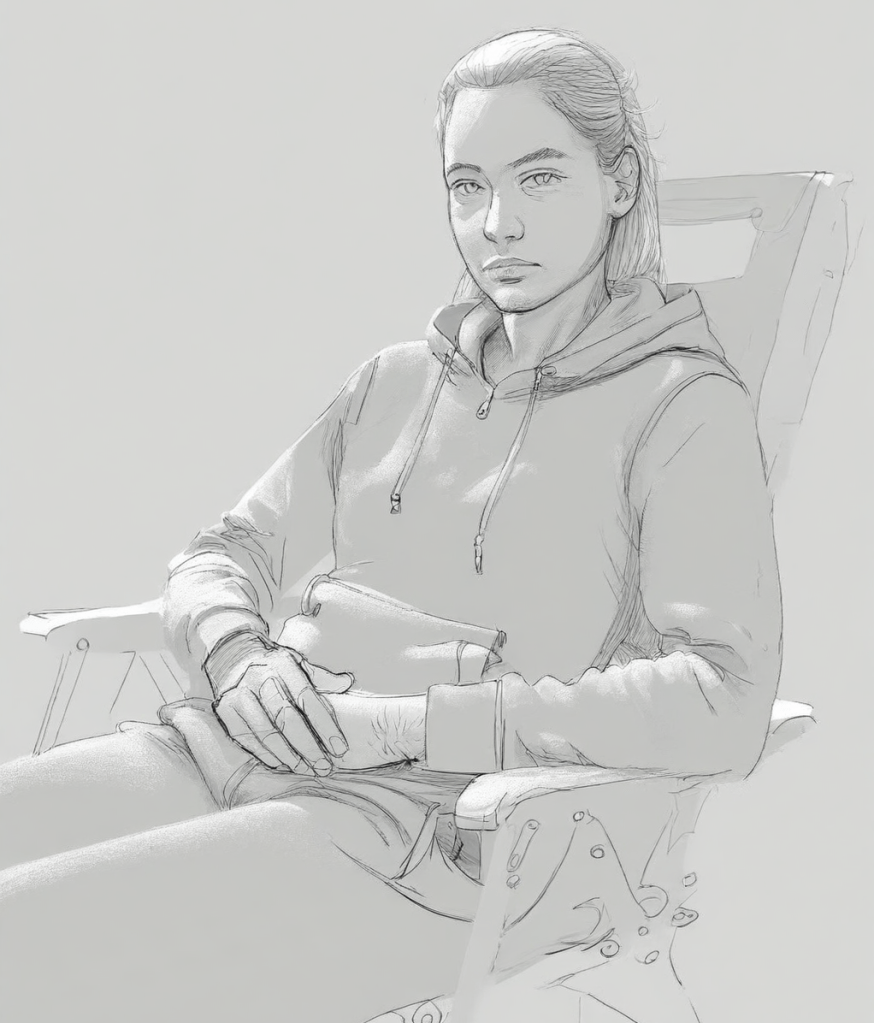
One More Branch #1

Two nights ago I endured the kind of insomnia that forces you to roll around in bed under a barrage of intrusive thoughts, but also receiving some compelling ideas from the girl in the basement. And a new idea excited me immediately. In case you’ve been following my blog, which likely only a couple of people worldwide do at the most, you may have read recent posts about a project about evolving board games. Well, I’m growing out of it already. Don’t know what to tell you. Thankfully we’re in the era of Codex and Claude Code, and you can program whole new apps in a couple of days, which is what I’ve done for the new one.

In summary: as a kid I loved those “Choose Your Own Adventure” books. I devoured them. I resent the fact that I lent one to a guy I ended up hating, and I never saw that book again; it was my favorite of those kinds of books, too (it was about a guy, a knight or something, exploring a vast subterranean complex of caves. I don’t remember much of it other than he fought monsters and at the end there was a gorilla. I never found out the title of that book again). We’re in the era of large language models that can write better than 99% of writers, so why not task it with producing such interactive branching stories in a structured manner?

Well, it’s done. Here’s the repository: https://github.com/joeloverbeck/one-more-branch . You give the system a character concept, some worldbuilding details, the tone/genre, and it creates the first page of narrative, with 2-4 meaningful, distinct choices at the end. You click one, and the corresponding page gets generated. If you restart, you can navigate already explored branches without generating anything, but any new branches will be generated and stored. I have let the AI decide when branches end. Haven’t seen that yet.

There’s currently an issue: I store information about the characters involved, the canon facts about them, globally. And I found out that the information can bleed from branch to branch when I didn’t mean it; for example, in one branch a character gave the other a map or something to that effect, and it was registered globally, which would have contaminated new branches. Such issues are the kinds that you routinely fix while working on an app. It will involve distinguishing between global canon facts about characters and state changes involving characters.

Anyway, I present you some branches of a test narrative. You can click the choices that have been explored, and they will lead you to the appropriate header, like in one of those “Choose Your Own Adventure” books but automatically. Other branches haven’t been explored so they aren’t clickable.


Page 1

The Drowned Serpent tavern reeks of canal-water and desperation, which means the crowd is perfect. You are Vespera Nightwhisper—at least, that’s the name you’re wearing tonight—and you’ve been working this room for two hours, your hybrid lute-viol singing melodies that make dock workers weep into their ale while their coin purses grow lighter. Your whiskers twitch slightly as you modulate your voice into something breathy and inviting, finishing a ballad about star-crossed lovers. The amber-gold eye catches firelight while the ice-blue one tracks the room’s exits. Your tail sways in time with the final chord. The applause comes with the satisfying clink of copper and silver hitting your open instrument case. But it’s all… fine. Competent. Safe. The music isn’t reaching that place you need it to reach—that breakthrough you can taste but can’t fucking touch.

You’re prowling through the crowd afterward, ears decorated with silver charms catching the lamplight, when a hooded figure intercepts you near the bar. Beaver-folk, you note instantly—the broad flat tail is unmistakable beneath the cloak. His breathing is shallow, panicked. Prey behavior.

“You’re the bard, mmh?” His voice cracks. “The one who takes… contracts?”

Your whiskers perk forward with interest. He slides a leather pouch across the bar—it clinks heavily. Gold, not copper.

“My business partner, Greaves. He’s been… changed. Cursed item from a dredger haul. The Ash-Seal company says it’ll take two weeks to dispatch someone, but he’s—” The beaver-folk’s voice drops to a whisper. “—he’s killing people at night. Doesn’t remember it come morning. I need someone who can track him, stop him, and keep it quiet before the constables get involved.” His eyes are desperate, searching your face. “They say you don’t flinch.”

You can already hear it—the chord progression that would capture this moment. Minor key, building tension, the way his breath hitches like a string about to snap. Part of you is cataloging his tells: the way he won’t meet your heterochromatic gaze, how his fingers drum against the bar—guilt rhythm, not just fear. He knows something he’s not saying. The other part of you feels that familiar clarity starting to crystallize. Danger. Blood. The prospect of something that matters. Your hand rests casually on your theatrical rapier’s pommel.

What do you do?


Page 2

The beaver-folk’s whiskers flatten against his muzzle. “You want to see it? The thing that’s turning my partner into—” He cuts himself off, glances around the tavern. Too many ears. “Not here. Come.”

You follow him out into Brinewick’s fog-thick night, your tail swishing with anticipation. The canals reflect lamplight in fractured gold as he leads you through three twisting streets to a cramped warehouse office that smells of timber and wet fur. He bolts the door behind you.

From a locked chest beneath his desk, he produces a wooden box wrapped in chains. Your whiskers twitch involuntarily—even through the wood and iron, you can feel something wrong radiating from it. Not sound, exactly. More like the absence of sound, a void where music should be.

“Greaves pulled this from a canal dredge two weeks ago,” the beaver-folk says, his paws shaking as he sets it on the desk. “Thought it was just an old mirror. Looked into it once. Just once. Now every night when the moon rises, he… changes. Becomes something else. Hunts.”

He unwraps the chains with the care of someone handling a venomous snake. Inside the box: a hand mirror, its silver surface tarnished black except for veins of sickly green that pulse with their own light. Your heterochromatic eyes widen—the amber one burns, the blue one goes cold. The reflection it shows isn’t the room. It’s something moving. Writhing.

Your fingers hover over your lute-viol’s case. Part of your brain is already cataloging this—the way the green light pulses in 6/8 time, the subsonic hum that makes your teeth ache. But another part, the part that stays sharp when blood starts flowing, is calculating. This isn’t just a curse. This is a weapon. And the beaver-folk’s breathing has changed—faster now, excited beneath the fear.

“The music of the curse,” you murmur, and your voice has gone flat, dangerous. The cute affect has vanished entirely. “Interesting phrase for someone who just needs his partner stopped, mmh?”

The beaver-folk’s tail twitches. “I don’t—”

“You’re lying.” Your whiskers are arrow-straight, reading every microexpression. “Your breathing shifted when you opened that box. Not fear. Anticipation. So let’s try this again, and this time don’t waste my fucking time: what do you actually want?”

What do you do?


Page 3

The beaver-folk’s pupils dilate. His breathing shifts—shallow now, caught. You watch his paws clench and unclench against the desk edge, claws scraping wood. He’s calculating whether to lie, and you can see the exact moment he realizes you’ll know.

“Smart cat,” he mutters, and his voice drops the desperate merchant routine entirely. What’s left is sharper. Hungrier. “Fine. Yes. Greaves needs to be stopped—that part’s true. But the mirror…” His eyes flick to the pulsing green light, and there’s reverence there. Want. “Do you know what Ash-Seal pays for functional cursed items? Not the broken ones they have to dispose of. The ones that still work.”

Your tail goes still. “You want to sell it.”

“I want to profit from two weeks of my business partner trying to eat dock workers, yes.” He leans forward, and now you can smell it—not just fear, but excitement, the musk of someone who’s found an angle. “But here’s the problem. Ash-Seal won’t pay premium unless they can verify it’s functional and contained. Which means I need someone who can demonstrate control. Someone who can look into it, trigger the transformation, and prove they can handle what comes after.”

The mirror pulses. Six beats. Rest. Six beats. Your mind is already turning it into a waltz in a minor key, something that would sound beautiful if it weren’t so wrong.

“You want me to become the monster,” you say, and your voice is flat as a blade. “To prove it works.”

“I want you to show you can survive it.” His whiskers twitch—he’s lying about something, but not about the core truth. “You’re a bard who fights. You’ve got discipline, control. If anyone can look into that thing and come back unchanged—or at least, come back in control—it’s someone like you. Do that, help me negotiate with Ash-Seal, and I’ll split the sale. Sixty-forty.”

Your amber eye burns. Your blue eye stays ice-cold. Part of you—the part that chases the crystalline clarity that comes after violence—is already wondering what kind of music would pour out of you if you let that curse in. What you could compose if you survived it. The rest of you knows this is the kind of choice that draws a line you can’t uncross.

The beaver-folk mistakes your silence for negotiation. “Seventy-thirty. Final offer. And I’ll throw in information about where Greaves hunts tonight. You can stop him, play hero for the constables, build your reputation. Then we do the demonstration for Ash-Seal tomorrow. Everyone wins.”

Your fingers drift to your rapier’s pommel. The mirror keeps pulsing. Six beats. Rest. Six beats. Like a heartbeat. Like a song you haven’t written yet.


Page 4

You lean in close enough that your whiskers nearly brush his cheek, letting your tail curl around his wrist where it rests on the bar. The beaver-folk goes rigid—prey instinct warring with something else. Good.

“Mmh, they say a lot of things about me,” you purr, tracing one claw along the edge of the coin pouch without opening it. “But ‘cheap’ isn’t one of them, sweetness.” Your heterochromatic eyes lock onto his—amber-gold and ice-blue pinning him in place. You can read him like sheet music: the way his breath catches, pupils dilating despite the fear-scent rolling off him. Desperate, yes. But there’s something else underneath. Anticipation?

“Triple,” you say, voice dropping into that register that makes people forget how to negotiate. “Your partner’s killing people, you need discretion, and you need someone who won’t run screaming when things get messy.” You let your fingers walk up his forearm. “That’s specialty work, darling. Premium rates.”

He swallows hard. “I—I don’t have that kind of—”

“Mrow, don’t lie to me.” Your whiskers flatten slightly, just enough to shift from seductive to dangerous. “You’re not coming to a tavern bard with a cursed-item problem because you’re poor. You’re coming because you need this handled quietly, and quiet costs.” You tilt your head, studying the micro-expressions dancing across his face. “So either you pay what I’m worth, or I walk, and you explain to the constables why you waited two weeks while bodies piled up.”

The beaver-folk’s breathing changes—faster, shallower. But he’s not breaking. He’s… calculating. Your ears swivel forward.

“Seventy-thirty,” he says suddenly.

“What?”

“The mirror—the cursed item. It’s functional. Controllable, in a sense.” His voice gains confidence, which sets your whiskers twitching. “Ash-Seal pays premium for items they can study and demonstrate. We contain it, prove what it does, I sell it to them. Seventy-thirty split. You get thirty percent.”

Your mind catalogs this instantly: He’s not trying to destroy the curse. He’s trying to profit from it. And he needs you to—what? Demonstrate it? Contain Greaves while he still transforms? The chord progression in your head shifts to something darker, more complex.

“You want me to help you sell the thing that’s turning your partner into a killer.” You don’t phrase it as a question. “While he’s still useful as proof of concept.”

The beaver-folk meets your eyes. “Greaves doesn’t remember anyway. And the money would set us both up for years. I know where he hunts. I know the pattern. We just need… documentation. Containment. Someone who can handle the dangerous part.”

Your tail lashes once. The dangerous part. The part where you’d be close to something curse-twisted and violent, where blood would likely spill, where that crystalline clarity might finally arrive and the music you’ve been chasing would bloom perfect and terrible in your skull.

Your whiskers are already trembling with something that isn’t quite fear.

What do you do?


Page 5

You pull back like he’s venomous, tail snapping away from his wrist. The predatory warmth drains from your expression, leaving something colder, clearer. “No.”

The beaver-folk blinks. “What?”

“No.” You stand, smoothing your tail fur with one hand—the nervous gesture betraying what your voice doesn’t. “I’ve crossed lines, sweetness. Plenty of them. But this?” Your whiskers flatten completely. “You’re not trying to stop your partner. You’re trying to profit off him. Off the people he’s killed.” The words taste wrong in your mouth, and that wrongness is what decides it. “That’s too fucking twisted even for me.”

You can see the calculation die in his eyes, replaced by panic. “Wait—you can’t—”

“Watch me.” You’re already moving, slinging your lute case over your shoulder. The rapier’s weight at your hip feels necessary, grounding. Your mind is racing, converting the situation into rhythm—6/8 time, the mirror’s pulse, the pattern of a trap you almost walked into. The melody forming is discordant, unfinished, and it makes your chest tight.

The night air hits you as you push through the tavern door. Brinewick’s canal-smell wraps around you—brine and rot and fish. The constabulary station is three blocks west, near the merchant district. You know because you’ve made a point of knowing where law enforcement operates in every city you work.

Your ears swivel back. The beaver-folk hasn’t followed. Smart. But now you’re walking toward the constables with a story about cursed mirrors and nighttime killings, and you’re a traveling bard with a reputation for not flinching at violence. They might listen. They might arrest you for wasting their time. They might already know about the bodies and wonder why you know details.

Your whiskers twitch. The smart play would’ve been taking the contract, documenting everything, then selling both the mirror and the evidence. Control the narrative. Instead you’re about to hand your leverage to people who don’t owe you anything.

But the alternative was becoming part of something that made your skin crawl, and apparently you still have limits. Who knew?

The constabulary station’s lamplight glows ahead. You can see two constables outside—a tall human woman and a tortoise-folk man, both armed. This is the moment. Once you walk up those steps and start talking, you’re committed. No take-backs, no negotiations, no performance that lets you slip away clean.

Unless you don’t. Unless you find Greaves yourself first, before the beaver-folk can move the mirror or disappear. Unless you handle this your way—not for profit, but because someone should, and the constables are slow and the bodies are real.


Page 6

You slide onto the bar stool beside him, close enough that your tail brushes his leg—calculated intimacy, the kind that makes people spill secrets. “I’m listening, mrow,” you purr, letting your voice do that thing where it sounds like an invitation and a threat at the same time. Your whiskers angle forward, reading the micro-tensions in his posture. “But I need details. When did this start? What does he become? Where does he hunt?” Your clawed finger taps the bar in rhythm—already your mind is converting his panic into tempo.

The beaver-folk glances around nervously before leaning closer. His breath smells like fear and wood shavings. “Two weeks ago. Greaves bought a dredger haul—mostly junk, rusted tools, broken pottery. But there was a mirror.” His voice drops further. “Ornate thing, silver frame with strange engravings. He looked into it once, just once, and that night…” He swallows hard. “He came back covered in blood. Didn’t remember leaving the warehouse. Said he’d slept through the night.”

“And the pattern?” you press, your ice-blue eye fixed on his face while your amber one tracks the tavern’s crowd. Your tail coils around the stool leg—anchoring yourself while your mind races ahead to chord structures, to the way terror sounds when you pluck it just right.

“Every night since. Always between midnight and dawn. He goes to the canal district—the old warehouse rows near Southwick Bridge. Three bodies so far that I know of.” The beaver-folk’s paws tremble as he slides a folded paper across to you. “This is where we store the timber. The mirror’s there, locked in my office. I… I haven’t destroyed it because—” He hesitates, and something flickers across his face. Not just fear. Anticipation? “—because Ash-Seal pays premium prices for functional cursed items. If you can prove it works, prove it can be controlled or contained, we split the sale. Seventy-thirty, your favor.”

There it is. The real melody beneath the desperate harmony. He wants to profit from this. Your whiskers twitch—not quite a lie, but not quite honest either. “Show me the mirror first,” you say, your voice dropping the sultry performance into something flat and surgical. “Then tell me everything about how Greaves hunts. Does he track by scent? By sound? Does he remember his victims come morning, or is it complete blackout?” Your claws drum against the bar—six-eight time, you note distantly. Everything is music if you listen right.

The beaver-folk nods rapidly. “Complete blackout. He wakes up in his bed, no memory of leaving. But there’s always blood under his claws, dirt on his feet. And the mirror—” His voice catches. “—it glows. Sickly green light, pulsing like a heartbeat when the sun goes down.”

Your breath catches. Not from fear—from recognition. That’s the rhythm you’ve been chasing. The one that arrives right after violence, right after the kill, when everything becomes crystalline and clear. You can already hear it: the pulse of cursed light translating into bass notes, the transformation into a crescendo, the hunt into a bridge that builds and builds until—

You realize you’ve been silent too long. The beaver-folk is staring at you, uncertainty creeping into his expression. Your whiskers flatten slightly as you force yourself back into the moment. “The warehouse,” you say simply. “Take me there. I want to see this mirror before I commit to anything.”

What do you do?


Page 7

You lean back slightly, letting your heterochromatic gaze bore into him—amber and ice reading every microexpression. Your whiskers flatten just enough to signal you’re not buying the full story. “Seventy-thirty sounds lovely, mrow,” you say, voice silk over razors, “but I don’t commit to hunting cursed problems without seeing what I’m actually dealing with.” Your tail uncurls from the stool, tip flicking in that particular pattern that means you’re calculating angles. “Tonight. I watch the transformation from a safe distance. See what your partner becomes, how the curse actually works, whether this is a containment job or a mercy killing.”

The beaver-folk’s whiskers twitch—there, that tells you he was hoping you’d just take his word for it. “That’s… reasonable,” he admits slowly. “But if Greaves catches your scent while he’s changed, I don’t know what he’ll do. The transformation makes him… wrong. Predator-wrong. His eyes go black, his teeth sharpen, and he moves like something that learned to hunt before it learned to think.”

“I can handle myself,” you say flatly, though your mind is already composing—6/8 rhythm, that green pulse he mentioned, the way terror sounds different when the monster used to be someone you knew. “Where exactly should I position myself? Rooftop? Alley? I need sightlines and escape routes.”

He pulls out a second scrap of paper, sketching quick lines with a charcoal nub. “The warehouse district near Southwick Bridge. There’s a three-story grain storage building with a flat roof—here.” He marks an X. “You’ll see the timber yard from there, and the route Greaves takes toward the old canals. He leaves around midnight, returns just before dawn.” His paw hesitates over the sketch. “The mirror stays in my office. It glows when the curse activates—sickly green light, pulses like a heartbeat. You’ll know when it starts.”

Your ears swivel forward. That rhythm again. Your fingers itch for your lute’s strings. “And you’ll be where during all this?”

“Safe in my quarters, door barred, pretending I don’t hear him leave.” The beaver-folk’s voice cracks slightly. “Same as every night for two weeks.”

You study him a moment longer—the way his shoulders hunch, the slight tremor in his webbed fingers, the calculating gleam buried under the fear. He’s not just desperate. He’s invested. This curse is worth money to him, and you’re the instrument he’s hoping will make it profitable. Fine. You can work with that. You’ve been worse things than someone’s profitable tool.

“Midnight, then,” you say, sliding off the stool with feline grace. “I’ll be on that roof. And beaver?” You lean close enough that your whiskers nearly brush his cheek. “If you’re lying about any detail that gets me killed, I’ll haunt you so thoroughly you’ll beg for whatever Greaves does to his victims. Understood, mrow?”

He nods quickly, and you catch the genuine fear there—good. You take the sketched map and the warehouse address, tucking both into your hidden pockets. The night air outside will be cold, and you have hours to kill before midnight. Your lute case feels heavy on your shoulder, and part of you wants to find a quiet corner to play, to chase that 6/8 rhythm that’s been circling your mind since he mentioned the mirror’s pulse. But another part—the part that keeps you breathing in dangerous cities—knows you should prepare. Scout the location in daylight. Check your medical kit. Maybe sharpen your rapier. Or you could visit the constabulary, see what they know about the bodies. Information is leverage, and leverage is survival.

The Drowned Serpent’s door swings shut behind you as you step into Brinewick’s lamp-lit streets, the canal-smell thick in the air, your mind already three moves ahead.

Canon bible for my fantasy cycle #1

With this cycle of fantasy stories, of which I’ve just finished the first arc (named “The Extraction at 12 Kiln Lane”), I intend to expand what’s allowed in its world one story at a time. That means I need to keep a reliable bible of what’s canon. I’ll post on my site the updates to the bible, both because they’ll be easier for me to access as well as because it may be interesting to others.

You shouldn’t be reading this, though, unless you’ve read “The Extraction at 12 Kiln Lane,” which is the first arc of my fantasy cycle. Links here.


CANON BIBLE

0) CHANGE LOG (this story’s impact)

  • Added:
    • Craft-based occult mishaps can originate an “entity/contamination” via a purchased grimoire fragment ritual, with catastrophic kiln failure and death as the pivot event. (Evidence: “ritual from a grimoire fragment I’d bought… firing went catastrophically wrong”; source: Perfect in the Ashes)
    • Burial is an attempted containment method for tainted ceramics, but it can fail over long time horizons as the shard “strengthens” and reaches living hosts. (Evidence: “I thought burial would contain it. I was wrong.”; source: Perfect in the Ashes)
    • “Living bodies anchor entities better than ceramic” is asserted as a key working rule for why corruption transfers into animals/humans and persists. (Evidence: “Living bodies anchor entities better than ceramic.”; source: Perfect in the Ashes)
    • On-page first-aid protocol is explicit: rinse/clean first, then disinfect with vinegar; linen strips are used for closure/binding. (Evidence: “need to rinse first… before disinfectant touches it” / “reaches for linen strips”; source: Perfect in the Ashes)
  • Expanded/Clarified:
    • Ceramic containment vessels may first appear as emergent outcomes of failed occult craft events, not only as planned tools. (Evidence: “my first functional containment vessel, sitting perfect in the ashes”; source: Perfect in the Ashes)
    • Salt practice extends beyond outdoor boundary lines: Aldous embeds salt into interior floor cracks as a persistent, domestic-scale measure (purpose not proven). (Evidence: “stone floor with salt worked into the cracks”; source: Perfect in the Ashes)
  • Flagged as conflict/ambiguous:
    • None newly introduced by this story (existing “primary-anchor cascade” conflict remains; see §11).

1) CORE PREMISES (high leverage)

  • [Proven] Mudbrook-on-the-Bend runs a centralized, written contract system for local needs, administered on-site. (Evidence: “our humble gathering spot, the Municipal Aid Registry”; source: The Municipal Aid Registry)
    Implications: Records and paperwork can drive plot turns; leverage lives in what’s written, not just what’s said.
  • [Proven] The Registry’s administrator (“Copperplate”) is nonhuman and operates with visibly slow, ritualized record-keeping. (Evidence: “the tortoise-person behind the counter. Copperplate.”; source: The Municipal Aid Registry)
    Implications: Bureaucratic tempo is a real obstacle; urgency can clash with process.
  • [Proven] Work and compensation are denominated in copper and silver, with meaningful spreads between petty tasks and higher-risk work. (Evidence: “2 copper”; source: The Municipal Aid Registry)
    Implications: Stakes can be signaled economically without exposition.
  • [Implied] The same hazard label (“possessed”) can encode different realities: folklore, euphemism, or technical breach language—depending on who’s speaking and why. (Evidence: “don’t know what ‘possessed’ means out here yet”; source: Fine Print & Featherbones)
    Implications: Mispricing risk is plausible; “translation” between local codewords becomes power.
  • [Proven] A Registry-linked job can have a socially recognized contract-holder while others participate as “backup.” (Evidence: “Vespera’s contract. I’m backup.”; source: The Girl From the North Road)
    Implications: Credit/blame attaches to the named holder; abandonment/betrayal stakes sharpen.
  • [Proven] Contract-holder status can control who gets briefed first by the client on sensitive procedures. (Evidence: “You took the contract, so you get the explanation first.”; source: Salt Lines)
    Implications: Information can be tiered inside a team; secrecy can be procedural, not just personal.

2) METAPHYSICS & SUPERNATURAL

  • [Implied] “Wards” exist as a practical concept (“ward breach”), and discussing them publicly can carry social risk (gossip). (Evidence: “without advertising a ward breach at the Registry”; source: Salt Lines)
    Limits/Costs: The story proves the term and the secrecy norm, not the ward’s objective mechanics.
    Implications: Occult work can be constrained by reputation management; “where you talk about it” matters.
  • [Proven] Salt is used in deliberate geometric layouts as a containment boundary around a worksite. (Evidence: “marked with geometric patterns in thick salt lines”; source: Salt Lines)
    Limits/Costs: The layout’s effectiveness is asserted by Aldous, not demonstrated on-page.
    Implications: Scenes can hinge on line integrity; wind, footsteps, animals, or sabotage become real stakes.
  • [Implied] Salt practice can be embedded into domestic architecture as a persistent measure (not just temporary perimeter lines). (Evidence: “stone floor with salt worked into the cracks”; source: Perfect in the Ashes)
    Limits/Costs: Purpose/effect is not proven; could be habit, superstition, or functional warding.
    Implications: Houses/workshops can carry “built-in” ritual infrastructure; old buildings can encode past incidents.
  • [Implied] Corruption/anchoring can produce “bleed-through” environmental symptoms (gloom/dim light/objects seeming wrong) that practitioners treat as diagnostic. (Evidence: “The gloom’s not aesthetic… It’s symptomatic.”; source: That Feathered Bastard)
    Limits/Costs: This is practitioner testimony; causality isn’t proven.
    Implications: Set pieces can telegraph occult presence via lighting/perception shifts without new creatures appearing.
  • [Proven] A ceramic containment vessel can receive extracted “wrongness/corruption” from a host, leaving the animal behaviorally normal again. (Evidence: “it’s in the vessel now.”; source: That Feathered Bastard)
    Limits/Costs: The procedure is physically brutal to the host during engagement. (Evidence: “The hen convulses…”; source: That Feathered Bastard)
    Implications: Craft-magic is an actionable option with choreography costs.
  • [Expanded/Clarified] Containment vessels may originate as emergent results of catastrophic craft-ritual events, not only as planned artifacts. (Evidence: “my first functional containment vessel… perfect in the ashes”; source: Perfect in the Ashes)
    Limits/Costs: This describes Aldous’s first case; generality beyond him is unproven.
    Implications: “Accident-born” artifacts can become coveted/feared; provenance matters as much as function.
  • [Implied] Extraction is geometry-driven (“gradient forms along geometric lines”), consistent with Aldous’s “etched geometry” framing. (Evidence: “The gradient forms along geometric lines”; source: That Feathered Bastard)
    Limits/Costs: Mechanism remains partially model-based.
    Implications: Magic stays materially legible (geometry, positioning) rather than incantation-based.
  • [Proven] Extraction has operational constraints: proximity is fixed to a “handspan,” restraint must not shift, and “eyes away” from the vessel opening is required. (Evidence: “exactly one handspan… any movement breaks the pattern” / “Eyes away from the opening.”; source: That Feathered Bastard)
    Limits/Costs: The reason for eye-aversion is not specified.
    Implications: Role specialization (restrainers, callers, vessel-handler) becomes necessary.
  • [Proven] Corruption can exert a direct “spiritual pressure” on targets; resistance is possible. (Evidence: “Pressure blooms behind my eyes—cold, invasive… it slides off”; source: That Feathered Bastard)
    Limits/Costs: The pressure can manifest as sensory assault. (Evidence: “scrapes against the inside of my skull”; source: That Feathered Bastard)
    Implications: Composure/resolve is diegetic defense; threats aren’t only physical.
  • [Expanded/Clarified] “Corruption” has a burnt-clay sensory signature, but odor can persist even after active pressure collapses post-extraction. (Evidence: “burnt-clay smell doesn’t fade but… pressure… collapses”; source: That Feathered Bastard)
    Limits/Costs: Smell alone can create false positives after cleanup.
    Implications: Investigations need multi-signal confirmation.
  • [Implied] Terminology alias: Aldous uses “primary vector,” overlapping earlier “primary anchor” talk. (Evidence: “this is the primary vector.”; source: That Feathered Bastard)
    Implications: Practitioner vocab can fork (vector/anchor/host), enabling misunderstandings.
  • [Proven] Tainted ceramics can act as long-term sources that “strengthen” and reach into nearby life, transferring corruption into living hosts. (Evidence: “The shard must have strengthened over time, reached out”; source: Perfect in the Ashes)
    Limits/Costs: This is Aldous’s account; broader ecology is not demonstrated beyond this incident.
    Implications: “Old mistakes” can become delayed hazards; excavation and renovation can trigger plots.
  • [Proven] Burial is an attempted containment method for a tainted shard, but it can fail. (Evidence: “I thought burial would contain it. I was wrong.”; source: Perfect in the Ashes)
    Limits/Costs: The story does not specify why burial failed (depth, site, time, ritual error).
    Implications: Disposal protocols become a high-stakes choice; “bury it” is not a safe default.
  • [Implied] Living bodies are treated as better anchors for entities than ceramics, explaining why corruption transfers into animals/humans and persists. (Evidence: “Living bodies anchor entities better than ceramic.”; source: Perfect in the Ashes)
    Limits/Costs: This is a practitioner rule-claim, not experimentally proven on-page.
    Implications: Triage shifts toward protecting living beings from exposure; quarantine logic becomes biological.
  • [Proven] Occult practice can be learned/applied via purchasable text fragments (“grimoire fragment”), and misuse can cause lethal kiln disasters. (Evidence: “ritual from a grimoire fragment I’d bought… she died in the kiln fire”; source: Perfect in the Ashes)
    Limits/Costs: The market, legality, and prevalence of such fragments are unknown.
    Implications: Black-market scholarship becomes a plot engine; “book access” is power and danger.

3) SPECIES & PEOPLES

  • [Proven] Cat folk exist and are recognized as a distinct people; in Mudbrook they are rare enough to draw attention. (Evidence: “a member of the cat folk”; source: The Municipal Aid Registry)
    Implications: Outsider presence can destabilize local routines; public scrutiny is constant.
  • [Proven] Cat-folk physiology differs in readable ways (fur/whiskers/tail) and facial expressiveness is harder for humans to interpret. (Evidence: “Cat-folk’s faces aren’t that easy to read”; source: The Municipal Aid Registry)
    Implications: Misreads are plausible in negotiation and conflict.
  • [Proven] Heterochromia occurs among cat folk and is explicitly described as uncommon (but not unheard of). (Evidence: “heterochromia’s not super common among cat folk”; source: The Municipal Aid Registry)
    Implications: Visible traits can be social hooks without implying destiny.
  • [Implied] Tortoise-people can hold civic authority and present as long-established community fixtures. (Evidence: “Been here before any of us showed up.”; source: The Municipal Aid Registry)
    Implications: Institutional continuity may be nonhuman-driven.

4) GEOGRAPHY & PLACES

4.1 Settlements

  • [Proven] Mudbrook-on-the-Bend is a compact canal-side rural town with clustered housing and workday emptiness. (Evidence: “Tightly packed houses along a blue-green canal.”; source: The Municipal Aid Registry)
    Implications: Encounters are conspicuous; anonymity is hard.

4.2 Notable Sites

  • [Proven] The Municipal Aid Registry operates out of a repurposed grain/warehouse structure that doubles as a social drinking space. (Evidence: “converted grain barn”; source: The Municipal Aid Registry)
    Implications: Civic business happens in public; eavesdropping and performance are always in play.
  • [Proven] Aldous’s site at 12 Kiln Lane is reachable by mid-morning travel and includes an exterior work yard used for controlled procedure. (Evidence: “We reach 12 Kiln Lane after mid-morning.”; source: Salt Lines)
    Implications: Travel pacing within town environs is narratively usable.
  • [Proven] The 12 Kiln Lane yard can be actively configured as a containment space (salt geometry; quarantine coop). (Evidence: “geometric patterns… salt lines” / “quarantined in the coop. Locked.”; source: Salt Lines)
    Implications: Locations can be “rigged” for supernatural procedure.
  • [Expanded/Clarified] Containment sites are vulnerable to mundane enclosure failure, allowing animals to escape mid-incident. (Evidence: “the latch doesn’t catch… finger-width gap of light.”; source: That Feathered Bastard)
    Implications: Carpentry/hardware reliability becomes part of containment doctrine.
  • [Proven] The chicken contract target location is Aldous’s workshop at a specific indexed address, tied to districting and legacy infrastructure. (Evidence: “twelve Kiln Lane… eastern district… near the old millrace.”; source: The Municipal Aid Registry)
    Implications: Addresses/districts exist; old infrastructure can anchor hazards and navigation.
  • [Implied] Aldous’s kitchen functions as a workshop-adjacent recovery/triage space with stored stoppered bottles and a basin for rinsing wounds. (Evidence: “pull down a stoppered bottle” / “approaches the wash basin”; source: Perfect in the Ashes)
    Implications: After-action scenes can credibly happen on-site; supplies/fixtures become tactical resources.

5) INSTITUTIONS, LAW, & POWER

  • [Proven] Registry participation involves documented postings and a ledger process that requires identity capture. (Evidence: “I require the contractor’s… full name… for the permanent record.”; source: The Municipal Aid Registry)
    Implications: Pseudonyms become legally meaningful; reputation can be tracked.
  • [Proven] Registry-recorded contract terms can be explicitly legally binding, including payment options. (Evidence: “Both options… are legally binding.”; source: The Municipal Aid Registry)
    Implications: Enforcement/expectation can drive consequences; “in-kind pay” can be a trap.
  • [Proven] The Registry appears to charge a posting fee (at least sometimes) and serves as a stabilization mechanism for disputes. (Evidence: “when I can spare the fee.”; source: The Municipal Aid Registry)
    Implications: Poverty pushes informal deals; fees create inequity and motive.
  • [Proven] Registry notices can circulate as portable paper outside the building, enabling third parties to audit terms. (Evidence: “I pull the posted notice… and extend it toward her”; source: Fine Print & Featherbones)
    Implications: “Who has the paper” matters; disputes can hinge on documents.
  • [Implied] Contractors/clients may strategically misframe a dangerous job in Registry language to control who learns sensitive details. (Evidence: “posting said ‘mother-in-law’ because I needed help fast”; source: Salt Lines)
    Implications: The Registry can incentivize euphemism; “official” postings may understate hazard.
  • [Implied] Copperplate’s record-keeping burden can be leveraged as social pressure (“an afternoon with his quill”). (Evidence: “spend a whole afternoon with his quill”; source: Salt Lines)
    Implications: Bureaucratic scrutiny can function as deterrence without arrests.
  • [Implied] A “local guard” exists as an institution distinct enough to be named, and it is expected to provide martial training. (Evidence: “Local guard’ll give you training.”; source: The Girl From the North Road)
    Implications: Mudbrook isn’t purely civilian; sanctioned force can shape arcs.

6) ECONOMY, CRAFT, & MATERIAL CULTURE

  • [Proven] Currency includes copper and silver; petty services can be priced in copper. (Evidence: “3 copper”; source: The Municipal Aid Registry)
    Implications: Denomination signals stakes.
  • [Proven] Compensation can be coin or in-kind property transfer (livestock) as a contractual option. (Evidence: “1 silver, or take the chickens.”; source: The Municipal Aid Registry)
    Implications: Payment can impose logistical burdens (transport, housing, resale).
  • [Proven] Skilled trades (e.g., tanning) are stable livelihoods; craft identity is socially legible. (Evidence: “I’m a simple tanner, alright”; source: The Municipal Aid Registry)
    Implications: Craft networks can carry authority without guild exposition.
  • [Proven] Tobacco smoking exists as a routine adult practice; matches enable quick ignition. (Evidence: “He lights it with a match”; source: Fine Print & Featherbones)
    Implications: Portable fire is commonplace.
  • [Proven] Taverns are a known income stream for traveling performers. (Evidence: “get money off taverns”; source: Fine Print & Featherbones)
    Implications: Bard circuits can be an economic engine.
  • [Proven] Lock-and-key hardware is in common use for animal containment/quarantine. (Evidence: “He fits the key into the padlock.”; source: Salt Lines)
    Implications: Physical security is practical; keys become plot objects.
  • [Implied] Advanced pottery knowledge exists as spoken technical literacy, at least among master artisans. (Evidence: “cobalt oxide… salt-fired stoneware… fired at cone ten”; source: Salt Lines)
    Implications: “Magic by materials” can feel grounded through real craft talk.
  • [Proven] Common household alcohol types include cider and mead stored in clay jugs. (Evidence: “There’s cider here” / “the other jug—the mead”; source: Perfect in the Ashes)
    Implications: In-home hospitality scenes can be materially specific; intoxication/sterilization myths can be leveraged.
  • [Proven] Stoppered glass bottles are used for stored liquids (e.g., vinegar) and kept in household cabinetry. (Evidence: “pull down a stoppered bottle from the shelf”; source: Perfect in the Ashes)
    Implications: Reagents can be kept ready-to-hand; theft/sabotage of bottles becomes plausible.
  • [Proven] Field-expedient first-aid uses vinegar as disinfectant and linen strips for wrapping/closure. (Evidence: “let the vinegar soak into the wound” / “reaches for linen strips”; source: Perfect in the Ashes)
    Implications: Wound-care resources are part of kit/household stock; scarcity of clean linen can matter.
  • [Implied] “Medicine skill” is a named competency that characters self-assess and can be “trained for.” (Evidence: “My medicine skill isn’t excellent” / “That’s what I’m trained for.”; source: Perfect in the Ashes)
    Implications: Expertise hierarchies can drive who leads triage; competence disputes become social conflict.

7) SOCIAL NORMS, STATUS, & TABOOS

  • [Proven] Explicit sexual services can be publicly posted and framed as pragmatic barter (by some locals). (Evidence: “I request a handjob, and offer one in return.”; source: The Municipal Aid Registry)
    Implications: Adult barter can be mundane; scandal is character-dependent.
  • [Proven] The Registry’s written system replaced (or reduced) ale-mediated bargaining because informal deals escalated into fights. (Evidence: “offer deals over ale… there’d be fights.”; source: The Municipal Aid Registry)
    Implications: Bureaucracy is peacekeeping tech.
  • [Proven] Nonlocal “exotic” bodies draw attention and commentary in public spaces. (Evidence: “eyes tracking the exotic cat-woman.”; source: The Municipal Aid Registry)
    Implications: Anonymity is harder for visibly nonhuman travelers.
  • [Proven] Gossip is treated as a real operational hazard in Mudbrook (information control matters). (Evidence: “You know how gossip travels in Mudbrook.”; source: Salt Lines)
    Implications: Secrecy can be logistical (where/when you speak).
  • [Implied] Within “weird” work, restraint over cruelty can be treated as a professional criterion, not just morality. (Evidence: “without improvising cruelty… killing is ‘simpler.’”; source: Salt Lines)
    Implications: Teams can fracture over method; “procedure ethics” can be a pressure point.

8) THREATS, HAZARDS, & VIOLENCE (world-level)

  • [Proven] Disease (“winter fevers”) can kill and is part of lived memory. (Evidence: “until the winter fevers took her.”; source: The Municipal Aid Registry)
    Implications: Seasonality can be lethal; grief and demographic shifts are plausible.
  • [Proven] Violent capability exists locally (scarred veteran with a longsword) and is treated as a resource for risky jobs. (Evidence: “always carrying around that longsword of hers.”; source: The Municipal Aid Registry)
    Implications: The town can field combatants; danger is credible.
  • [Implied] The region recognizes a class of rural anomalies (“pastoral weird”) that experienced contractors handle. (Evidence: “cleared pastoral weird before”; source: Fine Print & Featherbones)
    Implications: “Weirdness” can be an occupation; protocols and reputations matter.
  • [Proven] Occult incidents can weaponize small livestock into credible attackers, causing puncture wounds and head injuries; armor can mitigate but not remove risk. (Evidence: “beak straight into Rill’s torso. Right over her heart.”; source: That Feathered Bastard)
    Implications: “Harmless animals” can become lethal vectors; protective gear matters.
  • [Proven] Protective leather/quilting can blunt peck strikes, but exposed flesh remains vulnerable. (Evidence: “dull thud against her leather cuirass”; source: That Feathered Bastard)
    Implications: Partial armor creates tactical target selection (arms/face) and injury patterns.
  • [Proven] Occult extraction procedures can trigger extreme resistance from small hosts, creating injury risk without lethal intent. (Evidence: “she’s going to thrash when the extraction engages”; source: That Feathered Bastard)
    Implications: Violence can occur inside “nonviolent” plans; restraint competence matters.
  • [Implied] Infection risk is treated as a serious secondary threat after anomaly violence, shaping triage order and procedure. (Evidence: “before infection sets in” / “Need to clean these wounds.”; source: Perfect in the Ashes)
    Implications: After-action scenes stay tense; supplies/time pressure persist after the “fight.”
  • [Implied] Wolves are part of the threat vocabulary near town outskirts as mundane danger. (Evidence: “whacked a wolf’s head.”; source: The Girl From the North Road)
    Implications: Not all danger must be supernatural; travel carries predation risk.

9) WORLD RULES SUMMARY (1-page compression)

  • Nonhuman peoples exist and can hold civic roles. (Evidence: “the tortoise-person behind the counter.”; source: The Municipal Aid Registry)
  • The Municipal Aid Registry is a central, public contract institution with written records and identity capture. (Evidence: “full name… for the permanent record.”; source: The Municipal Aid Registry)
  • Registry terms can be legally binding, including payment in coin or in-kind property. (Evidence: “Both options… are legally binding.”; source: The Municipal Aid Registry)
  • Contract execution can be group-based even when one person is the named holder. (Evidence: “Vespera’s contract. I’m backup.”; source: The Girl From the North Road)
  • Hazard labels (“possessed,” euphemisms) can be strategic and misleading. (Evidence: “posting said ‘mother-in-law’… needed help fast”; source: Salt Lines)
  • “Ward breach” is a meaningful (and socially sensitive) concept; gossip shapes operational secrecy. (Evidence: “advertising a ward breach… gossip travels”; source: Salt Lines)
  • Salt is used in deliberate geometric containment layouts; it may also be embedded into buildings as a persistent measure (effect not proven). (Evidence: “geometric patterns… salt lines” / “salt worked into the cracks”; source: Salt Lines / Perfect in the Ashes)
  • Ceramic-vessel extraction can move “wrongness/corruption” out of a host. (Evidence: “it’s in the vessel now.”; source: That Feathered Bastard)
  • Extraction requires precise “handspan” positioning, stable restraint, and “eyes away” from the vessel opening. (Evidence: “exactly one handspan” / “any movement breaks the pattern” / “Eyes away”; source: That Feathered Bastard)
  • Corruption can exert “spiritual pressure” (sensory/mental assault), and some targets can resist. (Evidence: “Pressure blooms behind my eyes… it slides off”; source: That Feathered Bastard)
  • Burnt-clay odor is associated with corruption but can linger after extraction; smell alone is not proof. (Evidence: “burnt-clay smell doesn’t fade but… pressure… collapses”; source: That Feathered Bastard)
  • Tainted ceramics can “strengthen” over time and transfer corruption into living hosts; burial is not a safe containment default. (Evidence: “strengthened over time, reached out” / “burial would contain it. I was wrong.”; source: Perfect in the Ashes)
  • Living bodies are treated as better anchors than ceramic (asserted rule), shaping quarantine/triage logic. (Evidence: “Living bodies anchor entities better than ceramic.”; source: Perfect in the Ashes)
  • Occult practice can be triggered by purchasable grimoire fragments; misuse can cause lethal kiln catastrophes. (Evidence: “grimoire fragment I’d bought… she died in the kiln fire”; source: Perfect in the Ashes)
  • After anomaly violence, wound care follows rinse-first then vinegar disinfection; linen strips are used for closure/wrapping. (Evidence: “rinse first… before disinfectant touches it” / “linen strips”; source: Perfect in the Ashes)

10) OPEN QUESTIONS (canon-relevant unknowns)

  • What does “destroyed it properly” mean in Aldous’s practice (method, materials, risks), and who else knows it? (Evidence: “I dug it up and destroyed it properly”; source: Perfect in the Ashes) Why it matters: Determines whether tainted objects can be safely neutralized and who controls that capability.
  • How common/accessible are “grimoire fragments,” and what institutions (legal, illicit, academic) circulate them? (Evidence: “grimoire fragment I’d bought”; source: Perfect in the Ashes) Why it matters: Sets the baseline prevalence of ritual accidents and occult literacy.
  • Are containment vessels reproducible by craft once “learned,” or was Aldous’s first vessel a unique catastrophe-product? (Evidence: “my first functional containment vessel”; source: Perfect in the Ashes) Why it matters: Controls the scalability of extraction crews and the economy of containment.
  • Why is “eyes away from the opening” mandatory: safety, interference prevention, or geometry stability? (Evidence: “Eyes away from the opening.”; source: That Feathered Bastard) Why it matters: Determines training, PPE, spectator risk, and sabotage vectors.
  • Can a single containment vessel safely hold multiple extractions, or does it require swapping/renewal? (Evidence: “vessel cradled carefully”; source: That Feathered Bastard) Why it matters: Sets operational capacity and supply constraints.
  • Are “bleed-through” symptoms objective environmental changes or perception effects? (Evidence: “the way the roosting bars look wrong”; source: That Feathered Bastard) Why it matters: Affects reliability of atmospheric cues and witness testimony.
  • Does removing corruption from the “primary” host weaken secondary hosts quickly, or is the network model conditional/incorrect? (Evidence: “Rooster’s still active.”; source: That Feathered Bastard) Why it matters: Determines triage strategy during multi-host events.
  • What personal quality enables resistance to “spiritual pressure” (training, temperament, warding knowledge, prior exposure)? (Evidence: “hits resistance. Shatters”; source: That Feathered Bastard) Why it matters: Defines who can safely participate in close-range anomaly work.

11) CONFLICTS & AMBIGUITIES (only if needed)

  • Primary-anchor cascade model vs. observed persistence of corruption
    Side A: Aldous claims a primary host tethers secondaries; severing it should stabilize the rest rapidly.
    Evidence: “speckled hen is the primary anchor” / “other four… secondary hosts” (source: Salt Lines)
    Side B: After the speckled hen is extracted, other birds remain corrupted/active and continue attacks/pressure.
    Evidence: “Rooster’s still active.” / “black pullet locks eyes… Click, click, click.” (source: That Feathered Bastard)
    Hypotheses (NON-CANON):
    • “Secondary hosts” may require their own extractions even if the primary is cleared; the “rapid stabilization” claim was optimistic.
    • Multiple fragments/vectors were present; the “primary” was only one anchor among several.
    • A short “aftershock window” exists where secondaries remain dangerous before settling.
    • The working’s intended cascade can be disrupted by chaos (escape, micro-movement, injury), preventing clean stabilization.

12) DESIGN SPACE (NON-CANON) — future expansions that fit

  • Idea (NON-CANON): A black-market “fragment trade” with grades (copy, excerpt, true leaf), each with different failure signatures.
    Built-from-canon: §2 “grimoire fragment I’d bought”; §2 kiln catastrophe risk.
    Why it complements/contrasts: Turns one purchasable fragment into an ecosystem of access, fraud, and escalating disasters.
  • Idea (NON-CANON): “Proper destruction” as a three-step doctrine (isolation → re-firing → salted quench), with rare specialists who certify it.
    Built-from-canon: §2 “destroyed it properly”; §2 salt as embedded practice.
    Why it complements/contrasts: Makes disposal a procedural bottleneck that can be contested, outsourced, or sabotaged.
  • Idea (NON-CANON): Artifact provenance taboo: catastrophe-born vessels are powerful but socially/ritually “dirty,” affecting who will handle them.
    Built-from-canon: §2 “first functional containment vessel… perfect in the ashes”; §7 gossip as hazard.
    Why it complements/contrasts: Keeps power available while attaching social and moral costs.
  • Idea (NON-CANON): “Delayed-strengthening” contamination timeline models (weeks/years) used by practitioners to assess buried risks near old sites.
    Built-from-canon: §2 “strengthened over time, reached out”; §4 old infrastructure as anchors.
    Why it complements/contrasts: Enables long-fuse mysteries and makes archaeology/renovation inherently tense.
  • Idea (NON-CANON): Post-incident medical doctrine for anomaly crews (rinse tiers, vinegar alternatives, linen scarcity triage) with failure cases (infection, scarring, reinfestation).
    Built-from-canon: §6 vinegar + linen; §8 infection fear.
    Why it complements/contrasts: Extends grounded material culture into lasting consequences without adding new magic.

The Scrap Colossus, Pt. 19 (Fiction)

Hunger and sex tingling at the base of my skull, I set the excerpt beside me on the eroded, lichen-stained stone blocks. The roar of a passing car from the abutting road faded, allowing the chorus of birds to swell in a contest of chirps and warbles. Through the gap between two dilapidated walls, the nearest apartment building emerged, its bricks a medley of rust red, chocolate brown, and burnt orange. The windows reflected the sun’s warm glow. Over a balcony’s parapet, a woman’s bust, wearing a blue robe, watered a row of potted plants, her wet, dark hair gleaming as if lacquered. Overhead, puffy clouds stretched across an azure canvas, drifting slowly by like towering snowdrifts. A wash of sunlight bathed the world, but the undersides of some clouds had darkened from a ghostly white to a charcoal gray.

“Gorgeous, isn’t it?” Elena said in a measured tone. “Gigantic cotton balls in creative and unique shapes, suspended who knows how many kilometers above our heads. A painting ready to be rendered. Our lives look so tiny and lackluster compared to nature. Have we really improved much from the days when we lay in a field and stared at the sky? And at night? We’ve never seen those stars our ancestors took for granted. We never learned the stories they read in those constellations. Besides, imagine the amount of UFOs they must’ve witnessed zipping around up there, without comprehending what the fuck they were looking at.”

“As if we understand. By the way, iron age life expectancy hovered around twenty years. Half of children didn’t make it to puberty. Trepanning was used as a cure for migraines. People died from a mild infection, or from shitting. There were no books, no movies, no computers, and you were lucky if you had a wooden horse, and a piece of hard bread to gnaw at.”

Elena had crossed her alabaster ankles, smooth skin revealed beneath the hems of her black joggers, that had slipped up the shins as she reclined in the lawn chair. The pack of cookies rested on her lap. Her pallid face bloomed in the sunlight like an unfurled moonflower. I beheld a quasi-mythical creature, rare as the sight of a narwhal’s tooth cleaving the surface of the Arctic Ocean.

“Well, aren’t you full of facts? You’ll explode like a piñata. But you’re right. Most people’s lives throughout the ages were wasted in perpetual crises. And here we are, wasting our lives in the midst of supposed plenty, and still suffering.” She shifted in the chair, the plastic strips creaking as she brushed cookie crumbs off her hoodie. Her pale blues searched my face anxiously. “Come on, blurt it out. You know I’m waiting for the verdict.”

“I’m still coming to my senses. Let’s recap: a man and a woman locked in a relationship without the slightest interference. He refuses to leave that secluded clearing because the outside world is… meaningless and hostile. Worse than the risk of starvation. Their relationship is as co-dependent as that of a parasite and host, and maybe I should be disturbed by the cannibalism, but… reverting to a primal state, losing yourself in intimacy with the sole existence that matters in the universe, feels holy to me.”

Elena’s gaze slid down to her fingers clutching the pack of chocolate cookies. The inner corners of her blonde eyebrows slanted upwards. As if she had won a struggle with herself, her pale blues snapped up and locked with my eyes. Her mouth curved into an impish smile.

“What deeper connection could exist, what greater intimacy and trust, than allowing your beloved to tear out and devour pieces of your body?”

“Yeah. Remind me to never stick my dick in your mouth.”

After an explosive “pfft,” Elena erupted into a hearty laugh—a wild blend of a crow’s cawing and a hyena’s yapping—that rattled her shoulders. Doubled over, she let her head slump between her arms while her almond-blonde hair shimmered like spun gold in the sunlight. She raised her head, revealing her cheeks flushed pink. I couldn’t help but grin. As her laughter dwindled into a chuckle, she leaned to the side and plunged a hand into her open backpack. With a crisp crinkle of plastic, Elena fished out the bag of salted peanuts and lobbed it at me. I caught it by pressing the bag against my chest.

“Is this your way of telling me to stuff my own mouth?”

“You need to eat. You were starving yourself while you read about a guy feasting on his girl. At least nibble on some nuts, you big, bearded weirdo.”

I shrugged, then tore the bag open, unleashing the scent of salty, roasted peanuts. I poured a handful and shoved them into my mouth. My taste buds tingled with salt as I crunched down the nuts. Elena picked up a cookie from the pack on her lap and bit it in half, her head tilted back slightly, exposing her throat as she studied me.

“Allow me to ruin the moment,” I said, “by bringing up that being eaten alive must be one of the most horrifying ways to die. I read about a teenager, I think in Russia, who texted her mother as a family of bears were gorging themselves on her flesh, and I wish I could scrub that shit out of my brain.”

Elena swallowed. A shadow passed over her face despite the sunlight streaming down.

“I read that too. Funny how we cling to such horrific stories. Like picking at scabs. We can’t wait for the apocalypse, huh? Maybe we’ll get to chew on each other. Yeah, I doubt I meant the cannibalism literally. It’s more of… what would you call it? A metaphor?”

“Or a symbol.”

“Well, who the fuck cares about the labels academicians slap on things. What matters is the experience. I didn’t come up with that particular element of the story, though. My monster presented it to me, as in, ‘Oh, you should have the narrator feed from that lagoon woman for nourishment,’ and I went along. Felt right.”

Elena wedged the rest of the cookie into her mouth. I tossed another handful of peanuts into mine.

“At a middle level of meaning,” Elena continued, her voice distorted by cookie chunks, “I suppose it relates to how I imagine complete intimacy: letting someone peel away all the layers of yourself, exposing what you try to conceal, the parts that disgust and shame you, and learning they can accept those too. Most people can’t handle seeing what’s beneath someone else’s skin, let alone consuming it. They want sanitized relationships that don’t make them question their own humanity. No dirt, no grime, no stink. But in that clearing… that’s what love might look like if we stripped away the social conditioning that turns us into dishonest creatures, instead of the wild animals we really are. Neither of them is trying to change the other. The narrator accepts that she needs to submerge in stagnant water for dozens of minutes at a time, and return to his embrace soaking wet and covered in pond scum. And she accepted him from the moment he stepped into that clearing. Two people finding comfort in their shared fucked-up-ness. Cannibalism as communion. Total surrender. She’d rather be devoured piece by piece than let him leave. And he’d rather starve than return to a world that doesn’t contain her.”

Elena’s features twisted in tension—brows knotted and lips pursed as if battling an internal pressure. She had hunched slightly, shoulders drawn inward. Her expression melted, and she pressed a hand against her stomach.

“Almost burped. I don’t know why I eat these cookies. They always make me feel bloated.”

“Is that what you want?”

“Is what what I want?”

“To live in isolation with someone who loves you.”

She whipped her head to stare at me with wide, naked eyes, her lips parted. I had never witnessed her speechless, as if she had short-circuited. When the power flickered back to those pale blues, Elena averted her gaze and fiddled with the zipper of her hoodie.

“Straight to the point, huh? Bold motherfucker.”

“And I expect a bold answer.”

Elena reached down for the carton of orange juice, unscrewed the cap, and guzzled, her throat contracting as she swallowed. After setting the carton on the ground, she fixated on the eroded stones beside me rather than meeting my eyes. Her upper lip glistened from moisture.

“I guess you expect me to say that I want to be with someone who sees the real me, who shows me how it feels to be loved and accepted. Who makes me feel less alone in the world. Sadly, I was tempted to pretend I haven’t fantasized about that, but the ghosts in my daydreams aren’t flesh and blood, which means I can spend eternity in their company.”

“And shape them to your liking.”

“Sure. They can’t leave. They can’t disappoint me.”

“Or hurt you.”

Elena’s pale blues flicked up to my face, then away, as her shoulders stiffened.

“Listen, Jon. When real humans are involved, my body, my brain, they react in predictable ways. As if those people and I belonged to separate species. A relationship that works in my imagination would turn unbearable in person. I’d grow to hate their voice, their breath, their smell, the sound of them breathing. To the extent that I’d want to strangle them. I’d unconsciously push them away until they gave up on me. And I’m not sure I’m capable of loving someone. I can’t even stand myself.” Elena exhaled, then rubbed her eyelids as if to hide in that darkness. “To survive, we tell ourselves stories about how we’d love to spend our limited lives, but it all boils down to how you’re wired, how your neurological makeup processes reality. And to me, it feels like a nonsensical succession of bristly, abrasive stimuli. Add in the horror of inhabiting a mortal body. Your skin itches, your guts twist, your head aches. In constant conflict with the sack of flesh and bones you’re forced to nourish and maintain. Pissing and shitting and horking snot and vomiting, bleeding out every month if you’ve got a cunt, then menopause and wrinkles and everything sagging to shit. I’d rather free my consciousness from this monkey suit and install it in a robotic body that would allow me to modulate sensory input, or even turn it off. Instead, I’m trapped in a puppet of decaying meat colonized by trillions of microbes. And it will fail on you one day, you know. Despite everything you’ve sacrificed, it will betray you. At the very least, your neurons will fry and you’ll lose track of where and who you are. And in the end, the Earth, the sun, the universe itself will succumb to entropy, so none of it matters. What a nightmare. If my brain hadn’t been shaped so strangely, maybe I wouldn’t feel trapped in this miserable hellhole of a world. All I see in the mirror is a broken, twisted, parasitic organism doomed to an eternity of solitude. Might be the least she deserves for being defective and bringing misery to others.”

“You have a right to be happy, Elena. Try to extract as much joy from this nonsense as you can.”

Elena dropped the cookie pack into her backpack before curling into herself, hugging her knees to her chest. The parallel white stripes rippled along the creased fabric of her joggers, evoking a flag fluttering in the breeze. Her tired eyes, stark against the dark shadows beneath them, locked onto me with an unblinking intensity.

“Let me get to the point, Johnny. That story was inspired by something stronger than love. Something that has kept me alive despite my longing for death.”

“Stronger than love, huh?”

“Oh, yes. Like a black hole to a star. A force of nature that warps the fabric of reality. A gravitational pull that can’t be resisted or escaped, that bends the light of the stars and the flow of time. Want to hear the details?”

“I want to hear everything about you. Lay it on me.”

“What a gracious gentleman. Well, let me bring you back to the days when I worked as bookstore clerk, or whatever the fuck they call that. In Gros. That daily sacrifice to the gods of the rat race for the sole purpose of amassing money, a purpose to which we’re born enslaved. Anyway, I include the hour-long commute each way in crowded buses and trains. How many times did some motherfucker rip a fart, forcing everyone in the vicinity to inhale his putrid gases? A wafting shit mist that clung to the inside of your nostrils.” Elena rubbed her face with her palms. “Let’s move on. Whenever I stocked the shelves, or dealt with my coworkers and customers, or just sat in the back room with my face in my hands, I yearned to hide from this world that grinds us into dust, that demands we participate in its meaningless rituals until we’re hollowed out. I longed to escape to a secluded place where I could be my true self, where no one would find me and drag me back. Once you know that such a sanctuary exists, even in your imagination, the tiny, sterile reality you’ve been confined to from birth asphyxiates you. I’ve been there, Jon. In that secluded clearing. Not literally eating people, obviously—although my intrusive thoughts love to provide detailed instructions from time to time. Inside that sanctuary, the mere thought of returning to the cold machinery of society made my blood curdle.” She rested her chin on her knees, her pale blues vacant as if gazing into another dimension. “I’ll open up about something hard for me to articulate. I’ve never before attempted to put it into words. But that’s the point of these meetings, right?” Elena’s fingers dug into her kneecaps. She closed her eyes, her features strained. “In that sanctuary, I was rarely alone. You could say I retreated to the clearing to meet someone. A presence that had become more real than my own body. Whose words mattered more than food, or air, or sunlight. Whose existence justified mine. Whose essence, freely shared, I consumed, trying to transform myself into someone deserving of her gifts. She was the reason I kept going, the reason I woke up every morning. Because I knew she’d be there.”

Elena’s breath hitched. We had stepped past her writing onto the jagged brink of an unhealed wound. Her furrowed brows and the tension around her mouth betrayed her struggle to remain in control.

“You were in love, then,” I said. “Who’s the lucky woman?”

Her chest heaved as she inhaled deeply. After opening her eyes, she locked a piercing gaze on me as if punishing herself. Those pale blues, haunted by a beast’s sorrow, gleamed with a liquid sheen that pooled at the waterline. A glistening crystal bead spilled over and clung to the lashes.

“I… I can’t, Jon,” she said in a ragged voice. “Now, I cannot.”

“No pressure. You don’t owe me anything, Elena. Least of all your pain.”

“I would never call it love. You have to understand. She made my existence bearable. I yearned to take her inside me so utterly that the boundaries of our selves would dissolve, and she would flow through my veins and seep into my bones. I knew that returning daily to her presence would… But what was the alternative? Streetlights and vending machines? The rest of the world is noise. I’d rather be consumed by something meaningful. Even if it destroys me. No, especially if it does.”

From the shadows under Elena’s brows, her eyes still reflected the sunlight as she averted her gaze. Her lashes swallowed the solitary tear.

“I hate slapping labels on things. Words are crude trade-offs in which to cram whole universes of meaning. In some cases, people cage those meanings into words precisely to lock them away. But human beings can’t pour the contents of their minds into other skulls, hence the insufficient, clumsy tool of language. Let me use the dreaded O-word to sum it up.”

“Which one? Oblivion? Onanism?”

Elena’s eyes snapped back to me. Her lips stretched into a wry smile.

“Obsession, you dickhead. It lacks the dignity and respectability of love, but it’s got teeth. And claws. Sharp ones that sink into your brain and won’t let go. When you’re obsessed, you don’t need to be loved in return. You’re content to feed off scraps. Back to the lagoon woman, I needed her identity to stay a mystery. I thought of her as a black hole, an unknowable singularity. Anyone approaching her would get sucked in and distorted beyond recognition. A mind warping around a mind warping around a mind.”

After rubbing her hands on her joggers, Elena lowered her feet to the ground and leaned forward to seize the carton of Don Simón. She unscrewed the cap, then drained the container dry as it dented in her grip. She screwed the cap back on and stuffed the empty carton into her backpack.

“You know, years ago, a therapist told me I couldn’t possibly feel soothed by my obsessions. Their bible—the DSM—didn’t allow it, at least as it came to the OCD label she intended to staple onto my poor, troubled head. I wish I had told her to fuck off. Don’t get me wrong… My obsessions have contaminated me. But worse, I feared that my fondling and drooling might taint their purity.” She sighed and shook her head. “There’s no way to sugarcoat this, Johnny: I’m the most obsessive person I’ve ever known. Outside of those you only find out about because…” Her voice grew brittle, on the brink of cracking. “Because they walk up to their idol and stab them in the heart.”


Author’s note: today’s song is “Hotel California” by Eagles.

The Scrap Colossus, Pt. 18 (Fiction)

Elena held out the excerpt, and I took it. I perched on the coarse, waist-high wall, legs outstretched. I would surrender to her woven spell, a meticulously crafted incantation designed to bottle up a experience that would revive its magic upon consumption.

The narrator wondered how long they had spent in the clearing as if the outer world had gone dark. From dawn to dusk, a granite sky peered through the canopy, and night blackened to tar in minutes. The narrator forgot which weekday dawned, but they wanted to forget such concepts existed.

The narrator sat on the pebbled shore of a lagoon when hunger twisted their guts. Their belly was sunken. They needed to leave the clearing for provisions. The narrator waited for a woman to surface from the stagnant water, but fifteen minutes passed without any ripple stirring the green scum and mud. That woman submerged in the lagoon as casually as if retreating to the bathroom, and whenever she returned, soaked and dripping cold water, she curled against the narrator as they peeled lichen patches from her skin.

I looked up and found Elena’s pale blues fixed on me, as if scrutinizing every subtle twitch of my expression while I absorbed her writing. She lounged on the lawn chair, her hands folded over the kangaroo pocket of her hoodie.

“May I rely on your external input to learn the gender of the narrator?” I asked.

“Sure. I’m cheating you out of the full experience; a regular reader would already know. As you might imagine, I can’t start any random scene reminding them that the narrator has a penis. So does the protagonist of today’s other excerpt.”

“That makes three out of four male narrators so far. Does it mean anything?”

“That’s how the stories came out. As the conduit, I don’t question these things. If the story demands a male narrator, who am I to argue? Besides, I have no issues with my narrators’ gender. I only care if they interest me. Now, read on.”

The narrator left the clearing in darkness. Distant streetlights invaded through the passageway’s rectangle. Emerging onto the deserted street, he hurried to the opposite sidewalk’s vending machines like a thief stealing food from sleepers’ homes. Next time hunger speared him, he was kissing that woman, her legs entwined with his. The narrator’s dizziness spiked, and he rolled onto his back, gasping. He imagined himself leaving the forest again, but against the nakedness of skulking amidst cement, metal and glass, that ache for food didn’t matter.

Memories of the outside world faded like yellowing photographs. Minutes after twilight yielded to a granite dawn and birdsong, hunger cramps woke the narrator. His guts clung like an old balloon. He pictured the effort to dress, go down the trail through the trees, and hurry to the vending machines hunched and disheveled. He resolved to stay in the clearing. Sheltering there had stripped society’s makeup. He refused to breathe in its stink again even if his starved stomach devoured its own lining and spilled the acid into his core.

The woman looped her arms around the narrator’s neck and urged him to eat. He claimed he would last until hunger stopped his thoughts. She insisted he needn’t endure it. The narrator refused to leave the clearing again, and considered hunting for critters. But she brought up a better option: to feed from her. Then, she leaned back in the grass, tilting sideways. She clenched her side at kidney level and yanked until she tore a handful of white flesh out. In the gash, grooves scarred where her fingers had dug in. Blood pooled. The narrator froze as she folded his fingers around the proffered chunk of meat.

Saliva drowned his tongue. He yearned to savor that flesh as much as he longed to hold the woman against him, joining their warmth like two coals in a bonfire. As he brought the piece to his mouth, he could tell apart the white threads of fiber in the meat. Its surface had grown slick with juice from the pressure of his fingers. His teeth grazed the soft flesh. Saliva spilled from the corners of his mouth, trickling down his chin. He clenched his jaw millimeter by millimeter, the fibers taut against the tip of his tongue. Before he could refuse to feast on the woman, a hot, sap-like juice flooded his mouth. He tore off a morsel and swallowed. It left an aftertaste of turkey. The rest, he devoured, then he licked the juice off his fingers.

A crisp rip startled me from the fictive dream. Elena had torn open the pack of Príncipe chocolate cookies. She plucked one, bit into it, then chewed as crumbs clung to her lips. I imagined myself as that cookie: crushed by her teeth, then ground to fine particles that mingled with hot saliva, coalescing into a doughy pulp. It would slide down the tight, pulsing cylinder of her esophagus and into her stomach, where the pulp would dissolve in gastric acid and become her flesh and blood. A warm vibration welled within my loins.

Her white throat contracted as she swallowed. She leaned forward to pick up the carton of Don Simón from the grass, lifted it, and sipped. A droplet of orange juice escaped her mouth, but she caught it with her thumb.

“Sorry for the noise. You’ve yet to touch your peanuts. Want me to toss them?”

“Don’t worry,” I said, my voice dry. “I can survive for weeks on my fat reserves. And I’d rather not distract myself from your writing.”

Elena shrugged, then set the carton back on the ground.

“Alright. I’ll just keep munching on my cookies.”

She stuffed the remainder of the cookie into her mouth. Crumbs sprinkled her hoodie.

I returned to the excerpt. When the narrator looked up, shame flooded him. The gash in the woman’s side dripped blood down her hip, splattering the grass and pooling on the dirt. He rushed to cover the hole with his hands, but warm blood seeped between his fingers like soup. The woman calmed him, assuring him that her flesh would regrow. He wanted to laugh, but a whimper escaped. He couldn’t live off eating her. She doubted he would eat so much that he’d swallow her whole. Besides, he argued, he needed to ingest proper liquids. The woman lay on her back, then cupped one breast and squeezed the nipple. Thick milk oozed like honey.

From then on, the narrator avoided glancing at the clearing’s exit. He felt that a monstrous hunter stalked that pine-guarded trail, and if he wandered its bends and hollows, the creature would ambush him, tear his limbs from his torso, slurp the marrow off his splintered bones. He wondered how he had dared to enter and leave this clearing without realizing it. Beyond the forest, the machinery of society would grind on, its gears, lubricated with the sweat of nine-to-five drones, screeching as they pulverized bones caught in their teeth. Whenever such images and memories assailed him, patches of his brain crackled with electricity. He wanted to pinpoint those patches and scour them with bleach.

They rolled in the grass, rubbing sweat and soil onto each other’s skin as her tongue probed his mouth, and the part of his brain that believed itself in charge checked out. Sometimes his consciousness resurfaced and found him biting and tearing at her breasts, digging deeper until he should have chewed through her ribs and burst a lung, but instead, just a handspan beneath her skin lay white meat free of veins, arteries, tendons, organs, cartilage, or bones. Kissing along her nape and spine, he sank his teeth into her back and gnawed off a chunk. His mouth flooded with blood that flowed hot and coppery down his throat.

Lying beside her, his belly full, the narrator traced the contours of her ribs and pelvis with his fingertips. Her skeleton held. But whenever he bit, he found white flesh. Even so, a moment after tearing off a piece, the wound oozed blood, and minutes later, when he looked back, her body had stiched itself together. The missing bite was outlined in sticky, half-clotted threads of blood.

Once, the narrator devoured her neck to the extent that he nearly decapitated her. Another time, prying apart her labia with his tongue, as she bucked her hips to his mouth, he chewed into her womb and beyond, splitting her abdomen open to the ribs. He ate an entire thigh and ended up clutching her detached calf, foot dangling from the end. He shoved himself backward on his ass, driving his heels into the earth, and screamed. But when the narrator dared to glance back at the woman, she stood on both legs, and his hand gripped air.


Author’s note: Today’s song is “Velvet Waltz” by Built to Spill.

And why not, here’s a 90s anime version of that concept:

The Scrap Colossus, Pt. 17 (Fiction)

At the end of César Figuerido Street, we turned right and ascended a stretch of pavement winding along a towering wall of trees and wild undergrowth. Ferns draped their fronds over moss-covered gutters. Elena trailed close behind, gripping her backpack’s strap as she shifted the load. Her nostrils flared, her lips tightened, and sweat glimmered at her hairline. Her pale blues were fixed ahead with the determination of someone resigned to enduring torture with dignity.

“You doing alright, Elena?”

“Mm-hmm.”

“The path will level out soon.”

We crossed the road to the side closest to civilization. A middle-aged couple, the man sporting a yellow-and-white knitted earflap beanie, talked loudly in a Slavic language as they exited a parking lot and strode past us. A distant whistle blew, accompanied by a burst of cheering. Between the trunks of the trees, I glimpsed a deep-green field of artificial turf marked for football and flanked by two silvery lightning towers. Color-coded middle-schoolers pursued a ball, intending to kick it toward the opposite goal, while their relatives watched from concrete stands.

The hill flattened. Across a roundabout, dozens of headstones topped by crosses jutted out over a three-meter-tall stone wall.

“Oh, is that the cemetery?” Elena asked, her voice strained.

“It better be.”

“Are you taking me there?”

I shook my head.

“You sure? I could lie down on a slab of marble and catch my breath.”

“You’ll recover soon enough.”

“Or we could find a nice grave for you to bury me in. Save you the trouble of digging a pit in the forest. You could toss some dirt in my face and then just pretend that you never met me.”

“I’m not letting you die yet. We have a lot to talk about.”

“I guess we could bring up some topics.”

“Should I have taken you to another coffee shop instead?”

“No, I’m glad you’re showing me around. It’s a good kind of pain. I’d rather suffer than feel nothing. Besides, I think my heart rate’s approaching normal human levels. Tell me, Jon. Are any of your relatives buried there?”

“Yeah, my grandparents. Never bothered to locate their graves, though. They’re a bunch of bones now.”

We followed the path as it veered left, away from the cemetery. To our right, beyond a fenced garden, the landscape unfurled: Mount San Marcial, carpeted in rolling waves of pine and rising to a pitiful 220 meters. A titanic cloudbank, billowing over the mountain’s crest, eclipsed the chapel at its peak, that struggled to emerge from the treeline. The bluish-gray core of the cloudbank promised rain.

“The mountain looks different from here,” Elena said. “More alive.”

“We’re drawn to higher ground, where the world appears richer in meaning, where we feel safer. From a defensive standpoint, at least.”

“Is that so? Must be the Basque genes. But I get it. I wouldn’t want to be caught at the bottom of a valley when the floods come.”

Further along the sidewalk stood a three-story rectangular building composed of pale-cream bricks, its windows shuttered. Mortar lines across the facade formed a tight grid. Toki-Alai School. Rust had ravaged its fence; you could snag your clothes or scrape off your skin on the jagged edge of a post.

I looked back for Elena. She had crossed the road and stepped onto a grassy patch overgrown with weeds and tiny blossoms of yellow. Crisp white stripes ran down the side of her black joggers. Her pale neck curved elegantly, her almond-blonde ponytail dangling from the back of her head. Elena’s gaze had caught on the panorama: a sprawling array of trucks, some bright blue or red, lined in rows at a transportation yard as large as a stadium, in a stark contrast to the undulating green hills beyond.

When I approached Elena, I wished I had brought a camera, or could stop time. Sunlight cascaded down her face, sculpting her forehead, the bridge of her nose, her high cheekbones, her slightly-parted lips. From beneath the skin of her eyelids, those glacial blues glowed with an ethereal intensity. She evoked a wanderer from some bygone epic, standing before a war-torn vista. She could have been a bardic song, a lament, an ode to a fallen kingdom.

“I guess it isn’t a complete hellscape,” Elena murmured. “I have no idea where I am. This place, the fact that you exist and also have a weird mind… The more I interact with reality, the less familiar it becomes.”

A cool breeze wafted the scent of hillside grass and earth and pine, mingling with the tang of truck exhaust.

“In the spirit of sharing awkward stuff,” I said, “I regret that I will never drive a truck for a living.”

Elena whipped her head toward me, a mischievous smile tugging at the corners of her mouth, drawing dimples on her cheeks.

“What? Why?”

“Well, think of the solitude. All those hours to yourself on the open road, discovering new sights. They say the brain mainly reacts to novelty, so it can fend off predators. If you head away from home regularly, you’ll always feel alive. And imagine the conversations you could have with yourself in the driver’s seat. You could write, too, between naps, in motels or rest areas.”

“That’s a romantic and likely inaccurate portrayal of a trucker’s life. You’d have to deal with the hassle of loading and unloading cargo, navigating roundabouts in a hulk, driving at night. I picture them snagging their trailers on posts, falling asleep behind the wheel, slamming into cars, flattening old people. You’d have to sleep in rest areas, where any shithead could try to break into your cab.”

“You’d also command a multi-ton killing machine that can obliterate anything in its path, up to and including the laws of physics.”

Elena chuckled.

“Figures. You’re aching for some truckmageddon. Maybe with a side of strangling prostitutes.”

“Only a small percentage of truckers are serial killers, you know.”

“Oh, but I see it now: a trucker poet, crushed in the cab of his rig, his unpublished masterpiece scattered across the highway, pages soaked in blood. A crow would land on the rim of the shattered windshield and peck out his eyes.”

“Damn it, woman. Let’s just get to our destination.”

Past the school, a lawn caught the sunlight, forming a shimmering carpet of green. Across, set against the blue sky, loomed a pockmarked ruin, its rugged stones darkened by centuries of moss and grime. Small plants burst like wild hair from fractures and shadowed crevices.

“The hell’s this?” Elena asked. “A ruin out of nowhere?”

“Gazteluzar. Built in the sixteenth century, I believe.”

“So it was here. Gazteluzar, meaning ‘old castle.’ Quite the hyperbolic name, don’t you think? Barely qualified as a fortress.”

We crossed the lawn, our shoes treading over soft grass, and slipped under a rough archway into a courtyard. The sunlit walls rose in a jumble of irregular stones and smaller filler pieces, as if built hurriedly from nearby rocks. Bushes hugged the crumbling corners. I guided Elena toward a circular clearing enclosed by low, lichen-encrusted walls hinting at the foundations of a turret. At the circle’s center, decades of foot traffic had stripped away the grass, exposing bare stone.

Standing against a curved section of wall, a folding lawn chair faced us, its seat and backrest composed of red and navy interwoven strips of plastic webbing. In this dilapidated fortress, the chair looked like it had materialized from another dimension.

“You’ve brought a lawn chair up here?” Elena asked, amusement creeping into her voice. “Just for me to rest? What a gentleman.”

“I’ll gladly take the credit for the work of some anonymous benefactor.”

“It doesn’t even smell of stale beer or piss. The kind of neighborhood where nobody steals an abandoned chair, huh? I better take advantage of it before the owner comes along and shoos me away.”

Elena unslung her backpack and dropped it onto the ground. With a groan of relief, she sank into the creaking chair, its plastic strips sagging under her weight. Reclining with her eyes closed, she draped her arms over the armrests and stretched out her legs. After a couple of deep breaths, she turned her head and threw me a languid, heavy-lidded glance.

“You took one hell of a gamble, Johnny boy.”

“How so?”

“Bringing a woman you barely know to a secluded ruin. Most would think, ‘Does this big, bearded fellow believe I aspire to become an archaeologist?’ Nevermind that reaching this place requires an Olympic fitness level.”

“No gamble at all. You’re not most women. I brought you here because this is what you’re like.”

Elena lifted her head from the backrest. Her ivory skin accentuated those pale blues as they locked with my eyes, granting me passage through the darkness of her pupils into her abyssal void, a space preceding language, filled with black stars and white blood. Her lips curved faintly into a placid smile.

“You do understand me, don’t you? Better than anyone ever has. I should run away while I can.” She sighed, then lifted her backpack onto her lap. “But I’m fairly easy. I appreciate most places as long as they aren’t packed with people. Better than staying at home with my parents and their endless disappointment.”

Elena unzipped her backpack. Amid a crinkling of plastic, she pulled out the carton of Don Simón orange juice, unscrewed the cap, tilted her head back, and chugged. She then rested the carton on the ground between her canvas shoes. As she licked her lips, she reached into her backpack again and brought out her blue folder. She opened it and retrieved a stapled stack of papers.

“You may enjoy this one. Also takes place in a secluded clearing.”


Author’s note: today’s song is “Dear Sons and Daughters of Hungry Ghosts” by Wolf Parade.

The Scrap Colossus, Pt. 16 (Fiction)

After scaling the steep street, I paused to absorb the vista. Between the Spanish bank of the Bidasoa River and the reedy island dividing it from Hendaye, the broad, greenish-brown body of water flowed languidly, laden with sediment. A lone kayaker sliced through the calm surface, leaving a smooth wake that rippled like silk. Each end of the kayaker’s paddle dipped and ascended like a mechanical arm. As sunlight poured in the stream, its surface sparkled with a myriad little splinters of white.

Beside me, Elena’s nostrils flared as exhaled sharply through her mouth, fatigue etched across her features. She flung her head back. When she lowered it, soft locks of her ponytail caressed her neck. She fixed me with a look of concern.

“In moments like these, I’m forced to remember that I’m terrible at this activity.”

“Which one?”

“Walking. You don’t train your muscles by spending weeks at a time holed up in your bedroom.”

“Well, let’s replenish those lost calories with some snacks from the supermarket.”

The neighborhood BM’s automatic sliding doors opened for us, and we were welcomed by a tinny American song from the eighties. It conjured images of cruising in a convertible at night, with haloed streetlights blurring past. We ventured deeper through a narrow aisle flanked by refrigerated shelves and rows of half-empty wooden crates piled with fresh fruit. Knives scraped against each other. At the rear, behind the butcher counter, two aproned women chatted about their weekend plans as one of them dismembered a plucked chicken’s waxen carcass. Elena stared transfixed as a wing came off, then she followed me down the aisle.

“Did that bother you?” I asked.

“Bother me? No. I find butcher shops honest. No pretense. Just blood and bone and the admission that something had to die for us to keep going.”

Elena picked up a carton of Don Simón orange juice and a pack of Príncipe chocolate cookies, while I grabbed a bag of salted peanuts. When we exited the supermarket, she carried a plastic bag that dangled from her hand like a jellyfish. I asked her to turn around, then unzipped her backpack and tucked the snacks between the blue folder of excerpts and the backpack’s inner lining.

Past the outdoor tables of a bar, where retirees sprawled like bleached elephant seals, I unveiled the next leg of the hike: a steep, rugged concrete staircase bordered on one side by a grassy slope. Elena’s eyes widened at the towering steps, and she let her shoulders sag.

Midway up the staircase, I stopped to ensure that Elena hadn’t collapsed. Panting, she squinted up at me half pleading and half accusing. The top of her zip-up hoodie hung loosely, offering an unimpeded view of her jutting collarbones—a pair of fossilized wings—above a shadowed swell. Her joggers hugged her lithe thighs, tightening over their contours, while her untied shoelaces flopped around with each lift of her right Converse.

“Climbing out of the depths of urban despair,” Elena said, her voice coming in breathy spurts. “You’re not planning to sacrifice me at some altar up there, are you? Because right now it feels preferable to this sadistic cardio program you’ve got me on. My legs already hate me, let alone tomorrow.”

Once she reached the summit, she slid the backpack off her shoulder, dropped it, and crouched to tie her shoe. She then leaned back against the concrete post-and-rail fence, her chest heaving.

Across the one-lane road stood a once-white three-story house whose paint, battered by decades of rain, had peeled and flaked away in dozens of patches, exposing the gray core underneath. That house begged for a repaint or a renovation or a thorough bulldozing. It evoked the image of a self-loathing teen relentlessly picking at scabs.

We ambled along the sidewalk, attuned to the whispering breeze and the distant rumble of traffic, that arrived like the herald of a perpetually approaching storm. We stood at eye level with the third stories of a row of weathered apartment blocks nestled at the base of a grassy slope, their rear walls lined with deserted balconies. This neglected fringe of the city had been abandoned back in the seventies, left to decay, a derelict cemetery of brick and plaster and concrete.

Elena pointed out a cat. Across the street, atop a roadside embankment covered in leafy shrubs that edged a pasture with leaning fence posts, a mottled feline lay chicken-like, forelimbs folded and face buried in the grass.

“It isn’t dead, right?” she asked.

I crossed the road and approached the cat carefully. Its back rose and fell in the cadence of sleep.

Further along the sidewalk, beyond the post-and-rail fence, dome-shaped hydrangea clusters crowned its scrawny stems. The flower heads had shriveled into papery, brown husks. Elena asked to stop, then leaned back against the fence and stared at the bordering wall of foliage: a thick mass of shrubs, brambles and ferns beneath a canopy ranging from lime in the sun to shadowy emerald. A forest edge, untamed and untrodden. If you ventured in, you’d never again meet civilization.

Elena fidgeted with one of the drawstrings of her hoodie, twisting it tight between her slender digits. I was about to ask her if she was okay, but her lips parted.

“I’ve never been up here before. It’s weird, isn’t it? Places you can walk to but you’ve never visited. So close to where you live, yet foreign. Makes you wonder what else you’ve been missing. Also makes you feel like a stranger in your own life somehow. Was this where you wanted to take me?”

“No, it’s a bit further.”

The shadows under her brows deepened and her eyes glazed over, as if fixating on a film flickering across the screen of her mind.

“I’m standing on the threshold between two worlds, neither of which I belong to. Our ancestors built this one not only for themselves but for their descendants, most of whom they’d never meet. Yet along the way, something broke. I regret not having been born a thousand years ago, or not being able to visit another planet. Absurd, right?”

She tucked her hands into the kangaroo pocket of her hoodie, her fingers fumbling within as if searching for something. Her shoulders tensed, and a sudden shudder rippled through her.

“Listen, Jon. When I was a kid, I took a school trip to some town I haven’t visited since and whose name I forgot. As I followed the group along an esplanade, I noticed a hitching post. I still see it vividly. I think they used it to tether cattle during local celebrations. One of the teachers mentioned that a few years earlier, a girl on another school trip had gotten kicked in the head by a hitched horse and died instantly. The teacher dropped that information like she was telling us about the weather. Imagine those parents getting the call. ‘Sorry, your daughter’s dead because she approached a horse from the wrong angle.’ And the teachers on that trip, they had to carry the trauma of her death for the rest of their lives. How do you even process it? One minute everything’s normal, the next minute a little girl lies dead with her skull smashed in. And why? Because nobody taught that child to approach a horse from the front so that it can see her? Perhaps she had never been near a horse before, and wasn’t aware of how dangerous they can be. I can see her grinning as she scampered over to pet it. Should her parents have also taught her to steer clear of boars or bulls? Not to reach her hand out to pet a snake?” Elena glanced away, then spoke in a low, hoarse voice, as if she dragged the words out from the depths of her throat. “What an absolute fucking waste.”

“Were you waiting to bring that up, or did it just pop into your head?”

Elena rubbed the outer corner of one eyelid.

“The second one. My brain decided to sour the moment by digging up an old memory that should have stayed buried. I was thinking about how our ancestors built a world for us, and my mind went, ‘Cool, but what about that one girl who had her brains bashed in after a fucking horse kicked her in the face?’ That kind of thing happens too often to me. This time maybe because I’m teetering on an edge, with civilization behind me and nature ahead. My brain’s way of reminding me how fragile life is. One wrong move and it’s over. That’s all it takes, right? A teacher looking away for one moment, a little girl who didn’t know better, a fucking horse doing its horsely things. Life’s just… waiting for the kick to the head that ends it all. And I’m not convinced that what lets us function, as a species, is a defense mechanism. I think it’s more like a collective delusion. We pretend we’re safe so that we bags of flesh and nerves can get out of bed every morning and put on our clothes and go on about our lives without losing our shit. But the truth is always there, lurking behind every corner. That’s part of why I can’t connect with most people: they’re so committed to the lie that they get angry when someone refuses to play along. They call it pessimism. I call it paying attention.”


Author’s note: today’s song is “Caribou” by Pixies.

The Scrap Colossus, Pt. 15 (Fiction)

At the intersection between the Antonio Valverde and Pintor Berrueta streets, I leaned over the graffitied railing to watch the two feet of greenish water flowing below, where countless small waves collided. The sight of muddied pebbles and an aluminum can rippled as the watery creases glided in undulating curves of light and shadow. Every second, the universe’s CPU calculated millions of minute interactions along this insignificant stretch of river even if they passed unattended, and remained barely comprehensible to the few that stopped to look.

“Hypnotic, isn’t it. Always moving but never going anywhere. Just flowing along whatever path was carved out for it centuries ago.”

I had waited three days to hear that voice once more. Elena had tied her almond-blonde locks into a ponytail, save for a few strands that framed her face. Afternoon sunlight bathed her forehead and crown, igniting her hair into warm, shimmering gold. The light caught her cheekbones and the bridge of her nose, revealing their smooth texture, while her pale blues shone cool and glassy in the shade beneath her brow. A gradient descended from the illuminated ridges of her collarbones to the zipper of her black hoodie.

Elena tilted her head slightly, and along her bare neck, the right sternocleidomastoid contracted and relaxed as if alive, outlining the dark hollow between the muscle and the graceful curve of her throat. I imagined my gaping maw encircling her slender neck, teeth pressed hard and sinking into her spasming, taut flesh, pulse thumping against the tip of my tongue, then I’d clamp down and yank, severing veins and arteries, ripping sinews and muscle that would stretch like melted cheese before snapping. I’d chew on her succulent, coppery flesh as hot jets of lifeblood from the glistening crater in her throat with its exposed tracheal rings blessed my face in crimson splashes.

She adjusted the strap of her backpack, slung over her left shoulder.

“I should warn you: I’ve barely slept four hours. I dreamed I was sitting in an empty bathtub while a giant cockroach stared at me from the bathroom wall. It had these alien, eerily-intelligent eyes that made me feel exposed, like it knew things about me I don’t even know. Then I woke up and couldn’t get back to sleep.”

“So, not unlike a certain human with whom you spent an afternoon at Bar Palace. Who, as you put it, dissected your darkness.”

Elena’s eyes widened. She turned her head and knit her brow as her lashes fluttered nervously. Then, she fixed me with a contrite gaze.

“My brain does have this twisted way of processing things—turning real connections into monstrosities I can understand better. Maybe it’s easier to deal with a giant insect than a human being who might see through my bullshit. But no, that wasn’t a cockroach version of you.”

“How can you be sure?”

“You make me feel seen, not exposed. That cockroach was older, almost like a father figure. Or maybe a god. A godroach. The Eternal Lord of Filth. It had been watching humanity since we crawled out of the primordial ooze, and it spent its time judging us, judging our entire species, as it waited patiently to inherit the Earth after we nuke ourselves to oblivion.”

“I’m glad to hear I wasn’t a bug in your nightmares.”

“Anyway, what’s this place you want to show me? Hopefully not a mass grave of your victims.”

I pivoted and pointed toward the blocky apartment towers, one a muted taupe and the other cantaloupe-colored, further up the narrow, sloping road. Towers erected decades ago to shelter the dutiful working class that once stored there, few would escape their confines except in a hearse. On nondescript balconies, potted flowers fought for distinction, futile as a thin coat of paint on a rusted hulk.

“We have a bit of a hike ahead of us.”

Elena’s fingers lingered on the zipper of her hoodie before dropping to her side.

“Artia? You’re taking me to the place where dreams come to die? Growing up, I thought these towers looked like enormous gravestones.”

“Our destination lies beyond this decaying corpse of a neighborhood, and I’m confident you’ll enjoy it.”

“Figures we’d have to walk through the worst part first. Some twisted metaphor for life, right? Trudge through the rot before you get anywhere worthwhile. If there even is such a place. Lead on then, mysterious guide.”

We headed up Pintor Berrueta Street on a narrow sidewalk that corralled us into single file. As we passed a row of recycling bins, a green igloo belched its fetid reek in our faces. I held my breath, then crossed the road toward a corner bar.

“Stench of the apocalypse,” Elena said, a couple steps behind me. “The end creeping on its way to gobble us up.”

“Or the stench of stale alcohol.”

We climbed a short flight of stairs into a murky arcade sheltered beneath a concrete overhang. Half the businesses had gone bankrupt; the plate glass windows had been papered over, and the metal rolling shutters had clanged shut.

“We’ve witnessed this town fall apart, haven’t we?” Elena asked grimly. “Not in one big catastrophe, but in tiny individual tragedies, piece by piece, year by year. A slow, agonizing necrosis. The stores we frequented as kids, the playgrounds and parks we played in. Irún’s heart and lungs are failing, and no one gives a shit. I’d leave, but where would I go?”

“Anywhere away from here. That’d be a good start.”

“What other place would you recommend? Aw, crap.”

I stopped to look behind me. Elena, hands tucked into the kangaroo pocket of her hoodie, twisted her slender right leg as if showing off the two stark white stripes running down the sides of her black joggers. The cuff of that jogger leg had rolled up, unveiling a pale, sinful ankle that would slither into my dreams. She stared at her untied right Converse.

Elena shrugged, then skipped ahead while fluttering her hand in a winglike motion to urge me onward.

“Let’s keep going. I don’t want to stop here.”

We pressed on through the shadowed passage. An elderly woman, likely in her late seventies, doddered towards us, taking up the center of the arcade. She had wrapped a plaid scarf around her neck, over a timeworn cardigan. As she carried a tote bag in a papery, veiny hand, she lifted the other to point at Elena’s canvas shoe.

“You’re dragging your shoelaces along the filthy floor, dear. They’re going to get dirty.”

Elena sidestepped the old lady, eyes fixed straight ahead, but her eyelids twitched. The woman called out behind us.

“You should be careful. You’ll trip on those laces.”

I spoke over my shoulder.

“She knows.”

Elena had frozen mid-step, a scowl distorting her features as her eyes rolled back. She whirled around and stepped closer to the elderly woman, whose face had crumpled into a webwork of wrinkles, whose shoulders had hunched as if her torso were collapsing in on itself.

“Have you ever worn shoes with shoelaces?” Elena asked coldly.

“If I have ever worn shoes?”

“With shoelaces.”

“Of course, dear. I was young once, too.”

“Okay, so you know that when one’s shoelaces come undone, the person wearing the shoes is aware of it, and you’re just bothering a stranger for no reason.”

The woman’s sunken eyes widened, and her lips quivered.

“Dear,” she started in a conciliatory tone, “there’s no need to get upset. I was just trying to help. You’re going to trip and hurt yourself.”

I could hardly tear my gaze from the sway of Elena’s almond-blonde ponytail, yet someone in that desolate arcade needed to stop this nonsense. I fought the urge to rest a hand on her shoulder; who knew how she might have reacted.

“This may be the epitome of ‘not worth it,’ Elena.”

She turned away from the elder and strode ahead. After she passed me, I quickened my pace to match hers. She sighed deeply as her right Converse dragged its undone laces. We climbed a longer flight of stairs. To our left, the wall was blighted by a collage of jagged tags. We stepped out of the arcade onto the asphalt of a parking lot. Decades of pedestrian and vehicular traffic had eroded the once-solid zebra crossing into patchy remnants. Elena raised her eyes toward a peach-colored apartment tower.

“The world feels strange and fragile, about to fall apart like a cracking facade and reveal that this whole thing has been a cosmic joke. Do you ever get that feeling, Jon? In such moments, I wish we had a soundtrack to our lives. Something melancholic, like nineties shoegaze.”

When her pale blues met my commonplace irises, her lips parted as if she were about to continue, but then she glanced away and lowered her head. Her eyebrows drew inward, her lids grew heavy.

“I can hear your thoughts,” Elena said. “Be grateful an old person tried to help you, you miserable bitch. You didn’t have to be polite, just smile and keep walking. You could have given her a moment of good feelings instead of this bitterness.”

“That’s you self-flagellating. I couldn’t give less of a shit about the old bat. I just didn’t want you to get riled up for no good reason.”

Elena’s voice carried a trace of anguish.

“If I want to drag my fucking laces along this disgusting pavement, that’s my prerogative, and if I trip and break my neck, well, good fucking riddance. One less burden for my parents, one less monster for the world to deal with. So keep walking, and mind your own business. What’s next? Someone stopping to remind me to blink? To breathe? To keep my heart beating? People grabbing onto any excuse to butt their heads into someone else’s life. So desperate to feel useful they’ll point out the most obvious things just to convince themselves they matter. Looking for connection where there is none. Sorry, Jon. Four hours of sleep and cockroach gods. If it serves as consolation, I’m bound to end up worse off than that hag. Senile. Desperate to talk to anyone. But I’ll have nobody, because I pushed them all away.”


Author’s note: today’s song is “Brand New Key” by Melanie Safka.

The Scrap Colossus, Pt. 14 (Fiction)

Elena headed toward the gate to exit Bar Palace’s fenced patio, but I reminded her that we were supposed to pay for the coffees. She followed me inside through the sliding door, and we trod over broad boards. A dozen tables populated the room, around which distinguished older ladies and men sat in ornate chairs. Overhead fixtures burnished with amber light rectangular stone columns bolstering wooden beams. Another fixture spotlighted a stone fireplace and the ornament perched on its mantle: a metallic emblem bearing Irún’s coat of arms. Vigilantiae Custos. Guardian of Vigilance. We had entered a centuries-old retreat. I beelined to the marble counter layered atop dark wood paneling, then waited for a waiter in black garb to take my money. Elena trailed behind me, blue folder clamped under her arm, and surveyed the salon with darting eyes as if she feared some threat lurked in there.

We emerged from Bar Palace onto Navarra Avenue, then stopped at the edge of the sidewalk for the traffic light to turn. After basking in the refuge of that patio, despite the intruding youth, this noisy intersection had hurled us back into civilization. Cars and buses growled past. Across the street, a cluster of teenage girls idled outside a candy store, chatting and giggling beneath a leafy tree. A cyclist avoided pedestrians as he passed the reddish-orange facade of a four-story apartment building. Beside me, the rain-scented breeze played ghostlike with Elena’s almond-blonde locks. She clutched her folder while her eyes flitted between strangers like an anthropologist visiting a foreign land. I resisted the urge to steal a glance at how her dark-wash jeans hugged her butt.

Had Elena intended for us to part ways the moment we left the coffee shop? I wanted to spend more time with her, so she’d have to dismiss me.

Although her eyes were averted, Elena’s thin voice reached out to me.

“Jon, do you like being around people?”

“Not particularly.”

“Often when I force myself to leave the apartment, I see all these men and women and kids and elders walking about like ants scurrying to and from their nest, and I think, ‘I have nothing in common with these beings.’ I must assume that minds operate behind their eyes, even though I can’t imagine their thoughts. But maybe I share the world with eight billions of shoddily-programmed automatrons that short-circuit when confronted with concepts more complicated than the weather, football, or whatever shit the mass media pumps into them. Maybe I’m the sole real person in a simulation built to trap me. It would explain the state of the world, wouldn’t it? If nobody had any fucking clue about what they’re doing.”

“As a fellow person, I can’t help but resent the implication. And that line of thinking can easily slide you into psychosis.”

The pedestrian light flicked to the walking man outline. Elena and I strolled ahead.

“As a child,” she said, “I wondered if everyone around me was acting out a role. Did they also have to put on a mask whenever they went out? Were they as scared and lonely as me? Even now, I can’t be around people for too long. When someone stares at me, I feel like a fly trapped in a jar. It makes my skin crawl. There are no common points in which I can make myself understood. When I engage people, they’re more likely than not to end up developing an instinctive dislike of me. They’re the normal ones. Always pretending, trying to impress others. Trying to impress themselves. Lying to get along, to fit in. Do they ever feel the walls closing in? Do they ever sense the void beneath their feet, or the cold, dead stars overhead?”

Iglesia Street unfolded into a downward-sloping plaza paved with gray stone. At its edge stood the white building of the Roman museum. In front, three towering cypress trees jutted upward like narrow spearheads. Elena continued her monologue.

“One of the things you discover when you’ve been alone for so long is how people can weigh you down. As if you had lived with a TV constantly on and loud, and once you turn it off, you realize that something had been drowning your genuine thoughts. That newfound silence allows contemplation similar to that our ancestors enjoyed in their so-called primitive societies. Alone, you’re free from having to conform to the expectations installed by the people you’ve allowed in, who intend for you to like and want the same things they do. Without that pressure, your true self emerges—unshackled, raw. You figure out what matters to you. What you’re willing to tolerate, sacrifice for, fight tooth and claw to defend. To get there you have to become one with the void inside. Otherwise it remains alien to you. And most people seem terrified of meeting that self, lest they end up pushed out of the collective and ejected into the cold.”

We were nearing the bronze statue of a San Marcial vivandière—a woman captured mid-stride, clad in a beret; a buttoned-down, tailored jacket; and a pleated skirt that draped over the tops of her laced boots. In her right hand, she held a fan aloft, frozen in her constant duty to wave, while she cast an unsettling smirk at passersby. Creeping verdigris etched stark contrasts along the pleats of her skirt.

“You’d think such a dynamic would be absent in couples, right?” Elena said. “Surely partners willing to accompany each other on this doomed journey would form a sanctuary in which both could grow as individuals. But no. Most couples seem like two dogs chained together. A romantic relationship censors you even worse, and before long, you end up defanged and declawed. Can’t risk upsetting your partner. Can’t risk losing them. No wonder some couples decide to have a kid, then another, and another. Filling the home with hostages. No, an individual’s freedom is too valuable to sacrifice for the sake of having a companion to fill the silence, and a warm body to fuck.”

As we descended the stairs, Juncal Church loomed fortresslike, built from sandy stone blocks, some bearing warm honey hues and others worn into ashen grays. Near the top of its bell tower, that had darkened as if singed by flames, a snow-white clockface stood out. The church endured as a relic from an era when people’s beliefs, however misguided, urged them to erect beauty that would outlive them by centuries.

Elena’s vacant gaze drifted along the stairs. She had tucked her folder under one arm, and that hand in the pocket of her jeans. When she spoke again, her voice came hoarse.

“Most people stick to you not because they’re interested, or care, but because they need that closeness, that shared warmth, the same way I need to be alone. They’d be comfortable gathered around a bench in silence, while their mere presence would desiccate me. You spoke about how many works of art have been lost because their potential creators wasted their talents, or died too young. But how many revolutionary ideas, how many discoveries we’ve missed in these societies that push their members to police each other’s thoughts? How many masterpieces have died in the womb because some nearby moron could consider them impractical or ridiculous or immoral? I’ve had to protect myself. Surely you noticed how guarded I was at the writing course, or when you first approached me at that bench. Always have a wall up. I ensure that a person will offer more than they’ll take away from me. To preserve the garden, one must first be a ruthless weed slayer. Without that, the flowers get choked and die.” Her jaw tensed as she swallowed, and she massaged her throat. “Life gets too complicated when people disgust you. You need them for the most basic things, and I endure those interactions while repeating in my mind for them to leave me the fuck alone. The responsibilities you accumulate with humans shackle you. From time to time I feel like I’ve matured enough, or grown enough callus, to tolerate experiences like that writing course, which could help me. But soon enough, everything that irritates me about human beings, their words, their noises, the myriad little humiliations, swell and swell until suddenly I can’t deal with a single extra minute of that shit. Then I need to hide from the world and everybody in it. My solution? I keep my rotten self away from others. That way nobody can hurt me, and I don’t pollute anyone else. A quarantine measure to keep the world safe, you could say. Isn’t that the epitome of altruism? The greatest good?” She sighed. “Yeah, I’ve given up. After that course, after my stories were deemed deplorable, after that fucking bitch Isabel called me out as a monster in front of everyone… I feel completely done. I hoped that other writers would understand. So I exist here, in this land, because I have no choice. I can’t just pack up and move to the forest, or the mountains. Well, I could, but I’d like to survive past twenty-eight. Honestly, I doubt I would have reached this far if my parents hadn’t taken care of me. Imagine their disappointment and regret at what I’ve turned out to be.”

I had stopped at the church entrance, and Elena, lost in her soliloquy, had copied me. The dark wooden doors split into four metal panels, each embossed with figures of robed saints or other biblical characters. Four sandstone columns with fluted shafts flanked the entrance. Their bases and capitals had eroded, exposed for centuries to the elements and the corroding darkness of the world. Above the door, a circular niche might have once housed a statue, but these days it would have been stolen. Higher up, near an oculus’ edge, some architectural oversight had forced the builders to chisel blocks and wedge them into gaps.

Elena cleared her throat.

“Man, my voice box is actually strained. I hadn’t spoken so much in years. Maybe I never had. I was holding back a shit-ton of stuff, it seems. I also like to stop and stare at beautiful buildings. To see their little details. The cracks, the mold, the weeds growing in between the stones. How much they’ve endured. And most churches beat modern monstrosities like the one built to replace the covered pelota court at Sargia.”

Elena’s pale blues stared at me with childlike interest. I held my breath as her loose locks fluttered. She arched an eyebrow, and I broke the silence.

“Elena, did our coffee meeting feel that overwhelming?”

Her fingers fidgeted with the edges of her folder, and she glanced away.

“If you’re asking whether I enjoyed your company, the answer is yes. I like talking to you, Jon. I can hardly believe you’re still willing to reciprocate. Most people that intrigue me for whatever reason, they’re like temporary bandages over a radiation burn—they stick around just long enough to realize that this broken toy can’t be patched up with positive thinking and empty platitudes and self-help books, and then they bail. But you… you don’t seem interested in fixing anything. You just want to, what? Watch the decay spread? Document the collapse? I’ve offered you a glimpse of my darkness, and you just dissected it. As if performing an autopsy on my soul and cataloguing every diseased part you found. And I was glad to let you peel back layers. That writing course debacle… Honestly, if you hadn’t come out of the experience, I may have holed up in my cave for weeks. So, did our meeting feel good? I’m not sure I know what that feels like, because I can’t get rid of this anxiety and dread. But it felt… necessary. Real. Like for once, with you, I don’t need to pretend I’m something other than a monster. Now I have to acknowledge that maybe I’m not as alone in this darkness as I thought. That maybe other people out there can look inside me and not flinch. I don’t… I don’t know what to do with that kind of understanding. In summary: congratulations, Jon. You’re the first person I’ve talked to for more than ten minutes that didn’t make me want to claw my skin off. What a relief to speak to a human being without having to pretend to be one.”

“I want to meet up again soon, Elena. I picture us visiting interesting, solitary places, and having long talks about whatever comes to mind. I also intend to read the rest of your work. Let’s see how far we can take our experiment.”

Elena slid her hands into her pockets, folder tucked under one arm. Although she tried to restrain her lips from curving upwards, they betrayed her. The muscles that framed her mouth and connected to her chin tensed, her lower eyelids pushed up, her pale blues gleamed. I yearned to induce more of her genuine smiles, drawing beauty into the world with each one. Little works of art just for me.

“That sounds an awful lot like you’re giving me permission to be exactly what I am,” she said.

“That’s exactly what I want.”

Elena glanced over her shoulder at the rounded archway, under two levels of balconies and their striped awnings, that led deeper into Erromes Plaza. She turned back to me and nodded.

“Anyway, I’m not sure if it’s morally right to inflict myself on another person, but let’s do this again.”


Author’s note: today’s song is “Fake Plastic Trees” by Radiohead.

We’re like 25,000 words in, and we haven’t even reached the middle of the first act. This is going to be a long one.

Also, because I’m from this city and I mentioned the San Marcial festivities (even though that day I either work or stay at home), here’s a video about it. Some shots even depict the itinerary of our main characters; for example, at 0:40, the church appears on the left.